Posts Tagged Refugee Week
One in 113
Posted by cathannabel in Africa, Genocide, Refugees on June 23, 2016
 One person in 113 worldwide is displaced from home due to conflict or persecution. That’s the highest it’s ever been. We’re talking about forced displacement, not people choosing to leave home because they fancy a better life somewhere else. Warsan Shire’s poem expresses this with immense power:
no one leaves home unless
home is the mouth of a shark
you only run for the border
when you see the whole city running as well…
you have to understand,
that no one puts their children in a boat
unless the water is safer than the land
no one burns their palms
under trains
beneath carriages
no one spends days and nights in the stomach of a truck
feeding on newspaper unless the miles travelled
means something more than journey.
The UNHCR says that Syria at 4.9 million, Afghanistan at 2.7 million and Somalia at 1.1 million together accounted for more than half the refugees under its mandate worldwide. Colombia at 6.9 million, Syria at 6.6 million and Iraq at 4.4 million had the largest numbers of internally displaced people.
Commentators have often shown an uncanny ability to scan the faces of the people in the boats or waiting at border posts and determine where they have come from, and then to use these conclusions to argue that they are not ‘genuine’ refugees but economic migrants. Better to turn to the data gathered by UNHCR.
These tell us that the countries producing the highest number of refugees are, in order,


One does not have to be an expert on world affairs to be aware that the majority of these countries are, and in some cases have been for many years, riven by vicious civil wars, often spilling over into neighbouring countries. The accusation that the young males amongst the refugees should be fighting for their country is nonsensical in these chaotic and volatile situations – who should they be fighting with, or against? An oppressive government or an extremist rebel force? Often both official and unofficial forces bolster their fighting strength by forcing boys and young men to join them. In Sudan and CAR there has been at least the threat of genocide, in DRC disease and famine as well horrific violence and rape on an unthinkable scale. In addition, IS and its affiliates are active in many of these areas.
Given all that, why do we even wonder about the motivations of those who flee?
The other accusation that is often made is that ‘they’ should have sought refuge in neighbouring countries – the nearest safe place – rather than heading to Europe. Most do. In all, 86 per cent of the refugees under UNHCR’s mandate in 2015 were in low- and middle-income countries close to situations of conflict. Worldwide, Turkey was the biggest host country, with 2.5 million refugees. With nearly one refugee for every five citizens, Lebanon hosted more refugees compared to its population than any other country.
 But in these countries, those who have fled genocide, famine, war and persecution find themselves in refugee camps. These are, by definition if not in practice, temporary holding spaces, transitory, a stop along the road to a place to call home. They are likely to be desperately short of food and medical supplies, sanitation is often rudimentary at best, and there is little prospect of education for the children. Many of the countries that host most of the world’s refugees are barely able to support their own citizens. When we say we are full or that we do not have the resources to support a pitifully tiny percentage of the desperate displaced people who need our help, we are demonstrating our own complacency and ignorance.
Here in Europe we can afford to feed, clothe, house and heal our own AND more. The statistics tell us that we are not doing our bit, nowhere near.
 Migration Matters Festival – Thursday 23 June
Verse Matters – a Feminist Arts Event (19.30 pm) An inclusive, supportive space for poetry, spoken word, storytelling, music and comedy. Performers include Khadijah Ibrahim, Rae Burgess and Chijioke Ojukwu.
Safe Haven
Posted by cathannabel in Refugees on June 22, 2016
Magnus Wennman’s heartwrenching series of photos, “Where The Children Sleep,” , shows what happens to the children fleeing the conflict in Syria. He says that whilst the conflict and the crisis can be difficult for people to understand, “there is nothing hard to understand about how children need a safe place to sleep … They have lost some hope. It takes very much for a child to stop being a child and to stop having fun, even in really bad places.”

The recent debate about offering sanctuary to unaccompanied child refugees was constantly and powerfully connected to the story of the Kindertransport. As the Nazi threat to the Jews of Europe became clear, a number of individuals, including Sir Nicholas Winton, negotiated and organised transport for children to places of safety. Their parents sent them onwards, with small suitcases or rucksacks packed with care and love, with the things they thought they’d need and the things that would remind them of home. Some parents managed to get away separately, and were subsequently reunited with their children. Most were too late, and perished.


The children who arrived in the UK were welcomed by a variety of organisations, Jewish and Quaker amongst others, and provided with foster homes. There was a brief window of opportunity – once war was declared, borders closed, and no more trains could leave Germany, Austria or Czechoslovakia. Other trains would take many of the children left behind to other, terrible destinations. Some children got no further than France or the Netherlands, and many of those were deported from the homes they’d found there after those countries were occupied. Gerda-Sophie Klein was born in Vienna in 1935, and came to the Netherlands early in 1939. She survived until 1944, when she was deported to Auschwitz and murdered, on her 9th birthday.
In the House of Commons, on 21 November 1938, Sir Samuel Hoare (then Home Secretary) told Members of Parliament:
I could not help thinking what a terrible dilemma it was to the Jewish parents in Germany to have to choose between sending their children to a foreign country, into the unknown, and continuing to live in the terrible conditions to which they are now reduced in Germany. I saw this morning one of the representatives of the Quaker organisations, who told me that he had only arrived in England this morning from a visit to Germany and a visit to Holland. He inquired of the Jewish organisations in Germany what would be the attitude of the Jewish parents to a proposal of this kind, and he told me that the Jewish parents were almost unanimously in favour of facing this parting with their children and taking the risks of their children going to a foreign country, rather than keeping them with them to face the unknown dangers with which they are faced in Germany.
No one claims an exact equivalence between the circumstances in Nazi Europe and those we face now. But equally no one would doubt that in desperate circumstances children are the most vulnerable, least able to defend themselves, most open to abuse.
It is often asked, below the line, what kind of parents would abandon their children to such a fate. Firstly, it is a huge assumption that these children have been abandoned. Many will be orphaned. Many will have become separated from their parents in the chaos of flight. And some parents, faced with the desperate choice to save some but not all of the family will have chosen to send their children on to at least the chance of safety, as those parents did 80 years ago.
It’s also often claimed that the children are a sort of Trojan horse – if we allow our hearts to soften and give them sanctuary here, their parents and older siblings will then emerge from the shadows and demand to join them. Or that they are not in fact minors, just young-looking adults. It takes a particularly determined brand of cynicism to look at these children in such need and see only threat and deceit.
Most of us will see instead both vulnerability and potential. If we take them in we can both protect them from the dangers they currently face, and allow them to fulfil the potential they have, to contribute to the country and the community that gives them sanctuary.
The children of the Kindertransport gave back, richly. Four are Nobel prize laureates, others have built distinguished careers in all branches of the sciences and arts, in politics and business.
One of the Kinder, Dame Stephanie “Steve” Shirley, explicitly linked her philanthropic work to her history: ‘I need to justify the fact that my life was saved.’
We can’t know who amongst the children currently stranded in war zones or in refugee camps might prove to be an outstanding scientist, writer, composer, or entrepreneur. We can only know that whilst they live the half-life of the refugee camp, deprived of stability, education and adequate healthcare, they cannot be the people they have the potential to be.
The last words on this are those of the late Jo Cox. who would have been 42 years old today.
We all know that the vast majority of the terrified, friendless and profoundly vulnerable child refugees scattered across Europe tonight came from Syria.
We also know that as that conflict enters its sixth barbaric year that desperate Syrian families are being forced to make an impossible decision: stay and face starvation, rape, persecution and death or make a perilous journey to find sanctuary elsewhere.
And who can blame desperate parents for wanting to escape the horror that their families are experiencing. The reality in which children are being killed on their way to school, where children as young as seven are being forcibly recruited to the front line and where one in three Syrian children have grown up knowing nothing but fear and war.
These children have been exposed to things no child should ever witness and I know I personally would risk life and limb to get my two precious babies out of that hell-hole.
Migration Matters Festival – Wednesday 22 June
Howl Yuan – The Invisible Guest (6.00 pm and 7.00 pm): A drop-in, one on one performance followed by a full audience show, exploring how we are changed by our names, the places we live, the languages we use
Eclipse Theatre Company & Amaal Sharif – Rather: A Work in Progress (7.30 pm): One man’s journey to understanding humanity and the bonds that tie us together more than land, blood, language or creed
Rachel Munro-Fawcett – To Walk in Your Shoes: a documentary exploration of asylum, giving a voice to the voiceless
http://www.scotsman.com/lifestyle/the-little-boy-who-escaped-from-hell-1-1259947#ixzz4CE9bnFYL
http://www.dokin.nl/deceased-children/gerda-sophie-klein-born-6-mar-1935
Welcome – Refugee Week 2016
Posted by cathannabel in Refugees on June 21, 2016
What is it they want, all these people?
What do we want? What do we hope for, for ourselves and for our children? We may hope for prosperity, for a nicer house in a nicer part of town, a better job, for our kids to be successful as well as happy. But if what we have was taken from us, what then?
We’d want to be safe. If our home, our street, our place of work, the school our children go to, the hospital they were born in and where we go if we’re sick, are bombsites and warzones, we’ll take our chances to go somewhere that perhaps just might be safe.
We’d want to be safe from violence and the constant threat of violence, because we believe in the wrong god or in no god, because we love the wrong people, because we support the wrong political movement, because we are the wrong race. We’d want to be safe from rape and the constant threat of rape, from abuse, from mutilation in the name of tradition. We’d want to be safe from the constant threat of starvation and disease, the desperate quest for enough food to just stay alive, the desperate quest for help when we or our children are sick.
But we’d want more than that.
We’d want to have a place where we can shut our door and hang up our hats, and sleep without fear, and be with the people we love. We’d want the chance to work, to use our skills to earn enough to provide for ourselves and the people we love, to prepare healthy meals, to buy new shoes for the children as they grow, to be warm enough in winter. We’d want the chance to learn, new languages and new skills, and we’d want our children to go to school and learn all that they need to make their way in the world, and to make friends and play.
We’d want to become part of a community. Paying our way, making a contribution, chatting to our neighbours, free of the threat that there will be a knock on the door early one morning and we’ll be sent away, back where we came from, or just away, to anywhere that’s not here.
And with all of that we’d want not to be told in the headlines of the newspapers that we’re a threat, that we’re terrorists, that we’re spongers, that we’re liars, that we’re cowards. We’d want not to see in the eyes of the people we meet that they wonder whether that’s true.
We’d want to be welcome.

Tuesday 21 June – Migration Matters Festival
British Red Cross Refugee Awareness Workshop (2.00 pm): find out about their work, and how you can get involved
Displace Yourself Theatre – Free to Stay (7.30 pm): An exploration of life without nationality, through physical theatre and projection, telling the stories of individuals with first-hand experience of statelessness
The Big Walk
Posted by cathannabel in Refugees on June 20, 2016
 Last week, two teams from the University of Sheffield set off, from Hornsea and Southport respectively, to walk over 120 miles on the Transpennine Trail.


The weather was not kind. The terrain was tough going too. It tested them all, even the most experienced walkers amongst them. Day after day, to get up and face a 20 mile walk, in boots that had barely had time to dry out from the previous day, on damaged feet. But for Tom Rhodes the Big Walk was ‘a chance to show that humanity and hope is stronger than fear, division and intolerance’. Tony Strike spoke of his tears of relief when it was all over, at not putting boots on blistered feet, and commented, ‘Respect to refugees who have no choice and no home’.
Physicist Matthew Malek gives his account here, and explains why he undertook the challenge.
Last week, I participated in the University of Sheffield’s Big Walk — a long-distance hike for the purposes of aiding refugee students and academics. In total, there were 21 participants; we were divided into two teams and sent to opposite ends of the Trans Pennine Trail. After five days of hiking towards each other, we met in the middle on Thursday night, and then hiked the final miles back to Sheffield together on Friday. Each team walked over 120 miles, and we were joined by about 100 other people on the final day for the Big Walk One Day Challenge.
I am an experienced hiker, having previously completed the Hadrian’s Wall Path, a large portion of the Thames Path, and the National Three Peaks Challenge. However, the Big Walk involved six days of long distances, covering over 20 miles per day. This sort of sustained distance was new to me. It proved difficult at times, both for myself and for other members of my team — Team Hornsea. We looked out for each other, though, and always made sure everyone was okay.
A long walk like this is a challenge that is part physical and part mental. You need the physical stamina to cover great distances daily; you need the mental resolve to keep moving when the pain kicks in and things get tough. We endured blisters and bleeding feet; we endured heat rash and muscle pain. For me, the greatest challenge came towards the end of the fifth day; at about 110 miles in, my ankles incurred soft tissue damage, leaving me to walk the final 20 miles on Thursday night and all day Friday in significant amounts of pain. As I write this, my feet are bandaged and I am walking with a crutch for the next week or so until the damage has a chance to heal.
What gave us the strength to keep going under such conditions? The spirit of teamwork was strong, to be sure. However, the single greatest motivation was the cause itself, the reason that we had undertaken the Big Walk in the first place — the refugees.
Despite the troubles we encountered, our walk was a pleasant experience, full of camaraderie. On the walks, we enjoyed good company and conversation. Each night, we were able to rest in a warm bed after a hot meal. These are luxuries and privileges that refugees do not get. When we walked, we had not left behind everything — and everyone — that we had ever known. We did not walk out of fear for our lives. We did not walk in danger; we all knew how long the journey would be and that we would survive it. Most importantly, we knew that when we reached the end of the walk, there would be friends and family waiting to cheer for us, hug us, and welcome us home.
I wish every refugee could walk under such conditions. This is not the reality that they experience. After leaving their homes behind and completing long, dangerous journeys, the sad truth is that it is all too common for these people to meet nothing but hostility at the end of their travel. The sad truth is that they are more likely to be detained in camps whilst accused of being terrorists, or of stealing jobs and unemployment benefits. This is to the lasting shame of Europe and the United States. We can do better. We must do better.
When my walk became painful, this is where my thoughts turned. It gave me perspective and the willpower to keep placing one foot in front of the other. Whatever I was experiencing, I know that it was utter luxury compared to a refugee’s journey.
As a newcomer to Sheffield and to this University, I am pleased to have moved to the United Kingdom’s first City of Sanctuary. And I am proud to be a member of a University that would initiate such an event, giving 21 staff members a week of paid leave to support such an important cause. We have raised over £40,000 for refugees, and I hope that others will continue to send support through our JustGiving page.
My Big Walk was made by choice and it is now over. There are far too many who are forced to make walks, and that is a reality that we must work together to end.
Dr Matthew Malek
Lecturer in Physics & Astronomy, University of Sheffield
Funds raised through the Big Walk will be used to support refugee academics and students at the University, to demonstrate our solidarity with refugees and to show that refugees are welcome at our University and in our city. Our University is a University of Sanctuary and this has been our tradition since this institution was founded.
Funds raised through the Big Walk 2016 will be used in the following ways:
• Supporting at-risk academics: We have strong links with a number of programmes to support at-risk academics, including the Institute of International Education’s Scholar Rescue Fund and the Council for At-Risk Academics (CARA) – a charity which helps academics in immediate danger, those forced into exile. Through these partnerships, the University of Sheffield can host academics, giving them a place of safety and the financial and practical help to continue their careers until such as time as they can return home.
• Students seeking refuge or asylum: The University offers fully funded undergraduate and postgraduate scholarships for refugees including those seeking asylum in the UK. Throughout 2016 we will be raising funds to increase this support.
http://www.sheffield.ac.uk/alumni/donate/specialfunds/big-walk-2016
https://www.justgiving.com/teams/big-walk2016
Refugee Week 2016
Posted by cathannabel in Refugees on June 19, 2016
This year things feel different, in the run-up to Refugee Week. When I started blogging about refugees it felt like a neglected topic – even though organisations like Refugee Action and CARA and many others were working incredibly hard to support refugees and asylum seekers, and to raise awareness of the issues, they weren’t making headlines.
Since the photograph last September of that small boy, who came to stand for so many other children washed ashore as their flimsy, overcrowded boats sink in the Mediterranean, refugees have hardly been out of the headlines.
That’s a double edged sword, of course. Whilst many, many people have been stirred to do something, moved by looking into the eyes of grieving parents, frightened children and traumatised young men and recognising that they are like us, that they could be us, others have used the same images to stoke up hatred and suspicion.
The theme this year is ‘Welcome’. The heady days when refugees were greeted with smiling crowds and flowers faded pretty quickly but the people themselves are still with us, and more are coming, because they have no choice. Those who are here already can’t go home because home isn’t there any more for them, just as those others who are leaving now, grabbing what they can carry, handing their money over for a hazardous passage to an uncertain future, can’t just say, well, you know what, perhaps we’ll stay put after all.
We have to keep pressing our governments to make them welcome. We have to keep challenging the miserable, hateful lies that are told daily about them. We have to keep telling their stories so that more people make that leap into understanding and empathy.
Over the next week I’ll be trying to do some of that. As in previous years, I’ll post at least one piece each day. If you like what you read, feel free to reblog/share.


Tonight at the Migration Matters festival in Sheffield, Ice and Fire Theatre present their Asylum Monologues, based on ten years of gathering and disseminating testimonies of asylum seekers and refugees in the UK. And they’ve a packed and varied programme throughout Refugee Week as well, including Ardi Mejzini’s one-man show based on his own experience as a refugee from Kosovo (Monday, 20.00). All events will take place at Theatre Delicatessen, 17 The Moor and are Pay What You Decide.
Refugee Blues – #RefugeesContribute
Posted by cathannabel in Film, Music, Refugees on June 21, 2015
One of the glorious by-products of the movements of peoples around the world, however grim the reasons, is the music. Music can cross any barriers, transcend any divisions, no translation required. People driven from their homes make take very little with them, but the songs they grew up with, the music they danced to or played, those weigh nothing. And they enrich the communities in which those people find new homes – music that moves our hearts, our hips, our feet, that comes from places we’ve never seen, with lyrics in languages we don’t speak. Music is vital.
That’s one of the reasons why watching Abderrahmane Sissako’s latest film, Timbuktu, is so intense and so harrowing. The ISIL/Taliban group who have taken over Timbuktu spend their evenings listening out for any sounds of music and silencing it. You could say that there are worse things – this regime does those too, stoning to death a couple accused of adultery. But killing music is a way of killing the soul.


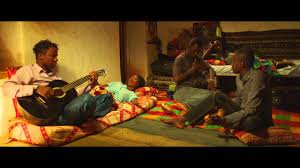
The young musicians who make up Songhoy Blues fled their homes in the north of Mali and since then have been taking their desert blues around the world. They’re doing Glasto next week, but last July at Sheffield’s Tramlines festival I saw them play live and they made me dance, made me smile like an idiot, made me cry a little, when Aliou Toure spoke about his country, his continent, and what the music stood for – peace, love, unity.


http://www.pri.org/stories/2015-03-26/malis-songhoy-blues-are-making-music-exile
http://www.musicfilmweb.com/2014/07/songhoy-blues-mali-music-documentary/
Back Where You Came From
Posted by cathannabel in Refugees on June 19, 2015
A new art exhibition ‘Back Where You Came From’ examines how ancient stories about migration preserved in the biblical book of Genesis are helpful in considering the current migration crisis. The project seeks to promote open dialogue about migration through reading ancient sacred texts about migration in groups that include people from different faiths and cultures. Sanctuary seekers in the city have reflected on their movement, transience, and migration from their homes by responding to stories about the figures of Abraham, Hagar, Isaac, and Jacob from the book of Genesis.’
‘Back Where You Come From’ will run from 15 to 26 June at The Gallery @ 35 Chapel Walk, in the centre of Sheffield, from 10am to 6pm. Download the exhibition brochure.
http://www.thestar.co.uk/what-s-on/out-about/remarkable-refugee-tales-in-exhibition-1-7302336

Refugee Women Making a Difference – #RefugeesContribute
Posted by cathannabel in Refugees on June 18, 2015
Women become refugees for most of the same reasons that men do. They experience most of the same terrors, dangers and indignities along the way. But there are also particular threats that may drive them to leave everything behind and seek safety somewhere else. The fear or immediate threat of forced marriage or genital mutilation, for them or their daughters. The use of rape as a weapon of war, or as a routine way of punishing women for resistance, or for their sexual orientation.
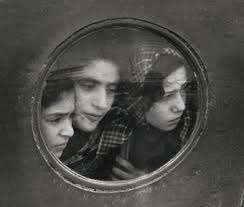


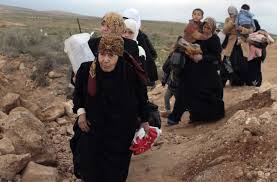
And leaving home, the perils of the journey, the insecurities of their place of arrival expose them even more to the threat of sexual violence, as destitution may lead to their exploitation by traffickers and pimps. In detention, women who have been raped or sexually abused, or whose culture imposes a duty of modesty, may find themselves being searched, or watched whilst dressing or washing, by male guards. Some have been sexually assaulted by their guards.
Lengthy indefinite detention is inherently unjust. It is inherently damaging to refugees who are already traumatised by their experiences. There must be some alternative to treating people who have sought sanctuary here more harshly than those who have been convicted of a crime. There must be some recognition that the women in Yarls Wood, if they must be detained, need to be safe from harm, treated with kindness, their privacy respected. Pregnant women, and anyone who is sick, physically or mentally, should not be there.

Refugee women can and do contribute. A A Gill, who wrote a series of articles on refugees in DRC, Jordan and Lampedusa published in The Sunday Times Magazine, said: ‘In Congo I realised a truth I’ve known all my life. Whilst women are often victims, they are also often the catalyst for making things better.’ The Refugee Council has for the last few years celebrated these contributions, and here are a few of the recipients of their awards.
This year’s Special Jury Award went to Asma Mohamed Ali.  Asma was born on the Brava Coast in Somalia and came to the UK in 1992 having spent much of her childhood in Kenyan refugee camps. Now working in Barnet at the Somali Bravanese Welfare Association, Asma has built a thriving centre and education programme that supports 200 students and their families.
In 2014 Lilian Seenoi, a refugee from Kenya, was recognised as Woman of the Year for her work setting up North-West Migrants Forum – the only migrant forum in Derry/Londonderry, from her kitchen table. Lilian sought asylum in the UK after her work rescuing young girls from early marriage put her life in danger. Her work in Northern Ireland now brings together diverse migrant groups and local communities who have suffered years of tension. Lilian quoted from the Migrant Manifesto: ‘I have witnessed how fear creates boundaries, how boundaries create hate and how hate only serves the oppressors. I do understand that migrants and non-migrants are interconnected. When the rights of migrants are denied, the rights of citizens are at risk. Dignity has no nationality.’
 Constance Nzeneu, who received an award in 2014, fled to the UK in 2005 from the threat of a forced marriage in Cameroon where she had trained as a lawyer. After she applied for protection, she was dispersed to Cardiff whilst her asylum claim was being processed. Like thousands of asylum seekers, Constance had no choice over where she would live and had no right to work, but she did not stand still, with the help of a training she became involved in advocacy and community work, This is how she describes those early days:
“I was refused asylum and I realized that there were so many people out there with similar or worse experiences than mine. There was no project led by women seeking sanctuary and I think you can’t really understand this situation – being destitute, being homeless and thinking what am I going to eat tonight, and I don’t want to be a burden to anyone, and how long am I going to be allowed to stay, and I’m about to be deported, what should I do…unless you’ve been through it yourself.”
She now leads Women Seeking Sanctuary Advocacy Group Wales (WSSAG), which she set up to support other women to cope with exile, and to raise awareness within Wales about why women seek sanctuary. The group is now 40 strong.
 Community work comes naturally to Nazek Ramadan, who received an award in 2012. In the 1980s she opened her home in Beirut to refugees, and when she and her family had to flee Lebanon for the UK in 1986, she began volunteering soon after she arrived in London, initially at an Arabic speaking supplementary school. Her first challenge was to learn English, which she did by watching children’s TV (advice she still gives to others), going to classes and joining in any activity she could. The early years in London were not easy and Nazek experienced racial abuse. She discovered that learning English and getting a job were not enough to be accepted. When a fellow migrant said to her ‘how can they hate us so much, when they don’t even know us’ she replied by saying, ‘you’ve answered your own question, they don’t know us’. She realised that ‘everyone was talking about migrants except migrants’ and so set out to remedy this. In 2007 she launched the New Londoners newspaper which, modelled on London’s freesheets, succeeded in getting migrant and asylum issues in front of London commuters and won two awards from the Mayor of London. And in 2010 she founded Migrant Voice, an organisation dedicated to addressing the lack of representation of migrants in the mainstream media.
These women left their homes and loved ones, fleeing war and persecution, and managed not only to build a new life for themselves and their families, but also to support and inspire people and communities across the UK.
http://www.refugeewomen.co.uk/
http://www.refugee-action.org.uk/refugee_voices/1191_seble
http://www.refugee-action.org.uk/refugee_voices/1146_clara
https://womensrefugeecommission.org/
http://www.refugeecouncil.org.uk/latest/news/4263_refugee_women_s_contributions_celebrated
http://womenonthemoveawards.org.uk/women-on-the-move-awards-ceremony-2014/
http://migrantforum.org.uk/joint-2013-winner-woman-of-the-year-constance-nzeneu/
http://migrantforum.org.uk/joint-2013-winner-woman-of-the-year-remzije-sherifi/
Boat People
Posted by cathannabel in Refugees on June 16, 2015
The first time I was aware of this phrase was in the late 1970s. The boat people then were fleeing from Vietnam, in the bitter aftermath of that long war. Others fled from Cambodia and Laos as repressive governments took over in those countries, and those who couldn’t afford to buy a safer passage by bribing government officials to give them the necessary papers took to the boats, as so many others have done in the decades since.

 The mass influx of refugees caused problems then to the countries on whose shores they landed. But there was a concerted, international effort, to spread the load, to share the responsibility. Various memorials in western countries pay tribute not only to the boat people who didn’t survive that perilous voyage, but to the nations who took them in, supported them in making a new life. Some of this was down to guilt – in the US in particular, who had lost a war and left those they had fought for and with to the mercy of the victors. Even so, this benign response didn’t last. Soon enough, the argument was made that many of those seeking refuge were not asylum seekers but people seeking a better life (sound familiar?), and therefore found themselves in detention centres whilst their claims were examined. If they were unsuccessful they faced deportation.
  In more recent years, people continue to risk their lives on the sea. Rohingya people fleeing persecution in Myanmar (Burma), refugees from conflict in Eritrea, Syria, Afghanistan and elsewhere. So many lives have been lost – the vessels barely seaworthy and overloaded with desperate humanity, and apparently all too often a world prepared to look on and judge that these people are not worth the cost of rescue.
 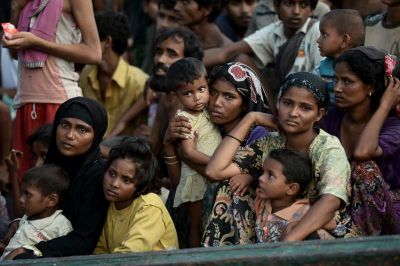 Just the other week, David Cameron claimed that the ‘vast majority’ of those who set sail across the Med are not asylum seekers but ‘ people seeking a better life’. He makes it sound a bit like someone who emigrates to Australia for the climate or a better paid job, or who moves out of the big city for a more peaceful life in the countryside. Actually, the better life they seek is a life free from fear of bombs, guns, starvation. As Somali British poet Warsan Shire says, “No one puts their children in a boat unless the water is safer than the land.”
Some commentators have shown a quite remarkable ability to scan the faces in the boats and judge where all of these people are from and therefore the validity of their claim. Abdallah’s story suggests why this is nonsensical – he is originally from Darfur, but fled after his village was destroyed, his father killed and his sisters raped, on to South Sudan straight into another civil war, a punishing journey across the Sahara which killed his cousin and brother, and then to Libya. And his third civil war. He saw the risk of the Mediterranean voyage as no greater than the risk of staying – and going home as not even a possibility. 

The other thing that is ignored by those who want to categorise these boat people as ‘economic migrants’ is that whilst they may indeed have left their homes to take up jobs elsewhere – and then somewhere along the line their employers take their passports, and essentially treat them as slave labour. If they protest, they risk being reported to the police. And if they leave entirely, they risk being arrested as an illegal migrant. So they can’t go home, even if home is not itself a dangerous and hostile place, because they have no papers. The traffickers will take them.
People talk as if these are people who have choices. As if they can plan a journey to the nearest country where they won’t actually starve or be killed. It’s really not like that. They say we need to focus on stopping the traffickers – sure, but as well as rescuing the people they traffic, not instead. It’s been suggested that if we stop rescuing them they will stop coming. No, if we stop rescuing them they will keep on coming and they will keep on drowning.
http://www.bbc.co.uk/news/world-europe-24521614
html http://www.unhcr.org.uk/news-and-views/news-list/news-detail/article/mediterranean-crossings-in-2015-already-top-100000.html
REFUGEE WEEK 2015 #RefugeesContribute
Posted by cathannabel in Refugees on June 15, 2015
You only have to look around you to see that refugees have contributed, historically. Your knickers may well come from Marks & Spencers. Your pantry may well stock the odd pack of Tilda rice or Patak’s curry paste. Your CD collection may well include something by MIA or Arnold Schoenberg, Wyclif Jean or Bela Bartok. Your bookshelves may well include works by Thomas Mann or Nabokov, your children’s bookshelves those of Judith Kerr or Jan Pienkowski. And that’s before you consider the contributions of the scientists, the philosophers, the painters, the film directors, the sportsmen and women who, at some point in their lives, had to leave their homes to find safety somewhere else.
Of course most refugees won’t turn out to be another Einstein, Marx or Freud. And those who arrive with nothing but the clothes they stand up in, and who live in near destitution, and in fear of deportation back to the peril that they risked everything to escape, will struggle to do much more than survive. But if they are given the chance to be who they can be, free of the threat of starvation, violence and persecution, if they are given the chance to use the skills and qualifications they already have, or to acquire skills that can be used to earn a living and pay taxes, who knows?
If we had not welcomed the children from the Kindertransport in 1939, we would never have known the contribution of impresario Bill Graham, entrepreneur Steve Shirley, film director Karel Reisz, Nobel Laureates Walter Kohn, Arno Penzias and Jack Steinberger.
If CARA had not enabled Jewish academics to take up posts in UK Universities in the 1930s, when they were unable to work in their home countries, we might never have known the contributions of Ernst Gombrich, Nikolaus Pevsner, Karl Popper, Max Born or Hans Krebs. Those individuals might well have been swallowed up in the barbarity. Anne Frank and Helene Berr left only their extraordinary diaries to suggest what might have been. Gideon Klein, Pavel Haas, Viktor Ullmann and Hans Krasa left only tantalising fragments of the musical oeuvre that they could have achieved. Walter Benjamin, Marc Bloch, Irene Nemirovsky, Max Jacob, Dietrich Bonhoeffer- all left a substantial legacy, but could have gone on, could have continued to influence and inspire.


If you really look at the photos above, what do you see? I see weariness and bewilderment, but also a fragile hope, the beginnings of belief in a future that isn’t all about fear and a desperate struggle to survive. I see people like us who had everything they’d relied upon taken away from them, and who have no choice but to trust to the kindness of strangers. We’ll never know the potential of the lives that are lost in the warzones and killing fields of the world, unless we help people in desperate straits to get out, and make a new life in safety.
They won’t all change the world – but they could change us. Our communities, fearful as they are, can gain from hearing the voices of people who have endured more than most of us could possibly imagine, and understanding that it’s all rather more complicated, and at the same time rather less threatening, than the rhetoric of the ‘send them all back – Britain is full’ brigade suggests.They can give us the chance to see things differently, to broaden our horizons as we open our eyes, our ears, our hearts, our homes.
http://www.unhcr-centraleurope.org/en/about-us/unhcr-people/prominent-refugees.html?start=9
http://blogs.redcross.org.uk/refugeesservices/2015/05/i-am-the-neighbour-youve-never-met/
http://blogs.redcross.org.uk/uk/2014/06/we-want-to-thank-the-public-for-letting-refugees-come-here/
 Passing Time