“A roof over their heads…”
Posted by cathannabel in Refugees on January 26, 2018
Phil Davis, who works on refugee projects in Birmingham, is as always articulate, passionate and compassionate in his assessment of how our society treats asylum seekers.

“A spokesman for Prime Minister Theresa May said:
‘Our position is that every person should have the security of a roof over their head, and tackling homelessness is a complex issue with no single solution.
But, we are determined to help the most vulnerable in our society. That’s why we are providing over £1 billion of funding to tackle homelessness and rough sleeping.’”
Metro News. Thursday 25th January 2018
“Every person should have the security of a roof over their head.” Well, yes. Quite.
Here’s a thought. A genuinely helpful contribution towards achieving this clearly laudable policy objective. Stop making asylum seekers homeless and destitute immediately after an unsuccessful appeal. Keep them in a house until they either overturn the refusal in the courts or are removed. I mean, I know homelessness is ‘a complex issue’, but not turfing people onto the streets is a big step forward.
Last…
View original post 263 more words
Remainers Assemble
Posted by cathannabel in Brexit, Politics on January 15, 2018
Funny how swiftly a mood can change. I wrote a fairly despairing piece about Brexit, just over a month ago. It was a bit of a rant, an expression of my deep frustration at not seeing a way forward, a way out of the mess.
And suddenly, just in the last few weeks, the thing that I didn’t dare hope for, that I want so badly, is being talked about openly.
Stopping Brexit.
It’s not straightforward, obviously. The loss of face for May & co. will ensure that they set their faces against it. And, sadly, Corbyn seems unlikely to come out as a Remainer and lead the charge against the government. I also know that if it is stopped, damage will already have been done, and recovery will take a long time.
But the tide does seem to be turning. Surprising numbers of people who want Brexit to happen, as well as people who want to ensure it doesn’t, are now saying ‘if’ rather than ‘when’.
Those of us who voted Remain have been told, over and over again, to shut up and accept it. To get over it. We’ve been called whingers, ‘snowflakes’, ‘Remoaners’. We’ve been accused of being traitors and saboteurs, of betraying the Will of the People. Some of us had death threats.
Funny kind of snowflake, that withstands the vitriol, the hate, the threats and keeps on keeping on. Because we had to call out the lies that tricked people into voting for Brexit, and the incompetence and ignorance that characterised the government’s attempts to negotiate with the EU.
We didn’t do that out of pique. We’ve kept on about it because we believe that Brexit is an act of national self-harm, and that whilst we will all pay dearly for it, those who will suffer its consequences most acutely are the most vulnerable in our society (the poor, those most in need of the NHS), and the young. We’ve kept on because we care about and love this country.
Whilst I do get tetchy about the assumption that it’s my age group that landed us in this mess, statistically there is some evidence for Brexit appealing particularly to a generation that can remember the old (blue? black? who knows/cares) passport, pre-decimal currency, imperial measurements, and all that nonsense. The people who got terribly agitated because Big Ben’s bongs might briefly be silenced. The people who want to return us to some fantasy version of the 1950s – post-rationing, pre-counter-culture.

But, to put it somewhat brutally, many of those who look back with such fondness to the past won’t be around by the time Brexit really kicks in. Whereas the generations that will have their freedoms curtailed by this ‘taking back of control’ will be losing so much and gaining what, exactly? A different coloured passport. Perhaps a crown crest on their pint glass.
I want freedom of movement, for myself and for my children and their children.
I want the economic benefits of EU membership, for myself and for my children and their children.
I want our nation to continue to be diverse, to embrace people from Europe (and beyond Europe) who can contribute to our economy, our culture, our health service, our education – and those who need asylum. I want those Europeans who have made their homes here to feel secure, to feel that they are indeed at home, and welcome.
I want to be part of Europe, part of that group of nations forged after horrific conflict, based upon shared values, facing shared challenges. The greatest challenges we face are global – terrorism, climate change, the flow of refugees from war zones and famine. Our best hope of dealing with them is to work closely with our neighbours, not to shut them out.
I am convinced that there are many people who voted Leave – for a wide variety of reasons – who now regret that choice. Many must have been horrified by the open racism that followed so swiftly on the vote, the abuse offered to anyone who appeared to be ‘foreign’, the glee with which they were told they didn’t belong here any more. Others have been dismayed by the disparity between what they were promised and what the government now says about what might be delivered, and the obvious disarray of those who are responsible for negotiating on our behalf. I am also convinced that there are many who didn’t vote, maybe because – like so many of us who voted Remain – they assumed Remain would win. If those who voted Leave and now regret it, and those who stayed at home on polling day and wish they hadn’t, were to join forces with those who voted Remain and still believe it was the right choice…
So, strengthened by the solidarity of on-line communities that are pressing for an exit from Brexit, I will not only not shut up but will go on, and on, and on, relentlessly, until we find a way of stopping this madness.
And my vote – at local and national level – will go only to those who are pledged to the same cause.
A Manifesto for Europe
The EU was built on the words of Winston Churchill. It was founded on the same values that we recognise as British values, including democracy, the rule of law, individual liberty, and mutual respect.
The European Union has enabled neighbouring nations to overcome historic differences, create new alliances and build bridges where previously there were walls.
For the past 70 years, the United Kingdom has enjoyed peace, prosperity and enhanced standing in the world as a result of its role at the heart of the European Union.
We believe:
- In democracy and the rule of law.
- In the sovereignty of the UK Parliament.
- That the Charter of Fundamental Rights of the European Union amplifies the rights, freedoms and interests of the British people.
- That UK and EU law underpin our economic, social and political rights.
- That the UK can only be truly global and outward facing as a fully committed member of the European Union.
- That the life prospects of young people and future generations of British citizens are augmented by continued UK membership of the EU.
- That the four nations of the United Kingdom of Great Britain and Northern Ireland are stronger when united as a sovereign country, and as a member of the European Union.
- That continued UK membership of the EU is necessary to ensure the UK is relevant and effective in tackling global challenges such as climate change, terrorism, the displacement of peoples, and global economic adversity.
We reject:
- All forms of hate, racism and xenophobia that have been exacerbated by the referendum campaign and ballot.
- Nationalist protectionism, imperialism and isolationism.
- Treating EU nationals, EU member states and the EU itself as our enemies rather than our friends
A strong, free and united European Union, with Britain at its heart, is capable of facing up to the challenges of today and tomorrow, and of playing a leading role in championing international peace and prosperity.


It’s just another New Year’s Eve/Nothing changes on New Year’s Day…
Posted by cathannabel in Events, Politics on December 31, 2017
… but that never stops us hoping that some things will change, making plans and resolutions, wishing and wondering.
Another tough year for so many of us, for so many people around the world. Another year of preventable tragedy, of hatred fanned into violence, of brutal terrorist murders, of desperate poverty alongside profligate consumption. Easy to despair, easy to give up.
I’d rather hang on to hope, and faith in humanity. So rather than reiterating all of the evils and the horrors that this year has brought, and that we fear for in the next, I’ll remind myself that women are speaking up as they have never done before about sexual violence and harassment. That the resistance is making its presence felt, here and elsewhere.


In the face of lies we have to keep speaking and showing truth. In the face of hate we have to keep speaking and showing love. In the face of the horrors that seem to happen daily – in Kabul, in Las Vegas, in Manchester, in Mogadishu – we have to keep speaking and showing faith.
Keep on keeping on.
Sometimes things don’t go, after all,
from bad to worse. Some years, muscadel
faces down frost; green thrives; the crops don’t fail,
sometimes a man aims high, and all goes well.A people sometimes will step back from war;
elect an honest man, decide they care
enough, that they can’t leave some stranger poor.
Some men become what they were born for.Sometimes our best efforts do not go
amiss, sometimes we do as we meant to.
The sun will sometimes melt a field of sorrow
that seemed hard frozen: may it happen for you.Sheenagh Pugh – Sometimes
Hang on to your hat. Hang on to your hope. And wind the clock, for tomorrow is another day
Theirs is a land with a wall around it
And mine is a faith in my fellow man…Sweet moderation, heart of this nation
Desert us not, we are between the warsBilly Bragg, Between the Wars
We are building up a new world.
Do not sit idly by.
Do not remain neutral.
Do not rely on this broadcast alone.
We are only as strong as our signal.
There is a war going on for your mind.
If you are thinking, you are winning.Flobots – We are Winning
The simplest and most important thing of all: the world is difficult, and we are all breakable. So just be kind.Caitlin Moran – How to Build a Girl
If there’s no great glorious end to all this, if … nothing we do matters … then all that matters is what we do. ‘Cause that’s all there is. What we do. Now. Today. … All I want to do is help. I want to help because I don’t think people should suffer as they do, because if there’s no bigger meaning, then the smallest act of kindness is the greatest thing in the world.Joss Whedon – Angel
Never be cruel, never be cowardly, and never, ever eat pears! Remember, hate is always foolish. and love is always wise. Always try to be nice, but never fail to be kind. … Laugh hard, run fast, be kind.The 12th Doctor, Twice Upon a Time
Love is wise, hatred is foolish. In this world, which is getting more and more closely interconnected, we have to learn to tolerate each other. We have to learn to put up with the fact that some people say things that we don’t like. We can only live together in that way, and if we are to live together and not die together we must learn a kind of charity and a kind of tolerance which is absolutely vital to the continuation of human life on this planet.
Bertrand Russell, Face to Face interview, 1959


2017 in Film and TV – the best bits
Posted by cathannabel in Film, Music, Television, Theatre on December 22, 2017
It was a good year for superheroes. Most specially because of Wonder Woman, not because it was the best of its genre this year necessarily but because for the first time with a superhero movie I didn’t have scroll through hundreds of images to find one where a woman was centre screen, in charge. I wrote about the film, how it made me feel, the exhilaration of seeing all the tropes I love about superhero movies but with a woman, a glorious, magnificent woman, where usually there is a man, or mainly men (quite possibly glorious and magnificent in their own right, but still).
I loved Guardians of the Galaxy 2, warming to it despite a phase when I wearied of some of the schoolboy humour, until I realised what that was telling us about these lost children, and how they were forming a strange, new family. There was plenty of daft humour too in Thor: Ragnarok, as one would expect given that Taika Waititi was directing (responsible for last year’s delightful Hunt for the Wilderpeople and for What we do in the Shadows). And it was perhaps a sign of changing times (and not a moment too soon) that Valkyrie is played as a cynical, world-weary, boozy mess who comes through when she is needed, such a male archetype. As well as obviously kicking ass in a most splendid way. Spiderman: Homecoming was charming, funny and really used the notion that Spidey is an adolescent boy, cleverly and with heart. Logan, though, of all the films that belong broadly in that genre, was the one to break your heart. With gripping valedictory performances from Jackman and Stewart, and a mesmerising and terrifying one from Dafne Keen.


Star Wars is not so much my thing. I did enjoy the first trilogy, albeit critically, but I never felt them to be mine, and I have never even seen the prequels (nor do I intend to). But I loved The Force Awakens, and I loved Rogue One, and I look forward to seeing The Last Jedi before long.

War for the Planet of the Apes was brilliant – referencing Biblical epics, Westerns, Apocalypse Now, Schindler’s List and probably other genres and specific films as well, whilst maintaining the power and emotional heft of its predecessors.

My efforts to find an image for each film in which a woman is prominent were doomed in the case of Dunkirk. That’s fair enough, given the premise, I didn’t expect women to feature other than in traditional roles – as nurses, or serving tea and jam sandwiches. There has been a more serious issue raised, that of the absence of non-white faces. I don’t honestly believe this was a deliberate whitewashing, nor do I accept that just because Farage liked the film it was a pro-Brexit parable. But it would have taken very little to ensure that there were visible representatives of the Royal Indian Army Services Corp companies, or the lascar crewmen on British merchant vessels that took part in the evacuation. They were there, and this could have been conveyed without changing the basic structure of the film and its deliberately narrow focus on a few of the rescued and rescuers. But having said that, whilst watching the film such considerations never crossed my mind. I was overwhelmed, by that intense focus, by the score which built and built the tension until it was almost unbearable (and the use of the Elgar Nimrod as the first of the little ships appeared reduced me, predictably enough, to sobs), and by the non-linear structure which forced one to concentrate, to hold those strands together even as the direction teased them apart.

The opposite for the next two movies – three women foregrounded in each of them. I wrote about Twentieth-century Women for International Women’s Day,

and Hidden Figures we missed at the cinema but caught on DVD – uplifting and inspiring even if, oddly enough, the sexism and racism they encountered was actually ramped up for the benefit of the story. Who would have thought that could ever be necessary?

Baby Driver was beautifully described by Empire as:
not a film just set to music. But a film meticulously, ambitiously laid over the bones of carefully chosen tracks. It’s as close to a car-chase opera as you’ll ever see on screen.
Even if the narrative arc (young man in debt to gangster does ‘one last job’ and finds out there’s no such thing) is traditional enough, the choreography, the seamless blend between diegetic and exegetic music, make it entirely original and massively enjoyable.
La La Land inspired me to write about musicals. It was gorgeous and delightful and poignant and much more that I wanted to say was expressed so well in a piece on the marvellous That’s How the Light Gets In blog.

And one more cinema outing, a rather lengthy but entirely captivating one, for Bertrand Tavernier’s Journey through French Cinema. It is what it says, a journey and a personal one at that, through French film from Tavernier’s first childhood moment of enchantment, on through the decades as he goes from a kid in the audience to a film maker himself. I believe there’s a follow-up in the making, bringing his journey more up to date, to which I will happily commit as many hours as it takes, as soon as it’s out.

Mind you, speaking of French cinema, I should really note that we did go to see Elle. However, my feelings about that film are so predominantly negative, that despite my overwhelming admiration for Huppert, and despite moments of brilliantly black comedy, I shall pass over it without substantial comment.
On to the smaller screen.
As always a good deal of crime fiction. The dramas noted below are not an inclusive list of what we watched. There were others that were workaday, or that strained credulity with plot craters and characters who behaved with a stupidity that was at the same time predictable and utterly inconsistent with what we already knew of them. I’m not going to name the guilty parties, just those that we were gripped by and that managed to avoid the worst clichés and pitfalls of the genre.
Sherlock: The Final Problem certainly didn’t give us genre cliché. What it all meant, and indeed, whether it meant anything at all or was just a clever game, is uncertain. The Guardian‘s reviewer was a bit cross about it, but identified two main strands in the narrative:
One was a subtle, beautifully crafted backstory about Sherlock’s childhood. The other was a fun if unfulfilling gameshow of wild hypotheticals, where everything was at stake yet it often felt as though very little was.

It was frustrating and baffling but it didn’t make me cross, I was perfectly willing to believe both that it did mean something and that it was just a fascinating puzzle that I would probably have no chance of unravelling.
Line of Duty series 4 was just superb. Thandie Newton’s Roz Huntley was absolutely compelling, and the plot twisted and turned as we were made to question everyone’s motives and integrity, at least briefly. It had the classic LoD set pieces in the interview room, plus shoot outs and chases, and a plot that at least started to weave together strands from series 1-3, whilst leaving plenty to look forward to in series 5, which cannot come around too soon for me.

The Missing had only one character in common with series 1, the grizzled detective (Tchéky Karyo) who I was very glad to spend another few hours with. Keeley Hawes and David Morrissey were both excellent, as always. The narrative begins, in a sense, at the point that one might expect it to end, with the return of their missing daughter. Of course, it’s not that simple, it’s complex and agonising, and unexpected.

Broadchurch 3 was much better than 2 (which I quite enjoyed at the time but actually struggle to recall what it was all about, really, apart from Joe’s not guilty plea). The handling of the rape case was generally excellent even if the resolution left a few dangling plot threads that didn’t quite make sense. Julie Hesmondhalgh was wonderful, as were, obviously, Tennant, Colman and Whittaker.

Strike was an excellent adaptation of the first two of Robert Galbraith (aka J K Rowling)’s Cormoran Strike novels. Tom Burke and Holliday Grainger were perfect in the lead roles, and I look forward immensely to the adaptation of the third and any future novels in the series.

I Know Who you Are was a fairly bonkers Spanish series in which most characters were pretty despicable, and one of the two genuinely sympathetic people didn’t make it out alive. The only morality that prevailed was Family and within that there was a hierarchy of loyalty – to attempt to murder one’s sister in order to protect one’s son was seen by most characters (including the intended victim) as pretty reasonable. It was all thoroughly enjoyable.

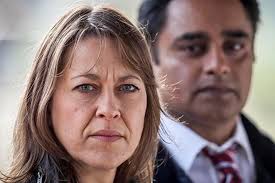
Unforgotten 2 was profoundly different, as Nicola Walker and Sanjeev Bhaskar unpicked another cold case. They are both deeply sympathetic characters and the whole thing is imbued with a kind of compassion and empathy that draws in the damaged people whose lives have been twisted in various ways by the past crime.
Rellik very cleverly subverted the way in which the detective story must follow a retrograde narrative path, starting with the crime and working backwards, by starting with the crime’s (apparent) resolution and working backwards and backwards, until in its final episode it leapt back to the beginning/end and a shocking dénoument. The structure took a bit of getting used to and never quite stopped being unsettling, but we thoroughly enjoyed the ride. It was produced by Harry and Jack Williams (The Missing) and featured, amongst other excellent performances, the wonderful Rosalind Eleazar as an early suspect.

Witnesses was the second series of the French crime drama starring Marie Dompnier. This one also stars Audrey Fleurot, who we know from Spiral, and whose return in that series we look forward to impatiently. Witnesses was compelling and baffling and ended most enigmatically (none the worse for that – I’d rather have honest to goodness open endings than ostensibly tidy endings that actually leave loose threads all over the place).

Fargo 3 brought us not one but two wonderful female cops. Gloria Burgle (Carrie Coon) and Winnie Lopez (Olivia Sandoval). And not one but two Ewan McGregors, as he plays twin brothers. One David Thewlis was more than enough, however – his villain was quite the most revolting, viscerally unpleasant character I’ve seen on screen for some time. That’s a compliment (I think) to the writing and the acting. Lord knows where this one is going next but we’ll be more than happy to go along. Fargo also introduced the wonderful phrase, ‘unfathomable pinhead-ery’ into our vocab, for which we are truly thankful.

Telly sci-fi had an altogether brilliant year.
Agents of Shield had an outstanding season with a multi-layered narrative that messed with our heads and our hearts. Beautifully played and written, and quite breathtaking.

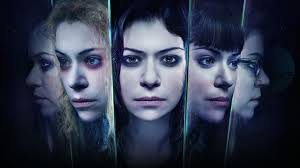
Orphan Black reached its fifth and final season, having maintained its form throughout the four years that it has been running. The weight of the series is carried – seemingly effortlessly – by the awesome Tatiana Maslany, who plays not only various clone ‘sestras’ but at various times plays one of them masquerading as one of the others. It’s dazzlingly done. It also stars the rather wonderful Maria Doyle Kennedy as Mrs S.
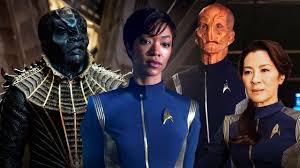
We’re not far through Star Trek: Discovery yet, but from episode 3 on were hooked. Yes, OK, that coincides with the arrival of Jason Isaacs, but it’s not just because Jason Isaacs. Sonequa Martin-Green is excellent, as is Anthony Rapp, and Mary Wiseman as cadet Tilly. It’s visually brilliant, and the plot is loaded with moral ambiguity from which it does not flinch. It promises much and we look forward to it developing further.
I remain loyal to The Walking Dead even though no one could claim that it’s unproblematic. The tone and pace are extremely uneven and it depends far too often on (a) plot armour, (b) magically inexhaustible ammo and (c) people who we know are capable of good judgement behaving with unfathomable pinheadery. Nonetheless, I cannot envisage giving up on it. I have to see how this plays out – and there are episodes which grip and compel and convince.


Possibly the only one of my top TV shows which features in the critics’ lists is The Handmaid’s Tale. I also read the book for the first time, as part of my 60 books in 60 days challenge. So much has been said about the series that I don’t feel I can add anything especially insightful – it was horrifying and terrifying and brilliantly done.

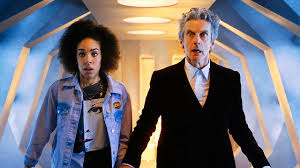
And of course there’s Doctor Who. I wrote about the (to me, brilliant) news that the next Doctor will be a woman. Nonetheless, much as I look forward to seeing what Jodie Whittaker brings to the role I will need to grieve first for Peter Capaldi’s doctor, who I have loved – and for Pearl Mackie who has been a wonderful companion. PC’s final series was excellent, and the finale was heart-stopping and moving.
“I’m not trying to win. I’m not doing this because I want to beat someone, because I hate someone, or because I want to blame someone. It’s not because it’s fun. God knows it’s not because it’s easy. It’s not even because it works because it hardly ever does. I do what I do because it’s right! Because it’s decent! And above all, it’s kind! It’s just that… Just kind. If I run away today, good people will die. If I stand and fight, some of them might live. Maybe not many, maybe not for long. Hey, you know, maybe there’s no point to any of this at all. But it’s the best I can do. So I’m going to do it. And I’m going to stand here doing it until it kills me. And you’re going to die too! Some day… And how will that be? Have you thought about it? What would you die for? Who I am is where I stand. Where I stand is where I fall.” — The Doctor

Three docs worth mentioning. Suzie Klein’s Tunes for Tyrants explored 20th century music in the context of Nazi and Stalinist oppression. She’s an excellent presenter and the material – and the music – was fascinating and powerful.

Bowie’s departure from this dimension was – for me amongst others – the greatest loss of 2016, a year of losses. Bowie – the Last Five Years brought us the final phase of that extraordinary story, as he worked on his last two albums, and the stage musical Lazarus. We were reminded, as if we could forget, not only of his talent, but of his humour and intelligence, his warmth and wit. And that last body of work is not only a worthy finale to his career but imbued with a sense of mortality and the fragility of life.

Neil Brand is one of my favourite music-explainers. Charles Hazlewood and Tom Service have got that nailed in terms of classical music but for the music of stage and screen, for the popular song, Neil is your man, and The Sound of Musicals was a delight.

We loved Poldark, and not just for the scenery.

The Replacement was a bit bonkers but both Vicky McClure (see also Line of Duty) and Morven Christie (also in The A Word, series 2 of which isn’t covered here only because it’s yet to be watched) were excellent.

And another favourite of mine, Suranne Jones, was magnificent in series 2 of Doctor Foster.

We got to see Jodie Whittaker pretending to be a doctor in Trust Me. Plot holes a-plenty (unless they’re just an indication of a second series coming up?) but well done, and well played by JW – looking forward to her being a real Doctor shortly.

Homeland was on excellent form, with the dynamics between Carrie and the new female PotUS adding a new dimension to the plot.

And Spin took us back into the shadowy world of French political manouevering.

It wasn’t all screen based culture. I made several visits to Leeds Grand Theatre for Opera North productions, some of which I reviewed for The Culture Vulture (see the Reviews page of this site, which also features my review of the Sheffield Crucible’s production of Julius Caesar). I also saw at Leeds Grand a magical production of Rimsky-Korsakov’s The Snow Maiden, at the Crucible, an intense Desire Under the Elms, and in the Crucible Studio various splendid Music in the Round chamber music concerts.


So, thanks to all who’ve shared these delights with me. Liz, Viv, Arthur, Ruth, Aid, Dad, and of course him that I’ve been watching telly and going to the pictures and going to gigs and plays with for >40 years…
So, where’s the plan?
Posted by cathannabel in Brexit, Politics on December 7, 2017
@Ed_Miliband What an absolutely ludicrous, incompetent, absurd, make it up as you go along, couldn’t run a piss up in a brewery bunch of jokers there are running the government at the most critical time in a generation for the country.
The government doesn’t know the economic impact of leaving the EU, and doesn’t want to know. Some of the leading Brexiteers do not even seem to care. That might prove the most damning assessment of all.
(Jonathan Lis, deputy director of think tank British Influence, which researches the impacts of Brexit)
No one who reads this, or knows me at all, will be unaware that I’m a Remainer. I voted for Britain to stay in the EU and nothing that has happened since has made me regret that at all.
I found it extraordinary and shameful that before the vote blatant lies were being presented as truths, that the electorate were being sold the highly improbable story that we could leave the EU, contribute nothing more to it, and have any of the benefits of membership that we happened to fancy.
I found it extraordinary and shameful that no one in Government appeared to have thought through what would happen if the vote went to Leave.
I find it shocking and alarming that those of us who voted to Remain are told daily that we ought to shut up because the Will of the People is that we leave the EU, and anyone with a dissenting view is a saboteur or a traitor.
I find it shocking and alarming that we have seen such an increase in racist harassment and assaults on our streets as ignorant xenophobes believe that they have been vindicated.
And I find it, frankly, embarrassing to witness the disarray, incompetence and lack of transparency in our negotiating ‘team’ and the obvious bafflement and disdain of competent politicians in the EU who are wondering how on earth the UK got itself into this mess.

So what happens now?
The truth is, I haven’t a clue. I have no faith in those at present heading up the Brexit process, not enough faith in the rebels within the government or (sadly) the Opposition to take a stand and refuse to allow them to lead us off the cliff edge. It seems to me that there are no truly good outcomes now, only marginally less awful ones.
I’m channelling W1A’s Tracy Pritchard these days…
I’m not being negative or anything, but this is only gonna get worse.
Can I just say, not being funny or anything, but I’ve got a feeling in my bottom about this and not in a nice way.
I’m pursuing two strategies to cope. Firstly, the sensible strategy. I’m reading the updated version of Ian Dunt’s splendid analysis of the situation:
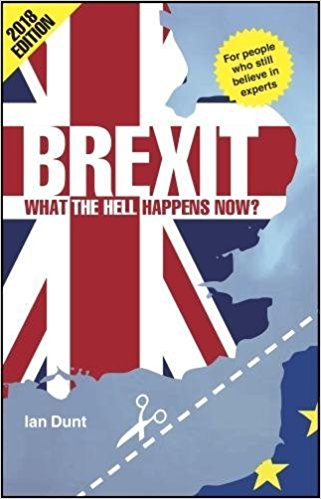
Your man Dunt knows his stuff, expresses it clearly and without bullshit, and if anyone can help me to understand trade agreements and the like, it’s him. None of this cheers me up. But on the whole I prefer to understand the shitstorm we’re heading into. The better we understand it now, the more chance that at some unspecified point in the future we can start to undo the damage.
On the other hand, there are times when kittens and otters are the only way to go.
You’re welcome.
Fascist Groove Thang
Posted by cathannabel in Politics, USA on December 3, 2017
As disconsolate as I was at the end of 2016 (and I was, deeply so), 2017 has managed, in some respects, to shock and depress me beyond expectations.

Shocked and depressed by the sight of giant swastika banners, and the sound of anti-semitic chants, on the streets of an American city, and the inability of the leader of the USA to unequivocally condemn fascist violence. Since Charlottesville, of course, that has been compounded by that leader acting as a publicist for the vile Britain First in their attempts to spread fear and hatred.
I know, of course, that fascism never went away, that there have always been cliques and cadres of unapologetic Nazis, but they used to deny what they were, to hide from publicity, not to court it. They used to put on their uniforms and get out their flags in private, amongst those of a like mind, not to parade them on the streets.
Not only are Nazis now out and proud, but the very notion of truth seems to be up for grabs. If you are caught out in an untruth, you simply claim it as an alternative fact.
Robert Spencer, a leading American Islamophobe who was banned from entering the UK in 2013 for his anti-Muslim history, posted on his website Jihad Watch that doubts about the veracity of the retweeted videos were beside the point. “The real question is not whether this or that video is accurate, but whether there is a problem with jihad terror and Islamic supremacism in Britain and elsewhere.”
https://www.theguardian.com/us-news/2017/nov/30/trump-twitter-far-right-racism-hate
“Whether it’s a real video, the threat is real,” Press Secretary Sarah Huckabee Sanders told reporters. “‘That is what the president is talking about, that is what the president is focused on dealing with, those real threats and those are real no matter how you look at it. His goal is to promote strong border security and strong national security.”
We were warned about this. Warned a long time ago.
Just as terror, even in its pre-total, merely tyrannical form ruins all relationships between men, so the self-compulsion of ideological thinking ruins all relationships with reality. The preparation has succeeded when people have lost contact with their fellow men as well as the reality around them; for together with these contacts, men lose the capacity of both experience and thought. The ideal subject of totalitarian rule is not the convinced Nazi or the convinced Communist, but people for whom the distinction between fact and fiction (i.e., the reality of experience) and the distinction between true and false (i.e., the standards of thought) no longer exist. (Hannah Arendt – The Origins of Totalitarianism, 1958)
Orwell, in his reflections on the Spanish Civil War, described his fear at the feeling that ‘the very concept of objective truth is fading out of the world’.
Nazi theory indeed specifically denies that such a thing as “the truth” exists. … The implied objective of this line of thought is a nightmare world in which the Leader, or some ruling clique, controls not only the future but the past. If the Leader says of such and such an event, “It never happened” – well, it never happened. If he says that two and two are five – well, two and two are five. This prospect frightens me much more than bombs. (George Orwell – ‘Looking Back on the Spanish War’, 1942)
Just over a year ago I was musing about Godwin’s law.
We’ve all cringed at the crass hyperbole of comparing some minor injustice – or even some pretty significant injustice – to the Holocaust. We’ve all sighed at the historical ignorance of many of those who make the comparisons, wondering what on earth they do teach them in schools these days.
And of course it’s right that we should check ourselves, as those comparisons spring to mind, to ensure that if we do invoke Hitler, Nazism, the Holocaust, the Warsaw Uprising or whatever it is, we do so mindful of the history, the scale, the world-altering significance and the uniqueness of those events.
But when we hear political rhetoric and recognise its echoes (whether the words are being used consciously or not), when we see tabloid headlines and recognise the way in which they are stoking and inciting hostility and prejudice, when proposals are made (firms having to gather data on ‘foreign’ workers, schools to gather data on the children they teach, registers of Muslims, etc) that remind us of the way in which the ground was prepared for fascism and genocide, of course we have to point this out.
What strikes me now, reading those words, is that we’re no longer just hearing echoes. Fascist rhetoric is being normalised. It’s perceived as being endorsed, even, when the President of the US refers to far-right protestors as ‘very fine people’, or retweets Britain First’s vile anti-Muslim videos. The wretched Farage is endorsing ‘concerns’ about the Jews, with a smooth segue from ‘the Israeli lobby’ to the ‘six million Jewish people living in America’, and the suggestion of disproportionate influence. Protocols of the Elders of Zion? Whether it’s a real document, the threat is real…
I’ve just finished reading Sinclair Lewis’s remarkable 1935 novel, It Can’t Happen Here.


As many have pointed out over the years, it’s not the greatest work of literature. And, of course, it’s not actually supernaturally prescient – Buzz Windrip resembles Trump in some ways, but there are many more differences. We are not now in the 1930s. Because we know what happened then, and what happened after, we cannot walk blindly into the kind of totalitarianism that Windrip delivers so easily, with so little resistance. We know – a diminishing few of us from first-hand experience, and many more from having read and learned from history – and we cannot unknow.
We can’t afford to be complacent though – few of us would have expected that we would be where we are today, that we would see and hear this normalisation of fascism. We have to draw upon what we know about what happened then, to ensure that it really, really can’t happen here, and now.
One criticism of Lewis’s novel which jars with me, however, is the notion that Doremus Jessup, its hero, is hard to root for.
Jessup, as his name suggests, was a deliberate throwback to the 19th century. He thinks and talks in very flowery stream-of-consciousness prose, stuffed with references to writers and concepts long forgotten. …. While Orwell’s hero Winston Smith attempts his doomed act of thoughtcrime rebellion against Big Brother from the very first page, Jessup takes an age to really stand up to his dictator. …
Doremus Jessup’s one act of rebellion, months after the dictatorship has been established, is to write a fiery front-page editorial. He is jailed for this, but they let him out when he promises to help his successor write pro-Windrip articles. Some hero.
By the end of the book, Jessup is an agent of the resistance based in Canada; his job is to skip across the border and stir up rebellion. But to achieve this, he spreads propaganda himself, telling each man the rumors he needs to hear.
This kind of behavior doesn’t make for a likable character. Indeed, Jessup’s constant wittering about his self-doubt and compromises make it surprisingly hard to root for him even when he’s in a concentration camp, being forced to drink castor oil and taking 20 lashes. (Whereas in Nineteen Eighty-Four, when Winston is tortured, we’re right there on the table with him.)
http://mashable.com/2017/02/15/dystopia-project-cant-happen-here/#PRGmT2s5wEq6
Clearly I am invested in Doremus Jessup because I found myself getting rather cross about this, on his behalf. The comparison with 1984 is, I think, largely spurious. We are from the start of that novel in the dystopian future where Big Brother reigns supreme. In It Can’t Happen Here we are in a modern democracy, where Buzz Windrip seems at first to be a hopeless candidate, a joke. Where the idea that a President might set up and mobilise a private army to root out dissidents, and set up concentration camps where those dissidents can be tortured and murdered, seems so improbable that no one is prepared for it.
Doremus isn’t an action hero. Perhaps that’s why I root for him, contrary to the Dystopia Project’s somewhat simplistic view. He’s not the guy you want by your side if it comes to a scrap. But he uses the things he is good at in the service of the Resistance, and uses the opportunity of continuing to work at the newspaper offices to establish an underground newspaper and distribute it through clandestine channels. He is caught with the text of an editorial exposing murders committed by one of Windrip’s Military Judges, and is brutally punished.
I was reminded of Francois Mauriac, the great French novelist, and member of the French Resistance during the Occupation. He wasn’t an obvious candidate for the resistance movement – he was naturally conservative, and indeed he initially supported Petain’s Vichy government. But Mauriac was someone who listened, always, to his conscience, and when the Vichy government began implementing anti-Semitic legislation, his conscience told him he had to act.

He too was a pretty weedy chap, but he wrote, and contributed to the production of clandestine texts such as Le Cahier noir (written under the pseudonym Forez, in 1943), which was a passionate condemnation of the Vichy regime and of collaboration with the Nazis and an equally passionate statement of hope, and of faith in humanity, of the ideals of justice and liberty.
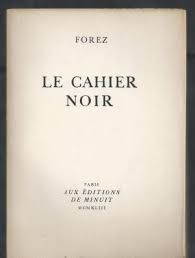
Mauriac was lucky, he managed to escape arrest by keeping on the move, but he knew what he was risking, and that he would have been unlikely to survive arrest, torture and a concentration camp. People like Mauriac, like Doremus, are as much heroes as those who take up arms.
I’m an utter physical coward. When I ask myself, as I have done so often when reading about the Nazi Occupation of France, what I would have done, I know I wouldn’t have been fighting in a partisan unit, blowing up railway lines or assassinating German officers in the Metro. But equally I believe I would not have been just keeping my head down and shutting up, and I know, absolutely without doubt that there are circumstances in which I would instinctively do the right thing even if it was dangerous, and absolutely without doubt that I would not betray or denounce. I like to think that I’d be with Mauriac and Jessup, writing the truth, getting it out there. That’s where our hopes must lie. That in Trump’s America and in Brexit Britain, in the European nations now flirting with fascism and infected with xenophobia, there will always be Mauriacs, always be Jessups, who just can’t sit still and do nothing.
We’re not facing those kind of decisions now, not yet at any rate. But smaller decisions may confront us at any time, even here, in a country where racist bigots have been emboldened by the decision to leave the EU and by the horrors inflicted by IS and their affiliates, to express their hatred in ways that we haven’t heard or seen for decades.
It can happen here. It’s on us to make sure it doesn’t.
So Doremus rode out, saluted by the meadow larks, and onward all day, to a hidden cabin in the Northern Woods, where quiet men awaited news of freedom.
And still Doremus goes on in the red sunrise, for Doremus Jessup can never die.
(Sinclair Lewis, It Can’t Happen Here)
https://www.brainpickings.org/2016/06/15/lying-in-politics-hannah-arendt/
https://www.theguardian.com/commentisfree/2017/dec/02/biggest-victories-trump-resistance
Hannah Arendt, The Origins of Totalitarianism, Meridian Books, 1958
Sinclair Lewis, It Can’t Happen Here, 1935, Penguin Modern Classics edition, 2017
George Orwell, ‘Looking Back on the Spanish War’, in George Orwell: Essays, Penguin Books, 2000
Books of the Year 2017
Posted by cathannabel in Literature on November 28, 2017
These are the books that have made the most impression upon me, that have made me want to read everything by that author, tweet madly about how wonderful they are and press copies upon everyone I know, during 2017. Many, but not all, appeared during 2016/17.
Earlier this year I undertook a challenge, to read 60 books in 60 days. Reader, I nailed it. I also blogged extensively about the books I read and I don’t intend to duplicate those reviews here, though I will list the books that make my ‘best of’ list which were part of that project. Quite a few, actually.
One of the first books I read in 2017 was Clive James’ Cultural Amnesia. I commented at the time that this was likely to end up being one of my books of the year, and nothing has displaced it. He made me feel incredibly un-well-read, but without making me feel stupid, rather, inspired to go away and read the stuff he was talking about. It’s truly wide-ranging – people he loathes as well as people he admires, acerbically funny, which is not always easy to pull off whilst being erudite, and it’s a book that I will go back to again and again for enlightenment, for brilliantly pithy comments, and for the impetus to read stuff that I haven’t yet braved.

As always, I found myself reading around various aspects of World War II.
Anne Sebba’s Les Parisiennes: how the women of Paris lived, loved and died in the 1940s (2016) is a fascinating account, featuring collaborators and resisters and everyone in between, drawing on some sources that I was familiar with but many more that I wasn’t, and weaving them all into a rich tapestry which shows how life in Occupied Paris was both normal and entirely abnormal at the same time, depending on who and where you were. I thought often of Michel Butor’s comment, speaking of his own adolescence in the city, that it felt as though nothing was happening but that the nothing was bloody.

Lara Feigel’s The Bitter Taste of Victory: in the ruins of the Reich (2016) again draws upon contemporary sources (with particular, but not exclusive, emphasis on some of the women writers, reporters and artists – Martha Gellhorn, Rebecca West, Lee Miller, Erika Mann) to paint a vivid picture of the devastation of Berlin and other German cities after the end of the War, and during the Nuremberg trials. I followed this up with Rebecca West’s near-contemporary first-hand account, A Train of Powder (1955). Philippe Sands’ East West Street (2016) covered this period too, but from the perspective of those who were developing the definitions of genocide and crimes against humanity which were so crucial to the judgments at Nuremberg and to our response to such crimes in the decades that followed. What makes his account particularly powerful is that he weaves his own family history into that of the architects of the legislation. He makes the connection with his grandfather’s home in Lemberg (aka Lwów or L’viv) which was also where Lauterpacht and Lemberg, the two Jewish lawyers who were so instrumental in giving us the legal framework, grew up and were educated – and who are Sands’ own antecedents too, in his life as an international human rights lawyer. Adding to this coincidence, I found myself reading in quick succession two other family histories, that of Eva Hoffman, born in Cracow at the end of the war but whose parents survived the war in the Ukraine, near Lwów (aka L’viv or Lemberg), emigrating post-war from Poland to Vancouver (Lost in Translation: Life in a New Language), and then that of Lisa Appignanesi (Losing the Dead: A Family Memoir), an account of how her parents passed for Aryan in occupied Poland before relocating to Quebec.


Still in WWII but behind the Eastern Front, Nobel Laureate Svetlana Alexievich’s extraordinary oral history, The Unwomanly Face of War (2017) lets us hear the voices of the women who fought in the Red Army. Rather than the stereotypes perpetuated by Soviet propaganda or the opposing Western propaganda, we meet real women who did extraordinary things, who confronted not only opposing armies but prejudice from their comrades in arms and commanding officers, and from their families at home. And personal conflicts too – these often very young women fell in love, and mourned the loss of their femininity, and feared whether they would find husbands when the fighting was done. Alexievich’s book first came out in 1985 but has been expanded to bring in more recent interviews, and material from earlier interviews which could not be published previously.

And another remarkable and compelling history from David Olusoga – Black & British: a forgotten history (2016). Alongside bits of history that I was familiar with there’s so much that was new, and ran counter to assumptions that I might have previously made. It also brought back some very early childhood memories, of visits to the forts on the Ghanaian coast, places where slaves were held before they were loaded into the ships to cross the Atlantic.


I also thoroughly enjoyed Robert Webb’s How not to be a Boy, clearly a response to Caitlin Moran’s wonderful How to be a Woman/How to Build a Girl. It is extremely funny, and – as with Moran’s books – often very moving as well.

Other outstanding non-fiction titles which were part of my 60 books challenge: Aminatta Forna – The Devil that Danced on the Water: A Daughter’s Quest (2003); Noo Saro-wiwa – Looking for Transwonderland: Travels in Nigeria (2012); David Grann – Killers of the Flower Moon: The Osage Murders and the Birth of the FBI (2017).
When it comes to fiction I resent categorisations by genre, which always somehow end up marking some things as ‘literature’ and others as ‘crime’ or whatever. However, given the sheer number of crime/thriller/detective novels that I read, it makes sense to group them together.
New discoveries this year include Ben Aaronovitch’s somewhat bonkers urban fantasy detective novel, Rivers of London (2011). This is the start of a series, which I have yet to follow up.

I came across Helen Cadbury’s Sean Denton police procedurals, To Catch a Rabbit (2013) and Bones in the Nest (2015) set in South Yorkshire, gritty and gripping. I’d only just read them when I heard that she’d died, an awful loss. There’s one more Sean Denton novel just out, which I haven’t read yet.


I’ve been binging on various series featuring women detectives and as a result I’ve run out of several of my current favourites: Jane Casey’s Maeve Kerrigan (Let the Dead Speak, 2017), Susie Steiner’s Manon Bradshaw (latest one is Persons Unknown, 2017), Sarah Hilary’s Marnie Rome (Quieter than Killing, 2017), and Valentina Giambanco’s Alice Madison (Sweet after Death, 2017). They all feature central women characters who are complicated and interesting, tight plotting, intriguing peripheral characters, and an overall plot arc which, whilst it doesn’t prevent each novel from being freestanding, gives a depth to the series if you read them consecutively.
Fortunately, whilst I wait for Casey, Steiner, Giambanco and Hilary to come up with new titles (no pressure, but do hurry up!), I’ve got lots to read by Elly Griffiths, whose The Crossing Places (2009) and The Janus Stone (2010) features not a woman cop but a forensic archaeologist, Ruth Galloway. I’m looking forward to the rest of this series.


Noah Hawley was new to me as a novelist, but I’d loved his writing for three TV series of Fargo, full of wit and heart and surprises. His 2016 novel, Before the Fall lived up to the expectations that Fargo had raised. It’s a thriller, about truth and lies, fame and reality.

And a writer new to me but channelling (very convincingly) one of my all-time favourite detective novelists, Dorothy L Sayers. Four new Lord Peter Wimsey stories from Jill Paton Walsh, a delightful chance to reacquaint myself with Peter and Harriet and Bunter and (oh joy!) the Dowager Duchess, and to see them in the context of world events and radical changes in society. (Thrones, Dominations (1998)/A Presumption of Death (2002)/The Attenbury Emeralds (2010)/The Late Scholar (2013))

And some fantastic 2017 titles which were part of my 60 books challenge: Sam Bourne – To Kill the President, Jo Furniss – All the Little Children, Lesley Glaister – The Squeeze , Jane Harper – The Dry .
Another terribly sad loss this year was that of Helen Dunmore. I’ve read most of her work over the years, this year alone I read three (The Lie (2014)/Exposure (2016)/The Betrayal (2010)). I’m grateful for all the pleasure her books have given me, and that there are a few more for me to look forward to reading, including her final novel, Birdcage Walk.


This was the year I finally finished a ten-year project – to read all of Proust. In French. Le Temps retrouvé bit the dust in April, and I blogged about it here.

Prompted by my University of Sheffield Book Group, I read Harper Lee’s Go Set a Watchman (2015).

I suspect I’m not the only person with a deep fondness for To Kill a Mockingbird, and a tendency to idolise Atticus Finch, who’d kind of been putting this off, having read some of the reviews (and the controversy about whether Lee genuinely wanted this to be published and/or had the capacity to make that decision). I’m glad I did read it, but it’s complicated, and I will be pondering more about this separately, because reading it sent me off on so many different trains of thought.
And finally, after reading another alt. US history (Philip Roth’s The Plot against America) I got round to Sinclair Lewis’s account of a demagogue, ‘vulgar, almost illiterate, a public liar easily detected, and in his “ideas” almost idiotic’, who wins the Democratic presidential nomination and then the Presidency. He wins support despite the vulgarity and the lies and the lack of content in his speeches by addressing the people as if ‘he was telling them the truths, the imperious and dangerous facts, that had been hidden from them.’ And he attacks the Press in very familiar terms:
I know the Press only too well. Almost all editors hide away . . . plotting how they can put over their lies, and advance their own positions and fill their greedy pocketbooks by calumniating Statesmen who have given their all for the common good.


It is impossible to read It Can’t Happen Here (1935) without seeing the current incumbent of the White House in the place of Buzz Windrip. In the run-up to his election, the Guardian analysed the similarities, and the Washington Post compared Trump not only to Windrip but to Philip Roth’s Charles Lindbergh. We are forewarned.
As part of the 60 books challenge, I read more from long-term favourite writers Stevie Davies (Awakening, 2013), Patrick Gale (The Whole Day Through, 2009), Rose Tremain (The Gustav Sonata, 2016) and Livi Michael (Succession, 2014). I’ve already followed up Livi Michael’s excellent Wars of the Roses historical novel with the rest of the trilogy (Rebellion, and Accession). I finally read The Handmaid’s Tale and The Garden of the Finzi Continis. I discovered new writers: Sarah Moss, Nii Ayikwei Parkes, Per Petterson, and Andrew Michael Hurley, amongst others.
This represents only a fraction of what I’ve read in 2017. The 60 books are fully documented, and outside of that project I’ve tried to keep a note as I go along, but I know I’ve forgotten some things (maybe justly, maybe not). And of course this list represents the best of what I’ve read, the stuff that, as I said earlier, I’ve been evangelical about getting other people to read, and have followed up or plan to follow up with more by the same writer. I have a policy of not mentioning the books I’ve read (completed or abandoned) which I’ve found tedious, or badly written, or just profoundly mediocre (although if I found something I was reading to be pernicious, dangerous, defamatory or whatever, I reserve the right to make a noise about that). Generally, though, let other pens dwell on clunky dialogue, cardboard characters and so forth – the world is full of books that give pleasure and enlightenment, that inform and move and delight, and I’d rather talk about them.
Meantime, my ‘to read’ pile never seems to diminish, no matter how much and how fast I read. Priorities include finishing Anthony Beevor’s magisterial The Battle for Spain, which I put to one side during my 60 books challenge, and have not yet resumed, and others which I have still to acquire, Coulson Whitehead’s The Underground Railroad, Jon McGregor’s Reservoir 13, Maggie O’Farrell’s memoir, I am, I am, I am (as well as any of her novels I haven’t read yet), and lots more Ali Smith. Right, better get back to the books…


Not Shutting Up
Posted by cathannabel in Feminism, Personal, Politics on November 5, 2017
‘Finally the tables are starting to turn…’
Listening to Jumoke Fashola singing Tracy Chapman’s ‘Talkin’ ’bout a Revolution’ as I write, and it almost feels like we could be at one of those moments when things do change, when the weight of our fury, unexpressed or suppressed for so long, can bring about real and lasting change.
Ask me in a few months or a year, and I may have to acknowledge that, despite my 60 years, I am still hopelessly naive and idealistic. But today it feels like the tables are starting to turn.
There are of course plenty of voices raised against us. There’s talk of witch hunts. There’s talk of how of course this sort of thing was fine 15 years ago. There’s talk of how this is all down to the collapse of the established moral order (because feminism) in which men and women could mix happily (it’s unclear whether the argument is that such things didn’t happen then, or that women knew their place and didn’t make a fuss about it). The women who speak up are labelled as pushy, ruthlessly ambitious, or as having a political agenda (derailing Brexit, undermining the Party, whatever). Or we’re just belittled as ‘squawking and flapping‘.
Let’s remind ourselves of what a witch hunt was. It was when the powerful in society attempted to pin the blame for bad things on to someone who was isolated, who was weak, often old, and almost always female. Not quite what’s going on here. Some are invoking McCarthyism (always linked to the witch hunt since Arthur Miller’s The Crucible) but again that’s not really what’s happening. In the McCarthyite House Un-American Activities investigations and trials, powerful people were encouraging the denunciation and punishment of those who were rumoured to or indeed actually did have links to left-wing politics.


Now the anonymous spreadsheet does have a whiff of injustice about it – the inclusion of extramarital affairs suggests a ‘moral’ agenda which is really not relevant to the issue of sexual harassment. This is likely to be more of a distraction than anything else. Its cowardly anonymity is in sharp contrast to the accounts we are hearing daily now, where women are going public about their own experiences, their own hurt and humiliation and damage, and about exactly who did that to them.
These women aren’t plotting with each other to overthrow the patriarchy, or to revenge themselves against men who’ve done them wrong. They’re only linked to each other by that common experience, and they’re only powerful now because they have given each other the courage to speak about that experience, and because there are so many of them that they can’t be silenced or ridiculed into shutting up. Not any more.
And let’s nail this nonsense about how ‘a hand on the knee’ was perfectly fine 15 or 20 years ago. My working life goes back to the late 1970s, and although such behaviour was very much more common then, we weren’t ok with it. Really, we weren’t. If we didn’t say anything it was for the same reason that people don’t speak out now – because we were less powerful than the people who were harassing us. In the mid-’80s people did talk about sexual harassment in the workplace. It was most definitely a thing. From the very early ’90s I was a harassment officer at a University, dealing with complaints of sexual and racial harassment and of bullying, so I’ve heard all the excuses.
‘It’s just banter’. ‘It was a compliment.’ ‘She’s so over-sensitive.’ ‘Yes I said that, but that wasn’t harassment.’ ‘It’s all a fuss about nothing.’ ‘It was all consensual.’
It happened, and we had policies to deal with it, and people to support the complainants, and we ran training sessions for line managers so they were aware of those policies and support structures.
Workplace harassment is about power – always. Whether that power rests in seniority, in majority, in gender, age or ethnicity, the harasser holds power and uses it to get what they want, to silence, and to punish if they don’t get what they want.
As is the case in other types of violence against women, sexual harassment is
inextricably linked with power. Whether the perpetrator is abusing a position
of power by harassing someone they see as less powerful, or whether the
perpetrator feels powerless and is using sexual harassment as a means to
disempower the target of their harassment and thus increase their own
power and status in the workplace. Several studies have found that
perpetrators of sexual harassment tend to be in a position of power over the
target of the harassment. The disempowering impact of sexual harassment
was a recurrent theme in union members’ responses to a TUC survey on
sexual harassment. Shame, humiliation, and a sense of being undermined
professionally were all cited by respondents.(https://www.tuc.org.uk/sites/default/files/SexualHarassmentreport2016.pdf)
It’s worth reminding ourselves that the stories which are coming out now are for the most part stories of workplace harassment. They are stories about actors auditioning for film roles, writers meeting with TV executives to talk about a script, journalists meeting with politicians. Even if the place where it happened is not a workplace per se (a bar or a restaurant or a hotel room) the context is that of someone doing their job, or trying to get a job.
None of us are really surprised that the women who are finally telling their stories – stories they may never have told anyone before, or only shared with a few close friends – are labelled as pushy. Any woman who speaks out, any woman who disagrees publicly with a man, any woman who challenges a man is pushy, strident, aggressive. I know this. In my almost forty years in the workplace, I’ve often been the only woman on a committee, and I rapidly discovered that if I wanted to be heard, I had to be determined, I had to not be deterred by being interrupted or talked over, I had to raise my voice (increased volume rather than higher pitch – heavens, mustn’t be shrill…). So I’ve been told, over and over, that I’m pushy, strident, aggressive.
If we stand up for ourselves, that’s what we get. If we don’t, we are assumed to be compliant and complicit. In reality we are engaging in a constant process of evaluating and avoiding risk. Looking for escape routes, for allies, for witnesses. Warning each other. Assessing at what point and how loudly we protest or refuse. Wondering what that protest or refusal may cost us.
There’s a clip circulating on Twitter of the magnificent Jo Brand on HIGNFY telling the blokes about how we feel under siege, how the constant, if low-level pattern of harassment wears us down. From the looks on their faces, I’m not sure they really got it.

I suspect very few men do and that’s because their experience of life is likely to be so different to ours, but also because we don’t often tell them what it’s like for us. We don’t tell them because we’re embarrassed, because we fear we may be blamed (what were you wearing? were you drunk? why did you share a taxi with him?), or because ‘our’ man might feel obliged to go and be manly and challenge our harasser to some kind of duel… And it’s no good asking them to imagine it happening to them, unless we make it clear we’re not asking them to fantasise about Lupita N’yongo or Romola Garai stroking their knee without asking permission first – we’re asking them to imagine someone they don’t fancy, someone they’re intimidated by, someone who has power over them – someone like Weinstein, trapping them in a hotel room and pinning them down, using physical as well as social power against them. We’ve been telling each other, for years (watch out for that one, a bit handsy, NSIT, etc) but now we’re telling men. Some of them are listening.
Some of them, of course are worried. Worried because they know damn well that even if they’re not and never have been as monstrous as Weinstein, they have crossed the line in their behaviour towards women, and they are wondering whether and when those women might speak out.
Charles Moore is worried for a different reason. He acknowledges that this is all about power. And he sees this as a moment when power has shifted.
This scandal shows that women are now on top. I pray they share power with men, not crush us
I think he’s being over optimistic (or pessimistic, depending on your point of view). I don’t think the patriarchy is history. It’s pretty resilient, and I think it will survive, overall. But I do think something has shifted. Some men are questioning their own behaviour, and some are questioning their own failure to challenge the behaviour of others.
What we’re asking for, really, isn’t so very radical or scary. It’s that men treat us as if – just imagine! – we are real people, as real as them, whose wishes and intentions, whose fears and hopes, are as real as theirs, and who can make choices, even choices that don’t suit those men. If over half of the world’s people are being subjected to varying degrees of harassment, abuse and assault because of their gender, isn’t that something about which we all ought to care? And if all this is happening in the context of equality legislation and harassment policies and so on, one can guarantee things will be so so much tougher for women in countries where there are fewer protections and a culture that reinforces prejudices against them.
The thing about speaking out, when you’ve spent so long not doing it, is that it can be exhilarating, liberating, intoxicating. We’re not going to be shutting up any time soon. And that has to mean that we – the privileged, who have access to power and the means of communication – speak out for the many girls and women who can’t.
Cause finally the tables are starting to turn
Talkin’ bout a revolution
Yes, finally…
http://www.thesecondsource.co.uk/who-we-are/
Click to access SexualHarassmentreport2016.pdf
Me Too
Posted by cathannabel in Feminism on October 16, 2017
It would be difficult to find a girl or a woman who couldn’t say, yes, me too. As someone said on Twitter, those of us who are referring only to harassment rather than to assault or rape are the fortunate ones – often we barely even recognise what we’ve experienced as being what it is, it’s just the way things are, it’s just what being a girl or a woman means.
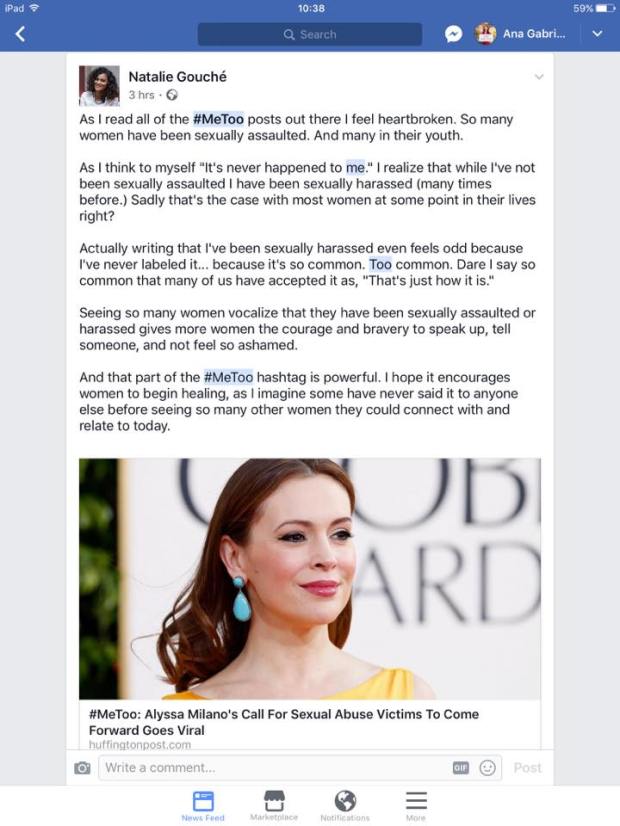
Of course, it happens to boys and men too and some are using the #MeToo hashtag to share their experiences. I know that we find it easier to tell each other about the things that happen to us than men do. We may make a bit of a joke of it, or frame it as a warning about a colleague who’s all hands after a few drinks or whatever, and we may not be able to talk to anyone ever at all. But one burden that men carry that we don’t is the need to be strong, and to be seen to be strong.
Nonetheless, primarily I am talking about girls and women. About the fact that we learn to expect a degree of harassment, verbal or physical. And the fact that whatever our age, size, however we dress, wherever we go, we must learn to always be aware that there are predators – predators in dark alleys, predators in smart suits, predators in our homes and workplaces. There are men who think that what they want they can have, and that what they want is all that matters. There are men who will punish with violence or in subtler ways someone who says no.
I’ve got no heartrending stories to tell. My experiences of sexual harassment have been so very ordinary, which is a story in itself, I guess. The guy on the bus, the group of lads in town, the pushy sales rep with his sleazy comments, all normal, all ordinary. I have been made to feel afraid. I have, when cornered on a train by leery groups of lads drinking Special Brew, been thinking furiously about how to get away, whether there’s anyone else around who might be an ally, whether I should be friendly and risk them thinking I’m up for it, or cold and risk triggering overt hostility.
But that’s all normal and ordinary, and a long time ago. Something happened a few weeks back, though, which reminded me of some of those earlier ordinary, normal incidents. Sitting having a drink with my friend, catching up, enjoying each others company, when two very drunk middle-aged blokes come in and try to engage people in conversation. We avoid eye contact but to no avail. One of the blokes comes over and asks if he can join us. We say no, very politely and with smiles because we’re nice people, but we say no. He carries on talking to us, we continue to (politely) assert that we are fine as we are, and that we don’t want him to join us. And quite suddenly he makes some remark about our size. That’s our punishment for saying no. It reminded me of the man at a party (decades ago) who when I turned him down (despite his incredibly seductive promise to ‘destroy’ me) gave me unsolicited feedback on my weight. They felt entitled – whether to sex or just to attention – and when that entitlement is denied, they hit back, physically or verbally.
What can we do? We can stop blaming ourselves for someone else’s vileness. We – women and men – can stop implying that someone asked for it, or was stupid or naive to find themselves in that situation, or was cowardly to not speak out sooner. We can challenge the entitled mindset whenever we encounter it, we can not join in with the comments or laugh at the jokes, we can stand with someone in a difficult situation and back up their account when they’re being called a liar.
Remember that every time a man commits a violent act it only takes one or two steps to figure out how it’s a woman’s fault, and that these dance steps are widely known and practiced and quite a bit of fun. There are things men do that are the fault of women who are too sexy, and other things men do that are the fault of women who are not sexy enough, but women only come in those two flavors: not enough, too much, and it is the fate of heterosexual men to endure this affliction.
And what’s happening to me as I write this is that incidents I had forgotten – not suppressed because they were traumatic, just forgotten because they were ordinary and normal – are coming back to me. I hadn’t realised that there were so many.
Yes, me too.
What “me too” does is bring it back into the home, the school, the shop, the street, the office where women have been harassed. It makes it small screen not big screen. It makes it ordinary and everyday and seen. … Many have waited a long time for this. Don’t let it go now. Keep saying “me too” because we are fighting not one guy here, but a system that can only be challenged by collective rage, not individual shame. Suzanne Moore, The Guardian
https://www.rachelmariner.com/harvey-weinstein/
60 Books in 60 Days: Reading Challenge Completed
Posted by cathannabel in Africa, Literature, Personal on September 30, 2017
Well, someone forced me to do it. In so far as they challenged me to do it. Or rather, they told me that someone else who’d just arrived at their sixtieth birthday had taken this challenge on. Same difference really. Anyway, I have one default response to a challenge – as long as it involves a literary or cultural feat rather than anything physical:
Challenge Accepted.
So, 60 books in 60 days, starting on 31 July, finishing on 28 September. This is the final instalment of my reading diary, covering the final four days, along with general reflections on the project, and a full list of everything I’ve read.
25 September. Day 57 – Reading Christopher Hitchens’ cancer memoir, Mortality, I am reminded of a good friend, Jos Kingston, who was diagnosed with an inoperable tumour in 2004, and died in 2007. Reading his words, I was struck that it could have been Jos talking:
To the dumb question “Why me?” the cosmos barely bothers to return the reply: Why not? … People don’t have cancer: They are reported to be battling cancer. No well-wisher omits the combative image: You can beat this. It’s even in obituaries for cancer losers, as if one might reasonably say of someone that they died after a long and brave struggle with mortality. … Whatever view one takes of the outcome being affected by morale, it seems certain that the realm of illusion must be escaped before anything else.
I recall Jos saying that she wasn’t fighting cancer, she was negotiating with it. That if she adapted her lifestyle to conserve energy, reduce stress and maximise general health, it might allow her for as long as possible to enjoy the things she’d always enjoyed – walks in the countryside near her home, music, books. That worked for her, for much longer than the medics might have anticipated.
I think also, of course, of another dear friend, Tim Richardson, who didn’t manage to confound the initial predictions of ‘how long’, despite chemo. He too wrote about his experiences, and he started the charity, Inspiration for Life, which I chair, and which raises funds for cancer research and treatment.
Mortality is a brief book – too brief, which has all sorts of layers of meaning in this context. But I need not have worried about it being gloomy fare. It starts with a diagnosis of terminal cancer, and explores what follows from that in a clear-sighted, unsentimental and unsparing manner. The thread running through it is what he calls ‘an arduous awareness’ and it’s tough to read but somehow uplifting.

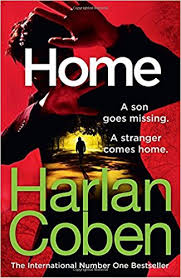
In total contrast, I’m now reading Harlan Coben’s Home. This is a late entry in a fairly long-running series, and I’ve read nothing previously by him (though I did see a French film a few years back which it turns out was based on one of his novels, Tell No One). He’s one of the super best-seller thriller writers to whom I might not normally be drawn (though see my earlier caveats about not being snooty about so-called genre fiction, which at its best is a long way from merely generic) – but it was a Kindle freebie so worth a punt at that price. It’s a nice blend between a hard-boiled Chandleresque style, often quite funny even when being pretty brutal, and a more nuanced focus on emotion, trauma, grief and love. The women are utterly beautiful, the men fit and handsome, and most of them are unimaginably rich, but it’s not without subtlety, nonetheless, and Coben certainly insists that you keep turning the pages, not just to find out the twists and turns of the plot but because he’s made you care about the characters. I’d happily read more of his.
Also finished Per Petterson’s Out Stealing Horses. It’s set in eastern Norway, and focuses on the events of the summer of 1948. Beautifully constructed, beautifully written. As the Independent‘s review said, ‘unawareness and awareness, ignorance and knowledge, innocence and experience chase each other’, both for the protagonist, and for the reader.

Next: Stevie Davies’ Awakening, and Noo Saro-Wiwa’s Looking for Transwonderland.


I’ve read several of Davies’ novels in the past, most recently Into Suez, and always enjoy her writing. Looking for Transwonderland is a memoir from the daughter of murdered activist Ken Saro-Wiwa of her return to Nigeria after a decade.
26 September. Day 58 – Stevie Davies is always a fascinating writer, and this is set in a fascinating period:
Wiltshire 1860: One year after Darwin’s explosive publication of The Origin of Species, sisters Anna and Beatrice Pentecost awaken to a world shattered by science, radicalism and the stirrings of feminist rebellion; a world of charismatic religious movements, Spiritualist séances, bitter loss and medical trauma.
It’s very moving, but also acerbically funny in its portrayal of the excesses of evangelical zeal:
Even dear Mrs Spurgeon confesses that she keeps a close eye on Mr Spurgeon whenever he seems apocalyptically inclined.
Spurgeon (and dear Mrs S) are not the only real historical figures who feature here, but the focus of the novel is on the two sisters, and on ‘sisterly love, jealousy and betrayal’.
27 September. Day 59 – finished Noo Saro-Wiwa’s memoir of her return to Nigeria. She visits places that I saw as a child in the north of the country (Jos, Kano, Yankari Game Reserve) as well as parts of the country I never knew (Lagos, Port Harcourt, Abuja). Her father is a powerful (and unsentimentally portrayed) presence throughout, both at the personal level and in terms of the politics that led to his murder. Nonetheless the book is full of humour, and ultimately of a deep affection for the country, with all its chaos, corruption and division – its ‘jagga jagga’, as they say there.
Treated myself to Jan Carson’s Postcard Stories. It is, as the title says, a series of micro stories, each sent in postcard form to a friend, from various Belfast locations. There were originally 362 postcards, and 52 have been selected for the publication. They are funny, poignant, surreal, sometimes all at once. I do like the idea of teeny tiny stories, almost more than most ‘proper’ short stories which I find sometimes fall disappointingly between two stools. Cath Staincliffe, whose long-form fiction I’ve been enjoying for years now, publishes some flash fiction on her website, along with poems. And then there’s MicroSFF on Twitter.


And on to Giorgio Bassani’s Italian classic, The Garden of the Finzi Continis. Published in 1962, its setting is Ferrara, Italy in 1939, as racial laws begin to affect the lives of two Jewish families. There’s something of Sebald here.
This is the most oblique of Holocaust books. These Jews are affluent, educated, assured, assimilated. They are part of the fabric of Ferrara life and have been for centuries. And yet you know. That’s the saddest thing of all: right from the beginning, you know because the narrator knows. You know they will all be blown away “light as leaves, as bits of paper”; while they don’t. And at the end you, like him, will be bereft.
I’ve been meaning to read this since a fellow student spoke very powerfully about it at a postgraduate colloquium earlier this year, and I’m so very glad I have done.
Off to New York now, in 1943, but there’s no hint of the shadows that linger around the garden of the Finzi-Continis. This is Breakfast at Tiffany’s, another 20th-century American classic that I’ve somehow missed out on reading until now. I’ve not seen the film, either, so although my image of Holly Golightly is inevitably influenced by that of Audrey Hepburn, I’m not conscious of other differences between book and film. I was intrigued to read, however, that Capote himself favoured Monroe rather than Hepburn in the role.


28 September. Day 60! Yes, by midnight tonight I will have finished reading my 60 books. No sweat, no pressure.
Just finished Jennifer Johnston‘s The Captains and the Kings. This was Johnston’s debut – in which the ‘turbulent history of 20th-century Ireland’ is background to a story of loneliness and isolation, of youth and age. It’s beautifully written, somehow out of time so that the past – the First World War in which Charles Prendergast fought, and the brother who died at Gallipoli, his shadowy wife, his distant parents – has a firmer reality than the present, such that I wondered when it was set. There’s a reference to ’55 years ago’ though, so the narrative is contemporaneous with the book’s creation. It’s a very simple story, in a way, and one where tragedy seems inevitable, but no less powerful for that. I am certain I read something by Johnston years ago, but cannot remember which – perhaps Shadows on the Skin, or The Old Jest?

On to my final book. Laura Lippman is one of my favourite crime writers, both for her stand-alone novels, and for the wonderful Tess Monaghan series about a Baltimore PI. This is her most recent novel, Wilde Lake.

And it’s excellent. Although the plot is complex and twisty-turny, what drives the novel, as always with Lippman, is character. Families, secrets, memory and the tricks it plays.
The present is swollen with self-regard for itself, but soon enough the present becomes the past. This present, this day, this very moment we inhabit – it will all be held accountable for the things it didn’t know, didn’t understand.
The things we don’t know, the things we don’t understand.
A great way to finish this challenge.
************************************************************************************
And that’s it! I guess I could take some time off from reading for a while now, but hey, that’s never going to happen.
From the moment when I could read for myself I’ve read hungrily, ravenously. I’ve read like it’s about to be made illegal, like I might suddenly lose the facility and words return to the mystifying symbols they were when I was 3 years old.
I read fast, like a hungry person eats. If I didn’t read fast, I could never have read 60 books in 60 days, of course. Do I sometimes miss things, details and subtleties, because I’m racing through – yes. And sometimes I wish I could slow down not just so that I can better savour the book I’m reading, but because I don’t want to run out. When I was young, I frequently ran out of ‘my’ books – Puffins for the most part, wonderful classics of children’s literature – and headed for my parents’ bookshelves where I encountered adult classics (such as Great Expectations, Jane Eyre, Morte d’Arthur) and read and understood what I could, re-reading as I got older and could reach a fuller and richer appreciation. As an adult, packing for holidays pre-Kindle, I would fill a case with books, realise there’s no room for shoes or toiletries, discard some books and then squeeze them in somehow, because I can’t bear the thought of ending up stuck in a holiday cottage in the rain with nothing to read. A serious case of abibliophobia.
Even as a child I read critically. I read Enid Blyton, because her books were ubiquitous, but because I was also reading Leon Garfield, Rosemary Sutcliff, C S Lewis, and so many other truly fine writers, I was aware of what she lacked that they had, and I read her in the way that one might read a trashy novel on holiday because it’s the only thing to hand.
But I’ve never rejected something purely because of its genre or a schlocky cover (the latter did put me off Stephen King for a while, but I gave him a try and was instantly and permanently converted). That would have ruled out so many of the books and writers that I have loved. I have, though, chucked many a book aside, straight into the charity bag, if its prose clunks, its dialogue is rigid with cliché or its characters are flat and tedious stereotypes. But everything in this list, in all its rich variety, was rewarding to read.
So this last 60 days has been a blast. It’s been a source of pressure, particularly when I’ve had unexpected periods when reading has been impossible, and I’ve panicked about falling behind. It’s been a discipline – in the interstices of the day when I might otherwise faff about on social media or the like, instead, I’ve been reaching for a book, and I hope to keep that up, albeit in a less extreme form. But most of all it’s been a delight, and writing about the books after I’ve read them has been a pleasure too – it was something I wanted to do to ensure this wasn’t an arbitrary exercise, reducing the books to a number, or even just to a list, and also to force me to pause each time I finished a book, think about it, gather my thoughts and write them down before picking up the next one.
Anyway, here’s the list:
- Kate Atkinson – Case Histories (2004)
- Margaret Atwood – The Handmaid’s Tale (1985)
- Julian Barnes – Levels of Life (2013)
- Giorgio Bassani – The Garden of the Finzi Continis (1962)
- Alan Bennett – Untold Stories (2005)
- Sam Bourne – To Kill the President (2017)
- Frank Cottrell Boyce – The Unforgotten Coat (2011)
- David Boyle – Dunkirk: A Miracle of Deliverance (2017)
- T C Boyle – Talk Talk (2006)
- Andrea Camilleri – August Heat (2009)
- Truman Capote – Breakfast at Tiffanys (1958)
- John le Carré – The Pigeon Tunnel: Stories from my Life (2016)
- Jan Carson – Postcard Stories (2017)
- Jane Casey – The Last Girl (2012)
- Ken Clarke – Kind of Blue: A Political Memoir (2016)
- Harlan Coben – Home (2016)
- Stevie Davies – Awakening (2013)
- Roddy Doyle – Two Pints (2012)
- Helen Dunmore – The Betrayal (2010)
- Helen Fitzgerald – The Cry (2013)
- Aminatta Forna – The Devil that Danced on the Water: A Daughter’s Quest (2003)
- Jo Furniss – All the Little Children (2017)
- Patrick Gale – The Whole Day Through (2009)
- Valentina Giambanco – The Gift of Darkness (2013)
- Lesley Glaister – The Squeeze (2017)
- David Grann – Killers of the Flower Moon: The Osage Murders and the Birth of the FBI (2017)
- Jarlath Gregory – The Organised Criminal (2015)
- Mohsin Hamid – The Reluctant Fundamentalist (2007)
- Jane Harper – The Dry (2017)
- A S A Harrison – The Silent Wife (2013)
- Ernest Hemingway – A Farewell to Arms (1929)
- Christopher Hitchens – Mortality (2012)
- Andrew Michael Hurley – The Loney (2014)
- Shirley Jackson – We Have Always Lived in the Castle (1962)
- Jennifer Johnston – The Captains and the Kings (1972)
- Andrea Levy – Uriah’s War (2014)
- Laura Lippman – Wilde Lake (2016)
- Peter Lovesey – The Last Detective (1991)
- Ben Macintyre – Agent Zigzag: The True Wartime Story of Eddie Chapman (2007)
- Hilary Mantel – The Giant, O’Brien (1998)
- Daphne du Maurier – Julius (1933)
- Livi Michael – Succession (2015)
- Caitlin Moran – Moranifesto (2016)
- Sarah Moss – Cold Earth (2009)
- Fay Musselwhite – Contraflow (2016)
- Flannery O’Connor – Wise Blood (1952)
- Nii Ayikwei Parkes – Tail of the Blue Bird (2009)
- Michelle Paver – Thin Air (2016)
- Per Petterson – Out Stealing Horses (2005)
- Caryl Phillips – The Final Passage (1995)
- Philip Roth – The Plot against America (2004)
- Donal Ryan – The Thing about December (2013)
- Noo Saro-wiwa – Looking for Transwonderland: Travels in Nigeria (2012)
- Elif Shafak – Three Daughters of Eve (2016)
- Graeme Simsion – The Rosie Project (2014)
- Ali Smith – Hotel World (2001)
- Tom Rob Smith – The Farm (2014)
- M L Stedman – The Light between Oceans (2012)
- Rose Tremain – The Gustav Sonata (2016)
- H G Wells – The Island of Dr Moreau (1896)
I didn’t plan what I would read. I started by raiding my Kindle and the ‘to read’ pile by my bed, and adding books that friends recommended or lent. The selection was mainly based on being not too long, not too hard, and not read before – so it’s pleasing to see the variety in the list above.
- Exactly 50% of the writers are women.
- 80% of the books are fiction, of the remainder one is poetry, the others are history or memoir.
- 58% of the writers are new to me. And what’s best about that is that I will want to follow up most of those, to read all of their stuff.
- The earliest book on the list is the H G Wells, from 1896. Slightly to my surprise, over a third are from 2016-2017 and over half from 2010 onwards. I guess this fits with the bias towards new-to-me writers.
- Just over half of the writers are from the UK, 9 from the US, 4 each from Australia and from the Republic of Ireland, 2 each from Italy and from Canada, 3 from West Africa, one each from Pakistan, Norway, Turkey.
Stories can make you fly, and over the last 60 days I’ve flown to Pembroke castle in the 15th century, rural Ireland in the 1780s, Wiltshire in the 1860s, Oklahoma in the 1920s, Kanchenjunga in 1935, Ferrara in 1939, New York in 1943, Norway and Switzerland in wartime and the immediate postwar period, Leningrad in 1952, the Caribbean in 1958, Romania in 1989. I’ve flown to an archaeological dig in Greenland, to the Ghanaian hinterland, to Sierra Leone and Nigeria, Oslo and Seattle and Chicago and New Jersey and Sicily. And into more speculative areas too, dystopian near futures and a mysterious island in the Pacific… That’s what reading can do for you.
Thanks to everyone who’s supported me in this, who’s lent or suggested books, liked/retweeted my blog posts and updates. I hope that some of you will now have some books to add to your ‘must read’ list – I’d love to know if so, especially if you read and enjoy something you might not otherwise have thought of.
And thank you most of all to Alan, Ali, Aminatta, Andrea C and Andrea L, Andrew, Ben, Caitlin, Caryl, Christopher, Daphne, David B and David G, Donal, Elif, Ernest, Fay, Flannery, Frank, Giorgio, Graeme, Harlan, Helen D and Helen F, Herbert, Hilary, Jan, Jane C and Jane H, Jarlath, Jennifer, Jo, John, Julian, Kate, Ken, Laura, Lesley, Livi, Margaret, Margot, Michelle, Mohsin, Nii, Noo, Patrick, Per, Peter, Philip, Roddy, Rose, Sam, Sarah, Shirley, Stevie, Susan, Thomas, Tom, Truman, and Valentina

With a book, you are the landscape, the sets, the snow, the hero, the kiss – you are the mathematical calculation that plots the trajectory of the blazing, crashing Zeppelin. You – pale, punchable reader – are terraforming whole worlds in your head, which will remain with you till the day you die. These books are as much a part of you as your guts and your bone. (Caitlin Moran, ‘Reading is Fierce’, from Moranifesto)
The world of literature … offered me, besides the pleasures of form, the sustentation of empathy (the first step of what Keats called negative capability) and I ran for it. I relaxed in it. I stood willingly and gladly in the characters of everything — other people, trees, clouds. And this is what I learned: that the world’s otherness is antidote to confusion, that standing within this otherness — the beauty and the mystery of the world, out in the fields or deep inside books — can re-dignify the worst-stung heart. (Mary Oliver)
The object we call a book is not the real book, but its potential, like a musical score or seed. It exists fully only in the act of being read; and its real home is inside the head of the reader, where the symphony resounds, the seed germinates. A book is a heart that only beats in the chest of another. (Rebecca Solnit, The Faraway Nearby)
So, ten years time, 70 books in 70 days? Challenge (provisionally) accepted!

