I seem to have travelled even more widely than usual in my reading over the first six months of the year. Some of the books I read, those set in Finland, Estonia and Latvia, reflect my own travels, and were chosen to enrich my direct experience of those countries (Finland is particularly well represented). In addition, I have through my reading, travelled widely in Africa, to South Africa, Botswana, Egypt, Uganda and Ghana (that last will, I hope be a travel destination before too long).
As always, I haven’t reviewed everything I read. In addition to the books listed below, I also read the final title in Attica Locke’s Highway 59, Val McDermid’s Silent Bones (from her Karen Pirie series), Mick Herron’s latest Slow Horses title, Clown Town, Henning Mankell’s The Dogs of Riga (a Wallander title, chosen because of my trip to Riga), and Sarah Hilary’s The Drowning Place, first in an intriguing new series. All were excellent. There was one which I started but could not finish (not included because I don’t know whether it was me or it), and others that I finished but could think of nothing much to say about (very few of those, I’m reasonably picky, and if I read something poor by someone who I know is capable of better I tend to review them to make that point).
I’ve tried to avoid spoilers, but you take your chances.
FICTION
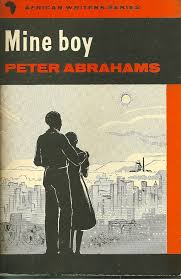
Peter Abrahams – Mine Boy
Abrahams was born in South Africa, but left as a young adult, and subsequently moved to Jamaica where he spent most of his life. Mine Boy, published in 1946, is set in South Africa, before the full implementation of the apartheid system, but where black African workers were treated as expendable resources. His protagonist, Xuma, is the titular mine boy, a worker in the mines. The narrative powerfully conveys the precarious nature of life for black workers, the hierarchical nature of racial classification (Abrahams himself was Coloured, as was his mother), the poor conditions of life in the townships and the pernicious racism that affected every aspect of life. The book was one of the first African novels to get significant attention in the West and was republished in the Heinemann African Writers series in 1963.
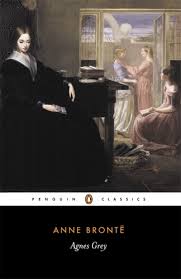
Anne Bronte – Agnes Grey
I’d never read this and only came to Tenant of Wildfell Hall many years after reading all of Anne’s sisters’ novels. This doesn’t have the range and power of Wildfell Hall but it’s a vivid account of the life of a governess, and the impossibility of genuinely teaching and guiding children when their parents do not accept the governess’ authority or judgement. There’s a gentle romance as well, and a happy ending. According to some sources, Anne was distressed that Charlotte used similar material in Jane Eyre, though to very different effect.
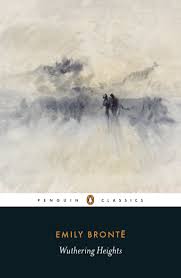
Emily Bronte – Wuthering Heights
Re-read this with all the chat about the Emerald Fennell adaptation (haven’t seen it, not in a rush to do so), which reminded me that I hadn’t read it since I was in my teens. I’d forgotten what a dark, disturbing read it is. It’s not a romance, not a great love story – love here is obsession and possession, a twisted thing, closer to hate than to affection. How Emily came up with this is a wonder – and the reason the recent biopic (see my 2026 Screen blog) invented a doomed and clandestine affair for which there’s no actual evidence (but who knows).
Sally Carson – Crooked Cross
Another brilliant Persephone republication. This was written and published in 1934 and is a dramatic and thoughtful account of a German family in the early years of Nazi rule. The narrative opens in 1932, and shows a disaffected generation turning towards Hitler, an older generation largely failing to see the danger that this represents or powerless to argue against it. There are two sequels, which are high on my wishlist. Carson herself died in 1941 so did not live to see just how perceptive and farsighted her account had been.
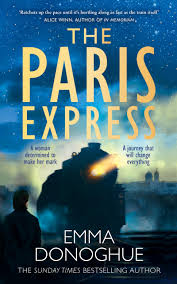
Emma Donoghue – The Paris Express
This could be described as a thriller – there’s certainly suspense here, and real peril. It’s based on a real event, and some of the passengers on board the express train are real people who were on that actual train in 1895, but with authorial imagination exercised to flesh them out. We move through the train, from first to third class, meeting each of the characters repeatedly and each time learning a bit more. The tension mounts gradually, just as we gradually invest in the characters on board. As the Guardian reviewer said, ‘It is almost Beckettian, really, this vision of life as individuals crammed into metal containers, enduring clanking discomforts and talking at each other as they move towards the inevitable end. The real question is human and timeless and, frankly, rather apposite. As Blonska puts it: “How to carry on minute by minute, when you don’t know how long you’ve got.”’
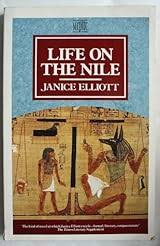
Janice Elliott – Life on the Nile
Elliott’s books are out of print, which is a massive injustice. This isn’t my favourite of hers, but it’s beautifully written, perceptive, and insightful as she weaves together the story of Charlotte, a tourist on the Nile, with Phoebe, her great-aunt, who lived in Egypt as the wife of a colonial official. There’s a constant undercurrent – in both timelines – of unrest, of resentment and mistrust, of failures of understanding. A review (from 1989) in the Herald, says that ‘although this is a mystery story, on several levels (which Elliott probes with the delicacy of an archaeologist), and it is a story concerning death, it is in the end a story about life, an Egyptian Book of the Living. While it is formal and orderly in its manner, something like an Egyptian painting, it is not flat. As you read, the quiet title fills with colour and noise, and acquires meaning.’
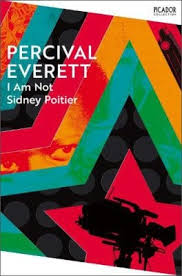
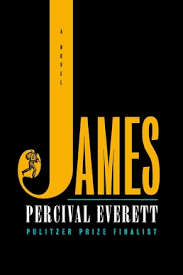
Percival Everett – James/I am Not Sidney Poitier
I knew when I saw the film American Fiction, based on Everett’s Erasure, that I must read him, and James was the first one I read. It is a reimagining of Huckleberry Finn from the point of view of James (Jim) the runaway slave, and Everett explores that point of view with both empathy and rage, and with plenty to surprise the reader. I am Not Sidney Poitier plays with Sidney Poitier’s film roles, and has fun with a name that invites circular conversations – ‘I am Not Sidney Poitier. Who are you then? No, I am Not Sidney Poitier, that’s who I am’, and on and on, but as a lot more than a ‘Who’s on first’ word game. Being clever isn’t enough to make me return again and again to an author but Everett, whilst being one of the cleverest writers I’ve read recently, is also a great deal more than that, endlessly inventive, and I will be sure to read more.
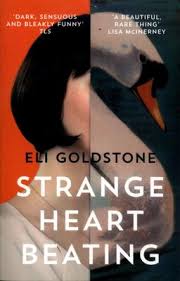
Eli Goldstone – Strange Heart Beating
Eli Goldstone’s debut novel is set largely in Riga, Latvia, where her protagonist Seb heads after the tragic death of his wife Leda (or Leyla), to find answers to his questions about her, and her life before they met. The more he finds, the less he feels he knows. It’s dark, funny and intriguing.
Graham Greene – Stamboul Train
An early Greene (1932) that I hadn’t read yet. Like the Donoghue, it’s set on a train, on which a variety of characters, most with something to hide, are heading for Istanbul. Interesting for its portrayal of a central Jewish character – I was bracing myself, having read a lot of fiction from this period which use stereotypes and slurs just as a given, but Greene is much subtler than that. He shows the stereotypes that other passengers reach for so readily, the assumptions about Myatt’s motivation and personal morality, but he also shows that these are wrong, and treats Myatt with sympathy.
Robert Harris – Munich
Having seen the film Munich: The Edge of War I knew the plot of this pretty much, but Harris is always an enjoyable read and his plots always thoroughly researched, and he offers a much more complex and nuanced view of Chamberlain’s ‘appeasement’ of Hitler than we tend to get from our privileged position of hindsight.
Bessie Head – A Question of Power
Not an easy read. I read this a long time ago but recalled only that it concerned a woman struggling with her mental health, experiencing highly disturbing hallucinations. Elizabeth is a South African exile in Botswana, working as a teacher and with a local cooperative, but beneath the surface she is tormented by representations of good and evil that soon become more complicated than that, and with which she must wrestle in order to survive. It’s powerful and deeply personal – there are many autobiographical elements, and Head herself died at only 48, just as she was starting to achieve literary success.
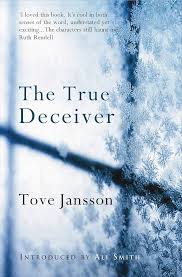
Tove Jansson – The True Deceiver/The Summer Book
Ahead of a holiday touring Helsinki, Tallinn and Riga, I decided to immerse myself in some fiction from those countries. I knew Jansson of course as the creator of the Moomins, who were part of childhood for me and my siblings. The True Deceiver is kind of a psychological drama, not exactly a thriller, because there is no very dramatic action involved, it’s much more subtle than that, and beautifully written.
I read The Summer Book whilst in Helsinki, a visit which included a boat trip around the archipelago of tiny islands, any one of which might have been the one described. Ali Smith describes the book thus: ‘lit moments, gleaming dark moments, like lights on a string, each chapter its own beautifully constructed, random-seeming, complete story. Her writing is all magical deception, her sentences simple and loaded; the novel reads like looking through clear water and seeing, suddenly, the depth’.
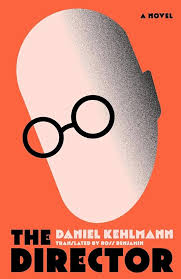
Daniel Kehlmann – The Director
The Director is – more or less – G W Pabst, who fled Nazi Germany but then finding himself out of place and being fobbed off with second rate projects in Hollywood returned, in part at least due to his mother’s illness, and was trapped there throughout the war. This book won’t tell us what actually happened – there are layers of ambiguity, there are characters with no real-life counterpart or that are composites of real people – but there’s a disturbingly woozy feeling about what happens here, whether it is invention, dream, distorted memory. Very powerful.
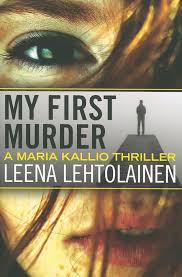
Leena Lehtolainen – My First Murder
Another Finnish read, this one a straightforward but very well-done crime thriller. I’ll be happy to read about her subsequent murders.
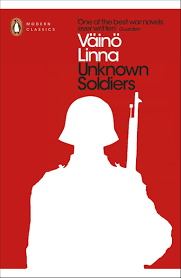
Vaino Linna – Unknown Soldiers
This is a Finnish classic, an account (based on first-hand experience) of the Continuation War, when Finland allied with Germany against Stalin’s USSR. It should be up there, I think, with All Quiet and other classic war novels, particularly as it gives a different perspective on WW2. The Finnish army was not fighting for Germany as much as it was fighting (for its often precarious existence) against Stalin. I learned so much about Finnish history by going there, but this book gave me a really strong sense of that history and of the people, whilst at the same time drawing out the universal themes of war writing – the physical miseries, the tension, the arbitrariness of military discipline, the arbitrariness of death.
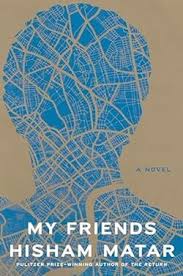
Hisham Matar – My Friends
Weaving fictional characters into actual events – most notably the siege at the Libyan embassy in London in 1984 – Matar explores how one can live with the separation from home and family, and the constant (and entirely reasonable) sense of being under surveillance and under threat. ‘This is a book about exile and violence and grief, but it is above all – as the title tells us – a study in friendship’, to quote the Guardian review.
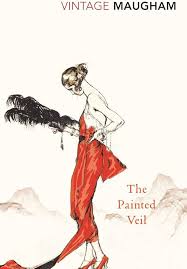
W Somerset Maugham – The Painted Veil
I’m never sure if I’ve read any Maugham. I’ve read so much over my reading life, which now tots up as around 65 years, that there are books and authors that I really don’t know whether I’ve actually read them or just know of them. I also read fast, and one of the reasons I do this blog twice a year is to counter one of the effects of reading so much and so fast – not being able to remember the books I read, not savouring them, not letting them stay with me. I am certain I hadn’t previously read this in any case. Its attitudes (to colonial life and to Hong Kong, the setting for this) are of their time, but the story has emotional heft and multi-dimensional characters, so I enjoyed it, and will read more Maugham.
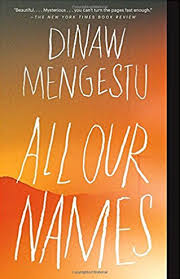
Dinaw Mengestu – All Our Names
A young man, sometime in the 60s/early 70s, heads to the capital of a newly independent African nation (we can work out that this is Uganda), where he meets a would-be revolutionary called Isaac. He himself, as he puts it, gives up ‘all the names my parents had given me’. In another narrative strand, a caseworker in the American mid-west meets and works with an African exchange student called Isaac. How these two narratives relate becomes gradually clear(er). ‘Weighted with sorrow and gravitas’, as one reviewer described it – a powerful read.
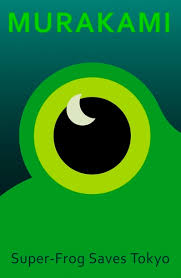
Haruki Murakami – Superfrog Saves Tokyo
I read this Murakami short story in a gorgeously illustrated edition. It is, on the surface at least, a funny, fantastical tale of a giant frog who enlists the help of a young man against a threat to the city. There’s more to it than that, the discussions between frog and man suggest layers of ideas about art, history, life and all that. Rather delightful and intriguing.
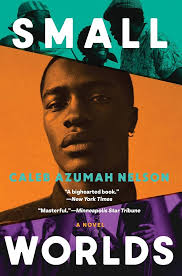
Caleb Azumah Nelson – Small Worlds
I loved Nelson’s Open Water a year or so ago, and I love this one. The writing is gorgeous, it’s suffused with music (so much so that I ended up making a playlist of songs referred to in the text and it’s over 4 hours of music). It’s about love and roots, and the account of the protagonist’s return to Ghana after his mother’s death was moving and – especially to me, as I plan a trip to Ghana where I lived as a child – powerful.
Eeva Park – Trap in Infinity
Set in and around Tallinn, this is a dark, dark story of a young woman escaped from traffickers, trying to find a way forward, finding allies and temporary refuges. This is not the tourist Tallinn of the beautiful Old Town, it’s pretty unrelentingly bleak.
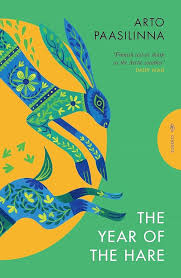
Arto Paasilinna – The Year of the Hare
This is most engaging. Published in 1975, it’s the story of a disillusioned journalist who accidentally injures a hare with his car, and abandons job, home, marriage and everything, living a peripatetic life, always accompanied by the hare who he nurses back to health, navigating threats both from the wild environment and from Finnish bureaucracy.
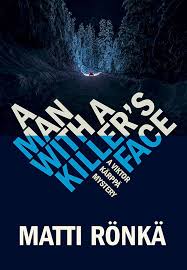
Matti Ronka – A Man with a Killer’s Face
Finnish crime drama, with the narrative moving between Helsinki and Tallinn. It’s the first in a series, which I might well follow up.
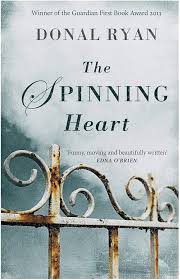
Donal Ryan – The Spinning Heart
I’ve read quite a few of Ryan’s and rated all of them very highly. This was his debut novel, and it’s obvious why it had such an impact (the word ‘virtuoso’ crops up in quite a few reviews). The setting is rural Ireland, as the recession hits, businesses collapse and communities are in crisis. Ryan tells the story through 21 individual voices, which requires frequent readjustment on the part of the reader, but creates a vivid polyphony building up the tension towards a tragic finale.
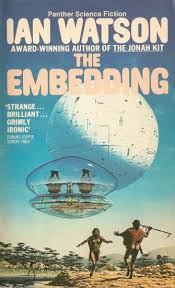
Ian Watson – The Embedding
My shelves include a lot of science fiction, all of which M had read, many of which I also read, even if I can’t now recall much just from looking at the cover and the blurb. Watson, who has just died, was always one that M rated particularly highly – he was always interested in the more philosophical end of sci-fi, Ursula le Guin, Christopher Priest and others, rather than the space battles/star wars, and he was often enraged by the misogyny and fascistic ideas which he met in the pages of some 70s sci-fi. I remember him flinging one across the room before binning it. Watson is a much more interesting and thoughtful writer – The Embedding is his first, and I don’t think I have read it previously. It’s not without dated language but it’s full of ideas, it’s truly speculative.
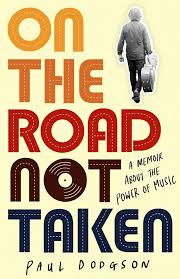
Niall Williams – This is Happiness
This is a sequel to History of the Rain, which I haven’t read yet, but whose title could equally be applied to the opening chapter here, which is all about the rain (it made me think of the fog of Bleak House’s opening pages), and what happens when it stops. The narrative is often funny, romantic, touching, and it moves with the rhythms of rural life (I was reminded occasionally of Jon McGregor’s Reservoir 13, although their styles are very different).
NON FICTION
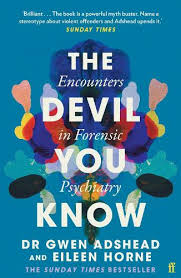
Gwen Adshead and Eileen Horne – The Devil You Know: Stories of Human Cruelty and Compassion
Many of these accounts are tough to read. But Adshead, a forensic psychiatrist and psychotherapist, starts by asking each patient about the start of their story, not about where they ended up. None of the desperately sad stories that emerge excuse in any way the crimes that these people committed, but what we’re being invited to do is to begin to understand how it is possible that someone can do such things, monstrous things, without being just a monster. Adshead starts with curiosity, and offers compassion – and hope that understanding might enable us to identify people at risk before they commit these crimes, provide better treatment for their mental illnesses.
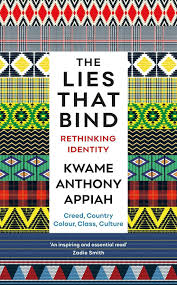
Kwame Anthony Appiah – The Lies that Bind: Rethinking Identity
Appiah’s Cosmopolitanism is a book to which I have returned more than once. He is in some ways the embodiment of that subject, the son of Ghanaian politician/lawyer Joe Appiah and Peggy Cripps, daughter of Sir Stafford Cripps (my parents knew the couple when we lived in Ghana in the early 60s), now a professor of philosophy and law at NYU and a naturalised US citizen. The Lies that Bind is another pressing and pertinent subject, and Appiah doesn’t underestimate the complexities of the issue of identity, nor does he present us with a definitive statement, rather, as the review in The Philosophers’ Magazine puts it, ‘a contribution to a conversation’. His writing is, as always, elegant and clear, and his arguments grounded in common sense, as he invites us to ‘simply recognise that our identities have been and can be lived in different ways and that their meanings are open and contestable’. This may not be enough but it gives us a way of starting to deal with these questions, recognising that identities are not and never will be fixed and final, and that we need to live with and be open to that complexity.
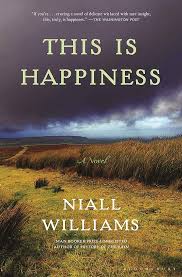
Andrea Ashworth – Once in a House on Fire
Narratives like this tend to get lumped together as ‘misery memoirs’. And there is misery here, for sure. Ashworth’s mother was involved with a succession of violent men, after the death of her father, and life for the children was precarious and terrifying. Various ‘new starts’ turned out to involve more of the same, as yet another man who appeared initially to be caring and protective took to using his fists when anything went awry. All of that makes for a tough read, but Ashworth is a very talented writer, and the vividness of her style lifts it. The review in Kirkus comments that ‘this self-portrait is stylistically fresh, written in short, cinematic bursts of memory, its strengths in its physical detail: images of her mother stewing her little sister’s dirty nappies in the kitchen, her evening-arriving stepfather’s key rattle and boot brush and scrape on the front doormat’, even if the tale it tells is ancient. It’s not without hope – for Ashworth, school and literature in particular offer her a way out, to a very different world.
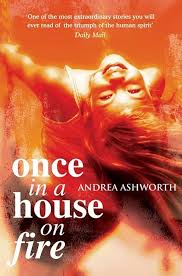
Bill Bruford – The Autobiography
Bruford has a most engaging style, wryly humorous, and a way with words. Reading this was an excellent prelude to seeing the man himself live with the Pete Roth Trio at Jazz Leeds, and took me back to the music I already have on CD. The book isn’t structured like a conventional chronological autobiography, rather it takes the questions that interviewers ask, and responds to them with anecdotes and insights.
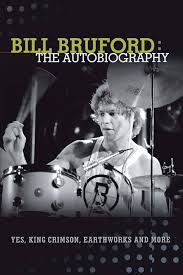
Paul Dodgson – On the Road Not Taken: A Memoir about the Power of Music
This is indeed about the transformational power of music. But it’s not the usual trajectory, from practising songs in the bedroom or garage to gigs to fame to the problems that brings… Dodgson was captivated by music, obsessed. But he didn’t quite have the courage to live out his dreams of performing to audiences. He lived a different life, but those dreams never quite left him and in middle age he finally sang his songs on stage. The memoir alternates between these different phases of his life, and it’s constantly engaging and often very touching.
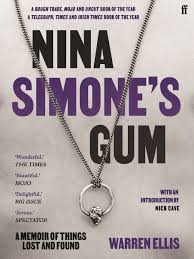
Warren Ellis – Nina Simone’s Gum: A Memoir about Things Lost and Found
It isn’t something I would do, to collect a used wad of gum just because it had been chewed over by someone I admired and loved. But Ellis makes his tenure of this odd memento make some kind of emotional sense as he charts its journey to becoming a museum exhibit cast in silver. Along the way he tells us of his own musical journey, including collaboration with Nick Cave. As odd as it still seems to me, this is a charming memoir.
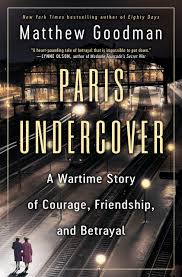
Matthew Goodman – Paris Undercover: A Wartime Story of Courage, Friendship and Betrayal
This is fascinating. Two well-off middle-aged women find themselves in France as the Nazi Occupation begins, and begin a clandestine life of arranging the escape of captured Allied servicemen. They were arrested, and Etta Shiber returned to the US via a prisoner exchange. What happened to her British friend Kate Bonnefous was much worse, and she barely survived. Shiber was persuaded to publish a book, Paris-Underground, giving a ghost-written and partly fictionalised account of their exploits (it was published in 1943 and made into an even less accurate movie). It’s that publication that brings about the last twist in the tale.
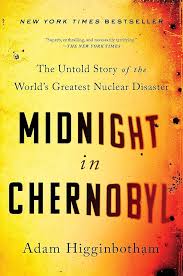
Adam Higginbotham – Midnight in Chernobyl: Untold Stories of the World’s Greatest Nuclear Disaster
This year marked forty years since the nuclear disaster in Ukraine that terrified the West, and helped to bring about the collapse of the USSR. That’s a gross over-simplification of course, but Higginbotham’s meticulous account shows how the Soviet culture of denial that anything could have gone so horribly wrong undermined its stability, as the truth inevitably emerged, both within and beyond its borders. It is often enraging, but it’s also heartbreaking to read the accounts of the people who went in, in good faith, to try to fix things, and those whose lives were ineradicably altered by the (literal) fallout. I watched a couple of documentaries marking the anniversary, and the excellent TV mini-series (see my Screen blog).
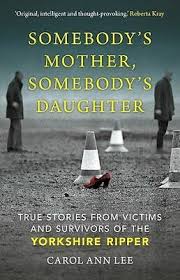
Carol Ann Lee – Somebody’s Mother, Somebody’s Daughter: True Stories from Victims and Survivors of the Yorkshire Ripper
I was hoping this would be the equivalent to Haley Rubenhold’s The Five, which reclaimed the stories of the original Ripper’s victims – it’s not quite that strong a piece of work, and in particular Lee dwells too much on what Sutcliffe did to these women. We know that already, as much as we need to, and it takes the focus away from the women to the man who murdered or tried to murder them. When Lee is focusing on the lives of the women, their working life, families, financial struggles, it’s an important corrective, and challenges the lazy assumptions that were made at the time (women of easy virtue/loose morals, sex workers) so that the distinction the police made between guilty and innocent victims is wiped out.
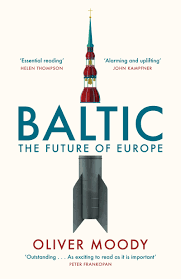
Oliver Moody – Baltic: The Future of Europe
I admit to not have read all of this, or not thoroughly. It was part of my preparation for visiting a part of Europe about which I knew very little, and I focused on the countries I was going to – Finland, Estonia and Latvia. Reading about the Singing Revolution and the human chain across Lithuania, Latvia and Estonia was brilliant background – our local guides talked about these events, particularly in Latvia where we saw the monument to those who barricaded the town against the Soviet would-be occupiers. It’s a very accessible account, well written and vivid.
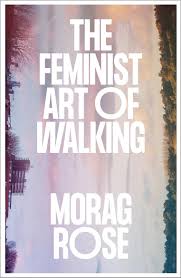
Morag Rose – The Feminist Art of Walking
Morag Rose – artist, academic, activist – is founder of the Loiterers’ Resistance Movement which for the last decade has been organising public walks, dérives, games and spectacles in Manchester and elsewhere. The book takes us back to cities which have played a part in Rose’s life, and explores what it meant and means to walk there, how the experience of walking changes, how it is different for women, and for anyone with an energy- or mobility-limiting condition. It’s fascinating, passionate, funny, personal and political.
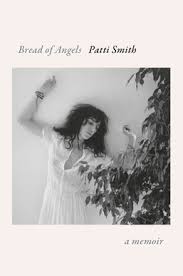
Patti Smith – Bread of Angels: A Memoir
I loved Just Kids, which focused on Smith’s relationship with Robert Mapplethorpe, and M Train, which expanded in a more discursive way on aspects of her life (including her love of Midsomer Murders). Here she takes a slightly more conventional autobiographical approach, and it’s often deeply moving, particularly when she talks about the loss of her husband (that was always going to hit me particularly hard), but there are so many other losses.
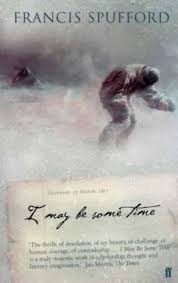
Francis Spufford – I May be Some Time: Ice and the English Imagination
Taking his title from Captain Oates’ farewell words to the other members of Scott’s Antarctic expedition, Spufford (one of the most interesting novelists of recent times) explores why this failed adventure resonates so powerfully with us, and the lineage of exploration which gives it a context. It’s fascinating, beautifully written, and got into my head so much that I sought out music that responded to those icy landscapes. Fittingly, I was heading north after finishing this, and seeing the huge Icebreakers in Helsinki harbour reminded me of it again.
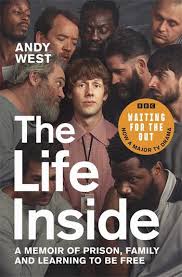
Andy West – The Life Inside: Memoir of Prison, Family, and Learning to be Free
This was the source for the brilliant TV drama, Waiting for the Out (see my Screen blog). West teaches philosophy in prisons, and it is those abstract notions – shame, time, love – that structure the book. But there’s also West’s family – his father, uncle and brother have spent time inside, and he feels that vicarious shame, and argues constantly with ‘the executioner in [his] head’, ‘a conflict between two features of his identity: how he sees himself and the part of him that is shaped by his family’, as Krista Thomason puts it in her review of the book: ‘West’s shame is a continually pressing internal question about who he really is’.
Poetry
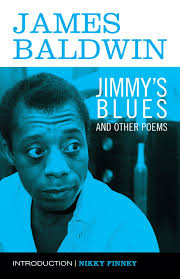
I think I’ve read pretty much everything else by James Baldwin, whose novels, short stories and essays have huge power for me. But I didn’t realise that he had published poetry. I can’t read these without hearing that distinctive voice, the cadences of the church and of the blues. They are infused too with the fire of his politics – see the long first poem, ‘Staggerlee Wonders’. The poems vary stylistically, and some feel like song lyrics – given Baldwin’s stated desire to write like a blues singer that’s not much of a stretch. In not only his fiction but his essays, Baldwin’s voice is not only resonant with church and blues/jazz but is always strongly narrative. In his famous televised debates he uses narrative – the narrative of slavery above all – to confound the patronising arrogance of his opponents. There’s less space for that here perhaps, although it’s certainly not absent, but Baldwin’s voice is still always vital, never more so as the achievements of the civil rights movement are challenged and undermined.
Pete Green – Hemisphere/The Meanwhile Sites
Green’s Sheffield Almanac is one of my favourite contemporary poems, and these two publications only add to my love of his work. Hemisphere is ‘the story of an impossible journey, told in verse, which circumnavigates the politics of interaction between people, places and poetry. On a chaotic round trip from the Hebrides across the north Atlantic, Canada, Alaska and Siberia, the poem invites reflection on government and nationality, geography, language and ‘post-truth’, fertility, decay, and imagination.’ And The Meanwhile Sites explores transitory and marginal places, with wit, invention and humanity. Poet/novelist Helen Mort says ‘Pete Green’s poems dislike fences and I love them for that. They are feral, elegant, beautifully observed. I recommend following where they lead you.’