Posts Tagged Holocaust
Three Cities – Vienna, Prague, Berlin
Posted by cathannabel in History, Personal, Second World War, The City, Visual Art on August 4, 2024
For most of my life, I’ve been fascinated by cities. My teenage years were spent in a rather ordinary dormitory village but I headed regularly for the nearest proper city (Nottingham) for shopping and football, and the annual Goose Fair. I’d previously lived in Kumasi (Ghana’s second city), and Zaria in the north of Nigeria. When I went off to University I settled in Sheffield where I still live, despite a few years commuting to Manchester, and a very brief period commuting to Leicester. My PhD thesis explored ideas about the city, about navigating and failing to navigate it, about the city as labyrinth, looking particularly at Manchester and Paris. And my idea of a really good holiday would be less likely to involve a beach (though a city that happened to have a beach would be quite appealing), but would definitely involve a lot of walking around in a city with heaps of history and culture.
A few years ago, I started to formulate an idea for such a holiday, encompassing two or three European cities, with as much as possible of the travel being by train. The idea never got very far when everything shut down, and we were barely starting to think again about travelling when M died, very suddenly, early one morning in October 2021. In the shock and grief that followed, I wasn’t really thinking about holidays in any practical way, but it did occur to me early on that they would be a challenge.
I can’t see myself travelling alone for any other than the simplest journeys. I take the train up to Dundee a couple of times a year to stay with friends, but always pick the direct trains, and I know I’ll be met at the station, and I went to Rome alone in December 2022, but was met at the airport, and had family to stay with. My biggest challenge in travelling alone is my highly deficient sense of direction. I got lost in Amsterdam on what should have been at most a ten-minute walk from my hotel to the conference venue – heck, I got lost in Leeds (with a similarly deficient friend) trying to get from the Trinity centre to the Grand Theatre. So the thought of a city break on my own is just too intimidating to contemplate – and of course the idea of getting lost in an unfamiliar city alone is something that triggers the hardwired caution that comes from growing up female. Add to this the fact that I am short and not particularly strong, and struggle with any case larger than a weekend holdall, so often have to rely on the kindness of strangers to get luggage on and off trains.
More than this, the pleasure of such a trip would be so diminished if I had no one to share it with. I’d need a travelling companion, and it would have to be a travelling companion who was (a) taller than me – not a major difficulty, most grown-ups are, (b) gifted with a good sense of direction, and (c) interested in the same sorts of things that I am, including with a high tolerance for WW2 history.
I said something about this dilemma one afternoon, sitting with my offspring, not long after M died. At which point the solution became obvious – my son A is (a) taller than me, (b) has an almost supernatural sense of direction and (c) is as much of a history geek as I am, with a similar interest in WW2. I started turning over in my mind what my ideal destinations would be, and Vienna, Prague and Berlin seemed to present the perfect mix of art, architecture and history, with a lot of WW2 and Holocaust sites to visit.
We started planning in earnest, once I’d checked with him that he wasn’t merely being kind when he agreed to go, but actually liked the idea, and worked out timings, and a wish list of places to go and things to see.
I decided, fairly early on in the planning, that whilst sites associated with the Jewish populations of those cities, and museums and memorials recording the destruction of those populations, were high on my list of places to visit, there would be no concentration camps. If I go back to Prague with more time, I will perhaps take a trip out to Terezín, but it was not a priority on this trip. A had visited Sachsenhausen on an earlier trip to Berlin (with school) but had no desire to go back again. This was the right decision – the history of those Jewish communities was less familiar to me than the history of the camps, and what I wanted was to honour the Jewish history of all three cities, and to see the people behind the statistics, in the Stolpersteine on the pavements, in the names on the battered suitcases from Theresienstadt, in the names painted on the walls of the synagogue.
This is a Holocaust heavy trip. I have been reading about and studying the Holocaust since I first encountered Anne Frank when I was probably around the same age as her, and I believe that if we do not understand it, or at least attempt to, we restrict and distort our understanding of post-war politics, history, art, literature and music, even of humanity. It was a significant thread in my PhD thesis, not just the Holocaust itself but how it can be written about, and I have often wrestled with the question of how – indeed, whether – fiction about the Holocaust can shed light. So, whilst I do totally understand why people would choose not to go to these sites, not to read those books or watch the documentaries, it is important to me to do so, to continue doing so. All that I have read, all that I know, has never desensitised me to its horror and it will never do so – the names and photographs, the individual stories, can and do still punch me in the gut. But I don’t go to these sites to get that gut punch, I go to continue to build my knowledge and understanding – and to pay my respects.
Part of my interest in visiting these three cities was to reflect on how they differ, and in particular how they approach their own WW2 history. Austria has described itself as Hitler’s first victim, but it is of course not quite that simple – there was enormous support for the Nazi party, and a long history of virulent antisemitism in Vienna, that ran alongside the major Jewish influence in culture and the arts as well as in business and politics. Czechoslovakia was, entirely straightforwardly, a victim of Nazi aggression, and Prague’s Holocaust memorial takes the form, most powerfully, of the names of the dead, painted on the walls of a synagogue. Berlin deals with its past – both the Nazi era and the injustices and brutalities of the DDR – with candour and without excuses, and its memorial is not about the Jews of Berlin or of Germany, but all of the murdered Jews of Europe.
This blog isn’t a guide to or a history of any of these cities. It’s an attempt to capture the experience, and my reflections on the experience, to help me remember it in all its richness. And I’ve included some of the research I did after we returned home, to find out, where possible, the stories behind the names on the Stolpersteine and other plaques, because for me this was a vital part of the trip. It is an entirely personal mix of anecdote, history, images and quotations and as such may not be a reliable source for anyone else’s city wandering…
Note: for clarity, I have used Terezín as the name of the Czech town, and Theresienstadt as the name of the Nazi ghetto/concentration camp which was created there. I have tried to be consistent with spellings, but Czech names are often to be found in multiple variants, so some inconsistencies may have slipped through.
VIENNA
We arrived on Monday evening, flew in from Manchester and got a train from the airport to the Hauptbahnhof, from where we just had to cross the road to get to our lovely hotel, Mooons (comfortable and welcoming – we were tired and a bit stressed after we’d checked in, having had a slightly less straightforward journey from the airport than we’d anticipated, and Sven the barman sorted out food and beers for us so we started to chill out and enjoy planning our time). We made the most of our two full days in the city – though there is plenty we didn’t see, buildings that we saw from the outside but didn’t go round, for example – I clocked up 59k steps, 40.5 kms. We managed to find some proper Viennese food – e.g. schnitzel and goulash, and good beer (I went for the darker beers, less lagery).
Tuesday:
From our very modern hotel, we were only a few minutes from the beautiful Belvedere Palace – we walked through the gardens which for me had strong Marienbad vibes (as in Alain Resnais’ French new wave masterpiece, Last Year in Marienbad, a film which has fascinated and haunted me for many years, and which I’ve previously blogged about on this site).
On to the Stadtpark, where we found a rather blingy statue of Strauss, and more tasteful ones of Bruckner and Schubert.


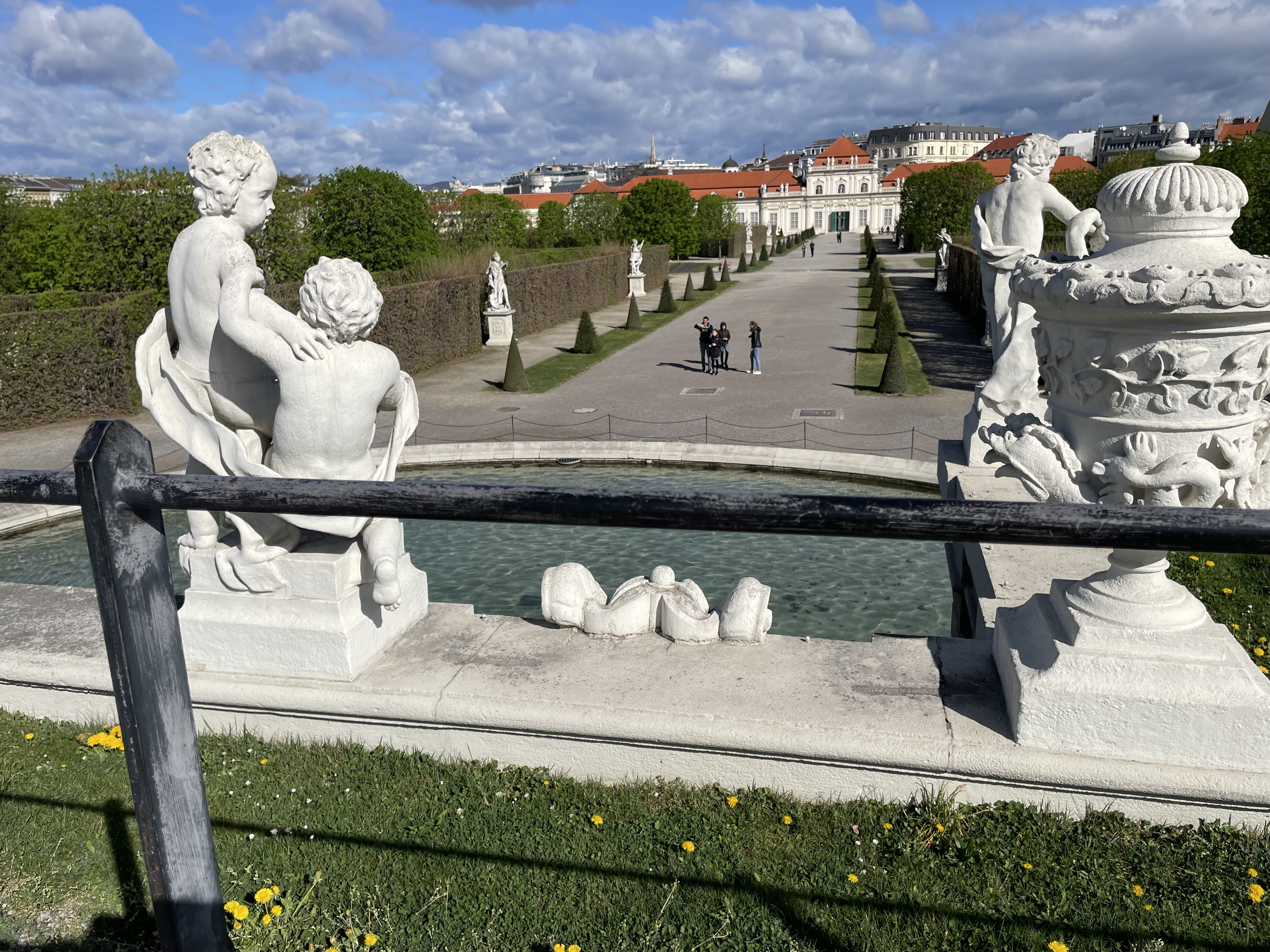
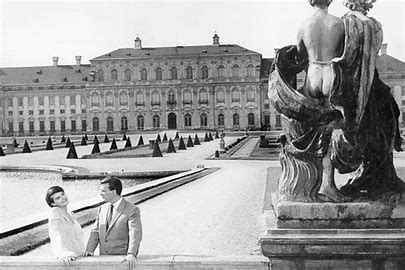

Clockwise: Mooons Hotel, Belvedere Palace, gardens and fountains, Last Year in Marienbad, Strauss statue in the Stadtpark.
Walking by the Danube – here there was graffiti, a lot of it political, e.g. re climate change. In general in Vienna, there was no litter, and an orderliness evident in what happened at pedestrian crossings, where no one walked until they were told to walk. It felt a lot safer than, say, crossing a road in Rome, where one feels as if the only way to ever get across is to walk and hope one isn’t immediately mowed down. (A told me of waiting in vain for the right moment at a crossing point in Rome, and another tourist facing the same dilemma saying cheerily, ‘OK, when in Rome…’ and launching himself into the traffic. The cars and bikes do weave around you but it never even starts to feel safe.)
There are two Jewish museums in Vienna. First up was the Museum Judenplatz, built around the excavated remains of the earliest synagogue in Vienna, destroyed in 1421 by order of Duke Albrecht V. It has a fascinating collection building up a picture of that early Jewish community, and of the exploration of the remains. The Jüdisches Museum nearby continues the story of Vienna’s Jewish population through the centuries. But there is a strange sense of a hiatus – not that the Holocaust is omitted but compared to Prague and Berlin, it is arguably underplayed, the job left to the bleak Whiteread memorial in the Judenplatz. This is a bunker, whose walls are made up of books with spines facing inwards to represent the victims whose names and stories are lost, 65,000 Austrian Jews. The names of the camps and other locations where they were murdered are inscribed around the memorial.
Stolpersteine (Schwedenplatz): Here there are three individual stones, and a plaque in memory of 15 unnamed Jewish women and men who lived here before they were deported and murdered (no details given) by the Nazis. The Stolpersteine commemorate Anna Klein, b. 14 Jan 1885, Josefine Steinhaus, b. 21 May 1884, Helene Steinhaus b. 3 August 1885. Deported to Maly Trostinec 27 May 42, killed 1 June 42. Maly Trostinec/Trostinets, a village near Minsk in Belarus, was not a location I was familiar with. Throughout 1942, Jews from Austria, Germany, the Netherlands, Poland, and the Protectorate of Bohemia and Moravia were taken there by train and then shot or gassed in mobile vans. According to Yad Vashem, 65,000 Jews were murdered in one of the nearby pine forests, mostly by shooting, but some estimates are much higher, up to 200,000.
Vienna State Opera (Staatsoper) We’d decided against trying to get tickets for any performance here because (a) cost, (b) I haven’t managed to entirely convert A to opera and (c) we didn’t want to commit an evening. That was the right choice – we walked for miles (see above), and in the evenings just wanted time to chill with some nice Austrian beers and talk over what we’d seen and make our plans for the following day. But the building itself is obviously magnificent. And we had seen inside anyway, in Mission Impossible: Rogue Nation…


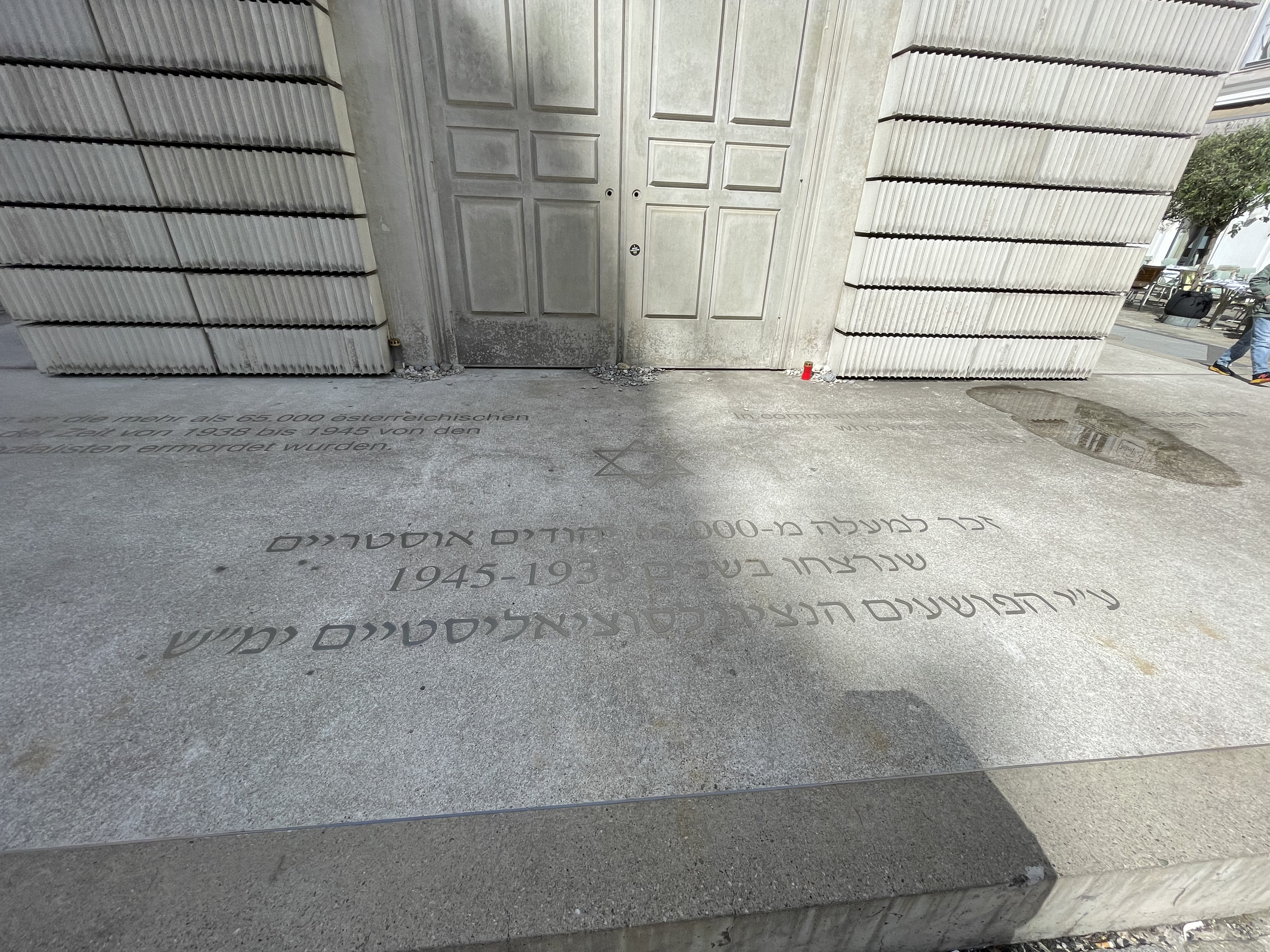


Clockwise: Stolpersteine, graffiti by the Danube, Judenplatz, Whiteread Holocaust memorial, the Opera house and nearby street
St Stephen’s Cathedral (Stephansdom). As in Paris, the survival of this and other fine buildings was achieved by a refusal to carry out orders. The City Commandant had ordered the Cathedral to be reduced to rubble, but this was not carried out – unfortunately, as the Red Army entered the city, looters set fire to shops nearby, which spread and damaged the roof and destroyed the 15th century choir stalls. Much was saved, however, and reconstruction began immediately after the war, with a full reopening in April 1952.
Watching The Third Man makes one realise just how badly Vienna was damaged during the war – not devastated like Berlin, Hamburg, Dresden, but, as Elisabeth de Waal puts it, ‘desultory bombing by over-zealous Americans on the verge of victory, and the vindictive shelling by desperate Germans in the throes of defeat’ had resulted in ‘the gaps in the familiar streets, the heaps of rubble where some well-remembered building had stood’ (The Exiles Return, p. 57). One would not know it now. Clearly, given the fear that rebuilding would destroy the character of the city, the choice was made to rebuild it as it had been, as far as possible. Which gives Vienna that feeling of being preserved in aspic, a slight unreality.
We went a bit further afield, out to Schonbrunn Palace. We didn’t go round the palace itself, preferring to explore the gardens, and head up the hill to the Neptunbrunnen and the Gloriette, to enjoy the view, which was indeed glorious.

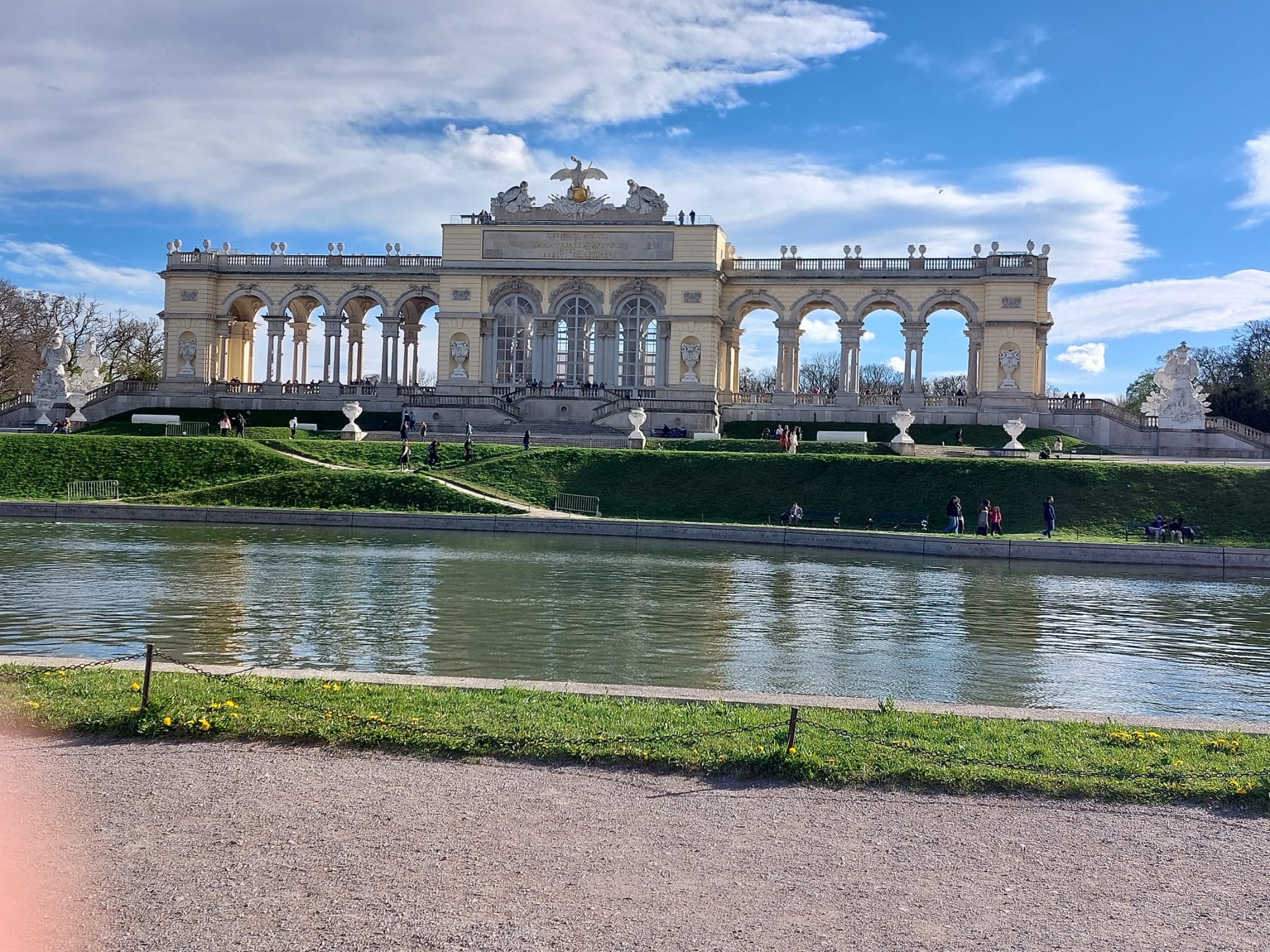

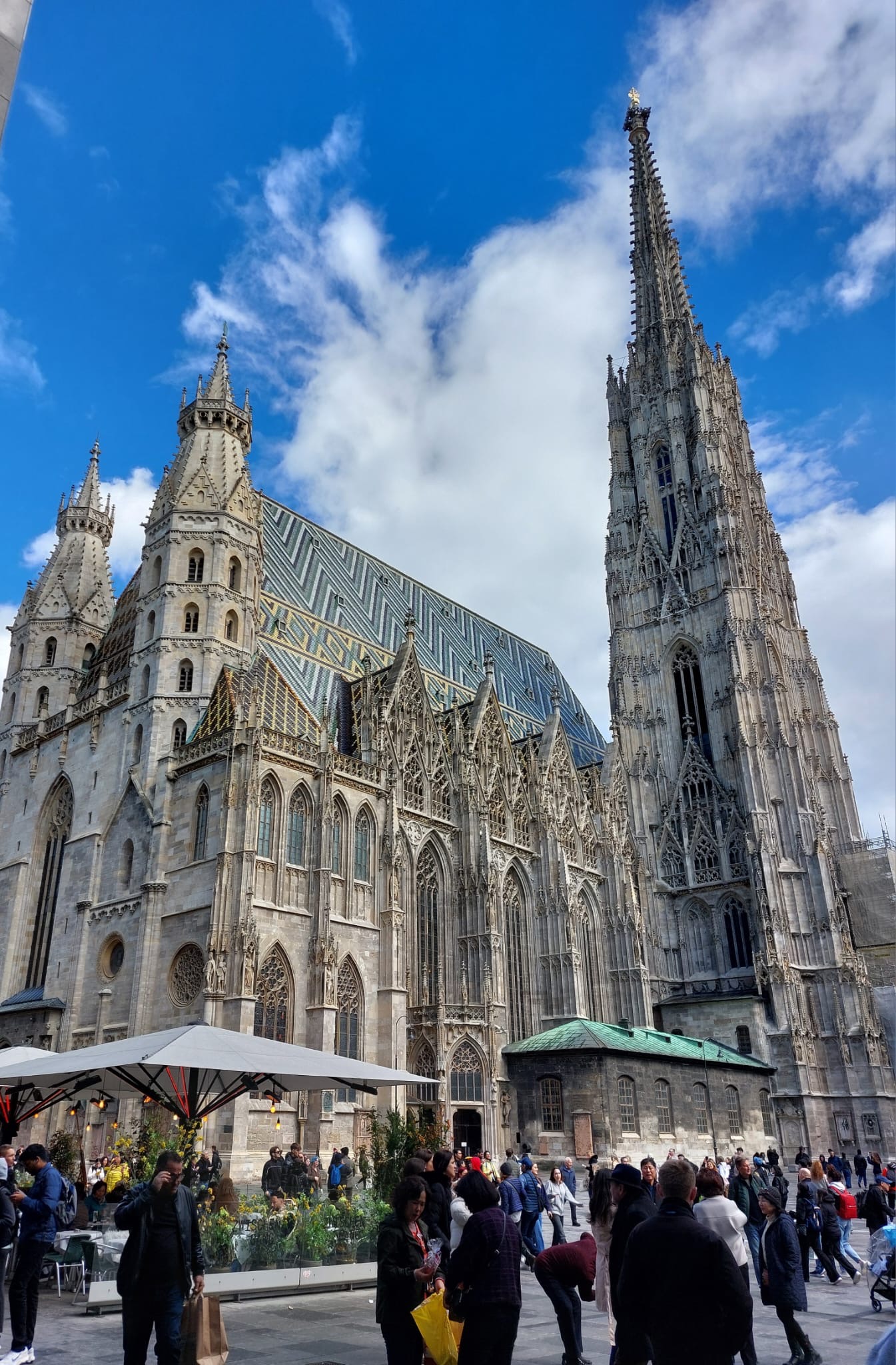


Clockwise: Schonbrunn Palace, Gloriette and Neptune fountain; Stephansdom
Maria am Gestade church – one of the oldest churches here, built 1394-1414
Memorial to liberating Soviet soldiers (Heldendenkmal der Roten Armee/Heroes’ Monument of the Red Army), in Schwarzenbergplatz, featuring a twelve-metre figure of a Soviet soldier. This was unveiled in 1945. It seemed to me remarkable that it was built so soon after the war ended, but then I hadn’t realised either that Vienna was liberated by the Red Army, or that in the hiatus before the other Allied Forces arrived, there was a real possibility of Stalin occupying all of Vienna. The memorial is about heroism in battle, not about the violence, particularly sexual violence, inflicted on civilians during and after the battle, and has been controversial and subject to vandalism over the years, including very recently in response to the invasion of the Ukraine.
Wednesday:
Stolpersteine: Paula Wilhelm (née. Mandl), born 6 April 1887, deported 29 April 44 to Auschwitz; and Dr Max Neustadtl who fled to France but was deported on 25.3.43 to the Sobibor extermination camp and murdered.
Vienna’s second Jewish Museum focuses on the later Jewish communities, covering the period of Nazi rule, but not dealing in great depth or detail with the Holocaust.
One fascinating display here is part of the collection of netsuke whose story is told in Edmund de Waal’s The Hare with the Amber Eyes. These are the Japanese miniature sculptures which belonged to the Ephrussi family, and which were kept out of the hands of the Nazis, unlike most of the contents of the Palais Ephrussi. Six weeks after the Anschluss, the family servant, Anna, was required to pack away the belongings of her former employers. There were lists, of course, to ensure that everything was accounted for. But each time that Anna was in the Baroness’s dressing room, she slipped a few of the netsuke into her apron pocket, and hid them in her room. In December 1945, Anna gave Elisabeth de Waal 264 Japanese netsuke.
‘Each one of these netsuke for Anna is a resistance to the sapping of memory. Each one carried out is a resistance against the news, a story recalled, a future held on to.’ (Edmund de Waal – The Hare with the Amber Eyes, pp. 277-83)


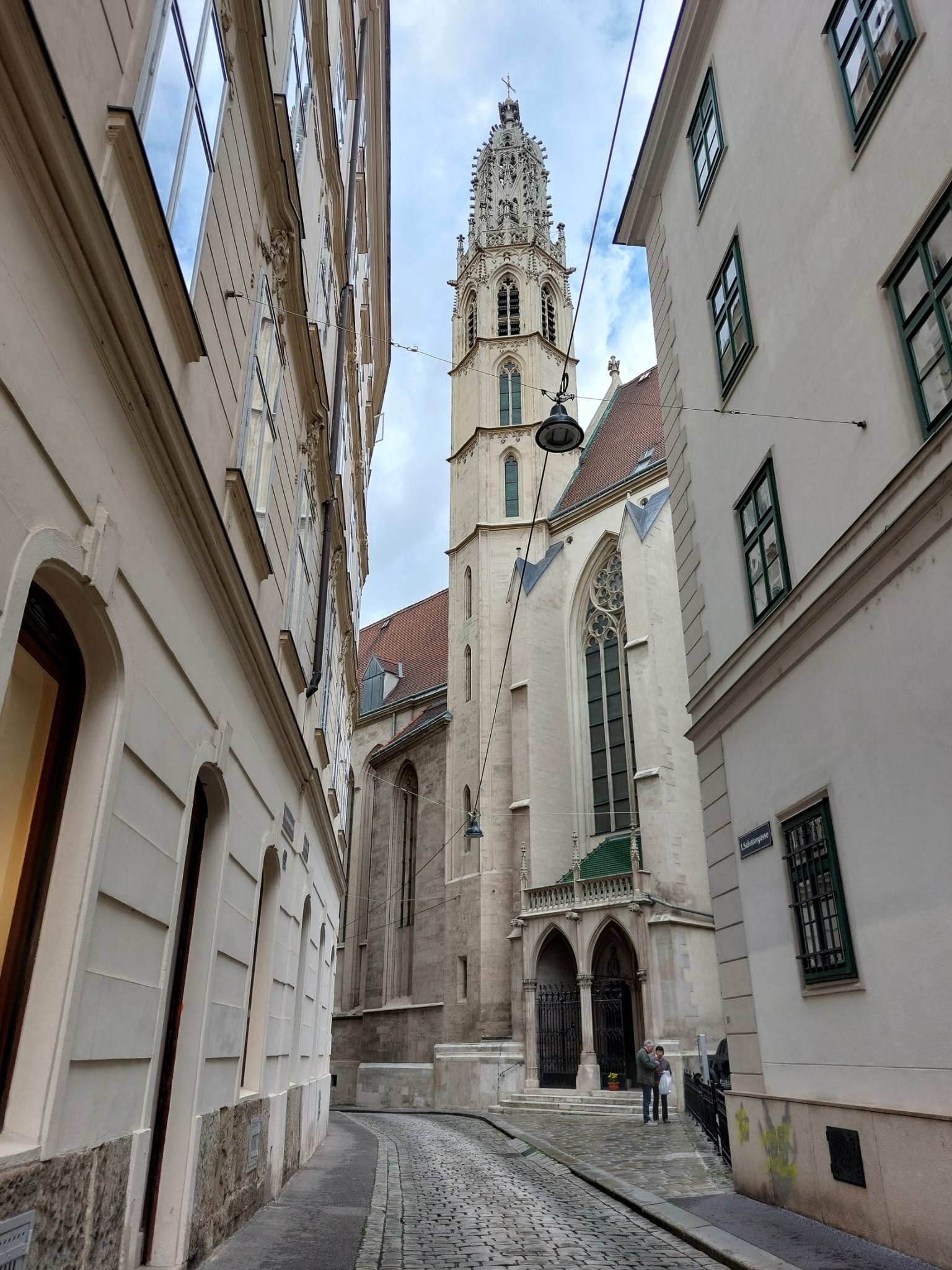

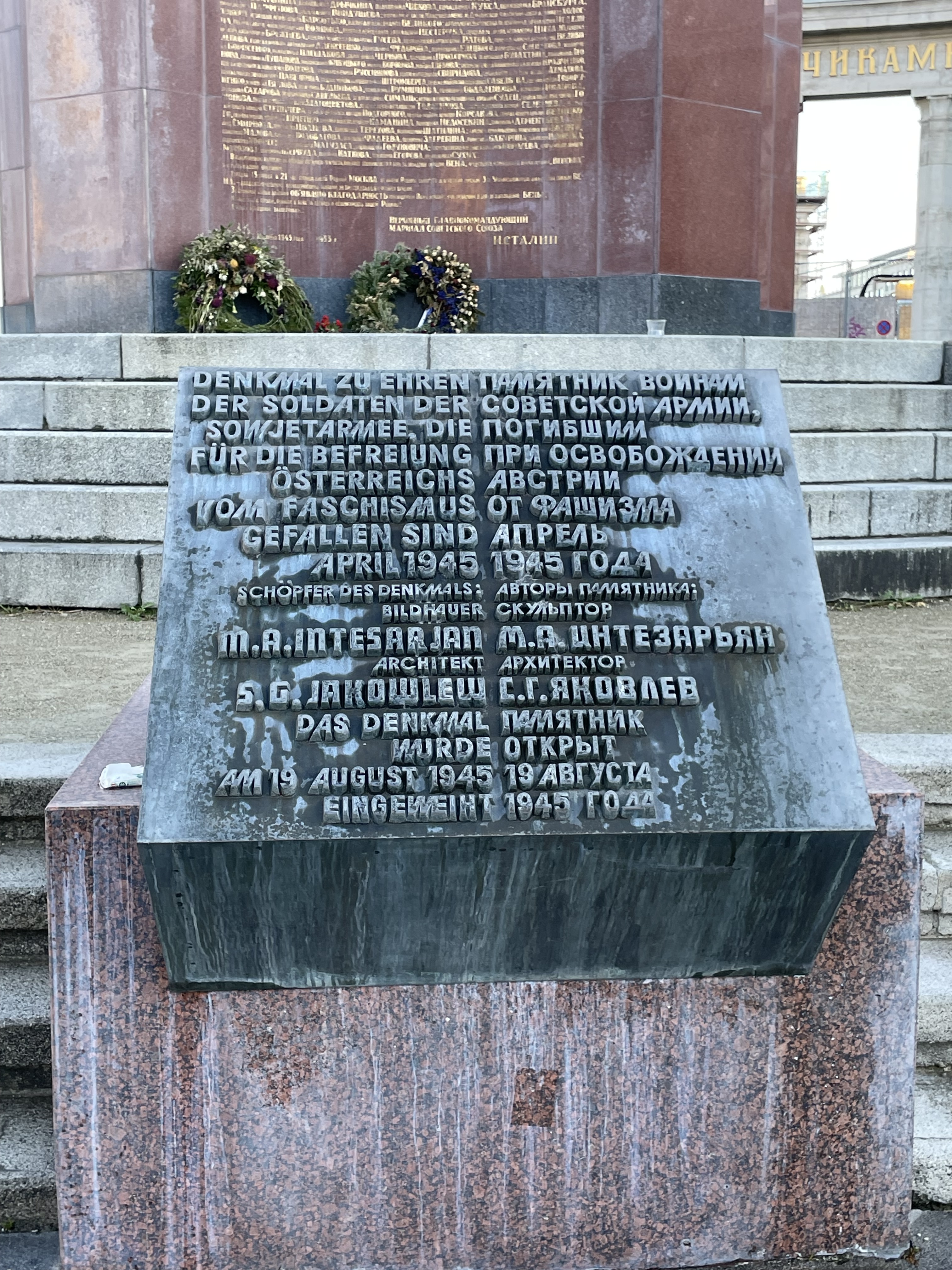
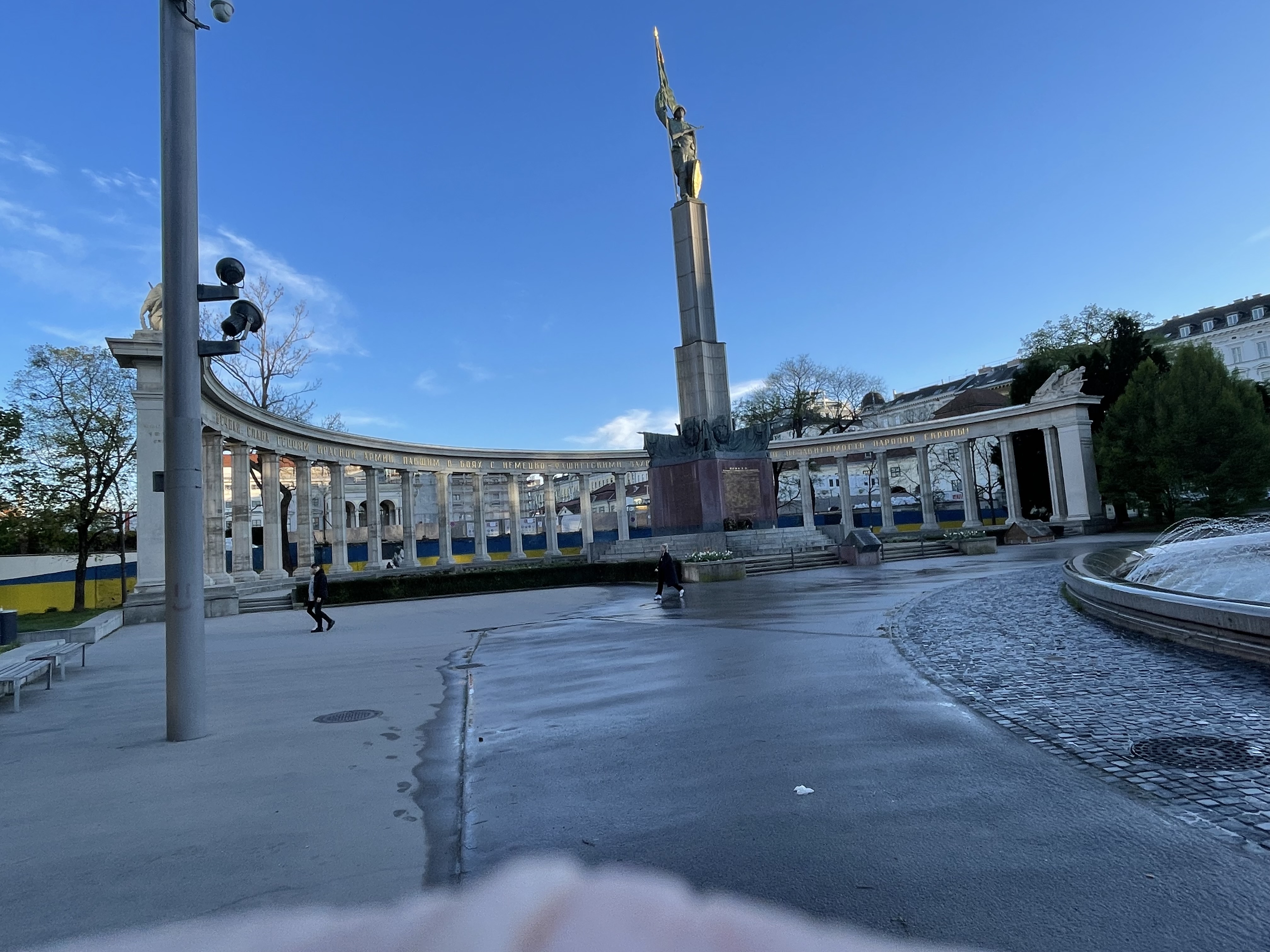
Clockwise: Stolperstein for Max Neustadtl, netsuke in the Jewish museum, Maria am Gestade church, stolperstein for Paula Wilhelm, Heroes Monument of the Red Army
A plaque on Herminengasse gives the names of Jews who lived here, in what was once part of the Jewish ghetto. Many Viennese Jews were forced to live here, until they were deported to various killing sites. Several were killed in Izbica (a town in Eastern Poland, which was turned into a ghetto) – all show the same date of death, 5 December 1942, when the inhabitants of the ghetto (Polish Jews, and those deported from Germany and Austria) were murdered. Those who escaped this massacre were deported again, to Treblinka, Maly Trostinec, Łódź Ghetto, Riga Ghetto, Theresienstadt, Sobibor, Stutthof. I know nothing about these people, other than their age, and where they were killed. But I can see that Oskar Koritschoner was only 20 years old when he committed suicide. Maly Trostinec was the place where 13-year-old Regine Frimet and 3-year-old Ernst Elias Sandor were murdered. And Josef Weitzmann, the last of these to die, was killed in Stutthof concentration camp, in 1944, just after the facilities for mass murder had been set up there. He was 18.
We found the Palais Ephrussi, on the Ringstrasse (see, again, The Hare with the Amber Eyes). I had had an insight into the efforts to trace the plundered contents of the Palais, from Veronika Rudorfer who I met in December 2019 at a conference, when she gave a talk on that project, and subsequently, very generously, sent me a copy of her beautiful book about the Palais itself.
The Burg Theatre – Sarah Gainham’s excellent novel Night Falls on the City has a lot of the action taking place at the Burg theatre, as her protagonist is one of its leading actors. One wouldn’t know that this building was largely destroyed in bombing raids during WW2, and then by a fire subsequently, and has been rebuilt.
Votivkirche (Votive Church) is a gorgeous, somehow delicate looking church, one of the most beautiful in a city of beautiful churches. It is in a neo-Gothic style and was built to thank God for the Emperor Franz Joseph’s survival of an assassination attempt in 1853.


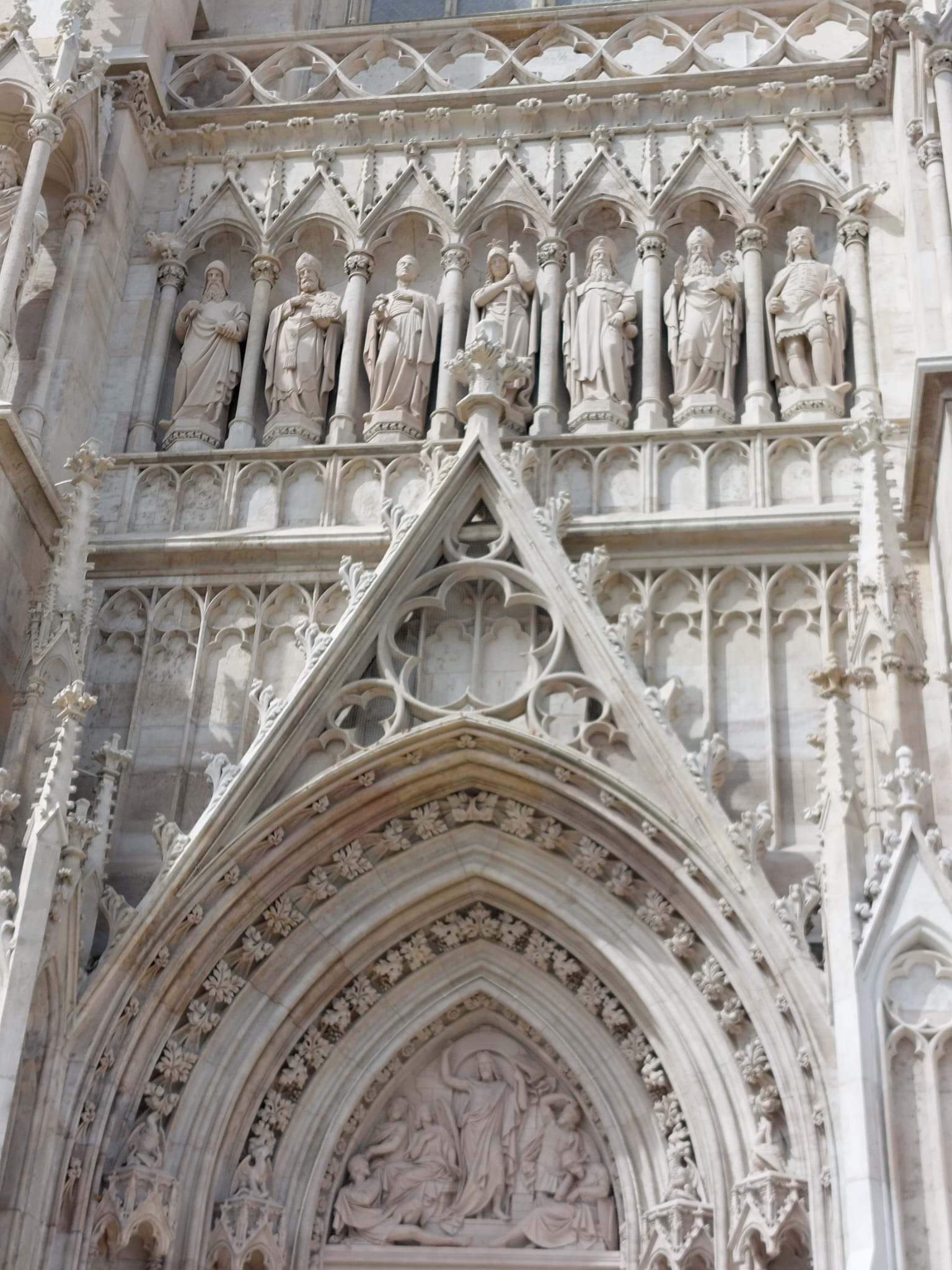

Clockwise: Burg Theatre, Herminengasse plaque, Palais Ephrussi, Votivkirche
We saw the Rathaus – Vienna City Hall – and walked through the Burggarten where we found a statue of Mozart. Then the Resselpark (Karlsplatz), where we saw Sarah Ortmeyer and Karl Kolbitz’s 2023 memorial for homosexuals persecuted by the Nazis: ‘Arcus – Shadow of a Rainbow’, the colours of the rainbow changed to grey, combining grief and hope. There’s also a Brahms statue here, which I like very much.
On to Heldenplatz (Heroes Square), in front of the Hofburg Palace.
‘The two over lifesize equestrian statues on high pedestals are what give it its name, two great military commanders on rearing horses with flowing manes and tails in the Baroque style, one carrying Prince Eugene of Savoy and the other the Archduke Charles, brother of the first Emperor Francis who, in one victorious battle, had stemmed for a while Napoleon’s advance on Vienna. … And yet, with all their panache, there is so little boastfulness in this square. What first meets the eye and impresses the mind are the broad avenues of chestnut trees lining it on three sides … They give the square its peaceful, almost countrified look; they are conducive to slow perambulation and quiet contemplation.’ (Elisabeth de Waal – The Exiles Return, p. 227)
In sharp contrast to the above description, this is where Hitler made his announcement of the Anschluss after his triumphant arrival in the city.

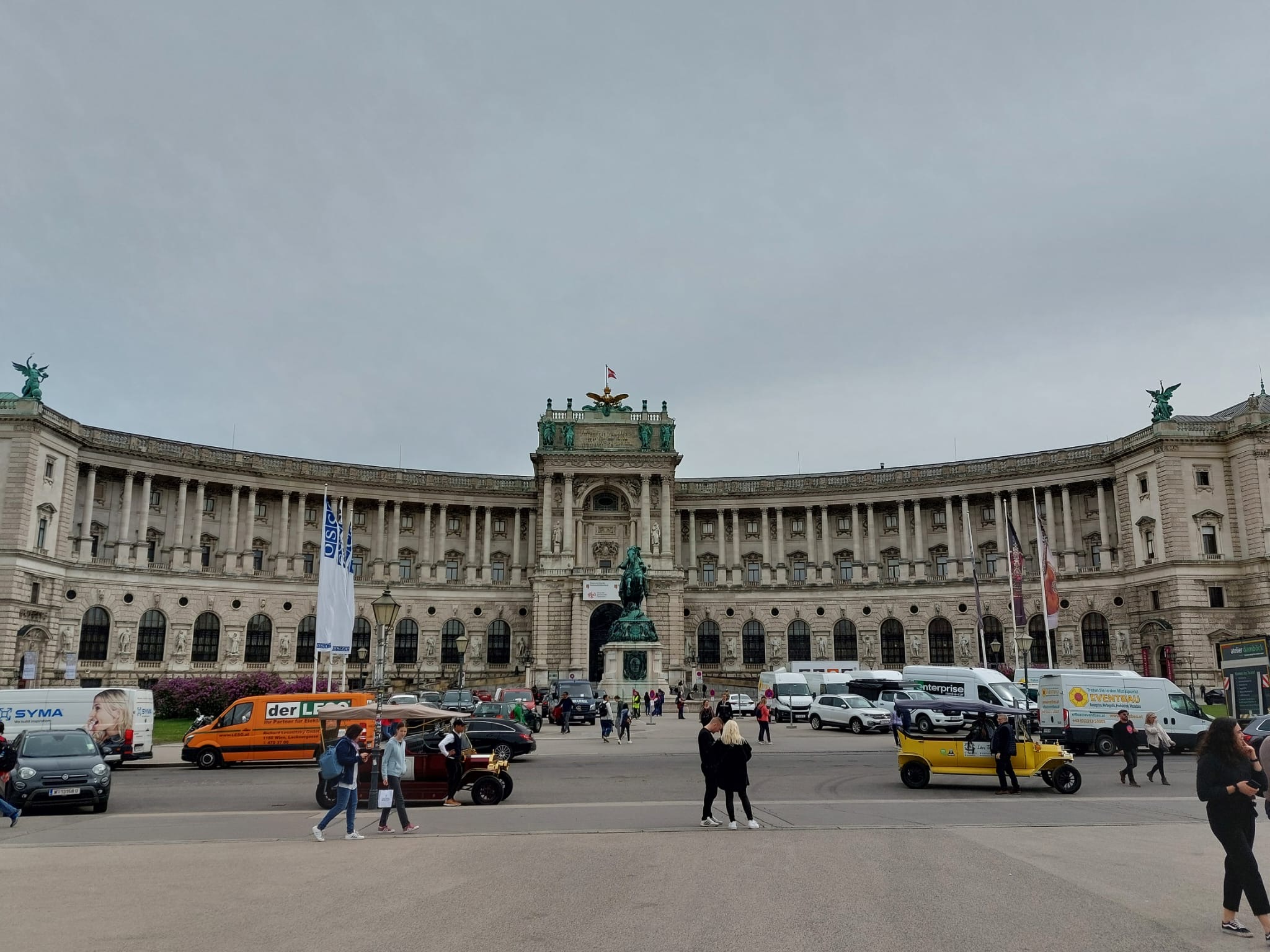


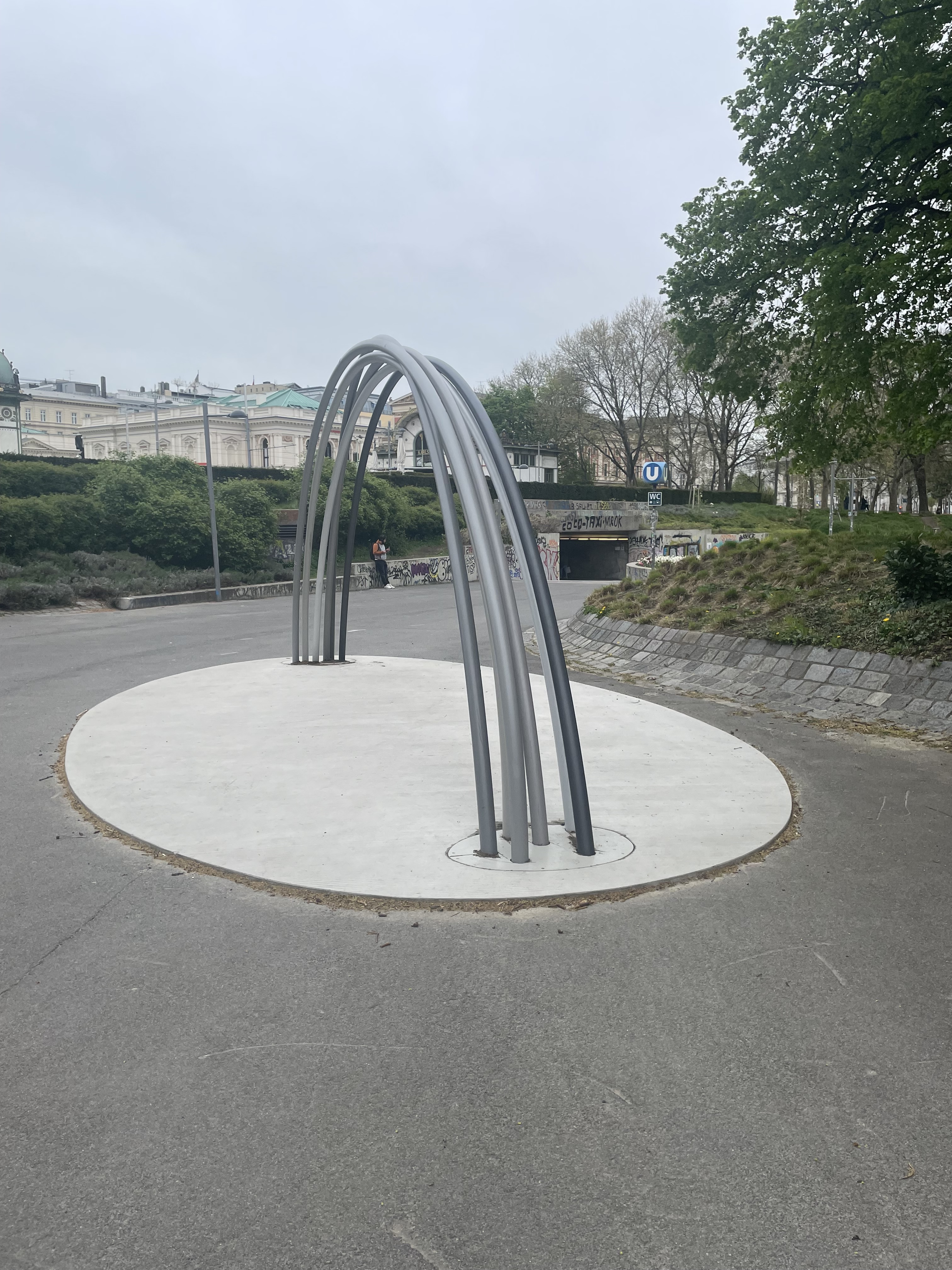
Clockwise: Brahms statue in Resselpark, Heldenplatz, Mozart statue, Rathaus, Arcus memorial in Resselpark
Parliament Building – another building that was seriously damaged in WW2 and the restored to its former glory. In front of it is the Pallas Athene Fountain – apart from Athene (statuary in Vienna is often Graeco-Roman in subject matter and style) it represents the four major rivers, the Danube, Inn, Elbe and Vltava (Moldau in German).
Hofburg Imperial Palace – the official residence and workplace of the President.
Schwarzenberg Monument, commemorating Karl Philipp, Prince of Schwarzenberg’s victory at the battle of Leipzig in 1813. Yet another equestrian statue (I cannot help it if the Bonzo Dog Doodah Band come to mind when I see these).
Here comes the Equestrian Statue
Prancing up and down the square
Little old ladies stop ‘n’ say
“Well, I declare!”Once a month on a Friday there’s a man
With a mop and bucket in his hand
To him it’s just another working day
So he whistles as he rubs and scrubs away(hooray)
(Bonzo Dog Doodah Band, ‘The Equestrian Statue’ (N. Innes), Gorilla, 1967)
Haus der Musik (Klangmuseum – museum of music and sound) is in the Palace of Archduke Charles, where the founder of the Vienna Phil lived around 150 years ago. The focus is on composers for whom Vienna was significant, with interesting material on Beethoven, Schubert, Mozart, Mahler, Schoenberg and others (not just biographical), as well as fun stuff about the science of music, my first encounter with a virtual reality headset (I didn’t do very well).


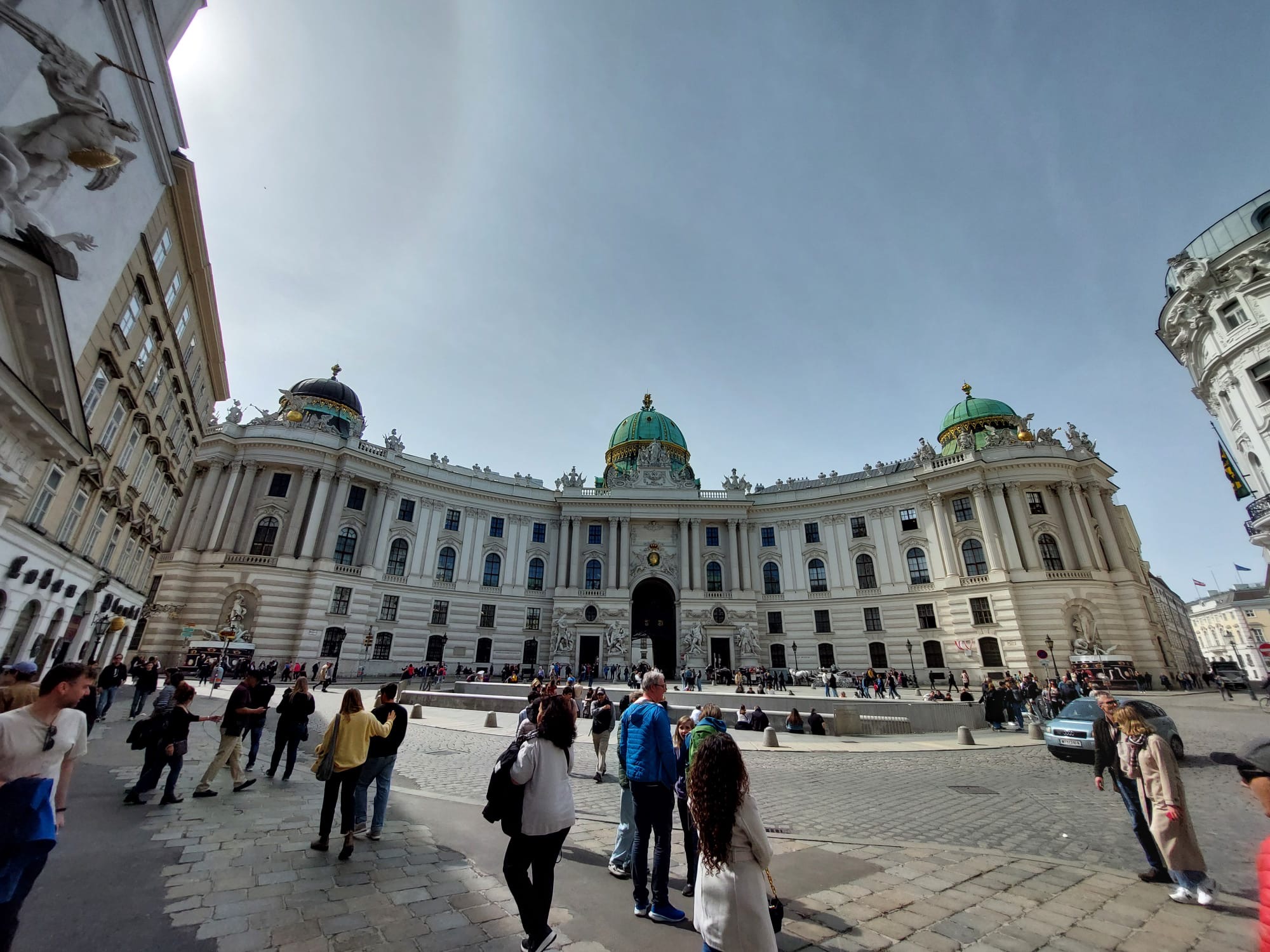
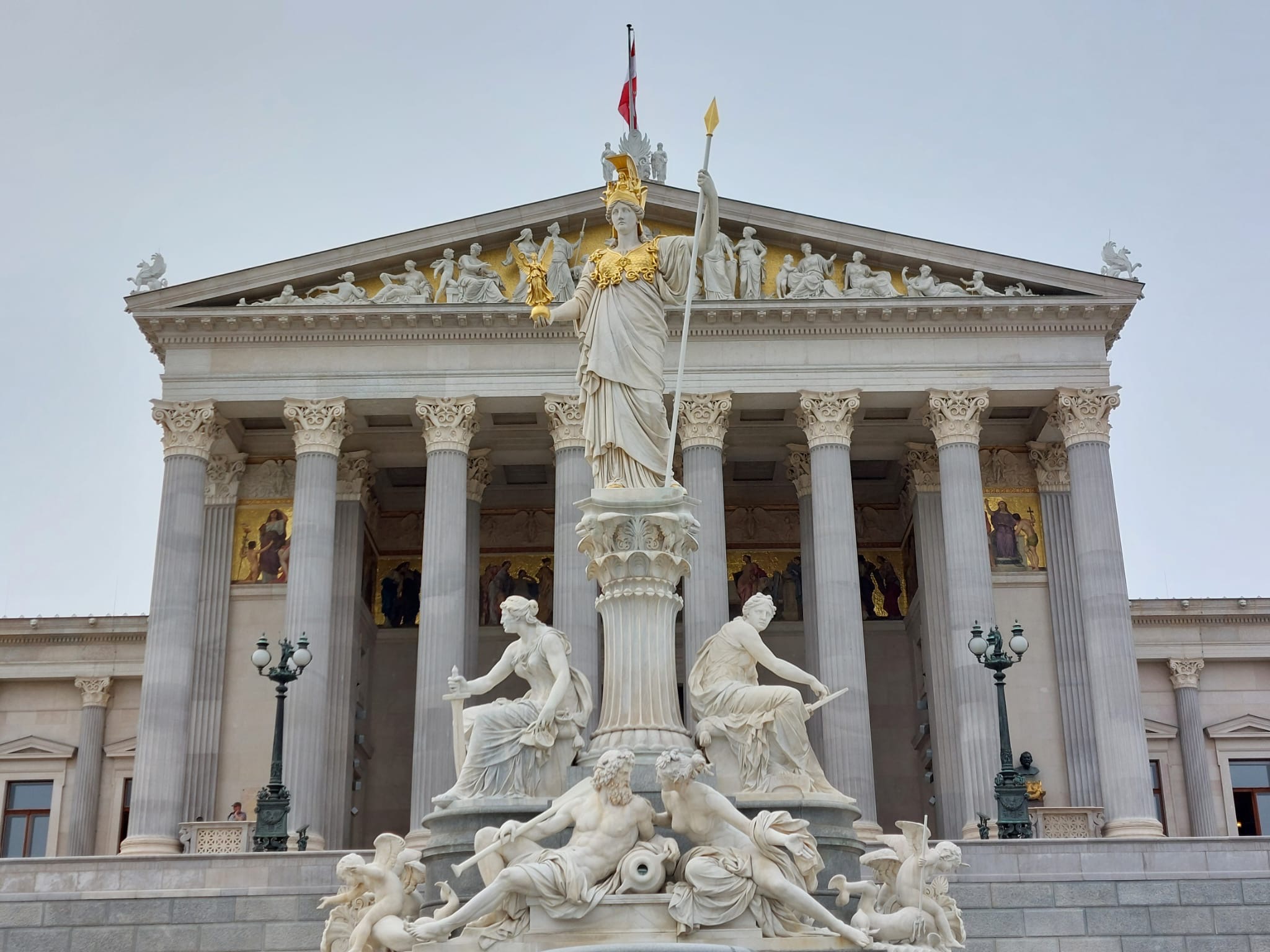
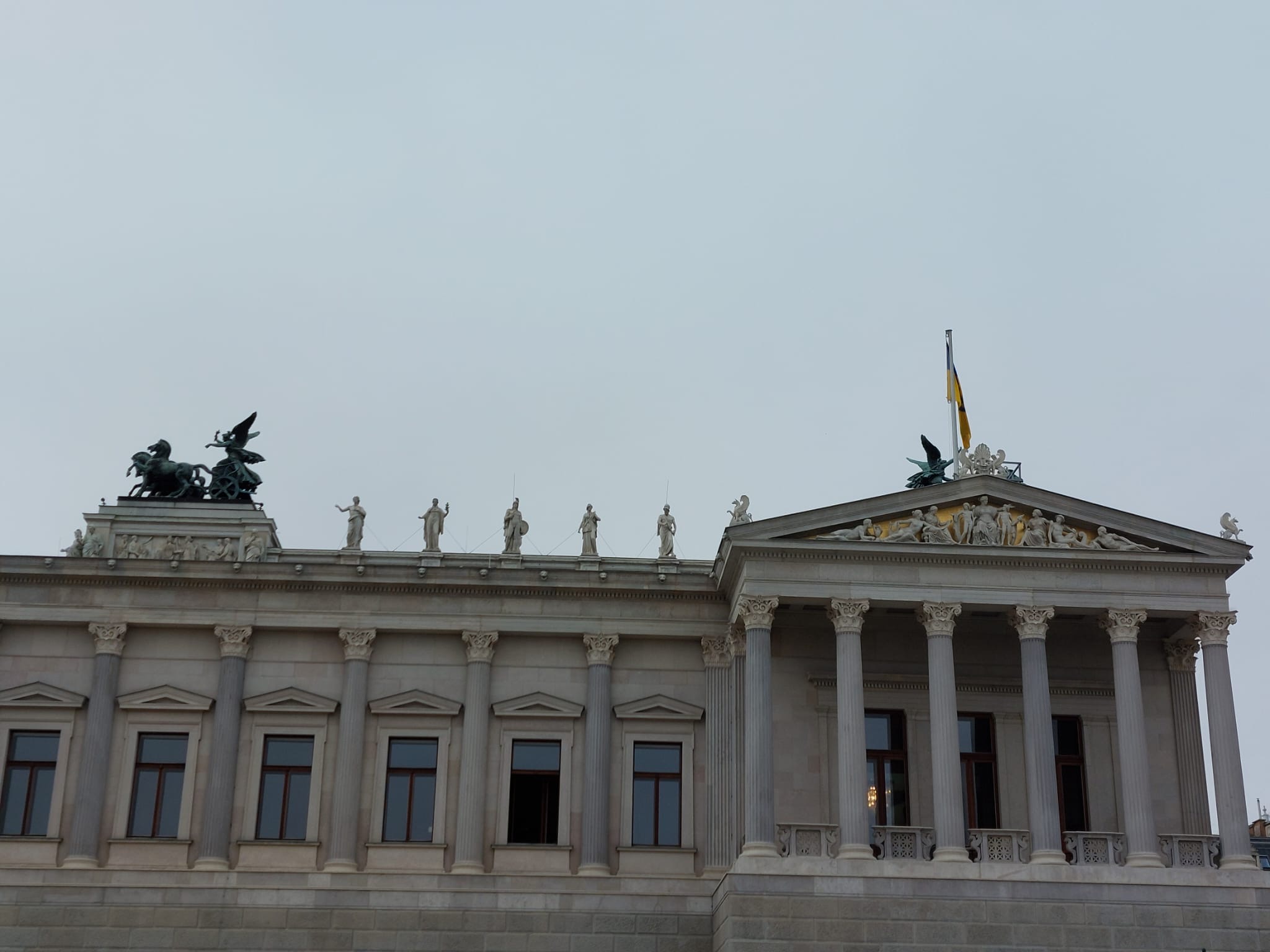

Clockwise: Haus der Musik, Archduke Charles monument, Hofburg palace (official residence and workplace of the President), Pallas Athene fountain, Parliament Building, Schwarzenberg monument
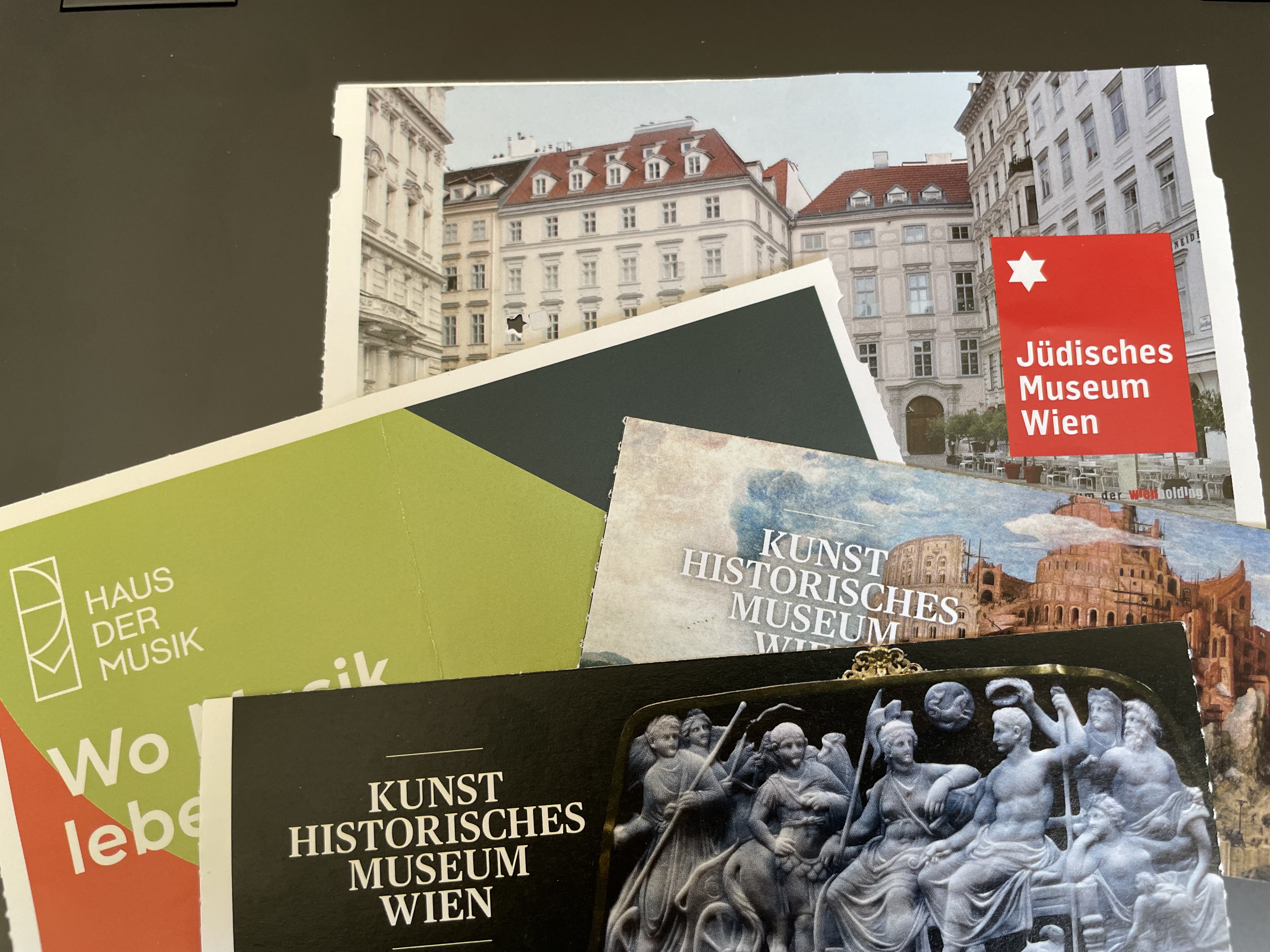
Kunsthistorisches Museum – in a palace (of course), purpose built by Emperor Franz Joseph 1 to house the rooms full of antiquities, sculpture and decorative arts. But the highlight was the picture galleries, and especially the Breughels, an absolute joy to see ‘Hunters in the Snow’ etc close up. Also paintings by van Eyck, Raphael, Durer, Holbein, Titian, Caravaggio…
What did we miss? Well, if I went back, I’d go to see the Klimts in the Belvedere gallery, I’d book a tour of the Opera House, and the Parliament building. Might even go on the Riesenrad (I think given the particular form my vertigo takes – see below – I would be OK with it, after all, I was fine on the London Eye).
Vienna Reading: Fiction: Sarah Gainham – Night Falls on the City/Private Worlds; Elisabeth de Waal – The Exiles Return. Non-fiction: Clive James – ‘Vienna’, in Cultural Amnesia; Edmund de Waal – The Hare with the Amber Eyes; Claudio Magris – Danube; Stefan Zweig – The World of Yesterday
Vienna on Film: The Third Man; Before Sunrise; Vienna Blood (TV detective series set in turn of the century (19th-20th) Vienna)
Vienna Music: Too much to mention – the city played such a key role in the lives and careers of so many great composers and musicians. Beethoven, Mozart, Schoenberg, Schubert, Brahms, Webern, Korngold… I did my best to avoid hearing ‘The Blue Danube’, a piece I heartily dislike, whilst in Vienna, but didn’t quite manage it (it’s a bit like trying to avoid hearing Wham at Christmas)
One lesser-known name, who I researched on our return. Marcel Tyberg was born and studied in Vienna but moved to Italy (present day Croatia) in 1927, when he was in his thirties. His mother followed the rules once the area was under Nazi occupation, and registered her Jewish great-grandfather. She died of natural causes, but Tyberg was arrested and deported, first to San Sabba camp in northern Italy, and then to Auschwitz, where he was murdered in December 1944. I listened to the Piano Trio in F major (1935-1936).
PRAGUE
Thursday:
We set off early to catch the train to Prague. Not the most scenic of journeys but travelling by train makes the journey part of the holiday and is generally less stressful. That is, once I was on board – the ‘mind the gap’ warnings do not adequately convey the hideous gulf between the train and the platform which involves one stepping out into said gulf and on to a narrow step before reaching the safety of the train. I realised this at Vienna Airport station but had vainly hoped that this wasn’t going to be the case with all the trains we caught… Fortunately A is both capable and caring, and so he grabbed the bags, put them into the train and then held my arms and made me look at him, not at the gulf, and step in. Same procedure in reverse when we got off the train, of course.
A slightly longer walk from the station to our hotel, the Majestic, near Wenceslas Square. A more old-fashioned looking hotel than Mooons but very comfortable. Having deposited our bags we set off for the Old Town. What I hadn’t anticipated is how much harder on the feet and the joints the cobbled streets in Prague would be – both of my days in the city had to be curtailed slightly early because on that first day there I crocked myself a bit. I still managed to clock up 17k steps (not bad for a half day), and 20k the following day, a total of 25.5km in the city.
Walking around Prague felt very different to walking around Vienna (and not just because of the cobbles). It is a city to wander in, to stroll down random streets, look around random corners, and be beguiled and intrigued by buildings that are a jumble of styles and eras, shapes and sizes. The terms ‘new’ and ‘old’ in Prague tend to mean ‘old’ and ‘really, really old’.


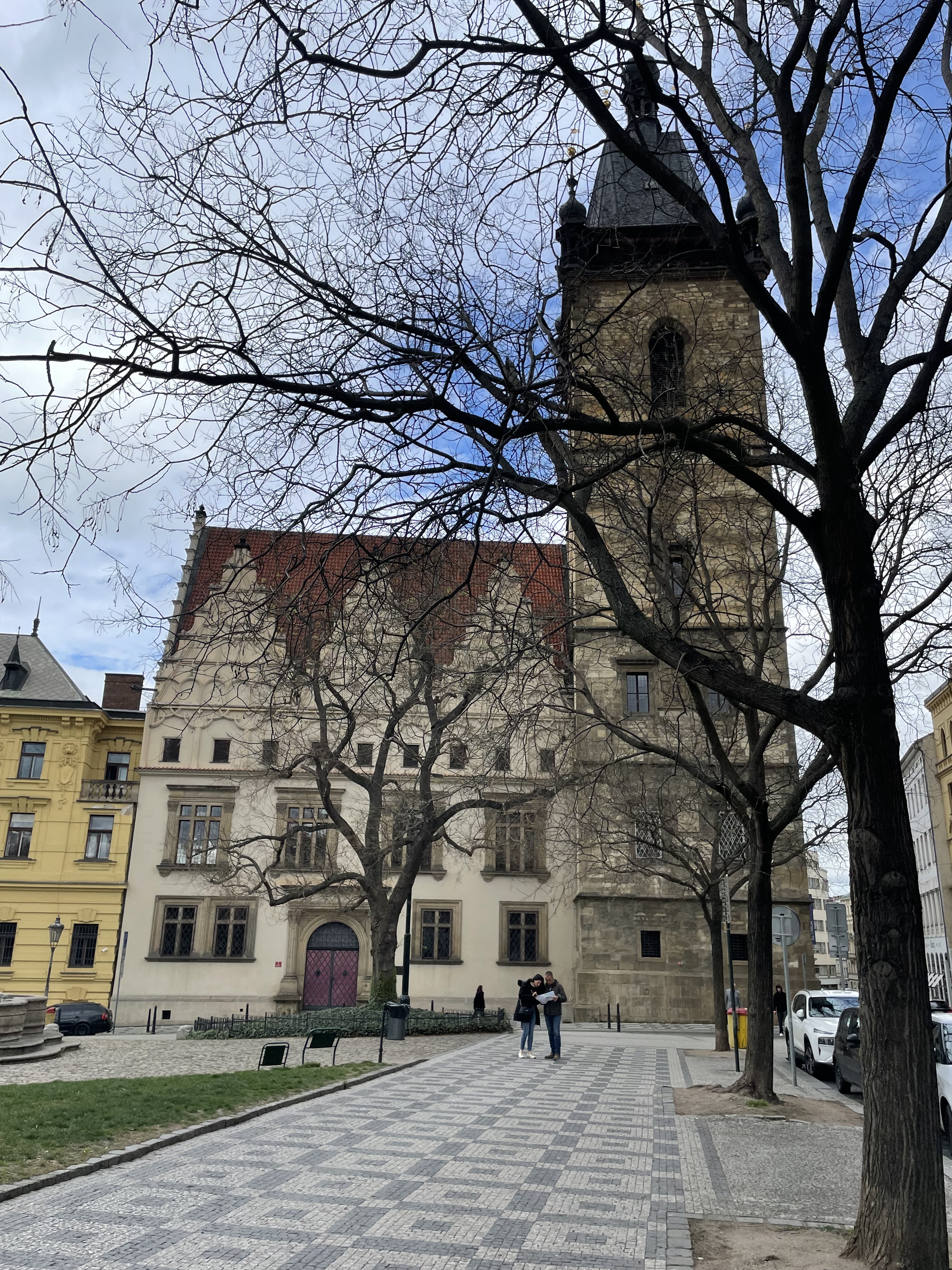
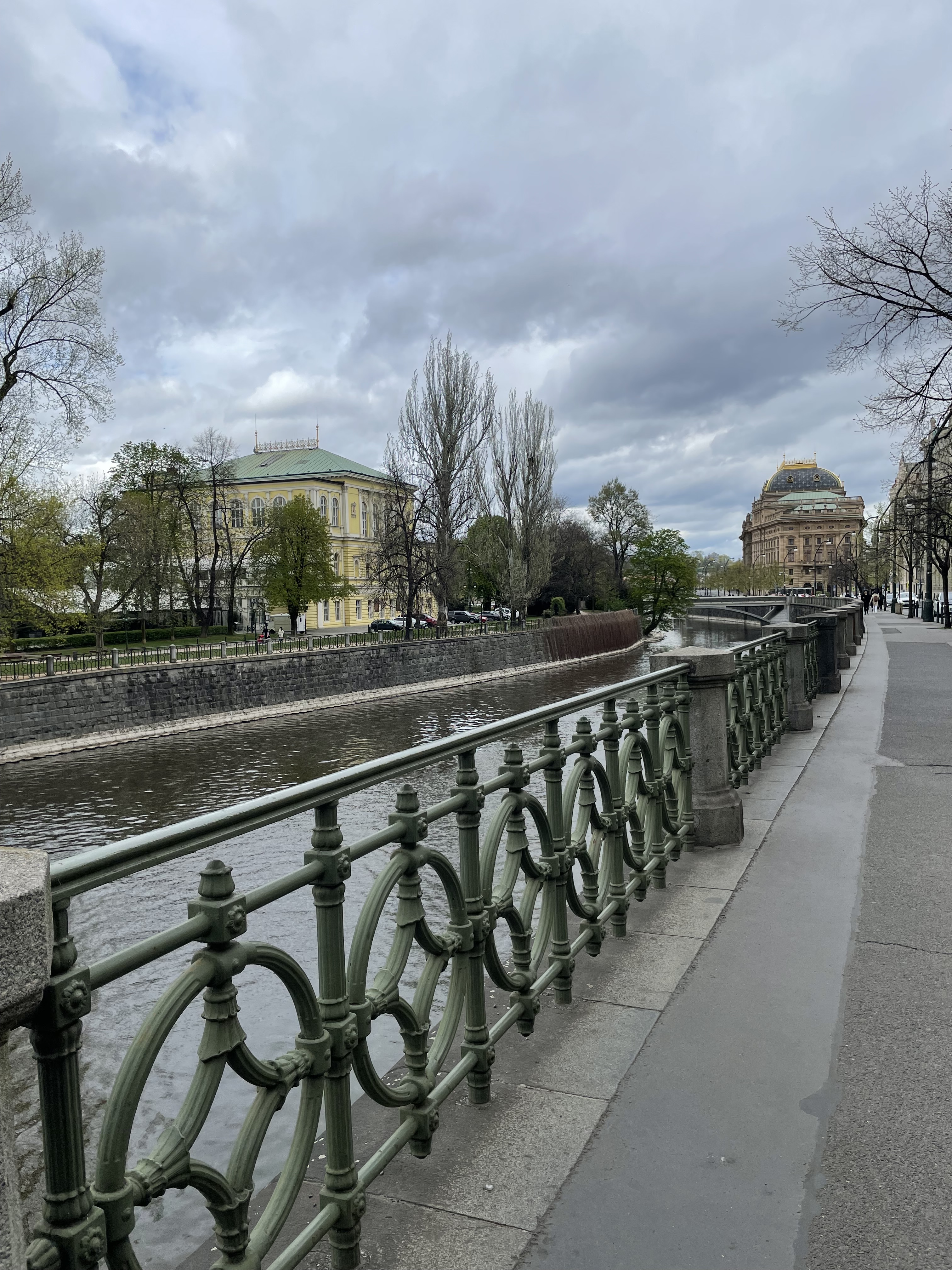

Clockwise: Charles Square, St Adalbert’s Church, Hotel Majestic, New Town Hall, view of the Zofín palace, a mysterious and ominous sign across the Vltava
Charles Bridge is always rammed with tourists – it is probably the most photographed site in the city, understandably enough. We got glimpses of it from the New Town side on Day 1, and the Prague Castle side on Day 2, when we did go part of the way across.
Jan Palach memorial, Wenceslas Square. I was 10, going on 11 at the time of the Prague Spring. I remember the news reports, and my parents’ distress (they vividly remembered the events in Hungary in 1956), and I remember hearing of Jan Palach’s suicide. A couple of years later, the English teacher at my school, an eccentric chap called Mr Pepper, mentioned this (I cannot recall in what context) and said that in a few years, no one would remember Jan Palach’s name. I decided that I would. And I did.
The Jewish Museum in Prague, based in the old Jewish quarter, comprises a number of locations – we didn’t see everything, but what we did see was unforgettable. It comprised four synagogues, the ceremonial hall, the old Jewish cemetery (and a gallery which was closed when we visited).
Pinkas synagogue – I knew what I was going to see. But that didn’t make it any easier. I wrote back in 2017 about a visit to the Mémorial de la Shoah in Paris: ‘I had braced myself for this, knowing the terrible history that would be illustrated there. Nonetheless, seeing the Wall of Names, I felt the air being sucked from my lungs, realising that I was seeing in that moment only a fragment, only some of the names from only one of the years’. That’s how I felt in the Pinkas synagogue, where the Memorial to the Victims of the Shoah from the Czech Lands comprises their names on wall after wall after wall. The names are painted on, which gives them a certain fragility, that they could fade away, unlike the stones in the Paris memorial. They mustn’t, obviously. They need to be there for generation after generation, to see wall after wall of names, each a person with a story, with a life, with a potential future.
‘The storm is within, a blizzard that stings the eyes and batters on the mind. Not snow or sleet but names. Names everywhere, names on the walls, names on the arches and the alcoves, ranks of names like figures drawn up on some featureless Appellplatz. Names and dates: given names and dates in black, surnames in blood. Dates of birth and dates of death. Seventy-seven thousand seven hundred and ninety-seven of them, names so crowded that they appear to merge one into the other and become just one name, which is the name of an entire people – all the Jews of Bohemia and Moravia who died in the camps.’ (Simon Mawer – Prague Spring, pp. 218-19)
From the Pinkas synagogue to the old Jewish cemetery, in use from the first half of the 15th century till 1786 – the oldest gravestone is from 1439. It’s the ‘Prague Cemetery’ which gives Umberto Eco’s novel its name (a book that is now on my To Read list). (We didn’t visit the New Jewish cemetery to pay our respects to Kafka – maybe next time, especially if I manage to read a few more of his works before then). We saw the Jewish ceremonial hall, and the Klausen synagogue but didn’t go in. But we couldn’t miss the ornate gorgeousness of the Spanish synagogue, whose decoration imitates the Alhambra.
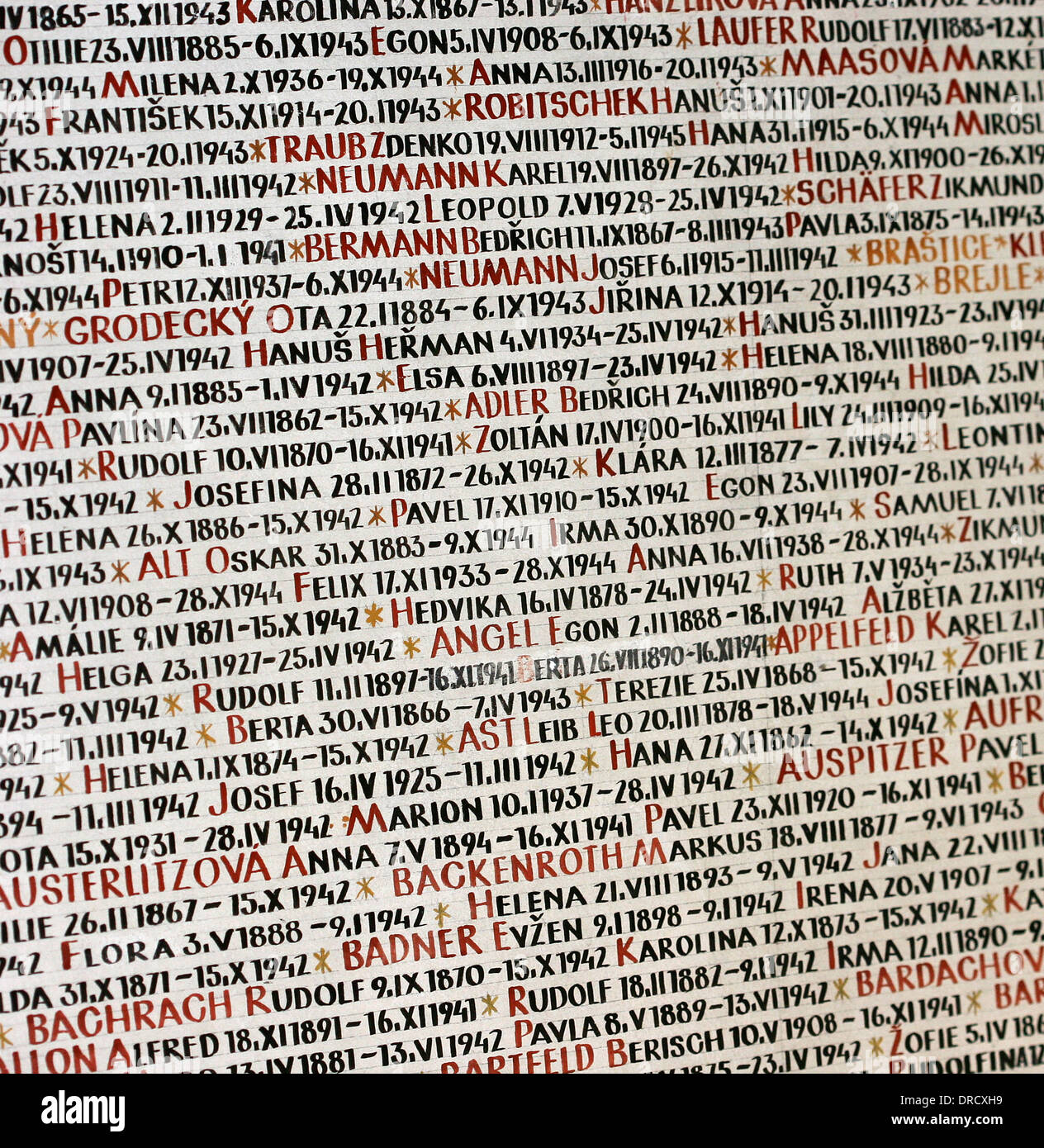

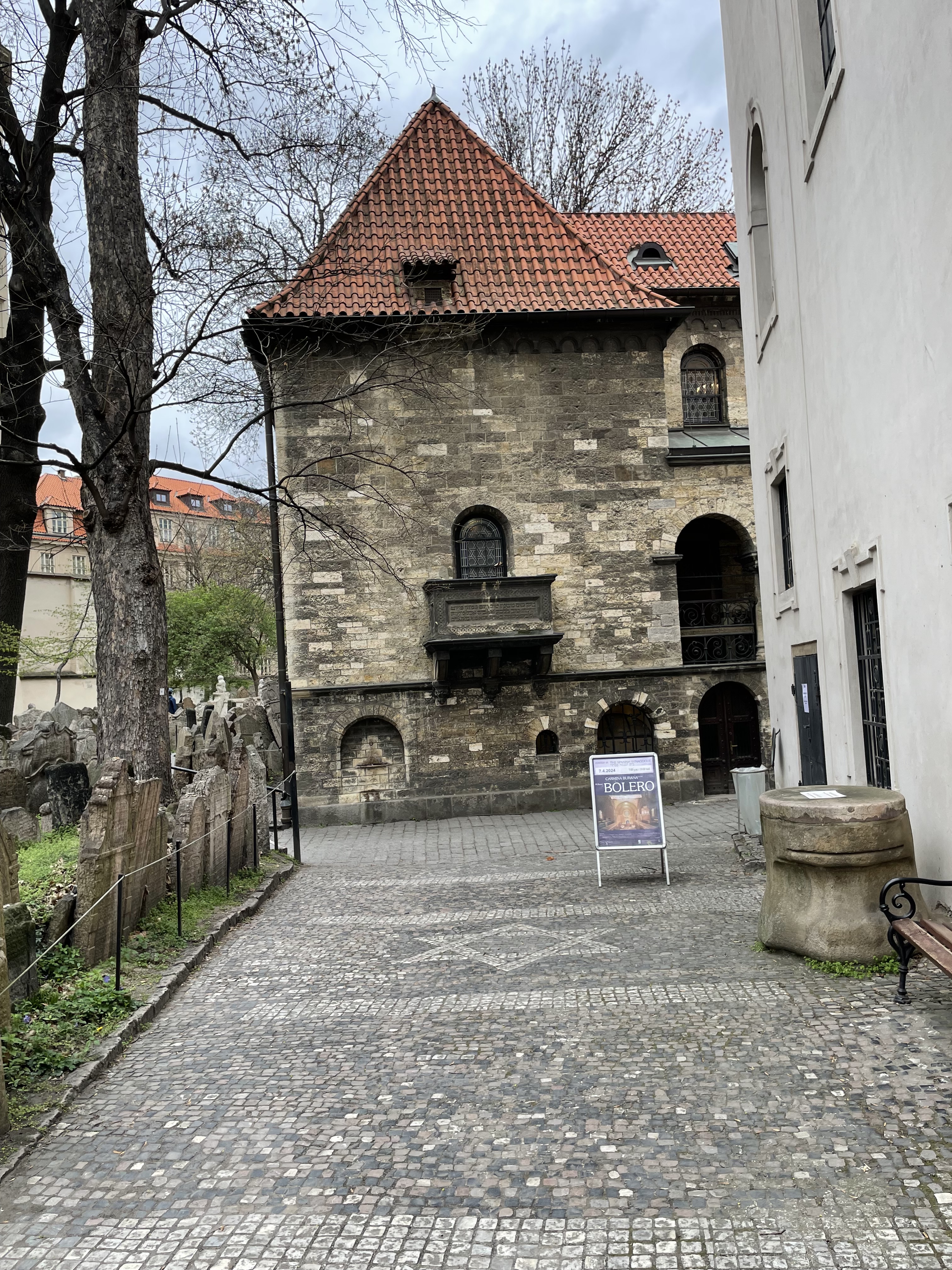


Clockwise: Pinkas Synagogue, Jan Palach memorial, Jewish ceremonial hall, Old Jewish cemetery, Spanish synagogue
The Old Town Hall is actually a medley of a number of buildings of various sizes and ages, stitched together (if I may mix my metaphors) over the centuries. At various times, bits of it were demolished/rebuilt/amended in various ways. In 1945 during the uprising in the city, a couple of wings were destroyed by fire. On another visit, I would be very intrigued to look around this properly.
The Town Hall’s most famous feature is the rather marvellous 15th century Astronomical Clock. We missed its most marvellous moment though as we failed to be there at the right time to see the apostles emerge.
Stolpersteine (Nové Město): four members of the Gotz family. Rudolf was 49, and his wife Marie 48 when they were deported from Prague to Theresienstadt; two years later both were transported to Auschwitz where they were murdered. Their sons Raoul and Harry made the same journeys at slightly different times than their parents. They were 21 and 16 respectively when they were deported, four months before their parents, to Theresienstadt, and then in September 1943, a year before their parents, to Auschwitz.
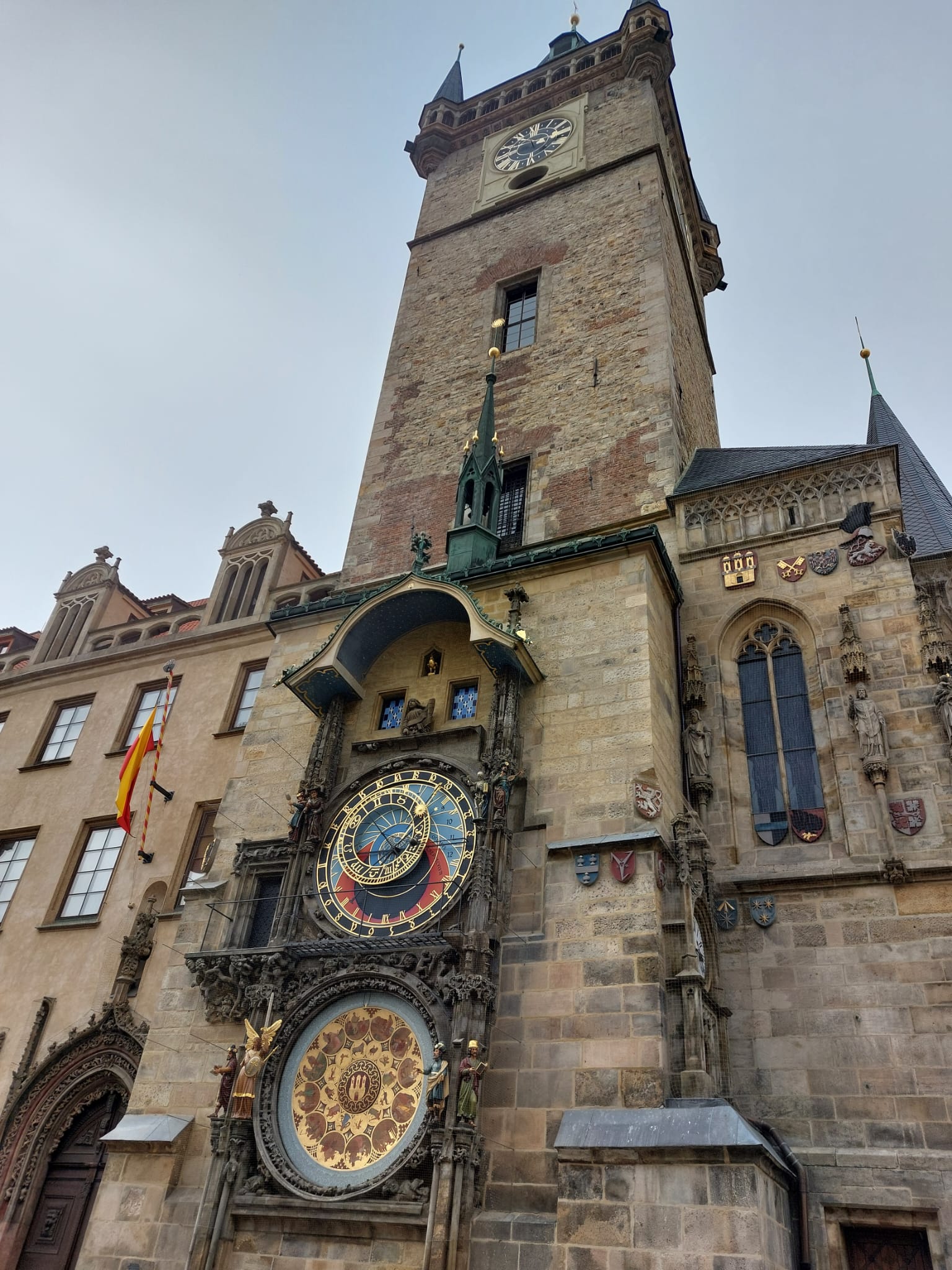


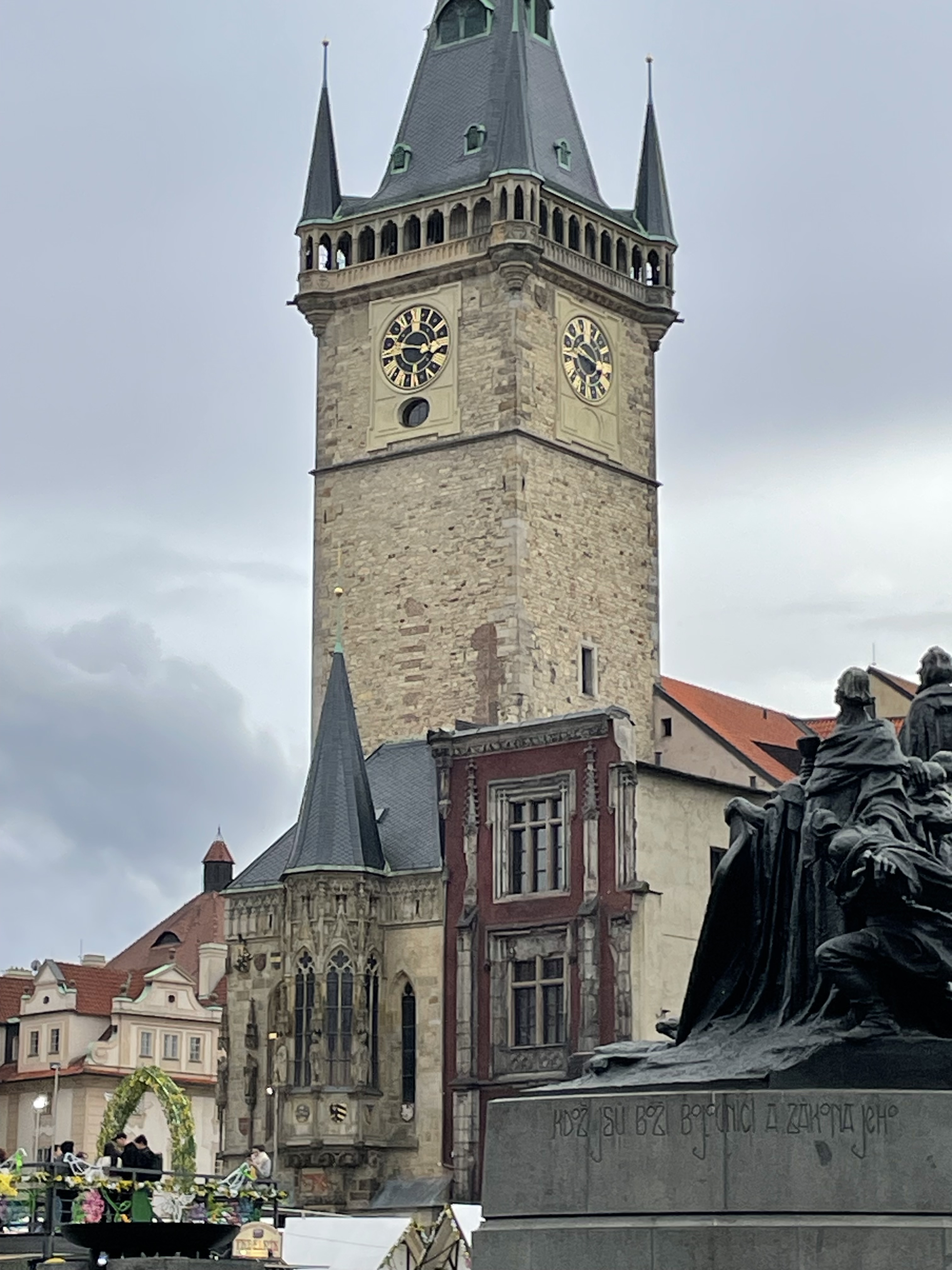
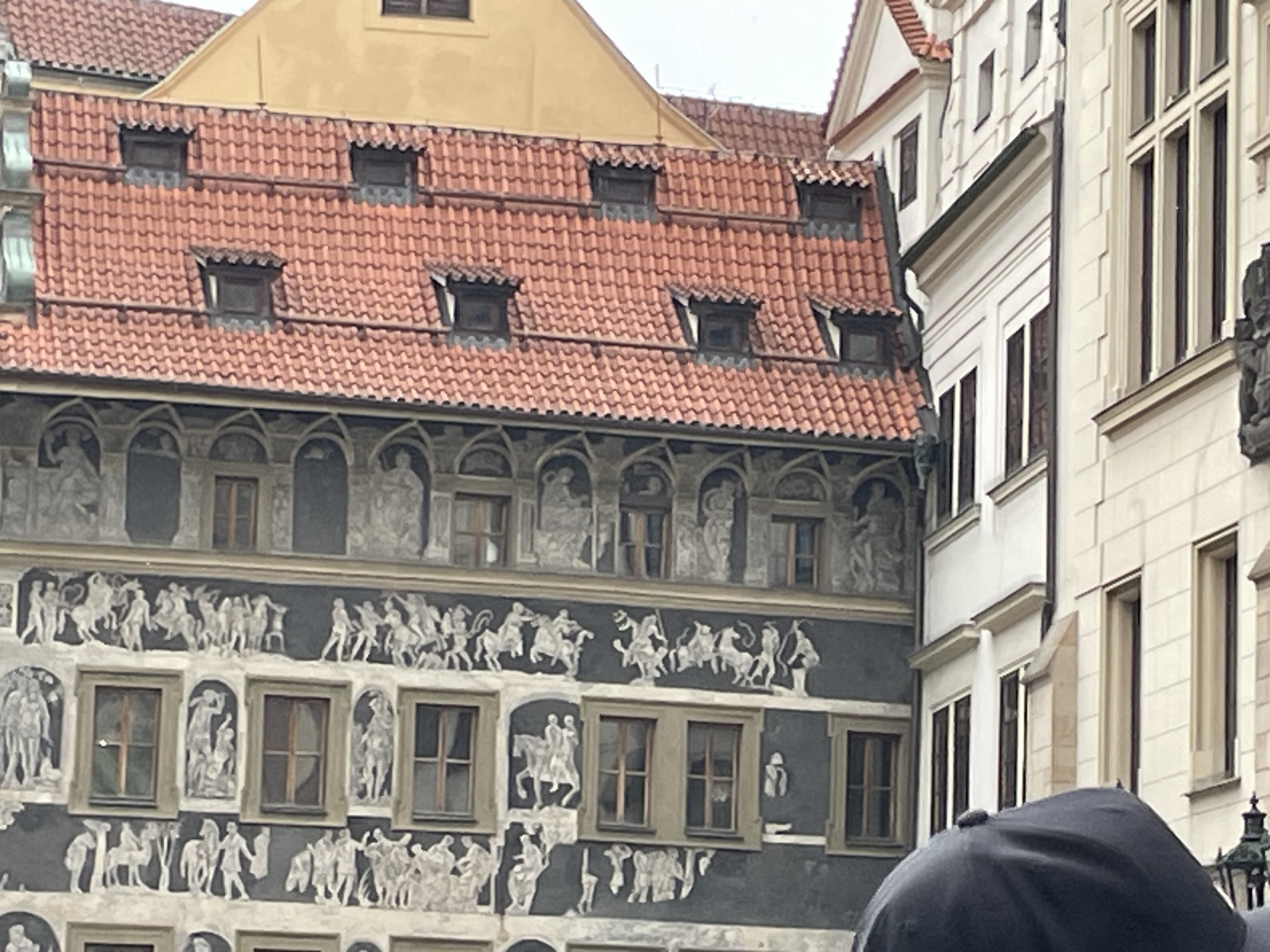
Clockwise: Astronomical Clock, Church of St Nicholas, stolpersteine for the Gotz family, Kranner’s Fountain (monument to Emperor Francis 1 of Austria), the Old Town Hall, Old Town Square
At this point, I consented to return to the hotel and put my feet up, whilst A headed off to the Prague Museum.
Friday:
Day 2 – with my feet properly blister-plastered, and a comfier pair of shoes, we headed (via the tram) to the Prague Castle complex. There’s a lot to see here, and the views of the city are stunning.
We walked through the Royal Gardens, with beautiful buildings around them, including Queen Anne’s Summer Palace. We saw a red squirrel here – I’m honestly not sure that I’ve seen one before, but we then saw another in Berlin.
St Vitus Cathedral – this took nearly 600 years to complete, 1344-1929. One of the final stages involved the installation of the beautiful stained glass. Czech art nouveau painter Alfons Mucha decorated the windows in the north part of the nave, František Kysela the rose window. Even though half of the cathedral is a neo-Gothic addition, much of the 15th century design was incorporated in the restoration.
Going up the Great South Tower was an optional extra which I unhesitatingly declined. I have been frozen with fear on spiral staircases in many of the ancient buildings of Britain, and in the Arc de Triomphe (with a posse of French schoolkids behind me helpfully going ‘Allez! Allez!’). So I let A go up the tower – there were a lot of steps, and it was indeed a spiral, but worth it (he tells me) for the view from the top.
The Basilica of St George is the oldest church building on the castle site, dating from 920.

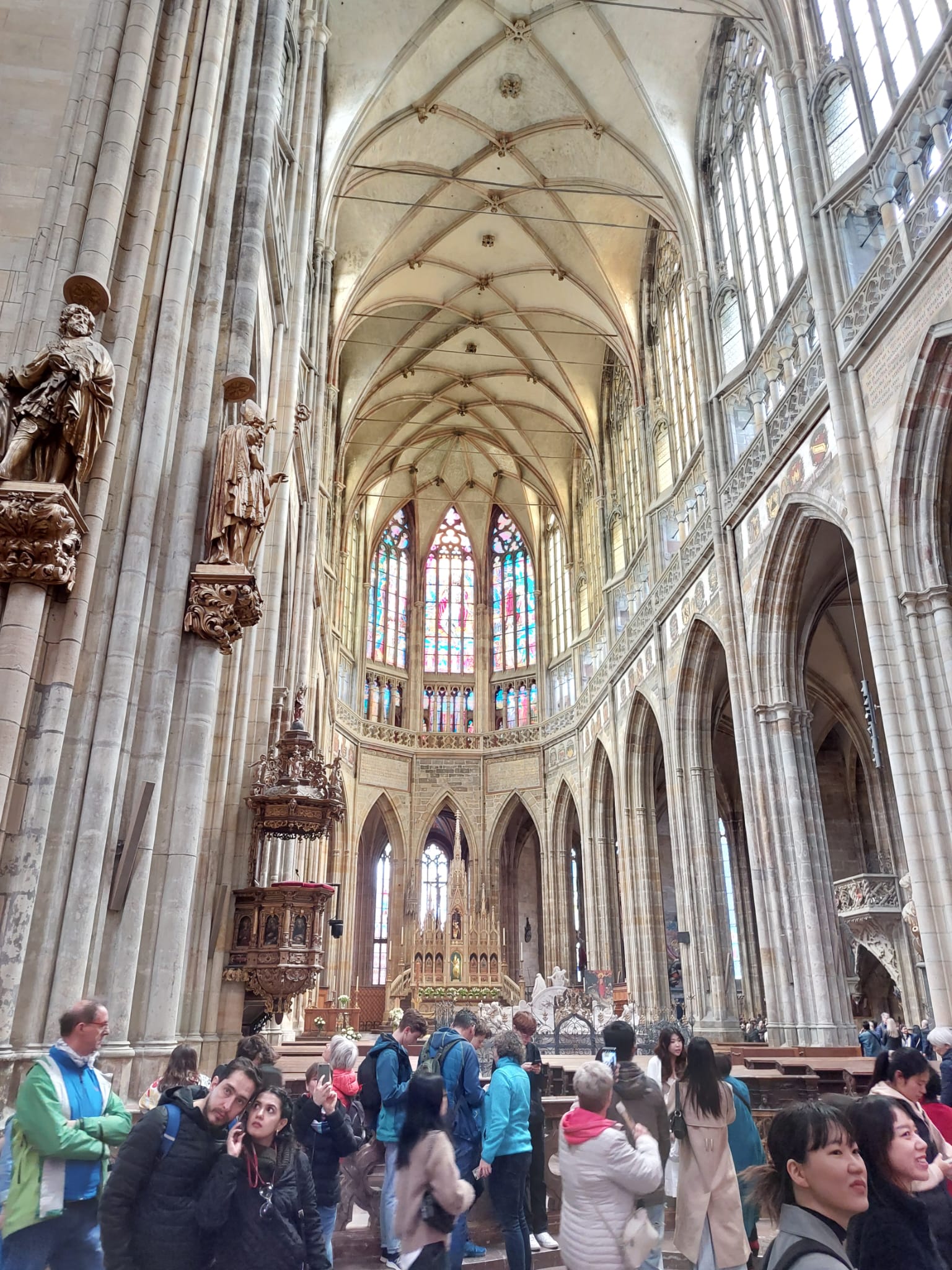


Clockwise: Basilica, Cathedral interior, Cathedral, Great South Tower, Royal Gardens, stained glass in the Cathedral, Chapel of the Holy Cross, Castle interior, Queen Anne’s Summer Palace
Golden Lane is a pretty alleyway of tiny, brightly coloured cottages. These were built for the members of Rudolf II’s castle guard and takes its name from the goldsmiths who later occupied the cottages. Kafka came here in the evenings to write, during the winter of 1916.
12 Šporkova is the building where W G Sebald’s Austerlitz found the apartment that his parents had occupied. The fictional Jacques Austerlitz left Prague in 1938 to come to the UK as part of the Kindertransport. He was brought up without knowing anything of his origins but becomes haunted by the absence of his past and starts to search for information about his parents.
‘The register of inhabitants for 1938 said that Agáta Austerlitz had been living at Number 12 in that year… As I walked through the labyrinth of alleyways, thoroughfares and courtyards between the Vlašská and Nerudova, and still more so when I felt the uneven paving of the Šporkova underfoot as step by step I climbed up hill, it was as if I had already been this way before and memories were revealing themselves to me not by means of any mental effort but through my senses, so long numbed and now coming back to life.’ (W G Sebald, Austerlitz, pp. 212-13)
Austerlitz finds his old neighbour, and learns that his mother was deported to Theresienstadt, and from there to Auschwitz. His father had already left for France before his own escape, and by the end of the book Austerlitz is still searching for information about whether he survived (or how he died).
We didn’t knock to try to go in and see if the hallway and stairs are as Sebald described – in any event, I don’t know whether Sebald himself ever did so. There are a couple of photographs embedded in the text but as always with Sebald, we can’t assume that their positioning tells us what they are. Sebald visited Prague in April 1991, and again in April 1999, at a time when he would have been writing Austerlitz, and it seems likely that he at least did as we did and wandered down Šporkova and looked at the doorway. But did he choose this location arbitrarily, or did he have some information about its past that encouraged him to link it to his fictional protagonist? As always, Sebald mingles fact and fiction in a most fascinating, infuriating, and sometimes highly problematic way (see my PhD thesis for (much, much) more on this topic!).
Estates Theatre – another Sebald connection: Austerlitz’s mother was an actress who performed at the Estates Theatre. It dates from the 1780s, and saw the premieres of Don Giovanni and La Clemenza di Tito, as well as the first performance of the Czech national anthem. It can also be seen in the film of Amadeus during the concert scenes, standing in for Vienna, as it is one of the few opera houses in Europe still intact from Mozart’s time.
I didn’t see the extraordinary Dancing House myself – on day 2 in Prague I again had to bail early (those bloody cobbles), and so A went on alone, to see this building which had intrigued him from the guidebook. The Dancing House, or Ginger and Fred, was designed by architects Vlado Milunić and Frank Gehry on a vacant riverfront plot in 1992 and completed in 1996.


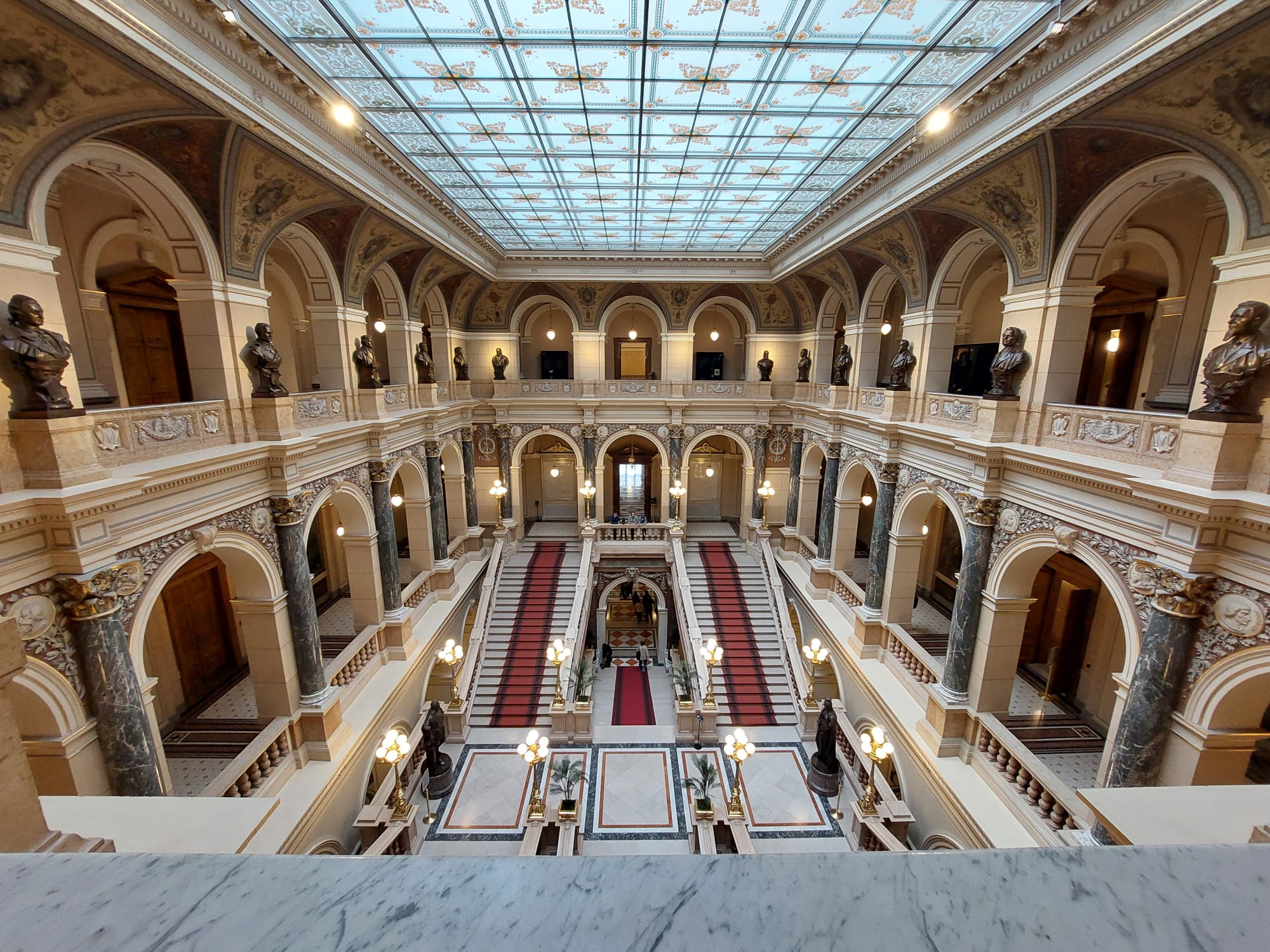

Clockwise: 12 Šporkova, the Dancing House, Estates Theatre, Golden Lane, Prague Museum, Morzin and Thun palaces.
A also visited the Ss Cyril & Methodius Cathedral, site of the last stand of seven members of a Czech resistance group including Jozef Gabčík and Jan Kubiš, who had assassinated Heydrich. They were betrayed, and the church was surrounded by 750 SS soldiers, water pumped into the crypt to try to force them out, until all were killed or had committed suicide. We were both familiar with their story from the film Anthropoid – I’d also read Laurent Binet’s HHhH, and seen the film adaptation of that, The Man with the Iron Heart.
Wenceslas Square, near our hotel. The site of celebrations and demonstrations, and home of the statue of St Wenceslas (this isn’t the original one – that was moved elsewhere in 1879, this one dates from 1912). The National Museum, which A visited on Day 1, is at the top of the square.

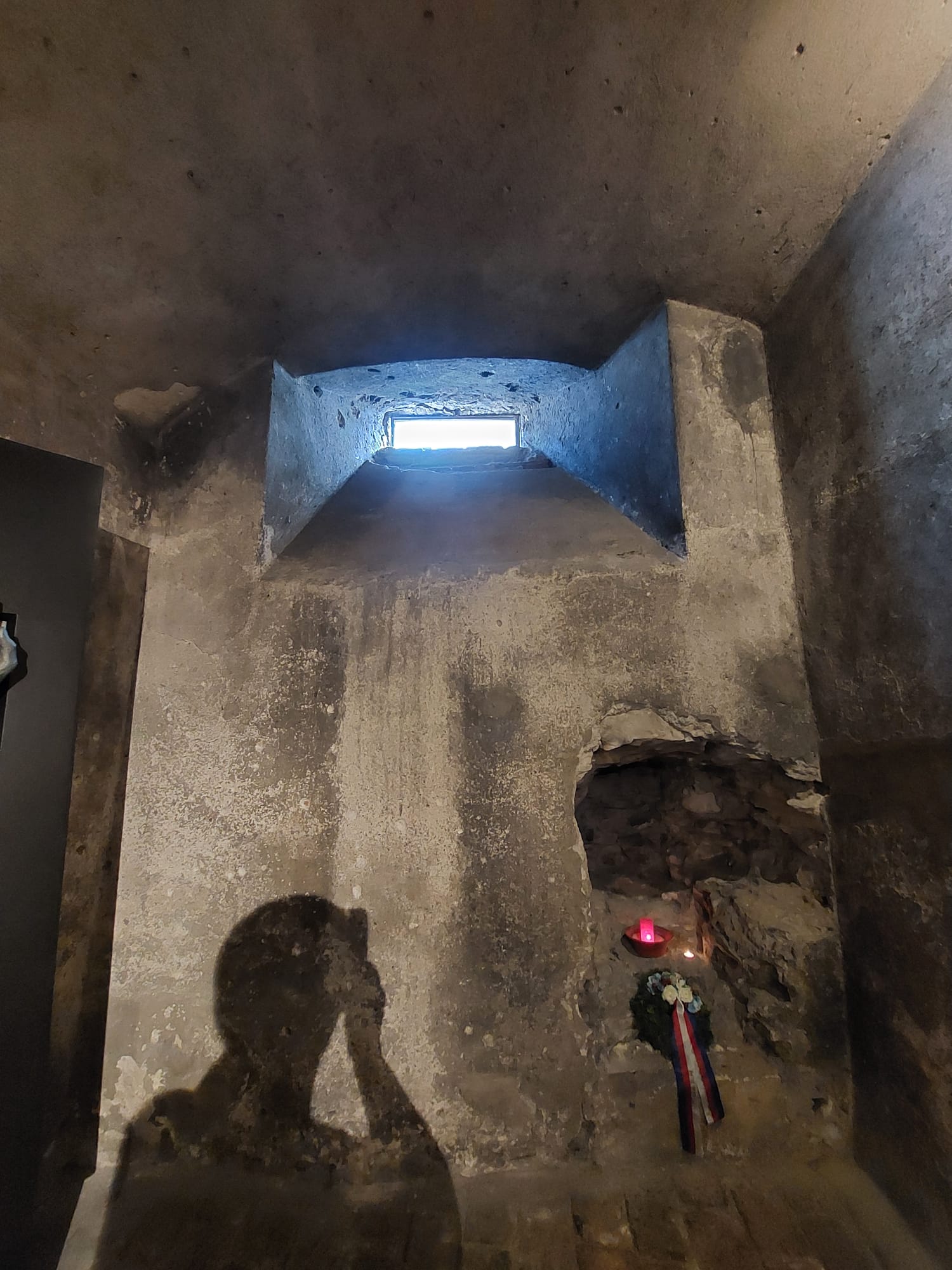
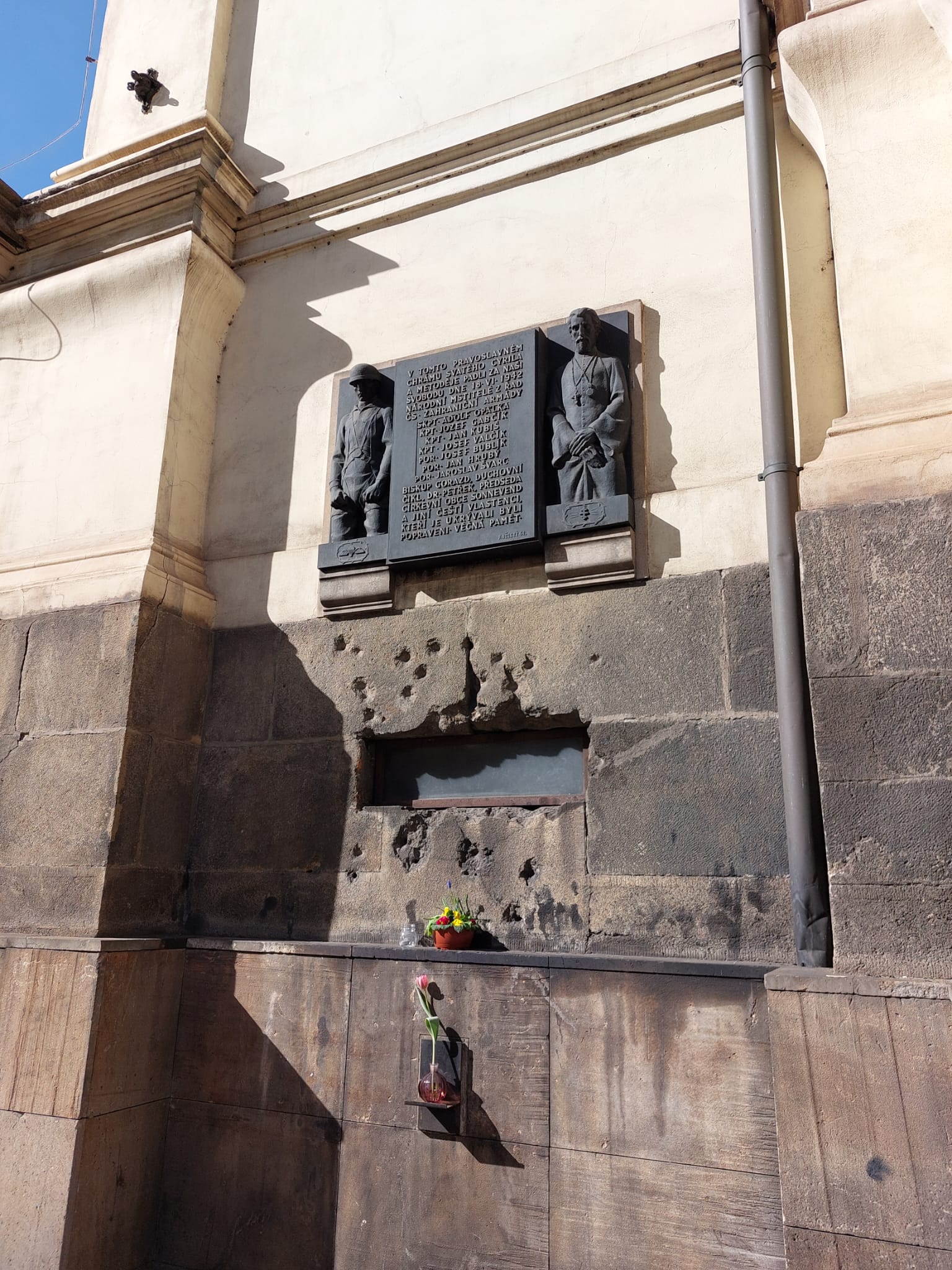


Clockwise: Charles Bridge, the crypt of Ss Cyril & Methodius Cathedral, Memorial to the Czech resistance, Ss Cyril & Methodius, Wenceslas Square, Prague viewed from the Castle
What did we miss? We only saw the modern part of Prague station, not the older building, nor the Kindertransport memorials there. We didn’t get to Petrin, and the funicular railway, the observatory, mirror maze or the mini Eiffel Tower (Rozhledna). But if we come back, we’d probably just spend more time wandering, I think, because there’s something to see around every corner here, not necessarily something grand like in Vienna, but something intriguing, something beautiful, something memorable.
Prague Reading:
Fiction: Lauren Binet – HHhH (a fictionalised account of the assassination of Heydrich); Franz Kakfa – The Castle (it’s not really about Prague Castle but still…); Simon Mawer – Prague Spring; W G Sebald – Austerlitz; Philip Kerr – Prague Fatale; Heda Margolius Kovaly – Innocence (a Prague-set detective noir). Non-Fiction: Anna Hajkova – The Last Ghetto: An Everyday History of Theresienstadt; Heda Margolius Kovaly – Under a Cruel Star (also published as Prague Farewell), her autobiography, covering imprisonment in the Łódź ghetto and Auschwitz, her return to Prague and the judicial murder of her husband during the Slansky show trials, finally leaving after the failure of the Prague Spring; Alfred Thomas – Prague Palimpsest: Writing, Memory and the City (especially Ch. 5 which deals with Sebald’s Austerlitz).
Prague on Film: Anthropoid; The Man with the Iron Heart; Kafka (TV series)
Prague Music: Smetana – ‘Ma Vlast’ is the obvious piece, and a wonderful one, whether one is looking out over the Vltava whilst listening or not and Janacek and Dvorak are composers who have been part of my musical life for so many decades. It’s also important to recognise the work of a number of composers who were deported to Theresienstadt, and who composed and performed music in the ghetto, before being transported to Auschwitz and murdered, notably Gideon Klein, Hans Krása, Viktor Ullmann and Pavel Haas. Inevitably much of the music is lost but what has been recovered can be found on various collections and compilations, as well as on Spotify. I also rather like Martina Trchová, a Prague-born folky singer-songwriter.
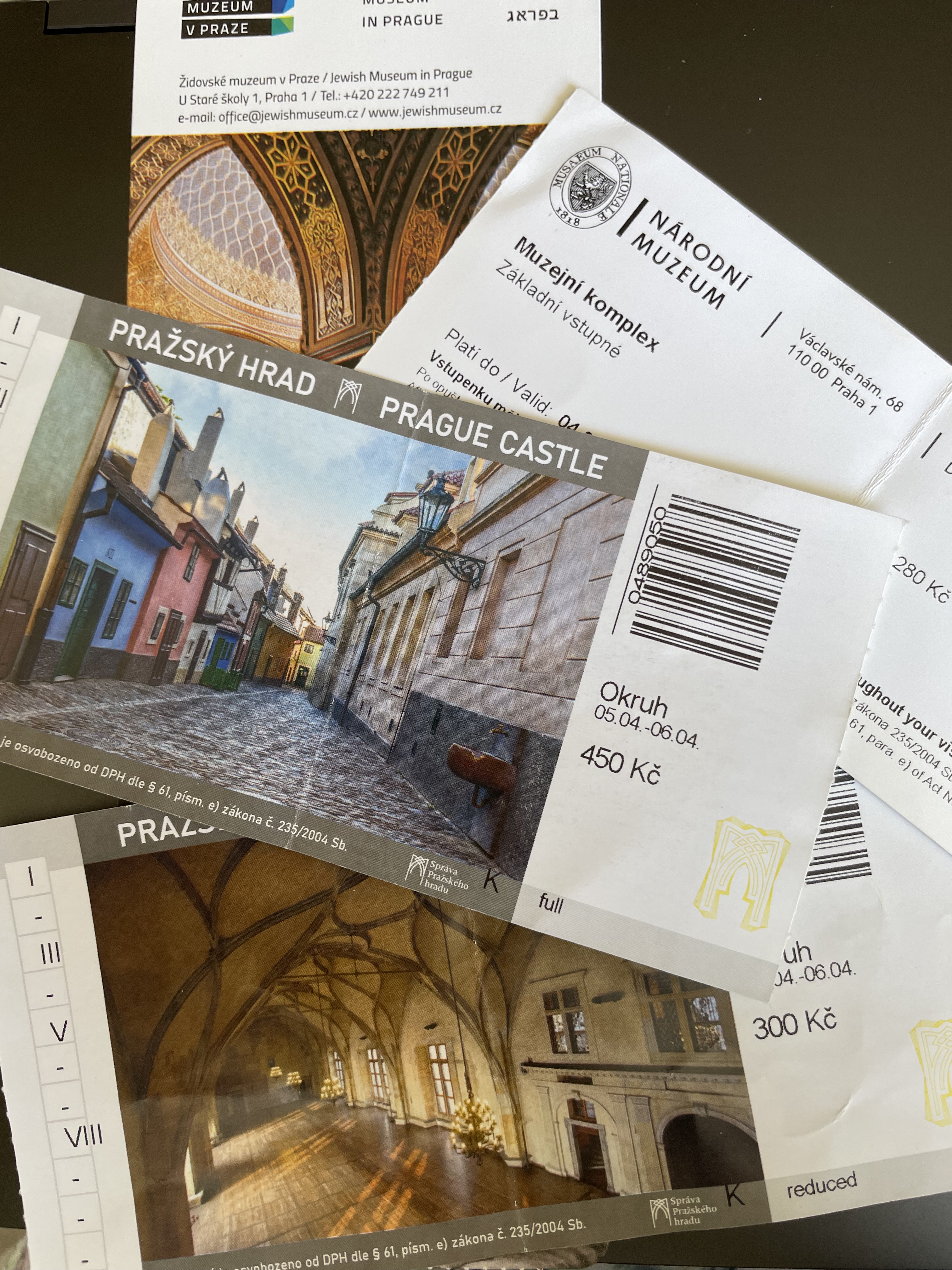
BERLIN
Onwards to Berlin. Another train, this one with old-fashioned compartments. A more scenic route than the one between Vienna and Prague (and I’m definitely not talking about the man who emerged from a shrubbery alongside the rail track, naked apart from a beanie hat).
Our hotel was immediately opposite the Hauptbahnhof, but we weren’t able to check in straight away, so we deposited our bags and headed out into the city.
Saturday:
We headed out, noting some striking pieces of political art in Kreuzberg, and the EU project, Path of Visionaries, in Friedrichstrasse, where a floor plaque bearing a quote from someone inspiring is in place for each EU member state, plus UNESCO. I didn’t check whether we had a floor plaque, but when the project was launched in 2006, we were still in the EU…
Berlin’s Jewish Museum is a powerful place to visit, both in terms of its design and its content. We particularly noted the Garden of Exile and Emigration, described here by blogger Gerry Condon:
’49 columns filled with earth are arranged in rows traversed by uneven pathways. The stelae are built on sloping land and rise at an angle, leading to a sense of disorientation similar to that felt inside the museum building. Out of each column grows an Oleaster, an Olive Willow, perhaps symbolizing rebirth. The experience of walking in this structure is comparable to that of being in the Memorial to the Murdered Jews of Europe, but though the Garden of Exile and Emigration is more modest, I think I found it more effective.’ (Gerry Condon, ‘Living with History: A Berlin City Centre Walk’, How the Light Gets In, 25/06/15)
We hadn’t at this point seen the Memorial to the Murdered Jews of Europe, but certainly the Garden was disorienting; I stumbled as soon as I went in and felt off balance whilst I was in there. But there was beauty too, sunlight, and growth.
The corridors in the Museum itself are intersecting and slanting ‘Axes’, and there are a number of voids. We looked down into the Memory Void but didn’t find our way to go into it (it’s the only one of the voids that one can enter), bamboozled by the labyrinth. But from our vantage point we could just see the ‘Fallen Leaves’ (designed by Israeli artist Menashe Kadishman), each with a face punched out of steel and covering the floor of the void so that visitors have to walk over them.
The permanent exhibition is of Jewish past and present in Germany, but there are displays that recognise the diaspora, and the continuity of Jewish life and traditions in the many nations where exiles found a home. We were very struck by the display showing, in a series of long hanging posters, covered in small print, the many, many laws implemented by the Nazi party as soon as they had power, laws covering every conceivable aspect of life for Jews. It didn’t, as we know, start with gas chambers, or even with deportations. It started with minutiae, with things that people initially may have felt they could cope with, and little by little these restrictions isolated the Jewish population from Aryan neighbours, colleagues, classmates, so that they were exposed, without allies (or only those brave enough to take a stand), when everything was finally taken from them.
We also saw an exhibit about Regina Jonas, the first woman Rabbi, born in Berlin and ordained in 1935, an inauspicious year. I hoped initially that she had perhaps been able to leave before it was too late, but a moment’s googling told me what I kind of knew in my bones, that she stayed. She was arrested in 1942 and deported to Theresienstadt, where she continued to work as a rabbi, helped with a crisis intervention service to support newcomers to the camp, and was involved in cultural and educational activities. In October 1944 she was deported to Auschwitz, where she was murdered either on arrival or two months later, aged 42.
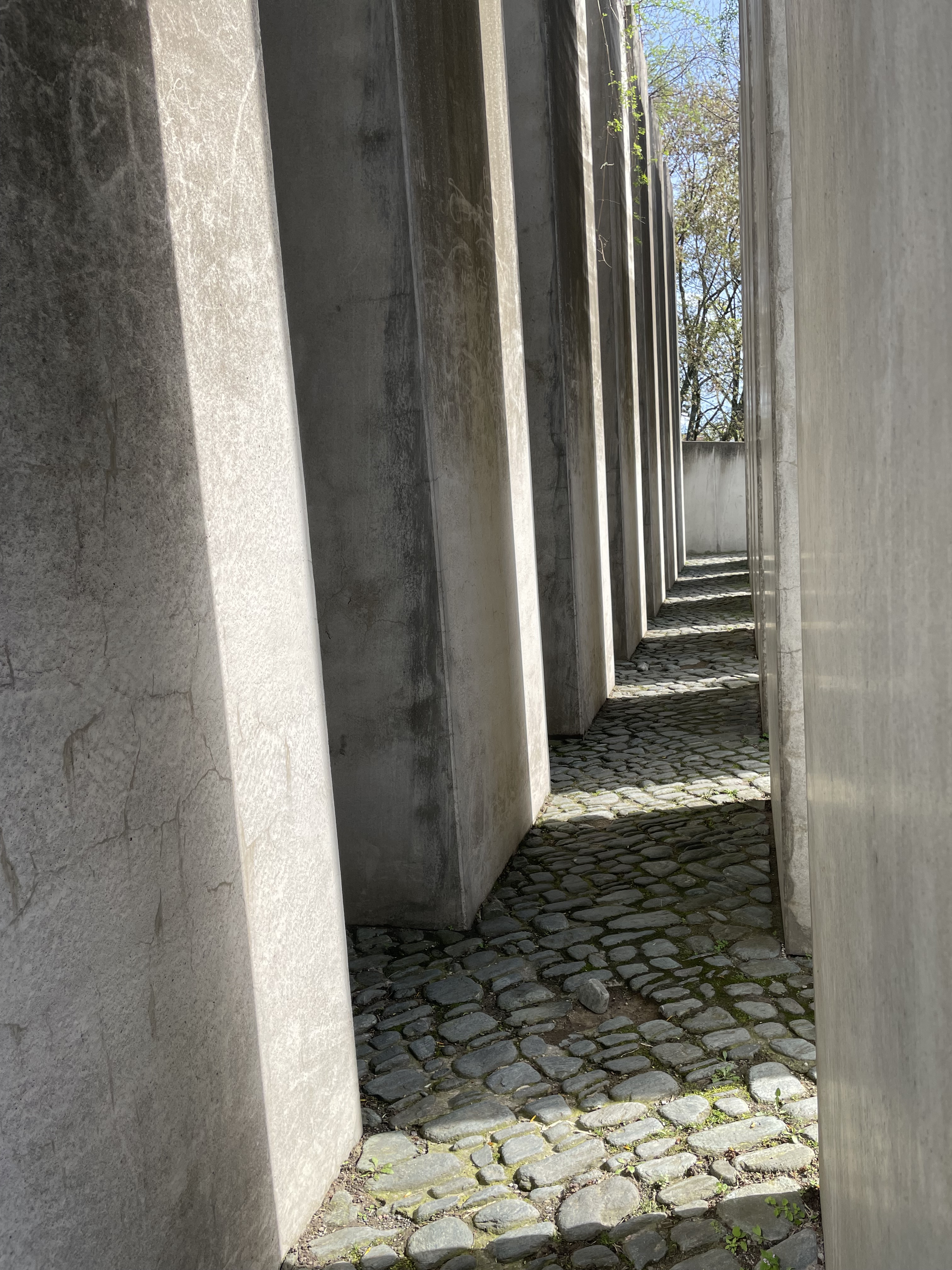


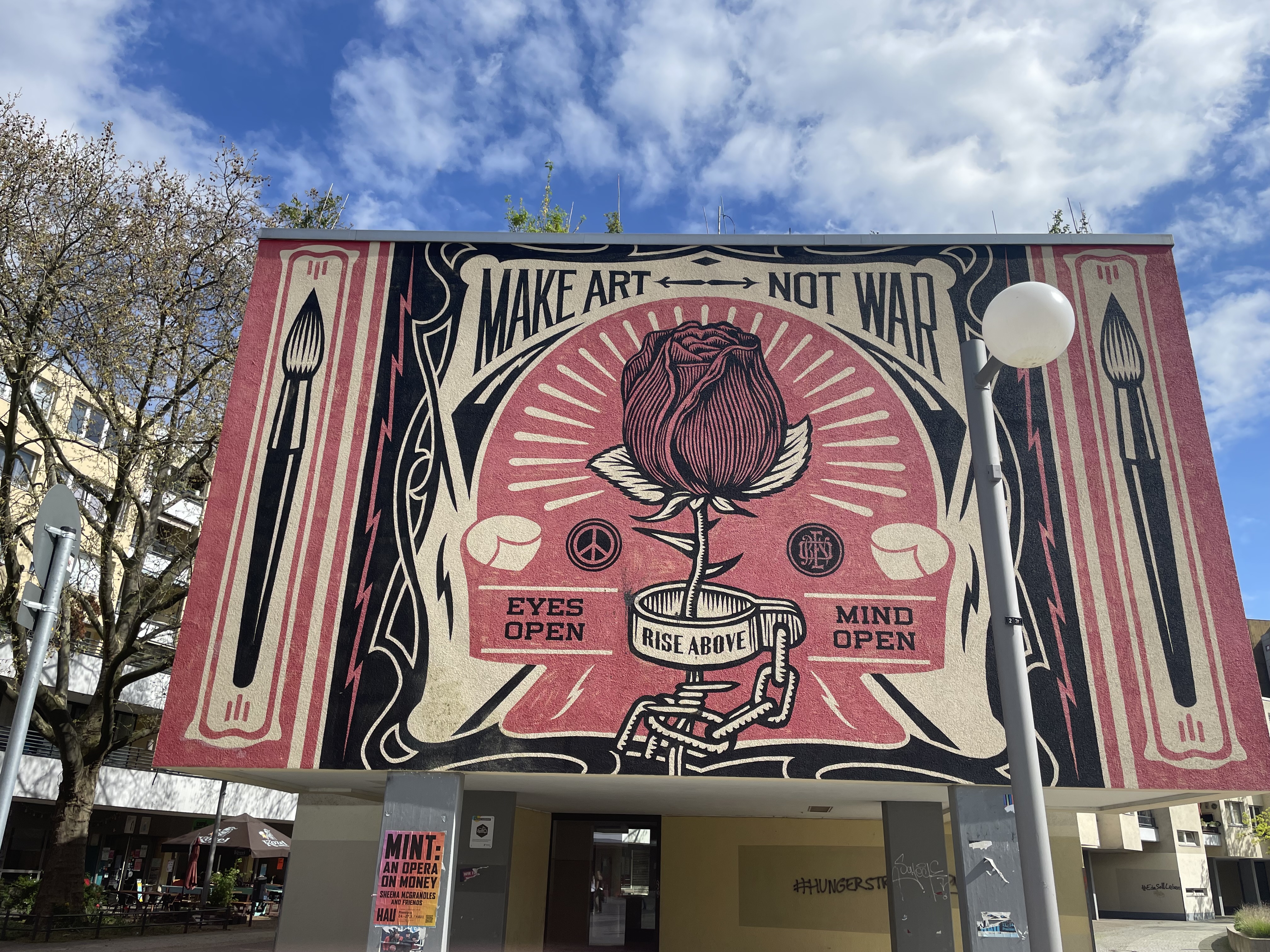
Clockwise: Garden of Exile and Emigration (Jewish Museum), Hotel Amano, Nuremberg laws (Jewish Museum), Path of Visionaries, Regina Jonas, street art
Stolpersteine (Luisenstadt): Hirsch Neumann died 30 Oct 1940, Max Neumann, Rosa Reha Neumann, killed Riga Jan 42; Nathan Moritz Carlé, Charlotte Carlé, Margarete Carlé, Alice Carlé, Theresienstadt, Auschwitz. I was unable to find more information about Hirsch, Max and Rosa Neumann, but the story of the Carlé family is worth recounting:
Nathan and Margarete Carlé lived in Frankfurt when they first married, and their first child, Hans, was born there. They then moved to Berlin in 1900, where their daughters Charlotte and Alice were born. They moved around a fair bit in Berlin as their economic circumstances waxed and waned. In 1942, Margarete and Nathan were deported to Theresienstadt, where Nathan died on 11 October (reportedly of a heart defect). Margarete died of a stroke four months later. Whilst Theresienstadt was neither a death camp nor a work camp, conditions – massive overcrowding, malnourishment, and the spread of disease – killed many of its inhabitants, especially those who were older or otherwise vulnerable, before they could be deported to Auschwitz. Alice, their younger daughter lived with her partner Eva Siewert, until Eva was denounced in 1942 for having made anti-fascist jokes and sentenced to nine months in prison. Alice and her sister Charlotte lodged with Elsbeth Raatz, until threats of denunciation forced them to leave – Raatz, however, gave them false passports. In August 1943, they were arrested by the Gestapo and deported to Auschwitz a few weeks later. Of the 54 people in this transport, only nine women were registered as new arrivals (i.e. selected for work rather than immediate death). We don’t know their names, so we don’t know whether Alice and/or Charlotte were amongst those or had been murdered on arrival in the camp. Alice’s lover Eva survived, and worked as a journalist in Berlin after 1945. Hans Carlé had left Germany in autumn 1933, initially for the Netherlands, and then emigrated to Palestine, where he married. He lived a fairly precarious life in Tel Aviv, and died of a heart condition in 1950, aged 51.
Fernsehturm – we did not go up on this visit (A had already done so on his previous trip to Berlin), but we saw it – obviously, since it is the ultimate photobomber, popping up in almost every photo taken in the centre of Berlin.
We saw but did not go into the Berlin Palace, on Spree Island. A building that would have barely been noticeable in Vienna, where palaces are around every corner, it’s very striking here. But it’s actually a reconstruction. It was damaged by Allied bombers but actually demolished by the DDR government in 1950. In its place was the modernist Palace of the Republic, the DDR Parliament building. After reunification, and after long and arduous debate, the DDR building itself was demolished and most of the Berlin Palace’s exterior was reconstructed. It now houses the Humboldt Forum museum.
Berlin Cathedral, built in the late 19th century, damaged by Allied bombing and subsequently restored.


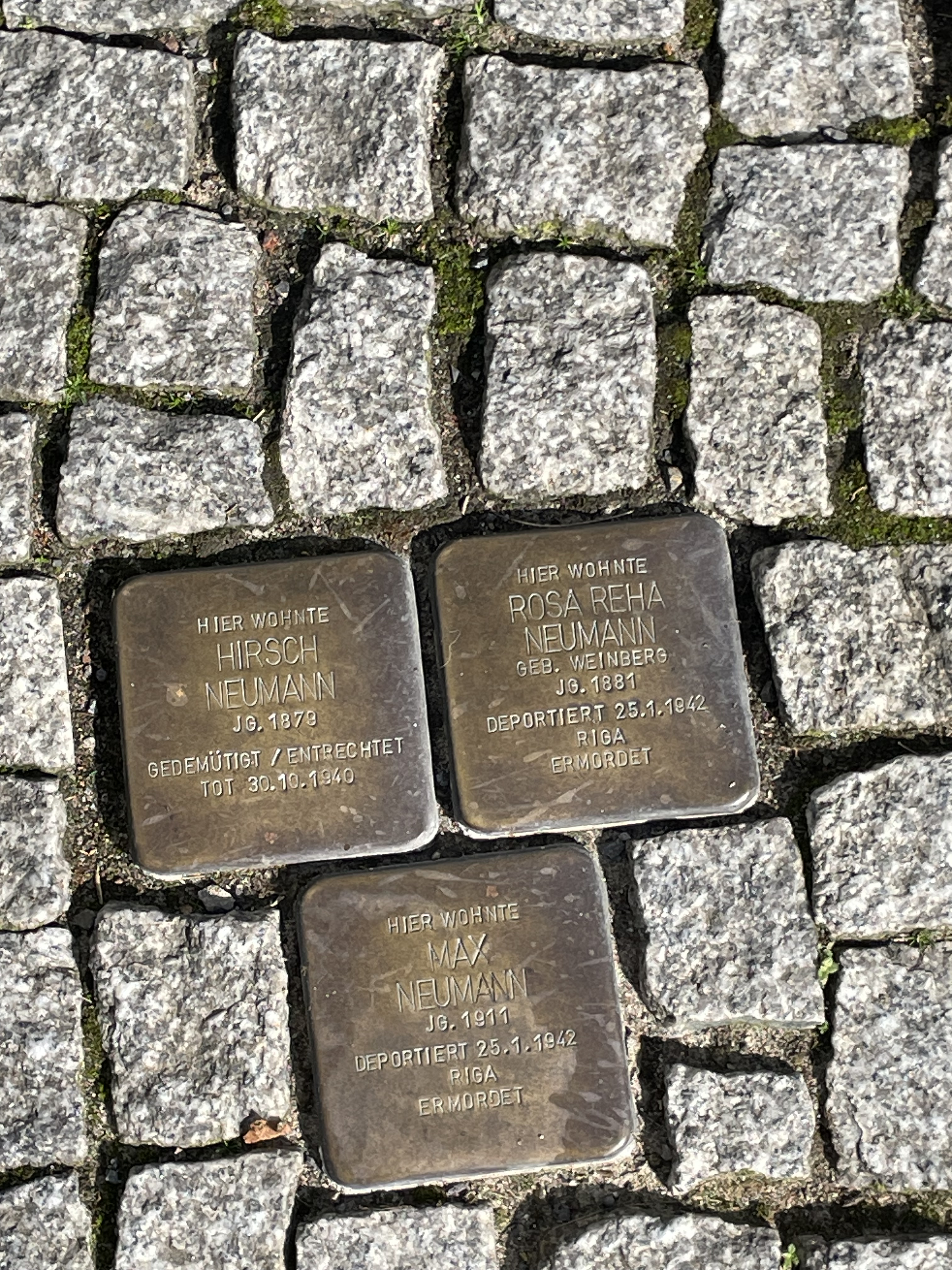
Clockwise: Berlin Cathedral, Berlin Palace, Stolpersteine: Carlé family, Fernsehturm, Humboldt Hafen (the canal harbour), Stolpersteine: Neumann family
Rotes Rathaus, Berlin’s town hall. It was the town hall for East Berlin, and the name ‘red town hall’ indicated not only the colour of the stones, but also the political colour. Mid-19th century, heavily damaged by Allied bombing, and rebuilt.
When we finally got into our room that evening (we’d decided to share, for economy), we were somewhat discomfited to discover that whilst there was, thankfully, a proper door on the toilet, the shower cubicle was all glass, and with a clear view through from the bedroom area, enhanced by the enormous mirror on the wall opposite the shower, just to make sure that the showerer would be visible from almost all points in the room, in all their glory. We devised a plan whereby the showerer would give a warning that clothes were about to be shed and the non-showerer would settle at the furthest top corner of the bed, facing the wall, and focusing intently on their phone or Kindle until the all-clear was sounded. We have since learned that this sort of thing is dismayingly common in modern hotels, in parts of Europe at least, and we don’t think much to it…
Sunday:
We headed for the Tiergarten but hadn’t fully realised the impact of the Berlin Half Marathon, which was taking place that morning. Our original route was quite impossible, so we only got a brief stroll through the Tiergarten before having to exit.
Reichstag – we’d tried to book a tour, but had evidently left it too late, or tours were unavailable due to the half marathon. Another time.
Marie Elisabeth Lüders House (Scientific dept of German govt) – On the banks of the Spree are memorials to people killed trying to cross to the West. This new building, inaugurated in 2003, owes its name to social politician and women’s rights campaigner Marie Elisabeth Lüders. Parts of the Berlin Wall have been rebuilt here to commemorate the division of the city along the former route of the Wall.
We failed to do justice to Museum Island but did go round the Alte Nationalgalerie. The problem with galleries is that once one has been through a number of rooms of paintings, it’s hard to remember exactly what one has seen, and to keep in mind the things that one particularly enjoyed and I really wish I’d made some notes. As far as I can recall, we rather liked the Romantics and the Impressionists, and I think Arnold Bocklin and Caspar David Friedrich stood out.
Solidarność wall – a section of brick wall from the shipyard at Gdansk commemorating the struggle for democracy in Poland through the Solidarity movement. I cannot find any information online about this, oddly. It’s adjacent to the Reichstag building.


Clockwise: Altenationale Gallery, Altes Museum, Reichstag, Rotes Rathaus, Solidarity wall, memorial to those killed attempting to cross from East Berlin (Marie Elisabeth Lüders House)
The Brandenburger Tor was the finishing line for the Half Marathon, and our arrival coincided with the first runners crossing the line, so we stayed and cheered for a while. Of course it is one of those sites that is iconic (a much over-used word, but here I mean that as an image it stands for Berlin in the same way that the Eiffel Tower stands for Paris), and I’ve seen it a lot recently, in coverage of the Euros. What seems remarkable is that it survived the final stages of the war, damaged but still standing, whilst so much of Berlin was reduced to rubble. Also remarkable is that shortly after the war, East and West Berlin cooperated in repairing some of the damage. Thereafter it was obstructed by the Wall and became a symbol of the city’s division – and then of its reunification after the Wall came down.
We had lunch with my friend Veronika, which was a brilliant opportunity to talk about all three of the cities we’d visited – she’d grown up and then worked in Vienna, now works in Berlin, and had visited Prague often, so it was fascinating to get her perspective on our experiences and to catch up on what had been happening since we met in December 2019.
After lunch, on to the Memorial to the Murdered Jews of Europe:
‘Two thousand seven hundred eleven concrete rectangles, as if a field of chiselled coffins of varying heights stand in formation, separated by just enough space for people to walk between them and contemplate their meaning. The stones undulate and dip towards the centre, where the ground hollows out, so that when a visitor reaches the interior, the traffic noise dies away, the air grows still, and you are trapped in shadow, isolated with the magnitude of what the stones represent. This is the memorial to the Murdered Jews of Europe who perished during the Holocaust. There is no sign, no gate, no fence, no list of the 6 million. The stones are as regimented as the Nazis and as anonymous as the captives shorn of identity in the concentration camps.’ (Isabel Wilkerson – Caste, pp. 343-4)
Opinions, as one might expect, differ about this memorial, about its purpose and the form it takes. I was surprised how similar that form was to the Garden in the Jewish Museum, although it is bleaker, somehow. But whatever form the memorialisation of the Holocaust takes, some will find it does not speak to them, or will question its location or how it presents itself (of course some will question the need for such memorials, but that question seems to me obscene in its ignorance). I did find it effective and oppressive, and the scale is very striking (the Garden does not attempt to convey that), and I applaud the use of the term ‘murdered’ here. When we speak of people dying in the Holocaust, or being killed, we diminish what was done. One might die of anything; one might be killed in a car crash. Whether through bullets or gas, disease or starvation, these deaths were planned and intentional, they were murder on an unimaginable scale.
Topography of Terror Museum, on the site of the Gestapo/SS headquarters, and one of the longest extant sections of the Wall. We didn’t exhaust this because we (or at least I) were, frankly exhausted. But we saw the open-air part of the museum, and the remains of some of the walls of the buildings once occupied by the Gestapo. It was an excellent display – much that I did not know or had not understood in context.
‘Had to get the train
From Potsdamer Platz
You never knew that
That I could do that
Just walking the dead’ (David Bowie – ‘Where Are we Now’, The Next Day, 2013)

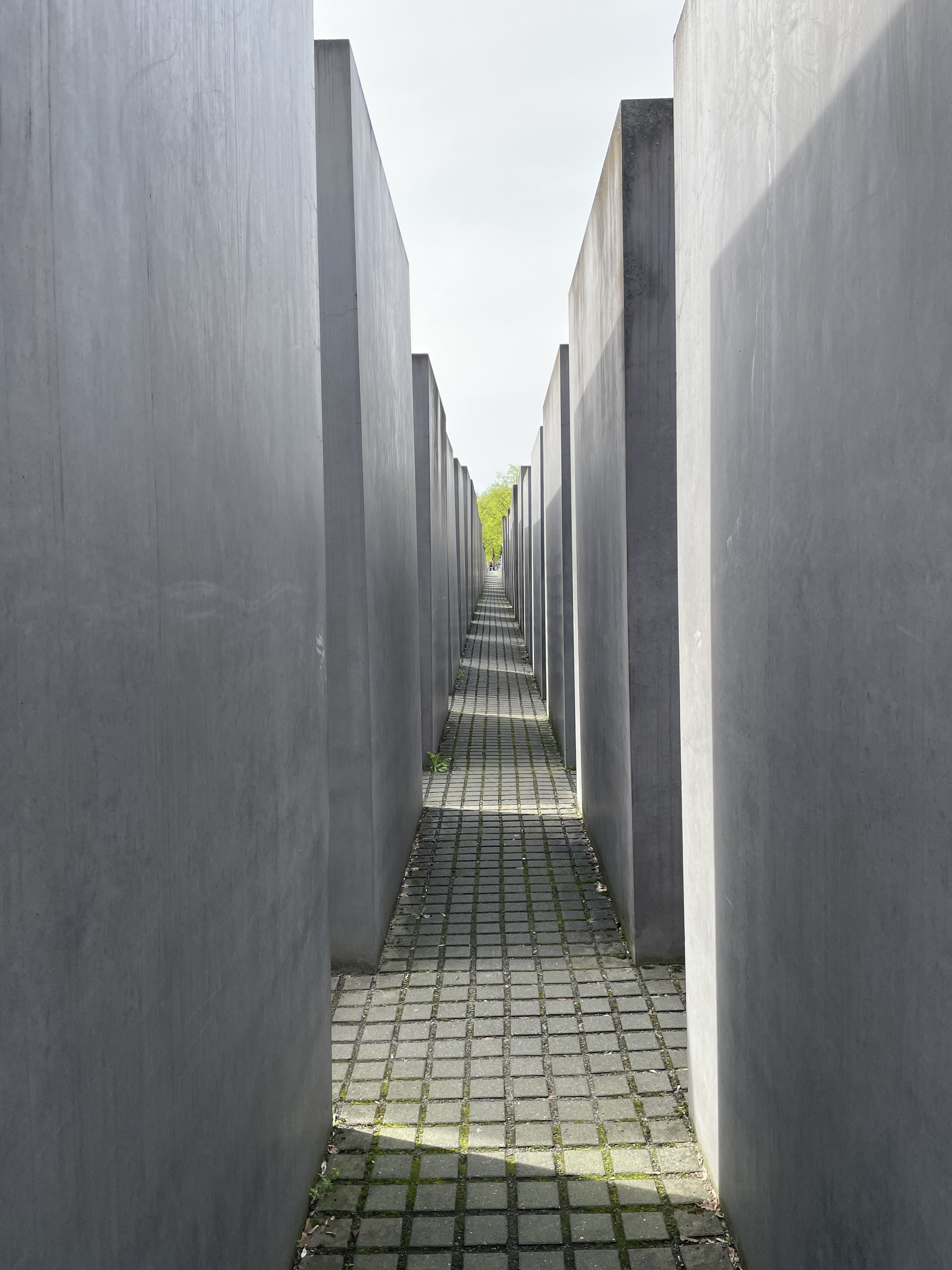


Clockwise: Brandenburg Gate, Memorial to the Murdered Jews of Europe, Potsdamer Platz, Tiergarten, Topography of Terror
What did we miss? More here than elsewhere, partly because there’s more to see, but also because our planned route for Sunday was disrupted by the Half Marathon, and to be honest, because we were knackered. If/when I go back, there are several museums to see, and I’d particularly like to focus more on the post-war DDR history – the Wall, the Stasi, etc – as well as doing the Reichstag tour, and going up the Fernsehturm for the sake of the view.
Berlin Reading:
Fiction: Christopher Isherwood – Goodbye to Berlin; Philip Kerr – Berlin Noir trilogy; John le Carré – The Spy Who Came in from the Cold. Non-fiction: Walter Benjamin – Berlin Chronicle; Sinclair McKay – Berlin: Life and Loss in the City that Shaped the Century
Berlin on Film: Wings of Desire; The Resistance; The Lives of Others; Cabaret
Berlin Music: Obviously, there is plenty of ‘classical’ music from composers who were born in or who studied in Berlin. But the soundtrack in my head was made up of the voices of Marlene Dietrich, Lotte Lenya, and David Bowie.
Final thoughts
Seeing three cities in six days invites one to make direct comparisons.
Vienna was grand, and beautiful, seemingly fixed in the nineteenth century, before all of that mid-twentieth-century unpleasantness. My response to the city was coloured by a conversation with a neighbour whose father, it turned out, had grown up there, but had had to leave, along with his family – of those who remained, many were murdered. She felt it was a soulless place, cold and hostile to her which, in a fundamental way it was – had her father not escaped it, she would probably not have existed. Another friend, who grew up in Vienna much more recently, spoke of it as claustrophobic, particularly for a teenager. So we admired its beauty but did not fall in love.
Prague is older, more of a muddle of labyrinthine streets and architectural styles, but just as beautiful in its own, less grand, way. And in the Jewish quarter of the city it acknowledges both the long history of that community, and how that was destroyed, in a simple and moving way, through the names and what that list of names conveys, rather than anything monumental. Prague took our hearts.
Berlin has, of course, a lot more to acknowledge, and it does so in various powerful ways. It leaves gaps, it leaves fragments.
‘Berlin is a naked city. It openly displays its wounds and scars. It wants you to see. The stone and the bricks along countless streets are pitted and pocked and scorched; bullet memories. These disfigurements are echoes of a vast, bloody trauma of which, for many years, Berliners were reluctant to speak openly. … The city itself is long healed, but those injuries are still stark.’ (Sinclair McKay, Berlin, p. xvii)
Its history is so complex and reflects not just one nation but two in the one city, as well as reflecting upon not just Germany (one or both) but what was done to so many in the name of that nation. There are layers upon layers to explore – and we inevitably did scant justice to that.
But we knew that seeing three cities in six days – three cities chosen because of their complex and fascinating history, their beauty and tragedy – was going to leave us with almost as long a list of things that we missed as our original list of things we wanted to see. Some of those omissions were choices – we favoured wandering around the streets over excursions that would take too big a chunk of our time, and I’m glad we did. I missed some things because I reached the end of my capacity for walking rather sooner than A did, and decided to conserve energy for the following day by a strategic withdrawal to the hotel room a little earlier than we’d intended. And there are things that we hadn’t even added to our list, that we’d include next time.
But we saw a heck of a lot, we walked for 57 miles, and I clocked up 135k steps, and we saw museums and art galleries, cathedrals, churches and synagogues, a cemetery, palaces, memorials, statues and fountains, parks and government buildings, paintings and stained glass windows, stolpersteine and commemorative plaques, three great rivers (the Danube, Vltava and Spree), street art, theatres and opera houses, bridges… We sampled the local culinary specialities (schnitzel, apfelstrudel, goulash, pork knuckle, various forms of sausage) and the local beers.
It was a trip that I dreamed up and I was afraid it wouldn’t live up to that dream, but it did, it was everything that I had hoped it would be. When we got home, it almost seemed dream-like – had we really seen and done all of that? Hence this epic blog – I needed to capture it all before memories got too hazy. I could not have done it without A and his company was not only practically essential, but also a joy. I am hugely grateful to him for making that dream a reality.
Marks of Pain: Architecture as Witness to Trauma in W G Sebald’s Austerlitz
Posted by cathannabel in Genocide, History, Second World War, W G Sebald on September 10, 2019
This is an edited version of a talk given at the 2019 Conference, Violent Spaces, of the Landscape, Space & Place group from the University of Nottingham.
Few late twentieth-century writers are held in such regard as W G Sebald. His work has inspired not only glowing reviews and a host of journal articles, edited volumes and monographs – but also responses by visual artists and filmmakers. There are certain themes that are most often associated with his work – time, loss, trauma, memory… These themes inevitably link to one particular aspect of his work – his writing about the Holocaust.
W G Sebald was born in Bavaria in 1944, in the last months of the war. His father had served in the Wehrmacht, but after he returned home, having spent a couple of years as a prisoner of war, the things that he had seen, and done, were never spoken of. And when Sebald as a teenager was shown documentary footage of the camps (probably the liberation of Belsen) no context or commentary was provided. It was, in a way, what we’d now call a box-ticking exercise. Because, of course, the teachers were part of the context. Sebald, like many of his contemporaries, was unable to accept this collusive silence, and his increasing alienation from his homeland led to him working first in Switzerland and then moving to the UK, where he spent the rest of his life, teaching at UEA until his death in a car accident in 2001.
The Holocaust, indeed, became a presence in his poetry and his prose writing. It seems never to be very far away, invoked maybe by the name of a place, innocent in itself, but carrying the weight of history. In many of his works, it is addressed obliquely, but the figure of the refugee appears in several of his books. Max Ferber, one of the four protagonists of The Emigrants, left his home in Munich (capital of Bavaria) in 1939, following Kristallnacht, his father having obtained a visa for him by bribing the English consul. We are introduced to Ferber via the narrator, who does not ask about his history, why or how he left Germany, until their second meeting, at which point Ferber tells how letters from his parents ceased, and he subsequently discovers that they were deported from Munich to Riga, where they were murdered. In Sebald’s final work, Austerlitz, the Holocaust becomes text, not subtext, foreground rather than context.
Sebald’s (fictional) protagonist, Jacques Austerlitz, is an architectural historian, with a particular interest in what he calls ‘our mightiest projects’ – fortifications, railway architecture, what they used to call lunatic asylums, prisons and law courts.


He’s also fascinated by the idea of networks, such as ‘the entire railway system’. From the outset, whilst Austerlitz himself does not make any connection between these edifices and the event that shaped his life, we are given foreshadowing of that event. He says of railway stations, for example, that he can never quite shake off thoughts of the agonies of leave-taking – and we’ll see the significance of that later. He refers to ‘the marks of pain which, as he said he well knew, trace countless fine lines through history’.

We meet the narrator first in a carceral space – Antwerp’s zoo. After his first conversation with Austerlitz, he is moved to visit Breendonk, one of the fortresses that Austerlitz had mentioned.
But it is not the history of how such places were designed, the flawed theories of defence against enemy incursion, that confront him there, but the much more recent past, Breendonk’s conversion into a concentration camp in the Nazi era – a transit camp for deportation to Auschwitz, and a place of torture.
- Originally built for the Belgian army 1906-13 to protect Antwerp – ‘it proved completely useless for the defence of the city and the country’
- Covered by a five-metre thick layer of soil for defense against bombings, a water-filled moat and measured 656 by 984 feet (200 by 300 m)
- Requisitioned by the Germans as a prison camp for political dissidents, captured resistance members and Jews
- Infamous for prisoners’ poor living conditions and for the use of torture. Most prisoners later transferred to larger concentration camps in Eastern Europe
- 3,590 prisoners known to have been imprisoned at Breendonk, 303 died or were executed within the fort itself and as many as 1,741 died subsequently in other camps before the end of the war
Sebald brings in a human witness here, Austrian writer Jean Amery, who was interned and tortured at Breendonk before deportation to Auschwitz and later Buchenwald and Bergen-Belsen. He survived, changed his name from the obviously Germanic Hans Meyer, but committed suicide in 1978.


Our narrator finds Breendonk to be a place of horror. The darkness inside is literal, but also metaphysical, and it becomes heavier as he penetrates further into the building. He begins to experience visual disturbances – black striations quivering before his eyes – and nausea, but explains that ‘it was not that I guessed at the kind of third-degree interrogations which were being conducted here around the time I was born’, since he had not at that point read Amery’s account. Sebald is telling us that the narrator’s reaction to Breendonk is not, therefore, personal, not related in any way to his own experiences or even to things he had read, but intrinsic to the place, as if its use, or abuse, has changed its very nature, violence become part of its fabric.
Breendonk is the first of the trio of Holocaust sites around which the text is structured. It’s built to a star shape, a six-pointed star. This was a favoured design both for fortresses, designed to keep invaders out, and for prisons, designed to keep wrongdoers in.

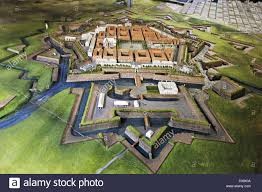

According to Austerlitz this is a fundamentally wrong-headed design for a fortress, the idea that ‘you could make a city as secure as anything in the world can ever be.’ The largest fortifications will attract the enemy’s greatest numbers, and draw attention to their weakest points – not only that, but battles are not decided by armies impregnably entrenched in their fortresses, but by forces on the move. Despite plenty of evidence (such as the disastrous Siege of Antwerp in 1832), the responses tended to be to build the same structures but stronger and bigger, and with inevitably similar results.
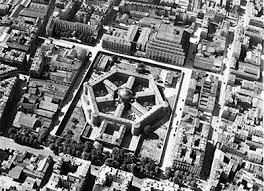

As the design for a prison, the star shape makes more sense. It does not conform to the original layout of the panopticon, but it does allow for one central point of oversight and monitoring, with radial arms that separate the inmates into manageable groups. The widespread use of existing fortresses as places of imprisonment for enemies of the Reich was primarily opportunistic, of course, but the ease of this transformation illustrates Austerlitz’s arguments quite well.
Sebald had previously been struck by his encounter with Manchester’s Strangeways prison, which has the same shape, ‘an overwhelming panoptic structure whose walls are as high as Jericho’s’, and which happens to be situated in the one-time Jewish quarter. The coincidence of the hexagram star is implicit in the above. But it becomes entirely explicit when we look at the second of Sebald’s sites, Terezin.
- Some 70 km north of Prague
- Citadel, or small fortress, and a walled town, known as the main fortress – never tested under siege
- The small fortress became the Prague Gestapo police prison in 1940, the main fortress became the Ghetto in 1941
- Initial transport of Czech Jews, German and Austrian Jews in 1942, Dutch and Danish in 1943, various nationalities in the last months of the war as other camps were closed
- c. 141k Jews, inc. 15k children, held in the Ghetto 1941-1945. 33k died there (disease/malnutrition), 88k deported to Auschwitz, 23k survivors
This lies at the heart of his narrative. Austerlitz, as we discover gradually through the narrator’s irregular meetings with him, came to Britain on the Kindertransport from Prague in 1939, when he was not yet five years old. He was met at Liverpool Street Station by a couple, a minister and his wife from Wales, who fostered him, giving him a new name, and telling him nothing of his history. A teacher tells him his real name when he is in his teens, but rather than this prompting a search for his origins, Austerlitz turns away from his own past and consciously avoids any sources of information which might bring him too close to it. Thus, when he talks to the narrator about Breendonk, it is its history in the first, rather than the second war that he mentions.
Much later, after a strange encounter with his childhood self in the Ladies Waiting Room at Liverpool Street Station, by chance he hears a radio programme about the Kindertransport, and has a kind of epiphany, which prompts him to go to Prague and search for his family. He discovers that his father fled Prague for France, just ahead of the Nazi invasion, and that his mother, left alone there after the train had taken her child to safety, was deported to Terezin from where she was ‘sent east’, presumably to Auschwitz and presumably to her death.
Terezin shares many characteristics with other Nazi concentration camps. But there are elements of its history that mark it out. It was not a labour camp – it was presented as a ‘retirement settlement’ for elderly and prominent Jews, and its role was propaganda rather than economic, discouraging resistance to deportation with promises of comfort, and encouraging wealthier Jews to bring their valuables (of which, naturally, they were relieved on arrival). It was not a death camp – though the terrible conditions led to around 33,000 deaths from malnutrition and disease – but was a way station to Auschwitz. The particular make-up of the population of Terezin led to a rich cultural life, with music in particular playing a leading part.
However, the most notable feature of Terezin was that it was a ‘Potemkin village’, a place whose real purpose could be easily disguised. Indeed it was disguised in 1944, ready for a Red Cross visit, where it was presented as an ideal Jewish settlement. Overcrowding was addressed by the simple expedient of deportation, particularly of the less photogenic inhabitants, the old, sick and disabled. The place was cleaned up, shop fronts erected, and cultural and sporting activities organised for the prisoners. A film was made, which shows football matches and concerts, smiley, healthy looking people. The Red Cross appear not to have realised that they were being duped. Once they had left, of course, deportations were resumed.


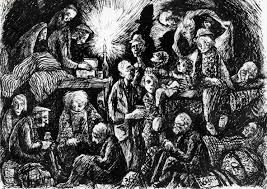

W G Sebald, Austerlitz, pp. 266-68; H G Adler, Theresienstadt 1941-1945: The Face of a Coerced Community
‘I felt that the most striking aspect of the place was its emptiness, said Austerlitz […] the sense of abandonment in this fortified town, laid out like Campanella’s ideal sun state to a strictly geometrical grid, was extraordinarily oppressive, yet more so was the forbidding aspect of the silent facades.[…] What I found most uncanny of all, however, were the gates and doorways of Terezin, all of the, as I thought I sensed, obstructing access to a darkness never yet penetrated’
Austerlitz visits Terezin, having learned of his mother’s imprisonment there. He has been told that it is an ordinary town now, but he finds it strikingly empty, its streets deserted, its windows silent and blank. In its museum, he is confronted by the history he has been avoiding for so long – he studies the maps of the German Reich, in particular the railway lines running through them, that facilitated forced labour, deportations and genocide. The ground plan of the star-shaped fortifications is ‘the model of a world made by reason and regulated in all conceivable respects’, a fortress that has never been besieged, a quiet garrison for two or three regiments and some 2,000 civilians. But it seems to Austerlitz that, far from having returning to this civilised and reasonable state, the town is now filled with the people who had been shut in to the ghetto, as if ‘they had never been taken away after all, but were still living crammed into those buildings and basements and attics, as if they were incessantly going up and down the stairs, looking out of the windows, moving in vast numbers through the streets and alleys and even, a silent assembly, filling the entire space occupied by the air’.
Our human witness to Terezin is H G Adler, who, like Austerlitz, was born in Prague. He was sent initially to a labour camp in 1941, then to Terezin with his family in 1942. In 1944, he, his wife and her mother were deported to Auschwitz, where both women were murdered on arrival. Adler also lost his own parents and many other members of his family. From Auschwitz, he was deported to two successive sub-camps of Buchenwald before liberation. His research post-war focused on the archives of Terezin and formed the basis of his major work, Theresienstadt 1941-1945, which Sebald quotes and refers to extensively and which is still the most detailed account of any single concentration camp.
There’s one more fortress to consider. Kaunas, in Lithuania.
- 12 forts built in 19th century to defend against German armies
- All surrendered in 1914 and some fell into disuse
- Russians occupied in 1939 and used them as prisons
- 1941-45 German occupation: 7th fort used as concentration camp – 4k Jews killed there. 9th fort was execution and burial site for Jews from Kaunas and for other Jews shipped there during the Holocaust
- Abraham Tory reports in his ghetto diary that ‘single and mass arrests as well as “actions” in the ghetto almost always ended with a death march to the Ninth Fort, which in a way completed the ghetto area and became an integral part of it‘
We have no first-hand human witness here. Instead, we have Dan Jacobson, a South African writer whose book Heshel’s Kingdom describes his attempts to piece together a family narrative fragmented by history, the fate of whose members was determined by one event, the sudden death of Heshel Melamed in 1919, which freed his widow, children and grandchildren to emigrate from Lithuania to South Africa. Jacobson’s quest is to discover what happened to the other branches of the family, those who were left behind.
W G Sebald, Austerlitz, pp. 414-15, Dan Jacobson, Heshel’s Kingdom, pp. 159-62
Jacobson tells us that the Russians built a ring of twelve fortresses […] in the late nineteenth-century, which then in 1914, despite the elevated positions on which they had been constructed, and for all the great number of their cannon, the thickness of the walls and their labyrinthine corridors, proved entirely useless. […] In 1941 they fell into German hands, including the notorious Fort IX where Wehrmacht command posts were set up and where more than thirty thousand people were killed over the next three years.[…] Transports from the west kept ]coming to Kaunas until May 1944,[…] as the last messages from those locked in the dungeons of the fortress bear witness. One of them, writes Jacobson, scratched the words “Nous sommes neuf cents Francais” on the cold limestone wall of the bunker.


Neither Austerlitz nor the narrator visits Kaunas. But Austerlitz gives to the narrator, before he sets off to continue his own quest for answers, a copy of Jacobson’s book. Sebald’s narrative leaves us at the end of Jacobson’s Chapter 15, in an underground corridor where, behind glass, are preserved the ‘wall scratchings’ – literal marks of pain – of French Jewish prisoners brought here – after the war had effectively been lost. These include Max Stern, Paris, 18.5.44 – Sebald’s first name, and his date of birth; the fictional Austerlitz’s father’s first name, and last known location. What happened to these people, what happened to Jacobson’s family, cannot be known. Were they deported to an extermination camp – perhaps more likely, given the history of Kaunas, were they were killed right there?
Auschwitz is, of course, the fourth location that is implicit in the above.

It is both the archetype – we invoke this name above all others to stand for the Nazi machinery of mass murder – and the specific journey’s end for so many. Sebald doesn’t take us there though – it is present, always, but unseen and its name unspoken. We hear it only as an echo – in the name of our protagonist, in the mention of the Auschowitz springs which he visits at Marienbad. We don’t go there because we don’t need to – the phrase ‘sent east’ is already heavy with meaning.
Sebald gives us not only these closed places of death and terror but their apparent opposite – the transitory, liminal space of the railway station. Austerlitz’s fascination with the railway network was always tinged with a sense of loss, anguish even. In this, he reminds us of Max Ferber from Sebald’s The Emigrants who finds railway stations and railway journeys to be torture and who as a result, never leaves Manchester. And perhaps Sebald also was thinking of the passage in Elie Wiesel’s autobiography, concerning ‘those nocturnal trains that crossed the devastated continent’:
Elie Wiesel, All Rivers Run to the Sea
Their shadow haunts my writing. They symbolise solitude, distress, and the relentless march of Jewish multitudes towards agony and death. I freeze every time I hear a train whistle.
Towards the end of the narrative, at the Parisian railway station with which he shares a name, Austerlitz feels that he is ‘on the scene of some unexpiated crime’. Indeed, the Gare d’Austerlitz was the station from which Jews rounded up in the city were crammed into cattle trucks and transported to the transit camps near Paris – from where they were later crammed again into cattle trucks for transport to Auschwitz. And of course, one of the most often used images of Auschwitz itself is of the railway tracks.

Austerlitz pieces together his mother’s journey, after her partner and then her son leave.

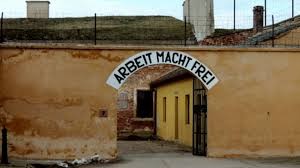


She is ordered to report to the Prague Exhibition Centre with her belongings. She and her fellow deportees go to Holesovice station and from there by train to Bauschowitz station, from where they must walk to Terezin. From Terezin, at some unknown date, another train takes her to Auschwitz.
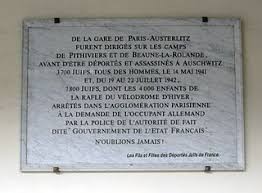

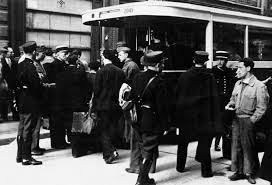


His father’s journey is more speculative. Austerlitz knows that Max flew from Prague to Paris. After that, his mother had various addresses for him in Paris, but no communications. Austerlitz wonders whether he was rounded up in 1941, in the first wave of arrests of foreign Jews, or in the much bigger round-up in July 1942, the Vel d’Hiv, the first round-up to take not only men capable of work but women, children, the sick, the elderly. Austerlitz also learns that Max may have been at one time at the Gurs camp in southwestern France, originally set up for Spanish refugees after Franco’s victory, but appropriated by the Nazis for Jews and members of the resistance. Did he die there, of disease or malnutrition? If not, was he deported from Gurs to Drancy and from there to Auschwitz? Or was he taken from the streets of Paris via the Gare d’Austerlitz to Pithiviers or Beaune-la-Rolande, and from there to Auschwitz? We take our leave of Austerlitz as he prepares to continue the search for evidence.

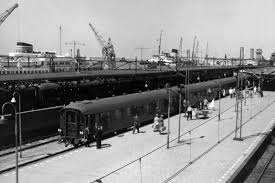


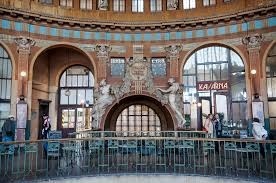
Sebald does recount another train journey. One which ended on the threshold not of death but of the hope of a new life. Austerlitz as a child travels from Prague’s Wilsonova station with the Kindertransport, a series of initiatives undertaken between Kristallnacht and the outbreak of war to get children, mainly Jewish, out of Nazi Europe – around 10,000 were thereby saved during that brief window of possibility. Jacques travels through Czechoslovakia and Germany, to the Hook of Holland, from where he takes the ferry to Harwich and another train to Liverpool Street Station. This is no fairy tale – for the fictional Jacques as for so many of the children, their assimilation and acceptance of their new home (a new language, new customs, often a new name, and a new religion) and their new family’s understanding of them, were problematic. And all of them faced traumatic absences, losses that they couldn’t grieve, and questions they couldn’t answer. Most never saw their parents again.
Austerlitz’s new life, the one that started on the platform at Liverpool Street Station, would never be free of those marks of pain. His academic quest to make sense of the family likeness between ‘monumental’ buildings, places that impose and imprison, and of the railway network that links them, has been superseded by the unrecognised need that had originally driven it. To find his family, to know everything he can know about their lives and their deaths, to inscribe those human stories, his human story, on the bricks and stones of the fortresses, prisons and railway stations that witnessed them.
(Austerlitz, p. 183)
‘I often wondered whether the pain and suffering accumulated on this site over the centuries had ever really ebbed away, or whether they might not still, as I sometimes thought when I felt a cold breath of air on my forehead, be sensed’
Bibliography
W G Sebald, Die Ausgewanderten (Fischer, 1992), English translation, The Emigrants, published 1996
__, Nach der Natur (Fischer, 1995), English translation, After Nature, published 2002
__, Austerlitz (Fischer, 2001), English translation published 2001
H G Adler, Theresienstadt 1941-1945: The Face of a Coerced Community (Cambridge UP, 2017)
Jean Amery, At the Mind’s Limits: Contemplations by a Survivor on Auschwitz and its Realities (Indiana UP, 1980)
Dan Jacobson, Heshel’s Kingdom: A Family, a People, a Divided Fate (Hamish Hamilton, 1998)
Elie Wiesel, All Rivers Run to the Sea (Schocken Books, 1994)
Ten Books*
Posted by cathannabel in Literature on September 9, 2018
*Disclaimer – there are a lot more than ten books. I don’t automatically have a problem with compliance, but to attempt to distill 57 years of reading into just ten books would be just silly. Far harder, in a way, than the Ten Albums thing I did a while back.
Anyway, despite all of that, reading other people’s selections on Facebook did get me thinking about the books that have had the greatest impact on me, made me the person I am. So I’ve devised a plan. I’ve picked some of the books I read as a child or in my early teens, during those years of eager discovery, every book a new world to explore. I’ve grouped them not into genres (I have no truck with categorisation by genre) but in terms of ten themes and ideas that these books encapsulated and which set me on quests that I’m still pursuing today. Secondly, I’ve picked ten(ish) of the books that I’ve read as an adult that have inspired me and that have informed my politics. Neither of these lists represents The Best, but all the books here have been truly significant.
A Childhood with my Head in a Book
How to Be a Girl
The books I read as a child gave me some interesting and contradictory models for how to be a girl. It’s something I was never very good at – my Christmases and birthdays always brought cookery books, dolls and sewing kits, none of which inspired anything other than indifference in me. I only ever completed one bit of knitting – my treasured Forest scarf. You can tell which end I started at, from the loose, uneven stitches. I tired rapidly of the pious and/or relentlessly cheerful heroines that an earlier generation of writers so often presented to me, but found among that generation nonetheless the likes of Anne Shirley and Jo March who gave me the notion that being a girl might involve reading a lot, using your imagination, defying convention, being contrary, not being Good (at least not all the time).
I read Jane Eyre – another awkward girl – at a young age. (This was one of a number of classics which were technically too old for me, but which, because they began with the protagonist as a child, were accessible even if their full depth and complexity were only revealed through later re-reading – see also Great Expectations, David Copperfield.) Jane Eyre led me to read the rest of the Brontes (though only recently in the case of Anne, I’m ashamed to say), and the Dickens I read as a child led me to read all of his work, and to explore the world of the nineteenth-century novel, particularly George Eliot, who I read as a teenager but whose Middlemarch vies with Bleak House for the title of Greatest Novel in the English Language (spoiler – BH wins. Just).
And I Capture the Castle, in which we meet Cassandra Mortmain (sitting in the kitchen sink) at the age of 17 (‘looks younger, feels older’) – a marvellous mixture of naivety and wisdom. Far older than me when I read it first, so I grew up with her, catching up and then overtaking her.


L M Montgomery – Anne of Green Gables; Louisa May Alcott – Little Women; Charlotte Bronte – Jane Eyre; Dodie Smith – I Capture the Castle
Travellers in Time
I was always entranced by the notion of slipping from now to then, from present to past. And these three books all share something in common – that the slippage is related to a very specific and real place, a place in which the past is still very present. Dethick, in Derbyshire, is the real counterpart of Alison Uttley’s Thackers (A Traveller in Time); Philippa Pearce’s Victorian house (Tom’s Midnight Garden) is based on the Mill House in Great Shelford, near Cambridge, and Lucy Boston based Green Knowe (The Children of Green Knowe and its sequels) on her home, The Manor in Hemingford Grey, also near Cambridge. My very talented friend Clare Trowell now lives in Hemingford Grey, and this gorgeous linocut is her tribute to a book that is as magical for her as it is for me.

Clare Trowell (linocut) – Hemingford Grey
In each of these novels, the present-day protagonist encounters past inhabitants of that house, and there is both a sense of magic and a deep sadness that comes from the knowledge that those people are in today’s reality long gone. Although in Tom’s Midnight Garden, there is an encounter between the boy and the elderly woman who was/is the young Victorian girl who had become his friend, which brings about one of the most poignant endings in children’s literature (yes, up there with the final pages of The Railway Children about which I cannot even speak without choking up). I found Dethick in my early teens and will never forget the sense of magic, just out of my reach, when I stood in the Tudor kitchen of the old house, where Penelope had stood, where she had encountered the Babingtons. And I still get that same feeling when I see the ruins of Wingfield Manor on the skyline.
I’ve read many books since then that play with time travel (the most powerful is probably Audrey Niffenegger’s The Time Traveller’s Wife, whose ending made me sob like a baby), and it’s a staple of the sci-fi I watch on screens large and small, but the magic these books hold is different. It’s not about the intellectual tease of time paradoxes, or parallel dimensions. It’s about a place, and the people who inhabited that place, and whose joys and sorrows still inhabit it long after they’re gone.


Alison Uttley – A Traveller in Time; Philippa Pearce – Tom’s Midnight Garden; Lucy M Boston – The Children of Green Knowe
Thresholds to Other Worlds
And then there are the books in which the protagonists slip not just out of our time, but out of our world and into another, or into a version of our world where magic is real, if invisible. Harry Potter was obviously not a part of my childhood, so the first doorway into myth and magic that I encountered was a wardrobe door, and it led to a place of permanent winter, always winter but never Christmas. I know there are issues with the Narnia books – and when reading them aloud to my own children I did skip one or two sentences of egregious sexism or racism. But they are a part of me, read and re-read, fuelling my imagination and my curiosity, still shared reference points with family and friends.
Not long after discovering Narnia, I found in the pages of Alan Garner’s The Weirdstone of Brisingamen the gates to Fundindelve on Alderley Edge and stories that were not only magical but genuinely spinechilling. Like the time-slip stories mentioned previously, Garner’s stories are absolutely rooted in the landscape he knew, and steeped in the multilayered mythologies of the British Isles – Celtic and Norse and Saxon. Many of the places referred to in The Weirdstone and The Moon of Gomrath can be found not only on the frontispiece map provided (I do like a story that comes with a map) but on the OS map of the area.


One can go on a pilgrimage – as I did – and find these locations and feel that frisson of magic again.
Whereas Lewis’s protagonists are largely unencumbered by adults, as is so frequently the case in children’s literature, in Garner’s narratives the adults can be allies, however reluctantly roped into the struggle between good and evil that is being played out around them, or they can be obstacles or enemies. Those encounters with evil are all the more terrifying when they encroach upon the ordinary, everyday world – something that Stephen King knows very well. Garner’s approach is similar to that of Susan Cooper in her marvellous The Dark is Rising series, which is only not included here because I didn’t encounter those books until my late teens. I grew up with Garner’s books – in the literal sense that the transition from Weirdstone/Moon to Elidor and thus to The Owl Service and Red Shift was a gradual transition from childhood to young adulthood in terms of the themes and the sensibilities of the protagonists.
C S Lewis – Chronicles of Narnia; Alan Garner – The Weirdstone of Brisingamen
Other Worlds
Whilst Narnia could be accessed from our world, via a wardrobe or a painting or a summons, Middle Earth exists outside our world altogether. I read The Hobbit and the Lord of the Rings trilogy as a child and was utterly terrified by the Dark Riders, and Shelob. Ursula le Guin’s Earthsea was another other world that I came to late in my teens – it led me to her adult science fiction novels which are beautiful and profound and which make the reader think and question. Lord of the Rings doesn’t really do those things but it catches you up in the archetypal quest narrative with the archetypal quest hero, not a warrior or a king but someone (literally) small and naive, someone whose resolve is strong but yet falters and who needs other people (friends and enemies) to achieve his goal.

J R R Tolkien – The Lord of the Rings
The Past
Some of the books I read took me into the past, unmediated by a present-day interloper. Rosemary Sutcliff illuminated the Roman period and its aftermath, and Henry Treece the Vikings. Rosemary Hawley Jarman’s romantic take on the Wars of the Roses and, particularly, the mission to clear the name of Richard III (see also Josephine Tey’s The Daughter of Time) captivated me. Leon Garfield’s protagonists weren’t real historical figures but inhabited a richly drawn eighteenth-century world. And Joan Aiken introduced me to the notion of alternative history, with her splendidly Gothic Wolves of Willoughby Chase set in the reign of James III. I loved Edith Sitwell’s studies of Elizabeth 1 in Fanfare for Elizabeth and The Queens and the Hive. I loved Margaret Irwin’s take on the same period in her Queen Elizabeth trilogy, as well as her accounts of Prince Rupert of the Rhine and Minette (sister to Charles II). All of these writers fed my fascination with history and led me to contemporary writers such as Hilary Mantel and Livi Michael.


Rosemary Sutcliff – The Lantern Bearers; Leon Garfield – Smith; Joan Aiken – The Wolves of Willoughby Chase; Henry Treece – Viking’s Dawn; Rosemary Hawley Jarman – We Speak no Treason; Edith Sitwell – Fanfare for Elizabeth; Margaret Irwin – Young Bess
Displaced and Endangered
Whilst it’s far from unusual that the protagonists of novels for children are parentless, either permanently (a heck of a lot of orphans) or temporarily, some of the novels I encountered as a child took that trope of children pluckily dealing with perils of various kinds, and gave it a much darker context, and a much more real peril.
The children in Ian Serraillier’s The Silver Sword escape occupied Warsaw and after the war is over have to try to find their families amidst the chaos and mass displacement, as well as the emerging tensions between the former Allies. It’s tough and powerful, whilst also being a cracking adventure. The protagonist of Ann Holm’s I am David escapes (with the collusion of a guard) from a prison camp in an unnamed country and crosses Europe to try to find his mother. The novel does not flinch from the ways in which David has been affected by his life in the camp and how difficult he finds it to trust given his early experiences. An Rutgers van der Loeff told the story of a group of children who found themselves on the Oregon trail alone, after their parents died on the journey (based to some extent on the true story of the Sager orphans). It was often a harsh read, and again did not shy away from the emotional effect of having to assume adulthood at 14 and take responsibility for the safety of younger siblings in a world full of natural and man-made threats. Meindert de Jong’s The House of Sixty Fathers is set during the Sino-Japanese war, and again tells of a child separated from his parents in the chaos of war, but in this case finding care and love from a unit of American soldiers (the titular Sixty Fathers).
All of these books pull their punches to some extent. They don’t present their child readers with the full, unmitigated horror of war or of genocide. And they are right, in my view, to hold back. What they do is to open that door, just enough, so that readers can choose to find out more, and are prepared (to some extent) for what they may discover.


Ian Serraillier – The Silver Sword; Ann Holm – I Am David; An Rutgers van der Loeff – Children on the Oregon Trail; Meindert de Jong – The House of Sixty Fathers
Everyday Magic
There’s another kind of magic, that doesn’t tap into myth and legend but imaginatively imbues ordinary life with something extraordinary. Here, the extraordinary is very small. So small that it can be hidden from prying eyes, it can live alongside us but without us knowing. Mary Norton’s Borrowers series was both magical and mundane – the prosaic details of the Clock family’s life beneath the floorboards, appropriating household objects – cotton reels, hairpins, old kid gloves – and using them to create a miniature version of the life of the human beans above, was somehow so easy to engage with. What did happen to all those tiny things that mysteriously go missing – could this be the answer? The fascination with things miniature – dolls’ houses, miniature villages (both of which feature in the narrative) is widely shared and Norton taps into this. The small people in T H White’s Mistress Masham’s Repose are actual bona fide Lilliputians and our heroine, Maria, an orphan (natch) finds her own salvation linked to theirs, in the face of callous and exploitative adults.


Mary Norton – The Borrowers; T H White – Mistress Masham’s Repose
Myths & Legends
As well as novels in which myth and legend intruded into contemporary life, I read various versions of the originals. Roger Lancelyn Green was one of the best, bringing me retellings of Greek, Norse, Celtic and Egyptian legends. He was one of my original sources for the stories of King Arthur, which entranced me and continue to inhabit my imagination to this day (they’ve inspired the names of both of my children). Reading both Malory’s Morte d’Arthur, which sets the tales in a medieval world of chivalric valour, and Rosemary Sutcliff’s interpretation of Arthur as Celtic warrior drew me into the complexity of the myth.


Roger Lancelyn Green – Tales of the Greek Heroes; Rosemary Sutcliff – Sword at Sunset
SciFi
Fantasy and myth led me into proper sci-fi. The dividing lines between the two are often blurred and disputed but I guess at its simplest it relates to an interest in causes and process to ‘explain’ the phenomena that myth might simply present to us as a given. My first introduction was probably reading a volume of H G Wells’ science fiction, and it was The Invisible Man that had the most impact upon me (slightly surprising, perhaps, in view of my interest in timey-wimey narratives). From my parents’ bookshelves I scavenged John Wyndham’s novels, and his first three in particular (The Day of the Triffids, The Kraken Wakes, and The Chrysalids). These prepared the ground for so many dystopias and disaster movies to come…


H G Wells – The Invisible Man; John Wyndham – The Chrysalids
Reading the Detectives
As my current reading is often dominated by crime fiction, I was interested to explore the origins of that interest in my childhood reading. I was lucky enough to encounter Conan Doyle’s Sherlock Holmes stories in the volumes of the Strand Magazine that my mother had inherited. Also through my parents I discovered Dorothy L Sayers’ Peter Wimsey novels, which I re-read happily today, because whether or not one can remember who did it, one can relish the writing, the dialogue, the wit. And linking in with my historical interests, Josephine Tey’s The Daughter of Time introduced the idea of a review of a very cold case, of challenging accepted views of history through radical reinterpretation of sources.


Josephine Tey – The Daughter of Time; Arthur Conan Doyle – Sherlock Holmes; Dorothy L Sayers – Strong Poison
If anyone notices the preponderance of Puffin logos in the images above (which are where possible the covers of the very books over which I pored), that’s very apt. I relied upon regular dispatches of Puffin books to our various homes in West Africa to keep me supplied with enough quality reading matter.
Adult Life with my Head in a Book
I’ve divided this group of books into fiction and non-fiction. Again, I must repeat that these are not necessarily the Best, but they’re all books that had a huge, often visceral, impact on me, that changed me.
Fiction:
If Nobody Speaks of Remarkable Things/Reservoir 13
For my money, Jon McGregor is one of the finest contemporary novelists. If Nobody… was the first and still has the power to floor me emotionally, however many times I read it. Reservoir 13 is the most recent, and having read it the first time, I could only turn back to the beginning and read it again, to immerse myself in the turning of the seasons and the warmth and humanity of the writing and the characterisation.


The Stand
 I’ve written previously about how my prejudices were overcome once I actually read a Stephen King novel. No matter how schlocky the cover (these days the cover art tends to be rather subtler), the narrative was so compelling that I had to keep reading, hunger and tiredness were irrelevant, I had to keep turning those pages. I’ve read pretty much everything he’s written, but this was the one that got me started – having read it cover to cover, I re-read it almost immediately, being conscious that the compulsion to find out what happened next had made me rush through the pages. King is a consummate storyteller, and there’s a moral focus too. Whilst he doesn’t avoid the gross-out, he always retains that sense of the distinction between good and evil, the choices that confront ordinary, flawed human beings. And he can make those ordinary flawed human beings who confront evil believable, lovable, not just admirable.
L’Emploi du Temps/The Emigrants


Obviously I had to include these two, since the first, Michel Butor’s 1956 novel set in a fictionalised version of Manchester, has been the focus of my research during my part-time French degree, and now my PhD, which explores the connections, the dialogue, between Butor and W G Sebald. Many of my blogs, particularly the earlier ones, talk about Butor and/or Sebald in various contexts (music, maps, labyrinths, Manchester, Paris, the Holocaust…). Butor made me read Proust, Sebald made me read Kafka (I think of the two I’m more grateful to Butor, but both are essential to understand twentieth-century European literature).
Half of a Yellow Sun

This is a brilliant, powerful novel. For me it had a personal, visceral impact, in its account of the massacres carried out in the north of Nigeria, during the bloody prelude to that country’s brutal civil war. Because I was living at the time in Zaria, in the north, and whilst my parents shielded me (I was 9 years old) from the horrors, I nonetheless knew that there were horrors, and learned as a teenager and an adult more about what my parents had witnessed, about the context and the history, and about what came after, too. Chimamanda Ngozi Adichie is a splendid writer and a clear and strong voice, drily humorous and perceptive.
The Womens Room
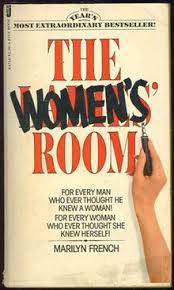
Marilyn French’s The Women’s Room isn’t one that would make the list solely on its literary merits. It’s well enough written, but its presence here is because I read it just at the point when I was not so much becoming a feminist, but realising that I was one. I read everything I could get my hands on – Germaine Greer, Betty Friedan, Kate Millett, Susan Brownmiller, Shulamith Firestone (best name ever!), Sheila Rowbotham, Simone de Beauvoir and more. But there are things that only fiction can do, and The Women’s Room illustrated and encapsulated so many of these arguments in the story of Mira and her friends. French herself said that it wasn’t a book about the women’s movement, rather a book about women’s lives today. And because there isn’t just one voice here, but many, we are free to disagree with the most extreme viewpoints without rejecting the whole thing. The novel was accessible in a way that most of the feminist writers listed above, frankly, aren’t. And whilst it attracted plenty of criticism, it changed hearts and minds, it made so many women feel that they weren’t alone in the way they felt about the way the world worked.
Fiction can do things that non-fiction, however well-written, however accessible, can’t. But very often fiction leads me to non-fiction – I want to know more about the place, the period, the events that the fiction describes. The next list is of books that illuminated what I read in the newspapers and in novels, and what I watched on TV and at the cinema. They may not be definitive works, they may have been overtaken by subsequent research, and for various reasons they aren’t books that I will read again and again, but they were my way into topics which have preoccupied me over very many years. If the overall impression is that, well, it’s all a bit grim, I can only acknowledge that as a true reflection of what I read. I don’t immerse myself in grimness for the sake of it but from a deep need to understand and the sense that as privileged as I am in so many ways I have no right to look away, to choose not to know. I still believe in humanity, despite everything.
We Wish to Inform You That Tomorrow We Will Be Killed With Our Families: Stories from Rwanda
I read the newspaper reports coming out of Rwanda in 1994 but it took me a long time to seek out the full story of what had happened there. Perhaps that’s partly because I knew how powerfully it would connect emotionally with what had been happening around me in Northern Nigeria in 1966. Philip Gourevitch’s 1998 book is not a definitive history of Rwanda, and arguably lacks some of the context that is necessary to understand why the genocide happened. But it’s clearly unreasonable to expect every book on a complex issue to cover everything, to be everything. Gourevitch’s focus is on the testimony of survivors, and thus on the accounts of specific atrocities. It’s vital and horrifying and heartbreaking.
The War Against The Jews, 1933-1945
My introduction to the Holocaust was, as for so many, reading Anne Frank’s diary. But her diary can only raise questions, not provide answers. She knew so little of what was happening to Jews in Amsterdam and across Europe, only what the adults with whom she shared the Annexe themselves knew and allowed her to hear. When we read her words we are encountering a real person, a child on the verge of adolescence, a bright child, who might have been ordinary or extraordinary, who knows, but whose circumstances were so extraordinary that we read her words weighed down by our own knowledge of what was happening around her, and what would happen to her. The simple questions – why did they have to hide? why did they have to die? – require answers not to be found within the pages of the diary. My next step was the TV series Holocaust – controversial and flawed but hugely valuable to a generation who suddenly saw how what happened to Anne Frank fitted within this huge picture, in which the members of one Jewish family between them encounter Kristallnacht, Aktion T4, the Warsaw Ghetto, Sobibor, Terezin, Auschwitz…
Holocaust led me to Lucy Davidowicz’s 1975 account of the war against the Jews. This is not the definitive study – as if there could be such a thing – and has been harshly criticised by Raul Hilberg in particular, for its lack of depth and rigour. But it got me started, it gave me an overview and led me to read extensively amongst the vast literature on the subject, exploring not just what happened, but why and how and who, and the implications for the generations since (Middle East politics and international law in particular).
And the Band Played On: Politics, People, and the AIDS Epidemic (1980–1985)
I remember during the mid-1980s the first newspaper articles about a ‘gay plague’, and the emerging moral panics, the information leaflets and the ‘tombstone’ advert on TV. Randy Shilts’ 1987 book was what made sense of that mess of misinformation, prejudice and ignorance. It’s a work of investigative journalism, particularly in relation to the response and actions of medical researchers, but it’s also, always, personal. As a gay man in San Francisco, Shilts was not writing about something that was happening to ‘others’ but something that was happening to his own community and, ultimately, to him (he was confirmed to be HIV positive in 1987, having declined to find out his status whilst writing the book in case it skewed his approach, and died in 1994, aged only 42). It’s an often shocking book, heartbreaking and as compelling a page-turner as any detective novel.
Bury my Heart at Wounded Knee: An Indian History of the American West
James Michener’s massive, sweeping novel based on the story of a Colorado town, Centennial, was my introduction to many aspects of American history. Michener transposed many historic events, in particular the Sand Creek massacre to his fictional location so that through the lives of people in that one town (more or less) the great themes of US history could be touched upon.
I was fairly well-versed in the Civil Rights movement, having read not only about Martin Luther King but about the Black Panthers, Angela Davis and George Jackson. But my knowledge of the story of the Native Americans was patchy, to say the least. I knew enough to be sure that the portrayal in the westerns I’d watched as a kid was at best simplistic or romanticised and at worst racist, but Centennial made me want to know much, much more.
Dee Brown’s book is explicitly an Indian history (published in 1970, when presumably that terminology was still felt to be OK….) in which the Native American peoples are at the heart of the story of their own land. It’s a brutal story – they were lied to and stolen from, they were forced into dependency and then vilified for that dependency, and they were murdered in huge numbers. Brown’s history takes us up to 1890 and the Wounded Knee Massacre (sometimes referred to as the Battle of Wounded Knee which gives a rather false impression) which is seen as marking the end of the ‘Indian Wars’ – though not the end of conflict or of killing.
I found out recently about a series of murders of Osage people in Oklahoma in the early 1920s, motivated by the discovery of big oil deposits beneath their land and involving legal trickery to secure the inheritance of the victims (whose deaths were initially seen as being from natural causes). David Grann’s Killers of the Flower Moon is a fascinating read, a true-crime account which takes the story of the genocide a generation onwards, a small-scale version of what happened to the indigenous peoples across the continent.
All the President’s Men
This could scarcely be more pertinent, as Bob Woodward, one of the Washington Post reporters responsible for this account of the Watergate break-in and the scandal that brought down President Nixon has just published Fear: Trump in the White House… At the time it was all happening I followed events avidly, finding it hard to credit that such a plan could have been dreamed up, executed (incompetently) and then covered up (incompetently) at such high levels of government. The intervening years have made it easier to believe such things… This book, which appeared as the story was still fresh and new, was a brilliant piece of journalism, with all of the tension of a detective story. There was a follow-up, The Final Days, describing the end of Nixon’s presidency, and many other books, including from some of those implicated (such as John Ehrlichman, whose account was the basis of the 1977 TV mini-series, Washington: Behind Closed Doors, in which an all-star cast portray President Richard Monckton and his aides, associates and accomplices).


So, that’s my ten books… Ten themes in the books I devoured as a child, ten books (five – oh, OK, seven if you’re going to be picky – fiction, five non-fiction) that I read as an adult that have in one way or another stayed with me. I was never going to be able to pick just ten, was I?
Godwin’s law and the Angel of Alternate History
Posted by cathannabel in Politics on November 23, 2016
We’ve all observed Godwin’s law in action. “As an online discussion grows longer, the probability of a comparison involving Hitler approaches 1″—that is, if an online discussion (regardless of topic or scope) goes on long enough, sooner or later someone will compare someone or something to Hitler.
We’ve all cringed at the crass hyperbole of comparing some minor injustice – or even some pretty significant injustice – to the Holocaust. We’ve all sighed at the historical ignorance of many of those who make the comparisons, wondering what on earth they do teach them in schools these days.
And of course it’s right that we should check ourselves, as those comparisons spring to mind, to ensure that if we do invoke Hitler, Nazism, the Holocaust, the Warsaw Uprising or whatever it is, we do so mindful of the history, the scale, the world-altering significance and the uniqueness of those events.
But when we hear political rhetoric and recognise its echoes (whether the words are being used consciously or not), when we see tabloid headlines and recognise the way in which they are stoking and inciting hostility and prejudice, when proposals are made (firms having to gather data on ‘foreign’ workers, schools to gather data on the children they teach, registers of Muslims, etc) that remind us of the way in which the ground was prepared for fascism and genocide, of course we have to point this out.
This is not the same as accusing Theresa May, Amber Rudd or Donald Trump of being Nazis, or of harbouring plans for concentration camps. But as we have to keep on pointing out, fascism doesn’t start with that.
It will restore your honour,make you feel proud,protect your house,give you a job,clean up the neighbourhood,remind you of how great you once were,clear out the venal and the corrupt,remove anything you feel is unlike you…It doesn’t walk in saying,“Our programme means militias, mass imprisonments, transportations, war and persecution.”(Michael Rosen)
And it arrives with the drip drip drip of the message about ‘the other’, the other who has the job that should be yours, the place in the housing queue, the easy access to benefits and to everything that you feel you have to struggle for. The other who is not only (somehow) both a scrounger and has nicked your job, but is a terrorist sympathiser, a rapist or a drug dealer. Or, conversely, is covertly running the whole show, the media, the financial institutions and so forth.
You’ve got to be taughtTo hate and fear,You’ve got to be taughtFrom year to year,It’s got to be drummedIn your dear little earYou’ve got to be carefully taught.(South Pacific, ‘You’ve got to be Taught’, Oscar Hammerstein II, 1949)
Hatred isn’t something you’re born with. It gets taught. At school, they said segregation what’s said in the Bible… Genesis 9, Verse 27. At 7 years of age, you get told it enough times, you believe it. You believe the hatred. You live it… you breathe it. You marry it.(Mrs Pell, in Mississippi Burning, dir. Alan Parker, 1988)
We’ve grown used, sadly, to the vilification of migrants and Muslims, the self-evidently false narratives that are promoted on page 1 and whose repudiation (if it comes) is hidden in small type at the bottom of page 2. What’s more recent is the vilification of ‘experts‘ (to use the full designation, ‘so-called experts’). The self-appointed champions of the people, the defenders of the ordinary man or woman on the street, rail against the ‘loaded foreign elite’, ‘out of touch judges’, academics who have no idea of life in the ‘real world’. In reality, of course, these newspapers are owned by members of that very ‘loaded foreign elite’, and are probably rather less in touch with the real world inhabited by most of us as the most rarefied academic or judge.
More alarming still is the growing use of the term ‘enemies of the people’, and the accusations of treachery. The former is a phrase we know from history – the history of Robespierre, Stalin and Pol Pot, under whose leadership it tended to mean at best exile and at worst death. Charges of treachery have also traditionally carried death sentences and as such those accusations feel like incitements to violence – such as the murderous violence meted out to Jo Cox by a far right extremist who gave his name in court when first charged as ‘Death to traitors, freedom for Britain’. This horrifying act, along with the spectacle across the Atlantic of Nazi-style salutes at far right rallies in support of the President-elect, and Ku Klux Klan endorsements of his proposed chief strategist, are warning signs – these views never went away, not altogether, but where they might have hidden in the shadows they are now in the light, unapologetic, emboldened.
What we do and what we say now is vitally important. We cannot let these views become normalised, we cannot just ‘see how it goes’, or assure ourselves and each other that these people don’t really mean it, they won’t go that far, they will settle down, or even that there are sufficient checks and balances in the system to ensure that they cannot carry out the worst that they promise.
In the 1930s there was the real chance of stopping Hitler. Had we known then what we know now, there might have been not only the opportunity but the will. We do know now. We know where that road leads, and we know that there are many points along that road where the progress towards war and genocide can be stopped, but that last time we left it too late. Last time we let it happen. That is, ironically, our best hope now. That there are so many people living who saw the worst happen, who remember what that evil looks, sounds and smells like, and who won’t be so readily reassured that it’s all ok. And those of us who didn’t live through it but who have read and learned and understood enough will be with them.
In 1940 the Jewish writer Walter Benjamin took his own life in the coastal town of Portbou in Catalonia, believing that his chance of obtaining a visa to the USA had gone, and that he faced arrest by the Gestapo. He was mistaken – others in his party received visas the following day and made their way to safety. Who can say what he might have contributed had he been able to hold despair at bay for just a little longer? But this famous passage indicates something of how he saw the world at that time:
A Klee painting named Angelus Novus shows an angel looking as though he is about to move away from something he is fixedly contemplating. His eyes are staring, his mouth is open, his wings are spread. This is how one pictures the angel of history. His face is turned toward the past. Where we perceive a chain of events, he sees one single catastrophe which keeps piling wreckage upon wreckage and hurls it in front of his feet. The angel would like to stay, awaken the dead, and make whole what has been smashed. But a storm is blowing from Paradise; it has got caught in his wings with such violence that the angel can no longer close them. The storm irresistibly propels him into the future to which his back is turned, while the pile of debris before him grows skyward. This storm is what we call progress.


(Paul Klee’s Angelus Novus, and Clarence, the Angel of Alternate History)
Rebecca Solnit suggests a different way of seeing things, inspired by It’s a Wonderful Life.
Director Frank Capra’s move is a model for radical history because Clarence shows the hero what the world would look like if he hadn’t been there, the only sure way to measure the effect of our acts, the one we never get. The angel Clarence’s face is turned toward the futures that never come to pass. …the Angel of Alternate History tells us that our acts count, that we are making history all the time, because of what doesn’t happen as well as what does. Only that angel can see the atrocities not unfolding…. The Angel of History says ‘Terrible’, but this angel says, ‘Could be worse’. They’re both right, but the latter angel gives us grounds to act.
However things turn out, we may never know what difference we made, or might have made. If the threats that we perceive at present come to nothing it will be easy for us and others to say, see, we were over-reacting. If not it will be easy for us and others to say that our words and actions failed to achieve what we hoped. We could just as well say in the first instance that we helped in our small ways, collectively and individually, to defuse that threat, and in the second that things could have been worse.
Because we won’t have Clarence to show us the effect of our acts, all we can do is to do the best we can, to do the right thing, to call out evil when we see it, to draw the historical parallels with rigour and discernment, to speak truth in the face of lies and love in the face of hatred, to stand up for and stand with the people who are threatened by those lies and that hatred.
And in that spirit we think not of the man today imprisoned for life for a vicious murder motivated by hatred, but of the woman he killed, the woman whose life made a difference and will continue to make a difference, who reminded us that we have more in common than that which divides us, and whose family today have spoken out to assert the values that drove her:
We are not here to plead for retribution. We have no interest in the perpetrator. We feel nothing but pity for him, that his life was so devoid of love that his only way of finding meaning was to attack a defenceless woman who represented the best of our country in an act of supreme cowardice. Cowardice that has continued throughout this trial.
When Jo became an MP she committed to using her time well. She decided early on that she would work as if she only had a limited time, and would always do what she thought was right even if it made her unpopular. So she walked her own path, criticised her own party when she felt it was wrong and was willing to work with the other side when they shared a common cause. The causes she took on ranged from Syria to autism, protecting civilians in wars to tackling the loneliness of older people in her constituency.
Jo was a warm, open and supremely empathetic woman. She was powerful, not because of the position she held, but because of the intensity of her passion and her commitment to her values come what may.
The killing of Jo was in my view a political act, an act of terrorism, but in the history of such acts it was perhaps the most incompetent and self-defeating. An act driven by hatred which instead has created an outpouring of love. An act designed to drive communities apart which has instead pulled them together. An act designed to silence a voice which instead has allowed millions of others to hear it.
Jo is no longer with us, but her love, her example and her values live on. For the rest of our lives we will not lament how unlucky we were to have her taken from us, but how unbelievably lucky we were to have her in our lives for so long.
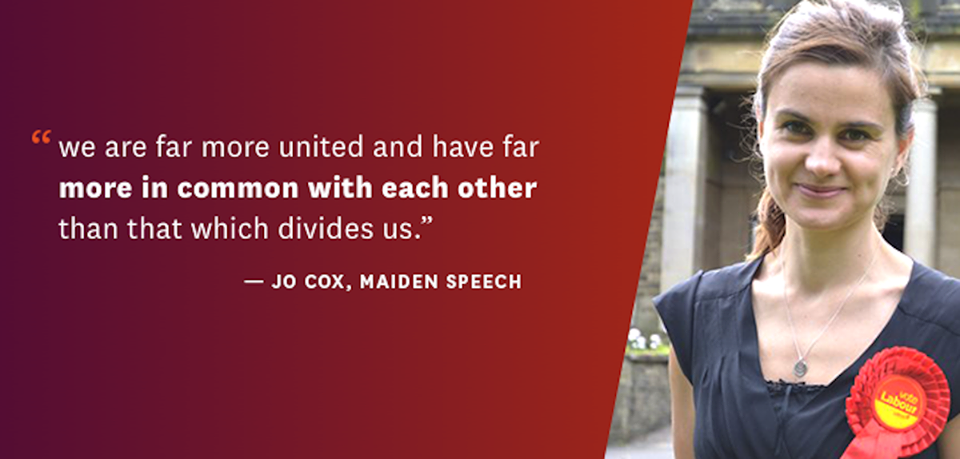
Safe Haven
Posted by cathannabel in Refugees on June 22, 2016

Magnus Wennman’s heartwrenching series of photos, “Where The Children Sleep,” , shows what happens to the children fleeing the conflict in Syria. He says that whilst the conflict and the crisis can be difficult for people to understand, “there is nothing hard to understand about how children need a safe place to sleep … They have lost some hope. It takes very much for a child to stop being a child and to stop having fun, even in really bad places.”

The recent debate about offering sanctuary to unaccompanied child refugees was constantly and powerfully connected to the story of the Kindertransport. As the Nazi threat to the Jews of Europe became clear, a number of individuals, including Sir Nicholas Winton, negotiated and organised transport for children to places of safety. Their parents sent them onwards, with small suitcases or rucksacks packed with care and love, with the things they thought they’d need and the things that would remind them of home. Some parents managed to get away separately, and were subsequently reunited with their children. Most were too late, and perished.


The children who arrived in the UK were welcomed by a variety of organisations, Jewish and Quaker amongst others, and provided with foster homes. There was a brief window of opportunity – once war was declared, borders closed, and no more trains could leave Germany, Austria or Czechoslovakia. Other trains would take many of the children left behind to other, terrible destinations. Some children got no further than France or the Netherlands, and many of those were deported from the homes they’d found there after those countries were occupied. Gerda-Sophie Klein was born in Vienna in 1935, and came to the Netherlands early in 1939. She survived until 1944, when she was deported to Auschwitz and murdered, on her 9th birthday.
In the House of Commons, on 21 November 1938, Sir Samuel Hoare (then Home Secretary) told Members of Parliament:
I could not help thinking what a terrible dilemma it was to the Jewish parents in Germany to have to choose between sending their children to a foreign country, into the unknown, and continuing to live in the terrible conditions to which they are now reduced in Germany. I saw this morning one of the representatives of the Quaker organisations, who told me that he had only arrived in England this morning from a visit to Germany and a visit to Holland. He inquired of the Jewish organisations in Germany what would be the attitude of the Jewish parents to a proposal of this kind, and he told me that the Jewish parents were almost unanimously in favour of facing this parting with their children and taking the risks of their children going to a foreign country, rather than keeping them with them to face the unknown dangers with which they are faced in Germany.
No one claims an exact equivalence between the circumstances in Nazi Europe and those we face now. But equally no one would doubt that in desperate circumstances children are the most vulnerable, least able to defend themselves, most open to abuse.
It is often asked, below the line, what kind of parents would abandon their children to such a fate. Firstly, it is a huge assumption that these children have been abandoned. Many will be orphaned. Many will have become separated from their parents in the chaos of flight. And some parents, faced with the desperate choice to save some but not all of the family will have chosen to send their children on to at least the chance of safety, as those parents did 80 years ago.
It’s also often claimed that the children are a sort of Trojan horse – if we allow our hearts to soften and give them sanctuary here, their parents and older siblings will then emerge from the shadows and demand to join them. Or that they are not in fact minors, just young-looking adults. It takes a particularly determined brand of cynicism to look at these children in such need and see only threat and deceit.
Most of us will see instead both vulnerability and potential. If we take them in we can both protect them from the dangers they currently face, and allow them to fulfil the potential they have, to contribute to the country and the community that gives them sanctuary.
The children of the Kindertransport gave back, richly. Four are Nobel prize laureates, others have built distinguished careers in all branches of the sciences and arts, in politics and business.
One of the Kinder, Dame Stephanie “Steve” Shirley, explicitly linked her philanthropic work to her history: ‘I need to justify the fact that my life was saved.’
We can’t know who amongst the children currently stranded in war zones or in refugee camps might prove to be an outstanding scientist, writer, composer, or entrepreneur. We can only know that whilst they live the half-life of the refugee camp, deprived of stability, education and adequate healthcare, they cannot be the people they have the potential to be.
The last words on this are those of the late Jo Cox. who would have been 42 years old today.
We all know that the vast majority of the terrified, friendless and profoundly vulnerable child refugees scattered across Europe tonight came from Syria.
We also know that as that conflict enters its sixth barbaric year that desperate Syrian families are being forced to make an impossible decision: stay and face starvation, rape, persecution and death or make a perilous journey to find sanctuary elsewhere.
And who can blame desperate parents for wanting to escape the horror that their families are experiencing. The reality in which children are being killed on their way to school, where children as young as seven are being forcibly recruited to the front line and where one in three Syrian children have grown up knowing nothing but fear and war.
These children have been exposed to things no child should ever witness and I know I personally would risk life and limb to get my two precious babies out of that hell-hole.

Migration Matters Festival – Wednesday 22 June
Howl Yuan – The Invisible Guest (6.00 pm and 7.00 pm): A drop-in, one on one performance followed by a full audience show, exploring how we are changed by our names, the places we live, the languages we use
Eclipse Theatre Company & Amaal Sharif – Rather: A Work in Progress (7.30 pm): One man’s journey to understanding humanity and the bonds that tie us together more than land, blood, language or creed
Rachel Munro-Fawcett – To Walk in Your Shoes: a documentary exploration of asylum, giving a voice to the voiceless
http://www.scotsman.com/lifestyle/the-little-boy-who-escaped-from-hell-1-1259947#ixzz4CE9bnFYL
http://www.dokin.nl/deceased-children/gerda-sophie-klein-born-6-mar-1935
Don’t Stand By
Posted by cathannabel in Genocide, Second World War on January 27, 2016
What makes someone give a damn when it’s not their turn to give a damn? Giving a damn when it’s not their job, or when it’s a stranger who needs help rather than a friend or a neighbour, someone to whom they owe nothing?
The website of Yad Vashem includes the names and many stories of those who have been designated ‘Righteous amongst the Nations’.


These are people who sheltered Jews or helped them to escape during the Holocaust, often taking huge risks themselves to do so.
Most rescuers started off as bystanders. In many cases this happened when they were confronted with the deportation or the killing of the Jews. Some had stood by in the early stages of persecution … but there was a point when they decided to act, a boundary they were not willing to cross.
Importantly, these are the people we know about. We know what they did because the people they helped to save told their stories. But there were many, many more whose stories have not been told. Many of those who survived the Holocaust have never talked about what they experienced, and those who were children at the time may not have known who did what, who took what risks to keep them safe. The rescuers themselves have often been silent about what they did – in parts of Eastern Europe it was hardly wise to make a noise about it after the war, and others were too modest to promote themselves as heroes. It is also worth noting that some of those who chose not to stand by were themselves murdered, and some had to endure the knowledge of the fate that befell those who they had tried to save – in either case it is likely that their acts are and will remain unknown.
Nicholas Winton did not, as is sometimes reported, keep entirely silent about his work in organising transports of children out of Czechoslovakia, but he certainly wasn’t well-known for it, and it took a television programme in 1988 to bring it to worldwide attention. He is not recorded amongst the Righteous – but only because he himself was of partly Jewish ancestry. He was scrupulous in recognising that the achievement was not his alone, and his reticence may also have in part been prompted by the painful knowledge that many more children could have been saved, had the US and other nations been willing to take more of them in.

As the number of survivors dwindles year on year, we may never know how many more of the Righteous there were.
In Poland, the epicentre of the Holocaust, over 6,500 people are recorded on Yad Vashem’s database. This is the largest number for any of the countries listed – all the more remarkable since in Poland alone the act of saving or trying to save a Jew was punishable by death for the rescuer and their family.
Stefan Szablewski may have been one of the unknown Righteous. His grandson, Marek, has spent the last few years trying to piece together a remarkable story of life in Warsaw, of survival and resistance. This has been a significant challenge:
I realised that not only did I have a unique tale to tell, but that as an only child I was the sole keeper. My knowledge, however, was incomplete. I needed to find the missing parts of the jigsaw puzzle to verify the facts that I had, and to learn more about the bigger picture. All I had to go on were my memories of conversations, several boxes of documents, a handful of photographs and medals, a bookshelf of books about Poland, a few contacts, and three precious tapes recorded for me by my father, which told some, but not all, of the story.
What these fragments show is that Stefan’s third wife, Anna, was Jewish and that she and her daughter were kept safe during the occupation of Warsaw, living under a false identity. In addition, there are records which state that ‘he organised safe houses or accommodation for people who were hiding along with the fabrication of identity papers, and also hid resistance literature and medical supplies.’ But there’s no hard evidence – just handwritten testimonies, and the recollections of Witold, Stefan’s son. Witold himself went into the Ghetto before its destruction, smuggling messages to the Jewish Council, and did what he could to help his stepmother’s family. Both the necessary habit of secrecy about such activities, and the level of destruction in Warsaw make it very difficult to find out more, or to know with certainty what happened. The efforts of a second or third generation now are to gather the fragments that do exist, and build as much of a story as possible. However incomplete, however many question marks remain, these stories are vital and compelling, and a reminder that the worst of times can bring out the best in people as well as the worst.
In Rwanda, the speed and intensity of the genocide meant that the kind of acts commemorated at Yad Vashem are even less likely to be recorded, and the narratives may be disputed. We have the account of Carl Wilkens, the only American who stayed in Rwanda, against all advice, and did what he could to protect the lives of Tutsi friends, and by talking his way through roadblocks and negotiating with senior army figures (people who were heavily implicated or actively involved in orchestrating the genocide) to get supplies through and then to arrange the safety of the children in an orphanage.
Of course, the story of Rwanda is the story of a world of bystanders, and those who did stay, and did what they could, are haunted, tormented by the lives they couldn’t save and the knowledge that had the US and other nations responded to the warnings and the increasingly desperate pleas from those who were witnessing the slaughter, so many more lives could have been saved. Whilst the targets of the killing were clearly Tutsi and Hutus suspected of helping them, the murder of Belgian peacekeepers early in the genocide meant that Wilkens and others could not be certain that they would be safe, and as the militia at the roadblocks were frequently drunk and out of control, there is no doubt that they took huge risks. Hutu Rwandans who hid friends, neighbours and colleagues rather than joining in the killing, or handing them over to the mobs, were however taking much greater risks, and if discovered they were certainly killed.
The ending of the film Shooting Dogs has always bothered me. The film shows a young Briton who was evacuated on a UN transport, leaving around 2,000 Tutsi in the compound of the Ecole Technique Officiel in Kigali, surrounded by Interahamwe militia, almost all of whom were killed as soon as the UN trucks left. In the final scenes, he is asked by a survivor why he left and he says that he left because he was afraid to die. This is disingenuous (and not challenged by the film) – everyone in that compound was afraid to die. He left because he could. Wilkens’ fellow Americans, and the majority of the Europeans in Rwanda when the genocide began, left because they could. They had a choice, and – for reasons that any of us can understand – they chose to take the escape route offered to them. Reading these stories, most of us will ask ourselves, would I have left when I could? Would I have stayed and tried to help? If I’d lived in Occupied Paris, or Warsaw, would I have kept my head down, or tried to help?
If you were a gendarme, or a civil servant, or even a Wehrmacht officer, you could do your job, as defined by the occupying forces, and compile lists of Jews to be rounded up, or round them up and transport them to transit camps, and then on to cattle trucks, or carry out the murders yourself. Or you could use that position to get a warning out about an impending round-up, or produce false papers to enable Jews to escape, or take direct action to get people to safety.
It came down, as it always does, to individuals, to their ability to empathise, to see not the vilified ‘Other’ but someone like themselves, and to their sense of what is fair and right. Fear can overwhelm both, but somehow, wherever and whenever the forces of hatred are unleashed, there will be some who will refuse to stand by.
Think of Lassana Bathily, a Malian Muslim who worked in the kosher supermarket in Paris which was attacked after the Charlie Hebdo massacre. He took some of the customers to the cold store to hide, whilst the killers shot and killed Jewish customers in the shop.
 Think of Salah Farah. When al-Shabab attacked the bus he was travelling on in Mandera in Kenya, the attackers tried to separate Muslims and Christians. Passengers were offered safety if they identified themselves as Muslim. The response from many was to ask the attackers to kill all of them or leave all of them alone. Muslim women on the bus gave Christian women scarves to use as hijabs. Farah was one of those who refused the offer of safety, and he was shot. He died in hospital almost a month after the attack.
There are always some who refuse to stand by.
http://www.thefigtree.org/april11/040111wilkens.html
http://hmd.org.uk/resources/stories/hmd-2016-carl-and-teresa-wilkens
http://hmd.org.uk/resources/stories/hmd-2016-sir-nicholas-winton
http://www.yadvashem.org/yv/en/righteous/stories/sendler.asp
http://www.yadvashem.org/yv/en/righteous/stories/socha.asp
http://www.bbc.co.uk/news/world-africa-35352763
http://www.durhamcathedral.co.uk/news/marek-szablewski
Stumbling over the past in Berlin
Posted by cathannabel in Genocide on June 23, 2015
Reblogged from Gerry’s always excellent ‘That’s How the Light Gets In’ blog – https://gerryco23.wordpress.com/.

BERLIN NOTEBOOK
Just around the corner from the hotel where we stayed in Berlin, in cobbled and tree-lined Fasanenstrasse, I found outside number 42 eight small brass plaques embedded in the pavement. They record the deportation from this town house of eight Jewish Berliners to their deaths in the east.
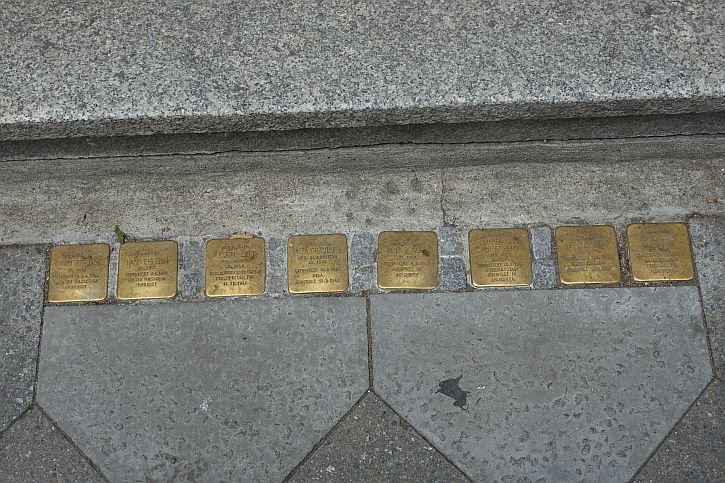 The stolpersteine at 42 Fasanenstrasse
These small brass memorials are called stolpersteine (stumbling blocks) and there are now more than 5000 of them in Berlin (plus another 38,000 in 800 towns and cities across Europe), each one commemorating a victim of the Holocaust: whether Jew or Roma, dissident or homosexual, an individual consigned by the Nazis to prison, concentration camp or extermination camp, as well as those who responded to persecution by emigrating or committing suicide.
Stolpersteine are the creation of the Berlin artist Gunter Demnig, their name recalling the old custom in Germany for non-Jews to say, when they stumbled over a protruding stone, ‘There must…
View original post 4,377 more words
Night will fall – Holocaust Memorial Day 2015
Posted by cathannabel in Film, Genocide on January 30, 2015
Grainy, blurry black and white footage, shot by soldiers newly equipped with cameras and told to record everything they see. Long, panning shots, taking in the corpses, barely recognisable as human, in the ditch, and the dignitaries on the bank, impassive. Negative footage from Dachau turning the unimaginable into something even further beyond our reach. All of this went into the documentary, German Concentration Camps Factual Survey, made by Sidney Bernstein in the immediate aftermath of the liberation of the camps by Allied troops (and using some of the footage from Russian units at Majdanek and Auschwitz). The title tells us a great deal about why this film was made, its purpose to give us irrefutable evidence of what happened, anticipating both the denials of the German population, including the camps’ near neighbours, and the denials of subsequent generations.
Night will Fall is a film about this film. Sections of the original are interspersed with interviews with those who made it – Bernstein, Hitchcock, some of the soldiers – and with survivors who found their own faces amongst the images of the gaunt, desperate yet joyous throng. The survivors speak more easily than the soldiers of the scenes that were recorded there. Their experience of horror was complete, the moment of filming for them was a moment of almost unbelievable hope, of life when all that they had expected was death. As for the soldiers, their experience of war did not prepare them, not in the least. These men try to tell their story, but again and again, words fail. Sorry, sorry, they say, I just can’t…
The original film has languished in the archives since it was completed. The mood changed so quickly – if Bernstein had completed his work just a little earlier, then maybe it would have had the audiences it was intended for, and deserved. But by the time this huge task was done the need to confront the German people with the actions of their leaders, the need to tell the world what could happen when a civilised nation abandoned civilisation, were seen not only as less pressing, but as potentially counter-productive. Not only did we need the Germans as our allies against the strength of the Soviet Union, but we did not want public sympathy for the Jews to force our hand in terms of giving sanctuary to large numbers of refugees.
Bernstein and his collaborators wanted to take a stand against those who would deny or minimise the genocide. What they had recorded was almost impossible to comprehend, and so easy to disbelieve. There had been reports of the process of extermination of the Jews in occupied Europe, as early as 1942. Szmul Zygielbojm, Jan Karski and others risked so much to tell the Allies what was happening. But somehow, even when published in the Daily Telegraph (25 June 1942), people seemed not to grasp it.

Was this failure to respond down to prejudice, or simply that the facts were unbelievable and so people chose not to believe? To look away and hope that when they looked back, the nightmare vision would have vanished? At the end of the war, again, the news from the Russian troops who were liberating the extermination camps in the East was treated with scepticism, until the Allied troops entered the German concentration camps themselves and knew.
If it was only human to baulk at that reality, to not want to accept that other humans could do this, not just a handful of monsters but many, many people, the revisionists who came later were of a different stripe, and unperturbed by personal testimony, documentary footage or other evidence. Somehow they manage to say both that Hitler did not plan and order genocide of the Jews and that the Jews deserved their treatment, brought it, indeed, upon themselves. They both immerse themselves in technical details to ‘prove’ that what was described and shown could not have happened, and dismiss or treat as mendacious all evidence that it did. Bernstein’s film would probably not have changed the minds of any of those – nothing else has.
The documentary, a unique record not only of the scenes from hell that the liberating troops encountered, but of the efforts thereafter to help and to heal, will only ever be seen by small numbers. The Imperial War Museum believes that its images, without the contextual commentary and interviews provided by Night will Fall, are too stark in their portrayal of the dehumanised state not only of the dead but of the (barely) living. This baffles me, particularly because the film does also show the liberated prisoners talking animatedly to their saviours, being treated for disease, trying on clothes and shoes. It shows them, in other words, taking on their humanity again. As if it had never been stolen from them entirely, merely put to one side as hindrance rather than help in that brutal world. And of course, it is not as if we cannot see, if we choose, such images on YouTube or in other documentaries, often using this very footage.
As Jean Cayrol wrote, in the script used by Alain Resnais for his film Night and Fog:
There are those reluctant to believe
Or believing from time to time.
There are those who look at these ruins today
As though the monster were dead and buried beneath them.
Those who take hope again as the image fades
As though there were a cure for the scourge of these camps.
Those who pretend all this happened only once,
At a certain time and in a certain place.
Those who refuse to look around them,
Deaf to the endless cry.
Bernstein’s documentary ends with the words: “Unless the world learns the lessons these pictures teach, night will fall. But, by God’s grace, we who live will learn.” We haven’t. And night has fallen for so many. It’s to be hoped that the film will have the wider audience it deserved and still deserves today. The lesson still needs to be taught and we have to hope it’s not too late to learn.
Jean Cayrol, Nuit et brouillard (Mille et une nuit, 1997)
http://variety.com/2014/film/global/holocaust-doc-night-will-fall-gets-global-broadcast-1201362494/
The Heaviest Weight of All – Holocaust Memorial Day 2015
Posted by cathannabel in Genocide on January 24, 2015
The heaviest weight of all: to see
that no one needs me,
to know, to think,
I’ll fade into nothingness like smoke
The young woman who wrote these words was seventeen. So it would be easy to read their intensity as being a teenage thing, a bit over dramatic. But this was December 1941, in Czernowitz, now in the Ukraine. Selma Meerbaum-Eisinger was writing for her boyfriend, Leiser Fichman, who had been taken to a forced labour camp. Three months after she wrote this poem, she was interned with her parents in the ghetto and then deported to Transnistria and forced on an exhausting march to the Michailowka labour camp, where Selma died of typhus on 16 December 1942. Leiser kept the poems with him, and then sent them to Selma’s friend Else in 1944. He died when the clandestine immigrant vessel he had boarded, heading for Israel, sank in the Black Sea – he never knew that Selma had died.

Those words – to fade into nothingness like smoke – take on a terrible symbolism in the post-Auschwitz world. And of course, they describe very well the intent. Not enough to drive the undesirables from your territory, not enough to render them powerless and penniless. The last traces of them have to be eradicated, it has to become as if they never were.
As the last survivors of the Nazi holocaust leave us, the need to keep their memory alive becomes ever more pressing, and the difficulty of doing so ever greater. The machine that devoured so many left such chaos behind that there are those whose fate will never be definitively known, and where whole families perished there was perhaps no one to remember. Whilst there was a flurry of survivor memoirs immediately after the end of the war, there was then a reaction against it, born from the overwhelming desire to forget, to say, ‘that was a nightmare, but we’ve woken up now and everything is back to normal’, but also from fear. For many who survived, there was a strong instinct, reinforced in some cases by advice by Jewish organisations, to keep a low profile, to do nothing to reawaken the hatred. And the trauma of what they had seen and experienced left many unable to speak, ever, or for many years.
But, as Walter Benjamin said, to live means to leave traces. Selma’s poems, Hélène Berr’s journal, Gideon Klein’s chamber music, the children’s paintings from Terezin – all of these speak to us down the decades, and deny the Nazis their ultimate goal. And more and more, those ordinary people, who kept no journals, who composed no sonatas, who wrote no poetry, are being given back their names.

Serge Klarsfeld has painstakingly documented the child occupants of the trains that left France for destinations in the East. Not all of them can be identified with certainty – some, separated from their parents and too young to give their names and addresses, remain nameless. Some have photographs, capturing them in solemn family portraits or holiday snapshots:

These three sisters were all deported from Paris in August 1942. The oldest sister, Esther Adamowicz, was born in Poland, her younger sisters, Myriam and Sarah-Cécile, in Paris. They lived at 46 rue Notre-Dame de Nazareth in Paris (3rd arr.).They were 12, 6 and 4 respectively when they were killed.
The Jewish Traces project, Plus qu’un nom dans une liste, tells us of Marianne Epstein, a little younger than Selma, whose family fled Germany after Kristallnacht, initially for the Netherlands and then for France.
After the fall of France they headed south, and settled in St Léonard de Noblat in the Haute Vienne department, until they were rounded up with thousands of other foreign Jews in August 1942. They were taken to Nexon, then to Drancy, and from there to Auschwitz.
The Solpersteine project (literally, ‘stumbling stones’), is commemorating Holocaust victims with the installation of a brass plaque in the pavement, in front of their last home. Artist Gunter Demnig has now placed such stones in over 610 locations in Germany, and in many other countries occupied by the Nazis. He quotes the Talmud: “a person is only forgotten when his or her name is forgotten” and so the stones each tell us of one name, one person, beginning with ‘Here lived…’.

These projects are not just about saying ‘Never again’. They are about keeping the memories alive. We may not have known Selma, or Marianne, Anna, Helene or Esther. We know their names, where they lived, and so we can piece together something of their story. We may know what they looked like, we may hear their voices through their words, treasured by friends or family and shared with the world.
This matters, it really does. When serial killers strike, we remember their names, but the names of those whose lives they took soon fade – we can’t remember all of them, the teenagers shot down at Utøya, the children of Dunblane. When thousands, or millions are killed we can only grasp the enormity through the detail. The horror is not in the total numbers, it is in these entries in the logs for Convoy 23 and 26, August 1942:
| (UN ENFANT) | BEAUNE | Sans identité n° 122 – | ||
| (UN ENFANT) | BEAUNE | Sans identité n° 146 | ||
| (Petit Garçon) | 01.01.39 | CAMPS-LOIRET | ||
| (Petite Fille) | CAMPS-LOIRET | Portant plaque n° 237 – | ||
| (Petite Fille) | CAMPS-LOIRET | Portant plaque n° 36 – |
Just ponder on this for a moment. These small children had already known fear and abandonment. And on their last journey they had no one with them who knew their name. We can hope there was someone to hold their hand, to cuddle them, to sing to them. But they had no one who knew their name.
Ponder on this too. Human beings, like us, took them from their homes, separated them from their parents and older siblings, pushed them into the railway trucks. And then, perhaps, went home to their own children, bathed them and told them a story, tucked them into bed, kissed them on the forehead and said goodnight.
Genocide doesn’t start with killing. It starts by taking away the things that make you who you are, and reducing you to Jew, Tutsi, Moslem, Igbo. It tells everyone you lived next door to, went to school with, worked for or with, that Jew/Tutsi/Moslem/Igbo is less than they are, not just inferior but dangerous. And when you’re isolated, displaced and friendless, then you can be eradicated, no trace left behind.
It’s up to us to find the traces. To remember the people we never knew, to ensure that they do not ‘fade into nothingness like smoke’.
http://www.yadvashem.org/yv/en/exhibitions/spots_of_light
http://ghettospuren.de/aktuelles/
http://www.holocaust-history.org/klarsfeld/French Children
http://jewishtraces.org/plus-quun-nom-dans-une-liste
http://www.stolpersteine.eu/en/
http://holocaustmusic.ort.org/people/
Berr, Hélène, Journal, 1942-1944 (Paris: Tallandier, 2008)
Farewell to Norman Geras, 1943-2013
Posted by cathannabel in Events, Genocide on October 19, 2013
As I only knew Norman Geras – Norm – through his blog, it seems appropriate to pay tribute to him on my own. He was one of the writers who inspired me to use this form to write about whatever mattered to me, and he was kind enough to invite me to complete one of his profiles.
I cannot speak of his life, except as revealed through the many entries on Normblog, and now through the obituaries that have started to appear. A life of conviction and passion, of family and friendship, of music and books and film, of cricket… His very last entry was a list not of books that you must or should read, but of ‘books you might enjoy’ – no browbeating or pressure, just the suggestions of a friend, who wants to share their pleasure with other people.
He also used his blog for a series called Figures from a Dark Time. This was a response to those who argue that we all go on too much about the Holocaust, that it’s all been said often enough. Each entry was composed of testimonies of individuals who were engulfed by that darkness, some who survived, many who did not, and some too who risked everything to help those who needed it. He wrote ‘contre l’oubli’, restoring to some few of those individuals their names and their stories.
atque in perpetuum frater ave atque vale
Shalom, Norm.
Related articles
- Norman Geras: 1943-2013 (blogs.independent.co.uk)
- In praise of Norman Geras (1943-2013) (nickcohen.net)
- Norman Geras, 1943-2013 (outsidethebeltway.com)
- RIP Norman Geras (samirchopra.com)
- Bye bye Norm (harrietdevine.typepad.com)
- Pioneering blogger Norman Geras dies of prostate cancer aged 70 (theguardian.com)
- Norman Geras: Rest in peace, comrade (blogs.spectator.co.uk)
 Passing Time