Ten Albums
Posted by cathannabel in Music on May 29, 2018
So, I was challenged to post on Facebook ten albums that have significance, in no particular order. Albums that really made an impact and are still on my rotation list. Post the cover, no need to explain.
Well, I can’t resist this kind of thing. But I do want to explain. So here they are.
NB these are not the ten best albums I’ve ever heard. Not my ten favourite albums. Just ten albums that have somehow or other stayed with me, that I’m always delighted to hear, that led me on to other things, or took me back to somewhere special.
- Steely Dan – Pretzel Logic (1974)
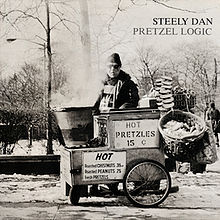 Marshall Hall student residences, Sheffield City College of Education, 1975-77. My first encounter with the Dan, pretty much. And still my favourite ever Dan album. Infused with jazz, explicitly in the Ellington cover, ‘East St Louis Toodle-oo’, and ‘Parker’s Band’, less overtly in the Horace Silver bass pattern on ‘Ricki Don’t Lose that Number’. At the same time, superlative pop/rock, ‘complete musical statements within the narrow borders of the three-minute pop-song format’, according to Rolling Stone. Impenetrable, ambiguous lyrics, which still deliver a hell of a kick. Fave track? ‘Any Major Dude‘.
Any major dude with half a heart surely will tell you my friend
Any minor world that breaks apart falls together again
When the demon is at your door
In the morning it won’t be there no more
Any major dude will tell you
2. Osibisa (1971)
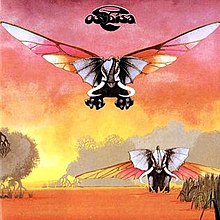 Criss-cross rhythms that explode with happiness. For me, hearing this some time in the early 70s was connecting with part of my own past, my childhood in West Africa. Living pretty much on the campus of the Kwame Nkrumah University of Science & Technology, where my father taught, we heard the highlife music wafting over from the student residences. A blend of Latin and African sounds, made for dancing, it was infectious stuff. But I’d forgotten those sounds until Osibisa. They weren’t all Ghanaians but their roots were in a highlife band, The Star Gazers, featuring Teddy Osei (sax), Sol Amarfio (drums) and Mac Tontoh (trumpet) who went on to form Osibisa in London in 1969. Joining them were band members from Grenada, Trinidad, Antigua, Nigeria, and another couple of Ghanaians. It wasn’t ‘authentic’ but then neither was highlife. Music can’t be kept pristine and pure, it is promiscuous, one form instinctively bonding with another to create something new. And it’s portable – the music of Africa crossed the Atlantic on the slave ships and interacted with the music that it found there. Osibisa brought the music of Ghana back to me and today, all these years later, one track especially brings back not just those early years but our family home in Nottinghamshire. Our house was called Akwaaba – ‘welcome’, in Twi which is the official dialect of Kumasi, the capital of the Ashanti region of Ghana.
3. Kirsty MacColl – Kite (1989)
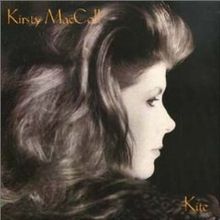 Whenever I post anything about Kirsty I get such an outpouring of love in the comments. From people I knew adored her, and people I had no idea would feel that way. It’s more than the music – we respond to a sense of who she was, that she wasn’t and couldn’t be ‘plastic’. Before Kite I’d heard, obviously, ‘Chip Shop’ and her cover of ‘Days’ and although I’d liked her voice, I wasn’t expecting something this powerful from her. Apart from ‘Days’, there aren’t any covers here, it’s all her. She managed to attract brilliant musicians to work with her – and everyone who did seems to have loved her to bits. Even Morrissey, in all of his petulant and quarrelsome – and lengthy – autobiography doesn’t have a bad word for her. I always loved the story of her making music with Keith Richards and telling him he was playing something wrong. She was tough and vulnerable at the same time, her voice was sweet and strong, her words were funny and heartbreaking. If I have to pick one track from this, it will always be ‘Free World‘.
4. King Crimson – Red (1974)
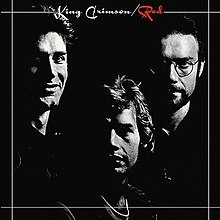 This is seriously heavy. It’s said to be one of Kurt Cobain’s favourite albums, which kind of makes sense. Whilst Crimson are obviously prog, they transcend the stereotypes of the genre, and this album in particular is grungy, particularly on One More Red Nightmare. Crimson was a constantly mutating ensemble, in which the only constant was Robert Fripp. This particular band comprised Fripp on guitar and mellotron, Bill Bruford on drums and Jon Wetton on bass and vocals, plus Crimson alumni David Cross (violin), Mel Collins (soprano sax) and Ian McDonald (alto sax). This was to be the last Crimson album for seven years. Next up was Discipline in 1981, with Fripp (obv) and Bruford plus Adrian Belew and Tony Levin. Top track – ‘Starless‘. It’s bleak and beautiful and kind of terrifying.
5. Motown Chartbusters Volume 3
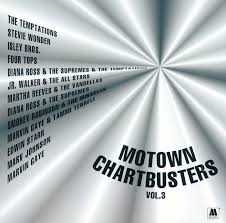 I bought this for pennies from someone in my class at school. A great big hefty slice of vinyl, already a bit crackly. Packed with classic Motown tunes, by their greatest songwriters (HDH, Whitfield & Strong, Smokey, Marvin, Stevie, Ashford & Simpson amongst others) and their finest artists (Temps, Four Tops, Marvin, Smokey, Stevie, Supremes, Isleys and more). I know and love every note on this album and always will. But in the end there’s one that just floors me every time, Diana Ross & the Supremes – Love Child. This is a classic story song, a story not so far from the real lives of many of the Motown stars, poverty, single parenthood, and the shame of being both poor and illegitimate. Diana may not have been the best singer on Motown’s roster but her voice could burn and yearn nonetheless. Where I lose it is the coda. Diana soars with ‘I will always love you’, whilst the backing singers (apparently not Cindy and Mary on the recording) provide an urgent counterpoint with ‘wait/wait won’t you wait now/hold on/wait/just a little bit longer.’ It’s pretty much damn perfect.
6. Flobots – Fight with Tools (2007)
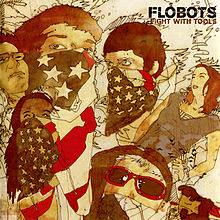 The first thing I heard from the Flobots was ‘Handlebars’. I can still remember how it affected me, the lyrics and the instrumentation – not just the usual guitar, bass and drums, but viola, cello and trumpet. It gave me goosebumps. In the years when I was running regularly, Flobots were my ideal soundtrack. No matter how tired I was, how daunted by the distance still to go and the steepness of the hill ahead of me, the combination of passionately political lyrics and tight urgent rhythms powered me onwards. There’s always a sense of hope in the words of their songs, a sense that however crappy things are (and lord knows they’ve got crappier since 2007) there is and always will be resistance, people who will man the barricades, who will refuse to shut up.
We are building up a new world
Do not sit idly by
Do not remain neutral
Do not rely on this broadcast, alone
We are only as strong as our signal
There is a war going on for your mind
If you are thinking, you are winning
I’m picking ‘Anne Braden‘. This epitomises their politics, I think. It celebrates a white woman, from the Deep South, who always knew that there was something wrong, and who threw in her lot not with her ‘own people’, but with the oppressed. She was tirelessly active in the civil rights movement and anti-racist politics throughout her life, facing arrest and the constant threat of violence. She believed that there was ‘another America’, and we have to hang on to the belief that she was right.
7. Le Mystere des voix Bulgares (1975)
This was originally released in 1975 on a small record label, and might well have been forgotten, had Ivo Watts of 4AD not heard an audio cassette of the recording and tracked it down. It was re-released in 1986 and had a tremendous impact. From the Bulgarian State Television Female Vocal Choir, who contributed the most to the album, the Trio Bulgarka emerged, and worked with Kate Bush on her Sensual World album in 1989. She said that ‘it was something strange to feel this very strong female energy in the studio. It was interesting to see the way the men in the studio reacted… Instead of just one female, there was a very strong female presence.’ What struck me so forcibly when I first heard it was the harmonies. A cappella vocals can always tingle my spine whether it’s The Sixteen doing Allegri’s ‘Misereri’ or The Four Freshmen doing ‘Their Hearts were full of Spring’, but these are not just spinetingling but weird and unsettling. Especially “Sableyalo Mi Agontze” (Заблеяло ми агънце) [The Bleating Lamb].
8. Songhoy Blues – Soubour
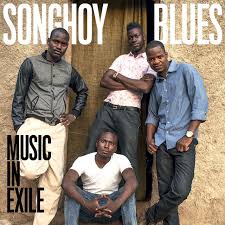
I’ve written often about my love for the music of Mali. It’s the birthplace of the blues, and its music never fails to move me, emotionally and physically. These young musicians grew up not only with the astonishing legacy of Malian music – the genius of Salif Keita, Toumani Diabate, Ali Farka Toure – but also the music that had emerged across the Atlantic, Muddy Waters and Jimi Hendrix, inheritors and interpreters of the sounds that generations of Africans had taken with them on the slave ships. Their music has also been shaped by the threat posed by IS affiliates to that incredibly rich culture – see the documentary They will have to kill us first, and Abderrahmane Sissako’s 2014 film, Timbuktu. Hard to pick one track, but for today at least, I’ll pick ‘Petit metier‘.
9. Alice Cooper – School’s Out (1972)
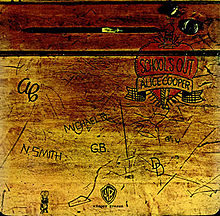
Summer of ’72, my French penfriend, Catherine, was visiting. She brought with her the sound of Claude Francois and Michel Sardou, and went home with singles from Hawkwind and Alice Cooper. I’m somewhat surprised I was allowed over to see her the following year… Not everything that I loved back in the summer of ’72 has stood the test of time, but this one has. And particularly Alice’s appropriation of Leonard Bernstein’s West Side Story in ‘Gutter Cat vs the Jets‘. The Alice image never appealed to me especially, but the music did and does. If I was asked to pick ten musicians Alice would never make the cut (soz Alice) but every time I hear this album I’m reminded of how it galvanised me back then. It also reminds me of the polarisation of music back then. Of my school friends, most listened to Motown, Northern Soul, Ska and reggae. Others listened to Deep Purple, Zep and Alice. I never quite got the hang of which gang I was supposed to be in, because I loved all of the above. Still do.
10. David Bowie – Aladdin Sane (1973)
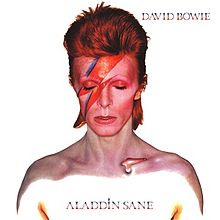 Well, obviously there would be Bowie. I could have picked ten albums just from his lifetime’s output. But them’s the rules. Aladdin Sane is an album that surprises me every time I hear it, there are details that I didn’t recall from so many previous listenings. And there’s Mike Garson’s fabulous piano on the title track, amongst others. When Bowie died I reminisced about ‘Time’, and how when we played this album at home we had to ensure we were within arm’s reach of the volume control in case of sudden parental proximity when Bowie got to the v v rude bit of the lyrics. Tough to pick just one track from this album, but I’ve settled on ‘Lady Grinning Soul‘, which is another that features Garson.
Ten albums, from the thousands that have found their way on to our record player/CD player/cassette deck over the years. They’re weighted towards the 1970s, which I guess is inevitable. My teenage years, when my musical tastes were forming, freeing themselves both from parental influence and from the tribalism of my peers, trying things out and finding out what moved my feet, my hips, my mind and my heart. That process has never stopped, but it was at its most intense then. I carry with me the earliest music I heard – a kind of mash-up of the Goldberg Variations with E T Mensah & The Tempos, probably – and there was a gradual immersion in the world of pop and rock when we returned home from West Africa in the late 60s. All of those sounds are still part of my listening world, and I’ve added music from all around the world, and ‘classical’ music that my parents weren’t into (late 20th century stuff, and opera), and jazz and, well, a bit of everything really. And there’s a world of music out there that I don’t know, and that I might love if I get the chance to listen. So ten albums is daft and arbitrary but if you made it 100 albums it still wouldn’t be adequate.
“The world without music? It would be like a prison, right?” (Garba Touré, Songhoy Blues)
Right.
Beyond the Bechdel Test: seeing ourselves on screen
Posted by cathannabel in Feminism, Film, Television on April 20, 2018
Women in Hollywood. Women wearing black to the Golden Globes and the BAFTAs, wearing Time’s Up badges, white flowers at the Grammys, standing up at the Oscars, women saying #MeToo.
 Much has been said about the way in which the voices of women, silenced for a long time by fear of retaliation or of lawsuits, of humiliation and denigration, of career suicide, are now being raised, and amplified, and the way in which this has given courage to women in other professions and environments, to speak up not only for themselves but for women who have even more to lose.
I’m not going to be directly addressing these events. But I am talking about the culture of Hollywood – a culture in which women are marginalised and isolated on screen as they are off-screen. And it’s all connected.
I’m going to look at ways in which we can assess the movies we watch, and analyse their portrayal of women, and think about what change might look like on the screen. I will touch on other aspects of diversity but I can’t do justice to it all!
The Bechdel Test has been around since 1985. But the essential idea actually goes back a lot further than that:
All these relationships between women, I thought, rapidly recalling the splendid gallery of fictitious women, are too simple. … And I tried to remember any case in the course of my reading where two women are represented as friends. … They are now and then mothers and daughters. But almost without exception they are shown in their relation to men. It was strange to think that all the great women of fiction were, until Jane Austen’s day, not only seen by the other sex, but seen only in relation to the other sex. And how small a part of a woman’s life is that … (Virginia Woolf, A Room of One’s Own, 1929)
There are actually only three requirements for passing the test:
.
(Alison Bechdel’s comic strip Dykes To Watch Out For)
It’s been developed slightly since then, and the usual formulation now is that the film must:
- feature at least two named women
- who talk to each other
- about something other than a man.
The first thing to say about these criteria is that they set the bar pretty damn low. (Just think for a moment about how many films would fail if you reversed the genders here. Er, no, me neither). Indeed, Alison Bechdel never intended the test to do anything other than to draw attention ‘to the severity of the problem by showing how low you could set the bar and still watch Hollywood executives trip over it’. Because an awful lot of films still fail, and a surprising number only scrape through with a bit of special pleading.
Does this matter? Well, yes it really does. When we – girls and women – go to the cinema, do we see ourselves on screen? Do we see the kind of women we are, and that we work and live with, that we encounter in all aspects of our lives – women who make decisions and have opinions, women who act and change things in their lives and in the world around them? If we don’t, that doesn’t stop us being that kind of woman, but it makes it harder, given that it’s already hard, to keep on keeping on in the face of everyday sexism.
Given the howls of horror from some men when a rare film does feature lots of women doing stuff, or when the Ghostbusters or Doctor Who are reimagined as women, it’s clear that the status quo is comforting to those men who would much rather we didn’t make decisions and have opinions, that we didn’t act and change things in our lives and the world around us. And it is very relevant to note that when we get one – ONE – superhero movie with an overwhelmingly black cast, there are trolls on Twitter ready to call it racist. Dear lord, one could so easily despair. But one won’t.
If I ever doubted that it’s powerful to see ourselves on screen, I had two reminders last year. Firstly, I went to see Wonder Woman.

It passes the test. It’s a while before we see a bloke at all, and when we do, he needs rescuing. By a woman. I’d underestimated how intensely exhilarating and moving it would be to see those scenes of the Amazonian women on Themyscira, and to see Diana Prince sorting out all the blokes who tried to tell her to ‘just wait there’. I wanted to weep and punch the air.
And then, not long after, we heard that the Doctor would be a woman, and at Christmas I watched as he regenerated into she, and she said, oh, brilliant. And it was.

But back to the test. It’s important to recognise that passing the test doesn’t make a film a good film, or a feminist film. Elle passes the test, as does Fifty Shades of Grey, apparently, but both are intensely problematic in their sexual politics. And Dunkirk unequivocally fails but is a brilliant film that would not have been enhanced in any way by shoehorning in some Bechdel-conforming female characters to supplement the unnamed WRENs and nurses.
It’s also important to remember that – once you’ve achieved the ‘two named women’ criterion – it’s not primarily about how many women there are on screen. If there are only one or two significant female characters, then the female characters may have to carry the burden of representing their whole gender, something male characters are rarely required to do. But the most important thing is not the number of women but, as Neda Ulaby put it, ‘the depth of their stories, and the range of their concerns’, women as characters rather than as cliches. If there are loads of women on screen but they say very little (an analysis of Oscar winning films shows that men have the vast majority of words, even in films that pass the Bechdel test) then we cannot really see and hear them as rounded characters. And if the women that are there on screen, however well-written they are individually, are disconnected from one another, connected only to the men, we’re still not getting what we need.
I had a look at the films that I’ve seen over the last year or so, to see how they measure up.
FAIL – Baby Driver, Thor: Ragnarok, War for the Planet of the Apes, Dunkirk
Maybe just about scrape a pass if you’re very indulgent – Spiderman: Homecoming, Logan, Rogue One, It. (NB my inclusion of Rogue One in this category is disputed…)
PASS – Star Wars: The Last Jedi, Wonder Woman, Twentieth-Century Women, Hidden Figures, La La Land, Elle, Guardians of the Galaxy 2, Black Panther, Lady Bird, Annihilation
Now, obviously my movie list is a personal one and reflects my particular preferences. Nonetheless, the balance isn’t so far out of kilter with wider ranging surveys. A recent analysis showed that one-third of 50 movies from 2016 failed. Between a quarter and a half of my list fail.
However, of those that pass, several pass gloriously.
I’ve already spoken about Wonder Woman. And The Last Jedi features
a scene … that’s both revolutionary and dead simple: a circle of women, soldiers and warriors all, … handily discussing how they’re going to tackle their latest military offensive. While Star Wars has always featured strong women … Johnson’s film integrates them into all aspects of the story.

Twentieth Century Women lives up to its title, with women front and centre in the movie and on the poster. Hidden Figures similarly features three women at the forefront – and those women are black.


Hidden Figures is a reminder that the Bechdel test addresses only one aspect of diversity. Which is one of the reasons that a variety of alternative or supplementary tests have been proposed.
Some of these look behind the camera to the involvement of women (currently around 18%) and/or people of colour in the writing, direction, production of the film. Clearly this is crucial. When the vast, overwhelming majority of films are written and directed by white men, this will skew the presentation of women. Not necessarily through conscious sexism, but because a male writer will inevitably identify more with the characters on screen who are most like him (the I-guys, as Stephen King calls them), and will then think of the other characters in relation to the I guy. They may well not even notice that the women are under-represented, under-developed, under-used.
There are tests that directly address ethnicity AND gender. If white women find it difficult to see themselves on screen, it’s so much more the case for women of colour. One test asks that a film features a black women who’s in a position of power and is in a healthy relationship. Another that there is a non-white, female-identifying person in the film who speaks in five or more scenes and speaks English. Against the first of these, most films fail. The second does better. We could apply the same kind of methodology to the portrayal of gay characters, transgender characters, disabled characters. But I suspect we know what the outcome would be (and we’d have to address the issue of straight actors playing gay, cis actors playing trans, actors without disabilities playing disabled).
A more qualitative approach is to focus on how women are portrayed on screen. Do films show
women as characters who have needs and desires and who take actions stemming from those desires over the course of the film. (You know, they act like real people.) A surprising number of films fail to do even that much basic character development work with women. Often, women are reduced to stereotypes or tropes as soon as they’re introduced and then don’t get developed any further. And female characters frequently serve little purpose beyond causing plot problems for male protagonists, or having a baby with a male protagonist, or dying to raise the stakes for a male protagonist.
Some of these tests are quite subjective. Whether we can identify and empathise with a character on screen may vary according to our own experiences, our age, ethnicity, sexuality, etc etc. But whilst these more complex tests may not be as easy to apply, they reflect what we’re actually responding to. That niggling dissatisfaction we feel may well be because the women we are watching don’t have needs and desires that they pursue through dramatic action, because we see them as stereotypes, because what they do matters only in relation to the male protagonists.
Another way of looking at it is the proportion of women in supporting roles or even in crowd scenes. What if half of all one-scene roles go to women, if the first crowd scene features at least 50 per cent women (currently it averages 17%), and/or the supporting cast is 50 per cent women?
You’ll note that none of the tests involve counting the number of ‘strong women’ on screen. Not all women are strong, and no women are strong all of the time. As Helen Lewis put it, ‘nowadays the princesses all know kung fu, and yet they’re still the same princesses’. You can’t solve the problems of the representation of women just by inserting a strong woman into the plot and thinking, there, job done. We want women characters who are rounded human beings, fallible and flawed, but not dependent on men to make decisions or to solve problems. Some of these women may indeed kick ass, but they don’t all have to. We want a variety of women characters – not all beautiful, not all clever, not all strong, but, well, like real people. Just imagine!
Actually we don’t have to just imagine because if you watch TV these days things are very different. It’s fairly unusual to see a crime drama without a woman in a lead role (e.g. Spiral, Scott & Bailey, The Bridge, No Offence, Unforgotten, Marcella, Line of Duty, Broadchurch, Witnesses, Fargo, Vera). And in the realm of fantasy, just think of Orphan Black, Agents of Shield, Star Trek: Discovery, The Walking Dead and, of course, Doctor Who. These shows smash the Bechdel test, and many of the alternative tests noted above, without apparent effort.
TV’s not perfect, obviously, but writers for that medium don’t seem to have been getting the message that aspiring screenwriters in Hollywood were not very long ago.
I had to understand that the audience only wanted white, straight, male leads. …“The audience doesn’t want to listen to a bunch of women talking about whatever it is women talk about.” … According to Hollywood, if two women came on screen and started talking, the target male audience’s brain would glaze over and assume the women were talking about nail polish or shoes or something that didn’t pertain to the story. Only if they heard the name of a man in the story would they tune back in. By having women talk to each other about something other than men, I was “losing the audience.
https://thehathorlegacy.com/why-film-schools-teach-screenwriters-not-to-pass-the-bechdel-test/
- Oscar-nominated films with a woman in the starring role are more profitable than their male-led counterparts.
- Female-led films (defined as films where the female actor had the first starring name on Internet Movie Database) earn higher box office returns – despite usually lower production budgets, according to BBC analysis.
- On average, every dollar invested in a female-led film earns back $2.12 (£1.53). For male-led films this figure is $1.59 (£1.15).
- Just 28% of films nominated for an Oscar since 2013 have had an actress taking top billing.
The film walks into the multiplex like it’s insane that it hasn’t been allowed in there all along. And it is. For one thing, an entire subset of younger cinema-goers are only just about to experience the dizzy uplift of watching a title character in a superhero movie who looks like them under the costume.
I should say, not all films have to be about women, or even to include women. It would be entirely unreasonable to demand that every film carry the burden of representing the diversity of the human race. For example, there is no reason on earth why a film should not be set in an environment where, for given reasons of historical accuracy or realism there are no, or almost no women present (I refer you again to Dunkirk). It’s just that when no such reasons apply, we should expect to see ourselves on screen, in the crowd scenes, in supporting roles, AND in key speaking roles that play a part in the action and that relate to each other as well as to men.
It is particularly disappointing when realism is ditched in favour of a science fiction/fantasy universe, but things don’t change as much as they could have done. Why be constrained by gender and racial stereotypes when you could tear the whole thing up and start again? I suspect that one reason is that this genre is traditionally assumed to be the white boys’ province. You create whole new universes, and want to run them all? Well, I don’t think much to that.
Things are changing. We’ve got Wonder Woman and Black Widow and Scarlet Witch and Captain Marvel and Valkyrie and Gamora and Nebula and the Doctor. And in Black Panther alone we’ve got Shuri and Okoye and Nakia and, as The Daily Telegraph (yes, really, again), says:
Black Panther seems to overcome the genre’s long-standing neuroses around creating rounded, exciting roles for women by just getting on with it.
And Frances McDormand (my hero!) had two words for us at the Oscars. Inclusion rider
This refers to a proposal by Stacy Smith, director of USC Annenberg’s Media, Diversity & Social Change Initiative:
“What if A-list actors amended every contract with an equity rider? The clause would state that tertiary speaking characters should match the gender distribution of the setting for the film, as long as it’s sensible for the plot,” Smith wrote. “If notable actors working across 25 top films in 2013 had made this change to their contracts, the proportion of balanced films (about half-female) would have jumped from 16 percent to 41 percent. Imagine the possibilities if a few actors exercised their power contractually on behalf of women and girls. It wouldn’t necessarily mean more lead roles for females, but it would create a diverse onscreen demography reflecting a population comprised of 50 percent women and girls. In other words, reality.”
I may be being naive, but it seems to me this could be huge. Already, Brie Larson, Michael B Jordan and John Boyega, among others, have said they’ll use this as a way to bring about change, on and off screen. Let’s hope.
We’re half the human race. We’re all races and religions, all shapes and sizes, all political persuasions. We have disabilities and we have none, we are healthy and we suffer pain and indignity, we are independent and we need help to get by. We have money to burn and we have nothing at all. We are mothers and we are daughters and sisters, we are friends and wives and lovers. We are beautiful and we are ordinary. We are gay, straight, bi, cis, trans, and every variant or combination of the above. We are feminists, and we are ‘I’m not a feminist but…’ and we are most decidedly not feminists. We believe in our right to choose, and we believe that women’s fertility should be controlled by the state, by the church, by men. We wear pussy hats, and ‘Make America Great Again’ hats.
That should provide the screenwriters of Hollywood plenty of scope.
And just to make the point, that I don’t, I really don’t, want to see nothing but white middle-aged middle-class short bespectacled women when I go to the movies, I had the same emotional response to Black Panther as I did to Wonder Woman. I wanted to weep, and to punch the air.

Because ultimately, it’s not Me me I want to see there. It’s all of us. The human race in all its wild and ridiculous and glorious diversity. And if some straight white guys have to hutch up a bit to make room, well, Time’s Up, dudes.

24 hours of inspiration
Posted by cathannabel in Events, Inspiration for Life on April 13, 2018

Only six days to go. Then, for considerably more than 24 straight hours, I’ll be not only awake, but busy setting up ticket and book stalls and coordinating volunteers, interviewing a friend and colleague about her desert island choice of records on our pop-up radio station, and then at 17.00 on Thursday 19 April welcoming audiences to the first talk of the 24 hour marathon. And then I’ll be buzzing around, keeping an eye on everything, looking after our speakers, MCs and volunteers, taking a few photos, tweeting, listening to as many of the talks as I can and listening into the radio when I can, changing into my PJs at around 11.30, giving a talk myself at 2.00 am on Friday 20 April, introducing the Goth slot at 3.00 am, changing back into daywear at around 6.00 am, doing a radio show with Mike about places and music that mean something to us at 11.00 am, and then, after Tony Ryan brings the talk programme to a close, saying some possibly incoherent, unavoidably emotional words to thank everyone for their contributions, and to send our audiences, speakers and volunteers safely on their way home. My family will scoop me up, pop me in a taxi and get me home, where I will almost certainly be asleep over a pint of beer by around 8.00 pm.
It does regularly occur to me during the course of this event that it is pretty incredible. During the night shift especially. It might seem a bit like one of those anxiety dreams – you’re in a lecture theatre in a University (a fairly normal setting, for many of us), but it’s 2.00 in the morning, and you’re in your jimjams. But unlike those dreams, it’s not uncomfortable, far from it, because you’re not the only one – many of the volunteers will have slipped into panda onesies or whatever, and the speakers, however eminent, have all been advised of the dress code, however they choose to interpret it.

But it’s not just the uncanny nature of the night shift, it’s the whole event. It’s the fact that each year I send out invitations to colleagues at all levels asking them to give a half hour talk on any topic they like, at some point over a 24 hour period, accessible to non-specialist audiences. And before I know it, the programme is full, and I’m turning people away. Some people come back, year after year, but usually around half of the speakers are new to the event. And each year we recruit student volunteers from across the University and all around the world, who throw themselves into the event with enthusiasm and creativity and energy. Each year people offer more than we’ve asked of them, wanting to be involved.


Initially this was down to the Tim factor. That first year, our student volunteers had all been taught by him, and inspired by him, and they all loved him and missed him terribly. Most of the speakers had worked with him – one flew over from Lausanne, another came up from Oxford, just to be part of it. It was inevitably, at least in part, a memorial to someone who had played a vital role in the University, in the Physics department, and in the academic life of generations of students. Obviously, five years on, the undergrads at least never knew Tim and the majority of speakers probably didn’t either. But his story still touches people and in any case, almost all of us have our own cancer stories.
Almost all of us have lost someone who we loved, someone who inspired us. Each year I think not only of Tim and Victoria, but of my mum and her mum who I never knew, of Jos and Dorrie and Anne. I think of the survivors too, of Lorna and Sarah and Linda and Bev, amongst others. Each year names are added to the list. This year I will think of Maryam having treatment in the US for ovarian cancer, Jennie about to go into round 2 of chemo for acute myeloid leukaemia. I think of Jonathan and of Sheena.
Tim’s story is of course not just a story about cancer. It’s the story of a teacher who connected with his students, who encouraged and inspired them, who made complicated ideas accessible and who was passionate about not only teaching but learning as a lifelong activity. And that’s the other reason why this event goes on, from strength to strength. Because the University is a place dedicated to teaching and learning, full of people who are passionate about teaching and learning. Because we get a buzz out of encountering stuff we don’t know, didn’t know might be interesting, didn’t know we might be able to at least begin to understand.
24 hours of inspiration.

If you’re in the neighbourhood, do pop in. For however much time you can spare, for as long as you like. It’s not just talks, there’s 24 hour boardgaming too, if that’s your thing. And live music too.
And if you’re not in the neighbourhood, you can listen in to Radio Inspire, which will be broadcasting a mix of music, interviews, spoken word, quizzes, and more music throughout the event.

Everything we raise, through selling tickets and cups of tea and buns, goes to this year’s two charities, Rotherham Hospice and Impact Living. What we do in that 24 hours makes a difference to the charities we support and this year it will help to provide end of life care in people’s homes, and to support vulnerable young people with cancer.
Come along if you can, listen in when you can – and if you can, please donate.
Nevertheless, she persisted #IWD2018
Posted by cathannabel in Feminism on March 8, 2018


She was warned. She was given an explanation. Nevertheless, she persisted.
I’ve just finished reading Hannah Jewell’s 100 Nasty Women of History and that phrase came to mind pretty much on every page. Just as women around the world have turned Senator McConnell’s rebuke to Senator Warren into a rallying cry, so Jewell turns Donald Trump’s insult to Hillary Clinton around, and uses it to celebrate women in history who were ‘brilliant, badass and absolutely fearless’, and in many cases, pretty much unknown.
Some of these nasty women were indeed pretty nasty. None of this is about saying that women are good, or do good (#notallwomen). It’s saying that women can’t, won’t, never did, never will, fit into the restrictive little boxes that centuries of patriarchy have tried to confine them to.
Men keep on warning us. They keep on explaining why we need to leave things to them, to stop being so pushy, so strident. And nevertheless we persist.
We always have. The women that Jewell celebrates all had to deal with men telling them that they couldn’t do things simply because they were women, because their brains weren’t sharp enough, they weren’t rational enough, they were too emotional, too fluffy, because trying to be otherwise would make them poorly, shrivel their ovaries or something, stop them getting a man, or being able to bear children. We’ve been told we’re too pushy or not ambitious enough to succeed, too plain or too pretty to be taken seriously, that our choices are all wrong (have babies/not have babies, go back to work/stay at home).
And nevertheless we persist.
Women throughout the centuries, across the continents. In cultures far more restrictive than our own women have nevertheless become warriors, monarchs, visionaries, writers, leaders, artists, scientists, inventors. And we go on, pushing at the barriers, cracking the glass ceilings. We carry on speaking out when they interrupt or talk over us. We carry on campaigning in the face of internet abuse and threats, or worse.
We’re half the human race. We’re all races and religions, all shapes and sizes, all political persuasions. We have disabilities and we have none, we are healthy and we suffer pain and indignity, we are independent and we need help to get by. We have money to burn and we have nothing at all. We are mothers and we are daughters and sisters, we are friends and wives and lovers. We are beautiful and we are ordinary. We are gay, straight, bi, cis, trans, and every variant or combination of the above. We are feminists, and we are ‘I’m not a feminist but…’ and we are most decidedly not feminists. We believe in our right to choose, and we believe that women’s fertility should be controlled by the state, by the church, by men. We wear pussy hats, and ‘Make America Great Again’ hats.
We don’t agree with each other, we don’t always understand each other. There’s no unifying glorious, supportive and empowering sisterhood – how could there be, when we’re half the human race? But we can choose to support each other, to celebrate achievements that otherwise might be dismissed or forgotten, to amplify voices that might not otherwise be heard, to bring into the light wrongs that otherwise might be hidden.
We’ve come a long way, baby, but not yet far enough, no way. We still lack anything resembling proportionate power, resources, influence. We still face horrific violence, on the streets and in our homes. We still carry disproportionate burdens when it comes to feeding and raising our families.
But we will persist.


PS – Oh, and BTW, International Men’s Day is on 19 November. Just in case anyone was about to ask. Richard Herring is doing a sterling job on Twitter (@Herring1967) for what he calls International “When’s International Men’s Day?” Day, encouraging anyone who asks the question (and each of them seems to think they’re the first person to do so. Bless.) to contribute to Refuge.

Time to Talk
Posted by cathannabel in mental health, Personal on February 1, 2018
A few years back I took the step of talking publicly about my experience of depression, as part of Time to Talk Day:
a chance for all of us to be more open about mental health – to talk, to listen, to change lives.
The responses I received to that blog post were uniformly supportive and understanding, and reinforced the message of Time to Talk Day, that so many people are struggling with issues of mental health – their own or that of people they are close to – and are grateful and reassured to find that they are not as alone as they might feel.
Since I wrote that blog post it hasn’t been plain sailing. I didn’t really think it would be.
It’s a part of me, I think, that propensity to slip into the pit. I stay out of it mainly by being busy enough, with lots of things I care about and that bring me joy, but not so busy that I succumb to anxiety and sleepless nights and feelings of panic. I know the signs now, and can usually take preventative steps before I start to slip.
That holds true – but I was overwhelmed for a while, not long after writing that piece, and needed a lot of help (not just self-help) to get through. I was lucky to find a wonderful counsellor who worked with me for almost a year to help me to develop strategies to relax, to allay panic, to feel more confident when I went into what I knew would be difficult situations. Some of those strategies were physical – putting my arms on the table rather than crossed defensively, with my hands open rather than clenched, and popping into the Ladies and standing, feet a little bit apart, hands on hips, shoulders back. A little bit like…

Body language affects how others see us, but it may also change how we see ourselves. Social psychologist Amy Cuddy argues that “power posing” — standing in a posture of confidence, even when we don’t feel confident — can boost feelings of confidence, and might have an impact on our chances for success.
I can vouch for this. When you feel under attack your instincts are to drop your shoulders, to make yourself small (less of a target), to protect yourself physically, which stops you breathing so freely, which in turn creates or increases a sense of anxiety. If you stand like Wonder Woman you’re changing your breathing – it’s an expansive posture. Now, no one is suggesting that you swan into whatever situation it is that you’re dreading, and take up that stance. That’s a hell of a sassy stance, and it might be counter-productive. But a few minutes, in private, standing, and breathing, can help you get through what follows.
I used these approaches as survival techniques in an ongoing crisis rather than as a long-term strategy to enhance my confidence. To be honest, outside of that situation, I didn’t lack confidence in the workplace – I knew I was knowledgeable, experienced, capable, intelligent and a good communicator. I just didn’t know it right then.
That situation is long over, and I have had no serious brushes with depression since it was resolved. But it contributed to my decision to retire from work, rather earlier than I might otherwise have done, and it’s made it harder for me to look back with pride and pleasure at my achievements throughout my career.
I can live with that. I’m doing other things, things that I am unequivocally proud of.
What is becoming a bit of an issue is anxiety. I’m more or less continuously anxious these days. For me it’s a physical sensation, a tightness in my chest and throat, there most of the time with particularly strong twinges at seemingly random moments. And of course at 3 am – or 5 am – things look ‘worse and worse and worse’…
Fleur Adcock – Things
There are worse things than having behaved foolishly in public.
There are worse things than these miniature betrayals,
committed or endured or suspected; there are worse things
than not being able to sleep for thinking about them.
It is 5 a.m. All the worse things come stalking in
and stand icily about the bed looking worse and worse and worse.
The tightness becomes almost painful, there’s a weight on me that’s affecting my breathing. I can feel my heart thudding, racing, skipping beats.
The uselessness of it is infuriating. Of the things that are on my mind, there are some about which I can take sensible action – but not at 3 am. And often it’s a carousel of worries, round and round, from one to another, from real things that I might be right to be concerned about, to general forebodings, to things that any sensible person would not waste a moment’s panic about, round and round, on and on…
I’ve tried my usual ‘how to get back to sleep when the thoughts come crowding in’ techniques but they aren’t really working at the moment. I have yet to meet a relaxation tape which hasn’t made me want to throw it across the room and then stamp on it very hard indeed. Right now, the one thing I’m trying which is working – at least in the daytime – is to visualise the particular worry that’s constricting my breathing right now as a thread that I can let go of and watch it float away.
I know I’m not alone with this struggle. But I also know I need to get better at coping with it, because anxiety at this level – and the sleepless nights that go with it – can push me into the depression that I dread. It can also stop me doing things that I need and want to do.
Why am I sharing this? Because I know I’m not alone, and you need to know that too. Because we can maybe share our experiences, share the strategies that have worked for us, give each other a virtual or a real hug when we meet, remind each other that this too shall pass.
I know that my depression and my anxiety are minor irritants compared to what so many people have to deal with. But the walking wounded, those who probably aren’t on medication, or using mental health services, may be missing out on so much joy, on the possibility of pleasurable rather than dread-filled anticipation. And the world is missing out too, on the energy and passion and talent that we can give in so many fields, or could, if we weren’t lying awake every night with a heavy weight of anxiety pinning us down and sapping our strength.
The simplest and most important thing of all: the world is difficult, and we are all breakable. So just be kind.Caitlin Moran – How to Build a Girl
We need to remember that, and this:
As you look around you, in a lecture or a meeting, at a party or a gig, there will be people there, talking and laughing and making decisions and relating to those around them, who are or have been in the grip of depression or anxiety, who are struggling with or have struggled with obsessive compulsive behaviour or eating disorders, who are experiencing or have known the intense highs and lows of bipolar disorder. You’ll never know, unless they dare to share it with you.
It’s time for change. It’s time to talk.


https://www.rethink.org/about-us/our-mental-health-advice
The Power of Words: Holocaust Memorial Day 2018
Posted by cathannabel in Genocide, Second World War on January 27, 2018
In my first HMD blog, six years ago, I talked about how, in preparation for genocide, the power of words is used to dehumanise the intended victims:
The perpetrators of genocide don’t start by taking lives. First they take everything else – name, livelihood, home, dignity, humanity. For it to be possible for society to collude in this, the victims have to become less than human – cockroaches, perhaps, or lice. Or less, even, than that – one of the most powerful Holocaust documents is a memo, addressing technical problems with vehicle stability. As one reads it, it takes a while before the nature of the destabilising ‘load’ becomes apparent: this load has a tendency to rush towards the light, which causes problems in getting the doors closed. This load may also scream.
That’s why we must call out such language when it is applied to refugees, immigrants, or any group of ‘others’, whenever we hear it and whoever is using it.
“How many Romanians are in? How many Polish are in?” she splutters in the midst of a diatribe about the NHS, over-crowded prisons and illegal immigration. “They are congregating like cockroaches into our major city centres, which are unable to deal with the crime that they bring.”
This quote featured in a 2007 interview with a well-known television writer. The interviewer, who herself was Polish, didn’t challenge her, partly, I suspect, through shock. Much more recently (in 2015) a notorious ‘newspaper’ columnist, speaking of the deaths of up to 700 migrants in a Mediterranean shipwreck, said:
“These migrants are like cockroaches. They might look a bit ‘Bob Geldof’s Ethiopia circa 1984’, but they are built to survive a nuclear bomb.”
This characterisation of people as less than human, as vermin, as a “virus” (as she did elsewhere in the article) irresistibly recalls the darkest events in history. It is eerily reminiscent of the Rwandan media of 1994, when the radio went from statements such as “You have to kill the Tutsis, they’re cockroaches” to, shortly afterwards, instructions on how to do so, and what knives to use. (Zoe Williams, The Guardian)
Perhaps neither the TV writer nor the notorious columnist was familiar with the use of the term ‘cockroaches’ in the 1994 Rwandan genocide. I don’t know. But surely anyone, however ill-informed, should baulk at describing other human beings in such terms?
It is no joke when people start talking like this. We are not “giving her what she wants” when we make manifest our disgust. It is not a free speech issue. I’m not saying gag her: I’m saying fight her. Articulate the fellowship, the human empathy, that makes these deaths important. Stop talking about how many children were among the dead, as though only children matter. Start talking about everybody’s life as cherishable, irrespective of anything they might produce.(Zoe Williams, The Guardian)
For the sake of the future, we have to oppose, vocally and vociferously, those who use the language of genocide whether through ignorance or with deliberation.
But it’s equally important, as Zoe Williams says, to articulate human empathy, to talk about the lives of others as cherishable. And that includes those who are lost to us, who were murdered because they were seen as less than human.
I have reservations about fictionalising the Holocaust, when there are so very many first-hand stories yet to be told, and when there are still – always – those who claim that the whole thing is a fiction. But then I recall the TV series Holocaust, broadcast in the late 1970s.
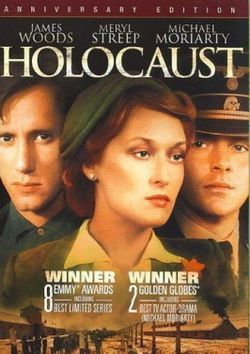
For all its faults – and it had many – and for all the opprobrium that it attracted, from critics and from Holocaust survivors such as Elie Wiesel, it served a tremendously important function. For many viewers it was a shock – it was for me, and I thought I was well-informed – and in Germany especially so. Despite all of the efforts post-war to educate and inform, it was this fictionalised account, not the documentary footage of the liberation of the camps, that really made many people understand. They saw people like themselves, living lives not unlike theirs, and then they saw what was done to them. In the course of the Holocaust mini-series, the Weiss family experienced Kristallnacht, Aktion T4, the Warsaw Ghetto, Theresienstadt, Babi Yar, Auschwitz and Sobibor. Wiesel argued that this was a mistake, that ‘the story of one child, the destiny of one victim, the reverberations of one outcry would be more effective’.
What then is the answer? How is one to tell a tale that cannot be—but must be—told? How is one to protect the memory of the victims? How are we to oppose the killers’ hopes and their accomplices’ endeavors to kill the dead for the second time? What will happen when the last survivor is gone? I don’t know. All I know is that the witness does not recognize himself in this film.
The Holocaust must be remembered. But not as a show
Clive James was more positive, although he acknowledged that no character existed except to make a point, or to illustrate a particular aspect of Holocaust history, and that (crucially) the script was clunky (‘the use of language was never better than adequate. As in all hack writing, the dialogue showed no sense of period. Prodigies of set-dressing were undone by a phrase’). However, he concluded:
There is no hope that the boundless horror of Nazi Germany can be transmitted entire to the generations that will succeed us. There is a limit to what we can absorb of other people’s experience. There is also a limit to how guilty we should feel about being unable to remember. Santayana was probably wrong when he said that those who forget the past are condemned to relive it. Those who remember are condemned to relive it too. Besides, freedoms are not guaranteed by historians and philosophers, but by a broad consent among the common people about what constitutes decent behaviour. Decency means nothing if it is not vulgarised. Nor can the truth be passed on without being simplified. The most we can hope for is that it shall not be travestied. Holocaust avoided that.
If Wiesel is right, and it is both impossible and vital to tell these stories, it is a task to be undertaken with trepidation. There are so few survivors now, so few still here and able to give their own accounts. But the way we tell their stories must honour the witnesses, the living and those who did not survive. It must be truthful, not just in terms of getting the facts right (details matter, when those details are disputed by those who would wish to assign the Holocaust to the category of fiction or myth), but in terms of creating people who ‘ring true’, and enabling us to invest in their lives and in their fate.
In Louise Doughty’s devastating and powerful novel of the Roma Holocaust, Fires in the Dark, she draws us in to the world of the Coppersmith Roma in 1920s Bohemia, into their rich and complex culture, into the lives of one family, Josef and Anna, their new son Emil, and the kumpania to which they belong. We see even then the beginning of the assault upon their culture, with the introduction of laws that require them to be registered and fingerprinted and to inform the authorities of their routes and destinations. And if we know anything at all of European 20th century history, we know this will not be the end of it.


Much later, Josef, dying of a fever in a camp, reflects on the nature of loss:
How strange a thing it is, he thought, the way you comfort yourself when it comes to loss. You turn away from it, show it your back, face and embrace what you still have. When we had to sell our gold I thought, ah well, we can always buy more gold, as long as we have the wagon and the horses and can still travel, then we will be fine. Then they stopped us travelling and burnt our wagon and I thought, well, we still have one horse and we can build a cart, and we have a roof over our heads. Then we had to flee our roof and I thought, we still have good clothes and boots, so many people don’t have boots any more. Then they took the bundles from us as we stood in line on Registration Day and I thought, well, we have the clothes we stand up in. When we got here, they took those. They even took the hair from my head. I thought, at least we are together in the same camp. So many people have been separated from their families. Now my family are kept from me, even though they are a few metres away . … It is just me, just my body and my soul and that is all that I have. … If I cannot even move my limbs, let alone raise my body to relieve myself with dignity, then I cannot really call my body my own either. All I have left are my thoughts – and breath, each small breath that comes so shallow and strange into my lungs. (Fires in the Dark, pp. 311-312)
We do not need to share Josef’s (or Louise Doughty’s) Roma heritage to feel empathy, to recognise the humanity here. Within this one passage we follow and feel that inexorable progress from a bureaucratic attack on the Roma way of life (‘The implementation of Law 117 … to curb the nuisance caused by so-called Gypsies and other Travelling Persons and Vagabonds’) to the man alone and reduced to ‘the next small breath’.

There are many first-hand accounts of the Holocaust, from those who survived and from those who did not, but very few from its Roma victims. The destruction of whole communities, and with them of customs, and dialects, and names and histories, means that creative works of imagination are vital, to bring them back to life for us. And so what Louise Doughty does here is of profound value. Richard Rorty, in a passage which Doughty quotes at the beginning of her novel, talks about how human solidarity might be achieved:
It is to be achieved not by inquiry but by imagination, the imaginative ability to see strange people as fellow sufferers. Solidarity is not discovered by reflection but created. It is created by increasing our sensitivity to the particular details of the pain and humiliation of other, unfamiliar sorts of people. Such increased sensitivity makes it more difficult to marginalize people different from ourselves by thinking, “They do not feel it as we would,” or “There must always be suffering, so why not let them suffer?” This process of coming to see other human beings as “one of us” rather than as “them” is a matter of detailed description of what unfamiliar people are like and of redescription of what we ourselves are like. This is a task not for theory but for genres such as ethnography, the journalist’s report, the comic book, the docudrama, and, especially, the novel. (Richard Rorty, Contingency, Irony, and Solidarity (Cambridge UP, 1989), p. xiv)
The power of words, used to increase sensitivity to others, to extend our sympathies, as George Eliot put it.
“Words: So innocent and powerless as they are, as standing in a dictionary, how potent for good and evil they become in the hands of one who knows how to combine them.” (Nathaniel Hawthorne – The American Notebooks)
Words have immense power to hurt or to heal, to damn or to save. And when we say of a novel or a play that it’s ‘only a story’ we are forgetting that. Those that have the skill to create or recreate a world, to draw people in whom we can believe, to give those people words to move and engage us, their ‘stories’ can shake us from our facile assumptions and prejudices, and can arm us against those who want to make us hate ‘them’.
We need those words, now more than ever.
Reflect on the fact that this has happened:
These words I commend to you:
Inscribe them on your heart(Primo Levi, If this is a Man)
“A roof over their heads…”
Posted by cathannabel in Refugees on January 26, 2018
Phil Davis, who works on refugee projects in Birmingham, is as always articulate, passionate and compassionate in his assessment of how our society treats asylum seekers.

“A spokesman for Prime Minister Theresa May said:
‘Our position is that every person should have the security of a roof over their head, and tackling homelessness is a complex issue with no single solution.
But, we are determined to help the most vulnerable in our society. That’s why we are providing over £1 billion of funding to tackle homelessness and rough sleeping.’”
Metro News. Thursday 25th January 2018
“Every person should have the security of a roof over their head.” Well, yes. Quite.
Here’s a thought. A genuinely helpful contribution towards achieving this clearly laudable policy objective. Stop making asylum seekers homeless and destitute immediately after an unsuccessful appeal. Keep them in a house until they either overturn the refusal in the courts or are removed. I mean, I know homelessness is ‘a complex issue’, but not turfing people onto the streets is a big step forward.
Last…
View original post 263 more words
Remainers Assemble
Posted by cathannabel in Brexit, Politics on January 15, 2018
Funny how swiftly a mood can change. I wrote a fairly despairing piece about Brexit, just over a month ago. It was a bit of a rant, an expression of my deep frustration at not seeing a way forward, a way out of the mess.
And suddenly, just in the last few weeks, the thing that I didn’t dare hope for, that I want so badly, is being talked about openly.
Stopping Brexit.
It’s not straightforward, obviously. The loss of face for May & co. will ensure that they set their faces against it. And, sadly, Corbyn seems unlikely to come out as a Remainer and lead the charge against the government. I also know that if it is stopped, damage will already have been done, and recovery will take a long time.
But the tide does seem to be turning. Surprising numbers of people who want Brexit to happen, as well as people who want to ensure it doesn’t, are now saying ‘if’ rather than ‘when’.
Those of us who voted Remain have been told, over and over again, to shut up and accept it. To get over it. We’ve been called whingers, ‘snowflakes’, ‘Remoaners’. We’ve been accused of being traitors and saboteurs, of betraying the Will of the People. Some of us had death threats.
Funny kind of snowflake, that withstands the vitriol, the hate, the threats and keeps on keeping on. Because we had to call out the lies that tricked people into voting for Brexit, and the incompetence and ignorance that characterised the government’s attempts to negotiate with the EU.
We didn’t do that out of pique. We’ve kept on about it because we believe that Brexit is an act of national self-harm, and that whilst we will all pay dearly for it, those who will suffer its consequences most acutely are the most vulnerable in our society (the poor, those most in need of the NHS), and the young. We’ve kept on because we care about and love this country.
Whilst I do get tetchy about the assumption that it’s my age group that landed us in this mess, statistically there is some evidence for Brexit appealing particularly to a generation that can remember the old (blue? black? who knows/cares) passport, pre-decimal currency, imperial measurements, and all that nonsense. The people who got terribly agitated because Big Ben’s bongs might briefly be silenced. The people who want to return us to some fantasy version of the 1950s – post-rationing, pre-counter-culture.

But, to put it somewhat brutally, many of those who look back with such fondness to the past won’t be around by the time Brexit really kicks in. Whereas the generations that will have their freedoms curtailed by this ‘taking back of control’ will be losing so much and gaining what, exactly? A different coloured passport. Perhaps a crown crest on their pint glass.
I want freedom of movement, for myself and for my children and their children.
I want the economic benefits of EU membership, for myself and for my children and their children.
I want our nation to continue to be diverse, to embrace people from Europe (and beyond Europe) who can contribute to our economy, our culture, our health service, our education – and those who need asylum. I want those Europeans who have made their homes here to feel secure, to feel that they are indeed at home, and welcome.
I want to be part of Europe, part of that group of nations forged after horrific conflict, based upon shared values, facing shared challenges. The greatest challenges we face are global – terrorism, climate change, the flow of refugees from war zones and famine. Our best hope of dealing with them is to work closely with our neighbours, not to shut them out.
I am convinced that there are many people who voted Leave – for a wide variety of reasons – who now regret that choice. Many must have been horrified by the open racism that followed so swiftly on the vote, the abuse offered to anyone who appeared to be ‘foreign’, the glee with which they were told they didn’t belong here any more. Others have been dismayed by the disparity between what they were promised and what the government now says about what might be delivered, and the obvious disarray of those who are responsible for negotiating on our behalf. I am also convinced that there are many who didn’t vote, maybe because – like so many of us who voted Remain – they assumed Remain would win. If those who voted Leave and now regret it, and those who stayed at home on polling day and wish they hadn’t, were to join forces with those who voted Remain and still believe it was the right choice…
So, strengthened by the solidarity of on-line communities that are pressing for an exit from Brexit, I will not only not shut up but will go on, and on, and on, relentlessly, until we find a way of stopping this madness.
And my vote – at local and national level – will go only to those who are pledged to the same cause.
A Manifesto for Europe
The EU was built on the words of Winston Churchill. It was founded on the same values that we recognise as British values, including democracy, the rule of law, individual liberty, and mutual respect.
The European Union has enabled neighbouring nations to overcome historic differences, create new alliances and build bridges where previously there were walls.
For the past 70 years, the United Kingdom has enjoyed peace, prosperity and enhanced standing in the world as a result of its role at the heart of the European Union.
We believe:
- In democracy and the rule of law.
- In the sovereignty of the UK Parliament.
- That the Charter of Fundamental Rights of the European Union amplifies the rights, freedoms and interests of the British people.
- That UK and EU law underpin our economic, social and political rights.
- That the UK can only be truly global and outward facing as a fully committed member of the European Union.
- That the life prospects of young people and future generations of British citizens are augmented by continued UK membership of the EU.
- That the four nations of the United Kingdom of Great Britain and Northern Ireland are stronger when united as a sovereign country, and as a member of the European Union.
- That continued UK membership of the EU is necessary to ensure the UK is relevant and effective in tackling global challenges such as climate change, terrorism, the displacement of peoples, and global economic adversity.
We reject:
- All forms of hate, racism and xenophobia that have been exacerbated by the referendum campaign and ballot.
- Nationalist protectionism, imperialism and isolationism.
- Treating EU nationals, EU member states and the EU itself as our enemies rather than our friends
A strong, free and united European Union, with Britain at its heart, is capable of facing up to the challenges of today and tomorrow, and of playing a leading role in championing international peace and prosperity.


It’s just another New Year’s Eve/Nothing changes on New Year’s Day…
Posted by cathannabel in Events, Politics on December 31, 2017
… but that never stops us hoping that some things will change, making plans and resolutions, wishing and wondering.
Another tough year for so many of us, for so many people around the world. Another year of preventable tragedy, of hatred fanned into violence, of brutal terrorist murders, of desperate poverty alongside profligate consumption. Easy to despair, easy to give up.
I’d rather hang on to hope, and faith in humanity. So rather than reiterating all of the evils and the horrors that this year has brought, and that we fear for in the next, I’ll remind myself that women are speaking up as they have never done before about sexual violence and harassment. That the resistance is making its presence felt, here and elsewhere.


In the face of lies we have to keep speaking and showing truth. In the face of hate we have to keep speaking and showing love. In the face of the horrors that seem to happen daily – in Kabul, in Las Vegas, in Manchester, in Mogadishu – we have to keep speaking and showing faith.
Keep on keeping on.
Sometimes things don’t go, after all,
from bad to worse. Some years, muscadel
faces down frost; green thrives; the crops don’t fail,
sometimes a man aims high, and all goes well.A people sometimes will step back from war;
elect an honest man, decide they care
enough, that they can’t leave some stranger poor.
Some men become what they were born for.Sometimes our best efforts do not go
amiss, sometimes we do as we meant to.
The sun will sometimes melt a field of sorrow
that seemed hard frozen: may it happen for you.Sheenagh Pugh – Sometimes
Hang on to your hat. Hang on to your hope. And wind the clock, for tomorrow is another day
Theirs is a land with a wall around it
And mine is a faith in my fellow man…Sweet moderation, heart of this nation
Desert us not, we are between the warsBilly Bragg, Between the Wars
We are building up a new world.
Do not sit idly by.
Do not remain neutral.
Do not rely on this broadcast alone.
We are only as strong as our signal.
There is a war going on for your mind.
If you are thinking, you are winning.Flobots – We are Winning
The simplest and most important thing of all: the world is difficult, and we are all breakable. So just be kind.Caitlin Moran – How to Build a Girl
If there’s no great glorious end to all this, if … nothing we do matters … then all that matters is what we do. ‘Cause that’s all there is. What we do. Now. Today. … All I want to do is help. I want to help because I don’t think people should suffer as they do, because if there’s no bigger meaning, then the smallest act of kindness is the greatest thing in the world.Joss Whedon – Angel
Never be cruel, never be cowardly, and never, ever eat pears! Remember, hate is always foolish. and love is always wise. Always try to be nice, but never fail to be kind. … Laugh hard, run fast, be kind.The 12th Doctor, Twice Upon a Time
Love is wise, hatred is foolish. In this world, which is getting more and more closely interconnected, we have to learn to tolerate each other. We have to learn to put up with the fact that some people say things that we don’t like. We can only live together in that way, and if we are to live together and not die together we must learn a kind of charity and a kind of tolerance which is absolutely vital to the continuation of human life on this planet.
Bertrand Russell, Face to Face interview, 1959


2017 in Film and TV – the best bits
Posted by cathannabel in Film, Music, Television, Theatre on December 22, 2017
It was a good year for superheroes. Most specially because of Wonder Woman, not because it was the best of its genre this year necessarily but because for the first time with a superhero movie I didn’t have scroll through hundreds of images to find one where a woman was centre screen, in charge. I wrote about the film, how it made me feel, the exhilaration of seeing all the tropes I love about superhero movies but with a woman, a glorious, magnificent woman, where usually there is a man, or mainly men (quite possibly glorious and magnificent in their own right, but still).
I loved Guardians of the Galaxy 2, warming to it despite a phase when I wearied of some of the schoolboy humour, until I realised what that was telling us about these lost children, and how they were forming a strange, new family. There was plenty of daft humour too in Thor: Ragnarok, as one would expect given that Taika Waititi was directing (responsible for last year’s delightful Hunt for the Wilderpeople and for What we do in the Shadows). And it was perhaps a sign of changing times (and not a moment too soon) that Valkyrie is played as a cynical, world-weary, boozy mess who comes through when she is needed, such a male archetype. As well as obviously kicking ass in a most splendid way. Spiderman: Homecoming was charming, funny and really used the notion that Spidey is an adolescent boy, cleverly and with heart. Logan, though, of all the films that belong broadly in that genre, was the one to break your heart. With gripping valedictory performances from Jackman and Stewart, and a mesmerising and terrifying one from Dafne Keen.


Star Wars is not so much my thing. I did enjoy the first trilogy, albeit critically, but I never felt them to be mine, and I have never even seen the prequels (nor do I intend to). But I loved The Force Awakens, and I loved Rogue One, and I look forward to seeing The Last Jedi before long.

War for the Planet of the Apes was brilliant – referencing Biblical epics, Westerns, Apocalypse Now, Schindler’s List and probably other genres and specific films as well, whilst maintaining the power and emotional heft of its predecessors.

My efforts to find an image for each film in which a woman is prominent were doomed in the case of Dunkirk. That’s fair enough, given the premise, I didn’t expect women to feature other than in traditional roles – as nurses, or serving tea and jam sandwiches. There has been a more serious issue raised, that of the absence of non-white faces. I don’t honestly believe this was a deliberate whitewashing, nor do I accept that just because Farage liked the film it was a pro-Brexit parable. But it would have taken very little to ensure that there were visible representatives of the Royal Indian Army Services Corp companies, or the lascar crewmen on British merchant vessels that took part in the evacuation. They were there, and this could have been conveyed without changing the basic structure of the film and its deliberately narrow focus on a few of the rescued and rescuers. But having said that, whilst watching the film such considerations never crossed my mind. I was overwhelmed, by that intense focus, by the score which built and built the tension until it was almost unbearable (and the use of the Elgar Nimrod as the first of the little ships appeared reduced me, predictably enough, to sobs), and by the non-linear structure which forced one to concentrate, to hold those strands together even as the direction teased them apart.

The opposite for the next two movies – three women foregrounded in each of them. I wrote about Twentieth-century Women for International Women’s Day,

and Hidden Figures we missed at the cinema but caught on DVD – uplifting and inspiring even if, oddly enough, the sexism and racism they encountered was actually ramped up for the benefit of the story. Who would have thought that could ever be necessary?

Baby Driver was beautifully described by Empire as:
not a film just set to music. But a film meticulously, ambitiously laid over the bones of carefully chosen tracks. It’s as close to a car-chase opera as you’ll ever see on screen.
Even if the narrative arc (young man in debt to gangster does ‘one last job’ and finds out there’s no such thing) is traditional enough, the choreography, the seamless blend between diegetic and exegetic music, make it entirely original and massively enjoyable.
La La Land inspired me to write about musicals. It was gorgeous and delightful and poignant and much more that I wanted to say was expressed so well in a piece on the marvellous That’s How the Light Gets In blog.

And one more cinema outing, a rather lengthy but entirely captivating one, for Bertrand Tavernier’s Journey through French Cinema. It is what it says, a journey and a personal one at that, through French film from Tavernier’s first childhood moment of enchantment, on through the decades as he goes from a kid in the audience to a film maker himself. I believe there’s a follow-up in the making, bringing his journey more up to date, to which I will happily commit as many hours as it takes, as soon as it’s out.

Mind you, speaking of French cinema, I should really note that we did go to see Elle. However, my feelings about that film are so predominantly negative, that despite my overwhelming admiration for Huppert, and despite moments of brilliantly black comedy, I shall pass over it without substantial comment.
On to the smaller screen.
As always a good deal of crime fiction. The dramas noted below are not an inclusive list of what we watched. There were others that were workaday, or that strained credulity with plot craters and characters who behaved with a stupidity that was at the same time predictable and utterly inconsistent with what we already knew of them. I’m not going to name the guilty parties, just those that we were gripped by and that managed to avoid the worst clichés and pitfalls of the genre.
Sherlock: The Final Problem certainly didn’t give us genre cliché. What it all meant, and indeed, whether it meant anything at all or was just a clever game, is uncertain. The Guardian‘s reviewer was a bit cross about it, but identified two main strands in the narrative:
One was a subtle, beautifully crafted backstory about Sherlock’s childhood. The other was a fun if unfulfilling gameshow of wild hypotheticals, where everything was at stake yet it often felt as though very little was.

It was frustrating and baffling but it didn’t make me cross, I was perfectly willing to believe both that it did mean something and that it was just a fascinating puzzle that I would probably have no chance of unravelling.
Line of Duty series 4 was just superb. Thandie Newton’s Roz Huntley was absolutely compelling, and the plot twisted and turned as we were made to question everyone’s motives and integrity, at least briefly. It had the classic LoD set pieces in the interview room, plus shoot outs and chases, and a plot that at least started to weave together strands from series 1-3, whilst leaving plenty to look forward to in series 5, which cannot come around too soon for me.

The Missing had only one character in common with series 1, the grizzled detective (Tchéky Karyo) who I was very glad to spend another few hours with. Keeley Hawes and David Morrissey were both excellent, as always. The narrative begins, in a sense, at the point that one might expect it to end, with the return of their missing daughter. Of course, it’s not that simple, it’s complex and agonising, and unexpected.

Broadchurch 3 was much better than 2 (which I quite enjoyed at the time but actually struggle to recall what it was all about, really, apart from Joe’s not guilty plea). The handling of the rape case was generally excellent even if the resolution left a few dangling plot threads that didn’t quite make sense. Julie Hesmondhalgh was wonderful, as were, obviously, Tennant, Colman and Whittaker.

Strike was an excellent adaptation of the first two of Robert Galbraith (aka J K Rowling)’s Cormoran Strike novels. Tom Burke and Holliday Grainger were perfect in the lead roles, and I look forward immensely to the adaptation of the third and any future novels in the series.

I Know Who you Are was a fairly bonkers Spanish series in which most characters were pretty despicable, and one of the two genuinely sympathetic people didn’t make it out alive. The only morality that prevailed was Family and within that there was a hierarchy of loyalty – to attempt to murder one’s sister in order to protect one’s son was seen by most characters (including the intended victim) as pretty reasonable. It was all thoroughly enjoyable.

Unforgotten 2 was profoundly different, as Nicola Walker and Sanjeev Bhaskar unpicked another cold case. They are both deeply sympathetic characters and the whole thing is imbued with a kind of compassion and empathy that draws in the damaged people whose lives have been twisted in various ways by the past crime.
Rellik very cleverly subverted the way in which the detective story must follow a retrograde narrative path, starting with the crime and working backwards, by starting with the crime’s (apparent) resolution and working backwards and backwards, until in its final episode it leapt back to the beginning/end and a shocking dénoument. The structure took a bit of getting used to and never quite stopped being unsettling, but we thoroughly enjoyed the ride. It was produced by Harry and Jack Williams (The Missing) and featured, amongst other excellent performances, the wonderful Rosalind Eleazar as an early suspect.

Witnesses was the second series of the French crime drama starring Marie Dompnier. This one also stars Audrey Fleurot, who we know from Spiral, and whose return in that series we look forward to impatiently. Witnesses was compelling and baffling and ended most enigmatically (none the worse for that – I’d rather have honest to goodness open endings than ostensibly tidy endings that actually leave loose threads all over the place).

Fargo 3 brought us not one but two wonderful female cops. Gloria Burgle (Carrie Coon) and Winnie Lopez (Olivia Sandoval). And not one but two Ewan McGregors, as he plays twin brothers. One David Thewlis was more than enough, however – his villain was quite the most revolting, viscerally unpleasant character I’ve seen on screen for some time. That’s a compliment (I think) to the writing and the acting. Lord knows where this one is going next but we’ll be more than happy to go along. Fargo also introduced the wonderful phrase, ‘unfathomable pinhead-ery’ into our vocab, for which we are truly thankful.

Telly sci-fi had an altogether brilliant year.
Agents of Shield had an outstanding season with a multi-layered narrative that messed with our heads and our hearts. Beautifully played and written, and quite breathtaking.

Orphan Black reached its fifth and final season, having maintained its form throughout the four years that it has been running. The weight of the series is carried – seemingly effortlessly – by the awesome Tatiana Maslany, who plays not only various clone ‘sestras’ but at various times plays one of them masquerading as one of the others. It’s dazzlingly done. It also stars the rather wonderful Maria Doyle Kennedy as Mrs S.
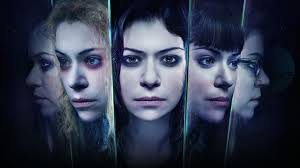
We’re not far through Star Trek: Discovery yet, but from episode 3 on were hooked. Yes, OK, that coincides with the arrival of Jason Isaacs, but it’s not just because Jason Isaacs. Sonequa Martin-Green is excellent, as is Anthony Rapp, and Mary Wiseman as cadet Tilly. It’s visually brilliant, and the plot is loaded with moral ambiguity from which it does not flinch. It promises much and we look forward to it developing further.
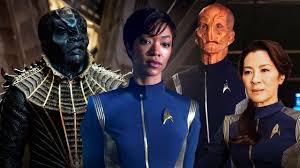
I remain loyal to The Walking Dead even though no one could claim that it’s unproblematic. The tone and pace are extremely uneven and it depends far too often on (a) plot armour, (b) magically inexhaustible ammo and (c) people who we know are capable of good judgement behaving with unfathomable pinheadery. Nonetheless, I cannot envisage giving up on it. I have to see how this plays out – and there are episodes which grip and compel and convince.


Possibly the only one of my top TV shows which features in the critics’ lists is The Handmaid’s Tale. I also read the book for the first time, as part of my 60 books in 60 days challenge. So much has been said about the series that I don’t feel I can add anything especially insightful – it was horrifying and terrifying and brilliantly done.

And of course there’s Doctor Who. I wrote about the (to me, brilliant) news that the next Doctor will be a woman. Nonetheless, much as I look forward to seeing what Jodie Whittaker brings to the role I will need to grieve first for Peter Capaldi’s doctor, who I have loved – and for Pearl Mackie who has been a wonderful companion. PC’s final series was excellent, and the finale was heart-stopping and moving.
“I’m not trying to win. I’m not doing this because I want to beat someone, because I hate someone, or because I want to blame someone. It’s not because it’s fun. God knows it’s not because it’s easy. It’s not even because it works because it hardly ever does. I do what I do because it’s right! Because it’s decent! And above all, it’s kind! It’s just that… Just kind. If I run away today, good people will die. If I stand and fight, some of them might live. Maybe not many, maybe not for long. Hey, you know, maybe there’s no point to any of this at all. But it’s the best I can do. So I’m going to do it. And I’m going to stand here doing it until it kills me. And you’re going to die too! Some day… And how will that be? Have you thought about it? What would you die for? Who I am is where I stand. Where I stand is where I fall.” — The Doctor
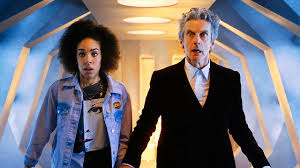

Three docs worth mentioning. Suzie Klein’s Tunes for Tyrants explored 20th century music in the context of Nazi and Stalinist oppression. She’s an excellent presenter and the material – and the music – was fascinating and powerful.

Bowie’s departure from this dimension was – for me amongst others – the greatest loss of 2016, a year of losses. Bowie – the Last Five Years brought us the final phase of that extraordinary story, as he worked on his last two albums, and the stage musical Lazarus. We were reminded, as if we could forget, not only of his talent, but of his humour and intelligence, his warmth and wit. And that last body of work is not only a worthy finale to his career but imbued with a sense of mortality and the fragility of life.

Neil Brand is one of my favourite music-explainers. Charles Hazlewood and Tom Service have got that nailed in terms of classical music but for the music of stage and screen, for the popular song, Neil is your man, and The Sound of Musicals was a delight.

We loved Poldark, and not just for the scenery.

The Replacement was a bit bonkers but both Vicky McClure (see also Line of Duty) and Morven Christie (also in The A Word, series 2 of which isn’t covered here only because it’s yet to be watched) were excellent.

And another favourite of mine, Suranne Jones, was magnificent in series 2 of Doctor Foster.

We got to see Jodie Whittaker pretending to be a doctor in Trust Me. Plot holes a-plenty (unless they’re just an indication of a second series coming up?) but well done, and well played by JW – looking forward to her being a real Doctor shortly.
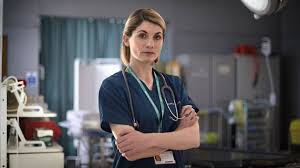
Homeland was on excellent form, with the dynamics between Carrie and the new female PotUS adding a new dimension to the plot.

And Spin took us back into the shadowy world of French political manouevering.

It wasn’t all screen based culture. I made several visits to Leeds Grand Theatre for Opera North productions, some of which I reviewed for The Culture Vulture (see the Reviews page of this site, which also features my review of the Sheffield Crucible’s production of Julius Caesar). I also saw at Leeds Grand a magical production of Rimsky-Korsakov’s The Snow Maiden, at the Crucible, an intense Desire Under the Elms, and in the Crucible Studio various splendid Music in the Round chamber music concerts.


So, thanks to all who’ve shared these delights with me. Liz, Viv, Arthur, Ruth, Aid, Dad, and of course him that I’ve been watching telly and going to the pictures and going to gigs and plays with for >40 years…
 Passing Time