Archive for category Events
2014 – some of the best bits
Some of the cultural highlights of my year – a year of working at home, long train journeys to long meetings which gave me more time to read, less time to go to the cinema or the theatre. However, I did manage a few outings…
- Twelfth Night at the Crucible – a real delight. I’d been disappointed that we weren’t getting a tragedy or one of the problem plays, rather than a comedy that I’d seen on stage before, but that feeling evaporated very quickly indeed. The performances were excellent, the staging imaginative and suggestive of darker undercurrents (the cast appearing at windows almost like the undead, the showers of rose petals – see also Poppeia).
- Brilliant opera at Leeds Grand – La Boheme, and The Coronation of Poppeia. And another Boheme, this time in Graves Gallery, from Opera on Location.


- Tramlines!
- Music in the Round – I’d pick out the Schubert octet, Tim Horton’s bravura performance of the Prokofiev Piano Sonata no. 7 (described by the Guardian as ‘ferocious’), Charlie Piper‘s WWI suite, The Dark Hour; works by Schulhoff & Haas, and consort of viols, Fretwork.
- Once again we celebrated Tim Richardson’s life and passion for learning and teaching with the 24 Hour Inspire – 24 hours of lectures on a host of topics, from WWI poets to insect sex, from biogeography to Mozart, from underground science to fairground history – ok, you get the picture. Once again a host of people stepped up to help, everything ran smoothly, and we were able to donate to Rotherham Hospice and Impact Young Heroes. We’ll be doing it again on 16-17 April 2015. Tim’s charity, Inspiration for Life, goes from strength to strength.
- I revisited the City Ground after far too many years, for the first home game of the season, and Stuart Pearce’s first game as manager. That was a great game. We’re in a slump at the moment, and that early euphoria has dissipated. If it was anyone but Psycho in charge I suspect the calls to sack the manager would be ringing out right now, but few Forest fans would want to deny him the chance to turn things around. I hope he can. I really, really, hope he can.
Top TV of 2014
No attempt at ranking. How could one decide on the relative merits of a gritty cop drama and a comic book fantasy? So, what do all of these shows have in common? First, excellent writing, and great performances. Essential to have both. So many big budget dramas skimp on the former and blow the budget on the latter, but even the best actors can only do so much with a script that clunks. Second, great female characters. All of these programmes basically kick the Bechdel test out of the park. It’s not just about having ‘strong’ women. Not all women are strong, and no women are strong all of the time. It’s about having women characters who are rounded human beings, fallible and flawed, but not dependent on men to make decisions or to solve problems. Some of these women do indeed kick ass, but they don’t all have to. So, to Nazanin Boniadi, Alison Brie, Yvette Nicole Brown, Amelia Bullmore, Lauren Cohan, Clare Danes, Siobhan Finneran, Danai Gurira, Keeley Hawes, Elizabeth Henstridge, Gillian Jacobs, Suranne Jones, Nimrat Kaur, Sarah Lancashire, Melissa McBride, Vicky McClure, Tatiana Maslany, Lesley Sharp, Allison Tolmin, Ming-Na Wen and the rest – cheers, and thanks for giving us images of women that are as diverse and complicated as actual real live women are.


- Fargo – I was decidedly unconvinced beforehand, but it turned out to be funny, gruesome, and touching, with one of my favourite women cops in Allison Tolmin’s Molly (not just a re-run of Frances McDormand’s marvellous Marge from the film, but a character in her own right), Billy Bob Thornton as a grimly hilarious killer and Martin Freeman as a weaselly one, and a wealth of other characters, some of whom we came to care about so much that at tense moments there was much yelling at the screen as we thought they might be in danger.
- Line of Duty – I wasn’t convinced about this one either, mainly because the first series had been superb, and I wondered if they could match it. They did, and it was Keeley Hawes’ performance that clinched it. Whilst I’d watch Vicky McClure in anything, Keeley wasn’t in that category for me, despite Ashes to Ashes. But in this she was riveting, absolutely mesmerising. The rest of the cast was superb too.
- Happy Valley was perhaps the most ironically titled programme of the year. This valley was pretty damned grim. But Sarah Lancashire as cop Catherine Cawood was wonderful, and the story was compelling and moving.
- Scott & Bailey maintained its form in series 4. The three central women (count them! three central women!) are all convincingly real, sometimes infuriatingly so.
- The Walking Dead opened series 5 with an episode so gripping that I really could neither breathe normally nor speak for quite some time. It’s maintained that tension (more or less) whilst varying the format, to focus on different subsets of the characters, and different locations. Carol has been central to this season’s episodes so far, and her character is one of those that has been allowed to develop and deepen throughout. There’s no shortage of other interesting characters, and the plot allows for philosophical, political and ethical speculation as well as for gory shocks and suspense.
- Agents of Shield got past a slightly wobbly first series and got its pace and tone just right. It fits right into the Marvelverse, but stands alone perfectly well. And it features girl-geek Simmons, a Sheffield lass, and there’s just a hint of South Yorkshire in her accent from time to time.
- Community made me laugh more than anything else this year. Just when you think it is as bonkers as it could be, it ups its game, to be even more meta, and even more daft.
- Doctor Who I have spoken of elsewhere. I have a deep love for this programme, and whilst this regeneration has been unsettling at times, uncertain in tone perhaps, I have great hopes for Capaldi and Coleman in series 9 next year.
- Homeland redeemed itself. Gripping stuff, with Clare Danes acting her socks off and getting us deeper into what makes Carrie tick.
- Orphan Black is one of the most criminally underrated programmes of this (and last) year. Tatiana Maslany inhabits each of the characters she plays so well that I forget – disbelieve almost – that there is just the one actress involved. And when she’s playing one of them pretending to be one of the others…. Cracking plot too.
Films of the year – I leave the in-depth cinematic reviews to Arthur Annabel who promises an extensive blog on this topic soon. I simply note these as films which have delighted and/or moved me, in no particular order. Worth noting that whilst the programmes on my TV list get A* on the Bechdel test, the films are considerably weaker on that front. Nonetheless, some fine performances, and Nicole Perlman was the first woman with a writing credit on a Marvel movie (Guardians of the Galaxy).


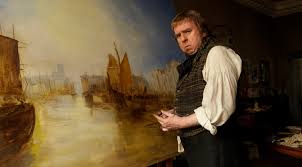


Women of the year:
Jack Monroe – for enlivening my repertoire of meals to feed the family, and campaigning about food poverty
Professor Monica Grady – for being emotionally, exuberantly passionate about science
 Kate Bush – for doing it her way, as always
 Fahma Mohamed – for telling men three times her age what they needed to be told about FGM and how to protect young women in the UK
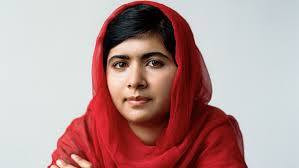 Malala Yousafzai – it’s all been said really. A young woman of remarkable maturity and dignity, as well as courage.
 Dr Ameyo Adadevoh – helped to curb the spread of Ebola by quarantining a patient in the face of pressure from his government, but succumbed to the disease herself
 Laura Bates – her Everyday Sexism project helped to give women a voice, to tell their stories, to shout back.
In 2014 I’ve blogged about refugees, genocide, football, W G Sebald and Michel Butor, Kazuo Ishiguro, everyday sexism, Tramlines, Josephine Butler and Doctor Who. I got a bit personal on the subject of depression, and was inspired by Caitlin Moran’s How to Build a Girl to present my manifesto – a plea to just be kind. And my blog about reading the last of the Resnick series of detective stories won the approval of the author, John Harvey, who linked to it on his own blog, and republished my jazz playlist!
Amongst the blogs I’ve followed, or at least tried to keep up with, I would particularly note Searching for Albion. This is the record of Dan Taylor’s four month cycling trip across the British Isles, talking to people he meets, by plan or by chance. A fascinating project, beautifully documented.
To all of those who’ve shared some of the above events, obsessions and enthusiasms with me, who’ve given me support when I’ve needed it, who I’ve learned from and with, thank you. I don’t know what to expect from 2015 – but see you there!
Memories of a (nearly) free festival – Tramlines 2014
Posted by cathannabel in Events, Music on August 1, 2014
Once a year, for the last four years, my city has been taken over by music. In the parks, the pubs, the squares, the cafes, the galleries, even the Cathedral, bands known and unknown have played, and Sheffield people – and visitors from further afield – have listened, cheered, and danced.
I love this city anyway, for its hills, its green places, the way in which it manages to be not just a metropolis but a collection of villages grouped around a vibrant cultural centre. Fill it with music and I am besotted.
It used to be free, and it couldn’t stay that way, sadly. But lots of it still is, and I paid £15 for the privilege of seeing 18 bands last weekend, constrained only by my own stamina, the necessity of spending a little time on boring necessities such as shopping and laundry, and the logistics of getting from one venue to another to see everyone I might have wanted to see.
The sunshine helped of course, and the mood, wherever we went, seemed to be as sunny as the weather. The police reported – well, nothing really. There were grumbles from people who’d bought tickets and didn’t get in to see the big names on Devonshire Green – but if you buy a Glasto ticket (at a somewhat greater cost), does that guarantee you’ll see the headliners? I don’t think so. And there were some late timetable changes which inevitably meant disappointments too. But it was a blast, and a thoroughly joyous weekend.
And the best of it? Unquestionably Malian band Songhoy Blues, playing in the Millennium Gallery on Saturday night. I’d resisted the calls from most bands I’d seen to tell them if I was having a good time, or if I was ready, or to clap along. But when Aliou Toure asked us all ‘You like?’, we told him in no uncertain terms that yes, we did, we liked.
West African music moves me so deeply partly because of my childhood in Ghana, and later in Nigeria. As a small child living near the University campus in Kumasi, we heard the highlife music drifting over from the student residences, a hypnotic blend of Latin sounds and indigenous Ghanaian rhythms. And in Northern Nigeria at the end of Ramadan I watched Tuareg horsemen in blue robes and headdresses charging down the main drag, magnificent and unforgettable.
Over the years I’ve listened to music from all over that continent – many years back I saw the Bhundhu Boys from Zimbabwe and S E Rogie from Sierra Leone live at the Leadmill, and the CD collection (and my iPod running selection) includes King Sunny Ade, Youssou n’Dour, Baaba Maal, Salif Keita, Habib Koite, Tinariwen, Ali Farka Toure and others.
More than any other African music, I come back to the sounds of Mali. Partly it’s because I love the blues, and in Malian music you hear that, the source of the blues, its DNA (as Martin Scorsese put it). There’s immense variety in the music of Mali, the soul of Salif Keita, desert blues from Tinariwen, hints of flamenco in Habib Koite or Toumani Diabete – rich in influences from and on other musical traditions, but always clearly Mali.
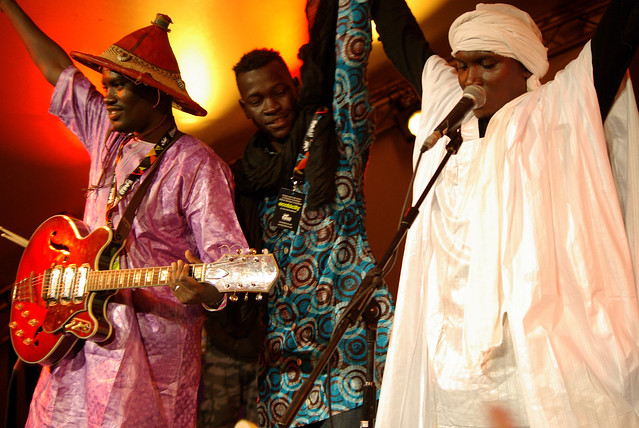
This sublime musical culture has been threatened in recent years but on the evidence of last weekend it is strong, gorgeous, joyous. Songhoy Blues made me dance, made me smile like an idiot, made me cry a little, when Aliou Toure spoke about his country, his continent, and what the music stood for – peace, love, unity.
http://www.theguardian.com/music/2013/dec/04/songhoy-blues-mali-africa-express
http://www.musicfilmweb.com/2014/07/songhoy-blues-mali-music-documentary/
http://www.bostonphoenix.com/boston/music/other_stories/documents/02438282.htm
Toumani and Sidiki Diabate: latest of 71 generations of Malian griots in Liverpool
My Tramlines 2014 was:
Friday 25 July – Shy Nature (Sheffield Cathedral), Allusondrugs (Millennium Gallery), The Wedding Present (Leadmill)


Saturday 26 July – Nordic Giants (City Hall), John T Angle & the Spirit Levels, Laurel Canyons (Cathedral), The Indecision, KOG (Peace Gardens), Juffage, Songhoy Blues (Millennium Gallery)

Sunday 27 July – Max Restraino, Kane’d, Dresden Saints, Broken Saints (Western Park), Woman’s Hour (Cathedral), Blossomer, Neil McSweeney, TOY (Leadmill)
To all of the musicians, and to everyone who made it happen,

Butor at Belle Vue
Posted by cathannabel in Events, Michel Butor on March 8, 2014
The long history of Belle Vue Gardens in Manchester is being celebrated this month, and it seems timely to note its appearance, under the name of Pleasance Gardens, in Michel Butor’s Manchester-inspired 1956 novel L’Emploi du temps (Passing Time).
Butor’s view of Manchester (Bleston in the novel) was, it must be admitted, largely negative. He loathed the climate, and the food, and seems to have been deeply unhappy in the city, where he arrived to take up the post of lecteur in the French department at the University in 1952.
He seems to have taken to Belle Vue, however. Pleasance Gardens, along with the various peripatetic fairs which rotated around the periphery of the city, on the areas of waste land, represent a mobile and open element in a closed, even carceral city, and a window on different kinds of community than those indigenous to Bleston. The narrator sees the friends he knows in a different light in these places, which may be in Bleston but are not fully part of it and don’t share its malaise.
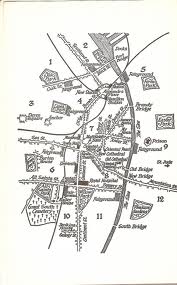

Pleasance Gardens appears on the frontispiece map, in the bottom left-hand corner, its shape not dissimilar to that of the real Belle Vue. Butor took from the real city of Manchester the geography and architecture that interested him and that fitted with his narrative preoccupations, and ignored or altered the rest. The descriptions include a great deal of precision and detail – however, the historians of Belle Vue will have to judge where the fictional version departs from its model.
He describes the entrance to the Gardens:
The monumental entrance-gates whose two square towers, adorned with grimy stucco, are crowned … with two enormous yellow half-moons fixed to lightning conductors, and are joined by two iron rods bearing an inscription in red-painted letters beaded with electric bulbs then gleaming softly pink: ‘Pleasance Gardens’.
The big folding door which is armoured as if to protect a safe, and only opens on great occasions and for important processions, whereas we, the daily crowd, have to make our way in by one of the six wicket-gates on the right (those on the left are for the way out) with their turnstiles and ticket collectors’
The earthenware topped table which displayed, on a larger scale and in greater detail, with fresh colours and crude lettering, that green quarter circle with its apex pointing towards the town centre…
The tickets themselves are described in detail:
the slip of grey cardboard covered with printed lettering: On one side in tall capitals PLEASANCE GARDENS, and then in smaller letters: Valid for one visitor, Sunday, December 2nd. And on the other side: REMEMBER that this garden is intended for recreation, not for disorderly behaviour; please keep your dignity in all circumstances’
On this winter visit:
There was scarcely anybody in the big, cheap restaurants or in the billiard-rooms; avenues, all round, bore black and white arrows directing one to the bear-pit, the stadium, the switch-back, the aviaries, the exit and the monkey-house.
We walked in silence past roundabouts with metal aeroplanes and wooden horses, … and past the station for the miniature railway where three children sat shivering in an open truck waiting to start; and past the lake, which was empty because its concrete bottom was being cleaned’.
Posters everywhere echoed: ‘Come back for the New Year, come and see the fireworks’.
A later visit, in summer, followed one of the fires that feature so frequently in the novel. Belle Vue was devastated by fire in 1958, and whether this account was inspired by a real event I do not know – it may well be that whilst Manchester was plagued by an unusually large number of arson attacks over the period that Butor was there, he extrapolated from that to a fire at Pleasance Gardens, purely for narrative purposes.
In the open air cafe that is set up there in summer in the middle of the zoological section, among the wolves’ and foxes’ cages and the ragged-winged cranes’ enclosure, the duck-ponds and the seals’ basins with their white-painted concrete islands. I could see, above the stationary booths of this mammoth fairground, eerily outlined in the faint luminous haze, the tops of the calcined posts of the Scenic Railway, with a few beams still fixed to them like gibbets or like the branch-stumps that project from the peeled trunks of trees struck by lightning; and I listened to the noise of the demolition-workers’ axes’
If Butor generally warmed to the Gardens, his portrayal of the animals in the Zoo is less enthusiastic – he speaks of the cries of the animals and birds mingling with the noise of demolition, of melancholy zebras and wretched wild beasts, and of their howls during the firework display. Perhaps their imprisonment chimed uncomfortably with his own sense of being trapped in the city.
http://www.manchestereveningnews.co.uk/news/nostalgia/way-were-belle-vue—1209695
2013 – the best bits. And some of the other bits.
Posted by cathannabel in Events, Film, Literature, Music, Personal, Television, Theatre on December 31, 2013
It has been a funny old year. Funny peculiar, though not without the odd moment of mirth and merriment along the way.
I came back from one secondment to my regular job in January, and went off on the next secondment in December. This new one is a major change – working for HEFCE, based at home when not attending meetings in various exotic parts of the UK (oh, OK then, Croydon, Birmingham, Manchester, Dorking…). It’s a fantastic opportunity, and challenges the way I organise my life as well as requiring me to acquire new knowledge and new skills.
I graduated, again. Did the whole gown and mortar board thing which I hadn’t been fussed about when I was 21 and graduating for the first time. And then, with barely a pause, on to the doctorate. Studying part-time, it’s going to be a long haul, with who knows what possibilities at the end of it, but I’m loving it.
In February, a beloved friend and colleague died, and we – his family, friends, colleagues, students – grieved but also worked together to put on an amazing event in his honour, the 24 Hour Inspire. We raised money for local cancer charities, and have raised more since, through an art exhibition, plant and cake sales and various 10k runs/marathon bike rides, etc. And we’re now planning the 24 Hour Inspire 2014, and the publication of Tim’s diary. He will continue to inspire.
Culturally, my high points in 2013 have been:
- Chimamanda Ngozi Adichie at the Showroom, talking about Americanah, and Half of a Yellow Sun
- Peter Hill premiering newly discovered/completed Messiaen at the Upper Chapel (and playing Bach, Berg and Schoenberg too)
- Arnie Somogyi’s Scenes in the City, playing Mingus at Sheffield Jazz
- Tramlines – the Enid in the City Hall, Soukous Revelation in the Peace Gardens, Jim Jones Revue and Selecter at Devonshire Green. (And more, but those were the absolute top bits).
- The 24 Hour Inspire – 24 hours of lectures on life, the universe and everything, including Ed Daw’s blues piano, Rachel Falconer on poetry and birds, Jenny Saul on implicit bias, Claire McGourlay on the Innocence Project, and personal narratives from Brendan Stone and Elena Rodriguez-Falcon. Plus John Cockburn’s rendition of (What’s so Funny ’bout) Peace Love and Understanding, and my favourite Beatles B-side, Things we Said Today, and more busking from Mike Weir, Graham McElearney and Eugenia Chung. And more, lots more.
- Fabulous Beethoven quartets/quintet from the Elias at the Upper Chapel
- A magical Winter’s Tale at the Crucible
- Two awesome Britten operas (Peter Grimes and Death in Venice) from Opera North at Leeds Grand
- New (to me) authors enjoyed this year: Maggie O’Farrell, Louise Doughty, Lucy Caldwell, C J Sansom, Alison Moore, Edward St Aubyn, Rebecca Solnit, Wilkie Collins, Jonathan Franzen
- Wonderful new books from authors I’ve enjoyed before: Stephen King’s Dr Sleep and Joyland, Lynn Shepherd’s A Treacherous Likeness, Jon McGregor‘s This isn’t the Sort of Thing…., Robert Harris’s An Officer and a Spy
- Finally finished Proust’s Sodome et Gomorrhe. Allons-y, to La Prisonniere!
- I’ve learned to love Marvel superheroes (Avengers Assemble! Thor! Iron Man! Agents of Shield!), and have thrilled to The Walking Dead, Orphan Black (virtuoso performance(s) from Tatiana Maslany), Utopia and, of course, Dr Who.
- Speaking of which, not only an absolutely stonking 50th anniversary episode, but also a fascinating and very touching drama about the show’s early days, with David Bradley as William Hartnell, the sweet and funny The Five-ish Doctors, with Peter Davison, Sylvester McCoy and Colin Baker sending themselves and everyone else up with great affection, and Matthew Sweet’s Culture Show special. And the Christmas episode…
- Other cracking telly – Broadchurch, Homeland, Misfits, The Fall, Southcliffe, The Guilty, The Americans… And from across the Channel, not only another masterclass in French profanity from Spiral, but the wonderful The Returned
- And other top films – Joss Whedon’s Much Ado, Lore, The Hobbit Pts 1 & 2, Lincoln, and Patience (after Sebald).
About the blog itself. It’s been less focused on my areas of research recently, and that will continue to be the case, as I’m working on the PhD. The odd digression will find its place here – as Tim used to say, tangents are there to be gone off on, and the blog is a good way of nailing those (to mix my metaphors somewhat) and stopping them from distracting me for too long. I shall be continuing to go on about all sorts of other things that pique my interest. In particular the blog will continue to be a place where refugee stories are foregrounded, as a riposte to the mean and dishonest coverage which those stories tend to receive.
Over the last year, my posting has been somewhat erratic. I note that I didn’t write anything between March and June (I made up for it in June, however, with a Refugee Week blog-blitz, as well as a piece about Last Year at Marienbad which I still intend to follow up. That hiatus may have had something to do with being in the final stages of my degree – finishing off my dissertation, and a last batch of essays and presentations.
There are so many fantastic bloggers out there, too many to do justice to. We lost one this year, as the great Norman Geras passed away. But I’ll continue to enjoy, and to share/reblog That’s How the Light Gets In, Nowt Much to Say, and Futile Democracy, amongst others. For my research interests, I will no doubt continue to find lots to think about and follow up in blogs from Decayetude and Vertigo.
So, thanks to the aforementioned bloggers, to the various people with whom I’ve shared the cultural delights enumerated above, to friends and family who’ve supported me in my ventures and refrained (mostly) from telling me I’m mad to try to do so many things.
Thing is, I have a history of depression. I know that the best way for me to fight that, to avoid sliding back into that dark pit, is to do lots of stuff I care about. So, not just the job – which I care about, passionately – and my wonderful family, but research, writing, ensuring that we do Tim proud via the charity, and so on. I am very aware that there’s a tipping point, that if I do too much stuff I care about, given that I also have to do stuff that I have to do, just because I have to do it, the anxiety of having so much going on can itself lead to sleepless nights, which make me less able to cope, thus leading to more worrying and so on and on… It’s all about balance, and about having support when I need it. So, to all of you who, whether you know it or not, provide that support, and help me to keep that balance, a heartfelt thanks.
In particular, over this last year, I’d like to thank:
For unstinting support and encouragement through the part-time degree and especially as I reached the final stages – tutors Sophie Belot and Annie Rouxeville, and classmate Liz Perry. And a special thanks to Chris Turgoose for ensuring that my graduation gown stayed put via an ingenious arrangement of string and safety pins.
For support and encouragement to go on to the PhD – the aforementioned Sophie, Annie, and Liz, plus Rachel Falconer, Helen Finch, and my supervisors Amanda Crawley Jackson and Richard Steadman-Jones
For their contributions to the work of Inspiration for Life, and the 24 Hour Inspire, and their support in commemorating and celebrating Tim – Tracy Hilton, Ruth Arnold, Vanessa Toulmin, Chris Sexton, John Cockburn, Lee Thompson, Matt Mears and David Mowbray
My family, of course, without whom…
And, finally, Tim. I’d have loved to share this year’s triumphs and tribulations with him.
Have a wonderful 2014 all of you.

Farewell to Norman Geras, 1943-2013
Posted by cathannabel in Events, Genocide on October 19, 2013
As I only knew Norman Geras – Norm – through his blog, it seems appropriate to pay tribute to him on my own. He was one of the writers who inspired me to use this form to write about whatever mattered to me, and he was kind enough to invite me to complete one of his profiles.
I cannot speak of his life, except as revealed through the many entries on Normblog, and now through the obituaries that have started to appear. A life of conviction and passion, of family and friendship, of music and books and film, of cricket… His very last entry was a list not of books that you must or should read, but of ‘books you might enjoy’ – no browbeating or pressure, just the suggestions of a friend, who wants to share their pleasure with other people.
He also used his blog for a series called Figures from a Dark Time. This was a response to those who argue that we all go on too much about the Holocaust, that it’s all been said often enough. Each entry was composed of testimonies of individuals who were engulfed by that darkness, some who survived, many who did not, and some too who risked everything to help those who needed it. He wrote ‘contre l’oubli’, restoring to some few of those individuals their names and their stories.
atque in perpetuum frater ave atque vale
Shalom, Norm.
Related articles
- Norman Geras: 1943-2013 (blogs.independent.co.uk)
- In praise of Norman Geras (1943-2013) (nickcohen.net)
- Norman Geras, 1943-2013 (outsidethebeltway.com)
- RIP Norman Geras (samirchopra.com)
- Bye bye Norm (harrietdevine.typepad.com)
- Pioneering blogger Norman Geras dies of prostate cancer aged 70 (theguardian.com)
- Norman Geras: Rest in peace, comrade (blogs.spectator.co.uk)
‘The Space Between’ CARA Exhibition for Refugee Week
Posted by cathannabel in Events, Refugees on June 19, 2013
Events: From Spitalfields to Green Lanes: mapping the refugee experience in London
Posted by cathannabel in Events, Refugees on June 19, 2013
Reflections on the 24 Hour Inspire
Posted by cathannabel in Events on March 6, 2013
How can I capture that 24 hours of inspiration that we shared last week? I don’t want to forget anything, or anyone, who made it what it was. I don’t want the sense of possibilities, of beginnings, of connections to be dulled by the everyday concerns that have had to now re-enter our lives. I don’t want the elation to ebb away, because what happened really, profoundly, matters. It has to be the start of something, and I believe it can be.
What follows is not a coherent account of the event – I’m not sure that I could provide that – but various sources that, taken together, I believe give a sense of what it was about, in all its rich variety. I’ve drawn this from my own opening and closing words at the event, from emails, tweets, other bloggers. There will be lots more to come, and whilst we want to continue celebrating and enjoying the event itself, we want to start asking where we go from here. What’s next?
==========================================================================================
These are edited versions of my opening and closing words at the 24 Hour Inspire.

17.00 Thursday 28 February
Good evening everyone, and welcome to the 24 Hour Inspire, 24 hours of lectures presented by the charity Inspiration for Life, of which I am the Chair. This event has been made possible by the generosity and enthusiasm of colleagues in all parts of the University, not just our speakers but also the buskers who’ll be entertaining you in the foyer, the wonderful people who’ve baked cakes for us to sell, the University services which have been made available to us without cost, and all the volunteers who will be here throughout the event to make sure it all runs smoothly.
Inspiration for Life was set up by Dr Tim Richardson, when he was diagnosed with terminal cancer last June, to promote lifelong learning and the public understanding of science, and to raise funds for cancer charities. This is our first major event – when we started planning it we hoped that Tim would still be with us, but sadly he died on 5 February. His family, friends and colleagues want this event to be a tribute to him, and a celebration of his life.
You may recall that back in November 2011, Tim did 24 hours of lectures solo, to raise funds for Children in Need. Tim’s heroic achievement is the inspiration for tonight’s event. Tonight we have 42 speakers, from across and beyond the University presenting a wonderfully diverse range of talks, going through the night and up to 5 pm tomorrow. We’re raising funds for two charities in particular, Weston Park Hospital Cancer Charity and Rotherham Hospice:
https://mydonate.bt.com/fundraisers/inspirationforlife
http://www.justgiving.com/forTimRichardson
17.00 Friday 1 March
It’s been an amazing 24 hours. We’ve raised funds for our charities, and we’ll be announcing the totals early next week. The 24HrInspire hashtag has been all over the twittersphere, and the buzz has reached far further afield than we could ever have imagined – an email from Iran reached me last night, from someone who was a PhD in Sheffield, and who read about the event on the University website. He translated this into Persian and has been circulating and web-blogging it amongst his colleagues and friends. I won’t read his email in full, as I don’t think I could do so without losing it [see below for the full text] – but just one short quote: ‘When I imagine that in the middle of the night people have been gathered in the Hicks Building and sharing their ideas about various subjects, I believe that Dr Richardson’s dream to inspire people has come true’.
How wonderful that someone who wasn’t even here could sum up what’s happened so perfectly. We’ve been entertained, informed and moved, we’ve eaten a lot of cake, and we’ve seen some eminent physicists in their pyjamas. What more could you ask? I think I can speak for everyone and say that we’ve been inspired.
As I said at the beginning – 24 hours ago, when I was a lot more coherent than I’m able to be now, as well as more fragrant, probably – this has all been for Tim. Inspiration for Life is his vision, and we will do everything we can to make it a reality. He would have loved it all – the talks and the music, and above all the sense of the University not just as an institution or an organisation, but as a community coming together to do something wonderful. This is just the start, and we will go on to do all sorts of things in the future, and in everything we do, we’ll be raising a glass to Tim, to say thanks, to say cheers, to say hello.
==========================================================================================
Blog by Chris Sexton, Director of Corporate Information & Computing Services, who gave the event tremendous support throughout
==========================================================================================
Storify Twitter feed from the #24HrInspire hashtag (thanks to Chris Sexton)
==========================================================================================
Email from Iran, 28 February 2013
Dear Catherine,
I have been PhD Student at the University of Sheffield from 2003 to 2006. I saw the news about 24 hours of nonstop lectures on the University Website, which I believe is being held right now. I wish I was there to attend this inspiring event. However, my thought is with you all in Hicks Building, one of the first buildings that I visited at the university during my study time and I have a very clear picture of it in my mind.
Although I am not there at this moment, I have done a very small contribution to this event by translating the news of this remarkable event into Persian and sending it to a number of mailing lists in Iran and uploading it on a weblog to share this story with my colleagues and friends here.I believe what Dr. Richardson has done is a wonderful and profoundly inspirational initiative, which I am sure will be a source of hope and courage for many people for a very long time. When I imagine that in the middle of the night people have been gathered in the Hicks Building and sharing their ideas about various subjects, I believe that Dr. Richardson’s dream to inspire people has come true.
Yazdan Mansourian, PhD, Associate Professor

Related articles
- Inspiration for Life (cathannabel.wordpress.com)
- The 24 Hour Inspire! (cathannabel.wordpress.com)
The 24 Hour Inspire!
Posted by cathannabel in Events, Science on February 23, 2013
The 24 Hour Inspire!
24 hours of lectures in celebration of Dr Tim Richardson
Thursday 28 February-Friday 1 March
Hicks Building, Lecture Theatre 1
University of Sheffield, Hounsfield Road, Sheffield S3 7RH
Tickets on the door, minimum £1 per lecture or £5 for the full programme. Refreshments on sale throughout the event. Inspiration for Life raises funds for Weston Park Hospital Cancer Charity and local hospices (Rotherham, St Luke’s and Bluebell Wood).
For more information, please visit our website, http://www.inspirationforlife.co.uk.
Email: cath@inspirationforlife.co.uk Twitter: @inspirationfor2
Facebook: https://www.facebook.com/pages/Inspiration-for-Life/
THURSDAY 28 FEBRUARY
17.00-18.00 Introduction – Catherine Annabel, Chair of Inspiration for Life
Is Science Magic? – Professor Richard Jones, Pro-Vice Chancellor, Research & Innovation and Professor Tony Ryan, OBE, Pro-Vice Chancellor, Faculty of Science
New science and technology can seem like magic – but how deeply do the connections go? New sciences like nano-technology and synthetic biology promise magical possibilities, like invisibility cloaks, shape-shifting objects that make themselves, and miniature robot surgeons to cure all our diseases. Can science, like the promise of magic, solve all our problems and realise our dreams? Or are we in danger of waiting around for magical answers to problems like climate change and sustainable energy rather than doing the hard work of solving our problems with the tools we have? This discussion between Tony Ryan and Richard Jones will explore some new science that looks like magic, but is very real, as well as finding some unexpected historical connections between the worlds of science and magic.
18.00-18.30 The End is Nigh: Impact Probabilities and Risk – Dr Simon Goodwin, Reader in Astrophysics
How often are we hit by asteroids? What risks are associated with impacts from space and what can we do about them?
18.30-19.00 Hope for the Innocent? – Professor Claire McGourlay, Innocence Project & Freelaw Manager, School of Law
A small insight into miscarriages of justice in the UK and the inspirational work that students do across the country in helping to give hope to innocent people.
19.00-19.30 Future Gas Turbine Technology -Dr Jamie McGourlay, Partnership Manager, Rolls Royce plc
Jamie McGourlay is the Rolls-Royce Partnership Manager with the Advanced Manufacturing Research Centre (AMRC) of the University of Sheffield, an environment literally at the cutting edge in the development of high-value manufacturing technologies. His presentation will look at the current to future challenges involved in the design, manufacture and operation of the world’s best gas turbine technology.
19.30-20.00 Though We Fail, Our Truths Prosper: John Lilburne (1614-1657) and the slow victory of human rights
Professor Mike Braddick, Professor of History, Pro-Vice Chancellor, Faculty of Arts & Humanities John Lilburne was a radical campaigner for the rights of the ‘freeborn Englishman’ during the English civil war and revolution. He was on trial for his life three times, and in prison or exile for most of his adult life. Despite these ordeals, his central political ideas are now taken for granted, and many of his specific suggestions have become central to our constitution. They have also had a liberating influence around the world. I will give a brief account of his life and ideas, how he came to have them, and how his political tactics have provided a model for later radicals. It is a dramatic and inspiring vindication of his famous claim that despite the apparent failure and suffering he experienced, the truths for which he was campaigning would, in the end, win out: ‘though we fail, our truths prosper’.
20.00-20.30 Searching for the Higgs Boson at the Large Hadron Collider -Professor Dan Tovey, Professor of Particle Physics
On 4 July 2012 the ATLAS and CMS collaborations at the CERN Large Hadron Collider announced the discovery of a new particle believed to be the long sought-after Higgs boson. This talk will describe the background to the discovery and how it was made, and explain its significance for fundamental physics and our understanding of the universe at the smallest and largest scales.
20.30-21.30 Beyond Dentistry: On The Mouth, Kissing and Love – Dr Karen Harvey, Senior Lecturer in Cultural History/Academic in Residence at Bank Street Arts, and Dr Barry Gibson, Senior Lecturer in Medical Sociology, School of Clinical Dentistry
The meanings given to the mouth have changed over time. Our modern dental rituals might be part of a longer ‘de-spiritualisation’ of the body. In the end, though, let’s not forget kissing and love …
21.30-22.00 This is not a Lecture. Stories of Wellbeing – Professor Brendan Stone, Professor of Social Engagement and the Humanities
This talk will tell stories of personal journeys, journeys which have been deeply informed by the storied lives of others. The journey of the self may be to seek meaning, affirmation, peace, or connection, but is often diverted or abandoned when illness or trouble strike. How can we retrace our steps and take up our route again at such moments of loss?
22.00-22.30 From Bones to Bridges – Gaining Strength from Structure – Dr Matthew Gilbert, Reader in Civil & Structural Engineering
Why might the internal structure of bones be of interest to the designers of buildings and bridges? How does the layout of elements in a structure affect its strength? And how can we identify layouts with the ‘best’ properties?
22.30-23.00 The Big Bang Theory of Lifelong Learning (in which Sheldon teaches Penny Physics) – Dr Willy Kitchen, Director of Learning and Teaching, Institute for Lifelong Learning
In this brief talk, I will offer up some of the essential ingredients necessary to inspire lifelong learning, drawing upon my own experiences of working with a wide range of adults returning to learning after a significant break from education. As a jumping off point for my discussions, I will be offering Sheldon some feedback on the approach he takes to teaching Penny Physics.
23.00-23.30 The EU’s Fight against Cancer – Professor Tammy Hervey, Jean Monnet Professor of European Union Law, School of Law
The European Union is a trade organisation, concerned with creating markets and economic development. For a long time, it had no formal powers to develop health policies of any sort, and even now, its powers are limited. And yet the EU has contributed to the fight against cancer in numerous ways, including using policies, resources, and laws. This lecture will explain the history of the EU’s fight against cancer, and outline what more could be done in the future.
23.30-00.30 Taking up the Ghost – Professor Vanessa Toulmin, Director of National Fairground Archive, and Head of Cultural Engagement
From Robertsons’s fantasamagoria in the 1790s to the modern day theatrical horror promenade show, the staging of haunted attractions as popular entertainment has been part of our history for many years. This paper seeks to look at three historical entertainment concepts which incorporate or use as their basis the uncanny, the supernatural and sensory deprivation, incorporating technological practices from the magic lantern, photographer and the cinematograph to demonstrate how the haunted illusion works in popular entertainment.
FRIDAY 1 MARCH
00.30-01.00 The Blues of Physics – Dr Ed Daw, Senior Lecturer in Particle Physics & Astrophysics
Physics can be a great and wonderful joy. And it can also give you the Blues. Fortunately I was given the Blues independently of being given Physics, so when the latter drives me bananas, the former can step in and keep me slightly insane. Please come to my ‘lecture’ and listen to my attempts to keep myself slightly, and joyfully, off-kilter.
01.00-01.30 Deep Sky Astronomy and Astrophysics – Professor Paul Crowther, Professor of Astrophysics
I will present astronomical images of star clusters, nebulae, galaxies obtained with large ground-based telescopes (ESOs Very Large Telescope) and space-telescopes (Hubble, Spitzer, Herschel) together with an explanation of the astrophysics behind these inspirational and beautiful images.
01.30-02.00 Light of Life – Dr Ashley Cadby, Lecturer in Soft Matter Physics
Humans and nature both use light for a variety of reasons. In this talk I will take some specific examples from nature and show how, given several hundred million years, evolution has perfected the control of light to perform some remarkable feats of engineering.
02.00-02.30 How to Make the Perfect Cuppa – Dr Matthew Mears, Lecturer, Department of Physics & Astronomy
Not all physics research is serious and swamped in mathematics! Tim firmly believed that you should have fun and explore the field away from the expected route, a philosophy I have enjoyed following. In this talk I will discuss what happens when a) a physicist starts crossing subject boundaries in strange directions, and b) he gets fed up with his brew going cold.
02.30-03.30 A Beginners Guide to Nano – Professor Mark Geoghegan, Professor of Soft Matter Physics
This presentation will cover the origins and applications of nanotechnology. A working definition for nanotechnology will be presented with examples from various areas of technology where nano might be used. In particular, I shall discuss how nanotechnology might find an important role in solving the great issues facing us in the 21st century. You will be encouraged to consider what these might be. Fears about unleashing this technology on mankind will be discussed, and we shall consider, by comparing the physics of the macroscale with physics of the nanoscale, why impending apocalypse is not going to happen.
03.30-04.00 Pet calves: The science of drumming – Professor Nigel Clarke, Professor of Condensed Matter Theory, Head of Physics & Astronomy
Drums are probably the oldest of musical instruments, and their basic form has changed little over the centuries. In the 1950s a major revolution took place with the introduction of the synthetic drumhead, which very quickly gained universal acceptance, replacing calfskin and other animal skins, as the material of choice. This was driven not by musical benefits but by pragmatism. We will look at the science behind drums and drum-skins, including the way in which drums vibrate, the pitchless nature of many drums, the implications for tuning and the relative merits of synthetic and natural drum-skins.
04.00-05.00 The Origin of Mass – Dr Stathes Paganis, Reader in Particle Physics
What are we made of? What is mass? Einstein tells us that mass is energy: E=mc^2. Basic physics tells us that the mass of our body comes from the chemical elements that make us, water for example. Water is made of hydrogen and oxygen and these are made of protons, neutrons and electrons spinning around them. How deep do we have to look for the answer? The talk presents a travel to the origins of matter and explains how experiments show that mass is not due to the Higgs boson but due to quantum mechanical energy stored in protons and neutrons one millionth of a second after the Big Bang.
05.00-05.30 Red Wine and Tea: Short tales about Astringency – Dr Patrick Fairclough, Reader in Polymer Chemistry
I will wander, often aimlessly, through ideas around how your mouth senses changes not in taste but in viscosity (thickness). How this leads to ideas behind the science of astringency, and how the tannin in tea and red wine induces these changes. Astringency is poorly understood with conflicting views from taste experts, physicists, biologists, industrial scientists and “marketeers”. This will clearly require me to drink red wine during a lecture, something that I often felt the need to do.
05.30-06.30 Elena Under Her Skin – Professor Elena Rodriguez-Falcon, Professor of Enterprise & Engineering Education, Department of Mechanical Engineering
What happens when people see past the front cover of your life? Are you still able to have a happy, successful and rewarding work/life experience? Does one achieve despite or because of our mixture of experiences and attributes? Elena will use her life as a point of conversation with the audience and reflect on various aspects of diversity in the workplace such as religion, sexuality, nationality and gender.
06.30-07.00 Inspiration, Risk and the Politics of Fear – Professor Matthew Flinders, Professor of Parliamentary Government & Governance, Department of Politics
A reflection on the nature of life and politics in the twenty-first century. This will include a discussion of hyper-democracy and the politics of fear in order to carve out a new approach to understanding the limits and possibilities of democratic politics.
07.00-07.30 Gas Sensing Biscuits and Other Research by ‘Team Tim’ – Dr Alan Dunbar, Lecturer in Energy, Department of Chemical & Biological Engineering
Some of the work published by Dr Tim Richardson’s research group ‘Team Tim’ will be presented. This involved developing gas sensors which change colour upon exposure to volatile organic gases. This talk will gently introduce the porphyrin molecules used in these gas sensors and explain why they are sometimes described as being like biscuits.
07.30-08.00 Soaps, Bubbles and Cells – Dr Andrew Parnell, Research Associate, Department of Physics & Astronomy
The talk and demonstrations will highlight the amazing properties of soap molecules and how very similar structures make up the walls of our cells and ultimately help to construct the complex compartments essential for biological life.
08.00-08.30 Health Informatics: Opportunities and Challenges in the 21st Century – Professor Peter Bath, Professor of Health Informatics, Information School
Health Informatics concerns the use of digital information and digital technologies in health and medical care to improve health and well-being among patients and the public. This lecture will examine some of the exciting opportunities and challenges in this fast-moving field. It will draw on recent research undertaken to examine the use of NHS Direct by older people and will discuss the implications of this for the new 111 service.
08.30-09.00 Infinity! – Dr Paul Mitchener, Lecturer in Mathematics, School of Mathematics & Statistics
The plan is to talk about what infinity means mathematically. This will include a precise definition, which leads to the surprising idea that there is more than one type of infinity.
09.00-09.30 We are all living in a Bose-Einstein Condensate… made of Higgs Bosons – Professor Sir Keith Burnett, Vice-Chancellor
What is this Higgs Boson? What does it tell us about the nature of the Universe? Using familiar examples, I will tell you what Bosons are, how they condense and explain the origin of mass in the Universe.
09.30-10.00 Four Candles? Or was it Fork Handles? – Marie Kinsey, Senior University Teacher, Director of Teaching and Curriculum Development, Department of Journalism
Communication is a two way process. There’s endless scope for accidental misunderstandings, miscommunication and just getting things plain wrong. What can you do to help make sure your message gets across loud and clear?
10.00-10.30 A Brief History of the Universe – Professor Carsten van de Bruck, School of Mathematics & Statistics
I will review our current understanding of the history of the universe. But more importantly I will let you know what we don’t know. Many puzzles need to be solved before we have a full understanding of how we got here.
10.30-11.00 Science, Art and Human Rights – Professor Aurora Plomer, Professor of Law and Bioethics, School of Law
The Universal Declaration of Human Rights (1948) states that “Everyone has the right freely to participate in the cultural life of the community, to enjoy the arts and to share in scientific advancement and its benefits.” I will talk about what the drafters meant then and what the right means now.
11.00-12.00 Seeing the World – a talk for primary school children – Professor David Mowbray, Department of Physics & Astronomy
The talk will look at some of the properties of light. It will cover how we see things in the world around us and the uses of light. Colours will also be investigated. There are a number of demonstrations which the children help with.
12.00-12.30 Birds, Poetry and Music – Professor Rachel Falconer, Professor of English Literature, University of Lausanne
This talk provides an introduction to contemporary nature writing, with a focus on poetry written about birds. It touches on the long history of poets’ fascination with birds, explores some of the links of this tradition with music about birds, and presents a detailed look at three short poems by contemporary British poets.
12.30-13.00 The Human Body: an Anatomist’s View – Professor Alistair Warren, Professor of Biomedical Science, Director of Learning & Teaching, Faculty of Science
Art, science, medicine, literature and ethics. All of these subjects and many others have their own perspectives on Anatomy. These have changed dramatically over the years; I aim to give a personal view of what it means to be an Anatomist in the 21st century.
13.00-13.30 Is Anybody Out There? Intelligent Life in the Galaxy – Dr Susan Cartwright, Senior Lecturer in Particle Physics & Astrophysics
Are there other intelligent technological species out there, or are humans rare (or even unique)? I will examine a number of arguments that technological civilisations are rare.
13.30-14.00 Prejudice and Self-Knowledge – Professor Jenny Saul, Professor of Philosophy, Head of Philosophy Department
Psychologists have shown that the overwhelming majority of people harbour unconscious race, sex and other biases. In this talk I explore how this threatens our knowledge both of ourselves and of many other things.
14.00-14.30 Sources – Dr Chamu Kuppuswamy, Lecturer in Law, Café Scientifique Organiser
In this lecture I want to discuss the tension between traditional and modern sources of law. This is a big point of debate in international law in the context of devising new regimes for the protection of our intellectual resource and heritage. In the 21st century where intellectual property is central to economic and social growth and prosperity, this arena of contestation has an impact on our everyday experience of music, books, dance, medicine, sculpture, health, etc. Culture and identity are being shaped through these battles for supremacy. In an effort to look inwardly at the notion of sources, and why it is important to us, I venture into sources and truth, probing the subjective and objective how this is viewed in Indian philosophy. Chamu is an international lawyer with special interests in intellectual property, a keen student of Vedantic Hinduism and enthusiast for all forms of enquiry including the scientific.
14.30-15.00 Living Matter – Professor Ramin Golestanian, Professor of Theoretical Condensed Matter Physics, Oxford University
The large and important and very much discussed question is: How can the events in space and time which take place within the spatial boundary of a living organism be accounted for by physics and chemistry?’. This sentence, which was written by Erwin Schroedinger on the 1st page of chapter 1 of his visionary 1944 book, What is Life?, describes a notion that is still as illusive today as it was back then. I will highlight some of the marvellous and complex physical properties of living systems, and try to put them in context using ideas from physics and chemistry.
15.00-15.30 Darwin and Sexual Selection – Professor Tim Birkhead, Professor of Zoology, Department of Animal & Plant Sciences
The male Argentine Lake Duck has the most extraordinary genitalia of any bird. The Harlequin Duck by comparison is extremely modestly endowed. Why should such differences exist? After all a phallus is a phallus, and on on the face of it, all serve the same purpose, so why such extraordinary variation? This type of question has intrigued and perplexed biologists and non-biologists alike for centuries. The answer was a long time coming. Not until the revolution in evolutionary ideas, and a century after Darwin, was the truth revealed.
15.30-16.00 Studying the Muse: The Psychology of Creative Inspiration – Dr Kamal Birdi, Senior Lecturer in Occupational Psychology, Institute of Work Psychology
Have you ever wondered where great ideas come from? In this lecture, we’ll look at different psychological perspectives on answering this question, from experiments on romantic impulses to creating machines that make up stories!
16.00-17.00 Catalytic clothing – Professor Tony Ryan OBE & Professor Helen Storey MBE
The speakers will be wearing the world’s first air-purifying jeans, embedded with the technology that we hope will be applied in the laundry process so you too can purify our air. Catalytic Clothing explores the potential for clothing and textiles to purify the air we breathe. Artist and designer Helen Storey (London College of Fashion) and chemist Tony Ryan (University of Sheffield) have been working together to explore how nanotechnology can eliminate harmful pollutants that cause health problems and contribute to climate change. We will explore how nanotechnology can be used to solve an everyday problem. It has been seen by millions of people, and there is a great demand. Of course there are still technical problems to solve, but the the biggest problem in getting it to market is getting past the marketeers. This is a truly altruistic product – but to make it happen might need a new business model.
Finale
 Passing Time