Posts Tagged Art nouveau
Three Cities: Helsinki, Tallinn, Riga
Posted by cathannabel in History, Personal, Travel on July 22, 2026
This year I had a bit of an adventure. I booked to go on an escorted tour, for solo travellers, to three Baltic cities: Helsinki, Tallinn and Riga, all new territory for me. Holidaying on one’s own, particularly as an older woman, can be a bit of a challenge. After I was widowed, I put a lot of thought into how I could continue to have the kind of holidays I like best – exploring cities to discover more about their history and culture. Going alone was out of the question – I have a lousy sense of direction, and if I was on my own in a strange city I would either get lost, with all of the stress and panic that creates (even just thinking about it), or I would stay within a safe distance of my hotel and miss out on what the city had to offer. It would also, obviously, be a lot less fun.
Some years ago I went on a Riviera Travel river cruise, up the Danube. This wasn’t an ideal holiday – I was there to look after my father (aged 90), whose eyesight was very limited due to macular degeneration, and whose hearing was also poor. He was also, though we were not aware at the time, in the early stages of dementia. Suffice to say that it was not a relaxing break. However, Riviera were excellent, and so I looked into their solo holidays, and found this escorted tour, visiting cities about which I knew next to nothing.
As I did on my three city trip in 2024 with my son, I wanted to write about what I found in each of those cities, before my memory gets too fuzzy. I could have happily spent another couple of days in each of the cities, and I came back with notes and photos to prompt further research into some of what I saw.
NB: This isn’t a sales pitch for Riviera, and I’m not getting any commission from them – I will simply say that for me, the escorted tour model was ideal, the trip was exceptionally well organised, and I will happily travel with them again.
Day 1
A travelling day. Taxi to Manchester Airport (a luxury, but one that made the start and end of my holiday as low stress as possible, and involved an early morning drive through the Peak District at its loveliest – the Snake Pass was closed, so we went through Bamford, Castleton, Hope and Edale). Flight to Helsinki, all problem free. I’d spotted and spoken to a couple of fellow Riviera travellers at Manchester Airport, but it was only in the main arrivals area at Helsinki that we all found each other and our Tour Manager. We were taken by coach to our hotel, and had time to settle in before gathering for a meal at the restaurant across the road. The hotel was great, but it was undergoing renovations, so parts of it were screened off, the restaurant within the hotel itself wasn’t available, and the route to our rooms was slightly longer than it would have normally been. Not significant problems – the dinner on the first night and subsequent breakfasts were literally across the road and were excellent. This was the first chance to chat to fellow travellers – I was nervous about this, as someone for whom small talk can be a grim ordeal. However, most people were genuinely on their own (there were a few people who’d come with old school friends and tended to stick together), and wanted to make connections so it was quite relaxed. We had in common that we’d fancied this particular holiday because we didn’t know the Baltic region or these three cities and were intrigued and eager to find out more.
Many of the group had been doing Riviera solo trips for years. The age range was, I think, late 50s to late 80s (the 87 year old was a bit of an outlier, I’d say most were mid 60s to mid 70s). Many were widowed, unsurprisingly. There were only 17 of us, which was a good size – no risk of being inexorably stuck with someone with whom you had nothing in common, but no risk either of getting lost in a large group and finding oneself forever on the edge of other people’s conversations (an experience I’ve had so very many times as an introvert with no small talk, as I mention above). Mostly women – are women bolder about striking out on their own? My father, when he was widowed, used to comment on how many men in his position had allowed their worlds to contract so that they didn’t venture, let alone adventure, but over-relied on their offspring for company (if they had them) and ate microwave-ready meals (Dad did a cookery course, and was very proud of his culinary experiments – until he moved in with my sister when he happily relinquished all such domestic tasks to her).
HELSINKI
Day 2
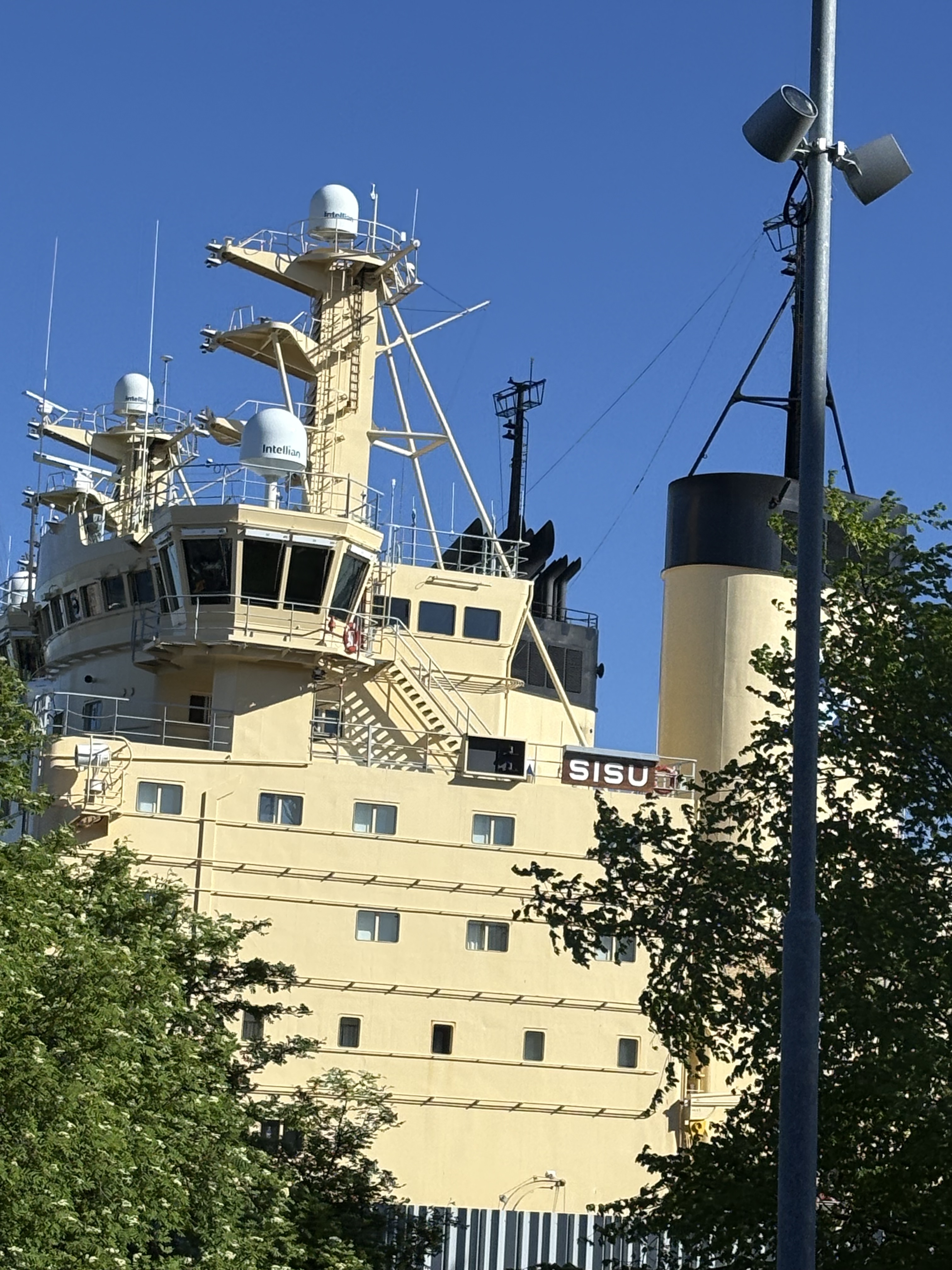
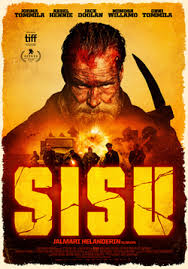
Morning – a coach tour of the city stopping off at various highlights, with our tour manager and a very knowledgeable local guide. We passed by the harbour where the huge icebreakers were moored. One of them is named ‘Sisu’, a Finnish concept that basically means a bloody-minded refusal to accept that you’re beaten. Before visiting, I’d watched a Finnish film of that name, which I reviewed in my recent 2026 on Screen blog – it’s an insane action movie whose hero epitomises Sisu, as he kills extraordinary numbers of Nazis in various brutal and/or inventive ways, whilst himself surviving being blown up, falling out of an aeroplane, not to mention more mundanely being shot, stabbed etc.
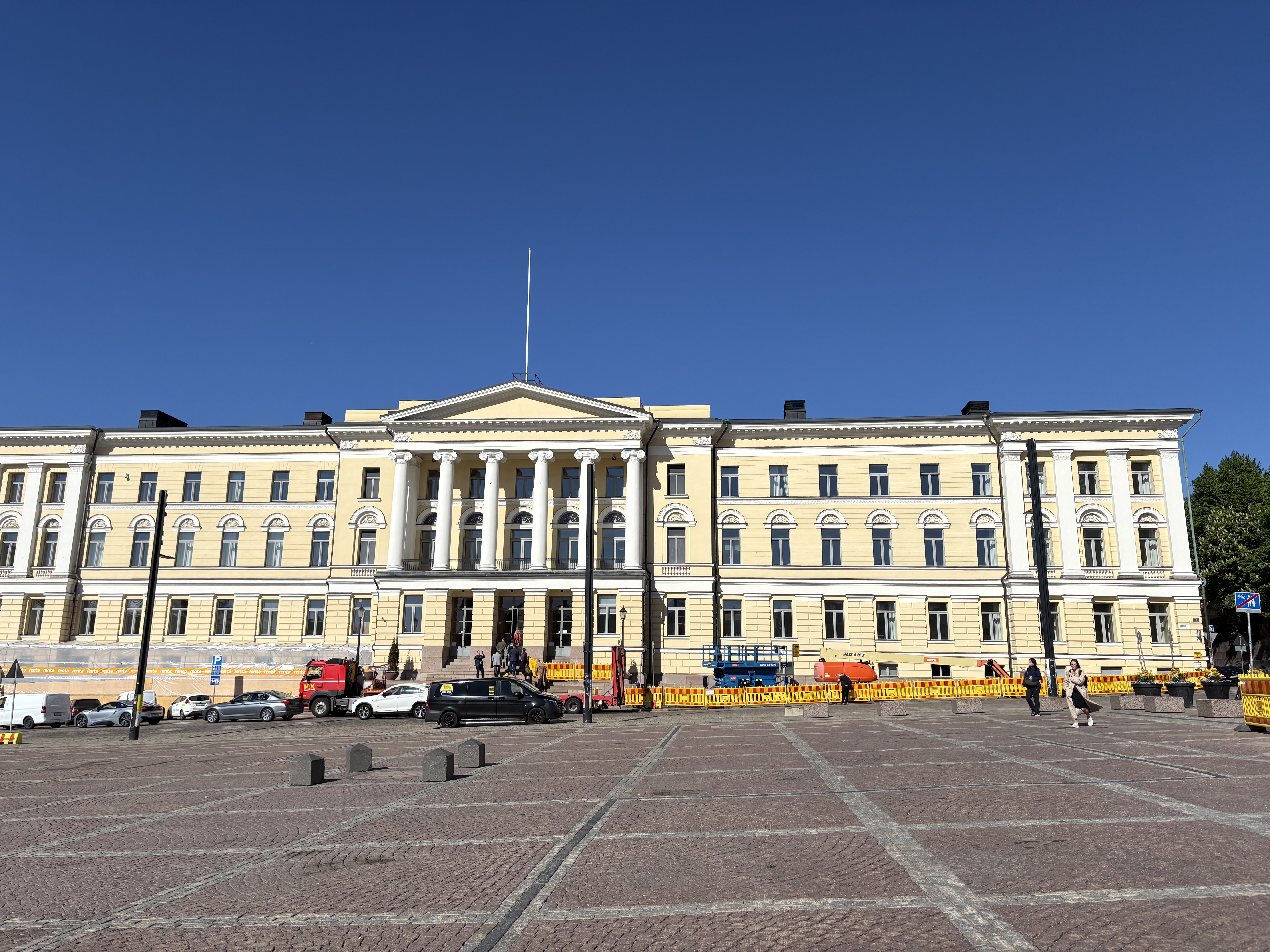
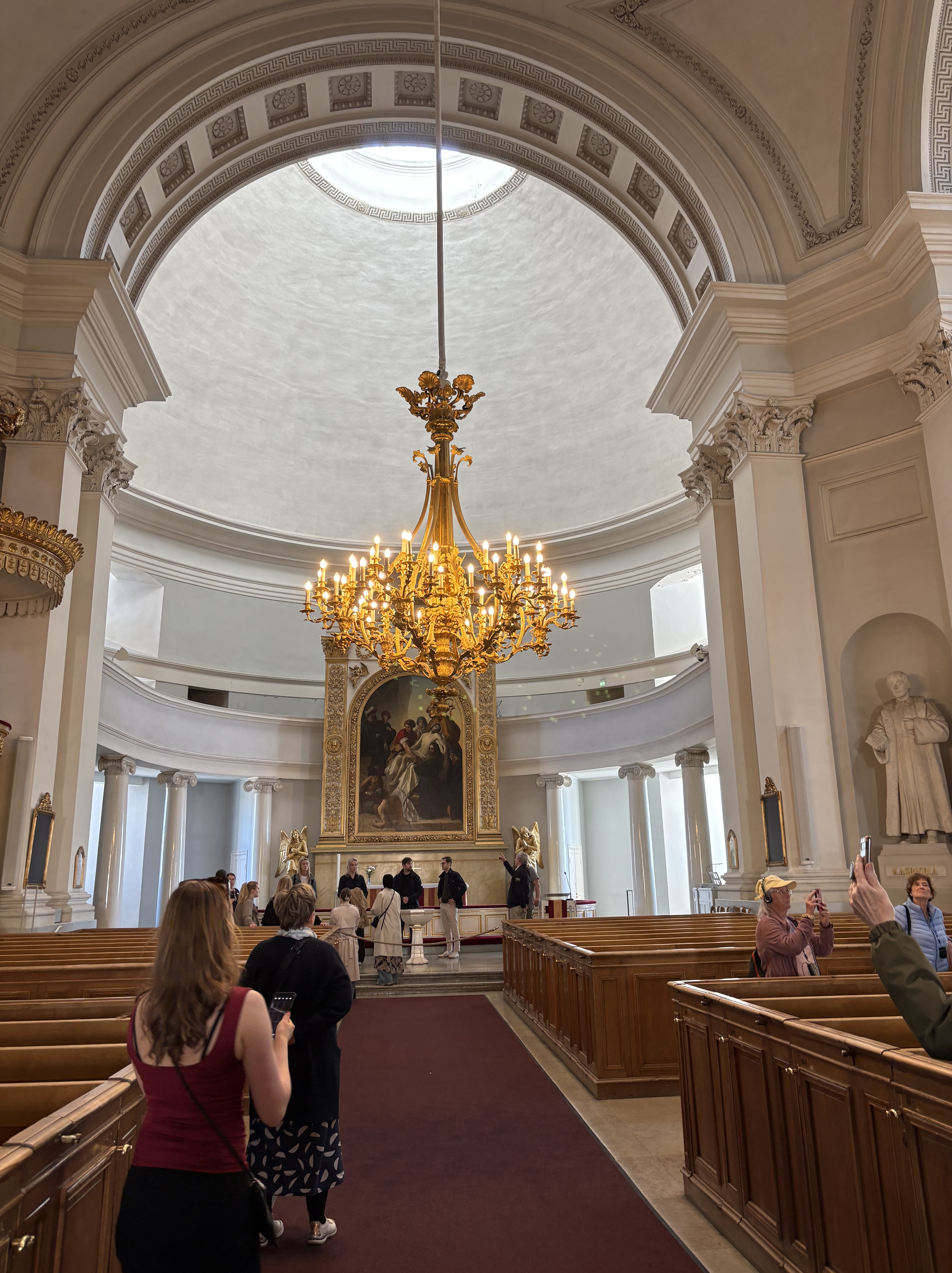
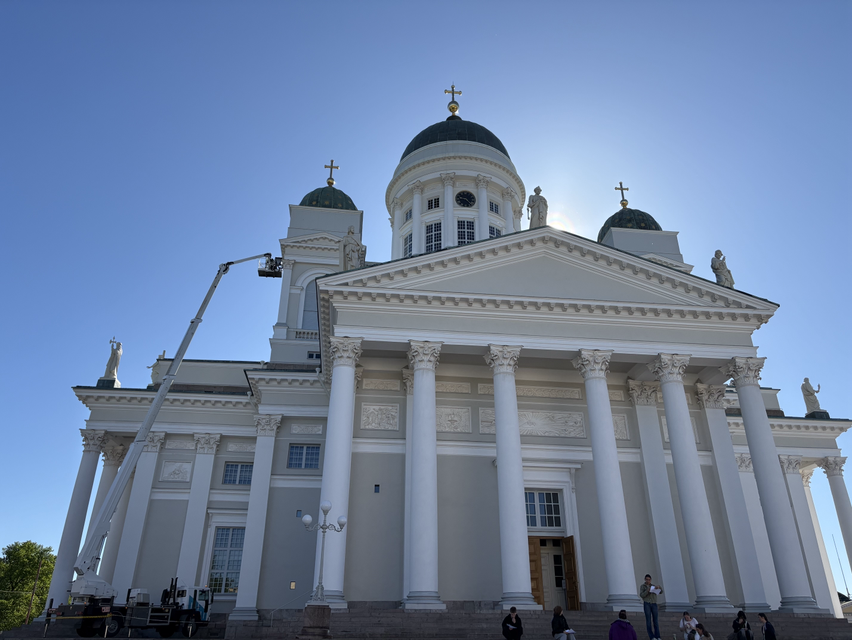
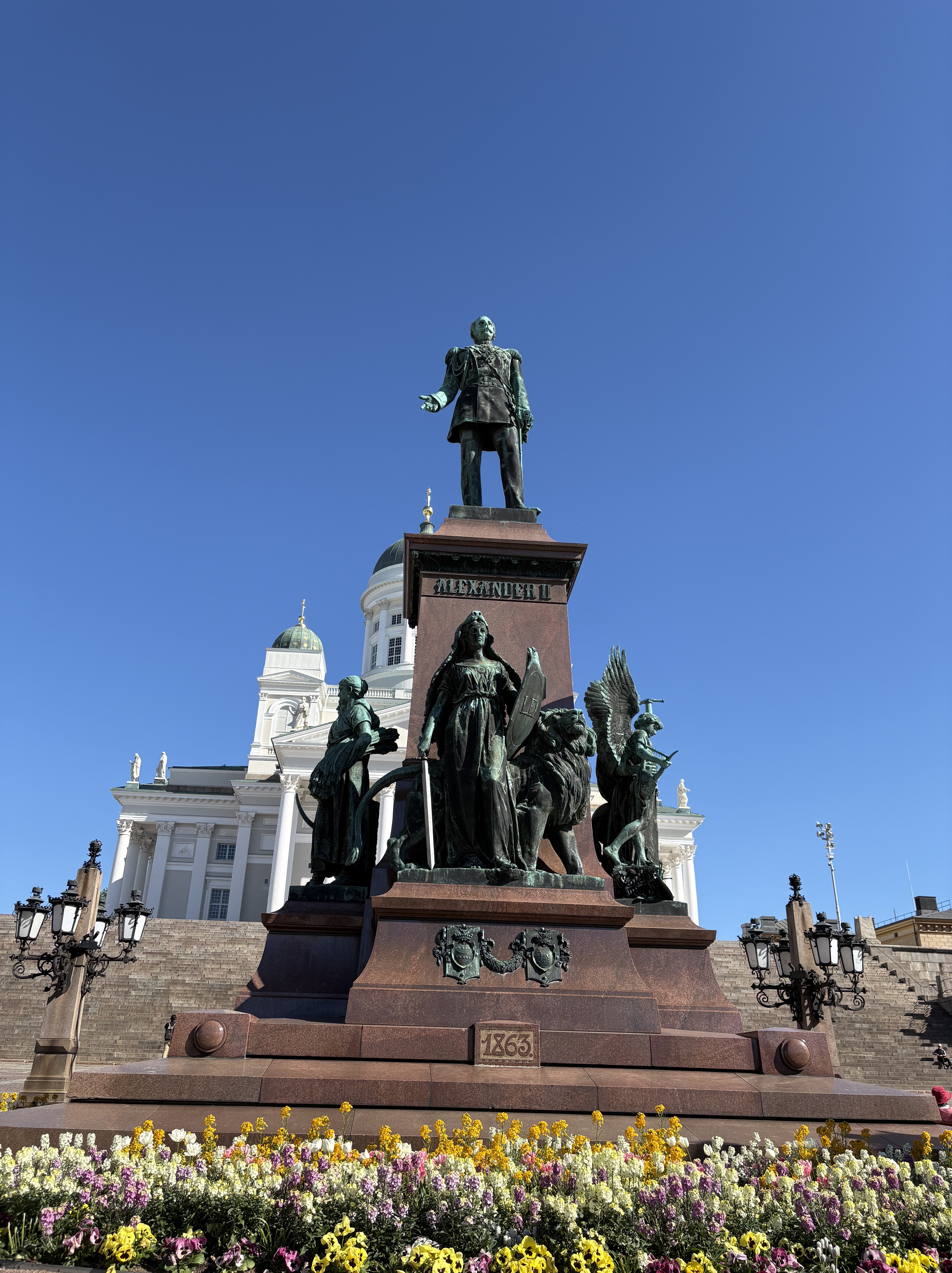
We visited Senate Square and explored Helsinki Cathedral, getting our first lesson in Finnish history, which is broken down into ‘the Swedish times’, ‘the Russian times’, and independence (that last being hard won and threatened primarily by Stalin, hence the Finns’ alliance with Nazi Germany in WWII). These changing eras resulted in churches changing denomination from Lutheran to Eastern Orthodox/Russian Orthodox and back again, with the concomitant changes in design and decorative style. The large yellow building is the Government Palace, the executive office of the Finn government, built in 1822. The statue in the Square is of Tsar Alexander II, who is credited with innovations that gave Finland greater autonomy within his Empire.
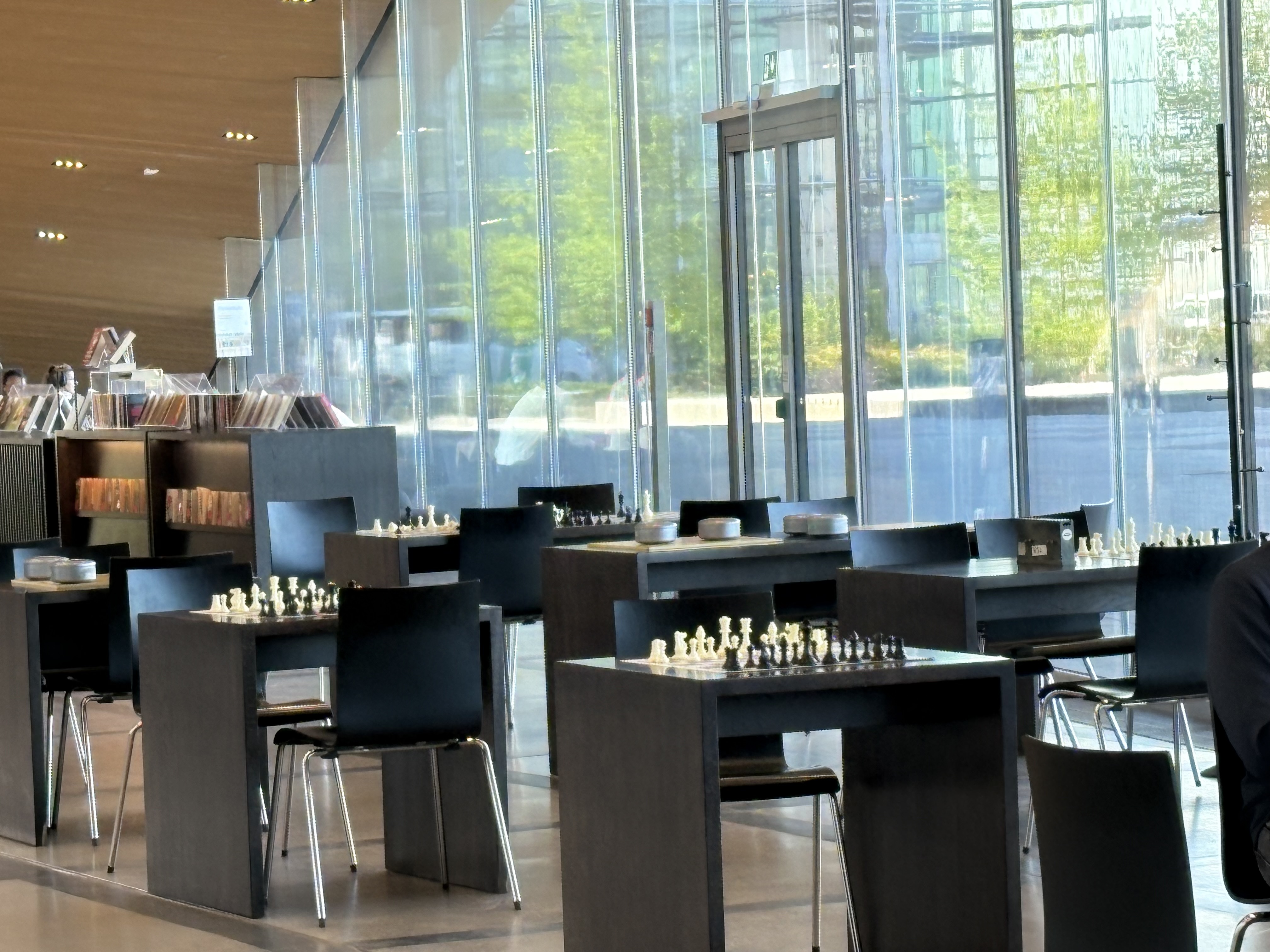
We visited the huge modern library, which was most impressive. When it was being planned, the citizenry of Helsinki were asked what features and facilities they’d like to be provided (assuming books and other printed and recorded media as a given) and the popular suggestions are now there for people to use. There’s a floor where chess tables are set out so people can come in and have a game, there are 3D printers, sewing machines, recording studios… I do know that Finns pay higher tax than we do but given the parlous state of so many libraries over here that rely on volunteers to keep going, I think the consensus amongst the group was that it might be worth it!
Sibelius Park is, it will be no surprise to learn, named after the Finnish composer. I listened to a lot of his music before and after the trip. The focus of our visit was the Sibelius memorial, Eila Hiltunen’s ‘Passio Musicae’, which the website says ‘is made unique by its spatial diversity of the work, allowing the viewer to enter it, and the echoes and sounds generated by the structure. Viewed from further away, its form blends in with the woods and rugged rocks’. We were asked what we thought had inspired the form of the piece and I think everyone thought or said organ pipes, but we were told rather firmly that this was not so, that it was a depiction of nature, and of trees in particular (the silver birch is Finland’s national tree). I felt (but did not say) that this rather underestimated the way in which artists may be inspired by and combine in their work different things, and that given the title of the work, and the strong connection to nature felt by its human subject, both organ pipes and silver birch trees could be inspirations. The bust of Sibelius is by the same artist.
We got lots of snippets of Finnish history and culture from the local guide. She reminded us that Finland is consistently rated as one of the world’s happiest countries, and we heard various views as to why this might be (we might have wondered, given the long, dark and bitterly cold winters). It’s attributed to Sisu (see above), to a minimalist approach – between too much and too little is just right, to the ability to cope with contrasts (the long dark winter nights and the summer ‘white nights’), to a tendency to modesty about their own and their nation’s achievements, to the welfare state which provides well for all citizens (albeit with higher taxation), to the affinity with nature, particularly with the country’s abundance of forests and lakes. And then there’s sauna culture – there’s apparently one sauna for every two citizens, and it’s part of everyday life and credited with all sorts of benefits for physical and mental health. Coffee and vodka also play a part – I had plenty of the former, but steered well clear of the latter. There was a good range of beers (including at one location the lovely dark Czech Kozel beer that A and I drank in Prague) at lots of the bars, which we enjoyed in the evenings. Oddly, tar was mentioned as a source of Finn healthiness – very counter-intuitive if one thinks of the stuff they use on roads or that is found in cigarettes, but turns out it’s a by-product of burning wood, particularly pine. I’m still not convinced, but if I go again I might try some sweets with ‘terva’, just the once. An old Finnish proverb says, ‘If sauna, vodka, and tar won’t help, the disease is probably fatal’.
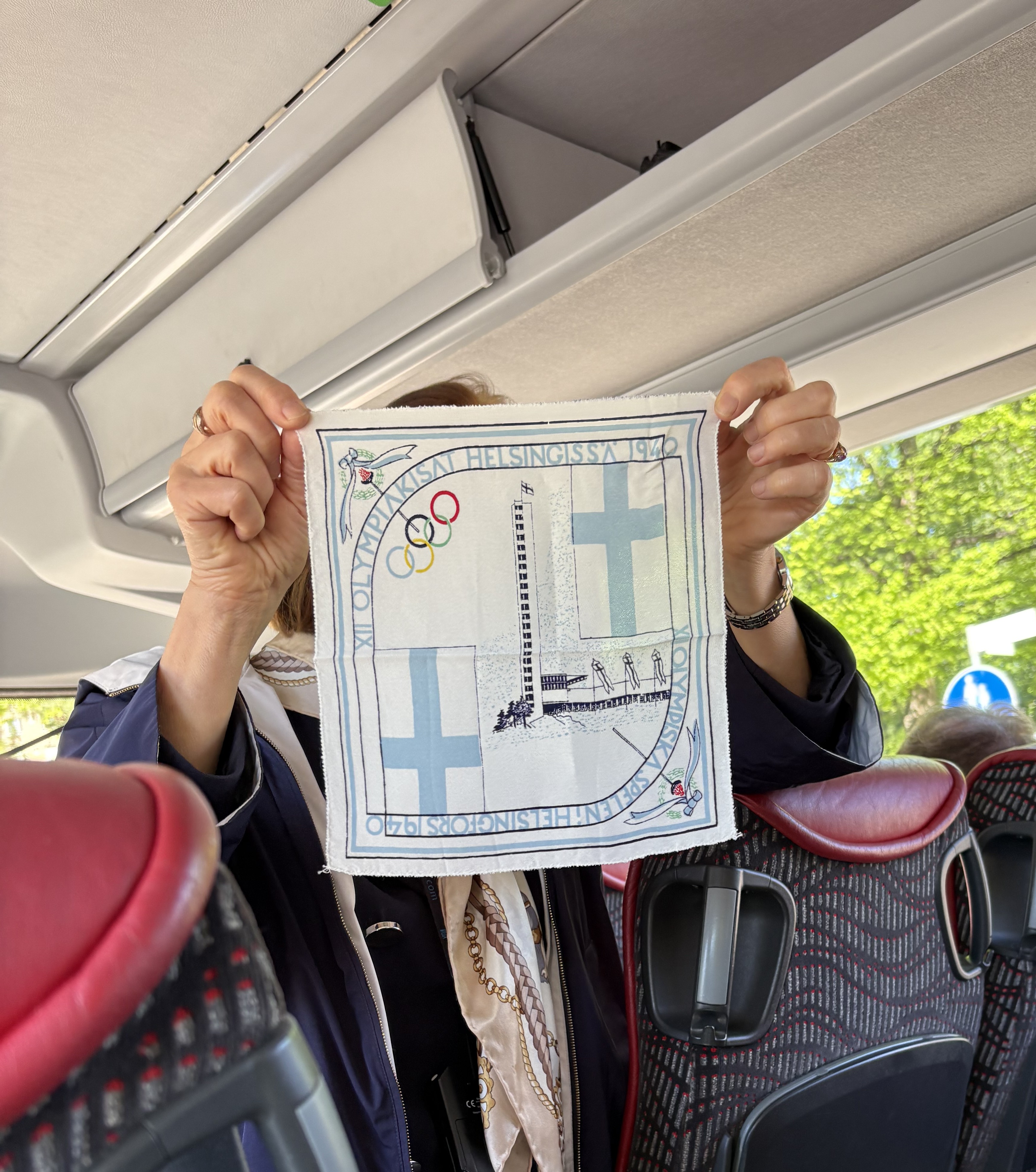
Our guide also showed us a souvenir handkerchief from the 1940 Olympics. The Olympics were originally due to take place in Japan, but relocated to Helsinki after the Sino-Japanese war broke out and then cancelled altogether. These souvenirs were repurposed and sold to support the war effort.
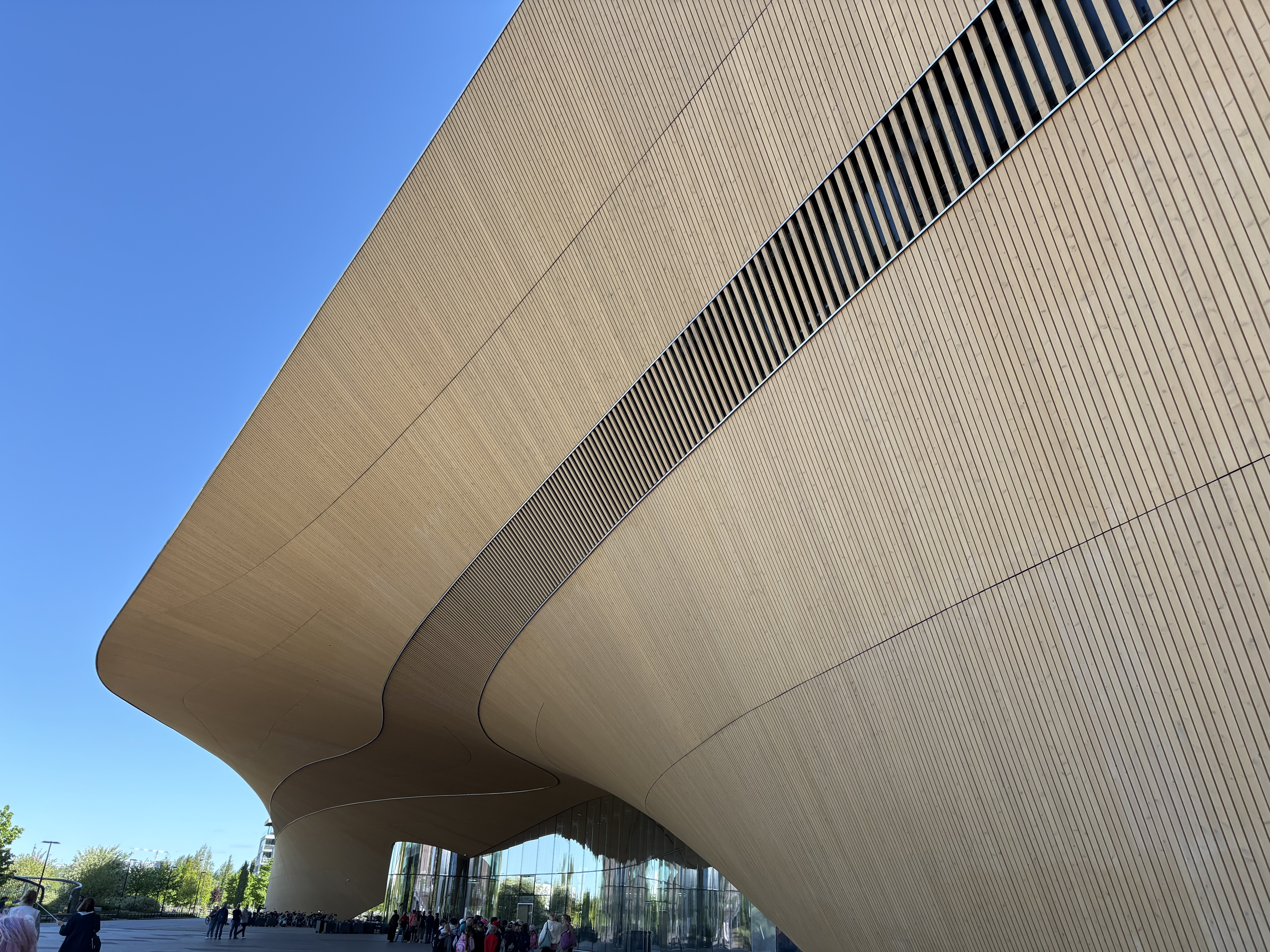
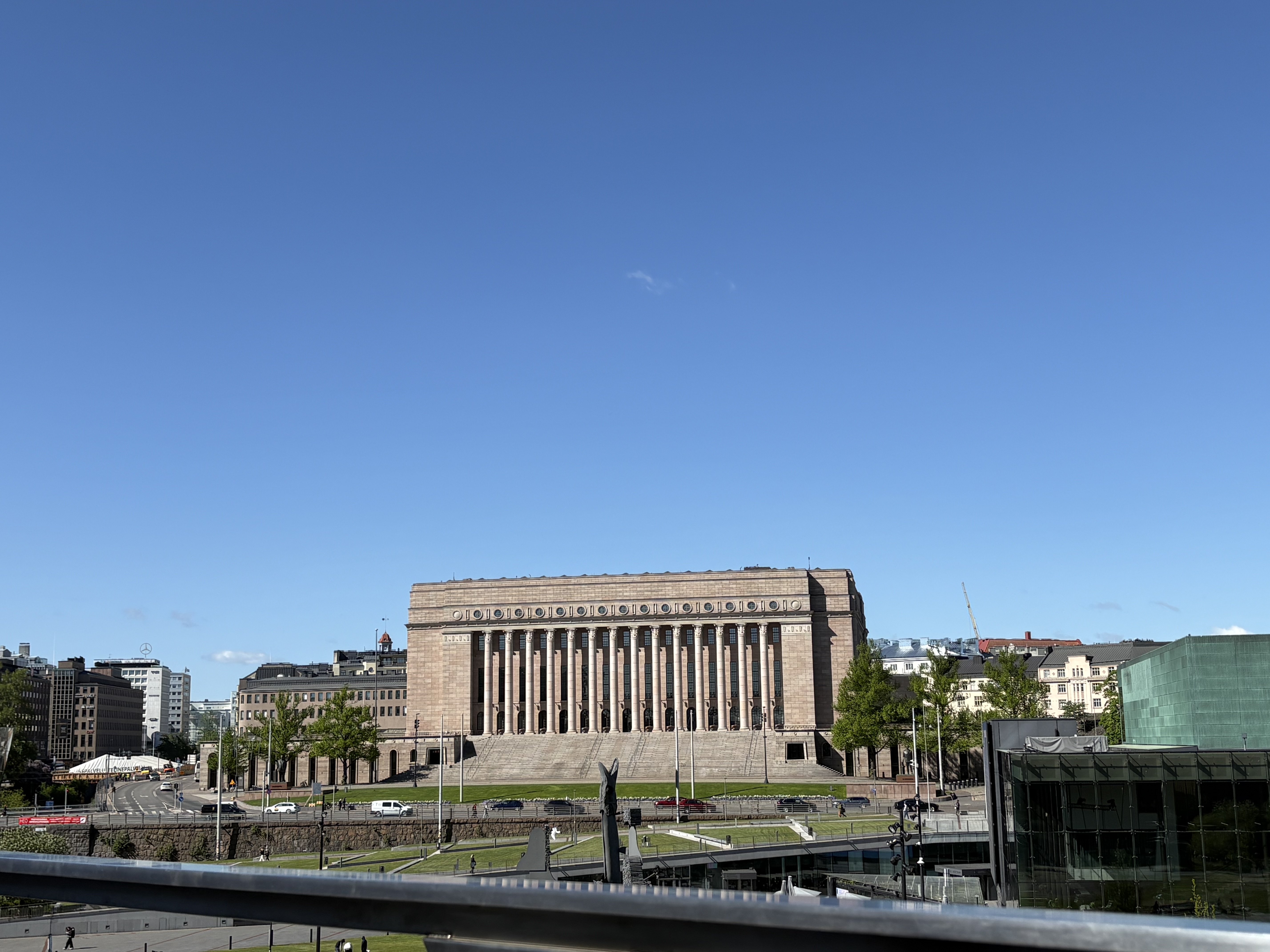
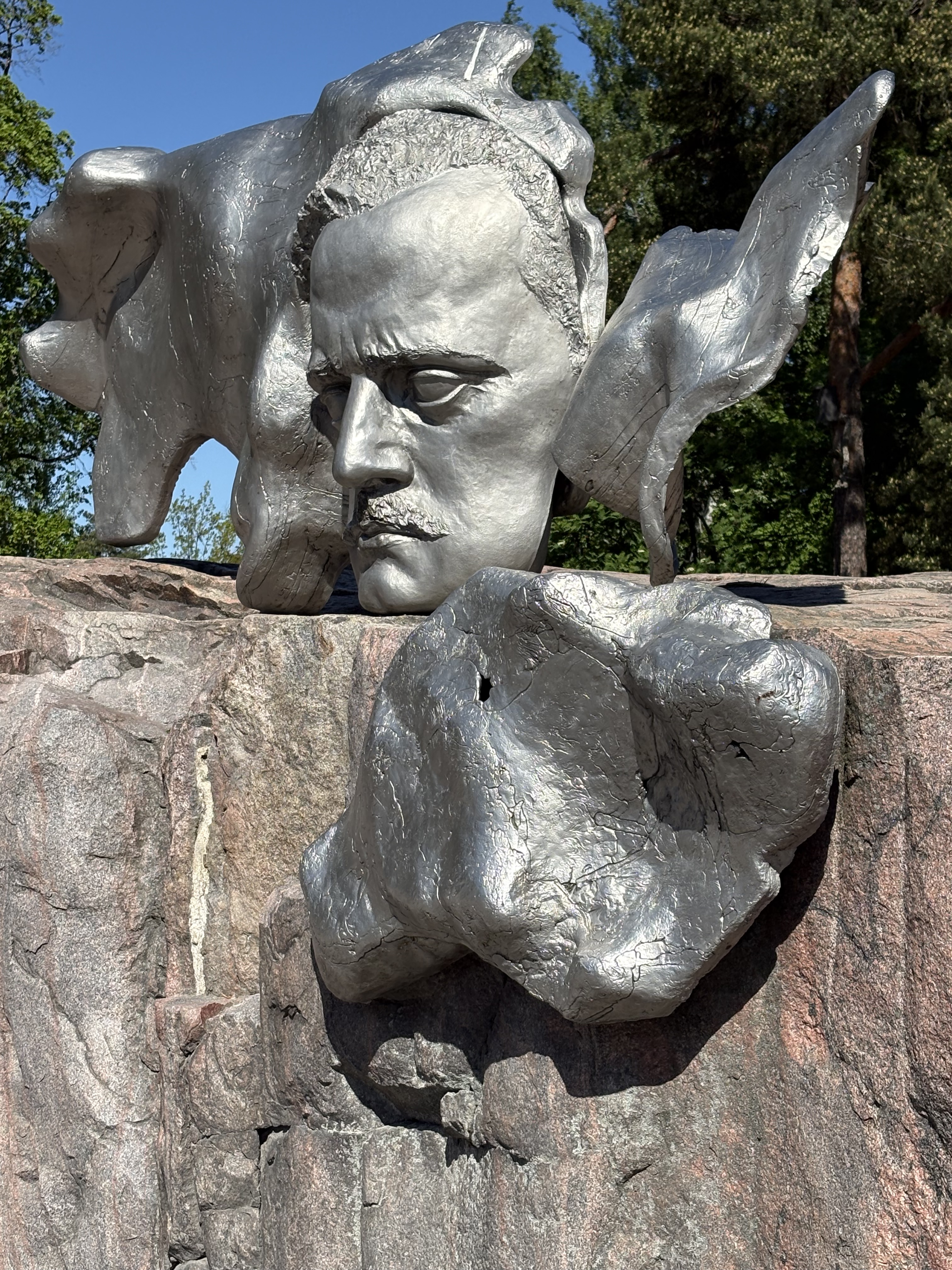
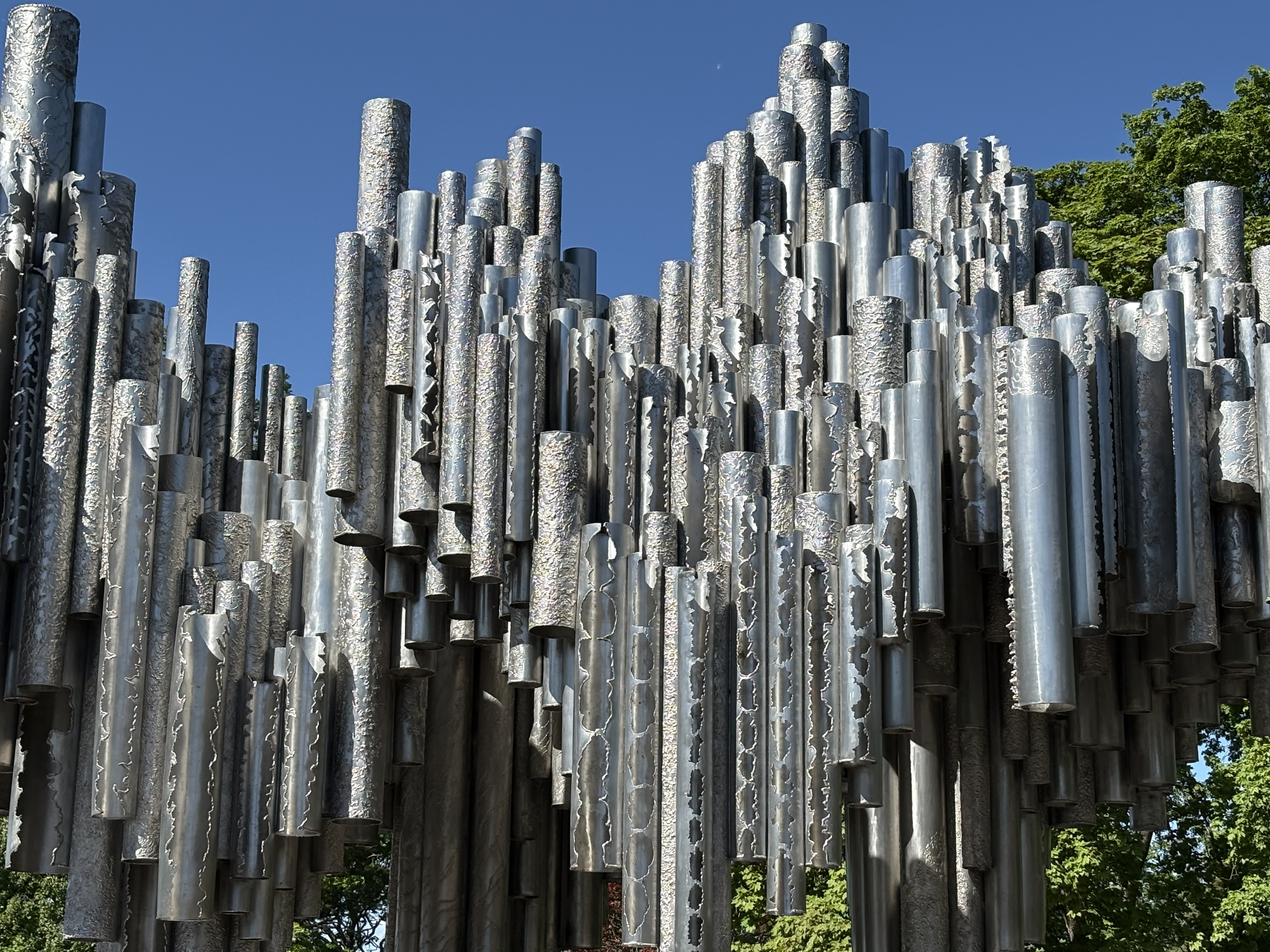
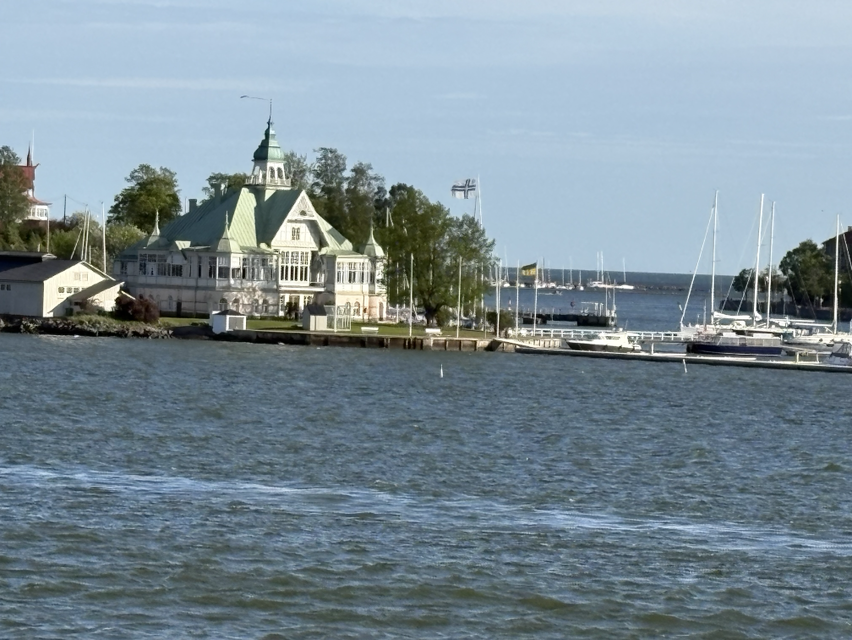
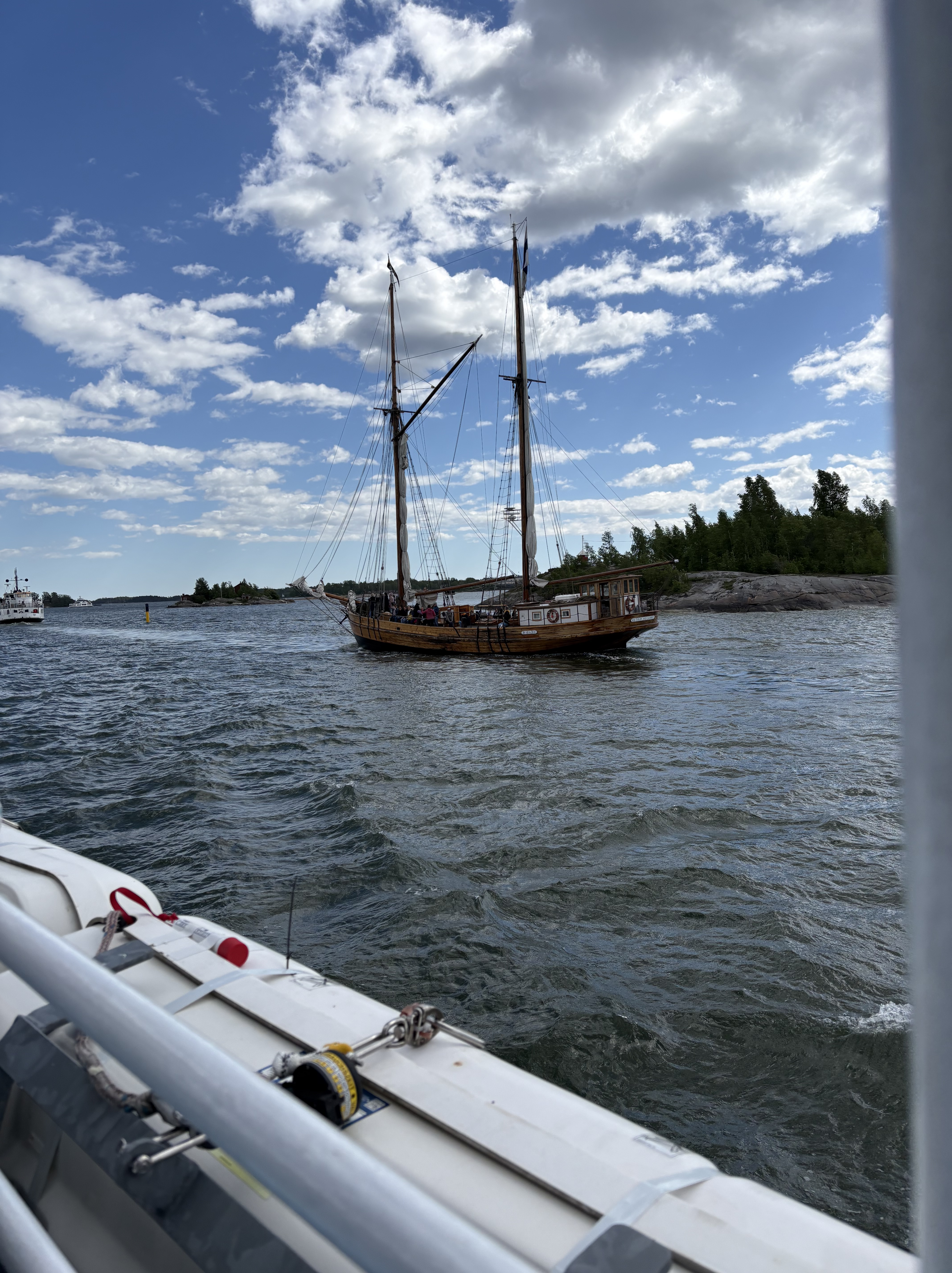
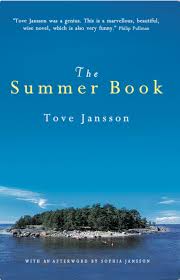
After the guided tour we were free to explore, and Anna, Janet and I immediately booked to go on a boat ride around the archipelago. It was beautiful – so many islands, some barely big enough for a couple of people to stand on, others with summer houses, and a group of islands linked by bridges which we toured properly on Day 3. It was a lovely experience, very peaceful. I was reading Tove Jansson’s The Summer Book whilst in Helsinki, which is set on one of these islands, on one summer after a bereavement. Having seen Helsinki from the water, Anna and I then hopped on the Skywheel and saw it from much higher up.
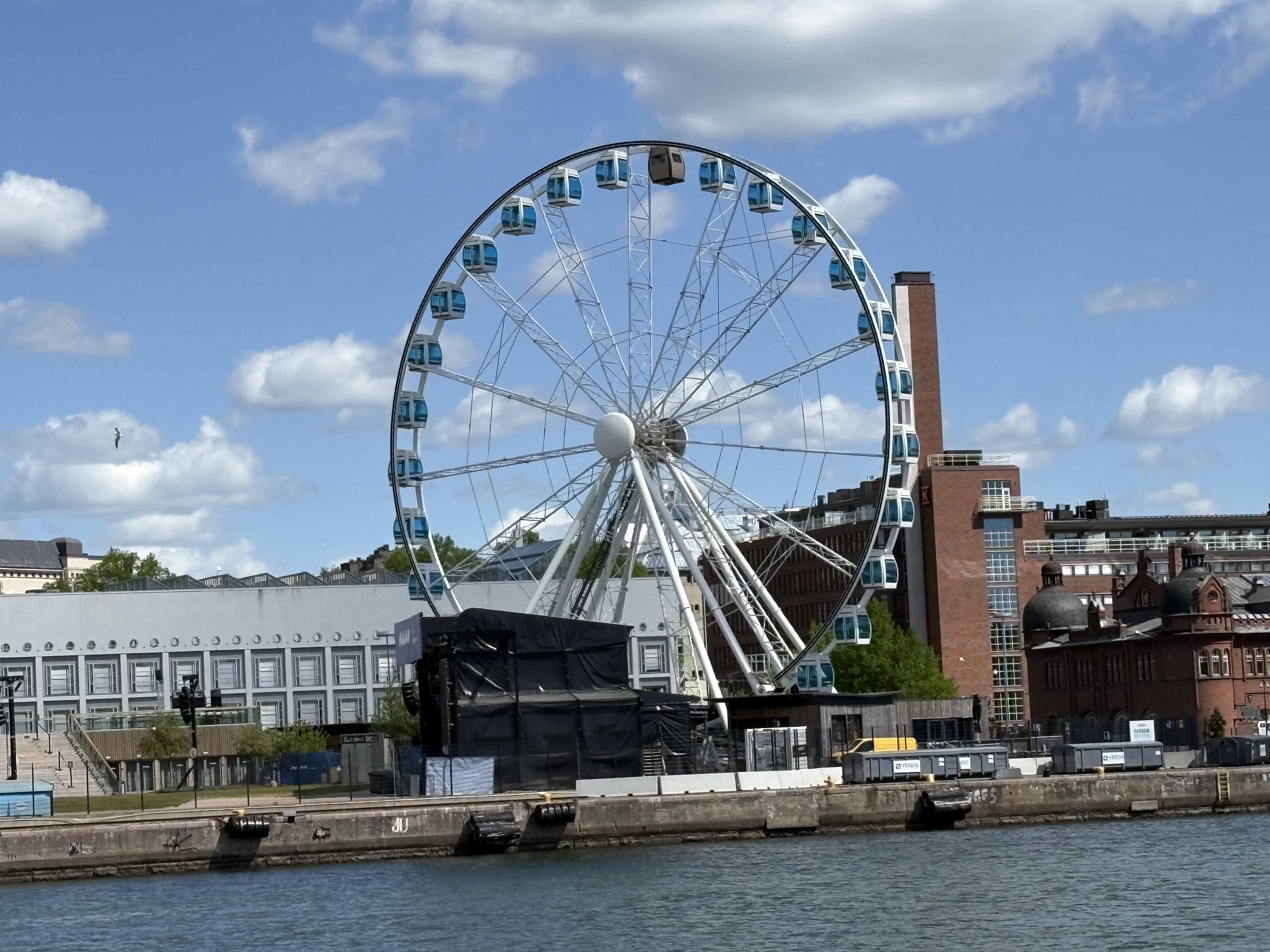
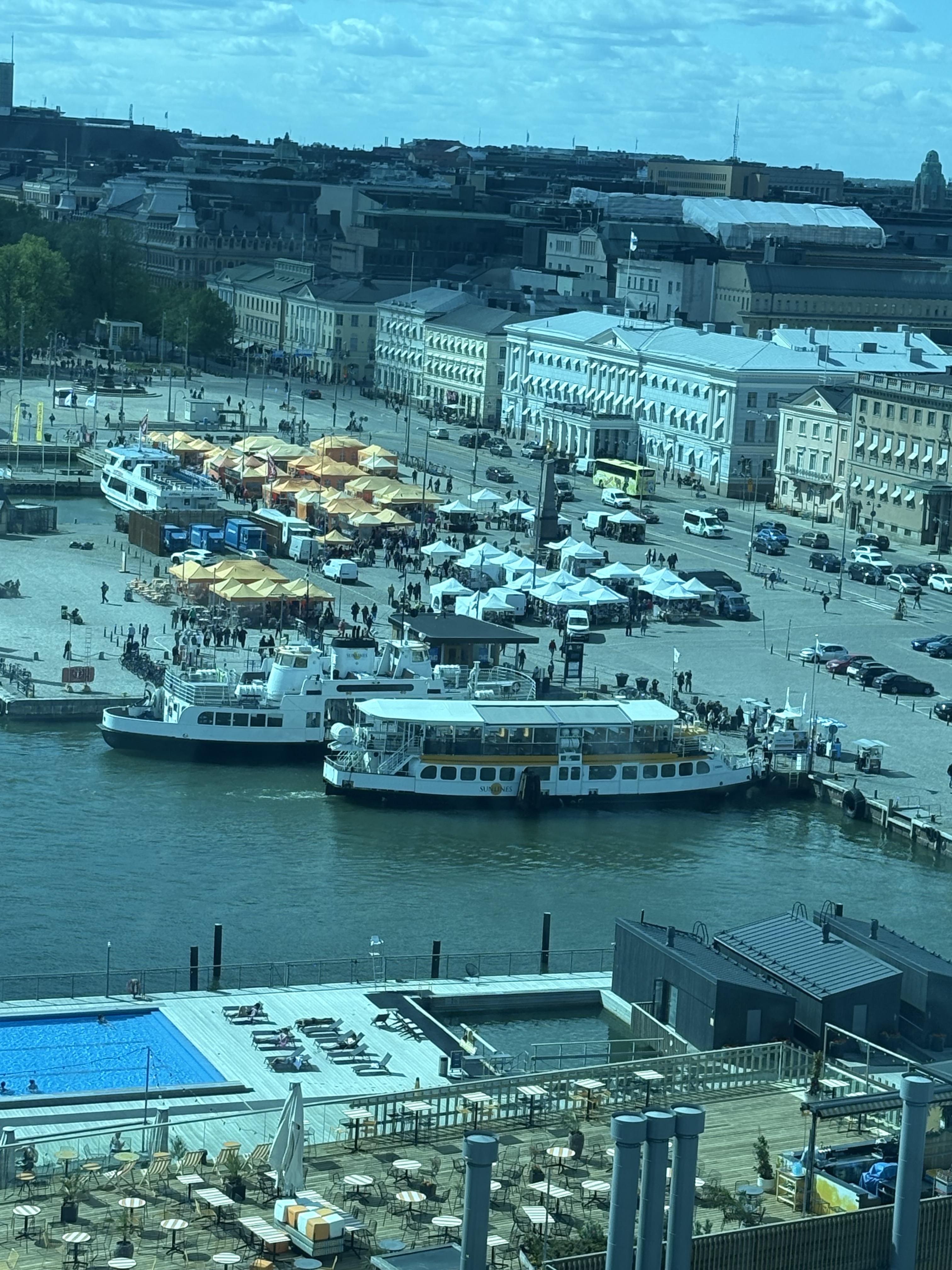
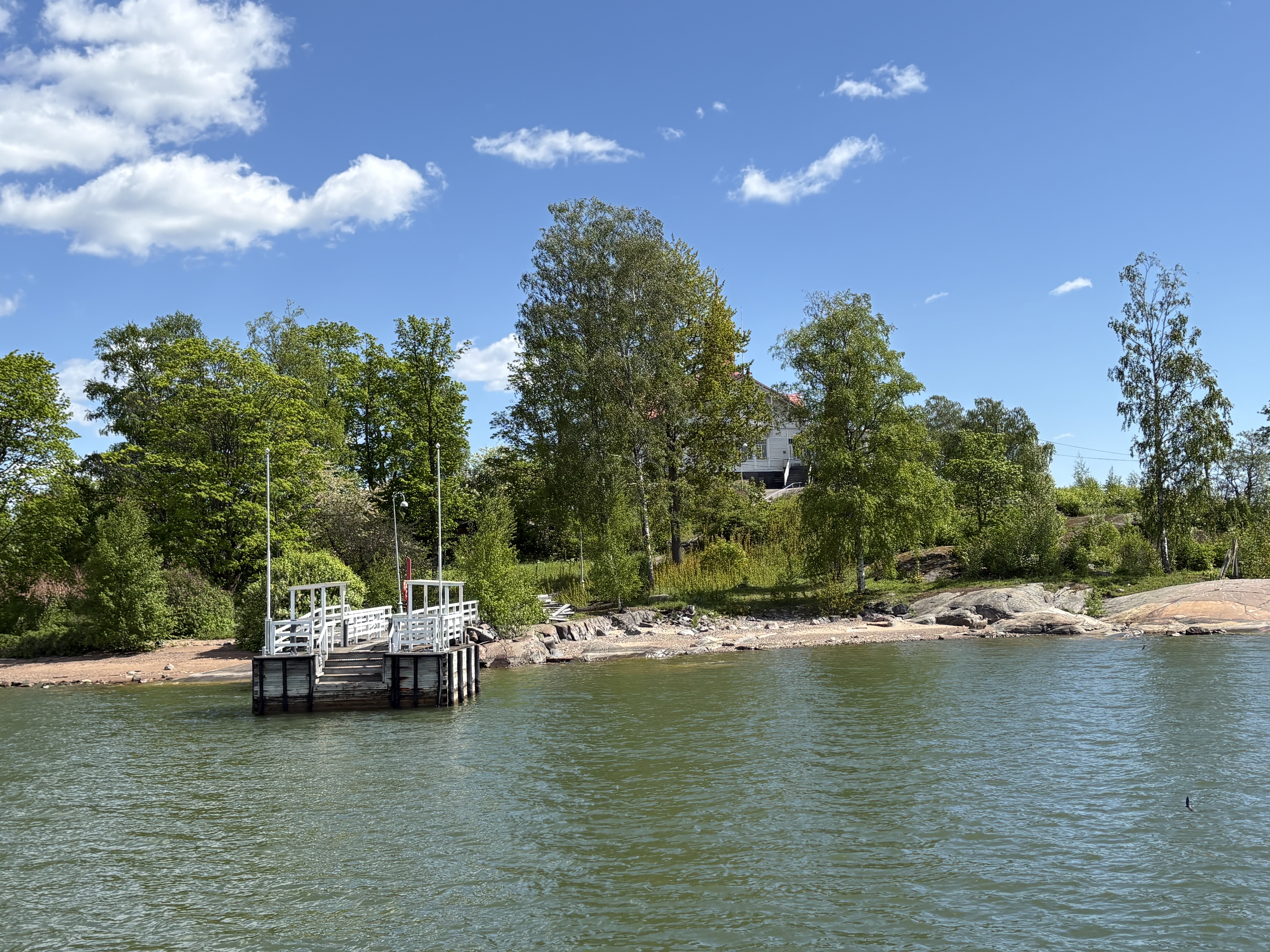
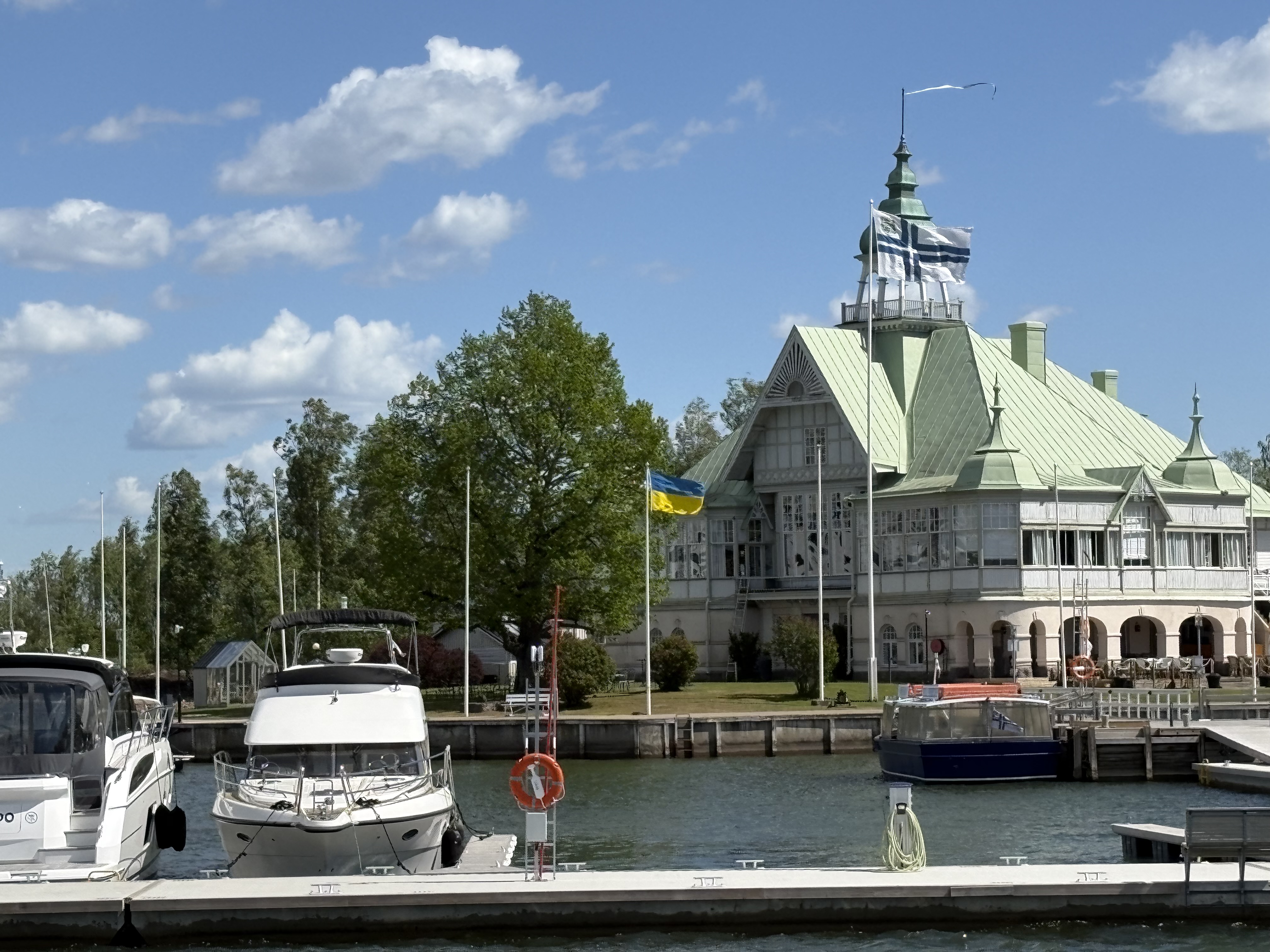
Day 3
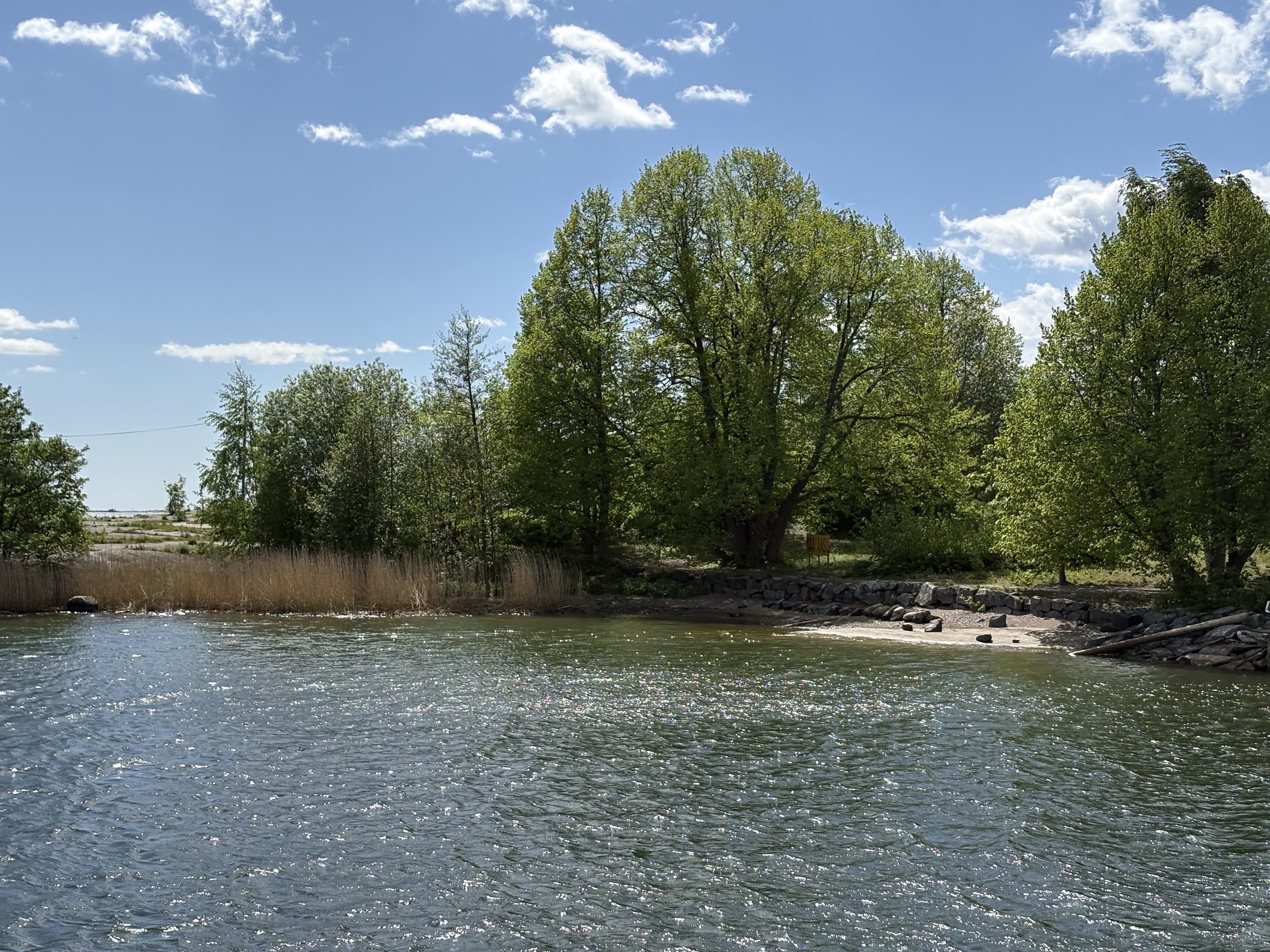
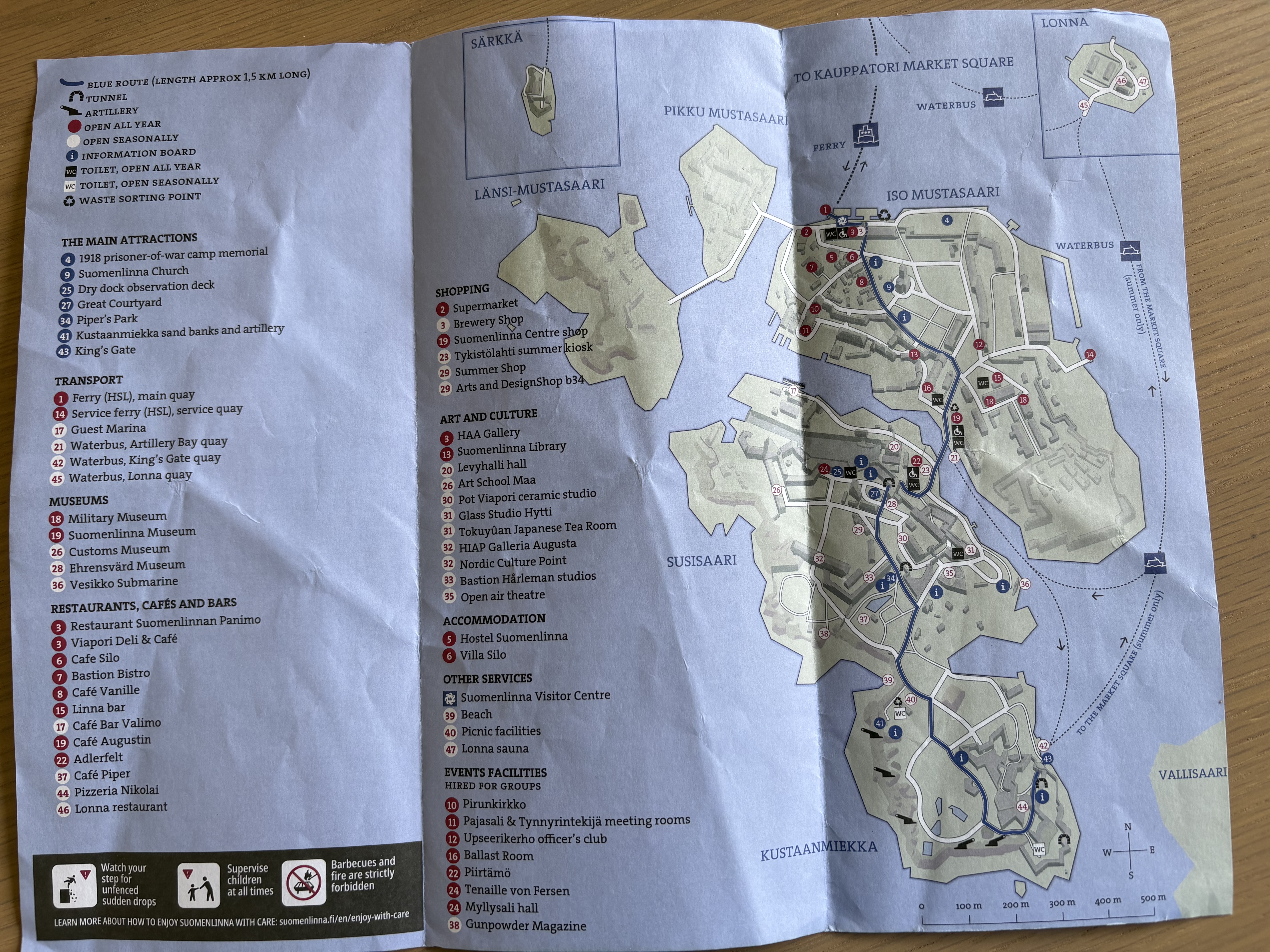
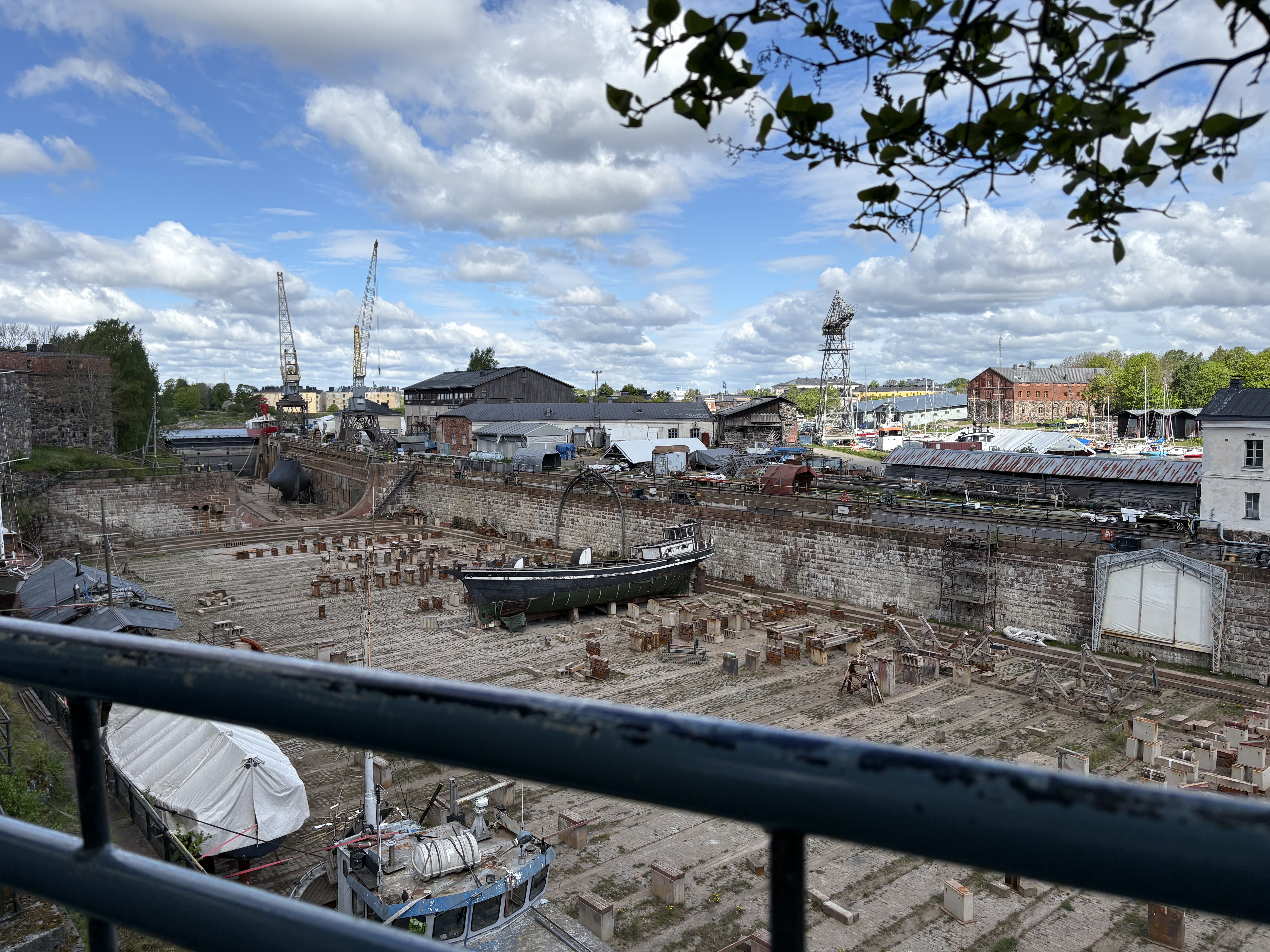
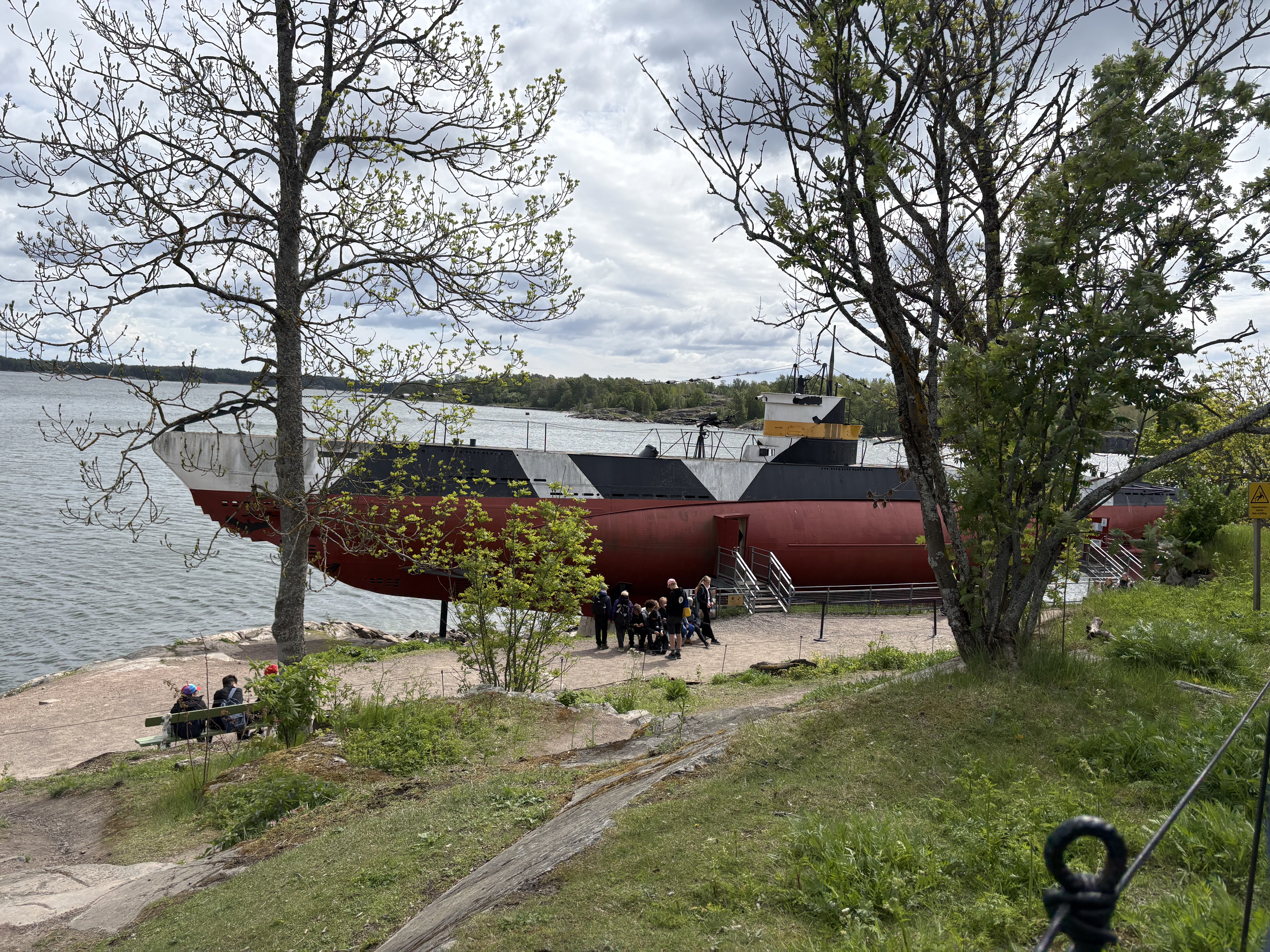
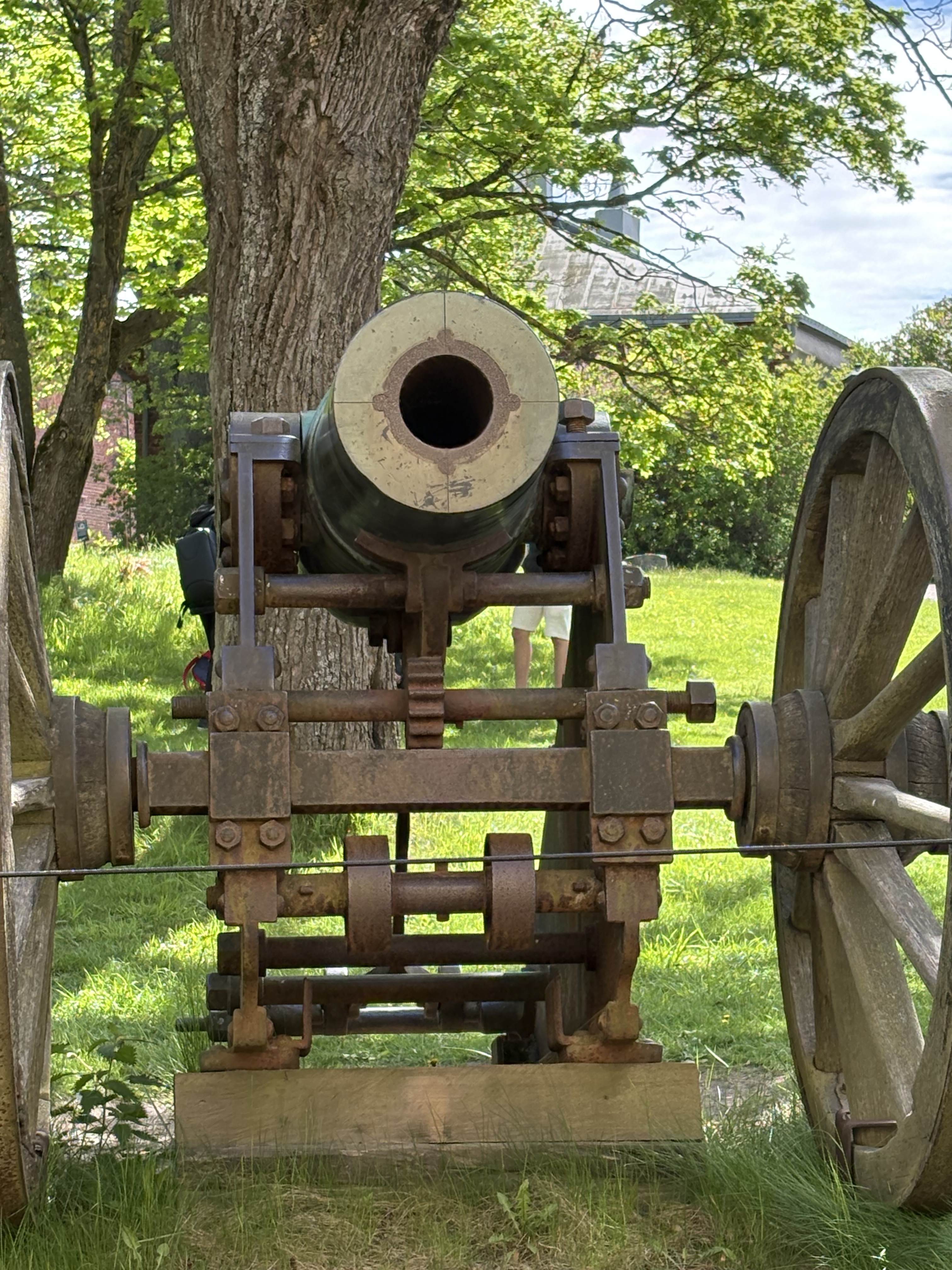
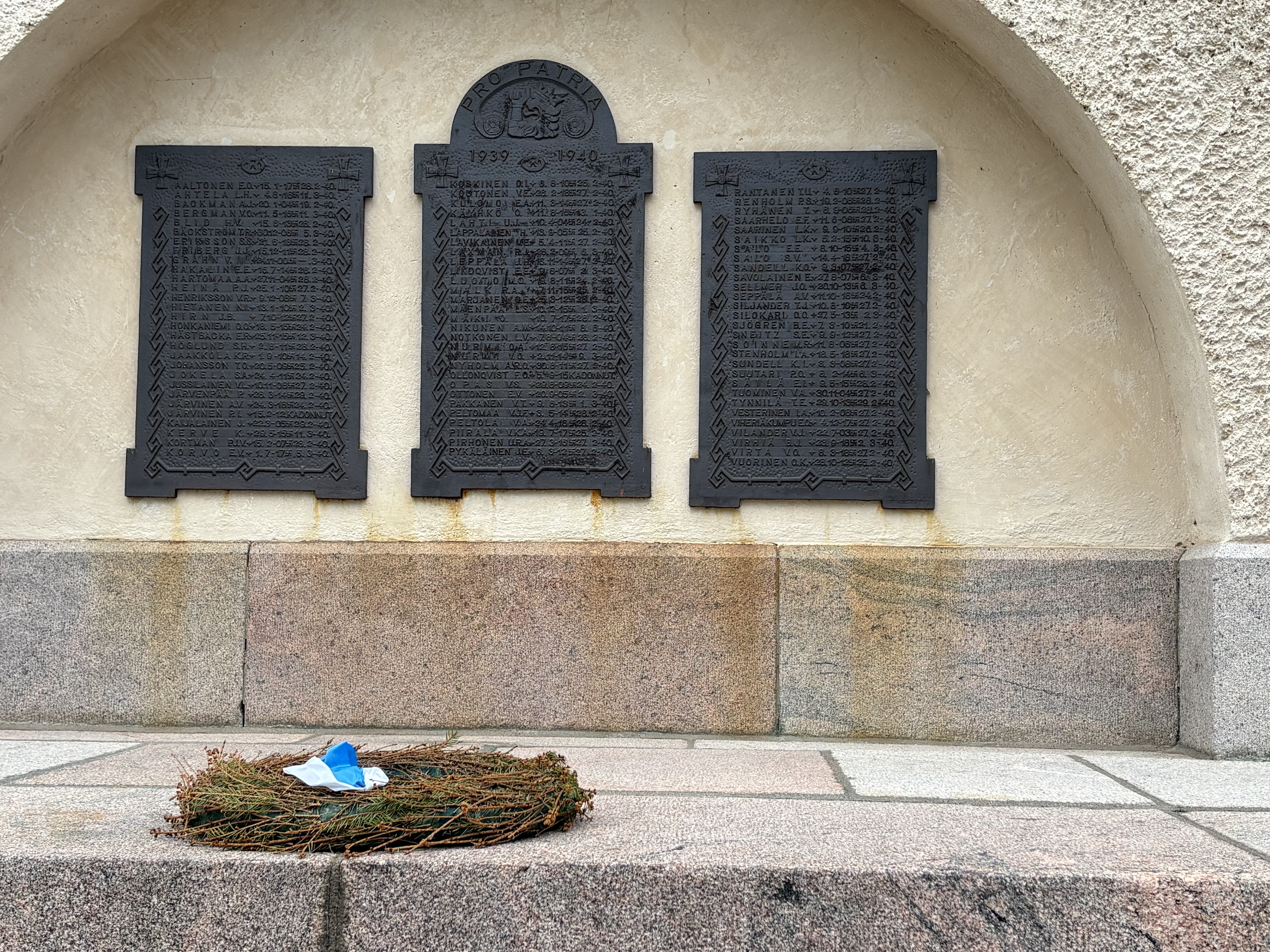
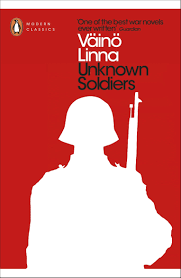
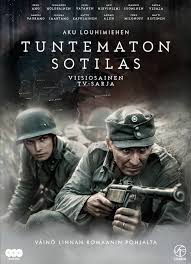
The next day we were back on the water again, for a guided tour of Suomenlinna, ‘Fortress of Finland’. Here our ‘local’ guide turned out to be from Northern Ireland, but despite a distinct lack of Finnishness was entertaining and informative. Note that Finnish history in relation to Sweden and Russia is complicated. I hankered after some kind of flow chart or spreadsheet just to work out who was in charge and who was fighting whom at any given time. Suomenlinna is eight islands, across six of which the Swedes built a fortress (designed by Augustin Ehrensvärd in 1748 to protect against the Russian Empire). Despite being spread across a group of islands, the plan was based on Vauban’s star model of the bastion fortress (I know a bit about this from W G Sebald’s Austerlitz, oddly enough). Not a stellar success, as the fort surrendered to the Russians in 1808 after a siege. There are apparently many theories as to why it yielded so easily, ranging from complex conspiracy to straightforward incompetence, but our guide tended to favour the secure and prosperous future which the Russians offered to the chap in charge if he gave up without too much of a fight (not much Sisu in evidence). The Russians continued to develop the site, until Finland won their independence in 1917. In the aftermath of the Finnish Civil War, the islands housed a prison camp at which over 1,000 of the 10,000 Red Guards imprisoned there died. It was then a Finnish garrison, but was a base for anti-aircraft and artillery units and for the submarine fleet during the Winter War (Finland v USSR, 1939-40) and German military forces were stationed there during the Continuation War (Finland & Germany v USSR, 1941-44). I could go on at great length about Finland’s WW2 history but with commendable restraint I will refer you instead to Wikipedia, and to Väinö Linna’s excellent novel Unknown Soldiers which deals with the experiences of ordinary soldiers during the Continuation War (there’s also a very good film adaptation).
Across the islands, linked by bridges, there are barracks, merchants’ quarters, the King’s Gate (entrance to the fort), defensive walls, a munitions depot, a dry dock, artists’ studios, museums and a church. The church is notable for doubling as a lighthouse – it is now Lutheran and accordingly austere, but was originally Orthodox with onion domes. Amongst it all are cannons and a submarine, built before WW2 using German expertise on the premise that it wasn’t going to be a weapon of war, and by the time the Finns were allied with the Germans in the Continuation war it only managed one victory, sinking a Soviet merchant ship. One can go inside but having been forewarned of what a claustrophobic experience it was, I decided against.
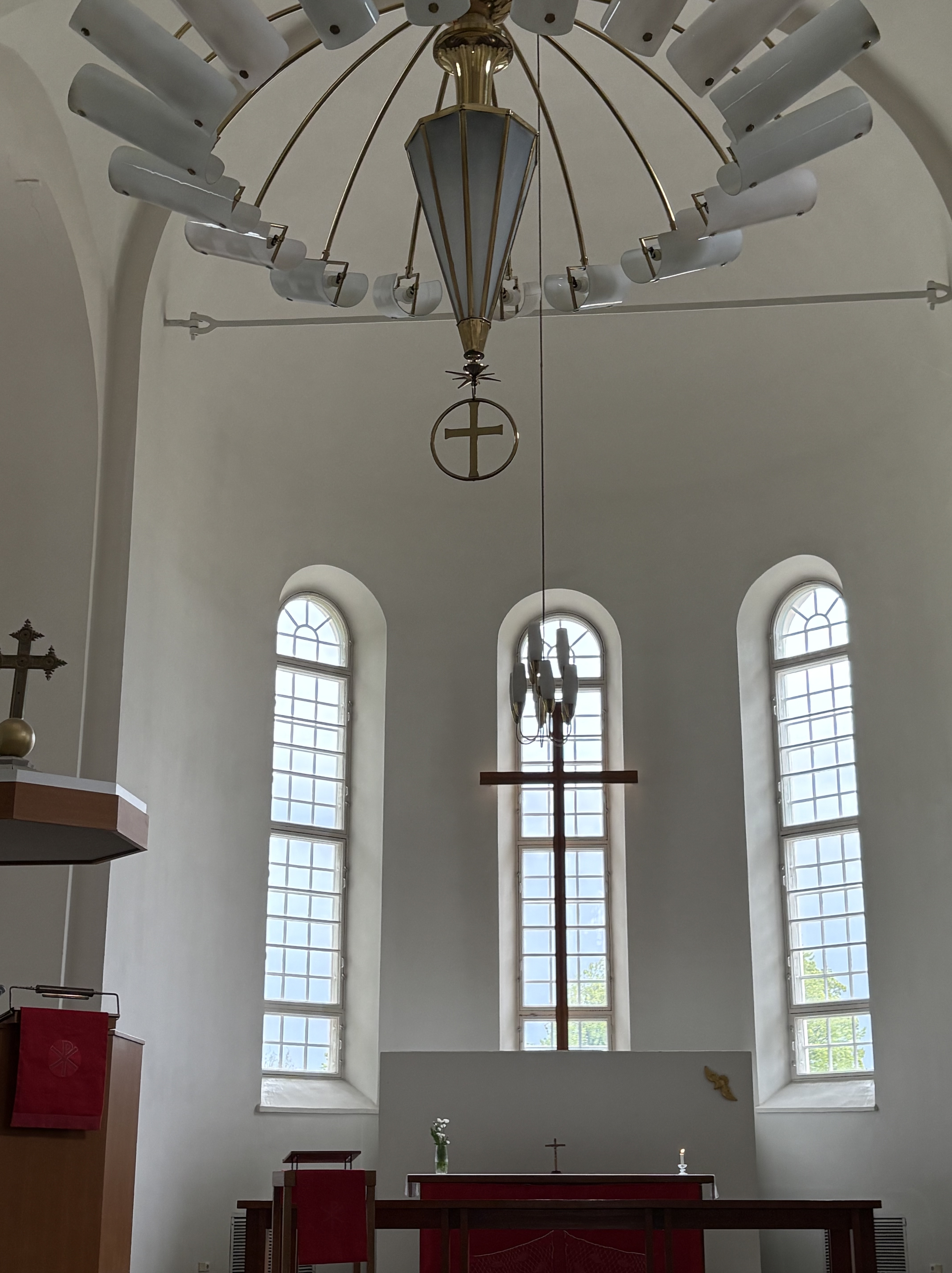
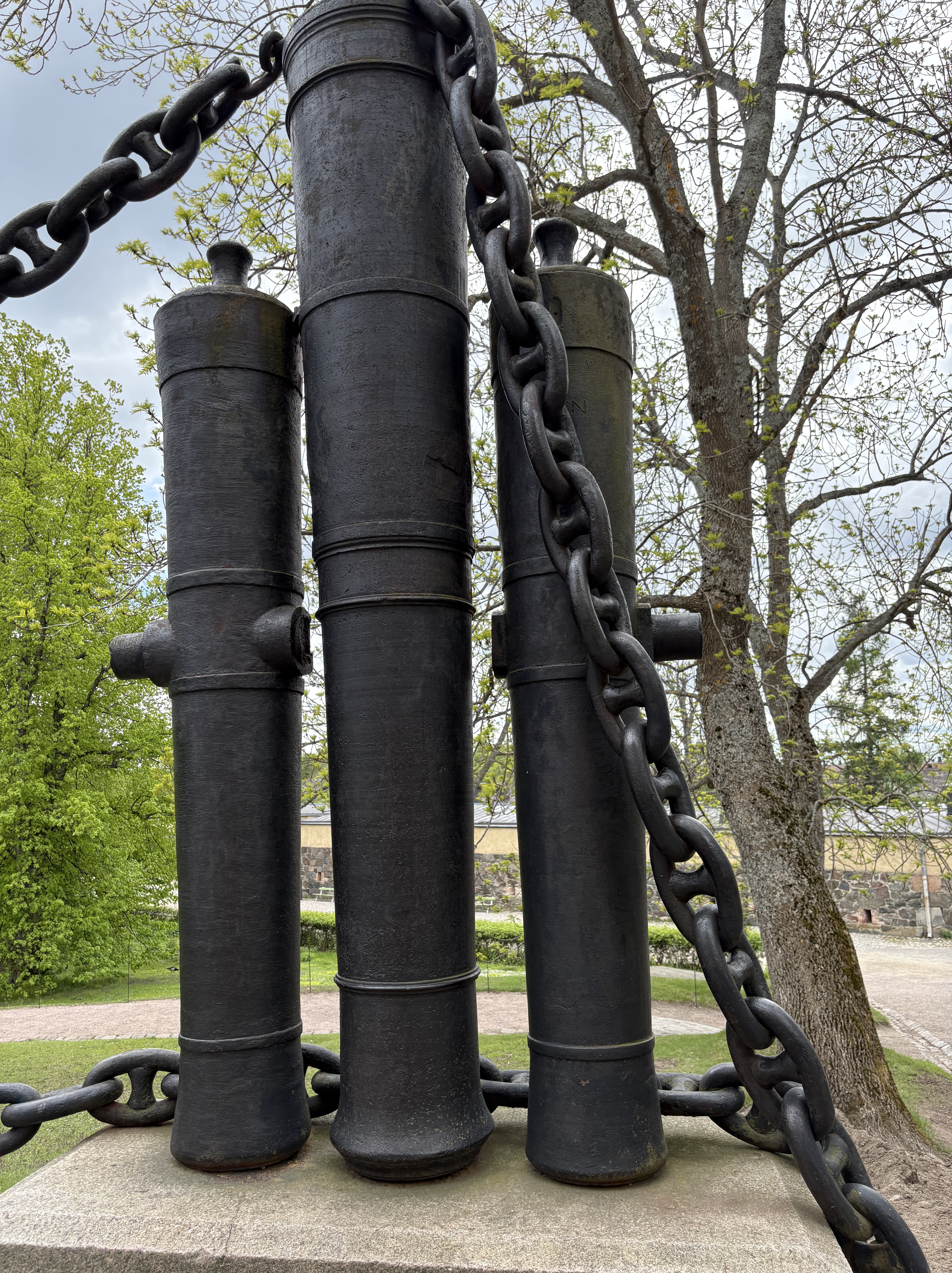
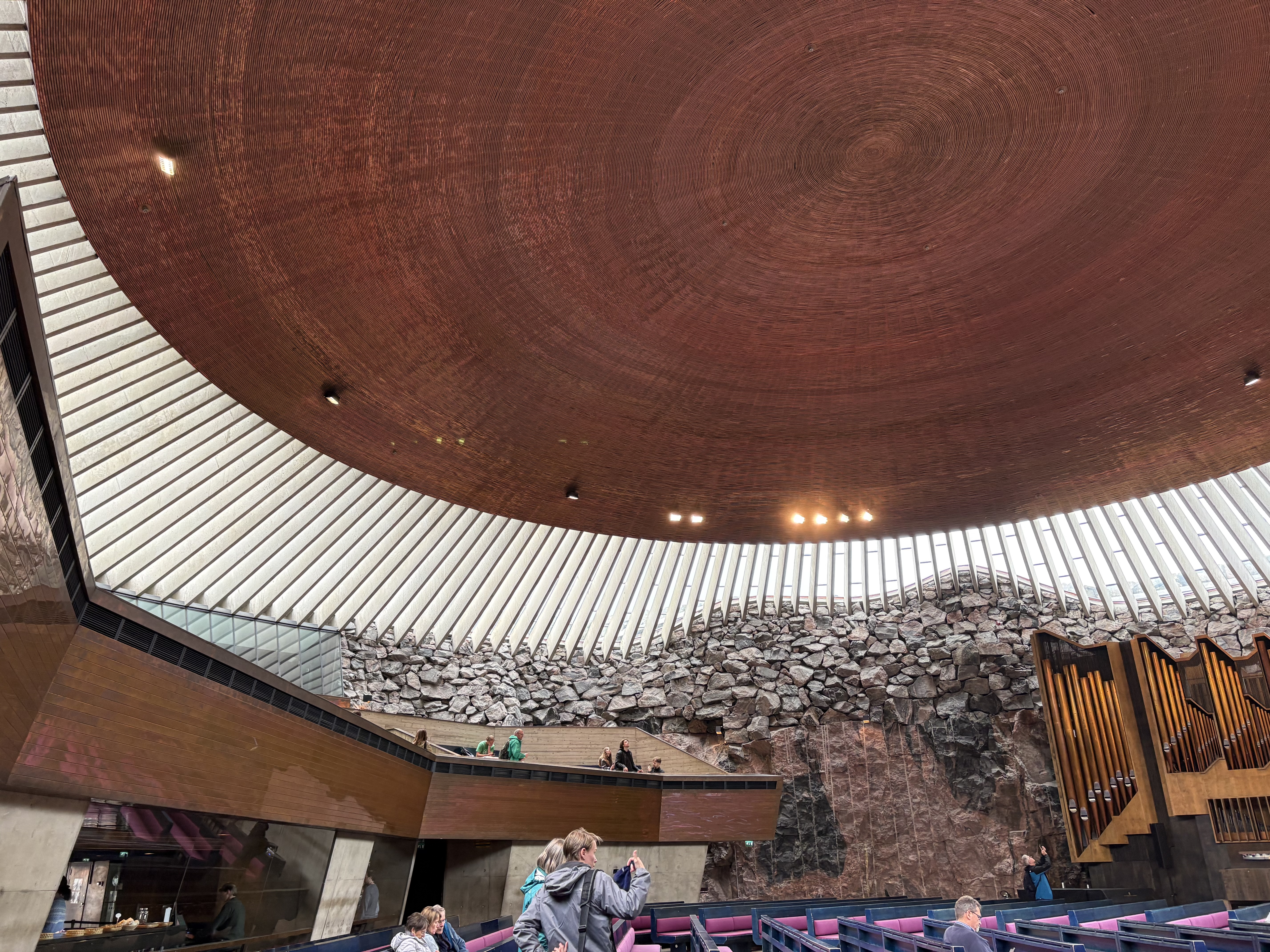
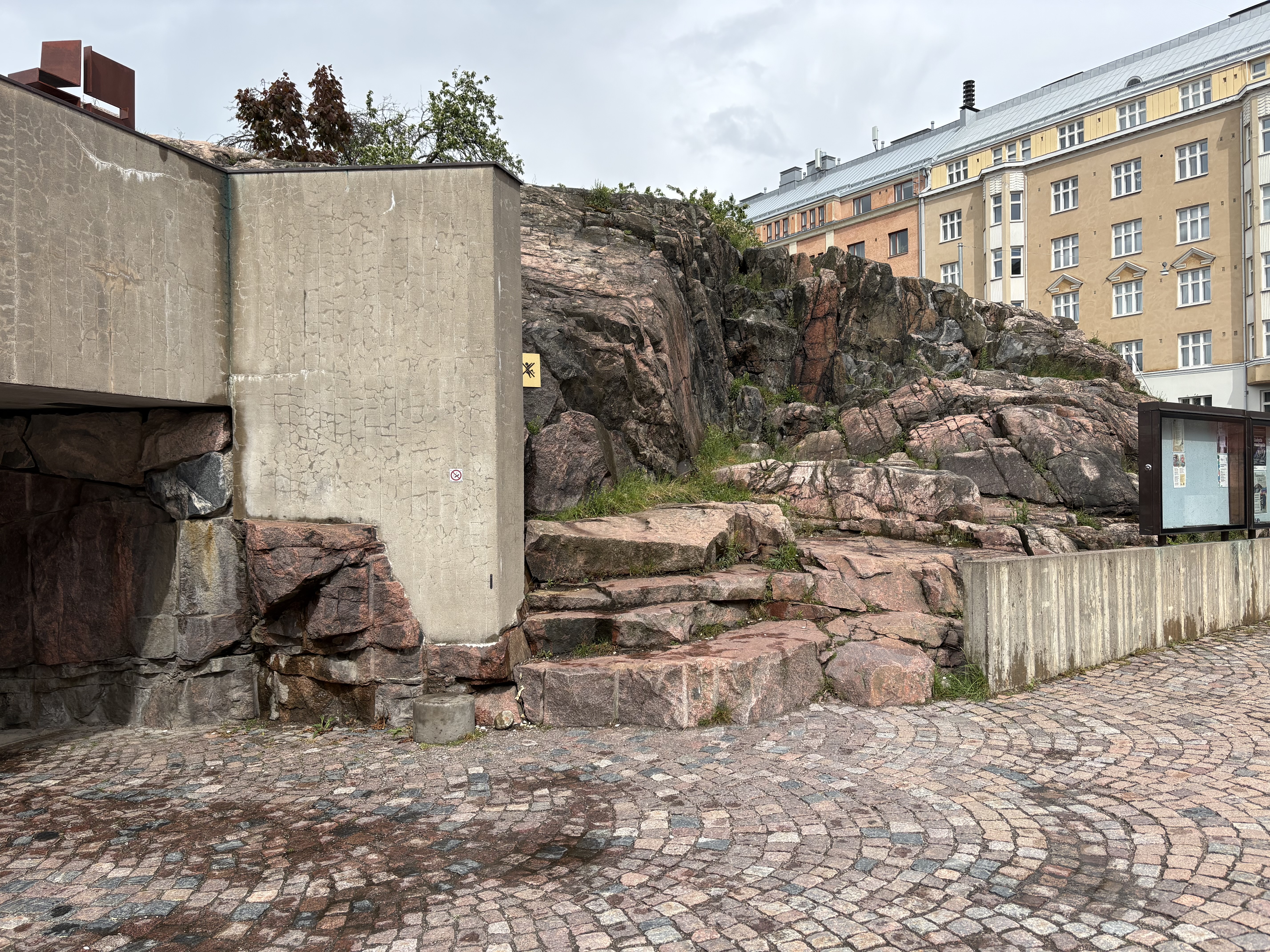
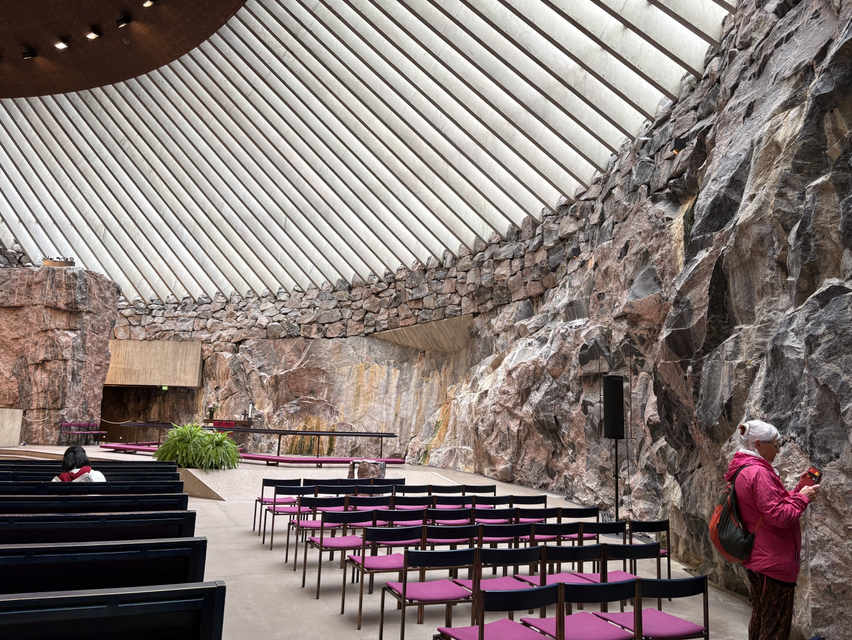
As we were looking around the church the heavens opened and the rain was persisting it down (the only rubbish weather we had all week although the skies were greyer when we were in Latvia, as the photos will show) so we made a mad dash to the ferry and headed back to the mainland. Our next destination was the Rock Church (Temppeliaukion Kirkko). It’s a Lutheran church, completed in 1969 and carved out of the rock. From the outside it looks unprepossessing but inside it is beautiful, with natural light from the skylights, exposed rock walls and beautiful, simple design. A tranquil space. It seemed fitting that whilst I was there I got a text from my daughter, who had just had her 8 week scan and heard her baby’s heartbeat.
Day 4
TALLINN
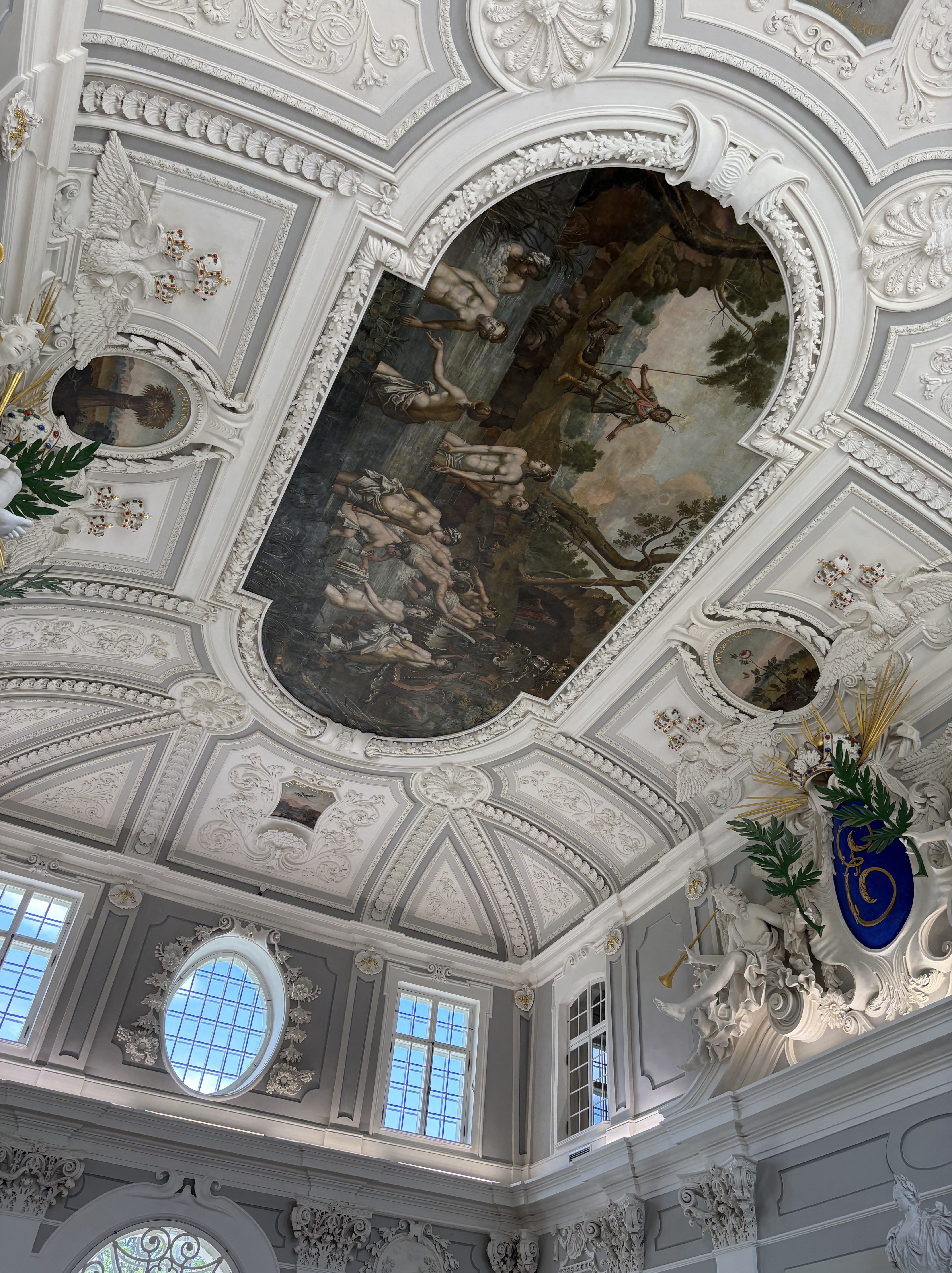
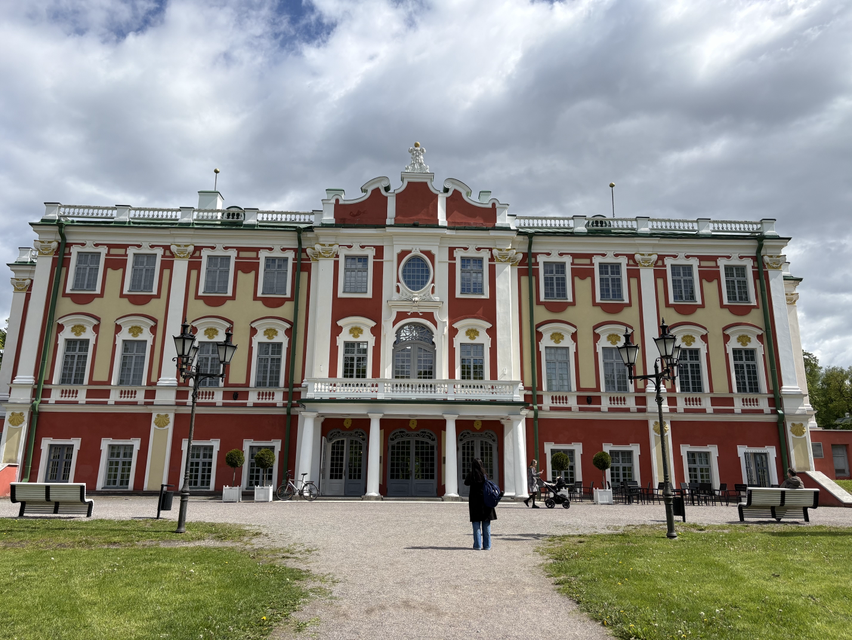
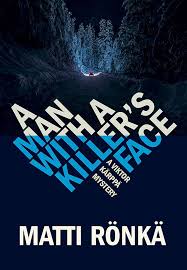
Another boat, this time the ferry across to Tallinn. I’d just finished reading a Finnish thriller (Matti Rönkä – The Man with the Killer’s Face) whose plot involves regular toing and froing between Finland and Estonia via this ferry service. Then a coach to Kadriorg Palace, an 18th century palace from the time of and in the style favoured by Peter the Great, now housing the Kadriorg Art Museum, a branch of the Estonial Nationial Art Museum.
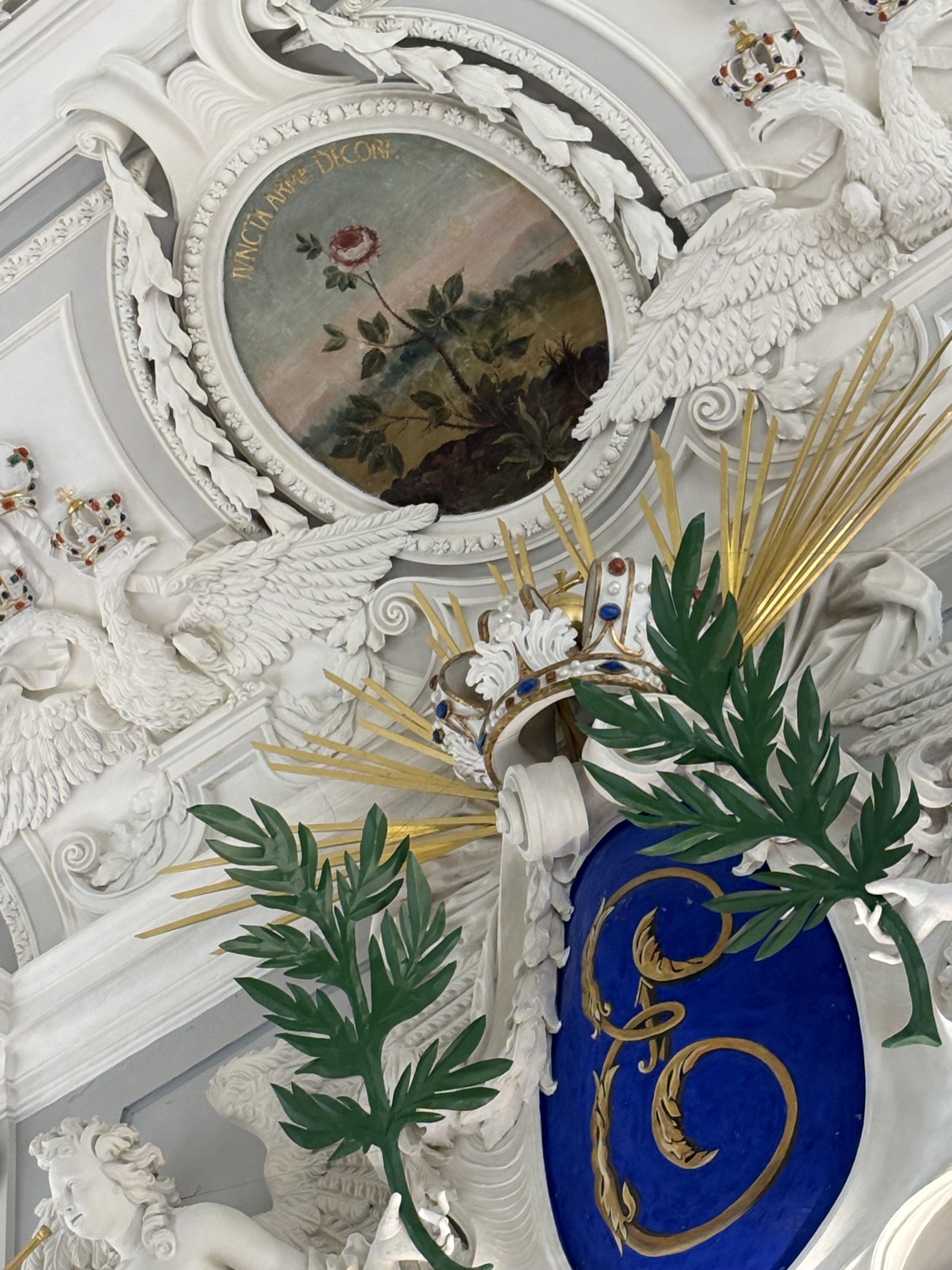
We were forewarned, but still a little startled by the rather stern approach of the staff on duty at the entrance. They were very insistent on even lightweight coats and smaller bags being checked in – fair enough, but their manner rather implied that in a different era failure to comply might have resulted in a spot of Siberian exile. Anyway, the art was stunning – exquisite marquetry, ornate ceiling frescos and huge stoves with beautiful blue and white ceramic tiles, as well as the paintings, silverware, sculptures and so on.
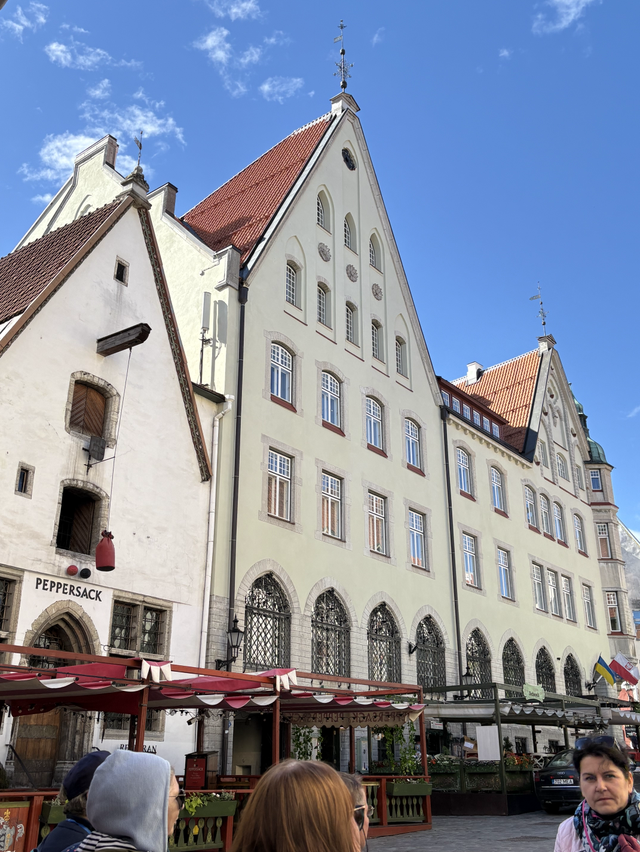
Our hotel was just outside the gates of the Old Town and our meal that evening was in the medieval Peppersack Restaurant. If we’d gone on a different night, we might have witnessed a sword fight at about 8.00 pm, but not on a Thursday. The food was not medieval – there is another in the Old Town which eschews any ingredients not available to medieval cooks (e.g. potatoes) but we weren’t under such constraints. The staff costumes were medievalish though. Anyway, the food was good, and we found a bar afterwards. The meal was for the full complement of 17 plus our tour manager, but by this time we’d coalesced into various sub-groups, one of which (the one I gravitated towards) was dedicated to the location and enjoyment of not-too-noisy not-too-busy bars with an excellent variety of beers in each of the cities we visited.
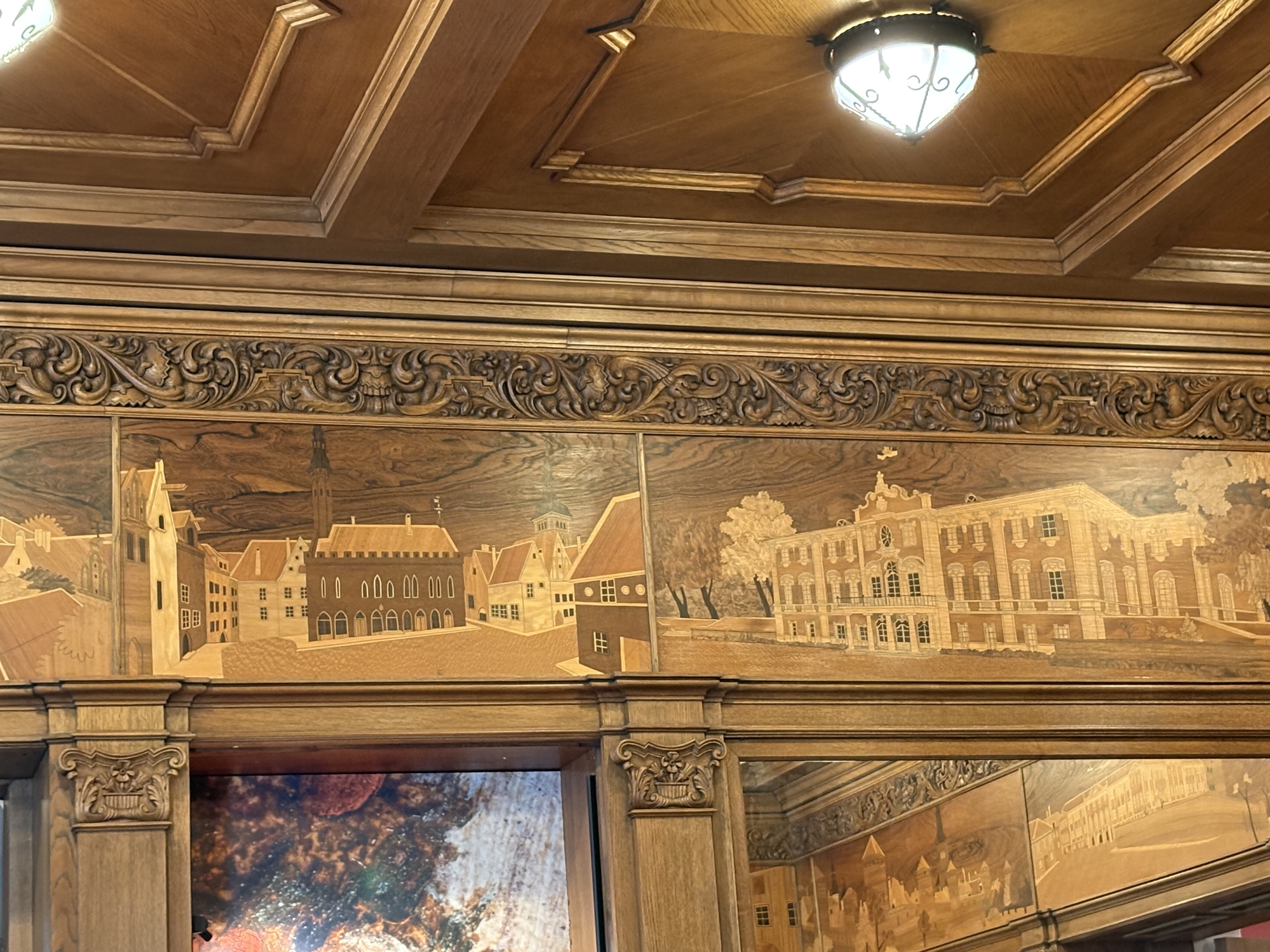
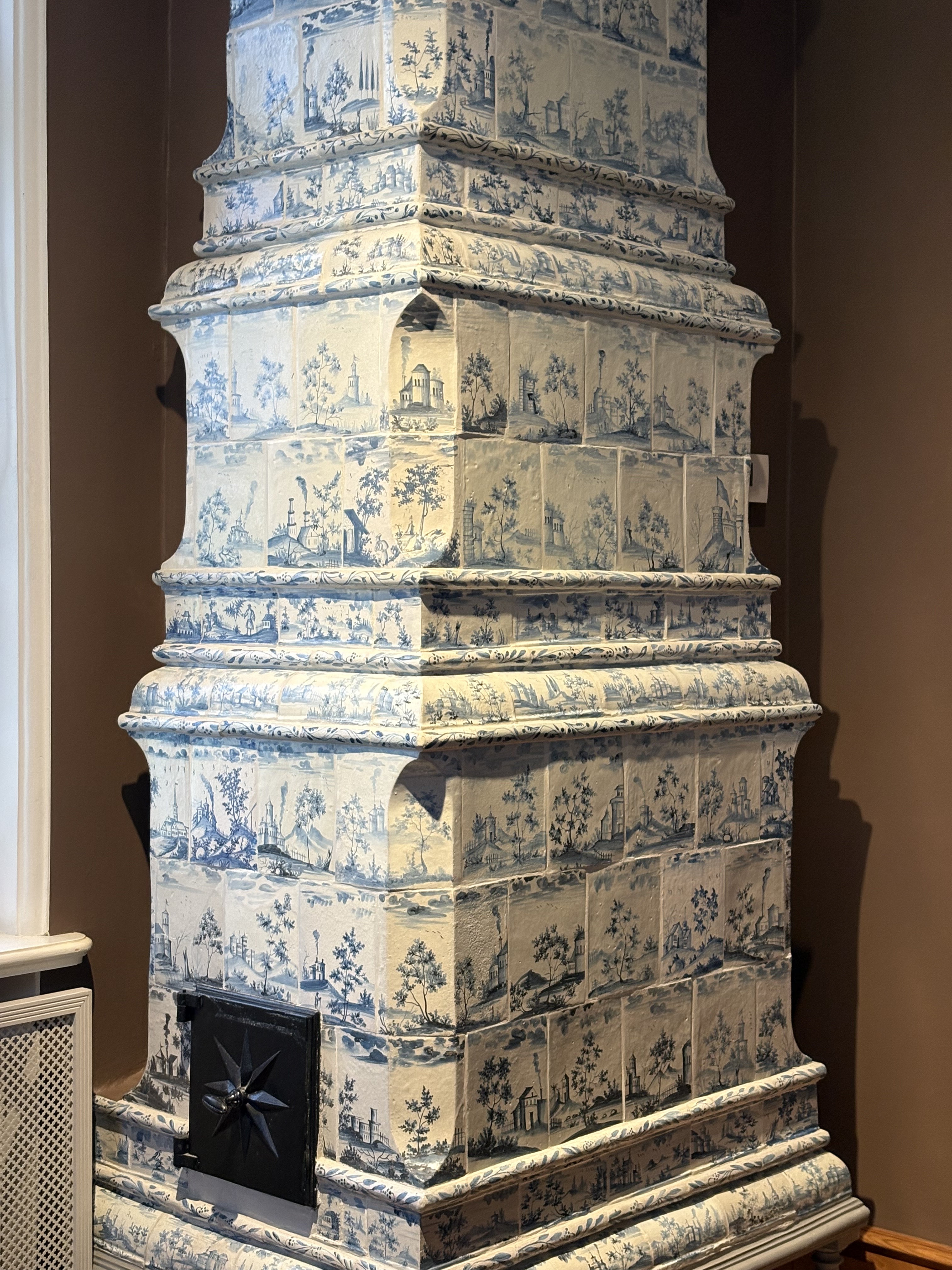
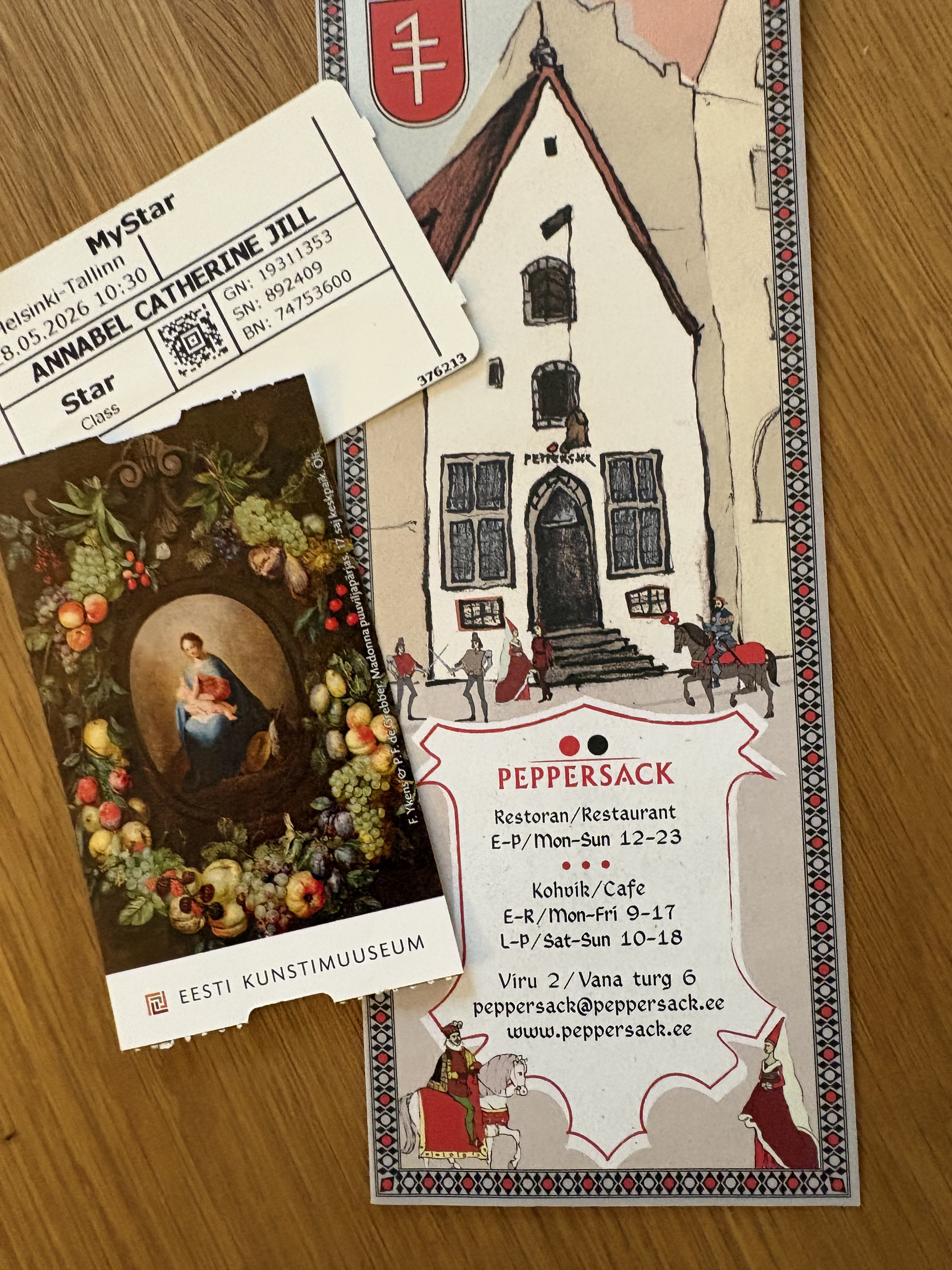
Day 5
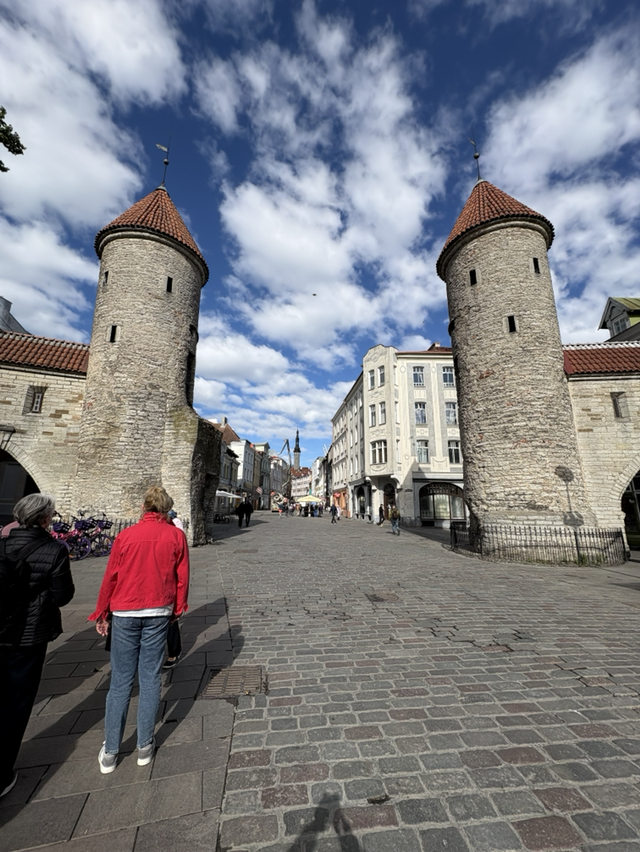
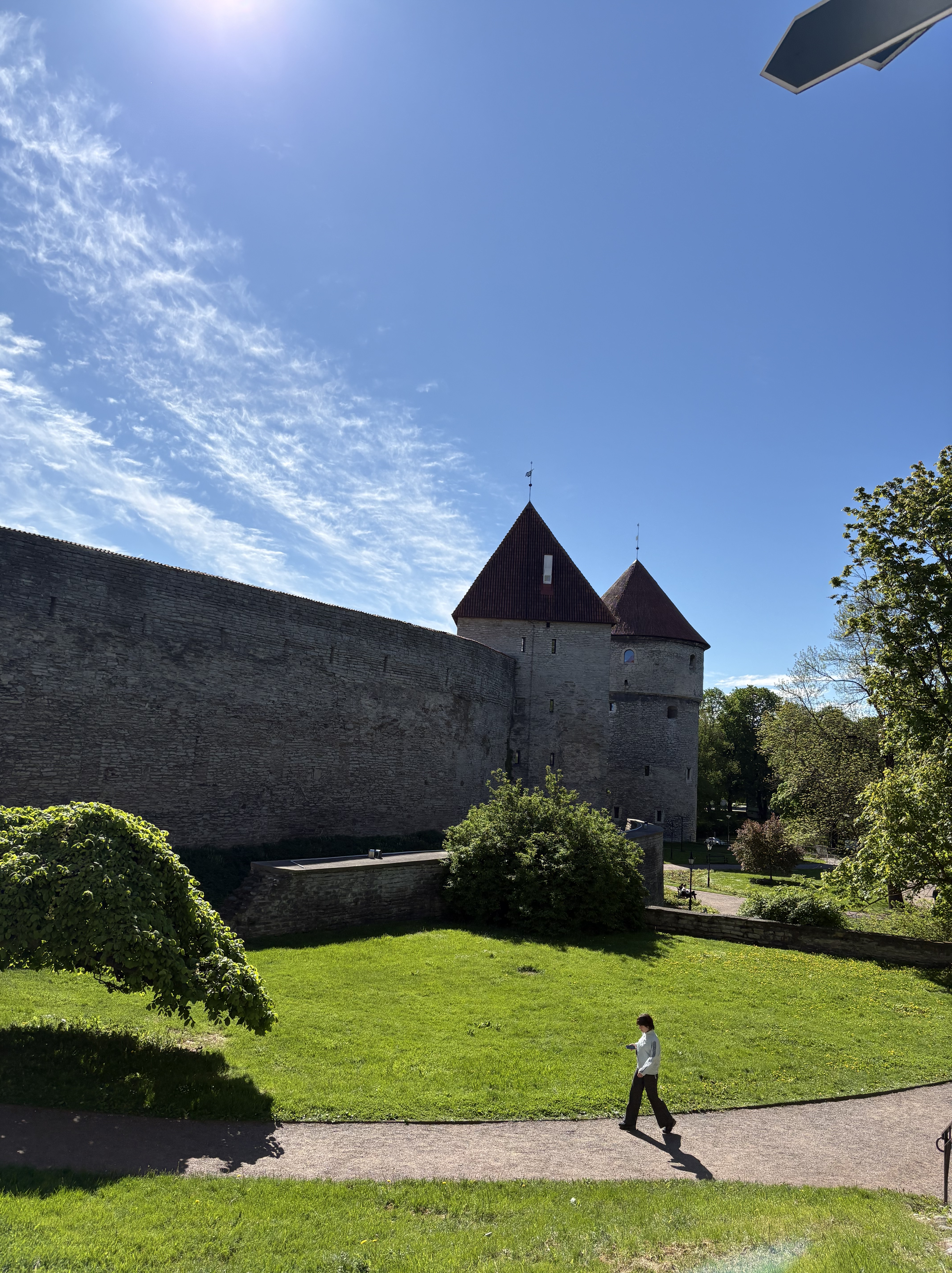
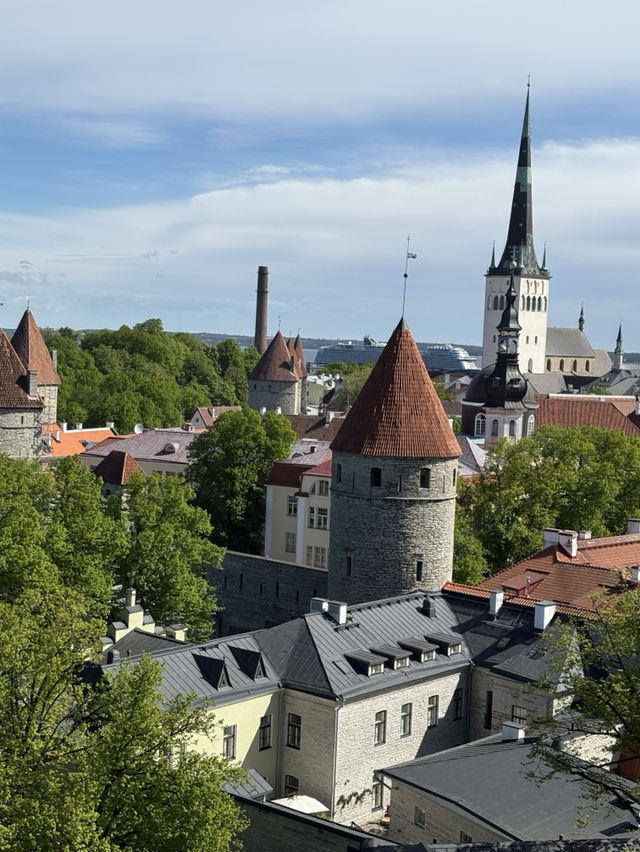
Back in the Old Town for a walking tour, going through the Viru Gate. The Tallinn city wall was built during the 14th century, and over the next 200 years eight gates were constructed, each with square towers and curtain walls connecting them. it already had eight gates that consisted of several towers with curtain walls connecting them. The main tower of a gate was always square and the barbicans (the first line of defence) were equipped with one or two small round towers. Parts of these defences are visible at various points in the Old Town, and here are two corner towers, leading us in to Viru street, one of the main thoroughfares.
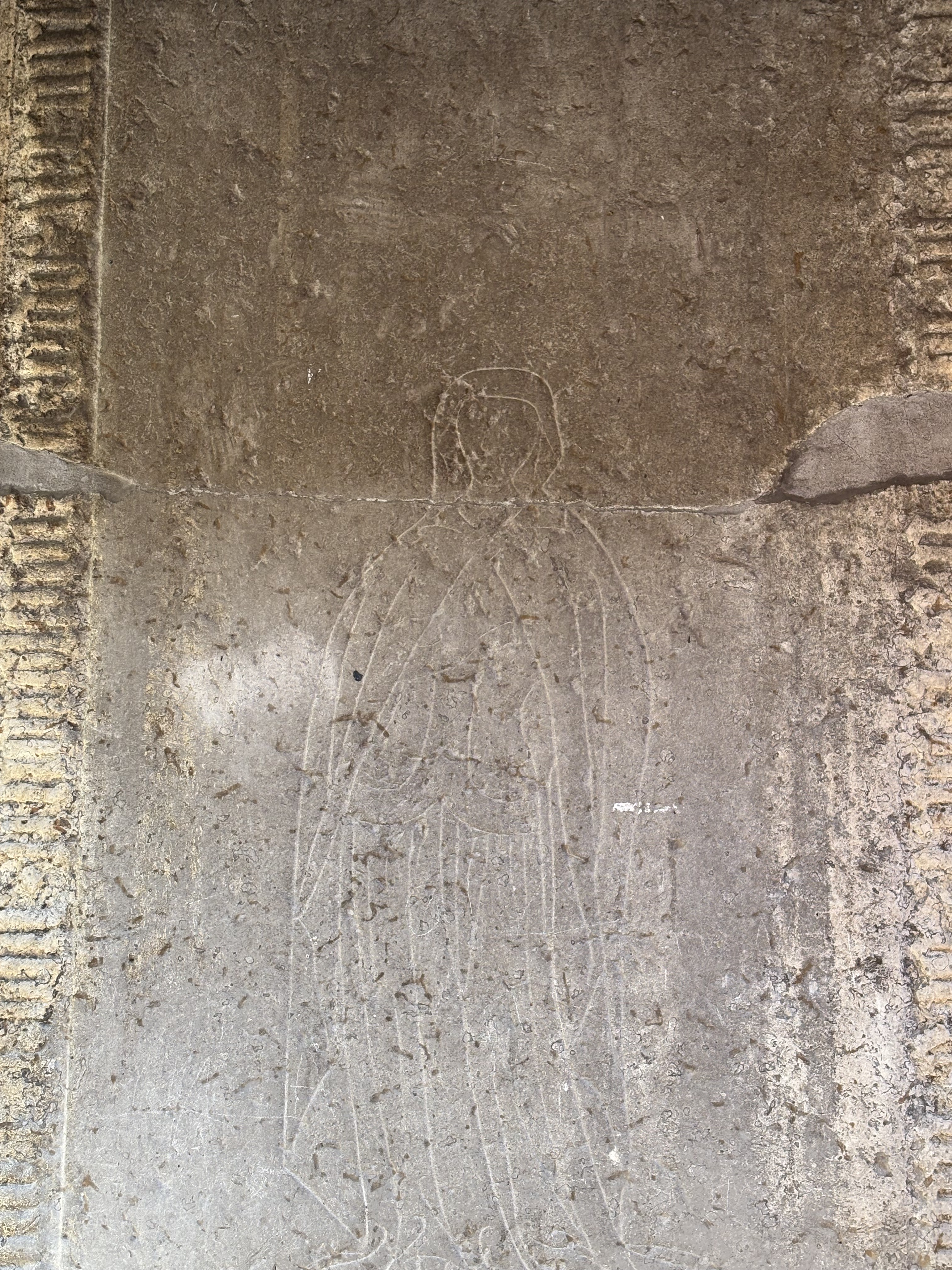
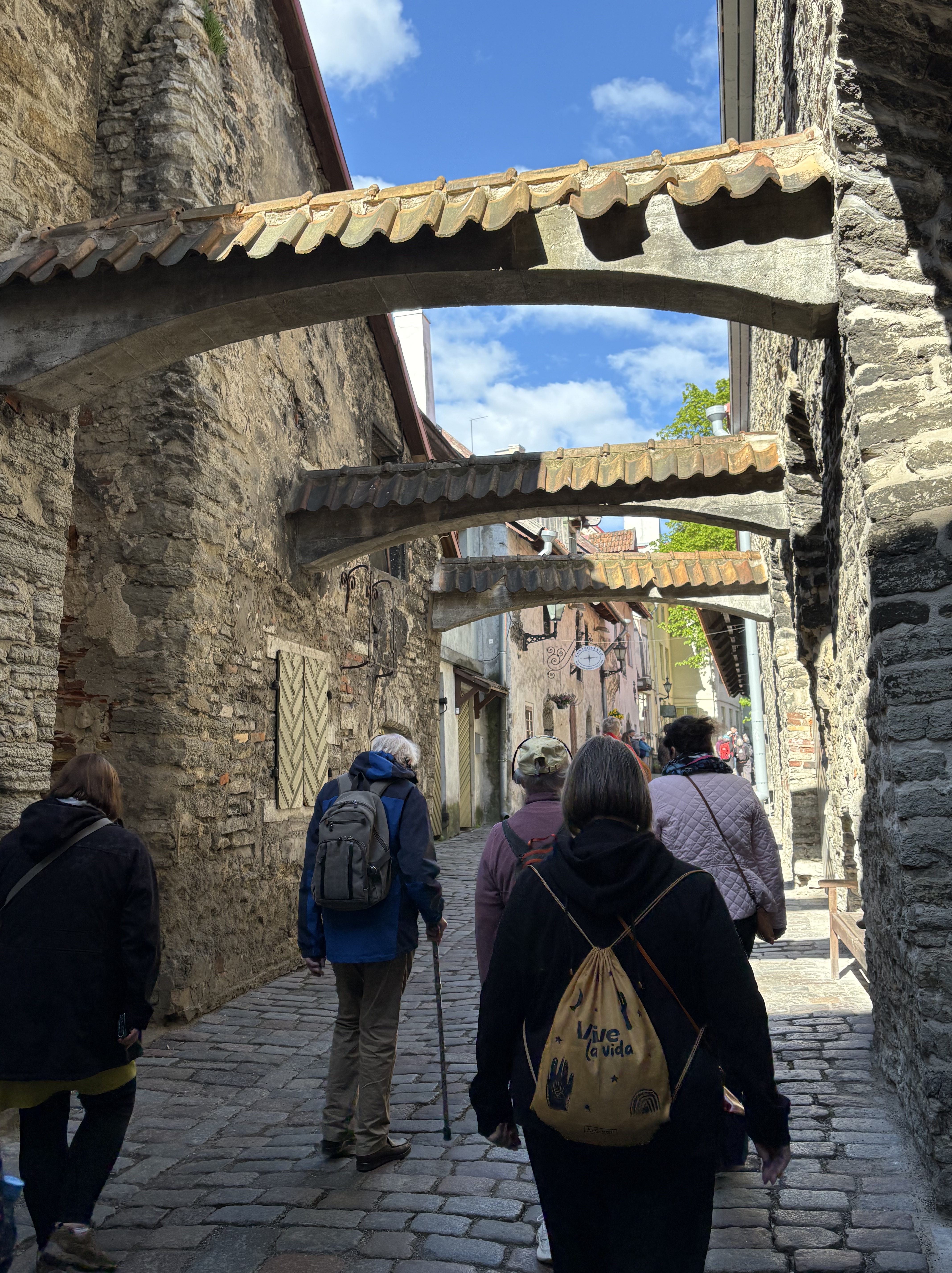
We explored St Catherine’s passage, named from the church, built c. 700 years ago. Tombstones from the church line one of the walls of the passage. I wish I could recall all of the details that our local guide gave us about what we were seeing – so many beautiful buildings, varied in style and age, often very intricately decorated – as we headed through the Town Hall Square up to the Danish King’s Garden. This is – so the story goes – where Danish King Valdemar II camped when his troops were trying to conquer the Toompea castle in 1219, and was so inspired by a vision of a red flag with a white cross that appeared in the skies that they were victorious. Apparently, every year on the 15th of June, Dannebrog or the Day of the Danish Flag is celebrated here. These days the garden is ‘haunted’ by three figures of hooded (Dominican, I think) monks – in full daylight they don’t seem at all spooky but at night if one encountered one of them unexpectedly it might be a bit alarming (there’s a light show here after dark for full effect). It’s a lovely spot, and there are great views of the town from here.
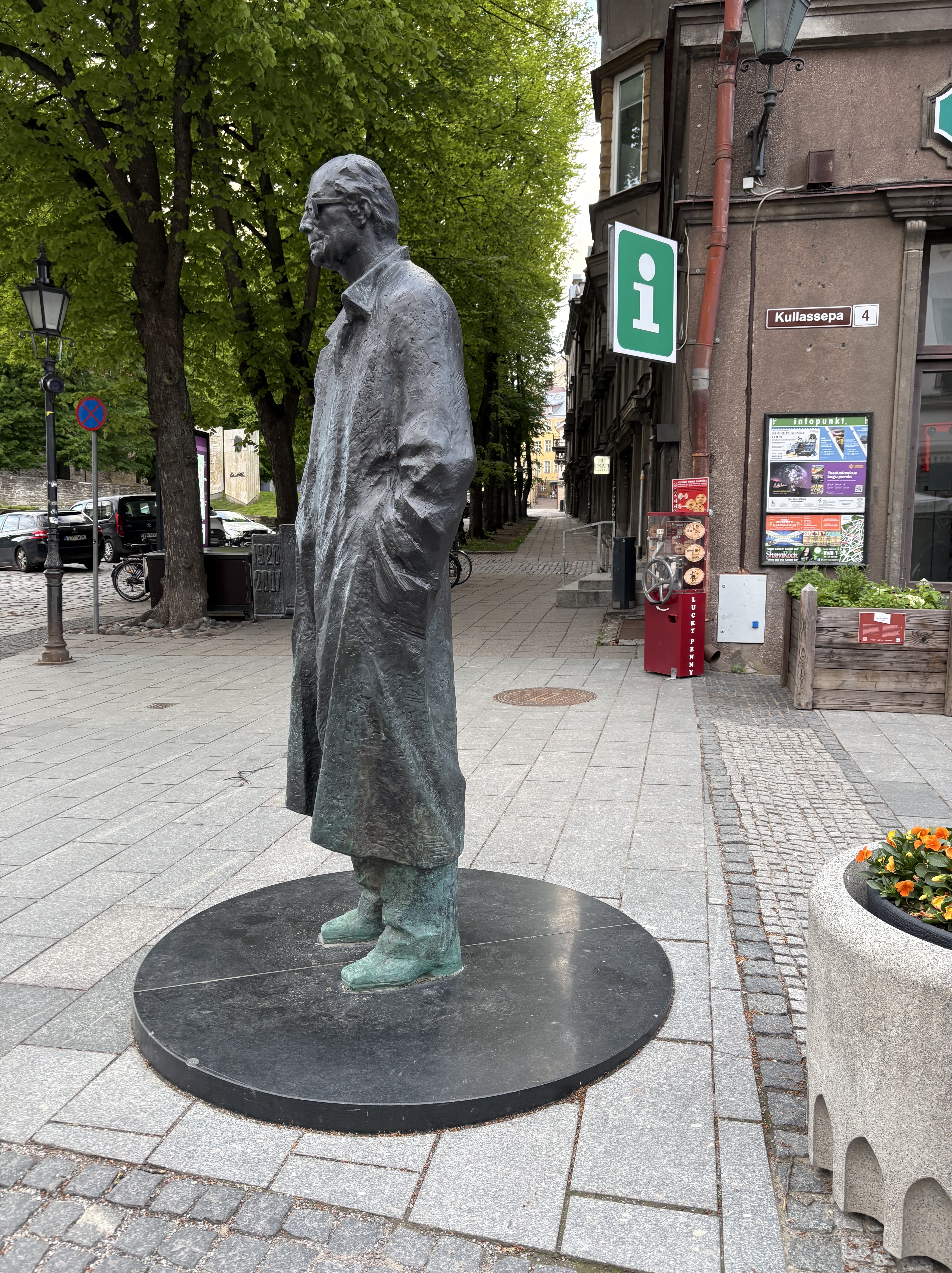
We spotted a statue of Jaan Kross, whose name was completely unfamiliar to me, so I found out what I could when I got home. He’s a Tallinn born writer and lawyer, whose passionate support for Estonian independence led to imprisonment by the Nazis during their occupation (1941-44) and then by the Soviets when it was their turn. He was held for a while in the local NKVD HQ, and then in prison in Tallinn, before being deported to a gulag in Russia, working for six years in the mines and remaining in the gulag for another couple of years but not subjected to hard labour. His writing career began partly because he couldn’t practice law – his qualifications were in Estonian law which did not apply in Estonia under the Soviets. Initially poetry and then mainly historical fiction, which has been translated into many languages – some of his books are available in English. His novels often deal with the historical occupations of Estonia. He died in 2007 and the Estonian president described him as ‘a preserver of the Estonian language and culture … one of those who kept fresh the spirits of the people and made us ready to take the opportunity of restoring Estonia’s independence‘.
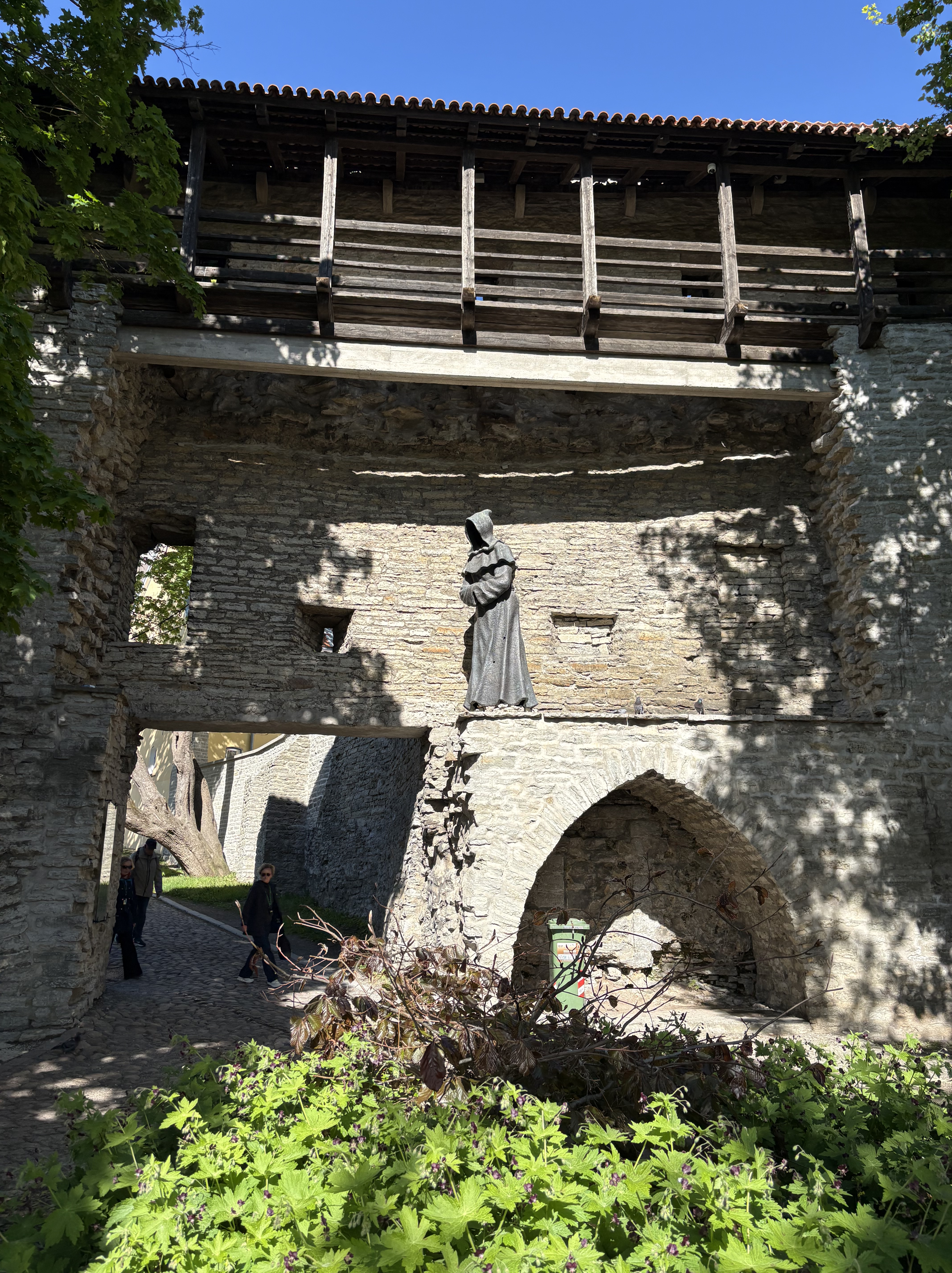
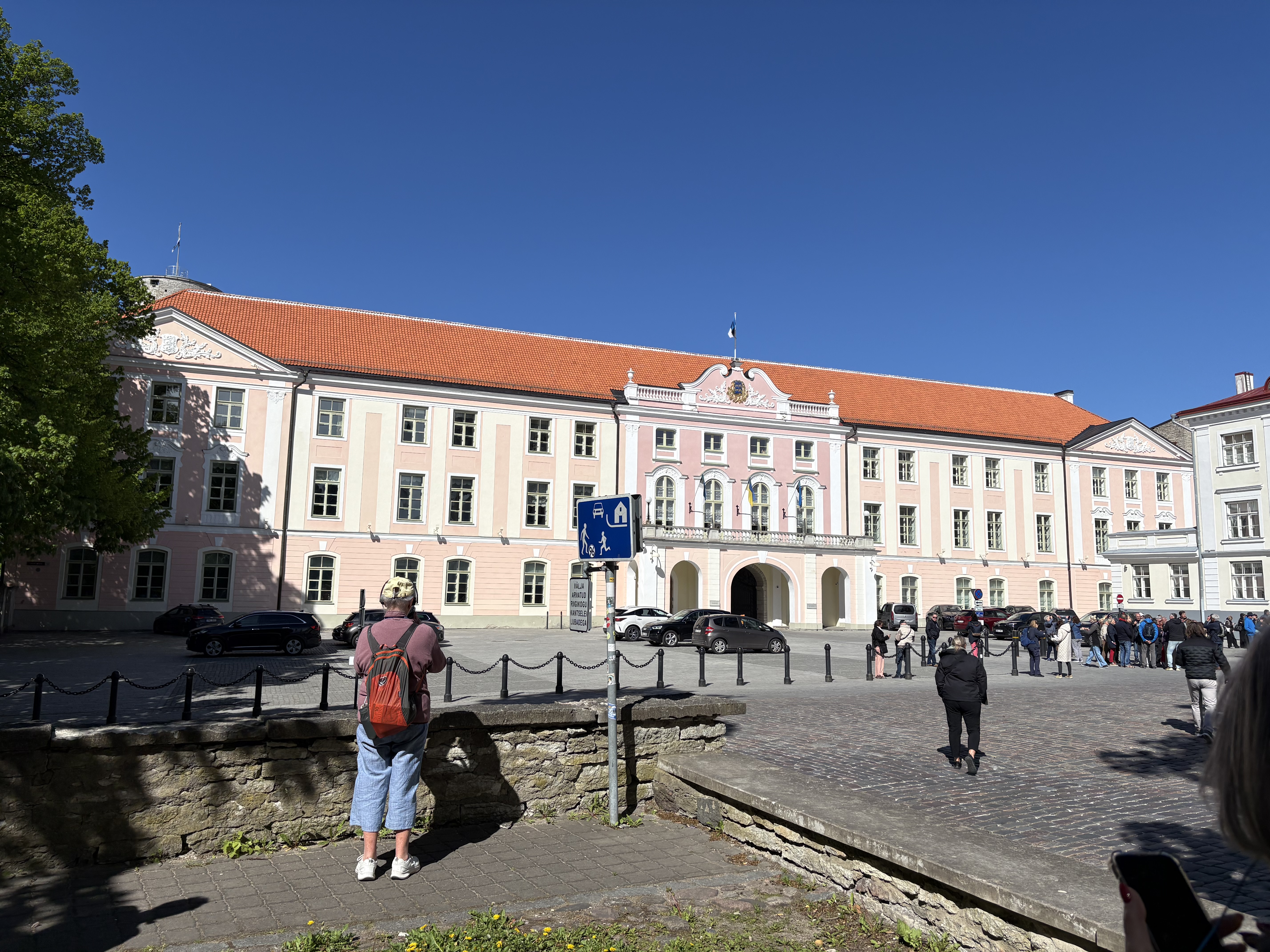
The Toompea Castle that the Danish King was trying to conquer when he had his vision of the flag has long since been replaced by an 18th century baroque building which is now home to the Estonian Parliament. The Kiek in der Kok (literally, peek into the kitchen, so called because of the positioning of its windows) is an artillery tower dating from 1475 though having been extensively remodelled over the centuries.
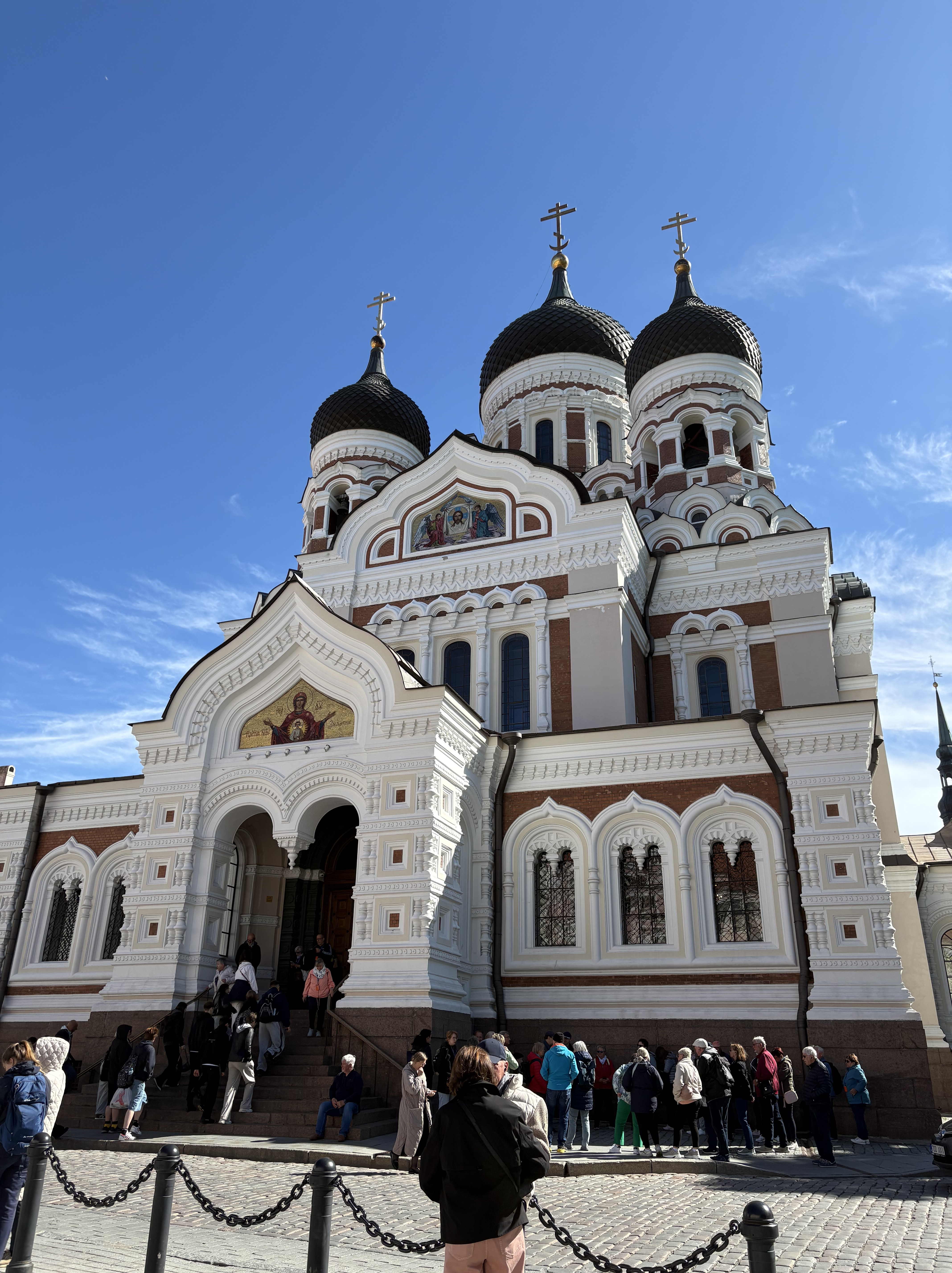
Also in this part of the town is the Alexander Nevsky Cathedral, a rather splendid Eastern Orthodox cathedral built at the end of the 19th century. Despite being Russian in style and named after a Russian saint and hero – one who ‘saved the Russian people from Catholicism and being enslaved by the Germans’ – it was left to fall into disrepair during the Soviet occupation and like many other religious buildings has been restored since independence. In more recent years though there have been proposals to demolish it, as there have been during previous periods of independence, because of its very Russian character and history, but with particular intensity since the invasion of Ukraine.
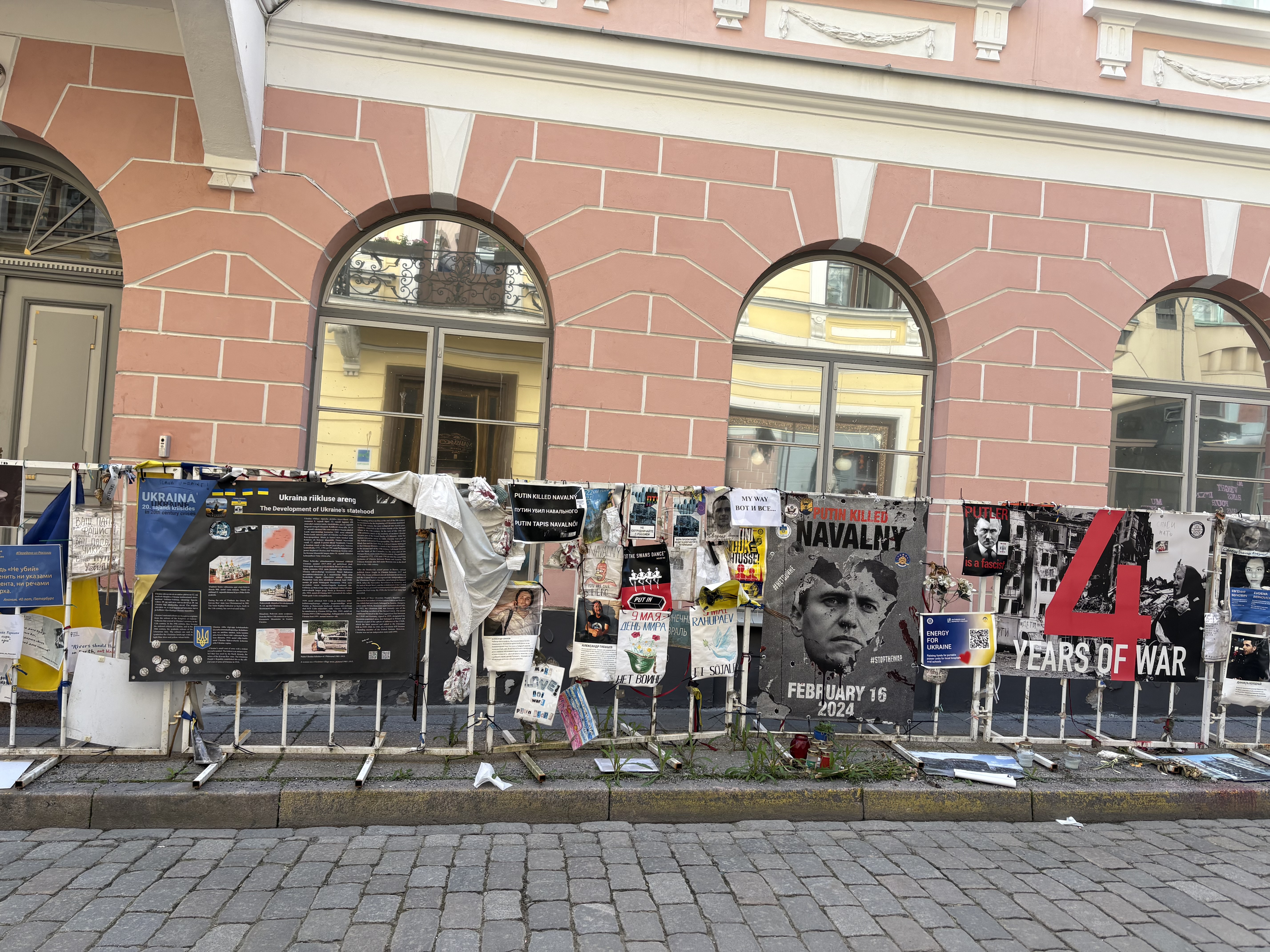
The tension and anxiety created by the Ukraine invasion was evident too in the railings covered with protests – I didn’t gather whether the building was itself associated with Russia (I would have expected the posters to have been taken down if so). This was a theme that we picked up in Helsinki too, but more powerfully in Tallinn and Riga – smaller countries, with much less of a history as an independent free nation than Finland, despite the Finns’ long history of imperial conquest and control. Estonia was independent between the wars, but then occupied by Stalin, then the Nazis, then Stalin again until the resurgence of their independence movement as part of the perestroika years, and the restoration of the Republic of Estonia in 1991. It’s very recent history, and these nations know only too well how fragile independence is when you are so close to an aggressive and greedy military power.
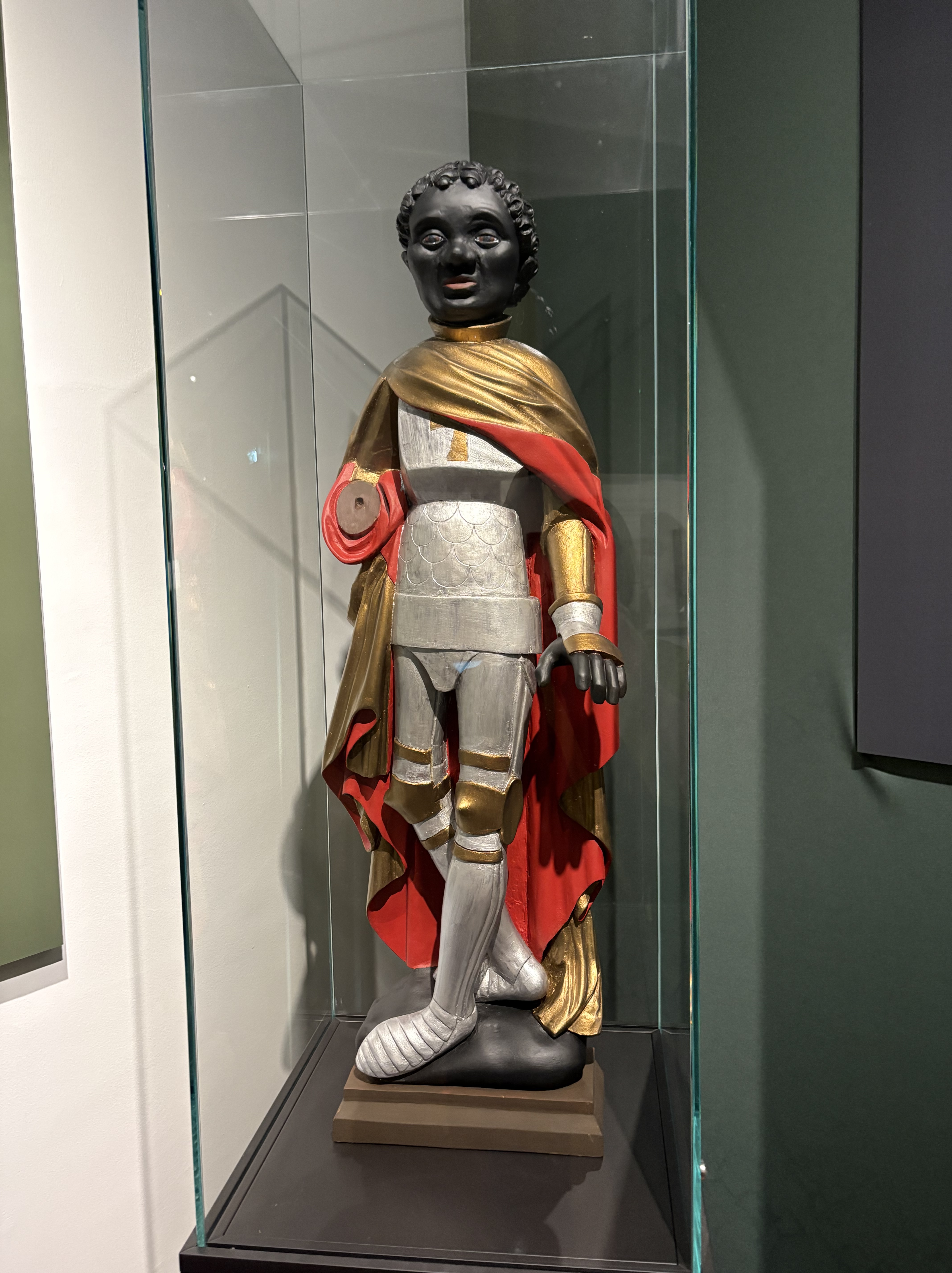
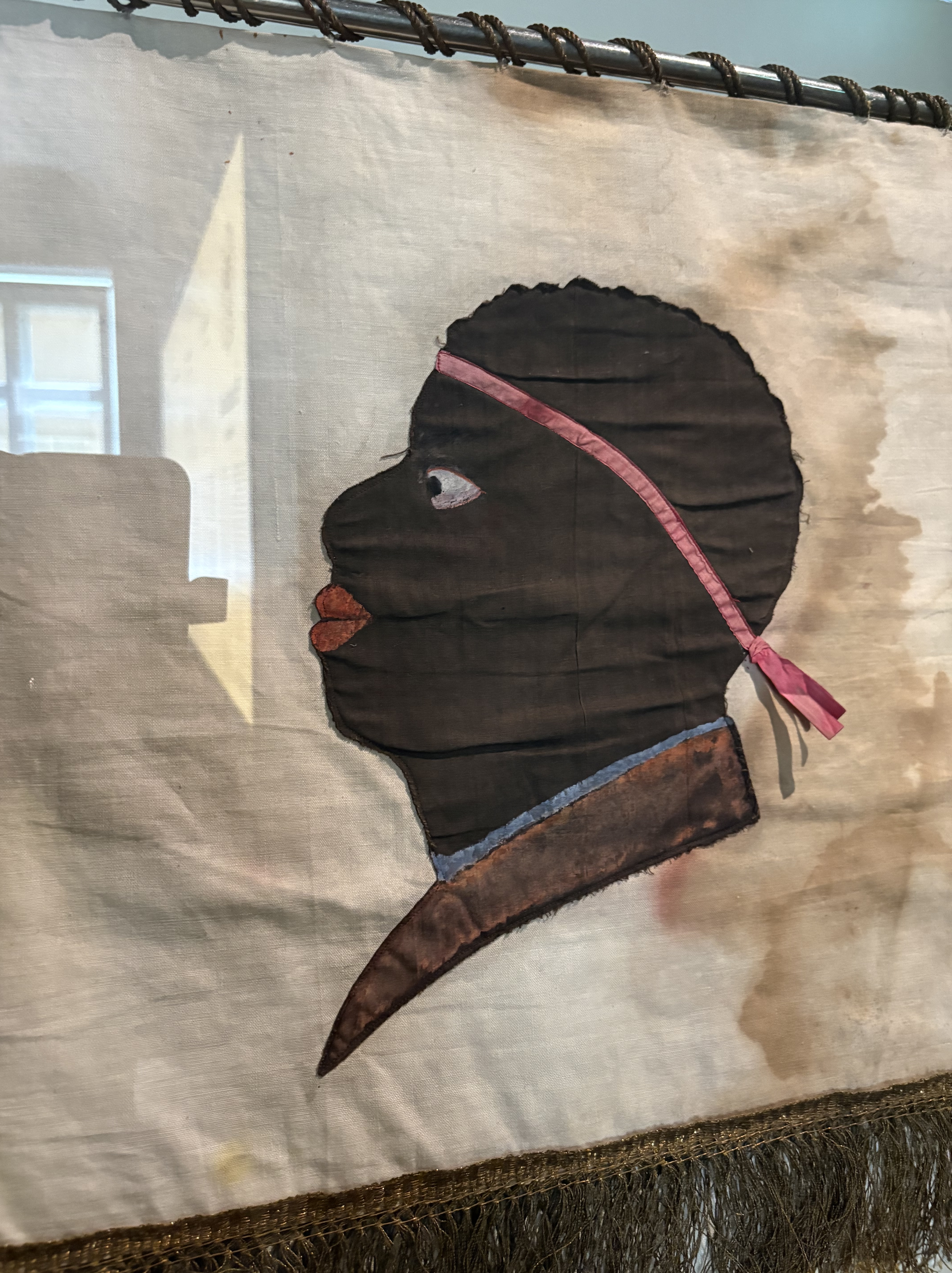
After the guided tour was over, we had a wander (Anna, Marg & I), and decided to explore the Tallinn City Life Museum, where we were very intrigued by the Brotherhood of Black Heads. Turns out this was a powerful guild of unmarried male merchants and ship-owners (local and foreign) that was active in what was then called Livonia (now Estonia and Latvia – we came across these chaps in Riga too) from the mid-14th century till 1940, when the Soviet occupiers shut it down. As Baltic Germans left the region, they kept it alive and there is still an active guild in Hamburg. But what intrigued me most was the image of an African man on the Guild’s coat of arms and elsewhere. This is St Maurice, who is described variously as a Moor or an Egyptian, who led a Christian legion in the Roman Empire and was martyred for refusing to sacrifice to Roman gods and to murder local Christians. Whether, as some sources suggest, the Guild’s name came from another source and St Maurice was picked as their patron saint for that reason, or Maurice was chosen and the Guild named accordingly, is not known. The former seems a bit unlikely. The images used by the Guild are consistently of what looks like a sub-Saharan African rather than a North African – obviously there is a dearth of real evidence as to who he was, where he came from, what he looked like. Anyway, a similar depiction was used by the city of Coburg, whose patron saint he was, but the Nazi government banned the use of his image as a ‘glorification’ of an inferior race.
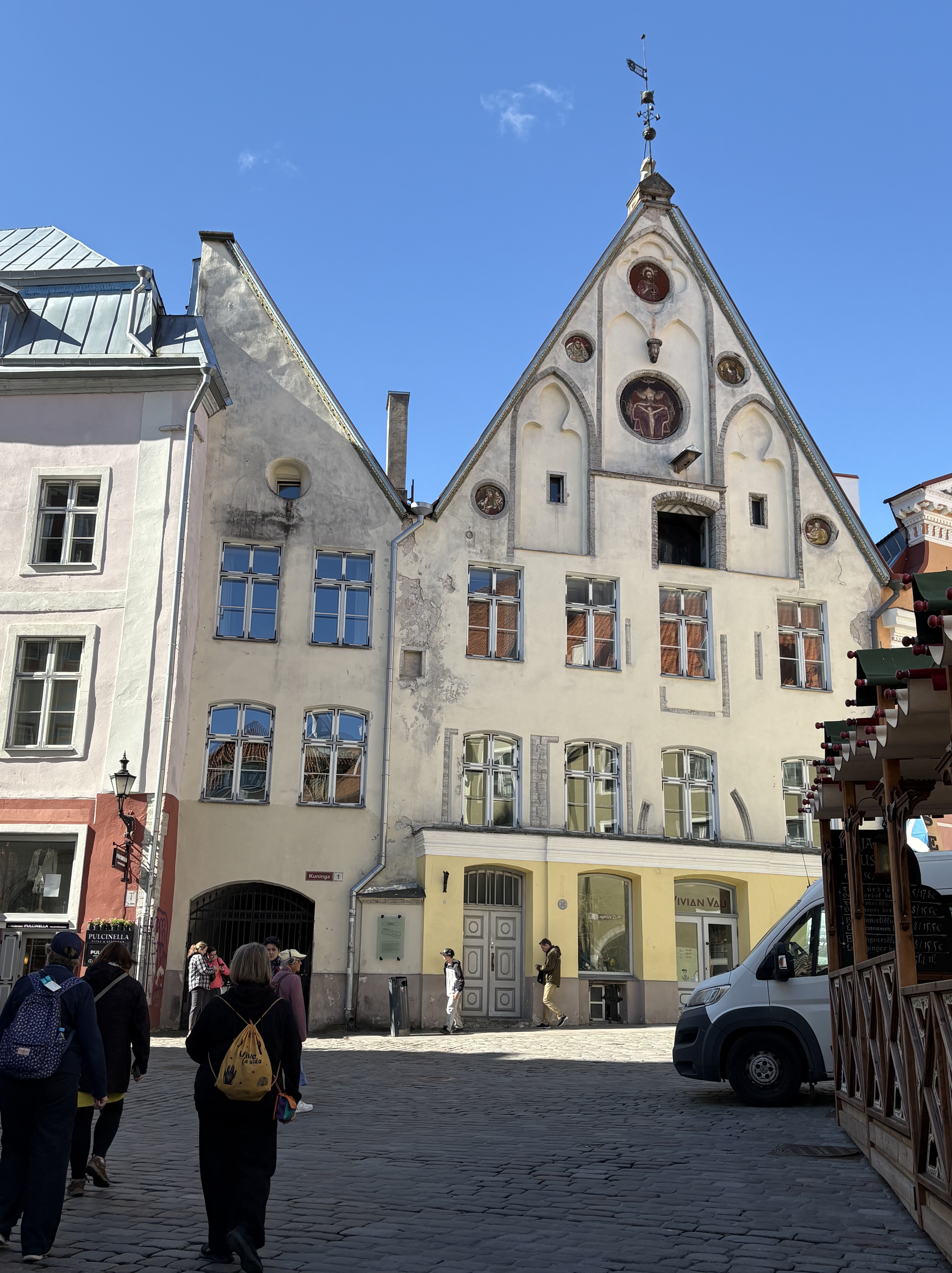
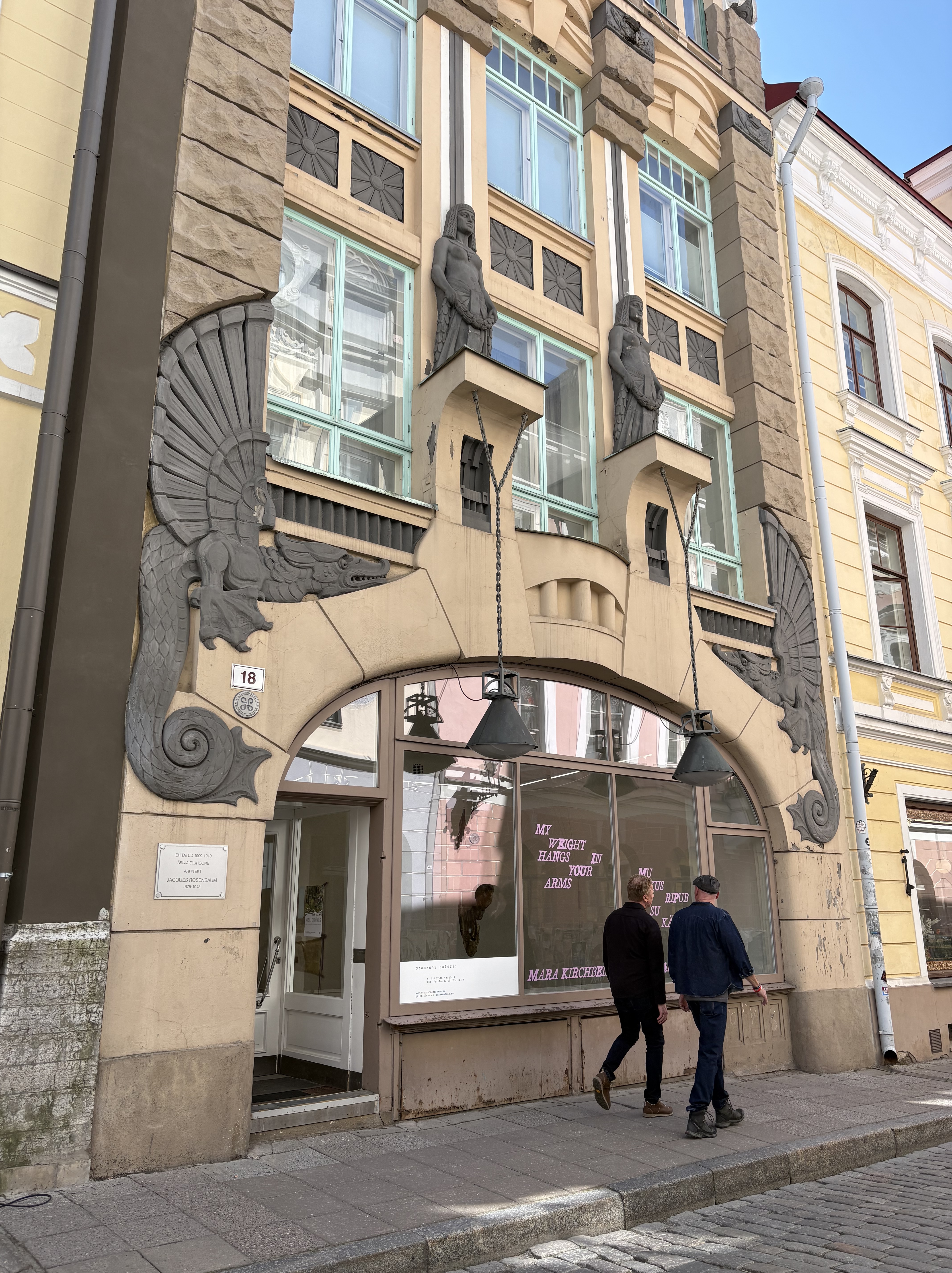
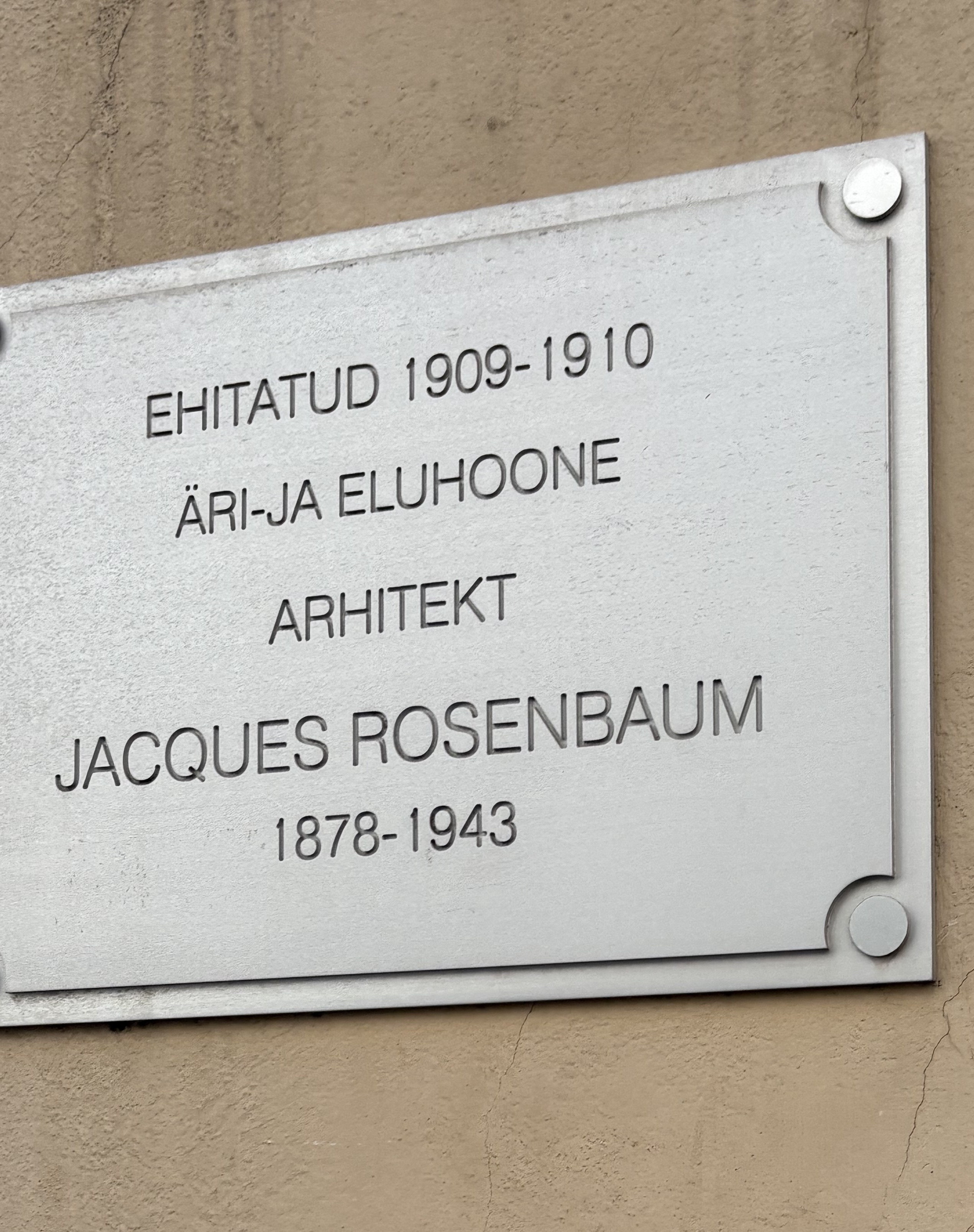
The Old Town is full of strikingly decorated buildings. The Art Nouveau building which now houses the Draakon Gallery was designed by architect Jacques Rosenbaum, who is commemorated by a plaque nearby. Riga has many more Art Nouveau buildings, but in Tallinn they are dotted around in the Old Town. The ornate beauty of Rosenbaum’s designs is rather at odds with his later history. Rosenbaum was an Estonian of German descent and joined the Nazi party in 1934 when he and his wife moved back to Germany. He worked for the Luftwaffe and later for the Ministry of Armaments and War Production, then in 1943 he was an advisor to Organisation Todt, in occupied Riga. This was a civil and military engineering association which notoriously used forced labour and administered concentration camps to ensure the supply of forced labour.
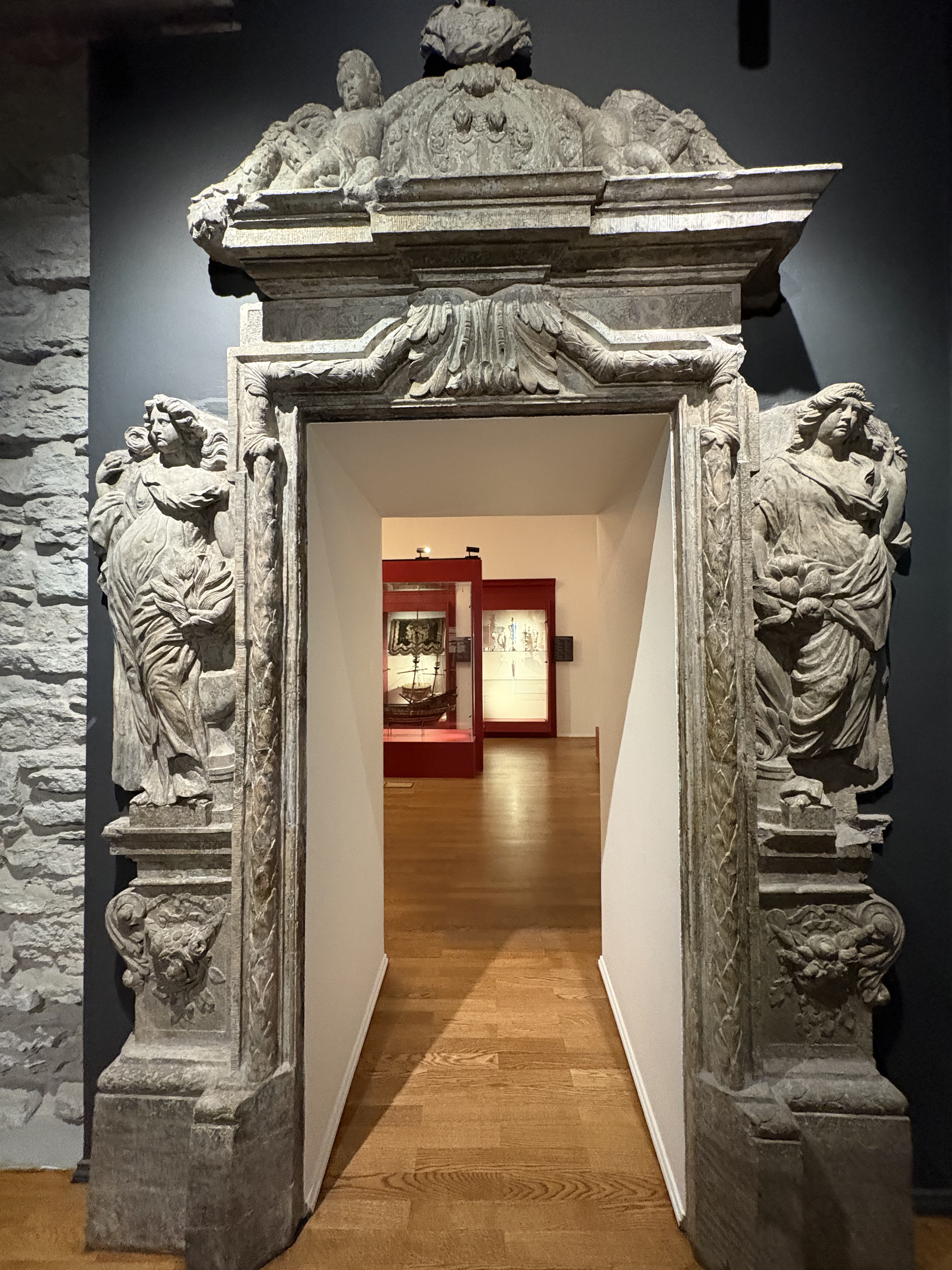
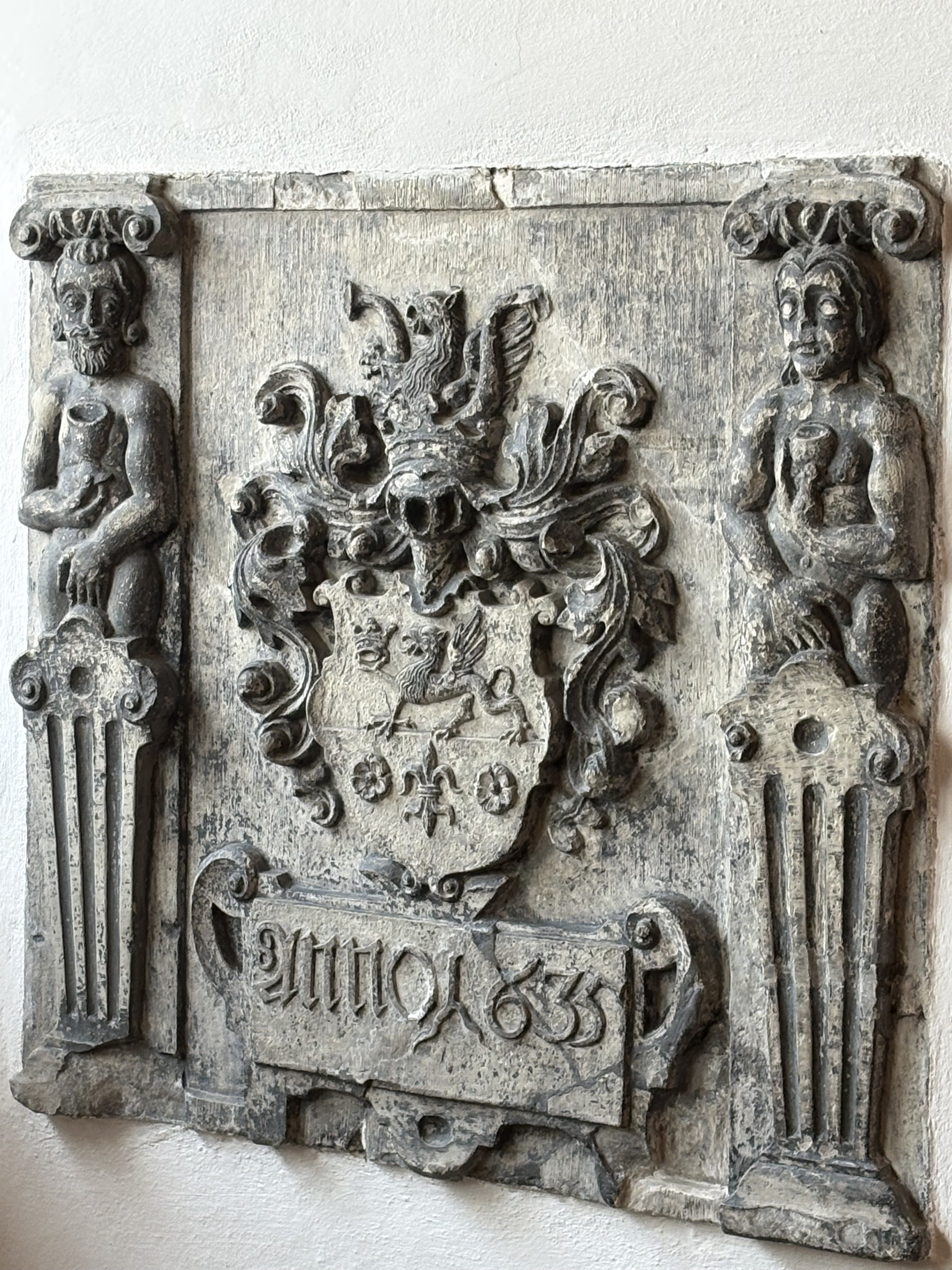
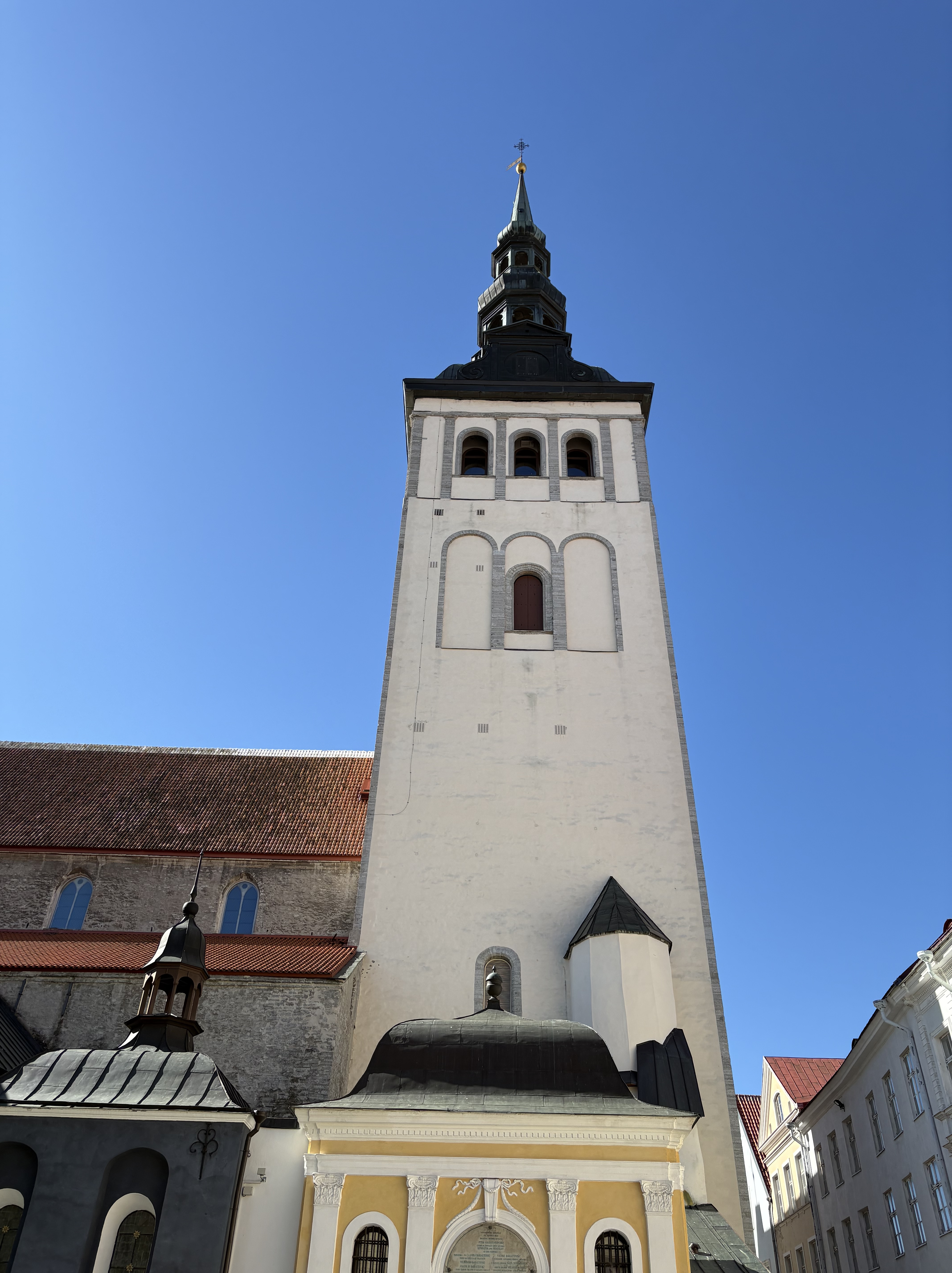
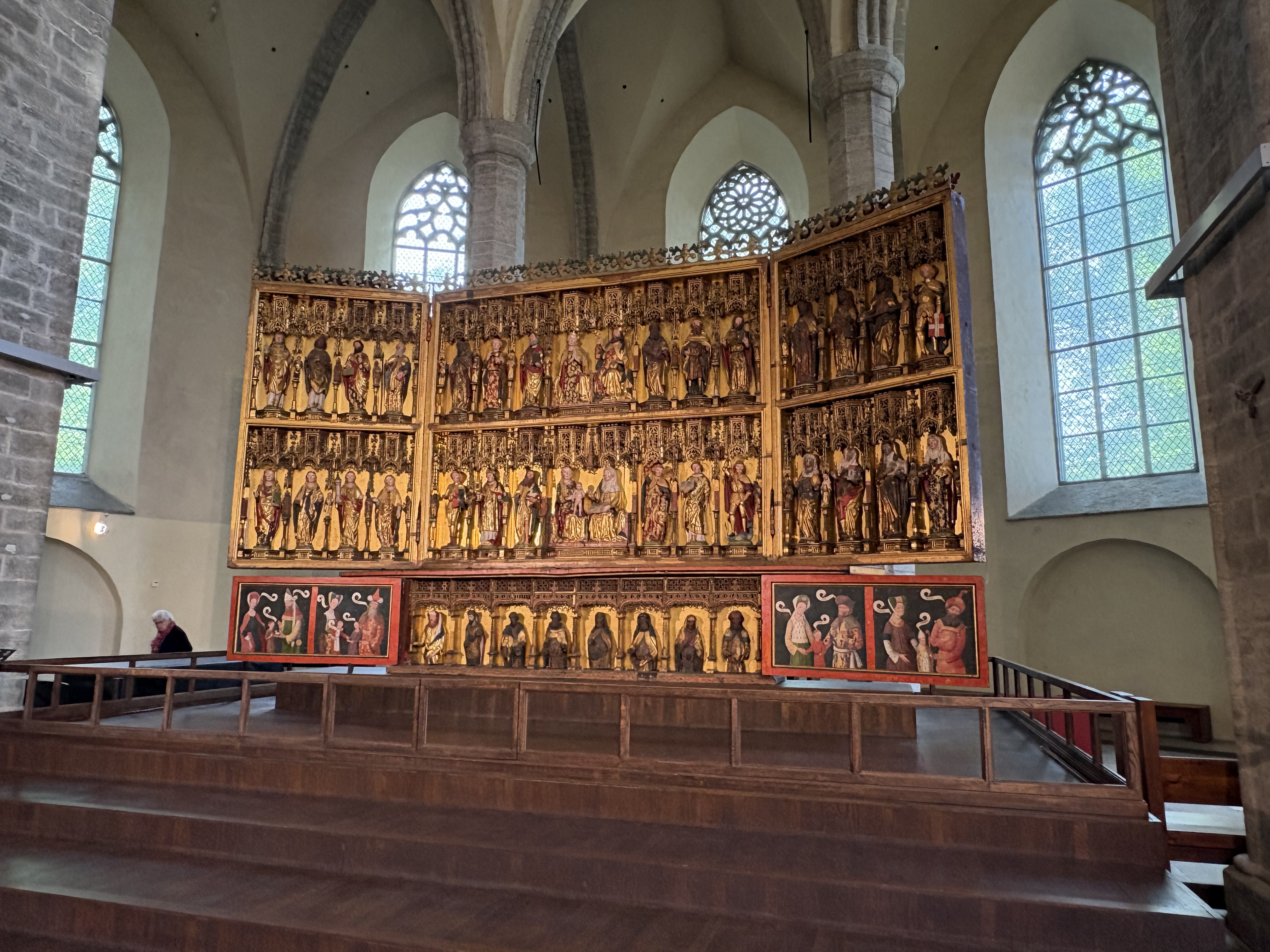
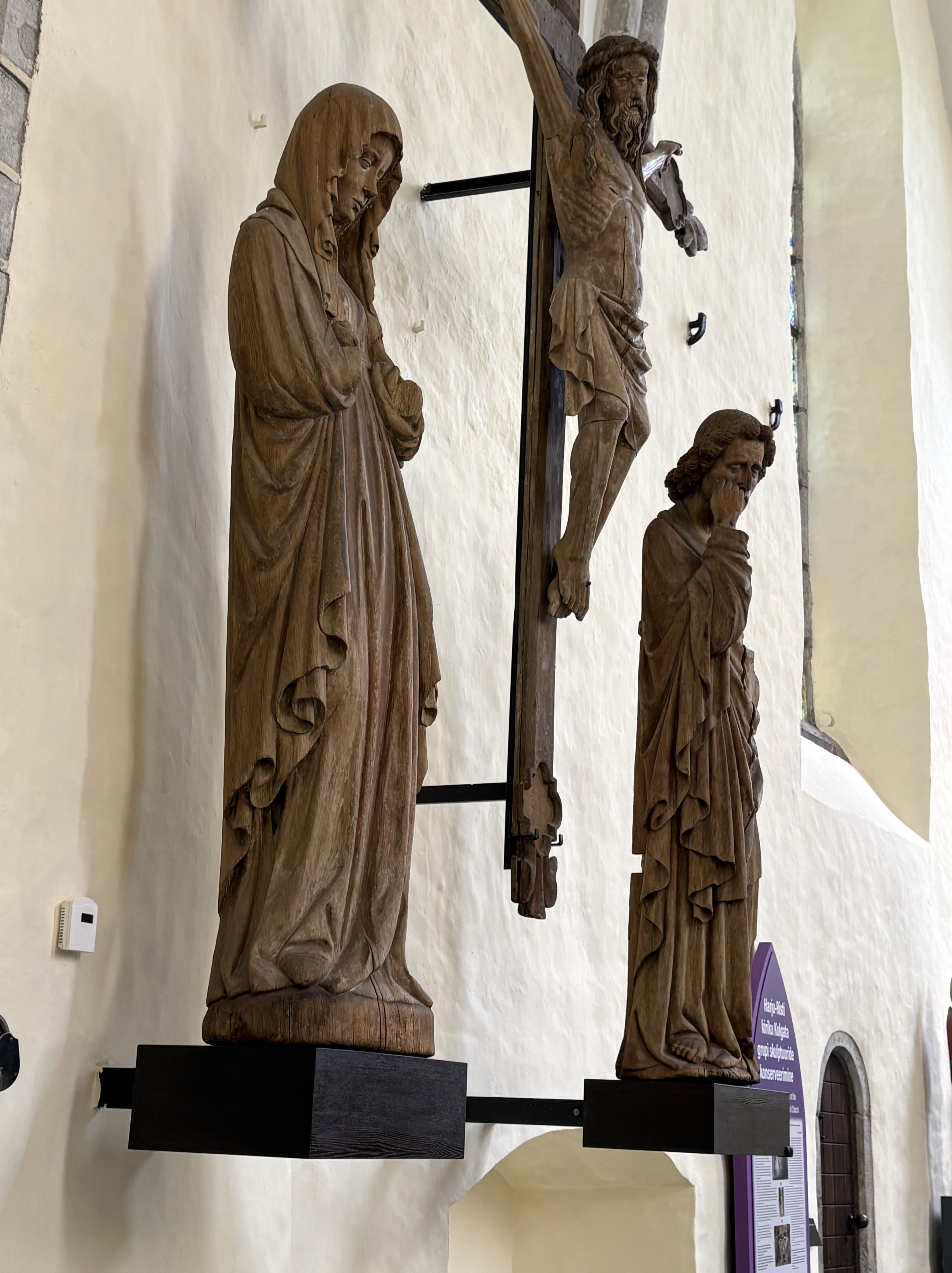
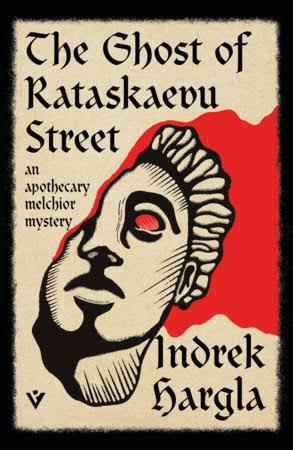
We visited St Nicholas’s Cathedral, and took the lift up to a viewing gallery from where we could look out over the town (I had made my feelings about spiral staircases clear to my travelling companions, and there were instances where they ventured further than I was willing to, so I was pleased that I didn’t have to miss out on the views here). Within the Cathedral – no longer a place of worship, now a museum – there are ornate altars, tombstones and statuary. Whilst wandering around the Old Town we called in at the Town Hall Pharmacy, which has been a functioning pharmacy since the 15th century. In a small side room you can see exhibits portraying the history of pharmacy – and there is a whole series of very entertaining historical crime novels in which Melchior the Apothecary solves murders in medieval Tallinn, by Indrek Hargla.
Day 6
TARTU
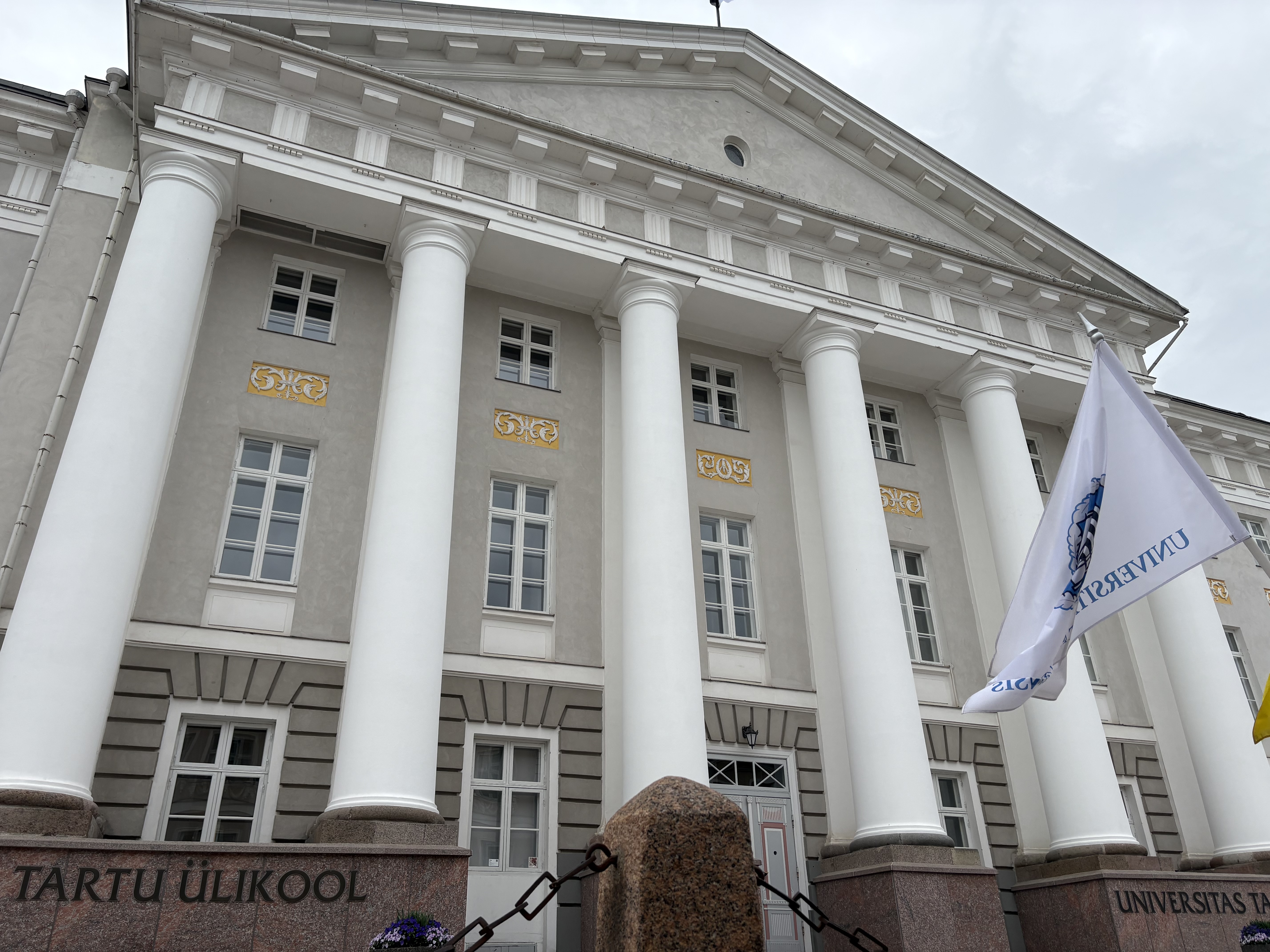
The next stage was a lengthy coach journey to Riga. We stopped off in Tartu, Estonia’s second most populous city, to have a wander and coffee and pastries. Tartu is home to Estonia’s oldest University (founded in 1632), and also home to the Kissing Students fountain and statue in front of the Town Hall. The fountain dates from 1948 and the sculpture from 1998 is by Mati Karmin, one of Estonia’s best known sculptors.
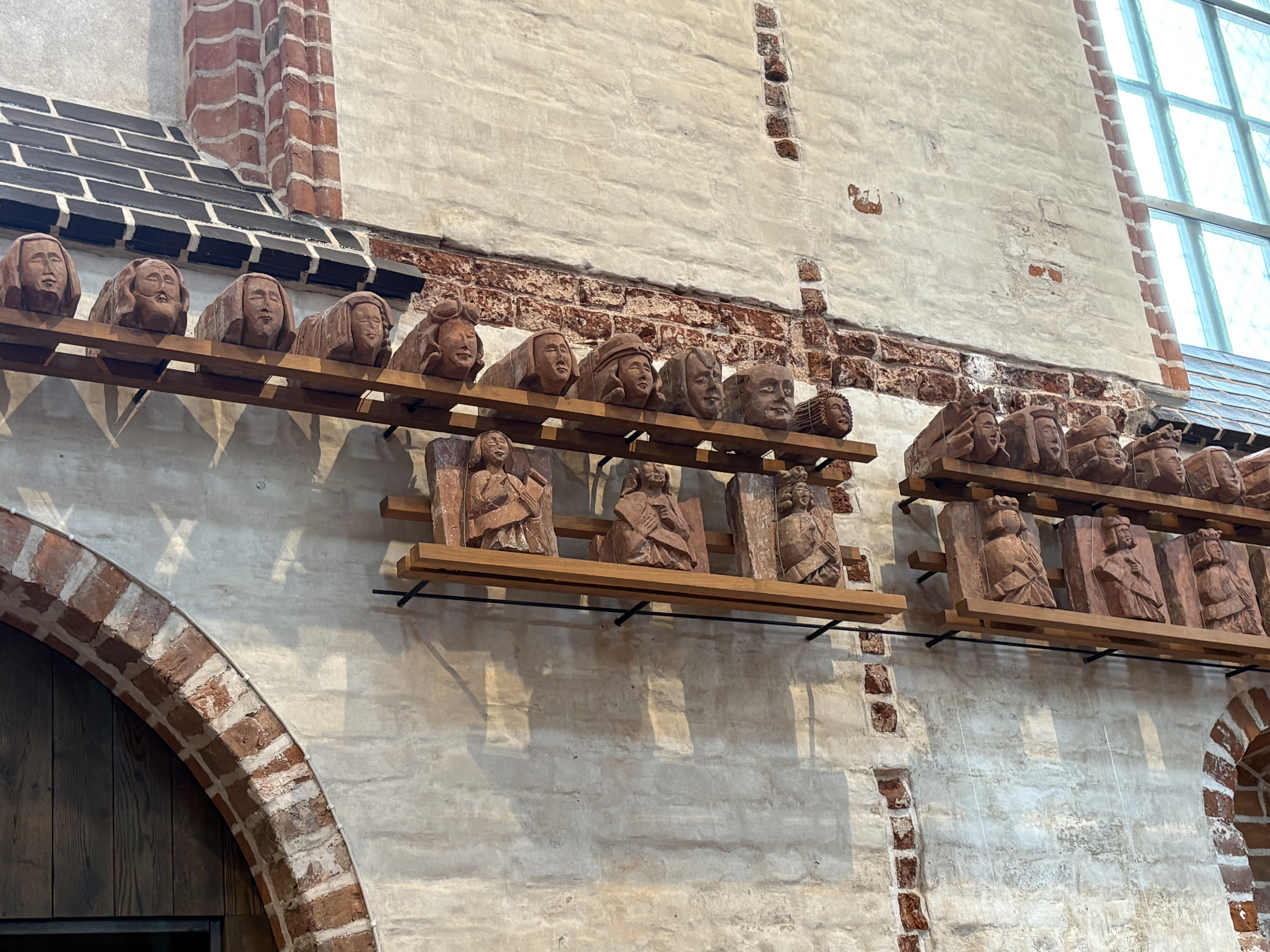
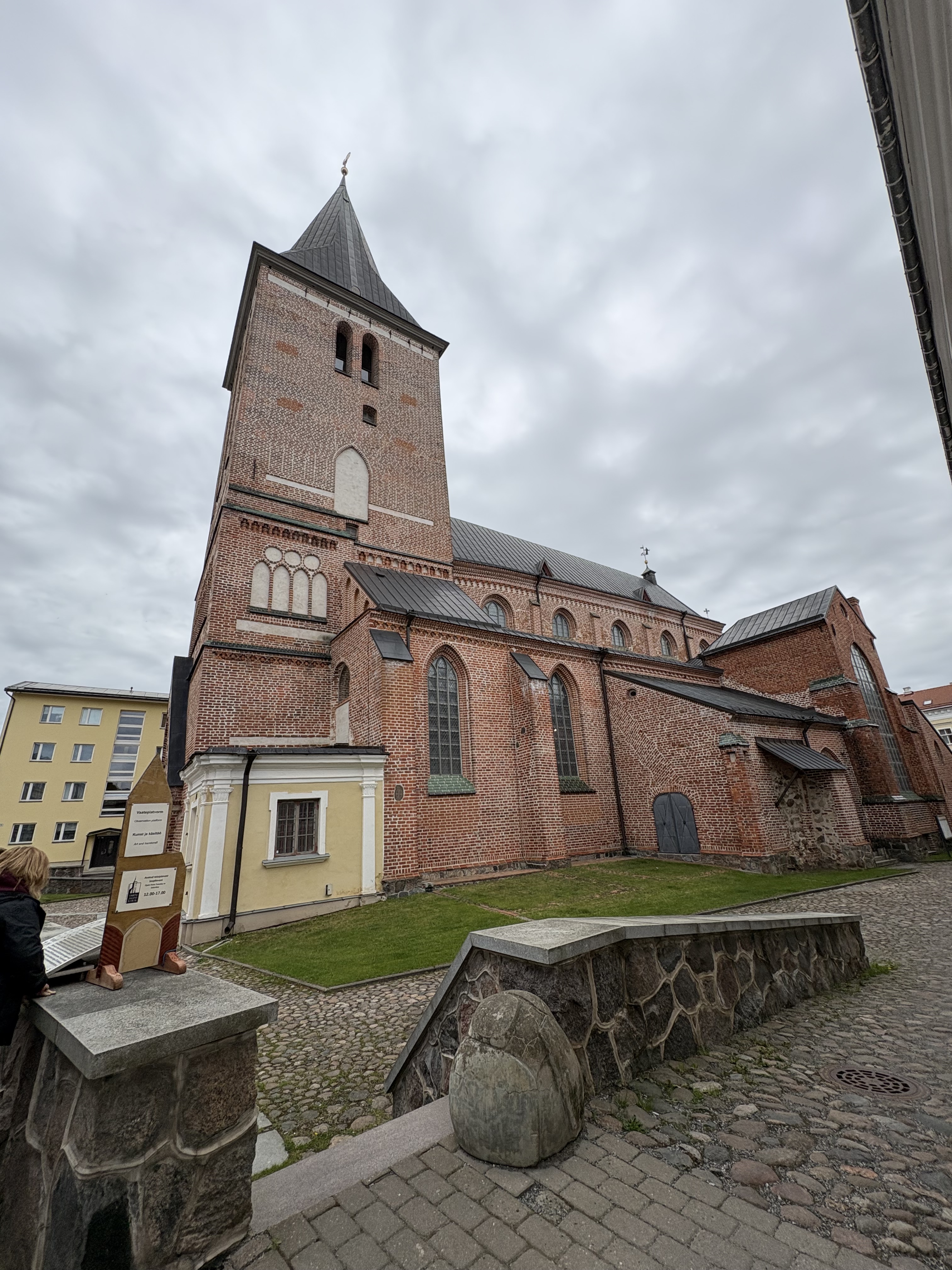
We visited St John’s Church, the current building largely rebuilt after WWII, but incorporating parts dating back to the 14th century, and on a site where there appears to have been a church as far back as the 12th century. One of the remarkable features is the terracotta figurines which can be seen all around the church – they are about 700 years old and are subject to a constant rolling programme of restoration.
RIGA
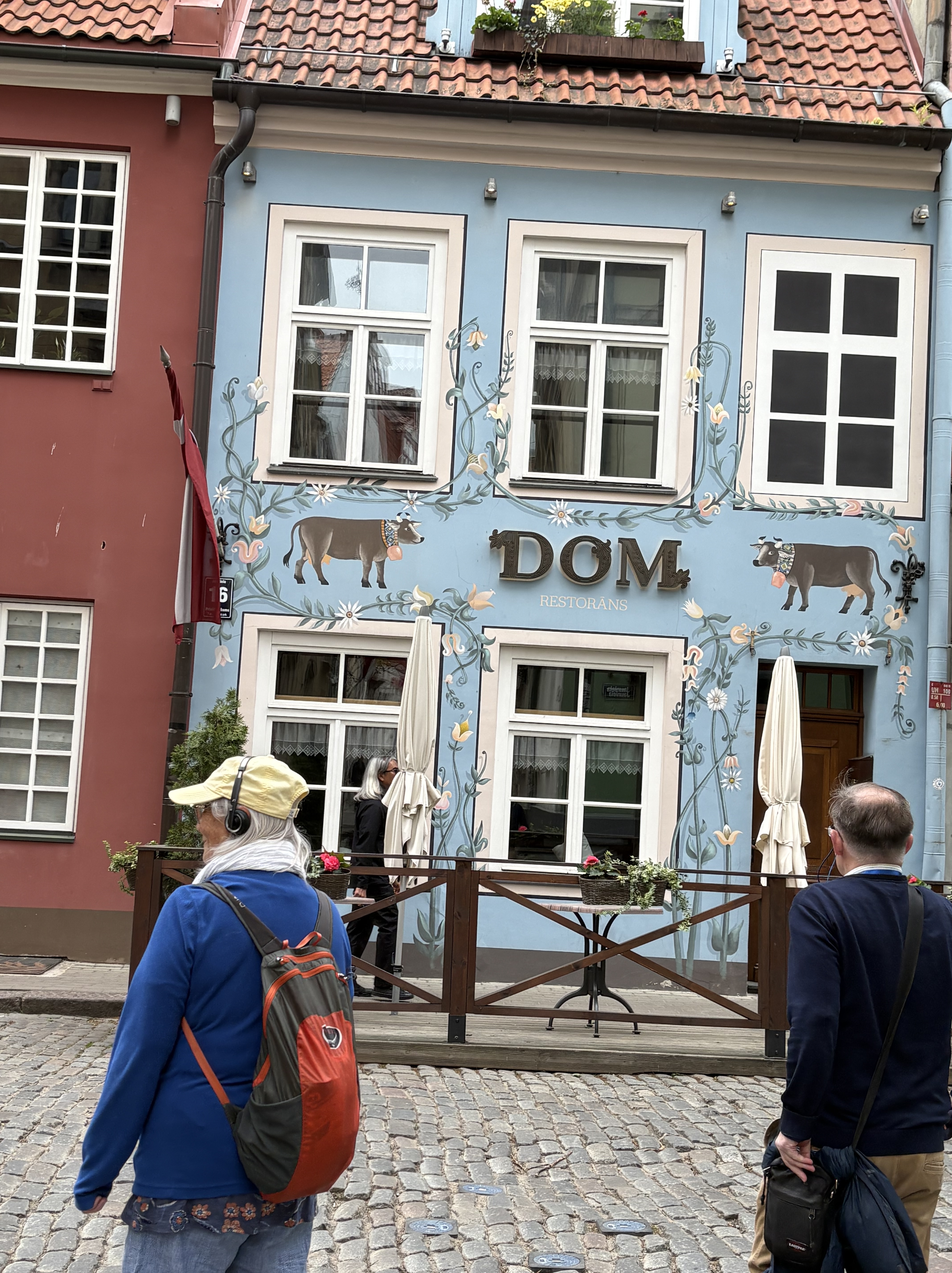
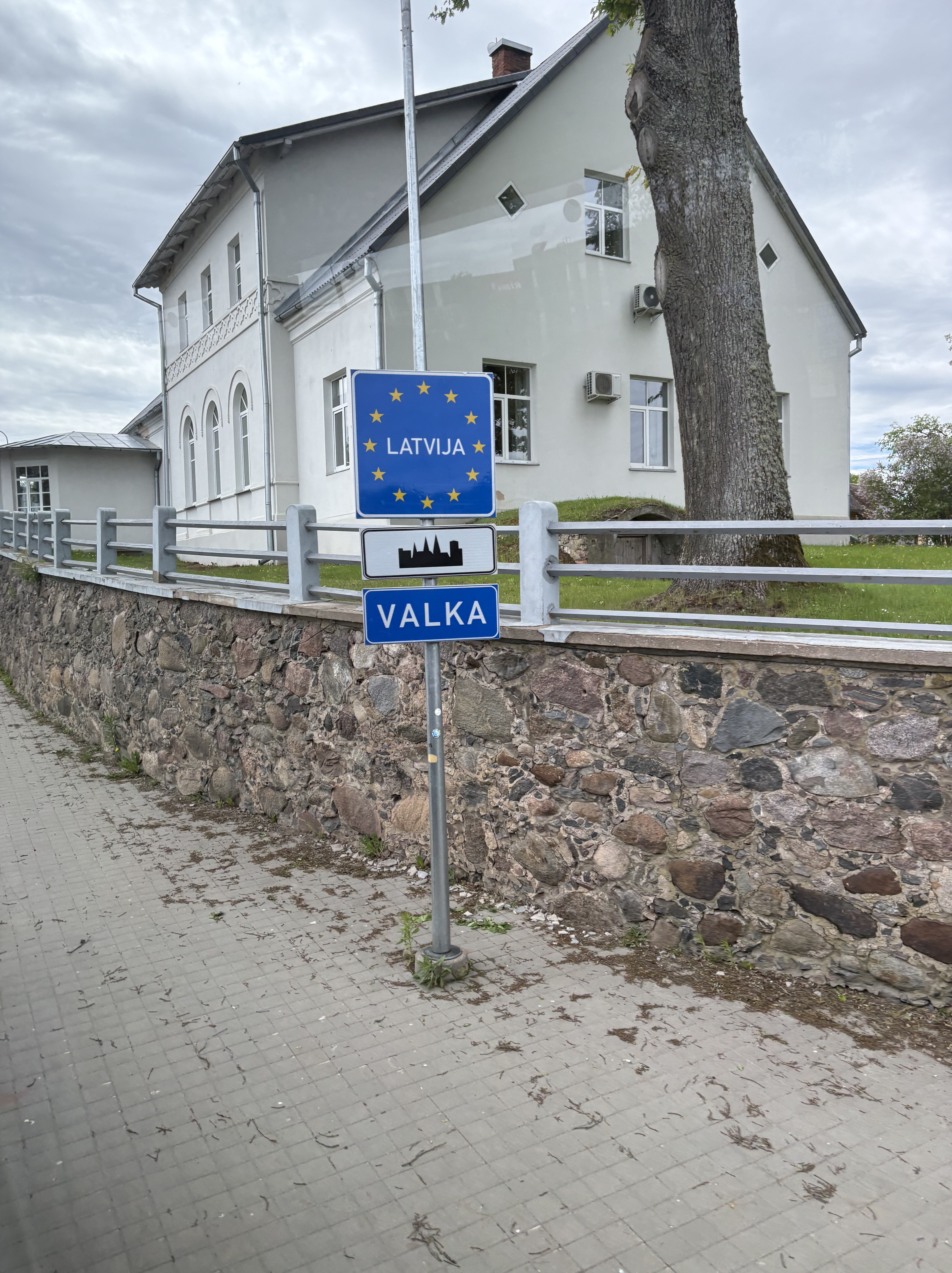
Then onwards into Latvia, and to our final city, Riga. Again our hotel was right on the edge of the Old Town, and with some beautiful buildings around it. We headed out for a meal at the Blue Cow, in a historic (medieval?) building on Līvu Square in the Old Town. It is named after the rare Latvian Blue cow, one of Europe’s rarest breeds, with a silvery blue coat, found only in Latvia.
Day 7
As in Tallinn, we had a guided tour of the Old Town. As in Tallinn, we saw so many interesting buildings that even trying to reconstruct the details with my photos and the guide book is sometimes challenging – there must have been something about that particular building, but I can no longer in every case say what it was. There’s no shortage, however, of places that I can identify along our route.
The Powder Tower was first built in the 14th century, destroyed by Swedish invaders in 1621, rebuilt in 1651 with much thicker walls to prevent history repeating itself – just in time for the Second Northern War (1655-60). To celebrate this new indestructibility the masons embedded some of the cannonballs that had failed to achieve their objective in its exterior. It was originally just one part of the city’s defences, but the name comes from its use in the 17th century as storage for gunpowder.
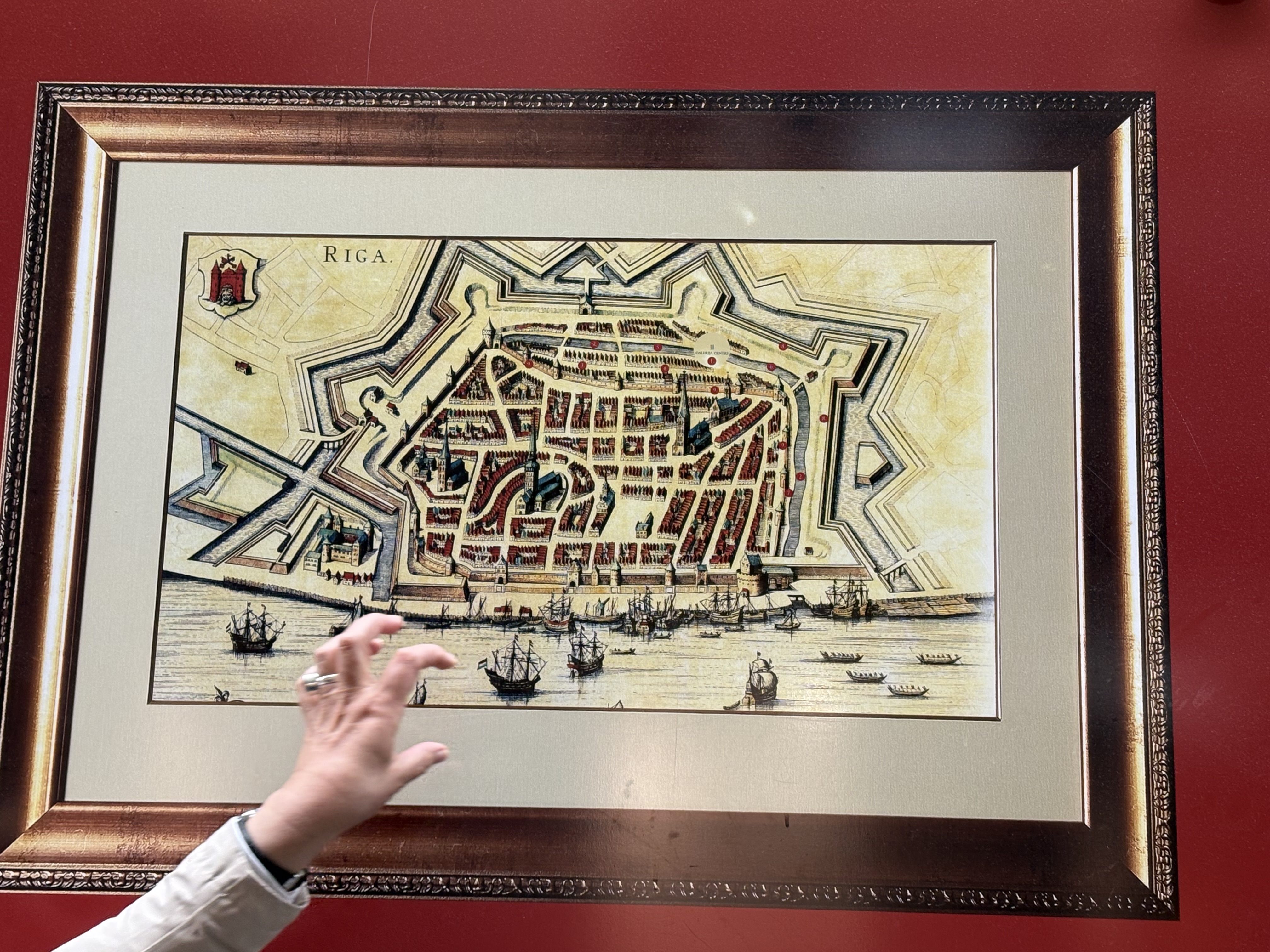
We were shown a map of Riga from 1638, when the whole town was fortified with 6 bastion towers to repel invasions – a familiar image by now, from Suomenlinna and Tallinn. The Old Town has buildings from so many different eras – and so many spires too, from the multiplicity of churches and cathedrals. St Peters dates originally from 1209, and with the steeple completed in 1491. A series of disasters – collapse, fire (twice), bombing – each resulted in rebuilding and so the current steeple only dates from 1973.
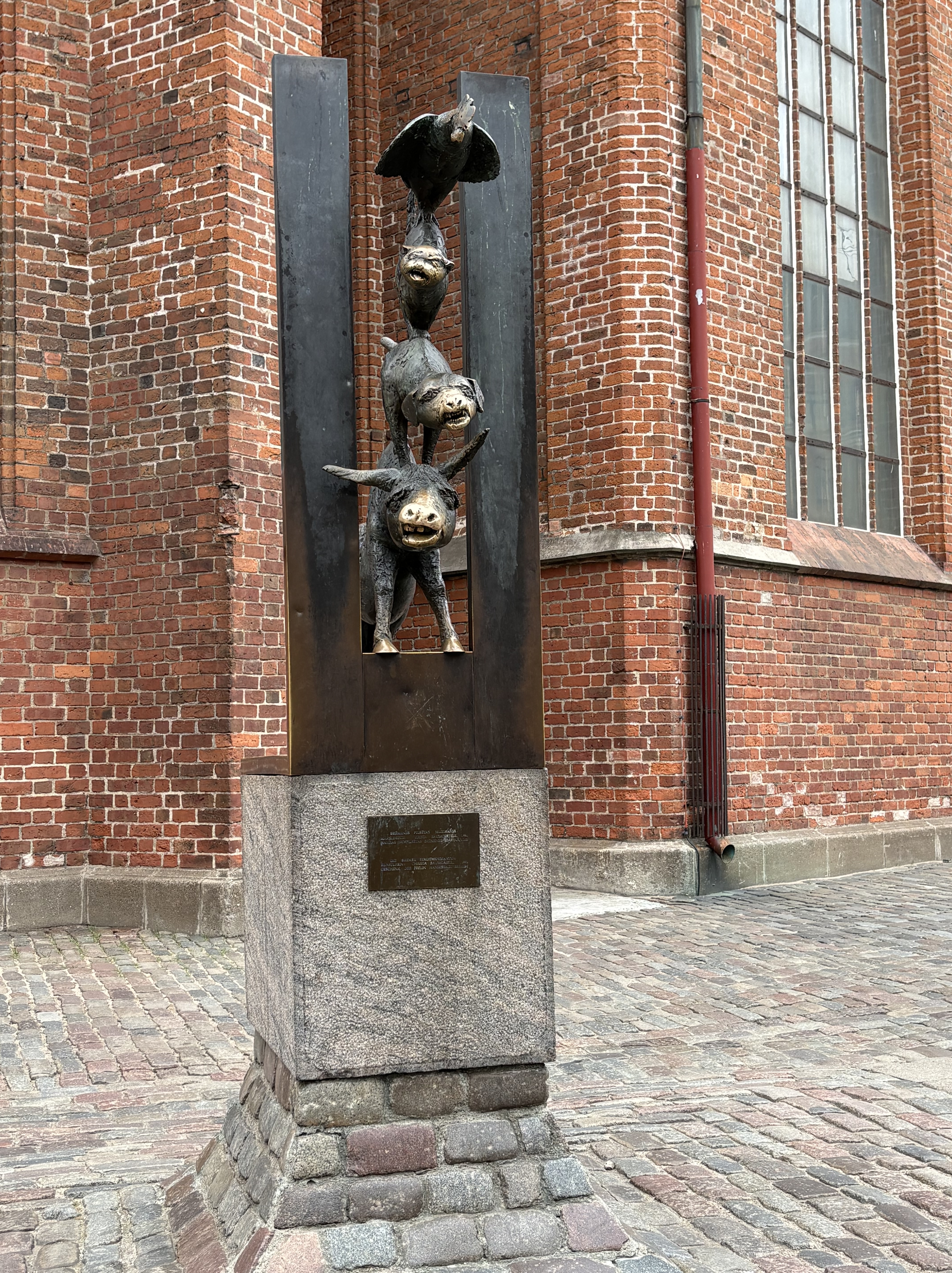
The statue of the Bremen Town Musicians is labelled in my guidebook as a ‘political monument’, which seems, well, monumentally odd. It gives no explanation of why this depiction of a Grimms’ fairy tale about a quartet of outcast animals who find a new home after defeating some robbers through trickery and cunning should be so labelled. This statue is a replica of the one in Bremen, and was a gift to its twin city of Riga. The noses of the animals are all shiny because apparently ‘legend has it’ that rubbing their noses – all four of the animals, which seems to me like discrimination against children and short people – brings luck. As the statue only dates from 1990, and the original version in Bremen from 1951, this is a very youthful legend!
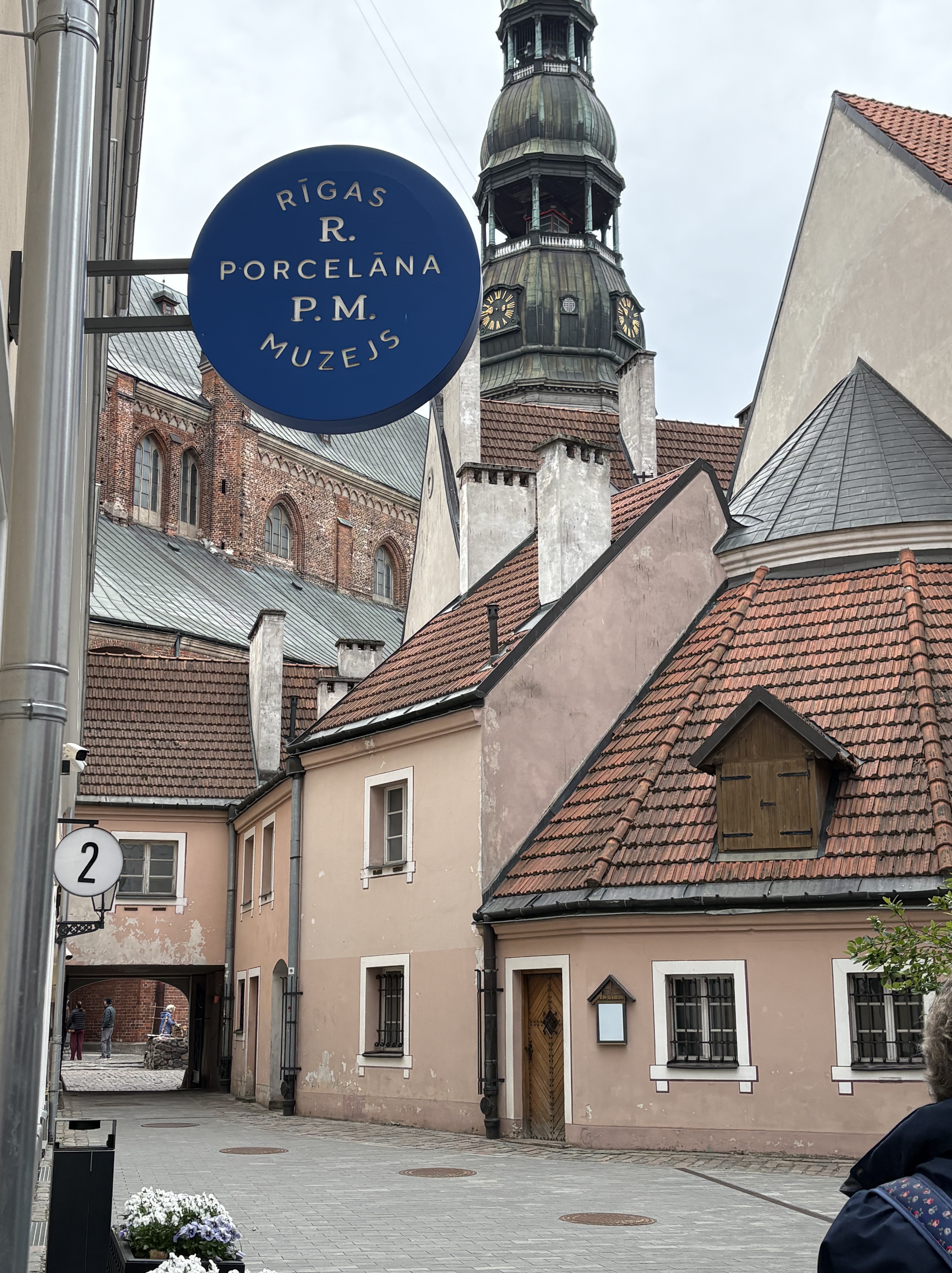
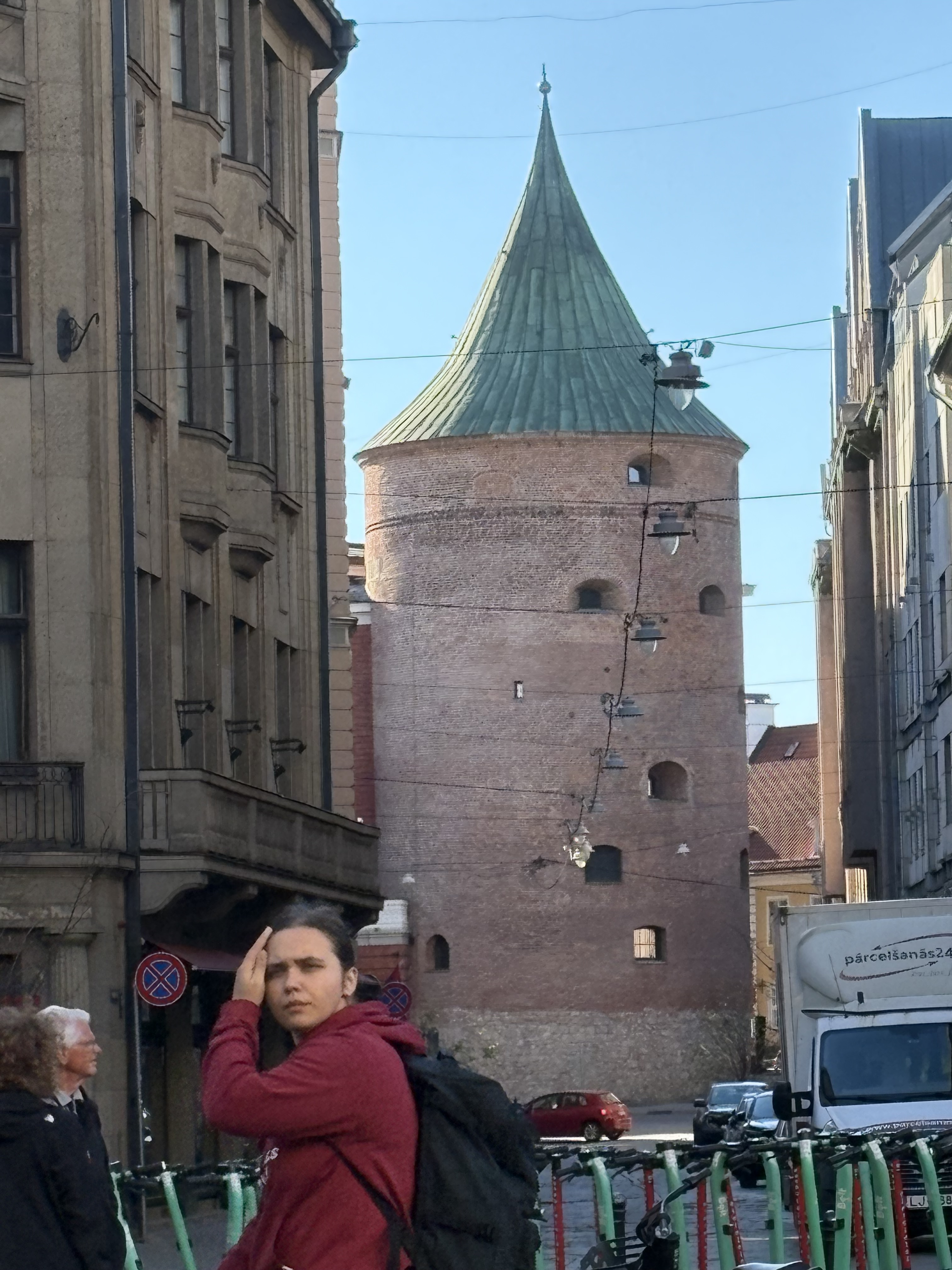
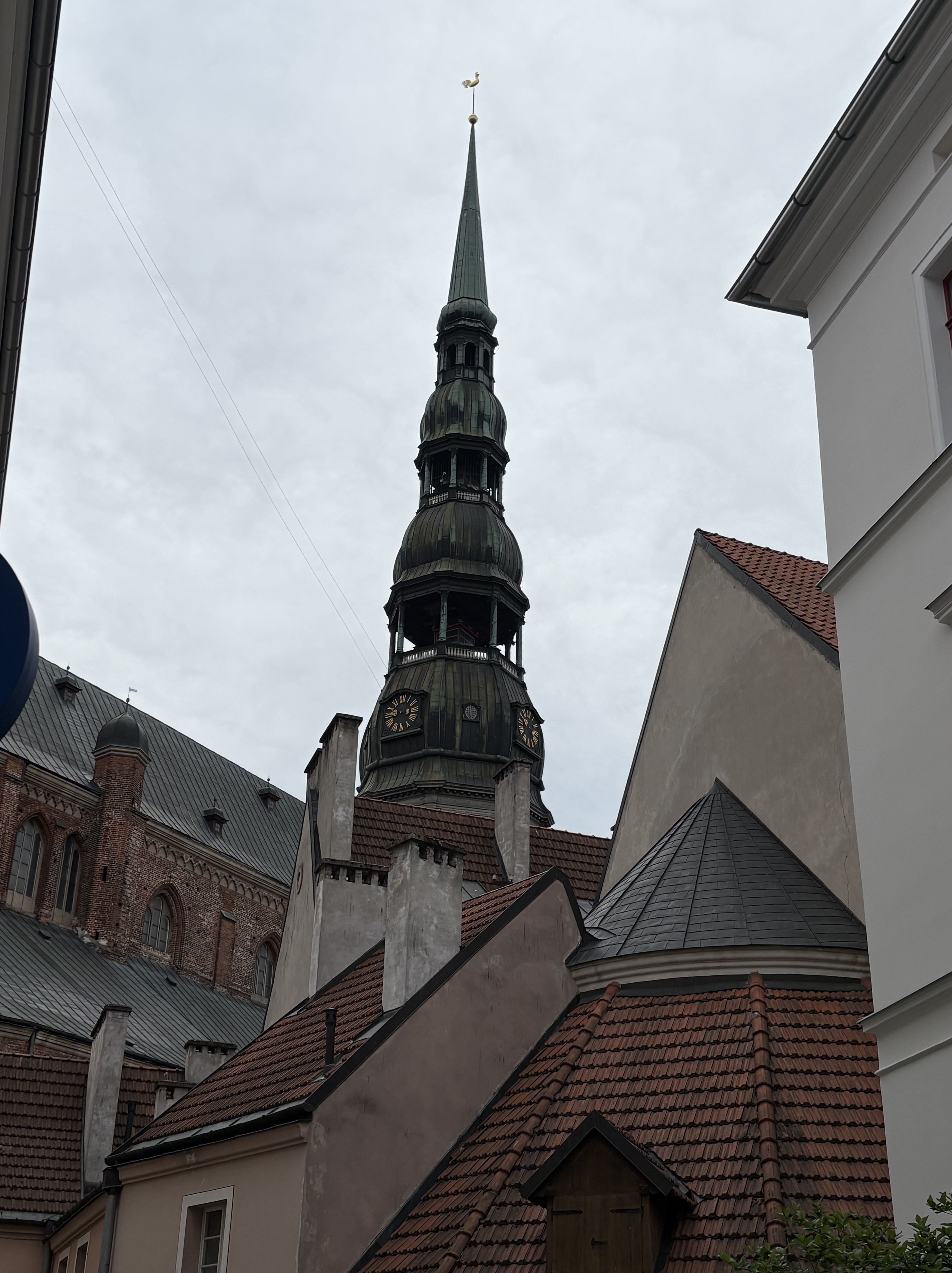
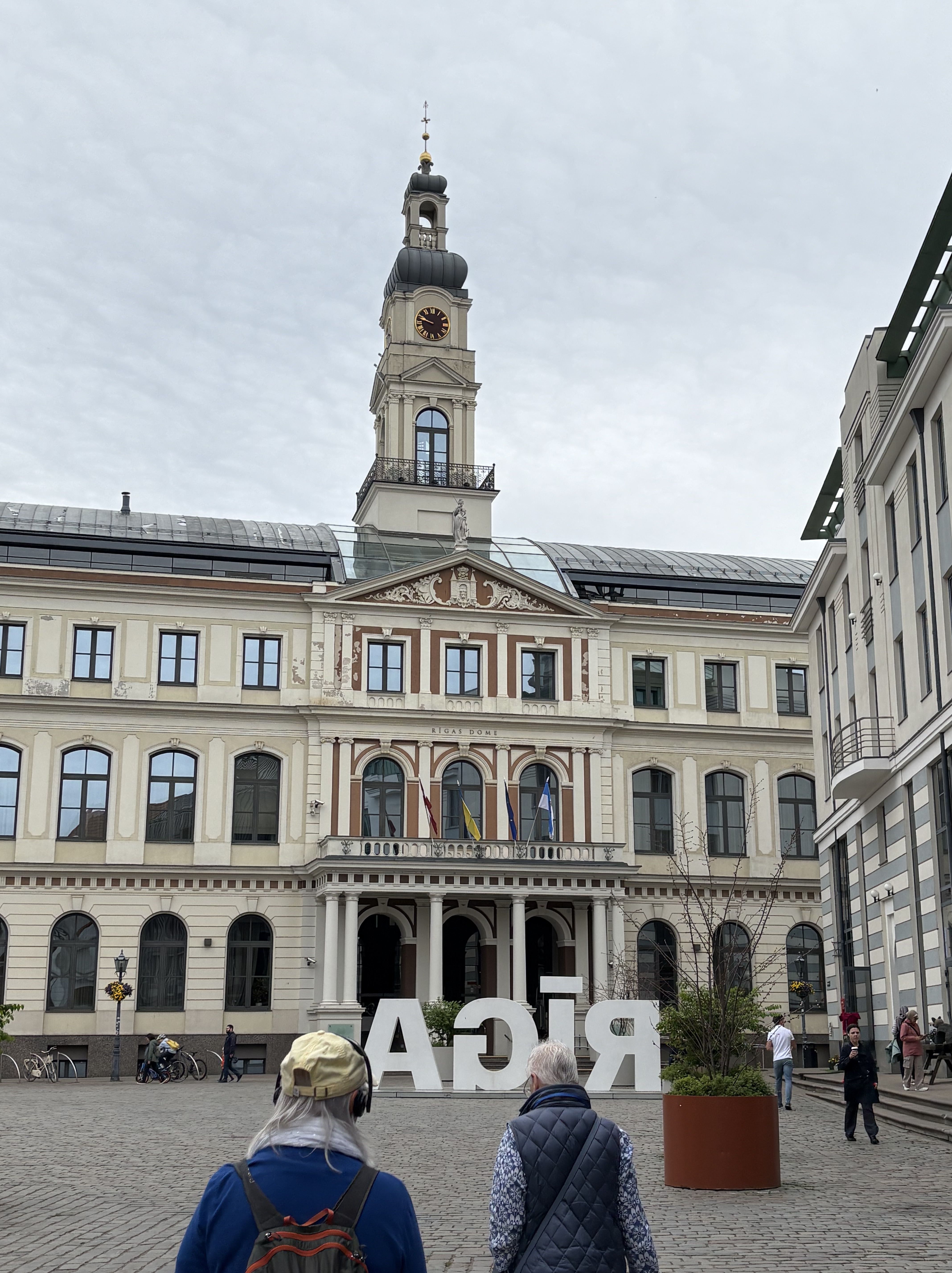
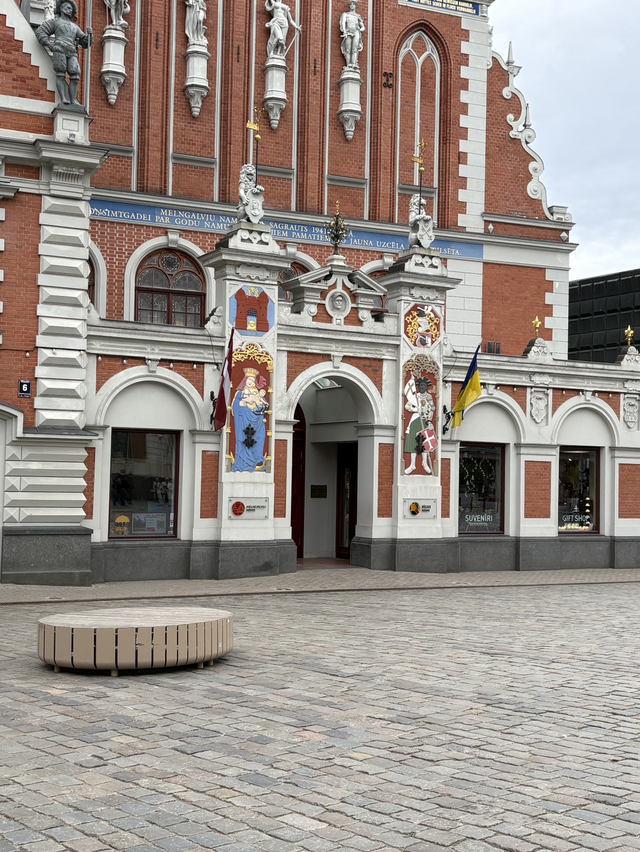
We saw the Riga House of the Black Heads, built in 1334, used by the Brotherhood of Blackheads from the 15th century, obliterated by bombs during the battles between Stalin’s army and Hitler’s, what remained demolished by Stalin, and rebuilt between 1996 and 2000. So many buildings in the Old Town have a similar history – as in so many European cities. One cannot tell what is the original and what is a painstakingly accurate reconstruction and whilst there can be a powerful message in not recreating the lost buildings, leaving them as ruins or as gaps, as in parts of Berlin, denying future generations the chance to see these beautiful buildings would seem a philistine choice. The warring armies may have been indifferent to what they were destroying – or the destruction may indeed have had the aim of wiping a city and its culture off the face of the earth – but by rebuilding we deprive the warmakers of the win.
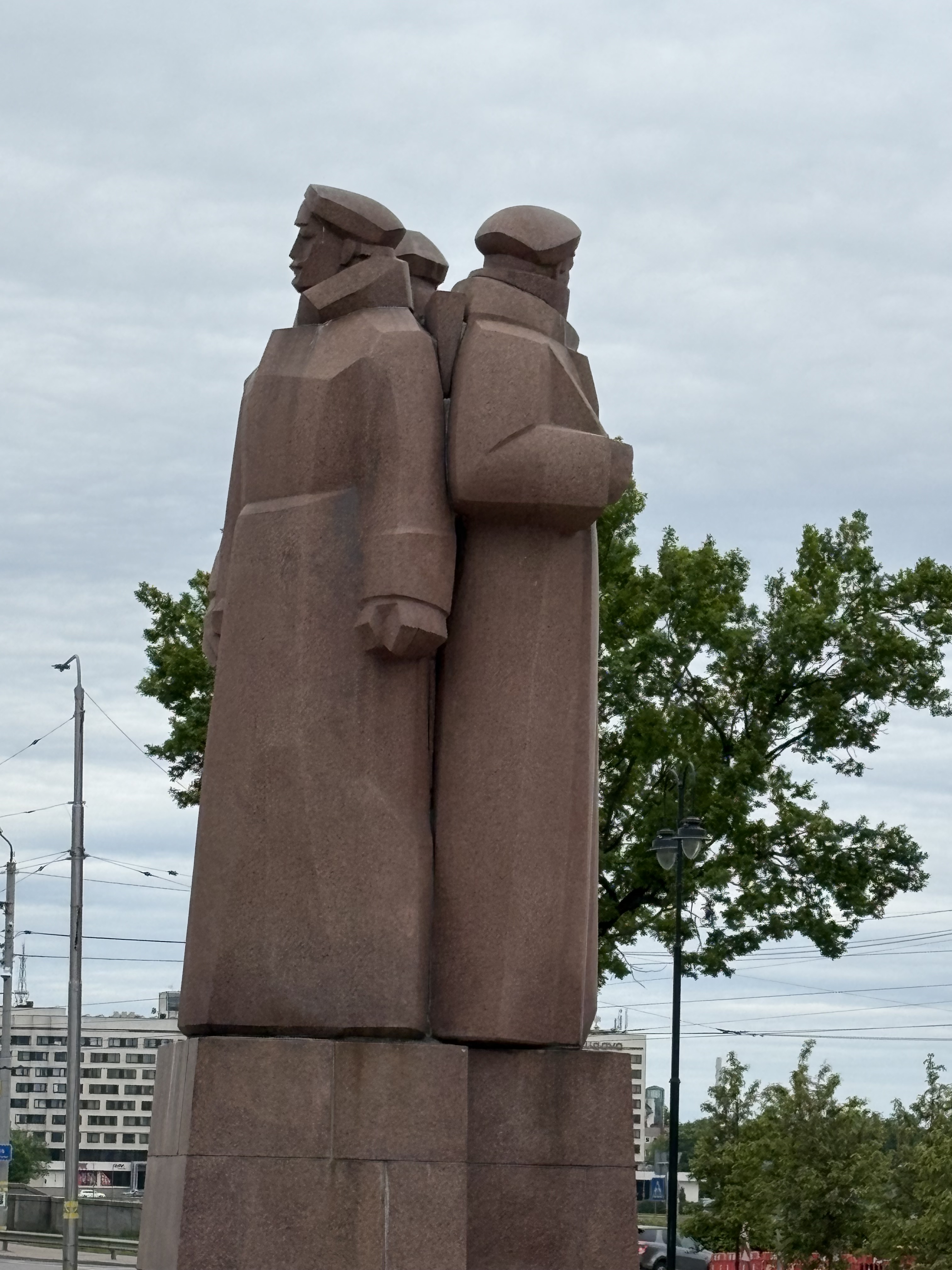
The Town Hall Square houses the Museum of the Occupation of Latvia, which we only saw from the outside. Latvia was occupied by the USSR in 1940-41, the Nazis from 1941 to 1944, and then the USSR from 1944 to 1991. 51 years. There’s a statue just outside, a monument to the Latvian riflemen who fought during WWI, specifically as part of the Latvian Red Riflemen, some of whom later acted as Lenin’s bodyguards. It’s certainly a very Soviet looking monument, though it is now dedicated to all of the riflemen who joined up to defend their homeland, whatever their affiliations.
The statue of Roland – often misnamed as St Roland, as it is in my guidebook – is a depiction of a protector of justice and of the rights of the city. This Roland was a nephew of Charlemagne and met a heroic death in battle (not a martyr’s death as per the guidebook…). His story is told in various epic poems in French, Nordic and Germanic literature. It’s not entirely clear why he became associated with the movements for the independence of the cities from the nobility.
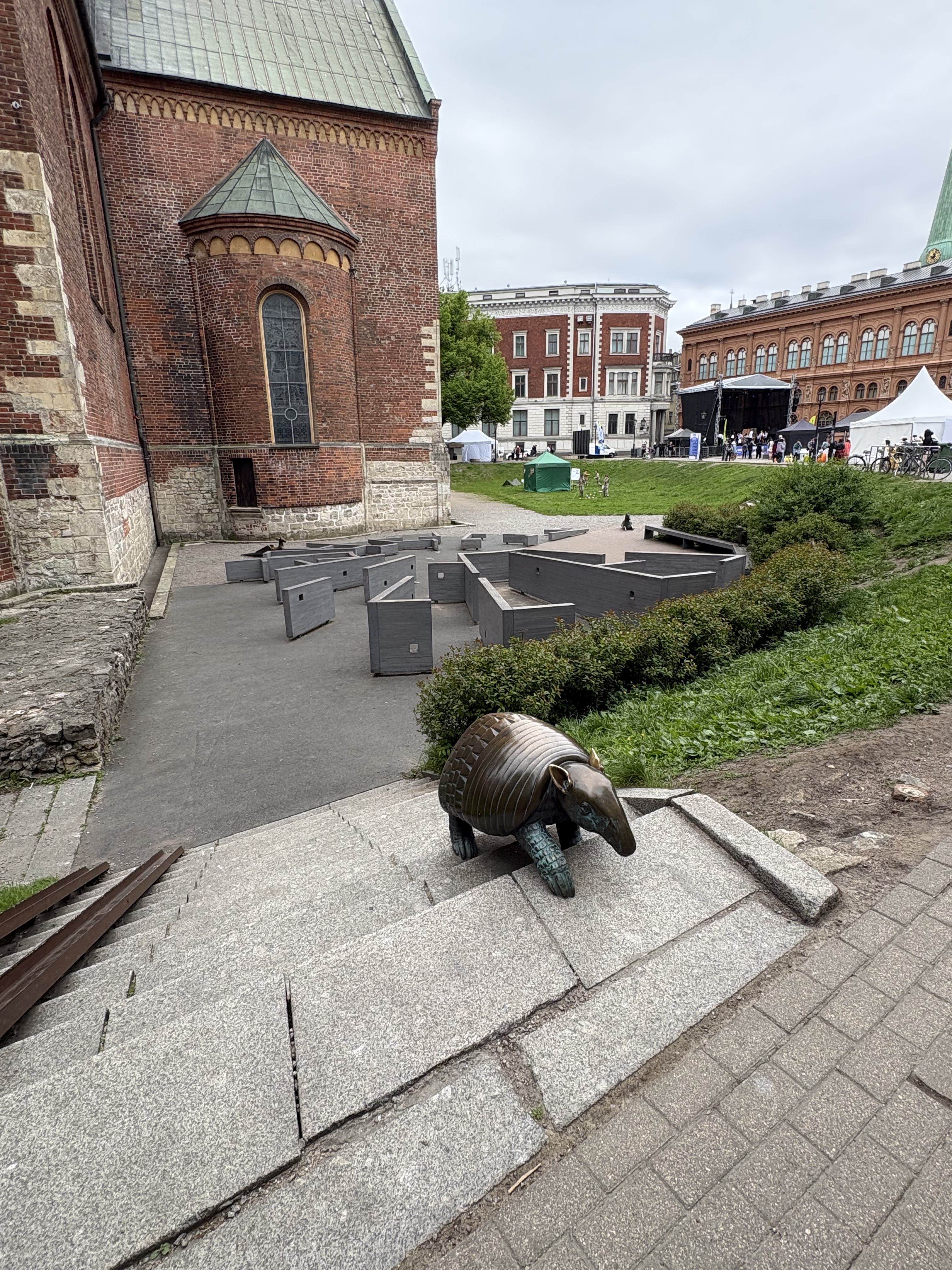
The reasons for the sculpture of the armadillo are even less clear. One source suggested that the armoured creature symbolises the resilience and strength of the city. Curious.
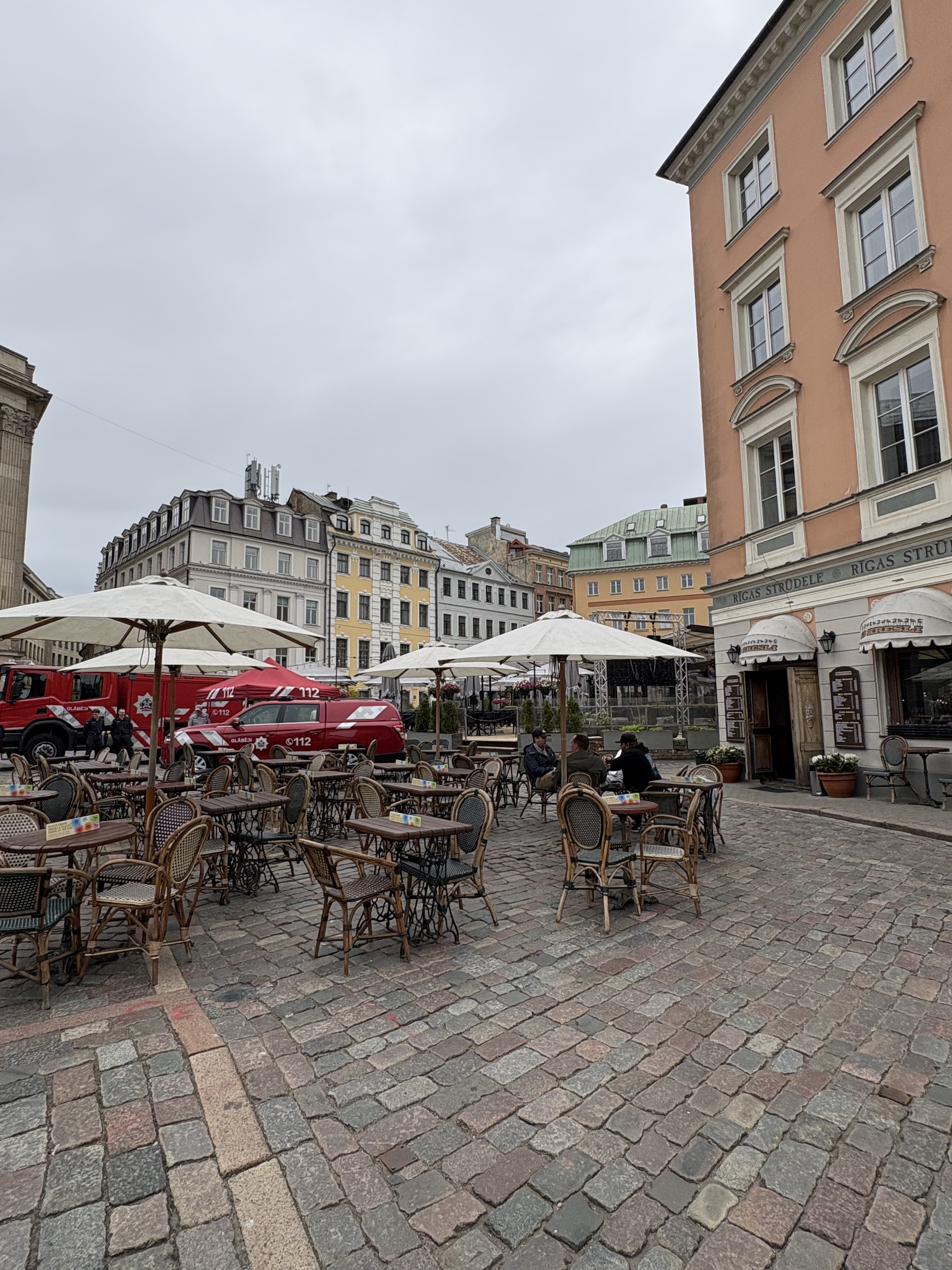
Dome Square when we visited was full of stalls and a large stage where various groups of schoolchildren were performing.
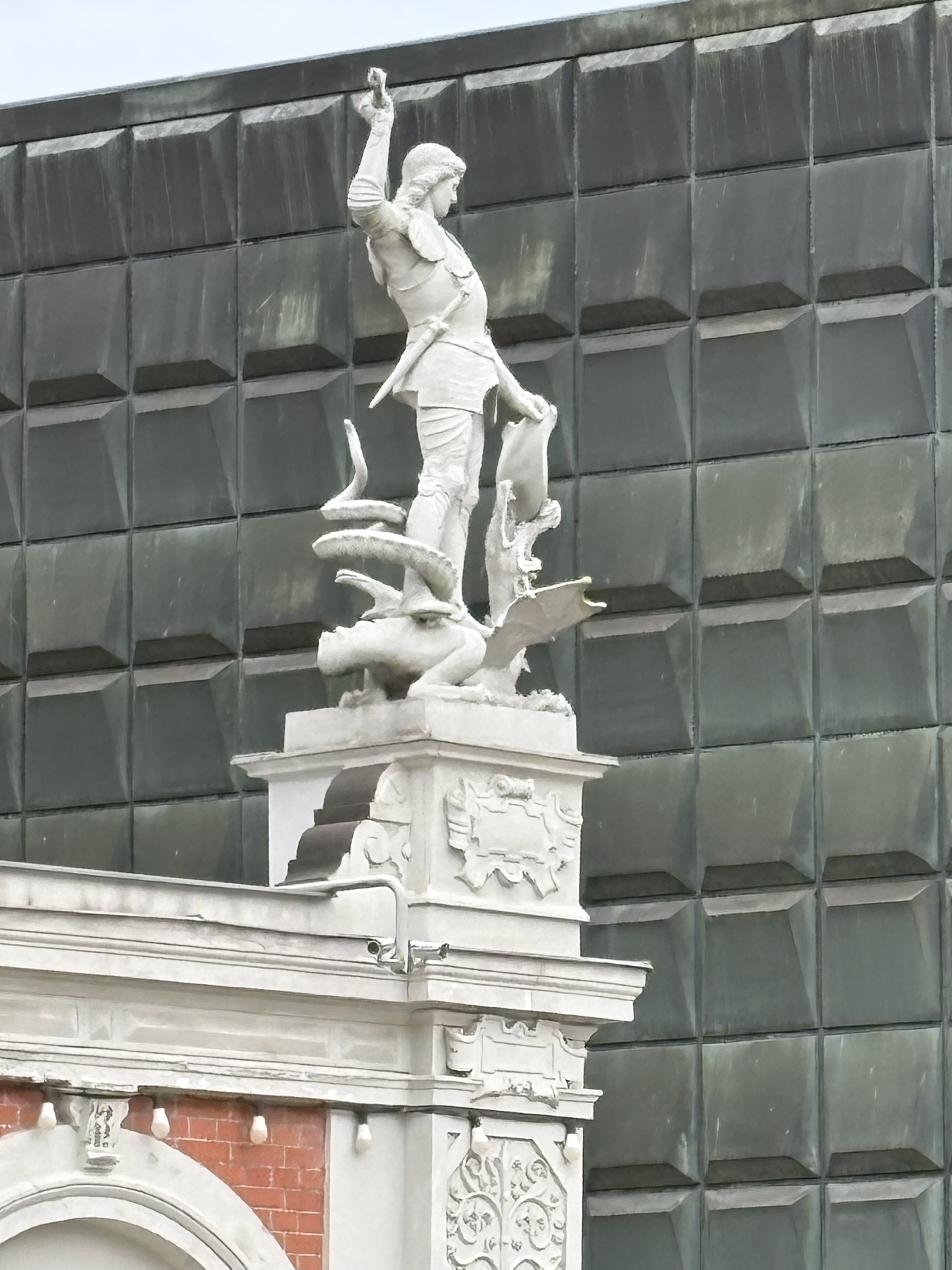
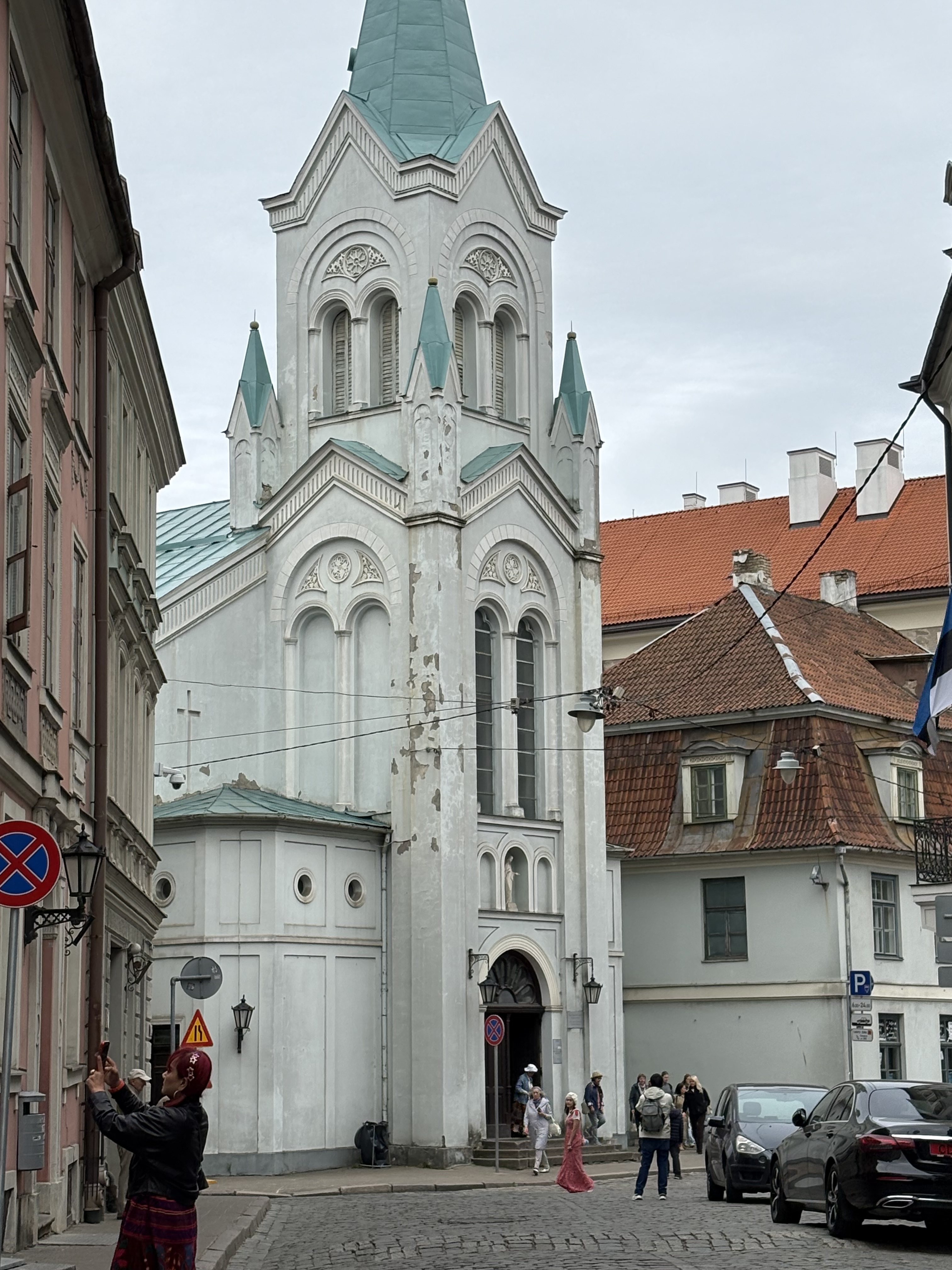
Near Dome Square is the Church of Our Lady of Sorrows, built to provide a place of worship for the city’s Catholic population in the eighteenth century. There’s also a tiny Anglican church, St Saviour’s, whose building in 1857 was funded by British businessmen, and which still gives services in English.
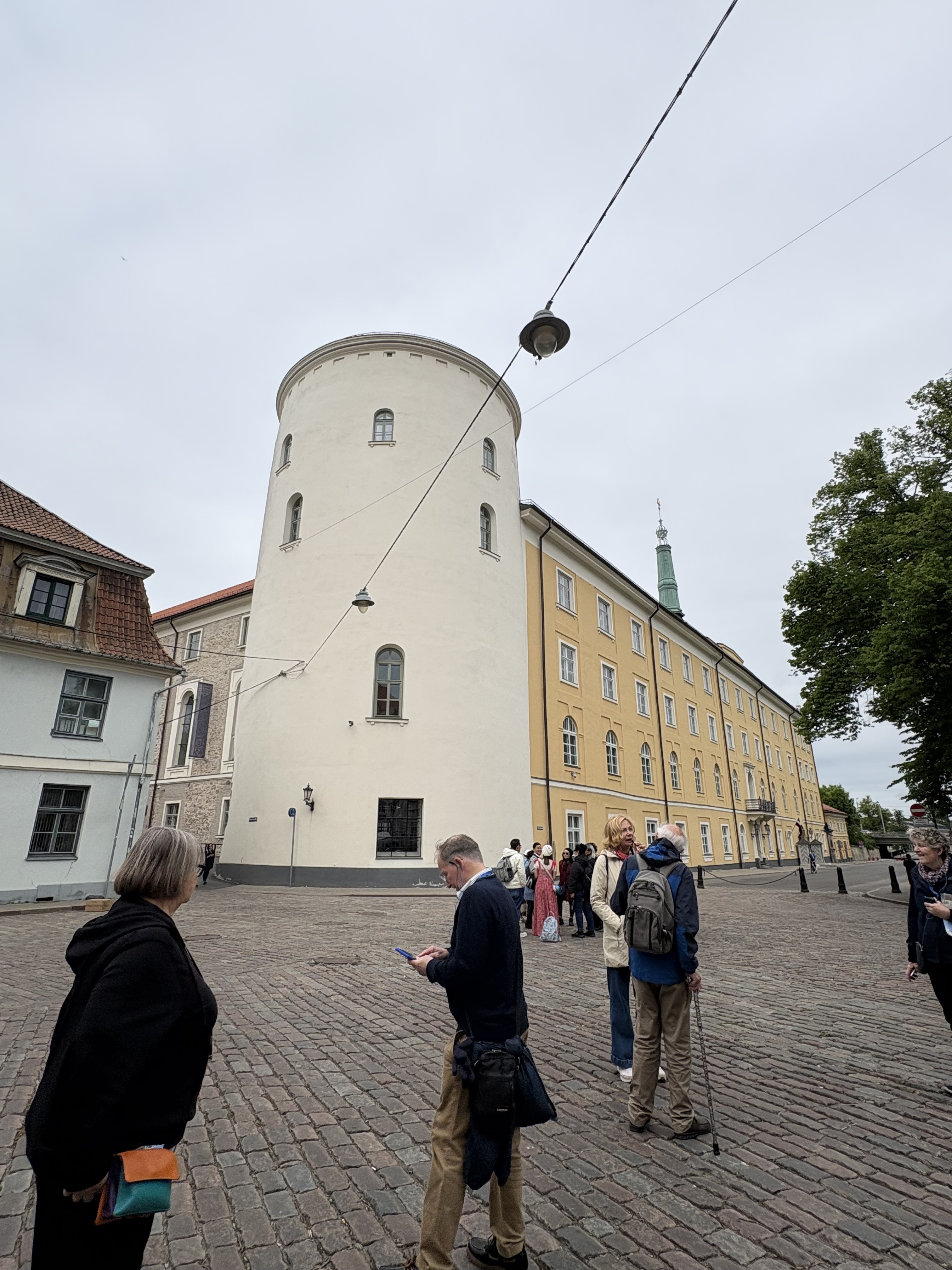
Riga Castle was destroyed by its own townspeople in 1297 (makes a change from invaders) who were then forced to build its replacement by the Livonian Order, not just once but again in 1491. Since independence (after WWI) it’s been used as the offices of the Latvian president.
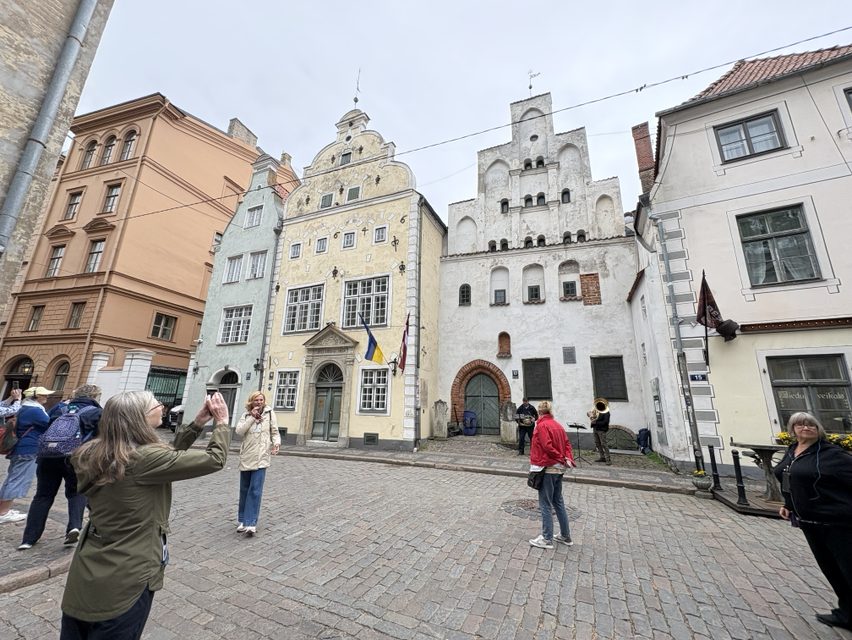
The oldest original buildings here are collectively known as the Three Brothers: No 17 dates back to the 15th century, No. 19 from the mid-17th and No. 21 from the late 18th centuries.
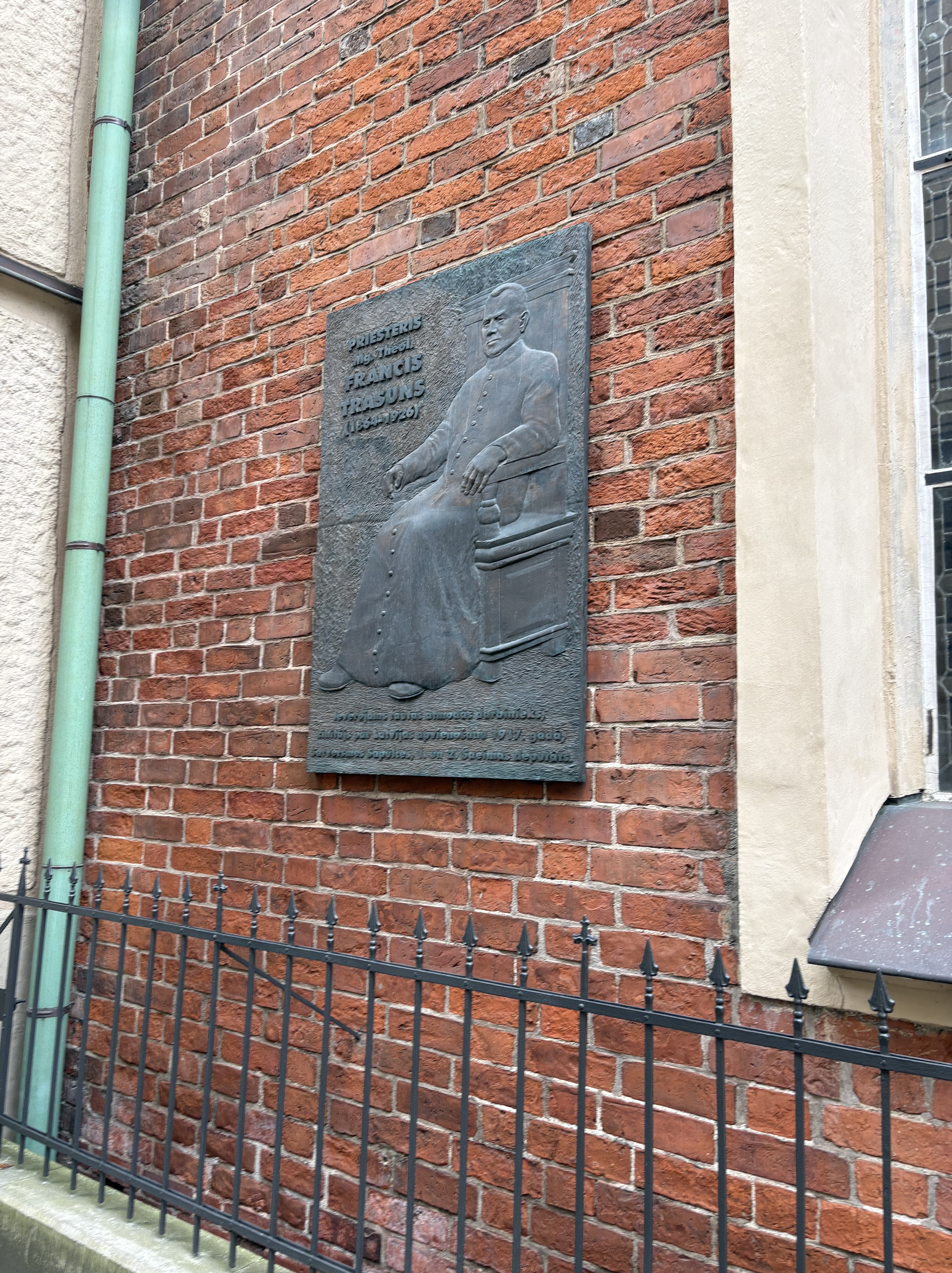
I saw a plaque commemorating Francis Trasuns and checked out who he was. Trasuns was a priest, theologian and politician, a member of the Latvian parliament in the mid-1920s. He was a lifelong advocate for the Latgalian language and culture, from the Latgale region in the eastern part of Latvia. Latgale developed differently from other parts of Latvia due to its comng under Polish control in the 17th century, and thus predominantly Catholic rather than Lutheran. The language at various times was banned but had a revival through the movement that led to the ‘Singing Revolution’ and to independence in 1991.
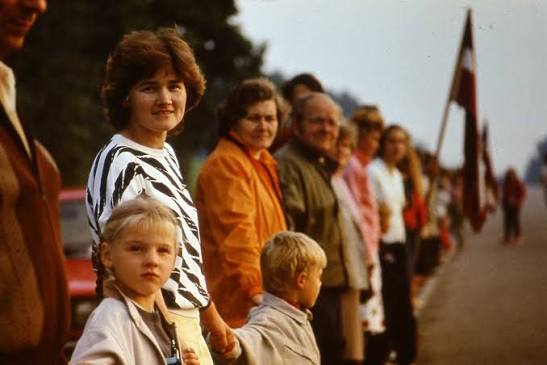
The Soviets had systematically suppressed so many aspects of national culture in the countries that were part of the USSR, and when the Gorbachev era opened up to changes, people expected that this would lead to an opening up to allow their own culture to flourish. However, the regime cracked down in various ways, and popular protests grew wider, with public song festivals providing a focus for national and traditional song. Because of the Soviet reaction to their more modest hopes for greater freedom, it became clear to the Baltic countries (Estonia, Latvia and Lithuania) that the goal should be true independence. In 1989, on the 50th anniversary of the Nazi-Soviet pact, around 2 million people joined hands to form a chain – the ‘Baltic Way’ from Vilnius through Riga to Tallinn. I suppose a lot was happening across and beyond Europe in the late 1980s but I was surprised that I recalled nothing about the ‘Singing Revolution’ or the human chain from the time, given that I have always followed the news, whether online or on TV/radio.
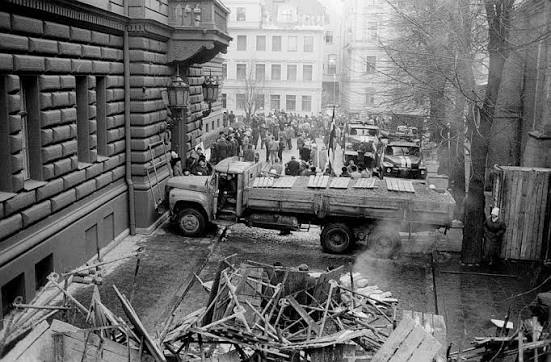
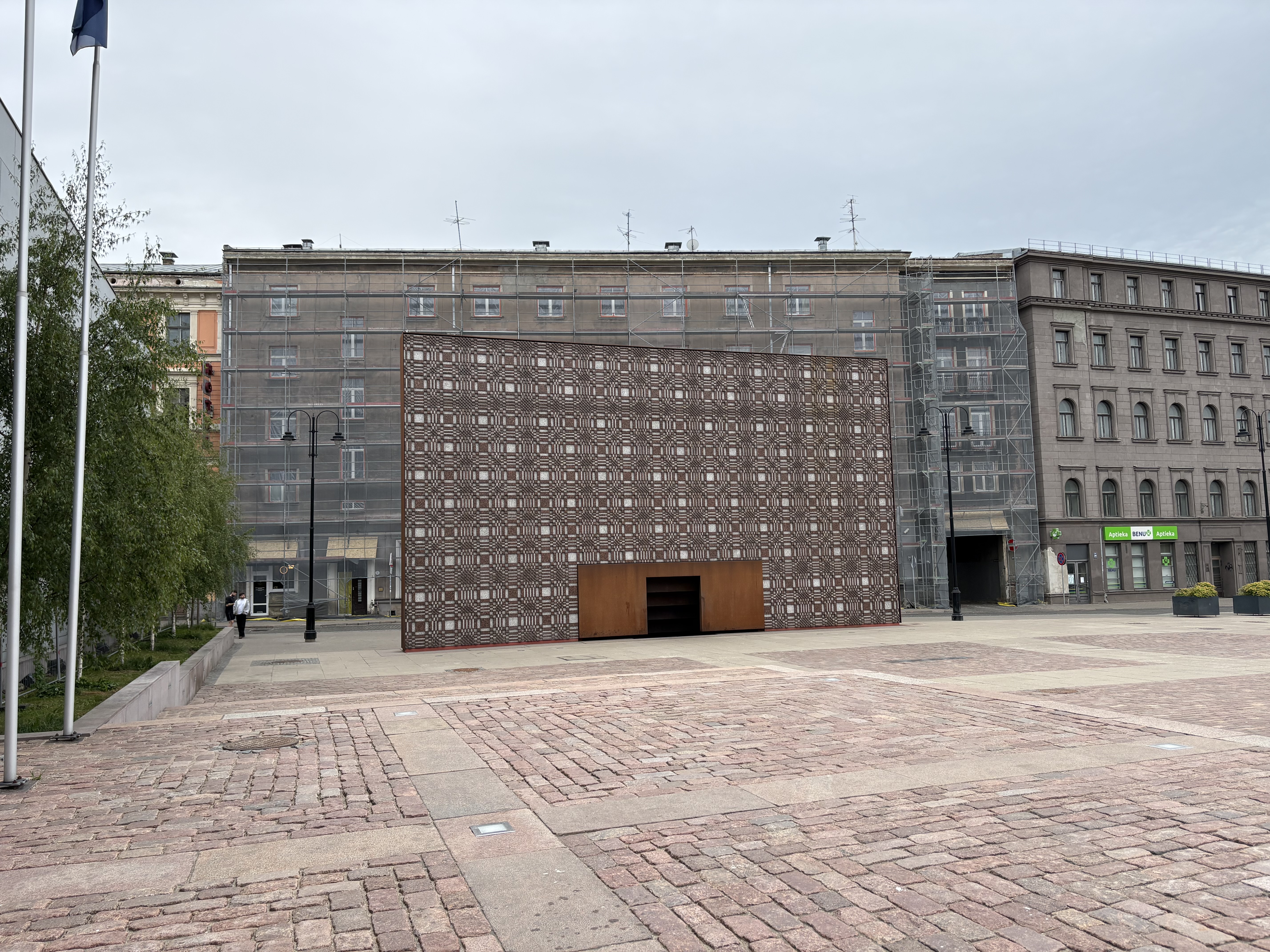
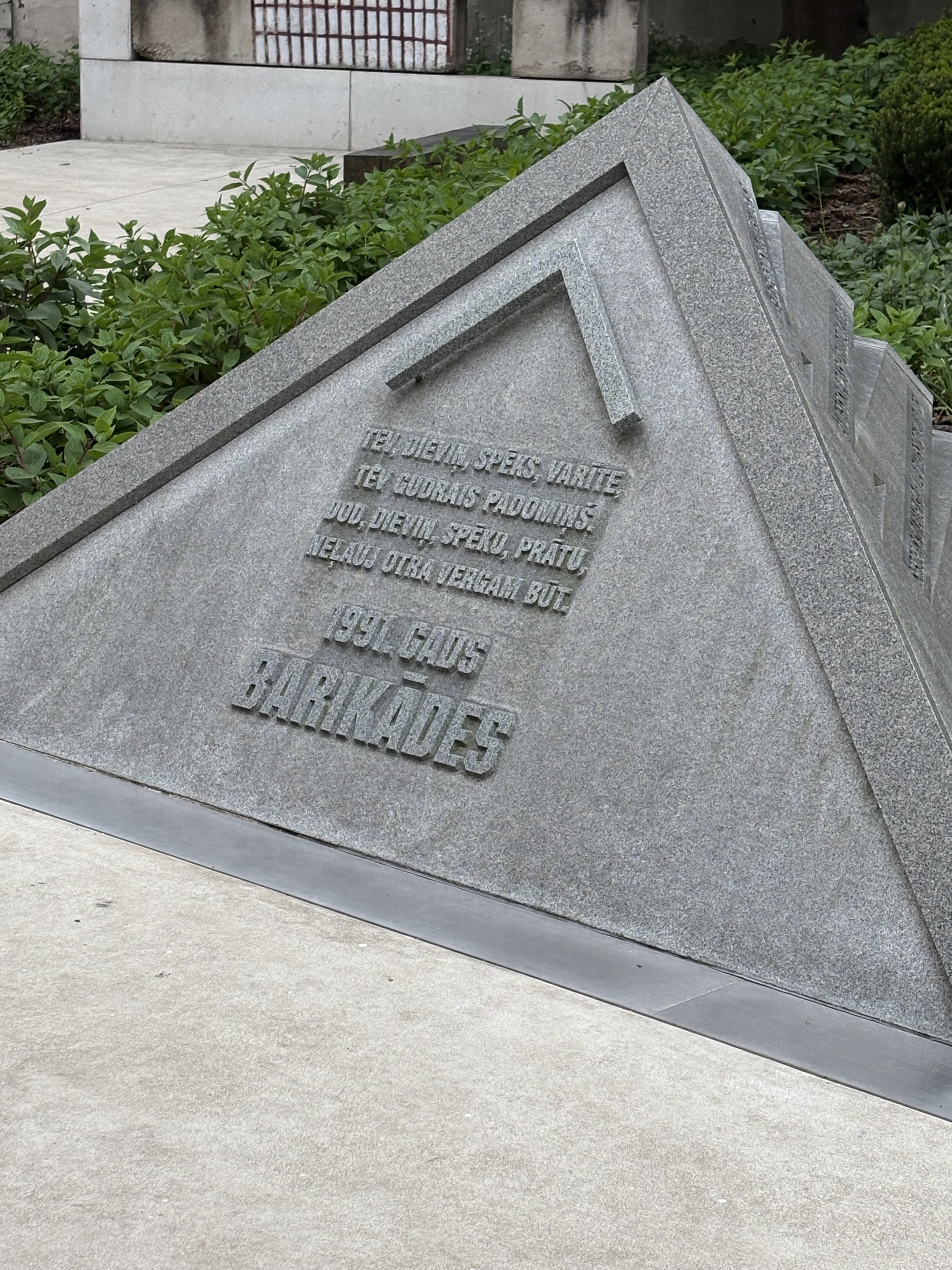
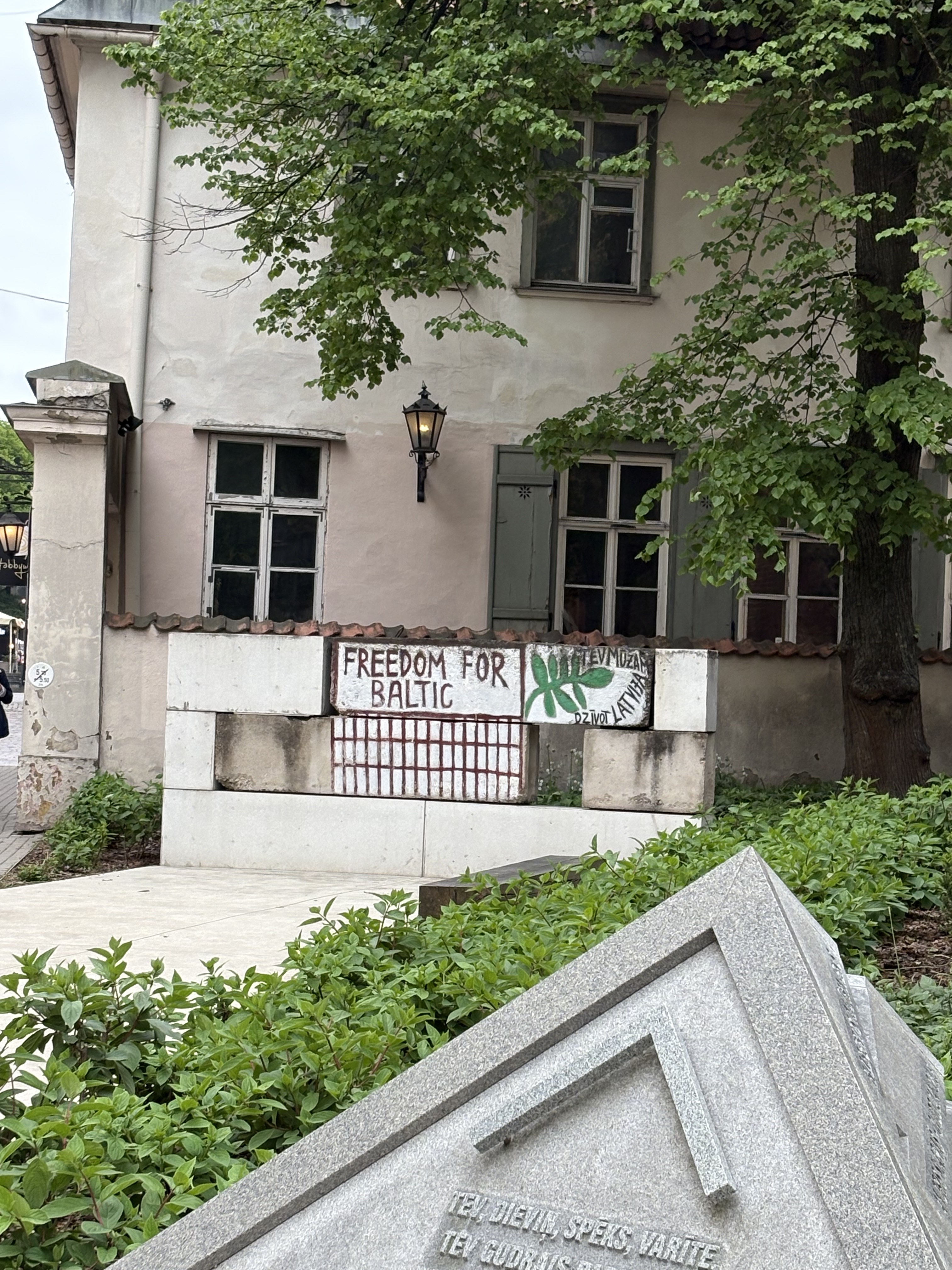
In 1990 all three countries declared independence. This was not well received by the Soviets and a number of strategic locations (the printing house, the phone exchange, the Ministry of Internal Affairs) were seized, and commando units sent in to Latvia. Military vehicles and troops were on the streets of Riga. Meanwhile the same tactics were being used in Lithuania, where 13 civilians were killed in an attack on the TV tower – the Baltic nations stood in solidarity with one another, and the call was issued for Latvians to gather in Dome Square. Around 700 000 people responded to the call and despite warnings from the Soviet forces barricades were built and streets blocked off, with the intention of non-violent resistance. An ultimatum was issued and ignored, prompting attacks on the bridges, then on the Riga militia academy, and on border posts (around this time the attempted coup against Gorbachev took place). 300 000 demonstrated in Moscow in solidarity with the Baltic states and with the failure of the coup, and the demonstration across the region of the determination to achieve independence, the troops withdrew, as did the defenders of the barricades. The pyramid shaped memorial, which gives the names of the people killed, was unveiled in 2007 and behind it is graffiti proclaiming Freedom for the Baltics – I don’t know how long the latter has been in place, but I suspect since the invasion of the Ukraine. Our local guide told us about these events and that she had herself been part of it all.
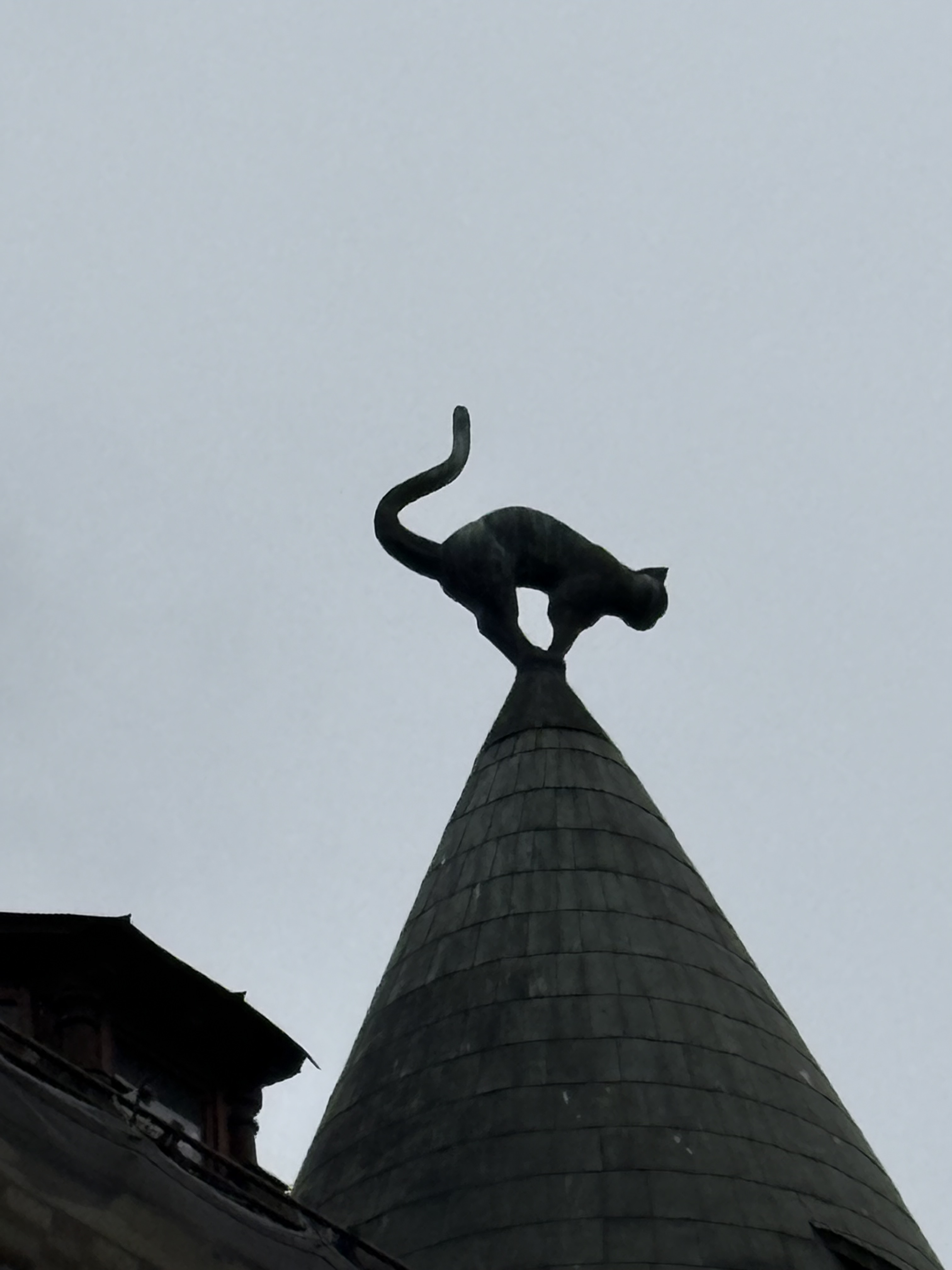
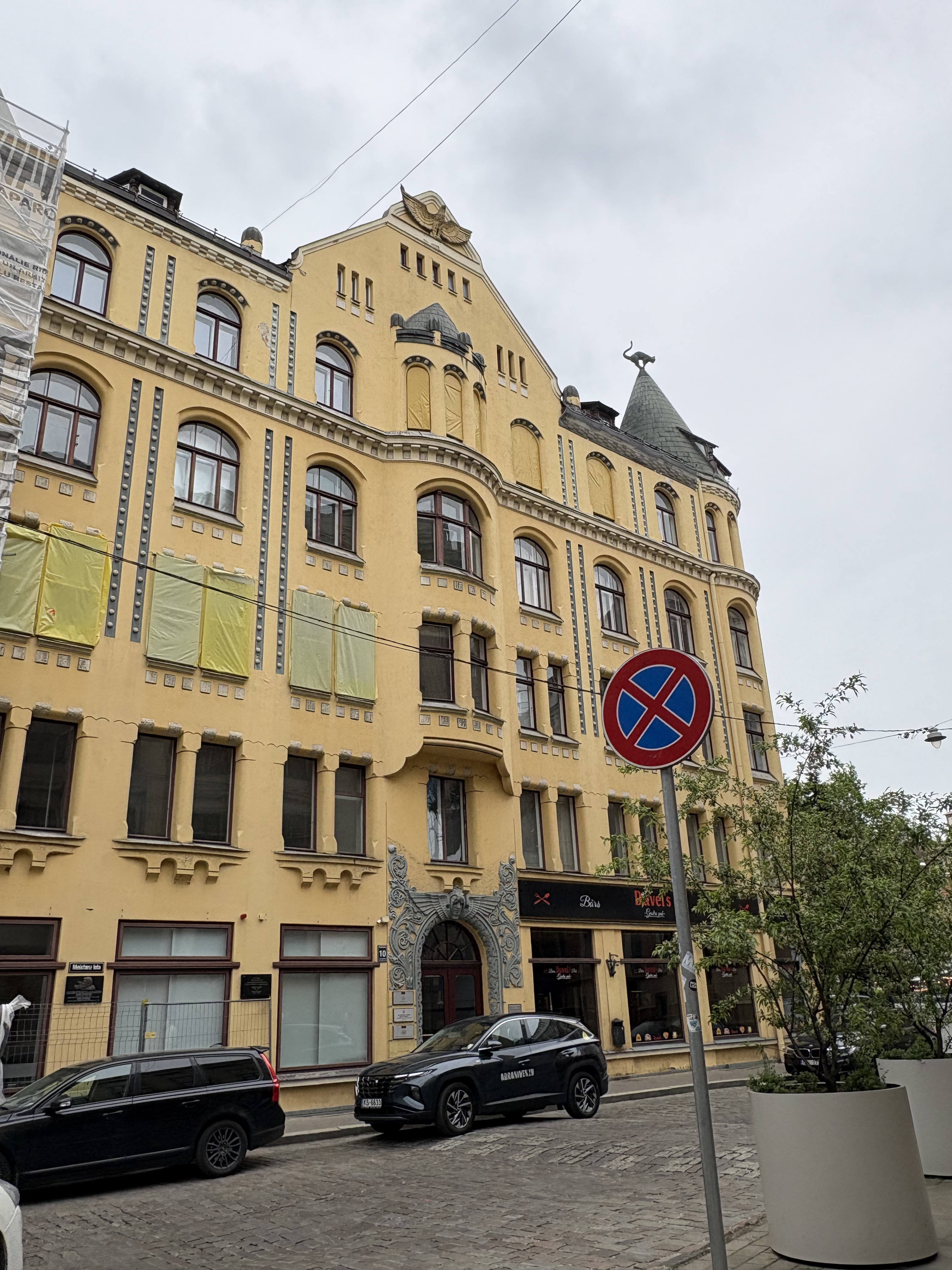
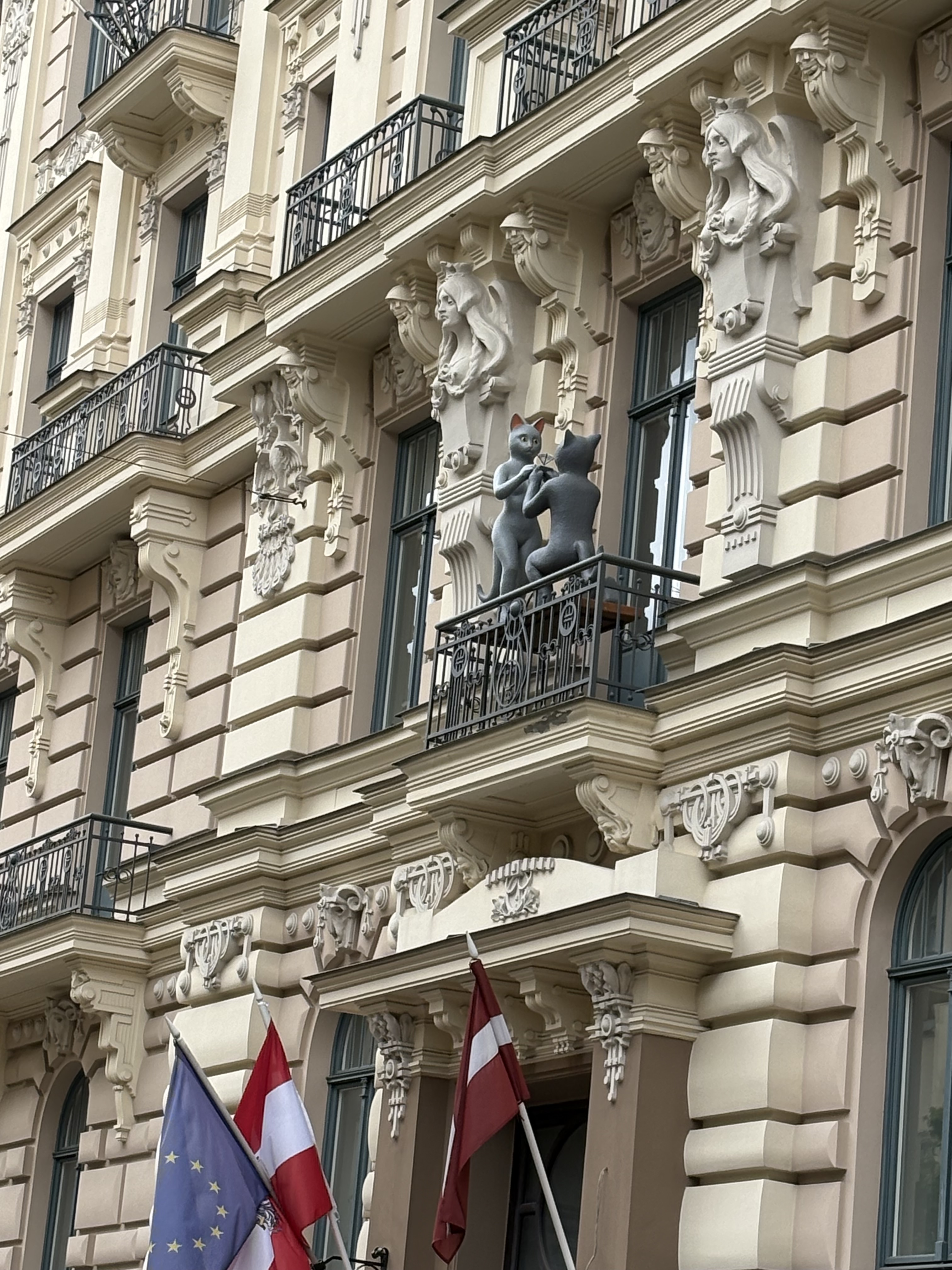
On the roof of a building – worth looking at anyway for its medieval/art nouveau stylings – in the Old Town are two sculptures of cats. The story goes that the owner of the house wanted the cats to be placed with their tails raised and backsides turned towards the Guildhouse, with which he had fallen out (he’d applied for membership and been turned down). Subsequently it was deemed appropriate to turn the cats around so that their heads rather than their arses were facing the Guild.
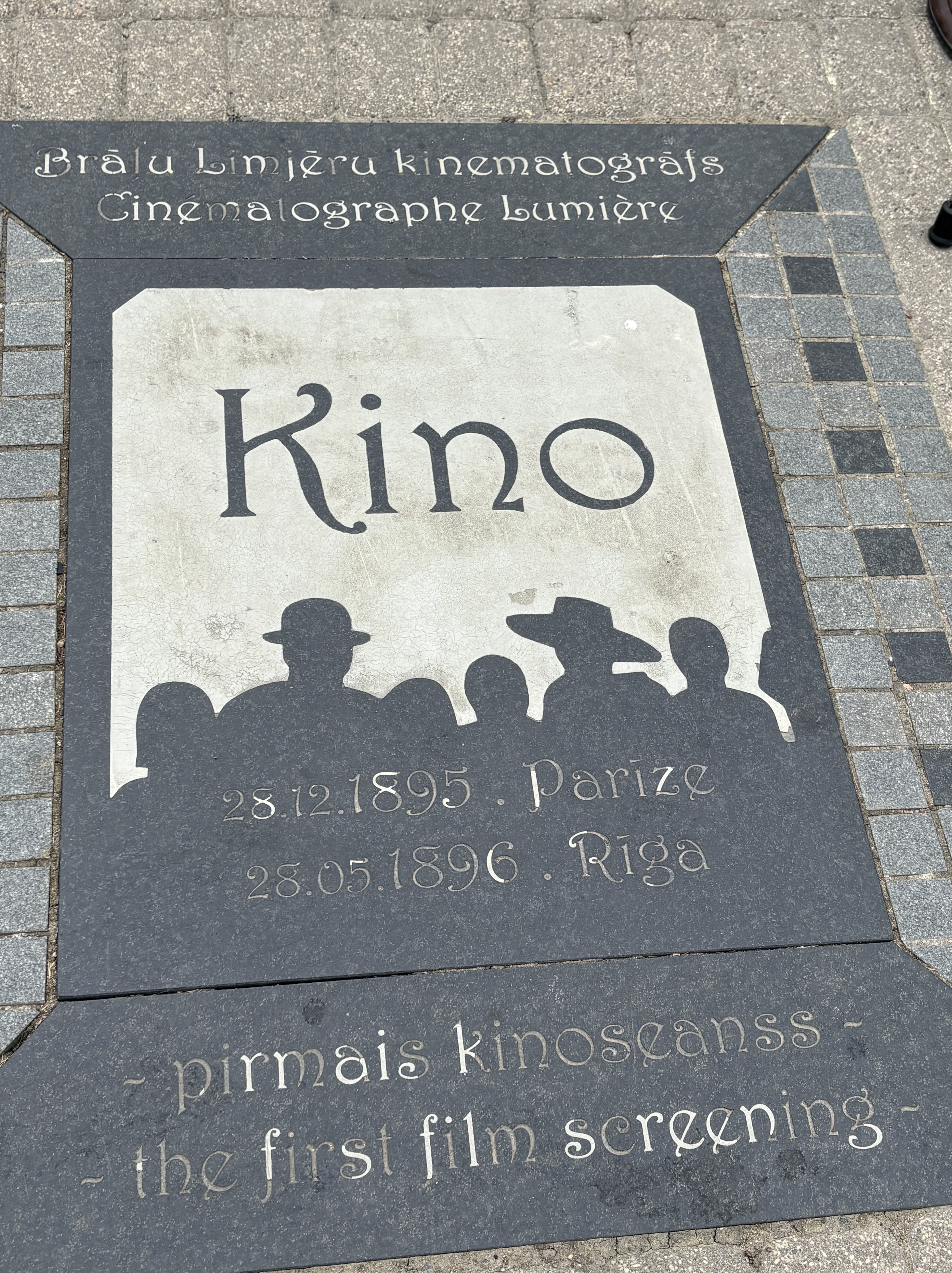
Riga claims its place in cinema history with a plaque recording that whilst the Lumière brothers had their first commercial screening on 28 December 1895 in Paris, there was one in Riga on 25 May 1896. I’m not sure whether their claim to share the honours of first screening is accurate, but I’ll let them have it anyway.
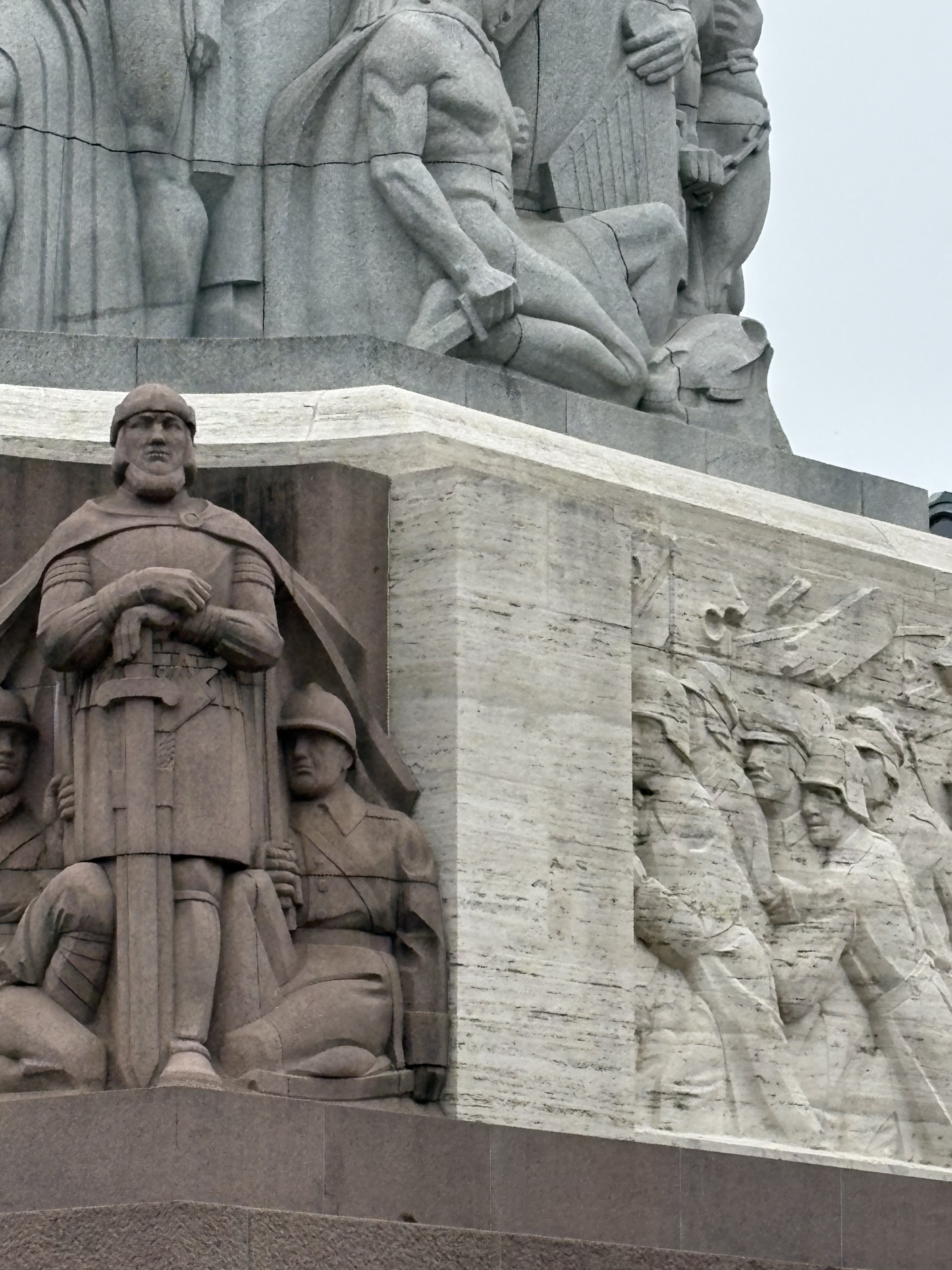
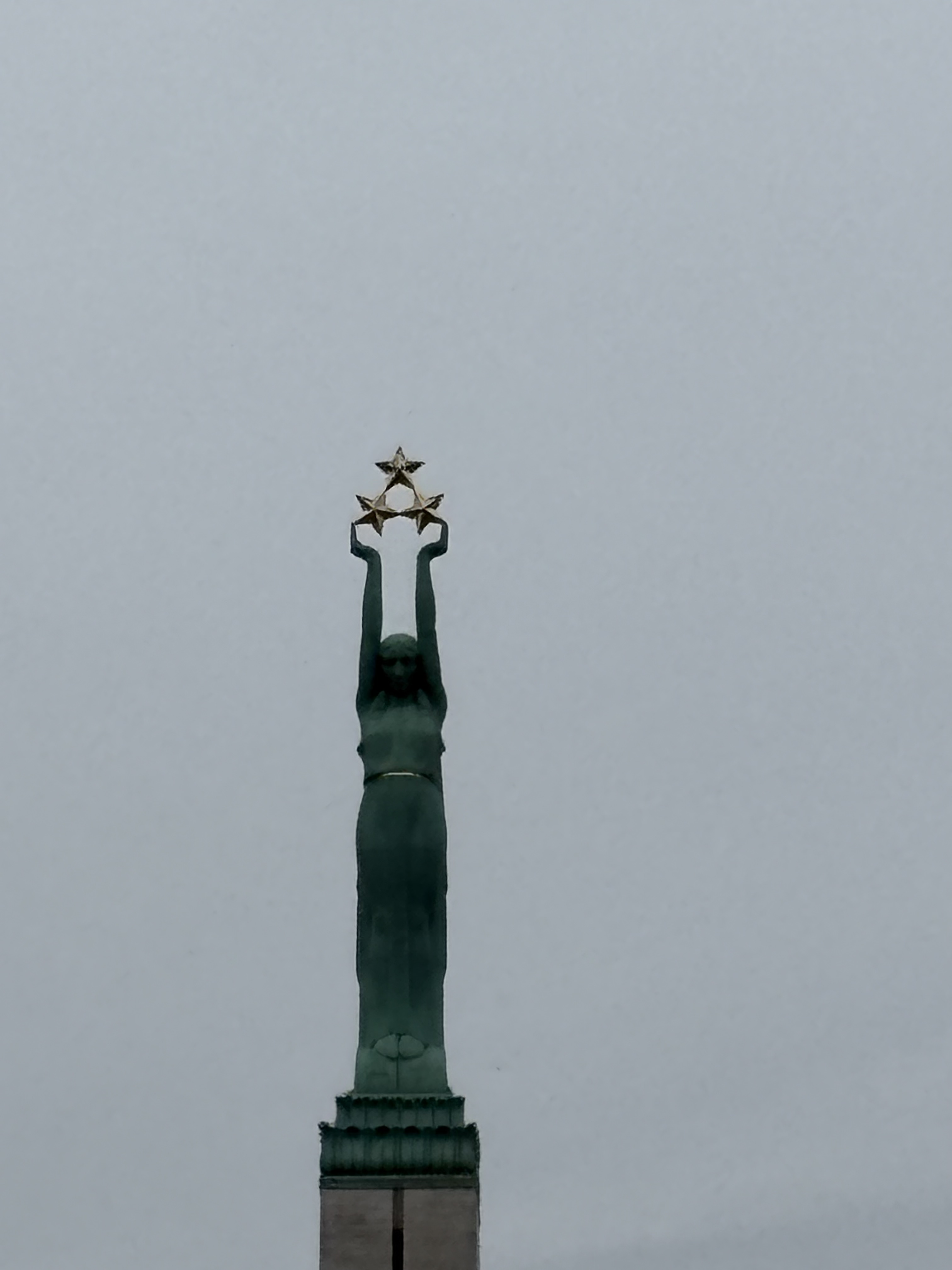
The Freedom Monument is visible from many points in the Old Town. It was built in 1935 to commemorate the soldiers who were killed in the Latvian War of Independence, and somehow survived periodic threats to demolish it during the Soviet era – eventually the Soviets decided on reinterpretation rather than demolition, so it was there to provide a rallying point during the movement for national independence in the late 1980s.
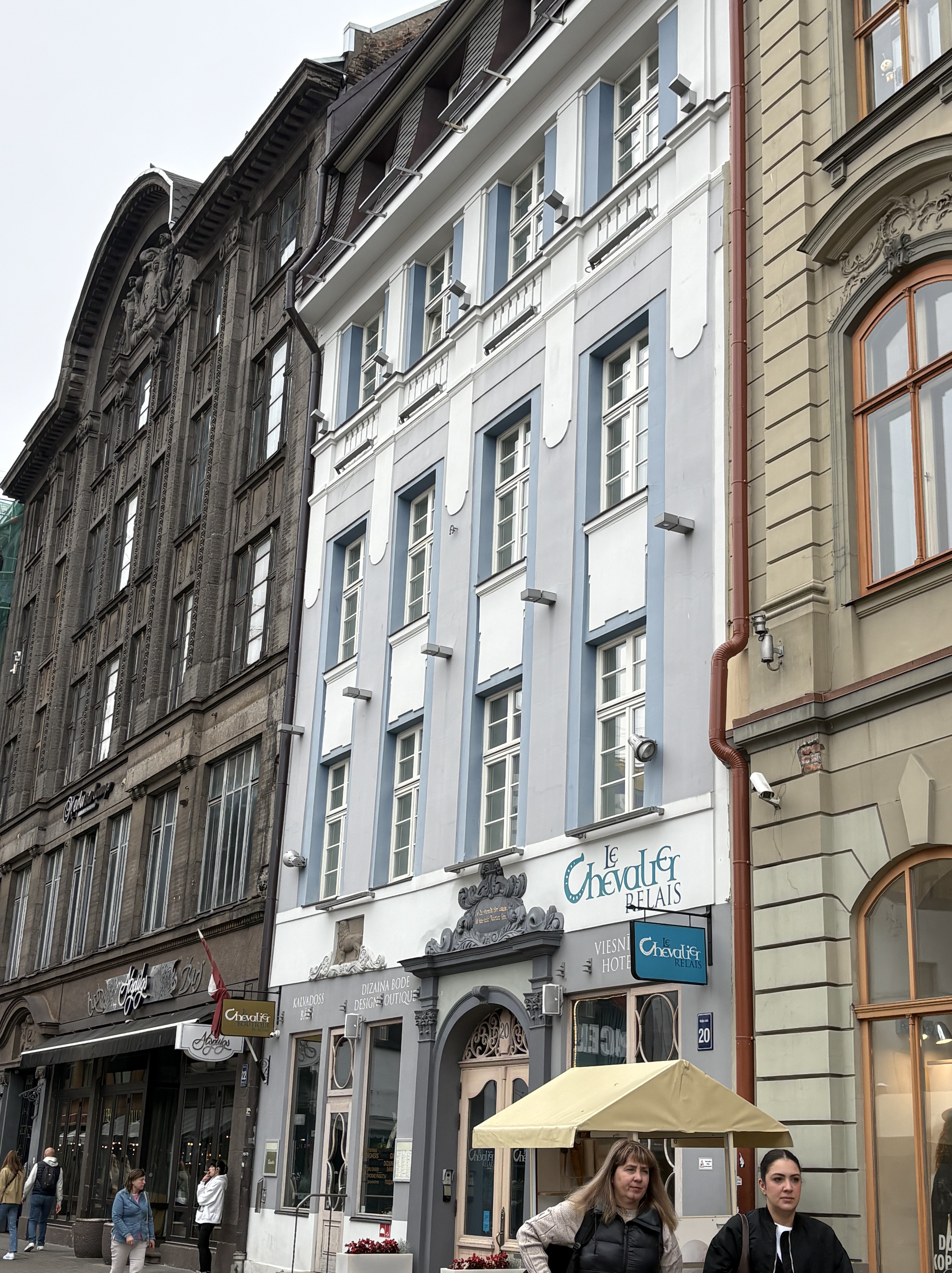
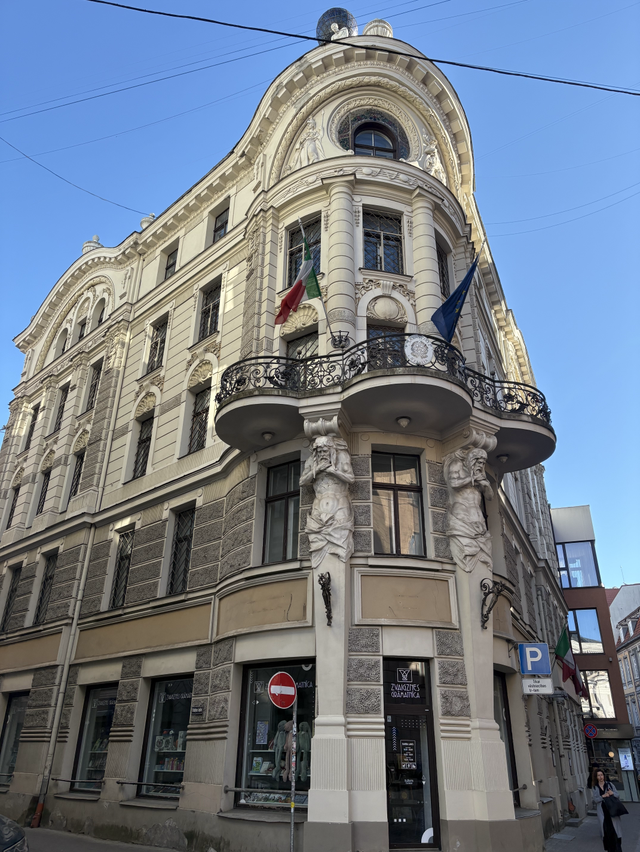
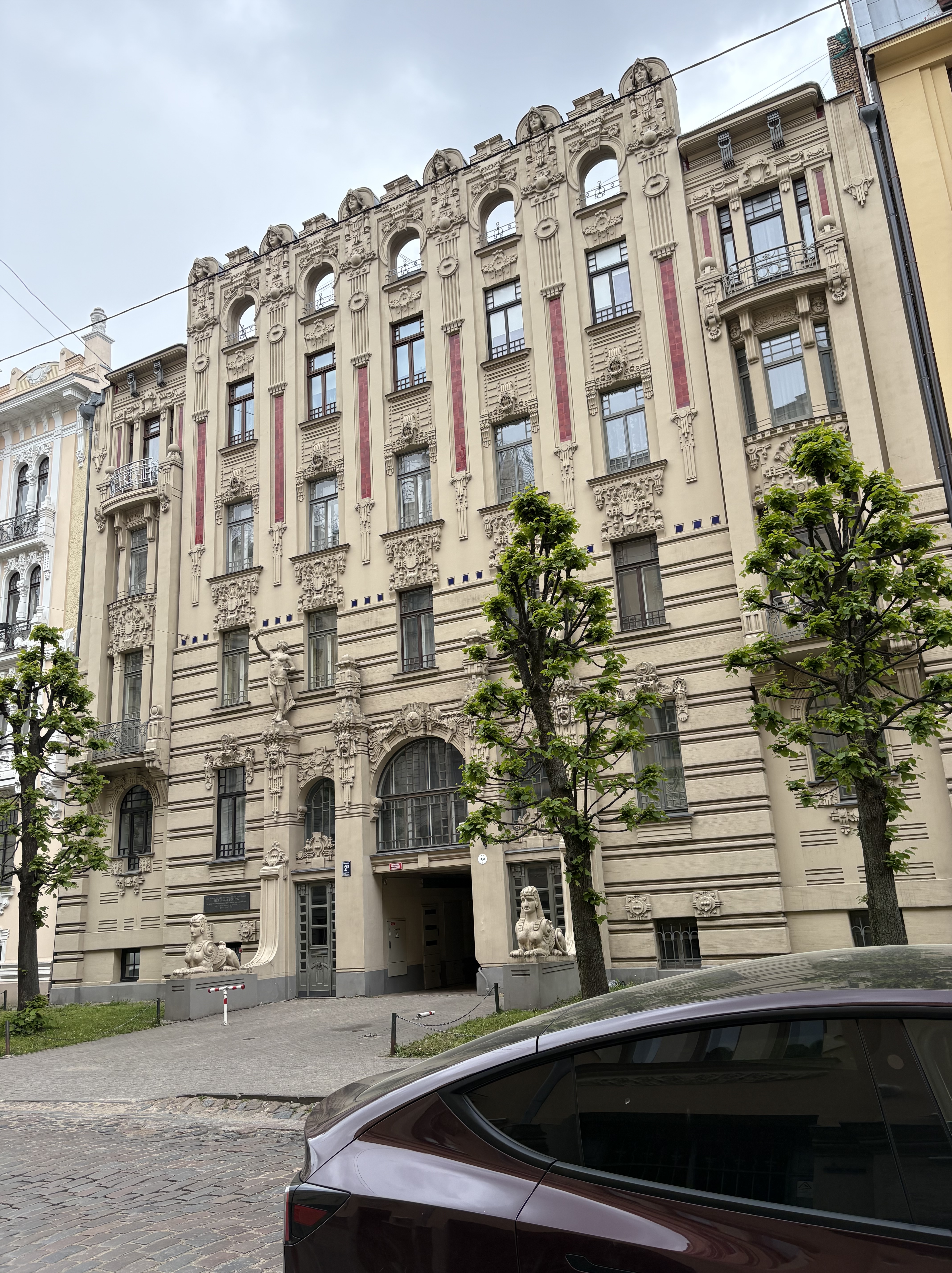
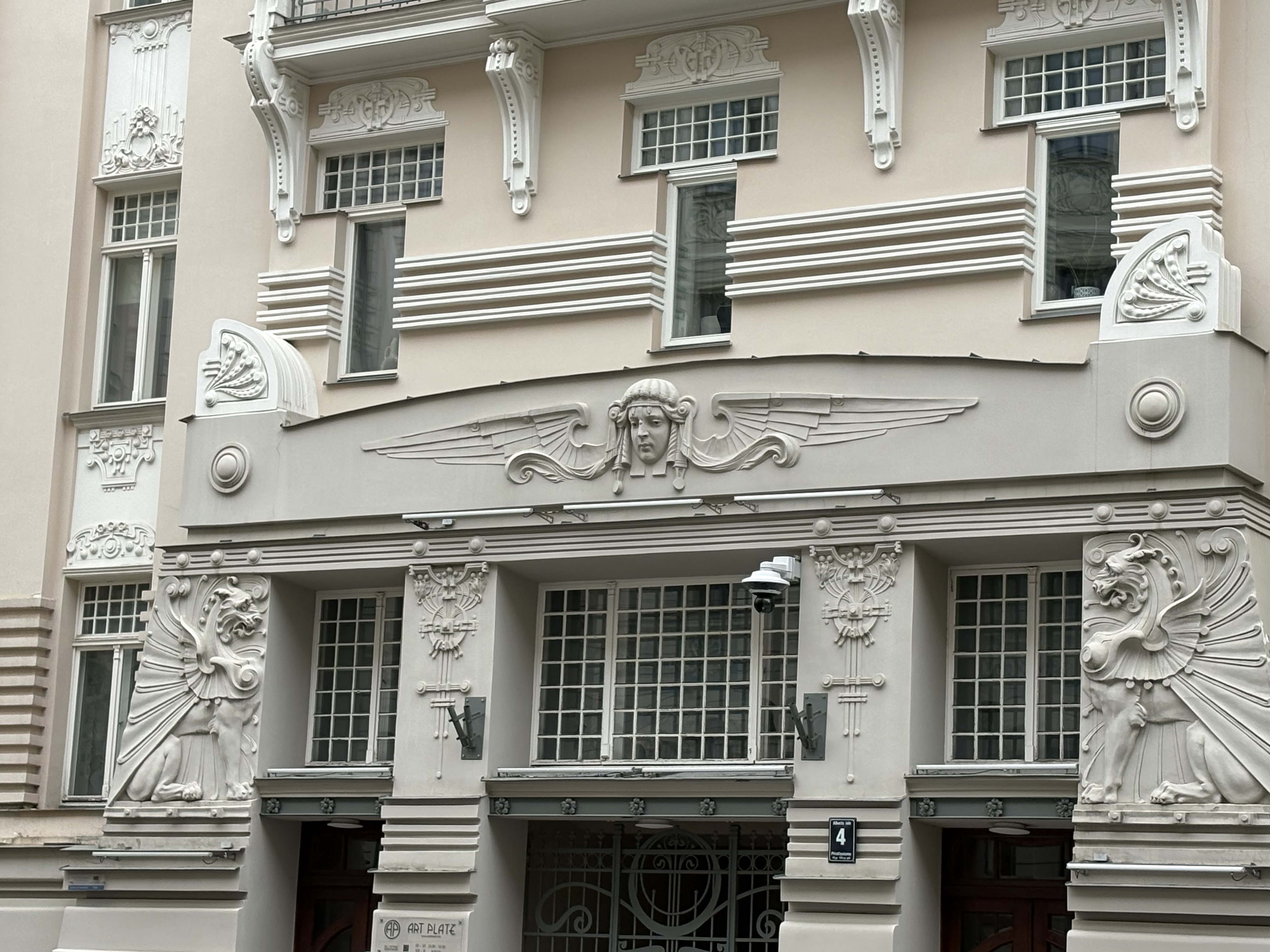
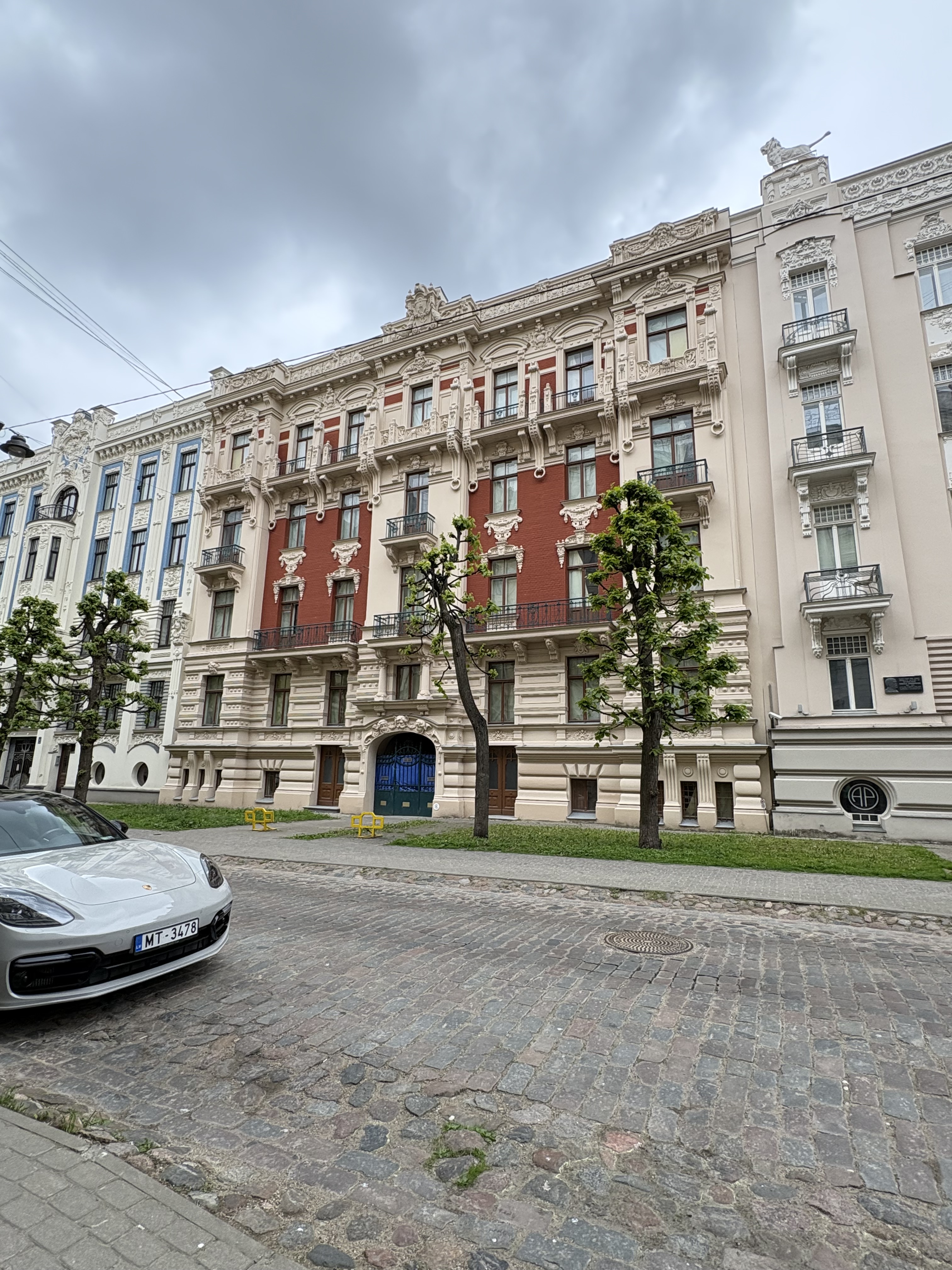
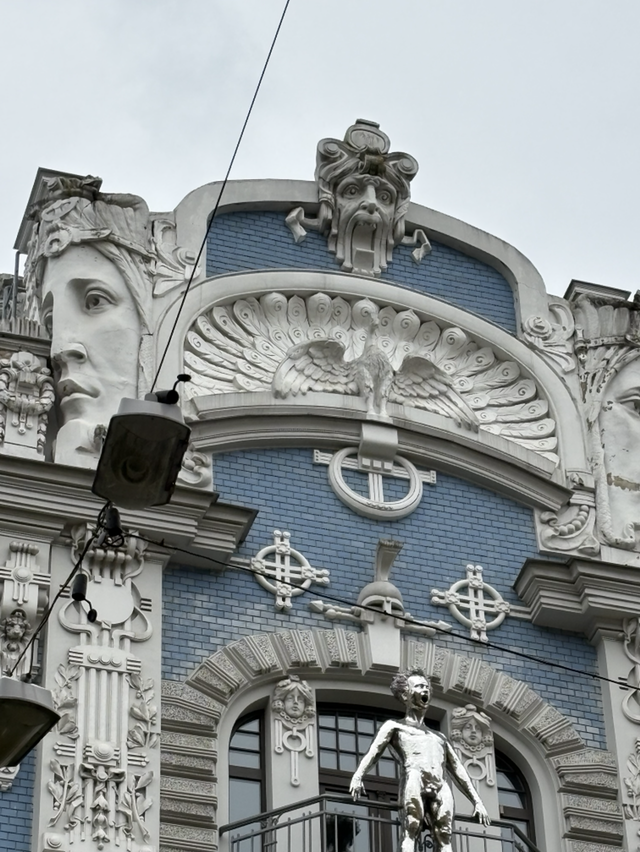
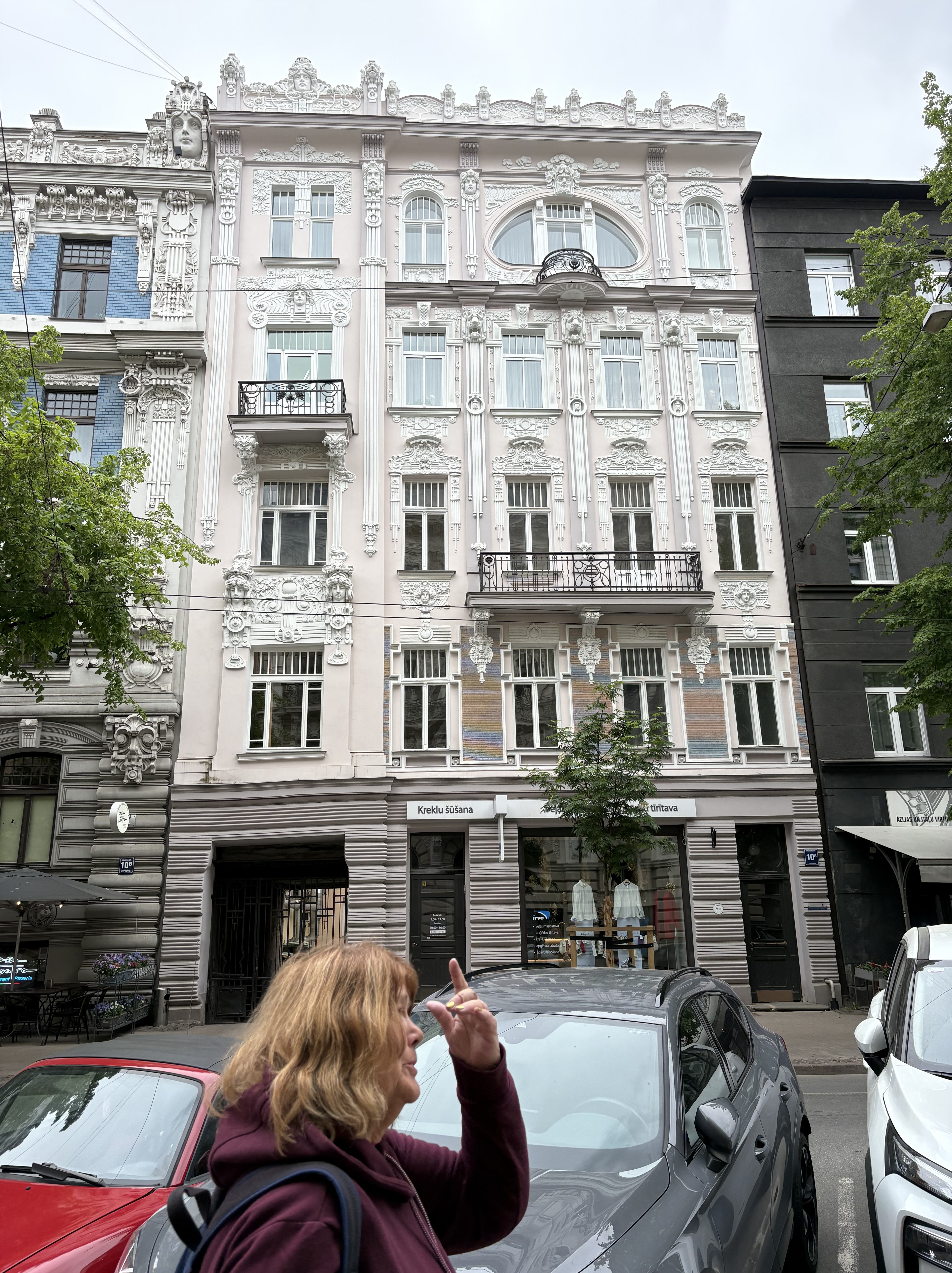
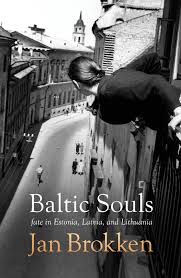
Riga’s Art Nouveau district deserves a much more detailed and informed account than I can give. We walked up Albert Street and Elizabeth Street, which have probably the greatest concentration of Art nouveau architecture in the city. The designs are ornate and opulent, with sphinxes, dragons, mermaids, gods and goddesses on the facades. Gorgeous, but one can see why there was a backlash against this approach and towards a clarity of form. At least four of the buildings pictured below (I couldn’t identify all of them) were designed by Mikhail Eisenstein, father of Sergei, the film director. There’s a fascinating chapter on Mikhail in Jan Brokken’s excellent book, Baltic Souls. I can’t tell you why there is a figure of a naked silver man, screaming, on one of the balconies. He wasn’t an original feature – I’ve seen photos of the building without him. I’m equally in the dark about the dancing cats on another balcony.
I had intended this to be a less Holocaust heavy holiday than my last European trip and it was. From the outset on that earlier trip we had planned to visit Jewish museums/quarters and Holocaust memorials in Vienna, Prague and Berlin, and also looked for Stolpersteine on the streets, and it was both a powerful experience and a fascinating one, to see how commemoration differed in each of those cities. I knew something of Riga’s Holocaust history, but nothing about Finland or Estonia. Finland fought alongside the Nazis, seeing them as a lesser threat to their freedom than Stalin. There were Jewish soldiers in the Finnish army, who were protected by the government despite pressure from the Nazis, and when eight Austrian Jewish refugees were deported (several were murdered) there was a scandal. It’s a complicated story – apparently Holocaust denial has been rife in Finland since the war. But Finland was not occupied by the Nazis and the Final Solution could not be implemented there. Many of Estonia’s Jews got out before the Nazi invasion – around 1000 remained in the country (25% of the pre-war Jewish population) and of these, only 12 survived. There don’t appear to be any memorials in Tallinn.
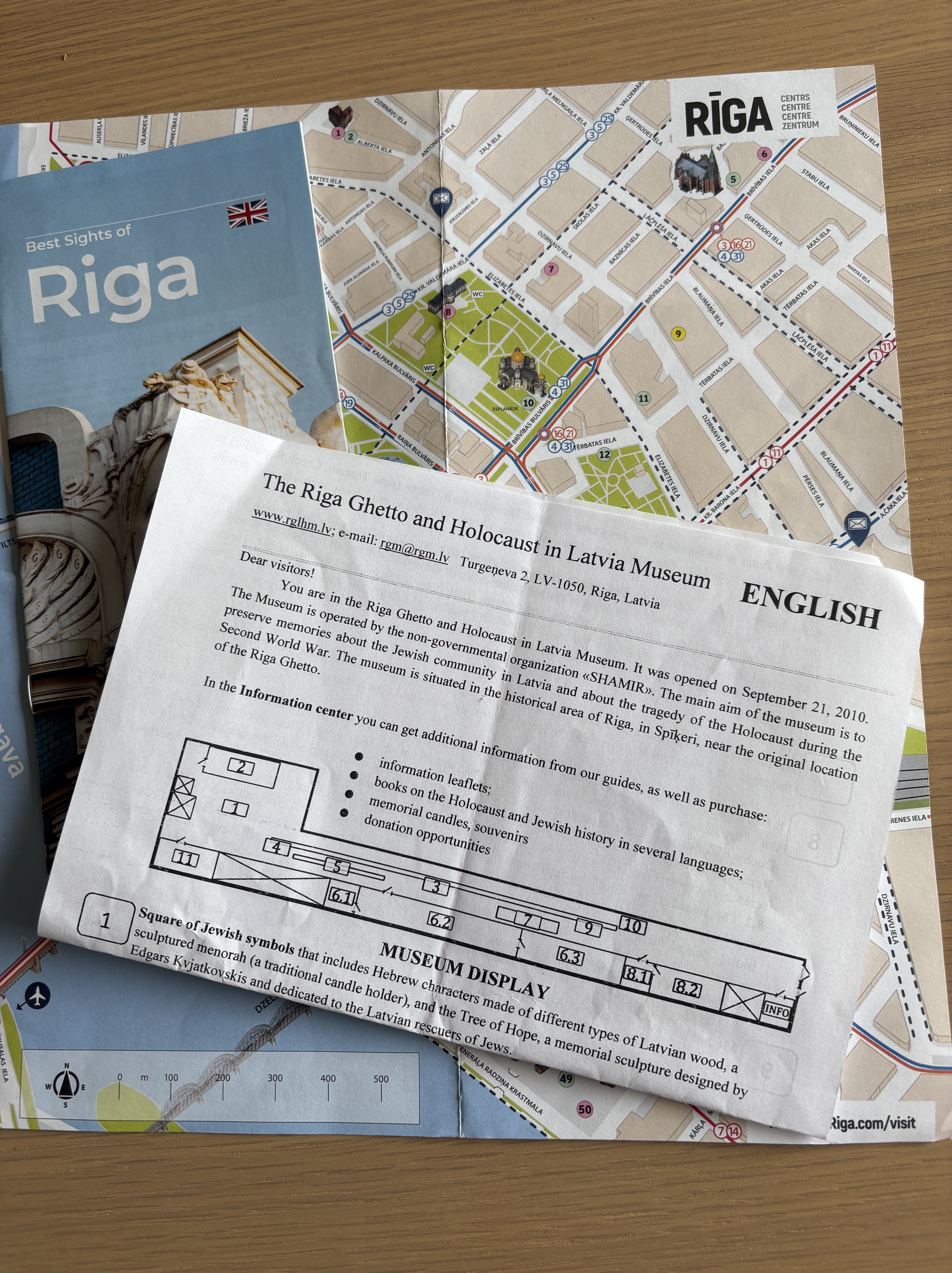
Riga is a different matter. Three-quarters of its pre-war Jewish population – around 70,000 – were murdered, alongside Jews deported from Austria and Germany into the Riga Ghetto. There was no death camp in Latvia – no need for one, as the ‘Holocaust by bullets’ had pretty much taken care of things. I didn’t spot any Stolpersteine in Riga though I believe some have been installed. I hadn’t decided whether to use the free afternoon (the last of the holiday) to go to the Museum of the Riga Ghetto & Holocaust in Latvia but when one member of our group expressed an interest, I decided to do so, and found out more later about the story behind his desire to go. His wife had come to the UK as a child on the Kindertransport from Prague. Many members of her family (including her parents and brother) were murdered, most were deported first to Terezín and then to Auschwitz, but her aunt Růžena was sent to Terezín and then to Riga where she was killed, in 1942, in one of the mass shootings in the Rumbula forest.
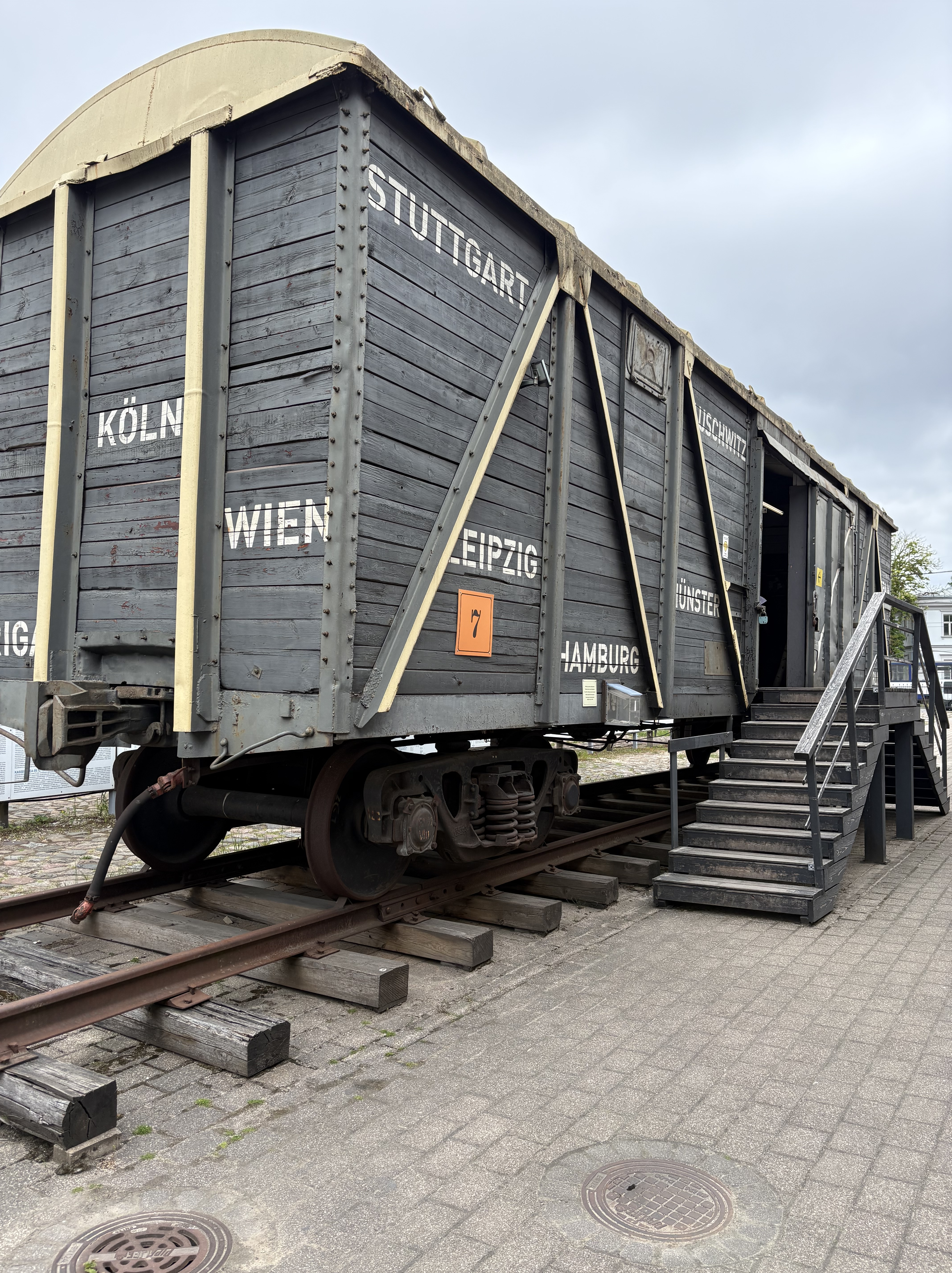
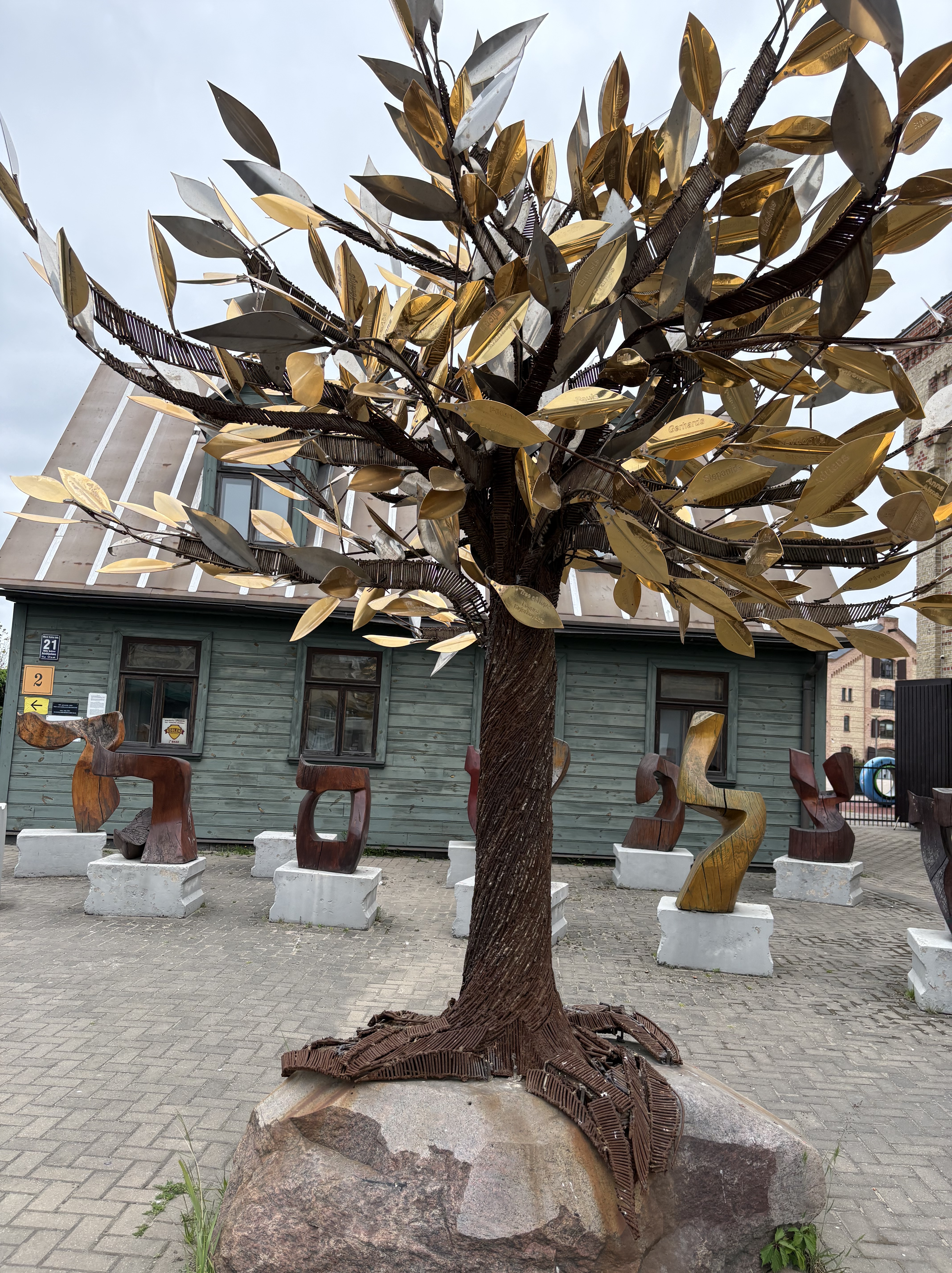
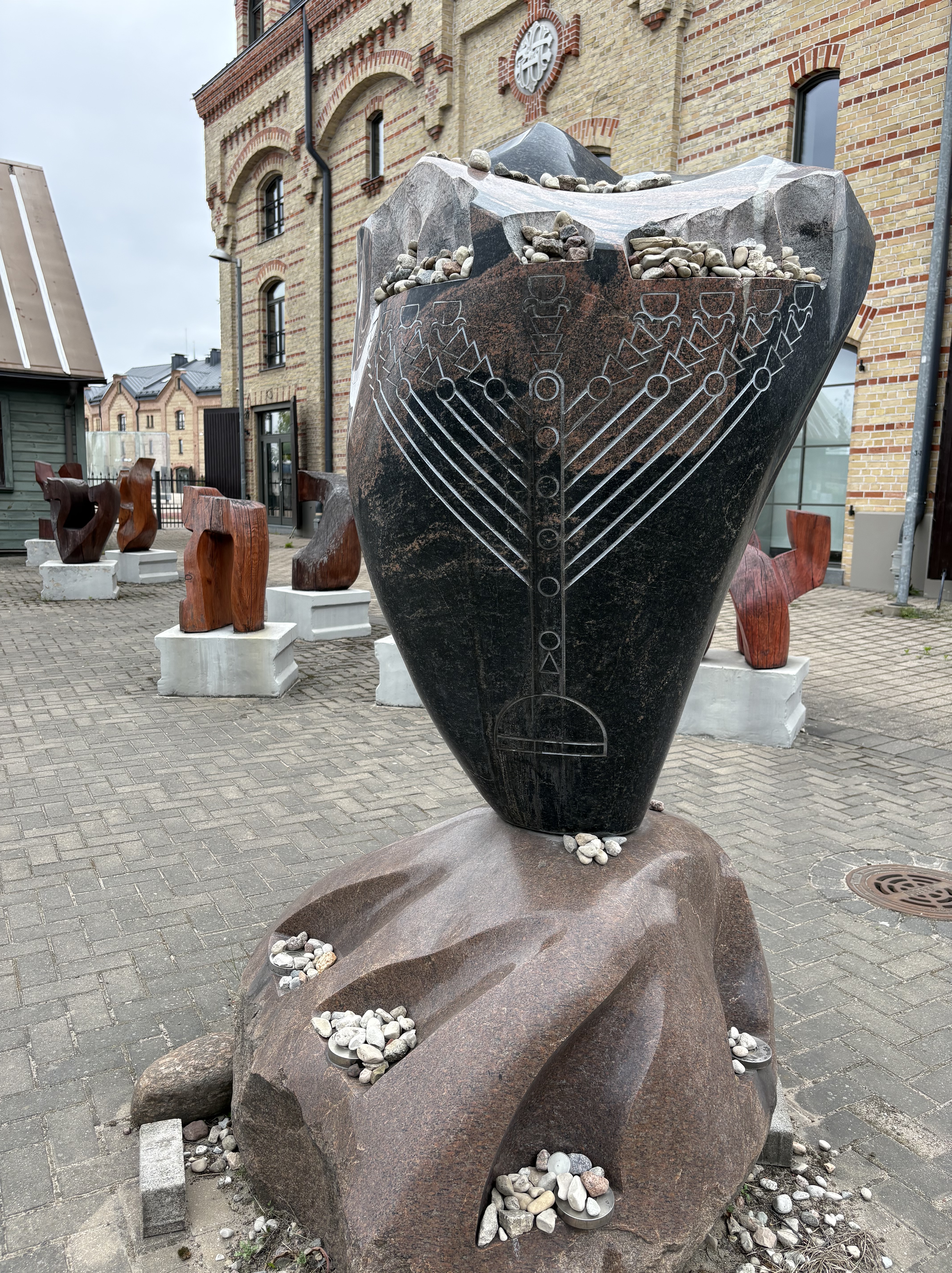
It was a real contrast to the museums I’d visited in Vienna, Prague and Berlin – it has clearly had very limited funding. Its aim is to ‘preserve memories about the Jewish community in Latvia and about the tragedy of the Holocaust’, and it is located near the original location of the Ghetto. The museum’s displays are mostly within the Ghetto House, a 19th c. house in the Ghetto, relocated to the museum in 2011. Outside, there’s a freight car like those used for deportations, and memorial walls dedicated to the 25,000 Jews deported to Riga to be killed, and to the 70,000 Latvian Jews murdered.
Day 8
And then we were packed and ready to get on the coach for Riga airport. Our Tour Manager was with us until we’d all checked in. A straightforward return journey despite having to change planes in Amsterdam (and a delay on the flight from Riga due to a computer problem – I assume the crew tried switching things off and on again and when that didn’t work, called for an IT guy to fix it). My only regret about this last phase of the trip was that I hadn’t twigged that we would be so dispersed as a group once the journey was underway and so I missed chances to ask a few people for contact details.
I loved all three cities – perhaps Helsinki is the one I could most easily imagine living in (though I should probably try (a) being there in deep winter and (b) learning the language before doing anything rash). Riga is the one to which I felt I did least justice – Tallinn is small enough that we were able to pack a lot in to our guided tour and free time, but in Riga the places we wanted to visit were more spread out so time was tight. But that’s fine – I’d happily revisit these places and do the things I missed this time. We saw a great deal, over a broad span of history, from the 13th to the 21st centuries and through wars and treaties and occupations. The history was complex and fascinating, and almost entirely new to me, and I’ve learned a lot, from the trip and the reading I’ve done in response to it.
I am very glad I was bold and booked this. Putting the whole process of booking flights/hotels/other travel into the hands of the experts reduced my travel anxiety to a manageable level, and all aspects of the trip once we were there were extremely well organised. I would not have wanted to go on a cruise/tour which wasn’t specifically for solo travellers – not just because I’d have to pay the single person supplement but because being amongst a whole bunch of couples or pre-existing groups would be a pretty lonely experience. This way, most people were hoping, as I was, to find congenial company and people with shared interests, and so were open to conversations. It was, even for me, easy to connect.
There was, thankfully, no vibe of solo people looking to become not-solo – I’m not saying that everyone there was totally content with their solo state, just that they hadn’t come on this holiday on a quest to renounce it, just to see interesting places, and share interesting experiences with like-minded people. Many of those on the trip were widowed, some only recently. I had good conversations with some of those people – as always, there is a relief in knowing that the particular challenges of widowhood would be understood. Not everyone gets that this bereavement is unlike, for example, losing a parent or a sibling – I’ve experienced both, and both were devastating – because in the moment that your life partner dies, everything about your life changes. You realise some of those changes immediately, others will only come home to you in time, and it is a disorienting feeling because you are most probably in the home that you shared, and so everything around you looks familiar and unchanged whilst within you everything is shockingly strange and different. Generally we didn’t need to say that much, just knowing that we had that shared experience was enough. The last time I went on a holiday with total strangers was for the widows’ retreat – Fire & Rain, no longer active, sadly – in Lower Largo, which I wrote about a few years ago, and that was different, because the purpose of the week was to talk about what had happened to us, how we were dealing (or not dealing) with it, how we could find a way forward. Obviously on this trip the companionship of other widowed people was a bonus rather than the focus. I don’t give advice unless it’s asked for, but I would say, if and when you feel ready, consider this as an excellent way of travelling solo but in company and with support.
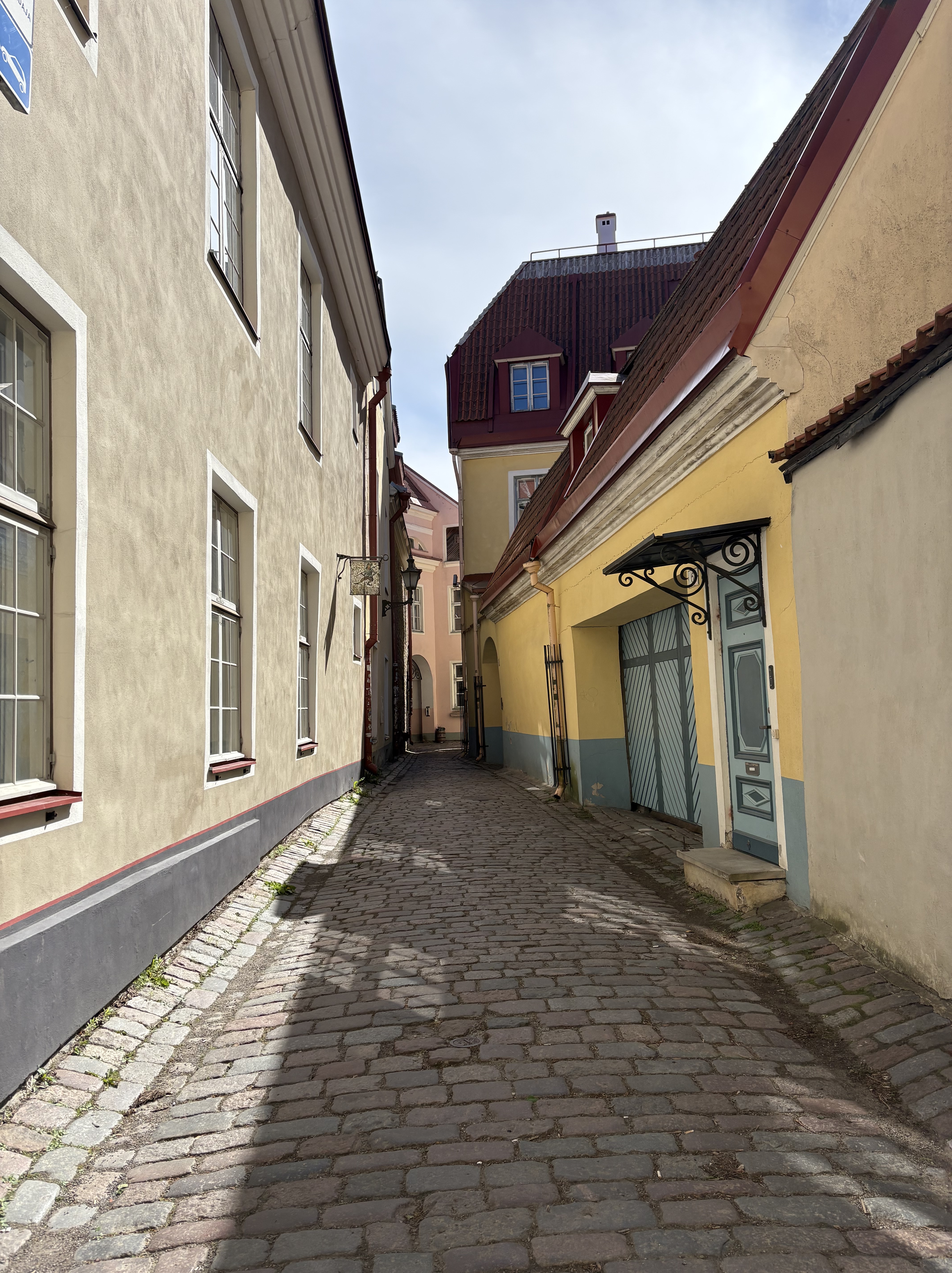
What do I take from each of those cities? From Helsinki the archipelago of little islands in the bay. From Tallinn the medieval buildings, or more broadly the variety of buildings in the Old Town, where every narrow street might lead to something intriguing. From Riga, the art nouveau and the inescapable presence of more recent history even in the oldest parts of the city. From all of them, excellent local guides, cobbled streets, churches and castles, good food, beer, pastries and coffee. And good company.
Reading list (see my Books blog for reviews of most of these)
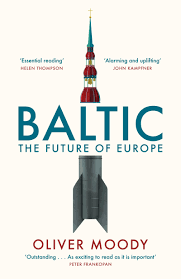
Non-Fiction: Jan Brokken – Baltic Souls: Remarkable Life Stories from Estonia, Latvia and Lithuania; Oliver Moody – Baltic: The Future of Europe
Fiction:
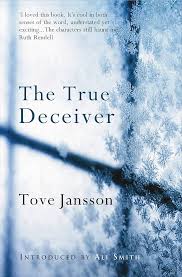
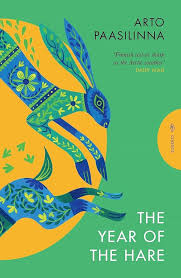
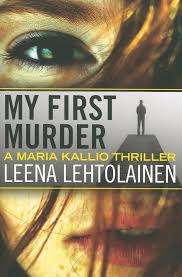
Finland: Tove Jansson – The Summer Book/The True Deceiver; Väinö Linna – Unknown Soldiers; Arto Paasilinna – The Year of the Hare; Leena Lehtolainen – My First Murder; Matti Rönkä – A Man with a Killer’s Face
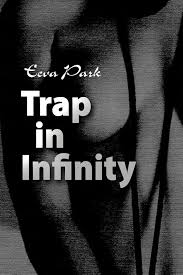
Estonia: Eeva Park – Trap in Infinity; Indrek Hargla – Apothecary Melchior mystery series (very engaging historical crime series set in the Old Town)
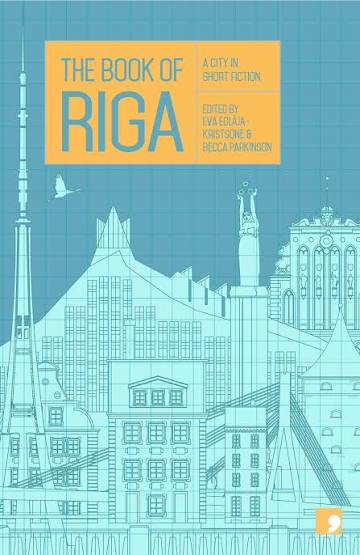
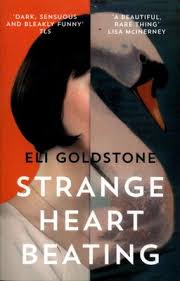
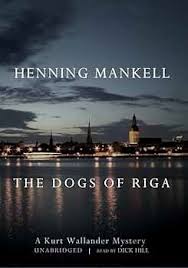
Latvia: Henning Mankell – The Dogs of Riga (this is interesting because it’s set soon after independence – it was published in 1992); Eli Goldstone – Strange Heart Beating; Becca Parkinson & Eva Eglaja-Kristsone (eds) – The Book of Riga (an excellent compilation of short stories)
Film/TV
I reviewed Unknown Soldiers and Sisu in my latest Screen blog. I rewatched ‘The Dogs of Riga’, an episode of Wallander (the Kenneth Branagh version). I also watched Christopher Nolan’s Tenet, as I’d heard some of it was filmed in Tallinn, but the locations weren’t in the old part of town so it didn’t really contribute to this project – I enjoyed the film, anyway.
Playlist
The obvious suspects here are Sibelius for Finland and Arvo Pärt for Estonia. Taking those as read (though I do recommend the chapter on Pärt in Brokken’s Baltic Souls), I found a number of other composers/musicians of interest in each of the three countries. Below are some rough notes on some of these pieces.
Finland: Juhani Nuorvala (Clarinet Concertino, Tiksu, String Quartets); Paavoharju – experimental ambient lofi sounds (Valotinkuu Kaiken läpi, Kevätrupu); Kaija Saariaho died in 2023 – I heard ‘Petals’ at a Music in the Round concert a year or so ago and have also heard ‘Nuits, adieux’, and ‘L’amour de loin’); Erkki Melartin – 1875-1937, composer of opera, symphonies, chamber music (Conzone, Sonata no. 1, op. 111); Heino Kaski (‘Night by the Sea’, Pankokoski Prelude); JPP – folk music ensemble (String Tease), Einojuhani Rautavaara (Garden of Spaces, Cantus Arcticus)
Estonia: Miina Härma – Estonia’s first professional female composer, 1864-1941 (Ei saa nitte vaiki olla, Kuson Kullala Kodu?); Heino Eller, 1887-1970 (Dawn, Kalumaine viis); Erkki Sven Tüür b. 1959 (Symphony no. 9 – Mythos)
Latvia: Rihards Dubra – specialised in religious themed choral works (Ave Maria I, O Radix Jesse); Intars Busulis – b. 1978, singer, trombonist, jazz/rock/pop musician (eponymous album); Romualds Kalsons, 1936-2024 (Allegro for Symphony Orchestra, Concerto for Violin & Orchestra)
(I do realise that not everyone approaches a holiday in the way that I do. I am and always have been a nerd and a compulsive researcher. For me, reading and listening around the place I’m going to enriches the experience of being there, and of thinking about it afterwards, and if you happen to share these quirks, you might enjoy the reading/listening/watching that I suggest.)
 Passing Time