Refugee Week 2020 – Music in Exile
Posted by cathannabel in Music, Refugees on June 21, 2020
What better way to draw this series of Refugee Week blogs to a close than with music? Refugees have always carried the music of their home with them, wherever they have travelled, and treasured it, wherever they have settled. The richest and most beautiful music we can hear, from whatever tradition, has been nourished by the music brought in by those travellers, the songs that have sustained them through hardship, the melodies that remind them of home.
None of us knows what the next year will bring. The virus has both ignored borders, and reinforced them. It poses a threat to us all, but most seriously to those already vulnerable due to age, health and living conditions. Refugees and asylum seekers are and will continue to be amongst the most vulnerable. And whatever happens during the course of the year, for good or ill, there will still be refugees. There will still be wars and persecution and famine and terrorism, forcing people to leave home. There will still be camps full of people in transit, waiting for the chance to leave for a more stable life somewhere else. And there will still be fragile crafts launched on to the oceans, full of people hoping for landfall somewhere that they will find safety.
Last year, Opera North put on a production of Bohuslav Martinů‘s powerful and pertinent opera, The Greek Passion. Martinu was a Czech composer, who was working in Paris when the Nazis invaded his homeland, and then had to flee France for Spain and then Portugal, before settling in the US. The opera, written in the 1950s, tells of a village whose inhabitants are putting on their annual Passion Play, when the arrival of a group of refugees challenges their community, their values and their courage.
It is an opera about migration, about society’s rejection of the destitute and the desperate when they arrive at our gates for help, about the dangers of failing to challenge populist rhetoric, about the manipulation of society by those in authority. It’s also about compassion, humility and, ultimately, tragedy.
As the manager of a small inner city community project based in Leeds called Meeting Point, I work with refugees and asylum seekers every day and I find it quite extraordinary that an opera written all those years ago can be directly relevant to the day to day work that I do now, as well as the lived experience of thousands of individuals across the UK today.
Emma Crossley, Meeting Point
https://www.operanorth.co.uk/news/a-face-to-the-stranger-refugees-and-the-greek-passion/
Part of Opera North’s Lullaby Project, People’s Lullabies are performed by participants in the company’s Community Partnerships scheme, which works with local organisations to provide access to live opera and music for people who might otherwise encounter barriers to those experiences. The Refugees and Asylum Seekers’ Conversation Club at Mill Hill Chapel, Leeds, provides tea, coffee, healthy food, nappies, sanitary protection and toiletries to vulnerable families who have had to leave the countries they love because of war and persecution.
Soundroutes is an initiative that networks musicians of very different international backgrounds in new homelands. The Soundroutes project created the Soundroutes Band, with members from scattered new domiciles in Berlin, Brussels, and Rome. Shalan Alhamwy on violin, Alaa Zaitounah on oud, and drummer Tarek Al Faham are all from Syria, Papis “Peace” Diouf of Senegal is on guitar. The group mixes tracks of Arab tradition and African rhythms, but leaps out to free jazz. In a related combo, Peace Diouf rearranges and composes powerful traditional Senegalese grooves as jazz with Roberto Durante on piano and Hammond organ, Giancarlo Bianchetti on guitar, and drummer Moulaye Niang,
https://www.allaboutjazz.com/refugee-music-in-europe-migration-asylum-soundroutes-and-arab-jams
muziekpublique.be/artists/refugees-for-refugees
Music from Za’atari refugee camp:
With his brow furrowed in concentration, Abu Abdullah rhythmically strums his oud, exploring the core of a melancholic melody. Mohamad Isa Almaziodi’s robust and melismatic voice soars above, full of emotional ornamentation – sighing and repeating, rising and falling – until he runs out of breath and the phrase is forced to finish. In his song, Mohamad is singing about how strange life is, how harsh the nights are: ‘Oh this life is so strange… our home became very far. Very far.’ But before he can finish, he is overcome by homesickness and with his head in his hands, he cries. He is crying for his beloved country and for the father he left behind.
https://www.songlines.co.uk/explore/features/songs-of-the-syrian-refugees
The band Musicians in Exile is based in Glasgow, and is made up of refugees and asylum seekers.
Afshin Karimi is sitting in a circle of musicians, his eyes tightly closed as he taps his foot in time with the beat. He waits patiently for his moment, then opens his mouth and sings. Music is part of the reason that the 44-year-old Iranian singer and keyboardist found himself here, in a makeshift rehearsal room overlooking a busy Glasgow street, thousands of miles from home. He fled his country three years ago, not only because he feared persecution after changing his religion, but because the kind of music he was making was banned by authorities.
https://inews.co.uk/news/scotland/musicians-in-exile-meet-britains-most-unorthodox-band-made-up-of-asylum-seekers-and-refugees-299705
World Refugee Day 2020
Posted by cathannabel in Refugees on June 20, 2020
Some facts and figures…
Every day 44,000 people are forced to flee their homes because of conflict or persecution
68.5 million people around the world (more than the population of the UK) are displaced
Each day in 2018, six people died trying to cross the Mediterranean
57% of refugees worldwide are from just three countries — South Sudan (at least 2 million displaced as a result of the Civil War which began in 2013), Afghanistan (2.6 million refugees, 95% of whom are hosted in Iran and Pakistan) and Syria (6.3 million have fled the conflict. Around 3.5 million are hosted in Turkey).
At least 700 thousand Rohingya refugees have fled Myanmar since 2017

2020 World Refugee Day Statement by UN High Commissioner for Refugees Filippo Grandi:
We are marking this year’s World Refugee Day against a backdrop of a dramatic global crisis. Not only are record numbers of people forced to flee their homes, but the world is grappling with COVID-19, a disease that is still very much affecting us all. What started as a health crisis has expanded, and today many of the most vulnerable – refugees and the displaced amongst them – face a pandemic of poverty.
Yet, throughout this challenging time, we have also seen a connectedness that transcends borders. Ordinary people have stepped up to help. Host communities – especially those in low- and middle-income countries where nearly 90 percent of the world’s refugees live – have continued to demonstrate a remarkable welcome.
And refugees themselves are also contributing in significant ways, despite often living in extremely vulnerable conditions. They are, for example, volunteering as front line health workers in Colombia and the United Kingdom; making soap for distribution in Lebanon and Niger; sewing masks and protective gear in Iran; helping construct isolation centres in Bangladesh; and elsewhere around the world, they are contributing time to help the needy in their host communities.
As we battle COVID-19, I draw inspiration from the resilience refugees have shown in overcoming their own crisis of displacement and dispossession; their separation from home and family; and their determination to improve their own and others’ lives, despite these and other hardships.
On World Refugee Day, I salute and celebrate the fortitude of refugees and displaced people around the world. I also pay tribute to the communities that shelter them and that have demonstrated the universally shared values and principles of compassion and humanity. They have sometimes hosted and protected refugees for years or even generations, and continuing to uphold these values in a time of pandemic is a powerful message of hope and solidarity.
UNHCR is no stranger to challenges. For over 70 years we have been on the frontlines of countless emergencies. Yet this global pandemic is of an entirely new magnitude. Our priority has been and will be, to stay and deliver for the refugees, internally displaced and stateless people we are mandated to protect. But we can’t do it alone.
Mobilizing help and support to prepare and respond to the pandemic has been vital in the past months. And we have seen how countries and communities around the world have included refugees in their own national health responses. It is now equally critical to secure refugees’ and displaced persons’ inclusion in the much-needed socio-economic response to the COVID-19 pandemic.
The Global Compact on Refugees has laid a strong foundation for this response. We have already seen it in action as bilateral donors, international financial institutions, and the private sector have responded to this crisis with unprecedented levels to support refugees through host governments. Such support must continue and be redoubled so that they have the resources necessary to include refugees and displaced people and ensure that economic and social disparities do not lead to rifts within and between communities. More must also be invested in countries of origin to make the return of refugees a viable option.
On this World Refugee Day, I call for greater global solidarity and action to include and support refugees, internally displaced and stateless people as well as their hosts.
Whoever you are. No matter where you come from. Every one of us can make a difference.
Every action truly counts.
https://reliefweb.int/report/world/2020-world-refugee-day-statement-un-high-commissioner-refugees-filippo-grandi

Every refugee represents a human tragedy. Each one has a story – of fear, of trauma, of desperation, of determination. This poem by Warsan Shire reminds us of that truth.
Home
no one leaves home unless
home is the mouth of a shark
you only run for the border
when you see the whole city running as wellyour neighbors running faster than you
breath bloody in their throats
the boy you went to school with
who kissed you dizzy behind the old tin factory
is holding a gun bigger than his body
you only leave home
when home won’t let you stay.no one leaves home unless home chases you
fire under feet
hot blood in your belly
it’s not something you ever thought of doing
until the blade burnt threats into
your neck
and even then you carried the anthem under
your breath
only tearing up your passport in an airport toilet
sobbing as each mouthful of paper
made it clear that you wouldn’t be going back.you have to understand,
that no one puts their children in a boat
unless the water is safer than the land
no one burns their palms
under trains
beneath carriages
no one spends days and nights in the stomach of a truck
feeding on newspaper unless the miles travelled
means something more than journey.
no one crawls under fences
no one wants to be beaten
pitiedno one chooses refugee camps
or strip searches where your
body is left aching
or prison,
because prison is safer
than a city of fire
and one prison guard
in the night
is better than a truckload
of men who look like your father
no one could take it
no one could stomach it
no one skin would be tough enoughthe
go home blacks
refugees
dirty immigrants
asylum seekers
sucking our country dry
niggers with their hands out
they smell strange
savage
messed up their country and now they want
to mess ours up
how do the words
the dirty looks
roll off your backs
maybe because the blow is softer
than a limb torn offor the words are more tender
than fourteen men between
your legs
or the insults are easier
to swallow
than rubble
than bone
than your child body
in pieces.
i want to go home,
but home is the mouth of a shark
home is the barrel of the gun
and no one would leave home
unless home chased you to the shore
unless home told you
to quicken your legs
leave your clothes behind
crawl through the desert
wade through the oceans
drown
save
be hunger
beg
forget pride
your survival is more importantno one leaves home until home is a sweaty voice in your ear
Warsan Shire, “Home,” Seekershub.org, September 2, 2015
saying-
leave,
run away from me now
i dont know what i’ve become
but i know that anywhere
is safer than here

In this Together: Refugees in Lockdown
Posted by cathannabel in Refugees on June 19, 2020
My earlier post looked at the immense challenges faced by asylum seekers during the pandemic. It would be wrong to leave it there. In communities across the UK, refugees are stepping forward to help, to offer their expertise and energy.
Four years ago I wrote a piece for Refugee Week, talking about what it is that refugees hope for when they arrive here.
We’d want to have a place where we can shut our door and hang up our hats, and sleep without fear, and be with the people we love. We’d want the chance to work, to use our skills to earn enough to provide for ourselves and the people we love, to prepare healthy meals, to buy new shoes for the children as they grow, to be warm enough in winter. We’d want the chance to learn, new languages and new skills, and we’d want our children to go to school and learn all that they need to make their way in the world, and to make friends and play.
We’d want to become part of a community. Paying our way, making a contribution, chatting to our neighbours, free of the threat that there will be a knock on the door early one morning and we’ll be sent away, back where we came from, or just away, to anywhere that’s not here.
The Metro highlighted other examples. Majeda Khoury, a refugee from Syria, has used her catering company, The Syrian Sunflower, to provide at least 400 meals for struggling families during lockdown.
After the pandemic broke out, Majeda, 47, started cooking and dropping off meals to the residents of Ealing on her bike. The cook was forced to take two months off after falling ill with coronavirus but as soon as she was well again, she was back in the kitchen preparing 200 meals for families in need during Ramadan. She told Metro.co.uk: ‘I believe that volunteer work is very important. Especially in times like this, I feel a responsibility to my community.’
https://metro.co.uk/2020/06/16/how-refugees-are-leading-way-helping-uk-communities-pandemic-12855071/?ito=cbshare&fbclid=IwAR2XzN7S7OJJJO1dwkMLX3w2_44ne-LAcVqftJEFjGtu_Uaj86HklwvuhUw

Mazen Salmou, also from Syria,
Maz may have only been living in Bromsgrove, Worcestershire, for less than two years, but in that short space of time he has already become a cherished member of the community. When the pandemic broke out, the 40-year-old, originally from Damascus, Syria, couldn’t sit back and watch people struggle. So, he decided to sign up as a volunteer with Bromsgrove Community Support Group, which provides essential help to the elderly and those shielding. Every day of the week, the broadcast journalist has been on his bike delivering pharmacy prescriptions and shopping to the doorsteps of vulnerable locals. Maz estimates he has dropped off essentials to around 300 households so far. He has also been volunteering with a local support helpline listening to residents who are struggling with their mental health during lockdown.

Owner of Nigerian catering company Nana Nokki, Chineze has provided at least 200 healthy meals for struggling families during lockdown, and Maria Igwebuike, owner of lingerie brand Maria Callisto has put her seamstress skills to use, making face masks with a vintage twist. She sells her masks online, with a portion of funds going to charity.
Refugees are also on the frontline. Like Mohamad Kajouj, from Syria.
His expertise has been vital treating Covid-19 patients at York Hospital’s A&E ward – often working two weeks in a row when colleagues have fallen ill. But the exhausting, traumatic and challenging work has not fazed the doctor, who was forced to flee his war-torn home country and seek asylum in the UK.
https://metro.co.uk/2020/06/15/doctors-journey-warzone-nhs-prepared-trauma-coronavirus-wards-12853144/
Having worked in a warzone, Mohamad was prepared for the traumas of the Covid-19 ward. But when he arrived here, after time in a refugee camp and a perilous journey, he wasn’t initially able to put his medical training and experience to use. He focused on learning English to the necessary standard, so that he could pass his British medical training, and once he had requalified he began work at Salford Royal Hospital before moving to Yorkwhere he
But determined to get back to his work, Mohamad made learning English his ‘full-time job’ so he could pass his British medical training and join the NHS as soon as he could. And the hard work paid off. In just seven months Mohamad passed his advanced English test – a process so difficult it often takes at least two years – and inspired other refugees at Reache with his determination. He regained his confidence, made friends, re-qualified and went on to work at Salford Royal Hospital for the next two years, before moving to York.

Worldwide, many other medics are desperate to help, but unable to requalify to work in their new homes.
Refugees and immigrants trained in medicine represent a large untapped pool of talent in many countries with time-consuming or expensive re-certification procedures and regulations. Many arriving in a new country must find work right away to survive and cannot afford to repeat education and training. Some try but cannot land residencies – which are required by all states in the US – or clinical experience.
The result is that hundreds of thousands of skilled medical professionals around the world are working in jobs that have nothing to do with their training – often low level jobs that require barely more than a high school degree. In the United States alone, as many as 263,000 immigrants and refugees with health-related degrees are unemployed or under-employed, according to the Migration Policy Institute think-tank.
https://www.unhcr.org/uk/news/stories/2020/5/5ebd461d4/coronavirus-spreads-refugee-doctors-want-join-fight.html
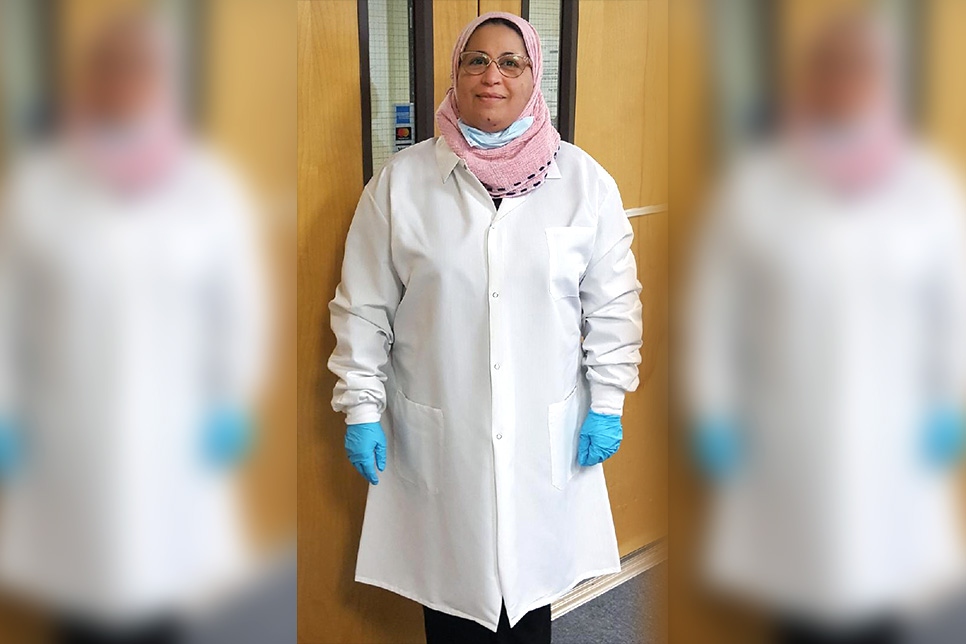
Perhaps we can hope that the urgent need for medically trained staff will lead more governments to ease the path to requalification. And even that
now that refugees and immigrants who trained overseas are risking their lives, the countries they are supporting will support them – even after the emergency ends.
https://www.unhcr.org/uk/news/stories/2020/5/5ebd461d4/coronavirus-spreads-refugee-doctors-want-join-fight.html
Migration Matters Festival, #RefugeeWeek2020
Posted by cathannabel in Events, Refugees on June 18, 2020
If you’ve not managed to catch up with any of the eclectic and exciting range of online events in the Migration Matters Festival yet, there’s more to come.
And there are installations/virtual exhibitions that are available online till 21 June.

JUN15TO JUN 21Maya Productions, Ignite Imaginations
ROUTES TO ROOTS

- Mon, Jun 15, 20209:00 AM Sun, Jun 21, 20209:00 AM
- Google Calendar ICS
Installation • All agesVIEW EVENT →JUN15TO JUN 21Useful Productions
FABRIC OF OUR LIVES
- Mon, Jun 15, 20209:00 AM Sun, Jun 21, 20209:00 AM
- Google Calendar ICS
Installation • All agesVIEW EVENT →JUN15TO JUN 21Abdulwahab Tahhan
INTEGRATE THAT

- Mon, Jun 15, 20209:00 AM Sun, Jun 21, 20209:00 AM
- Google Calendar ICS
Podcast • 15+VIEW EVENT →JUN15TO JUN 21Asia-Art-Activism
WORLD WIDE WONTONS

- Mon, Jun 15, 20209:00 AM Sun, Jun 21, 20209:00 AM
- Google Calendar ICS
Installation • All agesVIEW EVENT →JUN16TO JUN 22Ignite Imaginations
THROUGH MY WINDOW

- Tue, Jun 16, 20209:00 AM Mon, Jun 22, 20209:00 AM
- Google Calendar ICS
Installation • All agesVIEW EVENT →
Za’atari in the Time of Covid-19
Posted by cathannabel in Refugees on June 17, 2020
I’ve written about Za’atari before, during Refugee Week. In 2017 and in 2018 I celebrated the creative collaboration between refugees living in the camp and researchers from the University of Sheffield, to solve the practical problems they were facing. This was not about parachuting in experts to tell people what they should do. The people in the camp were the real experts, in terms of understanding what was needed, the resources they had at their disposal, and the constraints (the ban on creating any permanent structures, for example) on the solutions they implement.
This isn’t a one-way process. Because to solve the everyday problems in the camp they are working with, and not just for, the people in the camp.
Obviously not everyone living there has the kind of skills that can be pressed into service to help build the resources that the communities need, and not everyone is well and strong enough after the physical and mental traumas of flight to contribute in this way. But as a transit camp becomes a city the people living there can become again the people they were at home, can be part of the process of building and healing and problem-solving.
Innovative solutions to everyday problems are being developed, in collaboration with the people of Za’atari. Tony Ryan, the Director of the Centre, has been working with Helen Storey from the London College of Fashion, on resource use and repurposing in conflict zones, and on specific questions from the UNHCR about the design and manufacture of all kinds of things that we take for granted, like sanitary wear, make-up and bicycles. Resources are scarce in the camp, where 80,000 people share 6 sq km of space, and nothing is left to waste.
Home to 80,000 people. Intended as a temporary, transitory place, but evolving in to a long-term home for so many displaced by war. It’s Jordan’s fourth biggest city. Seen from above, as it is often is, to emphasise its sprawling scale, it’s easy to forget that in that city, as in any city, people are living their lives.

So how is life in this refugee city in the time of Covid-19?
Refugees are among the most vulnerable to the consequences of the pandemic, because they often reside in overcrowded camps, settlements and urban areas in cramped conditions with inadequate access to fresh water and hygiene supplies.
Syrian refugees in the Za’atari refugee camp in Jordan are struggling to meet basic needs as they can no longer leave the camp to work. Their poor nutrition will inadvertently increase their vulnerability to disease. It doesn’t help that livestock are often not allowed in formal relief camps, since they could contribute to people’s livelihoods and food, improving nutrition.
https://theconversation.com/coronavirus-lockdowns-force-the-worlds-poorest-into-deadly-trade-offs-between-their-health-and-livelihoods-136820
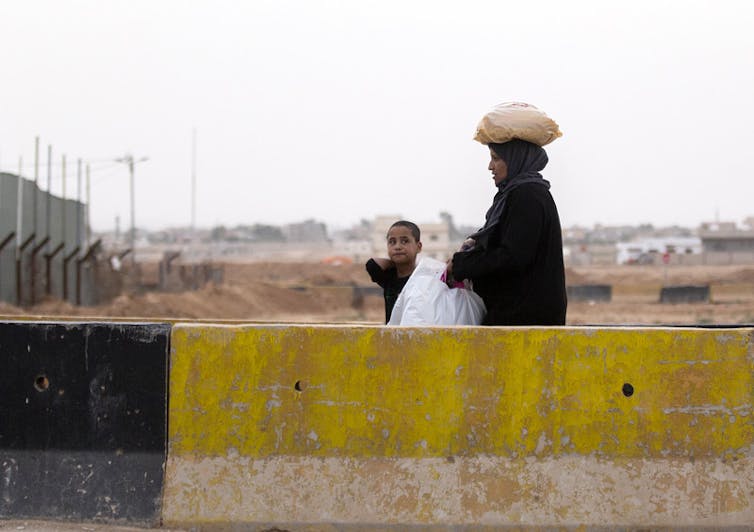
But that spirit of innovation lives on.
A group of five Syrian refugee students built a sanitation robot out of LEGO bricks to help their community prevent a coronavirus outbreak. The idea came from Marwan al-Zoubi, who sought refuge in Jordan in 2013 after fleeing the Syrian city of Daraa. He began studying robotics in 2019 with the support of the Blumont organization and now teaches children robotics at the UNHCR’s Zaatari Innovation Lab.
“One of the causes of infection with COVID-19 is contact with surfaces, so I had the idea of designing a robot to sanitize one’s hands without the need to touch the sanitizer bottle,” Zoubi told Al-Monitor. UNHCR’s Innovation Lab provided the necessary raw materials and funds for the simple LEGO prototype that uses a sensor to automatically dispense sanitizer.
Read more: https://www.al-monitor.com/pulse/originals/2020/05/jordan-zaatari-syrian-refugee-camp-robot-coronavirus.html#ixzz6Pcch9GSQ

And the partnership between Za’atari residents and Sheffield researchers continues to flower, even though the latter cannot be there in person.
Amidst Jordan’s arid landscape, there’s a tennis-court sized desert garden alive with plants being grown by refugees using foam, not soil.
The families involved in the project speak of benefits beyond having fresh food for the first time in years: Improving mental health and wellbeing, gaining new skills, maintaining important cultural and social traditions, finding a new sense of purpose and a feeling of empowerment. With many discarded mattresses being saved from landfill, there’s an important environmental impact too.
https://www.sheffield.ac.uk/sustainable-food/news/desert-garden-appeal
Scientists at the University of Sheffield are world-leading experts in hydroponics. Using highly advanced materials for commercial enterprise, they have been developing the technique at their lab in the city for many years. Duncan Cameron, Professor of Plant and Soil Biology and Tony Ryan OBE, Professor of Physical Chemistry, joined the dots between this high-tech work with polyurethane foam in Sheffield and a pile of old mattresses in the Zaatari camp. They set out to see if this most low-tech of materials could mimic the high-tech foams they were using in the lab. Turns out they could.
Soon after, the innovative Desert Garden project began, with both humanitarian and sustainable aims at its core: Use waste materials to grow fresh food in the desert for people displaced by war. The project is being managed by Dr Moaed Al Meselmani, a Syrian refugee himself, and a soil scientist currently working at the University of Sheffield.

You can donate to help keep the project going here: https://www.sheffield.ac.uk/sustainable-food/news/desert-garden-appeal
UNHCR has implemented a preventive plan to counter the spread of COVID-19 in Syrian refugee camps. Movement in and out of the camps is under strict medical scrutiny and all vehicles entering the premises are being sterilized,” UNHCR spokesman Mohammad al-Hawari explained.
“UNHCR also suspended all visits,” Hawari added. “We have medical centers and quarantine areas that are ready in the event the Jordanian government hospitals no longer have room for patients. We also have teams with extensive experience in fighting the spread of epidemics such as the bird and swine flu and Ebola in different areas of the world.”
He went on, “By early May, UNHCR had contributed $1.2 million to the Jordanian Ministry of Health to help purchase medical and laboratory materials and PPE.”
At the end of March, UNHCR made an appeal for $27 million to help prevent the spread of the coronavirus in Jordan, part of a global appeal for $255 million to support urgent preparedness and response measures for refugees and forcibly displaced people.
https://www.al-monitor.com/pulse/originals/2020/05/jordan-zaatari-syrian-refugee-camp-robot-coronavirus.html
If we think we know what it is to be locked down, just imagine, if you can, being locked down in a refugee camp. Unable to go home, even if it was safe to do so. Unable to move on to start to build a new life somewhere else. We may be all in the same storm…
In the Same Storm: UK asylum seekers in the Covid-19 crisis
Posted by cathannabel in Refugees on June 16, 2020
The threat from Covid-19 is not just the threat of serious illness and death. It is the threat of loss of livelihood, of loss of freedom of movement, of loss of educational opportunities. It may be the threat of being locked down with someone who abuses or exploits you or your children. It may be that you can’t get the food you need, or medical treatment, or advice and support.

Refugees and asylum seekers in the UK face all of these threats, and more. The Refugee Council’s open letter calls upon the government to address three key issues:
Increase asylum support by £20 per week to bring it in line with Universal Credit. This increase is vital for people seeking asylum trying to look after themselves and their families during the coronavirus pandemic.
Make it possible for people to claim asylum without having to travel. Currently people seeking asylum are still being required to travel in order to make a claim, in direct contradiction to the Government’s own travel restrictions and rules on social distancing.
Give all people seeking asylum accommodation suitable for social distancing and self-isolation. No-one should be made to share a room, but sadly this is the reality for some people in the asylum system and this is not acceptable.
https://act.refugeecouncil.org.uk/campaign/call-home-secretary-priti-patel-protect-people-seeking-asylum-during-pandemic
https://www.refugeecouncil.org.uk/latest/news/our-key-policy-calls-to-the-home-office-in-response-to-covid-19/
People on asylum support are provided with just over £5 per day to cover their essential living needs. Those who were already struggling are now finding it harder still – they are issued with prepaid cards that are only uploaded with credit weekly, and can only be used in certain shops. In addition, the need for mobile phone credit/data is much greater when face to face appointments are not available. Those who are in receipt of Universal Credit have seen their allowance increased by £20 a week for the next year. Those seeking asylum were getting far less than UC claimants anyway, and have now been told that their support rates will increase by 26p per day, less than 1/10th of the UC uplift. No one is suggesting that the UC claimant is being showered with largesse, far from it. But asylum seekers are, in this as in so many other respects, the worst off amongst the worst off.
Currently, to make a claim for asylum once you are in the UK, you must attend an Asylum Intake Unit. There are currently seven of these around the country (previously there was just one, in Croydon). But even with these new regional units, most people will have to use public transport to get there, exposing them to infection on what may be long and complex journeys. And many asylum seekers have health problems, arising from the situations that caused them to flee in the first place, the conditions in refugee camps or the exigencies of the journey here, and then poverty and poor quality accommodation on top of that.
The quality of accommodation for asylum seekers already raises serious public health concerns. Arrangements such as bedroom sharing between unrelated adults, communal eating facilities and crowded social spaces make social distancing difficult, and self-isolation almost impossible. Concerns have also been raised about the provision of sufficient hygiene and sanitation products in both Initial Accommodation centers and hotel provision.
In addition to the above, many of the drop-in facilities, the conversation classes, the informal support provision, have had to close. Support organisations are struggling to maintain effective contact with their clients – this is not just about the digital and technological aspects of communication, there are also frequently language barriers.
The closure of drop-in centres means isolated people become even more lonely, while others are at risk because they no longer have access to the services they rely on such as showers or washing facilities.
A third of the organisations we spoke to were still offering some kind of face-to-face support, delivering food parcels, making cash payments and continuing with casework for more vulnerable people.
https://www.refugee-action.org.uk/the-5-biggest-challenges-covid-19-poses-to-supporting-refugees-and-people-seeking-asylum/
The threat of disease will not stop refugees from leaving home, not when those homes are still being bombed or attacked by terrorists, not when they face persecution because of their faith or their political convictions, or their sexual orientation, not when the alternative is starvation. That they survive the terrors of the journey only to face destitution here is bitter enough. But they find themselves facing a new threat, one to which their poverty and lack of choice leaves them especially exposed.
We are all in the same storm, facing the same perils. But whilst many of us are in robust crafts, some are in leaking dinghies. Some are drowning.

Migration Matters Festival
Posted by cathannabel in Events, Refugees on June 15, 2020
… goes virtual!
Sheffield was the UK’s first City of Sanctuary and it is a city that is made vibrant by its diversity and interconnecting cultures. This year’s 5 day festival seeks to celebrate this history and culture with a vibrant and inclusive series of events.
Opening on the 15th June, Migration Matters Festival will run alongside the annual Refugee Week celebrated across the UK and together with national partners deliver an online and digital programme which will bring people together across the world

Instead of hosting events across the city centre and community hubs, the venues will be online platforms like zoom, Vimeo, Facebook, Instagram and Migration Matters’ own website hub. For the full programme, see Festival 2020 on the website.
As ever there’s a rich and soulful programme that brings the diverse and global mix of Sheffield’s communities together with artists from all over the world in a celebration of food, culture and performance.
To support our 2020 Online Festival progamme check out the donation page here. All proceeds will support the ongoing work of the festival and also be split with two incredible charities, South Yorkshire Refugee Law & Justice and Lesbian Asylum Support Sheffield.

Refugee Week 2020
Posted by cathannabel in Refugees on June 15, 2020
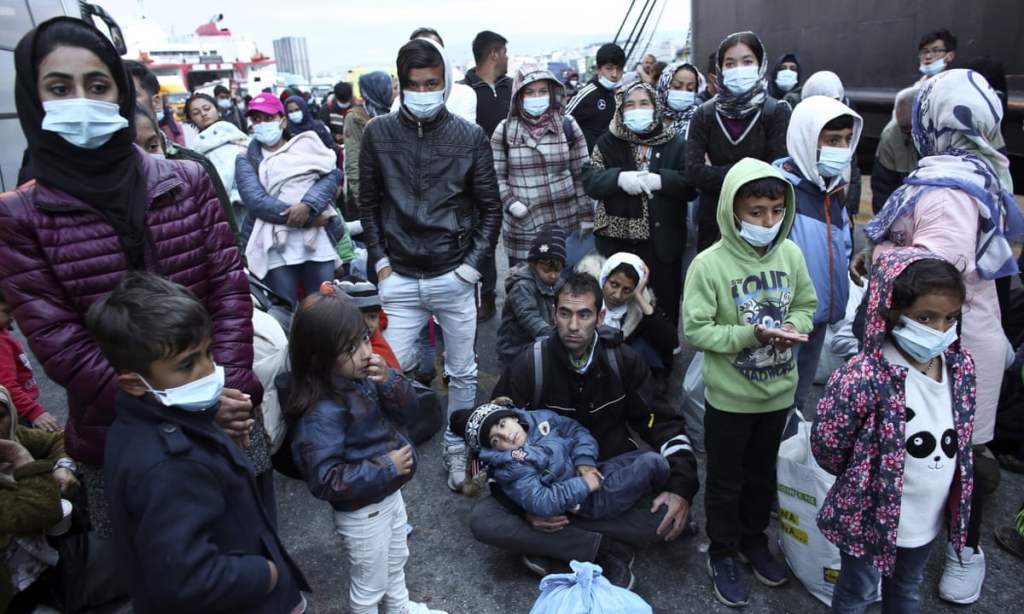
A year on from Refugee Week 2019 and our world is unrecognisable. We’ve become accustomed to doing the Corona swerve to ensure a 2m distance between us and others, on the pavement or in the supermarket. Many of us wear face masks, either because it’s required by our governments or because we feel they will protect us or (more realistically) others from us. We’ve all seen the photographs of landmarks around the world, usually teeming with people but now still and empty. Our own streets have been quieter, our air clearer. We become accustomed to hearing the daily death toll, to clapping for the people who are risking their lives to keep us safe, fed and protected.
We’ve adjusted to change that would have seemed unimaginable this time last year, and to tragedy that we could not have envisaged, whether or not it has come close to us and the people we love.
In this new world we have felt at times that we are ‘all in the same boat’, wherever and whoever we are. But it’s truer to say that whilst we are all in the same storm, some of us are in sturdier crafts than others. Those who had safe homes, a robust health service, family support and secure income when the storm hit can hunker down and get through it. Those who have nothing, nowhere and no one will perish. Of course, the former group may perish too, if they become seriously ill, they may fall into one of the risk groups (based on age, gender, ethnicity and underlying health conditions). But many in the second group will fall into the risk categories too, and so are still more likely to die. We say that the virus does not discriminate, and of course it doesn’t, in the sense of actively choosing who to infect. But its effects, and the severity of the effects, are inevitably worse in those who are already vulnerable, and those who have the least control over their circumstances.
The ‘stay at home, stay safe’ message must sound bitter to so many, whose homes were not safe, whose journey from home was to protect themselves and their children from danger.
How do you socially isolate in an overcrowded refugee camp? How do you protect yourself if you are in a detention centre, awaiting deportation? How do you escape the horrors of war, terrorist attacks, desperate poverty and starvation, when even the most porous borders, even the most welcoming countries, are closed? And, if your instinct is to flee a place of danger, how do you ensure you don’t take the plague with you?
This Refugee Week I will try to gather some stories about how refugees and asylum seekers worldwide are living through these perilous plague times. Because there are still wars, there is still famine, there are still terrorist attacks, there are still regimes that oppress on the basis of ethnic origin, religion, sexual orientation and political views. There are still refugees.

Some Fantastic Place #2
Posted by cathannabel in Personal on May 29, 2020
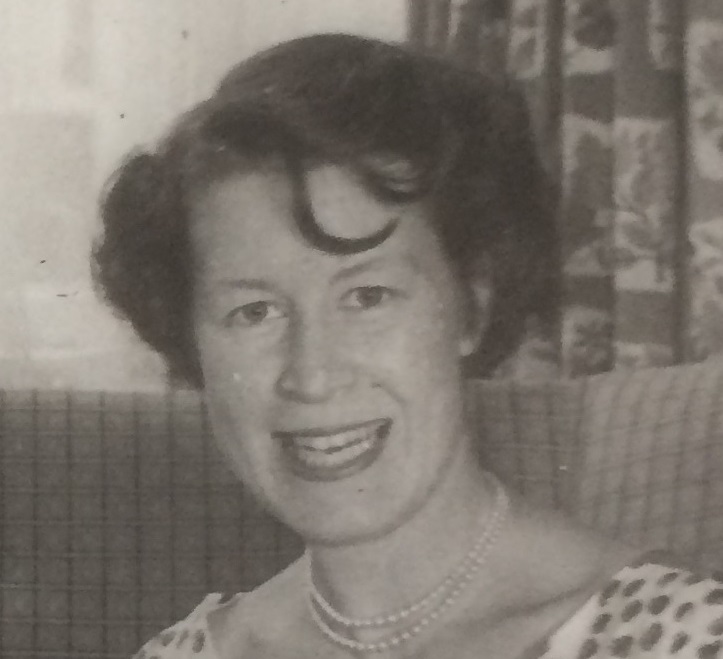
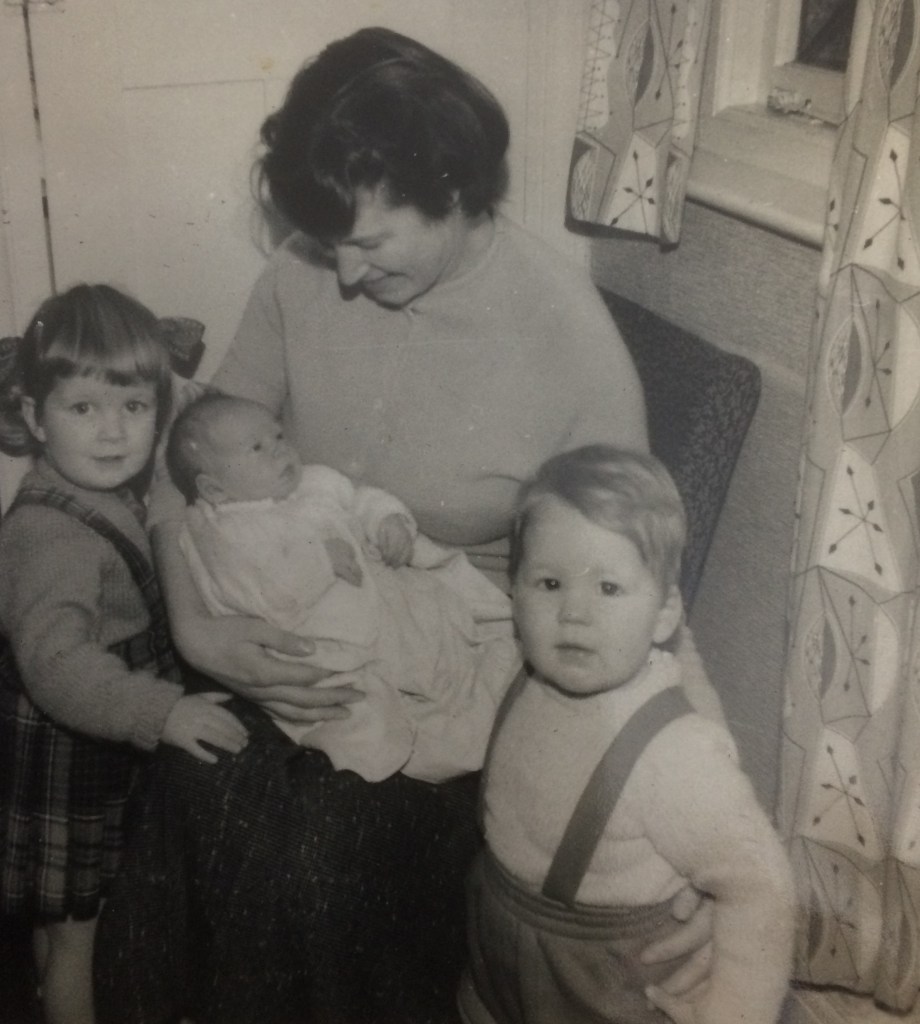
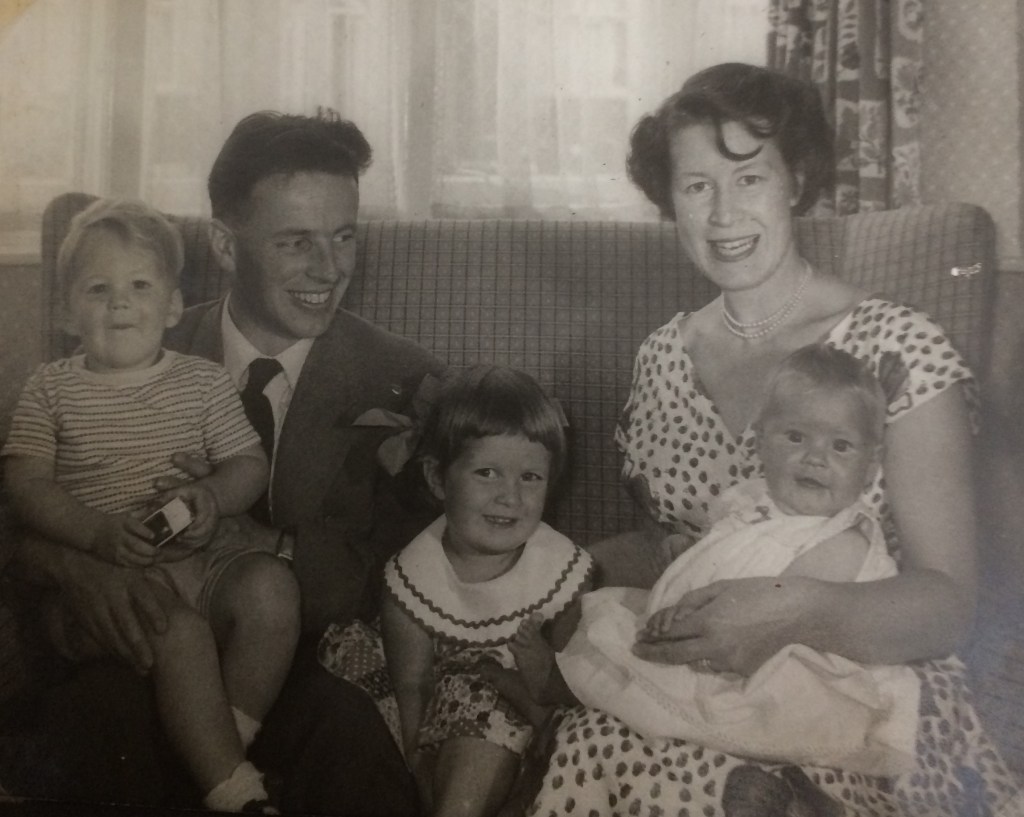
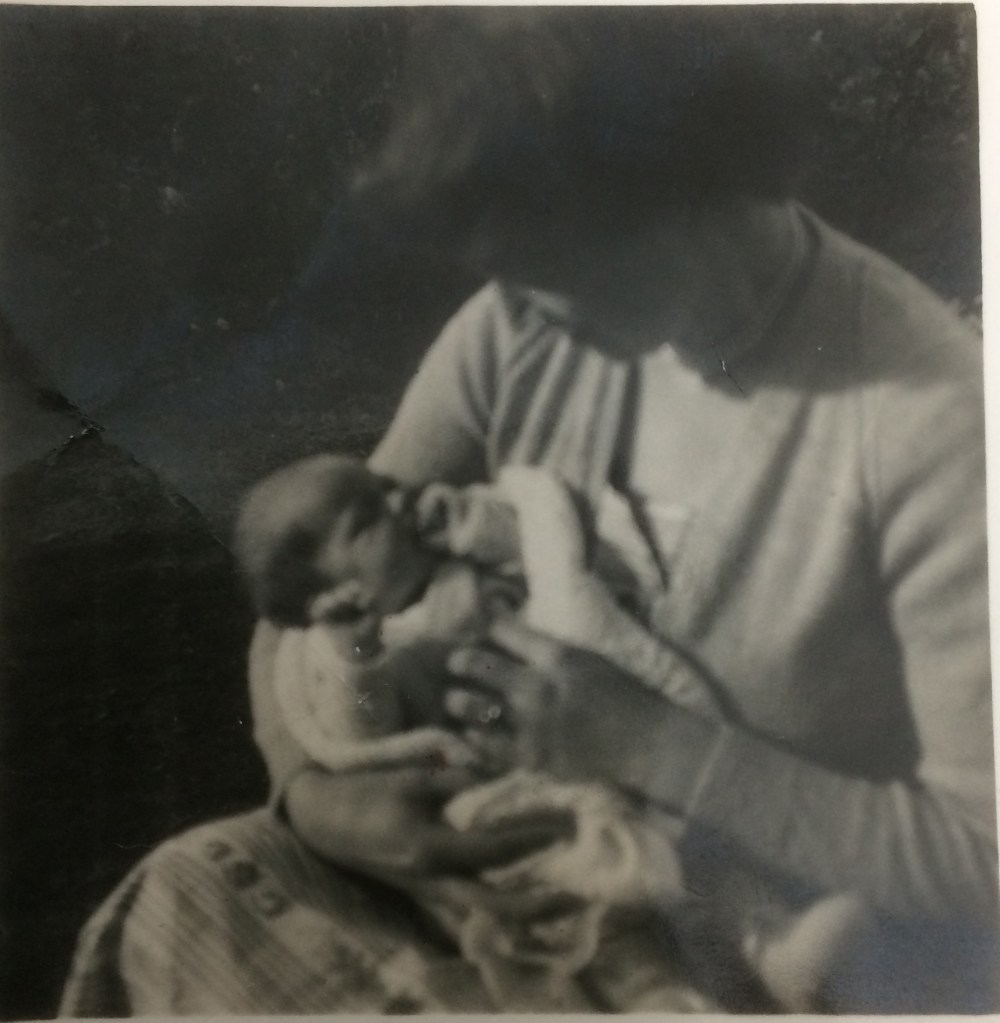
Eight years ago, I wrote about my Mum, on the anniversary of her death. It was the most personal thing I’d posted on this blog, which I’d only started a few months earlier – and whilst many of my posts since have been heartfelt, they haven’t, for the most part, been about me and my family. Earlier this year, though, I wrote about my youngest brother, on what would have been his 58th birthday. And now I feel compelled to write again to mark the 25th anniversary of Mum’s death.
What I’ve learned is that one doesn’t ‘get over it’. Loss changes us. The raw, wrenching pain of grief eases, with time, though it can still catch us unawares. But we adapt to a world without that person in it, to a world where we can no longer see, hear, hold that person. It takes time. Lissa Evans’ lovely novel, Spencer’s List, talks about how grief moves into a different phase one year and a day after the death. That until that point, every day one thinks, ‘this time last year’, and recalls a world in which that person is there, in which one can reach out and speak to them, hear their voice, hold their hand. And one year and one day later, ‘this time last year’ recalls a world that they have already left. It doesn’t mean it gets easier – that realisation in itself is painful – but it is different. And it goes on becoming different, as we are different, each time we lose someone close.
As life goes on, we accumulate losses. We lose not only grandparents, but parents, siblings, partners, friends, even children. Each loss brings back every other loss. No wonder that as we get older, our tears flow more freely.
I still think of my mum so often. I ask myself what she would do, what she would say. And when I feel sad or lost, the thought that comes to me, even now, at 62 years old, is that I want my mum. I want her embrace, her unconditional love, her tenderness, her understanding. I know my brothers and sister, and sisters in law, feel the same. Not only that, but each year when I mark her loss with a post on Facebook I hear from other people who miss her too, people whose lives she had touched, people who turned to her in times of trouble and found understanding.
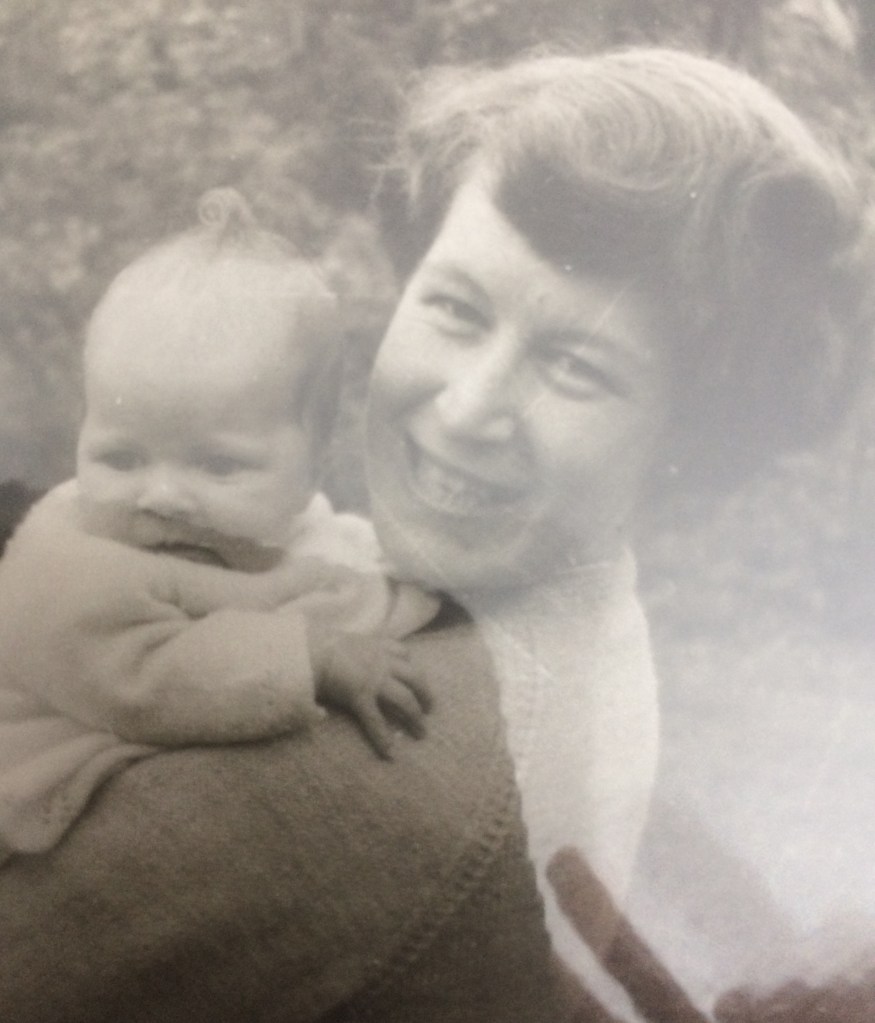
I’m always shocked to realise how few photographs I have of her. In those I have, she’s often looking down, at a small child at her side, or a baby in her arms. She never liked being photographed, that was the thing, and when forced to face the camera she tended to look a bit awkward, or anxious, her smile not the one we knew, the one that warmed us.
I wish she was here. But she was spared so much – the gradual decline into dependency that might have been her lot had the cancer not taken her at 65, and above all the loss of her youngest son. For the first time, when I knew my kid brother was terminally ill, I was thankful that she wasn’t still here to endure that pain.
She was intuitive and empathetic. Good luck ever trying to kid her that you were OK if you weren’t. She knew – even over the phone. And her emotional energies were channeled into sensing what others needed, not just her family but anyone she met.
She constantly questioned herself, and fell short of her own standards, whilst somehow setting an example for us that we can hardly hope to meet. (I remember her berating herself mercilessly because she had in a careless moment bought a tin of South African peaches during the apartheid era.) Her goodness was rooted in integrity and empathy, qualities she had in abundance. The latter prevented the former from becoming harsh and judgmental, the former prevented the latter from becoming mere sentimentality.
It was so quick, so brutally quick, just weeks from the diagnosis. But slow is brutal too, with cancer, and either way, at the end, as a wise man said, it’s always sudden. I remember this day 25 years ago, the unreality of it, as we came back from the hospital to the house where her absence was so tangible and incomprehensible. I remember the unfinished knitting (a child’s jumper) that came back from the hospital, the book that I’d lent her with a bookmark still halfway through. Powerful symbols of a life cut short far, far too soon. Those memories can still break me.
But most of all I remember her love. Love that nurtured and protected us, that showed us how to be loving and generous in our turn.
‘Her love was life and happiness and in her steps I trace
Some Fantastic Place lyrics © Kobalt Music Publishing Ltd., EMI Music Publishing
The way to live a better life
In some fantastic place’
Cecily Hallett, 8 January 1930-29 May 1995.
I miss her. Always will.

Ten Albums, Take 2
Posted by cathannabel in Music on May 12, 2020
I’ve done this ten album challenge thing before – in fact, about two years ago, in those dim and distant days before the plague came. The Facebook challenges are proliferating now, whilst we’re in lock down. I knew last time that I could have easily chosen an entirely different ten, equally compelling, equally influential, equally part of me, so this time round I did so. Thus, no Kirsty, no Bowie, no Crimson… But as I said last time:
Ten albums, from the thousands that have found their way on to our record player/CD player/cassette deck over the years. They’re weighted towards the 1970s, which I guess is inevitable. My teenage years, when my musical tastes were forming, freeing themselves both from parental influence and from the tribalism of my peers, trying things out and finding out what moved my feet, my hips, my mind and my heart. That process has never stopped, but it was at its most intense then. I carry with me the earliest music I heard – a kind of mash-up of the Goldberg Variations with E T Mensah & The Tempos, probably – and there was a gradual immersion in the world of pop and rock when we returned home from West Africa in the late 60s. All of those sounds are still part of my listening world, and I’ve added music from all around the world, and ‘classical’ music that my parents weren’t into (late 20th century stuff, and opera), and jazz and, well, a bit of everything really. And there’s a world of music out there that I don’t know, and that I might love if I get the chance to listen. So ten albums is daft and arbitrary but if you made it 100 albums it still wouldn’t be adequate.
I followed the rules on Facebook, posting just the album cover, without explanation. But here, I make the rules. So this is my ten album list, take 2, with a bit of a blather about the why, when and wherefore.
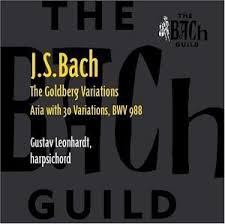
Bach – Goldberg Variations (harpischord). This is one of the earliest albums I remember hearing, whilst I was growing up in West Africa. I used to dance around the living room to it, so long as no one was watching. Years later, when we bought our own copy, selecting the Glenn Gould version(s), I wondered why it didn’t sound more familiar and it took me an embarrassingly long while to realise that the version I’d heard so many times as a child was played on harpsichord, not piano. Which version it was I cannot now tell. In my memory, the cover was green and gold. I don’t claim any kind of synaesthesia but I still hear Bach as green and gold (and Mozart as blue and silver).
So I don’t know who was playing the harpsichord on that album, but this Leonhardt chap is a possible contender – there are recordings from the late ’50s by him, and I imagine we took the record out with us to Ghana in 1960. I love this piece on piano too, obviously, but the harpsichord Goldberg is the piece that inspired my lifelong love of Bach and my lifelong exploration of classical music.
Ella Fitzgerald – The Cole Porter Songbook
Two birds with one stone here. Ella’s voice is sublime, and pairing her with Porter’s exquisitely crafted, delicious songs is perfection. And there’s the rub – I’ve had to defend Ella many times against the charge that, compared to Billie Holiday in particular, she’s just too perfect. Billie’s voice tells of betrayals and loss, a hard life, lived hard. And it’s wonderful, heartbreaking and vital. But the rich warmth of Ella’s voice is vital too. This is a 2 CD set, and is packed with fabulous songs. So in Love, Night and Day, Ev’rytime We Say Goodbye, I Get a Kick… And so many more. She lets the lyrics, those clever, subtle and often surprisingly rude, lyrics, work their own magic.
I’ve no idea when I first heard Ella, or Cole Porter, for that matter. I first heard some of Porter’s songs in the AIDS benefit project, Red Hot + Blue, which came out in 1990 – a very mixed bag, some of the artists very much of their time (The Thompson Twins, Jody Watley, Lisa Stansfield) but also Kirsty MacColl, Salif Keita, Neneh Cherry, k d lang… Other songs were already familiar, probably thanks to Sinatra. But if I had to pick one singer for Porter’s songs it would be Ella. She’s also done brilliant compilations of other great songwriters – Gershwin, Berlin, Kern. I don’t like all of her material, and whilst I admire her scat singing I don’t really enjoy it. Give her a tune though, and some genius lyrics, and she’s unbeatable.

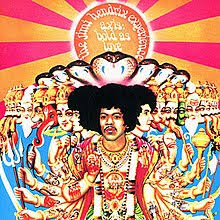
Jimi Hendrix – Axis: Bold as Love
I have no idea why Jimi didn’t make it to Ten Albums, Take One. It’s almost as if he’s too obvious, has been too ubiquitous in my musical life, to be simply a name on a list. But there was a time before Jimi. I remember hearing on the news of his death in 1970 – I recall the crass, borderline racist dismissal of a ‘wild man of rock’ – and I know my brother had some of his albums, but it wasn’t until my musical life converged with my husband’s that I really started listening.
Axis: Bold as Love isn’t perfect. EXP is gimmicky and irritating, Wait till Tomorrow is enjoyable enough musically but the words are incredibly clunky and, yes, irritating. But when you’ve got Spanish Castle Magic, If Six was Nine, Castles Made of Sand, Bold as Love and Little Wing, you can forgive a couple of duff tracks.
There can’t be much Hendrix material I haven’t heard. Audience tapes of obscure gigs, demos and out takes and jams. Somewhere out there some collector is sitting on a recording I haven’t heard, another alternative version or another obscure gig, that might see the light one day. But meantime there’s a rich variety and abundance of material, given how short a time he had in the light. And I think it was with Axis: Bold as Love, that I properly fell for Jimi.
Jackson Five – Greatest Hits
Some might demur at the inclusion of Greatest Hits compilations in this account of the albums that influenced me. But (a) I make the rules, and (b) sometimes a well-chosen compilation is the way in to an artist’s work, a starting point. And when it comes to Motown, some of the actual albums contained a fair bit of ordinary, by the numbers material or ill-judged cover versions, whereas the Chartbusters collections and individual hits collections were all fab, no filler.
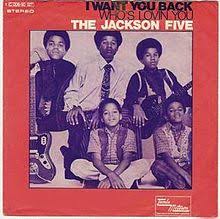
Motown was the soundtrack of my teens. I loved other stuff too, and Bowie was the most significant single artist, but those Motown songs, they still fill me with joy when I hear them now, just as they did back then. I loved the heartbreaky ones, obviously, the burning, yearning ones. But the Jackson Five produced some of the most purely joyous songs of their or any other time. ABC and I Want You Back are exhilarating, bewitching slices of pop/soul which sound as fresh now as they did back then. The interweaving of the voices – a Motown trademark of course, and with its roots in gospel – is uplifting and gives me goosebumps as only vocal harmonies can do.
I lent this album to a girl in our village, along with Michael Jackson’s debut solo album, Got to be There, and she moved away without giving them back. Not that I bear a grudge. OK, I did revile her name for many years but I’m over it now. Especially now we have another copy of the Greatest Hits.

Vaughan Williams – Fantasia on a Theme by Thomas Tallis/The Lark Ascending/Fantasia on Greensleeves
My mum loved VW. I can’t remember a time when I didn’t know these pieces in particular, and I learned to love the music for myself. The two Fantasias fed into my growing interest in early music, as well as leading me to other VW compositions.
Somehow (and this may be linked to my mum too) VW evokes for me as no other composer does the English landscapes that I love best, the coastlines of Cornwall and North Yorkshire, the mountains of the Lake District, the hills of Derbyshire.
After my mum died, the Tallis became in my mind so powerfully associated with her, and my grief at losing her, that to this day (and she died 25 years ago this year) I cannot hear it without weeping. And less than three months ago, we buried my kid brother, and it was The Lark Ascending that played as we followed his coffin out of the church and to the graveside. I doubt I will ever hear that piece again without weeping either. But I will keep on listening to these pieces, because however much they remind me of loss, they also lift my heart up, let it soar with the lark.

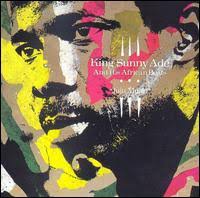
King Sunny Ade – Juju Music
My first Ten Albums selection included the wonderful Osibisa, who brought back to me the sounds of highlife music that I’d heard in Ghana as a child. I’ve been exploring African music ever since, from all over the continent, but with a particular love of West African music.
Nigerian King Sunny Ade started off in highlife (which is Ghanaian in origin but which spread to Ghana’s neighbours over the course of the 20th century, and particularly in the era of independence). The music evolved and ‘juju music‘ drew on a wide range of influences (including funk and reggae), whilst retaining its Yoruban flavour.
This 1982 album was his major label debut but Ade had been releasing records for almost two decades by then. It’s one of the first big successes of what is often called (somewhat problematically) ‘world music’, and led to so many other great African musicians (Youssou N’dour, Salif Keita, the Bhundhu Boys, Ali Farka Toure and Ade’s compatriot Fela Kute, the king of Afrobeat) getting airplay and record sales worldwide. And it is gloriously infectious and rhythmically compelling and joyous.
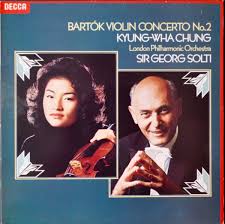
Bela Bartok – 2nd Violin Concerto
Mrs Bolland was the Deputy Head at Queen Elizabeth’s Girls’ Grammar School and taught general Music classes, not to O or A level students but as part of a wider education, throughout my schooldays there. At some point, I think in the lower 6th form, she played us some really quite challenging music from the twentieth century – Schoenberg’s Verklarte Nacht, something by Roberto Gerhard which I cannot recall… and this. From the moment I heard the opening pizzicato notes and the soaring violin, I was entranced.
This was written in the late ’30s, when Bartok was deeply troubled by what was happening in Europe (he left his native Hungary in 1940 and never made it back home again – he died in 1945). As with so much of the very best music, there is darkness and light here, sorrow and hope. Hearing this gave me confidence to explore other ‘difficult’ twentieth-century music, a quest that has continued ever since. I owe Mrs Bolland a debt of thanks.
David Munrow – The Six Wives of Henry VIII
I loved the 1970 TV series, absolutely loved it. I went to some exhibition somewhere that had the costumes on display. I bought various tie-in publications to the series. I read everything I could about the Tudors (and have continued to do so over the years since).
And then there was the music. David Munrow and Christopher Hogwood founded the Early Music Consort in the late 1960s, and Munrow was in demand for soundtracking historical dramas with authentic music played on period instruments. He worked on The Six Wives, and its movie version, and on Elizabeth R. Listening to Vaughan Williams had prepared me for listening to Tudor music, and these pieces captivated me. At around the same time as I listened to this I acquired another album, presented as an Elizabethan Top Twenty. In fact, the ‘Elizabethan’ tag is a bit spurious as several pieces either pre- or post-date that era and although the performers were totally respectable there was the suggestion that the music was being just a little bit popped up to please audiences who wouldn’t normally go for this stuff . The Munrow set is more rigorously selected in terms of chronology, and because the performance of the music had to match the set, the costumes, all the period detail.
I recall being very shocked and upset to learn of Munrow’s suicide in 1976. But his legacy is remarkable – one can these days hear a fabulous range of early music on period or modern instruments in concert halls, on record and on the radio.

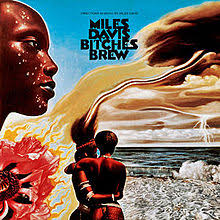
Miles Davis – Bitches Brew
We have Linda Buckley to thank for our introduction to Miles. To be honest, I didn’t really get Bitches Brew then, and if I had to recommend an entry point to Miles’ oeuvre, I don’t think it would be this (probs Kind of Blue, as predictable as that might seem). But I knew I was in the presence of musical greatness. We were into jazz rock at the time – Mahavishnu, Weather Report, Billy Cobham – and our way into jazz was through the jazz elements of that fusion. These days we listen to as much jazz as anything else. Miles played with anyone who was anyone, and his music changed dramatically over the years. So listening to all eras of Miles is a fantastic way to get into so many other artists, and to remain open to different strands of jazz, and to new bands and performers.
Radio 3 at the weekends gives us the chance to hear contemporary jazz on J to Z, which has introduced us to artists such as Dinosaur Junior, Tigran Hamasyan, Christian Scott Atunde Adjuah, Alina Bzhezhinska, Yazz Abmed, Kokoroko, Kamasi Washington… but also on Jazz Record Requests to hear the all-time greats. Now, I am not so fond of the trad stuff that a fair number of JRR aficionados seem to love. But there’s always something for us too – Coltrane, Ellington, Monk, Mingus, Haden, and, of course, Miles.
Simon and Garfunkel – Greatest Hits
I think this is the first album I bought. Or maybe the first one I bought from a record shop (my prized copy of Motown Chartbusters Vol. 3, on a remarkably solid slab of only slightly scratchy vinyl, was purchased at a knockdown price from a girl in my class). Bridge over Troubled Water was a huge chart hit, and my introduction to a world of wonderful songs.
The charts in 1970 were rich with hymn-like songs solemnly marking the passing of the 60s – not least the Beatles’ Let It Be – but Bridge Over Troubled Water was the blockbuster take: five minutes of booming, Phil Spector-inspired white gospel with a choirboy vocal and a simple, universal message beneath the sturm und drang. AP
https://www.theguardian.com/music/2020/apr/27/the-100-greatest-uk-no-1s
Just on this compilation, there’s For Emily, The Boxer, The Sound of Silence, I am a Rock, Scarborough Fair, America and of course BOTW.
Since then, I’ve listened to all the albums, and lots of much earlier S&G material, much of which is simply brilliant, and simply beautiful. And of course Paul Simon’s solo career (both alongside S&G and after the duo split), includes many, many gems: 1965’s A Church is Burning, Mother and Child Reunion, the Graceland album.
If I were to do this challenge again, next year, next month, tomorrow, I could find without great difficulty another ten albums that have influenced me significantly. Music has always been hugely important to me, and I’ve been listening for a very long time, to music from all eras, all genres, all continents. I have no truck with the ‘it’s all a bit shite nowadays’ school of thought – each era of music has had its share of tedious, derivative, witless and yet bizarrely successful material. Nor do I have any time for the wholesale dismissal of particular genres – I may not listen to a huge amount of country & western, for example, but I like quite a lot of it a lot (ditto rap). And in particular I’d hate to only listen to the music that is made here and in the USA, not when there are such extraordinary sounds emerging from so many other countries and cultures. The ten albums above have each led me in a particular musical direction, and for that – for these pieces of music and the artists who created them, for all the music I heard as a result and the joy it brought me – I am eternally grateful.
Postscript – Six Years of Singles
For a few years, it was the singles chart that dominated my musical life. Every Sunday we listened in, took notes, and voted, to come up with our own version of the chart. And every week we watched Top of the Pops (if the BBC changed which night that was on, I had to re-arrange my piano lessons to avoid a clash. No wonder my piano teacher/future mother in law did not try very hard to persuade me not to give up). That period, roughly between our return to the UK and my attempt to rapidly absorb and understand pop culture, and the point when music got a bit more ‘serious’ and album-focused was, say, 1968-1973. When I look back at the charts in those years there is an awful lot of absolute, utter, unadulterated tripe (some of which I remember with appalling clarity). But there are also some glorious slices of pop, and some formative moments.
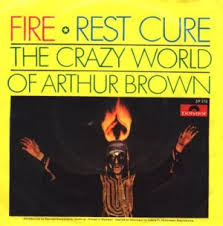
1968 was the year I saw the Stones do Jumping Jack Flash on TOTP, the lighting making them look terribly sinister, and Arthur Brown doing Fire, wearing a hat that was actually on fire (no health & safety in them days). I think my mum was seriously shocked, and must have wondered whether her children should be exposed to this kind of thing. She didn’t ban it though, thankfully. I was shocked too, but in a good way. In total contrast, there was the sweet innocence of Mary Hopkin’s adaptation of an old Ukrainian folk tune, which both I and my mum could enjoy.

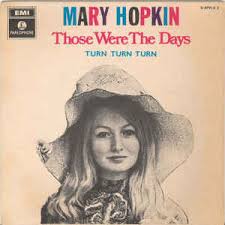
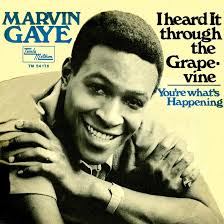
1969 introduced me to reggae via Desmond Dekker’s The Israelites. This was essential to my assimilation into school life. Music was very tribal and I never did get the hang of which group I might affiliate myself with most comfortably. I loved the music of both groups, was hopeless at conforming to dress codes or other social mores. But I did genuinely love ska, reggae, Motown and soul. Also this year, Jackson 5’s I Want you Back (see above), and Marvin Gaye’s version of Grapevine. And Tull’s Living in the Past, to nod to the other tribe.

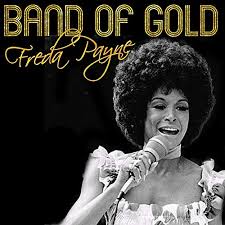
1970 – Hendrix’s posthumous hit, Voodoo Child: Slight Return, probably the first Hendrix I heard (see above). And the first single I bought, Matthew’s Southern Comfort’s cover of Joni Mitchell’s Woodstock. That’s pretty cool as a first single, given how much I love Joni. Also one of the greatest singles ever, Freda Payne’s Band of Gold, which seemed to be always on the loudspeakers at the City Ground, and at Nottingham’s Goose Fair as we spun round on the waltzers.
Written by Motown brains trust Holland-Dozier-Holland, Band of Gold sees Payne sitting in a lonely bedroom, her wedding night gone disastrously unconsummated after some kind of freak-out by the groom. Although the exact details are tactfully veiled by Payne, it’s an unforgettably specific scenario, its horror hammered into your mind with that unyielding snare rhythm and told via a wondrous vocal line. BBT
https://www.theguardian.com/music/2020/apr/27/the-100-greatest-uk-no-1s


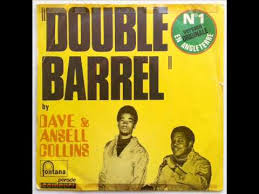
1971 and more reggae – Dave and Ansell Collins’ Double Barrel. My love of the A side, which sounded just as amazing when I reheard it a couple of years back, was only slightly dented by the B side being a bit of a rip-off.
If you wanted evidence of how far out, how unbound by the usual rules reggae was, you could find it at the top of the charts in early 1971: a piano line taken – sampled if you like – from Ramsey Lewis; a vocalist who largely grunted and bellowed incomprehensibly in the style of a Jamaican deejay: “I am the magnificent W-O-O-O!” It still sounds fantastic. AP
https://www.theguardian.com/music/2020/apr/27/the-100-greatest-uk-no-1s
Also, one of Diana Ross’s most gorgeous heartbreak songs, I’m Still Waiting. And while I never entirely loved T Rex, Jeepster was delicious.


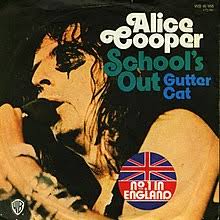
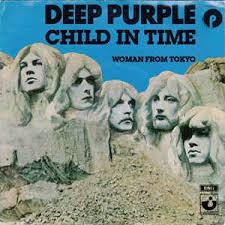
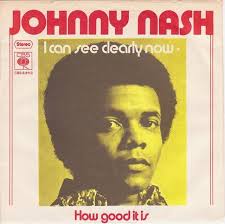
In 1972, my French penfriend came to stay, and there was a bit of a cultural exchange as regards music. However, I think we won. Claude Francois and Michel Sardou couldn’t really compete with Alice (School’s Out) and Hawkwind (Silver Machine), T Rex (Children of the Revolution) and Deep Purple (Child in Time). There was also the uplifting loveliness of Johnny Nash’s I Can See Clearly Now.
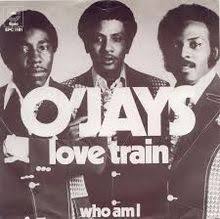
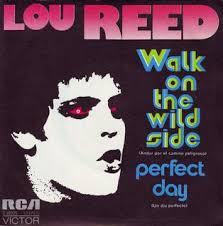
1973 gave us Bowie’s Life on Mars – obviously not the start of my love affair with Bowie’s music, which really began when I heard Suffragette City on the juke box in the Cellar Bar, but a high, high point. Also this year, Lou Reed’s Perfect Day, a song that breaks my heart (when he sings, ‘You made me forget myself. I thought I was someone else, someone good’, oh lord). It’s a song about heroin, except that of course it isn’t, it’s a song about the fragility, the transience, the illusory nature of happiness. And then there’s the O’Jays’ Love Train, just to show that although my listening had shifted in a heavier direction, my love for soul had not (and never has since) faded.

After this period, we were less diligent in following the charts, and many of the albums we listened to in later years either didn’t yield singles, or those singles didn’t trouble the charts at all. And gradually we lost touch. The singles charts don’t mean today what they did back in the early ’70s, when one really could not face school on a Monday or the morning after TOTP unless one had listened/watched, and had an (acceptable) opinion on it all. But the art of the single – of packing a tune (with middle eight and memorable chorus), with lyrics that one could sing along to – into 2-3 minutes, with a B side that might even turn out to eclipse the actual hit – is, when it works, an extraordinary form of magic.
 Passing Time