I do have faith. Not in any god or gods, but in people. Sometimes that’s hard to sustain. It gets bashed about a lot, and this last week it has been kicked in the teeth and the guts.
Sometimes hanging on to one’s faith is an act of will. I refuse to despair of humanity. I refuse to believe that hate will win.
That’s not based on some rose-tinted view of the world, some sanitised suitable for small children version of history. I am currently reading the late David Cesarani’s book on the Final Solution. I have read so many accounts of the Holocaust and of the Rwandan genocide. I know what human beings can do to one another.
But I also know, from those same accounts that there are always people who stand up to be counted, people who risk their lives to protect others. I know there are people for whom love and compassion are such powerful principles that they will act upon them even when the whole of their society seems to be in opposition. Everywhere that there is hate, there is also love.
The poison that seeps out daily from the front pages of some of our tabloids, that oozes from the comments below the line on any newspaper article about refugees/migrants, has its effects. If people only ever hear that message, why would they not begin to believe it? Who hasn’t been told, by a stranger or a family member, that we aren’t allowed to celebrate Christmas any more? (I was told that on Christmas Day, in a room filled with the usual festive debris, after a splendid traditional Christmas dinner, so there you go). Or that Sharia law is now in force here, or that ‘they’ can jump the queue for housing, benefits, etc. In the face of all the evidence, these lies take hold, as lies so easily do when they tap into deep insecurities and fears. Insecurities and fears that are nurtured and fed every day.
In the face of the lies we have to keep speaking and showing truth. In the face of hate we have to keep speaking and showing love. In the face of the horrors that seem to happen daily – in Paris, in Kuda, in Orlando, in Birstall – we have to keep speaking and showing faith.
Keep on keeping on.
Sometimes – Sheenagh Pugh
Sometimes things don’t go, after all,
from bad to worse. Some years, muscadel
faces down frost; green thrives; the crops don’t fail,
sometimes a man aims high, and all goes well.
A people sometimes will step back from war;
elect an honest man, decide they care
enough, that they can’t leave some stranger poor.
Some men become what they were born for.
Sometimes our best efforts do not go
amiss, sometimes we do as we meant to.
The sun will sometimes melt a field of sorrow
that seemed hard frozen: may it happen for you.
Hang on to your hat. Hang on to your hope. And wind the clock, for tomorrow is another day (E B White)
Theirs is a land with a wall around it
And mine is a faith in my fellow man…
Sweet moderation, heart of this nation
Desert us not, we are between the wars
(Billy Bragg, Between the Wars)
We are building up a new world.
Do not sit idly by.
Do not remain neutral.
Do not rely on this broadcast alone.
We are only as strong as our signal.
There is a war going on for your mind.
If you are thinking, you are winning.
(Flobots – We are Winning)
The simplest and most important thing of all: the world is difficult, and we are all breakable. So just be kind.
Caitlin Moran – How to Build a Girl
If there’s no great glorious end to all this, if … nothing we do matters … then all that matters is what we do. ‘Cause that’s all there is. What we do. Now. Today. … All I want to do is help. I want to help because I don’t think people should suffer as they do, because if there’s no bigger meaning, then the smallest act of kindness is the greatest thing in the world.
Joss Whedon – Angel
We are, almost all of us, in the flesh merely odd shaped, damp-eyed vulnerable human beings in constant need of love. There is, we must remember, more love and unity than hate in this world. Sometimes it takes a death to force us out into the streets and admit it
Finally, I get to do my Desert Island discs. Kirsty Young appears to have lost my contact details, but no matter, because this year the 24 Hour Inspire featured a pop-up radio station, and I was asked to choose 6 tracks, a book and a luxury, and to talk about them with interviewer Chella Quint.
But how to pick just 6 tracks? It would not, realistically, have been easier if it was the BBC 8. Or even 12, or 20… Not when music has been such a huge part of life, not when it matters so much.
Listening, as I often do, to contributors to Desert Island Discs, I can see a range of different approaches to the task of selection. Some take the biographical approach – linking the tracks explicitly to key points in the life story they are describing. This is interesting, and enriching to the biography, but it may mean that the music doesn’t stand up in its own right, and has purely nostalgic value. Some just pick 8 tracks they kind of like – but you can tell in this case that music is not a passion, not an obsession but a pleasant accompaniment to other things. They have not agonised about those choices, they haven’t felt as though they have personally betrayed the artists who don’t feature in the final cut. That’s fine, but I can’t be like that.
When music really, really matters, the problem is not finding 6 or 8 or however many tracks, it’s finding a rationale for selecting for this particular purpose, on this particular date and time. That’s how I come to terms with it – on another day, in another context, I could and likely would have an entirely different set of tracks. So, what was my approach this time?
First off, I wanted to be able to say something about each track. Not just, this is brilliant, I love this, listen to this bit (although in a normal music-listening context there is a lot of that). But something about why it matters to me, how I encountered it, what it does to me. Secondly, the context. It’s the 24 Hour Inspire, so the music I pick has to be something that moves me, challenges me, disrupts me, inspires me.
Even outside this particular context, I can’t be doing with music that is merely pleasant. It has to move me – that can mean intellectual stimulation (a Bach fugue, for instance, or much of European postwar ‘classical’ music), emotional impact (much sacred music, even though I’m a humanist, and a host of songs that for some reason – lyrics, context, something in the tune, something in the vocals – make me well up or want to punch the air), physical effect (heavy grungy sounds, infectious dancey sounds, music that makes me move my feet, my hips). These are not mutually exclusive categories, of course, as my choices will demonstrate.
TRACK 1: SONGHOY BLUES – SOUBOUR
There had to be music from Mali. Because that’s where so much of the music I love was born – think Muddy Waters, think Hendrix – before it was transported across the oceans on the slave ships, asserted its power as it blended with the folk music and hymn tunes it encountered in the Americas and then made its way back home again.
Songhoy Blues grew up listening to the rich Malian tradition, and griots such as Ali Farka Toure – and to Muddy Waters and Hendrix. You can hear all of this in their music. I’ve written previously about some of the reasons why I feel such a strong emotional connection with West African music, and about the other powerful dynamic in contemporary Malian music – the resistance to the murderous jihadist bigots who invaded the north of the country, and banned football and music, inflicting brutal punishments on those who failed to comply. Songhoy Blues’ sound is joyous, a powerful riposte to the bigots, a reminder that the ‘grey zone’ as they call it is full of colour, full of melody, harmony, rhythm, full of beauty and warmth.
And this year of all years, there had to be Bowie.
TRACK 2: DAVID BOWIE – SUFFRAGETTE CITY
This one goes back to my first encounter with the Star Man, which I wrote about on the day his death was announced. It’s not necessarily my favourite ever track but it’s deeply significant as the start of a relationship that has continued throughout my teenage and adult life, and will continue, despite his death, because all of that music is still there to enjoy and explore.
Crimson were part of my teenage years too.
TRACK 3: KING CRIMSON – RED
I’ve always said that Red was my favourite album from the 70s manifestation of the band, and often said that ‘Starless’ was my favourite track on that album. But for desert island purposes, Starless would be so wrong. It could actually feature in a ‘songs that must never be played during a lonesome, marooned and possibly hopeless sojourn on a desert island’ list. Instead I picked the title track, a grungy heavy instrumental that I always loved, that I remember listening to, drinking cheap cider, sitting on the floor at my boyfriend’s house, and rocking out.
Kirsty MacColl would have to be with me on the island.
TRACK 4: KIRSTY MACCOLL – FREE WORLD
I imagine she’d have been great company in person – certainly the musicians she collaborated with talk about her with enormous affection and warmth, but also respect. She certainly deferred to no one – Johnny Marr tells a lovely story of her taking Keith Richards to task for getting something wrong on the guitar, and Keith accepting it meekly… Kirsty’s songs can be funny, poignant, sharp (sometimes all three), her voice is gorgeous, and she’s one of a number of women in rock/pop music who have managed to make their own rules, to do things their way, against the odds. This song makes me want to punch the air and change the world.
Another voice of rare beauty – actually one of the loveliest voices ever, anywhere:
TRACK 5: SAM COOKE – A CHANGE IS GONNA COME
This song is heavy with the hope and the hopelessness of the early sixties civil rights movement – people holding on to the possibility of change whilst being confronted daily with implacable hostility to change. I think of that – but I also think of the fact that an African-American currently sits in the White House, and for all the injustice and inequality that remains, for all the entrenched prejudice, things can and do change. I would never have believed, twenty years ago, for example, that gay marriage would be legal in so many parts of the world. And for all that there are still so many places where to be gay is to be outside the law and in danger of violence, it happened without that much fuss here, and in other countries, in the end. Even outside the social justice activist world, most people seemed to say, tacitly or otherwise, good on them. I have to remember and have faith that every time things seem hopeless, that a change IS gonna come.
And finally to the least well-known track of my six.
TRACK 6: FLOBOTS – WE ARE WINNING
The Flobots are hard to pin down – the highly political lyrics, spoken and sung, are backed not just with guitars and drums but with viola, cello and trumpet and the effect is intense and powerful. This track is marvellously idealistic, optimistic, hopeful. We are Winning. It doesn’t always (often) feel like it, but it’s something to hold on to, something to keep you keeping on. It speaks to my belief that what we do matters, precisely because this world is all there is. As Joss Whedon put it, in Angel: “If there’s no great glorious end to all this, if nothing we do matters then all that matters is what we do. Cause that’s all there is. What we do. Now. Today.” And there’s a particular pertinence in these lines in the context of an event that celebrates learning, teaching and research: There is a war going on for your mind. If you are thinking, you are winning.
We are building up a new world.
Do not sit idly by.
Do not remain neutral.
Do not rely on this broadcast alone.
We are only as strong as our signal.
There is a war going on for your mind.
If you are thinking, you are winning.
Resistance is victory.
Defeat is impossible.
Your weapons are already in hand.
Reach within you and find the means by which to gain your freedom.
Fight with tools.
Your fate, and that of everyone you know
Depends on it.
(Flobots, 2008)
Selecting my six tracks might have been tricky, painful even. I feel I owe a personal apology to so many artists I love but have left out, and if I were to do this again (I ‘m more than willing, guys) I could easily come up with another six, and another, and another…
But these felt good. The 24 Hour Inspire is all about inspiration (obviously), and I feel inspired when I hear these songs. I feel energised, and optimistic, and I want to dance, and to punch the air and change the world. I hope at least some of the songs will affect at least some of you in similar ways. I’ll add the recording of the interview when it’s available. Meantime, enjoy!
We’re in the final run-up to an event that somehow or other I have found myself organising, and which – for all the panics, headaches and hard work it entails – is a labour of love, and the thing I’m proudest of in my career.
First caveat is that whilst I am the chair of the charity and I drive the planning of the event, actually putting it altogether is the work of many people. My annual thank you list is only marginally shorter than the credit sequence for a Marvel superhero movie.
Second caveat is that, given the scale of the event – 49 speakers, delivering half hour talks over a 24 hour period, with a range of fringe events – the panics and headaches are very few, and the hard work by and large doesn’t feel like hard work.
It all started with a friend and colleague being diagnosed with a terminal cancer. This particular friend and colleague was one of those people who was not only respected but held in enormous affection by those who he taught and who he worked with – he inspired people, and the news of his illness hit many, many people very hard. I remember calling the admin and technical staff in the department together to tell them the prognosis, and their shock and tears – and anger at the disease that was claiming him. Right from the start he was determined to do something positive with the utterly lousy card he’d been dealt. And he did.
He had far less time to do anything than he – or we – had hoped. All the more reason for us to ensure that we did something creative, joyous, inclusive and inspiring, in his name.
That first year it was incredibly personal. A fortnight after the funeral we were still raw with grief and one of our speakers commented on the intensity, a kind of tension that underscored the celebratory mood that we had, nonetheless, achieved.
It’s different now, of course. Many of our speakers, most of our volunteers, never met Tim. But the event has taken on a life of its own. It is – and was even that first time – a celebration of what the University is all about. There’s a lot of cynicism about institutions like ours – we have to jump through so many government initiated hoops, we have to somehow be viable financially, it would not be surprising if the ideals that we proclaim were a bit tarnished and compromised. But acknowledging all of that, from all of my experience as a member of staff, as a student, I know that those ideals are still burning brightly.
Give people a chance, an excuse almost, to demonstrate and to share the passion that led them into teaching and research in the first place, and they seize it. When we ask people to take part in the 24 Hour Inspire, they so often respond with a Yes, and. Yes, I will do a half-hour talk, and would you like me to bake some cakes as well? Yes, and why don’t you ask my colleague A, because he/she is a brilliant speaker? Yes, and how else can I help to make this a success?
That applies whether they are Professors, Pro-Vice-Chancellors and the like, or PhD/MA students at the start of their academic careers.
So on 12-13 May, 49 speakers from across the disciplines – engineers, lawyers, physicists, historians, medics and more – will be sharing their ideas, their research, their love of their subject with a diverse audience. Between midnight and 6 am speakers, and many members of the audience, will be pyjama clad. True, some members of the audience may actually be asleep, but I believe that’s not unknown in daytime lectures either…
Other colleagues will be hosting a pop-up radio broadcast, featuring interviews, Desert Island Discs, a quiz, and lots and lots of music. Some have contributed artworks for a small exhibition, others may be busking live in the foyer.
Of course it has another purpose, alongside the celebration and sharing of knowledge. We’re raising funds, this year for the Teenage Cancer Trust and Impact Young Heroes, two organisations who work with young people with cancer. Everyone who buys a wristband, a cupcake or a book, everyone who donates on line or on the day, contributes to that invaluable work. Since Tim set up Inspiration for Life in 2012, we’ve donated £17000 to a range of cancer charities as well as to the Snowdon Trust who provide grants for students with disabilities. I’m very proud of that.
But most of all I’m really excited about what’s going to be happening this Thursday from 5.00 pm. I know that by 5 pm the following day I will be exhausted, but I will also be exhilarated, and that by the following day, I’ll be starting to think about the 2017 24 Hour Inspire…
Do pop in for a bit, if you can. If you can’t, follow us on Twitter, and tune into the radio station. It’ll be a blast. It’ll be an inspiration.
There’s a ruined church in Liverpool city centre; only the husk of the building remains, lacking roof and windows, bombed and burnt out on the night of 6 May 1941 during the Luftwaffe’s May Blitz on Merseyside. Last night I joined crowds outside St Luke’s church to see a sound and light show – Out of the Darkness – transform St Luke’s Church to mark the 75th anniversary of the May Blitz.
On the 15th April 1989 I was nine, and I can remember playing a game with my younger brother Sean. We were in the bedroom of our house in Burscough, messing around on the bunk beds. At some point we wandered downstairs, to get a drink or a ‘Toronto Snack’ – a fruit salad like the ones I used to get at nursery in Canada when Dad was teaching there for a year and Sean was just a baby. In my memory we came into the living room to find him watching the television.
“Something’s happened at the match,” is what I remember him saying. I remember the green of the pitch and the blue of the sky and the people milling around on the grass. People running as they carried others on makeshift stretchers. A line of police. As the afternoon progressed we learned of the deaths. 10, 20…
Europe is facing a wave of migration unmatched since the end of World War II – and no one has reported on this crisis in more depth or breadth than the Guardian’s migration correspondent, Patrick Kingsley. In today’s Guardian, Kingsley offers an impassioned overview of Europe’s collective response to the refugee crisis. This is how he begins:
The best thing I’ve read about football in a long time. For those who share my despairing love for Forest, or for other football clubs with similar histories, you’ll understand. For those who don’t get it, read this, and try. Forest ’til I die.
Arthur ‘Artie’ Scattergood had it all. His parents – my great, great grandparents – were textile merchants. They lived in a big house, on a grand Georgian square, in one of the nicest part of London.
And one day, it’d all be his. The house, and the factory, and the money. The life.
But Artie didn’t want it.
Why, we never knew. When he rocked up at Bestwood Village in 1920, he had no friends, no prospects, and no reason for being there. Maybe he’d taken the first train out of St. Pancras; maybe he just closed his eyes, and pointed at a map.
Whatever the plan was, Artie worked hard. He made himself a life—a life of his own, for the first time. He got a job at Bestwood Colliery. He found himself a woman, and a home. And soon…
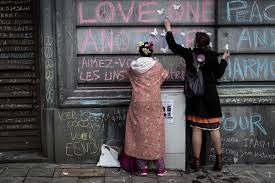
Once again I’m naming the dead. Listing the names of the latest victims of murderous fanaticism. But whilst the names of the dead in Brussels are emerging, gradually, and will be published in our news media as they do, I have trawled the internet in vain for the names of those who died at Grand Bassam, as I did for those who died in Ouagadougou and Bamako, in Ankara and elsewhere. I’ve found a few – usually those of foreign nationals – but only a few. I want to honour them too, they merit that as much as those who died in Brussels or Paris. But I don’t know who they are.
Bamako, Mali- A small memorial outside of the Radisson Blu Hotel three days after an attack by Al Mourabitoun, an Al-Qaeda affiliate that killed close to two dozen people in Bamako, Mali on Monday, November 23, 2015. (Jane Hahn for the Washington Post)
So if I list the names of those who died this week in Brussels, as I listed those who died in Paris, it is not because I think European lives are more important or that terrorist attacks on European soil matter more than atrocities in Africa, Asia, the Middle East.
What listing the names of those murdered in European cities does is to show the cosmopolitanism of those targets. The names tell their own stories of migration and mobility – those who travel freely for pleasure or work or family, as well as those who have travelled to escape desperate poverty, persecution or war. That’s exactly what Daesh hate, of course. That on those city streets those of every faith and none mix freely, travel together, work together, eat together, enjoy music together.
But whilst the attacks on Paris and Brussels are explicitly aimed at the western cosmopolitanism that epitomises the grey zone, ‘that place between black and white, where nothing is ever either/or and everything is a bit of both’, the majority of their victims are Muslim. After all, most of their murderous attacks take place in predominantly Muslim countries – Daesh hate those who espouse what they regard as the wrong type of Islam as much if not more than they hate those who espouse a different faith or none at all.
How we respond on social media to these atrocities does matter. It may be easy to retweet, like, share, sign and so forth but that doesn’t mean it’s worthless. It’s not enough, of course, but for many of us it’s all we can immediately do.
So what do we say? Do we change our profile pictures to the flag of the country where the latest murders have taken place? Do we assert that ‘je suis/nous sommes/we are all…’? Again, it’s important if we do those things that we do them for Mali, Ivory Coast, Turkey or Pakistan as readily as we do for France or Belgium.
Whatever we say, we need to say and keep saying that refugees are welcome. Because even before the names of the dead or the backgrounds of the killers are known, the usual suspects here and in the US are telling us that we’re to blame for letting ‘them’ in. Even before we know who died, and who killed them, we’re told that it’s the refugees fleeing war and terrorist brutality who are the cause of ‘our’ losses. We have to reject that othering which is, after all, exactly what Daesh want. In their world everything is polarised, and most of humanity is that Other that can be slaughtered without compunction. As terrorists they want us to fear and to hate, and governments to react with repressive and prejudicial legislation, to drive people out of the grey zone and into crusadership or caliphate.
Of course we may well be afraid, however much we assert otherwise to show our solidarity with each other against the murderers. We will be angry, we should be angry, that so many lives are being taken, that such brutality is being unleashed on so many. But alongside those emotions, we need to inform ourselves, to try to comprehend. As Jason Burke says, in his important and fascinating book, The New Threat from Islamic Militancy,
Trying to understand does not imply any sympathy. It simply means we need to set aside our very natural anger, disgust and fear in order, as dispassionately as possible, to learn. We need, above all, to avoid the trap that the extremists have fallen into: that of shutting ourselves off, of closing our minds, of succumbing to the temptation of wilful ignorance. In the aftermath of terrorist attacks, victims, the maimed and the bereaved, always ask a very fundamental, very human question, ‘Why did this happen?’ We owe it to them to make the effort it takes to find the answer.
We honour the dead by naming them, when we can. By refusing to shut our minds and our hearts – or indeed our borders. By asserting our shared humanity, that what unites us is so much greater than what divides us. By trying to understand.
‘and I haven’t even time to set down something that happened on the evening of February 29th, something that seemed very important and that I shall forget as I move farther away from you, Bleston, as you lie dying, Bleston, whose dying embers I have fanned, for now the long minute hand stands upright and my departure closes this last sentence’ (Michel Butor, Passing Time, p. 288)
What happened on that Leap Day we will never know. We have some details of some of the events and developments of that month – the diarist, Jacques Revel, dines with the Bailey family for the first time (whilst noting that he was spending less time with their elder daughter, Ann, as his affections begin to drift towards her sister Rose), and meets George Burton for the first time, not knowing at that stage that he is the author of the detective novel which plays an important role in events. He buys a second copy of The Bleston Murder, having lent the first to Ann.
None of this suggests that February 29 would turn out to be an especially significant date. Of course, February 29 is always going to seem significant, by virtue of its rarity. It’s a day that only exists once every four years, and thus one that can be, in effect, hidden for three out of four years. Almost a ‘jour fantome’.
Is it the centre of the labyrinth that is the narrative of Passing Time? Some have said so – describing the date as the ‘geometrical centre’ of Revel’s year in Bleston. If you do the sums, it’s one month short of the halfway point of Revel’s year in Bleston. However, his final month is a month of tying up loose ends and saying his ‘adieux’ – with the announcement of Ann’s engagement to his friend and colleague James (her sister Rose has already become engaged to his friend and compatriot Lucien) he is merely passing time in Bleston until the pre-ordained departure date. Indeed, he feels himself reduced to a ghost, a Sunday-afternoon ghost, revisiting the places he has known during his life in Bleston.
Revel’s diary is an attempt to master the city which has bamboozled and disoriented him from the moment of his arrival, by creating with his own narrative the Ariadne’s thread to guide him through the labyrinth. In doing so, he creates his own labyrinth, as what is initially a straightforwardly linear account twists and turns, as he reflects on more immediate events, reminds himself as he records the events of one day of the later developments that they foreshadow, and so on.
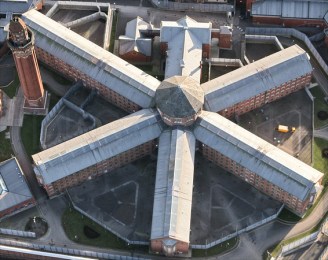
So his failure to record what happened on 29 February is, firstly, indicative of the failure of this enterprise. The time of writing and the time written about will never be reconciled and this gap is the evidence of that disjunction. It’s a blank space, an empty centre, an enigma. The final page is a record of other failures. He notes that he ‘had not even been able to visit the old church of St Jude’s on the other side of the Slee’, St Jude the patron saint of desperate cases and lost causes. St Jude’s is close to a small synagogue, which Revel has also failed to visit (having forgotten that he’d wanted to do so), and to the sinister prison, itself described as ‘a sort of hole’ within the tissue of the city.
He describes ‘those sinister days in February’ when his longing to leave the city is at its most intense, but which he would prefer not to think about, ‘but which on the contrary I ought to be able to pick out from among the tangle of my winter memories with strong supple pincers of language, which I ought to keep firmly before my eyes’ (p. 286). So rather than being unable to recall what happened on 29 February, perhaps Revel chooses not to.
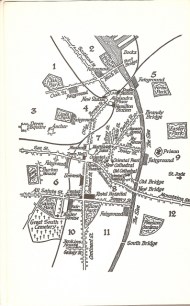
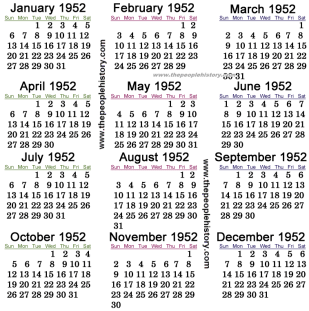
It’s not just a generalised recognition that he ran out of time to fill in the gap, it’s a deliberate blank, which draws our attention to a significant absence. Like the blank space on the back of the detective novel, where the author’s photograph should sit, like the missing pieces in the sequence of stained glass windows, the blank spaces on the frontispiece map, the ‘terrain vague’ on the outskirts of the town, the incomplete New Cathedral building… ‘an incomplete alphabet of which I know one letter is missing, a keyboard of which I know one note is missing, a Tarot pack of which I know one card is missing’. That the missing day is the one that only occurs every four years (it occurred in 1952, during Butor’s first year in Manchester) obviously draws even more attention to it.
That we cannot know what happened is part of the fascination of the book. It is at the same time an entirely closed narrative structure – we have no knowledge of anything that happened prior to Revel’s arrival in Bleston, nor what he will do or where he will go next – and an open one which tantalises us with the many mysteries of the text, drawing us back in to wander the rain-drenched streets again in search of answers. The disparity between the mundane events which Revel records and the intensity of the language in which he describes them suggests that the gaps – the things that aren’t said – are of deep significance, that all is not as it initially seems, that maybe we aren’t (just) in a fictionalised version of Manchester after all…
What makes someone give a damn when it’s not their turn to give a damn? Giving a damn when it’s not their job, or when it’s a stranger who needs help rather than a friend or a neighbour, someone to whom they owe nothing?
The website of Yad Vashem includes the names and many stories of those who have been designated ‘Righteous amongst the Nations’.
These are people who sheltered Jews or helped them to escape during the Holocaust, often taking huge risks themselves to do so.
Most rescuers started off as bystanders. In many cases this happened when they were confronted with the deportation or the killing of the Jews. Some had stood by in the early stages of persecution … but there was a point when they decided to act, a boundary they were not willing to cross.
Importantly, these are the people we know about. We know what they did because the people they helped to save told their stories. But there were many, many more whose stories have not been told. Many of those who survived the Holocaust have never talked about what they experienced, and those who were children at the time may not have known who did what, who took what risks to keep them safe. The rescuers themselves have often been silent about what they did – in parts of Eastern Europe it was hardly wise to make a noise about it after the war, and others were too modest to promote themselves as heroes. It is also worth noting that some of those who chose not to stand by were themselves murdered, and some had to endure the knowledge of the fate that befell those who they had tried to save – in either case it is likely that their acts are and will remain unknown.
Nicholas Winton did not, as is sometimes reported, keep entirely silent about his work in organising transports of children out of Czechoslovakia, but he certainly wasn’t well-known for it, and it took a television programme in 1988 to bring it to worldwide attention. He is not recorded amongst the Righteous – but only because he himself was of partly Jewish ancestry. He was scrupulous in recognising that the achievement was not his alone, and his reticence may also have in part been prompted by the painful knowledge that many more children could have been saved, had the US and other nations been willing to take more of them in.
As the number of survivors dwindles year on year, we may never know how many more of the Righteous there were.
In Poland, the epicentre of the Holocaust, over 6,500 people are recorded on Yad Vashem’s database. This is the largest number for any of the countries listed – all the more remarkable since in Poland alone the act of saving or trying to save a Jew was punishable by death for the rescuer and their family.
Stefan Szablewski may have been one of the unknown Righteous. His grandson, Marek, has spent the last few years trying to piece together a remarkable story of life in Warsaw, of survival and resistance. This has been a significant challenge:
I realised that not only did I have a unique tale to tell, but that as an only child I was the sole keeper. My knowledge, however, was incomplete. I needed to find the missing parts of the jigsaw puzzle to verify the facts that I had, and to learn more about the bigger picture. All I had to go on were my memories of conversations, several boxes of documents, a handful of photographs and medals, a bookshelf of books about Poland, a few contacts, and three precious tapes recorded for me by my father, which told some, but not all, of the story.
What these fragments show is that Stefan’s third wife, Anna, was Jewish and that she and her daughter were kept safe during the occupation of Warsaw, living under a false identity. In addition, there are records which state that ‘he organised safe houses or accommodation for people who were hiding along with the fabrication of identity papers, and also hid resistance literature and medical supplies.’ But there’s no hard evidence – just handwritten testimonies, and the recollections of Witold, Stefan’s son. Witold himself went into the Ghetto before its destruction, smuggling messages to the Jewish Council, and did what he could to help his stepmother’s family. Both the necessary habit of secrecy about such activities, and the level of destruction in Warsaw make it very difficult to find out more, or to know with certainty what happened. The efforts of a second or third generation now are to gather the fragments that do exist, and build as much of a story as possible. However incomplete, however many question marks remain, these stories are vital and compelling, and a reminder that the worst of times can bring out the best in people as well as the worst.
In Rwanda, the speed and intensity of the genocide meant that the kind of acts commemorated at Yad Vashem are even less likely to be recorded, and the narratives may be disputed. We have the account of Carl Wilkens, the only American who stayed in Rwanda, against all advice, and did what he could to protect the lives of Tutsi friends, and by talking his way through roadblocks and negotiating with senior army figures (people who were heavily implicated or actively involved in orchestrating the genocide) to get supplies through and then to arrange the safety of the children in an orphanage.
Of course, the story of Rwanda is the story of a world of bystanders, and those who did stay, and did what they could, are haunted, tormented by the lives they couldn’t save and the knowledge that had the US and other nations responded to the warnings and the increasingly desperate pleas from those who were witnessing the slaughter, so many more lives could have been saved. Whilst the targets of the killing were clearly Tutsi and Hutus suspected of helping them, the murder of Belgian peacekeepers early in the genocide meant that Wilkens and others could not be certain that they would be safe, and as the militia at the roadblocks were frequently drunk and out of control, there is no doubt that they took huge risks. Hutu Rwandans who hid friends, neighbours and colleagues rather than joining in the killing, or handing them over to the mobs, were however taking much greater risks, and if discovered they were certainly killed.
The ending of the film Shooting Dogs has always bothered me. The film shows a young Briton who was evacuated on a UN transport, leaving around 2,000 Tutsi in the compound of the Ecole Technique Officiel in Kigali, surrounded by Interahamwe militia, almost all of whom were killed as soon as the UN trucks left. In the final scenes, he is asked by a survivor why he left and he says that he left because he was afraid to die. This is disingenuous (and not challenged by the film) – everyone in that compound was afraid to die. He left because he could. Wilkens’ fellow Americans, and the majority of the Europeans in Rwanda when the genocide began, left because they could. They had a choice, and – for reasons that any of us can understand – they chose to take the escape route offered to them. Reading these stories, most of us will ask ourselves, would I have left when I could? Would I have stayed and tried to help? If I’d lived in Occupied Paris, or Warsaw, would I have kept my head down, or tried to help?
If you were a gendarme, or a civil servant, or even a Wehrmacht officer, you could do your job, as defined by the occupying forces, and compile lists of Jews to be rounded up, or round them up and transport them to transit camps, and then on to cattle trucks, or carry out the murders yourself. Or you could use that position to get a warning out about an impending round-up, or produce false papers to enable Jews to escape, or take direct action to get people to safety.
It came down, as it always does, to individuals, to their ability to empathise, to see not the vilified ‘Other’ but someone like themselves, and to their sense of what is fair and right. Fear can overwhelm both, but somehow, wherever and whenever the forces of hatred are unleashed, there will be some who will refuse to stand by.
Think of Lassana Bathily, a Malian Muslim who worked in the kosher supermarket in Paris which was attacked after the Charlie Hebdo massacre. He took some of the customers to the cold store to hide, whilst the killers shot and killed Jewish customers in the shop.
Think of Salah Farah. When al-Shabab attacked the bus he was travelling on in Mandera in Kenya, the attackers tried to separate Muslims and Christians. Passengers were offered safety if they identified themselves as Muslim. The response from many was to ask the attackers to kill all of them or leave all of them alone. Muslim women on the bus gave Christian women scarves to use as hijabs. Farah was one of those who refused the offer of safety, and he was shot. He died in hospital almost a month after the attack.
Currently reading: Dorothy Whipple – The Priory, Nicholas Boggs – Baldwin: A Love Story, Peter Abrahams – A Wreath for Udomo, Matt Clegg – Have you Always Been Here, Kathleen Jamie – The Overhaul, Emeric Pressburger – The Glass Pearls
Just finished: Lissa Evans – Small Bomb at Dimperley, Rob Hindle – Yoke & Arrows, Catherine McConaghy – Wild, Dark Shore, Mary Shelley – The Last Man, Francis Spufford – Nonesuch/Unapologetic


 That first year it was incredibly personal. A fortnight after the funeral we were still raw with grief and one of our speakers commented on the intensity, a kind of tension that underscored the celebratory mood that we had, nonetheless, achieved.






 Think
Think  Passing Time