Archive for category Music
Desert Island tunes
Posted by cathannabel in Music, Personal on May 19, 2016
Finally, I get to do my Desert Island discs. Kirsty Young appears to have lost my contact details, but no matter, because this year the 24 Hour Inspire featured a pop-up radio station, and I was asked to choose 6 tracks, a book and a luxury, and to talk about them with interviewer Chella Quint.
But how to pick just 6 tracks? It would not, realistically, have been easier if it was the BBC 8. Or even 12, or 20… Not when music has been such a huge part of life, not when it matters so much.
Listening, as I often do, to contributors to Desert Island Discs, I can see a range of different approaches to the task of selection. Some take the biographical approach – linking the tracks explicitly to key points in the life story they are describing. This is interesting, and enriching to the biography, but it may mean that the music doesn’t stand up in its own right, and has purely nostalgic value. Some just pick 8 tracks they kind of like – but you can tell in this case that music is not a passion, not an obsession but a pleasant accompaniment to other things. They have not agonised about those choices, they haven’t felt as though they have personally betrayed the artists who don’t feature in the final cut. That’s fine, but I can’t be like that.
When music really, really matters, the problem is not finding 6 or 8 or however many tracks, it’s finding a rationale for selecting for this particular purpose, on this particular date and time. That’s how I come to terms with it – on another day, in another context, I could and likely would have an entirely different set of tracks. So, what was my approach this time?
First off, I wanted to be able to say something about each track. Not just, this is brilliant, I love this, listen to this bit (although in a normal music-listening context there is a lot of that). But something about why it matters to me, how I encountered it, what it does to me. Secondly, the context. It’s the 24 Hour Inspire, so the music I pick has to be something that moves me, challenges me, disrupts me, inspires me.
Even outside this particular context, I can’t be doing with music that is merely pleasant. It has to move me – that can mean intellectual stimulation (a Bach fugue, for instance, or much of European postwar ‘classical’ music), emotional impact (much sacred music, even though I’m a humanist, and a host of songs that for some reason – lyrics, context, something in the tune, something in the vocals – make me well up or want to punch the air), physical effect (heavy grungy sounds, infectious dancey sounds, music that makes me move my feet, my hips). These are not mutually exclusive categories, of course, as my choices will demonstrate.
TRACK 1: SONGHOY BLUES – SOUBOUR
There had to be music from Mali. Because that’s where so much of the music I love was born – think Muddy Waters, think Hendrix – before it was transported across the oceans on the slave ships, asserted its power as it blended with the folk music and hymn tunes it encountered in the Americas and then made its way back home again.

Songhoy Blues grew up listening to the rich Malian tradition, and griots such as Ali Farka Toure – and to Muddy Waters and Hendrix. You can hear all of this in their music. I’ve written previously about some of the reasons why I feel such a strong emotional connection with West African music, and about the other powerful dynamic in contemporary Malian music – the resistance to the murderous jihadist bigots who invaded the north of the country, and banned football and music, inflicting brutal punishments on those who failed to comply. Songhoy Blues’ sound is joyous, a powerful riposte to the bigots, a reminder that the ‘grey zone’ as they call it is full of colour, full of melody, harmony, rhythm, full of beauty and warmth.
And this year of all years, there had to be Bowie.
TRACK 2: DAVID BOWIE – SUFFRAGETTE CITY

This one goes back to my first encounter with the Star Man, which I wrote about on the day his death was announced. It’s not necessarily my favourite ever track but it’s deeply significant as the start of a relationship that has continued throughout my teenage and adult life, and will continue, despite his death, because all of that music is still there to enjoy and explore.
Crimson were part of my teenage years too.
TRACK 3: KING CRIMSON – RED

I’ve always said that Red was my favourite album from the 70s manifestation of the band, and often said that ‘Starless’ was my favourite track on that album. But for desert island purposes, Starless would be so wrong. It could actually feature in a ‘songs that must never be played during a lonesome, marooned and possibly hopeless sojourn on a desert island’ list. Instead I picked the title track, a grungy heavy instrumental that I always loved, that I remember listening to, drinking cheap cider, sitting on the floor at my boyfriend’s house, and rocking out.
Kirsty MacColl would have to be with me on the island.
TRACK 4: KIRSTY MACCOLL – FREE WORLD

I imagine she’d have been great company in person – certainly the musicians she collaborated with talk about her with enormous affection and warmth, but also respect. She certainly deferred to no one – Johnny Marr tells a lovely story of her taking Keith Richards to task for getting something wrong on the guitar, and Keith accepting it meekly… Kirsty’s songs can be funny, poignant, sharp (sometimes all three), her voice is gorgeous, and she’s one of a number of women in rock/pop music who have managed to make their own rules, to do things their way, against the odds. This song makes me want to punch the air and change the world.
Another voice of rare beauty – actually one of the loveliest voices ever, anywhere:
TRACK 5: SAM COOKE – A CHANGE IS GONNA COME

This song is heavy with the hope and the hopelessness of the early sixties civil rights movement – people holding on to the possibility of change whilst being confronted daily with implacable hostility to change. I think of that – but I also think of the fact that an African-American currently sits in the White House, and for all the injustice and inequality that remains, for all the entrenched prejudice, things can and do change. I would never have believed, twenty years ago, for example, that gay marriage would be legal in so many parts of the world. And for all that there are still so many places where to be gay is to be outside the law and in danger of violence, it happened without that much fuss here, and in other countries, in the end. Even outside the social justice activist world, most people seemed to say, tacitly or otherwise, good on them. I have to remember and have faith that every time things seem hopeless, that a change IS gonna come.
And finally to the least well-known track of my six.
TRACK 6: FLOBOTS – WE ARE WINNING
The Flobots are hard to pin down – the highly political lyrics, spoken and sung, are backed not just with guitars and drums but with viola, cello and trumpet and the effect is intense and powerful. This track is marvellously idealistic, optimistic, hopeful. We are Winning. It doesn’t always (often) feel like it, but it’s something to hold on to, something to keep you keeping on. It speaks to my belief that what we do matters, precisely because this world is all there is. As Joss Whedon put it, in Angel: “If there’s no great glorious end to all this, if nothing we do matters then all that matters is what we do. Cause that’s all there is. What we do. Now. Today.” And there’s a particular pertinence in these lines in the context of an event that celebrates learning, teaching and research: There is a war going on for your mind. If you are thinking, you are winning.
We are building up a new world.
Do not sit idly by.
Do not remain neutral.
Do not rely on this broadcast alone.
We are only as strong as our signal.
There is a war going on for your mind.
If you are thinking, you are winning.
Resistance is victory.
Defeat is impossible.
Your weapons are already in hand.
Reach within you and find the means by which to gain your freedom.
Fight with tools.
Your fate, and that of everyone you know
Depends on it.(Flobots, 2008)
Selecting my six tracks might have been tricky, painful even. I feel I owe a personal apology to so many artists I love but have left out, and if I were to do this again (I ‘m more than willing, guys) I could easily come up with another six, and another, and another…
But these felt good. The 24 Hour Inspire is all about inspiration (obviously), and I feel inspired when I hear these songs. I feel energised, and optimistic, and I want to dance, and to punch the air and change the world. I hope at least some of the songs will affect at least some of you in similar ways. I’ll add the recording of the interview when it’s available. Meantime, enjoy!
https://www.facebook.com/Inspiration-for-Life-340350772727621/
https://mydonate.bt.com/fundraisers/mattmears1
@inspire4L
At the Dark of the Moon – a poem by Katherine Inskip
Posted by cathannabel in Music on January 11, 2016
Amongst the many Bowie tributes which have appeared on my Facebook wall and Twitter feed (indeed, there has been little else today), there was this poem, by a friend and former colleague. I know Katherine Inskip as an astronomer and University teacher – I had no idea she was a poet. And this, written as an immediate response to the loss that we’ve all been feeling, is just so right. Thanks Katherine.
He died at the dark of the moon
and I cannot help but wonder
if he knew, or if the change,
this once, was not his own.
For he lived as the moon does,
strange and bright, inconstant
as time itself, casting fluid
shadows into space.
And if we felt some echo
in his forms, his songs, his life,
the moon would not do less.
He died at the dark of the moon
at the moment when all things change.
And he died as the moon does,
with its face turned out, away.
Gone from our sight forever.
Gone, for a while.
Gone, but no less bright.
Bowie: We can be heroes, just for one day
Posted by cathannabel in Music on January 11, 2016
Fascinating Bowie tribute focusing on Bowie in Berlin, from That’s How the Light Gets In.

Ch-ch-changes
Just gonna have to be a different man…
In Berlin: Imagine a City, Rory MacLean writes of how, in 1976, ‘rock ‘n’ roll’s blazing star fell to earth in Berlin. Bowie arrived in the city a haunted, haggard wreck: barely six stones, sleepless and wired on cocaine, possessing little sense of his own self-worth. ‘I really did have doubts about my sanity’, Bowie wrote later. But, according to MacLean, Bowie found himself in Berlin (and he might know since, fresh out of film school, he was a young assistant to the director on the film shot in the city at the time, Just a Gigolo).
View original post 769 more words
Loving the alien
Posted by cathannabel in Music on January 11, 2016
Three moments from the early 1970s.
Suffragette City
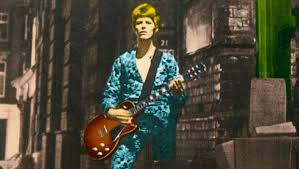
1972, the Cellar Bar at the Hutt, Ravenshead, Notts. The Hutt was a Berni Inn, purveyor of prawn cocktail, steak & chips, and Black Forest gateaux – but the Cellar Bar was a dark and crowded space where a 14 year old could get served with Babycham or Bacardi & lime, and where the juke box was turned up LOUD. I didn’t even know this was Bowie, I just knew it was exhilarating, intoxicating. And dangerous.
Star Man

Seeing that clip now from Top of the Pops, it’s hard – impossible even – to make sense of how shocking, how ridiculously daring and provocative it seemed at the time when he draped his arm so casually around Mick Ronson’s shoulders and they sang together, close. There was no other topic of conversation the next morning at school in Mansfield. But for some of those boys and girls who knew they could never conform to the gender roles assigned to them, who knew they were different, and were scared and thought they might be the only ones who felt that way, it was a moment that changed their worlds, it gave them hope and courage.
Time
 Listening to Aladdin Sane on the record player in our living room, staying within arms reach of the volume control so that we could ramp it down speedily if the parents came within earshot at the point when the lyrics got seriously inappropriate.
Bowie was the unifying factor in the otherwise rigid musical demarcations of the time. I loved Motown, Simon & Garfunkel, and Bowie. My friends loved Alice Cooper, Deep Purple, and Bowie. My brother loved Gong, Hatfield & the North, and Bowie. And as for the boy who is now my husband of 38 years, who introduced me to Hendrix and Crimson, amongst others (and who I introduced to Motown and reggae) – Bowie was our musical meeting place. The fact that he could play some of the songs – well, reader, I married him…
It is those memories that are the most powerful, from those teenage years when everything was so intense, when we were trying to work out who we were and who we wanted to be. Bowie was part of that – he made us question, made us imagine possibilities, showed us we could reinvent ourselves if we wished.
That continued through the decades since – we backtracked from Ziggy to Hunky Dory and Man Who Sold the World, and even to the early singles when he was Davie Jones, with the King Bees, The Lower Third, and various other short-lived bands. No amount of nostalgia or grief will make me remember The Laughing Gnome with fondness, or some of the other early tracks. But even then, there was the sense of someone who would try anything, experiment fearlessly, take risks. And the variety was dizzying, from the heavy rock of Width of a Circle, to the delicate An Occasional Dream or the whimsy of Kooks.
We awaited each new album with a mixture of excitement and trepidation – would he let us down? would this one disappoint? No, and no. And how extraordinary that on Saturday night, just a day and a half ago, we prepared ourselves to listen to the new Bowie album, by playing the Ziggy Stardust farewell gig and Philip Glass’s Low Symphony. And he didn’t let us down. This one did not disappoint. I tweeted that night:
#musicnight No other artist that I’ve been listening to for > 40 yrs is still doing new stuff today, still sounding so fresh.

And then this morning I woke to the news that he is gone.
So tonight, we will play songs from across all of the years in which Bowie has been part of our lives. We will raise a glass to the Starman, and probably get a little drunk and sing along, and cry a bit. He may be gone but we have so much music, enough to sustain us, enough to inspire us.
Don’t let me hear you say life’s
taking you nowhere,
angelCome get up my baby
Look at that sky, life’s begun
Nights are warm and the days are young
2015 – the best bits
Posted by cathannabel in Events, Film, Music, Personal, Television, Theatre on December 30, 2015
This was the year we threw off the shackles of paid employment. Martyn first, in March, and me at the very close of 2015. It feels terrifying and liberating all at once.
For me, this new freedom will give me more time to do the things I care most about. My PhD, which I hope I will now be able to do justice to. And Inspiration for Life, in particular the 24 Hour Inspire. Of all the things I’ve done over the years, this is what I’m proudest of.
And I hope of course to have more time to do the other things I love, more time to read, write, listen to music, go to gigs, go to the cinema/theatre, meet up with friends, travel, watch some of the box sets which are gathering dust by our DVD player…
Below are some of the cultural highlights of 2015. I’ve been lucky to have access to Ensemble 360, Opera North, Tramlines, Sheffield Jazz etc, and to have wonderful friends and family to share these experiences with.
Film
The best of the year, without a doubt, was Timbuktu. Abderrahmane Sissako’s film is both beautiful and harrowing, a passionate cry from the heart about the threat posed by fundamentalist jihadists to the people, the culture and the music of Mali.


I won’t rank my other favourites, but they are:
Inside Out – Pixar at its very, very best. Clever, imaginative, daring, funny and moving. As the Guardian review said, ‘In the film’s wildest moment, the wanderers enter a zone of abstract thought, where they are zapped into a series of increasingly simplified geometric shapes, as they – and the film itself – dizzyingly self-deconstruct (“Oh no, we’re non-figurative!”)’.

A Girl Walks Home Alone at Night – Ana Lily Amirpour’s film has been tagged as ‘the first Iranian vampire Western’. Atmospheric and full of unexpected touches (including a skateboarding vampire), and a powerful feminist narrative. Sheila Vand has a fascinating face that can look very young and somehow ageless at different moments.


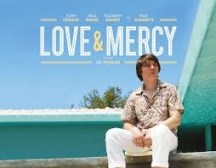
Love and Mercy – biopic of Brian Wilson, portrayed both in the Beach Boy years and in later life, by Paul Dano and John Cusack respectively. Cusack’s portrayal is fascinating – seeing the clip of the real Brian Wilson at the end of the movie, I realised just how perfectly he had captured him, despite the lack of obvious physical resemblance.

I Believe in Miracles – the story of Nottingham Forest’s astonishing European Cup success. A joy from beginning to end. And featuring a couple of brief glimpses of my kid brother who was a ball boy at one of those games, as well as glorious clips of my all-time footballing hero John Robertson at his best. And funny and poignant anecdotes from the players, and clips of Clough running rings around interviewers.


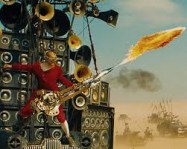
Mad Max: Fury Road – just a blast, possibly the best action movie I’ve seen, with a powerful female lead in Charlize Theron’s Furiosa (an action movie that passes the Bechdel test!), visually almost overwhelming and with an awesome soundtrack. And the Doof Warrior.

Avengers: Age of Ultron. I’ve written previously about how much I love the Marvel films. This was a joy, thanks in large part to Joss Whedon’s crackling dialogue (the script is often where costs are cut in big budget movies, but thankfully not here).


TV
Lots of Marvel here too, with Agent Carter, Daredevil and Agents of Shield all delivering in spades. Daredevil was the darkest of the three, but the others had their moments and all had humour, well-drawn characters and moments of poignancy as well as action. In other sci-fi/fantasy telly, Tatiana Maslany continued to be astonishing in Orphan Black, The Walking Dead continued to ramp up the tension till it was almost unbearable, and left us at mid-season break with everyone we care about in mortal peril – again. The latter also spawned a prequel (Fear the Walking Dead) which showed the start of the crisis – the bit we missed as Rick Grimes was in a coma in hospital whilst society crumbled in the face of the undead onslaught. And Humans was a thought-provoking and engaging take on issues around AI and what makes us human.


As always we watched a lot of detectives. Two French series – old favourite Spiral was back (we missed you, Laure, Gilou, Tintin et al), and a new drama, Witnesses, was complex and compelling with an intriguing female lead (Marie Dompnier). River was something else – Stellan Skarsgaard’s broody Nordic cop haunted by ‘manifests’ of his dead partner amongst others. Nicola Walker was stunning in this, as was Adeel Akhtar as River’s actual living partner. Walker also caused considerable potential confusion by simultaneously leading in Unforgotten, which made one forget the implausibility of an entire police team investigating a very cold case (and nothing else, apparently) by the subtle and compassionate portrayal of the various suspects as their past actions resurfaced to disturb the lives and relationships they had built. No Offence was refreshing too (though we felt uneasy with some particular plot developments in the later part of the series) with Joanna Scanlan’s DI being startlingly rude, but also funny, forceful and warm, and a fab supporting cast.


This is England 1990
This is England deserves a much more in-depth consideration than I can give it here – one would need to re-view the whole series from the film to this final (if it is indeed that) instalment. But there’s no denying – they can be a tough watch, as brilliantly funny as they often are. It’s not just the moments of horrifying violence, I think the hardest thing would be to have to go through again with Lol her descent into despair in TiE 88. Vicky McClure’s performance was intense without any histrionics and all the more devastating for that. This final part had moments too, relating to Kelly, and to Combo, which stay in the mind. And whilst the ending was upbeat, with that long-postponed wedding and Kelly’s return to the fold, Milky’s separation from the group and the reasons for it, and the likelihood that Kelly’s recovery will not be as straightforward as all that, mean that the darkness is not far away. It’s been a hell of a series, with superb writing and direction and equally superb performances.


Raised by Wolves
When it comes to comedy I can be a hard woman to please. Not that I don’t like a laugh, GSOH, that’s me. But I’ve given up on so many sitcoms because they’ve made me cringe more than they’ve made me chuckle. However, despite feeling slightly neutral about the pilot, I did get into Raised by Wolves, and fell rather in love with the magnificent Della (Rebekah Staton) as well as with the writing, which as expected from Caitlin Moran (and sister Caroline) was rude and exuberantly funny.
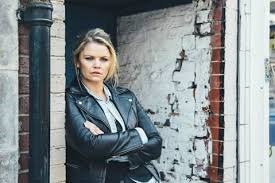
Roseanne
We watched this back in the day (88-97) and rewatching it now is punctuated by cries of ‘OMG that’s George Clooney’, or spotting Big Bang Theory cast members (Sheldon’s mum and Lesley Winkle, with Leonard still to show). But what we also realised was how much of our approach to parenting came from this show, where family life is chaotic, temperamental, combative but always loving. And ‘our’ tradition of summoning family members to the meal table with a loud cry of ‘FOOOD’ appears to have been inspired by the Conners as well. As I recall, things went seriously off kilter in later series, but so far, so funny. Joss Whedon had a hand (probably just a fingertip in some eps) in the early series, which can’t ever be a bad thing.

Résistance
French drama focusing on the activities of various Resistance groups in Occupied France – this was obviously a must-watch for me. I hadn’t expected it to be as close to real events as it was, which was a mixed blessing, as I quickly realised who was doomed and who might survive… The central female character, Lili, was a fictional construct, which seems to have annoyed some viewers, but I felt it was a valid way of providing a thread to link the early activity of the Musée de l’Homme group with the Maison de la Chimie and the Combat and Manouchian groups, taking us all the way through to the Liberation. It was a powerful, well constructed drama. And the renditions of the Marseillaise, ringing out in prison cells and in the face of firing squads, came back to us so intensely in November when that spirit of defiance was called upon once again.

Fargo
If the idea of series 1 seemed in principle a bit odd, a second series was all the more so. But if anything, series 2 is even better, even madder, even wittier than the first. The film had Frances McDormand, who is always a very good thing, and series 1 had Allison Tolman, who filled those shoes admirably. In series 2 we root for her dad, Lou (we’ve gone back in time) and grandad Hank (played by Ted Danson), and her mother Betsy (I would like some time to see Cristin Milioti NOT dying of cancer, if that’s OK). And we do kind of root for Peggy too, with her passion for self-actualisation and ‘being the best me I can be’, even if it proves somewhat dangerous for those around her.
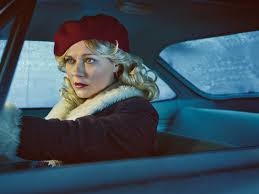
Honourable mentions to Homeland, Doctor Foster (Suranne Jones magnificent as a woman scorned), and Jonathan Strange & Mr Norrell.
And of course there was Doctor Who. This year’s Who was top notch. Capaldi really found his voice, the plots were rich and complex without being merely baffling, and the climactic episodes were powerful and moving. I will be writing more about Who in due course.

Theatre
On the Crucible main stage, we saw Arthur Miller’s Playing for Time, with a stunning performance from Sian Phillips, and Romeo & Juliet, with Freddie Fox and Morfydd Clark as the lovers. The Miller play seemed stagey at times (an odd criticism, in a way, for a stage play) but the performances carried it and I reflected afterwards on the way in which the Nazi death machine was itself stagey, whether the intention was to terrify and subjugate, or to deceive. Romeo & Juliet was terrific, but reminded me of how bloody annoying those two are, and it’s no disrespect to the actors that I wanted to give them both a good slap.


Music
Operatic outings this year included a fabulous Kiss me Kate, a powerful Jenufa, and a magnificent Flying Dutchman, all from Opera North.


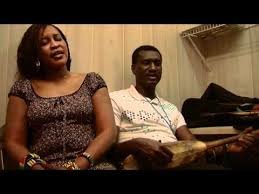
I’ve written previously about the splendid Bassekou Kouyate gig at the University’s Firth Hall.
At the Crucible Studio, Ensemble 360 treated us to performances of Mendelssohn, Ives, Janacek, Watkins, Brahms, Berg, Boulez, Kurtag, Mozart and Bartok, amongst others. Such fantastic musicians, and particularly delighted to have had the chance to hear so much 20th century music this year. Same venue, different ensemble – Chris Biscoe’s Profiles of Mingus feat. Tony Kofi on sax (we’d heard him playing Mingus last year, with Arnie Somogyi’s Profiles of Mingus). More jazz, courtesy of Leeds Jazz Orchestra (feat. one Aidan Hallett) in Leeds Golden Acre Park.


And then there was Tramlines. Nothing much to add to what I said at the time, except that I can’t wait for the 2016 festival.
So, thanks to those who shared these highlights with me. I look forward to lots more in 2016.
I hope to blog more in 2016, of course. I managed a post most months in 2015, and the overall total looks more impressive thanks to eight in Refugee Week and a few reblogs from That’s How the Light Gets In and Nowt Much to Say. I blogged for Holocaust Memorial Day, wrote about the Hillsborough inquests, the 24 Hour Inspire, Marvel films, Tramlines, the phenomenon of the ‘fugueur’, the music of Mali, the ‘refugee crisis’, and the murderous attacks by Daesh in Paris and elsewhere. I also blogged for Inspiration for Life, and on the aftermath of the May General Election. Thanks to all who have read, liked, reblogged, commented, etc.
And for 2016, which may seem to hold so much threat and so little hope, I cannot do better than to quote this poem, by Sheenagh Pugh. Apparently she doesn’t rate it – scribbled it in a hurry on a card for a friend going through a tough time. I beg to differ.
Sometimes things don’t go, after all,
from bad to worse. Some years, muscadel
faces down frost; green thrives; the crops don’t fail,
sometimes a man aims high, and all goes well.A people sometimes will step back from war;
elect an honest man, decide they care
enough, that they can’t leave some stranger poor.
Some men become what they were born for.Sometimes our best efforts do not go
amiss, sometimes we do as we meant to.
The sun will sometimes melt a field of sorrow
that seemed hard frozen: may it happen for you.
May it happen for you, may it happen for all of us.
The music in my head (part 2): West Africa and beyond
Posted by cathannabel in Africa, Music on November 1, 2015
To add to my most recent piece about the music of Mali, here’s a great piece from That’s How the Light Gets In on West African music (with a strong emphasis on Mali, naturally!)
This is the second of three posts which round up some of the music that I’ve enjoyed in 2015 but never got round to writing about. This one discussed music from beyond these shores that I have been listening to in 2015, particularly some fine West African releases.
View original post 1,592 more words
Mali is Music
Posted by cathannabel in Africa, Music on October 31, 2015
We should probably have been in a courtyard in Bamako, or Segou. Whole families there, kids and the occasional chicken wandering in and out, meals being prepared and eaten, and the music going on into the night, interspersed with talk, and laughter. We were instead in the august surroundings of Firth Hall at the University of Sheffield, sitting in rows listening to Bassekou Kouyate, legendary Malian ngoni player and griot, with his wife Amy Sacko on vocals, in conversation with Andy Morgan.
As the time went on, you could almost hear the thought processes of the audience – ‘what time was that last bus again?’, ‘I’m going to struggle with my 7.00 alarm tomorrow morning’, ‘Can I discreetly text the babysitter to see if she can hold on for another hour?’. So when people started to slip away, they’d already stayed longer than they’d expected to, and they left wishing they could have stayed longer. We managed quite a nifty slip out of the door whilst clapping manoeuvre. A standing and moving sideways ovation perhaps.
Part of the reason we overran was that Bassekou speaks French and Bambara, so Andy had to tell us what he was going to ask him, then ask him in French, then translate Bassekou’s response. And – a tip for the future – don’t ask a Malian griot to ‘just tell us briefly what that song was about’. Whereas a western musician might be able to say, ‘cars and girls’, or ‘the man who done me wrong’, Bassekou’s answers tended to start with, ‘Well, back in the 13th century there was a king called x, in the town of y…’.
But the music – the music was sublime. The ngoni is a stringed instrument, believed to be the origin of the banjo, and possibly the guitar (though of course there are other stringed, plucked instruments that could claim that). In Kouyate’s hands it’s capable of virtuosic cascades of notes, and combined with the compelling rhythm that kicks in after the first few bars, and the warmth (and impressive range) of Amy Sacko’s voice, it’s music that moves the feet and the hips, as well as the heart.
Malian music makes me happier than almost any other music from any time or place. It’s the source of the blues, carried over the oceans by the human cargo of the slave ships, and mutating as it mixed with the other folk musics (and the hymns and psalms) of the various peoples of the Americas, until this black American music out of Africa became the music of a whole generation. And as it did so, of course, it travelled back home again. In Ghana the merging and melding of these musical traditions created the highlife music that I used to hear wafting over from the student residences in the evenings in Kumasi. In Nigeria, juju music and Afrobeat. In Mali, a rich diversity of music, from such fine artists as Salif Keita, Toumani Diabate, Tinariwen, Ali Farka Toure, and the young musicians who form Songhoy Blues.

At the end of the concert, Bassekou Kouyate was asked by a fellow West African about the ‘problem’ of western sounds and musical styles taking over indigenous African music. Kouyate was having none of that. The music is theirs anyway – it’s simply coming home again, having changed a bit over the years, and blended with other sounds. There is a vast repertoire of songs there to be rediscovered, interpreted, shared with the world, and as long as this music is being sung and played, and the traditional instruments are being used alongside the western imports, the music will survive, because it’s strong and beautiful. The threat to this music is not of being ‘polluted’ or drowned out by western sounds. It’s from another source altogether, the fundamentalist Islamist groups that have taken over parts of Mali in recent years and where they have done so they have violently suppressed music – not western music, or secular music, but music.
“The world without music? It would be like a prison, right?” (Garba Touré, Songhoy Blues)
Right.


http://www.theywillhavetokillusfirst.com/
https://cathannabel.wordpress.com/2015/06/21/refugee-blues-refugeescontribute/
http://www.theguardian.com/music/2013/dec/04/songhoy-blues-mali-africa-express
https://www.youtube.com/watch?v=T7Om5HXAB0c
http://www.theguardian.com/film/2015/may/31/timbuktu-mali-isis-review-abderrahmane-sissako
Ears still ringing
Posted by cathannabel in Music on July 30, 2015

That’s what Billy Bragg tweeted, after his set at the Leadmill, which brought [my] 2015 Tramlines to an inspiring and emotional close. Mine too. It was bloody brilliant.
 For me, Tramlines isn’t about the headliners – we didn’t get to the Ponderosa this year, not because there weren’t some great bands on, but because what we love is stumbling across and being delighted by bands we’ve never heard of, and enjoying the music in the multiplicity of venues around the city centre. To go from dancing to ska and afrobeat in the Peace Gardens to drinking Moonshine in the Cathedral (how deliciously transgressive is that) whilst listening to ‘experimental finger-style’ acoustic guitar, or rocking our socks off in the City Hall ballroom – that’s Tramlines.
I don’t know what the total numbers were, but the crowds around town were astonishing. So many performers, looking out at us all from the various stages, seemed genuinely stunned by how many of us there were, and by our enthusiasm, our willingness to jump about, dance and cheer. Maybe I’m naive, maybe I only see the best because I love my city and I love this festival, but there didn’t seem to be, despite the crowds and the fact that there had, most certainly, been drink taken, the level of ugliness that one might normally see on a Saturday night in town. I saw no aggression, only people being communal, enjoying the music together, being excellent to one another, and partying on.
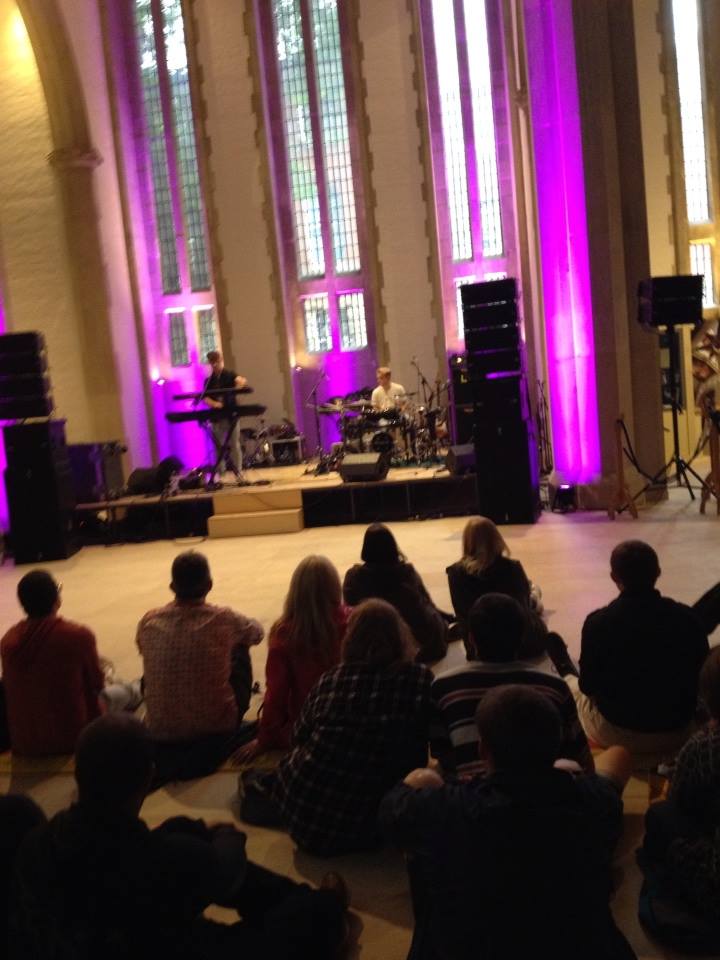
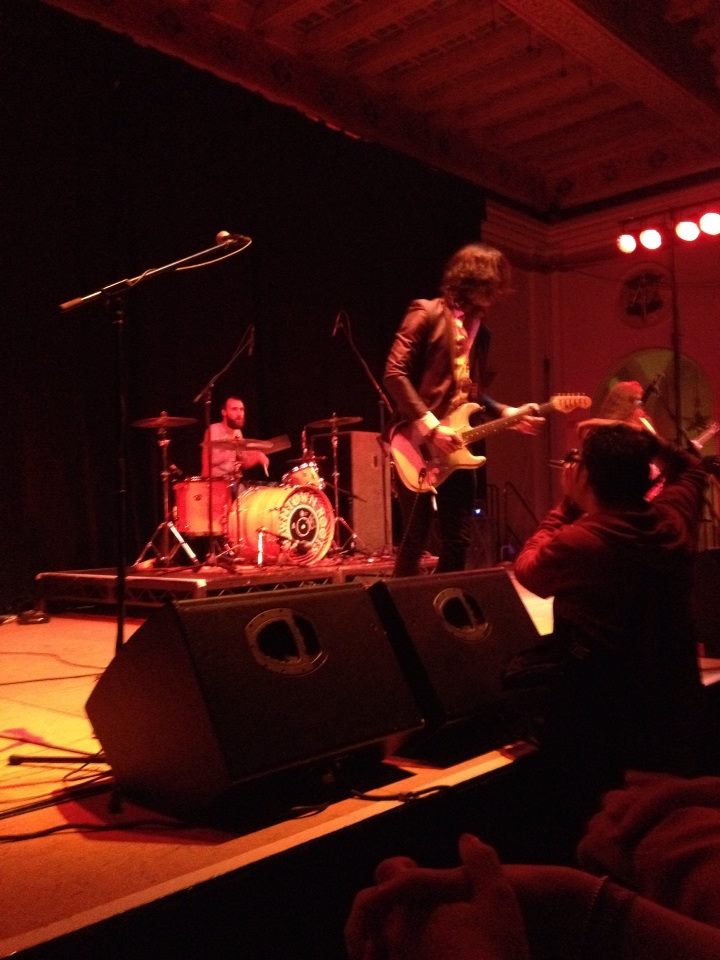

My Tramlines this year was:
- Friday night: Awooga, Lone Wolf (City Hall); Rawshack, Beth Frisby (Millennium Gallery)
- Saturday: Bongo & the Soul Jars, Soulcrates Syndicate (Peace Gardens); Jim Ghedi (Cathedral); Smiling Ivy. Hot Diamond Aces (Cathedral); Blessa, Slow Club (Devonshire Green); Ultimate Painting (Cathedral)
- Sunday: Chris Cooper Band, Downtown Roots (City Hall); Lewrey, Blossomer (Cathedral); Stealing Sheep, Billy Bragg (Leadmill)
Not a bad weekend’s worth of music and I reckon I got my weekend ticket’s worth by the time we headed home on Friday.
Best bits? Beth Frisby was fab. The various ska/afrobeat bands in the (sunny) Peace Gardens were ace, joyous beats making us all dance. Downtown Roots were a blast, channelling Hendrix and Muddy Waters. Stealing Sheep stole my heart. And then there was Billy.
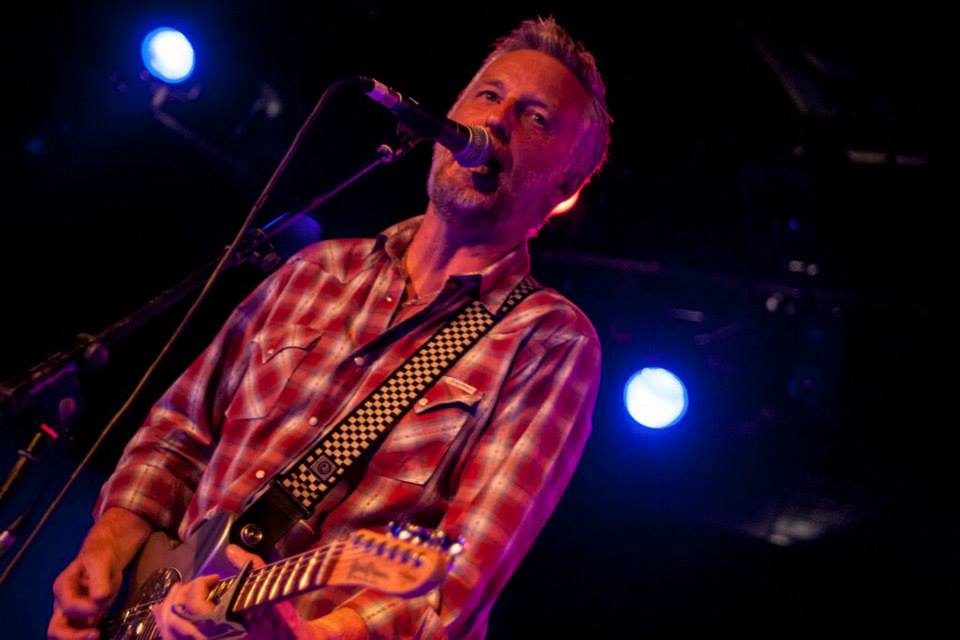
It was late, I was tired, my (wet) feet hurt. But I went home that night not sure whether to laugh, or cry, because Billy made me do both. He was everything I’d hoped for – he was funny, passionate, ranty, utterly professional (didn’t miss a beat when the lights went out on stage during one song, and dealt well with the odd minor heckle), and gave us – again – that weekend ticket’s worth singlehanded. I got right to the front, thanks to the nice bloke who let me through. And the young lads who’d been obliviously hemming me in and blocking my view earlier? Contrary to the grumpy views being expressed by some of those whose view they were blocking, they were there for Billy, they knew all the words, they were singing their little hearts out. He gave us the love songs, the quirky, funny, self deprecating love songs. He gave us Levi Stubbs’ tears, and mine flowed. He gave us the protest songs – and lord, they are as pertinent today as when they were written. He gave us A New England. And he gave us Between the Wars and I cried again and someone in the crowd gave me a hug, just because.
Billy said that the enemy is not doubt, or scepticism. It’s cynicism. Cynicism stops us believing that we can change things, that it’s worth bothering to try. Cynicism stops us believing the best in other people, or the potential in ourselves. There wasn’t much cynicism in evidence last weekend, and especially not at the Leadmill on Sunday night.
To quote Caitlin Moran (in How to Build a Girl), ‘Cynicism is, ultimately, fear. Cynicism makes contact with your skin, and a thick black carapace begins to grow – like insect armour. This armour will protect your heart, from disappointment – but it leaves you almost unable to walk. You cannot dance, in this armour.’ If we want to dance, to laugh and love and share, let alone if we want to change the world, we have to shed that armour and risk being disappointed, risk being disillusioned and let down.
Billy said that we, in the People’s Republic of South Yorkshire, had ‘recharged his activism’. I am damn certain he did the same for us.
Tramlines, Sheffield, thank you for last weekend, and I can’t wait for next time. Early Bird weekend tickets for 2016 on sale now, you say? Hell, yes.
http://www.billybragg.co.uk/index.php
Refugee Blues – #RefugeesContribute
Posted by cathannabel in Film, Music, Refugees on June 21, 2015
One of the glorious by-products of the movements of peoples around the world, however grim the reasons, is the music. Music can cross any barriers, transcend any divisions, no translation required. People driven from their homes make take very little with them, but the songs they grew up with, the music they danced to or played, those weigh nothing. And they enrich the communities in which those people find new homes – music that moves our hearts, our hips, our feet, that comes from places we’ve never seen, with lyrics in languages we don’t speak. Music is vital.
That’s one of the reasons why watching Abderrahmane Sissako’s latest film, Timbuktu, is so intense and so harrowing. The ISIL/Taliban group who have taken over Timbuktu spend their evenings listening out for any sounds of music and silencing it. You could say that there are worse things – this regime does those too, stoning to death a couple accused of adultery. But killing music is a way of killing the soul.


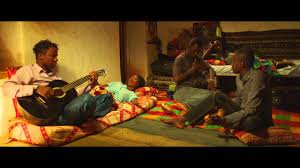
The young musicians who make up Songhoy Blues fled their homes in the north of Mali and since then have been taking their desert blues around the world. They’re doing Glasto next week, but last July at Sheffield’s Tramlines festival I saw them play live and they made me dance, made me smile like an idiot, made me cry a little, when Aliou Toure spoke about his country, his continent, and what the music stood for – peace, love, unity.


http://www.pri.org/stories/2015-03-26/malis-songhoy-blues-are-making-music-exile
http://www.musicfilmweb.com/2014/07/songhoy-blues-mali-music-documentary/
2014 – some of the best bits
Some of the cultural highlights of my year – a year of working at home, long train journeys to long meetings which gave me more time to read, less time to go to the cinema or the theatre. However, I did manage a few outings…
- Twelfth Night at the Crucible – a real delight. I’d been disappointed that we weren’t getting a tragedy or one of the problem plays, rather than a comedy that I’d seen on stage before, but that feeling evaporated very quickly indeed. The performances were excellent, the staging imaginative and suggestive of darker undercurrents (the cast appearing at windows almost like the undead, the showers of rose petals – see also Poppeia).
- Brilliant opera at Leeds Grand – La Boheme, and The Coronation of Poppeia. And another Boheme, this time in Graves Gallery, from Opera on Location.


- Tramlines!
- Music in the Round – I’d pick out the Schubert octet, Tim Horton’s bravura performance of the Prokofiev Piano Sonata no. 7 (described by the Guardian as ‘ferocious’), Charlie Piper‘s WWI suite, The Dark Hour; works by Schulhoff & Haas, and consort of viols, Fretwork.
- Once again we celebrated Tim Richardson’s life and passion for learning and teaching with the 24 Hour Inspire – 24 hours of lectures on a host of topics, from WWI poets to insect sex, from biogeography to Mozart, from underground science to fairground history – ok, you get the picture. Once again a host of people stepped up to help, everything ran smoothly, and we were able to donate to Rotherham Hospice and Impact Young Heroes. We’ll be doing it again on 16-17 April 2015. Tim’s charity, Inspiration for Life, goes from strength to strength.
- I revisited the City Ground after far too many years, for the first home game of the season, and Stuart Pearce’s first game as manager. That was a great game. We’re in a slump at the moment, and that early euphoria has dissipated. If it was anyone but Psycho in charge I suspect the calls to sack the manager would be ringing out right now, but few Forest fans would want to deny him the chance to turn things around. I hope he can. I really, really, hope he can.
Top TV of 2014
No attempt at ranking. How could one decide on the relative merits of a gritty cop drama and a comic book fantasy? So, what do all of these shows have in common? First, excellent writing, and great performances. Essential to have both. So many big budget dramas skimp on the former and blow the budget on the latter, but even the best actors can only do so much with a script that clunks. Second, great female characters. All of these programmes basically kick the Bechdel test out of the park. It’s not just about having ‘strong’ women. Not all women are strong, and no women are strong all of the time. It’s about having women characters who are rounded human beings, fallible and flawed, but not dependent on men to make decisions or to solve problems. Some of these women do indeed kick ass, but they don’t all have to. So, to Nazanin Boniadi, Alison Brie, Yvette Nicole Brown, Amelia Bullmore, Lauren Cohan, Clare Danes, Siobhan Finneran, Danai Gurira, Keeley Hawes, Elizabeth Henstridge, Gillian Jacobs, Suranne Jones, Nimrat Kaur, Sarah Lancashire, Melissa McBride, Vicky McClure, Tatiana Maslany, Lesley Sharp, Allison Tolmin, Ming-Na Wen and the rest – cheers, and thanks for giving us images of women that are as diverse and complicated as actual real live women are.


- Fargo – I was decidedly unconvinced beforehand, but it turned out to be funny, gruesome, and touching, with one of my favourite women cops in Allison Tolmin’s Molly (not just a re-run of Frances McDormand’s marvellous Marge from the film, but a character in her own right), Billy Bob Thornton as a grimly hilarious killer and Martin Freeman as a weaselly one, and a wealth of other characters, some of whom we came to care about so much that at tense moments there was much yelling at the screen as we thought they might be in danger.
- Line of Duty – I wasn’t convinced about this one either, mainly because the first series had been superb, and I wondered if they could match it. They did, and it was Keeley Hawes’ performance that clinched it. Whilst I’d watch Vicky McClure in anything, Keeley wasn’t in that category for me, despite Ashes to Ashes. But in this she was riveting, absolutely mesmerising. The rest of the cast was superb too.
- Happy Valley was perhaps the most ironically titled programme of the year. This valley was pretty damned grim. But Sarah Lancashire as cop Catherine Cawood was wonderful, and the story was compelling and moving.
- Scott & Bailey maintained its form in series 4. The three central women (count them! three central women!) are all convincingly real, sometimes infuriatingly so.
- The Walking Dead opened series 5 with an episode so gripping that I really could neither breathe normally nor speak for quite some time. It’s maintained that tension (more or less) whilst varying the format, to focus on different subsets of the characters, and different locations. Carol has been central to this season’s episodes so far, and her character is one of those that has been allowed to develop and deepen throughout. There’s no shortage of other interesting characters, and the plot allows for philosophical, political and ethical speculation as well as for gory shocks and suspense.
- Agents of Shield got past a slightly wobbly first series and got its pace and tone just right. It fits right into the Marvelverse, but stands alone perfectly well. And it features girl-geek Simmons, a Sheffield lass, and there’s just a hint of South Yorkshire in her accent from time to time.
- Community made me laugh more than anything else this year. Just when you think it is as bonkers as it could be, it ups its game, to be even more meta, and even more daft.
- Doctor Who I have spoken of elsewhere. I have a deep love for this programme, and whilst this regeneration has been unsettling at times, uncertain in tone perhaps, I have great hopes for Capaldi and Coleman in series 9 next year.
- Homeland redeemed itself. Gripping stuff, with Clare Danes acting her socks off and getting us deeper into what makes Carrie tick.
- Orphan Black is one of the most criminally underrated programmes of this (and last) year. Tatiana Maslany inhabits each of the characters she plays so well that I forget – disbelieve almost – that there is just the one actress involved. And when she’s playing one of them pretending to be one of the others…. Cracking plot too.
Films of the year – I leave the in-depth cinematic reviews to Arthur Annabel who promises an extensive blog on this topic soon. I simply note these as films which have delighted and/or moved me, in no particular order. Worth noting that whilst the programmes on my TV list get A* on the Bechdel test, the films are considerably weaker on that front. Nonetheless, some fine performances, and Nicole Perlman was the first woman with a writing credit on a Marvel movie (Guardians of the Galaxy).




Women of the year:
Jack Monroe – for enlivening my repertoire of meals to feed the family, and campaigning about food poverty
Professor Monica Grady – for being emotionally, exuberantly passionate about science
 Kate Bush – for doing it her way, as always
 Fahma Mohamed – for telling men three times her age what they needed to be told about FGM and how to protect young women in the UK
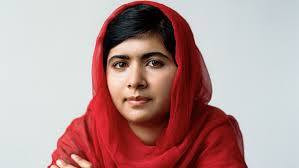 Malala Yousafzai – it’s all been said really. A young woman of remarkable maturity and dignity, as well as courage.
 Dr Ameyo Adadevoh – helped to curb the spread of Ebola by quarantining a patient in the face of pressure from his government, but succumbed to the disease herself
 Laura Bates – her Everyday Sexism project helped to give women a voice, to tell their stories, to shout back.
In 2014 I’ve blogged about refugees, genocide, football, W G Sebald and Michel Butor, Kazuo Ishiguro, everyday sexism, Tramlines, Josephine Butler and Doctor Who. I got a bit personal on the subject of depression, and was inspired by Caitlin Moran’s How to Build a Girl to present my manifesto – a plea to just be kind. And my blog about reading the last of the Resnick series of detective stories won the approval of the author, John Harvey, who linked to it on his own blog, and republished my jazz playlist!
Amongst the blogs I’ve followed, or at least tried to keep up with, I would particularly note Searching for Albion. This is the record of Dan Taylor’s four month cycling trip across the British Isles, talking to people he meets, by plan or by chance. A fascinating project, beautifully documented.
To all of those who’ve shared some of the above events, obsessions and enthusiasms with me, who’ve given me support when I’ve needed it, who I’ve learned from and with, thank you. I don’t know what to expect from 2015 – but see you there!
 Passing Time