Archive for category Film
2015 – the best bits
Posted by cathannabel in Events, Film, Music, Personal, Television, Theatre on December 30, 2015
This was the year we threw off the shackles of paid employment. Martyn first, in March, and me at the very close of 2015. It feels terrifying and liberating all at once.
For me, this new freedom will give me more time to do the things I care most about. My PhD, which I hope I will now be able to do justice to. And Inspiration for Life, in particular the 24 Hour Inspire. Of all the things I’ve done over the years, this is what I’m proudest of.
And I hope of course to have more time to do the other things I love, more time to read, write, listen to music, go to gigs, go to the cinema/theatre, meet up with friends, travel, watch some of the box sets which are gathering dust by our DVD player…
Below are some of the cultural highlights of 2015. I’ve been lucky to have access to Ensemble 360, Opera North, Tramlines, Sheffield Jazz etc, and to have wonderful friends and family to share these experiences with.
Film
The best of the year, without a doubt, was Timbuktu. Abderrahmane Sissako’s film is both beautiful and harrowing, a passionate cry from the heart about the threat posed by fundamentalist jihadists to the people, the culture and the music of Mali.


I won’t rank my other favourites, but they are:
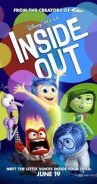
Inside Out – Pixar at its very, very best. Clever, imaginative, daring, funny and moving. As the Guardian review said, ‘In the film’s wildest moment, the wanderers enter a zone of abstract thought, where they are zapped into a series of increasingly simplified geometric shapes, as they – and the film itself – dizzyingly self-deconstruct (“Oh no, we’re non-figurative!”)’.

A Girl Walks Home Alone at Night – Ana Lily Amirpour’s film has been tagged as ‘the first Iranian vampire Western’. Atmospheric and full of unexpected touches (including a skateboarding vampire), and a powerful feminist narrative. Sheila Vand has a fascinating face that can look very young and somehow ageless at different moments.


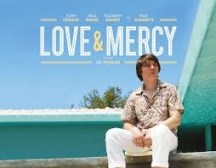
Love and Mercy – biopic of Brian Wilson, portrayed both in the Beach Boy years and in later life, by Paul Dano and John Cusack respectively. Cusack’s portrayal is fascinating – seeing the clip of the real Brian Wilson at the end of the movie, I realised just how perfectly he had captured him, despite the lack of obvious physical resemblance.

I Believe in Miracles – the story of Nottingham Forest’s astonishing European Cup success. A joy from beginning to end. And featuring a couple of brief glimpses of my kid brother who was a ball boy at one of those games, as well as glorious clips of my all-time footballing hero John Robertson at his best. And funny and poignant anecdotes from the players, and clips of Clough running rings around interviewers.


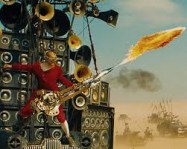
Mad Max: Fury Road – just a blast, possibly the best action movie I’ve seen, with a powerful female lead in Charlize Theron’s Furiosa (an action movie that passes the Bechdel test!), visually almost overwhelming and with an awesome soundtrack. And the Doof Warrior.

Avengers: Age of Ultron. I’ve written previously about how much I love the Marvel films. This was a joy, thanks in large part to Joss Whedon’s crackling dialogue (the script is often where costs are cut in big budget movies, but thankfully not here).


TV
Lots of Marvel here too, with Agent Carter, Daredevil and Agents of Shield all delivering in spades. Daredevil was the darkest of the three, but the others had their moments and all had humour, well-drawn characters and moments of poignancy as well as action. In other sci-fi/fantasy telly, Tatiana Maslany continued to be astonishing in Orphan Black, The Walking Dead continued to ramp up the tension till it was almost unbearable, and left us at mid-season break with everyone we care about in mortal peril – again. The latter also spawned a prequel (Fear the Walking Dead) which showed the start of the crisis – the bit we missed as Rick Grimes was in a coma in hospital whilst society crumbled in the face of the undead onslaught. And Humans was a thought-provoking and engaging take on issues around AI and what makes us human.


As always we watched a lot of detectives. Two French series – old favourite Spiral was back (we missed you, Laure, Gilou, Tintin et al), and a new drama, Witnesses, was complex and compelling with an intriguing female lead (Marie Dompnier). River was something else – Stellan Skarsgaard’s broody Nordic cop haunted by ‘manifests’ of his dead partner amongst others. Nicola Walker was stunning in this, as was Adeel Akhtar as River’s actual living partner. Walker also caused considerable potential confusion by simultaneously leading in Unforgotten, which made one forget the implausibility of an entire police team investigating a very cold case (and nothing else, apparently) by the subtle and compassionate portrayal of the various suspects as their past actions resurfaced to disturb the lives and relationships they had built. No Offence was refreshing too (though we felt uneasy with some particular plot developments in the later part of the series) with Joanna Scanlan’s DI being startlingly rude, but also funny, forceful and warm, and a fab supporting cast.


This is England 1990
This is England deserves a much more in-depth consideration than I can give it here – one would need to re-view the whole series from the film to this final (if it is indeed that) instalment. But there’s no denying – they can be a tough watch, as brilliantly funny as they often are. It’s not just the moments of horrifying violence, I think the hardest thing would be to have to go through again with Lol her descent into despair in TiE 88. Vicky McClure’s performance was intense without any histrionics and all the more devastating for that. This final part had moments too, relating to Kelly, and to Combo, which stay in the mind. And whilst the ending was upbeat, with that long-postponed wedding and Kelly’s return to the fold, Milky’s separation from the group and the reasons for it, and the likelihood that Kelly’s recovery will not be as straightforward as all that, mean that the darkness is not far away. It’s been a hell of a series, with superb writing and direction and equally superb performances.


Raised by Wolves
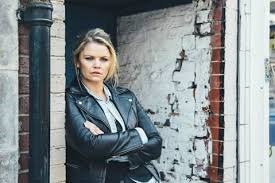
When it comes to comedy I can be a hard woman to please. Not that I don’t like a laugh, GSOH, that’s me. But I’ve given up on so many sitcoms because they’ve made me cringe more than they’ve made me chuckle. However, despite feeling slightly neutral about the pilot, I did get into Raised by Wolves, and fell rather in love with the magnificent Della (Rebekah Staton) as well as with the writing, which as expected from Caitlin Moran (and sister Caroline) was rude and exuberantly funny.
Roseanne
We watched this back in the day (88-97) and rewatching it now is punctuated by cries of ‘OMG that’s George Clooney’, or spotting Big Bang Theory cast members (Sheldon’s mum and Lesley Winkle, with Leonard still to show). But what we also realised was how much of our approach to parenting came from this show, where family life is chaotic, temperamental, combative but always loving. And ‘our’ tradition of summoning family members to the meal table with a loud cry of ‘FOOOD’ appears to have been inspired by the Conners as well. As I recall, things went seriously off kilter in later series, but so far, so funny. Joss Whedon had a hand (probably just a fingertip in some eps) in the early series, which can’t ever be a bad thing.

Résistance
French drama focusing on the activities of various Resistance groups in Occupied France – this was obviously a must-watch for me. I hadn’t expected it to be as close to real events as it was, which was a mixed blessing, as I quickly realised who was doomed and who might survive… The central female character, Lili, was a fictional construct, which seems to have annoyed some viewers, but I felt it was a valid way of providing a thread to link the early activity of the Musée de l’Homme group with the Maison de la Chimie and the Combat and Manouchian groups, taking us all the way through to the Liberation. It was a powerful, well constructed drama. And the renditions of the Marseillaise, ringing out in prison cells and in the face of firing squads, came back to us so intensely in November when that spirit of defiance was called upon once again.

Fargo
If the idea of series 1 seemed in principle a bit odd, a second series was all the more so. But if anything, series 2 is even better, even madder, even wittier than the first. The film had Frances McDormand, who is always a very good thing, and series 1 had Allison Tolman, who filled those shoes admirably. In series 2 we root for her dad, Lou (we’ve gone back in time) and grandad Hank (played by Ted Danson), and her mother Betsy (I would like some time to see Cristin Milioti NOT dying of cancer, if that’s OK). And we do kind of root for Peggy too, with her passion for self-actualisation and ‘being the best me I can be’, even if it proves somewhat dangerous for those around her.
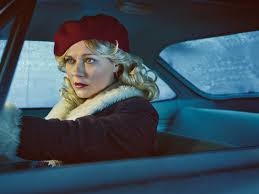
Honourable mentions to Homeland, Doctor Foster (Suranne Jones magnificent as a woman scorned), and Jonathan Strange & Mr Norrell.
And of course there was Doctor Who. This year’s Who was top notch. Capaldi really found his voice, the plots were rich and complex without being merely baffling, and the climactic episodes were powerful and moving. I will be writing more about Who in due course.

Theatre
On the Crucible main stage, we saw Arthur Miller’s Playing for Time, with a stunning performance from Sian Phillips, and Romeo & Juliet, with Freddie Fox and Morfydd Clark as the lovers. The Miller play seemed stagey at times (an odd criticism, in a way, for a stage play) but the performances carried it and I reflected afterwards on the way in which the Nazi death machine was itself stagey, whether the intention was to terrify and subjugate, or to deceive. Romeo & Juliet was terrific, but reminded me of how bloody annoying those two are, and it’s no disrespect to the actors that I wanted to give them both a good slap.


Music
Operatic outings this year included a fabulous Kiss me Kate, a powerful Jenufa, and a magnificent Flying Dutchman, all from Opera North.


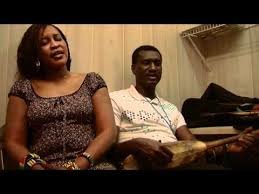
I’ve written previously about the splendid Bassekou Kouyate gig at the University’s Firth Hall.
At the Crucible Studio, Ensemble 360 treated us to performances of Mendelssohn, Ives, Janacek, Watkins, Brahms, Berg, Boulez, Kurtag, Mozart and Bartok, amongst others. Such fantastic musicians, and particularly delighted to have had the chance to hear so much 20th century music this year. Same venue, different ensemble – Chris Biscoe’s Profiles of Mingus feat. Tony Kofi on sax (we’d heard him playing Mingus last year, with Arnie Somogyi’s Profiles of Mingus). More jazz, courtesy of Leeds Jazz Orchestra (feat. one Aidan Hallett) in Leeds Golden Acre Park.


And then there was Tramlines. Nothing much to add to what I said at the time, except that I can’t wait for the 2016 festival.
So, thanks to those who shared these highlights with me. I look forward to lots more in 2016.
I hope to blog more in 2016, of course. I managed a post most months in 2015, and the overall total looks more impressive thanks to eight in Refugee Week and a few reblogs from That’s How the Light Gets In and Nowt Much to Say. I blogged for Holocaust Memorial Day, wrote about the Hillsborough inquests, the 24 Hour Inspire, Marvel films, Tramlines, the phenomenon of the ‘fugueur’, the music of Mali, the ‘refugee crisis’, and the murderous attacks by Daesh in Paris and elsewhere. I also blogged for Inspiration for Life, and on the aftermath of the May General Election. Thanks to all who have read, liked, reblogged, commented, etc.
And for 2016, which may seem to hold so much threat and so little hope, I cannot do better than to quote this poem, by Sheenagh Pugh. Apparently she doesn’t rate it – scribbled it in a hurry on a card for a friend going through a tough time. I beg to differ.
Sometimes things don’t go, after all,
from bad to worse. Some years, muscadel
faces down frost; green thrives; the crops don’t fail,
sometimes a man aims high, and all goes well.A people sometimes will step back from war;
elect an honest man, decide they care
enough, that they can’t leave some stranger poor.
Some men become what they were born for.Sometimes our best efforts do not go
amiss, sometimes we do as we meant to.
The sun will sometimes melt a field of sorrow
that seemed hard frozen: may it happen for you.
May it happen for you, may it happen for all of us.
Refugee Blues – #RefugeesContribute
Posted by cathannabel in Film, Music, Refugees on June 21, 2015
One of the glorious by-products of the movements of peoples around the world, however grim the reasons, is the music. Music can cross any barriers, transcend any divisions, no translation required. People driven from their homes make take very little with them, but the songs they grew up with, the music they danced to or played, those weigh nothing. And they enrich the communities in which those people find new homes – music that moves our hearts, our hips, our feet, that comes from places we’ve never seen, with lyrics in languages we don’t speak. Music is vital.
That’s one of the reasons why watching Abderrahmane Sissako’s latest film, Timbuktu, is so intense and so harrowing. The ISIL/Taliban group who have taken over Timbuktu spend their evenings listening out for any sounds of music and silencing it. You could say that there are worse things – this regime does those too, stoning to death a couple accused of adultery. But killing music is a way of killing the soul.


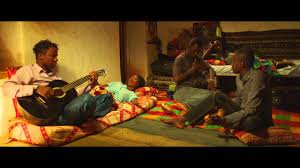
The young musicians who make up Songhoy Blues fled their homes in the north of Mali and since then have been taking their desert blues around the world. They’re doing Glasto next week, but last July at Sheffield’s Tramlines festival I saw them play live and they made me dance, made me smile like an idiot, made me cry a little, when Aliou Toure spoke about his country, his continent, and what the music stood for – peace, love, unity.


http://www.pri.org/stories/2015-03-26/malis-songhoy-blues-are-making-music-exile
http://www.musicfilmweb.com/2014/07/songhoy-blues-mali-music-documentary/
S’marvellous
Posted by cathannabel in Film on May 20, 2015
Occasionally people seem surprised at my enthusiasm, my geeky love, for the world of Marvel on the big and small screen. I read Proust, I love enigmatic French arthouse movies where nothing happens, very stylishly, for hours on end. I have argued elsewhere that one can love Proust AND Stephen King, and I see no reason why one cannot also love Alain Resnais or Michael Hanecke’s Caché, AND Thor, or Captain America. Who would want to be limited to just one brow?
In any case, it’s an open secret that I’m a Buffy obsessive and a Whovian, so no one should really have to reach for the smelling salts when I get giddy about heading off to Cineworld to see Avengers Age of Ultron in 3D.
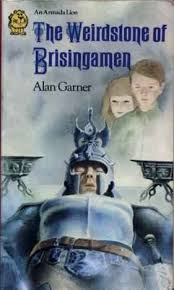
It seems to me that there’s a direct line from a lot of what I read during my bookworm childhood to these more recent passions. As soon as I could make the squiggles on the page into words in my head, I read everything I could reach. I read children’s classics (Nesbit, Lewis, Tolkien, Alcott, Burnett), grown-up classics (Dickens, Malory, Bronte, Shakespeare), newer children’s writers (Garner, Sutcliffe, Garfield, Treece). And in many of these I found ways into other worlds.
Tolkien and Garner both drew on Norse and Celtic mythology, one to create his own world, the other to imbue ours with magic. Lewis led his child protagonists through mundane portals into his alternative world where they became heroes and battled with evil. Malory, Sutcliffe and Garner gave me different takes on the ultimate British hero, the once and future King, a medieval knight or a celtic warlord, or a sleeper under Alderley Edge waiting for our hour of need to awake. And in Roger Lancelyn Green’s vivid retellings I got to know the tales of Greek heroes.
The notion that our everyday world can slip its mask and reveal another reality, darker or brighter, bigger and badder, invading and intervening as the gods of old always have done, is often terrifying, always compelling. That’s why my greatest fondness is for those narratives which start with the world we already know. Think of how a certain episode of Doctor Who has rendered statuary decidedly uncanny – the familiar become strange and scary. Think of how Buffy subverted the teen high school movie, so that being grounded really was potentially the end of the world. Think of how Stephen King’s It showed the adult world oblivious to the terrors that the children had to face unprotected.
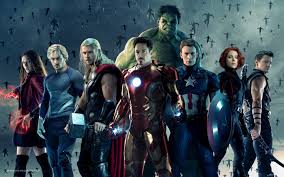
Marvel movies are bigger and noisier than the above. They’re sillier, perhaps. But they’re tapping into those old, deep stories, and reinventing, representing them in bright and shiny ways, with (particularly where Joss Whedon has a hand in the script) wit and humour. They’re not scary, but they’re exciting, exhilarating. In the Avengers ensemble movies, in one glorious superhero binge, we have elements drawn from an eclectic range of sources – from myth and legend, from Robert Louis Stevenson and Mary Shelley, even an American King Arthur, woken from sleep to defend the world in its hour of need.
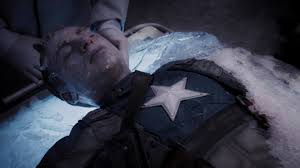
I’m not arguing for the Marvel movies as the most profound examinations of moral questions, or of the human psyche. But neither are they devoid of interest on those planes. They are never quite as simplistic as one might expect, with all the exploding and the fighting. The very daftness of the idea of these very disparate characters coming together is part of its charm. The humour, and sometimes poignancy too, often comes from their disparity, whether it is the cynicism of Iron Man playing against the moral uprightness of Captain America, or the straightforward warrior sensibility of Thor against the conflicted, tortured Banner/Hulk.
Thor: The gates of Hel are filled with the screams of his victims!
[Natasha glares at him while Bruce groans and puts his head in his hands]
Thor: But not the screams of the dead, of course. No, no… wounded screams… mainly whimpering, a great deal of complaining and tales of sprained deltoids and… gout.
And once one has suspended one’s disbelief and accepted the premise, that humour and poignancy makes you care about the outcome, root for the good guys, not just for their victory but for their wellbeing. Their superhumanity comes from different sources – technology, programming, divinity – but there’s always humanity there too. And it’s the flawed and fragile beauty of humanity that the Avengers fight for:
Humans are odd. They think order and chaos are somehow opposites and try to control what won’t be. But there is grace in their failings. … A thing isn’t beautiful because it lasts. It is a privilege to be among them.
Echoes of the Doctor there, I think. Amongst all of the forces that see the weakness of human beings and want to destroy, some stand with us. The Doctor said that in 900 years of space and time he’d never met anyone who wasn’t important. He tells us again and again that we are in our very ordinariness extraordinary, in our bloody-minded going where angels fear to tread, our curiosity and our moments of courage.
These stories, these new/old stories may not change the world. But stories are vital. Stories are the way we’ve always tried to make sense of the inexplicable and the unbearable, and to infuse the everyday with magical possibilities. Marvel’s gloriously epic and gloriously daft stories give us moments of startling beauty and poignancy (we are Groot), massive explosions and battles, deadpan humour and heroes we can root for. Pretty damn marvellous.
Night will fall – Holocaust Memorial Day 2015
Posted by cathannabel in Film, Genocide on January 30, 2015
Grainy, blurry black and white footage, shot by soldiers newly equipped with cameras and told to record everything they see. Long, panning shots, taking in the corpses, barely recognisable as human, in the ditch, and the dignitaries on the bank, impassive. Negative footage from Dachau turning the unimaginable into something even further beyond our reach. All of this went into the documentary, German Concentration Camps Factual Survey, made by Sidney Bernstein in the immediate aftermath of the liberation of the camps by Allied troops (and using some of the footage from Russian units at Majdanek and Auschwitz). The title tells us a great deal about why this film was made, its purpose to give us irrefutable evidence of what happened, anticipating both the denials of the German population, including the camps’ near neighbours, and the denials of subsequent generations.
Night will Fall is a film about this film. Sections of the original are interspersed with interviews with those who made it – Bernstein, Hitchcock, some of the soldiers – and with survivors who found their own faces amongst the images of the gaunt, desperate yet joyous throng. The survivors speak more easily than the soldiers of the scenes that were recorded there. Their experience of horror was complete, the moment of filming for them was a moment of almost unbelievable hope, of life when all that they had expected was death. As for the soldiers, their experience of war did not prepare them, not in the least. These men try to tell their story, but again and again, words fail. Sorry, sorry, they say, I just can’t…
The original film has languished in the archives since it was completed. The mood changed so quickly – if Bernstein had completed his work just a little earlier, then maybe it would have had the audiences it was intended for, and deserved. But by the time this huge task was done the need to confront the German people with the actions of their leaders, the need to tell the world what could happen when a civilised nation abandoned civilisation, were seen not only as less pressing, but as potentially counter-productive. Not only did we need the Germans as our allies against the strength of the Soviet Union, but we did not want public sympathy for the Jews to force our hand in terms of giving sanctuary to large numbers of refugees.
Bernstein and his collaborators wanted to take a stand against those who would deny or minimise the genocide. What they had recorded was almost impossible to comprehend, and so easy to disbelieve. There had been reports of the process of extermination of the Jews in occupied Europe, as early as 1942. Szmul Zygielbojm, Jan Karski and others risked so much to tell the Allies what was happening. But somehow, even when published in the Daily Telegraph (25 June 1942), people seemed not to grasp it.

Was this failure to respond down to prejudice, or simply that the facts were unbelievable and so people chose not to believe? To look away and hope that when they looked back, the nightmare vision would have vanished? At the end of the war, again, the news from the Russian troops who were liberating the extermination camps in the East was treated with scepticism, until the Allied troops entered the German concentration camps themselves and knew.
If it was only human to baulk at that reality, to not want to accept that other humans could do this, not just a handful of monsters but many, many people, the revisionists who came later were of a different stripe, and unperturbed by personal testimony, documentary footage or other evidence. Somehow they manage to say both that Hitler did not plan and order genocide of the Jews and that the Jews deserved their treatment, brought it, indeed, upon themselves. They both immerse themselves in technical details to ‘prove’ that what was described and shown could not have happened, and dismiss or treat as mendacious all evidence that it did. Bernstein’s film would probably not have changed the minds of any of those – nothing else has.
The documentary, a unique record not only of the scenes from hell that the liberating troops encountered, but of the efforts thereafter to help and to heal, will only ever be seen by small numbers. The Imperial War Museum believes that its images, without the contextual commentary and interviews provided by Night will Fall, are too stark in their portrayal of the dehumanised state not only of the dead but of the (barely) living. This baffles me, particularly because the film does also show the liberated prisoners talking animatedly to their saviours, being treated for disease, trying on clothes and shoes. It shows them, in other words, taking on their humanity again. As if it had never been stolen from them entirely, merely put to one side as hindrance rather than help in that brutal world. And of course, it is not as if we cannot see, if we choose, such images on YouTube or in other documentaries, often using this very footage.
As Jean Cayrol wrote, in the script used by Alain Resnais for his film Night and Fog:
There are those reluctant to believe
Or believing from time to time.
There are those who look at these ruins today
As though the monster were dead and buried beneath them.
Those who take hope again as the image fades
As though there were a cure for the scourge of these camps.
Those who pretend all this happened only once,
At a certain time and in a certain place.
Those who refuse to look around them,
Deaf to the endless cry.
Bernstein’s documentary ends with the words: “Unless the world learns the lessons these pictures teach, night will fall. But, by God’s grace, we who live will learn.” We haven’t. And night has fallen for so many. It’s to be hoped that the film will have the wider audience it deserved and still deserves today. The lesson still needs to be taught and we have to hope it’s not too late to learn.
Jean Cayrol, Nuit et brouillard (Mille et une nuit, 1997)
http://variety.com/2014/film/global/holocaust-doc-night-will-fall-gets-global-broadcast-1201362494/
2014 – some of the best bits
Some of the cultural highlights of my year – a year of working at home, long train journeys to long meetings which gave me more time to read, less time to go to the cinema or the theatre. However, I did manage a few outings…
- Twelfth Night at the Crucible – a real delight. I’d been disappointed that we weren’t getting a tragedy or one of the problem plays, rather than a comedy that I’d seen on stage before, but that feeling evaporated very quickly indeed. The performances were excellent, the staging imaginative and suggestive of darker undercurrents (the cast appearing at windows almost like the undead, the showers of rose petals – see also Poppeia).
- Brilliant opera at Leeds Grand – La Boheme, and The Coronation of Poppeia. And another Boheme, this time in Graves Gallery, from Opera on Location.


- Tramlines!
- Music in the Round – I’d pick out the Schubert octet, Tim Horton’s bravura performance of the Prokofiev Piano Sonata no. 7 (described by the Guardian as ‘ferocious’), Charlie Piper‘s WWI suite, The Dark Hour; works by Schulhoff & Haas, and consort of viols, Fretwork.
- Once again we celebrated Tim Richardson’s life and passion for learning and teaching with the 24 Hour Inspire – 24 hours of lectures on a host of topics, from WWI poets to insect sex, from biogeography to Mozart, from underground science to fairground history – ok, you get the picture. Once again a host of people stepped up to help, everything ran smoothly, and we were able to donate to Rotherham Hospice and Impact Young Heroes. We’ll be doing it again on 16-17 April 2015. Tim’s charity, Inspiration for Life, goes from strength to strength.
- I revisited the City Ground after far too many years, for the first home game of the season, and Stuart Pearce’s first game as manager. That was a great game. We’re in a slump at the moment, and that early euphoria has dissipated. If it was anyone but Psycho in charge I suspect the calls to sack the manager would be ringing out right now, but few Forest fans would want to deny him the chance to turn things around. I hope he can. I really, really, hope he can.
Top TV of 2014
No attempt at ranking. How could one decide on the relative merits of a gritty cop drama and a comic book fantasy? So, what do all of these shows have in common? First, excellent writing, and great performances. Essential to have both. So many big budget dramas skimp on the former and blow the budget on the latter, but even the best actors can only do so much with a script that clunks. Second, great female characters. All of these programmes basically kick the Bechdel test out of the park. It’s not just about having ‘strong’ women. Not all women are strong, and no women are strong all of the time. It’s about having women characters who are rounded human beings, fallible and flawed, but not dependent on men to make decisions or to solve problems. Some of these women do indeed kick ass, but they don’t all have to. So, to Nazanin Boniadi, Alison Brie, Yvette Nicole Brown, Amelia Bullmore, Lauren Cohan, Clare Danes, Siobhan Finneran, Danai Gurira, Keeley Hawes, Elizabeth Henstridge, Gillian Jacobs, Suranne Jones, Nimrat Kaur, Sarah Lancashire, Melissa McBride, Vicky McClure, Tatiana Maslany, Lesley Sharp, Allison Tolmin, Ming-Na Wen and the rest – cheers, and thanks for giving us images of women that are as diverse and complicated as actual real live women are.


- Fargo – I was decidedly unconvinced beforehand, but it turned out to be funny, gruesome, and touching, with one of my favourite women cops in Allison Tolmin’s Molly (not just a re-run of Frances McDormand’s marvellous Marge from the film, but a character in her own right), Billy Bob Thornton as a grimly hilarious killer and Martin Freeman as a weaselly one, and a wealth of other characters, some of whom we came to care about so much that at tense moments there was much yelling at the screen as we thought they might be in danger.
- Line of Duty – I wasn’t convinced about this one either, mainly because the first series had been superb, and I wondered if they could match it. They did, and it was Keeley Hawes’ performance that clinched it. Whilst I’d watch Vicky McClure in anything, Keeley wasn’t in that category for me, despite Ashes to Ashes. But in this she was riveting, absolutely mesmerising. The rest of the cast was superb too.
- Happy Valley was perhaps the most ironically titled programme of the year. This valley was pretty damned grim. But Sarah Lancashire as cop Catherine Cawood was wonderful, and the story was compelling and moving.
- Scott & Bailey maintained its form in series 4. The three central women (count them! three central women!) are all convincingly real, sometimes infuriatingly so.
- The Walking Dead opened series 5 with an episode so gripping that I really could neither breathe normally nor speak for quite some time. It’s maintained that tension (more or less) whilst varying the format, to focus on different subsets of the characters, and different locations. Carol has been central to this season’s episodes so far, and her character is one of those that has been allowed to develop and deepen throughout. There’s no shortage of other interesting characters, and the plot allows for philosophical, political and ethical speculation as well as for gory shocks and suspense.
- Agents of Shield got past a slightly wobbly first series and got its pace and tone just right. It fits right into the Marvelverse, but stands alone perfectly well. And it features girl-geek Simmons, a Sheffield lass, and there’s just a hint of South Yorkshire in her accent from time to time.
- Community made me laugh more than anything else this year. Just when you think it is as bonkers as it could be, it ups its game, to be even more meta, and even more daft.
- Doctor Who I have spoken of elsewhere. I have a deep love for this programme, and whilst this regeneration has been unsettling at times, uncertain in tone perhaps, I have great hopes for Capaldi and Coleman in series 9 next year.
- Homeland redeemed itself. Gripping stuff, with Clare Danes acting her socks off and getting us deeper into what makes Carrie tick.
- Orphan Black is one of the most criminally underrated programmes of this (and last) year. Tatiana Maslany inhabits each of the characters she plays so well that I forget – disbelieve almost – that there is just the one actress involved. And when she’s playing one of them pretending to be one of the others…. Cracking plot too.
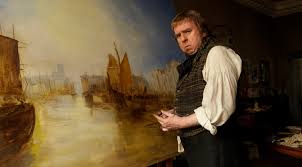
Films of the year – I leave the in-depth cinematic reviews to Arthur Annabel who promises an extensive blog on this topic soon. I simply note these as films which have delighted and/or moved me, in no particular order. Worth noting that whilst the programmes on my TV list get A* on the Bechdel test, the films are considerably weaker on that front. Nonetheless, some fine performances, and Nicole Perlman was the first woman with a writing credit on a Marvel movie (Guardians of the Galaxy).




Women of the year:
Jack Monroe – for enlivening my repertoire of meals to feed the family, and campaigning about food poverty
Professor Monica Grady – for being emotionally, exuberantly passionate about science
 Kate Bush – for doing it her way, as always
 Fahma Mohamed – for telling men three times her age what they needed to be told about FGM and how to protect young women in the UK
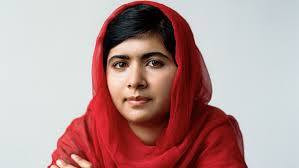 Malala Yousafzai – it’s all been said really. A young woman of remarkable maturity and dignity, as well as courage.
 Dr Ameyo Adadevoh – helped to curb the spread of Ebola by quarantining a patient in the face of pressure from his government, but succumbed to the disease herself
 Laura Bates – her Everyday Sexism project helped to give women a voice, to tell their stories, to shout back.
In 2014 I’ve blogged about refugees, genocide, football, W G Sebald and Michel Butor, Kazuo Ishiguro, everyday sexism, Tramlines, Josephine Butler and Doctor Who. I got a bit personal on the subject of depression, and was inspired by Caitlin Moran’s How to Build a Girl to present my manifesto – a plea to just be kind. And my blog about reading the last of the Resnick series of detective stories won the approval of the author, John Harvey, who linked to it on his own blog, and republished my jazz playlist!
Amongst the blogs I’ve followed, or at least tried to keep up with, I would particularly note Searching for Albion. This is the record of Dan Taylor’s four month cycling trip across the British Isles, talking to people he meets, by plan or by chance. A fascinating project, beautifully documented.
To all of those who’ve shared some of the above events, obsessions and enthusiasms with me, who’ve given me support when I’ve needed it, who I’ve learned from and with, thank you. I don’t know what to expect from 2015 – but see you there!
2013 – the best bits. And some of the other bits.
Posted by cathannabel in Events, Film, Literature, Music, Personal, Television, Theatre on December 31, 2013
It has been a funny old year. Funny peculiar, though not without the odd moment of mirth and merriment along the way.
I came back from one secondment to my regular job in January, and went off on the next secondment in December. This new one is a major change – working for HEFCE, based at home when not attending meetings in various exotic parts of the UK (oh, OK then, Croydon, Birmingham, Manchester, Dorking…). It’s a fantastic opportunity, and challenges the way I organise my life as well as requiring me to acquire new knowledge and new skills.
I graduated, again. Did the whole gown and mortar board thing which I hadn’t been fussed about when I was 21 and graduating for the first time. And then, with barely a pause, on to the doctorate. Studying part-time, it’s going to be a long haul, with who knows what possibilities at the end of it, but I’m loving it.
In February, a beloved friend and colleague died, and we – his family, friends, colleagues, students – grieved but also worked together to put on an amazing event in his honour, the 24 Hour Inspire. We raised money for local cancer charities, and have raised more since, through an art exhibition, plant and cake sales and various 10k runs/marathon bike rides, etc. And we’re now planning the 24 Hour Inspire 2014, and the publication of Tim’s diary. He will continue to inspire.
Culturally, my high points in 2013 have been:
- Chimamanda Ngozi Adichie at the Showroom, talking about Americanah, and Half of a Yellow Sun
- Peter Hill premiering newly discovered/completed Messiaen at the Upper Chapel (and playing Bach, Berg and Schoenberg too)
- Arnie Somogyi’s Scenes in the City, playing Mingus at Sheffield Jazz
- Tramlines – the Enid in the City Hall, Soukous Revelation in the Peace Gardens, Jim Jones Revue and Selecter at Devonshire Green. (And more, but those were the absolute top bits).
- The 24 Hour Inspire – 24 hours of lectures on life, the universe and everything, including Ed Daw’s blues piano, Rachel Falconer on poetry and birds, Jenny Saul on implicit bias, Claire McGourlay on the Innocence Project, and personal narratives from Brendan Stone and Elena Rodriguez-Falcon. Plus John Cockburn’s rendition of (What’s so Funny ’bout) Peace Love and Understanding, and my favourite Beatles B-side, Things we Said Today, and more busking from Mike Weir, Graham McElearney and Eugenia Chung. And more, lots more.
- Fabulous Beethoven quartets/quintet from the Elias at the Upper Chapel
- A magical Winter’s Tale at the Crucible
- Two awesome Britten operas (Peter Grimes and Death in Venice) from Opera North at Leeds Grand
- New (to me) authors enjoyed this year: Maggie O’Farrell, Louise Doughty, Lucy Caldwell, C J Sansom, Alison Moore, Edward St Aubyn, Rebecca Solnit, Wilkie Collins, Jonathan Franzen
- Wonderful new books from authors I’ve enjoyed before: Stephen King’s Dr Sleep and Joyland, Lynn Shepherd’s A Treacherous Likeness, Jon McGregor‘s This isn’t the Sort of Thing…., Robert Harris’s An Officer and a Spy
- Finally finished Proust’s Sodome et Gomorrhe. Allons-y, to La Prisonniere!
- I’ve learned to love Marvel superheroes (Avengers Assemble! Thor! Iron Man! Agents of Shield!), and have thrilled to The Walking Dead, Orphan Black (virtuoso performance(s) from Tatiana Maslany), Utopia and, of course, Dr Who.
- Speaking of which, not only an absolutely stonking 50th anniversary episode, but also a fascinating and very touching drama about the show’s early days, with David Bradley as William Hartnell, the sweet and funny The Five-ish Doctors, with Peter Davison, Sylvester McCoy and Colin Baker sending themselves and everyone else up with great affection, and Matthew Sweet’s Culture Show special. And the Christmas episode…
- Other cracking telly – Broadchurch, Homeland, Misfits, The Fall, Southcliffe, The Guilty, The Americans… And from across the Channel, not only another masterclass in French profanity from Spiral, but the wonderful The Returned
- And other top films – Joss Whedon’s Much Ado, Lore, The Hobbit Pts 1 & 2, Lincoln, and Patience (after Sebald).
About the blog itself. It’s been less focused on my areas of research recently, and that will continue to be the case, as I’m working on the PhD. The odd digression will find its place here – as Tim used to say, tangents are there to be gone off on, and the blog is a good way of nailing those (to mix my metaphors somewhat) and stopping them from distracting me for too long. I shall be continuing to go on about all sorts of other things that pique my interest. In particular the blog will continue to be a place where refugee stories are foregrounded, as a riposte to the mean and dishonest coverage which those stories tend to receive.
Over the last year, my posting has been somewhat erratic. I note that I didn’t write anything between March and June (I made up for it in June, however, with a Refugee Week blog-blitz, as well as a piece about Last Year at Marienbad which I still intend to follow up. That hiatus may have had something to do with being in the final stages of my degree – finishing off my dissertation, and a last batch of essays and presentations.
There are so many fantastic bloggers out there, too many to do justice to. We lost one this year, as the great Norman Geras passed away. But I’ll continue to enjoy, and to share/reblog That’s How the Light Gets In, Nowt Much to Say, and Futile Democracy, amongst others. For my research interests, I will no doubt continue to find lots to think about and follow up in blogs from Decayetude and Vertigo.
So, thanks to the aforementioned bloggers, to the various people with whom I’ve shared the cultural delights enumerated above, to friends and family who’ve supported me in my ventures and refrained (mostly) from telling me I’m mad to try to do so many things.
Thing is, I have a history of depression. I know that the best way for me to fight that, to avoid sliding back into that dark pit, is to do lots of stuff I care about. So, not just the job – which I care about, passionately – and my wonderful family, but research, writing, ensuring that we do Tim proud via the charity, and so on. I am very aware that there’s a tipping point, that if I do too much stuff I care about, given that I also have to do stuff that I have to do, just because I have to do it, the anxiety of having so much going on can itself lead to sleepless nights, which make me less able to cope, thus leading to more worrying and so on and on… It’s all about balance, and about having support when I need it. So, to all of you who, whether you know it or not, provide that support, and help me to keep that balance, a heartfelt thanks.
In particular, over this last year, I’d like to thank:
For unstinting support and encouragement through the part-time degree and especially as I reached the final stages – tutors Sophie Belot and Annie Rouxeville, and classmate Liz Perry. And a special thanks to Chris Turgoose for ensuring that my graduation gown stayed put via an ingenious arrangement of string and safety pins.
For support and encouragement to go on to the PhD – the aforementioned Sophie, Annie, and Liz, plus Rachel Falconer, Helen Finch, and my supervisors Amanda Crawley Jackson and Richard Steadman-Jones
For their contributions to the work of Inspiration for Life, and the 24 Hour Inspire, and their support in commemorating and celebrating Tim – Tracy Hilton, Ruth Arnold, Vanessa Toulmin, Chris Sexton, John Cockburn, Lee Thompson, Matt Mears and David Mowbray
My family, of course, without whom…
And, finally, Tim. I’d have loved to share this year’s triumphs and tribulations with him.
Have a wonderful 2014 all of you.

Letting it get to you: Doctor Who and George Bailey
Posted by cathannabel in Film, Television on December 29, 2013
Once there was a planet much like any other. And unimportant. This planet sent the universe a message. A bell, tolling among the stars, ringing out to all the dark corners of creation. And everybody came to see. Although no one understood the message, everyone who heard it found themselves afraid. Except one man. The man who stayed for Christmas. (Doctor Who Christmas Special 2013, The Time of the Doctor)
So, this is the story of a man who got stuck somewhere. ‘Everyone gets stuck somewhere eventually, Clara. Everything ends.’ He could have left, but no one else could have protected that small town as he did, from the forces that were besieging it, and from the war that could have burned it and all around it.

A town called Christmas, blanketed in snow. A town where truth prevails, and people greet each other warmly, and take care of each other, but constantly under threat, with enemies ready to take advantage of any weakness, and the citizens are all potential collateral damage.
If Stephen Moffat wasn’t consciously evoking Bedford Falls in those snowy scenes, I’ll eat my fez. Bedford Falls – the town where another good man got stuck, protecting his family and his community. Where he grew older, his own life on hold whilst he saved other people. Where he kept his promises, and watched his chances slipping away. The enemy from whom he protected people was rampant capitalistic greed, rather than alien races bent on world domination, of course, but it nearly drove him to his death, nonetheless.
George Bailey was a man who dreamed of lassoing the moon, of travelling the world, and who ended up stuck in a small town. The Doctor of course had done more than dream. He had travelled the universe, and time itself, but to quote a contributor to the Doctor Who Forum, Matt Smith’s valedictory episode saw him ‘trying to do something small … spend the remainder of his life protecting the people of one town.’
With every victory, the town celebrated. In time, the Doctor seemed to forget he lived any other life. And the people of the town came to love the man who stayed for Christmas.
But the man who stayed did not do so without argument, without at least an internal struggle. We see George Bailey’s anger and frustration at so many moments in the narrative, even as he does what he knows is right, he rages against what it’s costing him. The Doctor too has that fight between the promise he must keep and the life he wants to live.
Clara: What about your life? Just for once, after all of this time, have you not earned the right to think about that? Sorry. Wrong thing to say. We shouldn’t be having an argument.
The Doctor: Clara, I’ve been having that argument for the last three hundred years. All by myself.
Clara: But you didn’t have your TARDIS.
The Doctor: Ah, yes, well that made it easier to stay. True.
The absence of the Tardis may have made it easier, but we can be pretty sure that he would have found a way to leave, if he’d made the decision to do so. I was reminded here not only of IAWL, but of Albert Camus’ doctor, Rieux, in plague-ridden Oran (referencing Nazi-occupied Paris), knowing he must stay even when he is offered a chance to leave, because he has to save lives:
“I have no idea what’s awaiting me, or what will happen when this all ends. For the moment I know this: there are sick people and they need curing.” (The Plague)
Or as the Doctor said, ‘Every life I save is a victory. Every single one’.
Doctor Who is not ‘a kid’s show’ in any sense that reduces its value, its quality or its depth. But it is a fantasy, and one that is aimed at family audiences, in this case, gathered around a Christmas tree, replete with turkey and pud, and possibly still wearing, slightly askew, their paper hats. So we don’t expect the kind of ending that Camus was prepared to give us. We know that the Doctor will not be destroyed. The end that he speaks of is the end of THIS Doctor, not of THE Doctor – though he may not know this as he says it.
Emma: What’s wrong?
Clara: I just saw something I wish I hadn’t.
Emma: What did you see?
Clara: That everything ends.
Emma: No, not everything. Not love. Not always. (from ‘Hide’)
We’ve often been invited to contemplate what the world would be like without the Doctor. But that’s too terrible to do more than glance at and then look away. A world without the sound of the Tardis bringing hope, without the Doctor to bring protection and healing? No thanks. None of us would sleep at night if that was what we were confronted with, on a Saturday afternoon, let alone on Christmas Day.
But we are increasingly, in the more recent series of Dr Who, asked to deal with some much more grown-up themes. Maybe this reflects the changing audience. When Who launched, it was clearly aimed at children, and adults watched with their offspring, to remind them afterwards that it was only a story (only a story? As if there could be anything more important than stories) and that they could sleep safe in their beds. As those children grew up they stayed with the Doctor, and watched with their own children. Some of those parents too, I suspect, stayed with it long after their children needed them there for reassurance, and so we now have several generations for whom it is precious and important.
Someone said to me the other day, who hadn’t seen Who since they were a kid (we reminisced about the terrifying Autons and the Cybermen and the Yeti…) that whilst they could remember being scared, they couldn’t imagine being moved to tears by it. And yet these days more often than not, I am moved to tears. This is not just because my tear ducts are on a hair-trigger now – it’s because in Who since the reboot we’ve faced grief and loss, loneliness, ageing, choices made and chances missed, the possibility and threat of change. The recurring theme of memory has a poignancy now that it would not have had years ago, now that there’s so much more to remember, and the fear that those memories will start to be engulfed in fog. It gets harder to ‘remember all the people that you used to be’, whether you’re a Time Lord or not. The young me would not have been as devastated by ‘The Girl Who Waited’ as the middle-aged me was, nor as haunted by the question ‘Are you my mummy?’. And the young me would not have felt George Bailey’s despair, or the Doctor’s, as keenly. If you’re old enough to have lost people, to have had to make hard choices, to have got some of them wrong, and to have missed chances that will not come round again – then you can feel for George Bailey, and you can feel for the Doctor too.
Who and IAWL also share a humanistic perspective. IAWL of course starts with prayers, ‘ringing out to all the dark corners of creation’, and an angel. George prays too, though he’s not a praying man, and Clarence (AS2) is the answer. But all that Clarence does is to give George a glimpse of how, and how much, he matters. The miracle is wrought by human action, by people moved to generosity to help the man who’s been so generous to them. Remember ‘The Wedding of River Song’?
The sky is full of a million million voices saying, “Yes, of course we’ll help.” You’ve touched so many lives, saved so many people, did you think when your time came you’d really have to do more than just ask? You’ve decided that the universe is better off without you. But the universe doesn’t agree.
It’s people, for good and bad, who make Bedford Falls, or Pottersville. In Who too, whilst our hero is more than human he is no superhero, nor yet a god. His judgement is often flawed, his personality too. He’s prone to grumpiness, to vanity, to arrogance. He does the right thing but often is prompted or inspired by his own guardian angel, the companion/associate who shows him a truth he’s not able to see, or who intervenes for him when he cannot or will not plead for himself.
As Liam Whitton recently wrote in Humanist Life:
It’s one of the most humanist television shows of all time. In fact, at practically every turn up to now it has presented the philosophy of its title character, the Doctor, as an emphatically humanist one. If there’s one thing the Doctor values, it’s human life, and if there’s one thing he consistently stands in awe of, it’s human potential. He abhors superstition; he scorns pointless prejudices; he believes fervently in reason; he is sympathetic to the beliefs of others, but will not kowtow to them when a fundamental liberty is under threat.
Steven Spielberg once said that ‘ It’s a Wonderful Life shows that every human being on this Earth matters – and that’s a very powerful message.” It’s also a message reiterated over and over again by Who. Capra offers us hope based in human nature. ‘Goodness, simplicity, dis-interestedness: these in his hands become fighting qualities’ (Graham Greene, reviewing Mr Deeds Goes to Town, The Spectator, August 28 1936).
If you believe that humanity is all there is, that makes it so much more vital that we care for each other, because we’re all we’ve got, and these years we have on the planet is all we’ve got. I believe in Doctor Who. I believe in George Bailey. Call me idealistic, naive, if you like, but bear in mind that my academic research interests find me often mired in the history of the most appalling acts that humanity is capable of. So I do know that we don’t all live in a town called Christmas, or Bedford Falls, and that very often no one comes to save and to heal. But that humanistic vision is vitally important to me. Joss Whedon said it well, as he so often does, in Angel:
If there’s no great glorious end to all this, if … nothing we do matters … then all that matters is what we do. ‘Cause that’s all there is. What we do. Now. Today. … All I want to do is help. I want to help because I don’t think people should suffer as they do, because if there’s no bigger meaning, then the smallest act of kindness is the greatest thing in the world.
But it’s only right and proper that I leave the last words to the Doctor:
Letting it get to you. You know what that’s called? Being alive. Best thing there is. (The Doctor’s Wife)
You are now in Bedford Falls
Posted by cathannabel in Film on December 23, 2013

It’s a Wonderful Life. Often described as ‘heartwarming’, which I usually interpret as a warning, a euphemism for cloying and sentimental. It’s a family Christmas film, yes, but so much more. It breaks my heart each time I watch it, and at the same time it heals me. It speaks to the disappointments, the failures, the wrong choices, that are part of everyone who’s been around for a while. It speaks to the idealism, the sense of values that aren’t monetary, that are part of everyone who gives a damn, whether it’s their turn or not.
It earns that ending, that wonderful, ridiculous ending. Because we feel George’s despair, and we feel his frustration and anger at the irreconcilable conflict between what he wants his life to be and what it has to be. He does the right thing, because he can’t not do the right thing, but we see what it costs him. On an individual human level, we identify with George because he really isn’t OK with the failure of his plans and dreams, he’s not at peace. And we admire him because nonetheless he will always do what is right. (Indeed, if it seems frivolous to link him to Mandela and Picquart, the heroes of my last two blogs, so be it.)
But the film is not just about an individual, it’s also about a community. George’s choices made Bedford Falls what it is. But this wasn’t because he did it all himself. He inspired other people, gave them the courage to do the right thing, to be as generous as he was. The direct impact – the lives he saved through direct intervention – are only part of it. People who in Pottersville were mean and fearful weren’t born that way, they learned to be mean and fearful because their lives had taught them that other people couldn’t be trusted, that everyone was out for themselves, that mistakes and misfortunes would be punished. In Bedford Falls, they saw generosity and kindness, and mistakes and misfortunes met with sympathy and support, and they learned to be generous and kind themselves.
It’s so easy to despair, when we see so many examples of meanness, prejudice, callousness to others’ misery. We’re encouraged to be xenophobic and suspicious. Watch out! In January we will literally be unable to move for Romanians and Bulgarians every single one of whom will be coming here to take our livelihoods. Watch out! That neighbour who you haven’t seen leaving for work recently is probably spending all day on the sofa in a onesie watching Jeremy Kyle and scrounging huge amounts in benefits.
We can choose instead to live in Bedford Falls. Why would we do otherwise? The Potters of our world will continue to spin their scurvy little webs, but we don’t have to acquiesce. So, for 2014, my mantra will be ‘You are now in Bedford Falls’, and whenever I encounter stories that show how communities can work together, support each other, reach out to those who need help, across the boundaries that might be expected to divide us, I’ll share them, with that hashtag. There are a couple below, for starters.
I don’t believe that humanity is a lost cause. I do believe that humanity is all there is, and that makes it so much more vital that we care for each other, because we’re all we’ve got, and these years we have on the planet is all we’ve got. Joss Whedon said it well, in Angel:
If there’s no great glorious end to all this, if … nothing we do matters … then all that matters is what we do. ‘Cause that’s all there is. What we do. Now. Today. … All I want to do is help. I want to help because I don’t think people should suffer as they do, because if there’s no bigger meaning, then the smallest act of kindness is the greatest thing in the world.
Postscript
This year, in particular, these words from It’s a Wonderful Life have greater poignancy and resonance than ever:
Strange, isn’t it? Each man’s life touches so many other lives. When he isn’t around he leaves an awful hole, doesn’t he?
Because we got to find out what an awful hole was left when Tim Richardson died, in February. The memorial blog we set up for him tells so many stories of how his life touched those of others, and how much he is missed. And in his honour, we held the 24 Hour Inspire event, a community coming together to celebrate his life, his influence and his inspiration. It was a joyous occasion. And it was a glimpse of life in Bedford Falls.
http://www.theguardian.com/uk-news/2013/dec/20/bradford-synagogue-saved-muslims-jews
# CINEMA /// The Borgesian Labyrinth of Alain Resnais and Henri Labrouste
Posted by cathannabel in Film on June 8, 2013
A great follow-up to my Marienbad post – Resnais and labyrinths.

In 1956, Alain Resnais created a 20-minute long film entitled Toute la Mémoire du Monde (All the World’s Memory) that beautifully mixes documentary information with a fictitious style of filming and editing. What I just wrote is however symptomatic of a prejudice according to which documentary should tend towards objectivity in an attempt to capture the “truth” of what they are filming. We know that choosing such an ambition for a film is doomed to failure. On the contrary, when one voluntarily embraces the subjectivity of the documentarian, the chances are that the resulting movie would be much more powerful in communicating the piece of reality it is describing (we will see that soon in Peter Watkins’ movies). Toute la Mémoire du Monde is part of these movies. Through the dramatic journey of a book traveling through the registration and archival process of the Bibliothèque nationale de France
View original post 543 more words
Last night I dreamed I went to Marienbad again…
Posted by cathannabel in Film, W G Sebald on June 6, 2013

Still from L’année dernière à Marienbad; in this surreal image, the couples cast long shadows but the trees do not (Photo credit: Wikipedia)

Last Year at Marienbad (Photo credit: Wikipedia)
Intensely fascinating or tedious twaddle. Given my propensity for enigmatic French nouveaux romans and their cinematic equivalents you can guess which side I come down on.
Visually it is stunning, in a chilly way. The ornate mirrors and labyrinthine corridors, that extraordinary garden, the statues, Delphine Seyrig herself. The music is intense and overpowering, the acting stylised and static. The setting is a hotel, or a spa, possibly, but not certainly, in Marienbad. They – X and A – met here last year, or have never met before.
Alain Robbe Grillet, who wrote the screen play, describes the film thus:
The whole film … is the story of a persuading: it deals with a reality which the hero creates out of his own vision, out of his own words. And if his persistence, his secret conviction, finally prevail, they do so among a perfect labyrinth of false trains, variants, failures and repetitions. … In this sealed, stifling world, men and things alike seem victims of some spell, as in the kind of dreams where one feels guided by some fatal inevitability, where it would be as futile to try to change the slightest detail as to run away. (Introduction to the screenplay, p. 9)
This is very much in keeping with the Robbe-Grillet manifesto. For him the text is the world, not a description of the world. The notion of a novel or a film having ‘something to say’ is profoundly boring:
When a novelist has ‘something to say’ they mean a message. It has political connotations, or a religious message, or a moral prescription. … They are saying that the writer has a world view, a sort of truth that he wishes to communicate, and that his writing has an ulterior significance. I am against this’. (Paris Review, spring 86, no. 99, interview with Shusha Guppy)
However, the director of the film is Alain Resnais, whose films have plenty to say. In Night and Fog he worked with the poet Jean Cayrol, whose powerful closing words, a call to awareness, would seem to be the antithesis of Robbe-Grillet’s approach. He fuses memory and imagination, and in the labyrinth of barbed wire, searches for and confronts the Minotaur, the monster, hiding in its heart. Hiroshima mon amour deals with the viewer’s reaction – ‘some of us see nothing in Hiroshima. Nothing. Others see everything. Everything. That is the point’. A whole sequence of films deal with trauma and memory and whilst others may seem more directly to address political or ethical concerns, Last Year at Marienbad does see ‘some of the concerns and tropes of Resnais’ earlier engagements with trauma, pain and death return … in various transposed forms.’ (Emma Wilson, Alain Resnais, p. 85).
Perhaps the tension between the two Alains is at the heart of Marienbad’s enigmatic power. The viewer is invited by Robbe-Grillet to let themselves be carried along by the extraordinary images, the voices of the actors, the soundtrack, the music, the rhythm of the cutting, the passion of the characters, and describes it as a film ‘addressed exclusively to his sensibility’ rather than turning to ‘clumsy systems of interpretation which machine-made fiction or films grind out for him ad nauseam’ (Robbe-Grillet, p. 13). However, whilst it is certainly possible to be swept along by the the film in the way he recommends, it is almost impossible not to start trying to solve the puzzle. After all, a repeated motif in the film is that of games, and the winning of games, and the game of interpretation is too tempting to resist. And Resnais himself summarises the film with a question – ‘qui a raison?’. For Resnais, the protagonists in his films are real beings. They have their own lives, ‘latent, mysterious’ (Kline, p. 86). But realism doesn’t exclude ambiguity – what Deleuze calls a cinema of undecidability.
It’s difficult, knowing how far apart the writer and director were in their conception of the film (despite some of Robbe-Grillet’s statements on the subject), not to read the film in the light of this. When the images on screen often contradict the usually authoritative sounding voice-over, perhaps what we are seeing is Resnais asserting his vision of the film against the screenplay, which was so minutely detailed as to seemingly leave Resnais little room to manoeuvre, intruding on his territory with instructions on camera movement, lighting, etc. Robbe-Grillet describes the film as ‘in fact the story of a communication between two people … one making a suggestion, the other resisting, and the two finally united , as if that was how it had always been.’ However, Resnais has introduced into that narrative ambiguity that would seem to undermine that clear resolution. We do not see X and A leave the hotel at all, let alone together. They seem to meet, at the appointed hour, without speaking to each other, barely looking at each other, and walk very slowly and stiffly away from the lobby and out of view. Neither has any luggage though the voice-over has told us previously that she ‘packed a few things’. And if they do leave the hotel, it is only to get lost, forever, in the garden, alone or together.
The two Alains did not work, strictly speaking, together (ARG wrote the screenplay with minimal intervention from AR, and AR did the filming without intervention from ARG), and do not see the film in the same way. One intriguing sidelight on this is that AR used a recording of ARG reading his screenplay to guide the male actors. But not Delphine Seyrig. ARG himself has said that Resnais is A (Seyrig’s character). Certainly, there would seem to be a link between A and Elle (the woman in Hiroshima mon amour), both appearing to be traumatised, repressing memories.
X speaks in imperatives – Come here. Come closer. Follow me. Listen to me. Remember. I’ve come to take you away. You know …. that we are going to leave. A pleads, denies – No, it’s impossible. No, I don’t want to. No, I don’t know what happened then. No! You’re making it up. I don’t know you. No, it’s too far… Please. Let me alone… please… For pity’s sake! He is insistent – possibly to the point of rape. She seems traumatised, fearful. Her pose is characteristically with one arm across her body, her hand on her shoulder – a defensive posture, which at moments is almost cowering.

He asserts his memories, but increasingly doubts them, questions his own recollection – ‘no, that can’t be right’.
Robbe-Grillet’s screenplay calls for a scene where A is raped by X. Resnais refused to film this. The rape is suggested in X’s voice over – ‘I took you, half by force’, and then denied – ‘Probably it wasn’t by force’, but without complete conviction. He is trying to persuade himself as much as her here, that he did not use force. The question hangs in the air. Certainly he is forceful and she is afraid. She keeps her distance, ‘as if on the threshold, as if at the entrance to a place that was too dark, or too strange …’ She seems to show the classic symptoms of trauma, the continual reliving of the wounding experience.
So, how do we interpret this strange film? Are they all in fact dead, and the hotel is a sort of ante-room to the afterlife? Is the hotel peopled by automata, and X alone has autonomy, memory, and perspective? Does he have to seize the moment when the automata are able to move, to betwitch A into life, identifying/creating a past for her? Or is X aware of his status as a character in a film, imprisoned in the screenplay? Thus he starts to direct A, rather than merely describing things to her. He rejects one scenario (where she is shot) as ‘not the right ending’. Paradoxically, as Luc Lagier says in his documentary, we have a film that is closed in upon itself, but open to a seemingly infinite number of interpretations.
My own particular interests focus on trauma and memory, on the labyrinth which is such a powerful motif in the films and novels of the postwar period (Resnais’s labyrinths of barbed wire in Night & Fog, or the corridors of the Bibliotheque Nationale in Toute la memoire du monde; Robbe-Grillet’s In the Labyrinth amongst other works, and of course Michel Butor’s L’Emploi du temps…), and on W G Sebald’s engagement with the film, and the place, in Austerlitz, and in his poetry. In ‘The Year Before Last’ he writes:
The match game
was meant to decide everything.
The gleaming parquet floor
stretched before us. All round us
were mirrors, guests, motionless –
and in the middle you
in your feather boa. Hadn’t
we met once before?
In a taxus maze?
On a stage? The perspectival
prospect, pruned hedges,
little round trees and balustrades,
the palace in the background?
So, having been tinkering with this blog post for months already, I am pretty certain I’m not yet in a position to leave Marienbad. Bleston, all over again.
Tess Jaray, A ‘Mystery and a Confession’, Irish Pages, 1, 2 (Autumn/Winter, 2002/3), 137-9
T Jefferson Kline, Screening the Text (Johns Hopkins UP, 1992)
Luc Lagier, ‘Dans le labyrinthe de Marienbad’ (documentary featured on Marienbad DVD)
Alain Robbe-Grillet, interviewed by Shusha Guppy, Paris Review, 99 (spring 1986)
Alain Robbe-Grillet, trans. Richard Howard, Last Year at Marienbad: a cine novel (London: John Calder, 1962)
W. G. Sebald and Michael Hamburger, ‘A Final Poem: Marienbad Elegy’, Irish Pages, 1, 2 (Autumn-Winter, 2002/3), 125-32
Freddy Sweet, The Film Narratives of Alain Resnais (UMI Research Press, 1981)
Emma Williams, Alain Resnais (Manchester UP, 2006)
http://conversationalreading.com/sebald-at-marienbad/
http://bibliomanic.com/tag/last-year-at-marienbad/
 Passing Time