The usual mix of heavy and fun, with perhaps a bias towards the former. As usual, I note the frequency of WWII as a setting both in film and in TV series. In TV generally, the usual glut of crime drama, most a bit run of the mill but a few absolute gems. I have a problem with some of the lightweight stuff M and I used to watch together, and whilst I have given a go to Death in Paradise, Midsomer Murders, Young Sheldon and others, I simply don’t get the pleasure in watching them alone that I did when we could laugh together, and heckle, and nudge each other when things got ludicrous. (Not that there aren’t things I’ve watched that have made me laugh.) Conversely, there are things in here I would never have persuaded him to watch – I have a higher tolerance for grim than he ever did, a higher tolerance for costume drama/literary adaptations, and also (as it turns out, who knew?) the capacity to find joy in certain reality TV shows which he would have always dismissed. But so many things here are things we would have enjoyed together, and sometimes (quite often) that makes me feel sad, whilst at the same time reminding me of our companionship over all those years. I don’t talk to him, not out loud, anyway, but watching the last ever Endeavour, and the latest series of Unforgotten, for example, I thought of him a lot, and kind of nodded to him, wherever he is (my preference is to think that he’s part of the ocean, part of the universe, because when you die, ‘according to the law of the conservation of energy, not a bit of you is gone. You’re just less orderly’).
I haven’t included absolutely everything I watched – series that I abandoned or that I simply didn’t have anything to say about aren’t included, nor are rewatches, or ongoing series unless there’s something new to comment on. I’ve tried to avoid spoilers but no guarantees – proceed at your own risk.
Film
After Love
I love Joanna Scanlan, and she is superb in this. I thought I’d made a mistake watching it, given the opening scene, but it was subtly done, and whilst clearly the subject matter was emotionally intense for a still relatively new widow, it was in so many ways far enough from my own experience to be able to enjoy the writing and the performances. Many tears at the end though.
Antman and the Wasp – Quantumania (cinema)
Good things about this – Jonathan Majors, mesmerising (although, as it turns out, very problematic). Michelle Pfeiffer getting a fair crack of the whip, as she should. Visually stunning. Kathryn Newton as Cassie Lang making her presence felt. Paul Rudd always engaging. Somehow though it didn’t work as a whole, or not as well as it could have done. But it was fun.
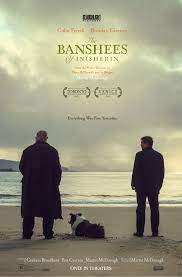
The Banshees of Inisherin
Simultaneously very (darkly) funny, and desperately sad. Farrell, Gleeson, Condon and Keoghan all brilliant. I know people who came out of the cinema after watching it feeling deeply depressed, and I can understand why – it is bleak. But it didn’t have that effect on me, somehow. And even those who were plunged into existential despair through watching it recognised its brilliance.
Best of Enemies (cinema)
NT production filmed live, and shown at our local arthouse cinema. David Harewood as conservative US writer/political commentator William F Buckley, and Zachary Quinto as liberal writer/provocateur Gore Vidal, recreating their TV debates at the time of the primaries in 1968. Brilliantly done, excellent use of very simple set with screens at the back of the stage. Harewood was superb, very well cast, but I am intrigued by the reasons for casting a black actor in the role, when, say, James Baldwin was played by a black actor, Andy Warhol by a white actor, etc etc. It’s fine, and it worked, but I would be interested to know more about the rationale.
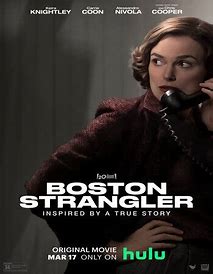
The Boston Strangler
An interesting change of angle on the story as I knew it, following the work of two female journalists, liberated from the ‘lifestyle’ pages to follow up the search for a serial killer.
The Debt
Nazi hunting, but not presented as straightforward heroics. Not that there’s any doubt who the bad guy is, but the good guys get into some morally complex areas whilst attempting to bring him to justice. Excellent performances from Helen Mirren and Tom Wilkinson in particular.




The Deerhunter
One of those films that is so well known that I almost thought I had seen it, I must have. But no, I saw it for the first time, and had very mixed feelings. It was relentlessly depressing, but that’s not it. Once the scene shifted to Vietnam, and our first encounter with the Vietcong I was seriously alienated. Yes, I know they were guilty of hideous atrocities, but the film portrayed them as barely human, malevolent and sadistic, with no context, not even the slightest suggestion that US troops did things just as hideous. The performances were superb, even if most of the characters remained pretty unsympathetic.
Denial
Dramatisation of the libel case brought by Holocaust denier David Irving against Deborah Lipstadt. Of course the outcome is known, so the tension lies in Irving’s testimony (Timothy Spall is brilliant) and Rachel Weisz’s conflicts with her own legal team over how their case would be portrayed.
Enola Holmes 2
Perfect New Year’s Day fare, jolly and entertaining.
Entebbe
This really didn’t quite work. The frequent interjections from the Israeli dance troupe never really added anything – not sure what they were intended to add, in fact – the performance itself was powerful and dramatic but out of place. We could have usefully spent more time exploring the motivation of the hijackers, which was only lightly sketched in. And the climactic rescue was somehow anticlimactic, over in seconds (as was the real event). Pike and Bruhl did a decent job with what they were given but this compelling story made a less than compelling film.
The Fabelmans (cinema)
Ultimate Spielberg. So many themes and motifs that are familiar from his work over the decades, but here the context is very personal. It’s a love letter to cinema, and a more troubled love letter to his parents, who enabled his passion for film, but whose marriage was fragile, as his camera inadvertently revealed. There are more cinema references (to Spielberg’s work and to the films he loved) than one could possibly list, and the details of how the young filmmaker achieved special effects with no budget and very basic kit are both fascinating and endearing. Performances are excellent – Williams and Hirsch are the most showy (in a good way) but Paul Dano is very touching as the Dad, and the two young actors who play Sammy Fabelman (Mateo Zoryon Francis-DeFord, who surely has more names than any small person needs, and then Gabriel LaBelle) are wonderful. Is it self-indulgent? Well, yes, but I think he’s earned it. And I loved it.
Glory
There’s a film still to be made, from the perspective of the black soldiers rather than their white leader, but meantime this is a solid and often moving account.


Green Book
I liked so many things about this, including both of the lead performances. But if only it could have been genuinely a two-hander. Mahershala Ali’s performance as pianist Don Shirley has depths that are never fully explored – he’s by far the more complex and interesting of the two protagonists, not only because of his rarity as a black classical musician, who isn’t pigeonholed by that definition, and how he is seen both by white people (friend and foe) and by other African-Americans, but also because of the glimpses we get of a complicated personality. That’s not to say that Tony Vallelonga isn’t also fascinating, or that Viggo Mortensen’s performance isn’t great. But a film about a black classical musician touring the American South in 1962, in which the white guy is the lead actor (in Oscar terms) is perhaps missing a trick. It was Shirley that I wanted to know better. The scenes in the South are filled with real, visceral dread, nonetheless, and the Green Book itself is something remarkable, and appalling.
The Guard
Brendan Gleeson and Don Cheadle as unlikely buddies in a cop movie, encompassing organised crime and corrupt policemen in rural Ireland. They’re both brilliant – Gleeson’s Boyle is staggeringly incorrect, offensive and unprofessional but nonetheless we back him all the way, and Cheadle is buttoned up and straitlaced, but capable of being shocked into camaraderie. It’s very, very funny.
Guardians of the Galaxy 3 (cinema)
Drawing the story of the Guardians (at least in this formation) to a close, and providing an origin story for Rocky Racoon. It mixes the elements we have come to expect from Guardians with some much darker threads, and some moving moments (not that previous films have been without those elements), and an ending which reminded me a little of the final episode of Agents of Shield, in its defiantly human and non-superheroic tone.
Hitchcock
Entertaining, but I recall watching the Toby Jones/Imelda Staunton film The Girl a while back, which was a lot stronger and much more disturbing. It’s not that this one glosses over Hitch’s predilections, nor his bullying behaviour towards his actors, but it holds back, where The Girl (which focuses on the making of The Birds, whilst Hitchcock focuses on Psycho) doesn’t. Hopkins and Mirren are great though.
The Hurt Locker
Super tense, tough, immersive. Renner in particularly is mesmerising.
In the Court of the Crimson King (cinema)
King Crimson at 50, celebrated in a film which includes interviews with most surviving members of the band’s various incarnations, but which centres, inevitably and rightly, on the one person who was part of and led all of those incarnations, Robert Fripp. Infuriating, pompous and often very funny, Fripp’s genius is also on display, and acknowledged by all of the participants. And the music, obviously, is bloody brilliant.


Judy
I do have a problem with biopics – I find it hard, however good the performance, not to see it as an impersonation, a collection of mannerisms that are meant to persuade me that this is indeed Judy, but which tend to merely persuade me that Renee Zellweger is doing a cracking job of impersonating her. Nonetheless, it is a good attempt and really rather touching.
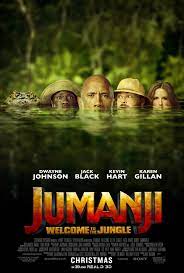
Jumanji – Welcome to the Jungle
A lot of fun, especially Jack Black training Karen Gillan in how to flirt.
Knives Out/Glass Onion
Daniel Craig having a blast as master detective Benoit Blanc, backed in both movies by a stellar cast, all of whom are also clearly having a blast. Thoroughly enjoyable, with plots that are tricksy enough to be gripping.
Lilies of the Field
Sidney Poitier won the Best Actor Oscar for this one in 1963. It’s of its time, gentle and funny, with the culture clash between Poitier’s footloose loner and the austere East German refugee Mother Superior gaining some real poignancy – what’s more, it isn’t given an entirely cosy resolution. Racism only rears its ugly head in Homer Smith’s first encounter with the local contractor who addresses him as ‘boy’ – this is resolved, when at the end Smith is addressed as Mr Smith (that’s bound to remind one of Poitier’s much grittier (and a few years later) In The Heat of the Night, and the famous line, ‘they call me Mister Tibbs’.
Manchester by the Sea
I would have avoided this a year ago, even six months ago (a heartbreaking study in grief – ah, cheers, no thanks, not just now). But I’m glad I watched it – it’s superb, subtle, moving without ever being sentimental.
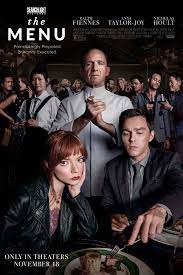
The Menu
Perhaps more style than substance, rather like the food at Ralph Fiennes’ ludicrously pretentious restaurant. But the black humour works well, although I’m not sure whether it would be as effective if one knew the premiss – one is often laughing in shock.



Mothering Sunday
Elegiac in tone, the sorrow and hurt left by the carnage of the First World War pervades everything in what appears, on one level, to be an upstairs/downstairs romantic – or at least sexual – affair. It’s about ‘love, lust, grief and doubt, lacing its central portrait of an artist in the making with an air of unresolved intrigue, lingering guilt and transformative creativity’, as the Guardian put it.
Narvik
Good, solid war drama, set during the abortive Allied campaign aimed at preventing German occupation of Norway (and protecting vital imports). It convincingly portrays the chaos and the moral ambiguity of the time through the dilemmas faced by the lead characters, its action sequences are gripping and it sheds light on a wartime episode that I, at least, knew little about (I learned more, reading Nicholas Shakespeare’s Six Minutes in May – see my books blog).
Queen of Katwe
Based on the true story of Phiona Mutesi, from the slums of Kampala, who became a chess champion. It sounds potentially sentimental but the performances (from Madina Nalwanga as Phiona, with stellar support from David Oyelowo and Lupita Nyongo) ensure that it remains true to the place and the people.
A Quiet Place 2
Inevitably some of the power of the first film is lost as the narrative opens out, and as we are fully aware from the start of the nature of the threat and of the one possible defence against it. But it maintains the tension brilliantly nonetheless. Emily Blunt is great, and Millicent Simmonds as the daughter is exceptional.
Romeo + Juliet
The characters are intensely irritating, but that’s R + J for you. They’re teenage idiots, and I prefer productions that allow them to be that than those that pretend we are really in the presence of a great and profound passion. This version is perhaps gimmicky but works pretty well, and di Caprio and Danes are a very attractive and persuasive couple of teenage idiots.
Rye Lane
Everything about this is a delight. The script zings, the two leads are funny and charming, the setting vibrates with colour and activity, and it uses the classic romcom tropes but makes them feel fresh and new. It lifted my spirits, it warmed my heart without ever being soppy or sentimental.


Spiderman: Across the Spiderverse (cinema)
This is wonderful. ‘Dizzying, dazzling’ as the Guardian reviewer put it. Asked what I thought of it afterwards I could barely come up with more than a few vowel sounds. With a bit of time to reflect, I felt that (a) I couldn’t grasp all of the threads – I’m just not sufficiently immersed in the Spiderman comics/films to get all of the references, (b) it was visually stunning, (c) I want to watch it again soon (and re-watch Into the Spiderverse in prep) and (d) I am still dizzied and dazzled.
The Thin Red Line
This falls short of being a great film, but it is great in parts, and is very effectively tense. The voice-overs provide a more philosophical, spiritual perspective on the brutal action, but are hard to connect to the soldiers that we see fighting and dying, and some of the famous faces who pop up briefly only to fight and die are a bit of a distraction. It’s not your conventional war film, anyway, and even if it doesn’t entirely work, it’s compelling stuff.
What’s Love Got to Do with It
Another biopic, see my comments above on Judy. This took enormous liberties with the details of Tina Turner’s life, although the fundamentals are all there. With those caveats, Angela Bassett and Laurence Fishburne are both brilliant.
Whiplash
A terrifying study of obsession, and of the damage a charismatic bully can do. The Guardian said that ‘Watching this film is like listening to a very extended, bravura jazz drum solo. You marvel at the flash, the crash, the technique – and finally wonder where exactly it is all going, and when and how it is going to end’. Which is probably fair, but unlike all but the best drum solos, you don’t take it as an opportunity to go and make a cup of tea or scroll through your phone. There’s an ambiguity about it – JK Simmons’ Fletcher is brutal, vicious, dangerous, but is he right about what it takes to achieve full-on musical genius? How does his approach fit with jazz as an improvisational discipline? At the very least it’s a film that holds your full attention whilst it’s playing, and gives you food for thought afterwards.
Wild
Dramatisation of Cheryl Strayed’s account of her solo 1,000 mile walk along the Pacific Crest Trail, in the aftermath of her mother’s death and the disintegration of her marriage, as a result of her own self-destructive behaviour. It’s a completely mad enterprise, undertaken with rather less rigorous planning than some of us might do before heading to the shops on a Saturday, and it really is rather remarkable that she survived both the various perils of the natural environment, and the human predators that she manages to evade along the way. It’s a non-linear account, the events of her journey interspersed with memories of childhood and of the traumas that led her to take on this challenge. The occasional lapse into self-help manual clichés grates a bit, but not enough to detract from the tension.
The Wonder
Beautifully done, slow and subtle, with great performances from Florence Pugh, Tom Burke and Kila Lord Cassidy in the lead roles. The soundtrack is excellent too. The only thing that jarred for me was the framing of the narrative with shots of a film studio and a voice-over assuring us that the characters in the film ‘believe in their stories with complete devotion’, and inviting us in turn to believe in this story. I’m not clear how creating that distance between us and the story helps us in that, but that story was compelling enough that I forgot the odd framing.




TV
Drama
The Bay
Timing is everything, and this fourth series of what has been described as a ‘serviceable’ crime drama was up against the final series of Endeavour and the first series of Unforgotten without Nicola Walker (see below). It is fine, kept me guessing, managed to not get totally bogged down in the characters’ personal lives (just), and the script and performances were fine. Better than series 1 of The Bay, which despite the presence of Morven Christie failed to convince, and I had thus skipped series 2 and 3. In fact, I might not have bothered with this if I hadn’t been (a) snowed in and (b) exercising all of my willpower to avoid binging Unforgotten…
Better
One of the better crime thrillers of the year to date. This one genuinely kept wrong-footing me and it felt fresh despite the not unusual set-up (a bent copper wants to free herself from her obligations but can’t do so without risking her family).
The Billy Plays (Too Late to talk to Billy, A Matter of Choice for Billy, A Coming to Terms for Billy)
A very young Kenneth Branagh in this trio of Belfast set plays written by Graham Reid and broadcast on Play for Today in the early 80s. The focus is on the troubled relationship between Branagh’s Billy and his father Norman (James Ellis). At the time they were seen as a ground-breaking representation of Protestant working class life during the Troubles, and they’re fascinating to watch now, though interestingly a review in the Belfast Telegraph from 2012 is pretty damning about their relevance and realism.
Blue Lights
The stand-out new crime series of the year so far. The series focuses on three probationary coppers in contemporary Belfast, and all three are put to the test and put in real peril – it’s brilliantly tense. And whilst the premiss of ordinary coppers trying to do their job coming into conflict with secret service ops warning them off organised crime activities which are under surveillance is one that very many detective dramas have dealt with, the complexities of the environment here add layers of danger and tension. Absolutely gripping. Already commissioned for a second series and I can’t wait.
Dancing on the Edge
Stephen Poliakoff’s drama, first broadcast ten years ago, is set in 1933, when a black jazz band is trying to get a secure residency at a London hotel, and avoid the attentions of the immigration department. It’s a fascinating point in history, where so many elements and heading for collision, and there are personal dramas too. Great performances, great music, great writing.
The Diplomat
Good stuff. Elements of Borgen, mixed with Bodyguard/Treason and other politically focused dramas. The script was zingy, Keri Russell as the Ambassador was great, as was Rufus Sewell as her (possibly nearly ex) husband and a man with his own ambitions. It is definitely anticipating a second series, which I hope materialises.


Endeavour
The final series. As always, the quality of the writing and of the performances lifts Endeavour well above the bulk of detective dramas, and these final episodes are elegiac and moving, with the final episode delivering some nods back to the beginning, and to what was to come afterwards. I shall rewatch the series now with great pleasure and savour my time with Bright (who Anton Lesser develops from a stuffed shirt to a hero, with such enormous subtlety), Thursday, Strange and Morse, all over again.
Extraordinary
Everyone has a superpower, randomly allocated to them when they turn 18, except Jen. This is a broad, comic take on the whole superpower notion, where some of them are scary and others are a bit of a nuisance – we went there a while ago in Misfits, where a bunch of people (but not everyone) got superpowers after some kind of an electrical storm. It’s v funny (Derry Girls meets Sex Education?).
Grace
I’ve tried, and I will probably watch it when it’s next back, but I don’t love Grace, despite my fondness for John Simm. They seem to have dropped the weird obsession with Grace seeking supernatural guidance on his cases, even though it never produces anything useful and threatens his career. But the connecting thread of the mystery of his wife’s disappearance is perhaps less interesting than the writer intended, and at least one episode leaned on ‘woman in peril’ tropes in a rather queasy way that most dramas have moved on from.
Great Expectations
Oh, this did cause an awful lot of harrumphing. The colour-blind casting, the sex and drugs, the changes to Dickens’ plot, the swearing… I rather enjoyed it. There was plenty of Dickens in there, even with the plot changes, and it made us see some of the characters in a different light. It’s so long since I read the book (with which I was once very familiar) that I’m not sure whether some plot elements were changes or just embellishments/re-interpretations, but the ending makes use of the subtle ambiguity in Dickens’ own ending (which he had to change, under pressure from his publishers) and I kind of approved. I love Dickens passionately – have been reading him since I was at junior school – but I’m not precious about how the novels are treated. I thought Iannucci’s Copperfield was wonderful, and I found his treatment of Dora (‘I don’t belong here. Write me out, Dodie’) powerfully moving. I also loved Barbara Kingsolver’s reworking of the same novel, as Demon Copperhead – see my books blog).
Happy Valley
Sarah Lancashire is magnificent. I could leave it there, but that would do a disservice to the writing, and to the other performances. Happy Valley is a pretty bleak place, and there have been times, particularly in series 2, when I just wanted it to stop being so relentlessly grim (and I have a pretty high tolerance for grim), mainly because Sally Wainwright made me care so damn much about what happened to the characters. This final series was tense as owt, right to the end, but always maintaining that dark humour, as Catherine Cawood stomps away from another encounter with dim-witted male colleagues, muttering ‘Twats’, or reports back to her sister after the final showdown with Tommy Lee Royce that she might have singed one of her crochet blankets. Brilliantly done.
His Dark Materials
Beautiful and moving. Does justice to the books, which is no small feat. Will there be a dramatization of the second (so far incomplete) trilogy? If the same team were to tackle it, I’d be very happy to see that happen, but the ending of this trilogy is perfect as it is.


Jaguar
Spanish series, focusing on a group of Nazi hunters. Unfortunately, whilst it seems to be trying to be serious, the action sequences are often ludicrous, even cartoonish, the characterisation is perfunctory and the dialogue clunky. I had to watch it all to see how it turned out, but it wasn’t exactly edifying.
The Last of Us
I’d never played the game, but I have it on expert authority that it is the best of its genre, and transcends its genre. The same could be said of the series, which is full of absolutely cracking action but then takes time out to explore much smaller stories, like that of Bill and Frank, or Ellie and girlfriend Riley, so that we are deeply invested in the people, not just rooting for them to beat the nasty infecteds. Visually brilliant, never morally simplistic, often deeply moving, and beautifully acted.
The Light in the Hall
I watched largely because it starred Joanna Scanlan, but this story of a bereaved mother seeking answers wasn’t quite fleet-footed enough to avoid the clichés, and ended up being rather less satisfying than I’d hoped, despite the performances.
Lockwood & Co
So, about 50 years ago ghosts started to make their presence felt, and whilst they can harm adults, only teenagers can sense them and fight them. Lockwood & Co are ghosthunters, combating not only the said spectres but unscrupulous forces who want to harness these supernatural powers for evil rather than good. Very entertaining, and intriguing, and, annoyingly, cancelled after one series.
Magpie Murders
A meta murder mystery, in which an editor tries to solve the murder of a crime novelist, whilst also trying to find out what happens in the final chapter of his latest/last book, with a little help from his fictional detective. It could be gimmicky but it’s clever enough to avoid that, and is a very satisfying, multi-layered exploration of the genre, in its classic form. Lesley Manville is great, as always, as are the rest of the cast, many playing dual roles.
Excellent thriller based in an A&E department. The main protagonist was – quite intentionally – abrasive and not entirely admirable, but it was brilliantly tense, and felt real, thanks to the writer, Grace Ofori-Attah, who spent 10 years as a doctor in the NHS.


Maryland
I’d watch anything with Suranne Jones in. And this one also had Eve Best, who is much less frequently on the telly but is always worth watching (we saw her as Rosalind in As You Like It at the Crucible, years ago, and she was mesmerizingly gorgeous). There are other great performances here, but essentially this drama comes down to these two, playing sisters whose relationship has become tense and distant over the years, but who find themselves dealing with a crisis on the death of their mother. There’s some nice misdirection in the opening scenes which makes one think we’re going to get a mystery, a thriller even. It’s not – it is about relationships, about family, about responsibilities and how we care for each other. And it’s excellent.
Mayflies
I loved the book. And in some ways, this dramatisation lived up to it. There are two timelines in the narrative, one where the protagonists are lairy teenagers, one twenty-something years later, when some friendships have fractured but others remain vital. It’s about male friendships and the kinds of loyalty that those can inspire, even trumping loyalty to one’s partner, in extremis. I was furious on the female partner’s behalf, but I believed in the characters and in the overwhelming desire ‘not to die like a prick’, whatever that takes. The adaptation dealt superbly, and very movingly, with the current timeline, but the earlier strand remained rather unfocused, and didn’t build as strong a foundation for the later developments as it did in the novel.
Murder on the Home Front
Rather a jolly, if dark, crime drama set during the Blitz, based on the memoirs of Molly Lefebure, secretary to pathologist Keith Simpson. One assumes that the real Molly didn’t actually go chasing serial killers down the passages of the Underground, but I haven’t read the memoir, so who knows?
Mystery Road: Origin
We’d seen all of the Mystery Road TV and film outings for outback detective Jay Swan (taciturn, with a history, doesn’t always play nicely with others) and this introduces us to his younger self, where we see some, at least, of that history. Excellent thriller which, as always with this series, addresses white Australia’s past and present dealings with its original inhabitants.
The Night Agent
Often a bit preposterous, and the leading man is a bit too boringly square-jawed for my liking, but undeniably thrilling. The ending seemed a bit abrupt, which may presage a second series. I’ll watch it.
Page Eight
David Hare wrote and directed this: Nighy and Gambon as a pair of close to retirement MI5 chaps dealing with information and misinformation, a PM who is lying to the country, and the death of an activist. Lovely performances. There are a couple of sequels, which don’t appear to be available to stream anywhere at present, unfortunately.


Picard
If Season 2 got its pacing a bit wrong, but redeemed itself on the final strait, Season 3 keeps the pace and the tension taut throughout. This is despite the potential for distraction by most of the TNG cast rocking up, along with their offspring, to help Picard fight the greatest threat the Federation has ever faced. A lot of gentle humour is made of the changes that the years have made to these characters, as well as picking up some of the tensions that were always there. I especially enjoyed Worf’s neat segue from announcing himself as the scourge of X and the destroyer of Y to offer Rafi some camomile tea. A very satisfying conclusion.
The Power
Adaption of Naomi Alderson’s brilliant scifi novel where one genetic mutation/evolutionary change – teenage girls go electric – challenges the order of things around the world. It’s intelligently done, and gets the balance right between the individual stories and the bigger picture.
Redemption
Another grieving mother seeks to uncover the truth and in so doing crosses all kinds of boundaries (common sense, legal, ethical). It’s a bit overdone as a plot (see also The Light in the Hall, Without Sin) and the only things distinguishing this one are the Belfast setting and the fact that said grieving mother is a copper. I never quite believed in her, sad to say.
The Responder
‘As fast and riveting as a thriller and as harrowing as a documentary’, according to Lucy Mangan in the Guardian. She’s not wrong. Martin Freeman is outstanding, bringing real depth, and great humanity to the role of a copper mired in despair, compromised, frustrated and angry but still, somehow, wanting to do something good.
The Rig
Ecological scifi thriller, about what happens when the earth punches back. Great cast – Martin Compston, Ian Glen, Mark Bonnar, Mark Addy, all people one is pleased to see in the cast list of any drama.
SAS Rogue Heroes
Back to WWII, in Egypt, and the formation of the SAS, a bunch of mad bastards who take on missions that no one who wasn’t a mad bastard would even dream up, let alone execute. It’s exciting, the script is witty, and the characters are drawn with enough depth that we do get a sense of why they’re the kind of chaps who would sign up for this. Connor Swindells is particularly good.


The Six Wives of Henry VIII/Lucy Worsley’s Six Wives
Lucy’s latest foray into the dressing up box isn’t quite as groundbreaking as it purports to be. She wants to show the six wives in new light, to get away from the simplifications and stereotypes. But watching her series alongside the 1970 drama series, she doesn’t seem to have anything much to tell us that wasn’t in that series… The latter holds up remarkably well – there’s the odd bit of historical drama-ese dialogue: ‘your brother, the Prince … your father, the King’, etc, but the performances are excellent and each wife is given a chance to be a rounded, complicated person, neither victim nor villain. 12-year-old me was not wrong.
A Small Light
This is outstanding. A Small Light is the story of Miep Gies, the woman who helped the Frank family into their hiding place, and kept them safe and fed for two years until the Gestapo raid that saw all of the inhabitants of the Annex deported. We only see life in the Annex as Miep saw it, so we see her interactions with the family, but not their interactions with each other. And this makes the final episodes even more devastating, somehow, as we hear, rather than see, the shouts and tears as the Gestapo burst in and order them to pack. Miep sees them troop downstairs to the waiting truck only as silhouettes passing by the office door, though we do get a last sight of them, briefly in the fresh air, via Miep’s husband Jan, who is helplessly standing by outside. What we get, which Anne’s diary cannot provide, is the context, what is happening on the streets of Amsterdam, collaboration and resistance, cold and hunger, suspicion and fear. And we see Jan’s growing involvement in active resistance. I don’t know whether it is dramatic license that he is part of the planning, if not the execution, of the attack on the Records Office. This was the focus of a recent documentary by Stephen Fry, looking at Willem Arondeus and Frieda Belinfante, both gay, whose names are little known even in the Netherlands, so whether or not Jan Gies played a very minor role (Arondeus was captured and executed), it is good that this series is giving them a moment in the spotlight. I have grown up with Anne Frank, first reading the diary (in one of the more expurgated versions) when I was round about her age. It is without doubt a remarkable piece of writing, but I find myself cringing when it is described as inspirational, or poignant. My emotion on reading it is not to discreetly mop a tear but to feel horror and rage. And whether Anne, had she survived Belsen, would have stood by her statement that people are fundamentally good at heart, we will never know. What we can take from her, though, is that anyone can be a small light in a dark room. Miep Gies, brilliantly portrayed here by Bel Powley, was just that.
A Spy amongst Friends
Excellent cast, fascinating story, somehow didn’t quite catch fire.
The Steeltown Murders
Solid reconstruction of a case left unsolved in the 1970s, which was reopened and reinvestigated in the early 2000s using DNA testing. The action flits between the two time-frames (sometimes merging from one to another as the lead copper looks in a mirror, or walks the same route as his earlier/later self), so one has to be alert to the cars, the width of lapels and the amount of smoking to ensure one keeps up. It’s about police procedure and forensics, but it’s also (see Unforgotten) about how the ramifications of a murder (in this case three murders of young girls) play out in the lives of family and friends through the decades. Philip Glenister plays the older Paul Bethell (the lead copper), and Scott Arthur his younger self (older retains the younger man’s impressive ‘70s tache). It’s slow and subtle (again, Unforgotten style) rather than nail-bitingly tense and actiony, and it was compelling viewing.
Ted Lasso
Well, this final series seems to have made some people very cross, and I’m not sure why. Was it as good as series 1? No, but not many things are, and moreover neither was series 2. Series 1 had on its side that the style and tone of the show felt fresh and surprising, as well as being warm and (not that I like the word) nice, which was kind of what we needed back then. Both series 2 and 3 had more missteps and mis-hits and series 3 perhaps a few more overtly preachy moments, but fundamentally it was the same show, with the same premiss and the same cast, the same tone and style. That’s not to say there had been no development – none of the characters were as we originally encountered them, apart from the show’s one irredeemably bad guy, who remained unredeemed. It was right to draw it to a close, but there was lots to love about this series, and even its finale (although as so often, finales cram so much in that it all ends up a bit messy).
Traitors
Not to be confused with the Claudia Winkelmann reality show. This is set at the end of the war, as tensions between the Allies ramp up, and a young civil servant finds herself drawn into espionage. It’s very well done – Keeley Hawes is magnificent and Emma Appleton as the out of her depth spy is engaging and sympathetic.



Transatlantic
Set in Marseille soon after the fall of France, when it became a hub for refugees trying desperately to get visas for somewhere safe. It’s based on the true story of Varian Fry, a member of staff at the US Embassy, who’s doing everything he can to help find safe and legal routes, but then joins forces with others to get as many people out as possible, by whatever means necessary. It takes a few liberties with the facts (which I wrote about in a blog for Refugee Week some years ago) and there are oddities in the pacing (one episode is taken up with a party at the ‘safe’ house, where a host of Jewish and other intellectuals (Chagall, Arendt, Ernst, Breton and others) dress up and lark about). But that fits with another aspect of the series, which interested me – the way in which, for Fry and his associates in one sense, and for the refugees in another, this was an interlude, not, as one character puts it, real life, an interlude where people did things they’d never have dreamed of or dared to, but which could not last.
Treason
Gripping, if improbable, espionage drama, which starts wrongfooting the viewer very early on and keeps that up for the duration. Charlie Cox (Daredevil) is the focal point of the drama – the Guardian reckoned that his charm and general cuddliness got in the way rather, which is surprising, since Daredevil showed he can brood and glower with the best. In any case, once you’ve started, you won’t want to stop, and even if, when it’s all over you think, well, that was really a load of old cobblers, you won’t mind having given it an evening or two.
Unforgotten
I’ve already mentioned this a few times a propos of other (usually slightly or much lesser) series. The tension here was in seeing how it would work without Nicola Walker aka Cassie Stuart, and how her replacement, Jessie James (oh yes), played by Sinead Keenan, would go about filling her shoes, or not. It worked very well indeed – the tension in the team was so well done, and there were believable and touching background dramas for both Sunny and Jessie. And, of course, there was a body, and there were people whose lives had intersected with the deceased and who might or might not be the perpetrator, but who had lived in some way with the ramifications of the death ever since. Beautifully written – exceptional crime drama.
Unseen
Gail Mabalane plays a Cape Town cleaner who gets caught up in underworld nastiness when she tries to find her husband. She’s excellent – as the body count ratchets up and everything spins out of control, she conveys both terror and steeliness. It’s not ground-breaking, and the idea that, as a cleaner, she can be present but unseen, is not especially profound, nor is it explored deeply, but it’s a good thriller, with an interesting setting, and it’s well worth committing a few hours to.
Why Didn’t they ask Evans
Stylish and witty, less dark than some of Christie’s work, particularly those chosen for the recent batch of dramatisations. The two leads (Will Poulter and Lucy Boynton) are funny and charming and their dialogue is reminiscent of the screwball comedies of the ‘30s. It’s all perfectly judged, perfectly delivered, and perfectly delightful.
Without Sin
Grieving mother searches for the truth about her daughter’s murder. This one has got Vicky McClure, which is always an asset, and here she’s playing opposite Johnny Harris (her abusive father in This is England). It’s solid, and as the mystery plays out, it proves a lot more complex than it at first appears. If the set-up feels a bit tired, the context (grieving mother engages with a restorative justice programme in which she encounters the man in prison for her daughter’s murder – she’s asking why, and ends up asking who) is interestingly different.
Women at War
French series, set in WWI, which seemed intriguing but became ludicrously soapy, melodramatic and unrealistic. Three women, one the wife of an industrialist who’s called up, and tries to keep his business going, one a prostitute who turns out to be trying to find her son, and one a nun, who falls for an apparently traumatised soldier who is taken in to the convent hospital for treatment. The nun story was the most irritating – whole hours (or so it seemed) were wasted on watching these two improbably and blandly gorgeous people gaze longingly at each other.


Not for the faint-hearted. And don’t sit down to watch whilst eating your dinner. Two series in and I’m still not sure what’s going on, apart from the obvious, that a plane crashes in the wilderness with a girls’ football team, and we watch them fight to survive, whilst also watching their adult counterparts live with the traumatic consequences of what that fight entailed. That doesn’t tell you half of it though. There are supernatural forces (or are there?), a huge body count, and anyone who thinks they can predict where season 3 will go is deluded. Juliette Lewis, Christina Ricci and Melanie Lynskey are fantastic.
Documentary
Once upon a Time in Northern Ireland
The Troubles, told through the words of ordinary people, Catholic and Protestant, paramilitary, police and army, alongside archive footage. Incredibly powerful.
Simon Schama’s History of Now
Schama kept inspiring me with accounts of the huge leaps we’ve taken towards equality and justice – and then devastating me with the reminder that all of those gains – all of them – are under threat. Important to remind ourselves where we were, and how far we’ve come, even if we acknowledge it’s not far enough, and that there are those who want us to go back…
Race Across the World
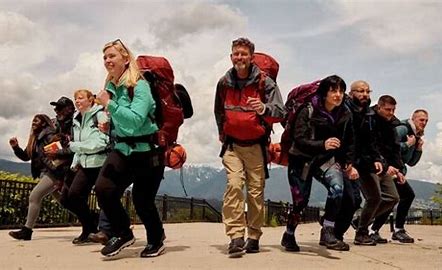
I never watched reality TV until my husband died. Then, that first autumn as we sat, shellshocked, unable to face too much reality, it turned out reality TV was just the thing. So we got into Strictly and Bake-Off (and, more embarrassingly, Married at First Sight Australia, Selling Sunset, and others of that ilk…). This year I’ve adored Junior Bake-Off, especially Immy, whose capacity to cover herself and the surrounding area with flour, food colourings and any other substances available was impressive as well as endearing, and the ultimate winner, Amelia, who was a remarkable, bright and funny young woman who will, whatever she chooses to do in the future, undoubtedly go far. And then there was Race Across the World which I hadn’t even heard of before, but series 3 was getting a lot of love online, so I gave it a go, and it was wonderful. I was rooting from episode one for Cathy & Tricia, the best mates who got off to a rocky start when they were unable to find their way out of the park to really start their journey, but who showed resilience, good humour, good sense, and such a strong bond of friendship, and got to the finish line first. So, respect to Cathy and Tricia, and to the other contestants, who all had their moments along the way. And as well as the competition, the scenery was absolutely staggeringly beautiful.



 Passing Time