Posts Tagged Historical Fiction
2025 Reading: The Second Half
Posted by cathannabel in Literature on December 3, 2025
Fiction
The usual caveats. I haven’t included absolutely everything I read – if something was mediocre to bad, I wouldn’t bother reviewing it unless that in itself was newsworthy, e.g. it’s by someone who I know to be capable of being much better than that. Crime and thrillers accounts for the largest cluster amongst my fiction reading, which is usually the case. I generally don’t review crime novels in ongoing series, unless there is some particular significance to this book. So honourable mention to Ian Rankin’s Midnight and Blue (this may or may not prove to be the last Rebus, either way it is a worthy addition to the series), Mick Herron’s The Last Voice You’ll Hear (the follow-up to Down Cemetery Road, which I review below), and Tana French’s The Hunter (follow-up to The Searcher). And of course, I do try to avoid spoilers, but read on at your own risk.
Jane Austen – Mansfield Park/Lady Susan/The Watsons/Sanditon
I studied Mansfield Park for A level, which is probably why I haven’t re-read it until now. I don’t think it will ever replace Persuasion as my favourite Austen, but there’s so much subtlety and depth in this – more than I appreciated at the time. I did defend Fanny Price vigorously though, in the exam, against Kingsley Amis who had described her as ‘a monster of complacency and pride’, who ‘under a cloak of cringing self-abasement, dominates and gives meaning to the novel’. There’s a difficulty in presenting characters who lack agency, who are largely passive and yet do pass moral judgements on others, and Amis is not alone in his view, though he is one of the most extreme. This same issue is, I’m sure, why Lynn Shepard in Murder at Mansfield Park, chose to upend the moral certainties of Austen’s novel, and clearly enjoyed doing so. I read one or two academic articles about MP and the Fanny Price issue, and nearly got tempted into writing a dissertation rather than a brief review for this blog… With commendable restraint, I will simply say that I do see the problem, but I think the book repays repeated and close reading, as much as any of Austen’s more popular novels, and there is rich enjoyment to be had.
The unfinished novels Lady Susan, The Watsons and Sanditon are tantalising. The first gives us a thoroughly reprehensible protagonist, but her adventures are cut short with a paragraph showing how she got her comeuppance, which rather spoils the fun. The Watsons I found hard to like – it felt as though Austen wasn’t really sure what she was doing with those characters, and in fact she did abandon the project. Sanditon was abandoned only because of Austen’s ill health and is the most interesting – I would have loved to see how she developed the character of Miss Lambe, a 17-year-old ‘half-mulatto’ Antiguan heiress.
Elspeth Barker – O Caledonia
What an extraordinary novel! Gothic, darkly funny, odd, with a protagonist who is all of those things and primarily in permanent and obstinate rebellion against pretty much everyone around her, which leads to her murder (this is not a spoiler – we start with her corpse and then wind back). I will leave Maggie O’Farrell’s article to tell you more about the book and its author, because she tells it so brilliantly.
Belinda Bauer – The Impossible Thing
Bauer’s novels are always quirky and apparently she initially resisted being pigeonholed as ‘crime’ but subsequently concluded that actually one can do almost anything within that genre, as she has amply demonstrated. This narrative alternates two timelines, the present and Yorkshire in the 1920s, the unifying element being a rare guillemot egg. She brings back Patrick Fort, the protagonist of Rubbernecker, who provides a neurodivergent perspective on events and characters.
Marie Benedict & Victoria Christopher Murray – The Personal Librarian
I’ve long been fascinated by the phenomenon of ‘passing’, which I recall coming across in the context of apartheid-era South Africa, where it was highly advantageous to be able to pass as ‘coloured’ rather than black. In relation to the US, I read Nella Larsen’s Passing, and a much more recent treatment, Brit Bennet’s The Vanishing Half. The Personal Librarian is the fascinating true story of Belle da Costa Greene, who became the personal librarian to J P Morgan, playing a key role in expanding his collection of art and rare books. As a young woman in that world she would have been remarkable enough, but in fact she was a light-skinned African American, passing for white (her olive skin was explained by a fictional Portuguese grandmother). It’s quite extraordinary, and the book explores the implications of living this way, for her family, for how she deals with encounters with other black people, for how she has to be constantly alert for anything that might arouse suspicion.
Ulrich Boschwitz – The Passenger
There is a fascination in reading accounts of Nazi Germany that involve no hindsight. Boschwitz himself got out of Germany and ended up in the UK only to be interned first on the Isle of Man and then in Australia as an enemy alien, and then torpedoed in 1942 on the ship that was bringing him back to Britain. So his account of a businessman, with the luck to not look Jewish, trying to find out a way of getting out when he’s left things a little too late and no longer knows who to trust, is grippingly real. It was written immediately after the events it describes (the pogroms of 1938 often called Kristallnacht), and published in 1939 but had little impact, and only reappeared in 2021. The narrative has the feel of a dream – a nightmare – in which every route one tries to get to safety proves to be impossible.
W H Clark – Made in Blood
This is the long-awaited third part of Clark’s Ward trilogy, and it’s a very satisfying conclusion, well drawn characters and an avoidance of the more irritating clichés of the genre.


Jonathan Coe – The Proof of My Innocence
This is a lot of fun, despite the deeper and more serious purpose to which all the games he plays with words and styles are bent. As the Guardian put it, ‘The narrative comes at us in various guises including memoir, autofiction, present- and past-tense personal accounts and, most amusingly, the first draft of the kind of cosy mystery destined to sell millions in spite of the deficiencies of its prose’.
Anna Funder – Wifedom
I had to question whether to put this in fiction or non-fiction – it uses Eileen Shaughnessy Blair’s correspondence and other non-fictional sources, but then adds sections which are purely fictional, however solidly based, accounts of her life with Blair/Orwell. Rebecca Solnit, whose writing I admire enormously, takes Funder to task for the way she uses some of this material and for factual inaccuracies, and makes the case that her approach gives Eileen less rather than more agency, makes her more rather than less of a victim. Unquestionably Orwell’s attitudes were not feminist, and his failings seem for the most part to have been all of a piece with attitudes to women at that time. Solnit does not comment on the incidents described by Funder where Orwell was apparently sexually aggressive to the point of attempting rape. My internal jury is out on this book – I think I would prefer a more straightforwardly non-fictional approach as Funder’s leaves one constantly wondering which bits are her own speculation and which she has evidence for. I read Solnit’s Orwell’s Roses (see below) as a companion piece anyway, to get a different, more sympathetic (though not hagiographical) approach to Orwell.
Elly Griffiths – The Frozen People
The start of a new series from a writer who I’ve enjoyed enormously over the years. This one introduces a sci-fi element to the plot which is very intriguing, and on the strength of this first title another series that I will be following eagerly.
Jack Grimwood – Nightfall Berlin
An excellent Cold War thriller, which I should have read after Moskva, the first in the series. I will correct that asap, as this is a thoroughly gripping and enjoyable read, in the tradition of John le Carré.
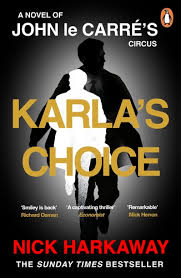
Nick Harkaway – Karla’s Choice
Harkaway has even more claim to be ‘in the tradition of John le Carré’, as he is his son, and Karla’s Choice is explicitly placed in George Smiley’s timeline. His narrative voice is perfectly pitched and it is a worthy addition to the le Carré opus, as well as a fine thriller in its own right.
Robert Harris – Precipice
Based on the correspondence between PM Henry Herbert Asquith and posh socialite Venetia Stanley, just before and during the early part of WWI, this uses Harris’ genius for painstaking research that is then worn lightly to allow his characters to live and breathe. There is real suspense here, but emotional depth too, and whilst I wanted to shake both Herbert and Venetia, Harris made me care about them both.



Mick Herron – Down Cemetery Road
The first in a new series by the author of the Slow Horses books. That was a sufficient recommendation, and this is a cracking thriller, with two female leads, so having thoroughly enjoyed this one I will now be following Zoe Boehm as well as the Slow Horses (in print and on TV).
Claire Keegan – Small Things Like These
Like Foster, the scale is small, low-key, as the title suggests, but so powerful. Like Foster, which was filmed as The Quiet Girl, this was made into a wonderful film (see my Screen reviews). Most readers will realise that the context is the history of the Magdalen laundries and their abuse of young unmarried mothers, but the protagonist does not at first see, partly because trust in the institutions of the Church is so strong in the community. The novella allows us to share his realisation and the clarity he reaches about his own responsibility. It’s beautifully written, and very moving.
Min Jin Lee – Pachinko
Epic historical novel spanning the period 1910 to 1989, following generations of a family from Korea to Japan and the US. Compelling and fascinating – so much history that I wasn’t aware of as well as insights into Korean and Japanese culture, and the characters are well drawn and engaging.
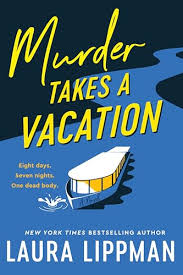
Laura Lippmann – Murder Takes a Vacation
I love Laura Lippmann. And I now LOVE Muriel Blossom. She is my new best friend and I want to go on cruises with her (though I might hope they’re slightly less eventful than this one). She is my age and widowed, and insecure about her size and appearance, but immensely capable, perceptive and clever and I hope this is merely the first of her escapades, as I foresee a feast of thoroughly enjoyable, witty and entertaining mysteries.
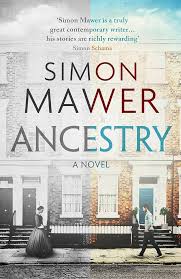
Simon Mawer – Ancestry
Mawer died this year, aged only 76. It’s a real loss – he isn’t half as well known as he deserves to be. Ancestry will thus be his last novel, and it’s a fine one. The title is quite literal, and refers to his own ancestors, whose history he pieces together from the documentary evidence and other traces of their lives. It’s described on his website as ‘an investigation into the reality of the past and an exploration of that uncertain borderland which lies between fact and fiction’. The lives that emerge are vibrant, perilous, harsh and enthralling.
Maggie O’Farrell – Hamnet
I have enjoyed everything I’ve read by Maggie O’Farrell, so it’s odd that it has taken me until now to read this one. Perhaps I sensed the intensity of the grief in the book and wasn’t ready for it. I’m still not – and I know that this particular grief, the loss of a child, is something that I could never be ready for. In our time, the death of a child seems to be an overturning of the natural order of things, even if in Shakespeare’s time and into the 20th century it was, in a way, normal – families did not assume that all children would make it to adulthood or even survive their birth. In any era, I imagine, the death of a child would be felt to be a failure of our fundamental responsibility as parents to keep them safe, and I think we may assume too readily that the frequency of childhood deaths meant that parents did not experience the shock and trauma as we might do today. All of that is here in the book. The context, that it is Shakespeare who is the grieving father, adds another dimension, but he is so much absent, and it is Agnes/Anne who is at the book’s heart.



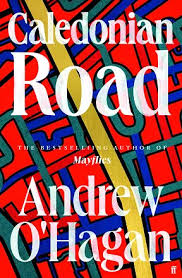
Andrew O’Hagan – Caledonian Road
O’Hagan takes Caledonian Road (the Cally) as his starting point and creates a web of connections, such as between the white male academic Campbell Flynn and his student Milo, and through those connections, many of them unexpected, builds a picture of the state of the nation, post Brexit, post Covid, which is richly characterised, full of humour and humanity. It’s been described as Dickensian, inevitably but not inaccurately.
Ann Patchett – Tom Lake
This moved me immensely. It’s about the way we think about our past, I guess, the way we mythologise and edit it even for ourselves, and so much more for others, to protect them or us. Patchett writes her characters with such warmth – tenderness even – and humour that one cannot help but care what happens to them. The narrative is built around Thornton Wilder’s play, Our Town, which is I think a great deal better known in the US than here – certainly I had never read or seen it. It’s obviously not essential to have done so, but Patchett’s afterword tells us that she hopes that it will take us to Our Town, whether on a return or a first visit. And so I tracked down a YouTube video of a production from 2003, with Paul Newman in the Stage Manager role. I’ve reviewed that in its own right on my Screen blog but suffice to say here that whilst initially I thought it might just be a bit too folksy, by the end I was moved very deeply and can understand the play’s longevity, not just in terms of performances but in terms of its impact on audiences and performers. I hope to return to the book, having seen the play.
Philip Pullman – The Rose Field (Book of Dust III)
I’ve been waiting for six years for this. I did toy with the idea of re-reading everything up to this point before I launch into the final volume, but could not wait. Pullman is drawing the threads together with immense skill and what feels like love, from all of the previous volumes in both trilogies – indeed, the movement of narrative and people in this volume is all about convergence, and there’s enormous tension and peril involved. Not all the threads are tied up. As the Guardian reviewer says, ‘The Book of Dust is a story for grownups, not children, and storybook endings are another casualty of the putting away of childish things. “There are no endings,” said Hilary Mantel on the final page of Bring Up the Bodies; “they are all beginnings.” Pullman draws his great matter to a close, but he’s clear that his characters, and their stories, will continue without him – that the end of his book marks the start of their next chapter. “We need the things we can’t explain, can’t prove, or else we die of suffocation,” says Lyra, towards the end of the novel. With The Book of Dust, Pullman has given us room to breathe.’
Jane Sanderson – Mix Tape
I’m not often particularly taken with romantic fiction, but this is lovely. I saw the dramatisation (see my Screen blog) before I read the book, and its USP is the same, that this is a love story with a soundtrack, chosen by the boy and girl, and shared via the good old-fashioned mix tape. (Do people share Spotify playlists these days as a romantic gesture? Must ask a young person.) Interestingly, there is a key plot difference between the novel and the TV series – unsurprising, as it’s rare for anything to make that transition without tweaks – which could be seen as shifting the sympathies towards or away from the lovers. I can’t really say any more without spoiling both the book and the TV series, but I think if you know both, you’ll get what I mean.
Vikas Swarup – Q&A
This was loosely adapted into the hugely successful Slumdog Millionaire. The trajectory of the protagonist towards his participation in the prize quiz very broadly provides the film’s narrative, but the book is much less romantic than the film. Both are excellent in their own right, and Swarup endorsed the film, recognising that it was and needed to be differentiated from the book.
Ngugi wa Thiongo – Weep Not, Child
The edition I have of this is credited to James Ngugi – he subsequently rejected this colonial name. It was his debut, published in 1964 in the Heinemann African Writers series, partly thanks to the support of Chinua Achebe. (My parents collected some of these titles whilst we lived in West Africa in the ’60s – my copy is inscribed ‘Hallett. 1965’, in my father’s handwriting.) The series was designed to produce paperbacks by black African writers, ‘attractively designed with high quality production, and sold at a very cheap price’. The novel’s plot – which has strong autobiographical elements – focuses on the trial of Jomo Kenyatta (referred to simply as Jomo), and the rising activities of the Mau Mau. Ngugi’s novel was not only his debut but the first novel by an East African to be published in English, and it’s a powerful account of that era of colonial history. Ngugi wa Thiongo died in February 2025.



Colm Toibin – The Magician
Toibin here provides a fictionalised biography of Thomas Mann, during the period of the rise of the Nazi party in Germany, and his exile first in Switzerland and later in the US. It’s a fascinating life, and he is surrounded by fascinating people, not least in his own family. It’s the family that is the real focus of the novel, rather than exploring Mann as writer; here he is father, brother, husband – and yearner after young men. But there’s another strand which is equally fascinating – how various political factions want to and attempt to use his fame and his rhetorical powers for their own purposes, before, during and after the war.
Richard Wright – The Man Who Lived Underground
This was written in 1941-42, between the publication of Wright’s first major success, Native Son, and his memoir, Black Boy. It was rejected for publication, and only appeared in Wright’s lifetime in a collection of short stories, in a truncated and significantly altered form. It was only in 2021 that the full text was published. It is a remarkable and fascinating narrative. The black protagonist is falsely accused of the murder of a white couple, and goes on the run, finding shelter underground. He uses the network of sewer tunnels to move around the city, surfacing briefly in various buildings where he sees glimpses of life and of the way the city works. It reminded me a little of Colson Whitehead’s The Underground Railroad, where the railroad is both a metaphor and a physical reality. Here, as the Kirkus reviewer puts it, ‘A series of allegorical, surrealistic set pieces ensues as Fred explores the nether reaches of a church, a real estate firm, and a jewelry store. Each stop is an opportunity for Wright to explore themes of hope, greed, and exploitation.’ It’s about race – Fred is accused of the murder because he is a black man in the vicinity when a white couple is killed, and the police are happy to pin it on him – but it’s also a wider analysis of American life.
Poetry
Several of the titles below are from the estimable Longbarrow Press, based in Sheffield, and who produce beautiful books, from some fine contemporary poets, which I’m privileged to have hand-delivered as I live within walking distance from their home (by the standards of the publisher, a prodigious walker). An evening of poetry at Crookes bookshop Novel, with readings by various Longbarrow authors, is the primary reason why there’s more poetry in this half-year review than usual. I’ll try to keep that up. Dabydeen, Greenlaw and Hayes are non-Longbarrow poets.
David Dabydeen – Turner
I was prompted to read this after seeing the Turner painting which was Dabydeen’s inspiration for the title poem in this collection – Slavers Throwing Overboard the Dead and Dying—Typhon Coming On (1840), more commonly known as The Slave Ship – in an exhibition which drew attention to its context in the history of the slave trade. I hadn’t previously seen the figures and the chains in the water – having seen them now I cannot imagine how I failed to do so before. Dabydeen has depicted a notorious and horrific case where a slave ship had to jettison some of its human cargo in a storm, and then attempted to claim on their insurance for the loss of their assets. The poem burns off the page. And if one thought the poet might have welcomed Turner’s portrayal of a shameful episode in the history of that shameful trade, he does not, concluding that the intensity of the painting shows that ‘the artist in private must have savoured the sadism he publicly denounced’. This has been a controversial take and a troubling one. But it’s not an objective – or provable – position and does not need to be. Dabydeen is Guyanan and as he explained in an episode of David Olusoga’s recent Empire series, his ancestors, whilst not slaves, were transported from India as indentured labourers, so were part of that whole history. That he identifies with the Africans struggling in the water rather than the man who painted them is hardly surprising.
Pete Green – A Sheffield Almanac
‘A poem in four chapters about rivers, rain, relocation and regeneration, exploring the industrial past and post-industrial future of Pete Green’s adopted home city.’ It’s my adopted home city too and I loved the poem. It was a joy to read and will be a joy to re-read.
Lavinia Greenlaw – The Built Moment
This 2019 collection is centred on poems exploring Greenlaw’s experience of her father’s dementia and death. That is what drew me in, and the writing is extraordinarily tender and moving. I will go back to these – my own experience is probably too recent to allow much perspective.
Terrance Hayes – American Sonnets for my Past and Future Assassin
Again, I need to re-read these, but whilst I found some of the poems hard to engage with there was plenty there to absorb and move me. Anger, and hope too. ‘In seventy poems bearing the same title, Terrance Hayes explores the meanings of American, of assassin, and of love in the sonnet form. Written during the first two hundred days of the Trump presidency, these poems are haunted by the country’s past and future eras and errors, its dreams and nightmares. Inventive, compassionate, hilarious, melancholy, and bewildered – the wonders of this new collection are irreducible and stunning.’



Martin Heslop & Helen Tookey – To the End of the Land
I read this whilst listening to the CD, where the words are interwoven with recorded sounds both musical (fragments from Nova Scotian folk songs) and natural. The poem explores ‘The layered histories and complex geography of Nova Scotia – its mountains, mines, lakes and bays … To the End of the Land investigates this remarkable landscape, and draws out the voices – under the seabed, under the storm – that animate it all.’
Rob Hindle – Sapo
What links these poems, composed over about a decade, is a fascination with words and the slipperiness of their meanings, and the natural world, whether the eponymous toad (sapo means toad in parts of Latin America, along with various other meanings), the birds from the Observer’s Book of Birds, or the landscape of the North Yorkshire Coast. And there’s another thread too, about plague, in our times and in the Derbyshire village of Eyam 360 years previously. They’re all, to quote Hindle, earthly or rooted. I loved Hindle’s earlier collection, The Grail Roads, and am loving this one.
Chris Jones – Skin
‘Skin is a book of bonds, reaching back, reaching out; a sensory exploration of the world we inhabit and try to make sense of.’ I heard Jones read some pieces from this collection at a Longbarrow poetry evening, and knew I wanted to read them all. I’d previously read and loved his earlier collection, Little Piece of Harm.


Non-Fiction
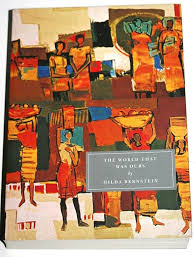
Hilda Bernstein – The World that was Ours
Bernstein’s autobiographical account of the period between the Sharpeville massacre and her family’s flight to Botswana following her husband’s acquittal in the Rivonia trial, is as tense and gripping as any thriller. The political climate of the time – justice skewed inexorably against the defendants, constant surveillance – is vividly described, from the perspective of the defendants and their supporters, but also from Bernstein’s perspective as a woman torn between her personal responsibilities as wife and mother and her political activism. Beautifully written.
Tobias Buck – Final Verdict: A Holocaust Trial in the 21st Century
This is more than an account of what must be one of the very last Holocaust trials, that of Bruno Dey, a former camp guard at Stutthof. Buck analyses the way in which these crimes have been tried, from Nuremberg onwards, and how the desire to move on from that hideous past, and the difficulty in ascribing individual guilt to a collective system of murder, has resulted both in leniency for many who took part in mass murder, and in the spectacle of very elderly men in wheelchairs being called to account for events they may barely remember. It’s fascinating and thought provoking.
Jenny Cathcart – Notes from Africa: A Musical Journey with Youssou N’Dour
This is not solely about N’Dour, though he is at the heart of Cathcart’s ‘notes’, and she clearly holds him in very high esteem. The problem is that there is not enough analysis of the music (I know, dancing about architecture and all that, but still, there are things one can usefully say about how the music works), and when it comes to N’Dour as a person and as a politician, a bit more critical distance would have been welcomed. However, it gives a flavour of the music that N’dour has done so much to bring to wider Western attention, and introduced me to some less familiar names.
Edith Eger – The Choice
Eger is not only a Holocaust survivor but a psychotherapist specialising in PTSD, and the book uses her personal story of recovery (far from a linear, simple process) to suggest that there are choices one can make in how one responds to trauma. She doesn’t oversimplify the issues, and doesn’t claim to have all of the answers. It’s a powerful read.
Mary Lovell – The Mitford Girls: The Biography of an Extraordinary Family
The family is endlessly fascinating. This biography is the basis for the TV series Outrageous (see my Screen blog) and I think tends to soften some of the political stuff – Lovell sometimes tries to be even-handed by balancing Unity’s (and other family member’s) Nazi sympathies against Jessica’s communism, but it’s not an entirely fair comparison as a great deal more was known about the Nazi regime at this stage (pre-WWII) than about the reality of Stalinist repression. Other sources do seem to suggest that the parents and their son Tom had fascist leanings, to say the least, which is barely hinted at here.
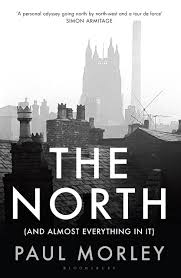
Paul Morley – The North (and Almost Everything in it)
I used to read Morley in the NME back in the day, and his style is still recognisable in this very entertaining and idiosyncratic volume, though he’s not strenuously trying to prove how clever he is these days. It’s a personal view of the north, which means that Reddish in Lancashire gets a lot more attention than any objective account would afford it, but that’s fine. It also means that the focus is more heavily – though far from exclusively – on what I think of as the other side of the Pennines. Morley’s personal story progresses chronologically in the normal way, whilst his historical and biographical vignettes start around now and go back through the decades and the centuries. This is sometimes disconcerting. Also disconcerting is that the photographs which interrupt the text seem to have been placed entirely randomly (out-Sebalding Sebald) and one would have to consult the index to find where their significance is described. It’s all most enjoyable and I had to keep a notebook to hand to jot down names and book titles as I went along.


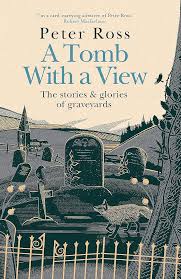
Peter Ross – A Tomb with a View: The Stories & Glories of Graveyards
I do love a graveyard. ‘So we go inside and we gravely read the stones/All those people, all those lives, where are they now?’. I remember visiting the graves in Cobham churchyard in Kent which inspired the early graveyard scene in Great Expectations – tiny stone lozenges representing infants lost at birth or soon afterwards. And I browsed happily in Pere Lachaise and Montparnasse, finding so much French history on the stones and mausoleums, not just famous names. So Ross’s book is a joy, full of interest, and of unexpected humour.
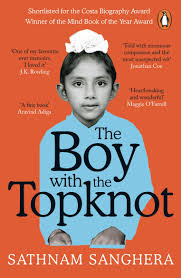
Sathnam Sanghera – The Boy with a Topknot: A Memoir of Love, Secrets and Lies in Wolverhampton
A profoundly moving memoir. Sanghera started to write to explain (to himself and to his family) why he was not intending to marry a Sikh girl, and indeed had had white girlfriends, but alongside recalling his own childhood and adolescence he has to address the puzzle of his father’s mental health. This is traumatic, for him and far more for his mother, who tells him of the early days of her marriage, before her new husband’s medical condition was diagnosed and treated. And through that he realises that his sister too suffers from schizophrenia. All of this emerges against the grain of Sikh Punjabi culture, which doesn’t do a lot of talking about feelings, and for which some of the truth that emerged was seen as shameful. Above all, it’s a deeply loving book.
Rebecca Solnit – Orwell’s Roses
Solnit is always a rather discursive writer, at the same time as being incisive and perceptive, and that’s part of the pleasure of reading her. As a reviewer for the Irish Times points out, in this book the structure reflects the organic, rhizomatic forms that Solnit discusses in relation to plants: ‘her topics … spurt and grow from one another in seemingly random yet contained patterns’. I wasn’t entirely persuaded – perhaps I just wasn’t receptive to the theme of roses and gardens and found the links sometimes a little tenuous. Nonetheless, there was a great deal of interest and enjoyment here.
Jamie Taylor – Studio Electrophonique: The Sheffield Space Age, from the Human League to Pulp
The story of Ken Patten, who set up a recording studio in a council semi in Handsworth (Sheffield), in which a generation of Sheffield musicians (most notably, but not only, Human League, ABC and Pulp) got their first chance to experiment with the electronic sounds that would make them so successful. This is a hugely entertaining account, rather charming and often very funny.
Stephen Unwin – Beautiful Lives: How we got Learning Disabilities so wrong
This is a remarkable book. It’s both authoritative in its treatment of the history of attitudes to learning disabilities, and deeply personal as the author talks – with so much love and respect – about his learning-disabled son. At times it is horrifying, and deeply shocking, but throughout there is a focus on the people with learning disabilities themselves, and he never loses hope that we can be better at understanding and supporting people in ways that recognise, respect and value who they are and what they contribute. I should declare a personal interest. I am the chair of an organisation, Under the Stars, that works with adults with learning disabilities and/or autism through music and drama, and this is a subject about which I feel strongly, and easily become emotional when I think of the people I know being – at best – marginalised, ignored, unheard. We – and many more organisations these days – put the individuals with learning disabilities at the centre of what we do. If they want to perform on stage, they won’t be fobbed off with a backstage role. And they shine. I’m grateful to Stephen Unwin for this illuminating and inspiring study.
Rebecca West – Black Lamb & Grey Falcon: A Journey through Yugoslavia
This is a monumental tome. And it needs to be, to capture even a part of the complexity of Balkan history, culture and politics. The book is based on West’s diaries of her travels in Yugoslavia in 1937, and was published in 1941 with an epigraph ‘To my friends in Yugoslavia, who are now all dead or enslaved’. It’s brilliantly written, full of wry asides and vivid characterisations, and I wish I thought I could hold in my head even a fraction of what I’ve read about the history of those countries, but I know I won’t. I will read more, and try to understand more, since – as West makes clear when she writes about the First World War and earlier history, and as became clear again to us after the disintegration of Yugoslavia and the conflicts that followed – the story of these nations is both vitally important and incredibly complicated.


As always, my reading has taken me across continents and centuries, from very close to home (Sheffield, late 1970s), to Yugoslavia in the late 30s, 16th century Stratford on Avon, colonial Kenya, Korea and Japan, and the vividly imagined alternative worlds of Philip Pullman. I always struggle to pick ‘bests’, since the books I’ve read are so varied in genre, style, subject matter and era, but if pressed (I do realise that I am the only one doing the pressing) I would pick Hamnet and The Man who Lived Underground in fiction, Chris Jones’ Skin in poetry, and Stephen Unwin’s Beautiful Lives in non-fiction. This year we mark the passing of two writers featured here, Ngugi wa Thiongo and Simon Mawer, and a writer who I read some years ago, and met when we both worked at Sheffield Hallam University, Marina Lewycka, author of A Short History of Tractors in Ukrainian.


2025 Reading: The First Half
Posted by cathannabel in Literature on June 26, 2025
A nicely eclectic list this half year, traversing the continents and the centuries. Our protagonists move between Nigeria and the US, from Nigeria and Trinidad to London, from Victorian Bath to Borneo, from Somalia to Cardiff. Eneas McNulty travels the world, and migrants from all over the world settle in Linda Grant’s Stranger City of London. We visit Saigon as it falls, mid-19th century Paris, Victorian London and a Swiss village at the beginning of the 20th century. And then there’s a dystopian vision of a future USA, set in 2025… Several authors were new to me, and I hope to read more from Claire Fuller, Philippe Claudel, Emma Stonex, Nadifa Mohamed, Aaron Philip Clark, Chibundu Onuzo and Viet Thanh Nguyen. In addition to those reviewed, a cluster of excellent new crime from authors I turn to regularly: Vaseem Khan’s The Lost Man of Bombay, Luke McCallin’s The Pale House, Russ Thomas’ Sleeping Dogs, Elly Griffiths’ short story collection The Man in Black, Cath Staincliffe’s Fire on the Fells and Jane Casey’s The Secret Room.
Chimamanda Ngozi Adichie – Dream Count
I’ve been waiting so long for this! And it was worth the wait. Adichie introduces us to four women, whose lives intersect in various ways, Chiamaka (“Chia”), Zikora, Omelogor and Kadiatou. She has said that ‘the point of art is to look at our world and be moved by it, and then to engage in a series of attempts at clearly seeing that world, interpreting it, questioning it’ and that’s what she does here through these four lives, which move us but also challenge us. The Guardian’s reviewer said that it is ‘quintessential Adichie: ambitious, astute and powered by an accumulation of feather-light sentences that build to devastating weight’.
Kate Atkinson – Death at the Sign of the Rook
Jackson Brodie’s back, in a witty, sharp and very twisty mystery, that plays with/pays homage to the clichés and conventions of the genre, whilst doing it all supremely well so that we’re fully engaged throughout.
Julian Barnes – The Noise of Time
Brilliant, powerful account of three key points in the life of Shostakovich as he tries to live and create under Stalin. Each is rendered so vividly that we can’t take refuge in our own notions of what he ought or ought not to have done. The image of the man waiting outside a lift with his suitcase each night as he expects to be taken away is one that stays with me. But also the humiliation of giving the speech that has been written for him to an audience on a trip to the US, summed up in this passage: ‘There were those who understood a little better, who supported you, and yet at the same time were disappointed in you. Who did not grasp the one simple fact about the Soviet Union: that it was impossible to tell the truth here and live’.
Sebastian Barry – The Whereabouts of Eneas McNulty
This is wonderful, and heartbreaking. Eneas is an exile, condemned to wander the world because of a judgement passed on him in his hometown of Sligo, which he knows will never let him go. It’s beautifully, lyrically written and whilst its ending is tragic it also conveys a kind of peace.
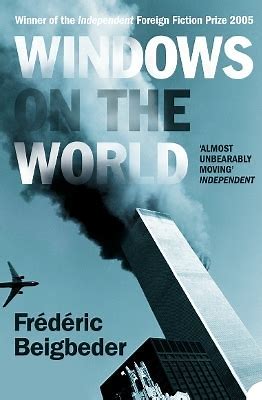
Frederic Beigbeder – Windows on the World
Two voices here, the first of a father who is with his sons in the Windows on the World restaurant in the World Trade Center when the planes hit, and second a writer – presumably Beigbeder himself – who is attempting to find a way to write about the attack but daunted by the impossibility of the project. I didn’t warm to either of them and there was quite a blokey, verging on misogynistic strain in both narratives which was off-putting. Did it work? I don’t know – there were certainly moments in the restaurant which hit pretty hard, and which – for good or ill – made one realise what it might have been like being there as the tower burned, both in terms of the physical effects and the emotional. But overall I was not convinced, and the musings of the author or his surrogate were so cynical and self-absorbed that they undercut the power of the other sections.
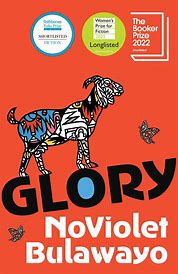
NoViolet Bulawayo – Glory
I struggled with the basic concept here. Perhaps I have an overly literal mind, but I couldn’t help but attempt to picture the various goats, zebras, horses, etc driving cars, wearing clothes, and so forth, and it didn’t make sense to me and trying to deal with that was a distraction from the plot and the characterisation. It was engaging and darkly funny, but I’m not convinced that the conceit really works, or what its purpose was.


Octavia Butler – The Parable of the Sower/The Parable of the Talents
Dystopian fiction, written in 1993 but set, rather unsettlingly, in 2025 – the threat here is from (a) climate change and (b) human beings, and it deals very effectively with racial and gender politics too. Compelling and fascinating, and the sequel doesn’t just take events further, it questions the account given in the first book, bringing in other, sometimes sceptical voices, which adds real depth.
Jacques Chessex – Le Vampire de Ropraz
Based, apparently, on a real case from 1903, and written in a very detached, pared down style (it reminded me a little of Heinrich Boll’s The Lost Honour of Katharina Blum, one of my favourite novels ever), which doesn’t spare the horror of the crimes or come to conclusions about guilt or innocence, but dwells rather on the response of the villagers and their eagerness to pin the crime on someone who fits their assumptions, regardless of actual evidence.
Aaron Philip Clark – Under Color of Law
Spike Lee is quoted as saying (I haven’t managed to track down the source or the context) that everything that happens in the US is about race. And this crime thriller – like those by Attica Locke, and the ‘Darktown’ trilogy from Thomas Mullen – makes that point powerfully. It’s a dark, tough story, beginning with the murder of a young black police recruit, and very well told.
Philippe Claudel – Le Rapport de Brodeck
We are somewhere in Europe, where people speak a language that sounds Germanic but isn’t quite German, after a war that must be WW2, and something has happened, a violent incident involving a stranger in a village miles from anywhere, which brings to the surface trauma, prejudice, fear and guilt from the past. Brodeck has been tasked with writing a report of the ‘incident’, a project which he knows will threaten his own place in the village. Absolutely gripping.
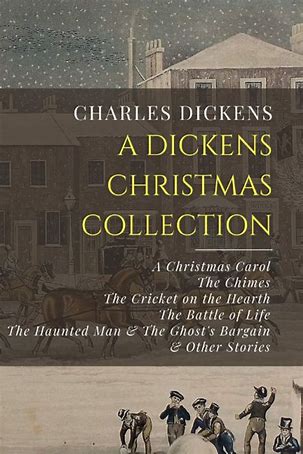
Charles Dickens – The Chimes/The Cricket on the Hearth/The Battle of Life
I re-read A Christmas Carol first, and it was just as wonderful as I had remembered. These lesser-known Christmas stories are a bit harder going, with an over-reliance on melodramatic plot devices and a fair dollop of Dickensian sentimentality and piety.
Janice Elliott – Secret Places
For absolutely no good reason, Janice Elliott is pretty much forgotten and her books out of print. Someone should fix that. I read several of her novels back in the 80s and this one re-appeared from years of exile in the attic and demanded to be re-read. It is subtly and beautifully written, set in a girls’ school during WW2, and concerning the arrival of a German refugee, who generates both fascination and suspicion. I have only just discovered that there is a film of this, which I’d love to see, but I suspect is just as mired in obscurity as Elliott’s books.



Buchi Emecheta – Second Class Citizen
Semi-autobiographical account of an Igbo girl’s struggle to get a proper education in Nigeria, and then to make a life for herself in Britain, facing not only racism but sexism and the dead weight of a feckless husband. Adah has dreams that she holds on to tenaciously in spite of everything, and whilst there is much to fuel anger in the narrative, there’s also hope (not least in the subsequent success of Emecheta herself).
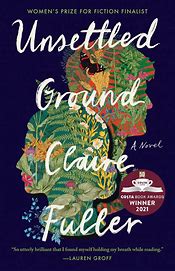
Claire Fuller – Unsettled Ground
It starts with a death, the death of a mother, leaving her children as orphans. These orphans are twins, and they’re 51, but they’ve lived in seclusion from the world, and they have to deal not only with this loss, but with the threat of homelessness, and with the necessity of now dealing with the world that they’d largely shut out all their lives. It’s beautifully done, and makes us see contemporary life through their eyes, the impossibility of navigating a world where everything is complex and everything requires connection. Ultimately, as the Guardian’s reviewer says, ‘Jeanie’s refusal to relinquish her tenuous hold on all the things she loves carries the reader with her on a frightening and uncomfortable journey to the truth, and the possibility of starting again’.
Robert Galbraith – A Running Grave
An improvement on Ink Black Heart, with a compelling plot. The main problem with this one (and I’m not having a go because it’s JKR, honestly, but as one of the most successful writers of our time, she shouldn’t be immune from criticism either) is her penchant for rendering people’s accents in the dialogue. This is off-putting and largely unnecessary, and the effort of trying to ‘hear’ that person’s voice in Rowling’s rendition of their accent is a massive distraction. Apart from that, it’s a decent crime novel.
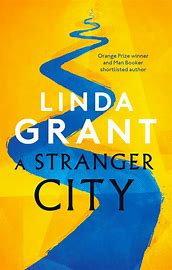
Linda Grant – A Stranger Town
Very me, this one. A polyphonic novel of a labyrinthine city. Dickensian, from its opening scene as a corpse is dragged from the river. It plays with fantasy at points, it alludes to Brexit as the source of anxiety about the future for a city of migrants. The Guardian says: ‘the real achievement of A Stranger City is the way in which its narrative is as fractured and uncertain as the London it portrays. And despite its contemporary relevance, the novel avoids becoming a “state of the nation” tract – it’s far too emotionally intelligent for that. It’s as much a novel of feelings as ideas, and this is what makes it a compelling read. At its heart is the need for belonging, something we all share yet can put us at odds with each other. At a time when dangerously inert notions of national identity are on the rise once more, Grant reminds us that humanity is a migrant species: we are all strangers.’
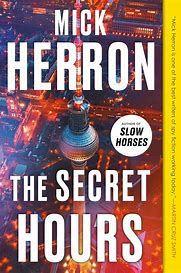
Mick Herron – The Secret Hours
We’re in the world of Slow Horses, but kind of adjacent to the series – the book stands alone, but if you know, you’ll recognise a number of key players, seen as if from a different angle. It’s very cleverly done, very funny, and dark too.
Susan Hill – In the Springtime of the Year
I remember reading this, probably in my early 20s, and that my Mum read it too, and both of us loved it. I recalled one scene in particular, a young woman hanging out washing who suddenly feels appalling desolation and pain and knows that something has happened to her husband. Reading it now, I’m even more moved by the totally convincing depiction of sudden widowhood but also how the process of grief is tied up with the changes in the seasons and the rhythms of ongoing life.



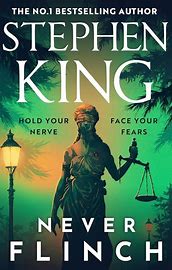
Stephen King – Never Flinch
This doesn’t exactly break new ground for King but never mind about that, it’s King on form. This one features Holly Gibney, who we first met in the Mr Mercedes trilogy and subsequent novels that sometimes venture into the supernatural (or, one might say, sometimes the supernatural lurks just out of view, or whispers just out of earshot), sometimes not. But as with all of those recent novels, they’re brilliantly done, they make you care and make you keep turning the pages, and it’s good to see that he’s still on top of his game.
Ian McEwan – Lessons
I have reservations. First of all, the somewhat clichéd plot trope of a schoolboy being seduced by a beautiful mature woman doesn’t quite convince, even though the damage (to both parties) is explored sensitively and intelligently. Secondly, and I fear this is another example of some writers being too big to copy-edit, McEwan gives his teenage protagonist, in 1962, cultural reference points that were at least a year premature. I checked some of the details quickly on Google and Wikipedia – surely, he could have done that, or his publisher could have done that? I know I get perhaps disproportionately annoyed about such things but when I read anachronistic or otherwise inaccurate stuff like this it takes me instantly right out of the narrative. It seems lazy, and arrogant. In this instance, the timing was clearly very significant, because it is the tension around the Cuban missile crisis that informs some of the key events. So why not make sure that your cultural reference points make as much sense as the political ones? Apart from that I quite enjoyed it. He can write, obviously, but it isn’t the first time I’ve felt rather cross whilst reading McEwan, for similar reasons.
Nadifa Mohamed – The Fortune Men
This is based on the real case of a Somali man wrongly arrested for murder, and ultimately hanged, having failed to get anyone to really listen to him – and having failed to understand how the system would work and to make it work for him. Mohamed not only inhabits the central character, Mahmood Mattan, but the family of the murder victim too. She brings to life the multiethnic community of Tiger Bay in the early 1950s, and the inflexible legal system that refuses to listen to or see the injustice it is perpetrating. Interestingly, I watched an excellent dramatisation of the Ruth Ellis case (see my screen blog) – not a miscarriage of justice in the same way, since she unquestionably did it, but another illustration of how once the legal system has decided, it cannot allow itself to admit that a mistake is being made. And a reminder, should we need it, of how mistakes and miscarriages are unundoable when a sentence of death is carried out.
Abir Mukherjee – Hunted
We’re a long way from the Raj (the setting for Mukherjee’s Wyndham & Banerjee crime series) in this stand-alone thriller – it’s a gripping read, starting with a terrorist attack on a shopping mall, and following the search for the perpetrators by the FBI and other agencies, and (for different reasons) by the parents of two of those implicated. Nothing is as it at first seems, and things get very complicated, but Mukherjee never loses control of his story, and it has both tension and heart.
Thomas Mullen – The Rumor Game
Set in 1942 in Boston, Mass., where a newspaper writer specialising in debunking rumours and an FBI agent find themselves working together against the activities of anti-semitic organisation the Christian League (fictional but based on real organisations of that ilk at the time). Both protagonists are outsiders, the reporter because she’s Jewish and the FBI man because he’s a Catholic. Mullen’s Darktown trilogy, about black cops in Atlanta in the late ‘40s/early ‘50s conveys brilliantly the sense of always being hyperalert that comes from being the representative of a minority within an organisation and within the wider community, and The Rumor Game is just as skilful and compelling.
Irene Nemirovsky – Le Maitre des Ames
Nemirovsky’s own story (a Russian Jewish emigrée to France, arrested, deported and murdered in Auschwitz by the Nazis) and the story of her last, unfinished book, Suite Francaise, not published until 2004, tend to overshadow her earlier, very successful publications. This one was published in 1939, before the Nazi Occupation. Her protagonist is an immigrant from Eastern Europe, struggling to make ends meet as a doctor, but with a burning conviction that he can be successful, at whatever cost. He’s not exactly a sympathetic character but Nemirovsky makes him comprehensible, pitiable at times, and his situation is vividly conveyed. She’s a sharp, some say cruel, writer – some of the peripheral characters in Suite Francaise too are almost monstrous, though always depicted with humour.


Viet Thanh Nguyen – The Sympathiser
The fall of Saigon and the Vietnamese diaspora through the eyes of a Viet Cong agent (this isn’t a spoiler, he tells us right at the start that he’s a spy/spook, a man with two faces). This is brutal, but brilliant, and often very funny. The description of the fall of Saigon and the desperate attempt to get out as bombs fall on the runway is stunningly powerful, and thereafter the narrative takes us to unexpected places – and an unexpected resolution.
Chibundu Onuzo – Sankofa
Onuzo’s protagonist is a middle-aged woman, recently separated from her husband, and having lost her mother. She’s the daughter of a white mother and Bamanian father (Bamana being a fictional West African country), and the questions about her identity with which she has wrestled all her life have suddenly become more urgent. This leads her on a quest for her father, whose name she now knows, through diaries she finds amongst her mother’s things. Her father is a fascinating character, full of contradictions, all of which Anna has to navigate. Excellent.
Ann Patchett – Run
Two family groups heading out to a public lecture, and for reasons we don’t at first realise, on a collision course with each other. The reasons emerge fairly quickly but the outworking of this connection is what drives the narrative. It’s subtly done, beautifully written, and as always with Patchett, there’s warmth and hope.
Donal Ryan – The Queen of Dirt Island
A family saga, focusing on female resilience across four generations. It’s full of opposites, as the Guardian review says: compassion and cruelty, fragility and strength, joy and despair. The writing is musical, but never shies away from brutality either. Deeply moving and memorable.
Sam Selvon – The Lonely Londoners
This 1956 novel is gloriously polyphonic, musical, using the rhythms of Caribbean speech to portray the lives of Windrush generation immigrants as they navigate life in London, trying to reconcile their hopes and dreams to its drab and often hostile reality. It’s frequently funny, but very touching as well. A delight.
Georges Simenon – Le Passage de la ligne
An odd book. I think I’d picked it up second-hand years ago, assuming it would be a Maigret, and finally got around to reading it, having realised it wasn’t. The protagonist is hard to identify with, because he doesn’t really engage with other people except in a transactional sense – he shows no signs of empathy or even sympathy, and some of his behaviour is not only morally dubious but repellent. I am still not sure what it was all about – it reads like a confession, a statement of his life, or even a suicide note?


Francis Spufford – Red Plenty
Interesting to read this after Julian Barnes’ The Noise of Time, because it took me back to the paranoia and the oppressive party of Stalinist Russia (and beyond). Spufford focuses on the economics of the regime, in an account which sometimes reads like a novel, sometimes like non-fiction, with a LOT of exposition. The latter is sometimes a slog, but he writes it well, and it is often both enlightening and darkly funny. I would also recommend not reading it as an e-book – there is a very helpful cast list at the front of the book, but referring back to it whilst reading on Kindle was rather a faff.
Emma Stonex – The Lamplighters
Inspired by the true story of the disappearance of three lighthouse keepers in 1900, this gothic narrative moves between the lead-up to the disappearance (in 1972), the investigations, and the lives of the women left behind. It’s atmospheric and mysterious, and it leaves us room to take or leave supernatural explanations, because really what it is about is the people, the traumas of their lives, the effects of isolation.
Rose Tremain – Islands of Mercy
Not my favourite Tremain, but she’s far too good a writer for there not to be much to enjoy here. Primarily, the interweaving lives of the female characters, Jane, tall and contrary, a gifted nurse, Clorinda who has made her way from Dublin to Bath to set up a tea room, Emmeline, Jane’s artist aunt and mentor, and Julietta, a married woman with a penchant for female lovers. The men in the story are less satisfactory and the part of the narrative set in colonial Borneo doesn’t entirely convince.
Anne Tyler – Three Days in June
Wonderful. A slightly awkward, abrasive protagonist, dealing with family dynamics at her daughter’s wedding (the three days are the eve of the wedding, the wedding itself and the morning after). It’s very funny, and very touching. I should note that whilst I read it only a few weeks before my own daughter’s wedding, my situation and my feelings about it all bear no relation to Gail’s, however much I liked her.
Chris Whitaker – All the Colors of the Dark
Lord, this is intense. The writing is so dense and so evocative at the same time, the characters blaze off the page, the plot is labyrinthine and full of traps for the unwary reader who thinks they can see where things are going. Is that plot entirely plausible – well, no, but it works, nonetheless, and it holds the reader till the final page, after which that reader might need a bit of a lie down. Glorious.
Emile Zola – Au Bonheur des Dames
My first Zola for many years. He was where I began reading French novels for fun, alongside my A level texts, which were a lot less thrilling than Germinal or La Bête humaine (sorry, Maupassant, Balzac and Moliere). The setting here is a huge Parisian department store, whose growth is threatening the small businesses in the area, who can’t compete. A young orphan, with younger brothers in tow, arrives at the home of her uncle, hoping to find work in retail, and is entranced by Au Bonheur des Dames, despite her uncle’s hostility to it.




Non-Fiction
Andy Beckett – When the Lights Went Out: What Really Happened to Britain in the Seventies
I know about the 70s, obviously. They were the years I became first a teenager and then an adult. In 1970 I was 13 and when the decade ended, I was a graduate, in employment, a married woman and a homeowner. And throughout these formative personal times I was always aware of the news, brought up to read the Guardian and watch the BBC’s bulletins every evening, habits I continued long after leaving home. But it’s refreshing to read a history of this period, which fills in the bits I’d forgotten or never knew and looks back with perspective and insight on what I can only remember in terms of how it was presented at the time, or how it impacted on my own life. Beckett writes engagingly and draws on interviews with those amongst the key players who were still living (it was written in 2009).
Anthony Beevor – Arnhem
I’ve read most of Beevor’s WW2 histories – he manages to make the military manoeuvres comprehensible to me and fleshes out the personalities and personal conflicts. This one commended itself to me as I’d just re-watched A Bridge Too Far and was fascinated by the unusual spectacle of an all-star WW2 film depicting what was unarguably a multi-faceted cock up of tragic proportions.
Viola Davis – Finding Me
I hadn’t realised quite how tough a childhood Davis had. She writes about it in a very direct and emotionally open way (did she have a ghost writer? It didn’t feel like it). There’s a bit too much God-stuff for me, but one cannot come away from the book without a massive admiration for Davis the woman as well as Davis the actor.
Jim Down – Life Support: Diary of an ICU Doctor on the Frontline of the Covid Crisis
I read this around the fifth anniversary of lockdown and it is powerfully written, angry and heartbroken. As an intensive care doctor, Down really was on the frontline and it’s essential reading as the memories – at least for those of us who were far from the frontline – begin to fade.
John Elledge – A History of the World in 47 Borders: The Stories Behind the Lines on our Maps
Hugely entertaining and enlightening account of various national borders (past and present), how they came about, how they have changed, how they have been – and are – bloodily fought over.
Goran Rosenberg – A Brief Stop on the Road from Auschwitz
There is a whole literature of the Holocaust that comes from the children of survivors. I’m thinking particularly of Eva Hoffman’s After Such Knowledge and Lost in Translation, Lisa Appignanesi’s Losing the Dead, Anne Karpf’s The War After. This generation had to deal both with their parents’ inability to tell them about their experiences, and with the very evident trauma that their parents lived with every day, and which often distorted family relationships and everyday life. Rosenberg grew up in Sweden, knowing very little of his father’s road to Auschwitz, only of the road he took from it, and has reconstructed that first road, as far as possible, to try to understand the tragedy that was waiting at the end of the second. Powerful and very moving.


Rebecca Solnit – Recollections of my Non-Existence
A memoir of how this remarkable and vital writer found a voice, found a way to exist and be both visible and audible, and to have an impact. It’s tough, heartbreaking, to read of how the relentlessness of violence against women wears down and intimidates even those who have not been directly victims, but Solnit always offers hope, even if it’s hope in the dark.
John Steinbeck – Travels with Charley
Steinbeck’s tremendously engaging account of his road trip in 1960, accompanies by his dog, Charley. It’s a journey of almost 10,000 miles, starting and finishing in New York, and travelling through Maine, the Pacific Northwest, California, Texas, and the Deep South. It’s a most intriguing glimpse of America and Americans, which becomes most disquieting, inevitably, when he reaches the deep South and encounters the hatred and fear that prevailed in those segregated towns – he’s frank about his discomfort and uncertainty about how to deal not only with the racism but how to talk to the black Americans he meets without putting both them and himself at risk of violence. It’s interesting to note, in contrast to his awareness of the evils of segregation, that native Americans are encountered only as a brief historical footnote and whilst this reflects the brutal reality Steinbeck doesn’t indicate that he has given the implications of this any particular thought. But it’s a great read, funny, perceptive and sharp.
Elijah Wald – Dylan Goes Electric! Newport, Seeger, Dylan, and the Night that Split the Sixties
This is the primary source for A Complete Unknown. Whilst the film tinkers a bit, inevitably, with chronologies ‘for dramatic purposes’, it does justice to the protagonists. But the book takes a much deeper dive into the folk scene, as represented primarily by Pete Seeger, and explains why Dylan’s ‘betrayal’ was so explosive. Entertainingly written and fascinating.


2024 Reading – the second half
Posted by cathannabel in Literature on December 6, 2024
My reading this year has been the usual eclectic mix. I normally (normal for me, I hasten to add) have four books on the go at any time. One will be in French, maintaining a fairly recent resolution (so far this half year, de Beauvoir, Gide, Mauriac, Fatou Diome and Francois Emmanuel, of whom the last two were new to me). At least one will be non-fiction. One will be on the Kindle, two will be by my bedside to read before I turn out the light, and one in my library room (currently the French one).
Having brought so many books, half-forgotten in many cases, down from the attic this year, I’m instituting a new ‘rule’ for 2025 – one of the four books will be a re-read. Or, possibly, a first read if it’s one I’ve had for yonks but honestly can’t recall whether or not I did read it (there’s a lot of M’s sci-fi stuff that’s in that category). But there are also books the mere sight of whose covers made me yearn to revisit them. And whilst life is short and there’s so many great new books out there, there are also so many great old books that absolutely deserve to be savoured all over again.
I read a lot of crime fiction, but would not want to be reading more than one in that genre, as clues and corpses could easily get in a muddle. When it comes to crime fiction in particular, I haven’t listed everything I read, not because it wasn’t any good, but because ongoing series are hard to review without just repeating myself about how good, e.g. Elly Griffiths or Val McDermid is.
There are a few books here that slide across genres – Thomas Mullen’s Blind Spots is crime + sci-fi, Leonora Nattrass’ Blue Water is crime + historical fiction. For more straightforward historical fiction the stand-out is Maggie O’Farrell’s The Marriage Portrait. And for books that don’t present us with the world that we know or that existed, or not straightforwardly, there’s Evaristo’s alt history/alt geography Blonde Roots, Mullen, Jenny Erpenbeck’s End of Days which plays around with how death normally operates, and Kate Atkinson’s short stories (see below). I was pleased to discover some new novelists in this batch, notably Nathan Harris, Caleb Azumah Nelson, Margot Singer and Anna Burns – my top books of this half year are Nelson’s Open Water and Burns’ Milkman, and in non-fiction, Paul Besley’s The Search. As always, I try to avoid spoilers, but do proceed with caution.
Fiction
Kate Atkinson – Normal Rules Don’t Apply
I love Atkinson – Life after Life in particular is one of my absolute favourite books. I’m not generally a fan of short stories but these are – as the title suggests – quirky and sometimes baffling, as well as being often very funny, and definitely need to be re-read asap.
Simone de Beauvoir – Les Belles Images
Reading this, I felt as if it should be one of those French films where elegant people sit around talking about ideas, when they’re not sleeping with each other’s partners. Isabelle Huppert should be in this. I’ve not found it an easy read, partly because the narrative voice switches between our protagonist Laurent, and a narrator, without the distinction always being clearly made on the page. It’s short on event (another reason why it should be one of those French films), very introspective. Worth persevering, because it’s intelligent and perceptive and sharp, and the discussions they have are still pertinent fifty years on.
Mark Billingham – The Wrong Hands
The second in his new Declan Miller police procedural series. Miller is infuriating, but funny and human (though I’m not sure he’s quite different enough from Tom Thorne, about whom the same things could be said), and the crime here is woven together with his own search for truth about the death of his wife, which gives it a lot of heart.
Anna Burns – Milkman
I’ve been meaning to read this for a long time – urged on by my Belfast-born sister-in-law in particular – and I’m so glad I did. It’s darkly funny and terribly sad and horrifying and the people in it blaze with individual life, despite not being named.
Candice Carty-Williams – People Person
I loved her debut, Queenie but this didn’t quite work for me. It started off brilliantly, with the crackling dialogue that was so enjoyable in Queenie, and the deft characterisation of the group of half-siblings and their hopeless father. But the event that dictates the rest of the plot and what flowed from it just seemed so improbable, and then it all got resolved rather too neatly. A lot to enjoy along the way but flawed.
Fatou Diome – Le Ventre de l’Atlantique
A Senegalese woman, making a living (just about) in France, talks on the phone to her younger brother who (along with many of his contemporaries) is desperate to make the same journey, with dreams of being a professional footballer. Through their phone conversations and her own account of her life in their village, we explore those dreams and the realities that the dreamers don’t want to face, all with the backdrop of the 2000 European Cup and the 2002 World Cup.


Francois Emmanuel – La Question humaine
I saw the film based on this – Heartbeat Detector, starring Matthieu Amalric – some years ago and it’s pretty close to the book. A psychologist in the HR department of the French branch of a German firm is asked to investigate the fitness of the CEO and finds himself investigating complicity or direct involvement in the Holocaust. At the heart of it is an exploration of language – the inhuman language of memos dating from the early phases of the Holocaust, and the reductive language of HR practice in large corporations.
Jenny Erpenbeck – The End of Days
The structure frequently wrong-footed me at first – characters are unnamed – it’s the daughter, the mother, the grandmother – and so as we move around in the chronology those relationships change too. Worth the effort to focus. The central conceit reminded me of Kate Atkinson’s Life after Life – a life ends, but it need not have, and what if it didn’t end then, but a bit later, or much later than that? Compelling and moving.
Bernardine Evaristo – Blonde Roots
An alternative world, where the slaves are white, their owners African. It’s not a straight reversal of history, geography has been adjusted too. It’s funny – I love the scene where the white peasant family raise the newborn to the heavens to see ‘the only thing greater than you’, a skit on that same scene in Roots, and perhaps on the Lion King too… The Independent said, ‘Running through these pages is not just a feisty, hyperactive imagination asking “what if?”, but the unhealed African heart with the question, “how does it feel?” This is a powerful gesture of fearless thematic ownership by one of the UK’s most unusual and challenging writers’.
Sebastian Faulks – Charlotte Gray
I think I read this slightly too soon after Simon Mawer’s The Girl who fell from the Sky/Tightrope which has a very similar plot (young female SOE agent parachuted into France, but with her own agenda). It was worth reading though, and it avoids the clichés of wartime heroics, with a compelling protagonist. Apparently Faulks received a Bad Sex award for this but honestly, I’ve read far, far worse…
Damon Galgut – The Promise
Across the years, from the ‘80s to 2018, a South African family wrestles with the huge changes in society, and with the titular promise, made on her deathbed by the matriarch Rachel, that the family servant, Salome, would be given a house of her own on the family farm. It’s a promise that’s explicitly disavowed, or deliberately forgotten about, or that simply is impossible to keep, but that promise speaks eloquently about South African society and its history. It’s in four sections, each beginning with the death of a member of the family, and each reflecting key episodes in the country’s recent history. In each section we see things from the perspective of one of the family members, although always with dry asides from the narrator to puncture their naivety or complacency. But the person into whom we get the least insight is Salome, who is more of a symbol than a character, let alone a protagonist.
André Gide – La Porte étroite
The only Gide I’d read before this was Thesée, his version of the story of Theseus and the Minotaur, which I read whilst writing my PhD thesis, and preoccupied with labyrinths. That was published in 1946 – this is a much earlier work, from 1909, and with a strong biographical element, as the central relationship between his protagonist Jerome and Jerome’s cousin Alissa reflects Gide’s relationship with his own cousin, who he married, despite his homosexuality. Here the issue is not so much sexuality – the relationship between Jerome and Alissa is intense but spiritual rather than physical, and mired in misunderstandings and things unspoken.



Patrick Hamilton – Hangover Square
Rather a depressing read, TBH. But bleakly funny at times. The Critic said that ‘This novel could not have been written at any other point in history. Hamilton is a great navigator of human frailty in the face of desolation. It is not the bar room drinkers, but the articulation of the tragic lack of power man has over the madness that swirls about him that makes Hangover Square a novel of its time.’
Nathan Harris – The Sweetness of Water
Set in the immediate aftermath of the Civil War, Harris’s debut novel tells of a white farmer whose encounter with two newly freed slaves both transforms his life, and brings about tragedy. It’s beautifully written, with the central characters all given depth and complexity. It’s about change, and how even the most desired, necessary, righteous social change is traumatic, and not just for its opponents. It’s about how people – individuals and communities – move on from that, about what freedom might mean at this time and in this place. Deeply moving, and with a sense of hope.
Robert Harris – Archangel
Harris never lets me down. We start off in Death of Stalin territory, and then jump forward to the post-Soviet era to meet our protagonist, an academic specialist in Soviet history who gets embroiled in highly dangerous secrets that show how that great dictator is not and perhaps cannot ever be entirely consigned to history. Thrilling up to the final page.
Sarah Hilary – Sharp Glass
The latest stand-alone psychological thriller from Hilary, and it’s another corker, perhaps her best yet. It’s not about twists for the sake of twists (I do go on a bit about this, but it really annoys me, when all credible plotting or character development is jettisoned for the sake of ‘a twist you’ll never see coming’…). Here, character is all, and these characters gradually become clearer, to themselves, to each other and to the reader, but there are loose ends left loose, not tidied away, so we’re still wondering about the protagonists after we’ve turned the final page.
Winifred Holtby – The Crowded Street
Holtby’s second published novel. I’d read South Riding many years ago, and several times – my Mum was a fan – and also Anderby Wold, but this one was new to me. Her protagonist is a young woman who feels a strong sense of familial duty but nonetheless struggles to fit the role that is expected of her. It’s often funny but there’s a deep sadness too, and anger.
Aldous Huxley – Point Counterpoint
A roman à clef about interwar intellectuals (based on, inter alia, D H Lawrence, Middleton Murry and Huxley himself). Like a fugue, the novel unfolds through a series of different voices and different debates, interweaving and recurring in different forms. As such it’s wordy and light on incident, but nonetheless fascinating.



Tom Kenneally – Fanatic Heart
I was looking forward to this – I’d read a few of Kenneally’s books years back and remember liking them, and Fanatic Heart covers an interesting period of history, spanning three continents, from the Irish Famine through to the first stirrings of civil war in the US, through the life of Irish nationalist writer John Mitchel. But the style was somehow so inert. The story was eventful enough, it should have been engaging but instead it dragged, and I ended up skim reading the last chapter or so just to finish it. The story is also cut off before what would potentially have been an opportunity to explore Mitchel’s controversial views on slavery (he was for it), and his loyalty to the Confederate cause during the Civil War. But I’m afraid I didn’t enjoy this enough to read a sequel, if there is one.
Jhumpa Lahiri – The Namesake
Touching, funny account of a young man’s life, from a Bengali family, growing up with a Russian name in the USA. Julie Myerson in the Guardian said that ‘this is certainly a novel that explores the concepts of cultural identity, of rootlessness, of tradition and familial expectation – as well as the way that names subtly (and not so subtly) alter our perceptions of ourselves – but it’s very much to its credit that it never succumbs to the clichés those themes so often entail. Instead, Lahiri turns it into something both larger and simpler: the story of a man and his family, of his life and hopes, loves and sorrows.’
Francois Mauriac – La Pharisienne
Mauriac’s Le Noeud de Viperes was one of the first French novels that I read (in French) without having to, whilst I was at school. I’ve read several of his other novels, and his remarkable clandestine pseudonymous publication Le Cahier Noir, a rallying call to Resistance during the Occupation. He’s a hero of mine – he was in many ways a conservative – family, the Church, his country – but never an unquestioning one, and his questioning led him to challenge the Church’s support for Franco, and to bring his skill as a writer to the Resistance. He was never going to be a fighter (too old, too weedy), but he still risked everything by his activities and associations. This novel was published during the Occupation, under his own name, because it isn’t, at least overtly, about that. It’s the study of a woman whose religious convictions make her seek perfection not only in herself but in those around her, and to deal harshly with those who fall short. As a critique of religious zeal it was controversial enough – but the depiction of a culture of denunciation perhaps does refer obliquely to the Occupation. It’s powerful and Brigitte Pian, the ‘Woman of the Pharisees’ is a horrifying creation.
Arthur Miller – Focus
I was prompted to re-read this by watching Joseph Losey’s film Mr Klein (see my screen blog). This is Miller’s only novel and it’s premiss is a man who gets a new pair of specs and realises he now looks like a Jew, and that people around him are suddenly seeing him as a Jew. It’s a powerful and shocking account of antisemitism in the US at the end of WWII, and all the more interesting because the protagonist is himself a repository of antisemitic and other racist prejudices (unlike, for example, Gregory Peck’s character in Gentleman’s Agreement, who is noble and righteous and allowing himself to be seen as a Jew consciously and deliberately).
Thomas Mullen – Blind Spots
I have read and loved Mullen’s trilogy (Darktown, Lightning Men and Midnight Atlanta) dealing with Atlanta’s first black cops in the era of segregation and civil rights protests. This is completely different – we’re in an unspecified future, where everyone, worldwide, gradually lost their sight. A technological solution has been found (even if it’s not available, or acceptable, to everyone), downloading visual data directly to people’s brains. But then, it gets hacked, and no one can really trust what they’re seeing… It’s a sci-fi crime thriller, which is completely gripping, but also thoughtful and thought-provoking.
Leonora Natrass – Blue Water
A cracking historical mystery, set in the days of the American Revolutionary Wars, and we’re all at sea, en route to Philadelphia with a disgraced FO clerk, who is trying to ensure that a vital treaty will reach the Americans in time to stop them joining France’s war on Britain. This is the second in a series so I should really have read Black Drop first, but thoroughly enjoyed this one nonetheless and will backtrack to its prequel asap.


Caleb Azumah Nelson – Open Water
Stunning debut from a young British-Ghanaian writer, with a second-person narrative that involves the reader intensely in the protagonist’s thoughts, emotions and experiences. It’s about love, race, masculinity. The i review describes it as ‘an emotionally intelligent and tender tale of first love which examines, with great depth and attention, the intersections of creativity and vulnerability in London – where inhabiting a black body can affect how one is perceived and treated’.
Maggie O’Farrell – The Marriage Portrait
Gorgeously written historical novel, beautiful and tragic and very memorable. Its heroine is Lucrezia de’Medici, married at 15 to the Duke of Ferrara, whose early and suspicious death inspired Robert Browning’s ‘My Last Duchess’.
Ann Patchett – The Dutch House
This almost sounds like a fairy tale – a magical house from which the children are driven out by their stepmother. But for all of the motifs from those archetypal narratives, it’s really about how we deal with the past when the past has hurt us. Maeve (an extraordinary creation) and Danny, the two exiled children, struggle with and find different approaches to this. As the Guardian reviewer put it, Patchett ‘leads us to a truth that feels like life rather than literature’.
Richard Powers – Orfeo
I discovered Powers last year through The Time of our Singing. Like that book, this one is suffused with music. The Independent reviewer said ‘There are passages that make you want to rush to your stereo, or download particular pieces to listen to as you read — Mahler’s Kindertotenlieder, Messiaen’s Quartet for the End of Time — and others that seem to offer that same experience for pieces you will never hear, pieces composed by Powers’s composer hero, Peter Els.’ It’s not just about the subjective experience of music, it’s about composition, and microbiology and technology, and it’s absolutely compelling.
Margot Singer – Underground Fugue
Another novel that invokes musical form (see also Huxley’s Point Counterpoint). In this case, fugue is both structure – there are four voices here, which alternate and interweave, and connect or echo each other in different ways – and psychological state – all four are exiled and unrooted (and there’s a connection too to the case of the so-called ‘Piano Man’). As these stories interconnect, we move closer to the climactic event of the novel, the 7/7 London bombings. Beautifully written, suffused with a sense of loss.
Cath Staincliffe – The Fells
A police procedural dealing with a cold case – the discovery of a skeleton in some caves in the fells. As always, Staincliffe is interested not just in the crime, and who was responsible for it, but in the ramifications of the crime, the effects on the family and friends. And as always, she makes you believe in her characters, including her new detective duo, and care about them.


Elizabeth Strout – The Burgess Boys/Lucy by the Sea
I do love a Strout. As always, these novels connect with each other, and with others of Strout’s oeuvre. The Burgess brothers connect here to Lucy Barton (via Bob), and we also encounter (indirectly) Olive Kitteridge and the protagonists of Abide with Me – there are more links than those, and I think some kind of a flowchart is called for. Lucy is a Covid novel, it starts with Lucy’s ex-husband William insisting on taking serious steps to isolate the people he cares about as the pandemic looms, and it explores the strange world that we all inhabited then with Strout’s remarkable insight and empathy.
Douglas Stuart – Shuggie Bain
This is a tough read. It’s brilliantly written, with profound sympathies for its characters, including some of the more hopeless ones, but most of all for Shuggie as he tries to survive a chaotic childhood and navigate a path to some kind of stability. There were many moments when I feared how this would end, when a brief period of hope ended in yet another heartbreaking betrayal or failure, but ultimately there is some hope. Just enough.
Kit de Waal – Supporting Cast
These short stories connect to de Waal’s novels – as the title suggests they take characters who played a supporting role in those narratives and bring them to the foreground. As always with de Waal, these people, the lost and the losers, are drawn with tenderness and understanding, and I found them very moving.
Colson Whitehead – Crook Manifesto
A brilliant sequel to Harlem Shuffle. We’re now in the 70s, and furniture salesman Ray Carney is trying to stay on the right side of the law, but things get messy… The writing is marvellous, edgy and with bleak humour. As the Independent says, ‘the blend of violence, sardonic observation and out-and-out comedy reflects Whitehead’s ability to neatly balance the trick of writing both a homage to, and affectionate tease of, noir crime fiction’.
Non-Fiction
Albinia – The Britannias
Alice Albinia takes us island-hopping, and on each of the islands that surround Great Britain, she explores the history (going back to ancient times, and moving gradually forward to our own), folklore, landmarks and traditions, weaving in her own personal history and the conversations she has with locals and fellow-travellers. A lovely, intriguing read.
Paul Besley – The Search: The Life of a Mountain Rescue Dog Search Team
I probably would not have come across this book had I not known its author. And that would have been such a loss. I’m not particularly a dog person – that is, I’ve never lived with a dog, and there are only a few that I have got to know at all well (Alfie, Loki and Bentley). I did have my own encounter with Mountain Rescue though, when I was a teenager with a small group on a church youth hostelling trip who got stuck in awful weather on Great Gable and I can still vividly remember hearing and then seeing our rescuers arrive, with duvet coats and hot chocolate and the relief and joy and gratitude that I felt. The book describes Paul’s own experience of being rescued (a great deal more dramatic than mine) and subsequent involvement with Mountain Rescue, culminating in training a dog, Scout, to work with him to track people who need help in the hills. It’s that training process that forms the bulk of the book, and it’s extraordinary – fascinating and moving and gripping. The title turns out to mean much more than the literal search for those lost bodies – it’s a very personal search for meaning, for a way of living well and in the present, for contentment even in the toughest of times. Do read it, whether or not you are a dog or a hiking person – it’s quite remarkable.



Jarvis Cocker – Good Pop, Bad Pop: An Inventory
Not a memoir. Rather, this is Jarvis rummaging in his attic and telling us stories about some of the stuff he finds there, whilst debating whether to keep or get rid of each item. It’s very engaging, playful and tricksy (just how random are these random items? Were they all actually in that attic at the start of the project? Did the things he tells us he decided to ‘cob’ (a Sheffield word – albeit not one I’m familiar with – for chuck out) actually get cobbed?). And along the way lots of brilliant anecdotes about Jarvis’s youth and the early days of Pulp.
Joan Didion – Blue Nights
I read The Year of Magical Thinking last year, just long enough after the sudden death of my husband. That book deals not only with her husband’s death but with the serious illness of their daughter Quintana, who was in hospital, unconscious when he died, and after an initial recovery became seriously ill again, dying just before Magical Thinking was published. Blue Nights tells – in a non-linear fashion – the story of Quintana’s adoption, her issues with depression and anxiety, her illness and death, through Didion’s eyes. Didion shows, with brutal clarity, how little she understood her daughter, and it offers no healing insights into dealing with such a loss. Cathleen Sohine wrote in the NY Review of Books that ‘Blue Nights is about what happens when there are no more stories we can tell ourselves, no narrative to guide us and make sense out of the chaos, no order, no meaning, no conclusion to the tale’. It’s utterly bleak. Whereas Magical Thinking is an act of mourning, Blue Nights, permeated by Didion’s sense of failure as a mother, and failure to understand Quintana, is a cry of despair.
Jeremy Eichler – Time’s Echo: Music, Memory and the Second World War
Brilliant, fascinating and eminently readable. A study of four composers (Richard Strauss, Schoenberg, Britten and Shostakovich) and a key work by each, responding to World War II and the Holocaust in particular. It generated a powerful playlist: Schoenberg’s A Survivor from Warsaw, Strauss’ Metamorphosen, Britten’s War Requiem and Shostakovich’s 13th Symphony (specifically the 1st movement, the Adagio, often referred to as Babi Yar) and along the way lots of other pieces are discussed, with such clarity that one almost feels as if one can hear them.
Paul Fussell – The Great War and Modern Memory
Fascinating study – published in the ‘70s – of how the ‘Great War’ was portrayed in poetry and fiction, how literary references, mythology and religious ideas permeated these portrayals, along with a strong strand of homoeroticism. Some of the work Fussell explores is familiar to me (Owen, Sassoon, Graves), some not at all, but it’s full of interest and new insights. I was particularly struck by how the ‘literariness’ of the accounts was not restricted to the officer class but is present in diary and memoir from other ranks too, suggesting a widespread familiarity with, e.g. Shakespeare and Bunyan.
Rebecca Godfrey – Under the Bridge: The True Story of the Murder of Reena Virk
An insightful account of the murder, carried out by a group of teenagers, of another teenage girl, a bullied outsider. I watched the TV adaptation of this, which oddly makes Godfrey a protagonist, getting directly involved in the investigation, and having a personal history that connects her to the suspects, none of which is actually what happened. It’s odd because it derails the drama, which really needs no embellishment. The book is much better than I was expecting, having been irritated by the dramatization (but sufficiently intrigued to see what the source material actually said).
Richard Holmes – The Age of Wonder: How the Romantic Generation Discovered the Beauty and Terror of Science
A rather wonderful account of science in the Romantic era – Herschel and Davy, Mungo Park and Joseph Banks. There are important women here too, most notably Caroline Herschel and Mary Somerville. Very readable, and not just for historians of science – one of the fascinating things about this period is that people weren’t silo’d into arts or sciences as later generations, including my own, tended to be – William Herschel was a composer and Humphrey Davy a poet.




Stuart Jones (ed.) – Manchester Minds: A University History of Ideas
Full disclosure – I contributed a small ‘vignette’ to this volume, on W G Sebald and Michel Butor. But there’s masses of interest here, all marking the 200th birthday of the University of Manchester by celebrating some of its most notable and influential figures. I was drawn to the outsiders or exiles amongst them – like economist W Arthur Lewis, from St Lucia, Gilbert Gadoffre whose time at the University was interrupted by a spell of activity in the French Resistance, Eva Gore Booth, the Irish poet and activist, and philosopher Dorothy Emmett, plus a number of Jewish academics who had left Europe either because of pogroms in the East, or the advent of the Nazis.
Hilary Mantel – A Memoir of my Former Self
A collection of Mantel’s short non-fiction, on a wide range of topics, some autobiographical (these overlap with Giving up the Ghost, a memoir that she published in 2010), some film and book reviews, and most enjoyably and interestingly her Reith lectures on writing historical fiction. As in her novels, she is sharp, funny, and sometimes fierce – her account of how her endometriosis was dismissed by a series of doctors as just female neurosis is utterly enraging.
D. Quentin Miller (ed.) – James Baldwin in Context
A collection of short essays on aspects of Baldwin, his life, his novels, his politics. I’ve immersed myself in Baldwin periodically over the years (first as a teenager when I discovered the novels and short stories, then a couple of years ago inspired by Black Lives Matter, and now for his centenary), and there is much to be savoured here, that can enrich my understanding. I supplemented the reading (I also re-read Go Tell it on the Mountain, and I am not your Negro) with watching some of Baldwin’s interviews, and as always, I find his voice so very compelling. He doesn’t do soundbites or inspirational quotes – when he talks about politics it is all about narrative, the narrative of the African American chained and trafficked and exploited, and then subjected to segregation and the daily evidence of white hatred. Rewatching his ‘debate’ with Paul Weiss was rage-inducing, Weiss’s complacency in his own privilege staggering, but Baldwin’s narrative overwhelmed him. His speech and his writing have a rhythm, a beat, that comes from the church (he was a preacher in his late teens), and from blues and jazz. He’s never less than piercingly articulate, and never less than fiercely passionate, but more than that, his humanity always shines through.
Graham Robb – The Discovery of France: A Historical Geography from the Revolution to the First World War
It’s described as historical geography but it’s also what I would have called social history – it’s about the people who didn’t make it into the history books, and who were for the most part buffeted by Great Events rather than playing an active role in them. And really, as the title suggests, it’s about how little the concept of ‘France’ meant to most of those people, vast numbers of whom did not speak any language resembling French (perhaps one of the reasons why the Académie is so protective of that language now). It also provides a fascinating context for the 19th century novels I’ve been reading since my teens – Balzac, Flaubert, Zola.
Sathnam Sanghera – Empireland: How Imperialism has Shaped Modern Britain
My schooling until the 11+ year was in two newly independent West African nations. Whilst I mixed primarily with other ‘expatriates’ I could not be unaware (and my parents were profoundly aware) of the reasons we were out there, and how the legacy of empire was still playing out. My understanding may have been primitive (I was 9 when we left) but it influenced my thinking about so many things as I grew up. So it was fascinating to read Sanghera’s exploration of the ramifications of our imperial history in British culture and politics. It is clear-sighted and forward looking, and asks what we do once we have recognised what empire did to its overseas subjects and what it did to those who grew up here in its shadow.
Claire Wills – Lovers and Strangers: An Immigrant History of Postwar Britain
The story of immigrants from the wreckage of the war in Europe, from Ireland, from the Caribbean, from across the Commonwealth, at work, at home and at play. It’s a rich and varied picture – the experiences of immigrant life varied enormously as one would expect depending on why they came, where they came from and who they’d been in their previous life. Some of these stories are familiar but a great many are not, and it is good, in particular, to get beneath the generalisation of ‘Asian’ to explore the very different communities who arrived, with different expectations, and different challenges to their integration.



2023 Reading – Half-Time Report
Posted by cathannabel in Literature on June 25, 2023
My reading has returned, I think, to pre-bereavement patterns, both in terms of how much I read, and the range of what I read. And books have been, over the last six months as always, solace and company, escape and engagement with other worlds and lives. Perhaps different things make me cry now when I read – I’ve gained a whole lot of other triggers to add to the ones I’d already accumulated over the years. And there’s been a certain sadness whenever I’ve started a new entry in a series that M and I both enjoyed, or something new by a writer that we both loved, that we can’t bicker about who gets to read it first, and we can’t talk about it afterwards.
I’ve split the list into fiction, poetry and non-fiction. I’ve tried to avoid spoilers but reading reviews is always risky, so you takes your chances if you read on. I haven’t listed absolutely everything but everything here is a book that I finished, and that I have something to say about – mainly positives, since I do this to share my enthusiasms rather than my disappointments. However, I do sometimes have a grumble about sloppy writing. I haven’t picked a definite top three, but I have starred the books that I feel most passionate about.
Fiction
Kate Atkinson – Shrines of Gaiety*
The writing is, as always, delicious, as are the characters. The Guardian describes the novel as ‘a heady brew of crime, romance and satire set amid the sordid glitz of London nightlife in the 1920s’. There are multiple plot strands but we never lose track (for long, at least) of the young women at the heart of the narrative, and we do quickly care what happens to them. Atkinson is in total control here – it’s skilful and has real heart, and I’m going to re-read it soon, as I tended to gallop through parts of it to find out what happened, and second time around I can just savour how she did it.
Pat Barker – The Women of Troy
Follow-up to The Silence of the Girls. There’s a third part to this, which doesn’t appear to be out yet, and this novel leaves many important narrative threads dangling. It’s a bleak, brutal retelling of the story, focusing always on the women, owned, appropriated, used and abused, always vulnerable to shifts in power and favour. Powerful stuff.
Yvonne Battle-Felton – Remembered
The women at the centre of Remembered are not so different from the women of Troy. They’ve been enslaved, they are abused, they find dangerous ways to resist. The focus is on one woman, Spring, as she tells her story to her dying son. It’s often a tough read, but a rewarding and important one – we may feel we’ve heard enough of the horrors of slavery but those stories must continue to be told, and that is the real theme of the novel.
Britt Bennett – The Mothers*
Bennett’s debut – I read The Vanishing Half last year, which I loved, and this is also very fine. I love the way the older women in the community form a kind of Greek chorus, sometimes as judgemental as the stereotype of older church women suggests, but also looking back to their own youth, to their own heartaches and tragedies and mistakes.
Mark Billingham – Rabbit Hole
A stand-alone from the author of the Tom Thorne series. I hadn’t realised this so was awaiting Thorne’s appearance for quite some time… It’s a gripping plot, with a narrator who is the very definition of unreliability, and the psychiatric ward provides a powerful setting. My only quibble is that the ‘who dunnit’, when revealed, is a bit throw-away and anti-climactic. Clearly that wasn’t Billingham’s main concern, but one feels a little cheated.
Joyce Cary – Herself Surprised
One of my mum’s favourite writers, and one of her favourites of his. The portrayal of the central character is so good – her voice is idiosyncratic (she uses loads of metaphors and similes, piling them on top of one another, mostly drawing from domestic life) and honest. She’s not admirable but she wins our sympathies. The other two books in the trilogy foreground the male characters so it will be interesting to see how Cary pulls off the switch in perspective.


Jane Casey – The Close
The latest Maeve Kerrigan. Another cracking plot, which sizzles not only with the tension of the investigation, and the constant doubt as to who can be trusted, but with the tension between Maeve and her colleague Josh Derwent.
Will Dean – Bad Apples
The fourth Tuva Moodyson novel, this is creepy as hell, atmospheric and gripping.
A house on a lake, somewhere in east Germany, that passes from its Jewish owners to an architect who pays only what the Nazi law requires him to, and from him to others during the post-war era, when the property is in the GDR, and so on through the years. We learn relatively little about the people whose lives here we glimpse – we know the fate of some (the only time we leave the house on the lake), others seem to vanish, or what we are told is ambiguous and uncertain. Brilliantly constructed and powerful.
Nicci French – Secret Smile/The Unheard
These psychological thrillers are so highly rated that I read two in quick succession. This was a mistake. There’s a long gap between the publication of the two novels, so it’s maybe pure chance that I read two that had such similar plots, and identical tropes (the ‘secret smile’, the man who kisses an ex-partner too close to the lips). They’re very well written but as I read the second of the two the irritation of realising, ok, we’re going here again, overcame any other pleasures of reading. I may try another one at some point.
Bonnie Garmus – Lessons in Chemistry
Everyone seemed to be reading this, and everyone told me to read it. I thoroughly enjoyed it – it was very funny, but made me cry quite a lot, it was wittily written and, as the Guardian reviewer put it, ‘that rare beast; a polished, funny, thought-provoking story, wearing its research lightly but confidently, and with sentences so stylishly turned it’s hard to believe it’s a debut’.
Linda Grant – The Story of the Forest*
A remarkable family saga, from Latvia to Liverpool, exploring the idea of the stories that bind a family together. It ‘continues her exploration of how chance, contingency and unintended consequences intersect with history’s larger movements; how personal narratives are shaped not merely by what we think of as inescapable forces and events, but by moments of randomness and whimsy. Her characters are, as ever, mobile not only in a geographical sense, but in the way that their desires and motivations shift and adapt, influenced by memories of the past and intimations of the future’ (The Guardian).


Kate Grenville – Sarah Thornhill
I wasn’t aware when I read this that it was a sequel. It didn’t seem to matter – the plot was handled so skilfully that, although events covered in the first book (The Secret River) are crucial to the story of Sarah Thornhill, the book could stand alone (I will, however, go back and read the first). There’s a theme emerging in some of my reading this year – families and the stories they tell, and what those stories hide, and how past events resonate through the generations. Here the setting is Australia and both the convict past and the brutality meted out to the aboriginal inhabitants are powerfully depicted.
Elly Griffiths – The Last Remains
Is this the last Ruth Galloway? At least for a while? Fair enough – Griffiths has two other excellent series on the go, the Brighton mysteries and the Harbinder Kaur novels, as well as YA fiction. And, if I do treat this as the final outing for Ruth, Nelson, Cathbad and the rest, it is a very satisfying one. After all, if I want to spend more time in their company (and I will because I love them) I can always go back and start again at the beginning.
Lorraine Hansberry – Raisin in the Sun
I kept coming across Hansberry’s name, in documentaries about the civil rights movement, in James Baldwin’s writing, and elsewhere – she was the inspiration for Nina Simone’s ‘Young, Gifted and Black’. She died very young, and there isn’t a huge body of work but she knew and worked with anyone who was anyone (e.g. duBois, Belafonte, Robeson). Raisin was the first play by an African-American woman to be performed on Broadway. I haven’t seen the 1961 film, which uses the Broadway cast, but will track it down.
Robert Harris – V2
Harris’s trademark combination of meticulous and detailed research (here, into the technical challenges of the V2 rocket programme) and a gripping plot, with nuanced and complex characters (on both sides) works brilliantly again here.
Zakiya Dalila Harris – The Other Black Girl
This is a cracker. I had no idea where it was going, it kept on completely wrong-footing me. Often very funny along the way, it also conjures a powerful sense of paranoia. It’s her debut novel – I will look forward to where she goes next.
Philip Hensher – Scenes from Early Life
I read a lot about Partition last year, and in a way this is a follow-up to those narratives, dealing with the history of Bangladesh and how that nation emerged (bloodily) from what had been East Pakistan. Hensher is working with the early memories of his husband Zaved Mahmood, telling his story, or rather the stories that he himself was told (for much of the story he is a baby). Some of the peripheral characters, especially the musicians Amit and Altaf, have their own subtle, touching story to tell.


Mick Herron – London Rules
The fourth in the Slough House/Slow Horses series, and it is another cracker. Herron seduces you with gorgeous writing, and then Jackson Lamb ambles in, scratching his balls and farting prodigiously and poetry goes out of the window. But witty, sharp writing never does. The opening sequence was genuinely shocking even when one knows (sort of ) what to expect from Herron.
Anne Holt – A Memory for Murder
The third in Holt’s Selma Faelck series. Cleverly plotted, and with a fascinating protagonist, it’s a thoroughly good read.
Kazuo Ishiguro – Klara and the Sun*
Klara is an android, an ‘artificial friend’ bought to be a companion to a sick child. We have to figure out how this world works, we’re not spoon-fed explanations or context, and we see things through Klara’s eyes, as she figures out what it is to be human, and to be only nearly human. It’s beautiful, and very moving.
Paterson Joseph – Secret Diaries of Charles Ignatius Sancho
Fascinating invented diaries of the very real Sancho, escaped slave, abolitionist, composer and writer. Joseph has worked with what is known of his life (1729-1780), and acknowledges in a postscript that since completing the work he has discovered more of Sancho’s descendants. But it stands as a powerful filling out of the details, putting together of the fragments, that give us an extraordinary glimpse of an extraordinary man.
Barbara Kingsolver – Demon Copperhead*
Kingsolver takes Dickens’ David Copperfield and transposes his life to the Appalachians in our own or very recent times, where a chaotic childhood leaves the young Demon vulnerable to exploitation and abuse, constantly falling through the welfare safety net. Dickens’ characters are all here, updated/transformed. Demon’s authorial voice is brilliantly realised – self aware, honest, funny – and the tragedies of his life are powerfully felt even when we know the story and know where the various plot threads will lead us.
David Koepp – Cold Storage
Koepp is a Hollywood scriptwriter and that ability to ramp up the tension is evident in this bio/eco horror thriller. The characters aren’t given any very great depth but they’re engaging and the whole thing works brilliantly. Interesting to read this shortly before starting to watch The Last of Us, which has a related theme…




Aysin Kulin – Without a Country
The context here is fascinating – in the early days of Hitler’s regime, German Jewish scientists find opportunities in Turkey, where Ataturk is modernising the universities, through the Emergency Association of German Science Abroad, founded in Zurich in 1933 by a German emigrant, Philipp Schwartz. These German emigrés’ safe haven has indeed saved their lives, but they are not as welcome as it first appears. Kulin’s narrative takes us through the subsequent generations, as political tensions in their adopted homeland, as well as anti-semitism, challenge their sense of belonging.
Jennifer Nansubuga Makumbi – Kintu
I’ve read some other Makumbi – The First Woman, and her short story collection, Manchester Happened. Kintu was her debut, and it’s a family saga that takes us from the 21st to the 18th century and back again, through different generations of a family living with a curse. Its scale doesn’t ever get in the way of the characters living and breathing, and it’s a compelling read. It can be read as the story of a nation but fundamentally it is the story of a family, whose homeland changes shape over the centuries and whose fortunes change accordingly.
Livi Michael – Reservoir*
I’ve loved Michael’s other adult novels – most recently her War of the Roses trilogy – and this is exceptional. Much of it is set at an academic conference, but one where the various papers that are presented, of which we read substantial chunks, are gradually, directly or indirectly, exploring a mystery from the childhood of two of the delegates. The themes are responsibility – in the legal and moral sense, guilt, secrets and lies. Notwithstanding the setting, it never feels ‘academic’, rather, it is as gripping as a thriller.
Denise Mina – The Red Road
The fourth of Mina’s Alex Morrow series, and this one is particularly complex and compelling. Mina’s world is a bleak one, and as in so many of her books she fills out the lives that we often prefer not to see or think about, as well as, in this novel particularly, those in positions of influence and power. Alex herself is entirely believable – she’s encumbered not with some quirk or interesting flaw but with kids and family life – and imperfect, but hugely sympathetic.
Ann Patchett – State of Wonder
There are strong echoes of Heart of Darkness in this tale of a woman sent by her pharmaceutical company employers to track down a researcher deep in the Amazon rainforest, and find out what happened to the previous person sent on that same quest. The plot switches rapidly from the mundane misfortunes of travel (Marina’s luggage goes repeatedly AWOL) to the life-threatening hazards of that environment and some of its inhabitants, and to issues of science and ethics. It’s fascinating and engaging.
Louise Penny – A Rule against Murder/How the Light Gets In
The fourth and ninth Inspector Gamache novels, with the series’ trademark mix of (almost) cosy and very dark.


Charlotte Philby – A Double Life
One woman leading two lives, trying to keep them separate, seeing them inexorably head for collision, whilst another woman digs for the truth behind something she thought she had witnessed. Neither is heroic, nor entirely likeable, but Philby manages her plot with skill and it grips right to the final page. And yes, Philby is the daughter of one Kim Philby, who knew all about double lives…
Ian Rankin – A Heart full of Headstones
Rebus is weary and unwell, and his past dodginess (he was never bent but he did bend the rules) is catching up with him. Siobhan is tired too and not just tired of having to manage Rebus’s interventions in the cases she’s working. It feels as if the series is drawing to a close – one more book in Rankin’s deal with his publisher – which feels right and timely. There are series in which the protagonists never seem to really age, or lose heart, or get sick (looking at you, 87th precinct) and Rebus has always been far too real to go on forever, without consequences. It’s a fine addition to the series, whether or not it is the penultimate.
Jane Rogers – Conrad and Eleanor
As the Guardian puts it, ‘In its every cell this remarkable novel reproduces the dialectic of a long marriage’. There is more to it than this, with a plot (sub-plot?) relating to Conrad’s work in an animal laboratory, but it is the relationship between them (is it doomed? Dying? Or is there still something profound there?) that fascinates.
William Gardner Smith – The Stone Face*
This is a very remarkable novel, whose existence I was unaware of for a long time, and of which I was then unable to find a copy. Smith was a black American writer, based for a long time (like many others, James Baldwin in particular) in France, and this novel explores the experience of the African-American in Paris, and the nature of racism, in relation to the Algerian/North African community, culminating in an account of the 1961 massacre of demonstrators by the Paris police. That latter event has been something of an obsession of mine, ever since watching Michael Haneke’s film, Caché, in which it plays a small but very significant role. The massacre’s significance lies in part in the highly effective cover-up, so that it is only in the last few decades that it has been widely known about, and in the fact that the head of the Paris police at the time was Maurice Papon, who had been an enthusiastic collaborator during the war, helping to organise the deportation of Jews from Bordeaux. But the novel is fascinating on many levels and it’s good to see that it’s now available in paperback.
Elizabeth Strout – Amy and Isabelle
I’ve been devouring Strout’s novels for the last few years, but not in any particular order – this one is her debut and it is tremendously assured. The relationship between daughter and mother, and the crisis in Amy’s life which shakes that relationship to its foundations, are beautifully drawn.
Nicola Williams – Without Prejudice
A legal thriller by a black British lawyer, first published in 1997 and reissued now through Bernardine Evaristo’s Black Britain: Writing Back initiative. It’s a thriller in its own right, with a twisty plot that skewers corruption in the legal profession, but it’s also an account of what it is like to be a black lawyer in the British judicial system. The protagonist’s experiences (being assumed to be the defendant, for example) reminded me very much of Alexandra Wilson’s memoir, In Black and White, just in case any one was thinking that things must have massively improved in the last quarter of a century…


Poetry
Poems inspired by the death of Faber’s wife Eva, from cancer. Some were written during her illness, others after her death. These are tough to read. There’s no sentimentality here, the poems confront the brutal physicality of the illness and of death itself. That can be shocking but also a relief, in a way, to see it there on the page, not shrouded in euphemism and piety.
Samuel Fairbrother – A Promenade
The latest publication from Pariah Press, this is poetry written in direct response to music (Shostakovich’s String Quartets) and to be read alongside that music. The performance which inspired Fairbrother took place on the day that Russia invaded Ukraine, and that event is also present in the poetry and, somehow, in the music.
Non-Fiction
Peter Bradley – The Last Train: A Family History of the Final Solution
Bradley didn’t know, until his father died, that the man he’d known as Fred Bradley was/had been Fritz Brandes, and that the family story was a story of the Holocaust. Bradley charts his father’s journey to survival, and finds the traces of the family members who were murdered, setting those individual narratives in the context of what was happening to millions of others across Europe.
Sarah Churchwell – The Wrath to Come: Gone with the Wind and the Lies America Tells
A while back one might have thought that this book’s passionate arguments were a bit overwrought or unnecessary – surely we have moved on? But the Confederate myths have all resurfaced in recent years, the flag is everywhere, and those who carry it are often no longer hiding the racism that is an inescapable part of the mythology. Churchwell uses Gone with the Wind (primarily focusing on the book, though with a lot of interesting insight into how the film sanitised some of the book’s breathtaking racism) to forensically examine those myths and their contemporary impact.
Steve Davis & Kavus Torabi – Medical Grade Music
This is a delight. I always enjoy being in the company of people who are enthusiastic about music, even when I don’t share their particular passions. Both Davis and Torabi are engaging writers, and have led me back to CDs in my own collection (Henry Cow’s Legend, for one) through their infectious excitement about them.
Hanna Flint – Strong Female Character
I wasn’t quite expecting the strongly autobiographical and very personal focus of this book, but Flint uses that focus to explore how the movies deal with women’s lives, how they address sex (solo and with partners), body image, our relationship with food, working life, race, friendship and love. It’s fascinating, and with lots of unexpected insights.


Angela Harding – Wild Light: A Printmaker’s Day and Night
One hundred illustrations – prints, drawings and photographs – illustrating, as the title says, a day and a night. Harding’s images are beautiful and the book is a joy.
Katy Hessel – The Story of Art Without Men
Beautiful, both in terms of the images, and the accounts of so very many women artists through the centuries, many of whom have never had the place they deserved in art history. As Tracy Emin said, it won’t restore the balance on its own, but ‘this is a good start’.
Jill Nalder – Love from the Pink Palace
Jill is the real-life version of her namesake from It’s A Sin. Many of her memories of the young gay men who she loved, lived with and watched – in too many cases – die, made their way into the series, along with creator Russell T Davies’ memories of the same period. The atmosphere of the time comes across incredibly vividly in Nalder’s account, which is moving, funny and horrifying.
Helen O’Hara – Women vs Hollywood: The Fall and Rise of Women in Film
Where did the women directors of the very earliest days of cinema go to? Why did they stop getting hired, or funded, and why has it taken a century to get back to anything resembling the prominence of women in the industry in those earliest days? O’Hara’s fascinating account is passionate, meticulously researched, and engagingly written.
Nicholas Shakespeare – Six Minutes in May: How Churchill Unexpectedly Became Prime Minister
One of the aspects of WWII about which I knew very little was the Norway campaign. I recently watched the film Narvik, which gave a pretty accurate portrayal of part of that campaign, which was not, really not, our finest hour. However, despite that, and despite Churchill being to a significant degree responsible for the failure of that campaign, it was instrumental in ensuring that Chamberlain resigned and Churchill became PM. Shakespeare’s book takes the reader through a day by day – and sometimes minute by minute – account of what was happening, in Norway, and in the House of Commons, informed by the recollections of his great-uncle Geoffrey, who was there (in the HoC). There was so much here that was new to me, and it was even more gripping when I realised at several points that I was reading it on the exact 83rd anniversary of those events.
Paul Thompson and John Watterson – Beware of the Bull – The Enigmatic Genius of Jake Thackray
I can’t remember how we got into Thackray – we probably saw him on TV, and then got an LP or two. I know we used to be reduced to tears of laughter by some of those songs. There’s almost always an element of melancholy though, as funny as they are, and some darkness too. This biography makes some sense of all of those elements and took me back again to the songs. It hurt a little bit though, to be laughing at ‘The Statues’ all on my own.


Thanks to all of the writers who have entertained, diverted and informed me, who have expanded my horizons, taken me to places I have never been or could never go, shown me lives very different to mine and enabled me to connect with them.
My Life in Books – what I read in 2019
Posted by cathannabel in History, Literature, Politics on December 2, 2019
As you might expect, quite a lot of these titles crop up in my lists of the century and the decade (watch this space), but I’ve read things that fall well outside of those time frames, and things that I very much enjoyed but which didn’t quite make the cut. I haven’t included absolutely everything I read. One or two things were just a bit rubbish, and I’m going to ignore them. What that means is that everything here I enjoyed and/or was glad I had read (not necessarily the same thing), with the occasional caveat, and there are things that I enjoyed a very great deal. I’m not attempting to do a full review for all titles, or I’ll be here till 2021, just a few notes and links here and there, particularly for those titles which I haven’t written about elsewhere or which aren’t going to feature in all of the other (less fun) Books of the Year guides that are beginning to appear. The books that were published in 2019 are in bold, and my favourites have a little star by them, just so’s you know.
Crime, Thrillers, that sort of thing
Ben Aaronovich – The Furthest Station (part of the Rivers of London series, which I love. Moon over Soho is on my Century list)
Megan Abbott – Give me your Hand (a new author to me this year but one who I will follow up.)

Eric Ambler – Journey into Fear (classic thriller from 1940)
Kate Atkinson – Big Sky (new Jackson Brodie!)*


Mark Billingham – Love Like Blood, As Good as Dead, The Bones Beneath, Die of Shame, The Killing Habit (the excellent Tom Thorne series)
Stephen Booth – Fall Down Dead (Cooper & Fry series, set in the Peak District – I’ve read quite a few of these, but not in chronological order, and I keep feeling there’s back story that I’m missing! Will have to fill in the gaps.)


Sam Bourne/aka Jonathan Freedland – To Kill the Truth (follow up to To Kill the President, which was a startlingly close to reality account of Trump’s presidency as well as a nail-biting thriller. This one’s preoccupation is clear from the title – the events described may not be entirely plausible but the basic premiss chills, nonetheless, and Bourne/Freedland knows how to keep his audience gripped.)
James Lee Burke – New Iberia Blues, Robicheaux* (Dave Robicheaux series. Robicheaux is on my Century list)
Jane Casey – Love Lies Bleeding, One in Custody (two Maeve Kerrigan novellas), Cruel Acts* (new Maeve Kerrigan! on my Century list), How to Fall (first in Casey’s YA Jess Tennant series)




Harlan Coben – Tell No One, The Woods
Eva Dolan – Tell no Tales (second in the Zigic & Ferrera series, set in a Hate Crimes Unit)
Louise Doughty – Dance with Me, Honey Dew, Crazy Paving


Tana French – In the Woods, The Likeness, Faithful Place, Broken Harbour* (the first four in the Dublin Murders series – Broken Harbour is on my Century list), The Wych Elm*
Frances Fyfield – Half-Light (I read several of her crime novels back in the ‘80s and ‘90s but nothing more recently. This one is from ’92 and published under her real name, Frances Hegarty, but has reminded me to read anything by her that I’d missed).
Robert Galbraith – Lethal White (the latest Cormoran Strike – The Cuckoo’s Calling is on my Century list)*


Isabelle Grey – Good Girls Don’t Die (another new writer to me this year, and another who I will follow up)
Elly Griffiths – Zig Zag Girl, The Blood Card, Smoke and Mirrors, The Vanishing Box* (the first four in the Brighton Mysteries series, which I love), The Stone Circle* (the latest Ruth Galloway – on my Century list), The Stranger Diaries (first in an intriguing new series)


Jane Harper – Force of Nature, The Lost Man* (the latter is on my Century list)
Sarah Hilary – Never be Broken* (new Marnie Rome! on my Century list)
Susan Hill – Hero, The Comforts of Home* (a novella and the latest in the Simon Serrailler series, on my Decade list)

Doug Johnstone – The Jump, Gone Again


Philip Kerr – The Lady from Zagreb, The One from the Other, Prussian Blue*, Greeks Bearing Gifts (Bernie Gunther series. Sadly Kerr died last year, and so whilst there are a couple of Bernie Gunther novels that I haven’t yet read, that will be that. I’ll miss him. Prague Fatale is on my Decade list.)
John le Carré – Our Game, Absolute Friends (The Constant Gardener is on my Century list, and his memoir Pigeon Tunnel on the Decade list)


Laura Lipmann – Sunburn (on my Century list)*
Attica Locke – Black Water Rising (on my Century list)*
Mary McCluskey – Intrusion
Val McDermid – A Darker Domain (Karen Pirie series – I have read a couple of these now and much prefer them to the Wire in the Blood series, which I just can’t get along with. That puzzled me, given my love for the genre and McDermid’s place in the crime-writing pantheon, so I’m glad to have found these and will follow the series up )
Thomas Mullen – The Lightning Men (sequel to Darktown, which is on my Century list)*
Louise Penny – Still Life (first in the Inspector Garnache series – another series to follow up)*
Ian Rankin – In a House of Lies* (on my Decade list), Rather be the Devil, Hide and Seek, Naming the Dead* (on my Century list) (all Rebus novels)




Cath Staincliffe – Desperate Measures (a Blue Murder novel. Staincliffe’s stand-alone novels The Silence between Breaths and The Girl in the Green Dress are on my Century and Decade lists respectively, and I have thoroughly enjoyed her Sal Kilkenny series too)
Lesley Thomson – Ghost Girl (follow up to The Detective’s Daughter)*
Sarah Vaughan – Anatomy of a Scandal (political/psychological thriller, disturbing and compelling)


Sci-fi/Horror/Dystopian Futures etc
Margaret Atwood – The Testaments (sequel to The Handmaid’s Tale, on my Decade list)*
Ted Chiang – Stories of Your Life and Others (includes the short story that inspired the film Arrival, on my Century list)*
Andrew Michael Hurley – Devil’s Day* (his second novel – his debut The Loney was on my Century list)
Stephen King – Elevation, Gwendy’s Button Box, The Institute* (two fairly slight novellas and a stonking new one, which is on my Decade list)
Audrey Nifenegger – Her Fearful Symmetry*(there’s a sequel to her more famous Time Traveller’s Wife in the works, I believe, but this one is also excellent, spooky and moving)
Claire North – 84k* (a gripping and disturbing dystopia, in a society where everything is commodified and human rights have been abolished)
Iain Pears – Arcadia




Philip Pullman – La Belle Sauvage (on my Decade list), The Secret Commonwealth (the first two in his new trilogy)*
Historical Fiction
Marjorie Bowen – Dickon (a 1929 novel about Richard III, from a hugely prolific but largely forgotten author. The Viper of Milan thrilled me to bits as a young teenager)
Sarah Dunant – Sacred Hearts (third in her Renaissance trilogy. It’s set in a convent, and by chance I read it immediately after The Testaments, which set off all sorts of interesting echoes)*
Robert Harris – Imperium, Lustrum, Dictator (the Cicero trilogy, read in preparation for and during a visit to Rome)


Sarah Moss – Bodies of Light (on my Century list)*, Signs for Lost Children, Night Waking*


Elizabeth Strout – Abide with Me
Amor Towles – A Gentleman in Moscow
Sarah Waters – The Paying Guests


Kate Atkinson – Transcription* (WWII/Cold War set novel, about secrets, lies, paranoia, invention. The Guardian described it as ‘an unapologetic novel of ideas, which is also wise, funny and paced like a spy thriller’.)
Other Fiction
André Aciman – Call me by Your Name
Peter Ackroyd – The Great Fire of London
James Baldwin – Giovanni’s Room* (Baldwin’s 1956 novel is a groundbreaking account of bisexuality, with a non-linear timeline. It’s a powerful read – I read quite a lot of Baldwin as a teenager, including the later Another Country, where the themes of race and sexuality are intertwined, as well as his novels exploring the black experience in the US)
Arnold Bennett – Clayhanger (published 1910, first in a trilogy – or possibly a quartet – set in Bennett’s ‘five towns’ in the Potteries, with a very striking female character in Hilda Lessways)
Jonathan Coe – Middle England* (on my Decade list, the follow up to The Rotter’s Club and The Closed Circle)


J M Coetzee – Disgrace (this has been on my bookshelf for many years and for some reason I only got round to it this year. It was excellent, but I don’t know that I want to read more by him, however good and important he is)
Michel Faber – The 199 Steps (read following a short break in Whitby)
Sebastian Faulks – Paris Echo (this should have been right up my street, and I did enjoy a great deal about it. Some critics felt that the history – Occupied Paris – was rather didactically presented rather than being integrated in the narrative. But the stumbling block for me was rather that some of that history was wrong. Careless mistakes that Faulks or someone should have spotted. Does it matter? I think it really does – if you’re going to invoke this (still contentious and disputed) history, get the details right.


Karen Joy Fowler – We are all Completely Beside Ourselves (on my Decade list)*
Barbara Kingsolver – Flight Behaviour
Chris Mullins – The Friends of Harry Perkins (a late sequel to A Very British Coup)


Michael Ondaatje – The English Patient (another one that I hadn’t got round to for years, and that somehow didn’t connect with me. Whether that’s down to me or Ondaatje, I cannot tell…)
Georges Perec – W: Une Memoir d’enfance
Sally Rooney – Normal People (on my Century list)*
Liz Rosenberg – Indigo Hill (on my Century list)*
Donal Ryan – From a Low and Quiet Sea (on my Century list)*
Kit de Waal – The Trick to Time*


Biography and Autobiography
Sue Black – All that Remains: A Life in Death (musings on life and career from a leading forensic anthropologist)
George L Mosse – Confronting History (engaging autobiography of one of the leading historians of the Nazi era and ideology, himself a refugee from Nazi Germany)

Keith Richard – Life (on my Century list)*
Bart Van Es – The Cut Out Girl: A story of War and Family, Lost and Found(the story of one of the ‘hidden children’ in occupied Netherlands, and of the author’s family, who sheltered her)
Tara Westover – Educated (grim and fascinating autobiographical account of growing up in the Church of the Latter-Day Saints)


History
Ferdinand Addis – Rome: Eternal City (on my Decade list)*
Anne Applebaum – Iron Curtain (on my Decade list)*
Saul Friedlander – Nazi Germany and the Jews: The Years of Persecution, 1933-1939 (first of a two-part history by Friedlander, a refugee from Prague who survived the war as a ‘hidden child’ in France)
Anton Gill – An Honourable Defeat: A History of German Resistance to Hitler

Thomas Harding – The House by the Lake (on my Century list)*
Claudio Magris – Danube: A Sentimental Journey from the Source to the Black Sea* (inspired by my cruise up part of the Danube. Magris does the whole river, as the title suggests, and his journey predated the lifting of the Iron Curtain, so it was fascinating to contrast his impressions with my own)
Renée Poznanski – The Jews in France during World War II
Michael Rosen – The Disappearance of Emile Zola: Love, Literature and the Dreyfus Case (a fascinating, touching and often quite funny account of the great novelist holed up in various hotel rooms in England, suffering the dreadful food – he is baffled by gravy: why roast meat and then pour water on it? – and trying to juggle his complicated domestic arrangements. Obviously, Rosen also gives plenty of insight into the Dreyfus Affair which prompted Zola’s exile – and probably his murder).


Other Non-Fiction
David Andress – Cultural Dementia: How the West has Lost its History, and Risks Losing Everything Else (I only came across this because I follow Andress on Twitter and find his contributions there to be so well-informed and incisive that I wanted to read more of his thinking about the state of things. As the blurb suggests, it’s not exactly an optimistic view, but vitally important if we’re to understand how to fight back.)*
Billy Bragg – Roots, Radicals and Rockers: How Skiffle Changed the World*
Nicci Gerrard – What Dementia Teaches us about Love (on my Century list)*
Dave Rich – The Left’s Jewish Problem: Jeremy Corbyn, Israel and Anti-Semitism* (this made a lot of sense, for me, of the specific nature of left-wing anti-semitism. Unless we understand this, we are trapped in endlessly asserting people’s anti-racist credentials as if that should be sufficient response, or whataboutery focusing on the Islamophobia of the Tory party.)


Rebecca Skloot – The Immortal Life of Henrietta Lacks* (on my Century list)
Postscript – what I read after I posted this:
- Ben Aaronovich – Lies Sleeping
- Claire Askew – All the Hidden Truths
- James Baldwin – If Beale Street could Talk
- Chris Brookmyre – Places in the Darkness
- Viet Dinh – After Disasters
- Louise Doughty – Platform Seven
- Tana French – The Secret Place
- Elly Griffiths – Now You See Them
- Philip Kerr – Metropolis
- Jane Lythell – After the Storm
- Liz Rosenberg – Beauty and Attention
Allons-y to 2020, to new new books and new old books, e-books and tatty paperbacks, books that make me laugh, that make me cry, that make me think.
And to all the writers who’ve brought me so much enjoyment and enlightenment in 2019, my thanks, my love and admiration.
Best Books of the 21st Century?
Posted by cathannabel in Africa, History, Literature, Personal, Second World War on October 2, 2019
OK, I take anyone else doing this kind of list (looking at you, Guardian) as a personal challenge. So I have felt compelled to put together my own selection. Now, I’m not seriously claiming these are ‘the best books of the century’, that would be silly, given the randomness of what I’ve read and not read. The Guardian can draw upon the views of a range of reviewers; I can only draw upon my own. Over the course of this century I’ve been working, studying, running a charity, reviewing operas, bringing up a family, listening to music, as well as reading.
Nonetheless, I do read a LOT. Always have done. And these are the books from the last almost 20 years that have had a real impact on me, that have stayed with me after I’ve read them, that have offered the most enjoyment, enlightenment, hope – whatever their genre.
When we get to the end of this century (if we do…) the list will look very different. And of course you will disagree with me, and be horrified by both omissions and inclusions, and that’s fine!
I went through the Guardian list and added some of their titles to my long list, but then deleted them again (I’ve annotated the titles below which do still overlap), because I realised that whilst they were good, I’d not given them a thought since reading them, I’d not gone out and bought all of the author’s other books, or prioritised a re-read. All of the titles below have led me somewhere, if you like.
I’ve only allowed myself one per author otherwise certain favourite authors would have squeezed lots of other excellent books out. I’ve listed them in alphabetical order of author’s surname, rather than ranking them because I can’t be doing with that, but I’ve picked out my top three, books I’ve already read several times and will undoubtedly read again, and that I’ve insisted everyone I know reads.
Here we go…
Cath’s top books of the 21st century so far (with all the above caveats and disclaimers):
Ben Aaronovitch’s Moon Over Soho is my favourite so far of the brilliant and bonkers Rivers of London series. They’re a mad mash-up of fantasy and crime and are a delight. This one has a jazz theme which is probably why it has a particular place in my heart.
Viv Albertine – Clothes, Clothes, Clothes. Music, Music, Music. Boys, Boys, Boys. This memoir from a key member of The Slits is just so fascinating, so funny, and at times so desperately sad, that even if I hadn’t been a fan of the band I’d have loved every minute of it.
Naomi Alderman’s The Power is brilliant sci-fi, powerful and chilling. Its ‘book within a book’ structure adds a whole other level, and the writing is superb. The Guardian called it ‘an instant classic of speculative fiction’ and noted how devastatingly it inverts the status quo. Put very simply, what if men were afraid of us?
Cosmopolitanism: Ethics in a World of Strangers. Kwame Anthony Appiah is a Ghanaian-British philosopher, based at New York University, himself the epitome of cosmopolitanism. (His father was a leading dissident under the Nkrumah regime in Ghana, and his mother the daughter of Sir Stafford Cripps.) Appiah has written elsewhere about political and moral theory, and the philosophy of language and mind. This is a timely, accessible, and vitally important work.
Levels of Life. I haven’t loved the other things I’ve read by Julian Barnes, I’ve felt kind of detached from them. This one did get to me. The book’s three sections seem entirely separate but somehow they’re not, they’re connected in a marvellously subtle and moving way. And the third part will break the heart of anyone who has one to break. (Guardian top 100 title)
Robicheaux: You Know my Name is the 21st in James Lee Burke‘s series of novels featuring Cajun detective Dave Robicheaux. It’s so dark, haunted and haunting. The Louisiana landscape and culture is a vital part of the narrative, and the eponymous hero is flawed and fascinating, a good man wrestling with inner demons as well as the bad guys.


Carmen Callil’s Bad Faith: A Forgotten History of Family and Fatherland is a gripping bit of WWII French history, with a very personal source. Callil (one of the founders of Virago Books) uncovered the story of Louis Darquier de Pellepoix after the death (possibly by suicide) of her therapist, his daughter. Darquier was one of the most repellent figures in Vichy France, a vicious and entirely unrepentant anti-Semite, a fraud and a crook. It’s not just his story, it’s the story of how the Nazi occupation enabled and legitimised the vilest views and the vilest people and its importance goes way beyond the family history it describes.
Cruel Acts is the latest in Jane Casey‘s splendid series featuring detective Maeve Kerrigan. Maeve is an engaging protagonist, whose internal battles (about status and authority, complex personal and professional relationships), both enrich and complicate the police procedural plotting. These books get stronger and twistier and more compelling as the series continues.
Ted Chiang’s collection Stories of Your Life and Others includes the story that inspired the film Arrival, one of my top films of all time, an extraordinarily beautiful bit of sci-fi. These stories are marvellous in their own right – proper philosophical, speculative fiction, with a particular interest (as in Arrival) in language. They’re diverse in style and approach, and whilst ‘Story of Your Life’ stands out, several others challenge it, for the strength of the concept, the beauty of the writing, and the emotional impact. (Guardian top 100 title)
Jonathan Coe’s The Rotters Club appealed to me straight away. A ’70s adolescence, and the musical references (Hatfield & the North’s album, which gave the novel its title, plus the protagonists’ prog rock aspirations) gave it immense charm for anyone who shared those reference points. Apparently, it contains a sentence of 13,955 words, which I don’t remember even noticing when I read it, though thinking back I can guess when it occurs. It’s not just funny and charming, it skewers the politics of the time, and confronts real, brutal tragedy.
I’ve been reading Stevie Davies since the ’80s, and Awakening is one of my favourites. It’s set in Wiltshire in 1860, just after the publication of The Origin of Species, and it’s about science, radicalism and the stirrings of feminist rebellion. It’s very moving, but also acerbically funny in its portrayal of the excesses of evangelical zeal – but the focus of the novel is on ‘sisterly love, jealousy and betrayal’.
Edmund de Waal’s The Hare with Amber Eyes is family memoir and art history intertwined. I was lucky enough to hear de Waal talking about this story when he came to Sheffield University to present a gift of a piece of art called ‘fetched home’, the title taken from a poem by Romanian Jewish poet Paul Celan on the subject of homelessness and displacement. (Guardian top 100 title)


When I read Emma Donoghue’s Room I could not have imagined it as a film. Of course, it was filmed, and brilliantly, with Brie Larson and Jacob Tremblay, and it’s hard now to disentangle the book from that film. But I do remember the experience of reading it, of how it did my head in, gradually understanding the world that’s being described, and its terrifying implications.
Fires in the Dark is not what one might expect from Louise Doughty, if one came to it from Apple Tree Yard. This one takes us into the dark heart of the Romani genocide, also known as the Porajmos (the Devouring). Doughty draws the reader into the rich and complex culture of the Coppersmith Roma in 1920s Bohemia, into the lives of one family and the kumpania to which they belong, and then shows how this world was targeted for destruction.
Helen Dunmore’s The Siege. I could have picked several other Dunmores. I nearly picked her last published novel, Birdcage Walk, but I honestly can’t untangle my response to that from my sense of loss at her death. The Siege stands outside of that, on its own. Its setting is the siege of Leningrad, and it makes that experience viscerally real and moving. (Guardian top 100 title)
Interpreters was Sue Eckstein‘s second novel, and sadly her last – she died of cancer in 2013. It takes us across several generations of a family divided by the past, by what’s hidden and what’s remembered. It’s about memory and loss, and the continued resonance of the last world war. This is subtly done, and has all the more impact for that.
Reni Eddo Lodge’s Why I’m no longer Talking to White People about Race is not a comfortable read for one of the aforesaid white people. Fair enough, I don’t expect to be comforted. What I want, and what Eddo-Lodge offers, is insight that I can translate into awareness that can inform what I say and do. Essential reading.
Half Blood Blues, Esi Edugyan’s debut novel, could have been designed to interest me. Jazz, and Nazi occupied France… It’s an extraordinary story, and problematic in some ways, as the Guardian review points out (it’s a very spoilery review, so avoid if you haven’t read the book and want to encounter it unspoiled!). But superbly written, and fascinating.


In The Bitter Taste of Victory Lara Feigel takes us into the ruined cities of Germany after the end of WW2, seen through the eyes of the journalists and writers (Hemingway, Gellhorn, Orwell, West and others) who went out there to try to figure out how to address the challenges of peace, and the complexities of guilt and culpability at all levels. A lot of the accounts Feigel presents were new to me, and truly compelling (and relevant to my research).
Will Ferguson’s 419 is a thriller, about the kind of scam where a Nigerian prince or such like emails you to say you can have millions if you just let them have your bank details, or send them a bit of cash up front to arrange the deal. It starts with a suicide, an elderly man in Canada. Then the action moves to Lagos and to the Nigerian Delta, and it’s all so much more complex than we might have imagined, as the scam finds its context in the messy politics of Nigeria. Riveting.
I imagine everyone by now has read Gillian Flynn’s Gone Girl, and/or seen the film. Quite right too. When you first read it, that twist takes you by surprise, but when you re-read you’re looking to see just how the writer sets that up so cleverly (rather like when you re-watch The Sixth Sense). It’s an excellent thriller, and it’s not Flynn’s fault if every publisher has jumped on the bandwagon and published endless sub-Gone Girls! (Guardian top 100 title)
In The Devil that Danced on the Water: A Daughter’s Quest, Aminatta Forna takes us to Sierra Leone, where she spent part of her childhood, and where her father was imprisoned and executed for treason. It’s both memoir and investigation, a search for truth, and it was a quest that changed her irrevocably.
Broken Harbour is the fourth in Tana French’s Dublin Murder Squad series, and is really remarkable. It’s an unusual series, in that the main protagonist shifts with each book, so that a secondary character in book 1 becomes central in book 2, and so on. This one is extraordinarily unsettling and quite impossible to put down.
The Cuckoo’s Calling by Robert Galbraith. OK, we all now know that this is J K Rowling. Reading the Harry Potters, one sees her growing as a writer, in confidence and skill, as the series progresses, and her post-Potter work has been excellent. The Casual Vacancy was terrific social satire (or if you’re the Daily Mail, ‘more than 500 pages of relentless socialist manifesto masquerading as literature’…), and the Cormoran Strike series (this was the first) is complex, often dark, often funny, detective fiction, with the thoroughly engaging duo of Strike and Robin. (The Guardian picked Rowling’s Harry Potter and the Goblet of Fire)


Notes from an Exhibition was the first of Patrick Gale’s that I read, and still a favourite. It uses the device of, literally, notes from an exhibition, a posthumous exhibition of work from throughout an artist’s life, which allows Gale to tell her story in a non-linear fashion through different voices from different parts of that life. What marks Gale’s work out, apart from the beauty and the skill of the writing, is his warmth and compassion for all of his characters, however flawed.
Boneland is Alan Garner’s very belated return to the world of The Weirdstone of Brisingamen and The Moon of Gomrath, published in the ‘60s, which I read as a child and which have stayed with me ever since. Stylistically, Boneland is closer to Garner’s later work, particularly to Red Shift. It’s dreamlike, fragmented, pared back, haunted and haunting.
Nicci Gerrard’s What Dementia Teaches us about Love is a memoir, a personal account of supporting a parent with dementia. But it’s more than that – it’s a manifesto for the campaign that Gerrard launched, together with Julia Jones, to improve support in hospitals for dementia sufferers and, crucially, to allow their carers to be part of that support, not just ‘visitors’ who can be shooed out as if they’re in the way. This is a tremendously moving book – so close to home that it was almost unbearable at times. But it’s inspiring too, and hugely important.
Sweet After Death is the latest in Valentina Giambanco’s series featuring Seattle Detective Alice Madison. She’s an excellent protagonist, steely and complicated. And there are passages of vivid and economical writing that made me think of Chandler (without being pastichy). It is one hell of a read, and the series gets stronger with each book.
Andrea Gillies’ Keeper is another dementia memoir, and an exploration of the nature of the disease. It’s often grimly funny as well as sad, but ultimately the latter predominates. Gillies scrupulously records her own naivety, in thinking that they could cope, that love would be enough. And – horrifyingly, given what she does record of her mother in law’s behaviour in the grip of the disease, she says that she held a lot back… There’s no comfort here, if one is caring for someone with dementia, although our experience was much milder, if equally sad, but there’s insight and understanding.
Lesley Glaister has never been afraid of going to dark places – often there is a strong element of the gothic, often there is murder and always there are terrible secrets. The Squeeze is no exception. It begins with two lives which would seem to have no possible connection – a teenager in Romania, dreams of University abandoned, struggling to provide for her family, and a married, Norwegian businessman. But connect they do.


Killers of the Flower Moon, by David Grann, is the history of a crime. What happens when some in the Osage Native American community in Oklahoma in the 1920s turn out to have lucrative oil on their land? Do they get to enjoy financial security? Are you kidding? This is a horrifying coda to the history of genocide against the Native American nations during the previous century, compellingly written and richly fascinating.
The Stone Circle is the latest in Elly Griffiths’ Ruth Galloway series, featuring not a detective but an archaeologist, who’s drawn into criminal investigations whenever old bones are unearthed. Ruth is a brilliant character; she’s clever and funny, she’s not young or gorgeous or slim, but isn’t tortured about any of those things. The other characters are equally well drawn. There’s more than a touch of the Gothic, and the Norfolk landscape is much more than a setting, it’s a pervasive atmosphere. This series is a delight.
Thomas Harding’s The House by the Lake tells one hundred years of German history through one house, through its history during decades of staggering and traumatic change, different regimes and bureaucracies, and through the stories of the families who lived there. Harding’s family owned it once, but lost it when the Nazis took power. The Guardian reviewer said that ‘It is Harding’s great achievement that he has painted a large canvas of history, but done so with glinting individual stories. He has persevered in listening to those “quiet voices”.’
Jane Harper’s The Lost Man is another crime novel where the landscape – in this case, the Australian outback, where the scorching heat itself is a ruthless killer – is a powerful part of the narrative, almost a protagonist. Harper’s debut, The Dry, won all sorts of awards, and this is actually even better.
In An Officer and a Spy Robert Harris takes us back to the Dreyfus affair, the ripples from which spread out over many decades of French and European history – and still do. The focus is less on Dreyfus himself than on the young officer, Picquart, who despite being as anti-semitic as the next chap, had a sense of fairness and justice that was outraged by the framing of Dreyfus and by the refusal to right the wrong, even after the forger had confessed. Harris is always a great read, and this is a period of history and a subject that fascinate me (reading Proust made me realise how ‘The Affair’ was the Brexit of its day – dividing friends and families, into Dreyfusard and anti-Dreyfusard, no middle ground).
Cold in Hand is the penultimate novel in John Harvey‘s wonderful series about Charlie Resnick, who fights crime on the mean streets of Nottingham. We had to wait a further five years for the coda to the series (Darkness, Darkness), but it was worth it. These aren’t stories of baroque serial murders, but of chaotic crimes committed by people with chaotic lives, and Charlie himself is a tremendous creation.



Emma Healey’s Elizabeth is Missing is a rarity – a novel whose protagonist has dementia. Maud is coping with her dementia in ways that were very familiar to me – writing herself notes that she then loses, rediscovers later and can’t remember writing, going to the shops and buying tinned peaches because she’s forgotten what she actually went in for. But mainly she’s preoccupied with the disappearance of her friend, Elizabeth. Through the course of the novel we uncover another disappearance, much longer ago and we also see Maud’s grip on memory and reality slipping more and more. This is reflected in her narrative voice – it’s quite a tour de force, touching and often very funny.
If this is a Woman is a tough read, as it should be. It’s historian Sarah Helm’s account of Ravensbrück concentration camp, all of whose inmates were women. Its history is less well known than that of many other camps, and Helm spares us none of the horrors inflicted upon the women, drawing upon the accounts of survivors, several of whom went on to testify at the Nuremberg trials. It’s vitally important, particularly as those survivor voices fall silent, to know what happened there. As the Guardian‘s reviewer said, ‘As you read this 768-page book, it never feels too long. You will the women of Ravensbrück to live’.
Never be Broken is the latest in Sarah Hilary’s Marnie Rome detective series. It’s probably the best, but I tend to think that of each new addition to the series. As Val McDermid says, ‘it isn’t all about the murders’ – it’s about social divisions, about mental health, about guilt and grief. And murder.
The Various Haunts of Men is the first in Susan Hill’s series featuring detective Simon Serailler. I read Hill’s earlier novels many years ago – Strange Meeting, In the Springtime of the Year and others – and having loved those, and loving crime fiction (that may have become evident already), I seized on these with enthusiasm and was not disappointed. Serailler is an interesting protagonist, and the supporting cast is well drawn. Hill explores issues of faith and morality, and her writing is always subtle and clever.
Mortality was published posthumously, after what Christopher Hitchens himself might have called ‘a long and brave struggle with mortality’ (he hated the rhetoric of ‘fighting cancer’). Mortality is a brief book – too brief, which has all sorts of layers of meaning in this context. It starts with a diagnosis of terminal cancer, and explores what follows from that in a clear-sighted, unsentimental and unsparing manner. The thread running through it is what he calls ‘an arduous awareness’ and it’s ultimately uplifting.
Andrew Michael Hurley’s The Loney is undefinably creepy from the start. We know things are off, but not quite how, let alone why. We’re not yet scared but definitely uneasy… It comes with a ringing endorsement from the master of unease, Stephen King. The word that comes to mind is bleak – the bleakness of the landscape, the bleakness of a faith that focuses inexorably on sin, punishment and damnation, and the bleakness of the loss of faith. There is evil, and its pull is as relentless as that of the deadly tides. Is it a horror novel? It shares some tropes with that genre but there is an entirely deliberate ambiguity in the narrative.


Kazuo Ishiguro’s Never Let me Go is about mortality and humanity. It’s dystopian sci-fi, thoughtful and horrifying. We take a while to realise what’s happening here, because the protagonists can’t tell us – they’ve been fed lies throughout their lives, and continue to be fed rumours and to clutch at seemingly hopeful straws. (Guardian top 100 title)
Cultural Amnesia, Clive James’ collection of brief pieces about various cultural figures (musicians, philosophers, novelists, politicians), made me feel incredibly un-well-read, but without making me feel stupid. Rather, I felt inspired to go away and read the stuff he’s talking about. It’s truly wide-ranging – people he loathes as well as people he admires, acerbically funny, which is not always easy to pull off whilst being erudite, and it’s a book that I will go back to again and again for enlightenment, for brilliantly pithy comments, and for the impetus to read stuff that I haven’t yet braved.
In Postwar, the late Tony Judt examined the history of Europe from the end of WW2 to 2005. Acclaimed as one of the best works on modern European history, its breadth is hugely impressive, and as reviewers at the time acknowledged, it’s an achievement that’s unlikely to be surpassed. (Guardian top 100 title)
11/22/63 is one of my favourite 21st century Stephen Kings. I started reading him back in the ‘80s, having been put off for a while by the schlocky covers his books had back then, and by a degree of snobbery on my part. I’ve read them all, I think, and despite having announced his retirement from writing years ago after a serious accident, he’s still producing the goods. (His latest, The Institute, is a cracker.) 11/22/63 explores the idea of going back in time to change a past event. Now what could possibly go wrong with that? (The Guardian picked his brilliant On Writing, which is also well worth reading.)
Landscapes of the Metropolis of Death is, on one level, a Holocaust memoir. Otto Dov Kulka was deported as a child to Terezin, and from there to Auschwitz. It is also, ‘Reflections on Memory and Imagination’. It challenges Kulka’s own choice, ‘to sever the biographical from the historical past’, in his previous work as a historian. The book is ‘neither historical testimony nor autobiographical memoir, but the reflections […] of memory and imagination that have remained from the world of the wondering child of ten to eleven that I had once been’.
Stieg Larsson’s Girl with the Dragon Tattoo and its two sequels were all published posthumously, as the Millennium Trilogy. Other authors have since expanded the series. Aside from being gripping and complex thrillers, they’re notable for two intriguing protagonists – journalist Mikael Blomkvist, and hacker Lisbeth Salander. Larsson can’t be blamed for the proliferation of pale imitations since these were published (and filmed), and he could be said to have launched Scandi Noir, which on the whole is A Good Thing. (Guardian top 100 title)


John le Carré has been publishing beautifully written, complex thrillers for decades now. Though he might be thought to be an establishment figure, given his Security Service background, he’s still fuelled by a righteous anger, and nowhere more so than in The Constant Gardener. This deals with the murder of an activist in Kenya, and the uncovering of corruption on a huge scale by pharmaceutical companies and governments. Based on a real case, le Carré says that his plot is pretty tame compared to what actually happened. (Guardian top 100 title)
Harper Lee’s Go Set a Watchman is an interesting one to place, timewise. Published in 2015, it seems clear now that it was in fact a first draft of, rather than a sequel to, To Kill a Mockingbird. There were controversies about its publication, about whether Lee fully had capacity to approve its appearance. And the narrative itself was troubling, for those of us who’d grown up seeing Atticus Finch as a hero (whether in the pages of the book, or on screen as portrayed by Gregory Peck). In Go Set a Watchman, the reader who loved To Kill a Mockingbird shares the disillusionment and shock of Scout as her idealised version of her father is shaken and fractured. Like her, we move gradually to a deeper, more nuanced understanding. It’s about growing up, really.
Andrea Levy’s Small Island tells interweaving stories of Jamaican immigration to Britain, centred on 1948 but going back to the lives of the central characters (two Jamaican, two British) during the war years. ‘A thoughtful mosaic depicting the complex beginnings of Britain’s multicultural society’, according to the Guardian reviewer. (Guardian top 100 title)
I’ve read loads of Laura Lippman‘s books, all of her Tess Monaghan series (a young, female PI based in Baltimore) and most if not all of her standalone thrillers, most recently Sunburn. Lippman described this one as her first venture into ‘noir’ and ‘noir’ it certainly is. Her work typically features dark secrets but this one is steeped in them, and in obsession, desire, and violence. But she never forgets the humanity of her characters, as messed up as they may be, and the gradual revelation of who they are and how they got here keeps us gripped to the final page.
Black Water Rising is set in the 1980s, in Texas, and its protagonist is a struggling black lawyer who gets caught up in a conspiracy when he witnesses a crime. Attica Locke is a powerful writer, and the racial politics give it a fascinating context and added tension. There’s a sequel, Pleasantville, set 15 years later.
I didn’t expect Kenan Malik’s The Quest for a Moral Compass to be such a page-turner. I expected it to be enlightening and stimulating, sure, but it’s a huge achievement that it was genuinely difficult to put the book down. I wanted to find out ‘what happened next’, how through the centuries and the continents the human race grappled with the big questions of what it is to be good.



Wolf Hall was the Guardian’s top 21st century book. It doesn’t actually make my top three, but it’s a deserving choice nonetheless. Hilary Mantel is one of the most versatile writers around, and one never knows quite what to expect from her – at least until she began her Thomas Cromwell trilogy, since when all of her readers have been focused on the wait for the final volume. To read Wolf Hall is ‘to step into the stream of her irresistibly authoritative present tense and find oneself looking out from behind her hero’s eyes’ – a powerful and immersive experience. (Guardian top 100 title)
The Road is relentlessly grim but extraordinary. Cormac McCarthy forces the reader to inhabit this bleak world, and to accept how it works – ultimately to choose whether and when to trust. Whilst the notion of surviving in a post-apocalypse world is familiar in fiction and film, it’s unusual for the survivor group to have shrunk down to two, parent and child, which ramps up the tension and the terror. (Guardian top 100 title)
Ian McEwan’s Atonement is several novels in one. It’s a pre-war country house story about class and desire and adolescence. It’s a story of war and loss. And it’s the story of a story, about memory and guilt. There’s a revelation at the end which floored and shocked me but which on re-reading made perfect, desolate sense. (Guardian top 100 title)
Dervla McTiernan’s The Ruin opens with a scene that neither the reader, nor the young policeman who witnesses it, will forget in a hurry. And when we move forward in time the mystery of that scene, and its emotional fall-out, are still potent and compelling. The follow-up, The Scholar, features the same detective and I will be sure to read that as soon as I can.
Succession is the first in Livi Michael’s trilogy about the Wars of the Roses. Michael tells her story through a number of different voices, of major players and very minor players, mentioned but unnamed in the chronicles. And she threads the accounts in the actual chronicles through her fictional narrative, so we read of the events in the words of writers who lived at that time, and then she takes us into the thoughts and feelings of her protagonists so that they live and breathe for us. I would also highly recommend her earlier adult novels, and her children’s series about Frank the intrepid hamster…
China Mieville’s The City and the City combines the police procedural with ‘weird fiction’, with a murder investigation across two separate cities that happen to occupy the same space. It’s a brilliant and unsettling concept, and requires concentration from the reader to hold on to it as the plot develops. It’s worth the effort, the narrative works on both levels (which demonstrates Mieville’s focus and discipline). Is this an allegory, or as the Guardian‘s reviewer puts it, a ‘police mystery dealing with extraordinary circumstances’? Or both?


Scottish crime novelist Denise Mina’s The Long Drop is a venture into true crime, the story of notorious serial killer Peter Manuel. She meets the challenge of how to create tension when the outcome of the story is already known, focusing on bit part players, whose perspective is fresh and unfamiliar. The Scotsman’s review said that ‘Above all, it is a story about telling stories. Everyone is a narrator, everyone is literary critic, assessing and judging the veracity and the honesty of the stories that eddy through the book.’
Caitlin Moran’s How to be a Woman is, as anyone familiar with Moran’s writing will expect, proper funny, and proper rude (NSFW, seriously, and NSF public transport too). It’s proper inspirational too, made me want to stand on a chair and cheer, punch the air, as well as laugh (and, at times, made me cry because it’s not all jokey, there’s stuff that hits you where it hurts). The Independent said that How to be a Woman ‘is engaging, brave and consistently, cleverly, naughtily funny’. And Moran also makes the very important point that one can’t change the world whilst wearing uncomfortable undergarments.
I read one of Sarah Moss‘s novels (Cold Earth) a couple of years back and made a note to self to read more by her. Bodies of Light is a brilliant and compelling narrative, set in Victorian Manchester. It went to some dark places; at times I almost didn’t want to go on, I was afraid for the protagonists. There’s a sequel, Signs for Lost Children, and a related title, Nightwaking, which was published before Bodies of Light but can be read at any point in the ‘trilogy’. (BTW, Josephine Butler features in the narrative – if you want to know more about her, read Helen Mathers’ excellent biography.)
Thomas Mullen sets Darktown in 1948 Atlanta, and gives us a pair of fictional black cops – amongst the first of the city’s African-American police officers. These officers had many constraints to work within: they only patrolled African-American neighborhoods, could not arrest white people, and while they were given guns, it was understood that they could not fire them. This is a brilliant crime thriller with a context that makes every detail hum with tension. There’s a sequel, Lightning Men.
As one blurb for Audrey Nifenegger’s The Time Traveller’s Wife puts it, this is the story of Clare and Henry, who have known each other since Clare was six and Henry was thirty-six, and were married when Clare was twenty-three and Henry thirty-one. It’s a fresh take on the kind of time travel paradoxes that make one’s head hurt – this makes one’s heart hurt as well. A sequel is in the offing, and Nifenegger’s second book, Her Fearful Symmetry, is excellent too.
2006, when The Audacity of Hope was published, seems so very long ago. Barack Obama was still a Senator, and hadn’t yet announced his campaign to be the Democratic presidential candidate. It is in many ways his manifesto and thus, as the Guardian reviewer at the time said, cautious in a way that his personal memoir, Dreams from my Father, didn’t have to be. It would be impossible to re-read it now, without hindsight and without the constant horror of the inevitable comparison between this eloquent, thoughtful writer and his successor in the White House. I don’t think I can quite bear to do so. But at the time, apart from setting out Obama’s political priorities and convictions it represented hope – the mad hope that there might be a black PoTUS, someone with integrity and empathy, and what that could mean for the US and the world.


I wasn’t sure which of Maggie O’Farrell’s novels to pick. And I could easily be talked into Instructions for a Heatwave, or her debut, After You’d Gone. But I settled on The Hand that first Held Mine. Her writing is always perceptive and subtle and in this novel she skilfully weaves together two different timelines – the 1950s and the present day – in a haunting study of memory and motherhood.
In Black and British, David Olusoga tells us of a ‘forgotten history’. To some extent this is not so much forgotten as ignored. No one is suggesting that in previous centuries our society was quite as diverse as it is today, but so much more so than it is usually represented – and every time a writer tries to represent the reality, which as Bill Potts says in Doctor Who is ‘a bit more black than they show in the movies’, there are howls of protest and shouts of ‘PC gone mad’. The history is there, and clear, and it’s absolutely fascinating. Olusoga presents so much that is new to me, even though I thought I knew a bit about this stuff, and some of it runs counter to assumptions that I might have previously made. It also brought back some very early childhood memories, of visits to the forts on the Ghanaian coast, places where slaves were held before they were loaded into the ships to cross the Atlantic.
Nii Ayikwei Parkes’ Tail of the Blue Bird is a whodunnit, set in ‘the Ghanaian hinterland’, where old and new worlds clash. And it’s a delight. The storytelling is shared between Kayo, the young forensic pathologist armed with all of the science stuff, and Opanyin Poku, the old hunter who is armed with proverbs and stories. Parkes trusts his story and its tellers to communicate with readers even though they may know nothing of Ghana, its languages and its legends. He’s a poet and that shines through on every page. He makes you see the colours, taste the food and the palm wine.
Per Petterson’s Out Stealing Horses is set in eastern Norway,and focuses on the events of the summer of 1948. Beautifully constructed, beautifully written. As the Independent‘s review said, ‘unawareness and awareness, ignorance and knowledge, innocence and experience chase each other’, both for the protagonist, and for the reader.
The first two volumes in Philip Pullman‘s His Dark Materials trilogy fall outside the remit of this list, but the third just makes it. The Amber Spyglass (Guardian top 100 title). I re-read the original trilogy some weeks ago, in preparation for the new trilogy (the first volume of which, La Belle Sauvage, is wonderful and the second is due any day now), and they blew me away all over again. This is boldly imaginative fantasy, philosophical and literary, without the narrative ever losing impetus. As Pullman says, ‘the only thing that is interesting about fantasy is if you can use it to say something truthful and realistic about human nature’.
The Naming of the Dead is the 16th in Ian Rankin‘s Inspector Rebus series. Rebus is as stroppy and infuriating as ever (but we wouldn’t want him any other way). The setting is the 2005 G8 summit, and Rankin weaves the events surrounding the summit (protests, the award of the 2012 Olympics to London, and the 7 July London bombings) into this story of murder and corruption.




I never expected to fall for Keith Richards. I read his autobiography, Life, because it had had such positive reviews, and obviously because of my interest in the music. But what surprised me is what an engaging writer he is. A lot of it is very funny indeed, and he writes beautifully, perceptively and passionately about music. About the people, particularly Brian Jones and Jagger, he can be harsh (as he often is about himself), but he’s often also generous and gracious. His attitudes to women may be relatively unreconstructed but he clearly likes them, rather than just wanting to have them. Reading about his wilder years, it’s pretty amazing that he’s still here, but I’m glad he hung around at least long enough to write this vivid account of an era and a career that one really couldn’t make up.
Sally Rooney is just getting started as a novelist, but her first two books have both generated an enormous amount of attention and praise. Normal People is her second – I’ve only read this once though I will undoubtedly go back to it (and will read Conversations with Friends, her debut). The ‘normal people’ of the title are, of course, not quite normal. Connell can pass for normal in his home and school environment, but only by hiding a lot of what he feels and thinks, and away from home he struggles to work out who he is and how he fits in. Marianne is regarded by her peers at school as weird, but comes into her own away from a damaging home environment. Their relationship is compelling and troubling – certainly not a conventional love affair – and Rooney doesn’t let us have a tidy or comfortable resolution.
I came across Liz Rosenberg’s Indigo Hill by chance as a Kindle offer, and loved it. It doesn’t seem to have been widely reviewed, although she’s a fairly prolific writer, with children’s books and poetry as well as novels on her CV. Indigo Hill is about families, secrets and memories – and it’s beautifully written (one might have guessed that she was a poet).
In The Rest is Noise: Listening to the Twentieth Century, Alex Ross writes brilliantly and beautifully about the century when ‘classical’ music got difficult. He demythologises without ever dumbing down, and has a gift for the description or metaphor that makes something difficult suddenly clear, and for illuminating the context in which this music was composed. It isn’t, despite the title, about all twentieth-century music – jazz and rock and pop don’t get much of a look in except where they overlap with classical. But one book can’t do everything, and in shedding light on music that is often perceived to be impenetrable, he’s doing something wonderful, particularly for those of us who want to open our minds to it and yet still struggle sometimes.
The Plot against America is Philip Roth’s 2004 venture into alt-history or counter history, where he proposes that the 1940 US election returned Charles Lindbergh rather than Roosevelt to the White House. Roth shows how the Lindbergh presidency allows prejudices – primarily anti-semitism in this context – which had previously been whispered or shared only with those of like mind to be spoken clearly and loudly and without shame. We see the tragic consequences unfold through one Jewish family (modelled on Roth’s own). Contemporary parallels are all too easy to draw… (Guardian top 100 title)
Donal Ryan’s From a Low and Quiet Sea gives us three stories, three protagonists, and then brings them together in the final part of the novel in ways that one could not have anticipated. With each story the tone changes, and Ryan skilfully takes us from lyricism to black comedy and everywhere in between. (I also loved his earlier The Thing about December. There too is humour and tragedy, and a lonely young man trying to work out how to be a man, how to be a good person, how to connect with the world and the people in it.) ‘Filled with love and righteous anger’, as the Guardian reviewer of From a Low and Quiet Sea puts it.


Philippe Sands’ East West Street weaves his own family history into the development of the definitions of genocide and crimes against humanity which were so crucial to the judgments at Nuremberg and to our response to such crimes in the decades that followed. He makes the connection with his grandfather’s home in Lemberg (aka Lwów or L’viv) which was also where Lauterpacht and Lemberg, the two Jewish lawyers who were so instrumental in giving us the legal framework, grew up and were educated – and who are Sands’ own antecedents too, in his life as an international human rights lawyer.
Looking for Transwonderland is Noo Saro-Wiwa’s memoir of her return to Nigeria. She visits places that I saw as a child in the north of the country (Jos, Kano, Yankari Game Reserve) as well as parts of the country I never knew (Lagos, Port Harcourt, Abuja). Her father, Ken Saro-Wiwa is a powerful (and unsentimentally portrayed) presence throughout, both at the personal level and in terms of the politics that led to his murder. Nonetheless the book is full of humour, and ultimately of a deep affection for the country, with all its chaos, corruption and division.
I don’t know where to begin with W G Sebald’s Austerlitz (Guardian top 100 title). Sebald is at the heart of my PhD thesis, and so trying to say something succinct when I’m so immersed is hard. It also means that a lot of the reviews annoy me quite a bit. I would probably have selected The Emigrants to represent Sebald’s work, but Austerlitz is the only one of his four ‘novels’ that falls within the twenty-first century, and it was his last – he died in a car accident not long after its publication. It’s about time, place and memory, and about a life that intersects with and is shaped by the darkest period of European history. It’s the most problematic of his novels, but endlessly, obsessively compelling.
Les Parisiennes is Anne Sebba’s fascinating account of the lives of women during the Nazi occupation of Paris, featuring collaborators and resisters and everyone in between. Sebba draws on some sources that I was familiar with but many more that I wasn’t, and weaves them all into a rich tapestry which shows how life in Occupied Paris was both normal and entirely abnormal at the same time, depending on who and where you were.
I was drawn to Taiye Selasi’s Ghana Must Go at first just for the title. But then I was blown away by the opening chapter, and as the narrative pulled back from that minute detail, that moment by moment evocation of a man looking out at his garden, realising that he is about to die, the breadth of the locations and the expanding cast in no way diluted the power of the writing. I did not realise at first that I was reading it aloud in my head, the way I read a novel in French, rather than hoovering up a page in one go as I normally do. In this case it wasn’t in order to understand it, but in order to feel the rhythm of the text. This is a poem as much as it is a novel.
Owen Sheers’ Resistance is a cracking alternative history, where the Allies lost WWII, set in the Welsh valleys. It evokes something of Vercors’ Le Silence de la mer, or Irene Nemirovsky’s Suite Française in the portrayal of the interaction between occupying troops and the local population, but is also firmly rooted in the particular landscape and history of its setting.


Lynn Shepherd’s Tom All Alone’s is the second of her ‘literary’, postmodern crime novels. Her first, Murder at Mansfield Park, turned that classic upside down in a most entertaining way. I approached this one with caution because it riffs primarily on Bleak House, the best novel in the English language, and just as I am hypercritical of cover versions of songs I particularly love, so I am sceptical at least about anyone messing with my favourite novels. However, Shepherd recreates the atmosphere of Dickens’ London, even while she subverts his characters. It’s a gripping tale, darker – dare I say, bleaker – than anything Dickens could have published back in the day. There’s a slice of Wilkie Collins’ The Woman in White in here as well.
I’ve read most of Anita Shreve‘s novels, including her last (she died last year) The Stars are Fire. But it had been a while, and when I thought about her work, the one that I knew had to be my choice was The Last Time they Met. There’s a link between this and an earlier work, The Weight of Water, in the central character, Thomas Janes. The Last Time they Met uses a reverse chronologicy to unravel the story of a relationship, and past and present are interwoven skilfully as in so many of Shreve’s books. This one is particularly heartbreaking and I still remember the sense of shock at its ending.
Rebecca Skloot’s The Immortal Life of Henrietta Lacks (Guardian top 100) tells the story of Henrietta Lacks, a black American who died in agony of cancer in a ‘coloured’ hospital ward in 1951. This is about medical and scientific history – but also about race. Henrietta did not know her cells were being taken, nor did her family – and there’s a murky history of black hospital patients being treated as experimental subjects without informed consent. Billions have been made from these ‘HeLa’ cells, which showed extraordinary capacity to multiply and were used around the world to develop new drugs. But Skloot tells the story not just of ‘HeLa’ but of Henrietta’s life and death, and of her surviving children, and their struggles after her death.
I love Patti Smith as a musician, but I think even more as a writer. Just Kids, her memoir of life in ’70s New York, and her friendship with Robert Mapplethorpe, is warm, and funny, and touching, and a vivid portrait of the cultural life of the city. In her later memoir, M Train, she talks about life post-Mapplethorpe, life with her husband Fred ‘Sonic’ Smith (ex MC5), and of the losses that marked those years (not just Mapplethorpe, but brother Todd, and Fred). Again her warmth and humour permeates every page.
Ali Smith’s Hotel World is glorious. It’s clever (a Guardian reviewer said that ‘I have never seen the tenets of recent literary theory … so cleverly insinuated into a novel’), but it never felt to me that it was ‘look at me! look at me!’ cleverness, just virtuoso writing with heart and humour and humanity. The Guardian picked her novel Autumn, which I haven’t read, but will.
Rebecca Solnit in Hope in the Dark (Guardian top 100 title) finds hope in activism, and in the notion of the Angel of alternate history. This is based on the angel Clarence in Capra’s It’s a Wonderful Life, in which a man in despair sees what the world would look like if he hadn’t been born. We may never know what difference we made, or might have made. If the threats that we perceive at present come to nothing it will be easy for us and others to say, see, we were over-reacting. If not it will be easy for us and others to say that our words and actions failed to achieve what we hoped. We could just as well say in the first instance that we helped in our small ways, collectively and individually, to defuse that threat, and in the second that things could have been worse. Because we won’t have Clarence to show us the effect of our acts, all we can do is to do the best we can.


Andrew Solomon’s The Noonday Demon is an eloquent and rigorous account of depression. It comes from his own experience of this crippling illness and he tells his own story here, with painful honesty, but also explores the nature of depression, in terms of the science, the sociology, and how it is treated. ‘That Solomon has shaped a richly eloquent testament from his own seasons in hell kindles something like hope’.
I’ve read most, if not all, of Cath Staincliffe‘s work – her Sal Kilkenny PI series, the Scott & Bailey and Blue Murder novels, and her stand-alone titles, which, whilst they centre on a crime, are more concerned with the ripples from that crime as they spread out to victims and perpetrators and families. The Silence Between Breaths is a superlative example. I shall say nothing about the plot, but if you remember to breathe whilst reading it you will be doing better than I did. It’s gripping but also compassionate and moving. I’d highly recommend also The Girl in the Green Dress.
Another of the posse of brilliant young female crime writers whose books have given me so much enjoyment this century is Susie Steiner. Her detective is Manon Bradshaw, who made her debut in Missing, Presumed. What marks Steiner and her contemporaries out is the emphasis on character, rather than just on plot. Manon is a brilliant protagonist, but all of the secondary characters, whether colleagues or victims or their families, are subtly drawn too, with humour and empathy. There’s a sequel, Persons Unknown, and a new Manon title out next year.
The Hillsborough tragedy had a huge impact on me, even though I wasn’t there, and knew no one who died there. That afternoon and evening, watching the casualty count rise, trying to understand, are still so vivid in my memory. Since that day I’ve blogged regularly about it, as the fight for truth and justice for the victims and their families went on. Adrian Tempany’s And the Sun Shines Now is both a personal account of that day and what followed, and an exploration of the broader picture in contemporary football.
Rose Tremain is an author I’ve loved previously (I have read The Way I Found Her, Restoration and The Road Home, all of which are excellent). The Gustav Sonata is utterly compelling and beguiling, subtle and beautifully written. The Guardian reviewer called it ‘a perfect novel about life’s imperfection’, which is quite an accolade. The setting is Switzerland during the Second World War, which allows an exploration of the notion of neutrality. This quote, which comes towards the end and gives nothing away of the plot, goes to the heart of things: ‘We have to become the people we always should have been’.
Of all the Sarah Waters novels that I have read, Night Watch in particular stayed with me (The Guardian picked Fingersmith). It’s another tale told in reverse, but the Blitz is at the heart of everything that happens here. Gradually, as the story unfolds, we understand the characters, war and world weary, and the puzzling events that open the novel.


Colson Whitehead’s The Underground Railroad (Guardian top 100 title) begins as a historical novel, telling with extraordinary and brutal power of the live of slaves in the American deep south. We’ve been here before, or so we may think. And then Whitehead swerves into a different kind of fiction altogether, without leaving behind the real stories of slaves, masters and abolitionists, but allowing us to see it afresh, from a different angle.
Having read Oranges are the Only Fruit, I thought I knew a bit about Jeanette Winterson‘s upbringing. But whilst that is moving and even devastating, it doesn’t convey the full awfulness, the full damage of that childhood and adolescence. Why be Happy when you could be Normal? pulls no punches. But it also has passages of great joy, particularly as the young Jeanette gains access to books, libraries of books, that open up new worlds to her. The story of her later life is devastating too, but throughout there is humour and self-awareness and compassion. One of the finest memoirs I have read.


And my three top books of the century are:
Half of a Yellow Sun by Chimamanda Ngozi Adichie. I’ve read it several times and its impact never lessens. It’s personal, in a way, in that I lived in Nigeria at the time and during the events that she describes. The central characters begin in a period of peace and plenty, academics, privileged members of the wealthy Lagos business community, and ‘expats’. Gradually, as the country descends into pogroms and civil war, everything they have is gradually taken, their homes, their comforts, their food, their security. It’s an intensely powerful narrative – and it’s also about who gets to tell the story.
I love Kate Atkinson‘s work, her Jackson Brodie crime novels and, well, all of it really. But Life after Life is in a class of its own. Her writing is so perceptive, so piercing, often very funny, and often heartbreakingly sad. It’s a contender for my Desert Island book, in that I could conceive of reading it over and over again (alongside the Bible and Shakespeare).
Jon McGregor is an extraordinary author – If Nobody Speaks of Remarkable Things breaks my heart, no matter how often I read it. Reservoir 13 is not a detective novel, despite the familiar opening scenes – a missing girl, a community in shock, a search. The reader becomes part of the rhythm of time and the seasons which continue to pass whether or not we find her. The voices and lives of the community interweave – life and death, grief, betrayal, loss, love, warmth, joy. The cliché is that when something terrible happens, ‘life goes on’. That’s what Reservoir 13 is about.


So there we are. It’s a very personal list – it reflects not only my general preferences (history, crime), but my particular interests (French World War II history, West Africa, music). So literally no one else is likely to pick the same 100 titles. And nor will I, if I repeat this exercise twenty years from now…
If this list turns you on to an author you didn’t know, or a book you hadn’t tried, I’d love to know, and will be absolutely delighted. If I haven’t included an author or a book that you think should be there, do tell me (note that I respond better to recommendations than to reproofs for not having read your favourites!). If I include things you hate, or think unworthy, that’s fine, but no need to tell me, there’s plenty of room for your tastes and mine. Nothing on this list is here because I think it ought to be here, I’m not trying to prove anything, just to share some of the joy I’ve found in reading in the 21st century.
Ten Books*
Posted by cathannabel in Literature on September 9, 2018
*Disclaimer – there are a lot more than ten books. I don’t automatically have a problem with compliance, but to attempt to distill 57 years of reading into just ten books would be just silly. Far harder, in a way, than the Ten Albums thing I did a while back.
Anyway, despite all of that, reading other people’s selections on Facebook did get me thinking about the books that have had the greatest impact on me, made me the person I am. So I’ve devised a plan. I’ve picked some of the books I read as a child or in my early teens, during those years of eager discovery, every book a new world to explore. I’ve grouped them not into genres (I have no truck with categorisation by genre) but in terms of ten themes and ideas that these books encapsulated and which set me on quests that I’m still pursuing today. Secondly, I’ve picked ten(ish) of the books that I’ve read as an adult that have inspired me and that have informed my politics. Neither of these lists represents The Best, but all the books here have been truly significant.
A Childhood with my Head in a Book
How to Be a Girl
The books I read as a child gave me some interesting and contradictory models for how to be a girl. It’s something I was never very good at – my Christmases and birthdays always brought cookery books, dolls and sewing kits, none of which inspired anything other than indifference in me. I only ever completed one bit of knitting – my treasured Forest scarf. You can tell which end I started at, from the loose, uneven stitches. I tired rapidly of the pious and/or relentlessly cheerful heroines that an earlier generation of writers so often presented to me, but found among that generation nonetheless the likes of Anne Shirley and Jo March who gave me the notion that being a girl might involve reading a lot, using your imagination, defying convention, being contrary, not being Good (at least not all the time).
I read Jane Eyre – another awkward girl – at a young age. (This was one of a number of classics which were technically too old for me, but which, because they began with the protagonist as a child, were accessible even if their full depth and complexity were only revealed through later re-reading – see also Great Expectations, David Copperfield.) Jane Eyre led me to read the rest of the Brontes (though only recently in the case of Anne, I’m ashamed to say), and the Dickens I read as a child led me to read all of his work, and to explore the world of the nineteenth-century novel, particularly George Eliot, who I read as a teenager but whose Middlemarch vies with Bleak House for the title of Greatest Novel in the English Language (spoiler – BH wins. Just).
And I Capture the Castle, in which we meet Cassandra Mortmain (sitting in the kitchen sink) at the age of 17 (‘looks younger, feels older’) – a marvellous mixture of naivety and wisdom. Far older than me when I read it first, so I grew up with her, catching up and then overtaking her.


L M Montgomery – Anne of Green Gables; Louisa May Alcott – Little Women; Charlotte Bronte – Jane Eyre; Dodie Smith – I Capture the Castle
Travellers in Time
I was always entranced by the notion of slipping from now to then, from present to past. And these three books all share something in common – that the slippage is related to a very specific and real place, a place in which the past is still very present. Dethick, in Derbyshire, is the real counterpart of Alison Uttley’s Thackers (A Traveller in Time); Philippa Pearce’s Victorian house (Tom’s Midnight Garden) is based on the Mill House in Great Shelford, near Cambridge, and Lucy Boston based Green Knowe (The Children of Green Knowe and its sequels) on her home, The Manor in Hemingford Grey, also near Cambridge. My very talented friend Clare Trowell now lives in Hemingford Grey, and this gorgeous linocut is her tribute to a book that is as magical for her as it is for me.

Clare Trowell (linocut) – Hemingford Grey
In each of these novels, the present-day protagonist encounters past inhabitants of that house, and there is both a sense of magic and a deep sadness that comes from the knowledge that those people are in today’s reality long gone. Although in Tom’s Midnight Garden, there is an encounter between the boy and the elderly woman who was/is the young Victorian girl who had become his friend, which brings about one of the most poignant endings in children’s literature (yes, up there with the final pages of The Railway Children about which I cannot even speak without choking up). I found Dethick in my early teens and will never forget the sense of magic, just out of my reach, when I stood in the Tudor kitchen of the old house, where Penelope had stood, where she had encountered the Babingtons. And I still get that same feeling when I see the ruins of Wingfield Manor on the skyline.
I’ve read many books since then that play with time travel (the most powerful is probably Audrey Niffenegger’s The Time Traveller’s Wife, whose ending made me sob like a baby), and it’s a staple of the sci-fi I watch on screens large and small, but the magic these books hold is different. It’s not about the intellectual tease of time paradoxes, or parallel dimensions. It’s about a place, and the people who inhabited that place, and whose joys and sorrows still inhabit it long after they’re gone.


Alison Uttley – A Traveller in Time; Philippa Pearce – Tom’s Midnight Garden; Lucy M Boston – The Children of Green Knowe
Thresholds to Other Worlds
And then there are the books in which the protagonists slip not just out of our time, but out of our world and into another, or into a version of our world where magic is real, if invisible. Harry Potter was obviously not a part of my childhood, so the first doorway into myth and magic that I encountered was a wardrobe door, and it led to a place of permanent winter, always winter but never Christmas. I know there are issues with the Narnia books – and when reading them aloud to my own children I did skip one or two sentences of egregious sexism or racism. But they are a part of me, read and re-read, fuelling my imagination and my curiosity, still shared reference points with family and friends.
Not long after discovering Narnia, I found in the pages of Alan Garner’s The Weirdstone of Brisingamen the gates to Fundindelve on Alderley Edge and stories that were not only magical but genuinely spinechilling. Like the time-slip stories mentioned previously, Garner’s stories are absolutely rooted in the landscape he knew, and steeped in the multilayered mythologies of the British Isles – Celtic and Norse and Saxon. Many of the places referred to in The Weirdstone and The Moon of Gomrath can be found not only on the frontispiece map provided (I do like a story that comes with a map) but on the OS map of the area.


One can go on a pilgrimage – as I did – and find these locations and feel that frisson of magic again.
Whereas Lewis’s protagonists are largely unencumbered by adults, as is so frequently the case in children’s literature, in Garner’s narratives the adults can be allies, however reluctantly roped into the struggle between good and evil that is being played out around them, or they can be obstacles or enemies. Those encounters with evil are all the more terrifying when they encroach upon the ordinary, everyday world – something that Stephen King knows very well. Garner’s approach is similar to that of Susan Cooper in her marvellous The Dark is Rising series, which is only not included here because I didn’t encounter those books until my late teens. I grew up with Garner’s books – in the literal sense that the transition from Weirdstone/Moon to Elidor and thus to The Owl Service and Red Shift was a gradual transition from childhood to young adulthood in terms of the themes and the sensibilities of the protagonists.
C S Lewis – Chronicles of Narnia; Alan Garner – The Weirdstone of Brisingamen
Other Worlds
Whilst Narnia could be accessed from our world, via a wardrobe or a painting or a summons, Middle Earth exists outside our world altogether. I read The Hobbit and the Lord of the Rings trilogy as a child and was utterly terrified by the Dark Riders, and Shelob. Ursula le Guin’s Earthsea was another other world that I came to late in my teens – it led me to her adult science fiction novels which are beautiful and profound and which make the reader think and question. Lord of the Rings doesn’t really do those things but it catches you up in the archetypal quest narrative with the archetypal quest hero, not a warrior or a king but someone (literally) small and naive, someone whose resolve is strong but yet falters and who needs other people (friends and enemies) to achieve his goal.

J R R Tolkien – The Lord of the Rings
The Past
Some of the books I read took me into the past, unmediated by a present-day interloper. Rosemary Sutcliff illuminated the Roman period and its aftermath, and Henry Treece the Vikings. Rosemary Hawley Jarman’s romantic take on the Wars of the Roses and, particularly, the mission to clear the name of Richard III (see also Josephine Tey’s The Daughter of Time) captivated me. Leon Garfield’s protagonists weren’t real historical figures but inhabited a richly drawn eighteenth-century world. And Joan Aiken introduced me to the notion of alternative history, with her splendidly Gothic Wolves of Willoughby Chase set in the reign of James III. I loved Edith Sitwell’s studies of Elizabeth 1 in Fanfare for Elizabeth and The Queens and the Hive. I loved Margaret Irwin’s take on the same period in her Queen Elizabeth trilogy, as well as her accounts of Prince Rupert of the Rhine and Minette (sister to Charles II). All of these writers fed my fascination with history and led me to contemporary writers such as Hilary Mantel and Livi Michael.


Rosemary Sutcliff – The Lantern Bearers; Leon Garfield – Smith; Joan Aiken – The Wolves of Willoughby Chase; Henry Treece – Viking’s Dawn; Rosemary Hawley Jarman – We Speak no Treason; Edith Sitwell – Fanfare for Elizabeth; Margaret Irwin – Young Bess
Displaced and Endangered
Whilst it’s far from unusual that the protagonists of novels for children are parentless, either permanently (a heck of a lot of orphans) or temporarily, some of the novels I encountered as a child took that trope of children pluckily dealing with perils of various kinds, and gave it a much darker context, and a much more real peril.
The children in Ian Serraillier’s The Silver Sword escape occupied Warsaw and after the war is over have to try to find their families amidst the chaos and mass displacement, as well as the emerging tensions between the former Allies. It’s tough and powerful, whilst also being a cracking adventure. The protagonist of Ann Holm’s I am David escapes (with the collusion of a guard) from a prison camp in an unnamed country and crosses Europe to try to find his mother. The novel does not flinch from the ways in which David has been affected by his life in the camp and how difficult he finds it to trust given his early experiences. An Rutgers van der Loeff told the story of a group of children who found themselves on the Oregon trail alone, after their parents died on the journey (based to some extent on the true story of the Sager orphans). It was often a harsh read, and again did not shy away from the emotional effect of having to assume adulthood at 14 and take responsibility for the safety of younger siblings in a world full of natural and man-made threats. Meindert de Jong’s The House of Sixty Fathers is set during the Sino-Japanese war, and again tells of a child separated from his parents in the chaos of war, but in this case finding care and love from a unit of American soldiers (the titular Sixty Fathers).
All of these books pull their punches to some extent. They don’t present their child readers with the full, unmitigated horror of war or of genocide. And they are right, in my view, to hold back. What they do is to open that door, just enough, so that readers can choose to find out more, and are prepared (to some extent) for what they may discover.


Ian Serraillier – The Silver Sword; Ann Holm – I Am David; An Rutgers van der Loeff – Children on the Oregon Trail; Meindert de Jong – The House of Sixty Fathers
Everyday Magic
There’s another kind of magic, that doesn’t tap into myth and legend but imaginatively imbues ordinary life with something extraordinary. Here, the extraordinary is very small. So small that it can be hidden from prying eyes, it can live alongside us but without us knowing. Mary Norton’s Borrowers series was both magical and mundane – the prosaic details of the Clock family’s life beneath the floorboards, appropriating household objects – cotton reels, hairpins, old kid gloves – and using them to create a miniature version of the life of the human beans above, was somehow so easy to engage with. What did happen to all those tiny things that mysteriously go missing – could this be the answer? The fascination with things miniature – dolls’ houses, miniature villages (both of which feature in the narrative) is widely shared and Norton taps into this. The small people in T H White’s Mistress Masham’s Repose are actual bona fide Lilliputians and our heroine, Maria, an orphan (natch) finds her own salvation linked to theirs, in the face of callous and exploitative adults.


Mary Norton – The Borrowers; T H White – Mistress Masham’s Repose
Myths & Legends
As well as novels in which myth and legend intruded into contemporary life, I read various versions of the originals. Roger Lancelyn Green was one of the best, bringing me retellings of Greek, Norse, Celtic and Egyptian legends. He was one of my original sources for the stories of King Arthur, which entranced me and continue to inhabit my imagination to this day (they’ve inspired the names of both of my children). Reading both Malory’s Morte d’Arthur, which sets the tales in a medieval world of chivalric valour, and Rosemary Sutcliff’s interpretation of Arthur as Celtic warrior drew me into the complexity of the myth.


Roger Lancelyn Green – Tales of the Greek Heroes; Rosemary Sutcliff – Sword at Sunset
SciFi
Fantasy and myth led me into proper sci-fi. The dividing lines between the two are often blurred and disputed but I guess at its simplest it relates to an interest in causes and process to ‘explain’ the phenomena that myth might simply present to us as a given. My first introduction was probably reading a volume of H G Wells’ science fiction, and it was The Invisible Man that had the most impact upon me (slightly surprising, perhaps, in view of my interest in timey-wimey narratives). From my parents’ bookshelves I scavenged John Wyndham’s novels, and his first three in particular (The Day of the Triffids, The Kraken Wakes, and The Chrysalids). These prepared the ground for so many dystopias and disaster movies to come…


H G Wells – The Invisible Man; John Wyndham – The Chrysalids
Reading the Detectives
As my current reading is often dominated by crime fiction, I was interested to explore the origins of that interest in my childhood reading. I was lucky enough to encounter Conan Doyle’s Sherlock Holmes stories in the volumes of the Strand Magazine that my mother had inherited. Also through my parents I discovered Dorothy L Sayers’ Peter Wimsey novels, which I re-read happily today, because whether or not one can remember who did it, one can relish the writing, the dialogue, the wit. And linking in with my historical interests, Josephine Tey’s The Daughter of Time introduced the idea of a review of a very cold case, of challenging accepted views of history through radical reinterpretation of sources.


Josephine Tey – The Daughter of Time; Arthur Conan Doyle – Sherlock Holmes; Dorothy L Sayers – Strong Poison
If anyone notices the preponderance of Puffin logos in the images above (which are where possible the covers of the very books over which I pored), that’s very apt. I relied upon regular dispatches of Puffin books to our various homes in West Africa to keep me supplied with enough quality reading matter.
Adult Life with my Head in a Book
I’ve divided this group of books into fiction and non-fiction. Again, I must repeat that these are not necessarily the Best, but they’re all books that had a huge, often visceral, impact on me, that changed me.
Fiction:
If Nobody Speaks of Remarkable Things/Reservoir 13
For my money, Jon McGregor is one of the finest contemporary novelists. If Nobody… was the first and still has the power to floor me emotionally, however many times I read it. Reservoir 13 is the most recent, and having read it the first time, I could only turn back to the beginning and read it again, to immerse myself in the turning of the seasons and the warmth and humanity of the writing and the characterisation.


The Stand
 I’ve written previously about how my prejudices were overcome once I actually read a Stephen King novel. No matter how schlocky the cover (these days the cover art tends to be rather subtler), the narrative was so compelling that I had to keep reading, hunger and tiredness were irrelevant, I had to keep turning those pages. I’ve read pretty much everything he’s written, but this was the one that got me started – having read it cover to cover, I re-read it almost immediately, being conscious that the compulsion to find out what happened next had made me rush through the pages. King is a consummate storyteller, and there’s a moral focus too. Whilst he doesn’t avoid the gross-out, he always retains that sense of the distinction between good and evil, the choices that confront ordinary, flawed human beings. And he can make those ordinary flawed human beings who confront evil believable, lovable, not just admirable.
L’Emploi du Temps/The Emigrants


Obviously I had to include these two, since the first, Michel Butor’s 1956 novel set in a fictionalised version of Manchester, has been the focus of my research during my part-time French degree, and now my PhD, which explores the connections, the dialogue, between Butor and W G Sebald. Many of my blogs, particularly the earlier ones, talk about Butor and/or Sebald in various contexts (music, maps, labyrinths, Manchester, Paris, the Holocaust…). Butor made me read Proust, Sebald made me read Kafka (I think of the two I’m more grateful to Butor, but both are essential to understand twentieth-century European literature).
Half of a Yellow Sun

This is a brilliant, powerful novel. For me it had a personal, visceral impact, in its account of the massacres carried out in the north of Nigeria, during the bloody prelude to that country’s brutal civil war. Because I was living at the time in Zaria, in the north, and whilst my parents shielded me (I was 9 years old) from the horrors, I nonetheless knew that there were horrors, and learned as a teenager and an adult more about what my parents had witnessed, about the context and the history, and about what came after, too. Chimamanda Ngozi Adichie is a splendid writer and a clear and strong voice, drily humorous and perceptive.
The Womens Room
Marilyn French’s The Women’s Room isn’t one that would make the list solely on its literary merits. It’s well enough written, but its presence here is because I read it just at the point when I was not so much becoming a feminist, but realising that I was one. I read everything I could get my hands on – Germaine Greer, Betty Friedan, Kate Millett, Susan Brownmiller, Shulamith Firestone (best name ever!), Sheila Rowbotham, Simone de Beauvoir and more. But there are things that only fiction can do, and The Women’s Room illustrated and encapsulated so many of these arguments in the story of Mira and her friends. French herself said that it wasn’t a book about the women’s movement, rather a book about women’s lives today. And because there isn’t just one voice here, but many, we are free to disagree with the most extreme viewpoints without rejecting the whole thing. The novel was accessible in a way that most of the feminist writers listed above, frankly, aren’t. And whilst it attracted plenty of criticism, it changed hearts and minds, it made so many women feel that they weren’t alone in the way they felt about the way the world worked.
Fiction can do things that non-fiction, however well-written, however accessible, can’t. But very often fiction leads me to non-fiction – I want to know more about the place, the period, the events that the fiction describes. The next list is of books that illuminated what I read in the newspapers and in novels, and what I watched on TV and at the cinema. They may not be definitive works, they may have been overtaken by subsequent research, and for various reasons they aren’t books that I will read again and again, but they were my way into topics which have preoccupied me over very many years. If the overall impression is that, well, it’s all a bit grim, I can only acknowledge that as a true reflection of what I read. I don’t immerse myself in grimness for the sake of it but from a deep need to understand and the sense that as privileged as I am in so many ways I have no right to look away, to choose not to know. I still believe in humanity, despite everything.
We Wish to Inform You That Tomorrow We Will Be Killed With Our Families: Stories from Rwanda
I read the newspaper reports coming out of Rwanda in 1994 but it took me a long time to seek out the full story of what had happened there. Perhaps that’s partly because I knew how powerfully it would connect emotionally with what had been happening around me in Northern Nigeria in 1966. Philip Gourevitch’s 1998 book is not a definitive history of Rwanda, and arguably lacks some of the context that is necessary to understand why the genocide happened. But it’s clearly unreasonable to expect every book on a complex issue to cover everything, to be everything. Gourevitch’s focus is on the testimony of survivors, and thus on the accounts of specific atrocities. It’s vital and horrifying and heartbreaking.
The War Against The Jews, 1933-1945
My introduction to the Holocaust was, as for so many, reading Anne Frank’s diary. But her diary can only raise questions, not provide answers. She knew so little of what was happening to Jews in Amsterdam and across Europe, only what the adults with whom she shared the Annexe themselves knew and allowed her to hear. When we read her words we are encountering a real person, a child on the verge of adolescence, a bright child, who might have been ordinary or extraordinary, who knows, but whose circumstances were so extraordinary that we read her words weighed down by our own knowledge of what was happening around her, and what would happen to her. The simple questions – why did they have to hide? why did they have to die? – require answers not to be found within the pages of the diary. My next step was the TV series Holocaust – controversial and flawed but hugely valuable to a generation who suddenly saw how what happened to Anne Frank fitted within this huge picture, in which the members of one Jewish family between them encounter Kristallnacht, Aktion T4, the Warsaw Ghetto, Sobibor, Terezin, Auschwitz…
Holocaust led me to Lucy Davidowicz’s 1975 account of the war against the Jews. This is not the definitive study – as if there could be such a thing – and has been harshly criticised by Raul Hilberg in particular, for its lack of depth and rigour. But it got me started, it gave me an overview and led me to read extensively amongst the vast literature on the subject, exploring not just what happened, but why and how and who, and the implications for the generations since (Middle East politics and international law in particular).
And the Band Played On: Politics, People, and the AIDS Epidemic (1980–1985)
I remember during the mid-1980s the first newspaper articles about a ‘gay plague’, and the emerging moral panics, the information leaflets and the ‘tombstone’ advert on TV. Randy Shilts’ 1987 book was what made sense of that mess of misinformation, prejudice and ignorance. It’s a work of investigative journalism, particularly in relation to the response and actions of medical researchers, but it’s also, always, personal. As a gay man in San Francisco, Shilts was not writing about something that was happening to ‘others’ but something that was happening to his own community and, ultimately, to him (he was confirmed to be HIV positive in 1987, having declined to find out his status whilst writing the book in case it skewed his approach, and died in 1994, aged only 42). It’s an often shocking book, heartbreaking and as compelling a page-turner as any detective novel.
Bury my Heart at Wounded Knee: An Indian History of the American West
James Michener’s massive, sweeping novel based on the story of a Colorado town, Centennial, was my introduction to many aspects of American history. Michener transposed many historic events, in particular the Sand Creek massacre to his fictional location so that through the lives of people in that one town (more or less) the great themes of US history could be touched upon.
I was fairly well-versed in the Civil Rights movement, having read not only about Martin Luther King but about the Black Panthers, Angela Davis and George Jackson. But my knowledge of the story of the Native Americans was patchy, to say the least. I knew enough to be sure that the portrayal in the westerns I’d watched as a kid was at best simplistic or romanticised and at worst racist, but Centennial made me want to know much, much more.
Dee Brown’s book is explicitly an Indian history (published in 1970, when presumably that terminology was still felt to be OK….) in which the Native American peoples are at the heart of the story of their own land. It’s a brutal story – they were lied to and stolen from, they were forced into dependency and then vilified for that dependency, and they were murdered in huge numbers. Brown’s history takes us up to 1890 and the Wounded Knee Massacre (sometimes referred to as the Battle of Wounded Knee which gives a rather false impression) which is seen as marking the end of the ‘Indian Wars’ – though not the end of conflict or of killing.
I found out recently about a series of murders of Osage people in Oklahoma in the early 1920s, motivated by the discovery of big oil deposits beneath their land and involving legal trickery to secure the inheritance of the victims (whose deaths were initially seen as being from natural causes). David Grann’s Killers of the Flower Moon is a fascinating read, a true-crime account which takes the story of the genocide a generation onwards, a small-scale version of what happened to the indigenous peoples across the continent.
All the President’s Men
This could scarcely be more pertinent, as Bob Woodward, one of the Washington Post reporters responsible for this account of the Watergate break-in and the scandal that brought down President Nixon has just published Fear: Trump in the White House… At the time it was all happening I followed events avidly, finding it hard to credit that such a plan could have been dreamed up, executed (incompetently) and then covered up (incompetently) at such high levels of government. The intervening years have made it easier to believe such things… This book, which appeared as the story was still fresh and new, was a brilliant piece of journalism, with all of the tension of a detective story. There was a follow-up, The Final Days, describing the end of Nixon’s presidency, and many other books, including from some of those implicated (such as John Ehrlichman, whose account was the basis of the 1977 TV mini-series, Washington: Behind Closed Doors, in which an all-star cast portray President Richard Monckton and his aides, associates and accomplices).


So, that’s my ten books… Ten themes in the books I devoured as a child, ten books (five – oh, OK, seven if you’re going to be picky – fiction, five non-fiction) that I read as an adult that have in one way or another stayed with me. I was never going to be able to pick just ten, was I?
60 Books in 60 Days: Reading Challenge, days 43-56
Posted by cathannabel in Africa, Literature, USA on September 24, 2017
Well, someone forced me to do it. In so far as they challenged me to do it. Or rather, they told me that someone else who’d just arrived at their sixtieth birthday had taken this challenge on. Same difference really. Anyway, I have one default response to a challenge – as long as it involves a literary or cultural feat rather than anything physical:
Challenge Accepted.
So, 60 books in 60 days, starting on 31 July, finishing on 28 September. This is the penultimate instalment of my reading diary, with the final one to follow on 24 September. I will, of course, endeavour to avoid spoilers.
Rules? To summarise:
- No re-reads unless the original read was at least 40 years ago.
- Series: e.g. a trilogy will count as 3 books if it has been published as 3 separate books even if it has later appeared in a one-volume edition.
- Books can be fiction (all genres, including childrens/YA) and non-fiction (other than reference books and instruction manuals), playscripts, a volume of poetry, or a collection of short stories (in the latter two cases, I must read all the poems or stories).
- I’ve added one further rule, on reflection – no two books by the same author. That will stop me meeting my target by devouring a whole raft of Kate Atkinsons or whatever, which would be fun but not really in the spirit of the challenge. So, sixty books, by sixty writers.
11 September. Day 43 Finished Aminatta Forna’s The Devil that Danced on the Water. Brilliant, fascinating, moving. The narrative was labyrinthine, moving around from Before (before her father was arrested) to After (what happened to the rest of the family after his arrest) but only towards the final pages coming to that terrible truth at the heart of it all – what happened to him and ultimately how and why he died. Extraordinary.
On to Livi Michael’s Succession. I have read most of her adult novels (Inheritance, All the Dark Air, Their Angel Reach) and read to my daughter at least one of her stories about an intrepid and resourceful hamster called Frank. This one is historical fiction, the first in a trilogy set during the Wars of the Roses.

As a child and a teenager I devoured historical novels. Rosemary Sutcliff, Henry Treece, Geoffrey Trease, Leon Garfield – each of them in my memory evokes a particular period of history. Later on I read Margaret Irwin, Edith Sitwell’s books on Elizabeth I (Fanfare for Elizabeth and The Queens and the Hive), and Rosemary Hawley Jarman’s We Speak no Treason.


This last is particularly relevant to the Livi Michael trilogy, and I’m quite excited about reawakening my earlier fascination with this period of history, and rediscovering a writer who I know through novels with a very contemporary setting.
I’m also about to start on Philip Roth’s The Plot against America. From fictionalised real history to an ‘alternative’ history, in which Roosevelt is defeated in 1940 and Lindbergh becomes President. Intriguingly, it’s an alternative personal history too – the history of the Roth family had events turned out in this way. I think my first encounter with alternative history was in Joan Aiken’s terrific, gothic children’s book, The Wolves of Willoughby Chase, set in the reign of James III, when a channel tunnel has been built, via which wolves have migrated into Britain in large numbers. Probably the majority of works in this genre, however, have taken World War II as their setting, positing some crucial moment at which everything changed, allowing a Nazi victory in Europe (and beyond). The more one knows of the ‘real’ history, the more fascinating (and potentially contentious) this is.


Also on my reading pile (though probably not as part of this project) is Sinclair Lewis’ It Can’t Happen Here, written in 1935, and positing the rise of a far-right demagogue to the Presidency… That title was echoed in a film I dimly recall watching, and being horribly chilled by, It Happened Here, subtitled ‘the story of Hitler’s England’.


The Plot… will also, as it happens, be my first Roth.

Caitlin Moran’s piece ‘Reading is Fierce‘ seems especially pertinent in light of this project.* I allowed myself an unseemly moment of hubris when she mentioned the ‘challenge’ of reading fifty-nine books in five months as a judge on the Baileys Prize (ha! Try sixty books in under three months, you lightweight!). But then, there’s this.
And so to read is, in truth, to be in the constant act of creation. That old lady on the bus with her Orwell; the businessman on the Tube with Patricia Cornwell; the teenager roaring through Capote – they are not engaged in idle pleasure. Their heads are on fire. Their hearts are flooding. With a book, you are the landscape, the sets, the snow, the hero, the kiss – you are the mathematical calculation that plots the trajectory of the blazing, crashing Zeppelin. You – pale, punchable reader – are terraforming whole worlds in your head, which will remain with you till the day you die. These books are as much a part of you as your guts and your bone. And when your guts fail and your bones break, Narnia, or Jamaica Inn, or Gormenghast will still be there: as pin-sharp and bright as the day you first imagined them – hiding under the bedclothes, sitting on a bus.
That’s my life she’s writing about, my life with my head in a book, from a four-year-old just graduating from Janet & John to real stories (never ‘just a story’, stories matter, stories can make you fly), to a sixty-year-old powering through novels and memoirs and poems for some daft challenge, reading on buses, in waiting rooms, last thing at night and first thing in the morning. Singing that ‘unseen, life-changing duet’ with each writer I encounter. Glorious.
Oh, and I can’t ever ever read Moran’s piece ‘To Teenage Girls on the Edge’ without having quite a big cry. It’s everything I wanted to, tried to, meant to say to my own teenage girl when she was in that place, but said so much better than I ever could.
Ooh, this Livi Michael is good.
12 September. Day 44
A difficult day but in what free time there was, I progressed mightily with Succession. Once one has got one’s head round the Dukes of This and Earls of That (another disadvantage with a Kindle, BTW – Livi Michael kindly provides a cast list at the front of the book, but it’s far more faff to refer to it in an electronic book than in a real one) the narrative is compelling, the characters fascinating (especially the two Margarets) and the writing beautiful.
I’ve always taken the view that any hierarchy of literary merit must ignore the notion of ‘genre fiction’. There’s good writing, and there’s bad. There are literary prize winners that are unreadable, ‘classics’ that are turgid and dull, and crime or horror or historical novels that are written with such power and depth that they stay in the mind and the heart long after the last page is turned. Of course many novels refuse to be categorised, but there are fine writers who are not only unashamed to be part of a genre, but also exploit and transcend the constraints of that genre. Historical fiction as a genre includes plenty of dross, some of which I read (and quickly tired of) in my teens – but there’s plenty of excellent writing too, and this is a great example.
13 September. Day 45 – Finished Succession. Obviously given my self-imposed rule about not reading more than one book by the same writer, I can’t go straight on to the next title in the trilogy, but I will look forward to it immensely once this challenge is complete. Michael tells her story through a number of different voices, those of major players in the events and those of very minor players, mentioned but unnamed in the chronicles. And she threads the accounts in the actual chronicles through her fictional narrative, so we read of the events in the words of writers who lived at that time, and then she takes us into the thoughts and feelings of her protagonists so that they live and breathe for us.
The Plot against America is splendid. And chilling. Roth shows how the Lindbergh presidency allows prejudices – primarily anti-semitism in this context – which had previously been whispered or shared only with those of like mind to be spoken clearly and loudly and without shame. We’ve seen that very recently on the streets of the USA.
On now to another writer who I’ve loved for many years, and who very sadly died only a few months ago, far far too young, Helen Dunmore. It’s another historical novel, but much more recent history. The Betrayal is the sequel to The Siege, set in Leningrad after the Second World War, and I’m looking forward to it, and glad that there are still a few of her novels – and all of her poetry – for me to enjoy.

14 September. Day 46 – The Betrayal takes us into the world of Stalin’s oppressive dictatorship, where everyone has learned to speak quietly because there’s always someone listening, where everyone lives in fear of a denunciation or just of coming to the notice of the powers that be, for good or bad reasons. It reminds me in that respect of another recent read, Simon Sebag Montefiore’s One Night in Winter which evokes this atmosphere very powerfully.
15 September. Day 47 – Finished The Betrayal. Brilliant, beautiful and sad. It really does evoke that world where ‘they’ can do whatever they want, regardless of truth, regardless of sense, regardless even of self-interest, and you – the ordinary citizen, even the Party official, should the wind change direction – can do nothing to prevent it. The central characters (who carry over from The Siege) are (as one of the reviews pointed out) perhaps unrealistically beyond reproach. However, they are vividly and sympathetically drawn, and what Dunmore shows is how their integrity, their courage, their dignity is of so little use to them in the face of paranoid tyranny. It shows also how hope survives, just. They told themselves after the siege was over that things would get better. And despite the betrayal of that hope, there is still a glimmer at the end of the novel.
Next up, from Stalin’s USSR to present-day Turkey, for Elif Shafak’s Three Daughters of Eve.
Also finished The Plot against America. A couple of the reviews give a spoiler-free flavour of the book:
I called the book ‘astonishing’, but what astonishes is not this wild counter-history – it is presented too plausibly for that – or any fireworks in the prose, which is uncommonly sober, though always elegant. What’s astonishing is the way Roth puts together the stories of the shaken Jewish family and an America that can’t see what’s happening to it, that isn’t shaken enough. ‘They live in a dream,’ Philip’s father says, ‘and we live in a nightmare.’ (Michael Wood, London Review of Books)
Roth … dramatizes two vast and contradictory principles simultaneously: on the one hand, the susceptibility of American individualism to the cult of celebrity, and of American faith in democracy to a tyranny of the majority, leading to a particular vulnerability to unscrupulous politicians who win widespread popular support and gain a grip on the three branches of government; and, on the other, the distinctively American sense of freedom, stiffening the will to resist such political depravities, a will that’s integral to the country’s values, heritage, and history. The novel’s great tragic power lies precisely in the clash between the two. (Richard Brody, The New Yorker)
The New Yorker piece, notably, is recent (February 2017, whilst the book was actually published in 2004). It valiantly avoids spelling out the all-too-evident contemporary parallels (particularly given that the current incumbent of the White House drew explicitly on America First rhetoric in his campaign and in his inaugural speech).
16 September. Day 48 – Started two new books. Three Daughters of Eve has already captivated me. Its protagonist, Peri, is engaging and fascinating. We meet her first in the present day, a woman in middle age, attempting to hang on to her self-confidence in the face of an eye-rolling teenage daughter. Yes, I think we can identify… But the narrative gets very dark, very quickly. The setting is not familiar to me – of course I know a little of Turkey’s history and recent events, but not enough, and I look forward to deepening my understanding.
The second new one is The Loney, by Andrew Michael Hurley. That’s been sitting on my ‘to read’ pile for ages, and I’m still not 100% convinced it’s ideal bedtime reading, so if it gives me nightmares I might have to swap. So far, so undefinably creepy. We know things are off, but not quite how, let alone why. Not yet scared but definitely uneasy… It comes with a ringing endorsement from Stephen King who is the master of unease (he also does full-on gross-out grue, of course, but it’s the unease, the uncanny, the sense of a place being just a bit wrong, that I think he does best).

17 September. Day 49 – Finished Three Daughters of Eve. Whilst it’s not short on action, it is preoccupied with questions of spirituality and faith (not only religious conviction but feminism), exploring them through Peri’s ill-matched parents, and through her encounters as a student at Oxford, where she becomes one of the eponymous ‘three daughters’. Peri is introspective and constantly questioning – she characterises herself as ‘confused’ because she cannot resolve the contradictions she has either inherited or acquired. Shafak weaves the philosophical debates into personal and political crises as she moves between the different time frames – the present day, unfolding almost real time at a posh Istanbul dinner party, childhood, and student days. Fascinating.
Treating myself to the new Lesley Glaister, The Squeeze. Another writer who I’ve enjoyed enormously over the years (along with Livi Michael, Glaister was involved with the MA Creative Writing at Sheffield Hallam University, during the period when I worked there).
18 September. Day 50 – Lesley Glaister has never been afraid of going to dark places – often there is a strong element of the gothic, often there is murder and always there are terrible secrets.
Glaister’s territory is suburban Gothic, but unlike Angela Carter or Margaret Atwood, she’s not interested in folkloric excursions into fairy tale forests or the thornier thickets of feminist irony. Her stories, couched in humour and social observation, are firmly rooted in the domestic and mundane. Babies are dropped on floors, young women locked in attics and fathers murdered in their beds, but they are usually polishing off a Pot Noodle in between last breaths.
This novel is no exception. It begins with two lives which would seem to have no possible connection – a teenager in Romania, dreams of University abandoned, struggling to provide for her family, and a married, Norwegian businessman. But connect they do.

Excellent as always, and makes me want to revisit her earlier novels.
Off to Ghana now, where I spent some of my childhood. Nii Ayikwei Parkes’ Tail of the Blue Bird is a whodunnit, set in ‘the Ghanaian hinterland’, where old and new worlds clash. So this one ticks two boxes, one for genre and one for setting.

And it’s a delight. The storytelling is shared between Kayo, the young forensic pathologist armed with all of the science stuff, and Opanyin Poku, the old hunter who is armed with proverbs and stories. Parkes trusts his story and its tellers to communicate with readers even though they may know nothing of Ghana, its languages and its legends. He’s a poet and that shines through on every page. He makes you see the colours, taste the food and the palm wine.
19 September. Day 51 – Finished The Loney. The word that comes to mind is bleak – the bleakness of the landscape, the bleakness of a faith that focuses inexorably on sin, punishment and damnation, and the bleakness of the loss of faith. There is evil, and its pull is as relentless as that of the deadly tides. Is it a horror novel? It shares some tropes with that genre but there is an entirely deliberate ambiguity in the narrative:
“you knew something had happened, but quite what it was or why, you weren’t entirely sure.”
Hurley suspends the story in a limbo between the supernatural and the merely strange: it is not clear whether the fantastic has occurred, or whether characters are mad, or which of these would be worse.
https://www.theguardian.com/books/2015/aug/28/the-loney-andrew-michael-hurley-review-gothic-novel
Now reading The Silent Wife, by A S A Harrison. This is a psychological thriller, and it’s both Harrison’s debut and her final novel as she died before completing her second. It was greeted by the inevitable, tiresome cries of ‘this year’s Gone Girl/Girl on the Train‘ – I enjoyed both of those enormously but it’s irritating that we need to pigeonhole everything so that Amazon can tell us that, if we liked x, we will like y. Not necessarily so. Anyway, so far it has drawn me in very neatly, so that although I don’t exactly like either of the main characters, I do very much want to know how (as we’re told from the start will happen) Jodi becomes a killer.

Also reading Roddy Doyle’s Two Pints. The origins of this collection of short dialogues are interesting, as all of the entries appeared on Facebook before being gathered together in a book. Doyle ‘used the social network as a home for a series of conversations between two middle-aged men, perched at a bar, analysing the news of the day and attempting to make sense of it.’

20 September. Day 52 – Finished The Silent Wife. I didn’t end up liking either Joni or Todd any more by the end of the book than I had at the beginning but contrary to popular wisdom that isn’t essential (did anyone like either of the protagonists in Gone Girl? Really?), though I was certainly rooting for her rather than him. Unlike Gone Girl, this isn’t a narrative that depends upon twists – rather it builds its characters and its plot little by little, and whilst both narrators are unreliable, they’re only unreliable in the way that anyone is in recounting their own life. It’s a very clever, subtle portrayal – we see, little by little, below the beautifully arranged surface of their lives, see the fault lines in their relationship, and in their own pasts, fault lines which open up and engulf them. Susan Harrison only ventured into fiction in her 60s. She died of cancer, aged 65, just before her debut novel was published.
Just started another debut novel, Caryl Phillips’ The Final Passage. Published in 1985, it’s set in the late 50s, and tells the story of one family who made the journey from the West Indies to the UK in the hope of a better life. It’s similar territory to that explored by Andrea Levy in Small Island, published twenty years later, though her immigrants arrived here in the immediate postwar period, rather than the late 50s.

Finished Two Pints. Wickedly funny, very rude and sweary, and surreal (check out young Damien’s scientific researches…). The two drinkers talk about all the things that two blokes in a pub might talk about. The missis, the kids, the football, politics, religion, sex – and they mark the passing of various notable people who’ve just died, in ways that manage to be funny, rude and sweary, and often very poignant. I’ve read lots of his more recent ‘obits’, and I particularly remember the Two Pints tribute to Bowie…
-I remember once, I was havin’ me breakfast. An’ I saw me da starin’ at me. So, I said, ‘Wha’?’ An’ he says, ‘Are yeh goin’ to work lookin’ like tha’?’ I still servin’ me time and, like, I was wearin’ me work clothes. An’ me overalls were in me bag. So I didn’t know what he was on abou’. ‘Get up an’ look at yourself in the fuckin’ mirror,’ he says. I was still wearin’ me Aladdin Sane paint. Across me face, like.
-You were ou’ the night before.
-Not really. Only down the road. Sittin’ on the wall beside the chipper, with the lads. Sneerin’ at the fuckin’ world. But that was what it was like. Bowie was our God.
Off to Italy now for a spot of crime and detection, with Inspector Montalbano. Andrea Camilleri’s August Heat will be my first Montalbano (and I haven’t seen the TV series either), so I’m looking forward to discovering another new crime writer.

21 September. Day 53 – Enjoying The Final Passage. I keep having to remind myself how young Leila is, when I get frustrated with her for getting entangled with Michael who is so so obviously a wrong ‘un, feckless, faithless and by and large useless. But she’s hardly more than a child herself, and girls and even grown women who should be old enough to know better do fall for feckless, faithless and useless men. I dare say the reverse is true but surely to a lesser extent – there’s a whole culture of women standing by their men, when the sensible thing would clearly be to kick him out or walk away. It’s rarely that simple and in many situations – particularly where there’s a child involved – neither of those options may seem possible. Of course the relationship between Leila and Michael is only one aspect of the novel – the passage from Jamaica to England is what drives it, and that’s powerfully done. The contrasts are both obvious – from heat and humidity that saps the energy to cold that gets into the bones – and less so. Even though they come from what we would see as poverty, the squalor of living conditions in London horrifies them, the dirt and the broken things that no-one bothers to mend. It’s a desperately sad account, and hard to see much hope for the future, given where the narrative leaves Leila, so profoundly alone in a strange land.
22 September. Day 54 – Montalbano is delightful. Despite the heinous nature of the crime being investigated, there’s a great deal of humour in the characterisation and the dialogue. But there’s another thread running through it, of political commentary:
How had Papa Dante put it?
Ah, servile Italy, you are sorrow’s hostel,
a ship without helmsman in terrible storms,
lady not of the provinces, but of a brothel!
Italy was still servile, obeying at least two masters, America and the Church, and the storms had become a daily occurrence, thanks to a helmsman whom she would have been better off without.
Montalbano cares about justice. And meantime he spends much of this particular novel stripped to his underwear in the office, with only a small hand-held fan to keep him cool as he navigates witness testimonies, police bureaucracy, corruption and protection rackets.
Two new books to start now: Flannery O’Connor’s Wise Blood, and Ali Smith’s Hotel World.


23 September. Day 55 – Neither O’Connor nor Smith is totally new to me. I’ve read A Good Man is Hard to Find, and The Whole Story and other Stories – strangely both collections of short stories, which I tend not to favour. O’Connor is fascinating – Southern Gothic if one has to pigeonhole her, but she herself responded to those who called her writing cynical or brutal that:
The stories are hard but they are hard because there is nothing harder or less sentimental than Christian realism. …When I see these stories described as horror stories I am always amused because the reviewer always has hold of the wrong horror.
Smith’s short story collection was terrific, and I’ve wanted to read one of her novels for some time (especially since hearing and falling rather in love with her on Desert Island Discs a while back). And Hotel World is glorious. It’s clever (a Guardian reviewer said that ‘I have never seen the tenets of recent literary theory … so cleverly insinuated into a novel’), but it never felt to me that it was ‘look at me! look at me!’ cleverness, just virtuoso writing with heart and humour and humanity. She reminds me in a way of Jon McGregor, whose work I love. Note to self: read more Smith, and read McGregor’s latest, Reservoir 13.


24 September. Day 56 – Just finished Fay Musselwhite’s Contraflow. I’ve taken my time over it – each poem needs to be savoured, not just consumed and then on to the next. There are some astonishing moments here:
From ‘Firewood’:
then we rouse in it
a thing with breath to rage against dim,
to syncopate our undertones, rid the roomscape
of straight edge and flickered repeat.
Or this from ‘Last night’:
mist rolled in –
a settlement of pale net layered itself
on the hillside opposite, and sagged
into gardens and lanes, bleared terraces
of gable-ends, nestling in to stifle all
but its own rumour, letting only the pin-glow
of street and window lights poke through.
It flattened valleys, lagged farm and woodland,
swallowed Dark Peak and Bradfield’s mound
into a sky white with it, tasted our tongues
as we talked of it, beaded our hair and lashes
Finished Flannery O’Connor’s Wise Blood. Billed as ‘A Searching Novel of Sin and Redemption’, it’s also a comic novel, as O’Connor herself insisted, adding ‘and as such, very serious, for all comic novels must be about matters of life and death’ … It is certainly very dark comedy, violent and bizarre. I’m not sure that I would want to immerse myself too often in that world view but it’s brilliant, strange and fascinating.
Just starting two new books, Christopher Hitchens’ Mortality, a collection of pieces he wrote after being diagnosed with terminal cancer, and Per Petterson’s Out Stealing Horses, described in a Guardian review as ‘a minor masterpiece of death and delusion in a Nordic land’. Hmmm, neither would seem to offer much prospect of cheeriness. Will have to ensure that my final tranche of reading includes some lighter fare.


My final reading challenge blog will probably appear a week today, to allow me to reflect on the project, and on what I’ve read (and to catch up on sleep/eating/other activities which may have to be postponed whilst I read the last few books…).
I can’t believe the end is quite so nigh. I read 15 books this fortnight, which would obviously be fine if I’d done that well in the previous few weeks, but I fell behind and haven’t fully caught up. My total now stands at 52, so in the next four days I need to read 8 books. Of course I can do that. No worries. Piece of cake.
* See also this: https://www.brainpickings.org/2016/11/02/mary-oliver-upstream-staying-alive-reading/ and this: https://www.brainpickings.org/2014/10/13/rebecca-solnit-faraway-nearby-reading-writing/)
 Passing Time