Archive for category Television
2025 On Screen – the Second Half
Posted by cathannabel in Film, Television on December 14, 2025
Film
None of the films below were seen at the cinema. This is not normal, and I need to do something about it. Apart from anything else, I should be getting more value from my Showroom membership than I have for the last six months! I like the whole experience of going to the cinema – it’s so easy to put on a film on Netflix or whatever and half-watch it whilst scrolling on the phone, pausing to go and make a coffee or take a phone call, etc. The ritual of cinema – putting one’s phone on silent and away in a bag for the duration, stocking up on snacks and drinks beforehand to last for the duration, and all of that – makes one focus on the film, in a way that helps when trying to gather one’s thoughts about it after the credits roll.
Nonetheless, there were some fine films on TV, including some that I’d intended to see at the cinema but missed. I only realised whilst preparing this blog how few of the films below were produced/directed by women. Only Autumn de Wilde, with her debut, Emma., Wendy Finerman, producer of The Devil Wears Prada, Mia Hanson Løve with One Fine Morning, and Celine Sciamma, collaborating writer on Paris 13th District. Because these are films I’ve watched because they were there, rather than films I’ve chosen to go out of the house and into town to see, I can’t draw too many conclusions about this batch, other than to say that I clearly have watched quite a lot of thrillers, and not a lot of comedy, which seems pretty typical. I think there were one or two films that I started and gave up on – I haven’t included these because I suspect there may have been a ‘me’ problem – mood, level of tiredness, that sort of thing – rather than it necessarily reflecting badly on the film.
5 September
Compelling and extremely tense account of the terrorist attack on the Israeli team at the Munich Olympics in 1972, through the eyes of the ABC news team on the spot, who were providing live coverage of the sport, and found themselves confronting instead the practical and ethical challenges of live coverage of an unfolding tragedy. It’s understated in a way that actually enhances the tension rather than dissipating it.
American Gangster
Denzil Washington is superb here. I’m not a Russell Crowe fan but he’s pretty good in this too – he has to be, to make us root for him rather than the bad guy who happens to be Denzil Washington.
Another Country
Beautiful – and I’m not just talking about the male beauty on display from Rupert Everett, Colin Firth and Cary Elwes. Ultimately though I wasn’t convinced by the bookend pieces with Everett as an older Bennett (in rather poor ageing prosthetics) being interviewed in Moscow about why he betrayed his country. We were supposed, I think, to see how the double life he realised he would have to lead as a gay man prepared him for the double life of espionage, but I don’t think this was developed enough to really work. I also find myself a little weary of posh boys – gay or straight – at posh schools.
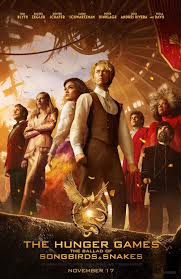
The Ballad of Songbirds and Snakes
I was slightly underwhelmed by the book but rather enjoyed this. It’s a tad too long, and – this is a me problem – there are WAY too many snakes. I know the title announces it, and I remember the snakes from the book, but I much prefer not to actually see them… Rachel Zegler is great as Lucy Gray – there’s always a steeliness in her that belies her doe-eyed charm.
The Devil Wears Prada
Very enjoyable, even if it does its best to have its cake and eat it (not that eating cake is an appropriate metaphor given the food-phobic culture it portrays). It’s funny, and Meryl is awesome, suggesting depths and complexities without spelling everything out. As far as plausibility goes, I’m not qualified to comment, though the notion that Ann Hathaway’s Andy, a woman who prioritises comfort and wears sensible shoes, can learn not just to walk but to run in vertiginously high heels on that time frame seems to me improbable.
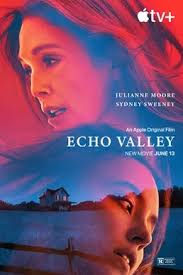
Echo Valley
A great cast make this highly enjoyable and genuinely tense but can’t quite paper over the plot holes. I found myself trying to work out the timings for what actually happened once we’d had the reveal, and I couldn’t quite make sense of it. It’s such a common failing in thrillers, to leave the revelations and resolutions to be dealt with in a mad rush at the end, perhaps hoping we will be swept along and not notice… Old fashioned whodunnits, the sort where the detective gathers everyone in the library to announce the guilty party, used to have a sort of coda where someone says, ‘but what I still don’t understand is’ (speaking for all of us, probably) and then the detective helpfully explains. I am happy for things to be left unexplained, for plot threads to be left dangling, for motivations not to be clear even as the credits roll, but I don’t like plots that seem to suggest that everything is resolved, without making absolutely sure that the resolution makes sense. NB this will be a recurring theme…




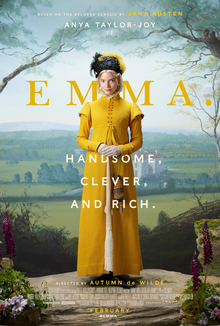
Emma.
Having recently seen the Paltrow version, I think I prefer this. It’s funnier, for one thing, Anya Taylor Joy is quirky and Johnny Flynn’s Knightley is rougher around the edges than some portrayals. As enjoyable as it is, I remain unconvinced, however, that we need any more Austen adaptations, unless someone is prepared to tackle the less popular ones (Mansfield Park or Northanger Abbey).
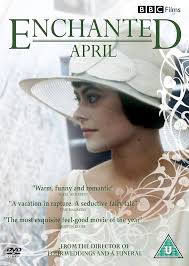
Enchanted April
Delightful – Josie Lawrence and Miranda Richardson lead as two not so happily married middle-class women who, entirely out of character, seize the chance to escape to a castle in Italy, where the place works a kind of magic on them, and the people who share it with them. That sounds a bit soppy and I suppose it is, but it’s also very funny, and very touching. By chance, I was watching Miranda Richardson in TV drama The Last Anniversary (see below) on the same day, and feel compelled to say that she is even more stunningly beautiful now than she was back in 1992. And the film has a place in my heart as it’s set and filmed in Portofino, where my daughter got engaged the summer before last. Maybe it is a magical place.
Frankenstein
Of course there have been many, probably too many, adaptations of Shelley’s novel, some of which bear only a passing and superficial resemblance to her narrative, let alone her philosophical concerns. I was never going to skip this one, given that it’s produced/directed/written etc by Guillermo del Toro, who was responsible for two of my favourite films, Pan’s Labyrinth and The Shape of Water. It’s so long since I read the book that I can’t swear to the film’s fidelity to the plot but it felt broadly faithful (though was the monster impervious to bullets in the original?). It’s visually fantastic, of course, gothic and melodramatic and (as the Guardian reviewer put it) ‘monstrously beautiful’. As is Jacob Elordi as the monster, to whom del Toro hands over the narrative part way through. Frankenstein’s contempt for his own creation – because it fails to live up to his impossible ideal – is the monstrous heart of the film, echoing Victor’s own rejection by his father, and driving the tragic outworking of the plot.
The Gangs of New York
This has many brilliant moments but I found it wearyingly long. DDL, in this as in There Will be Blood, seems to be hamming it up to the max. Having watched the documentary series Mr Scorsese, I do get (I think) something of what he was going for, the past that was still tangible on the streets where he grew up.
The Good Liar
Mirren and McKellen in a drama whose twists and turns aren’t impossible to guess (and if one consults the cast list in IMDb as I did, one of the major twists is substantially given away). But never mind all that, they are both splendid, as one would expect – it’s a kind of duel where we are supposed to think at first that they are very mismatched, but (as I hoped, being a fan of dramas where older women are shown to be canny and capable) all is not as it at first seems. It’s often very funny, but with an undercurrent of sadness.
King Richard
Will Smith’s excellent performance as Richard Williams, father to Serena and Venus, gives us room to wonder if he is an entirely reliable narrator, without leaning too much into that idea. He is both utterly unreasonable, and right in his assessment of how far his daughters could go, and of the obstacles that might be in their way.


The Lost Bus
A gripping account of a true story from the 2018 Camp Fire disaster in California, when a driver doing the school run found himself trying to get 22 children and their teachers (the film only portrays one teacher as the other did not want to be included) to safety as the fires destroyed everything in their path. It’s directed by Paul Greengrass, notable for United 93, 22 July (about the 2011 Norway attacks) and Captain Phillips. The suspense here is perhaps lessened by the fact that we may well know that the bus got through, but nonetheless it is incredibly tense, and Matthew McConaughey and America Ferrera are great as the two adults trying to calm and reassure the kids in the face of their own terror, for themselves and for their loved ones.
A Man Called Otto
This could have been merely soppy – massively grumpy old curmudgeon has his miserable heart warmed by a lively young family who move in across the road – but the script and the performances give it much more than that, the heartbreak of loneliness, dark humour, and some genuinely moving moments. A lot of that is down to Hanks of course, this is the sort of thing he’s so very good at.
Maria
This can be seen as one of Pablo Lorrain’s trilogy of portraits of women on the edge: Jackie (Kennedy), Spencer (Diana) and now Maria Callas. We start near the end of her life, her voice has lost its control and power, and her ‘medication’ leads to hallucinations and confusion. We get flashbacks to her earlier life, both pre-fame and during her heyday as the diva of divas. Angelina Jolie is superb. I’m not qualified to speak of its accuracy – and I’m sure there was much more to Maria herself than the film could convey – but it’s a powerful and moving portrait.
Mr Burton
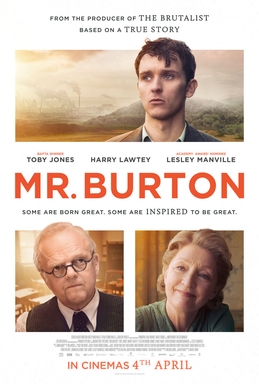
An old-fashioned sort of film, really. Performances are great – Toby Jones’s Mr B is melancholy but positive, easily wounded, and Richard to-be-Burton is bumptious and arrogant but also wounded. It doesn’t directly ask the question of whether Mr B had homosexual inclinations, but it shows how other people were ready to insinuate that to explain his motivation for taking Richard under his wing. For me, whether he was a closeted gay man or not, it seems clear (from the film and other sources) that if he was attracted, he was also scrupulous about not exploiting his influence or his proximity. Harry Lawtey gives us a flavour of Burton the star, and it’s fascinating to see that emerge, along with that extraordinarily rich voice.
Night Always Comes
One of those narratives where the protagonist is trapped due to bad decisions, which leave him/her with only bad choices (it reminded me of Martin Freeman’s TV drama, The Responder, for example). Vanessa Kirby is compelling, even whilst one wants to shout at her when she’s making the aforesaid bad decisions and getting herself deeper and deeper into the mire.
One Fine Morning
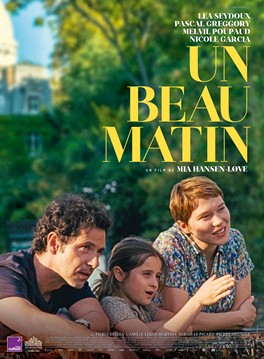
A rather fine study of a woman dealing with her father’s dementia (I wonder why that resonated with me…) and of what reviewer Monica Castillo called ‘a quiet sense of devastation’. Mia Hanson-Løve is skilled at this (I’ve seen a couple of her other films, Father of My Children, and Things to Come, both of which were excellent). Léa Seydoux is brilliant at conveying the pressure Sandra is under, as a widow with a young child and an increasingly dependent father, who knows she isn’t doing enough but can’t do more.




Our Town
I tracked this down on YouTube after reading Ann Patchett’s marvellous Tom Lake, which centres on performances of this play (see my Books blog). The version I saw was a TV film of a stage production, with Paul Newman as the Stage Manager. I thought at first it was going to be a bit too folksy American for my taste but then it got darker and deeper and by the end I was all in and weeping. It resonated with my thoughts about mortality since my husband died, and about how we go through our lives focusing on the big important days but don’t ever ‘realize life while [we] live it, every minute’. I won’t go on but the play now has a place in my heart.
Paris – 13th District
Jacques Audiard working with Céline Sciamma! Audiard directed one of my favourite contemporary French films, The Beat That My Heart Skipped, as well as A Prophet, and Sciamma is responsible for Girlhood, Petite Maman, and Portrait of a Lady on Fire (and Paris – 13th stars Noémie Herbert, who’s in that last film). It’s a funny, touching film, a lot less harrowing than the aforementioned Audiards or Sciammas, about young people connecting (sometimes through misunderstandings) and disconnecting.
Persuasion
My favourite Austen (see my books blog for comments on Mansfield Park, which I recently re-read). I loved Persuasion even as a teenager, when one might expect to be more drawn to some of her feistier heroines, but Anne Elliott moved me a great deal then, and even more so now. A lot depended, as in any film adaptation of a loved book, on the casting, and both Amanda Root and Ciaran Hinds were perfect. They are the still centre of the film, around whom people are gossiping, chattering, generally making themselves heard and seen, but who themselves say little (at least out loud). Once they have, quietly and unobtrusively, sorted out their future together, they walk out into Bath, where a circus is in town and people are cartwheeling and prancing around them, as they are oblivious to it all. It’s beautiful.
Rwanda
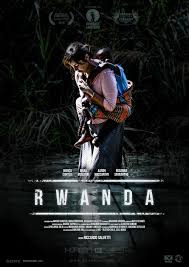
I really don’t know what to make of this, or why it was made. We have white Italian actors on stage playing the roles of people caught up in the Rwandan genocide and then segueing into scenes with Rwandan actors playing the same roles. The blurb in IMDb reads: ‘Close your eyes and try to imagine. A man, a woman and their families. The fastest and most systematic genocide in history. He is Hutu, she is Tutsi. He must kill. She must die. A fate similar to many others in that bloody spring. But this time there is a slight difference. When you open your eyes, you will be in their shoes and now the choice is yours. And yours alone’. None of which really gives us a convincing rationale for the way the story is framed: it creates confusion, and all that the use of white actors does, in my view, is to wrench us away from the real, tragic, horrifying events every time they appear.
Small Things Like These
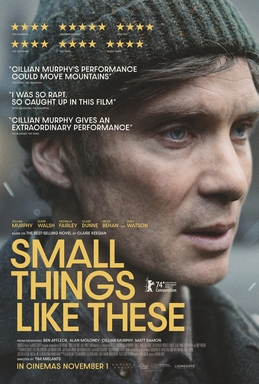
Based on the Claire Keegan novel, like The Quiet Girl (from the book Foster), this is an understated, quiet film that gets under your skin and straight to your heart. Cillian Murphy is excellent, and the film does a remarkable job of conveying a sense of threat from what might seem an unlikely source. Directed by Tim Mielants, who also directed…
Steve
Cillian again, and again he is wonderful. This is a brilliant, downbeat, subtle film that very effectively conveys both the barely contained chaos and mayhem of the troubled boys and the commitment and love mingled with despair and boiling frustration of their teachers. The establishment itself is under threat as a waste of resources, and as much as the boys are full of swagger and aggression we see and feel how lost they will be if they lose this haven. I was unequivocally rooting for Steve and his colleagues, and for their charges, which made the film both extremely tense – towards the end especially, when I was full of dread – and very moving.



The Straight Story
This reminded me rather of Perfect Days. A synopsis of the plot would make it sound rather dull, but it is completely engrossing and very moving; subtly so, it doesn’t present itself as ‘heartwarming’ although my heart did feel definitely warmed, nor as tearjerking, though I did have a bit of a weep. Richard Farnsworth is wonderful in the lead role. I have to confess I’m not familiar with much of David Lynch’s oeuvre – I liked The Elephant Man and Wild at Heart, was not a fan of his Dune, and switched off Blue Velvet quite early on – but this one is near perfect.
Surge
Ben Whishaw is outstanding here as a man with mental health problems whose life spirals out of control as he tries to free himself of the constraints of job and family. It’s a very uncomfortable watch precisely because Whishaw makes us care about this man, so one spends a lot of time thinking, ‘Oh no, please don’t do that, please…’ and then watching as he does whatever it is that is bound to make matters infinitely worse. It’s deeply compassionate and rather moving.
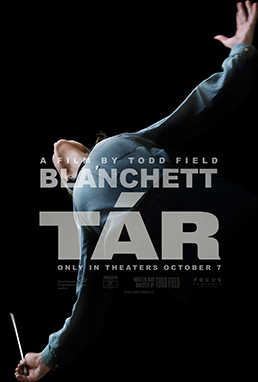
Tar
This is brilliant. A film that treats its audience as adults who can manage to hold more than one idea in their head at the same time, and can engage with theoretical, intellectual discussions about music and its performance, with a compelling performance from Cate Blanchett in the title role.
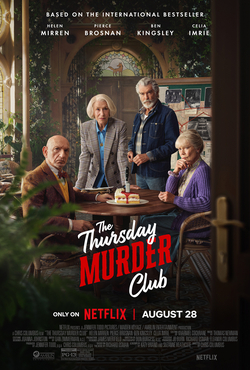
The Thursday Murder Club
I haven’t read the book(s) so can only judge the film as it stands. It was mildly enjoyable, mildly diverting. Some of the scenarios were too ludicrous to be really funny, and some of the characters were a bit hard to take as representations of people only a little older than me (Celia Imrie’s wardrobe seemed to have been purloined from my Gran – born 1901 – rather than what a well-heeled woman in her mid-seventies in 2025 would be likely to wear). Daniel Mays seemed here to be reprising his character as the bumbling copper from The Magpie/Moonflower Murders. It didn’t make me want to read the books, but it passed a couple of hours quite well.
Unstoppable
Classic set up – a driverless train is hurtling across the countryside, and must be stopped before it reaches a residential area – delivered with conviction and panache by Denzil Washington and Chris Pine as the maverick pair who have to stop the unstoppable train. It’s actually a true story, remarkably.
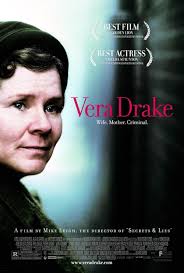
Vera Drake
Imelda Staunton is outstanding in this. She cares for and about people, in practical ways, and providing illegal abortions for girls ‘in trouble’ is simply an extension of that. She never uses the A word, any more than she speaks of what got these girls and women into ‘the family way’. Just tells them to pop their knickers off and that ‘it will all come away’ when they go to the loo. Of course this is a gross over-simplification, as she finds out when one of her girls is critically ill after the procedure. She feels shame at her exposure but holds on to her belief that she is just helping out. It’s a corrective to the image of the back-street abortionist as exploiting these girls for financial gain and with no concern for the consequences to them, even if we wince at Vera’s haphazard approach to clinical hygiene.



TV
As usual there were a lot of murders. More than are listed here, since I haven’t reviewed the latest outings for Shetland, Trigger Point, Beck, The Gone, Karen Pirie or the Sommerdahl Murders, though all were watched and enjoyed, as were the latest series of Slow Horses and The Diplomat. There were a fair few thrillers that I gave up on or even watched through to the end but couldn’t think of anything worth saying about them other than to reiterate the kind of complaints I make about several better offerings below.
Because of the general murderiness, I find it’s essential to have a few things that are safe, that you know aren’t going to let anything too horrific happen, and that in general allow redemption for even the least likeable characters. This half-year that role was played by the latest season of All Creatures Great & Small, Leonard & Hungry Paul, and A Man on the Inside (I haven’t reviewed that last, because it’s season 2 and essentially the same sitch, just transplanted to a college rather than a retirement home, but I enjoyed it).
Blue Lights is my top cop drama, and Paradise the top thriller. Other standouts this half-year were The Line (Un Village Francais) and Stranger Things‘ final season.
I’ve tried not to do spoilers but you proceed at your own risk.
Drama
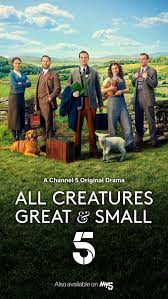
All Creatures Great and Small
I didn’t originally intend to review this, because it’s an ongoing series (and a remake), but I find myself referencing it as the epitome of nice telly and, particularly after the finale of this latest season, it is both that and more. The central three characters are much as they were in the 1970s series, although Siegfried is given more of a back story to explain his eccentricities, and Tristan is given more depth, particularly in the latest episodes where he finally opens up about some of what happened to him on active service. The female characters now actually have characters, which is a good thing. Mrs Hall in particular has gone from being a stock character – stout, sensible housekeeper – to someone much more interesting, much deeper. And as I mention above, whilst – as far as I recall – in the 1970s version WW2 was a kind of hiatus, here it deeply affects everyone, whether they are mothers/wives waiting for news which, in some cases, when it comes is desperately sad, or the men who volunteer and come back different. It’s nice telly in that we can trust that nothing too horrific is going to happen to the people of Darrowby, no serial killer is going to stalk those lanes and moors, the body count is going to remain low, with most of those who die doing so at the appointed time in their beds. But it’s more than nice in that these people have depth and complexity and so we invest in them, and what happens to them moves us more. It’s beautifully acted, of course, most particularly Anna Madeley’s Mrs Hall who is responsible for a large proportion of the moments that make me weepy, Sam West’s Siegfried, and Patricia Hodge’s Mrs Pumphrey (she had a hard act to follow in Diana Rigg but she’s given the character – who could be a bit of a joke – greater depth).
The Assassin
There are a number of actors whose presence in a series always inclines me to watch (and a few whose presence has the opposite effect, but we won’t dwell). Keeley Hawes is one in the former category, ever since Life on Mars and Line on Duty proved her versatility, and I thoroughly enjoyed this, despite its startlingly high body and gore count. The humour is, obviously, very dark, but it’s well done, and Hawes makes her ‘retired contract killer being forced to brush up her murdering skills’ human, and makes us root for her (and even her rather annoying son).
Blue Lights
This started off extremely well, and now with the third season is even better. What marks it out initially from the mass of police dramas is the Belfast setting, where organised crime and dissident paramilitaries have merged into an ever-present threat to the peelers. But what makes it outstanding is the quality of the writing and the performances – there are a number of incredibly high-tension scenes in this season, where the tension comes not only from the situation but from the fact that we’re so invested in the characters. Excellent, excellent stuff.
Bookish
So-called cosy crime series, set in 1946. I can’t be doing with too much cosiness – if we’re talking about murder, there has to be some sense of threat, of evil, of tragedy. Bookish does provide those things, along with humour and heart, and this first season ended with a promise of more.
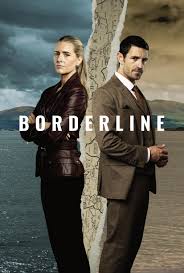
Borderline
On the face of it, just yet another mismatched cop duo, but which has added interest due to the fact that these cops work either side of the border between the Republic of Ireland and Northern Ireland, and have to work together when Irish bodies turn up in the North, or vice versa. The Garda cop is rather tiresomely obnoxious, though her back story does provide some explanation for this. The Northern Irish cop has his own quirks – recovering alcoholic, so common in these narratives that it hardly counts as a quirk, but also a religious faith that is shown as being profound and central to his life, which is much more unusual.
Classified
Dizzying twists and turns in this French-Canadian thriller about a mole in the Canadian secret services, and the tensions between them and their US counterparts. I’m not sure that I quite grasped it all but that’s down to me occasionally losing concentration and missing info in the subtitles, I suspect, rather than to the plot/script.



Coldwater
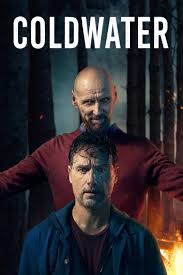
Way, way over the top, but sort of fun. Seeing Andrew Lincoln, who never flinched in the face of zombie hordes, being a bit of a wuss, is amusing. Eve Myles does a good job of being a bit dodgy here, as she does in The Guest (see below) but Ewan Bremner’s Tommy is so obviously bonkers that it’s a bit hard to credit no one has sussed him out. The ending leaves a number of threads loose, but I kind of hope they don’t feel the need for another series.
Cooper & Fry
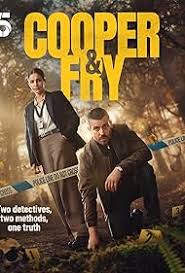
Adapted from Stephen Booth’s Peak District set series, many of which I’ve read. I enjoyed the books, but I don’t remember quite such a heavy reliance on the folklore/superstitions of the area. In the first two episodes alone we had a Screaming Skull, a Hand of Glory, a Plague Stone and a Black Dog, and a predictable tension between the city cop and the locals about how seriously to take these things. Otherwise I quite enjoyed the series, though it doesn’t really stand out from the crowd.
Down Cemetery Road
An adaptation of the first in Mick Herron’s other series (Slow Horses continues to be brilliant both in book and telly form), with Zoe Boehm (played – wonderfully – by Emma Thompson) as his lead detective and playing alongside the always excellent Ruth Wilson this is definitely a winner. The dialogue crackles with wit and the tension and stakes are nailbitingly high.
Fatal Crossing
Danish cold crime – a cut above the average. It leaves questions still hanging in the air, about the why, if not the who.
The Forsytes/The Forsyte Saga
I have history with the Forsytes. I watched the 1967 series – it must have been the Sunday night repeat which launched in September ’68, when I was 11. I was completely spellbound. I have no doubt if I rewatched it I would have issues, but it was truly powerful television, with some scenes that I can still bring to mind today. I watched the new Channel 5 adaptation with some trepidation, and rising annoyance at completely unnecessary plot changes, which radically alter the dynamics between characters, and at some of the casting. Soames, Young Jolyon and Bosinney could be members of a boy band – all are blandly handsome but characterless. We are treated to scenes of Young Jolyon shirtless in the gym, abs glistening, floppy hair artfully tousled. Even Soames has abs and biceps for heaven’s sake, as we saw in the scene of his wedding night with Irene.
I found the 2002 series on Netflix and rewatched that, which was much more satisfying. Damien Lewis is outstanding as Soames and Gina McKee conveys Irene’s self-contained, cool distance very well (unlike Millie Gibson’s giggly girl – not blaming Gibson, it’s the script & direction that’s the problem). It stays pretty close to the books in terms of plot (with some inevitable streamlining and trimming of peripheral characters).
There’s really no comparison between the adaptations, but I daresay I will continue to hate-watch the C5 version just to see how they deal with some of the plot developments, even if it irritates me enormously. If this was called, I don’t know, The Bridgertons or The Downtons, it would be soapy fun, but they are laying claim to John Galsworthy’s characters and if I were JG I’d be figuring out how to haunt everyone who dreamt up this mess.
Frauds
Suranne Jones and Jodie Whitaker are superb as two ex-con artists who team up for ‘one last job’. It’s funny and touching, and I would watch these two in anything.


The Gold
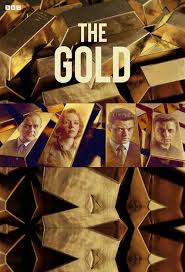
I’d skipped this when Series 1 aired a while back, but having been told very firmly by friends whose judgement I trust that it deserved to be watched, I then binged it and had not a moment’s regret. Splendid performances, very well written, an admirable avoidance of clichés and stereotypes. I very much liked Hugh Bonneville’s Boyce, who managed to convey both a downbeat stoicism and an absolute driving commitment to solve the case, but Tom Cullen’s portrayal of John Palmer is outstanding.
The Guest
This goes from 0 to 90 in the space of one episode – improbabilities pile up and really, the only way to approach this is just to suspend disbelief and go with it. I don’t mind this over the top approach as long as it’s well done, even if it is silly.
The Hack
Fascinating, if perhaps a little longer than it needed to be. There are two strands, which come together in the later episodes – David Tennant as the journalist who investigated and uncovered the phone hacking scandal at the News of the World, and Robert Carlyle as the detective investigating the murder of Daniel Webster. It generates much righteous indignation, but inevitably the outcome is frustrating – the News of the World might be history but there is no shortage of disgraceful journalism these days, and the Daniel Webster case remains unsolved.
Hostage
Here my fave Suranne Jones is PM, wrestling with various domestic and international crises, one of which results in the kidnapping of her husband in French Guiana. Julie Delpy is great as her French opposite number. Entertainingly balances suspense and political intrigue.
I Fought the Law
The true story of Ann Ming, who ‘fought the law’ to get justice for her murdered daughter Julie, with Sheridan Smith (in a classic Sheridan Smith performance) as Ann. Obviously the heart of the drama is the personal tragedy and trauma of the murder and its aftermath (Ann Ming was the one to discover her daughter’s body, after the police had failed to do so despite allegedly intensive searches of the house), but there’s also a fascinating legal thread about the concept of double jeopardy, which Ming was instrumental in overturning.
Insomnia
This was quite eerie and disturbing, but it got less plausible as it went on and the final episode packed way too much in at the expense of any deeper examination of character or motive. We were left, ultimately, with the only explanation being the least plausible one, and with the impact of the events particularly in that final episode being seemingly glossed over. And the final, final shot, actually made a nonsense of that implausible explanation (I’m trying very hard not to spoilerise here). The performances were good though, from Vicky McClure, Tom Cullen (see above re The Gold), Leanne Best and Lyndsey Marshal.


The Invisibles
I saw this described as a French Slow Horses, which it isn’t. It’s about a unit that investigates unidentified corpses, and it’s enjoyable, if a bit formulaic.
The Last Anniversary
There were good things about this, but many of them were squandered in a rushed ending where the mystery was supposedly solved but in a way that strained credulity beyond breaking point (see Insomnia, above), and then strained credulity again with a cheesy resolution where everyone was somehow absolutely fine all of a sudden and everything was nice. It was fun along the way, and it was lovely to see Miranda Richardson, and also the brilliant Danielle MacDonald (loved her in The Tourist).
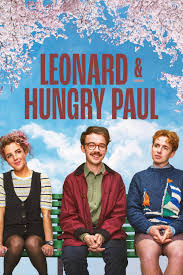
Leonard & Hungry Paul
I was recommended to watch this as an example of gentle TV and I’m glad I did. I watch a lot of murdery TV, and a lot of heavy documentaries, and I need to mix in a bit of TV that might warm rather than chill my heart, that’s funny and touching and, I suppose, nice. All Creatures (the current version) is usually my go-to in this category (see above), but it’s good to have some other sources of niceness. It’s not enough just to be nice, of course, for it to be worth watching the writing has to be good, the characters have to be well-written and well-played, and there has to be some depth in there, some emotional heft. Leonard & Hungry Paul ticked all those boxes.
The Line
This is Un Village Francais, which I’d heard about but not found until v recently, thanks to the change of title. The line referred to is the demarcation line between the Occupied and Unoccupied zones, and the complicated nature of that demarcation (the Vichy government, enthusiastic collaborators with the Nazis, were in charge in the unoccupied zone so it wasn’t a haven of freedom or democracy) is portrayed very effectively. That’s the strength of this series. Because it takes a soap opera format, our core characters over seven seasons encounter all aspects of the Occupation, and how they cope with it – try to survive it – is portrayed in a subtle and nuanced way. Very few collaborate out of conviction, most out of expediency. Almost all have compromised, and so people we have admired and respected over six seasons may be on trial in the seventh. I have to admit that the seventh season was problematic, not because of the treatment of the complexities of the aftermath of the war, but because some storylines were over-extended whilst others were dealt with rather brusquely, and, most of all, the frequent use of sequences where one of the characters not only ‘sees’ someone who is dead, but has a conversation with them. Very tiresome. But a small gripe in the scheme of things. I’m not a historian but I have read a great deal about the Occupation of France and found no inaccuracies – even where an incident seemed initially improbable, on investigation it proved to have been very accurately portrayed.
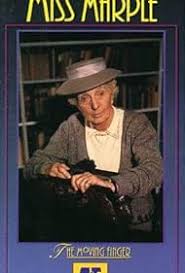
The Miss Marple Mysteries
BBC4 very kindly reshowed all the Joan Hickson Marples, and I thoroughly enjoyed them all. She is the definitive Miss Marple, those eyes are piercing rather than twinkly and when one character describes her as ‘a cobra in a twin set’ you know exactly what he means. When she has the perp in her sights she deals with them with cold contempt, and anger on behalf of the victims of the crime. I always found Poirot a bit irritating, but Hickson’s Marples are very satisfying classic mysteries.
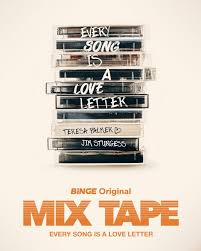
Mix Tape
An absolute delight. The bits filmed in Sheffield were a lot of fun, and the idea of a romance told through songs recorded on a cassette tape is poignant and charming. Excellent script and performances. I read the book and was very interested to see the changes to the plot – I can’t say any more without spoilers for both TV series and book…


Outrageous
The Mitford sisters are endlessly fascinating. This is based on the collective biography by Mary Lowell, which, to my mind, goes rather gently on the fascism, perhaps wanting to balance it out with Jessica M’s hardline communism. The TV series only gets us to 1936 so I hope there will be another series at least to take us through the war years and beyond, and I will have to see in that case how that moral balancing act is handled once we get to the nub of what Nazism and Stalinism are about.
Paradise
Absolutely superb. Sterling K Brown is totally compelling in the lead, and the plot manages to twist and turn without sacrificing the integrity of narrative or character. I’m saying nothing more – it’s brilliant and I would highly recommend it to anyone who likes a good thriller.
Prisoner 951
This dramatisation of the events following Nazanin Zaghari-Ratcliffe’s abduction as she tried to return to the UK after visiting family in Iran is compelling and maddening. It certainly didn’t leave me with any positive impressions of the FO or the succession of Foreign Secretaries who assured Richard Ratcliffe that they were doing everything they possibly could, whilst being unable to identify anything they actually had done. I had no positive views of Boris Johnson anyway, and his remark that Nazanin was in Iran ‘training journalists’ was a bit of typical Johnson carelessness – he must have known that she was there on holiday to see her parents and that this entirely incorrect statement could be used against her (as it was).
The Ridge
A NZ/British murder mystery which doesn’t go where one expects it to go, so it keeps the viewer on their toes. Lauren Lyle (seen recently as Karen Pirie) is a brilliant protagonist – there’s not a great deal I can say without risking spoiling things for you, but it was a cracker.
Scrublands: Silver
I haven’t seen the first series, but from the allusions made in this, it seems that Mandalay, the rather gloriously named partner of the journalist hero, has an unfortunate knack to find herself in the midst of bloody mayhem. This is well written, and it was a compelling drama, albeit with the occasional well-worn crime fiction trope popping up.
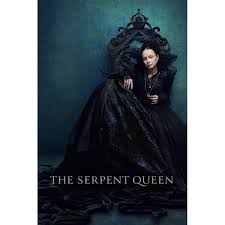
The Serpent Queen
Dialogue totally contemporary – fine by me, those prithees can get a bit tiresome, but it walks a fine line, if the dialogue suggests ideas/attitudes that would not have occurred or been understood in 16th century France/Italy. I think it gets away with it, as it does with the asides to camera, allowing Catherine de Medici to commentate on the action. She’s a fascinating figure, historically and as portrayed here – by Liv Hill as a young woman and then by the always magnificent and compelling Samantha Morton in later life. It’s been compared to The Great (another Catherine, this time the Russian Empress), but I never saw that so can’t judge whether this is, in comparison, not Great but just good, as some reviews suggested. I am enjoying it – I don’t know this period of French history well, but have encountered bits of it in various historical novels that I devoured as a teenager and more recently in Dumas’ La Reine Margot and the brilliant Patrice Chereau film of that book.



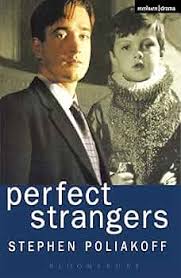
Shooting the Past/Perfect Strangers
BBC4 has been re-showing some of the best TV dramas from the archives, and these two from Stephen Poliakoff were fascinating. I’ve linked them not just because the writer (and some cast members) are in common but because of the theme of photography and memory which is central to both. Beautiful writing, superb performances.
Smoke
Lord, this is dark. I thought I knew what I was in for, but then it took a rather violent swerve and nothing was as I’d expected. Grim and dark and, whilst very well done, requiring a certain robustness of mood to be able to deal with it all.
Stranger Things
The last ever series, and I both don’t want it to end and feel that it’s right that it should. At the time of writing, I will still have the Christmas Day batch of episodes and the final final episode to watch, so I may add a note to next year’s first screen review blog about how they brought the series to a close, but meantime, it is as brilliant as ever, intense, genuinely scary, funny and clever. I cannot understand why M and I didn’t watch it, since our shared love of Buffy and of Stephen King’s opus makes it so very much our kind of thing. But we didn’t, and so I have watched it on my own, constantly wanting to turn to him and comment on some aspect of the plot. I’ve loved every minute of it, anyway.
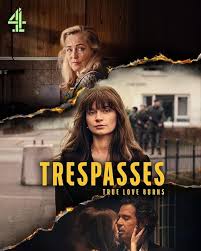
Trespasses
A love story set during the Troubles between a Protestant barrister and a Catholic school-teacher was never going to be all hearts and flowers – it is gripping and moving, with superb performances from the two leads. Tom Cullen is the barrister – and he makes full use of his slightly rakish charm whilst conveying his deeply held convictions about justice. Lola Pettigrew is the teacher, fresh from portraying Dolours Price in Say Nothing. Excellent supporting performances too from Gillian Anderson and Martin McCann (Blue Lights).
The War Between the Land and the Sea
Given that Doctor Who is in something of a limbo at the moment, with the collapse of the Disney deal, the abrupt departure of Ncuti Gatwa and the currently puzzling re-appearance of Billie Piper, it’s good to have this Whoverse drama, with UNIT and what we used to call Sea Devils, and Russell Tovey as an everyman admin person who finds himself suddenly in a key role in the titular war.


Documentary
The Beatles Anthology
We saw this series when it was first released in the ’90s, but it’s long enough ago that some bits of it don’t seem in the least familiar, even if other clips are very much so. It’s a joy to hear the songs – I don’t play them anywhere near as often as they deserve. The final, extra episode felt very much tacked on though. All it really offers is the insight into the process of recording the two ‘new’ Beatles songs based on John’s home demos. But that doesn’t take away from the series overall the freshness of hearing the story told only through clips, songs and their own words (plus those of George Martin, Derek Taylor and Neil Aspinall), giving context to the songs. And it seemed particularly apt to be seeing and hearing John (the Beatle I always loved best) on and around the 45th anniversary of his death.
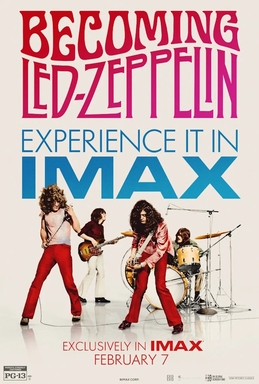
Becoming Led Zeppelin
As the title suggests, this covers the early careers of Plant, Bonham, Jones & Page, and the early years of the band. Very interesting, even if I’m not a massive Zep fan, and find their live performances a bit samey… The focus is, refreshingly, on the music rather than the misdemeanours of the band members (on the rock’n’roll, rather than the drugs’n’sex).
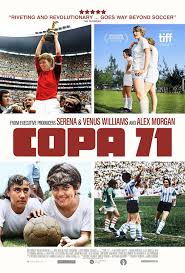
Copa 71
A lot of the documentaries I watch are a bit on the grim side. This one is a joy. It tells the story of the Women’s World Cup competition in 1971 in Mexico, and just to discover that that actually happened is wonderful. It was against the odds, football’s international leaders were not prepared to acknowledge women’s football at all, but somehow it happened, and lots of the players are still around to tell us what it meant to them. Of course, women’s football has now established itself firmly, with the Lionesses being cheered as ‘Engerland’ whenever they’re in international competition, in a way that I wouldn’t have envisaged even ten or so years ago. It’s brilliant, and I wish that those passionate footballers back in ’71 had been able to continue playing at national and international level, but they’re remembered and honoured for their determination in the face of male obduracy and idiocy.
The Death of Yugoslavia
The history of the countries which once formed Yugoslavia is about as complex and twisty as European history gets. I’d only the vaguest idea – I’m currently reading Rebecca West’s diaries of her own travels in the region just before WWII, and I feel I need a flow chart or a spreadsheet or something to keep hold of it all. What happened when Yugoslavia started to implode was all too predictable in light of that history, though one might have hoped it would be less brutal and bloody than it was. Some of the story told in The Death of Yugoslavia is horrifying, none of it is optimistic.
Educating Yorkshire
I never saw the series 10 years ago (though I have of course seen the moment when a boy who’d struggled with a stutter manages to recite a poem). The inspirational teacher who worked with that lad is now the head teacher, with a school motto of ‘Be nice. Work hard’ and the series conveys very well both the chaos and idiocy and charm of the kids and the determination of the staff to give them the best chance they can. Lots of very funny moments and lots too that is moving and inspiring.
Empire
Another exemplary David Olusoga documentary history series, this one covering the story of the British Empire, from its beginnings with the establishment of the East India Company to its gradual relinquishing of former colonies after WW2. Some of the history was familiar, other bits much less so. As always, it’s compellingly presented and thoroughly researched, and Olusoga isn’t afraid to get personal, or to explore the personal stories of interviewees. Of course the usual voices have been raised to say that he’s only showing the bad bits of our imperial history but this series, like Sathnam Sangera’s books on empire, shows beyond doubt how the very concept of empire led inexorably to injustice and exploitation.



Hurricane Katrina: Race against Time/Katrina: Come Hell and High Water
Two documentary series for the 20th anniversary of the disastrous failure of flood defences and emergency management in New Orleans when Katrina hit. They cover similar ground and interview some of the same people, with Spike Lee’s Come Hell… spending a bit more time looking at what happened to some of the survivors in the years after Katrina, including looking at the way in which high profile initiatives to rebuild homes in the predominantly poor, black areas of the city failed to deliver. Both series feature my hero, General Russel Honoré, who is seen tearing into the National Guard for pointing their guns at the people who have fled the rising waters, and whose blunt and outspoken leadership shifted the focus back to the humanitarian needs of the population rather than the largely false narrative of lawlessness and violence. What chills the blood in both of these series is the unmistakable, unapologetic racism of those who created that false narrative – the example is given of two news reports of people getting essential supplies from abandoned shops, described in one case neutrally and in the other as ‘looting’ – no prizes for guessing how black and white survivors were respectively characterised. And then we see a group of white vigilantes, gleefully describing their patrols to keep black survivors out of their neighbourhood, by lethal force…
Mr Scorsese
A fascinating three-part biography of Scorsese, from early days in the mean streets of New York to global success in the movies. As with Spielberg (who is one of the big names interviewed here), we can see the obsession with film start to take hold during his teenage years and it has never lessened that hold on him, at considerable cost to his health and his relationships. And even at this late stage in his career, Scorsese is still mining those early years and their gangsters and hoodlums, corruption and violence.
Shifty
Lucy Mangan describes Adam Curtis’s five-part series of films as a ‘purely UK-focused dissection of recent history, built around the idea that the growing atomisation of society has ushered in an age in which the concept of a shared reality on which we can all depend has dissolved – and with it any hope of a functioning democracy’. It takes us from 1979 to the end of the century and New Labour, via a dizzying kaleidoscope of clips and captions. I think it demands a rewatch.

2025 On Screen – the first half…
Posted by cathannabel in Film, Television on June 26, 2025
Film
Most films, as usual, were seen on the small screen, but I did get out to the pictures for A Complete Unknown, A Real Pain, Queer, Macbeth and Bridget Jones. There’s the usual mix of drama (special mention to The Outrun, A Real Pain and The Quiet Girl), biopic (notwithstanding my issues with the genre – and special mention to A Complete Unknown which sidestepped them nicely), scifi/speculative fiction (Quiet Place Day One probably the best of this group), and films about race (The Nickel Boys and One Night in Miami stand out). Good to see the number of female directors: Mary Nighy for Alice, Darling (her debut), Zoe Kravitz for Blink Twice (also a debut), Nora Fingscheidt for The Outrun, Gina Prince-Bythewood for The Old Guard, Regina King for One Night in Miami (another debut), Ava duVernay for Origin – and to note that of these, four are women of colour.
I’ve tried to avoid spoilers but you take your chances. As always, I’ve omitted anything I gave up on in the first third, and anything which was so purely mediocre that I couldn’t think of anything to say about it.
The Affair
Adaptation of Simon Mawer’s excellent novel, The Glass Room. Frustrating really, it managed to make the timelines really confusing, and one whole strand of the story (that of the nanny with whom the husband had the titular affair) is denied the development that Mawer gives it. The performances are good, but it didn’t really work.
Alice, Darling
Anna Kendrick is excellent in this account of coercive control, and female friendship. The picture is built up subtly – we, and her friends, notice Alice’s tension each time her phone buzzes, her fiddling with her hair (we don’t immediately realise how much of it she is pulling out). A road trip with those friends is the catalyst for realisation and intervention, shown without undue melodrama, and not over simplified. I must watch Kendrick in something where she isn’t in peril from horrible men though – the last thing I saw her in was Woman of the Hour…
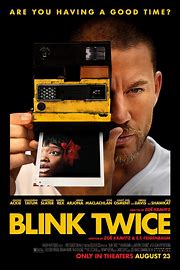
Blink Twice
Originally called Pussy Island… Guardian’s reviewer says, ‘It’s about misogyny and abuse and memory and materialism and gender performance and many other things that would be a spoiler to mention. It’s therefore less of a plate and more of a buffet, and while it might be beautifully served, it’s a film about excess that suffers from it too, a case of too much leaving us with too little.’ For myself, I’m not sure whether it explained too much or too little – certainly, whilst there was a lot that I enjoyed, I had questions.
A Bridge Too Far
I must have seen this before, given my penchant for WW2 films, but it didn’t seem over-familiar, and it was very striking how the various misjudgements and miscommunications which contributed to the tragedy of the Arnhem battles are shown so clearly, not glossed over or justified in any way. I was prompted to read Anthony Beevor’s account of the campaign, which confirmed that the film was surprisingly (given the general track record of war movies) accurate.
Bridget Jones: Mad About the Boy
Very, very funny. Laugh out loud (I snorted a couple of times, which was OK because I wasn’t the only one in the cinema to do so), but with a lot of heart. As a widow, albeit rather a lot older than Bridget, I found some of the scenes really moving – and again, I wasn’t the only one sniffling audibly. You could see where the plot was going, of course (and after all, what sane woman would settle for Leo Woodall’s Roxter – a gorgeous puppy in human form – when Chiwetel Ejiofor’s Mr Walliker is around?) but that mattered not at all.
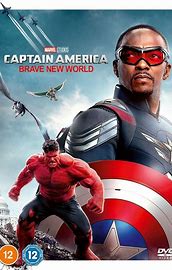
Captain America: Brave New World
I have yet to fully acclimatise myself to new Cap. Of course, I knew, from Endgame and The Falcon & the Winter Soldier, that ‘my’ Cap was gone, but I still have to remind myself from time to time. However, I love Anthony Mackie and I’m invested. My only problem with the plot was the references to bits of lore that I either had never come across (I’m not familiar with the comics at all), or only come across in The Eternals, which I recall I largely dozed through (maybe not entirely its fault). Leaving that aside, I thoroughly enjoyed the film.



Civil War
This wasn’t what I expected – I was anticipating more of an action movie, but this was thoughtful and introspective about journalistic ethics, amongst other things, whilst not pulling its punches when it came to the violence. Our protagonists are war correspondents, specifically, led by Kirsten Dunst as a hardened reporter who has seen the worst that human beings can do to one another, and been damaged by what she has seen. All four of the group that we follow through the film in some way need the adrenalin of following the violence and recording the horror. The titular civil war plays out, but it could be any conflict, anywhere, and these people would be there.
A Complete Unknown
I’d expected to enjoy this with reservations, given my issues with so many biopics. But I loved it. Dylan does not lend himself to the traditional biopic format. Here we learn nothing about his life before he rocks up in New York, already a singer with a few of his own songs ready or bubbling away. Not to mention the fact that Dylan told people all sorts of tales about his life before New York, most of which were fairly obviously untrue – he invented himself as he went along. There are no personal crises – for his unfortunate girlfriends perhaps, and for Seeger and others who saw what they wanted to see in him and felt betrayed – but not for Bob. It’s interesting to compare with director James Mangold’s earlier biopic, Walk the Line, from twenty years previously, also an excellent film with superb performances but which follows the format pretty faithfully – and of course Cash, the subject of that movie, has a supporting role here. Chalamet was wonderful, as were the rest of the cast (esp. Edward Norton as Seeger, and Monica Barbaro as Baez). And the real triumph was the way in which the music told so much of the story – not just the lyrics, but the music, and the performance of the music.
Doubt
Superb, subtle, troubling and with so many outstanding performances. In particular, this was the movie that made Viola Davis a big name, albeit in a small part – she blazed out of the screen, and somehow unsettled everything, in just a few moments.
Frida
The Roger Ebert site review says that ‘Sometimes we feel as if the film careens from one colorful event to another without respite, but sometimes it must have seemed to Frida Kahlo as if her life did, too’. And that is one of the problems with biopics generally, but even more so with a life as full of drama and colour as Kahlo’s. Salma Hayek and Alfred Molina are great as Kahlo and Rivera – they are both ‘a lot’, infuriating and mercurial, and their relationship is as tempestuous as that suggests, with both parties being pretty damn unreasonable at least some of the time. The most notable thing, apart from the performances, is the way the director uses visual imagery – a bluebird flying from Frida’s hand during the trolley crash, and gold leaf falling on her cast.
The Gorge
Daft and thoroughly enjoyable scifi actioner. It rapidly became apparent that it would not do to think too rigorously about the plot, so I just went with it.
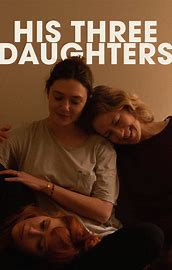
His Three Daughters
And what a trio! Carrie Coon, Natasha Lyonne and Elizabeth Olsen bicker and grieve as the tensions in caring for and even spending time with their dying father bring all sorts of memories and misunderstandings to the surface. Brilliant.


The Holdovers
Gentle without being sentimental, this was the perfect film for New Year’s Day as we curled up on the sofa after too little sleep and slightly too much wine the night before. It’s not a feelgood movie exactly – there’s too much pain here for that – but it’s sympathetic and hopeful and with marvellous performances from Paul Giamatti and Da’Vine Joy Randolph in particular.
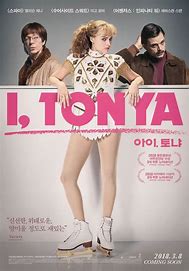
I, Tonya
Multiple layers of unreliable narration, gobsmacking ice-skating, and bravura performances from Margot Robbie and Allison Janney – hugely enjoyable.
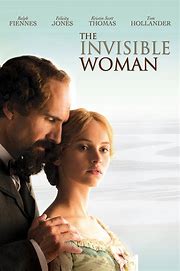
The Invisible Woman
I watched this, by coincidence, shortly after watching Priscilla (see below) and was struck by the similarities, despite the very different setting. Of course I’m not comparing Dickens to Elvis exactly, but both men used their age and even more their fame to control the younger woman. The title of this film could apply equally aptly to Priscilla as to Ellen Ternan. If anything, this account downplays Dickens’ cruelty to his wife, but Ralph Fiennes doesn’t sanitise his relationships, and Joanna Scanlan powerfully conveys her devastation at being cast aside.
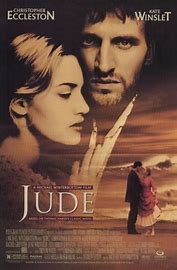
Jude
Dark and doom-laden adaptation of Hardy’s darkest and most doom-laden novel. Christopher Eccleston and Kate Winslet are both excellent, and it doesn’t feel melodramatic, because we feel the accumulating weight of all the forces that are against them, individually or together, so that the devastating denouement seems inevitable. Not a fun watch but exceptionally well done.
Macbeth
National Theatre production with David Tennant and Cush Jumbo – the performances are outstanding, as one would expect. The whole thing is stripped down in terms of the set and streamlined in terms of the absence of act and scene breaks. The latter has one slight disadvantage – there are a couple of bits in the script which don’t totally make sense without a break to indicate the passage of even a little bit of time – but it’s very minor. I’ve seen some superb Macbeths on screen over the years – Denzil Washington & Frances McDormand, Michael Fassbender & Marion Cotillard, Christopher Eccleston & Niamh Cusack, and going back further in time, Jon Finch & Francesca Annis and this may be the finest (with Denzil & Frances a very strong contender).
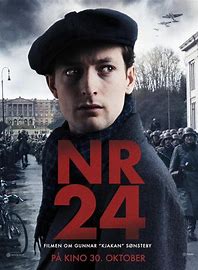
No. 24
Norwegian WW2 drama focusing on a hero of the Resistance. What makes this distinctive is the framing it gives, as he talks decades later at an event for schoolchildren, and fields difficult questions about what he did for the cause. It doesn’t give easy answers and that’s refreshing.


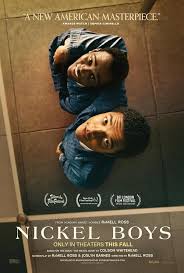
The Nickel Boys
Powerful adaptation by RaMell Ross of Colson Whitehead’s brilliant novel, which uses the device that we see everything from a first-person perspective, and the narrative builds through these flashes of imagery or memory, in a way that’s both deeply disturbing and very moving. I won’t say more about this because it isn’t a gimmick, it’s at the heart of what happens, and you need to see it to get the full impact.
The Old Guard
Intriguing, intelligent and entertaining superhero movie about a hard-bitten team of unkillable soldiers, which gives us plenty of action but also develops the characters and explores what it does to them to be killed, over and over again and to see each other being killed over and over again. There was talk of a sequel, which I’d happily watch, but it’s not emerged yet.
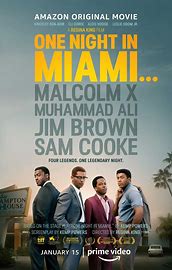
One Night in Miami
This is brilliant. Sam Cooke, Malcolm X, Cassius Clay (shortly to become Muhammad Ali) and NFL star Jim Brown did actually meet up on one night in Miami, and this is their imagined conversation. It’s long on talk and short on action but this is not in any way a failing when the talk is as dynamic, as full of tension and pain and hope as this. All four performances (Kingsley Ben-Adir as Malcolm, Eli Goree as Cassius, Aldis Hodge as Jim and Leslie Odom Jr as Sam) are outstanding. Superb direction from Regina King.
The Order
Solid and compelling drama about neo-Nazis in the US. It eschews melodrama for understatement, despite the highly dramatic nature of the events, with strong performances from Jude Law and Nicholas Hoult in particular.
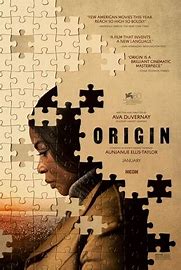
Origin
Isabel Wilkerson’s book Caste was ground-breaking, and this film (directed by Ava duVernay) tells her story, of the research and writing that led to its publication, at a time of great personal trauma for her. Excellent performance from Aunjanue Ellis-Taylor as Wilkerson, and it’s a fascinating and moving drama.
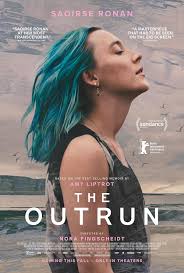
The Outrun
Saoirse Ronan is extraordinary. When isn’t she? This is a non-linear narrative of addiction and (hoped for) recovery, set for the most part on Orkney, where Rona confronts her addiction and her relationship with her parents (one bipolar/alcoholic, the other having found God) and the uncompromising landscape. It’s never sentimental, often very low key (in the Orkney scenes at least). And Saoirse Ronan is extraordinary.


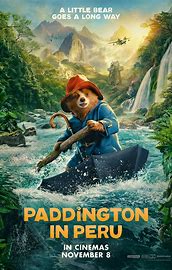
Paddington in Peru
Not entirely necessary, but thoroughly enjoyable. Antonio Banderas and Olivia Colman were clearly having a blast.
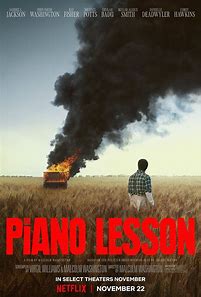
The Piano Lesson
Based on one of August Wilson’s stage plays, this is a supernatural drama, with a fabulous cast (Samuel L. Jackson, Danielle Deadwyler, John David Washington amongst others). It has been described as ferocious Southern Gothic, and it’s intense and moving.
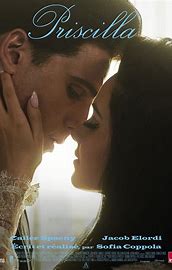
Priscilla
Another ‘invisible woman’ (see above). We see Elvis through her eyes, as a lovestruck teenager, and then as a fearful, isolated and lonely wife, as he cheats on her, encourages her to take a variety of pills, keeps her away from his life on tour and from friendships with contemporaries – controls all aspects of her life. She is touchingly portrayed by Cailee Spaeny (also seen in Civil War), who conveys her naivety, her headstrong teenage determination to be with Elvis, and her painful realisation that this relationship will never be what she dreamed it would be.
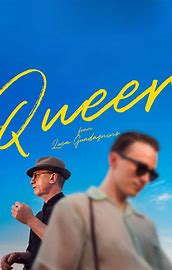
Queer
An adaptation of William Burroughs’ semi-autobiographical account, with Daniel Craig on mesmerising form, seedy and needy, as a gay (queer) writer travelling in Mexico and Ecuador and picking up random men before falling for a younger man. Reviewers variously describe the sexual content as explicit or coy, which presumably depends on what you’ve been used to seeing on screen previously, though it does remind me how we are all inured to straight sex scenes on TV and in film and how much less so to gay sex. But I wasn’t really expecting the veering into dream and hallucinatory sequences, and the later parts of the film were sometimes baffling, sometimes alarming, sometimes gross… My brother (previously seen in Conclave) was in this as well though to my shame, and despite knowing that he was a barman (makes a change from clerical roles) I failed to spot him. Lesley Manville turns up, in an extraordinary and vanity-free performance that just shows what a marvel she is. I was thinking on and off throughout Queer of Under the Volcano (the book, rather than the film), and how that left me feeling quite woozy, as if I’d been overdoing things myself.
The Quiet Girl
A quiet film, a perfect film. Everything in this adaptation of Claire Keegan’s Foster is about the tiny details, the repetition of images, and very little is about what is said. Catherine Clinch’s performance as 12-year-old Cait is extraordinary. The end made me sob but along the way I was moved by those tiny details, Cait having her hair brushed with such tender care, a biscuit left on a kitchen table without any words being spoken (and that biscuit being squirrelled away in a pocket rather than scoffed straight away), Cait’s joy in her daily runs to the post box at the end of the lane. Wonderful.
The Quiet Place Day One
The Quiet Place launched us straight into a world where noise was deadly dangerous, and survivors had adapted to live with as little sound as possible. Here we see how this came about. It’s not a prequel in the sense that it focuses on the family at the centre of the original movie; here we see Lupita N’yongo and Joseph Quinn navigating a terrifying new world, and it’s an excellent and genuinely heart-stopping drama even though we know from the outset what the characters don’t, that silence is the only way to survive.

A Real Pain
Outstanding. The volatile emotional shifts of Kieran Culkin’s Benji take the audience with him – we laugh out loud and then are reduced to silence and to tears, at one moment identifying with and admiring him, and at the next understanding why Eisenberg’s David finds him so exhausting and frustrating. It frequently subverts our expectations, using Benji as a catalyst, and unsettles our assumptions about how one should respond to Holocaust sites. I loved the very low-key scene where they go to lay stones at the apartment where their grandmother lived. And the ending.
Rocketman
This one gets past my biopic problem by being fantastical rather than ploddingly realistic, and Taron Egerton does a fabulous job with the role of Elton John.
Santocielo
Endearingly silly film about angels and an unexpected pregnancy. Featuring Aidan Hallett as an angel.
The Six Triple Eight
The story sounded, and was fascinating, but sadly the treatment is so clichéd, the script is either inspirational speechmaking or folksy girly chitchat from a rather stereotyped group of characters, and the central topic, of just how a battalion of African-American women managed to turn around a monumental backlog of mail to get letters to soldiers on the front line and families back home, gets a much more cursory treatment than it deserves. It wasn’t just determination to prove that they could do it, bloody hard work, or loyalty to their commanding officer (an excellent Kerry Washington) – it was the imaginative application of skills they’d learned in their pre-army lives, and I really wanted to know much more about that, rather than yet another scene with our heroine weeping in the Ladies over her lost fiancé.
The Sound of Metal
Deafness and signing has been a bit of a theme in this year’s watching – see below for Code of Silence and Reunion. Here, Riz Ahmed’s Ruben has to come to terms with hearing loss, a shattering experience for a musician. As the Guardian’s reviewer says, he describes ‘the physicality of signing – of using the whole body as an expressive tool. … While Ruben may hide behind his words, Ahmed has never been more emotionally expressive than when communicating through ASL.’
Wallace and Gromit: Vengeance Most Fowl
Very funny, very clever, and the perfect follow-up to a family Christmas meal.



Television
Loads of crime here (as per). A lot of it is pretty standard fare, but there’s some that stand out, notably Fargo, Code of Silence, Reunion and The Madness, and in the realm of true crime, A Cruel Love. I do a lot of grumbling below (as per) about the clichés that infect almost everything in this genre. The scene where our hero is trying to download something from a computer that’s going really slow, and the direction makes it look as if the bad guy is right outside the room and must catch them at it but no! Bad guy comes into the room and there’s no sign of our hero, or his/her USB. The way apparently sensible people decide that it’s sensible to withhold absolutely vital information or circumvent the rules when it will quite obviously cause massive problems for them and everyone else when their lies or evasions are exposed. If the plot is solid enough, the performances persuasive enough and the writing (particularly the writing of character) clever enough, even these annoyances can be brushed aside. But all too often I get hacked off, and start heckling from the sofa and it does detract from my enjoyment. But nonetheless, if there’s a new crime drama out, I’ll probably give it a go.
There’s been some outstanding SF in the form of Andor, The Last of Us and Who, and outstanding drama with Adolescence. And just the one proper comedy – Shrinking. Looking at the list, I should probably watch more comedy, though I did actually laugh a lot at Fargo, Department Q, and White Lotus…
Special shout out to some actors whose work I’ve particularly enjoyed: Aimee Lee Wood in Toxic Town and The White Lotus, Rose Ayling-Ellis in Reunion and Code of Silence, and Robyn Malcolm in After the Party and The Survivors. And a sad farewell to some that we’ve lost since the start of 2025, each of whom played key roles in long-running series that we loved: George Wendt (Norm!), Loretta Swit (Hotlips Houlihan) and, heartbreakingly, Michelle Trachtenberg, Dawn in Buffy the Vampire Slayer, who was only 39.


Adolescence
I’m not sure that I have much to add to the many column inches that this has generated. It is a superlative drama, not because of the technical triumph of the continuous shot, but because of the way it uses that technique to give the story breathing space, not rushing from one moment or location to the next. The performances are of course brilliant, and heartbreaking.
After the Party
Excellent NZ psychological drama, in which we don’t know for sure if a crime has been committed, and in which the main protagonist (a glorious performance by Robyn Malcolm) is – intentionally – extremely annoying and prompted a lot of shouting at the telly, but remained absolutely convincing throughout.
Andor
I’ve never been a full-on Star Wars person, even though I’ve seen all of the films (apart from that other trilogy which I understand I don’t need to bother with), and enjoyed all of them, especially Rogue One, for which Andor is a prequel (R1 is in turn a prequel to A New Hope – have I got that right? Someone will undoubtedly tell me if not). Anyways, I’m not (evidently) totally au fait with Star Wars lore, and so have been selective in which spin-off series I’ve watched. Of those, this is the best – great storytelling, great, complicated characters, real tension. And great performances from a rather classy cast. Lovely to see Thierry Godard (previously known as Gilou from Spiral) pop up as one of the rebels on Ghorman, and I liked the fact that the Ghormanese (?) sounded like they were speaking French even though they obviously weren’t!
An’t Ei-lean (The Island)
Notable for being largely in Gaelic, with sub-titles. A decent crime drama, with the usual ingredients – including people behaving with unfathomable pinheadery (did our heroine really imagine that her past links with the victim and family would remain undiscovered if she investigated the crime?).
Black Doves
The body count is sky high, the violence quite startling, and it’s all extremely entertaining, with a lot of rather black humour, and excellent turns from Keira Knightley, Sarah Lancashire, and Ben Whishaw (a very long way from Paddington).
The Black Forest Murders
A good, solid German crime drama based on a series of real murders. It’s understated and unsensational and conveys the tedium and frustration of investigation, without being either tedious or frustrating (see also Breakthrough, in a similar vein).


Black Mirror
As usual, this latest season is a mixed bag. Personally, I loved Hotel Reverie (which features on some people’s least fave episode list, but there you go), Common People, Bete Noire (though I wasn’t totally on board for the ending) and Eulogy but wasn’t convinced by Plaything and USS Callister was fun but not as good as I’d anticipated. The casts are always stellar, and it’s at its best when the tech is not only interesting but imaginable as an extrapolation of what can be done now.
Black Snow
Australian cold case crime series – I watched Season 2 having not seen 1. Entertaining enough, but the lead detective is a pain – insubordinate yob with a messed up personal life who nevertheless ends up solving the case by breaking all the rules, which is hardly a fresh take.
The Bombing of PanAm 103
I haven’t seen the other recent dramatisation of these events, so can’t compare their respective approaches, but this one walked a slightly uneasy line between a clear focus on the investigation, with its many dead ends, communication breakdowns and political minefields, and the personal stories of the bereaved. At heart it was a procedural drama, and most at home in that arena. The opening episode, portraying the crash itself, was extremely well handled, and movingly conveyed the shock, confusion and grief of the relatives of passengers, and the local people who lost homes and family members. But the attempt to keep that thread running through the rest of the drama was less successful and whilst it stayed the right side of maudlin, it did feel a little like an obligation, and not the real focus of interest. Whether I would have been persuaded by the other dramatisation that the wrong conclusion was reached in the investigation I don’t know. And whether this drama was ‘necessary’ as some reviewers asked – well, how much of the drama I watch is in any sense necessary? In the case of dramatisations of real events, I’d say that they do serve a purpose. I remember Lockerbie vividly, not through any personal connection but just through watching the news around that time – but my recollections are very fragmentary – anyone even ten years or so younger than me might well barely remember it – and it was historically and politically significant.
The Breakthrough
Swedish drama about an unsolved murder and the dogged commitment of a police officer to find the perpetrator. Low key and subtle.
Call the Midwife
I’d seen the odd episode, but mainly the Christmas specials which inevitably ladled on the sentiment a bit lavishly given the season. So I started at the beginning and worked my way through from 1957 to 1971, and was absolutely fascinated, and impressed by how hard-hitting it often is, even if it tends to leave one with at least glimmers of hope and possibilities of redemption. Given that I cry every time I see a baby being born on screen, this meant at least three guaranteed weeps per episode, and that’s not reckoning with the wider storylines, thalidomide, backstreet abortions, wretched poverty and so on. I found the treatment of religious faith fascinating too, and strangely unalienating to me as an atheist viewer. I could do without Vanessa Redgrave’s pious opening and closing words though – for the early episodes, where old Jennie was reflecting on young Jennie’s experiences, this was fine, but once that connection was lost, all we had was platitudes and pieties, and Redgrave’s voice adds way more gravitas to the words than they can carry. However, I will be there for as many series as there are, will undoubtedly weep in every episode and if I have to grit my teeth for the occasional sentimentality overload that’s a small price to pay.
Code of Silence
Two thrillers on TV this half-year, in which deafness and lip-reading play a huge part (see also Sound of Metal in the film list above). See below for Reunion – both star Rose Ayling-Ellis, whose star has risen considerably since Strictly brought her to the attention of non-Eastenders fans, and she’s superb in both. This one was particularly fascinating as it showed the process of lip-reading, how some sounds are impossible to distinguish from one another, so the lip-reader has to construct the words by combining what is clear with what is likely given the context. It’s very impressive. The plot veered into improbability and thriller clichés at various points but maintained a high level of tension to the end. And whilst Alison did behave recklessly at various points, her motivation – a mixture of the intoxicating effect of being really listened to and taken seriously, and her attraction to one of the people she’s being asked to spy on – was plausible (thanks to Ayling-Ellis’s performance as much as to the script).


A Cruel Love
Excellent account of Ruth Ellis’s story, with a great performance by Lucy Boynton in the lead role. Coincidentally I was reading Nadifa Mohamed’s The Fortune Men whilst watching this series (not literally at the same time, you understand) about a miscarriage of justice in which a Somali man was executed for a murder he had not committed. Ellis, of course, did kill David Blakeley, but that she was hanged for it was as much to do with society’s disapproval of her personal morality as with the strength of the case for first-degree murder.
The Day
This Belgian series portrays the events – v dramatic events, starting with a robbery and the taking of hostages – of one day, in twelve episodes, by showing us the same incidents from different perspectives (the police, the hostages, the perpetrators). It maintains the tension pretty well until the final couple of episodes by which point I admit I was starting to weary a little.
Department Q
By rights I should have been annoyed by this. The lead character is a misanthropic maverick who never does what he is supposed to, is rude to absolutely everyone and gets himself into unnecessary pickles en route to (of course) solving the case. The cast is great but as so many crime dramas show, that’s unfortunately not always enough. It turns out though that when the dialogue is this sharp and funny (very dark humour), when the characters behave with consistency even if they are consistently being dicks, and when there is, despite all the above, real heart in some of the relationships, I can thoroughly enjoy the ride, and will look forward to another season.
Dickensian
I have no idea why I didn’t watch this when it came out in 2015, and even less idea why it was cancelled after only one season. I loved every minute of it, and Dickens’ world is so rich and complex that they could have continued to mine it for ideas as good as these. But at least they did this, with a splendid cast, beautifully written, and a joy for anyone who loves the books.
Doctor Who
I loved Ncuti Gatwa as the Doctor. He brought something different, something joyous, a smile that could light up galaxies, a lightness that belied his capacity for anger. I had hoped for a much longer tenure, but I guess Who got him just as his star was rising, and there were too many opportunities out there for him to resist. We don’t know (at least at the time of writing) for how long RTD had known that he’d only have Gatwa for two seasons, so whether urgent rewrites were required to factor in a regeneration, or whether that was always the plan. And we don’t know (at the time of writing) whether Billie Piper is returning as the Doctor or in some other capacity (the credits didn’t say, as they have done in previous regen episodes, introducing BP ‘as the Doctor’…). All that aside, Gatwa’s second season was just the right mix of complicated ideas, humour, tech and legend. I particularly loved ‘The Story and the Engine’, with its Lagos setting and use of West African folklore (and names – Abena means girl born on a Tuesday, which I know because I am an Abena, or would have been had I been born Akan/Ashanti). Allons-y, I hope, to more Who, whoever the Doc turns out to be. But I’ll miss this Doc.
Dope Girls
This reminded me of Kate Atkinson’s Shrines of Gaiety and indeed, I discovered that both are based on the same real woman, Kate Meyrick, who ran nightclubs in Soho during the 20s and 30s, and was arrested and imprisoned on a regular basis. The series takes liberties with the historical Meyrick but the setting is vividly conveyed, and the performances are great. Julianne Nicholson’s performance as Meyrick (Kate Galloway in the series) also had quite strong Shauna from Yellowjackets vibes at times.



Fake
We know from the outset really that Joe is a no-good SOB. That Birdie chooses not to see the red flags is, however, understandable in context. And if the series hadn’t been called Fake, would we have seen them quite so early or so clearly? The emotional tension is built up skilfully and the performances are great – and whilst we aren’t in any doubt that Joe is a wrong ‘un, we don’t know quite what he’s up to, and the drama doesn’t give us easy or tidy resolutions. Very well done.
Families Like Ours
Brilliant drama, set in a near-future Denmark where climate change has forced the country to, in effect, shut down and its citizens to migrate to whichever countries will offer them a home. It’s a ‘what if’ narrative, and it tackles lots of aspects – the scope for corruption as those who know what’s coming try to sell up before other people realise that property and land will soon be worthless, the resistance of other countries to an influx of climate refugees, and the smaller scale impact on families as members are forced to take different routes to safety, and some to take huge risks to reach each other. What has remained with me, more than the personal dramas, is the way it portrays the impossible choices, the inexorable sequences of events and the way in which potential sanctuaries very quickly pull up the drawbridge.
Fargo
One of the best of the series spinning off from the original Coen Brothers film. Juno Temple is wonderful in the lead role, and right from the start, I’m rooting for her, as I did for Frances McDormand’s Marge, and literally sitting on the edge of my seat and holding my breath during the tensest bits of the plot. As always there’s lots of dark humour here too.
Get Millie Black
A cop series set in Jamaica, with a cop who’s on a personal mission, never knowingly does what her superiors tell her to, and so on. Excellent plot, nevertheless, and a protagonist who is convincing even when annoying.
I, Jack Wright
Cracking cast play various members of a family whose members may or may not be involved in the death of patriarch Jack Wright, but who are all up to something and lying to pretty much everyone else about everything. It’s very clearly set up for a second series and I’ll be there for it. Written by Chris Lang, the writer behind Unforgotten which is consistently one of the best series out there.
The Last of Us
Utterly gripping, and for those of us who have never played the game, there are absolute gut punches in this second season. I won’t say more for fear of spoilers, but it’s beautifully done, and Pedro Pascal and Bella Ramsey are superb as the two main leads.



The Madness
Colman Domingo is splendid in this paranoia fest as a man who finds himself being framed for murder, and we’re with him on every step of the way, as he tries to stay just ahead of the various forces who are closing in on him. It’s breathless and thrilling, and whether or not it’s entirely plausible, we don’t really fret, because we’re invested.
Malpractice
This starts off brilliantly as a study in just about controlled chaos on a psychiatric and an obstetrics ward, where staff are struggling to meet the needs of challenging patients whilst managing their own personal crises and pressure from management. The main protagonist behaves idiotically but notwithstanding that there are real issues and it’s all extremely tense. Towards the end it does get a bit generic thriller, with a whistleblower rocking up at the very last minute to save the day, and a dramatic showdown where the bad guys are exposed. That tends to sideline the more complicated (and very interesting) questions about how patients with diagnosed or undiagnosed mental illnesses are treated in a medical context, or how life and death decisions can be made in complex situations, or about resourcing of psychiatric care, etc etc. But overall, a decent medical drama.
Miss Austen
A very different pace to much of the above (and below), with the ever-marvellous Keeley Hawes as Jane’s sister Cassandra, addressing the mystery of why many of Jane’s letters were destroyed after her death. It’s speculative, of course, but persuasive, and beautifully done. I also watched an excellent BBC documentary series, Jane Austen: Rise of a Genius and am hankering after a full Austen re-read – perhaps starting with Mansfield Park, the one I did for A level that I haven’t re-read since.
Missing You
It’s another Harlan Coban thriller. Plot holes aplenty, great cast rather wasted on shallow characterisation and clunky dialogue. You know what you’re getting with these, and they pass the time.
The Night Agent
Not a patch on the first series (with which I had some issues) – disbelief simply could not be suspended as the improbabilities multiplied with each episode, and our hero’s exceptionally annoying girlfriend behaved idiotically at every turn. I watched to the end, inevitably, but will try to resist series 3 if there is one.
The One that Got Away
A clever, complex narrative (an English language version of the Welsh drama, Cleddau), not without some of the usual crime drama tropes, but they’re used intelligently. I did want to shout at both the leads, but particularly Richard Harrington’s Rick, quite often, but they were both consistently drawn and convincingly played.


Patience/Astrid: Murders in Paris
Patience is a British remake of French series Astrid: Murders in Paris, and some episodes of the former follow very closely the original plot lines as well as the premiss, which is the semi-official recruitment of an autistic young woman who works in the archives in active investigation of crimes because of the way she observes minute details and perceives patterns. Ella May Purvis, who plays Patience, is herself autistic, and I found her performance particularly persuasive, and often very touching.
Prime Target
This started off well, with an intriguingly abstract concept (to do with prime numbers, though I can’t claim I entirely understood) but meandered off into standard thriller territory disappointingly quickly, with all the usual tropes deployed. The performances are good and the script decent, at least.
Protection
This had a cracking cast – Siobhan Finneran in the lead – and again an interesting premiss, this time about a breach of security regarding a family in witness protection – but again it got mired in too many of the standard crime drama elements. Nonetheless, it was pretty gripping.
Reunion
Initially I noted this one as a must-watch because it was filmed in and around Sheffield, including some locations very close to home. But in the end, I was so focused on watching the drama that I forgot to look out for the places I expected to recognise. As noted elsewhere (see Code of Silence and Sound of Metal) deafness has been an unexpected recurring theme in recent weeks. The protagonist has been failed by the education system, manipulated by the justice system and failed again by the prison and probation systems (‘oh dear, we forgot to book a BSL interpreter’, is a recurring motif, and the consequences of this are from from trivial). There’s a thread of real anger running through the plot and reflected in the powerful central performance by Matthew Gurney.
The Rig
Series 2 of this sci-fi environmental thriller (shades of John Wyndham) was let down by a terribly clunky script. I don’t remember Series 1 being as bad as this, and I am very sensitive to clunks. I suspect a third series is on the cards, but I might not bother, which is a shame because there are interesting ideas in there.
SAS Rogue Heroes
I loved both series of this. It’s odd in a way – if I met any of these mad bastards in real life I’d want to give them a wide berth, but the series humanises them without whitewashing the mad bastardry. The history of the invasion of Sicily and the battle for Termoli wasn’t familiar to me, and I know that the disclaimer broadcast at the start of every episode means that I can’t rely uncritically on this as a historical source, but it was interesting, and broadly accurate enough, nonetheless. Watching this kind of intense action heroics is something I’ve always enjoyed, and the WW2 context allows me to enjoy it without qualms, because these mad bastards are risking everything in the fight against a real evil.



See No Evil
This is from 2006, with Maxine Peake as Myra Hindley. I wasn’t sure I wanted to watch it but the cast (Maxine Peake in particular) suggested to me that it would not be schlocky or voyeuristic. We see events through the eyes of Myra’s sister Maureen, and her husband Dave – the latter was implicated early on in the murder of Edward Evans, but then cleared of involvement, and the impact of the crimes on both of their lives was huge and long-lasting. When we first meet Hindley and Brady, they have already murdered and so the only murder that we see (in glimpses) dramatically is that of Evans, as it was witnessed by Dave. This decision means that the focus is not on what Hindley and Brady did, but on the investigation and the repercussions of the case.
Shrinking
This made me laugh out loud more than anything else I watched on TV this year and also made me cry quite a lot. The cast is brilliant, the dialogue snappy and rude and funny, the humour and the heartbreak nicely balanced and interwoven. Harrison Ford is an absolute joy.
Strike: The Ink Black Heart
Based on by far the weakest of Robert Galbraith (aka J K Rowling)’s detective novels, the TV version does what it can but isn’t able to stop it being both muddled and rather tedious. It’s all about a cartoon but too many of the characters are cartoonish.
The Survivors
Adapted from one of Jane Harper’s excellent thrillers, this gets its claws into you right from the start and doesn’t let go. It’s not just about twists and cliffhangers, it’s about the legacy of a crime – grief and guilt – and how that shapes and twists relationships and communities.
This City is Ours
The territory is familiar – a crime family facing issues of succession and change and jostling for power amongst the younger generation. The cast is excellent – Sean Bean is always hugely watchable, and I’m always absurdly pleased when he retains his Yorkshire accent( even though here the setting is Scouse). And whilst it doesn’t offer any huge surprises in terms of the outworking of the plot (no, you can’t just walk away from OC, particularly when it’s a family business) it achieves real tension along the way, and some nicely nuanced characterisation.
Toxic Town
Based pretty closely on the real court case about a cluster of infant abnormalities resulting from toxic waste. Some characters are composites as is normal in these things, and it plays out v much like Mr Bates, especially in the scene where they’re thinking no one will turn up to the first meeting, and then there’s a trickle of people, and then a flood… The central performances are excellent – Jodie Whitaker, Claudia Jessie and Aimee Lou Wood as the three mothers at the heart of the case, and Rory Kinnear as the lawyer who decides to take the case on.


Towards Zero
Stylish and engaging Agatha Christie adaptation with a fab cast having a grand old time, and the dénouement keeping me, at least, guessing till the end. Christie at her best (for me usually the Marples rather than the Poirots) has a kind of darkness that lingers with you after the whodunnit question is answered and this isn’t one of those, but most entertaining.
The Vanishings
This has a basis in some true, unsolved cases where women disappeared. But unfortunately the series just uses that as an excuse for a clichéd women-in-peril set up, with far too many sub-plots and red herrings, characters behaving with unfathomable pinheadery and a ludicrously improbable dénouement that clearly sets up a Season 2 which I hope I will have the strength of character to resist.
Vera
Ah, Vera, I will miss you. A great character, with a strong supporting cast (including many who’ve gone on to even greater things, like Ben Kingsley-Adir and Cush Jumbo) and consistently well-written and structured plots. Refreshingly, the murders aren’t the baroque constructs of a fiendishly clever serial killer but rooted in people’s chaotic past and present lives (as with Unforgotten). And the landscapes are glorious.
Virdee
Speaking of ‘the baroque constructs of a fiendishly clever serial killer’… I was really, really disappointed in this. The plot holes were so numerous and so sizeable, the fiendishly clever serial killer’s motivation and intentions were so muddled, and it reminded me at times of the Bond movies where the evil mastermind intent on world domination, having Bond at his mercy, hangs about explaining things and generally engaging in displacement activity, thus giving Bond time to escape. The setting for Virdee was great, many of the characters were great, but the plot just got sillier and sillier and I lost patience.
The White Lotus
I caught on to this rather late, when everyone was talking about series 3 and a friend was incredulous that I’d never watched it. Huge, huge fun, with lots of characters to boo and hiss at (a minimum of one massively entitled man-baby per season, in particular), but always a couple to identify with or at least root for. I wasn’t very successful in avoiding spoilers (the perils of catching on to things rather late), so some of the shocks were not as shocking as they might have been, but the cast was outstanding, and I had a grand time.
Zero Day
I’m not sure I enjoyed this quite as much as Lucy Mangan, who described it as ‘first and foremost an astonishing amount of fun – firmly grounded by De Niro and his portrait of a good man struggling to do the right thing in a world that offers corruption at worst, and only compromise at best’. But it was fun, and De Niro was a blast, even if the denouement didn’t entirely convince.


Documentary
The Balkans: Europe’s Forgotten Frontier
Not a travel programme, as one might guess from the presenter. Katya Adler focuses on history (mostly very recent) and politics to explore the various new nations that make up the Balkans. Very interesting, mostly new territory for me.
Britain Under the Nazis: The Forgotten Occupation
I knew very little about the occupation of the Channel Islands, though I do remember a book I read as a child, set on a fictional island nearby, and written in 1941, about the early stages of invasion and occupation (Mary Treadgold’s We Couldn’t Leave Dinah). It seemed surprising that so little has been written about it, given that the islanders were the only Brits to experience occupation of their homes, and that their experiences are, in microcosm, those of occupied peoples in mainland Europe. But given how long it took for the full picture, the shades of grey, to emerge in relation to the experiences across the Channel – initially polarised into splendidly heroic resisters or scoundrelly collaborators, but actually much more complex as people negotiated how to survive – perhaps I shouldn’t be surprised. The documentary is very well done – that it leaves me wanting to know more is a tribute rather than a criticism – with dramatised sequences drawn from the wartime diaries of a small number of islanders.
7/7 The London Bombings
Excellent account and analysis of the terrorist attack. Of course I remember the events from the time, but there was a lot here that I hadn’t known, particularly relating to the second, failed attack, and the killing of Jean Charles Menendez. The interviews with victims and first responders are powerful and profoundly moving.
The Lost Women Spies
I wish this had either been straight doc or straight drama. The hybrid approach here resulted (as it often does with these things) in rather wooden dramatic interludes, with frankly awful dialogue. A shame, given the power of the story it’s trying to tell. It would be almost impossible to make an account of the wartime service of Odette Hallowes, Violette Szabo and Noor Inayat Khan dull, and this isn’t, but I winced at the scenes where Atkins and Buckmaster have conversations that seem to consist of one of them saying something and the other repeating it incredulously. And that these were included at the expense of seeing, for example, Inayat Khan’s capture and attempted escapes is bizarre.
No. 1 on the Call Sheet
A two-parter about the black actors who have achieved that status of no. 1 on the call sheet (even if not always no. 1 on the payroll), featuring, well, pretty much everyone you can think of who’s still with us (and it paid heartfelt and heartbreaking tribute to Chadwick Boseman, who isn’t). It wasn’t the deepest exploration of the issues but it wasn’t just a superficial celebration either, and many of the individual testimonies were very powerful.
Vietnam: The War that Changed America/Turning Point: The Vietnam War
Two fascinating, powerful documentary series. The first focuses on the impact of the war on America and Americans, whilst the second, the latest in the excellent Turning Point series (earlier series have covered 9/11, and the bomb and the Cold War), takes a more straightforward chronological approach, and includes interviews with Viet Cong fighters as well as US veterans. It’s pretty devastating stuff – not just the brutality but the cynicism of those who allowed the war not just to drag on but to escalate.




2024 On Screen – the second half
Posted by cathannabel in Film, Television on December 10, 2024
Most of what I watched at the cinema or at home during the second half of the year is here. It still feels strange to me to be watching the TV on my own. The plus side – no one is going to veto costume drama, literary adaptations or yet another WW2 drama – is very much offset by the downsides of not having someone to talk with about what I’ve just watched, to share the experience with. I’ve found that comedy, in particular, suffers from being watched solo. A few things have overcome that this year, but I’ve abandoned quite a few comedy series because it just felt weird. I’m also less keen on scary movies, for obvious reasons. Even with all the lights on, it’s a lot harder to shake off the creepy feeling if there’s no one to have a mundane conversation or a laugh with. With all that said, film and television take me outside of my own environment and my own company, broaden my mind (at best) and horizons, and (at best) lift my spirits. I’ve omitted from the account below things that were just ‘meh’, things that I abandoned after one or two episodes, and season x of things that I’ve been watching for a few years.
Big Screen
Most of the films in this half of the year were actually seen on the smaller screen. At the cinema I saw Radical, Electric Lady Studios, Gladiator II and Conclave. And perhaps fewer of the films were truly outstanding – I think I’d had a run of really top-notch films in the first half of the year. Which doesn’t mean there aren’t some absolutely excellent ones here – Anatomy of a Fall, Blitz, Conclave and Lady Macbeth stand out but I’d pick Perfect Days as my favourite (partly because it was so unexpected).
All About Eve (1950)
I have seen this before, obviously, but not for a very long time. There was a period in my twenties (I think) when there seemed to be Bette Davis movies on every Saturday afternoon, and it was glorious. I caught the second half of her earlier film Dark Victory just before this one, and it was instructive to see how things had changed – DV was very stagey – lots of big gestures, AAE much subtler and darker (I thoroughly enjoyed both). AAE is so well known that I can’t imagine watching it without knowing what Eve is up to, but whilst there isn’t that potential element of surprise, it’s still gripping to see how it all plays out, and the performances from Davis, Anne Baxter and Celeste Holm, are superb.
Anatomy of a Fall (2023)
I saw Sandra Huller in Zone of Interest not long before I watched this – she’s remarkable in both films. In many respects this is a classic mystery – a man falls to his death, but did he jump, fall by accident or was he pushed and if so by whom? We don’t really know till the end – even then I wasn’t totally certain I had put the pieces together correctly, so it merits a re-watch. Whilst that puzzle is the plot, what makes the film great is the drawing of the characters, especially Huller’s character Sandra, and how we see them from different points of view as the investigation continues. Excellent, gripping stuff.
Belle (2013)
I wanted to love this, and I certainly liked it, but it was somehow underwhelming. I’m not sure why. The story should be compelling enough, the performances are fine, but it was perhaps too conventional in its approach, and the parallel story of the Zong massacre needed more development (not just exposition) to be as powerful as it deserved.
Black and Blue (2019)
Cracking action thriller – shades of ’71 and Assault on Precinct 13 at times – with Naomie Harris as the Afghanistan vet newly recruited to the New Orleans PD only to find herself isolated from both the black community she grew up with and her new ‘blue’ community of cops. It hints at deeper issues (race, police corruption post-Katrina) but that’s not really what we’re about here – it’s a thrilling ride, and the tension ramps up quickly and then doesn’t let go.
Blitz (2024)
McQueen weaves a number of real stories – some very specific, like those of the Nigerian ARP Warden, and Ken ‘Snake-hips’ Johnson who died at the Café de Paris, others more representative, like the criminals who profited from the Blitz by robbing bombed buildings, or the firemen struggling to get the water through their hoses with the Thames at low tide – into his tapestry of life in the East End of London at the height of the Blitz. Saoirse Ronan is wonderful, as she always is, Paul Weller is excellent in an understated role as her dad, and Elliott Heffernan outstanding as 9 year old George. In many ways, it’s quite a traditional narrative, invoking – inevitably – other treatments of the era (Atonement, very specifically). (I was puzzled though by reviews which suggested The Railway Children as a reference point – aside from the fact that Blitz features (a) trains and (b) children, I see no real relationship there.) But McQueen’s visual imagination, and the way Hans Zimmer uses sound, go beyond that traditional approach. And the thread running through it all is that we are seeing the people that the traditional narrative of the Blitz and of ‘Blitz spirit’ left out, particularly the black Londoners. (See also Lucy Worsley’s documentary, Blitz Spirit, on iPlayer, which covers some of the same territory, almost certainly through many of the same sources.)
Bombshell (2019)
See also She Said, from 2022 – both films tell part of the #MeToo story. Bombshell is an account of how Roger Ailes, serial sexual harasser and bully at Fox, was brought down as the women started to talk, to each other and to lawyers. Whereas She Said is from the perspective of the journalists looking to uncover Harvey Weinstein’s regime of abuse, here we see things from the point of view of the women who may have prospered professionally but had to endure years of humiliation and the constant awareness that his favour was on a whim and could be withdrawn at any time. These are nuanced portraits, showing how so many women in the workplace survive by constantly masking, adapting, smiling, conforming, until they can’t do it any more. Variety‘s reviewer said that ‘Bombshell is a scalding and powerful movie about what selling, in America, has become. The film is about selling sex, selling a candidate, selling yourself, selling the truth. And about how at Fox News all those things came together’.


Carol (2015)
Superb. Blanchett and Mara are wonderful, both complicated, difficult to read, so that they continue to surprise us. The film always looks fabulous, but there’s a sense that we’re seeing surfaces, public personae, and that so much is hidden, as it had to be.
The Children Act (2017)
Good, solid adaptation of an Ian McEwan novel (one that I haven’t read). As in so many of McEwan’s books and films, the protagonists inhabit this very cultured, privileged world (everyone is a lecturer, a lawyer, a writer, with a big London house), and I do sometimes find that trying. But the ethical and philosophical questions with which Emma Thompson’s lawyer grapples are fascinating and she is excellent, as is Fionn Whitehead as the boy at the heart of that dilemma.
Churchill (2017)
With Brian Cox and Miranda Richardson as Winston and Clemmie, this should have been decent at least. But it wasn’t. The portrayal of Churchill was a caricature, his actions frankly unbelievable (seriously, on his knees praying for bad weather so that the D Day landings could not go ahead?) and his motivation opaque. One reviewer described it as ‘uniquely awful and tedious’. And from everything I have read, it is historical nonsense.
Coco (2017)
Top-notch Pixar. The animation is stunning, the folklore around the Day of the Dead is explained enough for the story to work, without weighing things down with exposition, the songs are great, and the ending made me weep. The notion of people dying finally when no one living still remembers them, was bound to connect with my own experiences of bereavement, and perhaps particularly with the long, slow bereavement of dementia… (Pixar’s previous excursion into the afterlife, Soul, drew on a whole different set of ideas and cultural traditions, but was also very touching, and very musical.)
Cold Comfort Farm (1995)
Gloriously funny adaptation of a gloriously funny book. A collection of superb actors, having enormous fun – Ian McKellen as the spiritual leader of the Quivering Brethren, Rufus Sewell, Eileen Atkins, Stephen Fry and more. And Kate Beckinsale is a joy as Flora Poste. I laughed out loud, quite often, which is something I find I don’t do so much these days, now I’m on my own. It felt good.
Colette (2018)
Good, solid biopic, focusing on the sexual politics of the time, with excellent performances from Keira Knightley and Dominic West.


Conclave (2024)
Based on the Robert Harris novel, this subtle, clever thriller (a thriller full of drama but largely without big dramatic incident) takes place entirely within the Conclave, the locked-down part of the Vatican where the assembled Cardinals meet to choose a new Pope. With each vote the picture changes, certainties are eroded, new threats emerge and predicting the outcome would be a fool’s game. The Guardian‘s review is very positive about the film, but its first paragraph gets in a fair few snooty put-downs for the source novel (‘easily devoured’, ‘pulpy’, ‘beach read’, ‘pot-boiler’ – yes, we get the picture, but the book is far better than that, IMO). Berger’s adaptation holds the attention throughout and touches on a whole host of questions from the world outside the Conclave that are reflected in the conflicts within it. The performances are superbly understated – Ralph Fiennes as Cardinal Lawrence, playing detective whilst wrestling with his own ambition, Stanley Tucci as liberal Cardinal Bellini, John Lithgow as the more obviously machiavellian Cardinal Tremblay and Lucian Msamati as Nigerian Cardinal Adeyemi, representing an increasingly powerful force in the Church – and then there’s the new guy, who’s appeared from nowhere. Isabella Rossellini leads the Sisters, who feed the Cardinals, but don’t get a vote. There’s a wonderfully atmospheric soundtrack, and clever use of background sound – dramas that happen off-screen and are only imperfectly overheard, even the sounds of breathing and papers rustling claim our attention in this largely still space. And, with commendable restraint, I have waited until now to mention, just in passing, that my brother is present on screen in a number of key scenes, as one of the assembled Cardinals (a non-speaking role but, I feel, crucial). With even more commendable restraint, I did not cheer or nudge the person in the next seat to say ‘look, that’s my brother’, but I was very excited.
The Damned United (2009)
Martin Sheen does a superb job of playing Clough, at his most truculent and bloody-minded. Whether it is entirely accurate is another matter, but it rings true, and conveys something of the reality of 1970s football (I know, I was there. Not at Elland Road or the Baseball Ground, but at the City Ground, both before and during Clough’s reign there).
The Edge of Love (2008)
Keira again, this time with Sienna Miller as the lover and wife respectively of Matthew Rhys’s Dylan Thomas. I didn’t quite believe in this version of Thomas – somehow, despite being better to look at than the real thing, the source of his attractiveness to these two women was unclear. So this was perhaps a miscasting – Miller and Knightley on the other hand dominate the film.
Electric Lady Studio (2024)
Excellent documentary about Hendrix’s Electric Lady Studio, completed only a short while before his death but which seemed to embody his dream of a place devoted to making music. Lots of interviews from people who knew and worked with Hendrix, lots of clips that I’d never seen before (despite having been immersed in Hendrix’s music for over fifty years).
Elvis (2022)
Austin Butler’s performance is glorious, I’m less sure about Hanks, who seems to veer towards caricature, but given that the film does not aspire to straightforward biopic realism, maybe that’s what was intended. But overall, the film was hugely entertaining and whenever Butler was on screen, I was mesmerised.
The End We Start From (2023)
The brilliant Jodie Comer in a disaster movie setting, where catastrophic flooding leaves her homeless with a new baby, negotiating a highly dangerous world to find her way to safety. My only problem was that I could not quite switch off the part of my brain that was constantly asking boring practical questions about how the baby always had clean clothes, etc, which wasn’t really the point. It was more about how quickly the infrastructure of society crumbles, and how everything that we count on becomes uncertain and perilous (see also Threads, below…), and how in the face of all that, one might survive.



Firebrand (2024)
The film does warn viewers that history tends to leave a lot of gaps when it isn’t covering men and wars, and that those gaps may be filled with – sometimes wild – speculation… But it’s pretty plausible, for the most part, and much of what we see on screen is well-documented, and familiar from various ‘Henry & the Six Wives’ dramas on TV and film. Alicia Vikander is excellent as final and surviving wife Catherine Parr, as is Jude Law in a vanity-free portrayal of the King (those wobbly buttocks – surely not Jude’s?). I’d just finished watching the first series of Wolf Hall and what came across in both treatments was the constant fear in which one would have lived if one was close to the King – enemies constantly circling and seeking their opportunity to strike, and the King himself, mercurial and volatile, believing absolutely that he is absolutely right. This fear is written on Vikander’s face, as it was on Claire Foy’s as Anne Boleyn.
Gladiator II (2024)
I enjoyed this enormously. I’m not as passionate about the first film as some, I’ve only seen it once and that a while ago, so I wasn’t as conscious of all of the references and echoes as its true devotees would be. So it may be that I enjoyed it more for being able to take it on its own merits, rather than comparing it. I also had forgotten that in GI, Lucius is not Maximus’s son – or not known to be. Perhaps having carelessly disposed of Maximus’s actual son in GI, Ridley Scott realised he had missed a trick and retro-engineered an earlier relationship between Maximus and Lucilla that resulted in Lucius’s birth. Other than that, even with my less than total recall of GI, it was obvious that the plot of this film followed the same pattern as that of the first, and so there was a certain lack of suspense (there was never any real possibility that Acacius’ coup would succeed, or that the two armies facing each other at the end would decide to fight rather than uniting around Lucius). But the set pieces were spectacular (those baboons really spooked me and my one, terrifying encounter with a baboon on a path at a wildlife reserve in Nigeria, has been popping back into my mind rather a lot – he clearly wasn’t in the mood for ripping little girls’ throats out, so whilst I stood frozen with fear, he just ambled off), and the performances were great – Denzel Washington’s in particular, and Paul Mescal was charismatic without merely being a Russell Crowe #2.
Hitman (2023)
Highly entertaining, based (loosely) on a true if improbable story. Also somewhat improbable is that the hero, as portrayed by Glen Powell, is supposed to be the kind of bloke that fades into the background…
In the Heights (2021)
Fabulous, touching, ultimately uplifting and joyous musical from Lin Manuel Miranda.
Inside Out 2 (2024)
It was never going to have quite the impact of the first film, but introducing the maelstrom that is puberty brings in a whole lot of new emotions. Anxiety, oh, how well I know you… It’s clever, witty and has a lot of heart.
Joy (2024)
The story behind the birth of the first IVF baby, Louise Brown. It’s a straightforward narrative, with nice period details, and excellent performances from Thomasin McKenzie (so good in Life after Life and Leave no Trace) as Jean Purdy, the third and until long after her death unsung member of the team, along with James Norton as the research scientist and Bill Nighy as the surgeon. It’s low-key but Purdy centres it on powerful emotions – her own and those of ‘the Ovum Club’, the women who sign up to be, essentially, experimented on in the hopes that they might become pregnant at last. Every failure in the lab is a heartbreak for one of them. But we know that one of these women will have their baby, and in that climactic scene, with the sound of Vaughan Williams’ The Lark Ascending on the gramophone, I was swept away by my own memories, and by thoughts of all the women I’ve known who had their longed-for babies thanks to this pioneering work.


Kingdom of the Planet of the Apes (2024)
Fourth in this fine series, with stunning CGI. Could be the start of a second trilogy rather than an addition to the first, given the time that has elapsed since the events of War for, and the world we’re in now presents new threats and challenges to both apes and humans.
Lady Macbeth (2016)
Florence Pugh is magnificent (when is she not?) and terrifying. Especially when she smiles, or giggles. She’s more often impassive, but behind that mask there is desire, and rage. We sympathise, a young woman effectively imprisoned in the house by her father-in-law and her husband, neither of whom is remotely interested in her well-being. And then her jailers unwisely leave her unattended for a while, and things get messy, very quickly… The Guardian‘s reviewer said that ‘As Katherine, Pugh has the vaulting ambition of Shakespeare’s character (a single line, “It is done”, pays homage to the great ancestor), also the Flaubertian yearning of the passionate woman subjected to the bourgeois tyranny of wifehood, as well as the modern noir obsession and criminal daring that begins to assume its own momentum. Katherine has cunning and a talent for survival. She starts out Madame Bovary, and winds up Mr Ripley.’
The Last Duel (2021)
Jodie Comer again, with Damon and Driver, in a story about property and law and revenge – and rape. Any film set in medieval times falls prey to the Holy Grail problem – it is impossible not to find lines from that film popping into one’s head, quite inappropriately, as one bloke in armour rides up to the castle and demands entry, or whatever. Once one has acknowledged and dismissed this as best as one can, there’s a cracking drama going on, with an absolutely fascinating view on sexual politics. It’s extraordinary, that what one might imagine to be a liberating belief, that the woman’s pleasure is central and crucial, becomes just another way of constraining women. The film uses the Rashomon device so that we see events first through Matt Damon’s boorish squire/knight, Marguerite’s husband, and then through Adam Driver’s caddish but cultured le Gris and only then as Marguerite experienced them. Le Gris’s chapter is particularly interesting – does he truly believe, as his later behaviour suggests, that no rape occurred? Certainly from the viewer’s perspective there is not a shred of doubt.
Lola (2022)
Fascinating low-budget sci-fi/alt history film about two orphaned sisters who build a machine that can pick up broadcasts from the future. There’s a lot of fun with this, as they discover Bowie, several decades ahead of time, but then things turn darker as the war begins and their machine can serve a different purpose. It’s black & white, ‘found footage’ (although one wonders with some parts of the film who exactly was filming and how), with a fragmented narrative structure. It’s really sharp, original and engaging.
Men (2022)
Jessie Buckley is traumatised after the shocking death of her husband and so relocates to a big empty house in a village in the countryside, where she knows no one (as you do…). Everyone here is creepy AF, and they all look like Rory Kinnear (which is not the same thing) and things get creepier and bloodier and grosser and who knows what the heck it all adds up to in the end. The men Buckley’s character, Harper, meets start off just as a bit patronising, and end up full-on murderous, and the title does seem rather as if it’s talking about Men (yes, in this film at least, all men), not just these men. It’s not an ideal film to watch whilst alone (albeit not in an unfamiliar house in a remote location) but by the time we reach the indescribable concluding section, we’re way beyond unease and feeling a bit creeped out, and it’s not so much scary as extremely hard to watch (and impossible to unsee). Bonkers.
Midas Man (2024)
Excellent biopic of Brian Epstein, very well cast and imaginatively presented, with a bit of fourth wall breaking as we whizz through the years. Does it tell us anything new? Well, that depends on how familiar we are, I guess, with that story – I’ve read loads and watched loads and there wasn’t anything dramatically new, but it was very enjoyable. The only problem was that they didn’t have the rights to use any Beatles compositions so the uninitiated might come away with the impression that they were a covers band…


Mr Klein (1976)
I’ve been trying to track this film down for years, and finally managed to rent it (probably it resurfaced after the death of its star, Alain Delon). Delon plays an unscrupulous art dealer, who is happy to obtain artwork at knock-down prices from Jews desperate to get out of Occupied Paris, until a chance event links him to another, Jewish, M. Klein. It reminded me very much of Arthur Miller’s novel, Focus (see my books blog), in which a personnel manager gets a new pair of glasses which make him look Jewish and how his life unravels from that moment. Of course, whilst Miller’s character encountered violent bigotry, M. Klein faces death. Absolutely fascinating film.
Mrs Harris goes to Paris (2022)
Utterly charming, utterly improbable, Paddington-esque tale. Lesley Manville is as brilliant as always, Isabelle Huppert is great too, bringing her trademark icy charm.
One Love (2024)
Kingsley Ben-Adir is great, but I have a biopic problem, in that, as wonderful as the performance may be, I’m still seeing it, ultimately, as an impression, a set of learned mannerisms, and my belief is sadly unsuspended. But given that – which I guess is a me problem – it’s pretty good, and I was pleased to see appropriate prominence given to Marley’s religious beliefs, and his character not overly sanitised. And of course the film is full of the most wonderful music.
Operation Mincemeat (2021)
One of those ‘you couldn’t make it up’ wartime stories, which I’d read about in Ben MacIntyre’s account. It’s a good, solid tale, well told.
Perfect Days (2023)
A near perfect film. If someone had told me I would say that about a film whose action takes place for the most part in Japanese public toilets, I might have been slightly sceptical. But it is quiet and gentle and perceptive and very beautiful and all I can really say is, watch it, if you get the chance.
Radical (2023)
This was walking a very fine line, between Season 4 of The Wire unbearably bleak, and unbearably sentimental. And it walked it just about right. Tales of an inspirational teacher who reaches the unreachable kids are always prone to idealisation (e.g. To Sir with Love), but this was closer to Entre les Murs, in which the teacher is shown not always to get it right, not to be able to reach everyone. And the situation of the kids he teaches is brutal and heartbreaking, but we know – because this is a true story – that some did make it, largely thanks to him.


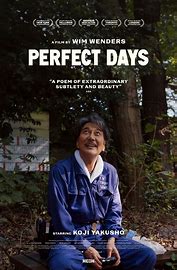

Radioactive (2019)
Rosamund Pike is excellently spiky and ‘difficult’ as Marie Curie. Whilst I’d grown up with the story of Marie Curie, I’d never heard about her work in WWI, setting up (with her daughter) a mobile X ray unit, which enabled many unnecessary amputations to be avoided, and many lives saved. I’m not entirely sure though about the intercutting with various vignettes showing the impact – for good or ill – of the Curies’ work, which seemed a bit on the nose.
The Red Shoes (1948)
I can’t excuse the fact that I hadn’t seen this before – not only as a massively famous and highly regarded movie, but also because I love Powell & Pressburger. So, mea culpa and all that. But I have now, and I’m besotted with it. I also watched a fascinating documentary, Made in England, with Martin Scorsese talking about Powell & Pressburger which gives some fascinating background to this and their other wonderful films. Scorsese described The Red Shoes as ‘wildly inventive, complex and not at all comforting’, which hits the spot, I think.
She Said (2022)
See also Bombshell, the first film to tell the story of #MeToo. She Said shows the exposure of Harvey Weinstein through the work of journalists who tracked down the women he’d assaulted, all of whom were afraid to speak, and many of whom had been coerced into signing NDAs, and accumulated the evidence until it was impossible to ignore it. It’s a sister film to Spotlight, and similarly eschews melodrama for a portrayal of the slog and frequent discouragement of this kind of investigative journalism.
Wicked Little Letters (2023)
A gloriously wicked little film, with Colman and Buckley having a splendid time with their respective roles, as (seemingly) buttoned-up spinster and floozy.
Wind River (2017)
A very bleak tale set in a wintry Wyoming, where a Native American girl has been found dead, and she’s not the first. It’s a brutal, bloody tale, and makes it central point well, that Native American women and girls are not even monitored, unlike those in other groups, let alone properly investigated.
Woman of the Hour (2023)
Really disturbing account of a (real) serial killer who ended up as a contestant on a dating show. Tonally it’s really interesting – the section where we see the programme being filmed is funny and skewers the casual sexism of the presenters and the male contestants, but all the while we know, as Anna Kendrick’s character doesn’t, what one of those contestants has already done. The crimes themselves are shown quite graphically, which makes that part of the film really intense even whilst we’re briefly distracted by Kendricks’ attempts to subvert the format. (PS: Having seen a few series of Married at First Sight (no intervention required, I have kicked the habit now) the idea of a sociopath – or worse – participating in a show of that sort doesn’t seem the slightest bit improbable.)



Small Screen
The usual mix of crime drama (perhaps slightly more true crime – M was never as keen on those), sci-fi/fantasy, thrillers, historical drama, etc. Top sci-fi this half-year is Supacell, top crime Sherwood, true crime Five Days at Memorial, historical Wolf Hall: The Mirror and the Light, and drama, Mr Loverman. Of the documentaries, David Olusoga’s A House Through Time: Two Cities at War stands out. As always, I haven’t reviewed all of the programmes I watched – there were new series of Shetland, The Tower, DI Ray, The Lincoln Lawyer, All Creatures Great & Small, Slow Horses, Vienna Blood, McDonald & Dodds and Midsumer Murders, all ranging from serviceable to superb, which don’t feature below, even though Slow Horses is one of the best things ever (it’s just that it gets a bit tedious to ‘review’ it when all I’m really saying is ‘this is one of the best things ever), and All Creatures is massively important to my mental well-being (particular given the somewhat grim cast of a lot of my watching). And if I started something but abandoned it, you won’t see that recorded here either. I’ve tried to avoid spoilers but you should proceed with caution.
Drama
Agatha All Along
Marvel TV hasn’t given us much that’s really great recently, but this is both huge fun and packs an emotional punch – it follows on from Wandavision, which we loved. Kathryn Hahn is a powerhouse in the lead role. And it’s got a song that’s firmly stuck in my head. And it’s a female dominated storyline (because, witches), like The Marvels but unlike most of the rest of the franchise.
The Claremont Murders
Australian true crime, about a series of murders of young women and the lengthy failure to find the perpetrator (DNA was the breakthrough here). It does give due weight to the effects on the families of the victims, although at least one family member said how traumatic he and others had found the programme. It’s a question that surely must occur with all these true crime dramas where relatives are still living, and some are easier to defend than others, if they shed new light in some way. This is a fairly middle of the road example, but well enough done.
Day of the Jackal
Forget Edward Fox and de Gaulle – here’s Eddie Redmayne in a Mission Impossible style mask with impossible feats of marksmanship, being pursued by Lashana Lynch’s intelligence officer. Glamorous locations, high speed chases, lots of tech, and a thoroughly entertaining few hours. The Jackal and his nemesis are actually more balanced than in the original film – her moral boundaries are shown to be pretty movable, and the question of whether/how one could have a family in their line of work is pressing for both. I don’t think for the most part, however, we are overly concerned with those deeper questions…
The Devil’s Hour
Very, very unsettling. Superbly played by Capaldi and Jessica Raine in particular. I won’t even begin to talk about the plot – you have to just watch it and trust that some of it will start to make some sense, in due course. Once the pieces start to fall into place, it’s still complicated, not just plot-wise, but emotionally (it reminded me of The Lazarus Project). Completely compelling and rather disturbing.
The Diplomat
Series 2 is even more fun than the first and ends with an even more dramatic cliff-hanger. Along the way there’s a lot of fun at the expense of Keri Russell’s Ambassador and her failure to look ambassadorial (I must admit the thought that she surely ought to be able to use a hairbrush occasionally had occurred to me a number of times). Rory Kinnear is brilliant as the boorish UK PM.
Discovery
The final series of Star Trek: Discovery. I loyally watched to the end, but it sustained the kind of annoying tropes that have somewhat spoiled my enjoyment throughout – the idealisation of Captain Burnham, particularly given where she started, is cloying, all of the core crew are straight-up heroes, and there are too many deaths/departures which turn out to be rather less than final. The third point is a common issue with sci-fi/fantasy – after all, if you can reverse death, why wouldn’t you? – and sometimes it is done well, for a purpose, sometimes it’s a kind of ‘have your cake and eat it’ thing, milking the death/departure for viewer tears and then bringing them back to have another go. Discovery tends very much to the latter. Strange New Worlds is far superior, and I look forward to its return.


Douglas is Cancelled
This wasn’t quite what I expected. It was billed as a comedy, for a start, and played as such initially. But the central, crucial episode, set in a producer’s hotel room, is as far from comedy as one could get. It’s deeply uncomfortable to watch and makes the humour in the remaining episodes very dark indeed. Karen Gillan is superb.
Ellis
Whilst there are a heck of a lot of crime series around, some of which are hard to remember after they’ve finished, this one plays on the strength of the lead, Sharon D Clarke, so wonderful in Mr Loverman (see below). And there’s depth to that character, and to her sidekick, so if it gets a second series I’m in.
Elsbeth
Quirky and entirely formulaic crime show which some found intensely irritatingly, but which I rather enjoyed. It’s what they call cosy crime, and there’s no ‘whodunnit’ element – we see who dunnit, we’re just waiting for Elsbeth to work it out, in various quirky ways.
The End of Summer
Twisty, dark thriller. The lead character was frustrating – I do wish from time to time we’d have protagonists in this kind of narrative who actually do their job, without huge lapses into unprofessional behaviour, there must be plenty of those around, and the plot was interesting enough without me having to shout ‘Oh, you are kidding me’ at the screen quite so often. But along the way it was atmospheric, and the twists were well handled and not merely gratuitous.
Eric
Bonkers. A mad cross between Harvey and a very dark tale of mental breakdown, political corruption and homelessness. Cumberbatch is excellent as the children’s TV puppeteer who manifests (or does he?) a new puppet to assist when his son goes missing. If that description sounds too silly to bother with, do give it a try; even if it doesn’t always manage its disparate elements perfectly, it’s never less than compelling. As the Independent reviewer said, ‘Even though the shadow of Big Bird hangs over the series like a, you know, big bird, there is a dark, misanthropic streak to proceedings. Much of the action takes place in New York’s murky, subterranean underworld, but the real sewer runs through the establishment. This is a depraved world, where even that most innocent of things – a children’s TV character – has to spit feathers to right wrongs’.
Everything you Love
Interesting Scandi drama about far-right radicalisation through the story of a young couple meeting again after a long gap, falling for each other, until the young man’s extremist views and actions fracture the relationship. Very well played by both the leads, it leaves a lot of questions unanswered, but that’s fair enough – a tidy resolution would be unrealistic and any neat answer to the question of how/why young men (in particular) are drawn to violent extremism is not yet forthcoming.


Five Days in Memorial
Absolutely riveting account of what happened in Memorial Hospital during Katrina. Initially it’s a fairly straightforward disaster movie scenario, but whilst initially we identify both with the patients and the medics and other staff desperately trying to do their jobs in impossible circumstances, gradually another strand emerges. People start talking (in corners, a bit sotto voce) about making certain patients who would be difficult to evacuate ‘comfortable’, about not leaving ‘any living patient’ behind, and these coded conversations lead to the decision to euthanise a number of those patients. The series then follows the investigation into what happened, and the eventual suppression of legal action against the doctors involved. It doesn’t give easy answers, it’s not good doctors and bad doctors, and one is reminded constantly that at the point when these decisions were taken, there was no certainty of the timescale for rescue, or even whether any rescue would come. Powerful stuff.
Funny Woman
A 60s pastiche about 60s TV and Gemma Arterton’s funny woman. It manages to avoid too crudely overlaying contemporary sensibilities on the characters and setting, though the tone varies considerably, from moments where the ‘real life’ action is as daftly farcical as that in the fictional sitcom, to dealing head on with sexual assault, the policing of homosexuality, and racial violence. A glorious soundtrack made up of the usual suspects but also quite a lot of much more obscure tracks.
A Gentleman in Moscow
Fabulous adaption of the Amor Towles novel, with a lovely performance from Ewan McGregor in the lead, and great support from Mary Elizabeth Winstead and Johnny Harris. Often touching and funny but with a constant undercurrent of dread. The action remains – until almost the end – confined in the Metropol Hotel, like Count Rostov, but what’s going on outside of the hotel’s walls is constantly impinging and forcing its inhabitants to adapt.
The Hour
Drama series about a current affairs TV programme in the late ‘50s, with an absolutely stellar cast – Romola Garai, Ben Whishaw, Dominic West and others. It only got two seasons, which was a shame – I thought it was excellent, and would have loved to see it follow these characters through into the ‘60s.
The Jetty
Jenna Coleman as a cop whose investigation of a current case opens up questions about an old missing persons case, and about her own late husband. Coleman is good, but I found myself frustrated (again) by how unprofessional her character becomes and how quickly, and also by the piling up of twist/reveals in the final episode.
Justice: Those who Kill
The world’s worst criminal profiler is still at it. Either she’s stating the bleeding obvious, or she’s barking up entirely the wrong tree – but here she is, called in again on a tricky gang violence case. It’s all entertaining enough but I keep wanting to shout at them, ‘don’t listen to what she says, she was shagging the perpetrator in her last case but one’…




The Lady in the Lake
A superb adaptation of Laura Lippmann’s excellent thriller, with Natalie Portman and Moses Ingram as the two very different women whose lives intersect unexpectedly. It’s set in the civil rights era and confronts the racial and gender oppression of the times. It isn’t afraid of deeply uncomfortable moments – such as Portman’s Maddie’s assertion that in other circumstances, she and Cleo could have been friends. ‘And what circumstances might those be?’, asks Cleo, to which Maddie has no answer. Along with all of this, and there’s a lot going on here, as the Guardian reviewer put it, ‘Lady in the Lake is also an incredibly sumptuous and fearless aesthetic experience, combining not just the meticulous recreation of the 60s, but also of Cleo’s childhood in the 40s and Maddie’s formative experiences a decade or so later. It uses dream sequences, musical interludes, flashbacks and assorted other devices that in lesser hands can be – and frequently are – mere irritants to flesh out its characters and questions more fully.’
Last Days of the Space Age
I had hopes of this being a good deal more interesting than it turned out to be. It’s too soapy, too formulaic, and glides over a lot of the issues it raises. Fun enough, but it could have been so much more interesting – the context, 1970s Australia, and the interweaving stories about industrial unrest, burgeoning feminist and First Nation activism, Vietnamese refugees, seemed to have a lot of potential.
Mr Loverman
Beautiful, funny version of Bernardine Evaristo’s book, with wonderful performances from Lenny James, Sharon D Clarke and Ariyon Bakare, among others. It doesn’t oversimplify the issues – Barry (aka Mr Loverman) has lied for his whole life, and that’s cheated his wife Carmel of the life she might have had, which in turn has embittered his daughter Donna… And yet, and yet… It’s a moving portrayal of an enduring and tender love, which was hidden because it had to be, until the weight of the years of lying seemed too heavy to shift.
Ludwig
More so-called ‘cosy crime’. There’s quite a bit of humour in David Mitchell’s character impersonating his own missing twin, and in his general nerdiness, and the puzzles are clever and intriguing. With Mitchell & the incomparable Anna Maxwell Martin, and solid back-up from the rest of the cast, it’s thoroughly enjoyable. I do dislike the word ‘cosy’. I know what it means in this context – there aren’t going to be graphic crime scene images, plots revolving around historic sexual abuse in children’s homes or rape/murders, and the detectives aren’t going to be burdened with massive trauma. And that’s fine – these dramas focus on the puzzle, usually less explicitly than Ludwig, rather than on the tortured motivations of the perpetrator. I wouldn’t want my crime fiction to be all cosy, however – and I do think the label is misused sometimes (I saw Shetland so described the other day, which I don’t think is right, as that series is more than capable of being gritty and dark). But Ludwig is great, and I look forward to the next series.
Man on the Inside
I love Ted Danson. For Cheers, obviously, but more recently for Fargo and The Good Place. And here he’s with Michael Scher, the writer for The Good Place, and it’s an utterly charming and funny tale of a widower going undercover at a retirement home. It manages to be very touching too, without sentimentality.
Nightsleeper
Don’t fret about plot holes. Just enjoy the ride, let the momentum of this thriller take you forward, breathless, until the final credits roll. There will be plenty of time after that to ponder the improbabilities/impossibilities involved.


Orphan Black – Echoes
It didn’t stand up to the original – how could it, especially without Tatiana Maslany – but it does develop the clone plot and takes it to some different places. It took me a while to get my head around where/when/who but once I’d got there it was gripping stuff, and I’m hoping for a second series.
The Perfect Couple
Slick crime drama set amongst some of the least likeable people one could imagine, even if it does dig below the glossy surface a little. Kidman et al are super rich, super brittle, and entirely engaged in maintaining the said glossy surface at all costs. One doesn’t really end up caring about any of them, but it’s entertaining in a beach read kind of way.
Platform 7
I loved Louise Doughty’s book, but this didn’t quite work as TV. Given that our protagonist is (SPOILER ALERT) a ghost, this forced her to spend much of her time observing events, and looking sad/anxious/angry, rather than participating or even influencing. As a powerful depiction of coercive control though, it worked very well indeed.
The Project
Lord, this was an uncomfortable thing to watch just after Labour’s election victory. The first part is set in the build up to the 1997 landslide, the second just afterwards, and it shows a number of young activists gradually confronting challenges to their ideals and their relationships. As the director, Peter Kosminsky, said, ‘After so many years of Conservative government, they believe anything that puts Labour back in government is acceptable. But be careful what you wish for’.
Rings of Power
Better than the first season but still flawed. Too much happening, so that the finale was rushed and perfunctory in relation to some of the narrative strands. And rather clunky in the way it reconciled what we see in the series with what we know from the books/films: the Stranger being called ‘Grand Elf’ and then deciding his name is Gandalf, and Galadriel reminding Sauron that the rings exert power over the wearer, so that you cannot be their master, and then immediately calling him ‘Lord of the Rings’. It’s got the classic prequel problem – everyone has to be manoeuvred into where they need to be at the start of LotR, and we can see the machinery whereby that happens. Along the way, however, lots of powerful sequences, and I’m looking forward to the next chunk of the story.
Rivals
Glorious, ridiculous 80s bonkfest. I haven’t ever read any Jilly Cooper so I don’t know to what extent the sexual mores have been adjusted – where they have it appears to have been with a relatively light touch. And whilst sex in general is here treated as desired and enjoyed by both, sexual assault and rape are given a very different treatment. The cast is ridiculously good, and all seem to be enjoying themselves enormously. And it’s rather touching to note that, given the trio of hotness that is David Tennant, Aidan Turner and Alex Hassall, rather a lot of us have fallen for Danny Dyer, despite his wig…




Sambre
Another true crime, this one about a serial rape case in France, viewed through a series of interventions, each of which fails due to prejudice, bureaucracy, incompetence, until a final breakthrough brings the perpetrator to justice. Very well done.
Say Nothing
This is a tough watch. There are moments when the vitality and conviction of the Price sisters sweep us along so we’re almost rooting for them, and then we are reminded of what it is they’re doing, and we’re shaken. Their belief is absolute, they are at war and thus all sorts of things are legitimate – until they are no longer at war, but didn’t win, and so all of those appalling acts were, in their eyes, for nothing. This makes the crisis of faith not primarily about conscience. It is not that Dolours (let alone sister Marian or Brendan) start to believe that they were wrong to kill alleged ‘touts’ (even though she is haunted by some of the deaths of those she drove across the border to be killed), because it is implied that had they won – i.e. the British had departed, and Ireland was united – this end would have justified those means. The heart of the series is the abduction and murder of Jean McConville and it’s not till the end that we get any answers about this – and even then there is the disclaimer on screen, the denial from two of the alleged perpetrators that they played any part in it. But the series perhaps dangerously engages our sympathies for the sisters and for Brendan Hughes, whilst Gerry Adams is played as being duplicitous and cold from the outset. Lola Petticrew as the young Dolours Price is charismatic and vibrant, and Maxine Peake as her older self powerfully conveys the damage, the doubt, the sense of loss that gradually eat away at her after her release from prison. It’s incredibly murky, and probably always will be. I also watched 2018 drama-doc I, Dolours, which covers a lot of the same ground though in less detail.
Sherwood
Bloody hell, this was riveting. And for those who thought the plot a little improbable, I know someone who was on the jury when these crimes came to court, and the drama stayed very close to the truth. Monica Dolan was terrifying and Lorraine Ashbourne magnificent, and there were wonderful performances from the rest of the cast too, amongst which I must pick out Bethany Asher in particular.
Show Trial
Michael Socha and Adeel Akhtar carry this, and the drama is most compelling when they’re facing one another across a table, as client and lawyer. I’d watch either of these two in pretty much anything, and they’re both outstanding. The plot, sure, it’s great, but whenever Socha or Akhtar or both aren’t on screen, we’re kind of waiting till they are…
The Silence
Grim Ukrainian/Croatian crime drama about trafficked girls and weapons, corrupt cops and politicians, and general indifference to the fate of dead girls when they’ve grown up ‘in care’. Compelling but exhausting.
Silo
I was very happy to see this renewed for a second season – we were only just beginning to understand the world of the show, and three episodes into season 2, there is still much to get to grips with, but perhaps most of all, the sense of how elusive and dangerous the truth may be, and what happens when lies are overturned. Rebecca Ferguson is a compelling lead, with great support from Tim Robbins, Common and Harriet Walter (and Steve Zahn in s2). This is proper grown-up, complex, intelligent sci-fi, and it’s proper gripping too.



The Sommerdahl Murders
Rather soapy Danish crime series – the crime side of it is better than the romantic/domestic aspect, or at least my preference would be to dial down the latter and concentrate on the former.
Spy/Master
Excellent Romanian Cold War spy thriller about a KGB agent high up in the Ceaușescu regime, who finds himself needing to get out rather urgently. It’s a scenario that is broadly familiar but the portrayal of life with the Ceaușescus is rather less so and is fascinating.
Stalk
French drama about a student who uses his techy skills for evil rather than for good – or at least initially to get his own back on fellow students who have humiliated him. I could have done without the central character’s pccasional portentous/preachy voice-overs, but generally it’s well done. The tech is, I assume, solid, though it bemuses me. There is a second series, but I don’t feel compelled to watch.
Stateless
Powerful Australian drama about refugees, based on the real stories of four people who end up in an Australian detention centre for illegal immigrants, either as detainees or employees. It gets across with real power the impossibility of the refugees’ situation. The story of Cornelia Rau, a mentally ill white Australian woman, who was found to be one of those detainees, despite being an Australian citizen, is used not to displace the narratives of the Afghans, Syrians and other asylum seekers, but to convey the bureaucratic nightmare in which they all find themselves.
Stockholm Requiem/Hostage
Requiem is a twisty crime series, with an interesting structure – a sequence of crimes are investigated and (to some extent) resolved, but turn out to be linked, and not by the perpetrator(s). Hostage follows some of the same characters but with a very different scenario, with a hijacked plane – it’s more conventional but well done and gripping.
Supacell
Looked initially like a new version of Misfits, whereby a bunch of people suddenly get superpowers. But these aren’t random, as it gradually becomes clear. All are black, all have some family history of sickle cell disease. It’s not humourless but it certainly isn’t played for laughs – the implications of the new abilities are complicated, and the new superheroes are clearly in danger. The Guardian’s reviewer said that ‘This is not your typical superhero origin story, where preserving truth, justice and the American way is the primary concern. Instead, the characters are operating in a society where the odds are stacked against them, and they are all struggling to make ends meet and avoid violence’. Excellent series, hoping for a sequel.




Threads
I watched this when it was first shown. I can vividly remember how unsettling it was to head off the following morning into the city centre that I had just seen destroyed on screen, to get the train to work. I wasn’t sure how well it would stand up to a rewatch, but it stood up almost too well. I’d remembered from the time feeling that the central storyline, the young couple having to plan a wedding due to an unplanned pregnancy, seemed to come from an earlier era of kitchen sink drama. This datedness seemed to be backed up by the fact that ‘Johnny Be Good’ is on the car radio and the pub jukebox. All of these years on, it seemed timeless. And it was as brutal and bleak and horrifying as I’d found it first time round, and it’s staggering what was achieved for what would now seem a fairly modest budget. But I almost wished I hadn’t rewatched it because it reminded me of all the reasons there are to fear for, not so much my future, but that of my kids, and their kids…
The Twelve
Soapy jury drama. This is season 2 of the Aussie version of a Belgian series we watched via Walter Presents a few years back. The main plot is intriguing and solid, but some of the stories involving individual jurors were rather predictable (well, of course the moment you blurt out the huge secret you’ve been keeping for years the person most directly affected by that will prove to be standing at the door, and will then rush out into the street and be hit by a car, because that’s what always happens in these things). And Sam Neill as one of the defence lawyers was giving me definite Judge John Deed vibes which is not a good thing. But it was entertaining enough.
Under the Bridge
See my books blog for the true crime book on which this is based, the murder of a teenager by her peers. It’s very watchable, though the directors took the odd (in my view) decision to insert writer Rebecca Godfrey into the narrative via a personal history that mirrors some of the experiences of the teenagers involved. None of that was real – Godfrey was a journalist who spotted a good story, investigated and wrote about it. The choice to link one of the cops to a story about forcible adoption of First Nation children is also fictional, but I don’t have a problem with the way in which, in particular, Canadian and Australian dramas are bringing this history into the foreground, and Lily Gladstone is always worth watching in any case.
Until I Kill You
Bloody hell, Anna Maxwell Martin is good. One of those actors who compel one’s attention completely, even in something lighter weight, like Ludwig. This one is not lightweight, not in the slightest. It’s true crime, based on the memoir of a survivor, and it shows, brutally, not only how someone who seems to be a ‘free spirit’, an oddball, but deeply lonely, could come under the power of a psychopath, but how her reactions, her spiky defensiveness and stubborn refusal to fully cooperate with the police or with other agencies who try to help, put her at further risk. But it does so without victim blaming. Some of what she tells the police about the man who tried to kill her is ignored, largely because she was ‘odd’ and difficult. She doesn’t behave like a victim is supposed to behave, and so she is written off as unstable and thus unreliable. When she tells the court about the lasting effects – physical and mental – of his attacks on her, it is not only heartbreaking but enraging.
We Were the Lucky Ones
The title is ironic. Yes, this is the story of a family many of whose members survived the Holocaust, against the odds, through various means. But ‘lucky’? As I said in another blog, film/TV depictions of the Holocaust should never, ever, be ‘poignant’ (don’t get me started on that), never (heaven help us) heartwarming. Here, the survival of so many of this family, who went on to build future generations, was not a ‘happy ending’ but a shout of defiance in the face of evil.
Wolf Hall
I re-watched the original series and was reminded again just what a fabulous slice of TV it was. Every performance, every detail. I could just watch Rylance’s face for hours, his stillness. Director Kosminsky described it as him listening, but he’s ‘listening’ to more than words, his antennae are picking up on gestures, sidelong glances, silences. And he’s listening as if his life depends upon it – as, indeed, it does. It took a moment in this new series to adjust to a certain number of recastings (due to death (Bernard Hill), global fame (Tom Holland) or other reasons) and to the fact that returning cast members are 9 years older than when we last saw them, though only a couple of weeks have passed for Henry, Cromwell and the rest. But it’s not lost any of its power and intensity. Cromwell, once so sure footed, now vulnerable, making mistakes, making even more enemies. I know how it ends, of course, and I remember that feeling as I read the book, that I wanted a different ending, for him to find his way to that former abbey where the bees make honey that’s scented with thyme.



Documentary
The Battle for Black Music: Paid in Full
Exploitation by managers and record companies is not exclusively an issue for black musicians, obviously. Youth and naivety have always been taken advantage of to make sure that the big bucks don’t go to the talent. But if you add in the factor of race, and how much less power even high profile black artists had/have, there’s a pattern that isn’t just about individual bad actors, but about institutionalised racism and the entitlement that goes with it. A fascinating and infuriating account.
Black Barbie
I was never much of a one for dolls as a child. I do remember my younger sister having a black baby doll (in the early-mid 60s I think), but the first black Barbie didn’t arrive till 1980. The documentary tells the story of the women who made that happen. Of course, Barbie, black or white, doesn’t really look like any of us (even Margot Robbie), but for black girls it wasn’t just the improbably long legs and tiny waist, but the colour of her skin and hair, the shape of her features. And so it was important that black Barbie wasn’t just regular Barbie in blackface, but had a wider nose, fuller lips, and an Afro. It’s not a straightforward tale of representation and empowerment – white Barbie is still and always will be The Barbie, the first and original. But black Barbie: ‘She’s black. She’s beautiful. She’s dynamite’, as the original tagline had it.
Corridors of Power: Should America Police the World?
The title contains a question to which the obvious answer would seem to be a hard no. And the series doesn’t do much to change one’s mind on that, but it does give an in-depth account of many of those flashpoints in world history where America did too much, or not enough, and what the consequences were. With lots of insiders – Condoleezza Rice, Colin Powell, Hillary Clinton, Samantha Power, Madeleine Albright, to name only the best known – the series gives real insight into what happened, and why.
A House Through Time: Two Cities at War
I haven’t seen the previous series of A House Through Time (I will do) , but this one is riveting. He’s identified apartment blocks in London and Berlin whose occupants, between the wars and during WW2, include Jews and SS members, conscientious objectors and war heroes, and everything in between. Exemplary TV.
Into the Fire: The Lost Daughter
Cathy Terkanian gave her daughter up for adoption in 1974 – Cathy was 16 and never knew who had adopted the child. In 2010, she was approached by the adoption agency wanting to get a sample of her DNA, because a body had been found that might be the daughter, who had disappeared in 1989. Although the DNA wasn’t a match, this started Cathy on a mission to find out what had happened to Aundria. The answers she finds are devastating. It’s a gripping account, well told.
Spielberg
Excellent documentary account of Spielberg’s life and career – it was made in 2017, five years before The Fabelmans came out, and it would have been fascinating if the doc could have explored that movie too, in relation to the biographical material they’d already covered.


Stax: Soulsville USA
This first lifts your heart, with the story of how Stax came into being, of the remarkable way in which music brought black and white artists together in a time of segregation, and then breaks it as we see how the big record companies wanted what Stax had created, and gradually, ruthlessly, drove them out of business. But perhaps the most heartbreaking thing was to realise that despite the musical camaraderie, the white musicians did not get what life was for their black bandmates, and did not ask (particularly after the assassination of MLK) and that it was not possible for that communication gap to be overcome.
Union
Another exemplary Olusoga doc, this one tracing the history – much of it unfamiliar to me – of Great Britain/the United Kingdom, how the union came about and the threats it has faced over the centuries. (When I googled this to check the full title, I found it was listed as ‘Union with David Olusoga’, which sounds lovely but does not accurately reflect the contents of the programme…)
Watergate
This 1994 documentary series is fascinating. I recall these events unfolding in real time, have read the Bernstein/Woodward book and seen the film, and watched the fictionalised re-telling based on John Ehrlichman’s book, with Jason Robards as ‘President Richard Monckton’. But there’s lots of new material here, and lots of interviews with the people directly involved, so much light was shed on this whole murky episode.
The Zelensky Story
A truly remarkable man, who might in other circumstances have never been much known outside Ukraine but who now stands for his country, and as a symbol of resistance to big power aggression. I was struck by the remark, from one of his close associates, that his change of personal style after the invasion was not cosplaying a soldier, but rather identifying with a civilian resistance. It made me admire him even more than I did already, but also fear for him.


2024 on Screen – half-time report
Posted by cathannabel in Film, Television on June 23, 2024
The Big Screen
Some superb films on my list this half-year. Most were actually seen on the smaller screen, but I did go to the cinema for The Zone of Interest, Furiosa, Dune 2, Dear England, and Rome: Open City (of those, Furiosa and Dune 2 were on the very very big screen, deservedly so). Even more than usual, I find it impossible to pick ‘the best’ or even ‘my favourite’ but I have asterisked a few that seemed to be head and shoulders above the rest. I’ve included some re-watches but not all, and I’ve missed out any film that I started and just CBA’d to continue (clearly that is a judgement, but not a judgement that I can necessarily defend, as it might have got heaps better after I switched off…). Some of my watching was to prepare me to visit Vienna, Prague and Berlin (see also my books blog, and there will be a full blog about the trip in due course). Quite a bit of it, as always, was WWII related (the trip and my watching through the last six months). But I’ve also explored other pasts, and futures…
About Time
Classic Curtis – cute, funny, with some very problematic elements (all the men in the family have a secret power that they keep secret from all the women in their lives and use to manipulate said women into liking them more). We enjoyed it enormously, despite the problematic elements. Until the narrative took a turn that we weren’t expecting and one that left my daughter and I clinging to each other and weeping.
Aftersun*
Melancholic, often sweet and funny, portrayal of a father and (just) teenage daughter on a holiday that he probably can’t really afford, their interactions showing both of their vulnerabilities and foreshadowing a future that we glimpse, intercut with the scenes from the holiday. Mescal is brilliant, Frankie Corio as his daughter extraordinary.
Ali
Will Smith is excellent, but somehow the film doesn’t quite work. So many aspects of Ali’s life seemed to be touched on (particularly his friendship with Malcolm X and loyalty to Elijah Mohammed) and then left to one side. It’s not quite hagiography but it does gloss over Ali’s affairs and their impact on his wives, and it doesn’t ask the hard questions, of Ali as a man or as a boxer. One review calls it ‘flat, curiously muted’ and notes issues with the pacing, and I think I agree on both points.
All of Us Strangers*
Devastating. The Guardian described it as ‘a raw and potent piece of storytelling that grabs you by the heart and doesn’t let go.’ I’d read reviews before watching but I wasn’t ready for the way the film handled Adam’s visits to his parents, let alone for the ending. I can’t actually talk about the film, I can’t hear Frankie’s ‘The Power of Love’ without choking up, I can’t think about certain key moments or even about why this film reduced me not just to tears (that’s not so unusual) but to sobs that actually physically hurt. It’s beautiful and unbearably sad and I might have to watch it again some day to appreciate just how it’s done, but it will be quite some time before I’m ready.
Allied
Well, this was entertaining and exciting enough, I guess. I just didn’t believe it. And I found Brad Pitt really rather wooden… Marion Cotillard deserved a better co-star.
American Fiction*
Very funny, even if painfully so. As a white reader who has consciously tried to read more by writers of colour, to hear more black voices, etc., I winced while I laughed. I wish it had explored more the interaction between Jeffrey Wright’s Paul, and Issa Rae as the author of We’s Lives in da Ghetto – I would have happily sat through an extended version of their conversation.
Anthropoid
Gripping account of the assassination of Heydrich in Prague in 1942, from the perspective of the Czech resistance. We saw this when it first came out, but I re-watched because it was filmed in Prague (the second city on our European trip) and I knew we would be visiting some of the locations. As it turned out, my son made the pilgrimage to the Cathedral of sv Cyril and Metodej (Heydrich Martyrs Memorial) without me, as Prague’s cobbled streets had temporarily done for me after several days of clocking up record numbers of steps. See my forthcoming blog about the trip for more.
The Beautiful Game
A football drama – set at the Homeless World Cup in Rome – where the usual problem (actors playing top level sportspeople) doesn’t apply because the footballers in this tournament are not there because they’re the best in their country. Micheal Ward (who was wonderful in Empire of Light) is brilliant here. It occasionally lacks subtlety, and I normally react badly to the word ‘heartwarming’, frequently used to describe this film – but what the hey, my heart was undeniably warmed. It’s funny and touching and it’s about football and I loved it.
Before Sunrise
This was a taster for a short stay in Vienna (we were there a bit longer than the characters in the film) and we did spot a few of the locations as we wandered around the city. Absolutely charming, sweet and funny.
Ben is Back
Julia Roberts and Lucas Hedges make this work with wonderfully nuanced performances. Roberts as the mother of an addict is torn between loving him, wanting to believe in him, and knowing that addicts lie and steal and that she can’t risk too much trust. And Hedges makes us believe, despite the way in which his story unravels, that he wants to be clean, that he loves his family. That’s the film, really, that relationship, and the tensions that ripple out from it to the rest of the family.
Butch Cassidy and the Sundance Kid
I saw this at the cinema when it came out, and settled down for a re-watch one afternoon when I needed something familiar and a guaranteed pleasure. I was in love with both Newman and Redford when I first saw it (heck, I still am), though had I been forced to choose one, it would have been Newman (still is). The film stands up remarkably well – Katharine Ross’s Etta Place has plenty of agency (despite that scene where she undresses at gunpoint) and character, when she might well have been a mere passive hanger on. It’s funny and touching and a delight.
Catch Me if you Can
Very entertaining. If it doesn’t explicitly portray the real damage (financial and emotional) that Frank Abagnale Jr did through his lies and scams, Tom Hanks’ FBI agent provides the balance with his relentless pursuit, so that as charming as Frank is, we never truly want him to get away with it, we just want the cat and mouse game to be fun, as it is.
Chevalier
There has been a huge amount of effort to re-establish in the musical repertoire composers of colour who had been sidelined or forgotten altogether – Florence Price and Samuel Coleridge-Taylor, for example, are now regularly featured on programmes of orchestral or chamber music. This guy, Joseph Bologne AKA Chevalier de Saint-Georges, was earlier than either of those, and his life is as remarkable as his music. Whether all of the events depicted here happened quite as shown doesn’t matter terribly – Kelvin Harrison Jr persuades us that he was brilliant, charming, bold and confident, and the music on the soundtrack confirms he deserves this starring role.
Chicago
This was fun, but I never felt entirely engaged either by the music or the plot – it was all very well done, entertaining, diverting, and the production was imaginative. Just somehow left me a bit neutral.
Collateral
Cracking thriller. I enjoyed Cruise as a baddie, and Foxx’s taxi driver/dreamer is a wonderful foil for him. OK, the final showdown (especially the subway sequence) could be said to be hackneyed but by that time I was sufficiently invested not to be quibbling about anything, just to enjoy the ride.
The Commitments
Funny, exuberant and with a nice balance between the hopes and dreams of the musical big time and the cynicism born of everyday experience. The sequence with the auditionees queueing up at Jimmy Rabbite’s door is glorious, as is the music. If the story seems to fizzle out a little at the end, well, that’s life…
Daphne
Biopic about du Maurier, focusing on her passionate relationships with women. One reviewer complained about this, but as it doesn’t claim to be the definitive exhaustive biography, and as these relationships are well documented but not well known, it seems perfectly valid to me. Geraldine Somerville’s du Maurier remains quite an enigma but is always fascinating.
Dear England
An NT Stage on Screen production. Loved every minute of it. Joseph Fiennes was perfect as Southgate, and I ended up a great deal fonder of Harry Kane through his portrayal by Will Close than I ever was before. Funny, touching, giving due recognition to mental health and to racism, without allowing either of those to overwhelm the narrative.
Decision to Leave
A truly intriguing and compelling Korean thriller, a story of obsession, of a cop with insomnia and problems with his vision (obviously metaphorical as well as literal), and a fascinating suspect in a baffling murder case.
Dune 2*
Loved the book (and several of its sequels) in the 70s, thanks to my husband who was a keen reader of science fiction (and who would have loved the Villeneuve adaptations). Saw but didn’t like the David Lynch movie version from 1984. I was blown away by the first film, despite only seeing it on a TV screen. We saw the sequel on Imax, and it was stunning. It is, to the best of my recollection, a pretty faithful adaptation of the book, which is complex and multi-layered, and reflects Herbert’s interest in ecology, messianic religion and mycology (some elements of the book were apparently inspired by his experiments with psilocybin).
Everybody’s Talking about Jamie
It took me a long time to get round to this – I’ve still never seen the stage version on any of its periodic returns to the Crucible theatre. It was hugely enjoyable, although I can’t say that any of the tunes stuck in my head at all. Obviously, I tried to spot Sheffield locations (without much success), though I already knew the social club scene was filmed at Crookes Social Club (erstwhile Working Men’s Club), where I go regularly to see Sheffield Jazz gigs. We were shopping in Crookes one day when we saw two coaches struggling to negotiate the narrow, car-lined streets, and then saw them disgorge a large number of passengers, who made their way to the Club to act as extras.
The Falling
Dark but often quite funny account of an epidemic of fainting at a girls’ school – wonderful performances from Maisie Williams and Florence Pugh (her debut) in particular amongst the girls, and Greta Scacchi and the always brilliant Monica Dolan amongst the teachers. Maxine Peake is brittle and damaged as the mother, Joe Cole charming and dangerous as the brother (in one of only two male roles in the film). And Tracey Thorn provides the perfect soundtrack of woozy, dreamy songs.
Flight
Denzel Washington as a pilot whose personal habits come under scrutiny after a crash landing. He’s excellent, of course, giving the role depth and complexity. And the scene of the crash is one of the more terrifying air disaster sequences I’ve seen.
Frances Ha
Gerwig is utterly beguiling (though Frances would no doubt be infuriating in real life), and the film is warm and funny with moments of poignancy. The whole thing has a Nouvelle Vague feel to it, accentuated by the score, which includes some of Georges Delarue’s music for Le Mépris.
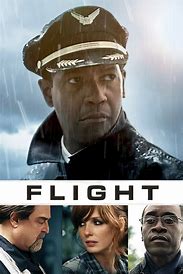
Full Time
Excellent French drama, starring, Laure Calamy, Noémie in Dix pour cent (Call my Agent) as a single parent, running (literally and metaphorically) to keep up with the various elements of her life (childcare, job, chasing her feckless ex for maintenance, commuting in the midst of strikes). It ramps up the tension to an almost unbearable level (particularly if one has ever had to juggle in this way and knows that feeling of utter panic).
Furiosa
Thoroughly entertaining, visually brilliant, with great performances from both Anya Taylor Joy and Alyla Browne as the even younger Furiosa. Chris Hemsworth is virtually unrecognisable thanks to wig and prosthetic nose in his role as the bonkers war leader Dementus. Tom Burke is arguably somewhat wasted in a very taciturn action role as Praetorian Jack, which requires him to exchange smouldering looks with Furiosa but gives him little other opportunity to flesh out his character. I enjoyed it all hugely, but it does suffer from that inevitable prequel problem – we know where it all must end up. The film even segues into the early part of Fury Road, and the end credits include brief snippets of both films. So, whilst the action along the way is thrilling, we are waiting for what we know must happen rather than genuinely wondering what will happen.
Good
I saw this twice, firstly in the film version starring Viggo Mortensen, and again in the NT production with David Tennant. It was a great deal more effective as theatre than film – the movie version filled out bits of plot that were perhaps better left ambiguous, and the device where the protagonist hears music at key moments worked much better in the very stylised theatre version. The use of actors to play multiple roles worked, for the most part, although it required some concentration, particularly in relation to Sharon Small (playing the wife, the mistress/second wife, the mother and an SS colleague) to be sure who was who. Both Mortensen and Tennant were superb in the lead roles. The play asks how a ‘good’ person could collaborate with evil, a perennial question about the Nazi era, and C P Taylor shows how the protagonist – an ordinarily decent person, if lacking in empathy, compromises his values gradually, tiny step by tiny step until he is fully identified with the regime.
Good Grief
A charming but not awfully deep study of the aftermath of a sudden bereavement. I had a lump in my throat once or twice, but I couldn’t entirely identify with these people and their world. Still, it had its moments.
Greyhound
Hanks being an ordinary hero again, this time shepherding his escort destroyer group as it protects an Allied convoy against U-boats during the Battle of the Atlantic. Not a remarkable film or performance, but good, solid stuff.
The History Boys
Alan Bennett’s script is brilliant, waspish, funny but with undertones of real melancholy. Excellent performances from the ‘boys’ too. But it felt weird that the issue of sexual molestation, however mild, by a teacher is treated so lightly, so benevolently, both by those on the receiving end and by the film itself, which doesn’t really question their reactions.
The Hours
I wasn’t totally convinced by Nicole Kidman’s take on Virginia Woolf – I’m not sure if it was the nose, or rather the knowledge that it wasn’t Kidman’s, though Bradley Cooper’s prosthesis, whilst being more controversial, didn’t get in the way of his performance in Maestro. I expected Woolf to be fiercer, perhaps. Julianne Moore and Meryl Streep are both superb, and the interlinking narratives, with Mrs Dalloway as the connecting thread, are moving and powerful. And the film reminds me that I must read Mrs Dalloway….
Just Mercy
Powerful fact-based drama about justice and race in the US. Michael B Jordan and Jamie Foxx are great as the lawyer and accused man respectively. The film’s main weakness lies in the treatment of their opponents: as the Guardian reviewer says, ‘It distracts from the reality of the case and of ongoing cases such as this, turning racists into pantomime bad guys rather than presenting them far more chillingly as real people who have normalised their hatred’.
Kidnapped
Fascinating historical drama from Italy about the 1851 kidnapping of a Jewish child after a maid in the household secretly baptises him on what she thinks may be his deathbed. It’s based on a real case, features a compelling performance by Barbara Ronchi as the child’s mother, and superb work by Aidan Hallett, in a non-speaking role, as one of the Pope’s servants.
The Last of the Mohicans
What a film. I remember loving it when I first saw it, but it blew me away all over again. From that opening sequence, with Day-Lewis running through the woods, to the dramatic clifftop climax, it’s tense, violent, incredibly romantic and completely absorbing. I’ll be honest, DDL usually inspires more admiration than adoration from me, but here I was with Cora all the way.
Little Women
The 1991 version, with Wynona Ryder as Jo. Pretty good, until the end when Jo goes a bit too girly over the Prof. I think I’ve been spoiled for other versions by Gerwig’s, which is now one of my annual Xmas watch and have a bit of a cry films, and whose rearrangement of the chronology (it seemed blasphemous at first, not to open with ‘Christmas won’t be Christmas without any presents’) brings such depth and nuance, without taking anything away from the narrative or the characters.
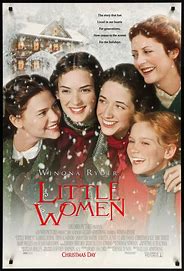
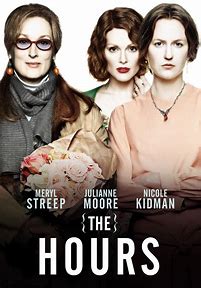
Maestro
Another film (see Oppenheimer) that raises the issue about non-Jewish actors taking Jewish roles. It did strike me, watching Oppenheimer, that you had on screen three of the most prominent Jewish scientists of the twentieth century (Einstein, Bohr and Oppenheimer), played by Conti, Branagh and Murphy respectively, and here one of the most prominent Jewish composers/conductors, played (with a prosthetic extension to his nose) by Bradley Cooper. At a time when we would simply not accept ‘blackface’ or ‘yellowface’ and it’s actually very difficult to watch older films in which those horrors were perpetrated (I switched off Breakfast at Tiffany’s when Mickey Rooney came on, and have never gone back to it), should we be as absolute about ‘Jewface’? I don’t know. But watching Cooper as Bernstein I forgot very quickly that the nose was fake because the performance was extraordinary, as was Carey Mulligan’s. And the music, of course, was sublime.
Mank
And right on cue, here we have Gary Oldman playing the Jewish Herman J Mankiewicz. I was occasionally reminded of Oldman’s more recent TV stint as Jackson Lamb, e.g. in the scene where he drunkenly disrupts a gala dinner… It’s a bravura performance (Mank, as well as Lamb), and backed up by Tom Burke as Orson Welles and Amanda Seyfried as Marion Davis. Fascinating, particularly if one has an interest in the movie industry of that era.
The Mist
Excellent adaptation of the Stephen King novella. Pretty much what you’d expect – until the ending. My God, that is one of the bleakest things I’ve seen in a film and my watching tends to the bleak and the grim. It’s not what King wrote, but King endorsed it (and as he tends to bottle his endings, I can imagine he rather admired what Darabont did with this). I didn’t like the leading man especially – where do they find all these square jawed types? – and, until that ending, I didn’t quite believe in him.
Moonlight*
A wonderful film, beautiful and melancholy. Brian Tallerico’s review describes it as ‘both lyrical and deeply grounded in its character work, a balancing act that’s breathtaking to behold. … it’s one of those rare movies that just doesn’t take a wrong step’.
Napoleon
I was disappointed in this – I wanted to enjoy it but found it deeply frustrating. Not because of historical inaccuracies, but somehow it was tonally all over the place – some moments were funny, but I wasn’t entirely sure all of them were intended to be. The best bits by far are the battles, which were viscerally exciting and did convey the problematic greatness of the man.
Nomadland*
A beautiful film, warm and generous, with Frances McDormand’s marvellous performance at its heart as a woman who becomes ‘houseless’ after losing first her job and then her husband, and who in the wake of those losses feels the need to keep moving, to make only temporary connections (mainly with other nomads).
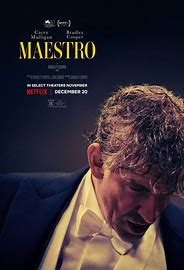

Official Competition
Penelope Cruz, Antonio Banderas and Oscar Martinez are a director and two actors rehearsing for a film. That’s it really, but it’s clever, brilliantly funny and with superb performances from all three.
Official Secrets
Good, solid drama based on the true story of Katherine Gunn (Keira Knightley), who passed on information she received in the course of her work at GCHQ and was prosecuted for it. It works all the better because Gunn clearly isn’t grandstanding, she doesn’t set out to be a martyr, she just sees something that seems to her to be so clearly wrong that she has to do something about it. She’s shown to be a bit naive, in not anticipating what the consequences might be, for her or her family, but in a way she is, as the Guardian put it, a ‘classic whistleblower. She has an idealism, work ethic and professionalism that made her an excellent intelligence operative in the first place, and yet it is precisely these things that made her rebel. Most importantly of all, she is young.’ Knightley is excellent in the role.
On Chesil Beach
This was exquisitely done. Until the final act when it messed things up rather badly. We didn’t need that clichéd scene in the record shop, and we certainly didn’t need the final scene at the concert. I wondered briefly whether these scenes would turn out to all be in Edward’s imagination, but if we were meant to think that, it wasn’t signalled – I’m not sure it would have worked anyway, it would have been rather Atonement-lite. And why was the old age make-up so awful? Surely we can do better than that these days? Such a shame, because the scenes with Florence and Edward awkwardly trying to negotiate the tricky territory of sexual intimacy, without prior experience and with only minimal knowledge, were agonising but brilliant.
The Outfit
This is an odd little film, which keeps on overturning our understanding of what’s going on. It’s full of suspense, but we as the audience are somewhat at a remove from the characters. Mark Rylance in the central role is calm, tightly buttoned, and seemingly preoccupied with his business, cutting out cloth for suits – he’s a cutter, not a tailor, as he informs people several times. There are gangsters, there are guns, and there’s a clever McGuffiny plot, and it’s all very entertaining.
Palm Springs
I do love a time loop, and this is funny and clever and very entertaining. Andy Samberg, Cristin Milioti and J K Simmons are brilliant and give us some actual real emotional weight along with the comedy.
Parallel Mothers*
Gorgeous and moving film. The plot might sound improbable but it carries absolute conviction, with the message that ‘the personal is the political and that history, the future and the present are as one’.
Resistance
This is an adaptation of Owen Sheers’ alt-history novel, where England is under Nazi occupation, and the men of a Welsh valley disappear one night, leaving the women to manage the farms, and the occupiers. Slow and atmospheric rather than action packed.
The Resistance
Not to be confused with Resistance (see above). This is an account of some of the Jews who hid out in Berlin through the duration of the war, living precarious lives, figuring out who to trust. Well done, and these are not familiar narratives – I had no idea that so many managed to survive in this way.
Rome: Open City
Fascinating and powerful. Rossellini filmed this in 1945/45, in the very immediate aftermath of the liberation of the city (the ‘open’ in the film’s title is ironic, as it portrays the period when Rome was occupied by the Nazis). The narrative is absolutely compelling, and the action brutal, but never gratuitous. The film has been on my ‘really want to see this’ list for ever but has only just been re-released into cinemas (it didn’t do very well when it was first released in 1945, as people didn’t want to see the horrors that they had only just escaped portrayed on screen).
Saltburn
Heavily intertextual, the class clash is familiar territory (Brideshead, Ripley) and Emerald Fennell isn’t saying anything particularly new or insightful. It’s ‘deliciously, wickedly mean—seductive and often surreal—with lush production values and lacerating performances’, but it would have felt stronger if it had left a bit more to the imagination at the end (and I’m not talking about the dancing).
Shirley
Like last year’s Rustin, this is a good, solid biopic, with a wonderful central performance (here from Regina King) of a key black player in American politics. Shirley Chisholm was the first woman to run for US President, and what is particularly fascinating is how her presidential bid plays out in terms of support from fellow Democrats, and fellow feminists. It is, perhaps, again like Rustin, a bit worthy. But these films pave the way for other, maybe more nuanced explorations of these hugely important people, and others like them who have been somewhat neglected.
Society of the Snow
Eschews sensationalism for a subtler approach, without swerving the ‘cannibalism’ issue. Powerful and moving, it excels both at the shocking violence of the crash and subsequent avalanche, and at conveying the long, agonising wait for rescue and the physical and mental torment of trying to survive.
Still Alice
Julianne Moore is quite outstanding, and heartbreaking, as the academic with early onset dementia. Although my own experiences (vicarious) with dementia have been with much older people in whom the condition is seen as par for the course, Moore’s performance rings true, whether she’s portraying Alice’s bewilderment and fear, or her absence. And the choice to write about early onset gives opportunities as well, as both Alice and her family have to accommodate something that is both unexpected and profoundly unfair, and their interactions, entirely convincingly, do shed light.
The Talented Mr Ripley
Another re-watch, prompted in part by Saltburn’s homage, and interesting to compare with the new Andrew Scott version (see below). It’s sunlit and glossy, rather than shadowy and noir, which takes nothing away from the brutality of the murders. Damon, Law and Paltrow are excellent.
Ten Things I Hate about You
Taming of the Shrew, US high school style. It shares some of the problems of the source material – is it even possible to avoid them? – and there are moments which haven’t aged terribly well, but it’s a lot of fun along the way, and the leads are a delight. Oh, and BTW, Heath Ledger’s character was, I’m sure, the inspiration for Eddie Munson (as played by Joseph Quinn) in Stranger Things.
The Third Man
Rewatched after many years in prep for the Vienna trip (see also Before Sunrise). Aside from it being a brilliant film, with stunning cinematography, it reminded me that Vienna, which likes to give the impression of having been untouched by the centuries, was in the immediate aftermath of the war very much marked by bombing and by the Red Army’s battle to liberate the city – not reduced to rubble like Berlin, but still battered. One would not know it today.
Trumbo
Bryan Cranston is superb as the screenwriter who fell foul of the Red scare in the 50s and could only get his work on to the screen by using pseudonyms or getting others to put their names to the scripts. It’s not a super deep examination of the phenomenon, but it does convey the terrible pressure on those who saw their livelihoods taken away from them. Helen Mirren is the appalling Hedda Hopper who says out loud the quiet bit about the Red scare – its antisemitic roots.
Wil
A very dark and bleak narrative of young police officers in occupied Antwerp. In some ways it chimes with Good – how do you continue to think of yourself as a good person, to be a good person, when the rules are made by an evil regime, and enforced by brutal men? It’s an extremely tough watch.
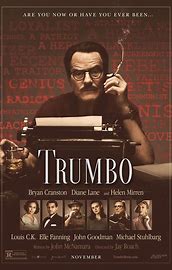
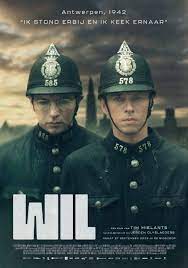
Wings of Desire
Prep for Berlin, the third city on our European trip. Released in 1988, the film is set in the still divided city, where angels literally watch over its inhabitants, observing and only occasionally connecting with them. There’s not a lot in the way of plot, but it’s an extraordinary and bewitching film. ‘Wings of Desire … creates a mood of sadness and isolation, of yearning, of the transience of earthly things. If the human being is the only animal that knows it lives in time, the movie is about that knowledge.’
The Woman in Black
I was underwhelmed by the book, TBH, despite having loved a number of Susan Hill’s previous novels (In the Springtime of the Year, Strange Meeting, and others), and subsequently loved her crime series. The film had some nice jump scares, and plenty of atmosphere, but it didn’t really amount to very much, I didn’t quite believe the lead character, and I rather disliked the ending.
The Zone of Interest*
Extraordinarily powerful. I am not sure how well I can yet articulate what the film did, and how – that might take another watching, which I’m in no hurry for, not really. I have watched many films about aspects of the Holocaust, have read histories, first-hand accounts, fictionalised accounts, watched documentaries, seen footage from the liberation of the camps. This was as shocking as anything I’ve seen, despite showing nothing. The moment when I realised that I had filtered out the sounds from the other side of the wall, as one does with traffic noise when it’s always there, was shocking in itself. I didn’t weep until the scene at the end, in the present day, as cleaners at Auschwitz polish the cabinets with the shoes and the spectacles. But I really didn’t want to talk to anybody afterwards so was glad I’d gone on my own – I didn’t want to talk about the film, but nor did I want to talk about the banalities of everyday life – not after that.
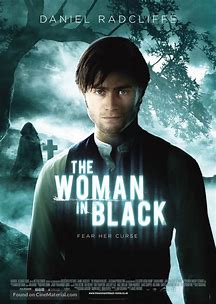
Small Screen
There’s a lot of the usual stuff here. Crime drama features very heavily, and there’s a sprinkling of SF/fantasy, as well as some superb dramas that don’t fit as easily into a genre. I haven’t covered ongoing series, however much I’ve enjoyed them (thinking of you, Vera, Vigil, Wisting) unless there’s something significant to be said about this particular series, and as with the movies I haven’t covered things that I abandoned (so what remains I watched all of, whatever its flaws). I’d pick out Blue Lights as the best of the crime, The 3 Body Problem as the best SF/fantasy, and share the honours otherwise between Mr Bates vs the Post Office and Masters of the Air.
Drama
3 Body Problem
Brilliant, brilliant stuff. This has everything – it is clever, inventive, visually stunning and has a hell of a lot of heart too. It kept me guessing throughout but was never merely clever for the sake of it. There will be a second series, I’m delighted to say (I do worry these days, as too many good, inventive TV series get dumped – Lazarus Project being the most recent example).
After the Flood
Jolly good thriller, set in a Yorkshire village, with perhaps an over-abundance of twists, but all well done and a good solid cast.
The Americans
We watched the first couple of series of this, and then it switched to one of the streaming services that we didn’t then have access to, but we always wanted to see how things played out for Philip and Elizabeth. Now it’s on Disney and so I’ve picked it up again, taking a bit of a guess as to where we’d got to, but starting again at series 3 felt about right and I binged it through to the end. The constant peril of their double life makes even the most mundane domestic scenes tense and anxious, and there’s a lot of proper spy thriller action, with a pretty high body count. The BBC documentary series Secrets & Spies (see below) proved to be a very relevant factual counterpoint to the drama. (I do have issues with Philip’s wigs though, and find the sex scenes quite disturbing as I worry about wig displacement in the throes of passion). But wigs aside, the series is superbly acted, and confronts us constantly with moral questions, about loyalty, about deception in all its forms, about what means can be justified if one believes absolutely in the end – and we might think we know the answers to those questions but as we identify with Philip and Elizabeth that starts to seem less straightforward. The final series is a masterclass – ramping up the tension, but also laden with sadness and a foreshadowing of loss.
Blue Lights
Series 2 was as good as the first series, which is saying something. Real edge of the seat stuff, and with emotional heft too. It does all of the things that regular cop dramas do, but does them better than most, and the Belfast setting provides extra layers of complexity to the interplay between cops, criminals and community. Exemplary.
Breathtaking
A fictionalised version of Rachel Clarke’s raging, heartbreaking account of the early days of Covid, from the perspective of an NHS doctor. Intercut with Government briefings and news reports, to ramp up the rage, but always focusing back on the people – staff and patients (and occasionally staff who are patients) who were on that particular frontline.
Coma
Jason Watkins’ mild everyman in an ever more complex and deadly tangle after an encounter with a young thug – my only quibble would be that the ending felt a tad unrealistic and anti-climactic (though maybe there’ll be a series 2?)
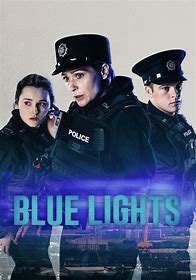
Criminal Record
Very, very noir. Capaldi and Jumbo are superb. I keep thinking about the ending, and wondering. And that theme song – I had to track it down, it’s ‘Me and You’, by the Dreamliners,
Criminal UK/France/Germany/Spain
All four series follow the same format, and use the same set – an interview room, with a viewing room alongside it, and essentially that’s it. Each episode features one interview, with a suspect/witness, and it’s very Line of Duty, though less likely to end with a urgent extraction and a shoot-out.
The Cuckoo
One of those psychological thrillers that compels you to keep watching even though in your head you’re constantly saying ‘Really? Seriously?’ and predicting with reasonable accuracy where the plot is going. Tosh, but quite well done.
Doctor Who
Ncuti Gatwa is a joy. And he is, indisputably, the Doctor. The episodes seem to me to have got better and better, which suggests that some of this is cumulative, the result of an overarching plan for the series which allows each episode to carry with it some of the ideas and the emotional import of the previous ones. It’s been much commented on that Gatwa hasn’t been front and centre of all these episodes (because he was still filming Sex Education), but that’s allowed some very inventive writing, and when he’s there, there never seems a very good reason to look away from him. The BTL comments in the Guardian cover the usual range of responses. There’s the old familiar: ‘this isn’t proper Doctor Who any more, I’m never watching it again’, from those who’ve been saying that ever since there was a line for people to comment below, and who will be back next week to say it again. Some of the detractors find it too woke, which is hardly worth arguing with. But there’s also a lot of excitement from people like me who have loved this programme through its highs and its lows. Jodie Whitaker’s tenure could have been so much more exciting – she was great, but saddled with far too many ‘meh’ scripts (and some that were worse than meh) and that’s a real shame. But, as another Doctor would say, allons-y! This is pretty bloody marvellous.
It would be remiss of me not to mark here the passing of one of the very first Doctor Who companions, William Russell, who played teacher Ian Chesterton alongside William Hartnell’s Doctor. Russell was 99, and appeared in the final Jodie Whitaker episode, The Power of the Doctor, in a rather lovely scene at a companions’ support group.
The Durrells
Given my tendency to go for the grim, I need at least one series in my life at any given time that offers essentially warm-hearted, humorous, not too dramatic dramas, which can be guaranteed not to swerve into anything too traumatic, but which aren’t merely cosy. All Creatures Great and Small fills this place to a T – it doesn’t sidestep the harshness of the lives of the farmers, or individual heartbreak, but we know, really, that everything is going to be alright and that the grumpy or mean person probably is unhappy rather than evil. The Durrells does a similar job. I read Gerald’s books about his family life on Corfu and about his wildlife expeditions as a child – they’re hugely entertaining, and are already somewhat fictionalised accounts, so that the programme takes further liberties is probably OK. The humour is broad and often slapstick, but the writing is usually subtle enough that it isn’t wholly reliant on pratfalls and comic misunderstandings and allows some real emotional connection. That emotional connection centres on Keeley Hawes’ Louisa – Hawes is superb and if you aren’t rather in love with Louisa within the first episode or so, then I don’t know what to say to you, I really don’t.
Echo
I enjoyed this less than I thought I would (though more than Secret Invasion) but there’s lots about it that I did like, including the lead, powerfully played by Alaqua Cox, and her family/community, the Choctaw heritage that is the source of her powers. The Kingpin storyline, picked up from Hawkeye, and linking in with Daredevil, had/has the potential to be powerful, and perhaps now that the exposition is all out of the way and we know who Echo is, and why, that will work better.
Fool me Once/Safe
I’ve bracketed these together because these Harlan Coben series are all rather similar (I’ve read a few of the books and it’s true of them too). I find it hard once the series is over to recall anything very much about the plot or the characters, but whilst watching I am entertained and mildly involved, even though they tend to feature a preponderance of the square-jawed male lead, who I tend to find rather annoying, and impossible to identify with.
The French Case
A dramatised account of the investigation of the death of Grégory Villemin, an incredibly murky case, involving poison pen letters and family feuds, which seems no closer to being solved now than it was when Grégory was murdered in 1984. The drama is toughest on the media, and at least some of the investigators, and perhaps most of all on Marguerite Duras, who bizarrely was brought in to consult on the case, and proceeded to pronounce, without any actual evidence or direct contact with the parents, that it was the mother who had killed the child. Intriguing but frustrating.
The Gone
Atmospheric New Zealand set crime series, with an Irish detective (a man with a secret, natch) over there to look into a disappearance, and its connection with a major Irish crime family. This could all be quite clichéd – the ‘odd couple’ pairing of said detective with his Māori counterpart, who has her own personal tragedies and conflicts – but the characters are well drawn and played and the wider issues that the crime raises turn out to be more interesting than the original premiss suggests.
Hidden Assets
More Irish crime, this time centred on the team who track down proceeds of crime, and here the Irish officers are working with their counterparts in Belgium. There are two series, with different leads in each case, but linked stories. Good solid stuff.
Kafka
It seemed appropriate to watch this after being in Prague, which reminded me that I should read more Kafka. Full disclosure, I have read The Castle and a number of short stories but nothing more (yes, OK, shame on me, and all that). It’s a quirky and often darkly funny take on Kafka’s life, his romantic attachments and his friends (especially Max Brod without whom Kafka would probably be pretty much forgotten).
Masters of the Air
Band of Brothers and Pacific were both so very, very good that this came with rather high expectations attached, and it lived up to them. I have had a particular interest in the air war, ever since my father, who during the war was an avid aeroplane spotter, and then went on to an apprenticeship with de Havillands, taught me to identify planes when I was still in my pram. This latter may be slightly apocryphal – I cannot on oath assert that I was able to lisp ‘Dragon Rapide, Daddy’ as one flew overhead to the small airfield near our home, but by the time I went with my brother to see Battle of Britain at the cinema I knew my Messerschmitt from my Hurricane. Masters of the Air is solidly researched so that even where fictional characters are created, or where real events and real people are combined for dramatic effect (i.e., this happened, but not necessarily to this person), it is absolutely credible. None of which would make it one of my top watches of the year so far if it weren’t emotionally powerful and credible too, but the performances are great, the tension of the battle scenes is incredible – I found myself watching literally sitting on the edge of my seat and not breathing – particularly as it was clear early on that none of these characters, however well known the actor playing them, was guaranteed to survive. As with Band of Brothers, the drama touches only briefly on the Holocaust but the equivalent scenes to the former’s liberation of Landsberg are done with the same intelligence and care, and they enrich the drama.
Mr and Mrs Smith
These two, played with oodles of charm, heart and humour by Donald Glover and Maya Erskine, bicker their way through a series of missions, none of which go entirely to plan, and all of which involve a startlingly high body count. Thoroughly entertaining. Apparently there will be a series 2, but not with Glover and Erskine, which is a shame, but on the other hand, makes that series 1 ending more realistic (not that realism is entirely the thing here).
Mr Bates vs the Post Office
Obviously this has been a hugely important drama not just because of its quality but because of its impact on the sub-postmasters’ claims against the Post Office, and the enquiry into how the false prosecutions came about and continued for so long in the face of what was already known about the vulnerability of the Horizon system. Toby Jones, Monica Dolan and others make this all profoundly human, so that the drama, like Breathtaking, is not only heartbreaking but rage-inducing. I thought often as I watched it of the Hillsborough families, particularly when the accountant says to Mr Bates, ‘I don’t know how you people are still standing’, but since this was broadcast, there has been renewed and reinvigorated coverage of other scandals – contaminated blood, carer’s allowances and Grenfell – and it seems that Mr – sorry – Sir Alan Bates in his own understated way is something of a beacon to other victims of injustice and cover-ups.
Mrs America
Fascinating drama about the fight for and against the ERA in the US. Excellent performances from Cate Blanchett as the monstrous Phyllis Schlaffler, Rose Byrne as Gloria Steinem, Tracey Ullmann as Betty Friedan, and more, plus a handful of fictional characters invented to convey some of the tensions in both movements. Often very funny, full of surprises, and with a cracking 70s soundtrack.
Mrs Wilson
Ruth Wilson plays her own grandmother in this drama of deception, centred on but going beyond the purely domestic sphere. The focus is very much on the wives betrayed and deceived, rather than on the deceiver, whose motivation neither we nor they ever really uncover – it’s stronger for that, as the deceiver can so easily be played as a charming rogue (since clearly he was rather good at being charming) and the damage he left in his wake underplayed.
Murder is Easy
The latest Christie adaptation – this was one I remember particularly vividly, the quote beginning ‘why do you walk through the fields in gloves’ and the strength of the murderer’s hands. As with all of the recent dramatisations, it’s been tinkered with, in ways that might well get the GB News types a bit agitated (a black protagonist! Lawks a mercy) but it retains the strengths of the novel.
A Perfect Spy
Excellent le Carré adaptation from 1987 (one of a number of dramas from the archives which have been broadcast lately, to mark the anniversary of BBC2) , based on one of the best of his books.
Prisoner
Bleak Scandi drama about corruption in a prison – it’s brutal but also thoughtful and not too simplistic. Not an easy watch but worth it.
Rebus
A new take on Rebus, introducing us to him as a younger man, earlier in his career, but already instantly recognisable as the Rebus we know and love and are infuriated with. I never felt that John Hannah was quite the right man to play him, and Ken Stott was very much the older, battered version, but Richard Rankin (no relation, apparently) is just right. It’s the same trick that Young Wallander tried, setting the younger version not in his own past but in the present, which allows a different take on some aspects of the established Rebus pre-history. Rebus is kind of the archetype of the rogue/maverick cop, never knowingly toeing the line, leaving a trail of wreckage (personal and professional) in his wake, so this series – and Rankin – will have to fight a bit harder in a crowded field to establish his individuality (mind you, if the competition is that execrable Crime series with Dougray Scott it shouldn’t be too difficult).
The Responder
If Prisoner was bleak, this is bleaker. Ye gods, it is relentless, Martin Freeman’s Chris is trapped and every way he turns there is merely another trap waiting for him (and the same is true for many of the other characters). Whilst he does make (many) questionable decisions he remains sympathetic, because he’s actually trying to be a good man, to do the right thing. He’s brilliant in the role, and it is brilliantly done (the late Bernard Hill is excellent too, as Chris’s father, in what presumably was his last TV role). I find I need to watch an episode of The Durrells, or something daft like Taskmaster after each episode or it’s just too much.
Ripley
This is much closer to the novel than the Damon/Law/Paltrow film (see above), except in the age of the lead protagonist – the book suggests that Ripley and Greenleaf are in their early 30s whilst Scott is in his late 40s. That does change the tone. Damon seems, if anything, younger than the character he’s playing, and that gives him a kind of naivety which might make one – at least until he starts with the bludgeoning – a bit more forgiving of what he’s up to. Scott’s Ripley is a darker character from the outset (and not just because of the b/w film noir cinematography). But it certainly works. The pace is slow, with masses of detail, motifs that recur (the cat, the ‘nice pen’, the stairs, the Caravaggios) and whereas some found that frustrating, I found it seductive and the moments of violence all the more startling. And the slow pace extends even to those moments – this makes killing look like bloody hard work, and the cleaning up afterwards even more so.
Shardlake
I’ve thoroughly enjoyed the late C J Sansom’s Tudor detective series and hope that this is just the first of the adaptations. Arthur Hughes is great as Shardlake, and it’s good to have an actor with a disability playing the role, and Sean Bean is an excellent Cromwell (it will be interesting to compare with Mark Rylance in that role when the final Wolf Hall series is out). Very moodily atmospheric, rather Gothic (mad monks and all that), and whilst I’d read the book, I had entirely forgotten who did what to whom so I enjoyed the puzzle all over again.
Shogun
This was beautifully done, often brutal, sometimes hard to follow, but absorbing and fascinating. It’s incredibly rich in detail, from the costumes to the customs, the dialogue to the action, and the cultural tensions between the Englishman and his Japanese ‘hosts’ are drawn with subtlety and without condescension.
Shoulder to Shoulder
This drama series about the Suffragette movement was first broadcast in 1974 and I thought at first I was going to find it a bit slow and stagey, going by the first episode. But it caught fire – Georgia Brown’s portrayal of Annie Kenney is great, and the episodes showing the force-feeding in prison of those women who went on hunger strike are graphic and still genuinely shocking.
Small Island
Excellent adaptation (from 2009) of Andrea Levy’s novel about young people from the Caribbean trying to build new lives in London in the 1950s. A stellar cast – David Oyelowo, Naomie Harris, Ruth Wilson amongst others – and a hard-hitting plot, with tenderness and humour.
The Tourist
A cracking thriller (two series thereof) with Jamie Dornan as the amnesiac whose forgotten past keeps catching up rather brutally with him. It’s gory and violent and very funny, and the relationship between Dornan’s ‘Elliott Stanley’ and Danielle MacDonald as police officer Helen Chambers is a delight. I have to say how much joy it brought to me that Dornan’s character is shown to fancy MacDonald, who would generally be described as a slightly larger woman, like mad, and to fall in love with her. Clearly a lot has changed since the days when plump women not only never got the man (let alone a man of Dornan’s looks and charisma) but were all too often shown as being dim and lazy and a bit of a joke.
Traces
Series 2 of this Dundee set forensic science thriller. The structure of the series goes weirdly off kilter as the first couple of episodes focus on the continuation of the plot from series 1, but that is then completely abandoned as the key characters in that strand up and leave, and the remainder of the series concerns itself with the race to catch the Dundee bomber before he blows up the V&A or Broughty Ferry. It’s almost as if the producers/writers were taken by surprise by the departure of key cast members – from a viewer’s point of view it would have been better either for that previous plot strand not to have been foregrounded initially, or for further references to it to be woven into the bomber plotline. As it was, it seemed as if the remaining cast members had simply erased all memories of those events and people – very odd. Nonetheless, it was exciting stuff (and there’s a particular frisson when one is familiar with some of the locations).
Truelove
A thriller that starts off exploiting an instinctive sympathy with the idea of assisted dying and then undermines it horribly – it doesn’t change my view that we must be able to find a way to enable the terminally ill to choose when and how they end their lives rather than lingering on in increasing misery, but it is a reminder both that the safeguards need to be carefully thought through and robust, and that palliative terminal care needs to be better, and available to everyone. (See below for my thoughts on Liz Carr’s documentary, Better off Dead.) The plot has a few implausibilities, but the lead roles are all superb – aside from Lindsay Duncan and Clarke Peters who carry the weight of the drama, Sue Johnstone in particular stands out, as does Kiran Sonia Sawar as the dogged copper who susses that something isn’t quite right.
Unbelievable
A harrowing account of a real case where a young woman alleging rape was persuaded/badgered into saying that she’d lied, and how that injustice was eventually overturned, thanks to the determination of two female detectives following the trail of the rapist. Kathlyn Dever (wonderfully funny in Booksmart, heartbreaking in Dopesick) is superb here, showing her character’s vulnerability and wilfulness, and the trauma she carries with her from a chaotic early life.
Under the Banner of Heaven
Fascinating and horrifying true crime drama based in a Mormon community, with Andrew Garfield as the massively conflicted cop leading the case.
The Way
I really, really wanted to like this. But I’m afraid it was an incoherent mess, way too many clichés, underdeveloped ideas and characters. Sorry.
We are Lady Parts
Season 2, and it’s as warm and funny and touching and clever as ever. And the music is great (both the Lady Parts originals, and their Britney cover)! Whilst Amina (the ever wonderful Anjana Vasan) is ‘the I guy’ (to use a Stephen King term), all of the band members – and their families – are given depth and breadth, and take centre stage at some point in the series. Bisma’s rendition of ‘Please Don’t Let me be Misunderstood’ – having literally put her family on pause in the midst of a row – was powerful and really rather moving, as well as beautifully sung by Faith Omole.
Documentary
Better off Dead
Liz Carr is passionately opposed to the legalisation of Assisted Dying ( or, as she calls it, Assisted Suicide) and it is impossible to simply dismiss her views, as she is someone who has been told many times that it would be better if she were dead than to live on with her level of disabilities. She rightly fears the potential for coercion, for emotional pressure on those who might see themselves (or be seen) as a burden on society and/or on their families, and the widening scope of the legislation in Canada does seem dangerous. I would still argue that there must be a way in which those who are suffering unbearably can be allowed to choose the time and manner of their death, without asking their loved ones to undertake criminal acts on their behalf. But Carr’s arguments must be listened to if any future legislation is to adequately protect people from being, even gently and kindly, shepherded into this course of action.
Can I Tell You a Secret
Documentary about online stalking and how the perpetrator was exposed. The courage of the victims is remarkable, but the production was annoyingly gimmicky – the voicing of some of the emails was confusing, and the actors speaking the lines seemed to have been told to camp it all up rather, which didn’t match the seriousness of the topic.
D-Day: The Unheard Tapes
Hearing the voices of the eyewitnesses lip synched by actors could have been clunky but it is direct and very powerful. We hear not only from the soldiers who landed on the beaches or behind the lines but the German soldiers who were there to stop them, French civilians who found themselves suddenly on the frontline and members of the French Resistance who had been waiting for the invasion to launch their own attacks. There are re-enacted sequences, featuring those actors, but the heart of the programme is the interviews, made at various times and in various places over the years since the war. Hearing those voices is a remarkable experience. If we’d just had the actors reading their characters’ words, we would wonder whether that catch in the throat was ‘acting’ or that the man speaking really couldn’t speak of that moment without choking up a bit. Fascinating and very moving.
Defiance: Fighting the Far Right
Superb, powerful documentary about how Asian communities in London, Bradford and elsewhere organised their own defence against National Front and other fascist thugs in the 70s.
The 50 Years’ War: Israel and the Arabs
The overwhelming feeling from watching this is of the intractability of the situation. The programme dates from 1998, but whilst obviously a lot has happened since then, the core of the conflict is fundamentally unchanged and so the analysis here seems as relevant as when it was first broadcast. The more one understands the history, the more one (or at least I) finds it hard to see a way forward. It’s easy, in contrast, to see what could have been done differently, both before and in the immediate aftermath of WWII, but it seems that every time there has been a glimmer of a chance of doing right both by the Jewish/Israeli population and by the Palestinians, that chance has been sabotaged by one or both sides. And things have perhaps never been more polarised than they are now, when to express horror at the 7 October attack is to be seen (by some) as a Netanyahu supporter, and to express horror at the onslaught on Gaza is to be seen (by some) as an antisemite… At least my sense of despair is based on a more informed understanding of history, thanks to this series.
Have You Got It Yet? The Story of Syd Barrett and Pink Floyd
Excellent documentary, drawing on the accounts not only of the other members of Floyd but of others who knew Barrett before and during his period of fame, and in its aftermath.
The Jury: Murder Trial
Reality TV with a more serious purpose than anointing a new Star Baker or marrying people at first sight – here a real murder case is re-presented to two juries made up of the usual mix of people who might be called up for jury service, and at the end each jury has to arrive at a verdict on which they all agree. The fact that they come up with different verdicts is obviously a cause for concern, but the process by which they arrive at that is more deeply worrying, in particular the ease with which one or two dominant personalities can skew things. Is there an alternative? I think at the very least the way in which the jury system works seems to be in need of an overhaul.
Michael Palin in Nigeria
This most amiable of world travellers makes his way from the hubbub of Lagos north to Kano and back south to Benin City. In only three episodes the series can’t hope to capture the complexity of this huge country, particularly as there are swathes of the north (including Zaria, where my family lived in 1966-67) where it was seen as too dangerous for Palin and the film crew to travel. But along the way we do get a sense of at least some aspects of the country, and of some of the more contentious issues – the legacy of slavery and colonialism, the British Museum’s determination to hold on to treasures looted from Nigeria during the colonial era, and the ecocide in the Niger Delta.
The Miners’ Strike: A Frontline Story/Miners’ Strike 1984: The Battle for Britain
Two powerful documentaries marking the fortieth anniversary of the miners’ strike. The BBC’s offering is not dissimilar in style to Once Upon a Time in Northern Ireland, which was a remarkable and unforgettable account of the Troubles, telling the story and drawing out the details through the words of people who were directly involved. It works equally well here. Channel 4’s series also draws very heavily on first-hand testimony, but focuses in each of the three episodes on a particular place or aspect of the battle. Its third episode investigates some of the machinations behind the scenes, and whilst it is of interest it lacks the immediacy of those first-hand accounts.
Royal Kill List
A documentary with (quite well done) dramatised interludes. Charles II’s vendetta against anyone who had supported his father’s execution (explored in Robert Harris’s Act of Oblivion) might be understandable on an emotional level, but combined with his absolute conviction that, as Sellar & Yeatman put it, ‘He was King and that was right. Kings were divine and that was right. Kings were right and that was right’, this led to appalling brutality, treachery and injustice. I concluded that the Royalists were not only Wrong but Wrepulsive. Which doesn’t mean the other lot were right. Obviously.
Sarah Everard: The Search for Justice
A rage-inducing account of how the police force failed to notice that amongst their ranks was a man whose behaviour (multiple sexual offences) should have automatically precluded them from police work, and how that man used his position, his badge and his authority, to kidnap a young woman on her way home, and then to rape and murder her.
The Secret Army
If someone had told me that early on in the Troubles an American film team would have been able to make a documentary film including footage of an IRA team heading off to plant a bomb, and a tutorial on weapons, I would have thought that highly improbable. But it happened. The film was made, processed in London, where MI5 had full access to it, and never shown. It’s all utterly bizarre, and the intentions of the film maker, and of the IRA top brass who approved the project, are very hard to comprehend.
South to Black Power
Isabel Wilkerson’s The Warmth of Other Suns told the story of the Great Migration, the mass movement over several decades of African Americans from the South to northern cities, in flight from the Jim Crow laws and accompanying relentless racial violence. Here writer Charles Blow makes the case for a reverse process, boosting the black population in parts of the south (areas where it is already a very significant minority) such that it might reach a tipping point of political power.
Turning Point: The Bomb and the Cold War/Secrets and Spies
It seemed almost rather too timely to be revisiting some of the scariest moments of the Cold War, when we came closest to the unthinkable. The Turning Point series was excellent (there was a previous series about 9/11 and what followed which was also exceptionally well done), with lots that I didn’t know and much richer detail and context on the bits of the story that were more familiar to me. Secrets and Spies focused in more closely on the Reagan years, and on some of the individual stories and it provided an intriguing counterpoint to The Americans, as well as reminding me of Deutschland 83 in its coverage of the Able Archer training exercise (also, obviously, featured in Turning Point) that nearly triggered disaster…
When Bob Marley Came to Britain
This was lovely. Marley playing footie in the park, doing an acoustic gig in the gym of Peckham primary school and generally connecting with the black Britons he met in a way that still, clearly, means the whole world to them today. And of course there’s the wonderful music too.
2023 on Screen – the second half
Posted by cathannabel in Film, Television on December 15, 2023
I was struck as I compiled this summary of my watching (July-December) by the number of films directed by women, and/or focused on and carried by a central performance by a woman. The Bechdel test isn’t terribly relevant in these cases, and I think that’s a good sign. Women talking to one another about a man doesn’t have to imply a romantic context. To take two very different examples, in Clemency, Alfre Woodard’s character talks primarily to men, about men, but these men are not only her husband but her colleagues and the prisoners on Death Row for whom she is responsible. In Women Talking, the women are talking to each other about men, but about the men who have controlled their lives, kept them uneducated, and raped them, and what they’re really talking about is survival, escape, freedom.
There are some breathtaking performances in the films I’ve seen this year. Alfre Woodard has already been mentioned, but then there’s Danielle Deadwyler in Till, and Lily Gladstone in Killers of the Flower Moon. On TV, seeing women in lead roles is more normalised. Stand-out performances in this year’s TV watching include Regina King in Seven Seconds, Brie Larson in Lessons in Chemistry, Bella Ramsey in Time, and Ruth Wilson in The Woman in the Wall.
I haven’t listed absolutely everything I watched – if it’s the nth season of an ongoing series I haven’t included it unless there was something major and new, and if I really had to rack my brains to think of anything worth saying about it, I have said nothing. I’ve tried to avoid spoilers, but no guarantees.
Top films? Killers of the Flower Moon, The Creator, Paris Memories. And TV – The Lazarus Project, Lessons in Chemistry, Dopesick.
FILM
Barbie (dir. Greta Gerwig)
If anyone had told me a couple of years back that this would be one of my favourite films of the year, I’d have thought they’d lost the plot completely. But of course, this was Greta Gerwig’s Barbie and it was a delight, so packed with visual gags and intertextual references that I really want to watch it all over again, to pick up the details I missed. I laughed out loud, a lot. Several (mainly male) critics have piped up solemnly to tell us not to be so silly as to think it is the most profound meditation, the last word on gender and stereotyping. I’m not sure that those critics really get the relationship that so many women and girls have with Barbie and her ilk – love, hate or a complex mixture of the two, responding to the way she is both aspirational and impossible: she can be dressed as any profession, as a president or a nurse, but she has a body that is physically impossible and that undermines those aspirations.
I never owned a Barbie, but I did have a Sindy (her British cousin), and a Tressy (distinguished by the key in her back which made her hair grow). I kind of liked but never loved them, and was quickly bored with dressing them up, but rather enjoyed getting them to parachute out of my brothers’ bedroom window along with a couple of Action Men (they were all in the French Resistance, as I recall). Which does reinforce the idea that the way a girl will play with a Barbie is not limited or dictated by the marketing. My daughter enjoyed her Barbie dolls in a much more conventional way. But both of us loved the film. I can’t, obviously, speak for all women, but like us, most women I know just revelled in its wit, its playfulness, and its mild subversiveness, laughed a lot and had a really good time (sorry guys).
Belfast
This is a love letter of a film. And its warmth and humour, its mixture of the prosaic everyday and explosive violence make it both charming and genuinely frightening and tense. It’s not without its sentimental moments, but (as with Spielberg’s The Fabelmans) I felt inclined to forgive the elements of self-indulgence, when the film is as beautiful and moving as this.
Best of Enemies
Not to be confused with Best of Enemies, the NT on Screen production based on Gore Vidal and William Buckley’s TV debates during the primaries in 1968, this one is based on the meetings set up in North Carolina to try to resolve issues about the education of black children, in which KKK leader C P Ellis (Sam Rockwell) faced off against local activist Ann Atwater (Taraji P Henson). I would have liked to know a lot more about Bill Riddick who initiated this format of collective problem solving. And I did wonder about the degree to which Ellis was humanised – not that I’m doubting his change of heart, for which there is undeniable evidence, but the film perhaps sentimentalised it a little bit, made it seem easier than it must have been, and glossed over his history somewhat. Atwater is more one-dimensional than Ellis, despite an excellent performance from Henson, because she’s given less chance to show dimensions other than righteous anger.
Brooklyn
Lovely, funny and moving. Saoirse Ronan is at her most luminous here, and from the start she has our hearts, so that some of us (me) were talking to her, telling her not to be daft, imploring her not to make the wrong choice.
Captain Phillips
Even though we know the outcome, this is super tense. And Hanks does his stoic, ordinary man in an extraordinary situation exceptionally well, with Barkhad Abdi as a compellingly charismatic opponent. Hanks lets us see behind the stoicism in the final stages of the film when his terror and trauma are powerfully portrayed.
Clemency (dir. Chinonye Chukwu)
This is bleak. A prison governor (Alfre Woodard) has to oversee executions of prisoners on death row, and it takes a toll on her mental health and her marriage. The film explores the interaction with one prisoner, who’s always declared his innocence, as his appeals run out of time. Woodard is just extraordinary – there’s a stillness to her which has nothing to do with calm, everything to do with someone holding on desperately to self-control.




The Creator
Visually fantastic, thrilling and moving, this treatment of AI goes somewhat against the current grain, which takes us to places we don’t expect. The Guardian described it as ‘ambitious, ideas-driven, expectation-subverting, man-versus-machines showdown, … one of the finest original science-fiction films of recent years’.
Detroit (dir. Kathryn Bigelow)
1967, riots in Detroit, the Algiers motel incident. It’s history, but the theme of police treatment of black suspects/bystanders is horribly present-day. It’s extraordinarily tense, and that tension keeps on building.
Empire of Light
This had very mixed reviews, but I watched anyway, and I liked so many things about it. Olivia Colman, for one (she’s always a reason to give something a go, at least, and she is outstanding in this). One of the more sympathetic reviews described it as ‘sweet, heartfelt, humane’, which I think is about right, and notes that it’s not afraid to be brutal and very dark when the story requires that.
The Favourite
Colman again, proving her remarkable virtuosity and versatility. Here she’s the borderline bonkers Queen Anne, with Rachel Weisz and Emma Stone as the two women jostling for her capricious favours.
Inside Man
A Spike Lee heist movie, with a starry cast including Washington, Ejiofor, and Jodie Foster. The plot twists and turns like a very twisty thing.
Judas and the Black Messiah
The murder of Black Panther leader Fred Hampton, brilliantly portrayed by Daniel Kaluuya who oozes charisma, with Lakeith Stanfield as the titular Judas, oozing unease. It’s thrilling, but also subtle and perceptive.


Killers of the Flower Moon
I read the book (by David Grann) a couple of years back and thought at the time that it would make a great film. Here is that great film. Superb performances from de Niro, di Caprio and, most particularly, Lily Gladstone as Molly, the beating heart of the film. It’s long, and perhaps could have been tightened up a bit at the mid-point, when one starts to wonder when the proto-FBI guy is going to show up. But on the other hand, that’s the point in the film when Molly moves to the centre of things (even when she’s off screen). There’s an intriguing final sequence when, rather than scrolling text telling us what happened to the protagonists we get a view of the studio where a radio programme is being recorded, part of a series on the history of the FBI. It raises all sorts of questions – the transformation of these horrifying events into public entertainment (Scorsese challenging himself there), and the voicing of the Osage protagonists by white folks.
Leave the World Behind
Adapted from the book by Rumaan Alam, which I read a year or so ago, this is very well done, with great work from Julia Roberts, playing a truly unpleasant human being, Ethan Hawke and Mahershala Ali in the lead roles. It builds the unease skilfully, with some brilliantly strange scenes (I particularly liked the Teslas) as the protagonists bicker and speculate, and then it leaves the protagonists, and us, in mid-air as it were, still not knowing for sure what is happening, and not knowing at all what will happen next, how/whether they can survive.
Living
When I saw the trailer for this, I said that I would wait for it to come on to TV because I feared it would be the kind of film that would trigger embarrassingly loud sobbing. I wasn’t wrong, but it took until the final sequence for ‘something in my eye’ to give way to floods of tears. The story is very British, very understated, and Nighy is perfect, as is Aimee Lou Wood. It all comes together very movingly, with a soundtrack that was guaranteed to floor me.
Marshall
Good, solid legal drama based on the career of Thurgood Marshall (Chadwick Boseman). It works as a generic courtroom drama, but with the context that the accused is a black man, charged with the rape of a white woman, and that his lawyer is black, working with a white Jewish man, in 1941, which gives it whole other layers of tension. It also reminds me how good Boseman was, and how sad a loss.
The Marvels (dir. Nia da Costa)
Hugely enjoyable, often funny, with the delight of seeing the three Marvels working together (and swapping places unpredictably). Iman Vellani, Kamila Khan aka Ms Marvel, is a tremendous source of energy and enthusiasm, bubbling and babbling in her hero worship of Captain M (‘Captain, my Captain’, as she puts it), and trying to find the right ‘made-up name’ (as one Peter Parker put it) for Captain Monica. If I had to find fault it would be that we just don’t get enough of the back story to feel the weight of Captain Marvel’s guilt and remorse, why she is called ‘The Annihilator’, and why Zawe Ashton’s Dar-Benn is raging across the universe to (as she sees it) right the wrong that was done to her people. It’s too lightly sketched in. And the significance of the rather delightful planet of Aladna, where the Captain briefly swaps her superhero combat gear for a princess dress, and where everyone sings rather than speaking, is also touched on lightly, and we don’t return there to see the consequences after the Krill steal their oceans (or some thereof). The film tries to do too much, particularly given the comparatively short running time. But we can meanwhile enjoy the Marvels, enjoy Goose and his/her progeny providing a novel solution to an escape pod problem, enjoy Kamila Khan’s parents rising to the occasion with remarkable sang froid, and in all honesty to simply enjoy the fact that this is all really, really, annoying the toxic man-boys who feel threatened by these glorious, powerful, funny, and beautiful women.
The Mitchells vs the Machines
Brilliant, animated AI themed sci-fi with masses of heart and humour. (And Olivia Colman.)


Northern Soul (dir. Elaine Constantine)
A slice of social realism, kind of old-fashioned, I suppose, in charting teenage rebellion, musical epiphany, and descent into violence and addiction. But the music! Northern Soul was the soundtrack of last summer, unexpectedly, thanks to the Northern Soul Prom, which set me off binging those glorious, exhilarating tunes. And that lifted the drama, which beautifully conveyed the oddity of these rare slices of US soul taking such hold on the lives of young working-class northern lads and lasses.
Oppenheimer
Another blooming long film (though I can’t say I was conscious of how much time was passing whilst I was watching). We watched at the IMax, being as Nolan apparently said he’d created it for that, but unlike Dunkirk, where the size of the screen enhanced the immersiveness of the soundtrack and the tension of the drama, here it is only sporadically relevant, given that long sections of the movie are set in committee rooms and court rooms, with a lot of men talking. No matter. It’s an excellent drama, Cillian Murphy is superb, as is Robert Downey Jr. Emily Blunt and Florence Pugh are great, but somewhat under-used. Oddly, the three great Jewish scientists at the heart of the drama (Einstein, Oppenheimer, and Heisenberg) are all played by non-Jews (Conti, Murphy and Branagh respectively), which begs some questions – does it matter? If it does, what do we do about it? Did the casting raise any questions for Nolan, or was it just not thought about?
I followed up the movie with a re-watch of the 1980s drama with Sam Waterston in the lead role (very good, though slow-moving and some of the American accents sounded a bit shonky to me), and a documentary about Oppenheimer’s trial.
Paris Memories (dir. Alice Winocour)
A young woman caught up in the 2015 Paris attacks (see also the documentary on those attacks, below) tries to process her memories (or lack thereof) and the trauma she suffered, physically and mentally. It’s excellent, and takes us to some unexpected places, exploring the impact of those events on the ‘sans papiers’ who worked in the bistros that came under attack. Very moving.
The Post
Excellent, solid Spielberg drama about the Washington Post’s publication of the Pentagon papers. Kind of a prequel to All the President’s Men. Hanks and Streep are predictably great.
The Remains of the Day
Another one that I really should have seen ages ago, and don’t know why I never had. I read the book, I love Kazuo Ishiguro’s work, I’m fascinated by that period just before the war and the history of appeasement, I love Emma Thompson… Anyway, I have now watched the film and it’s every bit as good as everyone says. The sense of repression of emotion, of engagement, is so strong, especially in Anthony Hopkins’ performance, it’s almost infectious.
Rustin
The film foregrounds Bayard Rustin’s role in organising the 1963 March on Washington – he has been left in the shadows compared with some of the other black leaders involved, and it’s clear why. He was gay, and didn’t pretend otherwise, which made him a target for the FBI, but also made other leaders, particularly those most strongly linked to the church, uneasy with him. It’s not a perfect film, a little bit predictable and ‘worthy’, but Colman Domingo is tremendous as Rustin (and Aml Ameen is great as MLK too, an understated and subtle performance), and it’s good to see Rustin taking the place in the spotlight that he so clearly deserved.


Sapphire
Something of a curio – a British crime film from 1959, in which the victim is a young black woman who’s been passing for white. The film takes us into black London nightlife of the time, and explores racism through of the prejudices of both the junior policeman investigating the murder, and the family of the victim’s fiancé. Features Earl Cameron, one of the first black actors to take a lead role in British films. It’s dated, of course, but bloody good for its time, and fascinating.
The Sense of an Ending
Adaptation of Julian Barnes’ novel, which I read and about which I was ambivalent (as I have been about other Barnes). But whereas the book did deliver a punch to the gut, a real sense of shock and tragedy, the film is just too polite. It’s all very well done, and one can’t fault the performances (Broadbent, Walter, Rampling in the leads), but it felt somewhat distant, detached, reserved.
The Silence of the Lambs
I’d never seen this. No idea why – I’d read the book many years ago, and there must have been opportunities to see it on TV many times since then. No matter, it was excellent, desperately tense and Hopkins and Foster were both superb. That final sequence with Foster being stalked in the dark is terrifying and horrible to watch, not least because for some of it, we’re seeing things from the killer’s point of view. One gets that less today, perhaps, which is a good thing…
Silver Dollar Road
Brilliant documentary from Raoul Peck (director of I am Not Your Negro) about a black family in North Carolina, who find their ownership of property which had been in the family’s hands for generations is challenged, and that the weight of white society is now pressing them to give up their homes (two of them were imprisoned for eight years for trespassing by not moving out of their houses). It’s depressing, but the resilience and determination of the family is very moving.
Testament of Youth
It was inevitable that I would compare this to the BBC version broadcast in 1979, which I adored. And in many ways, it stands up very well. But whilst Alicia Vikander smoulders beautifully, Cheryl Campbell blazed, and the film somehow is more polite than the TV series, even if it is unflinching in the scenes in the field hospitals, the mud and the blood and the agony. It’s visually great, including one very striking scene when Vera rounds a corner to see a field of stretchers, each bearing a seriously injured (or already dead) soldier – surely a nod to the panning shot in Gone with the Wind of the square in Atlanta filled with stretchers, but which also reminded some reviewers of the scene in Oh What a Lovely War, with the white crosses on the hillside.
There will be Blood
Daniel Day-Lewis goes over the top (way, way over) in this gripping, unhinged tale of greed and ruthless capitalist exploitation.



Till (dir. Chinonye Chukwu)
The story of the murder of Emmett Till and his mother’s battle for some kind of justice. Danielle Deadwyler is exceptional. It’s a shattering, brutal story and it unfolds with a terrible inevitability, not just because we know the outcome in this particular case but because ‘sassy black kid goes South’ at that time was never, ever going to end well. Some reviewers questioned whether we need to keep telling these stories. I think we do – I knew of Emmett Till since I was a teenager reading about the Civil Rights movement, but that doesn’t mean everyone knows. And we know all too well that progress, however hard won, can be wound back. In any case, if we’re going to tell these stories, this is the way to do it.
True History of the Kelly Gang
Excellent adaptation of Peter Carey’s book, with George Mackay (Pride, 1917) as Ned Kelly. It’s a strange, violent tale, and there are no real heroes, but it’s compelling and complicated, and if we can’t share Kelly’s distorted view of reality, we can feel pity and sorrow for his life, and his death.
Women Talking (dir. Sarah Polley)
Based on Miriam Toewes’ book, which in turn is based on the series of druggings and rapes carried out in the Mennonite settlement in Manitoba Colony, Bolivia in 2005-09. There are some powerful performances here – Claire Foy, Jessie Buckley, Frances McDormand, amongst others, and Ben Whishaw as the only man allowed to witness the women’s debates about what they are going to do, having exposed at least some of the perpetrators. It has such obvious wider resonance in its exploration of the choices they face – do you fight back, do you leave, do you forgive, and what is the cost of each of those responses? – heightened by the fact that these women have been kept uneducated and dependent, and taught that they must obey their men.


TV
Ahsoka
I’m not fully immersed in Star Wars lore, so I had to concentrate to remind myself where we were in the chronology and who some of the people were. But it’s a cracking narrative, and great to have so much of it carried by female characters (on both sides).
Annika
The central character is given a fair few quirks, which Nicola Walker carries off well (breaking the fourth wall, and going off on all sorts of literary/mythological tangents) and some back story which only emerges gradually. The actual crime side of it is handled well, with enough humour to avoid melodrama but without trivialising the deaths and their implications.
Bali 2002
The terrorist attacks on Bali from the point of view of some of the survivors, and of the investigators (Australian and Indonesian) working together to try to track down the perpetrators. Powerfully done, and whilst the survivors are British or Australian, we also see these events from the perspective of a young Indonesian woman whose husband is killed in the bombing.
Becoming Elizabeth
A series cut brutally short. We follow Elizabeth’s precarious life between the death of Henry VIII and the expected death of Edward VI, but apparently there will be no second season to take her through the reign of her sister Mary. That’s a shame, because as historical dramas go, this was excellent, pretty accurate, not too burdened with period-speak, and with a properly feisty performance from Alicia von Rittburg, as well as the always excellent Romola Garai as the much more tightly wound Mary.
Best Interests
This was agonising (see also There She Goes, although that had more of a leavening of humour, albeit quite dark). A family struggling with the awful decision of whether to withhold medical treatment from a child who, the medics say, is beyond benefiting from it. This is a situation we know from court cases and frenzied tabloid coverage, given depth and humanity. Martin Sheen and Sharon Horgan are excellent, torn emotionally by the horror of the dilemma, and torn apart from each other too.
Black Mirror
A mixed bag – Joan is Awful, Beyond the Sea and Demon 79 were excellent. The others, I thought, were enjoyable but a bit more predictable.



Bodies
Timey wimey crime, with Stephen Graham in the lead role. Excellent stuff – one could quibble or question some of the plot details, but no one in the history of timey wimey drama has ever done anything that couldn’t be quibbled or queried, so I can live with that. It had me completely gripped, and often unexpectedly moved.
Crime
A pretty generic crime drama that thinks it is more than that. So melodramatic that at times it almost seemed comical. There is a second series, but life’s too short for this, I’m afraid.
The Crown
This final series has attracted a lot of hate. I think the problem is that, whereas with the earlier series, we were seeing world events from an unfamiliar perspective and getting a (speculative and fictionalised) view of royal life that we hadn’t glimpsed before. Now what we see on screen is what we already know, what we have seen in other dramas (the reaction to Diana’s death notably in The Queen, by the same writer) and in the papers. It’s not, I think, bad, just lacking in freshness and surprise. I could have done without the spectral reappearances of Di and Dodi though – that was just silly.
Doctor Who
I finished my re-watch of all post-gap Who just in time for the 60th anniversary specials, and Ncuti Gatwa’s arrival on Xmas Day. Of the three specials, the first was a delight primarily because of the reunion of Doc and Donna, and the resolution of the way they had previously parted. The story was fine, but the second episode really took off. It was just Doc and Donna here, and it was absolutely nail biting stuff about which I will say nothing further. In the third, Neil Patrick Harris had an absolute blast as the Celestial Toymaker, and we were introduced to Ncuti Gatwa’s Doc, who was as charismatic, charming and funny as I knew (from Sex Ed) that he could be, and I can’t wait for Xmas Day to see him properly inhabiting the role.
Fellow Travellers/Good Night and Good Luck
I’ve put these together because they cover the same era and some of the same events, the McCarthy witchhunts. Good Night is based on the career of Ed Murrow (played by David Strathairn), whose catchphrase gives the film its title, and his attempt to navigate the dangerous waters of McCarthy generated paranoia whilst retaining his integrity. It’s powerful and moving. Fellow Travellers extends the drama over another couple of decades, and its focus is on the ‘lavender panic’ generated again by McCarthy. This led to the denunciation and arrest of many gay men and women and many others having to bolt and barricade the closet door, and make marriages of convenience to protect themselves. The main protagonist is no hero – a bit of a bastard really – but Matt Bomer gives him depth and nuance. Jonathan Bailey and Jellani Alladin are also excellent as the McCarthy staffer and the black journalist trying to survive in this hostile climate.


Good Omens
Huge fun, with Sheen and Tennant playing delightfully off each other as angel and demon respectively. Very funny but at times with a real sense of peril, and the finale of season 2 suddenly rendered me all emotional. Hope there’s more of this to come.
I Claudius
I remember this series so vividly from 1976. And I remember the title sequence, which I still can’t watch (I even remembered the point in the title music when it’s safe to open my eyes because the snake is gone). It wears very well indeed, with the sole exception of the ageing make-up, which looks pretty ropy when watching in HD. But the performances are fantastic, and it revels in the decadence and ruthlessness of Livia, Caligula, and the rest (including Patrick Stewart, with hair, as Sejanus).
The Lazarus Project
Excellent, complex time travel drama from the writer who gave us Giri/Haji a couple of years back. There’s plenty of action, a stratospheric body count (multiple versions of people get killed multiple times), and a willingness to embrace moral ambiguity which could leave one not rooting for anyone, but (for me) made me feel for the characters even more. There’s plenty to explore in a third series and I hope there will be one, especially since we were denied a second for Giri/Haji.
Lessons in Chemistry
I thoroughly enjoyed the book and the series, although in slightly different ways. That’s partly because it cuts back on the whimsicality of the dog expressing its thoughts on events – that aspect of the book, whilst charming in small doses, would not have worked on screen, I don’t think. The biggest change though is the complete transformation of Elizabeth’s neighbour Harriet, from an older woman, victim of domestic violence, to a woman who is in a way a mirror image of Elizabeth (young children, absent husband, ambitious in her own profession) but black. Whilst I didn’t when reading the book think about this, having the context of the civil rights movement to offset Elizabeth’s battles for women’s independence adds depth to what could otherwise be a somewhat feel-good account. It’s a risky move though. The book’s Harriet represents an individual trauma which connects potentially to all women. The TV Harriet represents the African American struggle against segregation in its overt and more underhanded forms (running the new freeway through a predominantly black residential area, for example). To do justice to that, and to adequately explore this, and Elizabeth and Calvin’s responses, needs more time than could be spared from Elizabeth and her daughter’s own stories. And I think this was apparent in the ending, which rather glossed over the outcome of the freeway campaign. But I loved so much about this, and Brie Larson was wonderful.
Loki
This latest series is overshadowed by the Majors/Kang problem. Having built He Who Remains into the whole narrative structure of the next phase of the MCU, Marvel now has to deal with Jonathan Majors as the subject of some very nasty assault charges. Do they write Kang out? Recast the role (not as problematic from an audience point of view as it might seem, given that we’ve seen multiple variants of Loki in this series)? Either would be better than continuing as they are when we don’t know what might emerge at any point, how his ‘legal problems’ might be resolved, or what impact he might have on cast and crew. If one can put that aside, however, this was a great series, and Tom Hiddleston conveyed Loki’s new-found sense of purpose without losing his spark or his humour. The interaction between him and Owen Wilson’s Mobius (when Mobius remembers who Loki is) is also a joy. We await with interest what happens next, given how we left Loki in the final scene…
The Long Shadow
This dramatization of the years when Peter Sutcliffe attacked and murdered women across Yorkshire is different from the others in that we don’t see him until very late in the drama. We don’t see any attacks either, it isn’t gory or ghoulish or salacious. What we do see is the women (a few of them, at least), as actual human beings, with actual lives, with hopes and fears and feelings. That changes things dramatically. We also see the investigation, but alongside the men (not all of whom are sexist bigots though too many of course are) we also see some of the young policewomen who worked the case and a glimpse of the impact on their lives. I thought it was excellent, with one caveat. I understand why a few characters were created for ‘dramatic purposes’, allowing us insights that we would not have had otherwise, so the invention of a young prostitute, forced back out on the streets even after someone she knew had been murdered, because she was supporting a young child, was fine. Until she herself became one of Sutcliffe’s victims, and thus displaced in that grim roll call one of his actual victims. That didn’t feel right, not at all.




The Miracle
Bonkers Italian series. A statue of the Virgin Mary, weeping blood, is found alongside the body of a crime boss, and a highly confidential investigation starts to try to work out how, why, etc. It is begging for a second series – we were left with so many questions (some but not all were just WTF??) but there’s nothing so far, and this was first broadcast in 2019. It’s compelling, bizarre, beautiful.
Mr Mercedes
An excellent Stephen King adaptation! King’s trilogy of crime novels (there are other linked novels, including his most recent, Holly) with Brendan Gleeson as retired cop Bill Hodges. There are great performances all round, and the series creates exactly the mood of unease ramping up to full on horror that is King’s speciality. It’s way too dark and disturbing to binge but it’s absolutely compelling.
One Night
A past trauma coming to light decades on, and disrupting the lives that the protagonists have built, is not exactly unexplored territory. But this is extremely well done, and doesn’t go where one might expect. Fine performances from Jodie Whitaker (see also Time), Nicole da Silva and Yael Stone. As is so often the case, the complexity builds up over five (or however many) episodes and then the final instalment feels a bit rushed, but overall it was excellent.
Painkiller/Dopesick/Pain Hustlers/Crime of the Century
I’d been aware in general terms of the opioid crisis (not least through Barbara Kingsolver’s brilliant Demon Copperhead) but hadn’t know to what extent this was created cynically and criminally by the Sackler pharma empire. Three dramas and a documentary have filled in the gaps in my knowledge. Of the dramas, Dopesick is the strongest, but Painkiller is very similar (albeit with a more confusing structure), both moving between the small communities where industrial injuries were treated with Oxycontin, which was pressed on to the local doctors with outright bribery and lies, resulting in hopeless addiction, the Sackler organisation egging its salespeople on to sell more and more pills, and the lawyers looking for ways to stop them. It’s an absolutely horrifying story, hard to believe, but the documentary makes it clear that the dramas are not overstating this at all.
Partygate
More horrifying true crime. Interweaving the stories of individuals under lockdown, separated from the people they love, trying to do the right thing, dying alone, with the Downing Street crew, with their contemptuous treatment not only of all of us who were following the rules that they solemnly propagated, but the cleaning staff who had to sort out the carnage after their endless parties. Time for this lot to be cleared out, I think.


Poker Face
Natasha Lyonne as a woman who can tell a lie when she hears it, finds herself mixed up in organised crime and on the run. It’s pretty formulaic – she rocks up in a new place, there’s a murder, she figures it all out with her inbuilt lie detector and moves on, just ahead of her pursuers. That this doesn’t get old fast is down to Lyonne’s charisma, and the humour of the script.
The Reckoning/ Russell Brand: In Plain Sight/National Treasure
A rather queasy selection of programmes on a common theme. National Treasure is fictional, starring Robbie Coltrane as the eponymous treasure, who finds himself accused of a historic rape. It’s a tough watch, with an ambiguous ending. But not as tough a watch as the documentary on the accusations against Russell Brand, which was horrifying and nauseating. I had disliked Brand from the first time I saw him on TV, without being quite sure why, and nothing I’ve seen, in the programme or in the responses to it, makes me less hostile. Jimmy Savile, brilliantly portrayed by Steve Coogan, is perhaps more completely monstrous than Brand, if there’s any point in attempting to quantify monstrosity. As he’s dead, the programme wasn’t held back by fear of litigation, and it pulled no punches. I can’t claim prescience in Savile’s case – I thought he was irritating and weird, rather than sensing anything more sinister, but Coogan showed very cleverly and chillingly the switch from the jolly, avuncular public presentation to the callous abuser behind closed doors. Should this programme have been made? Had it not included the voices and faces of some of his victims, I’d say not. But they underpinned everything that the drama showed, and as they had been silenced for so long, this seems right and proper.
The Secret Invasion
Why was this so disappointing? I had high hopes at first, given the cast, but somehow it all went a bit meh. It isn’t down to the performances, and the central idea is great, but it needed more context, more development, more time, to build more gradually and create more depth.
Seven Seconds
Lord, this was heavy. Rightly so, given the plot (a cop accidentally kills a young black kid and a cover-up is launched). Regina King is magnificent as the boy’s mother. My caveats are that to add into an already potent mix a bunch of personal issues for the lawyer and homicide detective who are trying to get justice for the kid is all a bit clichéd, and that it ends up being a bit clunky and predictable, so that every time our guys seem to have made a breakthrough you just know that it’s going to all fall apart.
Sex Education
The final series. OK, I think it did give in to a bit more preachiness at some points, and what had seemed effortless in earlier seasons seemed more laboured, at times. The other problem is that this season’s new cast members – and there were quite a few of them – didn’t have time to really wriggle their way into our hearts as the original core cast members had. But overall, it drew the individual stories of at least some of those original cast members to a resolution in ways which respected their individual characters and their growth over the previous three series. And I was glad it didn’t do that by coupling them all up or tying up all loose ends in other overly tidy ways. It’s been a warm, funny, startlingly graphic, sometimes ridiculous but always life-affirming ride.



Silo
It’s a mark of confidence (or Jed Mercurio’s influence?) that this series could open with David Oyelowo and Rashida Jones in lead roles and then dispose of them both quite quickly (and they weren’t the last – the body count in this is pretty high). I found the pace mid-series lagged a little, it felt as though we weren’t learning much more about the silo, but then it really picked up and we hurtled to the final cliffhanger. I look forward to series 2.
The Sixth Commandment
True crime series always leave me with some mixed feelings – the necessary conflation of real and invented characters, the messing with chronology, the speculative elements. That this worked as well as it did was not down to the police procedural side of the story, but to the focus on, and the portrayal of the two victims. Both showed their vulnerability without compromising their dignity – perhaps at this stage of my life I can imagine more easily how one might be so deeply lonely that one might become prey to a manipulative conman. Timothy Spall in particular turned in an absolutely devastating, heartbreaking performance, as a man who didn’t believe he was worthy of love, and who thus took what it seemed he was being offered with gratitude and joy. As with The Long Shadow we focus on these victims, whilst the perpetrator and his accomplice remain blanks.
Strange New Worlds
This Star Trek series goes from strength to strength. It has the confidence to be funnier and more inventive than, say, Discovery (I always wanted to love Discovery more than I actually did). In this season, we’ve had a classic time travel episode, which turned out to have more emotional depth (and ongoing implications for one of the lead characters) than one might have anticipated, a cross-over with Lower Decks (an animated series) and, joy of joys, a musical episode. Like its obvious (someone actually says, ‘I have a theory’, and there is a gratuitous mention of bunnies) inspiration, Once More with Feeling (from Buffy season 6, as if you didn’t already know that), it uses the device of a compulsion to sing to force revelations from characters who have been trying to hide things from each other – here it is triggered by science rather than by a demon, of course. It is very funny (the Klingons in slightly bhangra-tinged boy band mode are a delight) and it works to move the overall narrative along.
Then You Run
I think this series has a higher body count than anything else I watched this half-year, with the possible exception of The Lazarus Project… It’s also often funny, very tense and thrilling, and often doesn’t go where you expect it to. With great performances from the quartet of young women whose post-A-level excursion to Rotterdam goes rather off-piste, including Vivien Oparah, the lead in the wonderful Rye Lane.
There She Goes
As with Best Interests, this digs deep into parenting pain which I have never had to experience. Here it is the discovery that the child has a chromosomal deficiency which means she has severe learning disabilities and autism, manifesting in extremely challenging behaviour. The series explores the tensions between the parents in trying to live with Rosie, as she grows up and the difficulties they face only change, never diminish. Excellent performances from David Tennant and Jessica Hynes.
Three Little Birds
Lenny Henry’s dramatic retelling of family stories from the 50s is a mixed bag. It pulls no punches in its portrayal of the racist reception that new arrivals from the Caribbean faced, from cold hostility to outright violence, but the drama often takes predictable turns, the humour is a bit obvious, and the central characters’ dilemmas are (apparently) solved with remarkable speed and ease in the final episode. As the Guardian’s reviewer said, it needed more grit.
Three Pines
A sadly short-lived adaptation of Louise Penny’s Inspector Gamache series of novels. Alfred Molina is absolutely Gamache, and the episodes are pretty true to the books, although developing a rather interesting sub plot. dealing with the disappearance of an young indigenous Canadian woman. I would have loved to see where it went with that, as well as enjoying the adaptations of further novels, but it came to an untimely end.


Time
I haven’t seen the first season but clearly that didn’t matter as season 2 is set in a women’s prison, with only one character overlapping. Stunning performances from Jodie Whitaker, Bella Ramsey and Tamara Lawrance.
Tokyo Trial
I saw a couple of documentary series about the aftermath of WWII in terms of justice for Nazi war criminals (see below), and this drama series complemented those very interestingly. It’s the equivalent process for Japanese war criminals and it raises the same issues of moral responsibility and grapples with the developing new concepts of crimes against humanity.
The Wire
First time I’ve returned to this series. Mainly because its impact was so huge, it towered so far above most other TV series, and it stayed in the memory so clearly. But a couple of days without internet made me rummage through my DVD box sets and I thought, yes, now is the time to go back to the mean streets of Baltimore. I wondered whether it would have lost its power, but from the very first scene on, it was everything I remembered, and more. I’m kind of dreading getting to Season 4 because I remember how utterly heartbreaking that was. But this is truly superb television.
Wolf
Blackly comic and gruesome crime drama, which leaves you guessing right to the end as to who, why and how. Sacha Dhawan and Iwan Rheon are clearly having a blast.
The Woman in the Wall
Ruth Wilson leads in this often harrowing mystery about the trauma of the Magdalen laundries. The Guardian’s reviewer said that ‘the gothic element, spilling out of Lorna’s mind and home, feels not like a bolt-on to add drama lacking elsewhere but an integral part of the story. A manifestation of the deepest possible horror, beyond reason, beyond words’.
World on Fire
A long-awaited second season for this WWII drama. As with the first, it combines a broad sweep (North Africa, Occupied France, Germany, Manchester) with individual narratives, and this works brilliantly. It does mean that we cut quickly from one scene to another, but that gives it pace and tension, and reinforces the idea that all these things are happening concurrently. It’s pretty accurate – season 1 did make me shout at the TV when a character somehow managed to make his way from occupied Poland to the beach at Dunkirk, but nothing was quite as jarring as that this time. Very much hoping there will be a season 3.


Documentaries:
Amend/13th
Two documentaries which improved my understanding of the US constitution and political structure no end. Amend is ‘a deep dive into the 14th amendment. Ratified in 1868, it gave citizenship to all those born or naturalized in the country and promised due process and equal protection for all people. Amend threads the amendment through the fabric of American history, from its origins before the American civil war to the bigoted violence of the Reconstruction and Jim Crow eras, through the tumultuous years of the civil rights and women’s liberation movements, right until today’s feverish debates over same-sex marriage and immigration’. Will Smith presents this, in a style that aims to make a heavy topic rather less so, without airbrushing away any of the horrors of Jim Crow/segregation.
13th does something similar with (obviously) the 13th amendment, but the style is harder edged (the director is Ava du Vernay, best known for Selma). ‘The film takes its title from the 13th amendment, which outlawed slavery but left a significant loophole. This clause, which allowed that involuntary servitude could be used as a punishment for crime, was exploited immediately in the aftermath of the civil war and, DuVernay argues, continues to be abused to this day.’ It’s a tough, challenging watch, and deservedly so.
Beckham
A very enjoyable four episodes, with lots of football to remind me what a wonderful player he was. I’d forgotten quite how vicious the backlash was after that foul – but how much worse would it have been had it been a black player, given the abuse directed at Rashford, Sancho and Saka after their missed penalties cost us the trophy… I rather liked David, and Victoria – considering the absolutely mad life they’ve had, they seem fairly grounded, warm and funny.
The Center will not Hold
A fascinating documentary about Joan Didion, directed by her nephew, Griffin Dunne. I only know Didion through The Year of Magical Thinking (see my books blog), but the film puts that book into context and perspective and makes me want to read a lot more of her work.
David Harewood on Blackface
A few months ago, I was at a community breakfast at my sister’s church, trying to make conversation with an older couple (my father was there too, but is beyond conversation, most of the time). Things started to go awry when the man said something about the cobbles in Mansfield market having been removed because they created problems for wheelchair users – fine, if factual, but the accompanying eye roll was something of a red flag. It got worse, when he made a hand gesture and referred to it as being ‘black and white minstrels’ and his wife chipped in with ‘you’re not allowed to say that anymore, or sing “Baa baa black sheep”’ and he muttered something about how ridiculous it was to try and change ‘our traditions’. I didn’t say anything – didn’t know where to begin with the staggering ignorance, and the staggering arrogance. Perhaps I should have tried, but it was a stressful time, and whereas I knew my father, as he used to be, would have supported my views (he and my mother hated the Black & White Minstrel Show when it was on TV at my grandparents’ home), he would not have been able to follow, let alone contribute to the discussion. Coincidentally, David Harewood’s enlightening and emotional exploration of blackface (with David Olusoga, amongst other contributors) was shown shortly after this. I don’t think I had fully grasped that the minstrel show was in its origins an overt attempt to ridicule black people, at a time when the abolitionist movement was gaining ground. Watching this made me regret not having risked causing a stir at the church breakfast by challenging them…
Evacuation
Harrowing coverage of the evacuation from Kabul, mainly from the point of view of the British troops who took part, many of whom are still very visibly traumatised by what happened, how quickly control of events was lost, and how many people who needed rescue were left behind.
Journey of an African Colony: The Making of Nigeria
A Nigerian-made documentary about this history of Nigeria, this was absolutely fascinating. Having lived briefly in Northern Nigeria (1966-67) I would have liked it to cover the years after independence, and the build up to the Civil War, but its remit was to shed light on the final decades of colonialism and how Nigeria became a nation, about which I knew almost nothing, and which does shed light on the problems that the new nation faced after the great goal of independence was achieved.


Mixed Britannia
The late, lovely George Alagiah presented this exploration of ‘mixed’ marriages in Britain, with some heartbreaking and harrowing history but also some wonderful interviews with couples who knew they would face ostracism and even violence but went ahead anyway and built lasting, loving families. It was nice to see the coverage of Peggy Cripps and Joe Appiah’s wedding in 1953, because they lived on the campus of Kwame Nkrumah University of Science and Technology at the same time that my family was there, and Peggy and my mother were friends.
November 13: Attack on Paris
I vividly remember that evening, following what was happening via social media, and then waking the next morning to the full horror of it all. This documentary was harrowing, but the survivors who were interviewed were so insightful, and so articulate that it shed a great deal of light, particularly on the events at the Bataclan. I also saw Paris Memories (see above), a fictional account of the trauma experienced by the victims.
Reframed: Marilyn Monroe
Last year I watched (and regretted watching) Blonde and read as a corrective to that abomination Sarah Churchwell’s book on Monroe, which is very much where this film takes its stand, with lots of (female) talking heads on every aspect of Monroe’s life, and the movie industry.
Rise of the Nazis: Manhunt/Nuremberg/The Devil’s Confession
Various aspects of the aftermath of the end of the Third Reich, focusing on the attempts to track down Nazis who had slipped away in the chaos (with the help of various parties, including the CIA and the Vatican) and on the trials, at Nuremberg and subsequently. See also the drama series, Tokyo Trials, about the legal aftermath in Japan.
Stamped From the Beginning: The Definitive History of Racist Ideas in America
Based on the book by Ibram X Kendi, this documentary is fascinating and hard-hitting, but not without hope for the future. It’s fronted by black women academics and activists, including Angela Davis, who speak both as academics/activists but also very personally and passionately.
Ukraine: Ground Zero/Ordinary Men
Two documentaries which focus on the ‘Holocaust by bullets’, where Jews were massacred on the Eastern Front by special SS units. It’s a necessary focus, as the language of the Holocaust has come to use Auschwitz and gas chambers as a simplification of the genocide, rather than as examples of where and how.



It intrigues me to look back over the period I’m reviewing and see what patterns emerge. There’s a lot of black history, not only American (from slavery to civil rights) but also the Windrush arrivals and colonial Nigeria – both fiction and documentary. There’s a fair dollop of sci-fi and fantasy and a much larger dollop of crime, fictional and true. WW2 appears to have receded a bit, and what there is emphasises the aftermath, both in Europe and Japan. I’ve probably sated my appetite now for more about the opioid crisis, what with three dramas, one documentary and two books (over on the other blog), but that stuff is fiercely addictive so who knows…
As is usually the case, my watching tends to the dark. Terrorism, war, violence against women, racism, serial killers… Thank heavens therefore for Barbie, for Marvel, and for Who. I know that some might see these as trivial, frivolous, in the face of the world events, and I disagree. Fantasy allows us to explore dark things, the things we fear, in a different way, and to extrapolate not only from the worst that human beings can do, but from the best, to see human beings as extraordinary. I do know that there are no actual superheroes out there to save the day, and that Earth isn’t really under the protection of a Time Lord, but I also believe passionately that human beings can be better, braver, kinder, that we can work together and care for each other. We can allow ourselves through the medium of fantasy to be optimistic, we can allow ourselves to hope. We also need to laugh, even in the face of darkness.
2023 on Screen: the first half
Posted by cathannabel in Film, Television on June 25, 2023
The usual mix of heavy and fun, with perhaps a bias towards the former. As usual, I note the frequency of WWII as a setting both in film and in TV series. In TV generally, the usual glut of crime drama, most a bit run of the mill but a few absolute gems. I have a problem with some of the lightweight stuff M and I used to watch together, and whilst I have given a go to Death in Paradise, Midsomer Murders, Young Sheldon and others, I simply don’t get the pleasure in watching them alone that I did when we could laugh together, and heckle, and nudge each other when things got ludicrous. (Not that there aren’t things I’ve watched that have made me laugh.) Conversely, there are things in here I would never have persuaded him to watch – I have a higher tolerance for grim than he ever did, a higher tolerance for costume drama/literary adaptations, and also (as it turns out, who knew?) the capacity to find joy in certain reality TV shows which he would have always dismissed. But so many things here are things we would have enjoyed together, and sometimes (quite often) that makes me feel sad, whilst at the same time reminding me of our companionship over all those years. I don’t talk to him, not out loud, anyway, but watching the last ever Endeavour, and the latest series of Unforgotten, for example, I thought of him a lot, and kind of nodded to him, wherever he is (my preference is to think that he’s part of the ocean, part of the universe, because when you die, ‘according to the law of the conservation of energy, not a bit of you is gone. You’re just less orderly’).
I haven’t included absolutely everything I watched – series that I abandoned or that I simply didn’t have anything to say about aren’t included, nor are rewatches, or ongoing series unless there’s something new to comment on. I’ve tried to avoid spoilers but no guarantees – proceed at your own risk.
Film
After Love
I love Joanna Scanlan, and she is superb in this. I thought I’d made a mistake watching it, given the opening scene, but it was subtly done, and whilst clearly the subject matter was emotionally intense for a still relatively new widow, it was in so many ways far enough from my own experience to be able to enjoy the writing and the performances. Many tears at the end though.
Antman and the Wasp – Quantumania (cinema)
Good things about this – Jonathan Majors, mesmerising (although, as it turns out, very problematic). Michelle Pfeiffer getting a fair crack of the whip, as she should. Visually stunning. Kathryn Newton as Cassie Lang making her presence felt. Paul Rudd always engaging. Somehow though it didn’t work as a whole, or not as well as it could have done. But it was fun.
The Banshees of Inisherin
Simultaneously very (darkly) funny, and desperately sad. Farrell, Gleeson, Condon and Keoghan all brilliant. I know people who came out of the cinema after watching it feeling deeply depressed, and I can understand why – it is bleak. But it didn’t have that effect on me, somehow. And even those who were plunged into existential despair through watching it recognised its brilliance.
Best of Enemies (cinema)
NT production filmed live, and shown at our local arthouse cinema. David Harewood as conservative US writer/political commentator William F Buckley, and Zachary Quinto as liberal writer/provocateur Gore Vidal, recreating their TV debates at the time of the primaries in 1968. Brilliantly done, excellent use of very simple set with screens at the back of the stage. Harewood was superb, very well cast, but I am intrigued by the reasons for casting a black actor in the role, when, say, James Baldwin was played by a black actor, Andy Warhol by a white actor, etc etc. It’s fine, and it worked, but I would be interested to know more about the rationale.
The Boston Strangler
An interesting change of angle on the story as I knew it, following the work of two female journalists, liberated from the ‘lifestyle’ pages to follow up the search for a serial killer.
The Debt
Nazi hunting, but not presented as straightforward heroics. Not that there’s any doubt who the bad guy is, but the good guys get into some morally complex areas whilst attempting to bring him to justice. Excellent performances from Helen Mirren and Tom Wilkinson in particular.




The Deerhunter
One of those films that is so well known that I almost thought I had seen it, I must have. But no, I saw it for the first time, and had very mixed feelings. It was relentlessly depressing, but that’s not it. Once the scene shifted to Vietnam, and our first encounter with the Vietcong I was seriously alienated. Yes, I know they were guilty of hideous atrocities, but the film portrayed them as barely human, malevolent and sadistic, with no context, not even the slightest suggestion that US troops did things just as hideous. The performances were superb, even if most of the characters remained pretty unsympathetic.
Denial
Dramatisation of the libel case brought by Holocaust denier David Irving against Deborah Lipstadt. Of course the outcome is known, so the tension lies in Irving’s testimony (Timothy Spall is brilliant) and Rachel Weisz’s conflicts with her own legal team over how their case would be portrayed.
Enola Holmes 2
Perfect New Year’s Day fare, jolly and entertaining.
Entebbe
This really didn’t quite work. The frequent interjections from the Israeli dance troupe never really added anything – not sure what they were intended to add, in fact – the performance itself was powerful and dramatic but out of place. We could have usefully spent more time exploring the motivation of the hijackers, which was only lightly sketched in. And the climactic rescue was somehow anticlimactic, over in seconds (as was the real event). Pike and Bruhl did a decent job with what they were given but this compelling story made a less than compelling film.
The Fabelmans (cinema)
Ultimate Spielberg. So many themes and motifs that are familiar from his work over the decades, but here the context is very personal. It’s a love letter to cinema, and a more troubled love letter to his parents, who enabled his passion for film, but whose marriage was fragile, as his camera inadvertently revealed. There are more cinema references (to Spielberg’s work and to the films he loved) than one could possibly list, and the details of how the young filmmaker achieved special effects with no budget and very basic kit are both fascinating and endearing. Performances are excellent – Williams and Hirsch are the most showy (in a good way) but Paul Dano is very touching as the Dad, and the two young actors who play Sammy Fabelman (Mateo Zoryon Francis-DeFord, who surely has more names than any small person needs, and then Gabriel LaBelle) are wonderful. Is it self-indulgent? Well, yes, but I think he’s earned it. And I loved it.
Glory
There’s a film still to be made, from the perspective of the black soldiers rather than their white leader, but meantime this is a solid and often moving account.


Green Book
I liked so many things about this, including both of the lead performances. But if only it could have been genuinely a two-hander. Mahershala Ali’s performance as pianist Don Shirley has depths that are never fully explored – he’s by far the more complex and interesting of the two protagonists, not only because of his rarity as a black classical musician, who isn’t pigeonholed by that definition, and how he is seen both by white people (friend and foe) and by other African-Americans, but also because of the glimpses we get of a complicated personality. That’s not to say that Tony Vallelonga isn’t also fascinating, or that Viggo Mortensen’s performance isn’t great. But a film about a black classical musician touring the American South in 1962, in which the white guy is the lead actor (in Oscar terms) is perhaps missing a trick. It was Shirley that I wanted to know better. The scenes in the South are filled with real, visceral dread, nonetheless, and the Green Book itself is something remarkable, and appalling.
The Guard
Brendan Gleeson and Don Cheadle as unlikely buddies in a cop movie, encompassing organised crime and corrupt policemen in rural Ireland. They’re both brilliant – Gleeson’s Boyle is staggeringly incorrect, offensive and unprofessional but nonetheless we back him all the way, and Cheadle is buttoned up and straitlaced, but capable of being shocked into camaraderie. It’s very, very funny.
Guardians of the Galaxy 3 (cinema)
Drawing the story of the Guardians (at least in this formation) to a close, and providing an origin story for Rocky Racoon. It mixes the elements we have come to expect from Guardians with some much darker threads, and some moving moments (not that previous films have been without those elements), and an ending which reminded me a little of the final episode of Agents of Shield, in its defiantly human and non-superheroic tone.
Hitchcock
Entertaining, but I recall watching the Toby Jones/Imelda Staunton film The Girl a while back, which was a lot stronger and much more disturbing. It’s not that this one glosses over Hitch’s predilections, nor his bullying behaviour towards his actors, but it holds back, where The Girl (which focuses on the making of The Birds, whilst Hitchcock focuses on Psycho) doesn’t. Hopkins and Mirren are great though.
The Hurt Locker
Super tense, tough, immersive. Renner in particularly is mesmerising.
In the Court of the Crimson King (cinema)
King Crimson at 50, celebrated in a film which includes interviews with most surviving members of the band’s various incarnations, but which centres, inevitably and rightly, on the one person who was part of and led all of those incarnations, Robert Fripp. Infuriating, pompous and often very funny, Fripp’s genius is also on display, and acknowledged by all of the participants. And the music, obviously, is bloody brilliant.


Judy
I do have a problem with biopics – I find it hard, however good the performance, not to see it as an impersonation, a collection of mannerisms that are meant to persuade me that this is indeed Judy, but which tend to merely persuade me that Renee Zellweger is doing a cracking job of impersonating her. Nonetheless, it is a good attempt and really rather touching.
Jumanji – Welcome to the Jungle
A lot of fun, especially Jack Black training Karen Gillan in how to flirt.
Knives Out/Glass Onion
Daniel Craig having a blast as master detective Benoit Blanc, backed in both movies by a stellar cast, all of whom are also clearly having a blast. Thoroughly enjoyable, with plots that are tricksy enough to be gripping.
Lilies of the Field
Sidney Poitier won the Best Actor Oscar for this one in 1963. It’s of its time, gentle and funny, with the culture clash between Poitier’s footloose loner and the austere East German refugee Mother Superior gaining some real poignancy – what’s more, it isn’t given an entirely cosy resolution. Racism only rears its ugly head in Homer Smith’s first encounter with the local contractor who addresses him as ‘boy’ – this is resolved, when at the end Smith is addressed as Mr Smith (that’s bound to remind one of Poitier’s much grittier (and a few years later) In The Heat of the Night, and the famous line, ‘they call me Mister Tibbs’.
Manchester by the Sea
I would have avoided this a year ago, even six months ago (a heartbreaking study in grief – ah, cheers, no thanks, not just now). But I’m glad I watched it – it’s superb, subtle, moving without ever being sentimental.
The Menu
Perhaps more style than substance, rather like the food at Ralph Fiennes’ ludicrously pretentious restaurant. But the black humour works well, although I’m not sure whether it would be as effective if one knew the premiss – one is often laughing in shock.



Mothering Sunday
Elegiac in tone, the sorrow and hurt left by the carnage of the First World War pervades everything in what appears, on one level, to be an upstairs/downstairs romantic – or at least sexual – affair. It’s about ‘love, lust, grief and doubt, lacing its central portrait of an artist in the making with an air of unresolved intrigue, lingering guilt and transformative creativity’, as the Guardian put it.
Narvik
Good, solid war drama, set during the abortive Allied campaign aimed at preventing German occupation of Norway (and protecting vital imports). It convincingly portrays the chaos and the moral ambiguity of the time through the dilemmas faced by the lead characters, its action sequences are gripping and it sheds light on a wartime episode that I, at least, knew little about (I learned more, reading Nicholas Shakespeare’s Six Minutes in May – see my books blog).
Queen of Katwe
Based on the true story of Phiona Mutesi, from the slums of Kampala, who became a chess champion. It sounds potentially sentimental but the performances (from Madina Nalwanga as Phiona, with stellar support from David Oyelowo and Lupita Nyongo) ensure that it remains true to the place and the people.
A Quiet Place 2
Inevitably some of the power of the first film is lost as the narrative opens out, and as we are fully aware from the start of the nature of the threat and of the one possible defence against it. But it maintains the tension brilliantly nonetheless. Emily Blunt is great, and Millicent Simmonds as the daughter is exceptional.
Romeo + Juliet
The characters are intensely irritating, but that’s R + J for you. They’re teenage idiots, and I prefer productions that allow them to be that than those that pretend we are really in the presence of a great and profound passion. This version is perhaps gimmicky but works pretty well, and di Caprio and Danes are a very attractive and persuasive couple of teenage idiots.
Rye Lane
Everything about this is a delight. The script zings, the two leads are funny and charming, the setting vibrates with colour and activity, and it uses the classic romcom tropes but makes them feel fresh and new. It lifted my spirits, it warmed my heart without ever being soppy or sentimental.


Spiderman: Across the Spiderverse (cinema)
This is wonderful. ‘Dizzying, dazzling’ as the Guardian reviewer put it. Asked what I thought of it afterwards I could barely come up with more than a few vowel sounds. With a bit of time to reflect, I felt that (a) I couldn’t grasp all of the threads – I’m just not sufficiently immersed in the Spiderman comics/films to get all of the references, (b) it was visually stunning, (c) I want to watch it again soon (and re-watch Into the Spiderverse in prep) and (d) I am still dizzied and dazzled.
The Thin Red Line
This falls short of being a great film, but it is great in parts, and is very effectively tense. The voice-overs provide a more philosophical, spiritual perspective on the brutal action, but are hard to connect to the soldiers that we see fighting and dying, and some of the famous faces who pop up briefly only to fight and die are a bit of a distraction. It’s not your conventional war film, anyway, and even if it doesn’t entirely work, it’s compelling stuff.
What’s Love Got to Do with It
Another biopic, see my comments above on Judy. This took enormous liberties with the details of Tina Turner’s life, although the fundamentals are all there. With those caveats, Angela Bassett and Laurence Fishburne are both brilliant.
Whiplash
A terrifying study of obsession, and of the damage a charismatic bully can do. The Guardian said that ‘Watching this film is like listening to a very extended, bravura jazz drum solo. You marvel at the flash, the crash, the technique – and finally wonder where exactly it is all going, and when and how it is going to end’. Which is probably fair, but unlike all but the best drum solos, you don’t take it as an opportunity to go and make a cup of tea or scroll through your phone. There’s an ambiguity about it – JK Simmons’ Fletcher is brutal, vicious, dangerous, but is he right about what it takes to achieve full-on musical genius? How does his approach fit with jazz as an improvisational discipline? At the very least it’s a film that holds your full attention whilst it’s playing, and gives you food for thought afterwards.
Wild
Dramatisation of Cheryl Strayed’s account of her solo 1,000 mile walk along the Pacific Crest Trail, in the aftermath of her mother’s death and the disintegration of her marriage, as a result of her own self-destructive behaviour. It’s a completely mad enterprise, undertaken with rather less rigorous planning than some of us might do before heading to the shops on a Saturday, and it really is rather remarkable that she survived both the various perils of the natural environment, and the human predators that she manages to evade along the way. It’s a non-linear account, the events of her journey interspersed with memories of childhood and of the traumas that led her to take on this challenge. The occasional lapse into self-help manual clichés grates a bit, but not enough to detract from the tension.
The Wonder
Beautifully done, slow and subtle, with great performances from Florence Pugh, Tom Burke and Kila Lord Cassidy in the lead roles. The soundtrack is excellent too. The only thing that jarred for me was the framing of the narrative with shots of a film studio and a voice-over assuring us that the characters in the film ‘believe in their stories with complete devotion’, and inviting us in turn to believe in this story. I’m not clear how creating that distance between us and the story helps us in that, but that story was compelling enough that I forgot the odd framing.




TV
Drama
The Bay
Timing is everything, and this fourth series of what has been described as a ‘serviceable’ crime drama was up against the final series of Endeavour and the first series of Unforgotten without Nicola Walker (see below). It is fine, kept me guessing, managed to not get totally bogged down in the characters’ personal lives (just), and the script and performances were fine. Better than series 1 of The Bay, which despite the presence of Morven Christie failed to convince, and I had thus skipped series 2 and 3. In fact, I might not have bothered with this if I hadn’t been (a) snowed in and (b) exercising all of my willpower to avoid binging Unforgotten…
Better
One of the better crime thrillers of the year to date. This one genuinely kept wrong-footing me and it felt fresh despite the not unusual set-up (a bent copper wants to free herself from her obligations but can’t do so without risking her family).
The Billy Plays (Too Late to talk to Billy, A Matter of Choice for Billy, A Coming to Terms for Billy)
A very young Kenneth Branagh in this trio of Belfast set plays written by Graham Reid and broadcast on Play for Today in the early 80s. The focus is on the troubled relationship between Branagh’s Billy and his father Norman (James Ellis). At the time they were seen as a ground-breaking representation of Protestant working class life during the Troubles, and they’re fascinating to watch now, though interestingly a review in the Belfast Telegraph from 2012 is pretty damning about their relevance and realism.
Blue Lights
The stand-out new crime series of the year so far. The series focuses on three probationary coppers in contemporary Belfast, and all three are put to the test and put in real peril – it’s brilliantly tense. And whilst the premiss of ordinary coppers trying to do their job coming into conflict with secret service ops warning them off organised crime activities which are under surveillance is one that very many detective dramas have dealt with, the complexities of the environment here add layers of danger and tension. Absolutely gripping. Already commissioned for a second series and I can’t wait.
Dancing on the Edge
Stephen Poliakoff’s drama, first broadcast ten years ago, is set in 1933, when a black jazz band is trying to get a secure residency at a London hotel, and avoid the attentions of the immigration department. It’s a fascinating point in history, where so many elements and heading for collision, and there are personal dramas too. Great performances, great music, great writing.
The Diplomat
Good stuff. Elements of Borgen, mixed with Bodyguard/Treason and other politically focused dramas. The script was zingy, Keri Russell as the Ambassador was great, as was Rufus Sewell as her (possibly nearly ex) husband and a man with his own ambitions. It is definitely anticipating a second series, which I hope materialises.


Endeavour
The final series. As always, the quality of the writing and of the performances lifts Endeavour well above the bulk of detective dramas, and these final episodes are elegiac and moving, with the final episode delivering some nods back to the beginning, and to what was to come afterwards. I shall rewatch the series now with great pleasure and savour my time with Bright (who Anton Lesser develops from a stuffed shirt to a hero, with such enormous subtlety), Thursday, Strange and Morse, all over again.
Extraordinary
Everyone has a superpower, randomly allocated to them when they turn 18, except Jen. This is a broad, comic take on the whole superpower notion, where some of them are scary and others are a bit of a nuisance – we went there a while ago in Misfits, where a bunch of people (but not everyone) got superpowers after some kind of an electrical storm. It’s v funny (Derry Girls meets Sex Education?).
Grace
I’ve tried, and I will probably watch it when it’s next back, but I don’t love Grace, despite my fondness for John Simm. They seem to have dropped the weird obsession with Grace seeking supernatural guidance on his cases, even though it never produces anything useful and threatens his career. But the connecting thread of the mystery of his wife’s disappearance is perhaps less interesting than the writer intended, and at least one episode leaned on ‘woman in peril’ tropes in a rather queasy way that most dramas have moved on from.
Great Expectations
Oh, this did cause an awful lot of harrumphing. The colour-blind casting, the sex and drugs, the changes to Dickens’ plot, the swearing… I rather enjoyed it. There was plenty of Dickens in there, even with the plot changes, and it made us see some of the characters in a different light. It’s so long since I read the book (with which I was once very familiar) that I’m not sure whether some plot elements were changes or just embellishments/re-interpretations, but the ending makes use of the subtle ambiguity in Dickens’ own ending (which he had to change, under pressure from his publishers) and I kind of approved. I love Dickens passionately – have been reading him since I was at junior school – but I’m not precious about how the novels are treated. I thought Iannucci’s Copperfield was wonderful, and I found his treatment of Dora (‘I don’t belong here. Write me out, Dodie’) powerfully moving. I also loved Barbara Kingsolver’s reworking of the same novel, as Demon Copperhead – see my books blog).
Happy Valley
Sarah Lancashire is magnificent. I could leave it there, but that would do a disservice to the writing, and to the other performances. Happy Valley is a pretty bleak place, and there have been times, particularly in series 2, when I just wanted it to stop being so relentlessly grim (and I have a pretty high tolerance for grim), mainly because Sally Wainwright made me care so damn much about what happened to the characters. This final series was tense as owt, right to the end, but always maintaining that dark humour, as Catherine Cawood stomps away from another encounter with dim-witted male colleagues, muttering ‘Twats’, or reports back to her sister after the final showdown with Tommy Lee Royce that she might have singed one of her crochet blankets. Brilliantly done.
His Dark Materials
Beautiful and moving. Does justice to the books, which is no small feat. Will there be a dramatization of the second (so far incomplete) trilogy? If the same team were to tackle it, I’d be very happy to see that happen, but the ending of this trilogy is perfect as it is.


Jaguar
Spanish series, focusing on a group of Nazi hunters. Unfortunately, whilst it seems to be trying to be serious, the action sequences are often ludicrous, even cartoonish, the characterisation is perfunctory and the dialogue clunky. I had to watch it all to see how it turned out, but it wasn’t exactly edifying.
The Last of Us
I’d never played the game, but I have it on expert authority that it is the best of its genre, and transcends its genre. The same could be said of the series, which is full of absolutely cracking action but then takes time out to explore much smaller stories, like that of Bill and Frank, or Ellie and girlfriend Riley, so that we are deeply invested in the people, not just rooting for them to beat the nasty infecteds. Visually brilliant, never morally simplistic, often deeply moving, and beautifully acted.
The Light in the Hall
I watched largely because it starred Joanna Scanlan, but this story of a bereaved mother seeking answers wasn’t quite fleet-footed enough to avoid the clichés, and ended up being rather less satisfying than I’d hoped, despite the performances.
Lockwood & Co
So, about 50 years ago ghosts started to make their presence felt, and whilst they can harm adults, only teenagers can sense them and fight them. Lockwood & Co are ghosthunters, combating not only the said spectres but unscrupulous forces who want to harness these supernatural powers for evil rather than good. Very entertaining, and intriguing, and, annoyingly, cancelled after one series.
Magpie Murders
A meta murder mystery, in which an editor tries to solve the murder of a crime novelist, whilst also trying to find out what happens in the final chapter of his latest/last book, with a little help from his fictional detective. It could be gimmicky but it’s clever enough to avoid that, and is a very satisfying, multi-layered exploration of the genre, in its classic form. Lesley Manville is great, as always, as are the rest of the cast, many playing dual roles.
Excellent thriller based in an A&E department. The main protagonist was – quite intentionally – abrasive and not entirely admirable, but it was brilliantly tense, and felt real, thanks to the writer, Grace Ofori-Attah, who spent 10 years as a doctor in the NHS.


Maryland
I’d watch anything with Suranne Jones in. And this one also had Eve Best, who is much less frequently on the telly but is always worth watching (we saw her as Rosalind in As You Like It at the Crucible, years ago, and she was mesmerizingly gorgeous). There are other great performances here, but essentially this drama comes down to these two, playing sisters whose relationship has become tense and distant over the years, but who find themselves dealing with a crisis on the death of their mother. There’s some nice misdirection in the opening scenes which makes one think we’re going to get a mystery, a thriller even. It’s not – it is about relationships, about family, about responsibilities and how we care for each other. And it’s excellent.
Mayflies
I loved the book. And in some ways, this dramatisation lived up to it. There are two timelines in the narrative, one where the protagonists are lairy teenagers, one twenty-something years later, when some friendships have fractured but others remain vital. It’s about male friendships and the kinds of loyalty that those can inspire, even trumping loyalty to one’s partner, in extremis. I was furious on the female partner’s behalf, but I believed in the characters and in the overwhelming desire ‘not to die like a prick’, whatever that takes. The adaptation dealt superbly, and very movingly, with the current timeline, but the earlier strand remained rather unfocused, and didn’t build as strong a foundation for the later developments as it did in the novel.
Murder on the Home Front
Rather a jolly, if dark, crime drama set during the Blitz, based on the memoirs of Molly Lefebure, secretary to pathologist Keith Simpson. One assumes that the real Molly didn’t actually go chasing serial killers down the passages of the Underground, but I haven’t read the memoir, so who knows?
Mystery Road: Origin
We’d seen all of the Mystery Road TV and film outings for outback detective Jay Swan (taciturn, with a history, doesn’t always play nicely with others) and this introduces us to his younger self, where we see some, at least, of that history. Excellent thriller which, as always with this series, addresses white Australia’s past and present dealings with its original inhabitants.
The Night Agent
Often a bit preposterous, and the leading man is a bit too boringly square-jawed for my liking, but undeniably thrilling. The ending seemed a bit abrupt, which may presage a second series. I’ll watch it.
Page Eight
David Hare wrote and directed this: Nighy and Gambon as a pair of close to retirement MI5 chaps dealing with information and misinformation, a PM who is lying to the country, and the death of an activist. Lovely performances. There are a couple of sequels, which don’t appear to be available to stream anywhere at present, unfortunately.


Picard
If Season 2 got its pacing a bit wrong, but redeemed itself on the final strait, Season 3 keeps the pace and the tension taut throughout. This is despite the potential for distraction by most of the TNG cast rocking up, along with their offspring, to help Picard fight the greatest threat the Federation has ever faced. A lot of gentle humour is made of the changes that the years have made to these characters, as well as picking up some of the tensions that were always there. I especially enjoyed Worf’s neat segue from announcing himself as the scourge of X and the destroyer of Y to offer Rafi some camomile tea. A very satisfying conclusion.
The Power
Adaption of Naomi Alderson’s brilliant scifi novel where one genetic mutation/evolutionary change – teenage girls go electric – challenges the order of things around the world. It’s intelligently done, and gets the balance right between the individual stories and the bigger picture.
Redemption
Another grieving mother seeks to uncover the truth and in so doing crosses all kinds of boundaries (common sense, legal, ethical). It’s a bit overdone as a plot (see also The Light in the Hall, Without Sin) and the only things distinguishing this one are the Belfast setting and the fact that said grieving mother is a copper. I never quite believed in her, sad to say.
The Responder
‘As fast and riveting as a thriller and as harrowing as a documentary’, according to Lucy Mangan in the Guardian. She’s not wrong. Martin Freeman is outstanding, bringing real depth, and great humanity to the role of a copper mired in despair, compromised, frustrated and angry but still, somehow, wanting to do something good.
The Rig
Ecological scifi thriller, about what happens when the earth punches back. Great cast – Martin Compston, Ian Glen, Mark Bonnar, Mark Addy, all people one is pleased to see in the cast list of any drama.
SAS Rogue Heroes
Back to WWII, in Egypt, and the formation of the SAS, a bunch of mad bastards who take on missions that no one who wasn’t a mad bastard would even dream up, let alone execute. It’s exciting, the script is witty, and the characters are drawn with enough depth that we do get a sense of why they’re the kind of chaps who would sign up for this. Connor Swindells is particularly good.


The Six Wives of Henry VIII/Lucy Worsley’s Six Wives
Lucy’s latest foray into the dressing up box isn’t quite as groundbreaking as it purports to be. She wants to show the six wives in new light, to get away from the simplifications and stereotypes. But watching her series alongside the 1970 drama series, she doesn’t seem to have anything much to tell us that wasn’t in that series… The latter holds up remarkably well – there’s the odd bit of historical drama-ese dialogue: ‘your brother, the Prince … your father, the King’, etc, but the performances are excellent and each wife is given a chance to be a rounded, complicated person, neither victim nor villain. 12-year-old me was not wrong.
A Small Light
This is outstanding. A Small Light is the story of Miep Gies, the woman who helped the Frank family into their hiding place, and kept them safe and fed for two years until the Gestapo raid that saw all of the inhabitants of the Annex deported. We only see life in the Annex as Miep saw it, so we see her interactions with the family, but not their interactions with each other. And this makes the final episodes even more devastating, somehow, as we hear, rather than see, the shouts and tears as the Gestapo burst in and order them to pack. Miep sees them troop downstairs to the waiting truck only as silhouettes passing by the office door, though we do get a last sight of them, briefly in the fresh air, via Miep’s husband Jan, who is helplessly standing by outside. What we get, which Anne’s diary cannot provide, is the context, what is happening on the streets of Amsterdam, collaboration and resistance, cold and hunger, suspicion and fear. And we see Jan’s growing involvement in active resistance. I don’t know whether it is dramatic license that he is part of the planning, if not the execution, of the attack on the Records Office. This was the focus of a recent documentary by Stephen Fry, looking at Willem Arondeus and Frieda Belinfante, both gay, whose names are little known even in the Netherlands, so whether or not Jan Gies played a very minor role (Arondeus was captured and executed), it is good that this series is giving them a moment in the spotlight. I have grown up with Anne Frank, first reading the diary (in one of the more expurgated versions) when I was round about her age. It is without doubt a remarkable piece of writing, but I find myself cringing when it is described as inspirational, or poignant. My emotion on reading it is not to discreetly mop a tear but to feel horror and rage. And whether Anne, had she survived Belsen, would have stood by her statement that people are fundamentally good at heart, we will never know. What we can take from her, though, is that anyone can be a small light in a dark room. Miep Gies, brilliantly portrayed here by Bel Powley, was just that.
A Spy amongst Friends
Excellent cast, fascinating story, somehow didn’t quite catch fire.
The Steeltown Murders
Solid reconstruction of a case left unsolved in the 1970s, which was reopened and reinvestigated in the early 2000s using DNA testing. The action flits between the two time-frames (sometimes merging from one to another as the lead copper looks in a mirror, or walks the same route as his earlier/later self), so one has to be alert to the cars, the width of lapels and the amount of smoking to ensure one keeps up. It’s about police procedure and forensics, but it’s also (see Unforgotten) about how the ramifications of a murder (in this case three murders of young girls) play out in the lives of family and friends through the decades. Philip Glenister plays the older Paul Bethell (the lead copper), and Scott Arthur his younger self (older retains the younger man’s impressive ‘70s tache). It’s slow and subtle (again, Unforgotten style) rather than nail-bitingly tense and actiony, and it was compelling viewing.
Ted Lasso
Well, this final series seems to have made some people very cross, and I’m not sure why. Was it as good as series 1? No, but not many things are, and moreover neither was series 2. Series 1 had on its side that the style and tone of the show felt fresh and surprising, as well as being warm and (not that I like the word) nice, which was kind of what we needed back then. Both series 2 and 3 had more missteps and mis-hits and series 3 perhaps a few more overtly preachy moments, but fundamentally it was the same show, with the same premiss and the same cast, the same tone and style. That’s not to say there had been no development – none of the characters were as we originally encountered them, apart from the show’s one irredeemably bad guy, who remained unredeemed. It was right to draw it to a close, but there was lots to love about this series, and even its finale (although as so often, finales cram so much in that it all ends up a bit messy).
Traitors
Not to be confused with the Claudia Winkelmann reality show. This is set at the end of the war, as tensions between the Allies ramp up, and a young civil servant finds herself drawn into espionage. It’s very well done – Keeley Hawes is magnificent and Emma Appleton as the out of her depth spy is engaging and sympathetic.



Transatlantic
Set in Marseille soon after the fall of France, when it became a hub for refugees trying desperately to get visas for somewhere safe. It’s based on the true story of Varian Fry, a member of staff at the US Embassy, who’s doing everything he can to help find safe and legal routes, but then joins forces with others to get as many people out as possible, by whatever means necessary. It takes a few liberties with the facts (which I wrote about in a blog for Refugee Week some years ago) and there are oddities in the pacing (one episode is taken up with a party at the ‘safe’ house, where a host of Jewish and other intellectuals (Chagall, Arendt, Ernst, Breton and others) dress up and lark about). But that fits with another aspect of the series, which interested me – the way in which, for Fry and his associates in one sense, and for the refugees in another, this was an interlude, not, as one character puts it, real life, an interlude where people did things they’d never have dreamed of or dared to, but which could not last.
Treason
Gripping, if improbable, espionage drama, which starts wrongfooting the viewer very early on and keeps that up for the duration. Charlie Cox (Daredevil) is the focal point of the drama – the Guardian reckoned that his charm and general cuddliness got in the way rather, which is surprising, since Daredevil showed he can brood and glower with the best. In any case, once you’ve started, you won’t want to stop, and even if, when it’s all over you think, well, that was really a load of old cobblers, you won’t mind having given it an evening or two.
Unforgotten
I’ve already mentioned this a few times a propos of other (usually slightly or much lesser) series. The tension here was in seeing how it would work without Nicola Walker aka Cassie Stuart, and how her replacement, Jessie James (oh yes), played by Sinead Keenan, would go about filling her shoes, or not. It worked very well indeed – the tension in the team was so well done, and there were believable and touching background dramas for both Sunny and Jessie. And, of course, there was a body, and there were people whose lives had intersected with the deceased and who might or might not be the perpetrator, but who had lived in some way with the ramifications of the death ever since. Beautifully written – exceptional crime drama.
Unseen
Gail Mabalane plays a Cape Town cleaner who gets caught up in underworld nastiness when she tries to find her husband. She’s excellent – as the body count ratchets up and everything spins out of control, she conveys both terror and steeliness. It’s not ground-breaking, and the idea that, as a cleaner, she can be present but unseen, is not especially profound, nor is it explored deeply, but it’s a good thriller, with an interesting setting, and it’s well worth committing a few hours to.
Why Didn’t they ask Evans
Stylish and witty, less dark than some of Christie’s work, particularly those chosen for the recent batch of dramatisations. The two leads (Will Poulter and Lucy Boynton) are funny and charming and their dialogue is reminiscent of the screwball comedies of the ‘30s. It’s all perfectly judged, perfectly delivered, and perfectly delightful.
Without Sin
Grieving mother searches for the truth about her daughter’s murder. This one has got Vicky McClure, which is always an asset, and here she’s playing opposite Johnny Harris (her abusive father in This is England). It’s solid, and as the mystery plays out, it proves a lot more complex than it at first appears. If the set-up feels a bit tired, the context (grieving mother engages with a restorative justice programme in which she encounters the man in prison for her daughter’s murder – she’s asking why, and ends up asking who) is interestingly different.
Women at War
French series, set in WWI, which seemed intriguing but became ludicrously soapy, melodramatic and unrealistic. Three women, one the wife of an industrialist who’s called up, and tries to keep his business going, one a prostitute who turns out to be trying to find her son, and one a nun, who falls for an apparently traumatised soldier who is taken in to the convent hospital for treatment. The nun story was the most irritating – whole hours (or so it seemed) were wasted on watching these two improbably and blandly gorgeous people gaze longingly at each other.


Not for the faint-hearted. And don’t sit down to watch whilst eating your dinner. Two series in and I’m still not sure what’s going on, apart from the obvious, that a plane crashes in the wilderness with a girls’ football team, and we watch them fight to survive, whilst also watching their adult counterparts live with the traumatic consequences of what that fight entailed. That doesn’t tell you half of it though. There are supernatural forces (or are there?), a huge body count, and anyone who thinks they can predict where season 3 will go is deluded. Juliette Lewis, Christina Ricci and Melanie Lynskey are fantastic.
Documentary
Once upon a Time in Northern Ireland
The Troubles, told through the words of ordinary people, Catholic and Protestant, paramilitary, police and army, alongside archive footage. Incredibly powerful.
Simon Schama’s History of Now
Schama kept inspiring me with accounts of the huge leaps we’ve taken towards equality and justice – and then devastating me with the reminder that all of those gains – all of them – are under threat. Important to remind ourselves where we were, and how far we’ve come, even if we acknowledge it’s not far enough, and that there are those who want us to go back…
Race Across the World
I never watched reality TV until my husband died. Then, that first autumn as we sat, shellshocked, unable to face too much reality, it turned out reality TV was just the thing. So we got into Strictly and Bake-Off (and, more embarrassingly, Married at First Sight Australia, Selling Sunset, and others of that ilk…). This year I’ve adored Junior Bake-Off, especially Immy, whose capacity to cover herself and the surrounding area with flour, food colourings and any other substances available was impressive as well as endearing, and the ultimate winner, Amelia, who was a remarkable, bright and funny young woman who will, whatever she chooses to do in the future, undoubtedly go far. And then there was Race Across the World which I hadn’t even heard of before, but series 3 was getting a lot of love online, so I gave it a go, and it was wonderful. I was rooting from episode one for Cathy & Tricia, the best mates who got off to a rocky start when they were unable to find their way out of the park to really start their journey, but who showed resilience, good humour, good sense, and such a strong bond of friendship, and got to the finish line first. So, respect to Cathy and Tricia, and to the other contestants, who all had their moments along the way. And as well as the competition, the scenery was absolutely staggeringly beautiful.



2022 On Screen: Full-time Report
Posted by cathannabel in Film, Television on December 16, 2022
The usual caveats and footnotes. I try to avoid spoilers but you take your chances if you read on. I haven’t listed things I watched that were just a bit rubbish in an uninteresting way. I’m still watching more than I ever used to before he died – the TV brings human voices into my home, which would otherwise be far too quiet much of the time. I do still read a lot too, but the balance between the two has certainly shifted, whether permanently or not it is too early to say. I haven’t included ongoing series which featured in the half-time report, unless there was something significant to add. I’ve noted which of the films I saw at the cinema rather than in my living-room via streaming services, only to mark the gradual return to the cinema over the last year or so, and in recognition of the very different experience that this represents. And I’ve asterisked the best stuff, though to pick a film or TV series of the year would be too difficult, given the range of genres and styles and brows.
Film
All Quiet on the Western Front (cinema)*
Superb remake of the Milestone milestone (and the ‘70s adaptation which seems to be largely forgotten – I haven’t seen it so can’t say whether or not that’s deserved). It is faithful to the book apart from introducing a narrative strand showing the negotiations leading up to the Armistice, which is very powerful, and there is a stunning opening sequence that is both shocking and moving.
Benediction*
This is a fine, beautiful film. I read the WWI poets at school and independently, and I also read Pat Barker’s Regeneration trilogy, which intersects with the narrative of this film about Siegfried Sassoon. Superb performances, beautiful soundtrack which intersperses the popular songs of Ivor Novello, amongst others, with the music of Butterworth, Britten and Vaughan Williams, very powerful and moving.
Black Panther: Wakanda Forever (cinema)*
How can they follow up Black Panther, without Chadwick Boseman? By acknowledging his loss in a very powerful way, letting it suffuse the film, not pulling any punches about what grief and loss can do to us. Of course those themes were going to resonate with me even more intensely this year, as the anniversary of my husband’s funeral loomed – but I was so glad that they didn’t do the fantasy/scifi/superhero thing of in some way undoing death, or de-stinging it. Tchalla died as Boseman did, of a regular common or garden mortal ailment which all of the medical brilliance in the world couldn’t fix. And that was right. The rest of the movie – well, it was grand, it packed probably too many ideas in (a common flaw) and not all of them quite worked, but it was visually lovely, and even without Boseman (except for glimpses in flashback) the cast is superb (inc. Nyongo, Bassett, Wright, Gurira).
Blonde
Don’t. Just don’t. This was a gratuitous and exploitative take on the life of Norma Jean Baker/Marilyn Monroe, which gave her no growth and no agency, and the viewer no insight into her intelligence, her wit and her convictions. I read Joyce Carol Oates’ book quite a few years ago and don’t remember feeling like this about it, so perhaps some of the problem is the difference between reading, where I can identify with Norma Jean/Marilyn, and watching, where I am forced into a voyeur’s role. But in any case, just don’t.
Bridge of Spies
Essentially, a Tom Hanks movie about an ordinaryish sort of a bloke who sticks to his guns and does what’s right even when everyone is telling him not to. Excellent, if not groundbreaking. I liked Rylance’s repeated refrain of ‘Would it help?’ when asked whether he is worried or afraid. And his characterisation of Hanks’ character (in this film and so many others) as The Standing Man, a man who gets up again every time he is knocked down.
Dreamgirls
Highly enjoyable fictionalised account of the Supremes’ rise to fame and Diana Ross’s rise to the lead role, displacing Jennifer Hudson’s Florence Ballard equivalent. The music, inevitably, is pastiche Motown, but very good pastiche Motown, and then there’s Hudson’s blockbuster number, ‘And I’m Telling You I’m Not Going’) which blows your socks off.



Everything Everywhere All at Once
Dr Strange’s Multiverse of Madness looks relatively sane compared to this. Michelle Yeoh is brilliant (when isn’t she?), as is Jamie Lee Curtis. I had no idea what was going on half the time, some of it was quite gross, a lot of it was very funny and ultimately it was rather poignant. Thoroughly enjoyable.
Eye in the Sky
Very, very tense. And doesn’t shirk the moral murkiness of warfare. Helen Mirren is excellently steely in the lead.
The Father
What possessed me to watch this, after spending a weekend with my father, who has dementia? I don’t know. It’s exceptionally good, of course, and the fact that it was, as one gradually realises, from his perspective, not from that of those caring for him, was fascinating and very moving.
Frances
An old-fashioned star biopic with added sleaze. Its relationship with the facts of Frances Farmer’s life seems to be tenuous at times, but Jessica Lange is brilliant. Interesting to compare it with Blonde – obviously the life stories of Farmer and Monroe have both similarities and profound differences – but despite the inevitable sense of voyeurism as we see Farmer suffer, she is shown, right until the final act, to have agency, to have some fight in her.
Harriet
Cynthia Erivo is superb as Harriet Tubman, hero of the Underground Railway. It’s an incredible story, but whilst the film obviously simplifies some things a little, it is faithful to the history, whilst leaving us to decide whether Tubman’s own belief that she is guided and strengthened by God in her work to escort slaves to freedom is right, or whether her ‘visions’ are the result of a head injury in childhood. The soundtrack, by Terence Blanchard who also did the soundtrack to The Woman King, is excellent too, and the film makes use of Erivo’s stunning voice as she uses gospel songs to communicate with the slaves on the plantation.
A Hidden Life*
Franz Katzenkammer’s life may have been hidden but posthumously he was beatified by his Church as a martyr, having been executed by the Nazis for refusing to swear the oath of loyalty to Hitler, so he has not been forgotten. And this film is a beautiful and subtle portrait of a man who, as heroes have done in every unjust and brutal regime, simply said no, this isn’t right, I can’t do it. It wasn’t just the refusal to fight for the Nazi regime, because even if he’d been given a medical corps option, that oath of loyalty would still have been required, and he couldn’t do it. It’s a long film and I started off wondering how on earth this fairly simple story could be spun out to three hours plus. But the pacing of the film was just right, and it was essential that we felt the pattern of his life on the farm, the seasons and the harvests, to know what he was risking and why.




I Came By
Well, Hugh Bonneville may not have convinced me as Mountbatten (see below) but he actually was quite convincingly sinister in this thriller, even if the plot was a bit creaky.
The Iron Lady
And another film about dementia. Why do I do this? I watched it not because of that, but out of curiosity to see how Streep played Thatcher, particularly having seen Gillian Anderson (The Crown) and Patricia Hodge (The Falklands Play) in the role recently. Streep is somewhere between the two – her Thatcher is not as odd as Anderson’s, nor as sympathetic as Hodge’s, though the scenes of her confusion are inevitably touching.
JFK
Lord, this was long. And turgid. And talky. I may have learned my lesson about Stone – he managed to make 9/11 tedious in World Trade Center and this is only marginally better. I don’t know the conspiracy theories all that well, but it seems from my minimal research that much of what he’s presenting here (via Jim Garrison) is dodgy and effectively discredited. And I can’t see why a judge would allow Garrison to expound on his theories at enormous length without tying it in clearly to the person who was actually on trial. No wonder the jury let him off. Enough already.
A Jazzman’s Blues
A labour of love from director Tyler Perry, this is a classic narrative of racism, escape through music, ‘passing’, so all of the elements are familiar, but it’s well done.
Lady Chatterley’s Lover
2022 adaptation, from Laure de Clermont-Tonnerre. I haven’t read the book since I was an undergrad (first time around) so I’m not sure how faithfully it follows Lawrence’s plot, but it has the feel of Lawrence, in its combination of earthiness, sensuality and reverence. Emma Corrin and Jack O’Connell are well cast and play it with conviction.
The Lives of Others*
Brilliant. Subtle and low-key, the oppressive atmosphere of Stasi surveillance and control is unnerving, and the character of Stasi Captain Gert Wiesler, beautifully portrayed by Ulrich Muhe, is ultimately very moving.


Loving
Ruth Negga and Joel Egerton are wonderful as the Loving couple whose marriage broke state laws in Virginia about interracial mixing and who fought this right up to Supreme Court level, and won.
The Man with the Iron Heart
Based on Laurent Binet’s novel HHhH, which I read last year, this account of the assassination of Heydrich in Prague in 1942 starts with the attack, then freeze frames and we return to the young Heydrich himself and follow him through his career before going back to the parachutists and the resistance in Prague. Because it takes this approach, there’s less time to develop the characters of the resistance members but it’s well done, nonetheless. Impossible not to compare with Anthropoid, which came out a year or so after this, and whose focus is on the resistance throughout. My one quibble with this version of events is that, for reasons I do not comprehend, it makes the son of the family who sheltered the parachutists a boy of, at most, 10/11, whereas in reality he was 17. This makes the scenes of his capture and interrogation even worse, of course, but we hardly need to make the Nazis’ crimes more hideous, given that we are about to see the wiping out of the population of Lidice.
Martha Marcy May Marlene
Proper unsettling. We have a potentially unreliable narrator in Elisabeth Olsen’s Martha – it’s a while before we get a glimpse of what her life had been before escaping to her sister, and we can’t be sure of everything we see. There’s a sense of threat remaining with her, which could just be the effects of trauma, but we can’t be sure of that either. Olsen is wonderful, and Sarah Paulson manages to get the balance between exasperation and incomprehension, and sympathy. John Hawkes is compelling in an awful way as the cult leader.
Moonage Daydream (cinema)*
This one got a lot of love from those who love Bowie, but also a lot of criticism from people who wanted Brett Morgen to make a different kind of film about Bowie. It was a visual and aural onslaught, sound and vision bombarding us with the music and the changing images of Bowie, interwoven with interview material. The latter is chronological, unlike the music and visuals, so that we get a sense of a man learning about himself, growing up in public, gradually finding a way to be at ease with himself, which was very moving.
Nope (cinema)
I loved Get Out and Us, and I am more ambivalent about Nope. It is more sci fi than horror, so I had to recalibrate a bit, as I was expecting something more like Peele’s first two movies. But I think possibly there are just too many ideas jostling for the audience’s attention here – I want to rewatch it to see if some of that comes more into focus. Performances are excellent, and there are many moments that have stayed with me, but I can’t quite grasp it as a whole.
October 1
Fascinating Nigerian crime thriller set in the weeks leading up to independence. It’s not a whodunnit, strictly speaking, since the perp is pretty easily identifiable early on. What we don’t know is why. But even that isn’t where all of the interest lies – that’s in the tensions that exist between the Hausa detective who’s leading the investigation, and the Igbo and Yoruba people who live in the area, along with a handful of supercilious Brits. The bit where one character ‘foresees’ that in seven years there would be civil war is a bit on the nose – by 1966 civil war was gearing up with coups, counter-coups and pogroms, and in ‘67 it was raging – but of course it was all too foreseeable, even if not with that level of precision.



See How they Run
Highly enjoyable, very meta, Christie spoof/hommage, with an excellent odd couple pairing of cops in Sam Rockwell’s weary, boozed up Inspector, and Saoirse Ronan’s bright eyed and idealistic Constable.
Soul
Another Pixar gem. Obviously I was going to love the jazz theme, and the score, and I loved the central character (voiced by Jamie Foxx). It’s about what makes us who we are, what is the spark that animates our lives, and it’s very touching.
Spencer
The anniversary of her death meant lots of Diana-centred TV. This was very good, not a conventional or realistic biopic but a glimpse into the world of someone on the edge, who’s given up on being what her circumstances require her to be. The scenes with her and her children are very touching, and ring true. The Family are kept largely in the background (apart from a couple of scenes with the (then) PoW, played by Poldark’s Evil George, Jack Farthing). It’s interesting to compare with Elizabeth Debicki’s take in The Crown Season 5 – I think Stewart is somewhere between Debicki and Emma Corrin’s earlier version of Diana).
Thor: Love & Thunder (cinema)
Tonally all over the place – the humour is pretty broad (the goats), but the scenes with the captured children are genuinely tense and scary, and the ending packs some emotional power. Thoroughly enjoyable.
The Train
This would have passed me by entirely as I’m neither a Burt Lancaster fan, particularly, nor interested in trains, at all. However, someone on Twitter mentioned it and I am glad they did, as it confounded all of my expectations. I envisaged a straightforward early 60s action movie (Alistair MacLean, that sort of thing), but whilst there is plenty of action, there are also moral dilemmas – do we risk lives to save artworks from being removed to Germany before the Allies reach Paris? – and the tension of waiting for the Allies to arrive and how that affects the actions of the Resistance, is powerfully present (reminded me of Is Paris Burning?). Lancaster apparently learned some of the skills of a railway engineer and you can almost smell the sweat and the engine oil. Absolutely gripping, and avoids the typical war movie clichés.
Trees of Peace
A very different treatment of the Rwandan genocide. We see only what can be seen from the hiding place under the kitchen of a Hutu home, by the four women sheltered there – through a small window, which they dare not look out of for long, and through the trap door when the husband periodically brings them food supplies. It’s extremely claustrophobic, and the horror outside is powerfully conveyed through sound – gunfire, shouting, weeping, screaming. It’s a tribute to the Rwandan women who led much of the reconciliation and justice initiatives after the genocide was over.




A United Kingdom
Excellent portrayal of the marriage between the heir to the throne of Bechuanaland and an English girl, which had huge political ramifications. Oyelowo and Pike are very convincing, and Pike does a lovely job of showing her uncertainty as to how to behave when she first arrives in her new ‘kingdom’.
Viceroy’s House
Partition, a theme in this year’s watching and reading, due to the anniversary, here from the perspective of Mountbatten and his wife, arriving as the last Viceroy, and overseeing the process that carved up India and left whole populations on the wrong side of new borders, with horrific consequences. We see the violence, the queues of refugees, but also the ludicrous carving up of the Viceroy’s library (does Pakistan get Jane Austen, or the Brontes?) and the silverware (divvied up proportionally according to population size). I wasn’t entirely convinced by Hugh Bonneville as Mountbatten. But the biggest problem with the film is the Romeo & Juliet romance across the divide, which seemed manufactured, and the happy ending was both predictable and entirely improbable. It was, perhaps, a missed opportunity given that the director’s grandmother survived (barely) the events of Partition, and her real story might have been more compelling for being less romantic.
Who You Think I Am
Juliette Binoche (excellent) in a very twisty tale of false identity and internet romance. It took me a while to put the pieces together, and I’m still not sure they all fitted, but it was compelling and entertaining.
The Woman King (cinema)*
Women warriors in 18th century Dahomey (now Benin)? Sounds like my kind of movie, and indeed it was. Viola Davis was brilliant, as was Thuso Mbedu as the young recruit to her army. The film doesn’t dodge the tricky questions about slavery and about the treatment of women (even in a society which has an army of powerful women). It was filmed in South Africa but the scenes along the coast reminded me powerfully of my childhood visits to Cape Coast, where we visited the castle and its Door of No Return, from which the captured slaves were loaded onto the ships.
The Young Victoria
Enjoyable, but not massively enlightening. Emily Blunt is excellent, of course, and her Vic is pretty feisty, and the relationship with Albert is charming. It resonated often with the early series of The Crown, where Claire Foy’s Elizabeth is discovering that whilst she may be a monarch she can’t actually change anything.
TV
AIDS: The Unheard Tapes
Recorded interviews with people with AIDS, some who made it, some who didn’t. Honest and direct, these interviews take us through from the first early warnings of an epidemic to the miracle of a treatment that actually worked. All of the interviews are voiced by actors so the viewer does not know, until the final episode, who died and who survived, and that realisation – in both cases – is incredibly moving.


Andor
Prequel to Rogue One, one of my favourite latter-day Star Wars films. It takes a while to get going but once it does, it’s phenomenal. I enjoyed Mando, but this is stronger and darker, and – once it builds up the momentum – totally compelling.
Borgen
Fascinating series – here the personal is political and vice versa, as we accompany Birgitte Nyborg Christensen on her rise to power. She’s a sympathetic character, but we see her flaws, we see how she’s prepared to manipulate people (even her own family), and how ruthless she can be, whilst being fundamentally a good person. It’s intelligently done and I now understand an awful lot more about Danish politics than I ever expected to.
Call my Agent
The French original, not the remake. Very funny, often wildly OTT, with highly enjoyable turns from some of the top stars of French cinema (Binoche, Huppert, Reno and many more), sending themselves up something rotten.
The Capture
Even more than Series 1, this second series is likely to induce a degree of paranoia in any of us. Can we trust anything we see or hear? Apparently not. I have no idea how plausible it all is, but no matter, it was gripping and kept on wrongfooting me.
Crossfire
This got a critical hammering from some reviewers, but I enjoyed it – it was very tense, the lead character (Keeley Hawes, brilliant as always) was not entirely likeable (she does that very well too – see Line of Duty and It’s a Sin), but we end up rooting for her anyway, as the hotel she and her family and friends are staying in is attacked by armed men (terrorists? We don’t know who or why at first). Written by Louise Doughty, one of my favourite contemporary writers (and very versatile – best known for Apple Tree Yard, but her finest book (IMHO) is Fires in the Dark about the Roma Holocaust), which is why I decided to watch even after some rather snarky reviews, and I’m glad I did.
Daredevil
Marvel noir. We’d watched Series 1 a couple of years back but for some reason hadn’t continued with it. Series 2 was strongest when focusing on the Punisher rather than on Electra, I think, but Series 3 was the strongest, with the return of Kingpin. Daredevil himself is a bit broody (OK, he’s given plenty of reasons to brood, but it can be wearing – which is why his appearance in She Hulk was such a delight). Very enjoyable.



Descendant*
This is a remarkable documentary, about the recovery of the slave ship Clotilda, which brought slaves to Alabama after the abolition of the trade, and which was then sunk to avoid prosecution. There’s a community there who are directly descended from the Africans who were on that ship. Not only that, but Zora Neale Hurston made a film about that community, featuring the last of those Africans, Cudjo Lewis. Seeing him on screen gave me goosebumps. The descendants have had conflicted emotions about the raising of the ship, fearing that their history would be appropriated for tourism and profit by, in some cases, the descendants of the very people who had kidnapped and enslaved their own ancestors, and those who had encouraged the liberalisation of rules about heavy industry in the area, resulting in cancer clusters amongst the Africatown people. But they have allies who are determined to ensure that their history remains their history.
Doctor Who
The last time the Doctor is Jodie Whitaker. The season finale was typical of the Chibnall era, loads of stuff happening, impossible (at least on a single watching) to keep track of all the threads, but things come together very nicely at the end. Her final words included a nod to Dennis Potter’s extraordinary interview with Melvyn Bragg after he knew he was terminally ill – ‘the blossomest blossom’ – which was very moving (that interview has stayed with me ever since we watched when it was first broadcast, as a beautiful musing on mortality). There’s a lot in this finale for the Whovians, which is fine by me, especially as we’re coming up to the show’s 60th anniversary – it was rather lovely to see Docs 5, 6, 7 and 8, and 1 as portrayed by David Bradley, and to see Ace and Tegan back in the fray. And the Doctor’s companions’ support group was a delightful idea – I would have liked to listen in on a lot more of that. I’ve loved Whitaker’s Doctor, even if not all of the stories have been quite as strong as the best of RTD and Moffat, and she’s opened the door for future Doctors to be anything they damn well please. Lots to look forward to in 2023.
The English
The landscapes are stunning, the pace is varied, sometimes dreamily slow, sometimes all crackle and fire and violence. Emily Blunt and Chaske Spencer are both excellent and make a compelling duo. It’s hard to write about, but it’s exceptional TV and I will rewatch it soon, to appreciate its subtleties and its beauty.
Good Grief
Rev. Richard Coles exploring ways of working through bereavement (laughter yoga, skydiving, animal therapy, widows’ retreat). As always, his engaging, reflective, self-deprecating style was just right for the topic, and whilst it did, inevitably, make me cry a fair bit, it also made me think a lot about the process I’m going through, and how I can understand it better. Thanks, Rev.
The Good Nazi
A Nazi who saved Jews in Vilnius by employing and housing them, and who enabled at least some of them to find hiding places when the SS decided to eradicate them. I would have been interested to know a lot more about Plagge – why did someone who was a very early member of the Nazi party and rose through the ranks, suddenly become so appalled by what they were doing that he decided to risk his life to undermine it? But a lot of the programme was about the archaeological investigation in the housing blocks where the Jewish workers were living, and the search for evidence of the spaces where they hid during the last days before the Red Army arrived, and this was fascinating in itself.
Help
I couldn’t bring myself to watch this when it was first broadcast, too close to the events. I’d found the news footage from care homes particularly heartbreaking, with elderly residents unable to understand why their family members couldn’t come in to see them. The drama focuses right down on one care home, and within that one care worker (Jodie Comer) and one resident (Stephen Graham, playing a 47 year old with early onset Alzheimers). Given those two in the cast, it was always going to be powerful (and the other actors included Ian Hart, Sheila Johnston and Cathy Tyson, so the quality throughout was high). The central part, where Comer’s Sarah finds herself managing alone through a night shift with a resident dying of Covid is shot in a long take so we see her rushing from one place to another, from the phone to the critically ill resident and back again, trying to manage, trying to get help, and weeping as she does so, and it’s a stunning piece of film making. The third act didn’t convince me (or the Guardian reviewer) but up to that point it was a triumph and if you didn’t feel angry as well as heartbroken by the end you probably don’t have a soul.




High Fidelity
A gender switched version of Nick Hornby’s book, which was filmed with John Cusack in the lead role, here taken by Zoe Kravitz. I’m so up for that – when I read the book, I felt some affinity with the lead character despite him being a bit of a dick, mainly because of his obsessiveness about music, and making lists of songs, all of which I could identify with. I gather there will only be this one series which is a shame, but it was very enjoyable, and Kravitz is very engaging.
India 1947: Partition in Colour
Partition again – a documentary series using contemporary footage as well as talking heads. Very well constructed, lucid explanations, passionately expressed, of what happened and why.
Inside Man
David Tennant, Stanley Tucci, Stephen Moffat – what more could one wish for? If one wished for an entirely plausible plot one would be disappointed. However, the way it works is to create a sequence of chance events that set in motion an inexorable series of desperate and disastrous decisions that build and twist towards a desperate and disastrous outcome, all overseen, bizarrely, by Tucci’s criminologist/death row prisoner. To say more than that would risk spoilers – if you’re prepared to suspend your credulity and just enjoy the ride, as I did, go for it.
Is That Black Enough for You?
In-depth account of black Hollywood – actors, directors, producers – from the 30s to the late 70s. Fascinating stuff, though the narration is sometimes a little dry, and I would have liked it to take the story a few decades further – maybe a Part 2? The big names are here (interviewees include Belafonte, Fishburne and Samuel L Jackson) but so are many, both behind and in front of the camera, of whom I had never, or barely, heard.
Jessica Jones
This, like Daredevil, is noir, very noir. And it twists the beguiling charm of David Tennant into something terrifying and horrific, for which I may never forgive them…
Jewel in the Crown
I wondered how this series, which had a huge impact on me when first broadcast (1984) would stand up. I need not have worried – it is superb throughout. The cast is outstanding and the narrative tension is so intense – I re-watched it around the time of the anniversary of Partition so it had an added, very powerful resonance (Paul Scott’s novels were where I first learned about Partition). The final episode, the scene with the train, is imprinted so firmly in my memory after all these years that I could have said, with Ahmed, ‘It seems to be me they want’, as he stepped out of the carriage. And other moments too: Daphne Manners, saying ‘Steady the buffs’ as she walks into the darkness of the Bibaghar Gardens, or the way she lifts her chin defiantly and resolutely when she says of Hari Kumar, ‘Oh, he’s just a boy who went to Chillingborough’.


Karen Pirie
Superlative detective drama from Val McDermid. Pirie is a fine creation, entirely believable and likeable, and the writing and plotting were of a very high standard.
The Lazarus Project*
This is a cracker of a thriller, by the writer of Giri Haji, the best thriller series of 2021. That didn’t get a second series, but I am very much hoping this one will. Great cast, fascinating premiss, and the idea of a timeloop (I do love a timeloop) is explored rigorously and pitilessly.
The Long Call
An Ann Cleeves adaptation that is neither Vera nor Shetland – as always, well plotted and an interesting setting (in an extreme fundamentalist community). The lead detective could have been given a bit more character but if there are future series he might well grow on me.
Maxine
This probably shouldn’t have been done, but as it was, and as I watched it, I have to say it was done well. There was nothing voyeuristic here as far as the murders were concerned, and the portrayal of Maxine Carr was ambiguous – she is shown as clearly being in a coercive relationship but she’s far from being a mere victim, much more complicated than that.
Our Friends in the North
Another trip to the archives for this series, notable for the stellar careers it launched (Eccleston, Craig, McKee and Strong). It’s a gritty take on politics and social change from the ’60s to just before the Tories lost power in 1997. Some things don’t wear too well – the sex scenes were excruciating, and the amount of nudity required of the female characters was annoying. But it had a lot of heart, and a lot of anger, and great performances (aside from the four already mentioned, Peter Vaughan was particularly brilliant).
Passport to Freedom
Gripping Brazilian series about the staff at the consulate in Hamburg who managed to get visas for hundreds of Jews, until the point when Brazil entered the War on the Allies’ side. I had never heard of Aracy de Carvalho but she has been recognised as one of the Righteous among the Nations. I assume some of the peripheral characters and events may have been invented or enhanced for dramatic purposes, but it the core of the narrative was soundly researched, and it was all very well done.


Queer Eye
We were late coming to this delightful party, but fell hopelessly in love with all five of the Queer Eye guys. They’re funny, warm and utterly charming, and spending time in their company is most therapeutic.
Rings of Power
This looks absolutely stunning – it takes a while to build and seems quite slow at first, but it’s setting up a world, and this pays off as the series progresses. Morfydd Clark is excellent as Galadriel.
The Roads to Freedom
Another archive treasure, this is an adaptation from 1971 of Sartre’s trilogy, set in the period just before the Nazi invasion and the fall of the French army. Would anyone make something like this now? Not a lot happens, at least until the final episode, the ‘action’ is all in Matthieu’s head (Michael Bryant, superb, playing Sartre’s representative in the novels) as he constantly questions his own motivations and desires, the nature of freedom, and so on. I loved it.
Sex Education
The frankness is slightly startling at first, but one quickly gets used to it, because the tone overall is really very sweet and funny. The setting is odd – the school is straight out of Sunnydale, and it appears to be set in open countryside, which makes one wonder about its catchment area – but that gives it perhaps more universality than if we’d been able to locate it somewhere recognisable. The performances are delightful.
She-Hulk: Attorney at Law
Firstly, it’s always brilliant to see Tatiana Maslany, who pulled off a real acting coup in Orphan Black by playing multiple clones so cleverly that I more than once had to stop myself looking them up on IMdB. Secondly, it’s funny, and feminist. Thirdly, Daredevil shows up, and Tim Roth having enormous fun as Emil Blonsky.
Sidney
This documentary on Sidney Poitier is fascinating and moving. I had no idea about his early life, about how he got into acting, and it made me admire and respect him even more than I did already. For anyone interested in the civil rights movement, and in Hollywood in the 50s and 60s, this is a must-watch.


Strange New Worlds*
I enjoyed this unequivocally (in comparison to Star Trek Discovery, about which I have longstanding reservations). Anson Mount as Captain Pike is great, and I love Spock and Uhura, but all of the lead characters have a bit more spikiness to them than their Discovery opposite numbers. Some great storylines here, a nice balance of peril and humour.
The Suspect
Aidan Turner in a rather impressive beard portrays a very clever man who behaves like an idiot when he realises he’s potentially compromised in a murder investigation. It’s all very gripping and enjoyable but I didn’t really believe a word of it.
This England
This series really couldn’t decide what it was trying to do and the various elements clash horribly. There’s no need for reconstructions of the events that we all saw on the screen only a couple of years ago – it’s much more interesting, even if highly speculative, to go behind the scenes and see the private interplay between Johnson and Cummings and so forth. And these scenes are intercut with sequences in care homes and IC wards, which are relentless and powerful, genuinely hard to watch (much as the daily updates from London hospitals were at the time), which makes the indulgence of watching Boris and Carrie, or the daft dream sequences as Boris succumbs to fever, seem really quite crass. There could be several films to be made here, perhaps when a bit more time has elapsed.
Trom
Solid Nordic noir, based in the Faro Islands, and taking in police corruption, anti-whaling activism and murder.
The Undeclared War
This is in similar territory to The Capture but works rather less well, due to some dodgy plotting. What was great was the imaginative way of showing the process of cyber detective work in literal terms, rather than just endless sequences of people sitting in front of computers and pressing keys.
Vatican Girl
Documentary series about the still unsolved disappearance in 1983 of Emanuela Orlandi, who lived within the Vatican itself. The investigation takes in the attempted murder of the Pope, the rise of Solidarity in Poland, the Mafia and corruption within the Vatican. It’s compelling material, even if the programme suffers from documentary disease – repetition, gimmicky camera work and an ever-present soundtrack – as if the makers lack confidence in the story they’re telling (or have rashly committed to more episodes than the material can really sustain).


The Walk-in
Stephen Graham again, this time in the true story of Matthew Collins, the former far-right activist who now works for Hope Not Hate, and who linked up with a member of National Action who was scared and alienated by their murderous plans. What it does terrifically well is to refuse to show Robbie, the ‘walk-in’, as a reformed character, as having had the kind of Damascene conversion that Collins had. He’s still a racist, just maybe not as much of one, and not one who can contemplate the murder of an MP.
The Walking Dead
The final season. Although the many loose ends will, we assume, be picked up in one or more spin-off series – I’ll wait and see whether those look tantalising enough to watch. The final episode itself would have been better split into two, one feature length, and then a shorter coda. As it was, some of the – very gripping – action seemed compressed, with unexplained jumps in time which made some of the escapes from apparently certain death seem ridiculously easy, and one therefore resented the drawn-out reunions and farewells which had strong Return of the King vibes. But there were some brilliant sequences and not all of our guys made it (though rather more of them than we might have expected at the start, at least if we hadn’t been watching this series for as many years as we have). Overall, I’ve loved TWD, even with the Saviour-shaped slump in the middle. Along the way there have been many episodes watched from the very edge of the sofa, many great characters, many stunning set pieces, and some really inventive direction. And a lot of gore.
Wisting
Norwegian noir, Seasons 2 and 3. Good, solid crime drama that brings together the worlds of policing and investigative journalism through the lead cop, Wisting, and his daughter Line.


2021 on Screen
Posted by cathannabel in Film, Television on December 13, 2021
I only saw two films at the cinema in 2021. It took me a while to feel confident in going back, but I’m glad I did, for the delight that was Celine Sciamma’s Petite Maman. (I subsequently saw West Side Story, see below) It seemed fitting, as well, given that the last films I saw at the cinema, in March 2020, were her Girlhood, and Portrait of a Lady on Fire. The second of those was the last film I saw at the cinema with my late husband.
There are plenty of films here, viewed on Netflix, Amazon Prime, Disney Plus and regular TV channels. It’s a different experience, certainly, less immersive (I wouldn’t check my phone during a film at the cinema whereas, I’m afraid, I can’t always help myself when at home). But it’s been invaluable, during the various phases of lockdown, and during the weeks immediately after my husband’s death when some already familiar films provided comfort and distraction.
Anyone who has read my reviews of previous years will expect, and will get, a lot of detective, crime and thriller series, a fair bit of scifi/fantasy, and some serious drama. They might not expect a flurry of reality shows – indeed, neither did I. If anyone had told me that in October/November 2021, I would be binging Married at First Sight Australia, The Bachelor (Australia), and Selling Sunset, I would have scoffed. But there, indeed, I was. They served a very useful purpose – they were ludicrous, and despite featuring ‘real’ people, seemed to have no connection to any reality that I recognised, and that was fine, because (for the most part) nothing that happened on these shows was going to break my heart into little pieces. Rather, I spent a lot of time shaking my head in disbelief…


The following list of TV programmes and films (some with commentary, some not) includes things I watched with him, things we’d watched together but which I continued on my own, things I watched with the kids in the strange weeks following his death, and programmes/films to which they introduced me.
Drama
The A Word (series 3) – excellent performances, and very touching. Not the last word on autism (it’s far too complex to be that – as they say, if you’ve met one autistic person you’ve met one autistic person) but a portrait of one autistic child and his family.
It’s A Sin – this was stunning, and devastating. Superbly played by all of the leads (special mention to Keeley Hawes, who was horrifying as Ritchie’s mother).
Elizabeth R – I rewatched this to see how something that at the time seemed like landmark television held up 50 years later. It was slow by contemporary standards, and the budget constraints were pretty obvious in the crowd scenes, processions, battles, etc, but Glenda Jackson’s performance was as powerful as I remembered it.
Peaky Blinders – My husband never fancied watching this, despite so many people saying how good it was. I started watching it, with my son, after his death – whilst it’s not what you might call comfort watching, it was something that was good in its own right and had no associations with him that might have ambushed me. It’s brilliantly done, the script, the performances, the pacing, the sets are all marvellous, even if the accents are a bit wonky…
Small Axe – What struck me most forcibly was how different each film is from the others in the series. Mangrove is, of necessity, talky, with a fair bit of declaiming in the courtroom scenes, but Lovers’ Rock has only minimal dialogue, with long sequences where we are just watching people dance and sing along to the music. Music is at the heart of all the episodes except the final one, Education where the appalling travesty of education that was all too often SEN schooling was illustrated by a teacher inflicting his rendition of ‘House of the Rising Sun’ on his class (and compounding the crime by claiming that the Animals wrote it…). These films were, individually and as a group, powerful and moving, and vital. It was hard to watch and listen to at times, but well worth doing so, whether one was generally familiar with the events and situations described or not.


Passing – Rebecca Hall’s adaptation of Nella Larson’s 1929 novel is understated, beautifully shot and full of tension. Wonderful performances from Ruth Negga and Tessa Thompson.
Petite Maman – a beautiful, magical exploration of loss. The trigger warning referred to ‘mild bereavement references’, and thankfully they were mild, poignant rather than heart wrenching.
The Dig – understated account of the excavation of the Sutton Hoo treasure, during the uneasy days just before the Second World War. Along the way it deals with class and gender prejudices, but with a very gentle touch.
The Harder They Fall – gripping and violent account of black outlaws in the wild west. Not only are most of the characters black, but women play key roles too (Regina King in particular is magnificent). The soundtrack is brilliant – gospel, rap, afrobeat…
1917 – a super-tense account of two young soldiers’ attempt to get an urgent message through to another batallion, across no-man’s land and behind enemy lines. The tension is heightened by the filming which is, for much of the film, a long continuous take
Good Vibrations – warm and funny account of the eponymous record shop in Belfast, and its role in the success of the Undertones.
The Trial of the Chicago 7 – fascinating, flawed depiction of the trial of activists for incitement of violence at the Chicago Democratic Convention in 1968. I wanted more, a lot more, about Bobby Seale, originally the eighth man, without legal representation, and at one point bound and gagged in the courtroom, but it wasn’t that film. Very talky (but how could a courtroom drama be otherwise?), and I suspect somewhat romanticised (did that final scene – the reading of the names of soldiers killed in Vietnam during the course of the trial – take place, and did junior prosecutor Richard Schultz stand, out of respect to the fallen?). The word that crops up most often in reviews is ‘portentous’ and I guess that’s fair.



Scifi/Fantasy/Horror
Battlestar Galactica – the 2004 series, and very different to the original 1970s show. This is gritty and hard-hitting – blood, sweat and tears all in copious supply. The plot was complex and intelligent, and rarely predictable (even when one is very familiar with the genre). The political/religious threads were fascinating, and the ending didn’t tie them all up neatly, leaving viewers to decide, or to wonder.
His Dark Materials – series 2 of the Philip Pullman adaptation was even better than the first. I knew the plot, but still got goosebumps
The Last Wave – ludicrous French fantasy which failed to make any sense at all. We’d watched in hope of something more like The Returned, but it wasn’t even close.
The Mandalorian – very engaging Star Wars spin-off which I managed to comprehend despite not being entirely au fait with that world.
Agents of Shield – the last ever series, and it went out with impeccable style, lots of heart, and a final episode that eschewed high drama and tragedy for a poignant glimpse of something resembling real life.
Loki – wonderfully entertaining, and the double act between Hiddleston and Owen Wilson was a joy to watch.
Wandavision – this was outstanding television. We had no idea what was going on, for quite a while, and the darkness crept up on us. Ultimately, it’s about grief. ‘What is grief, if not love, persevering?’.


The Falcon and the Winter Soldier – more like the Avengers films than the previous two spin-offs, this marked out new territory with its recognition of race, a tough look at the realities rather than just cheering the notion of a black Captain America.
Hawkeye pairs the supposedly low-key Avenger with an Avenger wannabe, played by Hailee Steinfeld. This works extremely well – she’s desperate to be a super hero, and to be the partner of a super hero, he just wants to get home for Christmas with his kids. There are also obviously bad guys and conspiracies and some jolly good archery.
Black Widow – about bloody time. But also a bit late, in that Natasha died in Endgame. But it fills in her story very satisfyingly, with a good dash of humour and lots of fighting and exploding. Loved Florence Pugh as Yelena.
Shang Chi & the Legend of the Ten Rings – a cracking addition to the MCU, with a predominantly Asian cast, this is visually stunning, and I love the cast, particularly Awkwafina and Michelle Yeoh.
The Walking Dead – on to the final stretch now (disregarding any future spinoffs). Since the Whisperers storyline it has been back to full strength, with inventive approaches to storytelling forced on them by the pandemic.
Doctor Who – a New Year’s special and the final series for Jodie Whitaker’s Doctor.The Special was OK, the series was much better – it threw any number of elements into the mix and then stirred them up furiously, and it was genuinely exhilarating. The ‘Village of the Angels’ ep was also genuinely chilling. A couple more specials and then a new (old) showrunner and a new Doc…


Deadpool 2 – very funny, very rude
Fantastic Beasts 2 – completely baffling. Did I nod off partway through? What was all that about? And why?
Happy Deathday – a Halloween choice, and a good one. I do love a time loop.
28 Weeks Later – I saw 28 Days later years ago, but had never got round to the sequel. It may not live up to that, and there were some dodgy elements of the plot that were never explained (e.g., given that the zombies are driven by mindless rage, how does the zombified father have the mental control to stalk and pursue his children?), but it was thoroughly entertaining.
Justice League – this was long. Entertaining enough (once we’d worked out that the reason we seemed to have been pitched right into the middle of the action without any explanation as to what was going on was that we’d mistakenly selected the recording of part 2, thus pitching us right into the middle of the action). I can’t get along with this Batman though – the dark broodiness seems comical.
Kingsman – very silly, very violent, quite rude, very diverting.
Lucy – started off brilliantly, got dafter, if more visually exciting, as it went along.




The Shape of Water – beautiful, magical, strange and moving. It will also always be to me the last thing that I watched with my husband, the night before he died.
Shazam – post-bereavement fun watch
Starship Troopers – violent political satire on militaristic nationalism, based on a Heinlein novel which celebrated militaristic nationalism (and which director Verhoeven described as ‘a very bad book’ and so right wing he could not bear to read it all).
Zombieland Double Tap – not as good as the first film, but entertaining


Crime/Thrillers
NB – the adjective ‘grim’ crops up a number of times below. This is not necessarily a criticism, more of a warning that in this particular drama we are a long way from Midsomer, Mallorca or Paradise.
All the Sins (Finland, series 1 & 2) – grim. Lots of religious repression.
Darkness (Those That Kill) (Denmark, series 2) – serial killer series focusing on a profiler, who is so bad at her job that she sleeps with the perp (sorry if I’ve spoilered it, but actually I’ve saved you some time…)
Deutschland 89 (Germany, series 3) – a fine finale to the series, as we’ve followed Martin through the last six years of the GDR. Whereas much of the history invoked in ’83 and ’86 wasn’t too familiar to us, this one of course was, and it was fascinating to see if from such a different perspective.
DNA (Denmark) – entertaining, but plot holes aplenty
Ice Cold Murders – Rocco Schiavone (Italy) – the plots are ok, and the maverick detective is ok if a bit of a cliché, but the ‘comedic’ elements haven’t travelled very well and sit poorly with the darker elements of the plot
Monster (Norway) – grim. Lots of religious repression.
Nordic Murders (Germany) – not really Nordic, as we understand it. Set on an island that is part Polish, part German. Series 1 (I haven’t followed up subsequent series) started off well enough with the release of a former prosecutor after serving a prison sentence for murder, but then every episode seemed to feature said former prosecutor somehow getting involved in, and miraculously solving, the crimes.
Paris Police 1900 (France) – fascinating, set in the days when the Dreyfus affair was tearing France apart, and antisemitic conspiracy theories were rife.




Rebecka Martinsson (Sweden) – we watched series 1 some time ago so were slightly thrown when the eponymous detective looked entirely different in series 2 thanks to a change of actor. Having got used to that, it was entertaining, even if the lead characters were quite annoying.
Spiral (France) – our final encounter with Laure, Gilou and Josephine. They will be sorely missed.
The Twelve (Belgium) – a courtroom drama with two strands, a murder trial, and the personal lives of some of the jurors. There were some holes in the former plot line, and the second was a bit soapy, but overall it was enjoyable enough.
21 Bridges – v. enjoyable cop thriller with Chadwick Boseman in the lead.
The Valhalla Murders (Iceland) – Grim.
Bloodlands – convoluted plot, not entirely convincing. A second series is apparently in the works but I may not bother.
Inspector George Gently – I do love a period detective drama, if it’s done well and thoughtfully uses the period setting rather than just tapping into some vague nostalgia for the old days when there were bobbies on the beat. Gently is an excellent example of the genre – the 60s setting brings out, in early episodes, the fact that murderers faced the death penalty, the way in which the war was still so present in the minds of those who fought in it, and a barrier to understanding between the generations, the racism, sexism, homophobia and so on that were taken for granted…
WPC 56 – the tone of this is all over the place. Quite serious stuff about racism and sexism and heavy-handed policing, mingled with rather heavy-handed comedy/slapstick involving a bumbling spiv, or a clumsy copper. The lead character (in series 1 and 2) is also an unconvincing mixture of forthright and gutsy, with naïve and romantic (not an impossible combination, I do realise, but neither the script nor the performance is good enough to make it work).
Endeavour (season 6) – yes, this is period detective drama. But it’s so much more. The quality of the writing is consistently high, and the performances, particularly from the core team of Evans, Allam and Lesser, are subtle and convincing – and often very moving. And of course, whilst we are enjoying the 60s/70s setting, we are always conscious that this is the ‘origin story’ of Morse and there’s a fascination in seeing Evans’ portrayal, and the scripts, gradually connecting with the original series.


Grace – didn’t quite work, despite John Simm, who I really like. It’s quite a cracker of a plot (based on, though its ending departs from, Peter James’ Dead Simple) but the eponymous DI’s dabbling in the supernatural (he consults a medium, despite having nearly lost his job over doing so in a previous case) was odd – I think we were meant to believe that the medium was the real deal and his input valuable to the case, but it wasn’t very convincing.
Innocent – series 2, but with an entirely different cast and plot from series 1. The link is that both feature people who have done time but then had their convictions overturned, and focus both on the difficulty of reintegrating with their previous lives, and their desire to expose the real murderer.
Killing Eve – season 3. OK, I know it’s not quite as brilliant as the first two, but even slightly less good Killing Eve is a cut above the average.
Line of Duty – I did not share the disappointment that some felt about the big reveal which turned out not to be such a big reveal. Yes, our household did let out an incredulous shout as we realised who was being led into the interrogation suite, but it was obvious immediately that this was no criminal mastermind but someone obeying orders from much higher up, so we are still waiting for the actual Big Reveal (series 7?)
Mystery Road – gritty Australian crime series (series 2). Excellent, and featuring a significant number of indigenous Australian actors, including the lead, Aaron Pederson. He’s incredibly dour – the character was described by the Guardian’s reviewer as ‘caught between traditions, between worldviews, between laws and lores’. The history and racial politics of Australia are always present here, whether as a troubling undercurrent or in the foreground of the plot.
Shetland – the series has long since parted company with Ann Cleeves’ novels, but stands on its own two feet very well.
Too Close – a psychological drama with a number of glaring plot holes, but great performances from Emily Watson and Denise Gough.


Traces – excellent crime drama written by Val McDermid, set in Dundee, and featuring Martin Compston (Line of Duty).
Unforgotten (Season 4) – this series is always emotionally hard-hitting. The ‘reveal’ scene at the end of Season 3 still haunts me, and the focus on the way in which the impact of the crime continues to devastate long afterwards is powerfully done. This series was no exception. Apparently some viewers were cross about the ending, which I don’t really understand – I thought it was, yes, heartbreaking but handled with subtlety and humanity.
Vera (Season 10) – we do love Vera. And I have a very soft spot for her DS, especially (I may have mentioned this in previous years’ reviews) the way he kneels down to put her crime scene shoe covers on.
Tinker Tailor Soldier Spy – the 1979 series, with Alec Guinness as (surely) the definitive Smiley. I remember watching it at the time and being enthralled. The opening sequence was slow, and almost dialogue-free, but told us an awful lot regardless – subtle atmosphere building and character development. Everything was slightly sepia, as if nicotine stained. The 2011 film was excellent, but I was surprised how closely they followed the series.
Gosford Park – easy to get distracted by the star cast, but one did have to concentrate to follow the plot. Thoroughly entertaining, great script, splendid performances, no depth or nuance but that didn’t stop it being most enjoyable.
Death in Paradise/The Mallorca Files/McDonald & Dodds/Midsomer Murders – murder in a beautiful setting and/or with a slightly tongue in cheek approach, nothing too heavy or emotionally engaging. There are times when that’s just what one needs.


Comedy
Brooklyn 99 – having been urged for several years to watch this by my son, I finally started to watch it, with him, in the days following Martyn’s death. Very funny, very well written.
Community (Season 6) – They got six seasons, but no sign of a movie… Continued to be super-meta and bonkers to the very end.
Good Girls – this one was my daughter’s contribution to post-bereavement watching. Whilst some (many) plot developments could be seen coming, the script and the performances make it immensely enjoyable.
Modern Family (Season 9) – it tends to re-tread the same ground repeatedly, but Phil makes me laugh such a lot that all is forgiven.
Parks & Recreation (Season 1) – I gather that Season 1 is simply an intro to when it gets really good, from Season 2 onwards. I intend to check that out soon. Meantime, we rather enjoyed Season 1.
What We Do in the Shadows – mad, silly, rude and gory




This Way Up – Aisling Bea’s comedy has so much heart. It’s full of people who aren’t horrible, just human and who make mistakes and hurt people without particularly intending to, and people who are trying really hard to cope with life. It made me laugh and cry.
Ted Lasso (Season 1) – a warm hug of a show. But not as cosy as that suggests, it doesn’t shy away from unhappiness and unkindness, and Ted isn’t a Forrest Gump, as I feared, but a very intelligent person who’s found a way of living and relating to people that merely seems simple. I loved it. And it’s about football.
Films we watched, huddled together on the sofa, in the aftermath: Bridesmaids, Hitch, Lovebirds, Murder Mystery. All enjoyable and silly, and just what we needed.


Reality/Quiz
Strictly Come Dancing – I had never watched this before. I can’t imagine how I could have sold it to Martyn, TBH. But I am now so invested, having wept my way through Rose’s silent dance, and John and Johannes talking about coming out, and Rhys’s Dad and AJ’s Mum… The dancing is so joyous and life affirming, and for all the clichés about ‘journeys’ we are watching people grow and flourish in a most extraordinary way. I’m hooked.
The Great British Bake-off – another bit of joyful telly. These people are competing against one another, but they seem to care about each other too. As the final three waited for the announcement of the winner, they were all holding hands, which was rather sweet. Baking, like dancing, is something I cannot comprehend or imagine ever doing, even incompetently, so it does all feel rather like magic.
Taskmaster – it does depend a bit on who the competitors are, but generally it’s engaging, funny, and bonkers.


Music
Get Back – this was glorious. I remember watching the Let it Be documentary, way way back, with Martyn, and the selection of material made everything seem sour, and sad. Seeing all these hours of footage, what comes across is the joy that they still found in making music, the laughter, the sweet moments, the magical process where we hear the song we know emerging from what seemed to be an aimless jam. There’s friction, sure, but ‘you know, lads, the band!’ as Paul says. And I’ve always loved that rooftop performance. Favourite moments – the ‘Get Back’ moment, John and Yoko waltzing to ‘I Me Mine’, Heather mimicking Yoko’s primal screamy vocals, Paul saying, very early on, that it would be really cool if the gig were to be interrupted by the cops. Paul mocking the idea that future generations might think the band broke up because Yoko sat on an amp. Mal. And Glyn. Everyone trying to stall the cops as they head for the roof. I know some people (probably quite a few) found its running time too long. All I can say is that it never outstayed its welcome for me. My apprenticeship was 47 years of listening to musicians jamming, trying things out, allowing tunes to emerge. Listening as it happened, and then listening to recordings of it happening… So every minute of this was tinged with sadness, that Martyn wasn’t there to watch it with me, and memories of listening to this music with him, and listening to him making his own music.
Summer of Soul (or – when the revolution could not be televised) – 2021 documentary, mixing footage from the 1969 Harlem Cultural Festival with commentary from some of the artists, and some members of the audience. It features performances from (amongst others), Mahalia Jackson, Staple Singers, Sly & the Family Stone, Nina Simone, Gladys Knight & the Pips, Stevie Wonder… An extraordinary record of an extraordinary event.
Hamilton – a real treat. The conceit (rapping about 18th century American history) is audacious, and carried off with such flair and style. As the Guardian reviewer put it, it offers us ‘history de-wigged’, it captures ‘the fervour and excitement of revolution’, and celebrates the ways in which immigrants shaped America by casting almost entirely non-white performers. Stunning, and I will be re-watching this soon.
Aretha Franklin – Amazing Grace – wonderful footage from the recording of the Amazing Grace album, Aretha paying her gospel dues. That voice, oh lord. And she sang her mash-up of ‘You’ve got a friend’ with ‘Precious Lord’.
Miles Davis: Birth of the Cool – brilliant doc on one of my absolute favourite musicians, a most remarkable and fascinating man with an extraordinary life.
Once were Brothers – another excellent doc, this one on The Band, largely through Robbie Robertson’s reminiscences, which are very articulate and thoughtful.
Delia Derbyshire: The Myths and the Legendary Tapes – a labour of love from writer/director and actor Caroline Catz, exploring the life and work of this innovator in electronic music, someone who undoubtedly should be better known.
West Side Story – Spielberg was never going to diss the original movie, so my fear was that it might be just a bit too reverential, rather than that he would ditch any of the things that are most vital about it. The music, the lyrics, the choreography, are all there, and any changes are contextual – the setting for some of the big dance numbers, who some of the songs are given to, for example. There’s additional dialogue which allows for a fleshing out of the social issues touched upon in ‘Gee Officer Krupke’, and the context of a neighbourhood that’s not only disputed territory between the rival gangs, but scheduled for demolition and future gentrification. Lovely as Natalie Wood was, I much prefer Rachel Zegler, and whilst Ariana Debose can’t eclipse Rita Moreno (who could), she matches the vibrancy of that performance and, of course, we get Moreno anyway, in an added role as Doc’s widow. She gets to sing ‘Somewhere’, which broke me, that song, in her still lovely but more fragile voice, reflecting her own attempts to find a place for her and the man she loved. I loved it, and I cried, quite a lot, as I always do, but I also smiled in sheer delight, as I always do.
Carousel/South Pacific – first time for the former, the second (my Mum’s favourite musical) I have watched many, many times. I really disliked Carousel. Most of the music didn’t really move me (apart from it’s one really big wonderful tune), and I loathed Billy Bigelow, at best a charmless yob, at worst a violent bully, and so I hated him being given another chance to show Julie that he loved her (by hitting their daughter, apparently – but it’s OK because it felt like a kiss…). This stuff is seriously toxic and that one really big wonderful tune cannot redeem it. South Pacific, on the other hand, only a couple of years later from the same team, is wonderful. Now I know they dodge the issue of racial prejudice by having lovely Joe Cable die before he can keep his promise to Liat, but that song, ‘You Have to be Carefully Taught’ is brilliant, and pretty radical. Just to have Nellie and Joe acknowledging the irrationality of their prejudices, and their feeling of helplessness in the face of those irrational responses, is pretty radical. The tunes are great, the performances are great, and the use of coloured filters (a lot more extreme than the director had intended) is still startling and strange.
A mixed bag of musical biogs on Billie, Ella, Fela Kuti and Betty Davis (this last one rather undermined by the dearth of performance footage)


It’s impossible to think back over this year without constantly labelling the memories as ‘before’ or ‘after’. There are things I’d never have watched if he’d still been here, and things it seems awful that he missed because he would have loved them (Get Back, the latest series of Endeavour, to name but two). I don’t want to get maudlin but melancholy is inevitable. We had 44 years of watching telly on the sofa together, and we shared a love for Doctor Who for the last 47 years (starting with Pertwee, ending with Whitaker – I go on alone to the next regeneration). This time next year that before/after feeling will be less acute. I will have a whole 12 months of watching on my own, with family, with friends. I’ll still wish he was here though.
2020 On Screen
Posted by cathannabel in Film, Music, Personal, Television on December 27, 2020
Normally, there’s quite a bit about cinema in this review of the year on screen. This year was, obviously, different, and whilst I could have watched more films on screen via DVD, for a host of reasons I found refuge in telly, in short bursts of drama rather than longer forms. My concentration was shot in the first part of the year, with the loss of my brother, and the onset of the pandemic.
I got used to the latter, to the extent that those of us who weren’t directly affected got used to it (finding new routines involving lots of local walks and evenings in, as we had the luxury of no work or financial pressures, plenty of space indoors and out, and no one close to us being ill).
As for the former, grieving isn’t a linear process, one can seem to be fine and then walk into a wall that wasn’t there before, one can seem to be fine and then be ambushed by a memory, an image, a word. So there are things we’ve avoided watching because, well, why deliberately provoke it? The exception to this was Little Women, of which more below, which we saw at the cinema very early in 2020, in full knowledge of how it would foreshadow the inevitable loss that we were facing.
The Small Screen
Please note: this reflects what we have watched in 2020, and thus includes old stuff that is circling eternally on ITV 3 and Drama, stuff from 2019 that was still sitting on our BT Vision Box as the year turned, as well as this year’s TV. This is the telly that has diverted, amused, intrigued, enlightened, moved and informed us during 2020. I’ve missed out the things that we started watching and then decided life was simply too short to waste time on, but, whilst I don’t normally spend much time talking about things I haven’t liked, there are a few dishonourable mentions here, mainly for things that I expected to like and in the end was very cross with. I’ve linked to some reviews, where they are not too spoilery, but as always, caveat lector.
You know you’ve watched too many episodes of Midsomer Murders when the ITV 3 intro causes eruptions of rage every single time it invites us to go to the ‘infamous village of Midsomer where only one thing’s for certain’. As any fule no, Midsomer is not a village but a county. I mean, that body count would be just too improbable in just one village, wouldn’t it? Another clue is when you overhear someone saying ‘Oh, hello, what are you doing here?’ and turn abruptly, expecting imminent violence with a pitchfork or perhaps a giant cheese. It’s very silly, and the writing is variable but at its best, it knows exactly what it’s doing, and there are lots of little in-jokes about the bloodthirsty nature of these picturesque villages (like the incoming DS from the Met who is shocked at the carnage). We’ve re-watched all the Nettles series, which allows us to marvel every episode at how Joyce manages to get involved in every single case, because she is a member of every single committee, book club, art class, choir, am dram group, and so forth in the entire county. I have my suspicions that she is actually the mastermind behind the whole murderous business.
There were lots more weighty contenders, of course. Foreign language offerings included Nordic crime from Twin, Before We Die, Wisting, and Below the Surface, and best of all The Bridge, whose first two series we had missed when they were first shown (I know! What were we thinking?) and enjoyed very much, whilst concluding that the plot, especially perhaps in Season 2, was a little too complex for its own good and if one was being picky one might mention a couple of possible holes. But one won’t, and one is now re-watching series 3 and 4. Saga is, of course, a most wonderful creation.
Wallander is obviously Nordic but Young Wallander is in English. It’s an oddity – if we hadn’t been alerted before watching we would have been most bemused by the contemporary setting. There are nods to ‘our’ Wallander (the father who paints the same scene over and over again, the girlfriend called Mona) but clearly this is not the equivalent of Endeavour. It was enjoyable, if not unmissable. Van der Valk is a remake of a 70s series which we never watched – again it’s in English but set in Amsterdam. The setting was, I fear, the best thing about it. The plots were ludicrously baroque, the motivation of the culprits unconvincing, the script clichéd – and if anyone wonders how I dare level such criticisms when I’ve just admitted to a fondness for Midsomer Murders, MM has a lightness, a touch of humour, that VdV lacked.



The latest series of Spiral had us shouting at the telly, primarily at Laure and Gilou. Excellent stuff – our deeply flawed heroes may be infuriating but they’re convincing and won our hearts a long while back, and the plot was gripping and tense. The other French offering was The Other Mother, based on Michel Bussi’s novel Maman a tort, which was also excellent – the plot was complex but just the right side of incomprehensible. The Team was a multinational European offering – it’s series 2 but with no characters in common from series 1, just the concept of a multinational team pulled together from different EU nations to solve a crime.
We also watched the movie Goldstone, which is linked to the Australian crime series Murder Road, whose new series is awaiting our attention, and the much lighter-weight but diverting Harrow, about an Aussie pathologist, the sort of pathologist who investigates crime, not the sort that gets called in when there’s a corpse and says ‘I’ll know more when I get him on the slab’ and then eats his sandwiches whilst foraging about in someone’s insides – see MM, Vera, et al. They know their place, unlike Harrow.




We visited the frozen landscapes of Canada for another dark and dour series of Cardinal, and back to the US for The Sinner (this was series 2, with only Bill Pullman in common with series 1). A much more unusual setting for Baghdad Central – an excellent, tautly plotted thriller with powerful performances by Waleed Zuaiter and Bertie Carvel. And we visited the past – Vienna in the 1900s -for Vienna Blood. The protagonists are an ‘unlikely duo’ of a brash young medical student and disciple of Freud, and a battered older cop, the production is very Sherlockian, and altogether it was slightly daft, but enjoyable, with a darker undercurrent running through it, of the endemic antisemitism of the time and the place, whose consequences we know too well.
Back in the UK, we enjoyed the Agatha Christie dramatization of The Pale Horse, with Rufus Sewell; Guilt, a blackly comic take on murder, with the always engaging Mark Bonnar; and McDonald & Dodds, with Jason Watkins, another lighter weight crime series, with good enough performances and writing to be worth catching when it returns. We watched Judge John Deed, which turned into a montage of 90s conspiracy theories about phone masts and the like, with improbable legal scenarios, and a protagonist whose compulsion to seduce every attractive woman he meets (key witness, fellow barrister, ex-wife, his therapist) becomes tiresome and frankly a bit creepy. Actually, all of the characters are intensely annoying, and one watched it mainly to be infuriated with it. Series 2 of Bancroft was just as ludicrous as the first.



The really good stuff:
Strike, Series 4 – charismatic leads, great plots, thoroughly enjoyable series, weaving the personal narratives of Strike and Robin in with the investigations very skilfully.
Hidden, Series 2 – Welsh noir – very, very noir – with an excellent female lead. As with the first series, the ending brings a very compromised and uncomfortable resolution.
Deadwater Fell – dark psychological drama, excellent cast, very unsettling.
Elizabeth is Missing – based on the book by Emma Healey. The lead character, Maud, has dementia, so when she insists that her friend Elizabeth is missing, no one takes her very seriously. Her recent memories keep getting mixed up with much older ones, of a much older disappearance. Glenda Jackson’s performance is absolutely mesmerisingly brilliant.
Dublin Murders – based on the first two books of the Tana French series. The plots are interwoven in a way that perhaps didn’t totally work, but the quality of the writing and the performances carried the day.
Endeavour – the penultimate series, apparently. The quality of the writing continues to be an absolute joy. The interplay between Morse, Strange, Thursday and Bright is so well played, often very emotionally powerful even though (or perhaps all the more because) none of them speak easily about their feelings.


Vera – Brenda Blethyn is a fine-looking woman, and so somewhat at odds with the descriptions in the novels, but she gets the character beautifully. The way in which the relationship with Joe’s replacement as DS is developed is convincing and touching (I particularly like the way he kneels to help her put on her crime scene shoe covers. As an older woman with dodgy knees I can so identify).
The Capture – about surveillance and deep fake images and whether or not we can trust what we see… A nicely paranoid atmosphere and a gradual blurring of the lines between right and wrong
Giri/Haji – my pick of the year, without a doubt. That it didn’t get commissioned for a second season speaks to a certain cowardice amongst the decision makers, but as the Independent’s reviewer says, it is pretty much faultless as it stands, so maybe it doesn’t need a sequel. This was stylish, often audacious, bloody, darkly humorous – really striking and memorable telly. Applause to all concerned.


Homeland returned for the last time. The final series was an encapsulation of everything that we’ve seen over its whole run, very consciously a drawing together of many of the threads from all the previous series, satisfying without being oversimplified. As a jazz fan I was delighted that Carrie’s love of jazz, rather forgotten about in recent series, was foregrounded in the final scenes, as the wonderful Kamasi Washington performed live on stage.
Deutschland 86 took us to the brink, everything in place for the collapse of the GDR and the destruction of the Wall. I hope we get one more series, to take these characters, and us, through those momentous events.
We would not normally have thought of watching The New Pope. The trailer, rather bafflingly, showed Jude Law in tiny (very tiny) Speedos walking along a beach, as women gazed, and fainted away, on either side. Hmmm. However, we knew that my brother had a moment on screen as one of the Cardinals gathered at a funeral, and we had to watch – and watch with full attention – to ensure we didn’t miss him. I’m glad we did – it was bonkers but beautiful. (So we got to see both of my brothers on screen this year, strangely enough, our Aidan in purple robes in The New Pope, and our Greg in an orange trackie at a football match over 40 years ago – see below.)
Philharmonia was bonkers too – the orchestral setting was unusual, and it was enjoyable, even if one didn’t ever believe a word of it.
The Accident was grim, and some of the plotting was a little bit careless, I thought – or maybe setting up for a second series where other things come to light? No idea. I just felt that – without giving too much away – a character was introduced who played a key role in events, but that role never seemed to be properly explored, and the images at the very end seemed, almost, to suggest that the truth was something other than the established official version. I may have imagined it! There were some powerful performances, from Sarah Lancashire and Joanna Scanlan in particular.
The Plot against America, adapted by David Simon (The Wire) from Philip Roth’s alt history, in which Charles Lindbergh, running on an America First ticket, wins the 1940 US election rather than FDR. It is, of course, incredibly topical (more so than the novel, which came out in 2004, when the events of 2016 could not have been imagined). It was powerful, incredibly tense, and subtle when it needed to be. Its final moments – and this is where it differed significantly from the book – with the central characters tensely awaiting the outcome of another election, hoping and fearing the outcome, kept coming back into my mind in November.
We’re saving up Small Axe. Looking forward so much to this.

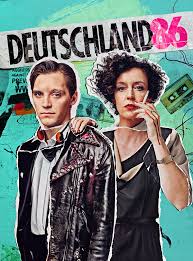


Let’s draw a veil over the awful Batwoman. Wooden acting, clunky scripts, a plot that made no sense at all.
Devs – sci fi that’s about ideas, as much as it’s about tech. There was no predicting where this one was heading, or where it ended up. Whether it entirely made sense, I’m not sure, but it was, as the Guardian reviewer put it, a ‘deep, dark, wild ride’.
Dracula – yet another take on the Stoker original, this one was about as faithful as any of the others, but it really went for it, with conviction and style. As Lucy Mangan in the Guardian put it, ‘It’s a proper job […] And that means proper scares. No spoilers, but the one in the [redacted] when the [redacted] suddenly [redacted] had me clinging to the ceiling. I advise parental supervision at all times. My dad was annoyed at having to come over, but needs must when the devil calls and starts emanating from your screen.’
His Dark Materials – As always with a screen version of a book/series that I have loved with a real passion, I was anxious that the adaptation would mess it up. I needn’t have worried. The performances are grand, the visuals stunning, and it’s powerful stuff. We loved it, and are looking forward to Series 2.
Star Trek: Discovery – we’re through the wormhole now, and it’s Trek, Jim, but not as we know it. This allows for real character development, though if I were to be picky I’d ask them to rein in the reaction shots of awe and wonderment and so forth. No idea where we’re headed but we’re now liberated from the need to be consistent with the existing series, which is pretty exciting, if you’re a long-term Trekker.
Star Trek: Picard – it’s a good time to be into Trek! Not only Discovery, but Picard too. My love for Jean-Luc is undimmed and he carried this very effectively. Some lovely shout-backs to NG, but its not pure nostalgia for the fans.
The Walking Dead – The first part of the season ended prematurely due to the pandemic – we only got the finale in October and now have to wait till next year for the second half. The series has come back strongly from quite a long slump, and whilst some of the regular gripes (apocalyptic battles which end up with only one peripheral character being killed, regular characters behaving with untypical stupidity to bring about some new peril, that sort of thing) are ever present, it’s back to being essential after a period where it was a mere duty watch.


Doctor Who – This year’s series was controversial amongst some Whovians, for seeming to change some of what we thought we knew about the Doctor’s origins. But did it? After all, our main source was the Master, who, as we know, lies… We will see. The Doctor did make a few appearances later in the year from her Judoon cell, to give us hopeful and inspiring messages about coping with lockdown isolation, which, I have to admit, brought a tear to my eye. She’ll be back on 1 January 2021, and let’s hope that the Tardis is a harbinger of hope for a better year ahead.


Some films watched on TV: Jurassic Park: Fallen Kingdom was perfect New Year’s Day fare. And the general stress of lockdown drew us to Abraham Lincoln: Vampire Hunter, and Pride and Prejudice and Zombies. The first I rather enjoyed – the script was just clever enough, with some neat historical references buried in amongst the improbable action. The second, well, once we had chuckled at the Bennett girls practising martial arts and strapping lethal weapons to their stockinged legs, it was slightly thin stuff. Last but not least in this category, the only superhero movie we watched this year, very unusually, was Deadpool, which was, to say the least, different… Very funny, very rude.
We’re saving up Agents of Shield (the last ever series) and Series 2 of His Dark Materials – some things to look forward to early in 2021.
We caught up with Modern Family, which we’d abandoned at the end of series 4, for no good reason. I found myself laughing loud and often. The characters don’t develop, not really, but when the writing and the performances are this good, there’s plenty of comic mileage to be had. We discovered Friday Night Dinner (only series 1 so far) which also made us laugh a lot.
The Good Place managed to be both very, very funny and profound. It made full use of its fantasy license, regularly wrongfooting us in ways that made us shout out something along the lines of WTF, and its final couple of episodes reduced me to real sobs, not just ‘something in my eye’ but full-on weeping. And yet, right up to the end, it was very, very funny too. A fabulous achievement.


We enjoyed the ebullient and charismatic Stuart Copeland in a couple of docs, his own Adventures in Music series, and his episode of Guitar, Drums, Bass (Lenny Kaye and Tina Weymouth represented the other instruments). We enjoyed the Lennon at 80 radio programme hosted by Sean Lennon, and a documentary about John and Yoko, Above Us Only Sky. The film Matanga/Maya/MIA was fascinating, though it left me somewhat dubious about her, not so much musically as politically. K T Tunstall presented an absolutely charming documentary about Ivor Cutler. A number of classical documentaries featured members of the remarkable Kanneh-Mason family: an Imagine programme, This House is Full of Music, Young, Gifted and Classical, focusing on cellist Sheku Kanneh-Mason, who cropped up too in the excellent Black Classical Music, fronted by Lenny Henry and Suzie Klein, which introduced us to a number of composers we had not heard of previously. This last programme tied in with Black History Month, as did Gospel According to Mica, in which the singer explored the history of the genre through six songs, taking us from slavery days through the civil rights struggle to our own time. Soul America charted some of the same history, though taking a much narrower slice of history, broadly from the transmutation of gospel into soul, through the socially conscious sounds of the late 60s, to the sexual healing of the ’70s. Music, Money & Madness was a fascinating look at the background to Rainbow Bridge, the incoherent mess of a film that features Hendrix’s excellent 1970 gig in Maui, Hawaii.




Afua Hirsch presented African Renaissance (on African art), and co-presented with Samuel L Jackson the outstanding and at times overwhelming Enslaved. David Olusoga’s Africa Turns a Page put the spotlight on African writers, some familiar, others less so (see my books blog for some contemporary African fiction).
I Am Not Your Negro is an extraordinary film. It’s a 2016 documentary directed by Raoul Peck, based on an unfinished manuscript by James Baldwin. It explores the history of racism in the US through Baldwin’s reminiscences of civil rights leaders Medgar Evers, Malcolm X and Martin Luther King. Baldwin was one of the African American writers who I discovered in my teens and who inspired and challenged me. The film left me feeling quite shaken, such is the power of the images and Baldwin’s words.
France 1939: One Last Summer – A poignant compilation of home movies from France, from the summer of 1939. Impossible to see even the most carefree moments without the foreshadowing of what was to happen.
Confronting Holocaust Denial with David Baddiel was thoughtful, intelligent and impassioned.



On a somewhat (much) lighter note, Rome Unpacked was a lovely corollary to our recent visit, reminding us of how much we had yet to see (looking forward to our next trip, in the after-times…). I also fell somewhat (quite a bit) in love with Giorgio Locatelli. One quibble however – they visited the Jewish Ghetto and talked about the history of medieval antisemitism, without mentioning that the Ghetto’s inhabitants were deported and murdered by the Nazis in 1943. It’s not that I wanted the programme to delve into that in any detail – it just needed a one sentence coda to that section of the programme, rather than leaving the impression that murderous anti-semitism was something from the distant past.
A documentary about Nottingham Forest’s 1970s European Cup successes turned out to be a much more emotional experience than I’d been anticipating, when I caught sight of my lovely kid brother, who died in February, on one of the clips. He’d been a ball-boy at the first-round match against Liverpool in our 1979 Euro cup campaign, and was caught on camera at the end, clapping the team off the pitch and then punching the air in celebration. I sobbed for quite some time after that.
The Big Screen
2020 cinema began shortly after New Year, with Little Women. I knew what was coming, of course, having known the books for most of my life, but it didn’t stop Beth’s death being devastating, as I knew how soon I would be losing my little brother. I have the DVD but will need to brace myself before rewatching, particularly the bits where… well, if you’ve seen it, or any of the previous versions or read the book, you won’t need me to spell out the parts of the film which will break me on the rewatch. In fact, I won’t even say any more now, just refer you to Rick Burin’s review. Hell, it broke him, and as he says, ‘I’m northern and into football and stuff, but I just kept crying’.
And then a two-film day in mid-March, watching Celine Sciamma’s Girlhood (second time round for me) with Liz at the Showroom, and then in the afternoon Sciamma’s newest film, Portrait of a Lady on Fire, with Martyn. I loved both films, I found Girlhood just as powerful as I had the first time, with several moments that are firmly lodged in my mind, and Portrait definitely requires a re-watch. I wrote about both films for this year’s International Women’s Day blog but I’m going to send you to read Rick Burin again, as he reviews all of Sciamma’s films and much better than I can.
Note that the films I did see in 2020 totally kicked the Bechdel test‘s ass.


And that was it. No more cinema – they did reopen, of course, for a while, but as we have been super-cautious throughout the pandemic, we did not take advantage (I renewed my Showroom membership, as a gesture of support).
Can’t talk about cinema in 2020 without noting the tragically early death of Chadwick Boseman. I only knew him as Black Panther but that role alone was enough to imprint him on my consciousness – it was a performance of grace and power, as well as huge cultural significance. Will look out for chances to see Boseman’s other movies.

Previous years’ cultural highlights have included Opera North at Leeds Grand Theatre. Obviously, since March, the pandemic has put paid to that. In fact, I’d had to drop out before that – I could not attend the three productions in January/February as my brother’s condition worsened and I knew both that I needed to be available to see him whenever I could, and that I really couldn’t commit to producing a review in a reasonable timescale, or at all. I had no idea when I made that decision that my stint as an opera reviewer would have come to an end for the foreseeable future. I loved doing the reviews, and had a marvellous time seeing superb productions of works from Monteverdi to Britten and all points in between.
The move to on-line cultural activities, devastating as it was to the future of live performance, offered some delights. The Sheffield Classical Music Festival in May gave us access to some joyous and uplifting chamber music, as members of Ensemble 360 filmed performances in their gardens and living rooms. It was fabulous, even if it made us miss Music in the Round in the Crucible Studio even more.
Other online treats were Ian Dunt talking about being a liberal, David Olusoga talking about Black and British in Black History Month, Kit de Waal talking about My Name is Leon (all three talks part of Sheffield’s annual Off the Shelf festival), Sarah Churchwell and Bonnie Greer talking about the US election outcome (part of the national Being Human festival) – and two chances to hear and see someone who was an idol during my teenage years, the awesome and inspiring Angela Davis, first in her own South Bank lecture, and then in conversation with Jackie Kay (as part of Manchester Literary Festival). I might, theoretically, have got to the Off the Shelf events in normal circs. But I wouldn’t have made it to the South Bank, or the University of London, or even across the Pennines to Manchester.
But I long to get back to live chamber music and theatre at the Crucible, live opera at Leeds Grand Theatre, arty French movies at the Showroom and blockbusters at the IMAX… We’ll get there, thanks to the vaccine(s). And it will be so very lovely when we do. I may, just possibly, weep.
Screens, in general, have been our lifeline in the plague times. Not just the entertainment and enlightenment of what our television channels offer, but the Zoom/Messenger/Facetime link ups with the people we love, who we can’t be with. It’s not the same, obviously, and in the early days at least it made me feel, briefly, sadder once we’d waved goodbye and blown kisses to the small figures on our laptop screens. But our isolation has been less stark, less absolute, and at best those virtual encounters have made us feel hope, made us feel loved, given us the chance to support each other.


2010-2019 – the best bits… and some of the other bits
Posted by cathannabel in Events, Film, Literature, Music, Personal, Television on December 19, 2019
I honestly hadn’t thought about it being the end of a decade until I saw the first few ‘best of’ lists appearing.
On a personal level, it’s been quite momentous. We both retired, midway through the decade, a decision which we haven’t regretted for a nano-second. I finished my (second) undergrad degree before I left work, and then went straight on to study for a PhD, which I hope to complete early in the next decade. Each of our children graduated twice (four different Universities, three different cities) and found permanent, rewarding employment.
I lost a good friend and colleague to cancer and helped to set up and then chair a charity as his legacy, raising around £30k since 2013 for cancer charities, through a fabulous fundraising event, the 24 Hour Inspire, and other ventures.
I started this blog in January 2012, and whilst I’ve had periods of writer’s block this year it’s given me a way of being creative, having spent most of my life denying that I am or could be. I was also offered the chance to go to the opera for free with a friend, and write reviews of the productions, which has been an absolute delight.
We put lots of things on hold for a while as my mother in law’s dementia worsened, and her care needs became urgent. She died last Christmas. My brother was diagnosed with terminal cancer in 2018 and the chemo he’s been on is no longer working. We go into the New Year with heavy hearts.
Politically it’s been a nightmarish decade. The Tories back in power, first in coalition, then in their own right, albeit for a while as a minority government. The EU Referendum and the government’s complete inability to approach the negotiations in good faith and with understanding and intelligence. Obama replaced in the White House by someone so utterly unfit for any kind of high office that I still wonder whether we slipped into some parallel universe at about the halfway point of the decade, after which nothing made any kind of sense.
Should have realised, when I woke one morning in early January 2016 to learn that Bowie had left us. Should have known it was a portent.
So since looking forward is a mug’s game at present, I’ll look back, to the books, films and TV programmes that have sustained me during the last ten years.
Books of the Decade
Some of these titles feature in my already published Books of the Year and Books of the Century lists, as one might expect. I’ll indicate those that do, or that are reviewed in my 60 Books challenge series, so as not to repeat myself too much (and have time to also do the full panoply of decade and year lists that I am somehow compelled to do).
Ben Aaronovitch – Moon over Soho (Books of the Century)
Ferdinand Addis – Rome: The Eternal City was a birthday gift from the Roman branch of our family, following a recent visit to the city, which had made me realise just how fragmented and unreliable my sense of its history was. A hotch-potch of Shakespeare, the New Testament, Robert Graves and Robert Harris, I really needed to get a grip on it all. Addis’s tome is just the thing. It’s very entertainingly written, it takes key events and explains how they came to pass and what followed, and it takes us from Romulus & Remus to Federico Fellini.
Chimamanda Adichie – Americanah. Her Half of a Yellow Sun is one of the top three books of the century (according to me). Adichie’s protagonist here goes off to University in the States, and we follow her struggles to acclimatise and to understand what race means in America, as well as her feelings for her lover back in Lagos. It’s often very funny, and always very sharp and perceptive. The Guardian said that ‘It is ostensibly a love story – the tale of childhood sweethearts at school in Nigeria whose lives take different paths when they seek their fortunes in America and England – but it is also a brilliant dissection of modern attitudes to race, spanning three continents and touching on issues of identity, loss and loneliness.’
Viv Albertine – Clothes, Clothes, Clothes. Music, Music, Music. Boys, Boys, Boys (Books of the Century)
Naomi Alderman – The Power (Books of the Century)
Lynne Alexander – The Sister illuminates a life lived in the shadows: Alice James was sister to the more famous Henry and William, prevented by ill health and the constraints of Victorian society from expressing her own creativity. Alexander doesn’t hammer this message home simplistically but brings Alice to sympathetic life. ‘A furious volcano of thoughts and desires trapped within a carapace of pain, Alice is a feminist cipher but, more movingly, a beautifully drawn and memorable individual, brave, vulnerable and fiercely intelligent.’ (The Guardian)
Darran Anderson – Imaginary Cities is an exuberant and wildly eclectic tour of cities in Western civilisation drawing on books, films, architecture, myth, visual arts. Totally my cup of tea. Described as ‘an exhaustive, engaging book’ which generates ‘sheer joy for the curious reader’. It certainly did for this curious reader.
Anne Applebaum – Iron Curtain: The Crushing of Eastern Europe 1944-56 is a fascinating study of Poland, the GDR and Hungary after the end of the Second World War. The Telegraph said that she takes ‘a dense and complex subject, replete with communist acronyms and impenetrable jargon, and make it not only informative but enjoyable – and even occasionally witty. In that respect alone, it is a true masterpiece’. (Books of the Year)
Kate Atkinson – Life after Life (Books of the Century)
Margaret Atwood – The Testaments is the long-awaited sequel to The Handmaid’s Tale. It does take the action forward – we get to see some of what happened after that book’s final page, but perhaps more significantly, we see Gilead from perspectives other than that of June/Offred, and so we understand more about how Gilead works, and about, in particular the role of the Aunts. It’s completely compelling, and very disturbing. (Books of the Year)



Julian Barnes – The Levels of Life (Books of the Century)
Linda Buckley-Archer – The Many Lives of John Stone. Buckley-Archer began her literary career with the YA Timequake trilogy. This is beautifully written, interweaving a vivid historical narrative with the present day. There’s no time travel, or supernatural/paranormal elements – it just uses a hypothetical genetic characteristic as the basis for the plot. It’s engaging, gripping and ultimately very moving.
James Lee Burke – Robicheaux (Books of the Century)
Jane Casey – Cruel Acts (Books of the Year, and Century)
Jonathan Coe – Middle England. I picked The Rotter’s Club for my books of the century, and this is the third part of that trilogy. This made me laugh a lot. Made me weep a bit. Reminded me of music I love (Hatfield & the North, Vaughan Williams) and of lyrics that always move me: Billy Bragg’s ‘Between the Wars’. (Not mentioned in Coe’s book, but I kept on thinking of the line ‘Sweet moderation, heart of our nation’). It’s rueful and wistful and, I think, hopeful… (Books of the Year)
Suzanne Collins – Mockingjay is the final part of The Hunger Games trilogy. Another series aimed at a young adult readership, this one is pretty dark (not that YA reading should be sugar-coated or cosy, it should challenge and disrupt if it’s doing its job). Vivid and exciting, with a splendid hero in Katniss Everdene, and resists too neat an ending – after so much tragedy and trauma, that would have jarred horribly.
Stevie Davies – Awakening (Books of the Century)
Edmund de Waal – Hare with the Amber Eyes (Books of the Century)
Emma Donoghue – Room (Books of the Century)
Helen Dunmore – Birdcage Walk. Sadly the last novel from Dunmore, who died of cancer in 2018. I picked The Siege as one of my Books of the Century, and read The Betrayal as part of my 60 books challenge – her novels are very varied but always beautifully and powerfully written. The Guardian describes her writing as ‘hazardously human’. It’s particularly poignant to note that the fictional Julia Fawkes ‘lies buried with the inscription “Her words remain our inheritance.” Julia may have disappeared from the record, but Dunmore’s words remain.
Sue Eckstein – Interpreters (Books of the Century)
Reni Eddo-Lodge – Why I’m no longer talking to White People about Race (Books of the Century)
Esi Edugyan – Half-Blood Blues (Books of the Century)
Elif Shafak – Three Daughters of Eve (60 Books)
Lara Feigel – The Bitter Taste of Victory (Books of the Century)
Will Ferguson – 419 (Books of the Century)
Gillian Flynn – Gone Girl (Books of the Century)
Karen Joy Fowler – We are all Completely Beside Ourselves is particularly difficult to write about without revealing a vital twist, so I will avoid any discussion of the plot. Read it anyway, just avoid the reviews (so no link to the Guardian, which called It an ‘achingly funny, deeply serious heart-breaker … a moral comedy to shout from the rooftops’.) (Books of the Year)
Tana French – Broken Harbour (Books of the Year and Century)
Esther Freud – Mr Mac and Me reminded me of Helen Dunmore’s Zennor in Darkness. A writer/artist (D H Lawrence for Dunmore, Charles Rennie Mackintosh for Freud) finds themselves in a rural community at the start of the First World War, and is regarded with suspicion by the locals due to their unconventional behaviour). Mackintosh is seen through the eyes of a fourteen year old boy, intoxicated by the glimpses of a wider world, of art and beauty, that Mackintosh brings.




Jo Furniss – All the Little Children (60 Books)
Robert Galbraith – The Cuckoo’s Calling (Books of the Century)
Patrick Gale – Notes from an Exhibition (Books of the Century)
Alan Garner – Boneland (Books of the Century)
Nicci Gerrard – What Dementia Teaches us about Love (Books of the Century)
Valentina Giambanco – The Gift of Darkness (Books of the Century)
Elizabeth Gilbert – The Signature of all Things. I wouldn’t have expected to enjoy Elizabeth Gilbert’s writing, having a deep-rooted suspicion of the whole Eat, Pray, Love thing. But I really did. Gilbert’s fictional protagonist, Alma Whittaker, is brilliant, lonely, not pretty. She’s a scientist, a naturalist, in the wrong era (she’s born in 1800) to have any chance of fulfilling her ambitions, or her desires. She’s remarkable, utterly believable, her openness and imagination endearing and fascinating. It’s an ambitious novel, that fully succeeds in its ambitions.
Robert Gildea – Fighters in the Shadows: A New History of the French Resistance. Gildea brings out of the shadows the Resistance that was marginalised for decades – women, Communists, foreigners. It’s much more complicated than the myth that de Gaulle propagated at the Liberation, and more interesting.
Lesley Glaister – The Squeeze (Books of the Century)
David Grann – Killers of the Flower Moon (Books of the Century)
Jarlath Gregory – The Organised Criminal (60 Books)
Elly Griffiths – The Stone Circle (Books of the Year and Century)
Thomas Harding – The House by the Lake (Books of the Year and Century)
Jane Harper – The Lost Man (Books of the Year and Century)
Robert Harris – An Officer and a Spy (Books of the Century)
John Harvey – Darkness, Darkness – the final part of the series of novels featuring Nottingham detective Charlie Resnick.
Noah Hawley – Before the Fall is an excellent thriller, about truth and lies, fame and reality, from the writer of the TV version of Fargo
Emma Healey – Elizabeth is Missing (Books of the Century)
Sarah Helm – If this is a Woman (Books of the Century)
Sarah Hilary – Never be Broken (Books of the Year and Century)
Susan Hill – The Comforts of Home is the most recent (that I’ve read) of the Simon Serrailler series. (Books of the Year. The Various Haunts of Men was one of my Books of the Century).
Christopher Hitchen – Mortality (Books of the Century)
Andrew Michael Hurley – The Loney (Books of the Century)
Jessica Frances Kane – The Report is absolutely fascinating. At the heart of the novel is a little known wartime tragedy, in which no bombs fell, but 173 civilians died. I had never heard about the Bethnal Green disaster when I came across this book, and it set off many trains of thought.



Philip Kerr – Prague Fatale. Kerr’s series of novels featuring Berlin detective Bernie Gunther blend crime fiction with World War II European history. They span from the immediate pre-war period to the long aftermath of the war, and Bernie has been part of it all. He’s a survivor, who’s done bad things and seen worse ones, but somehow retained his humanity, a dry humour, and at least some of his integrity.
Stephen King – The Institute. King’s latest references a number of his previous novels (Firestarter, The Shining, Carrie…) but does something a bit different with these themes. In a way, he’s setting two version of America against each other: the corporate world of the Institute, ‘the cogs and wheels of bureaucratic evil, run by ‘a bunch of middle-management automatons’, against small-town America (the good and the bad thereof). It’s proper cancel all other activities including meals and sleep till the last page King. (Books of the Year)
Otto Dov Kulka – Landscapes of the Metropolis of Death (Books of the Century)
John le Carre – Pigeon Tunnel (60 Books)
Harper Lee – Go Set a Watchman (Books of the Century)
Laura Lipmann – Sunburn (Books of the Year and Century)
Kenan Malik – Quest for a Moral Compass (Books of the Century)
Hilary Mantel – Bring up the Bodies. We’re still eagerly awaiting the third part of Mantel’s Cromwell trilogy. (Wolf Hall was one of my Books of the Century).
Helen Mathers – Patron Saint of Prostitutes is a fascinating biography of Josephine Butler, the remarkable Victorian campaigner who challenged all of the conventions about how a pious and respectable woman should behave by working with prostitutes, and challenging publicly the way in which they were brutalised and abused in the name of public morals.
Jon McGregor – Reservoir 13 (Books of the Century)
Dervla McTiernan – The Ruin (Books of the Century)
Livi Michael – Succession (Books of the Century)
Denise Mina – The Long Drop (Books of the Century)
Wendy Mitchell – Someone I Used to Know is an account by someone diagnosed with early onset dementia. She’s frank and fearless about explaining how the condition affects her as it progresses, but uses her energies to campaign for awareness and understanding, and for practical support. Her blog is funny, sad and enlightening, and it is so rare and refreshing to hear about dementia from someone who is actually experiencing it.
Caitlin Moran – How to be a Woman (Books of the Century)
Sarah Moss – Bodies of Light (Books of the Year and Century)
Thomas Mullen – Darktown (Books of the Century)
Tiffany Murray – Diamond Star Halo rocks. It’s set on a fictionalised version of the residential recording facility at Rockfield Farm, Murray’s childhood home, itself the locus of much rock music mythology. It’s gloriously funny, but has plenty of heart, and the music is part of every line of the text – I could hear the soundtrack in my head, even the music that was imagined and not real. And I often think of protagonist Halo’s night-time prayer, a litany of rock stars gone forever…


Maggie O’Farrell – The Hand that First Held Mine (Books of the Century)
Chinelo Okparanta – Under the Udala Trees movingly explores the Biafran war, sexuality and love across the ethnic and religious divides, class and status in Nigerian society.
David Olusoga – Black and British (Books of the Century)
Philip Pullman – La Belle Sauvage (The Book of Dust, Book 1). I won’t say too much about this as I don’t want to risk giving any spoilers. But it is sheer delight to be back in this world and to re-experience the sheer power, the subtlety, the glorious imagination of Pullman’s writing.
Ian Rankin – In a House of Lies, the most recent Rebus. He’s retired now, and battling with COPD and the lifestyle changes that has forced on him. Does any of that stop him getting involved in the solving of a crime, and getting under the feet of the cops? Have you met Rebus? (Books of the Year)
Danny Rhodes – Fan is about football and football culture, about supporting Nottingham Forest, and, inexorably, about Hillsborough. It’s powerful and harrowing.
Sally Rooney – Normal People (Books of the Year and Century)
Liz Rosenberg – Indigo Hill (Books of the Year and Century)
Donal Ryan – From a Low and Quiet Sea (Books of the Year and Century)
Philippe Sands – East-West Street (Books of the Century)
Noo Saro-wiwa – Looking for Transwonderland (Books of the Century)
Phil Scraton – Hillsborough: The Truth. When Scraton published this 2016 edition of his authoritative, rigorous, and personal account of the disaster, he would not have imagined the news that broke in December 2019, that Duckenfield had been found not guilty. Again, the families who have endured so much – lies, betrayal, vilification, dismissal – for so long, are in pain, and again, it seems no one will be held accountable for 96 entirely avoidable deaths.
Anne Sebba – Les Parisiennes (Books of the Century)
Taiye Selasi – Ghana Must Go (Books of the Century)
Lynn Shepherd – Tom All-Alone’s (Books of the Century)
Anita Shreve – The Stars are Fire was Shreve’s last book. Her protagonist, Grace, has a life that is limited by societal convention and tight family budgets but she thinks it’s fine, mostly, until she loses almost everything, in the terrible fires that swept Maine in 1947. The disaster is described with visceral power and horror, but Shreve is just as interested in its aftermath, as Grace tries to find a way to start again.

Rebecca Skloot – The Immortal Life of Henrietta Lacks (Books of the Century)
Patti Smith – M Train. I picked Just Kids for my Books of the Century, but could just as well have chosen this. With the humour, self-deprecation and warmth that characterised her earlier memoir, she talks about her marriage to Fred ‘Sonic’ Smith, of the series of terrible losses that she experienced, of her music. And, unexpectedly, of her obsession with Midsomer Murders.
Timothy Snyder – Bloodlands: Europe between Hitler and Stalin. I’ve spent a lot of time studying the Occupation of France, and I’m well versed in its horrors. I know better than to minimise the brutality – but the majority of the murders of French citizens and those who were in France during the Occupation took place not on French soil but in what Snyder calls the Bloodlands. ‘Both tyrants identified this luckless strip of Europe as the place where, above all, they must impose their will or see their gigantic visions falter… The figures are so huge and so awful that grief could grow numb. But Snyder, who is a noble writer as well as a great researcher, knows that. He asks us not to think in those round numbers. … The Nazi and Soviet regimes turned people into numbers. “It is for us as humanists to turn the numbers back into people.”
Rebecca Solnit – Hope in the Dark (Books of the Century)
Cath Staincliffe – The Girl in the Green Dress. I was torn when I did the list of books of the century, and chose The Silence between Breaths. So I’m making recompense now. What Staincliffe does so well is to focus not just on the crime (though there is a strong police procedural element to this one, unlike some of her stand-alone novels) but on the ripples created by the crime, on the families of victim and perpetrators, on the police officers themselves. This one will break your heart.
Susie Steiner – Missing, Presumed (Books of the Century)
Adrian Tempany – And the Sun Shines Now (Books of the Century)
Rose Tremain – The Gustav Sonata (Books of the Century)
Elizabeth Wein – Code Name Verity is a brilliant and moving YA novel about young women undercover in Occupied France in WWII. It’s so very cleverly structured – things that don’t seem to quite make sense suddenly become clear in the second half, when the narrator changes. The plot is utterly gripping and the ending made me weep. A lot.
Louise Welsh – A Lovely Way to Burn. This is part 1 of the Plague Times trilogy, a dystopian future where plague wipes out large swathes of the population. We’ve been here, or hereabouts, before of course – Day of the Triffids, The Walking Dead, 28 Days Later, The Stand… Welsh makes it work though, she gives weight to the moral issues as well as giving us suspense, action, horror, and everything we’d expect from the post-apocalypse.



Colson Whitehead – Underground Railroad (Books of the Century)
Jeanette Winterson – Why be Happy when you could be Normal? (Books of the Century)
Farewell to those writers listed above who we lost during the decade: Helen Dunmore, Sue Eckstein, Philip Kerr, Harper Lee and Anita Shreve. Thank you all.
Films of the Decade
I’ve highlighted in bold my favourite films in each of these categories. Many of them I’ve written about already elsewhere, so again I’m not attempting to review or even comment on each one.
Scifi and Superheroes: A brilliant decade both for the superhero genre and – IMHO – Marvel specifically, and for other sci-fi franchises: Star Trek had Beyond, and Star Wars fielded The Last Jedi and Rogue One. My pick from the MCU: Avengers Assemble, Captain America: Civil War, Black Panther, Captain Marvel, Spiderman: Into the Spiderverse, Guardians of the Galaxy I, Thor: Ragnarok. And outside this particular arc, from the X Men, the elegiac Logan. And though I don’t generally do DC, I have to have Wonder Woman.
Best of the bunch: Not dissing Endgame, but Assemble is when I fell in love with Marvel (and with Captain America, TBH). And Black Panther had a significance beyond its place in the Avengers story, and was exhilarating not just for people of colour in the audience, but for anyone who cares about seeing the rich diversity of humanity on screen, as heroes and as villains.
We had Inception and Interstellar, Her and Ex Machina, Looper and Mad Max: Fury Road, The Martian and Gravity, Monsters and Dawn of the Planet of the Apes, A Quiet Place and Source Code.
And the two best SF films of the decade: Annihilation, and Arrival. Visually stunning, intelligent sci-fi. Of the two, Arrival, with its emotionally devastating twist, and its fascinating exploration of language, edges it.


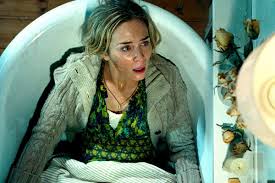
Thrills, Crimes & Heists: Baby Driver and Drive, Bad Times at the El Royale, Skyfall, Gone Girl and Widows. I’m torn on which to pick. With caveats, to do with the film’s failure to meet the low bar of the Bechdel test, I’d pick Baby Driver, which was beautifully described by Empire as: ‘not a film just set to music. But a film meticulously, ambitiously laid over the bones of carefully chosen tracks. It’s as close to a car-chase opera as you’ll ever see on screen.’ Even if the narrative arc (young man in debt to gangster does ‘one last job’ and finds out there’s no such thing) is traditional enough, the choreography, the seamless blend between diegetic and exegetic music, make it entirely original and massively enjoyable.
War: Anthropoid (the assassination of Heydrich), Childhood of a Leader (a more allegorical account of the birth of fascism), Lore (a German teenager in the aftermath of the war). And the best one: Dunkirk – I was overwhelmed, by that intense focus, by the score which built and built the tension until it was almost unbearable (and the use of the Elgar Nimrod as the first of the little ships appeared reduced me, predictably enough, to sobs), and by the non-linear structure which forced one to concentrate, to hold those strands together even as the direction teased them apart.
French films: Michael Haneke’s Amour, Xavier Giannoli’s Marguerite (a French take on the Florence Foster Jenkins story), Olivier Assayas’s Double Vies (Non-Fiction), Mia Hansen-Løve’s L’Avenir (Things to Come), Denis Villeneuve’s Incendies. Varda by Agnes and Bertrand Tavernier’s Journey through French Cinema. My favourites: Celine Sciamma’s Bande de Filles (so much in this movie, but just watch that opening sequence, with the young women leaving hockey match and returning to their homes in the banlieues, and a gorgeous sequence as they dance in shoplifted dresses to Rihanna’s ‘Diamonds’) , Abderrahmane Sissako’s Timbuktu (a stunning Malian film, beautiful and shattering, but with unexpected moments of humour too).
Horror: Cabin in the Woods, What we do in the Shadows. Get Out and Us. A Girl Walks Home Alone at Night, The Girl with all the Gifts. Under the Skin.




History/Biography: First Man and Hidden Figures, Lincoln, Selma and BlackKKlansman. Love and Mercy (biopic of Brian Wilson).
Comedy: Booksmart and Lady Bird. Death of Stalin and Four Lions. Hunt for the Wilderpeople and Moonrise Kingdom. Sorry to Bother You. World’s End and Submarine. The Muppets, and Paddington.
Animation: Inside Out, Tangled, Toy Story 3.



Adaptations: Macbeth (Fassbender and Cotillard) and Joss Whedon’s Much Ado about Nothing.
Documentaries: I Believe in Miracles (Johnny Owen’s account of the glory years at Nottingham Forest), Night will Fall and They Shall Not Grow Old, Nine Muses, They will have to Kill us First.
Drama: Captain Fantastic and Leave No Trace. Dallas Buyers Club and Pride. Grand Budapest Hotel and The Great Beauty. The Farewell and Short-term 12. Twentieth-century Women and Three Billboards outside Ebbing, Missouri. Winter’s Bone and Room. We Need to Talk about Kevin and If Beale Street Could Talk. Life, above all and Cold War.



Music: La la Land
Farewell and thank you to Marvel man Stan Lee, to Emmanuelle Riva (star of Haneke’s Amour, and long before that, of Hiroshima mon amour), to Agnes Varda, and to Michael Bond, creator of Paddington.
TV of the Decade
Subtitled Crime/Thrillers: Dicte, Follow the Money, Greyzone, Rough Justice, Spiral, The Team, Trapped, Wallander, Witnesses, Beck, Before we Die, Blue Eyes, The Bridge, Deutschland 83/86. Plus the bilingual English/Welsh productions, Hidden and Hinterland. Best of the bunch – Spiral (a master-class in French profanity, and a compelling if infuriating bunch of characters, dealing with grim and gritty crime on the streets of Paris.
Brit Crime/Thrillers: Endeavour, The Fall, Foyle’s War, Happy Valley, , Informer, Killing Eve, Kiri, Lewis, Line of Duty, Little Drummer Girl, London Spy, The Lost Honour of Christopher Jenkins, Midsomer Murders, The Missing, No Offence, River, Scott and Bailey, Sherlock, Shetland, Southcliffe, Strike, Suspects, The Suspicions of Mr Whicher, Unforgotten, Vera, Wallander, Bodyguard, Broadchurch, DCI Banks, Black Earth Rising, Ashes to Ashes. Best of the bunch – Endeavour for beautiful, subtle writing for all the lead characters; Killing Eve for deranged, delicious wickedness, Line of Duty for twisty turny plotting, and stunning, forget-to-breathe set pieces in the interview room, Unforgotten for the warmth and humanity of the two leads, the clever subtlety of the writing, and the emotional complexity of cold case investigation.
Other Crime/Thrillers: Fargo, Homeland, Mystery Road, Southland, The Americans. Best of the bunch – Fargo. Bonkers, funny and very very dark.


Sci-fi/Fantasy: Agent Carter, Agents of Shield, The Walking Dead, Doctor Who, The Fades, Utopia, The Handmaid’s Tale, Humans, Misfits, Orphan Black, The Returned, Star Trek: Discovery, True Blood, Being Human. Best of the bunch – Agents of Shield for daring plotting and terrific writing. Doctor Who for bringing us not only Doctors 11, 12 and 13, but the War Doctor and the reappearance of the very first Doctor, River Song and a whole raft of new companions, new and old foes… And Who, as always, through this decade, has given us a hero who thinks, who cares, who values kindness above all things, who isn’t human but somehow reflects back to us the best of humanity. Orphan Black for Tatiana Maslany’s virtuoso performance as most of the key characters. The Returned for a spooky, troubling, atmospheric take on the notion of the revenant.
Comedy: Big Bang Theory, Community, Derry Girls, Doc Martin, Fleabag, The Good Place, How I Met Your Mother, Modern Family, Raised by Wolves, The Thick of It, W1A, Young Sheldon. Best of the bunch – Derry Girls


History/Biography: A Very English Scandal, Brexit: An Uncivil War, Cilla, Gentleman Jack, Mo, Poldark, Resistance, To Walk Invisible, Wolf Hall, Summer of Rockets, World on Fire, War and Peace. A Very English Scandal was a startlingly funny and somehow touching take on a scandal that I recall from my early teenage years (the newspaper coverage at the time was highly educational!). I wrote about Gentleman Jack in my review of the year. And Resistance was a powerful – and historically sound, whilst using the device of a fictional central character who could link to all of the key resistance groups and events – account of Occupied Paris, a subject that I find endlessly fascinating.
Drama: The Casual Vacancy, Desperate Housewives, Doctor Foster, Spin, This is England, Treme, Years and Years. This is England (the TV series) was so powerful that I haven’t rewatched it. It broke me – particularly TiE88. Treme was a joy – it drew its characters with so much love and understanding, that we ended up loving them too. The cast was brilliant, as was the music (it’s the only drama of the decade that has led us to seek out a whole raft of CDs). And Years and Years was timely, moving and let us hope not overly prescient…



Music
This was the decade that I really got into opera. Having the chance to see (and latterly to review) Opera North productions at Leeds Grand Theatre and Town Hall has been not only a delight but an education. I’ve seen productions from across the centuries, and not only has the singing been glorious, but the stagings have been wonderfully inventive. You can find my reviews of the titles in bold elsewhere on this site.
- Cole Porter’s Kiss me Kate
- Purcell’s Dido & Aeneas
- Poulenc’s La Voix humaine
- Puccini’s La Boheme, Gianni Schicchi, Il Tabarro, Suor Angelica, Tosca, Madama Butterfly and Turandot
- Britten’s Death in Venice and Peter Grimes
- Ravel’s L’Enfant et ses sortileges
- Verdi’s Aida and Un ballo in Maschero
- Falla’s La Vida Breva
- Gilbert & Sullivan’s Trial by Jury
- Bernstein’s Trouble in Tahiti
- Giordano’s Andrea Chenier
- Kevin Puts’s Silent Night
- Handel’s Giulio Cesare
- Martinu’s The Greek Passion
- Strauss’s Salome
- Wagner’s The Flying Dutchman
- Lehar’s The Merry Widow
- Janacek’s Jenufa, Osud and Katya Kabanaova
- Monteverdi’s The Coronation of Poppeia
- Mozart’s Don Giovanni and The Magic Flute
- Rimsky Korsakov’s The Snow Maiden
- Leoncavallo’s I Pagliacci
- Mascagni’s Cavalleria Rusticana
As always, we have listened to a LOT of music. And over the course of the decade, more and more of it has been jazz. That’s partly thanks to Radio 3, with Jazz Record Requests and J to Z bringing us artists we weren’t familiar with along with lots of stuff from long-term favourites (Monk, Miles, Mingus et al). We’ve seen some live jazz too, from the Kofi-Barnes Aggregation, Arnie Somogyi’s Scenes from the City, and the Stan Tracey Octet.
For several years of this decade, Tramlines was where we went, one weekend a year, for live music. Music in pubs and clubs, in parks, in the art gallery, the Cathedral… It’s changed now, and it’s more a conventional music festival, which doesn’t suit us as well (though it’s a great success and a huge achievement for the city) – what we loved was just wandering around the city centre, from one venue to another, catching bands we’d never heard of as well as a few big names. It was bloody brilliant. And it was where we first saw Songhoy Blues, one of my bands of the decade. These young Malian musicians made me dance, made me smile like an idiot, made me cry a little, when Aliou Toure spoke about his country, his continent, and what the music stood for – peace, love, unity.
We’re privileged in Sheffield too to have Music in the Round – chamber music in the Crucible Studio from the house band, Ensemble 360, and a host of guest musicians. As the name suggests, the audience sits around the performers, so you’re guaranteed a good view, and it gives an intimate feel to the event. I could not begin to list the concerts we’ve attended there. Not just classical either – some of the jazz concerts referred to above were in the Crucible Studio, as was a wonderful gig from the Unthanks.
There have been other venues too – a remarkable performance of Terry Riley’s In C, in the Arts Tower paternoster lifts, and a programme of Reich, Adams, Zorn and others at the Leadmill, from the Ligeti Quartet.
So, another decade bites the dust. These have been some of the best bits. Love and thanks to all of the people who’ve shared these cultural delights with me, to all of the people who’ve created and performed these cultural delights for me, and to all of those who’ve passed on their own enthusiasms to me over the years.
Onwards. Whatever the next decade brings, let’s ensure it’s full of wonderful books, films, TV and music. Let’s hang on to the hope that things can and will get better…
 Passing Time