

Archive for category Refugees
Twenty years of Refugee Week
Posted by cathannabel in Refugees on June 18, 2018
If we think that the notion of a ‘refugee crisis’ is recent, it’s salutary to look back over the last twenty years since Refugee Week has been a thing. The twentieth century was designated the Century of Refugees – as if there was the remotest possibility that mass forced migration would be something the twenty-first century would escape.
What follows is the tiniest fragment of the overall picture of forced migration around the world. These are examples which, I hope, will illustrate not only the geographical scope but the multiplicity of reasons why people leave their homes and everything they know for an uncertain future in a strange land.
In 1998 refugees fled from Lesotho after rebel conflicts with the South African army. There were attacks by the Myanmar army on Thai border refugee camps housing Karen people. And the aftermath of the Rwandan genocide continued to have a major impact in central Africa, as the conflict and genocide in the former Yugoslavian territories did in Europe. A national emergency was declared in June as a result of the Kosovo War. Over 250,000 Albanians had been displaced from their homes, and many were without warm clothing or shelter as winter approached.
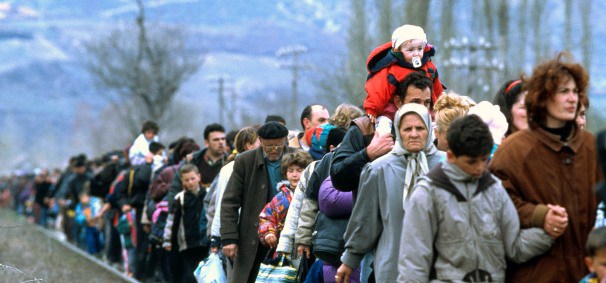
In 1999 the Kosovan exodus continued. As the civil war (1975-2002) continued, Angolans fled into Zambia.

And a new civil war in Liberia forced thousands into Ghana, where the Buduburam camp was set up to accommodate them. It’s still there, one of a number of refugee camps which have become permanent settlements, and is home to 42,000 people.
In 2000, the so-called Century of Refugees came to an end.
You don’t see them run, because they aren’t on the nightly news shows. But in the last few weeks, tens of thousands of hungry Afghans have been moving toward Herat, near the border of Iran, driven by civil war, bad government, winter and the worst drought in decades.
They aren’t alone. A continent away, renewed fighting in the Congo has people on the run again, this time into Zambia, where Angolans are also seeking shelter. In West Africa, the small nation of Guinea, with three million people, is being overwhelmed by hundreds of thousands of people fleeing a cruel government in Liberia and a civil war in Sierra Leone.
In 2001 Afghanistan became one of the major sources of refugees. Many fled the harsh rule of the Taliban, but more were displaced after the US invasion, prompted by the attack on the World Trade Centre. Many went to Pakistan which had received its first wave of Afghan refugees during the Soviet war in the late 1970s. By the end of 2001, there were over four million.
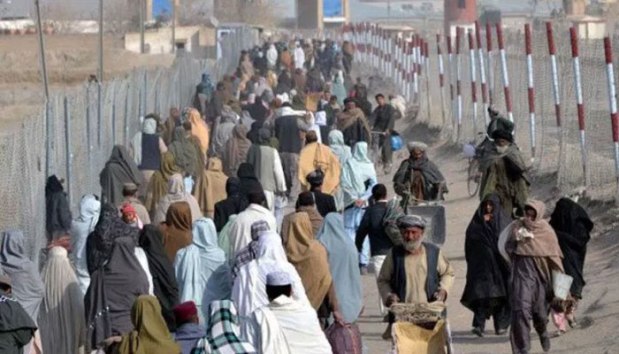
In 2002, Afghans continued to seek refuge, in Pakistan and in Iran.
In 2003, Human Rights Watch reported on the difficulties facing Serb refugees in Croatia, and the obstacles to their return home. The Central African Republic experienced the latest in a long line of coups and uprisings, resulting in around 42,000 refugees fleeing to neighbouring Chad, as well as 200,000 being internally displaced.
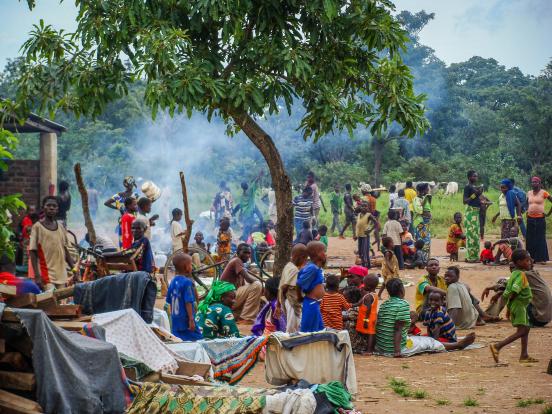
In 2004, MSF appealed for aid as around 110,000 refugees from Darfur crossed the border into Chad. North Korean refugees fled to Mongolia, which was trying hard to maintain good relations with both North and South Korea, and resisting opening a UN-administered refugee processing camp.
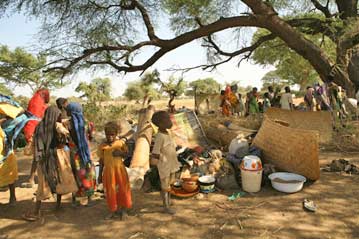
In 2005, whilst the Bosnian war had been over for more than three years, the vast majority of refugees had not returned home. The crisis in Kosovo had created around 1.5 m refugees and displaced persons. More than 400 Uzbek citizens sought asylum in neighbouring Kyrgyzstan following the 13 May 2005 uprising in the Uzbek town of Andijan. They remain in refugee camps in southern Kyrgyzstan awaiting a decision on their future. Around 38,000 refugees fled Togo to Benin and Ghana after political violence triggered by a disputed presidential election.
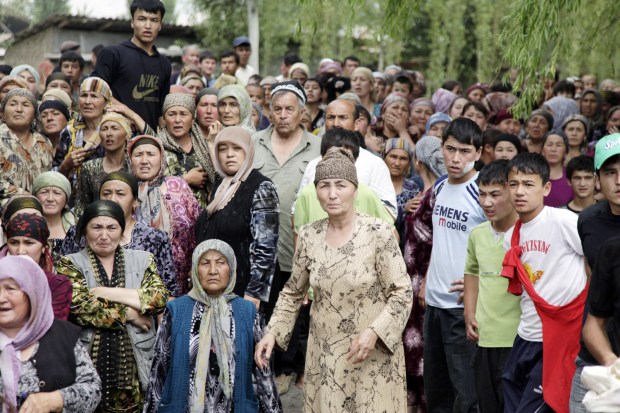
In 2006, the UNHCR resumed its voluntary repatriation programme for Congolese refugees in Tanzania. As many as 50,000 refugees from Lebanon crossed into Syria at one single border point, to escape Israeli airstrikes. Syrian authorities report more than 140,000 people have entered their country from Lebanon since the crisis started. Iran was the largest refugee haven, mainly for Iraqis and Afghans.
In 2007, nearly 2 million Iraqis – about 8 percent of the prewar population – fled the country, mostly to Jordan, Syria and Lebanon. The refugees included large numbers of doctors, academics and other professionals vital for Iraq’s recovery. Another 1.7 million had been forced to move to safer towns and villages inside Iraq, and as many as 50,000 Iraqis a month were fleeing their homes.
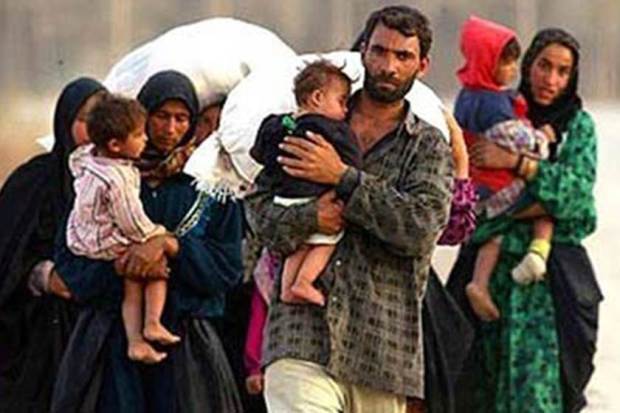
In 2008, nine refugee camps stretched along western Thailand’s border with Myanmar, with the largest, Mae La, housing 43,000 people from the Karen ethnic group who had fled their homes due to violence in Myanmar (military attacks by the Myanmar army, forced labor, destruction of homes and food crops, and enslavement). Another of Myanmar’s ethnic groups, the Chin, fled into neighbouring India and settled in the Mizoram hills.
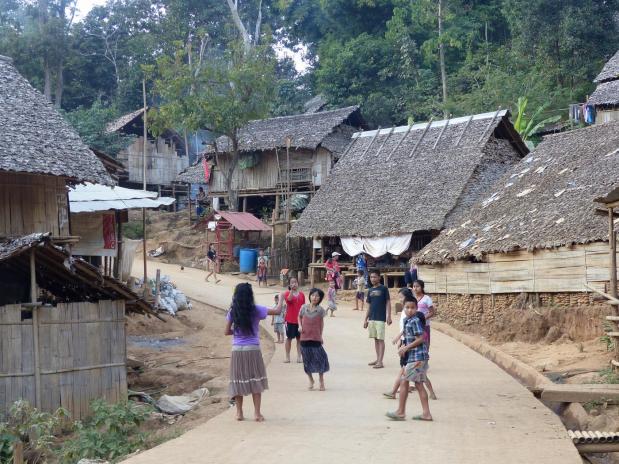
In 2009, returning Afghan refugees found the country’s institutions ill-equipped to meet their needs. The UNHCR faced mounting pressure from Iran and Pakistan, the main refugee hosting states, to maintain high repatriation figures. The prolonged refugee presence and the persistence of unchecked cross-border movements increased Pakistan’s and Iran’s leverage over their neighbour.
In 2010, Brazil hosted refugees from 72 nationalities, including Angola and Colombia, whilst Ecuador housed 300,000 Colombian refugees.
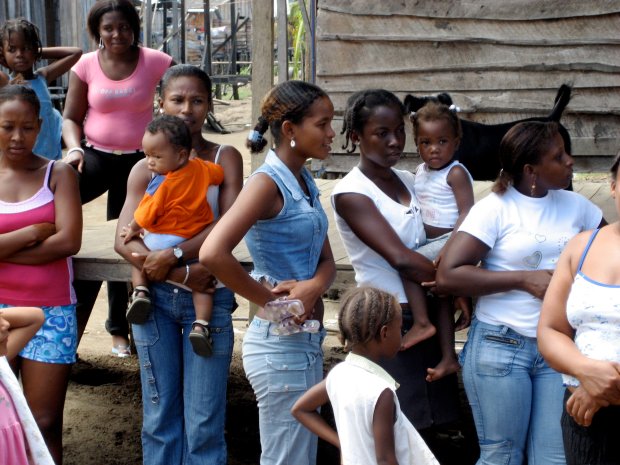
Iraqi refugees were proving reluctant to register with the UNHCR, often because they feared being repatriated.
The reasons are mixed, but clearly include the deep reluctance of refugees to envisage returning to a society profoundly marked by war, insecurity, civil conflict and economic uncertainty. Some Iraqis say they fear involuntary repatriation to Iraq if they formally register with the UN agency (while only 273 Iraqi families returned to Iraqi in 2010 under the UNHCR’s voluntary-repatriation programme). Many, with greater reason, are reluctant to go back to a country no longer characterised by mixed religious and ethnic communities and the legacy of Ottoman tolerance for ethno-religious differences. The emergent Iraqi state is clearly an “unmixed” one under which many Sunni Muslims are uncomfortableand Christian communities endangered and in flight.
https://www.opendemocracy.net/dawn-chatty/iraqi-refugees-problems-and-prospects
In 2011, Colombia had around 3.5m internally displaced people, with 500-700k seeking refuge in neighbouring countries. It was the seventh largest refugee population in the world. Colombia has been torn apart by conflict for over 40 years. The war between the government, guerilla groups such as the FARC and ELN, paramilitaries, and narco-traffickers has killed up to 200,000 people and has displaced millions of others.
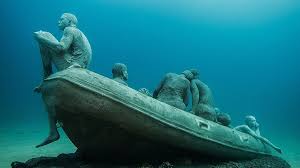
The island of Lampedusa, part of Italy but closer to North Africa than to Europe, had long been the first port of call for migrants from North Africa. This escalated with the events of the Arab Spring, the collapse of the regime in Tunisia, and conflict in Libya. The UN estimated that in 2011 around 1,500 died trying to make the crossing. In good weather, the island may see up to ten boats a day, bringing in over 1,000 refugees.
In 2012:
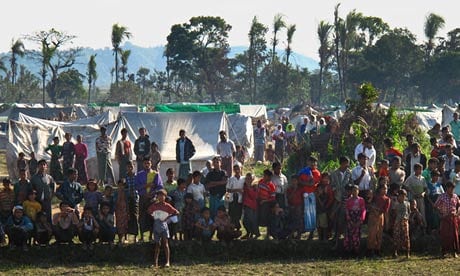
Here at Pauktaw refugee camp in Rakhine state – home to the inhabitants of five Rohingya Muslim villages who fled intercommunal conflict in western Burma this year – there are no schools, no work and no fields to cultivate – because no one is allowed to leave. When a helicopter lands, they hope it will bring either more supplies or some end to a way of life that has been unchanged for six months. Since June Rakhine state, on the border with Bangladesh, has been ripped apart by violence between the majority Rakhine Buddhists and minority Rohingya Muslims, sparked by the rape and murder of a Buddhist woman. Thousands of homes have been destroyed, 200 people have been killed and more than 115,000 displaced. Communities that once co-existed peacefully have been sent to segregated refugee camps all around the state, the majority of them filled with Rohingya – a population of roughly 800,000 who claim to be rightful citizens of Burma but whom the Burmese government widely calls “Bengali immigrants”, denying them citizenship and placing restrictions on their rights to travel, attend higher education and even marry.
https://www.theguardian.com/world/2012/dec/20/burma-rohingya-muslim-refugee-camps
In 2013:
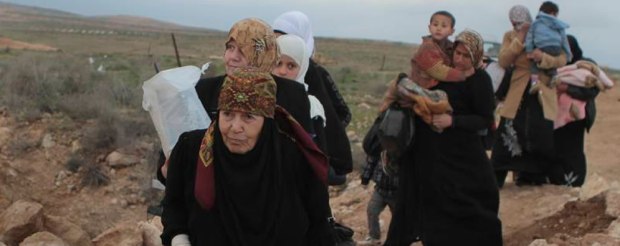
It started with thousands of people on the streets. It has resulted in millions of people on the move. Syria’s civil war has generated the world’s gravest refugee crisis in a generation, with close to 2 million people fleeing the country and perhaps twice that number uprooted and homeless within Syria itself.
By the end of this year, there will be one Syrian in Jordan for every six Jordanians. This stark figure is just one example of the impact the civil war in Syria is having on neighbouring countries, where an estimated 1.7 million Syrians have fled, with more seeking safety every day. It is a figure that should spur the international community into action.
The 26-year civil war in Sri Lanka created many thousands of refugees. But whilst it ended in 2009, four years later, people were continuing to seek asylum in Australia.
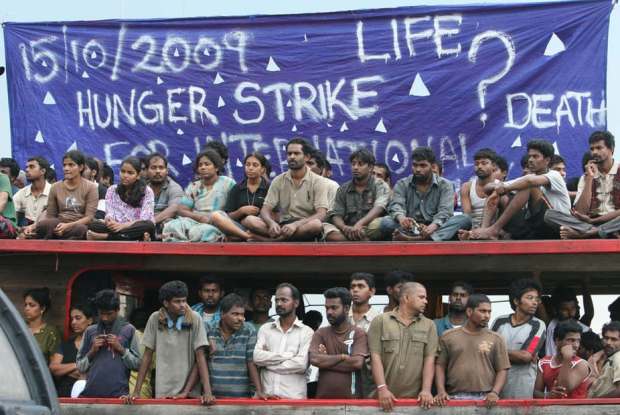
In fact, the flow of refugees commonly increases, not decreases, after the end of a conflict. This happened after the wars in Vietnam and Bosnia-Herzegovina, after conflicts across Africa and South America, and even after the First and Second World Wars. The million or so people who left South-east Asia after the wars in Vietnam, Cambodia and Laos were not fleeing straightforward oppression: they were leaving behind sites of trauma and despair that had become too painful. The flight of Sri Lankan citizens — Tamil, Sinhala and Muslim — after the conclusion of the recent civil war largely fits this pattern. The alleged autocratic nature of the regime, continuing human rights abuses and threats to democratic processes, the freedom of the press and the independence of the judiciary may well exist, but they are not the reasons why thousands of people are prepared to risk their lives to leave their homeland. They do not see a future for themselves there. They are leaving because their hope, depleted by decades of conflict, has not been restored by the cessation of hostilities and the restoration of some level of material wealth.
In 2014, as Syria‘s civil war continued, the UN was struggling to support more than 9m displaced people, a third of whom had left the country. Lebanon was taking significantly more Syrian refugees than any other country, with more than 1.1m refugees – almost one in four people are now refugees from Syria. Outside of the region, most countries were reluctant to formally resettle any significant number of Syrian refugees. Germany, however, had already accepted 6,000 Syrian refugees and has pledged to take up to 20,000.
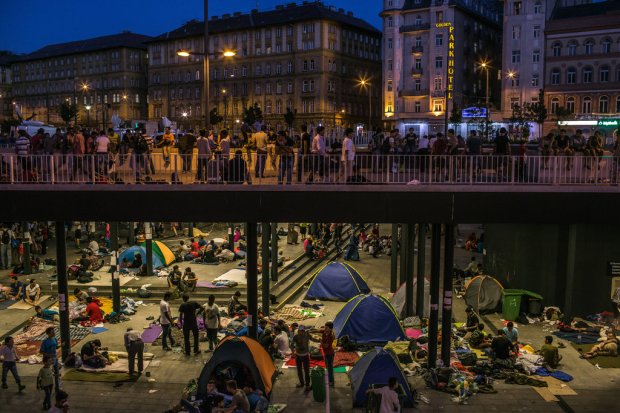
In 2015, the front page photograph of a small boy called Alan or Aylan Kurdi brought the latest phase of the refugee crisis to world attention, prompting a massive volunteering effort to provide support and resources for refugees in Europe, and to help the refugees who were risking their lives on unseaworthy boats across the Mediterranean. Some refugees found themselves at Keleti railway station in Hungary:
After days of squalid limbo, the refugees of Keleti station square, armed only with desperation, forced the hand of a government they saw as jailers. Despairing of ever escaping the increasingly squalid station, barred from boarding trains and buses without papers, they simply set off to Austria on foot, a 125-mile journey that seemed better than staying put. … Ever larger crowds of desperate, penniless, homeless people milled around, unable to go on to the countries they dreamt of, unwilling to go back to the countries they had fled, trying to hang on to dignity and hope. It was not easy, as a refugee camp took shocking shape in the heart of a European capital. Hundreds were camping out on a metro underpass and a small plaza in front of its entrance. Among them were many children, cut and bruised, hungry and frightened.
https://www.theguardian.com/world/2015/sep/06/refugees-budapest-life-stories-europe-keleti-station
In 2016:
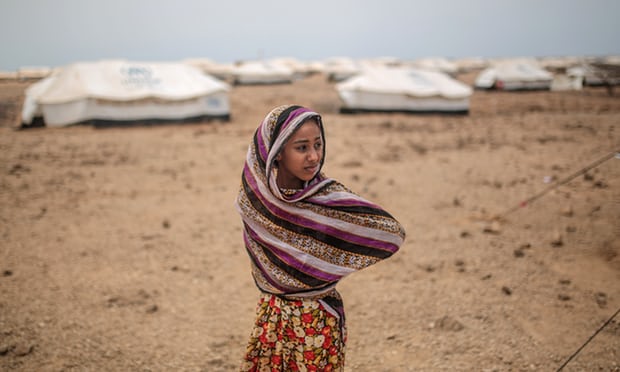
Yemeni refugees fleeing the Saudi bombings fled to Djibouti.
Nearly 35,000 people have made the journey southwards across the [Bab-el-Mandeb] strait (which translates as Gate of Tears) [from Yemen] to the tiny authoritarian state of Djibouti since March 2015, when Houthi Shia rebels overthrew the Yemeni government and Saudi Arabia responded with a relentless bombing campaign. Just over half are Yemeni. According to the regional mixed migration secretariat (RMMS), which monitors movements between the Horn of Africa and Yemen, the rest are Somali refugees, Djiboutian returnees and other nationalities.
In 2017, the numbers entering Europe had dropped since the peak of 2015,
but a new question has arisen. They are here now, so what do we do with them?
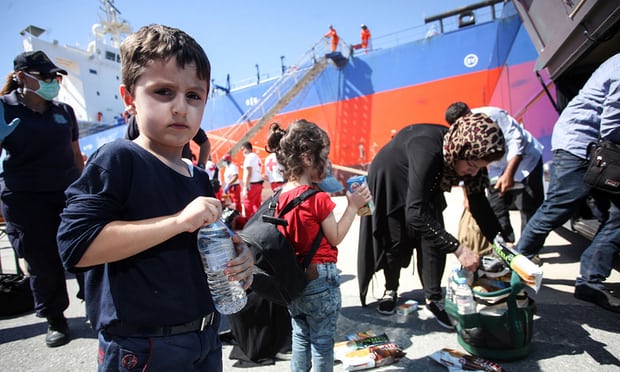
The answer may lie on the tiny Greek island of Tilos, close to Turkey. Tilos has a population of only about 500, but it is now hosting over 50 refugees, 100 over the course of this year so far – 20% of the population. And, thanks to a few simple initiatives, the refugees have not only been integrated but enabled. They are making a positive social and financial contribution to the island. …. Tilos can teach us several things: above all, that integration, even on a large scale relative to population, is possible; and that refugees can be a boon not a burden. The key is inclusion. More money needs to be given to similar programmes, not to funding large camps that do nothing but mire their occupants in a squalid limbo. For integration to adequately happen, NGOs and the private sector must take the lead: government alone – overly bureaucratic, risk-averse, fickle and unwieldy – is not up to the task. As it stands the UK and European governments are catastrophically failing to deal with refugees, with many saying it’s simply not possible. This tiny Greek island shows us that it is. We must learn from Tilos’s example.
Rallies took place across Australia protesting at the treatment of asylum seekers and refugees on Manus Island. Papua New Guinea authorities had closed the detention centre and forcibly removed the remaining refugees, who were refusing to leave, fearing for their safety and wellbeing. Médecins Sans Frontières was denied access to the refugees, despite having been granted approval earlier in the week.
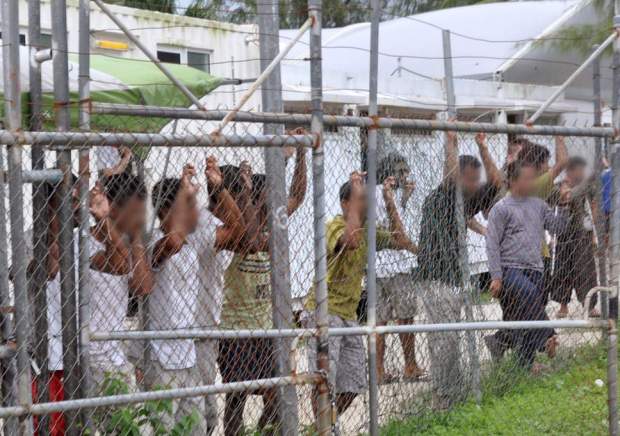
In 2018, we are now witnessing the highest levels of displacement on record. An unprecedented 65.6 million people around the world have been forced from home. Among them are nearly 22.5 million refugees, over half of whom are under the age of 18. There are also 10 million stateless people who have been denied a nationality and access to basic rights such as education, healthcare, employment and freedom of movement.
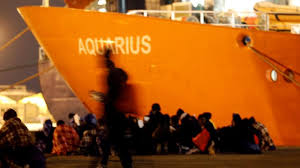
Three ships, the Aquarius, operated by the charities SOS Méditerranée and Médecins Sans Frontières (MSF), an Italian naval ship and an Italian coastguard vessel arrived in Valencia, carrying 629 weak and exhausted refugees, including pregnant women and over 100 unaccompanied minors. They had been refused harbour in Italy and Malta.
Spain’s foreign minister has described his government’s decision to take in the hundreds of refugees and migrants aboard the Aquarius rescue ship as a “highly symbolic act” intended to jolt Europe out of its “ostrich politics” on the issue of migration. The 629 people … were rescued by the French NGO SOS Méditerranée from waters off the coast of Libya on Saturday, and the Aquarius was caught in a standoff over the weekend in which both Italy and Malta refused to allow it to dock. Spain’s new prime minister, Pedro Sánchez, stepped in on Monday and said the ship would be welcome in the port of Valencia, insisting his country had a duty to help avert “a humanitarian catastrophe”.
Outside the warehouse hung a huge banner, reading, “Welcome home” in Valencian, Spanish, English, French and Arabic. Staff from the UN refugee agency, UNHCR, will be present to help passengers fleeing war or persecution claim asylum, while 400 interpreters will be on hand to ensure proper communication. The operation is being overseen by Valencia’s regional government. It also emerged on Saturday afternoon that the French government had offered to take in any of the Aquarius passengers who wished to settle in the country once the necessary procedures had been followed. Spain’s decision to accept the migrants and refugees comes amid rising tensions within the EU and calls for a fundamental reappraisal of the current migrations system.
Refugee Week 2018
Posted by cathannabel in Refugees on June 17, 2018

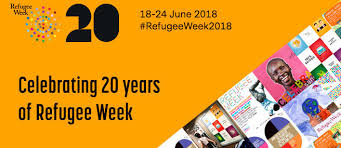
Refugee Week celebrates its twentieth birthday this year. Twenty years of reminding us all that refugees are people – people like us in circumstances that some of us can barely imagine. Twenty years of celebrating the contribution that those refugees have made to the communities in which they have found sanctuary. Twenty years of drawing our attention to the needs of desperate people who have been forced from their homes by war, famine, persecution.


Palestinian Refugees Fleeing East Beirut Massacre 1976, printed 2013 Don McCullin born 1935 ARTIST ROOMS Tate and National Galleries of Scotland. Purchased with the assistance of the ARTIST ROOMS Endowment, supported by the Henry Moore Foundation and Tate Members 2014 http://www.tate.org.uk/art/work/AR01207
I’ve been blogging for Refugee Week only for six years. When I look back at what I’ve published previously, it can be discouraging. Has anything really changed (for the better)? Can we hope that things will, in the next six, or the next twenty years, change for the better, given the shift to the right, to nationalism and nativism and xenophobia, across Europe and across the Atlantic?
In a sense it doesn’t matter whether we think there are glimmers of hope. We have to carry on saying what needs to be said, whether or not. We have to carry on arguing, campaigning, telling the stories that need to be told, whether or not.
So this year for Refugee Week I will as usual be posting something every day. I’ll be revisiting some topics I’ve written about before – the particular hazards, indignities and injustices faced by LGBT refugees, the story of the Kindertransport and its messages for our times, the life of the refugee camp (Goma, or Zaatari). It also happens to be the year of the World Cup, and (as I did in 2014) I’ll be looking at the countries who are competing this year, at the people to whom they give refuge and at the people who seek refuge from them.


This Refugee Week, if you are in the vicinity of Sheffield, don’t miss the wonderful Migration Matters Festival. Kicking off on 19 June, it’s a five day celebration of migration, belonging, sanctuary and community, featuring performance, film, workshops, music, food and much more. Check out the website for the full programme and book your tickets in advance.


“A roof over their heads…”
Posted by cathannabel in Refugees on January 26, 2018
Phil Davis, who works on refugee projects in Birmingham, is as always articulate, passionate and compassionate in his assessment of how our society treats asylum seekers.
“A spokesman for Prime Minister Theresa May said:
‘Our position is that every person should have the security of a roof over their head, and tackling homelessness is a complex issue with no single solution.
But, we are determined to help the most vulnerable in our society. That’s why we are providing over £1 billion of funding to tackle homelessness and rough sleeping.’”
Metro News. Thursday 25th January 2018
“Every person should have the security of a roof over their head.” Well, yes. Quite.
Here’s a thought. A genuinely helpful contribution towards achieving this clearly laudable policy objective. Stop making asylum seekers homeless and destitute immediately after an unsuccessful appeal. Keep them in a house until they either overturn the refusal in the courts or are removed. I mean, I know homelessness is ‘a complex issue’, but not turfing people onto the streets is a big step forward.
Last…
View original post 263 more words
Refugee Week 2017 – reflections
Posted by cathannabel in Refugees on June 25, 2017
We’re living in strange times. Last year’s Refugee Week took place in the aftermath of Jo Cox’s murder, and midway through, we found out the outcome of the EU referendum, which for so many of us, perhaps falsely reassured by the predominance of Remain sympathies in our social media bubbles, was profoundly shocking, as well as filling us with dismay and fear about the future. Our world was further shaken in November by the outcome of the US election – again, we were unprepared for a Trump victory, and fearful of the impact it would have – we still are, although straightforward incompetence and inefficiency seem to have mitigated some of the potential harm so far.
This week Refugee Week takes place in the aftermath of terrorist attacks which have claimed innocent lives in Manchester, on Westminster and London bridges, in Borough Market and Finsbury Park. And then there’s Grenfell Tower, a human tragedy of unbearable proportions. That’s not even to mention a General Election and the start of the Brexit talks.
This time last year I wrote these words, which are still pertinent:
I said a week ago when I started my annual Refugee Week blogathon that it felt different this year. As Refugee Week draws to a close it feels unimaginably different again. We are in, as so many people said during the long hours as the result of the referendum emerged, uncharted territory. We are in uncertain times.
For refugees and asylum seekers there is no charted territory, there are no certain times. But as anecdotal evidence mounts of racism and xenophobia seemingly legitimised and emboldened by the vote to leave the EU, as we wait for those who would lead us into this brave new world to give us a clue as to what it will be like, I know I am not alone in being afraid. … But many of us do share the belief that how we treat people who seek sanctuary from war, persecution and starvation is a measure of what kind of country we are, what kind of people we are. And many of us do believe that generosity, empathy, compassion are qualities that represent the best that we can be, individually and collectively.
So as this Refugee Week ends we will be continuing to say that refugees are welcome, saying it louder if we need to, if the voices against us are more numerous or more vociferous.
I’ve returned this year to some of the themes I regularly write about. I’ve revisited the work of Cara with at-risk academics, for example, prompted by my own University’s engagement with their current campaigns and its funding of scholarships and fellowships for refugee academics and students. I’ve talked again about child refugees – remembering the Kindertransport in light of this government’s shameful reneging on the Dubs amendment.
I’ve tried to celebrate the work of so many superb organisations, large and small, who are working to support refugees around the world and here in the UK, addressing the politics and the practicalities, making a huge difference against the odds.
Each year I approach this entirely self-imposed task – to post every day during Refugee Week about some aspect of the crisis faced by so many millions of people forced to flee their homes – with a certain amount of trepidation. Who do I think I am, really, to speak about these things? I’m no expert, I’m merely a keyboard activist, I have no direct personal experience of the things I write about. And who am I writing for? Preaching to the choir, surely, given that my readers, my social media contacts, by and large are people who share my world view.
But as much as I berate myself for hubris in taking the task on, I cannot relinquish it. I write, that’s what I do. I use this blog to talk to whoever might be listening – and if I change no one’s mind, perhaps the information and ideas and links that I gather for each piece will be useful to someone else, somewhere along that chain of communication that we build as we share and retweet – about the things I care about and the things that trouble and grieve me. And this issue is something I care about, passionately.
Perhaps it is personal, after all. My first Refugee Week blogathon recalled events which, even though I cannot claim to have directly witnessed them, or even to truly remember them, still shaped me:
Nigeria, 1966
During the series of coups and counter coups leading up to the secession of Biafra and the Nigerian Civil War, thousands of Igbo people were killed in the northern territories of Nigeria. Many more fled to escape the massacres. Chimamanda Ngozi Adichie‘s Half of a Yellow Sun gives a harrowing account both of the pogroms and of that flight, from a number of perspectives – the Igbo heroine, in Kano as violence explodes, who escapes on a train along with many others, traumatised, lost and bereaved; the Englishman who finds himself at Kano airport as Igbo staff and travellers are identified and killed; the people meeting the trains as they arrived, searching for their own friends and family afraid to find them and not to find them.
As I read her account, I found myself shaking and weeping. I lived in the north of Nigeria at this time. I was a young child, 9 years old, and my parents shielded me and my younger siblings from as much as they could. But I knew that people were being killed because of their ethnicity. I saw the mob which approached our home looking for Igbos, knew that my father and a friend had gone out to speak to them, to try to calm them and deter them but without success. I knew of westerners arriving at Kano airport, to witness scenes of horror, some of whom got back on the plane as Richard does in the novel. I learned later of the people who my parents found hiding in the unoccupied house across the road from us, who my father took in the back of our car, covered with blankets, to the army compound where others had taken refuge, and of the train organised by another expatriate to take them all to safety but which was ambushed, its passengers dragged out and killed.


As a teenager I pieced these stories together, from the recollections that my parents were finally willing to share without holding back, and the fragmentary memories that I did have suddenly made sense. And I’ve been piecing it together ever since, as I see the people who fled from the town I lived in over and over again, in the faces of those seeking refuge from war and persecution today, as I see them in the faces of those who fled war and persecution generations ago.
And once you do that, you become aware of the connections, of the way in which everything that is happening around the world is interlinked.
As Daesh suffer military defeats and the loss of their territory, they increase their terrorist attacks in the west but far more often in the Middle East and Africa, killing ‘Crusaders’ but far more often Muslims who happen to be the wrong sort of Muslim. And as one of the major forces creating refugees, they are also used as a reason to mistrust those very refugees. Because, so they say, they could have pretended to be refugees, paid a fortune to traffickers, risked drowning in the Med, lived on minimal rations in a refugee camp, simply in order to launch attacks in European cities… The uncomfortable truth, that attacks in European cities have been carried out by long-term residents of those cities, isn’t allowed to disturb the anti-refugee narrative, and the call in the wake of every attack for borders to be closed, etc.
The first officially confirmed casualty of the Grenfell Tower disaster was Mohammad Alhajali, a refugee from Syria, who had survived civil war and the perilous journey to the UK, only to die in his own home as a result of an accidental fire and the criminal neglect of fire safety in social housing.

And we learned that one reason for the difficulty and delays in identifying the dead, or even coming up with a reliable total of those who perished, was that there may well have been people living in Grenfell Tower who were ‘off the radar’, worried about their immigration status, unable to afford their own accommodation and so unofficially staying with friends or family but not on any list of tenants. People like asylum seekers (those waiting for a decision, and those who have been refused), and those newly granted refugee status who have not yet got the paperwork together to get a place of their own. Grenfell Tower sheds a harsh light on so many aspects of our society – the calls for a ‘bonfire of red tape’, the mockery of ‘health & safety gone mad’, the contempt of the wealthy and privileged for those on the margins – the culture of ‘us and them’.
I think of this, from a rather wonderful Twitter account:
“I am a citizen of the world.““Citizen of nowhere. You must pick an ‘us’ to be.”“I did.”“All humanity? Nonsense. That leaves no ‘them’.”
There is no us and them. It’s us and us. It’s all us.

That really is the heart of it all. We can refuse the ‘us and them’, we can assert that it’s all us. It’s the only way to be human, really.


Behind the Razor Wire – the Refugee Crisis in Art
Posted by cathannabel in Refugees, Visual Art on June 24, 2017


Tamara de Lempicka, The Refugees (1937)/Felix Nussbaum, The Refugee (1939)
The refugee crises which have characterised our age (as if there has ever been a time when people were not forced by war, persecution or natural disaster to leave their homes and seek safety in strange lands) have inspired artists throughout the generations to attempt, through different media and in different styles, to portray the plight of the refugee.
Tamara de Lempicka portrays two women refugees from the fighting in Spain, in something of a departure from her normal high society subject matter. Felix Nussbaum painted The Refugee drawing on his own experience. As a German Jew, Nussbaum was studying in Rome when the Nazis came to power, and spent the next ten years in exile in Belgium, going into hiding during the Occupation. He and his wife were arrested in 1944 and were murdered in Auschwitz. His painting powerfully depicts the desolation of exile, and the sense of a world of potential freedom and safety (the globe and the open window) that is visible but out of reach.
In much more recent times, we can see the work of Syrian women refugees, working with visual artists Aglaia Haritz from Switzerland and Abdelaziz Zerrou from Morocco, on a project Embroiderers of Actuality. They asked women in different locations to create embroidery, which they then use as inspiration and/or material for their own images and sculptures.

The Refugee Art Project came about as a response to the plight of refugees in Australian detention centres. More than 500 pieces of work have been displayed, demonstrating ‘the enormous talent, locked away, beyond the razor wire’.


One of the images exhibited by the Refugee Art Project is Alwy Fadhel’s instant coffee painting, Endurance, by Alwy Fadhel.
The technique of painting with instant coffee powder diluted with water was started by an Iraqi refugee in Australian immigration detention who enjoyed painting and used the resources available in detention to do so. He taught the technique to fellow detainee Alwy Fadhel, who became the principal coffee artist and contributed to making the technique a tradition inside the detention center where he was held.
Syrian artist, Abdalla Al Omari, who has refugee status in Belgium, has re-imagined US President Donald Trump and 10 other world leaders as refugees in a series of paintings (The Vulnerability Series) currently on display in Dubai. The images draw on his own experience with displacement.


Giles Duley, a photojournalist, has recorded some of the stories of the refugees travelling from the Middle East to Europe in 2015.
The UNHCR gave me the greatest brief ever given to a photographer – just follow your heart. So, rather than try to cover the whole crisis, I tried to cover a few stories within it and that was how I kept my focus. There is no such thing as truth in photography, which is why the book has the title I Can Only Tell You What My Eyes See. As soon as I go to one beach and choose one person to photograph, I’ve made a decision and I’ve ruled out thousands of other stories. Politicians and the media often try to simplify the narrative, but the fact is, if you have a million people crossing into Europe, you have a million different stories. … I’ve worked in Angola, Afghanistan, Iraq, and have seen some of the worst of humanity, and yet I found myself standing on those beaches in floods of tears. It was hard initially to work out what was different. What was it I was seeing that I hadn’t seen before? I’ve seen a lot of refugee camps, but they are generally static places. What I’ve never seen is people moving en masse like that, putting their lives on the line, risking everything for freedom, for safety. To see the fear on their faces, but also the relief that they’d finally made it, was completely overwhelming.
https://www.theguardian.com/world/2017/jun/03/giles-duley-photographs-syrian-refugees-lesbos

Alketa Xhafa Mripa was living in the UK and studying Art at Central Saint Martins when the war in Kosovo broke out in 1998.
As a result, she had no choice but to seek refugee status in the UK. While Alketa didn’t flee her country, she faced the very real issue of being removed from her home. This fostered her fascination with the themes of identity, history and memory, with a unique focus on women’s issues. Her most recent project, Fancy a tea with a refugee?, is a mobile installation that tours the country, inviting people to share their stories and thoughts about migrants, refugees and displacement.

And under the sea, a powerful image of the fate of so many refugees attempting the dangerous Mediterranean crossing, in Jason deCaires Taylor’s sculpture The Raft of the Lampedusa, a sculpted boat carrying the figures of 13 refugees. It’s part of an underwater museum, Museo Atlantico, in Lanzarote.

From painting to sculpture, embroidery to installation, and finally (in this brief and inadequate review of the refugee crisis in art), to the graphic novel.
French author and illustrator double act Bessora and Barroux share their new graphic novel Alpha, the story of a migrant desperately searching for his family.

And Karrie Fransman was commissioned to tell the story of Ebrahim, a refugee from Iran, in comic form. When the result, Over Under Sideways Down has been shown to people from around the world
one man – another refugee – said to us, ‘This is my story.’ With comics, people can project their own experiences on to these simple drawings and make them their own.

https://www.artsy.net/article/artsy-editorial-how-the-global-refugee-crisis-is-impacting-art
Zaatari
Posted by cathannabel in Refugees on June 23, 2017

Home to 80,000 people. Intended as a temporary, transitory place, but evolving in to a long-term home for so many displaced by war. It’s Jordan’s fourth biggest city. Seen from above, as it is often is, to emphasise its sprawling scale, it’s easy to forget that in that city, as in any city, people are living their lives.

We use the refugee camp as a symbol of the challenge of mass migration, and of the desperate needs of those who live there. The people who did, once, lead lives very much like our own, until war drove them out. They were farmers, teachers, lawyers, engineers, nurses and builders. They still can be.
Within the camp, babies are born, children grow up, people get sick, women have periods, all of the normal events of life take place here too. All of these things present greater challenges when you’re living in a place that wasn’t intended to be a city, that was only meant to house you for a short time, until you could safely go home, or until some other place was found for you to move on to.
And so those agencies working within the camp are trying to address these everyday problems, to provide for health and education, to ensure access to basic facilities. But this isn’t a one-way process. Because to solve the everyday problems in the camp they are working with, and not just for, the people in the camp.
Obviously not everyone living there has the kind of skills that can be pressed into service to help build the resources that the communities need, and not everyone is well and strong enough after the physical and mental traumas of flight to contribute in this way. But as a transit camp becomes a city the people living there can become again the people they were at home, can be part of the process of building and healing and problem-solving.


That’s what researchers from the University of Sheffield have found. The Grantham Centre for Sustainable Futures is an ambitious and innovative collaboration between the University of Sheffield and the Grantham Foundation for the Protection of the Environment. Their sustainability research creates knowledge and connects it to policy debates on how to build a fairer world and save natural resources for future generations.
And under the auspices of the Grantham Centre, innovative solutions to everyday problems are being developed, in collaboration with the people of Zaatari. Tony Ryan, the Director of the Centre, has been working with Helen Storey from the London College of Fashion, on resource use and repurposing in conflict zones, and on specific questions from the UNHCR about the design and manufacture of all kinds of things that we take for granted, like sanitary ware, make-up and bicycles. Resources are scarce in the camp, where 80,000 people share 6 sq km of space, and nothing is left to waste.

One farmer collected pots of the salty local soil and washed it repeatedly till the salt crystals were cleared away, so that he could use it to grow herbs. And polymer foams from old mattresses are being developed for use as artificial soil to grow crops.


Make no mistake, the people who end up in these camps face daily struggles that many of us cannot imagine. But those I met embodied values that are often forgotten by those of us in more privileged parts of the world: an adaptable approach to solving problems, an aversion to waste, a sense of community. As hard as we must fight to live in a world where no one is forced to flee their home, there is much we can learn from Syria’s refugees.
Tony Ryan, Director of the Grantham Centre for Sustainable Futures, University of Sheffield.
https://www.oxfam.org/en/crisis-syria/life-zaatari-refugee-camp-jordans-fourth-biggest-city
https://www.rescue.org/article/syrian-familys-overwhelming-struggle-survive-zaatari-camp
Move on…
Posted by cathannabel in Refugees on June 22, 2017
What every asylum-seeker dreams of, prays for, longs for. To be granted asylum, to be safe, to be able to start a new life in a new home.
 However…
If asylum is granted, a brutal countdown starts. People have 28 days before payments stop and they are moved out of their homes. The UK Home Office calls it the “move on” period.
https://www.opendemocracy.net/uk/shinealight/lydia-noon/theresa-may-refugee
So, in a language that’s not your own, in a system that is unfamiliar and which is likely to seem hostile if you’ve already had to battle with it since arrival, without a network of friends and family around you, perhaps with small children in tow, and struggling with the traumas that led you to seek asylum in the first place, you now have to:
- Read and understand a five-page Discontinuation of Asylum Support letter
- Chase up your Biometric Residence Card — that’s compulsory identification for every new refugee living in the UK.
- Get a National Insurance number.
- Make a decision about where to live in the UK.
And more:
- Obtain proof of address and an identity card to open a bank account.
- Apply for benefits.
- Apply for social housing if it’s an option, or find a private landlord willing to take on a refugee, get hold of references, money for a deposit and the first month’s rent.
- Get access to Find a computer with wifi and a printer to apply for an integration loan.
- Travel to new accommodation with belongings.
The stories with which we are all familiar of benefit claimants repeatedly falling foul of delays and sanctions now apply to the refugee too.
Lydia Noon tells ‘Kia”s story:
On the day Kia’s 28 day ‘move-on’ period was up, an employee from private housing contractor G4S came to her shared house to get her key.
Her last Home Office payment of £10 arrived ten days before her financial support was stopped. When she packed her suitcase and walked to the nearest bus stop on 23 March, Kia had just £6 in her purse. She was still waiting for her National Insurance number and hadn’t applied for benefits.
Kia counted out £4 for a daysaver and took a bus to Birmingham’s Neighbourhood Office to ask for help.
She arrived at 9.30am when the office doors opened. The housing officer couldn’t see her right away so Kia took her suitcase and sat in the waiting room. There were three other people there, says Kia, also waiting to be allocated a place to live. Lunchtime came and went.
More than eight hours later, the housing officer finally saw her. He asked her questions about her health then told her there was no accommodation available. He scribbled down an address for a B&B and told Kia to go there.
“I’m in tears, it’s late, it’s wet and freezing cold. I don’t know where I’m going,” Kia recalls.
She got the bus as far as she could and her friend booked her a taxi for the last leg of her journey.
Too scared to use her last £2, Kia didn’t eat or drink anything all day
When she arrived at the run-down B&B, located near a motorway, Kia gave the receptionist a letter that the housing officer had handed her. She had a shower but nothing to eat.
“It was a nice room. I can’t complain,” she says.
Every morning there was cornflakes and juice.
Then, nothing.
In three weeks, Kia ate three times, when a friend came to visit and brought food.
“I’m a bit to blame because I should have acted,” Kia sighs. “But when you can’t express yourself, you can’t explain what you’re going through. I should have started chasing this Job Seekers Allowance thing during those 28 days.
“If I had known what to do, what to ask for, I wouldn’t have gone hungry.”
Still Human Still Here primarily work to address the huge problem of destitution for refused asylum seekers. But they too report that newly recognised refugees end up destitute because their section 95 asylum support is cut off before they are able to access mainstream benefits or start working.
Despite repeated efforts to solve this issue through procedural improvements, the evidence shows that the problem has got worse in recent years and that very significant numbers of refugees are ending up destitute after the 28 day move-on period expires. For example:
In 2015, the British Red Cross supported over 9,000 destitute refugees and asylum
seekers of which 1,155 had refugee status (13%). This represents a significant
increase on 2014 during which they supported 7,700 destitute refugees and asylum
seekers of which 700 were refugees (9%).
In 2015, 38% (225 people) of those housed by the No Accommodation Network
(NACCOM) were refugees who were made homeless after obtaining leave to remain.
An increase from 36% (186 people) in 2014.https://stillhumanstillhere.files.wordpress.com/2009/01/28-day-move-on-period-briefing-final.pdf
Theresa May, as Home Secretary, set out quite explicitly to create a ‘hostile environment’ for illegal migrants. But asylum-seekers and newly recognised refugees are caught in that same hostility. They encounter it in the requirement that private landlords verify the immigration status of their tenants, and face fines if they fail to do so, thus creating not only an administrative barrier if the refugee is unable to provide all of the required documents, but a strong incentive for the landlord to refuse tenancy to those who can’t immediately provide unequivocal evidence of British nationality. They encounter it in the requirement for the same checks to be carried out before they can open a bank account or access health treatment. They encounter it in the inadequate or simply wrong advice that may be given by advisers at the Job Centre and elsewhere – advice which they are not equipped to challenge – for example:
Some centres refused to accept JSA/ESA claims until after the grace period had ended, meaning that new refugees were forced into destitution before they can even start their claims for mainstream benefits. One service in Barnsley spoke of a couple who were wrongly advised by the Job Centre that they could not attend a work-focused interview until after their Home Office support had been terminated.
The vulnerability of the asylum seeker, the many Catch-22s which make it so difficult for them to survive whilst waiting for their status to be confirmed, let alone if their claim is refused, are shocking enough. What we may be less aware of is that the longed-for refugee status does not mean that the threat of destitution, homelessness, lack of health care and so on is lifted.
As ‘Kia’ said, ‘If I’d known what to ask for, I wouldn’t have gone hungry’. And if it weren’t for the voluntary organisations working to support both asylum seekers and refugees, things would be much, much worse.
There’s another thing. In the past anyone recognised as a refugee would have five years’ refugee status or humanitarian protection, after which they could apply for permanent settlement (indefinite leave to remain), which was normally granted fairly automatically. Now new guidelines (March 2017) from the Home Office say that all who apply for settlement will be subject to a ‘safe return review’, to see if the country they left is now deemed safe for them to return to.
This means that the refugee, having overcome immense barriers to reach safety and to be granted refugee status, now faces the threat that if they cannot convince the authorities that the homeland they fled is still not a safe place for them, they will be returned there.
The awarding of refugee status should bring with it the promise of stability and security. It is a chance to build a new home, to study or work, to become a part of the community. …. These changes put an end to that hope of stability, and introduce an additional layer of bureaucracy, uncertainty, and evaluation at the hands of a dispassionate state. All of the difficult administrative hurdles to get status in the first place will be repeated. There is no question that this will have a devastating impact on the mental health of those who have sought to make a new life in the UK.
How can a refugee plan for their future, given this uncertainty? How can they begin to feel truly part of the community? How can they be part of our shared future?

These are just a few of the organisations working to support asylum seekers and refugees in the UK:
UK Refugee Welcome – People to People Solidarity is a network on Facebook that connects volunteers around the country with asylum seekers and refugees who need practical help or advice.
The Red Cross support around 6,000 refugees and asylum seekers each year who are destitute.
Refugees at Home is a charity that connects people who have a spare room with refugees who need one.
I have to belong to the world too
Posted by cathannabel in Refugees on June 21, 2017

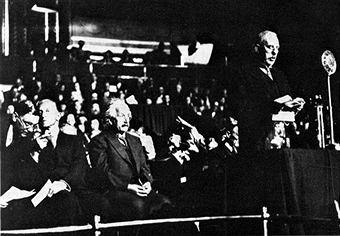
These are the words of a remarkable woman. A secretary, who through her tireless work for the organisation now known as CARA – the Council for At-risk Academics – helped to arrange for the rescue of prominent scholars who had been dismissed from German universities on racial and political grounds. The Academic Assistance Council, as it was first known, was set up by William Beveridge in 1933, and its first president was Ernest Rutherford. Joining with other organisations, the AAC organised a fundraising event under the umbrella of the Refugee Assistance Fund, at which Albert Einstein spoke powerfully about intellectual and individual freedom:
“If we want to resist the powers which threaten to suppress intellectual and individual freedom we must keep clearly before us what is at stake, and what we owe to that freedom which our ancestors have won for us after hard struggles. Without such freedom, there would have been no Shakespeare, no Goethe, no Newton, no Pasteur and no Lister … Most people would lead a dull life of slavery … It is only men who are free who create the inventions and intellectual works which to us moderns make life worthwhile.”
As persecution in Germany intensified, and it became clear that Jewish scholars, and those who opposed Nazism, were not only losing their jobs and their freedom to work, but that their lives were at risk, the AAC set up a more formal structure to continue the work, the Society for the Protection of Science and Learning (SPSL).
In the years between Hitler coming to power and the outbreak of war, they raised the equivalent of some £4 million in today’s terms, which they used to support individuals and their families while they found new posts in universities in the UK or in other safe countries.
In all some two thousand people were saved, and helped to build new lives. Sixteen won Nobel Prizes; eighteen were knighted; over one hundred became Fellows of The Royal Society or The British Academy. Their contribution to British scientific, intellectual and cultural life was enormous. To give just a few examples: Ernst Chain, Nobel Prize in Physiology or Medicine, 1945; Hans Krebs, Nobel Prize in Physiology or Medicine, 1953; Max Born, Nobel Prize in Physics, 1954; Max Perutz, Nobel Prize in Chemistry, 1962; Lise Meitner, celebrated nuclear physicist; Nikolaus Pevsner, architectural historian and author; Marthe Vogt, prominent neuroscientist; Geoffrey Elton (born Gottfried Ehrenberg), Tudor historian and philosopher of history; Ernst Gombrich, the notable art historian, who was able to work as a Warburg Institute research fellow in London; Karl Popper, political and social philosopher; Ludwig Guttmann, neurologist at Stoke Mandeville, ‘father’ of the Paralympic movement. It was a unique effort; there was no parallel elsewhere in Europe. At a commemorative event at the House of Lords in 2012, Mrs Eva Loeffler, Sir Ludwig Guttmann’s daughter, warmly thanked Cara for its vital role in obtaining visas for her family and for giving her father a grant to support his needs and to enable him to continue his research at the Radcliffe Infirmary in Oxford. Without Cara’s help, she said, they would all have perished in the Nazi concentration camps. Instead, her father’s dream of the Paralympics had come true.


Many eminent men headed up the organisation in its various forms (its work continued after the war – oppression and persecution continued and their efforts were as desperately needed as ever), and many eminent men were saved by its work. But it couldn’t have happened without Esther Simpson.

She became the AAC’s Assistant Secretary, recruited thanks to her work with the Fellowship of Reconciliation.
For the AAC it was an inspired appointment, as Beveridge would write, “of lasting and growing importance”. She had a rare talent for organization, for friendship and for persuading people to do what she asked without provoking resentment. She also had the most astounding reserves of energy, resilience and patience. She would routinely work until 10 pm when the gates outside their office were locked.
She had pots of funding to allocate, according to strict criteria, but most importantly she was the link between British (and later US) academic institutions and at-risk academics, finding ways of getting them out of Germany and providing support whilst they secured longer-term posts.
After the borders closed with the declaration of war, demonstrating what Max Perutz called ‘an iron toughness in the face of officialdom’, she helped to get Jewish refugees out of the British internment camps where they were being incarcerated (alongside Nazis) as ‘enemy aliens’.
Over 500 of those detained were academics, almost all of whom she had helped to settle in the UK. They included molecular biologist Max Perutz, architectural historian Nikolaus Pevsner and art historian Ernst Gombrich. She opened a file on each of them and began to prepare the documentation to petition for their release. A turning point came when the government announced that those who posed no danger and had a vital contribution to make to the nation were free to go. The Home Secretary then agreed that this would include contributions to science and learning.
Simpson ‘chivvies officials, chases references, comforts wives, sends food parcels, performs innumerable small acts of kindness. Practical humanity. The banality of goodness.’
After the war, Esther Simpson continued to work for the AAC/SPSL (Society for the Protection of Science & Learning) to secure the safety of at-risk academics from Czechoslovakia, Greece, Poland, Brazil, South Africa, Hungary, Romania, Biafra, Bangladesh, Argentina, Chile, Uganda, Zimbabwe, China …. As she said, ‘there is no end.’
And the organisation that she worked so tirelessly for is still pursuing the same goals today.
Its name changed yet again – from SPSL to the Council for Assisting Refugee Academics (CARA) and then in 2014 to the Council for At-Risk Academics,
reflecting the fact that Cara helps many who are at great risk but do not see themselves as ‘refugees’, and instead still hope to return to their home countries when conditions allow.
The academics with whom CARA works today come from different parts of the world – their circumstances and their needs may be different to those of the first groups to whom the organisation reached out. But the fundamentals remain the same.
Alier’s Story
Alier was first arrested in 1992, accused of supporting the Sudan People’s Liberation Army, a multi-ethnic resistance group based in the south. He was released, but then faced with conscription into the Sudanese state’s army. He fled to the UK. He was supported by Cara to do an MSc in Water Management. Following the 2005 Peace Agreement he returned home and worked for a UK charity as a Water and Sanitation Engineer. After South Sudan’s independence, he took over a senior position in the Directorate of Water Resources Management, before beginning a new role as the Head of Technical Affairs, South Sudan National Petroleum and Gas Commission in January 2015.
Cara Fellows from Syria tell their story
In this short video, two Cara Fellows from Syria, Reem and Saeed, explore what they had to leave behind, talk about what they are doing now and discuss their hopes of returning in the future. Click here to hear their stories
The theme of this year’s Refugee Week is ‘our shared future’. The world we live in would be very different without the contribution of those who were rescued from the horror of Nazi Europe.
We cannot yet know what the contributions of those who Cara is helping today may be. One day, who knows, the names of some of those being supported now may be as well-known as those above. All we can know for sure is that without this work, gifted researchers and scholars who have the potential to make a difference in their field – whether it is medicine or engineering or plant science or law – will die.
Cara reports that the battle for Mosul has just this year cost the lives of a number of academics: Professor Lokman Safar, Professor Abdul Aziz Mahmoo, Professor Mohammed Mahmoud Sheikh-Isa, and Dr Ali Salah.

Executive Director Stephen Wordsworth says that
There has, sadly, been no let-up in the pace of work recently, as university academics around the world continue to be targets for repressive governments and extremist groups. Just now, most of those seeking the help of our Fellowship Programme to get to safety come from from Syria and Turkey, but there are many other places too where intellectuals are seen as ‘opposition’ and find themselves, sometimes quite literally, in the firing line.
…As well as Fellowships, we are also developing our Syria Programme, to provide support in the region to Syrian academics affected by the crisis. This draws on our experience from earlier crises in Iraq and Zimbabwe, and is aimed at helping those who have been forced into exile to stay engaged academically, and to develop their skills.
 Like all of the agencies working with the refugee crisis, Cara needs support. Find out how, here.
As an alumna, current student and retired member of staff at the University of Sheffield, I’m immensely proud that my University is at the forefront of initiatives to support both at-risk academics (working with Cara and other agencies) and asylum-seeker students.
Amongst many notable alumni, we remember in particular during Refugee Week, one scholar who came to Sheffield thanks to the efforts of the AAC.

Hans Krebs is just one person who came as a refugee from Nazi Germany. He came to Sheffield and established a group that worked on aspects of biochemistry that have been important to the world. His discovery of the Krebs cycle saw him awarded a Nobel Prize, but he has also left a legacy in Sheffield which continues to inspire future generations. We celebrated this legacy in 2015, 80 years after his arrival here.


In generations to come, we may be celebrating the legacy of one of our current Cara scholars, or one of the students at present on our scholarship programme, funded by the 2016 Big Walk.


Like Esther Simpson, we have to belong to the world. We are international, we always will be. Our community is made up of people from over 120 nations. Academics from all over the world teach students from all over the world, collaborating with institutions across the world. Only when we belong to the world can we truly ‘discover, understand, explore’, push the boundaries of knowledge, dig deeper, shed brighter light, make a difference by fighting back against disease, creating innovation, challenging received wisdom.


https://www.thejc.com/news/news-features/esther-simpson-the-unknown-heroine-1.438317
Embers of Compassion
Posted by cathannabel in Refugees on June 20, 2017
Today, on World Refugee Day, Help Refugees‘ legal action against Home Secretary Amber Rudd goes to the High Court. It’s the last chance to re-open the Dubs Scheme and give hope to some of the 95,000 unaccompanied refugee children across Europe.
 As a six-year-old in 1939, Alfred Dubs was one of 669 mainly Jewish children from Czechoslovakia who escaped to the UK thanks to a young stockbroker, Nicholas Winton, who has been described as Britain’s Oskar Schindler. There were a number of such initiatives, known collectively as the Kindertransports, taking children from Germany, Austria, Czechoslovakia, Poland and Danzig to safety in the UK – overall around 10000 children were rescued. An American initiative saved another 1400 children. Some of them were subsequently reunited with their parents, others were the only survivors from their families. The transports took place between Kristallnacht, the point at which awareness of the grave danger facing Jews in Nazi territory became much more widespread, and the outbreak of war.


Even at such a time there were those who opposed any mass influx of refugees from Nazism, on the usual grounds (we’re full, we don’t have the resources, they’ll take ‘our’ jobs/houses etc) – but these objections seem to have been largely dropped when it came to the proposal to rescue the children.
The British government had just refused to allow 10,000 Jewish children to enter Palestine, but the atrocities in Germany and Austria, the untiring persistence of the refuge advocates, and philosemitic sympathy in some high places – in the words of British Foreign Minister Samuel Hoare “Here is a chance of taking the young generation of a great people, here is a chance of mitigating to some extend the terrible suffering of their parents and their friends” – swayed the government to permit an unspecified number of children under the age of 17 to enter the United Kingdom. It was agreed to admit the children on temporary travel documents, with the idea that they would rejoin their parents when the crisis was over. A fifty Pound Sterling bond had to be posted for each child “to assure their ultimate resettlement.” (http://www.kindertransport.org/history03_rising.htm)
Alf Dubs, now a Labour peer, sponsored an amendment to the Immigration Act in April last year that required the government to relocate to the UK a number of refugee children who had reached Europe unaccompanied. Though his proposed figure of 3,000 was not included in the law, many MPs and peers believed the government had committed to accepting something around that number.
However, Home Secretary, Amber Rudd, told MPs that the UK had admitted many children through other refugee schemes, amounting to a total of 8,000 in the year to 2016 (including those resettled directly from camps in or near Syria). But, she said, that “the specified number of 350 children … reasonably meets the intention and spirit behind the provision” of the Dubs amendment.
The Government have always been clear that we do not want to incentivise perilous journeys to Europe, particularly by the most vulnerable children. That is why children must have arrived in Europe before 20 March 2016 to be eligible under section 67 of the Immigration Act. The section 67 obligation was accepted on the basis that the measure would not act as a pull factor for children to travel to Europe and that it would be based on local authority capacity. The Government have a clear strategy and we believe this is the right approach.
Yvette Cooper’s response was robust:
This week, the Government cancelled the Dubs scheme after it had been running for less than six months. The Home Secretary said that it has not closed, but will she confirm what it said in the statement yesterday: that once those 350 children are here, that is it—it is closed? Where does it say in the Hansard record of our debates on the Dubs amendment that I have here that we will help lone child refugees for only six months? Where does it say that, instead of the 3,000 that Parliament debated, we will help only one tenth of that number? Where does it say that when we get the chance we will somehow turn our backs once again? It does not, because we did not say that at the time.
The Home Secretary knows that what she is doing is shameful. Not only has she closed the Dubs programme, but she has cancelled the fast-track Dublin scheme to help those with family here. The Home Secretary did very good work in the autumn of last year to help those in Calais and to make sure we could take as many children as possible, and I commended her for it. But she also knows that most of those have family here already and were entitled to be here. She has said local councils cannot do more; the truth is that many local councils have said they can do more with more support or more time. It takes time to set up these schemes, and they should not be closed down so quickly.
There are still so many children in need of help. The Home Secretary knows there are thousands in Greece in overcrowded accommodation or homeless, or in Italy still at risk of human trafficking, or teenagers in French centres, which are being closed down now, who have nowhere left to go. The Home Secretary talked about clearing Calais; they are heading back to Calais, and back to Dunkirk: back to the mud, back to the danger, back into the arms of the people traffickers and the smugglers, the exploitation, the abuse, the prostitution rings—back into the modern slavery that this Parliament and this Government have pledged to end. … We can do this; Britain can do better than this. Will the Home Secretary accept that and reinstate the Dubs programme now?
Clearly, the Home Secretary was unmoved. Thus the legal challenge which goes to the High Court today.
All we’re asking for is the government to do their job properly and talk to local authorities about the actual number of spaces available. We know, and they know, there are hundreds more spaces available across the UK waiting to be filled.
How is it that, when there is evidence that we do have the capacity to support at least the number of unaccompanied minors proposed in the Dubs Amendment, the Government is unwilling to do any more? Could it have anything to do with what they anticipate would be the response of certain newspapers, always obsessed with the threat posed by ‘migrants’?
Analogies with the Kindertransports are, of course, not precise. As was pointed out by one Tory MP opposed to the scheme, today’s child refugees are already in countries that are deemed safe, having already survived the threat that they faced in their home country, and the perilous journey to Europe. And the very real threat of Islamist terrorism makes it easy to demonise the adolescent males who would be eligible to come here under the Dubs scheme. It’s not the same.


But at heart, it’s still just as simple as it ever was. There are children and young people who have fled from unimaginable horrors, who are orphaned or have become separated from their parents in the chaos of flight, who are vulnerable because of their youth (even those boys in their mid-late teens who look almost like men, but aren’t). Of course they are ‘our’ problem, ‘our’ responsibility, if we regard ourselves as members of the human race first and of a particular nation second. It’s a moral question first, and only secondarily a political or even a practical one. There’s a very clear and obvious right thing to do so we should do it, and deal with the political and practical impacts as necessary.
Tragically, and to our shame, that isn’t the way the government sees things.
Mrs May calculates that the acceptance of refugees in any numbers constitutes a political problem. She sees the provision of asylum not as a moral or legal duty but as a risk of contamination. She looks at Europe’s refugees as a continental affliction best managed by quarantine. And she will gladly suffer the opprobrium of liberal-minded MPs, charities and religious leaders – including the archbishop of Canterbury – if it means escaping wrathful tabloid headlines stoking fear of invading foreign hordes. The numbers actually involved in the Dubs scheme are tiny, the least the government could do after every effort had been made to prick ministerial consciences. Now even that ember of compassion is to be extinguished.
The manner of its snuffing out – the news buried in a statement issued on the eve of parliament’s recess – proves that the government knows what it has done is shameful. That does not mean the prime minister or home secretary are truly ashamed. They hope the moment will pass; that not enough people will care about the cold-blooded cruelty of their actions; that the political cost of callousness is negligible. For the sake of Britain’s reputation as a country that still knows some solidarity with victims of war and terror, we must hope they are wrong. Mrs May must reverse this decision or be haunted by it.
History is likely to judge us harshly for this failure. Meanwhile, there are children and young people who could by now have been starting a new life here, safe and secure, with the chance to regain their health and confidence, make friends, develop their skills and fulfil their potential, but who will at best continue to live the half-life of a stateless refugee, at worst who will vanish for ever.
Those who do give a damn aren’t giving up though. No chance.
“In February Theresa May put Britain on the wrong side of history. To our country’s shame, she decided to shut down the Dubs Scheme, which promised child refugees a safe future in the UK. We fought tooth and nail to win this last year. I won’t let it slip away. Join me in saying YES – I want Britain to rescue the most vulnerable child refugees. The Dubs Amendment was a promise to us – to honour our proud British tradition of welcoming those most in need. I saw that compassion and courage in Sir Nicholas Winton, who rescued me as a child from the Nazi regime, along with 669 Jewish children. Acts of heroism like this define our country. They characterise the values we hold dear. Now we are faced with another such turning point in our nation’s history. Will we choose to follow Trump, or to honour our tradition of generosity, compassion and courage? We’ll need to fight harder than ever, organising our communities in the days to come. In the streets, in the offices of MPs, by joining local actions. We’ve won before. We will win again.”
Lord Alf Dubs.
Migration Matters
Posted by cathannabel in Events, Refugees on June 19, 2017

Migration Matters Festival 2017 is a five-day theatre and arts festival taking place in Sheffield during Refugee Week (20-24 June). Its aim is to celebrate diversity, and recognise the positive impact migration has on the city.
Sheffield was the UK’s first City of Sanctuary and it is a city that remains rich with diversity and interconnecting cultures. This year’s festival seeks to celebrate this history and culture with a vibrant and inclusive series of events.
 Opening on the 20th June, Migration Matters Festival will run alongside the annual Refugee Week celebrated across the UK.
The festival takes place across a series of city centre venues, uniting Sheffield’s communities and cultures.
The 2017 line up features established companies, emerging artists, community arts groups and charitable organisations. It’s a rich and soulful programme that brings the diverse and global mix of Sheffield’s communities together with artists from all over the world in a celebration of food, culture and performance.
Check out the full programme – there’s truly something for everyone!
All events are Pay-What-You-Decide though you are recommended to reserve tickets for high profile events – follow the link and search for Migration Matters to see everything that’s on offer.
 Passing Time