Film
None of the films below were seen at the cinema. This is not normal, and I need to do something about it. Apart from anything else, I should be getting more value from my Showroom membership than I have for the last six months! I like the whole experience of going to the cinema – it’s so easy to put on a film on Netflix or whatever and half-watch it whilst scrolling on the phone, pausing to go and make a coffee or take a phone call, etc. The ritual of cinema – putting one’s phone on silent and away in a bag for the duration, stocking up on snacks and drinks beforehand to last for the duration, and all of that – makes one focus on the film, in a way that helps when trying to gather one’s thoughts about it after the credits roll.
Nonetheless, there were some fine films on TV, including some that I’d intended to see at the cinema but missed. I only realised whilst preparing this blog how few of the films below were produced/directed by women. Only Autumn de Wilde, with her debut, Emma., Wendy Finerman, producer of The Devil Wears Prada, Mia Hanson Løve with One Fine Morning, and Celine Sciamma, collaborating writer on Paris 13th District. Because these are films I’ve watched because they were there, rather than films I’ve chosen to go out of the house and into town to see, I can’t draw too many conclusions about this batch, other than to say that I clearly have watched quite a lot of thrillers, and not a lot of comedy, which seems pretty typical. I think there were one or two films that I started and gave up on – I haven’t included these because I suspect there may have been a ‘me’ problem – mood, level of tiredness, that sort of thing – rather than it necessarily reflecting badly on the film.
5 September
Compelling and extremely tense account of the terrorist attack on the Israeli team at the Munich Olympics in 1972, through the eyes of the ABC news team on the spot, who were providing live coverage of the sport, and found themselves confronting instead the practical and ethical challenges of live coverage of an unfolding tragedy. It’s understated in a way that actually enhances the tension rather than dissipating it.
American Gangster
Denzil Washington is superb here. I’m not a Russell Crowe fan but he’s pretty good in this too – he has to be, to make us root for him rather than the bad guy who happens to be Denzil Washington.
Another Country
Beautiful – and I’m not just talking about the male beauty on display from Rupert Everett, Colin Firth and Cary Elwes. Ultimately though I wasn’t convinced by the bookend pieces with Everett as an older Bennett (in rather poor ageing prosthetics) being interviewed in Moscow about why he betrayed his country. We were supposed, I think, to see how the double life he realised he would have to lead as a gay man prepared him for the double life of espionage, but I don’t think this was developed enough to really work. I also find myself a little weary of posh boys – gay or straight – at posh schools.
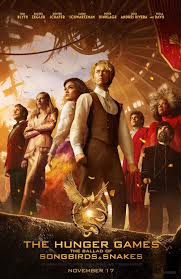
The Ballad of Songbirds and Snakes
I was slightly underwhelmed by the book but rather enjoyed this. It’s a tad too long, and – this is a me problem – there are WAY too many snakes. I know the title announces it, and I remember the snakes from the book, but I much prefer not to actually see them… Rachel Zegler is great as Lucy Gray – there’s always a steeliness in her that belies her doe-eyed charm.
The Devil Wears Prada
Very enjoyable, even if it does its best to have its cake and eat it (not that eating cake is an appropriate metaphor given the food-phobic culture it portrays). It’s funny, and Meryl is awesome, suggesting depths and complexities without spelling everything out. As far as plausibility goes, I’m not qualified to comment, though the notion that Ann Hathaway’s Andy, a woman who prioritises comfort and wears sensible shoes, can learn not just to walk but to run in vertiginously high heels on that time frame seems to me improbable.
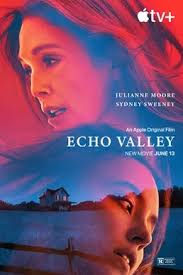
Echo Valley
A great cast make this highly enjoyable and genuinely tense but can’t quite paper over the plot holes. I found myself trying to work out the timings for what actually happened once we’d had the reveal, and I couldn’t quite make sense of it. It’s such a common failing in thrillers, to leave the revelations and resolutions to be dealt with in a mad rush at the end, perhaps hoping we will be swept along and not notice… Old fashioned whodunnits, the sort where the detective gathers everyone in the library to announce the guilty party, used to have a sort of coda where someone says, ‘but what I still don’t understand is’ (speaking for all of us, probably) and then the detective helpfully explains. I am happy for things to be left unexplained, for plot threads to be left dangling, for motivations not to be clear even as the credits roll, but I don’t like plots that seem to suggest that everything is resolved, without making absolutely sure that the resolution makes sense. NB this will be a recurring theme…




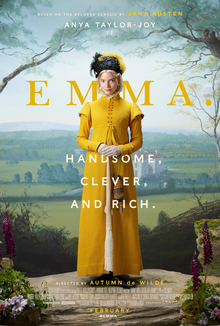
Emma.
Having recently seen the Paltrow version, I think I prefer this. It’s funnier, for one thing, Anya Taylor Joy is quirky and Johnny Flynn’s Knightley is rougher around the edges than some portrayals. As enjoyable as it is, I remain unconvinced, however, that we need any more Austen adaptations, unless someone is prepared to tackle the less popular ones (Mansfield Park or Northanger Abbey).
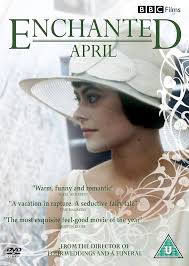
Enchanted April
Delightful – Josie Lawrence and Miranda Richardson lead as two not so happily married middle-class women who, entirely out of character, seize the chance to escape to a castle in Italy, where the place works a kind of magic on them, and the people who share it with them. That sounds a bit soppy and I suppose it is, but it’s also very funny, and very touching. By chance, I was watching Miranda Richardson in TV drama The Last Anniversary (see below) on the same day, and feel compelled to say that she is even more stunningly beautiful now than she was back in 1992. And the film has a place in my heart as it’s set and filmed in Portofino, where my daughter got engaged the summer before last. Maybe it is a magical place.
Frankenstein
Of course there have been many, probably too many, adaptations of Shelley’s novel, some of which bear only a passing and superficial resemblance to her narrative, let alone her philosophical concerns. I was never going to skip this one, given that it’s produced/directed/written etc by Guillermo del Toro, who was responsible for two of my favourite films, Pan’s Labyrinth and The Shape of Water. It’s so long since I read the book that I can’t swear to the film’s fidelity to the plot but it felt broadly faithful (though was the monster impervious to bullets in the original?). It’s visually fantastic, of course, gothic and melodramatic and (as the Guardian reviewer put it) ‘monstrously beautiful’. As is Jacob Elordi as the monster, to whom del Toro hands over the narrative part way through. Frankenstein’s contempt for his own creation – because it fails to live up to his impossible ideal – is the monstrous heart of the film, echoing Victor’s own rejection by his father, and driving the tragic outworking of the plot.
The Gangs of New York
This has many brilliant moments but I found it wearyingly long. DDL, in this as in There Will be Blood, seems to be hamming it up to the max. Having watched the documentary series Mr Scorsese, I do get (I think) something of what he was going for, the past that was still tangible on the streets where he grew up.
The Good Liar
Mirren and McKellen in a drama whose twists and turns aren’t impossible to guess (and if one consults the cast list in IMDb as I did, one of the major twists is substantially given away). But never mind all that, they are both splendid, as one would expect – it’s a kind of duel where we are supposed to think at first that they are very mismatched, but (as I hoped, being a fan of dramas where older women are shown to be canny and capable) all is not as it at first seems. It’s often very funny, but with an undercurrent of sadness.
King Richard
Will Smith’s excellent performance as Richard Williams, father to Serena and Venus, gives us room to wonder if he is an entirely reliable narrator, without leaning too much into that idea. He is both utterly unreasonable, and right in his assessment of how far his daughters could go, and of the obstacles that might be in their way.


The Lost Bus
A gripping account of a true story from the 2018 Camp Fire disaster in California, when a driver doing the school run found himself trying to get 22 children and their teachers (the film only portrays one teacher as the other did not want to be included) to safety as the fires destroyed everything in their path. It’s directed by Paul Greengrass, notable for United 93, 22 July (about the 2011 Norway attacks) and Captain Phillips. The suspense here is perhaps lessened by the fact that we may well know that the bus got through, but nonetheless it is incredibly tense, and Matthew McConaughey and America Ferrera are great as the two adults trying to calm and reassure the kids in the face of their own terror, for themselves and for their loved ones.
A Man Called Otto
This could have been merely soppy – massively grumpy old curmudgeon has his miserable heart warmed by a lively young family who move in across the road – but the script and the performances give it much more than that, the heartbreak of loneliness, dark humour, and some genuinely moving moments. A lot of that is down to Hanks of course, this is the sort of thing he’s so very good at.
Maria
This can be seen as one of Pablo Lorrain’s trilogy of portraits of women on the edge: Jackie (Kennedy), Spencer (Diana) and now Maria Callas. We start near the end of her life, her voice has lost its control and power, and her ‘medication’ leads to hallucinations and confusion. We get flashbacks to her earlier life, both pre-fame and during her heyday as the diva of divas. Angelina Jolie is superb. I’m not qualified to speak of its accuracy – and I’m sure there was much more to Maria herself than the film could convey – but it’s a powerful and moving portrait.
Mr Burton
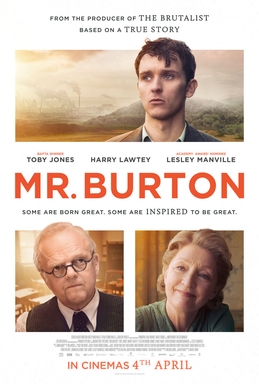
An old-fashioned sort of film, really. Performances are great – Toby Jones’s Mr B is melancholy but positive, easily wounded, and Richard to-be-Burton is bumptious and arrogant but also wounded. It doesn’t directly ask the question of whether Mr B had homosexual inclinations, but it shows how other people were ready to insinuate that to explain his motivation for taking Richard under his wing. For me, whether he was a closeted gay man or not, it seems clear (from the film and other sources) that if he was attracted, he was also scrupulous about not exploiting his influence or his proximity. Harry Lawtey gives us a flavour of Burton the star, and it’s fascinating to see that emerge, along with that extraordinarily rich voice.
Night Always Comes
One of those narratives where the protagonist is trapped due to bad decisions, which leave him/her with only bad choices (it reminded me of Martin Freeman’s TV drama, The Responder, for example). Vanessa Kirby is compelling, even whilst one wants to shout at her when she’s making the aforesaid bad decisions and getting herself deeper and deeper into the mire.
One Fine Morning
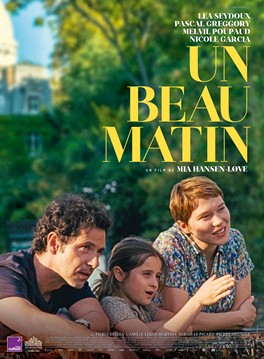
A rather fine study of a woman dealing with her father’s dementia (I wonder why that resonated with me…) and of what reviewer Monica Castillo called ‘a quiet sense of devastation’. Mia Hanson-Løve is skilled at this (I’ve seen a couple of her other films, Father of My Children, and Things to Come, both of which were excellent). Léa Seydoux is brilliant at conveying the pressure Sandra is under, as a widow with a young child and an increasingly dependent father, who knows she isn’t doing enough but can’t do more.




Our Town
I tracked this down on YouTube after reading Ann Patchett’s marvellous Tom Lake, which centres on performances of this play (see my Books blog). The version I saw was a TV film of a stage production, with Paul Newman as the Stage Manager. I thought at first it was going to be a bit too folksy American for my taste but then it got darker and deeper and by the end I was all in and weeping. It resonated with my thoughts about mortality since my husband died, and about how we go through our lives focusing on the big important days but don’t ever ‘realize life while [we] live it, every minute’. I won’t go on but the play now has a place in my heart.
Paris – 13th District
Jacques Audiard working with Céline Sciamma! Audiard directed one of my favourite contemporary French films, The Beat That My Heart Skipped, as well as A Prophet, and Sciamma is responsible for Girlhood, Petite Maman, and Portrait of a Lady on Fire (and Paris – 13th stars Noémie Herbert, who’s in that last film). It’s a funny, touching film, a lot less harrowing than the aforementioned Audiards or Sciammas, about young people connecting (sometimes through misunderstandings) and disconnecting.
Persuasion
My favourite Austen (see my books blog for comments on Mansfield Park, which I recently re-read). I loved Persuasion even as a teenager, when one might expect to be more drawn to some of her feistier heroines, but Anne Elliott moved me a great deal then, and even more so now. A lot depended, as in any film adaptation of a loved book, on the casting, and both Amanda Root and Ciaran Hinds were perfect. They are the still centre of the film, around whom people are gossiping, chattering, generally making themselves heard and seen, but who themselves say little (at least out loud). Once they have, quietly and unobtrusively, sorted out their future together, they walk out into Bath, where a circus is in town and people are cartwheeling and prancing around them, as they are oblivious to it all. It’s beautiful.
Rwanda
I really don’t know what to make of this, or why it was made. We have white Italian actors on stage playing the roles of people caught up in the Rwandan genocide and then segueing into scenes with Rwandan actors playing the same roles. The blurb in IMDb reads: ‘Close your eyes and try to imagine. A man, a woman and their families. The fastest and most systematic genocide in history. He is Hutu, she is Tutsi. He must kill. She must die. A fate similar to many others in that bloody spring. But this time there is a slight difference. When you open your eyes, you will be in their shoes and now the choice is yours. And yours alone’. None of which really gives us a convincing rationale for the way the story is framed: it creates confusion, and all that the use of white actors does, in my view, is to wrench us away from the real, tragic, horrifying events every time they appear.
Small Things Like These
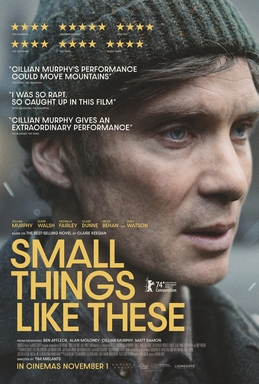
Based on the Claire Keegan novel, like The Quiet Girl (from the book Foster), this is an understated, quiet film that gets under your skin and straight to your heart. Cillian Murphy is excellent, and the film does a remarkable job of conveying a sense of threat from what might seem an unlikely source. Directed by Tim Mielants, who also directed…
Steve
Cillian again, and again he is wonderful. This is a brilliant, downbeat, subtle film that very effectively conveys both the barely contained chaos and mayhem of the troubled boys and the commitment and love mingled with despair and boiling frustration of their teachers. The establishment itself is under threat as a waste of resources, and as much as the boys are full of swagger and aggression we see and feel how lost they will be if they lose this haven. I was unequivocally rooting for Steve and his colleagues, and for their charges, which made the film both extremely tense – towards the end especially, when I was full of dread – and very moving.



The Straight Story
This reminded me rather of Perfect Days. A synopsis of the plot would make it sound rather dull, but it is completely engrossing and very moving; subtly so, it doesn’t present itself as ‘heartwarming’ although my heart did feel definitely warmed, nor as tearjerking, though I did have a bit of a weep. Richard Farnsworth is wonderful in the lead role. I have to confess I’m not familiar with much of David Lynch’s oeuvre – I liked The Elephant Man and Wild at Heart, was not a fan of his Dune, and switched off Blue Velvet quite early on – but this one is near perfect.
Surge
Ben Whishaw is outstanding here as a man with mental health problems whose life spirals out of control as he tries to free himself of the constraints of job and family. It’s a very uncomfortable watch precisely because Whishaw makes us care about this man, so one spends a lot of time thinking, ‘Oh no, please don’t do that, please…’ and then watching as he does whatever it is that is bound to make matters infinitely worse. It’s deeply compassionate and rather moving.
Tar
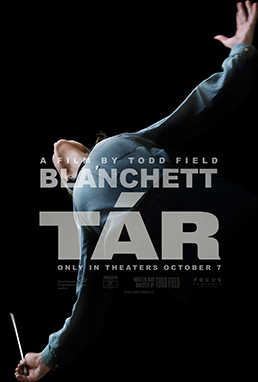
This is brilliant. A film that treats its audience as adults who can manage to hold more than one idea in their head at the same time, and can engage with theoretical, intellectual discussions about music and its performance, with a compelling performance from Cate Blanchett in the title role.
The Thursday Murder Club
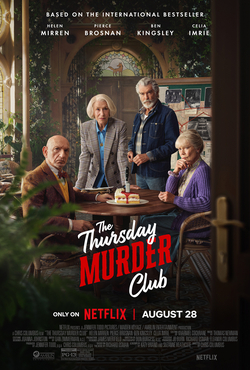
I haven’t read the book(s) so can only judge the film as it stands. It was mildly enjoyable, mildly diverting. Some of the scenarios were too ludicrous to be really funny, and some of the characters were a bit hard to take as representations of people only a little older than me (Celia Imrie’s wardrobe seemed to have been purloined from my Gran – born 1901 – rather than what a well-heeled woman in her mid-seventies in 2025 would be likely to wear). Daniel Mays seemed here to be reprising his character as the bumbling copper from The Magpie/Moonflower Murders. It didn’t make me want to read the books, but it passed a couple of hours quite well.
Unstoppable
Classic set up – a driverless train is hurtling across the countryside, and must be stopped before it reaches a residential area – delivered with conviction and panache by Denzil Washington and Chris Pine as the maverick pair who have to stop the unstoppable train. It’s actually a true story, remarkably.
Vera Drake
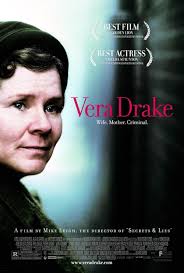
Imelda Staunton is outstanding in this. She cares for and about people, in practical ways, and providing illegal abortions for girls ‘in trouble’ is simply an extension of that. She never uses the A word, any more than she speaks of what got these girls and women into ‘the family way’. Just tells them to pop their knickers off and that ‘it will all come away’ when they go to the loo. Of course this is a gross over-simplification, as she finds out when one of her girls is critically ill after the procedure. She feels shame at her exposure but holds on to her belief that she is just helping out. It’s a corrective to the image of the back-street abortionist as exploiting these girls for financial gain and with no concern for the consequences to them, even if we wince at Vera’s haphazard approach to clinical hygiene.



TV
As usual there were a lot of murders. More than are listed here, since I haven’t reviewed the latest outings for Shetland, Trigger Point, Beck, The Gone, Karen Pirie or the Sommerdahl Murders, though all were watched and enjoyed, as were the latest series of Slow Horses and The Diplomat. There were a fair few thrillers that I gave up on or even watched through to the end but couldn’t think of anything worth saying about them other than to reiterate the kind of complaints I make about several better offerings below.
Because of the general murderiness, I find it’s essential to have a few things that are safe, that you know aren’t going to let anything too horrific happen, and that in general allow redemption for even the least likeable characters. This half-year that role was played by the latest season of All Creatures Great & Small, Leonard & Hungry Paul, and A Man on the Inside (I haven’t reviewed that last, because it’s season 2 and essentially the same sitch, just transplanted to a college rather than a retirement home, but I enjoyed it).
Blue Lights is my top cop drama, and Paradise the top thriller. Other standouts this half-year were The Line (Un Village Francais) and Stranger Things‘ final season.
I’ve tried not to do spoilers but you proceed at your own risk.
Drama
All Creatures Great and Small
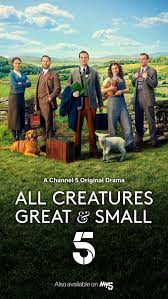
I didn’t originally intend to review this, because it’s an ongoing series (and a remake), but I find myself referencing it as the epitome of nice telly and, particularly after the finale of this latest season, it is both that and more. The central three characters are much as they were in the 1970s series, although Siegfried is given more of a back story to explain his eccentricities, and Tristan is given more depth, particularly in the latest episodes where he finally opens up about some of what happened to him on active service. The female characters now actually have characters, which is a good thing. Mrs Hall in particular has gone from being a stock character – stout, sensible housekeeper – to someone much more interesting, much deeper. And as I mention above, whilst – as far as I recall – in the 1970s version WW2 was a kind of hiatus, here it deeply affects everyone, whether they are mothers/wives waiting for news which, in some cases, when it comes is desperately sad, or the men who volunteer and come back different. It’s nice telly in that we can trust that nothing too horrific is going to happen to the people of Darrowby, no serial killer is going to stalk those lanes and moors, the body count is going to remain low, with most of those who die doing so at the appointed time in their beds. But it’s more than nice in that these people have depth and complexity and so we invest in them, and what happens to them moves us more. It’s beautifully acted, of course, most particularly Anna Madeley’s Mrs Hall who is responsible for a large proportion of the moments that make me weepy, Sam West’s Siegfried, and Patricia Hodge’s Mrs Pumphrey (she had a hard act to follow in Diana Rigg but she’s given the character – who could be a bit of a joke – greater depth).
The Assassin
There are a number of actors whose presence in a series always inclines me to watch (and a few whose presence has the opposite effect, but we won’t dwell). Keeley Hawes is one in the former category, ever since Life on Mars and Line on Duty proved her versatility, and I thoroughly enjoyed this, despite its startlingly high body and gore count. The humour is, obviously, very dark, but it’s well done, and Hawes makes her ‘retired contract killer being forced to brush up her murdering skills’ human, and makes us root for her (and even her rather annoying son).
Blue Lights
This started off extremely well, and now with the third season is even better. What marks it out initially from the mass of police dramas is the Belfast setting, where organised crime and dissident paramilitaries have merged into an ever-present threat to the peelers. But what makes it outstanding is the quality of the writing and the performances – there are a number of incredibly high-tension scenes in this season, where the tension comes not only from the situation but from the fact that we’re so invested in the characters. Excellent, excellent stuff.
Bookish
So-called cosy crime series, set in 1946. I can’t be doing with too much cosiness – if we’re talking about murder, there has to be some sense of threat, of evil, of tragedy. Bookish does provide those things, along with humour and heart, and this first season ended with a promise of more.
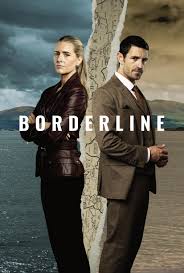
Borderline
On the face of it, just yet another mismatched cop duo, but which has added interest due to the fact that these cops work either side of the border between the Republic of Ireland and Northern Ireland, and have to work together when Irish bodies turn up in the North, or vice versa. The Garda cop is rather tiresomely obnoxious, though her back story does provide some explanation for this. The Northern Irish cop has his own quirks – recovering alcoholic, so common in these narratives that it hardly counts as a quirk, but also a religious faith that is shown as being profound and central to his life, which is much more unusual.
Classified
Dizzying twists and turns in this French-Canadian thriller about a mole in the Canadian secret services, and the tensions between them and their US counterparts. I’m not sure that I quite grasped it all but that’s down to me occasionally losing concentration and missing info in the subtitles, I suspect, rather than to the plot/script.



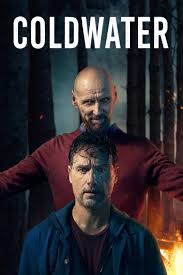
Coldwater
Way, way over the top, but sort of fun. Seeing Andrew Lincoln, who never flinched in the face of zombie hordes, being a bit of a wuss, is amusing. Eve Myles does a good job of being a bit dodgy here, as she does in The Guest (see below) but Ewan Bremner’s Tommy is so obviously bonkers that it’s a bit hard to credit no one has sussed him out. The ending leaves a number of threads loose, but I kind of hope they don’t feel the need for another series.
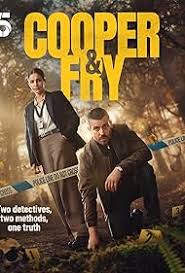
Cooper & Fry
Adapted from Stephen Booth’s Peak District set series, many of which I’ve read. I enjoyed the books, but I don’t remember quite such a heavy reliance on the folklore/superstitions of the area. In the first two episodes alone we had a Screaming Skull, a Hand of Glory, a Plague Stone and a Black Dog, and a predictable tension between the city cop and the locals about how seriously to take these things. Otherwise I quite enjoyed the series, though it doesn’t really stand out from the crowd.
Down Cemetery Road
An adaptation of the first in Mick Herron’s other series (Slow Horses continues to be brilliant both in book and telly form), with Zoe Boehm (played – wonderfully – by Emma Thompson) as his lead detective and playing alongside the always excellent Ruth Wilson this is definitely a winner. The dialogue crackles with wit and the tension and stakes are nailbitingly high.
Fatal Crossing
Danish cold crime – a cut above the average. It leaves questions still hanging in the air, about the why, if not the who.
The Forsytes/The Forsyte Saga
I have history with the Forsytes. I watched the 1967 series – it must have been the Sunday night repeat which launched in September ’68, when I was 11. I was completely spellbound. I have no doubt if I rewatched it I would have issues, but it was truly powerful television, with some scenes that I can still bring to mind today. I watched the new Channel 5 adaptation with some trepidation, and rising annoyance at completely unnecessary plot changes, which radically alter the dynamics between characters, and at some of the casting. Soames, Young Jolyon and Bosinney could be members of a boy band – all are blandly handsome but characterless. We are treated to scenes of Young Jolyon shirtless in the gym, abs glistening, floppy hair artfully tousled. Even Soames has abs and biceps for heaven’s sake, as we saw in the scene of his wedding night with Irene.
I found the 2002 series on Netflix and rewatched that, which was much more satisfying. Damien Lewis is outstanding as Soames and Gina McKee conveys Irene’s self-contained, cool distance very well (unlike Millie Gibson’s giggly girl – not blaming Gibson, it’s the script & direction that’s the problem). It stays pretty close to the books in terms of plot (with some inevitable streamlining and trimming of peripheral characters).
There’s really no comparison between the adaptations, but I daresay I will continue to hate-watch the C5 version just to see how they deal with some of the plot developments, even if it irritates me enormously. If this was called, I don’t know, The Bridgertons or The Downtons, it would be soapy fun, but they are laying claim to John Galsworthy’s characters and if I were JG I’d be figuring out how to haunt everyone who dreamt up this mess.
Frauds
Suranne Jones and Jodie Whitaker are superb as two ex-con artists who team up for ‘one last job’. It’s funny and touching, and I would watch these two in anything.


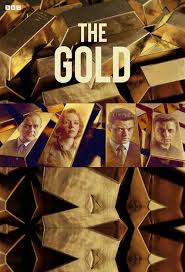
The Gold
I’d skipped this when Series 1 aired a while back, but having been told very firmly by friends whose judgement I trust that it deserved to be watched, I then binged it and had not a moment’s regret. Splendid performances, very well written, an admirable avoidance of clichés and stereotypes. I very much liked Hugh Bonneville’s Boyce, who managed to convey both a downbeat stoicism and an absolute driving commitment to solve the case, but Tom Cullen’s portrayal of John Palmer is outstanding.
The Guest
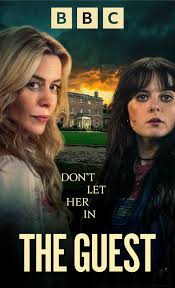
This goes from 0 to 90 in the space of one episode – improbabilities pile up and really, the only way to approach this is just to suspend disbelief and go with it. I don’t mind this over the top approach as long as it’s well done, even if it is silly.
The Hack
Fascinating, if perhaps a little longer than it needed to be. There are two strands, which come together in the later episodes – David Tennant as the journalist who investigated and uncovered the phone hacking scandal at the News of the World, and Robert Carlyle as the detective investigating the murder of Daniel Webster. It generates much righteous indignation, but inevitably the outcome is frustrating – the News of the World might be history but there is no shortage of disgraceful journalism these days, and the Daniel Webster case remains unsolved.
Hostage
Here my fave Suranne Jones is PM, wrestling with various domestic and international crises, one of which results in the kidnapping of her husband in French Guiana. Julie Delpy is great as her French opposite number. Entertainingly balances suspense and political intrigue.
I Fought the Law
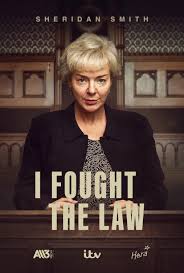
The true story of Ann Ming, who ‘fought the law’ to get justice for her murdered daughter Julie, with Sheridan Smith (in a classic Sheridan Smith performance) as Ann. Obviously the heart of the drama is the personal tragedy and trauma of the murder and its aftermath (Ann Ming was the one to discover her daughter’s body, after the police had failed to do so despite allegedly intensive searches of the house), but there’s also a fascinating legal thread about the concept of double jeopardy, which Ming was instrumental in overturning.
Insomnia
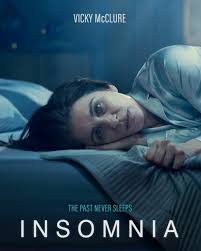
This was quite eerie and disturbing, but it got less plausible as it went on and the final episode packed way too much in at the expense of any deeper examination of character or motive. We were left, ultimately, with the only explanation being the least plausible one, and with the impact of the events particularly in that final episode being seemingly glossed over. And the final, final shot, actually made a nonsense of that implausible explanation (I’m trying very hard not to spoilerise here). The performances were good though, from Vicky McClure, Tom Cullen (see above re The Gold), Leanne Best and Lyndsey Marshal.


The Invisibles
I saw this described as a French Slow Horses, which it isn’t. It’s about a unit that investigates unidentified corpses, and it’s enjoyable, if a bit formulaic.
The Last Anniversary
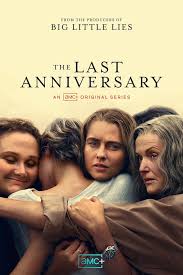
There were good things about this, but many of them were squandered in a rushed ending where the mystery was supposedly solved but in a way that strained credulity beyond breaking point (see Insomnia, above), and then strained credulity again with a cheesy resolution where everyone was somehow absolutely fine all of a sudden and everything was nice. It was fun along the way, and it was lovely to see Miranda Richardson, and also the brilliant Danielle MacDonald (loved her in The Tourist).
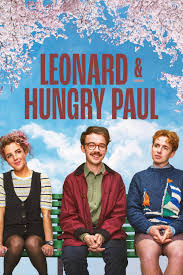
Leonard & Hungry Paul
I was recommended to watch this as an example of gentle TV and I’m glad I did. I watch a lot of murdery TV, and a lot of heavy documentaries, and I need to mix in a bit of TV that might warm rather than chill my heart, that’s funny and touching and, I suppose, nice. All Creatures (the current version) is usually my go-to in this category (see above), but it’s good to have some other sources of niceness. It’s not enough just to be nice, of course, for it to be worth watching the writing has to be good, the characters have to be well-written and well-played, and there has to be some depth in there, some emotional heft. Leonard & Hungry Paul ticked all those boxes.
The Line
This is Un Village Francais, which I’d heard about but not found until v recently, thanks to the change of title. The line referred to is the demarcation line between the Occupied and Unoccupied zones, and the complicated nature of that demarcation (the Vichy government, enthusiastic collaborators with the Nazis, were in charge in the unoccupied zone so it wasn’t a haven of freedom or democracy) is portrayed very effectively. That’s the strength of this series. Because it takes a soap opera format, our core characters over seven seasons encounter all aspects of the Occupation, and how they cope with it – try to survive it – is portrayed in a subtle and nuanced way. Very few collaborate out of conviction, most out of expediency. Almost all have compromised, and so people we have admired and respected over six seasons may be on trial in the seventh. I have to admit that the seventh season was problematic, not because of the treatment of the complexities of the aftermath of the war, but because some storylines were over-extended whilst others were dealt with rather brusquely, and, most of all, the frequent use of sequences where one of the characters not only ‘sees’ someone who is dead, but has a conversation with them. Very tiresome. But a small gripe in the scheme of things. I’m not a historian but I have read a great deal about the Occupation of France and found no inaccuracies – even where an incident seemed initially improbable, on investigation it proved to have been very accurately portrayed.
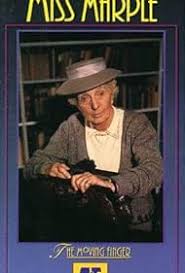
The Miss Marple Mysteries
BBC4 very kindly reshowed all the Joan Hickson Marples, and I thoroughly enjoyed them all. She is the definitive Miss Marple, those eyes are piercing rather than twinkly and when one character describes her as ‘a cobra in a twin set’ you know exactly what he means. When she has the perp in her sights she deals with them with cold contempt, and anger on behalf of the victims of the crime. I always found Poirot a bit irritating, but Hickson’s Marples are very satisfying classic mysteries.
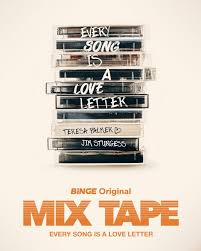
Mix Tape
An absolute delight. The bits filmed in Sheffield were a lot of fun, and the idea of a romance told through songs recorded on a cassette tape is poignant and charming. Excellent script and performances. I read the book and was very interested to see the changes to the plot – I can’t say any more without spoilers for both TV series and book…


Outrageous
The Mitford sisters are endlessly fascinating. This is based on the collective biography by Mary Lowell, which, to my mind, goes rather gently on the fascism, perhaps wanting to balance it out with Jessica M’s hardline communism. The TV series only gets us to 1936 so I hope there will be another series at least to take us through the war years and beyond, and I will have to see in that case how that moral balancing act is handled once we get to the nub of what Nazism and Stalinism are about.
Paradise
Absolutely superb. Sterling K Brown is totally compelling in the lead, and the plot manages to twist and turn without sacrificing the integrity of narrative or character. I’m saying nothing more – it’s brilliant and I would highly recommend it to anyone who likes a good thriller.
Prisoner 951
This dramatisation of the events following Nazanin Zaghari-Ratcliffe’s abduction as she tried to return to the UK after visiting family in Iran is compelling and maddening. It certainly didn’t leave me with any positive impressions of the FO or the succession of Foreign Secretaries who assured Richard Ratcliffe that they were doing everything they possibly could, whilst being unable to identify anything they actually had done. I had no positive views of Boris Johnson anyway, and his remark that Nazanin was in Iran ‘training journalists’ was a bit of typical Johnson carelessness – he must have known that she was there on holiday to see her parents and that this entirely incorrect statement could be used against her (as it was).
The Ridge
A NZ/British murder mystery which doesn’t go where one expects it to go, so it keeps the viewer on their toes. Lauren Lyle (seen recently as Karen Pirie) is a brilliant protagonist – there’s not a great deal I can say without risking spoiling things for you, but it was a cracker.
Scrublands: Silver
I haven’t seen the first series, but from the allusions made in this, it seems that Mandalay, the rather gloriously named partner of the journalist hero, has an unfortunate knack to find herself in the midst of bloody mayhem. This is well written, and it was a compelling drama, albeit with the occasional well-worn crime fiction trope popping up.
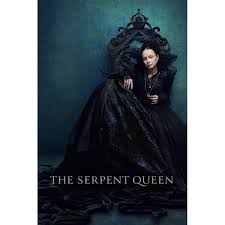
The Serpent Queen
Dialogue totally contemporary – fine by me, those prithees can get a bit tiresome, but it walks a fine line, if the dialogue suggests ideas/attitudes that would not have occurred or been understood in 16th century France/Italy. I think it gets away with it, as it does with the asides to camera, allowing Catherine de Medici to commentate on the action. She’s a fascinating figure, historically and as portrayed here – by Liv Hill as a young woman and then by the always magnificent and compelling Samantha Morton in later life. It’s been compared to The Great (another Catherine, this time the Russian Empress), but I never saw that so can’t judge whether this is, in comparison, not Great but just good, as some reviews suggested. I am enjoying it – I don’t know this period of French history well, but have encountered bits of it in various historical novels that I devoured as a teenager and more recently in Dumas’ La Reine Margot and the brilliant Patrice Chereau film of that book.



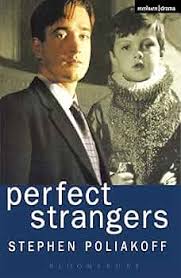
Shooting the Past/Perfect Strangers
BBC4 has been re-showing some of the best TV dramas from the archives, and these two from Stephen Poliakoff were fascinating. I’ve linked them not just because the writer (and some cast members) are in common but because of the theme of photography and memory which is central to both. Beautiful writing, superb performances.
Smoke
Lord, this is dark. I thought I knew what I was in for, but then it took a rather violent swerve and nothing was as I’d expected. Grim and dark and, whilst very well done, requiring a certain robustness of mood to be able to deal with it all.
Stranger Things
The last ever series, and I both don’t want it to end and feel that it’s right that it should. At the time of writing, I will still have the Christmas Day batch of episodes and the final final episode to watch, so I may add a note to next year’s first screen review blog about how they brought the series to a close, but meantime, it is as brilliant as ever, intense, genuinely scary, funny and clever. I cannot understand why M and I didn’t watch it, since our shared love of Buffy and of Stephen King’s opus makes it so very much our kind of thing. But we didn’t, and so I have watched it on my own, constantly wanting to turn to him and comment on some aspect of the plot. I’ve loved every minute of it, anyway.
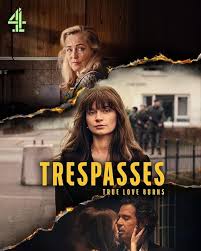
Trespasses
A love story set during the Troubles between a Protestant barrister and a Catholic school-teacher was never going to be all hearts and flowers – it is gripping and moving, with superb performances from the two leads. Tom Cullen is the barrister – and he makes full use of his slightly rakish charm whilst conveying his deeply held convictions about justice. Lola Pettigrew is the teacher, fresh from portraying Dolours Price in Say Nothing. Excellent supporting performances too from Gillian Anderson and Martin McCann (Blue Lights).
The War Between the Land and the Sea
Given that Doctor Who is in something of a limbo at the moment, with the collapse of the Disney deal, the abrupt departure of Ncuti Gatwa and the currently puzzling re-appearance of Billie Piper, it’s good to have this Whoverse drama, with UNIT and what we used to call Sea Devils, and Russell Tovey as an everyman admin person who finds himself suddenly in a key role in the titular war.


Documentary
The Beatles Anthology
We saw this series when it was first released in the ’90s, but it’s long enough ago that some bits of it don’t seem in the least familiar, even if other clips are very much so. It’s a joy to hear the songs – I don’t play them anywhere near as often as they deserve. The final, extra episode felt very much tacked on though. All it really offers is the insight into the process of recording the two ‘new’ Beatles songs based on John’s home demos. But that doesn’t take away from the series overall the freshness of hearing the story told only through clips, songs and their own words (plus those of George Martin, Derek Taylor and Neil Aspinall), giving context to the songs. And it seemed particularly apt to be seeing and hearing John (the Beatle I always loved best) on and around the 45th anniversary of his death.
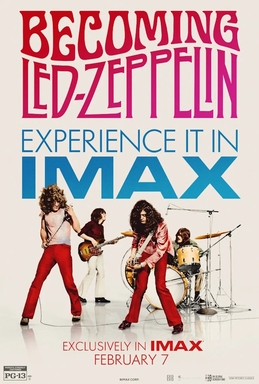
Becoming Led Zeppelin
As the title suggests, this covers the early careers of Plant, Bonham, Jones & Page, and the early years of the band. Very interesting, even if I’m not a massive Zep fan, and find their live performances a bit samey… The focus is, refreshingly, on the music rather than the misdemeanours of the band members (on the rock’n’roll, rather than the drugs’n’sex).
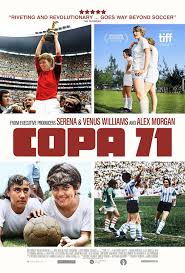
Copa 71
A lot of the documentaries I watch are a bit on the grim side. This one is a joy. It tells the story of the Women’s World Cup competition in 1971 in Mexico, and just to discover that that actually happened is wonderful. It was against the odds, football’s international leaders were not prepared to acknowledge women’s football at all, but somehow it happened, and lots of the players are still around to tell us what it meant to them. Of course, women’s football has now established itself firmly, with the Lionesses being cheered as ‘Engerland’ whenever they’re in international competition, in a way that I wouldn’t have envisaged even ten or so years ago. It’s brilliant, and I wish that those passionate footballers back in ’71 had been able to continue playing at national and international level, but they’re remembered and honoured for their determination in the face of male obduracy and idiocy.
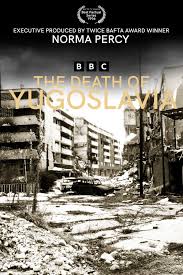
The Death of Yugoslavia
The history of the countries which once formed Yugoslavia is about as complex and twisty as European history gets. I’d only the vaguest idea – I’m currently reading Rebecca West’s diaries of her own travels in the region just before WWII, and I feel I need a flow chart or a spreadsheet or something to keep hold of it all. What happened when Yugoslavia started to implode was all too predictable in light of that history, though one might have hoped it would be less brutal and bloody than it was. Some of the story told in The Death of Yugoslavia is horrifying, none of it is optimistic.
Educating Yorkshire
I never saw the series 10 years ago (though I have of course seen the moment when a boy who’d struggled with a stutter manages to recite a poem). The inspirational teacher who worked with that lad is now the head teacher, with a school motto of ‘Be nice. Work hard’ and the series conveys very well both the chaos and idiocy and charm of the kids and the determination of the staff to give them the best chance they can. Lots of very funny moments and lots too that is moving and inspiring.
Empire
Another exemplary David Olusoga documentary history series, this one covering the story of the British Empire, from its beginnings with the establishment of the East India Company to its gradual relinquishing of former colonies after WW2. Some of the history was familiar, other bits much less so. As always, it’s compellingly presented and thoroughly researched, and Olusoga isn’t afraid to get personal, or to explore the personal stories of interviewees. Of course the usual voices have been raised to say that he’s only showing the bad bits of our imperial history but this series, like Sathnam Sangera’s books on empire, shows beyond doubt how the very concept of empire led inexorably to injustice and exploitation.



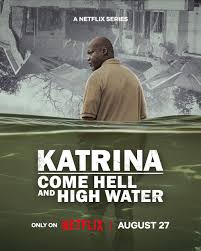
Hurricane Katrina: Race against Time/Katrina: Come Hell and High Water
Two documentary series for the 20th anniversary of the disastrous failure of flood defences and emergency management in New Orleans when Katrina hit. They cover similar ground and interview some of the same people, with Spike Lee’s Come Hell… spending a bit more time looking at what happened to some of the survivors in the years after Katrina, including looking at the way in which high profile initiatives to rebuild homes in the predominantly poor, black areas of the city failed to deliver. Both series feature my hero, General Russel Honoré, who is seen tearing into the National Guard for pointing their guns at the people who have fled the rising waters, and whose blunt and outspoken leadership shifted the focus back to the humanitarian needs of the population rather than the largely false narrative of lawlessness and violence. What chills the blood in both of these series is the unmistakable, unapologetic racism of those who created that false narrative – the example is given of two news reports of people getting essential supplies from abandoned shops, described in one case neutrally and in the other as ‘looting’ – no prizes for guessing how black and white survivors were respectively characterised. And then we see a group of white vigilantes, gleefully describing their patrols to keep black survivors out of their neighbourhood, by lethal force…
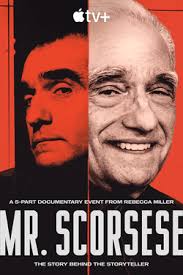
Mr Scorsese
A fascinating three-part biography of Scorsese, from early days in the mean streets of New York to global success in the movies. As with Spielberg (who is one of the big names interviewed here), we can see the obsession with film start to take hold during his teenage years and it has never lessened that hold on him, at considerable cost to his health and his relationships. And even at this late stage in his career, Scorsese is still mining those early years and their gangsters and hoodlums, corruption and violence.
Shifty
Lucy Mangan describes Adam Curtis’s five-part series of films as a ‘purely UK-focused dissection of recent history, built around the idea that the growing atomisation of society has ushered in an age in which the concept of a shared reality on which we can all depend has dissolved – and with it any hope of a functioning democracy’. It takes us from 1979 to the end of the century and New Labour, via a dizzying kaleidoscope of clips and captions. I think it demands a rewatch.

 Passing Time