Archive for June, 2025
2025 Reading: The First Half
Posted by cathannabel in Literature on June 26, 2025
A nicely eclectic list this half year, traversing the continents and the centuries. Our protagonists move between Nigeria and the US, from Nigeria and Trinidad to London, from Victorian Bath to Borneo, from Somalia to Cardiff. Eneas McNulty travels the world, and migrants from all over the world settle in Linda Grant’s Stranger City of London. We visit Saigon as it falls, mid-19th century Paris, Victorian London and a Swiss village at the beginning of the 20th century. And then there’s a dystopian vision of a future USA, set in 2025… Several authors were new to me, and I hope to read more from Claire Fuller, Philippe Claudel, Emma Stonex, Nadifa Mohamed, Aaron Philip Clark, Chibundu Onuzo and Viet Thanh Nguyen. In addition to those reviewed, a cluster of excellent new crime from authors I turn to regularly: Vaseem Khan’s The Lost Man of Bombay, Luke McCallin’s The Pale House, Russ Thomas’ Sleeping Dogs, Elly Griffiths’ short story collection The Man in Black, Cath Staincliffe’s Fire on the Fells and Jane Casey’s The Secret Room.
Chimamanda Ngozi Adichie – Dream Count
I’ve been waiting so long for this! And it was worth the wait. Adichie introduces us to four women, whose lives intersect in various ways, Chiamaka (“Chia”), Zikora, Omelogor and Kadiatou. She has said that ‘the point of art is to look at our world and be moved by it, and then to engage in a series of attempts at clearly seeing that world, interpreting it, questioning it’ and that’s what she does here through these four lives, which move us but also challenge us. The Guardian’s reviewer said that it is ‘quintessential Adichie: ambitious, astute and powered by an accumulation of feather-light sentences that build to devastating weight’.
Kate Atkinson – Death at the Sign of the Rook
Jackson Brodie’s back, in a witty, sharp and very twisty mystery, that plays with/pays homage to the clichés and conventions of the genre, whilst doing it all supremely well so that we’re fully engaged throughout.
Julian Barnes – The Noise of Time
Brilliant, powerful account of three key points in the life of Shostakovich as he tries to live and create under Stalin. Each is rendered so vividly that we can’t take refuge in our own notions of what he ought or ought not to have done. The image of the man waiting outside a lift with his suitcase each night as he expects to be taken away is one that stays with me. But also the humiliation of giving the speech that has been written for him to an audience on a trip to the US, summed up in this passage: ‘There were those who understood a little better, who supported you, and yet at the same time were disappointed in you. Who did not grasp the one simple fact about the Soviet Union: that it was impossible to tell the truth here and live’.
Sebastian Barry – The Whereabouts of Eneas McNulty
This is wonderful, and heartbreaking. Eneas is an exile, condemned to wander the world because of a judgement passed on him in his hometown of Sligo, which he knows will never let him go. It’s beautifully, lyrically written and whilst its ending is tragic it also conveys a kind of peace.
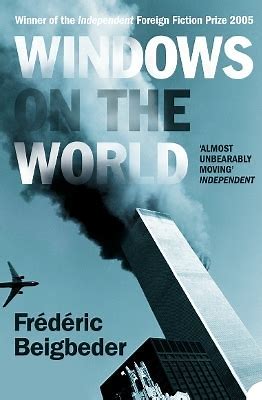
Frederic Beigbeder – Windows on the World
Two voices here, the first of a father who is with his sons in the Windows on the World restaurant in the World Trade Center when the planes hit, and second a writer – presumably Beigbeder himself – who is attempting to find a way to write about the attack but daunted by the impossibility of the project. I didn’t warm to either of them and there was quite a blokey, verging on misogynistic strain in both narratives which was off-putting. Did it work? I don’t know – there were certainly moments in the restaurant which hit pretty hard, and which – for good or ill – made one realise what it might have been like being there as the tower burned, both in terms of the physical effects and the emotional. But overall I was not convinced, and the musings of the author or his surrogate were so cynical and self-absorbed that they undercut the power of the other sections.
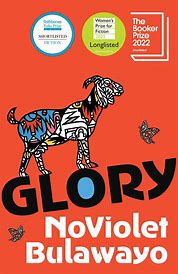
NoViolet Bulawayo – Glory
I struggled with the basic concept here. Perhaps I have an overly literal mind, but I couldn’t help but attempt to picture the various goats, zebras, horses, etc driving cars, wearing clothes, and so forth, and it didn’t make sense to me and trying to deal with that was a distraction from the plot and the characterisation. It was engaging and darkly funny, but I’m not convinced that the conceit really works, or what its purpose was.


Octavia Butler – The Parable of the Sower/The Parable of the Talents
Dystopian fiction, written in 1993 but set, rather unsettlingly, in 2025 – the threat here is from (a) climate change and (b) human beings, and it deals very effectively with racial and gender politics too. Compelling and fascinating, and the sequel doesn’t just take events further, it questions the account given in the first book, bringing in other, sometimes sceptical voices, which adds real depth.
Jacques Chessex – Le Vampire de Ropraz
Based, apparently, on a real case from 1903, and written in a very detached, pared down style (it reminded me a little of Heinrich Boll’s The Lost Honour of Katharina Blum, one of my favourite novels ever), which doesn’t spare the horror of the crimes or come to conclusions about guilt or innocence, but dwells rather on the response of the villagers and their eagerness to pin the crime on someone who fits their assumptions, regardless of actual evidence.
Aaron Philip Clark – Under Color of Law
Spike Lee is quoted as saying (I haven’t managed to track down the source or the context) that everything that happens in the US is about race. And this crime thriller – like those by Attica Locke, and the ‘Darktown’ trilogy from Thomas Mullen – makes that point powerfully. It’s a dark, tough story, beginning with the murder of a young black police recruit, and very well told.
Philippe Claudel – Le Rapport de Brodeck
We are somewhere in Europe, where people speak a language that sounds Germanic but isn’t quite German, after a war that must be WW2, and something has happened, a violent incident involving a stranger in a village miles from anywhere, which brings to the surface trauma, prejudice, fear and guilt from the past. Brodeck has been tasked with writing a report of the ‘incident’, a project which he knows will threaten his own place in the village. Absolutely gripping.
Charles Dickens – The Chimes/The Cricket on the Hearth/The Battle of Life
I re-read A Christmas Carol first, and it was just as wonderful as I had remembered. These lesser-known Christmas stories are a bit harder going, with an over-reliance on melodramatic plot devices and a fair dollop of Dickensian sentimentality and piety.
Janice Elliott – Secret Places
For absolutely no good reason, Janice Elliott is pretty much forgotten and her books out of print. Someone should fix that. I read several of her novels back in the 80s and this one re-appeared from years of exile in the attic and demanded to be re-read. It is subtly and beautifully written, set in a girls’ school during WW2, and concerning the arrival of a German refugee, who generates both fascination and suspicion. I have only just discovered that there is a film of this, which I’d love to see, but I suspect is just as mired in obscurity as Elliott’s books.



Buchi Emecheta – Second Class Citizen
Semi-autobiographical account of an Igbo girl’s struggle to get a proper education in Nigeria, and then to make a life for herself in Britain, facing not only racism but sexism and the dead weight of a feckless husband. Adah has dreams that she holds on to tenaciously in spite of everything, and whilst there is much to fuel anger in the narrative, there’s also hope (not least in the subsequent success of Emecheta herself).
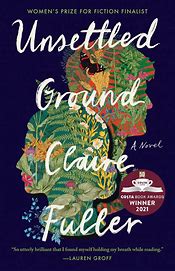
Claire Fuller – Unsettled Ground
It starts with a death, the death of a mother, leaving her children as orphans. These orphans are twins, and they’re 51, but they’ve lived in seclusion from the world, and they have to deal not only with this loss, but with the threat of homelessness, and with the necessity of now dealing with the world that they’d largely shut out all their lives. It’s beautifully done, and makes us see contemporary life through their eyes, the impossibility of navigating a world where everything is complex and everything requires connection. Ultimately, as the Guardian’s reviewer says, ‘Jeanie’s refusal to relinquish her tenuous hold on all the things she loves carries the reader with her on a frightening and uncomfortable journey to the truth, and the possibility of starting again’.
Robert Galbraith – A Running Grave
An improvement on Ink Black Heart, with a compelling plot. The main problem with this one (and I’m not having a go because it’s JKR, honestly, but as one of the most successful writers of our time, she shouldn’t be immune from criticism either) is her penchant for rendering people’s accents in the dialogue. This is off-putting and largely unnecessary, and the effort of trying to ‘hear’ that person’s voice in Rowling’s rendition of their accent is a massive distraction. Apart from that, it’s a decent crime novel.
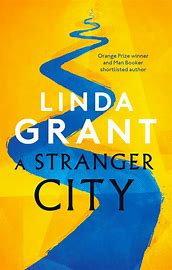
Linda Grant – A Stranger Town
Very me, this one. A polyphonic novel of a labyrinthine city. Dickensian, from its opening scene as a corpse is dragged from the river. It plays with fantasy at points, it alludes to Brexit as the source of anxiety about the future for a city of migrants. The Guardian says: ‘the real achievement of A Stranger City is the way in which its narrative is as fractured and uncertain as the London it portrays. And despite its contemporary relevance, the novel avoids becoming a “state of the nation” tract – it’s far too emotionally intelligent for that. It’s as much a novel of feelings as ideas, and this is what makes it a compelling read. At its heart is the need for belonging, something we all share yet can put us at odds with each other. At a time when dangerously inert notions of national identity are on the rise once more, Grant reminds us that humanity is a migrant species: we are all strangers.’
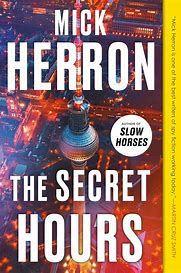
Mick Herron – The Secret Hours
We’re in the world of Slow Horses, but kind of adjacent to the series – the book stands alone, but if you know, you’ll recognise a number of key players, seen as if from a different angle. It’s very cleverly done, very funny, and dark too.
Susan Hill – In the Springtime of the Year
I remember reading this, probably in my early 20s, and that my Mum read it too, and both of us loved it. I recalled one scene in particular, a young woman hanging out washing who suddenly feels appalling desolation and pain and knows that something has happened to her husband. Reading it now, I’m even more moved by the totally convincing depiction of sudden widowhood but also how the process of grief is tied up with the changes in the seasons and the rhythms of ongoing life.



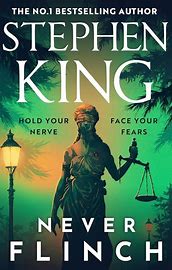
Stephen King – Never Flinch
This doesn’t exactly break new ground for King but never mind about that, it’s King on form. This one features Holly Gibney, who we first met in the Mr Mercedes trilogy and subsequent novels that sometimes venture into the supernatural (or, one might say, sometimes the supernatural lurks just out of view, or whispers just out of earshot), sometimes not. But as with all of those recent novels, they’re brilliantly done, they make you care and make you keep turning the pages, and it’s good to see that he’s still on top of his game.
Ian McEwan – Lessons
I have reservations. First of all, the somewhat clichéd plot trope of a schoolboy being seduced by a beautiful mature woman doesn’t quite convince, even though the damage (to both parties) is explored sensitively and intelligently. Secondly, and I fear this is another example of some writers being too big to copy-edit, McEwan gives his teenage protagonist, in 1962, cultural reference points that were at least a year premature. I checked some of the details quickly on Google and Wikipedia – surely, he could have done that, or his publisher could have done that? I know I get perhaps disproportionately annoyed about such things but when I read anachronistic or otherwise inaccurate stuff like this it takes me instantly right out of the narrative. It seems lazy, and arrogant. In this instance, the timing was clearly very significant, because it is the tension around the Cuban missile crisis that informs some of the key events. So why not make sure that your cultural reference points make as much sense as the political ones? Apart from that I quite enjoyed it. He can write, obviously, but it isn’t the first time I’ve felt rather cross whilst reading McEwan, for similar reasons.
Nadifa Mohamed – The Fortune Men
This is based on the real case of a Somali man wrongly arrested for murder, and ultimately hanged, having failed to get anyone to really listen to him – and having failed to understand how the system would work and to make it work for him. Mohamed not only inhabits the central character, Mahmood Mattan, but the family of the murder victim too. She brings to life the multiethnic community of Tiger Bay in the early 1950s, and the inflexible legal system that refuses to listen to or see the injustice it is perpetrating. Interestingly, I watched an excellent dramatisation of the Ruth Ellis case (see my screen blog) – not a miscarriage of justice in the same way, since she unquestionably did it, but another illustration of how once the legal system has decided, it cannot allow itself to admit that a mistake is being made. And a reminder, should we need it, of how mistakes and miscarriages are unundoable when a sentence of death is carried out.
Abir Mukherjee – Hunted
We’re a long way from the Raj (the setting for Mukherjee’s Wyndham & Banerjee crime series) in this stand-alone thriller – it’s a gripping read, starting with a terrorist attack on a shopping mall, and following the search for the perpetrators by the FBI and other agencies, and (for different reasons) by the parents of two of those implicated. Nothing is as it at first seems, and things get very complicated, but Mukherjee never loses control of his story, and it has both tension and heart.
Thomas Mullen – The Rumor Game
Set in 1942 in Boston, Mass., where a newspaper writer specialising in debunking rumours and an FBI agent find themselves working together against the activities of anti-semitic organisation the Christian League (fictional but based on real organisations of that ilk at the time). Both protagonists are outsiders, the reporter because she’s Jewish and the FBI man because he’s a Catholic. Mullen’s Darktown trilogy, about black cops in Atlanta in the late ‘40s/early ‘50s conveys brilliantly the sense of always being hyperalert that comes from being the representative of a minority within an organisation and within the wider community, and The Rumor Game is just as skilful and compelling.
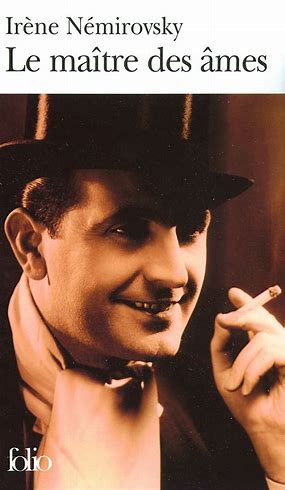
Irene Nemirovsky – Le Maitre des Ames
Nemirovsky’s own story (a Russian Jewish emigrée to France, arrested, deported and murdered in Auschwitz by the Nazis) and the story of her last, unfinished book, Suite Francaise, not published until 2004, tend to overshadow her earlier, very successful publications. This one was published in 1939, before the Nazi Occupation. Her protagonist is an immigrant from Eastern Europe, struggling to make ends meet as a doctor, but with a burning conviction that he can be successful, at whatever cost. He’s not exactly a sympathetic character but Nemirovsky makes him comprehensible, pitiable at times, and his situation is vividly conveyed. She’s a sharp, some say cruel, writer – some of the peripheral characters in Suite Francaise too are almost monstrous, though always depicted with humour.


Viet Thanh Nguyen – The Sympathiser
The fall of Saigon and the Vietnamese diaspora through the eyes of a Viet Cong agent (this isn’t a spoiler, he tells us right at the start that he’s a spy/spook, a man with two faces). This is brutal, but brilliant, and often very funny. The description of the fall of Saigon and the desperate attempt to get out as bombs fall on the runway is stunningly powerful, and thereafter the narrative takes us to unexpected places – and an unexpected resolution.
Chibundu Onuzo – Sankofa
Onuzo’s protagonist is a middle-aged woman, recently separated from her husband, and having lost her mother. She’s the daughter of a white mother and Bamanian father (Bamana being a fictional West African country), and the questions about her identity with which she has wrestled all her life have suddenly become more urgent. This leads her on a quest for her father, whose name she now knows, through diaries she finds amongst her mother’s things. Her father is a fascinating character, full of contradictions, all of which Anna has to navigate. Excellent.
Ann Patchett – Run
Two family groups heading out to a public lecture, and for reasons we don’t at first realise, on a collision course with each other. The reasons emerge fairly quickly but the outworking of this connection is what drives the narrative. It’s subtly done, beautifully written, and as always with Patchett, there’s warmth and hope.
Donal Ryan – The Queen of Dirt Island
A family saga, focusing on female resilience across four generations. It’s full of opposites, as the Guardian review says: compassion and cruelty, fragility and strength, joy and despair. The writing is musical, but never shies away from brutality either. Deeply moving and memorable.
Sam Selvon – The Lonely Londoners
This 1956 novel is gloriously polyphonic, musical, using the rhythms of Caribbean speech to portray the lives of Windrush generation immigrants as they navigate life in London, trying to reconcile their hopes and dreams to its drab and often hostile reality. It’s frequently funny, but very touching as well. A delight.
Georges Simenon – Le Passage de la ligne
An odd book. I think I’d picked it up second-hand years ago, assuming it would be a Maigret, and finally got around to reading it, having realised it wasn’t. The protagonist is hard to identify with, because he doesn’t really engage with other people except in a transactional sense – he shows no signs of empathy or even sympathy, and some of his behaviour is not only morally dubious but repellent. I am still not sure what it was all about – it reads like a confession, a statement of his life, or even a suicide note?


Francis Spufford – Red Plenty
Interesting to read this after Julian Barnes’ The Noise of Time, because it took me back to the paranoia and the oppressive party of Stalinist Russia (and beyond). Spufford focuses on the economics of the regime, in an account which sometimes reads like a novel, sometimes like non-fiction, with a LOT of exposition. The latter is sometimes a slog, but he writes it well, and it is often both enlightening and darkly funny. I would also recommend not reading it as an e-book – there is a very helpful cast list at the front of the book, but referring back to it whilst reading on Kindle was rather a faff.
Emma Stonex – The Lamplighters
Inspired by the true story of the disappearance of three lighthouse keepers in 1900, this gothic narrative moves between the lead-up to the disappearance (in 1972), the investigations, and the lives of the women left behind. It’s atmospheric and mysterious, and it leaves us room to take or leave supernatural explanations, because really what it is about is the people, the traumas of their lives, the effects of isolation.
Rose Tremain – Islands of Mercy
Not my favourite Tremain, but she’s far too good a writer for there not to be much to enjoy here. Primarily, the interweaving lives of the female characters, Jane, tall and contrary, a gifted nurse, Clorinda who has made her way from Dublin to Bath to set up a tea room, Emmeline, Jane’s artist aunt and mentor, and Julietta, a married woman with a penchant for female lovers. The men in the story are less satisfactory and the part of the narrative set in colonial Borneo doesn’t entirely convince.
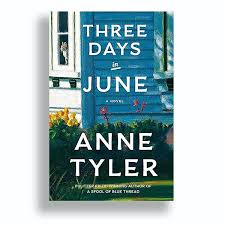
Anne Tyler – Three Days in June
Wonderful. A slightly awkward, abrasive protagonist, dealing with family dynamics at her daughter’s wedding (the three days are the eve of the wedding, the wedding itself and the morning after). It’s very funny, and very touching. I should note that whilst I read it only a few weeks before my own daughter’s wedding, my situation and my feelings about it all bear no relation to Gail’s, however much I liked her.
Chris Whitaker – All the Colors of the Dark
Lord, this is intense. The writing is so dense and so evocative at the same time, the characters blaze off the page, the plot is labyrinthine and full of traps for the unwary reader who thinks they can see where things are going. Is that plot entirely plausible – well, no, but it works, nonetheless, and it holds the reader till the final page, after which that reader might need a bit of a lie down. Glorious.
Emile Zola – Au Bonheur des Dames
My first Zola for many years. He was where I began reading French novels for fun, alongside my A level texts, which were a lot less thrilling than Germinal or La Bête humaine (sorry, Maupassant, Balzac and Moliere). The setting here is a huge Parisian department store, whose growth is threatening the small businesses in the area, who can’t compete. A young orphan, with younger brothers in tow, arrives at the home of her uncle, hoping to find work in retail, and is entranced by Au Bonheur des Dames, despite her uncle’s hostility to it.




Non-Fiction
Andy Beckett – When the Lights Went Out: What Really Happened to Britain in the Seventies
I know about the 70s, obviously. They were the years I became first a teenager and then an adult. In 1970 I was 13 and when the decade ended, I was a graduate, in employment, a married woman and a homeowner. And throughout these formative personal times I was always aware of the news, brought up to read the Guardian and watch the BBC’s bulletins every evening, habits I continued long after leaving home. But it’s refreshing to read a history of this period, which fills in the bits I’d forgotten or never knew and looks back with perspective and insight on what I can only remember in terms of how it was presented at the time, or how it impacted on my own life. Beckett writes engagingly and draws on interviews with those amongst the key players who were still living (it was written in 2009).
Anthony Beevor – Arnhem
I’ve read most of Beevor’s WW2 histories – he manages to make the military manoeuvres comprehensible to me and fleshes out the personalities and personal conflicts. This one commended itself to me as I’d just re-watched A Bridge Too Far and was fascinated by the unusual spectacle of an all-star WW2 film depicting what was unarguably a multi-faceted cock up of tragic proportions.
Viola Davis – Finding Me
I hadn’t realised quite how tough a childhood Davis had. She writes about it in a very direct and emotionally open way (did she have a ghost writer? It didn’t feel like it). There’s a bit too much God-stuff for me, but one cannot come away from the book without a massive admiration for Davis the woman as well as Davis the actor.
Jim Down – Life Support: Diary of an ICU Doctor on the Frontline of the Covid Crisis
I read this around the fifth anniversary of lockdown and it is powerfully written, angry and heartbroken. As an intensive care doctor, Down really was on the frontline and it’s essential reading as the memories – at least for those of us who were far from the frontline – begin to fade.
John Elledge – A History of the World in 47 Borders: The Stories Behind the Lines on our Maps
Hugely entertaining and enlightening account of various national borders (past and present), how they came about, how they have changed, how they have been – and are – bloodily fought over.
Goran Rosenberg – A Brief Stop on the Road from Auschwitz
There is a whole literature of the Holocaust that comes from the children of survivors. I’m thinking particularly of Eva Hoffman’s After Such Knowledge and Lost in Translation, Lisa Appignanesi’s Losing the Dead, Anne Karpf’s The War After. This generation had to deal both with their parents’ inability to tell them about their experiences, and with the very evident trauma that their parents lived with every day, and which often distorted family relationships and everyday life. Rosenberg grew up in Sweden, knowing very little of his father’s road to Auschwitz, only of the road he took from it, and has reconstructed that first road, as far as possible, to try to understand the tragedy that was waiting at the end of the second. Powerful and very moving.


Rebecca Solnit – Recollections of my Non-Existence
A memoir of how this remarkable and vital writer found a voice, found a way to exist and be both visible and audible, and to have an impact. It’s tough, heartbreaking, to read of how the relentlessness of violence against women wears down and intimidates even those who have not been directly victims, but Solnit always offers hope, even if it’s hope in the dark.
John Steinbeck – Travels with Charley
Steinbeck’s tremendously engaging account of his road trip in 1960, accompanies by his dog, Charley. It’s a journey of almost 10,000 miles, starting and finishing in New York, and travelling through Maine, the Pacific Northwest, California, Texas, and the Deep South. It’s a most intriguing glimpse of America and Americans, which becomes most disquieting, inevitably, when he reaches the deep South and encounters the hatred and fear that prevailed in those segregated towns – he’s frank about his discomfort and uncertainty about how to deal not only with the racism but how to talk to the black Americans he meets without putting both them and himself at risk of violence. It’s interesting to note, in contrast to his awareness of the evils of segregation, that native Americans are encountered only as a brief historical footnote and whilst this reflects the brutal reality Steinbeck doesn’t indicate that he has given the implications of this any particular thought. But it’s a great read, funny, perceptive and sharp.
Elijah Wald – Dylan Goes Electric! Newport, Seeger, Dylan, and the Night that Split the Sixties
This is the primary source for A Complete Unknown. Whilst the film tinkers a bit, inevitably, with chronologies ‘for dramatic purposes’, it does justice to the protagonists. But the book takes a much deeper dive into the folk scene, as represented primarily by Pete Seeger, and explains why Dylan’s ‘betrayal’ was so explosive. Entertainingly written and fascinating.


2025 On Screen – the first half…
Posted by cathannabel in Film, Television on June 26, 2025
Film
Most films, as usual, were seen on the small screen, but I did get out to the pictures for A Complete Unknown, A Real Pain, Queer, Macbeth and Bridget Jones. There’s the usual mix of drama (special mention to The Outrun, A Real Pain and The Quiet Girl), biopic (notwithstanding my issues with the genre – and special mention to A Complete Unknown which sidestepped them nicely), scifi/speculative fiction (Quiet Place Day One probably the best of this group), and films about race (The Nickel Boys and One Night in Miami stand out). Good to see the number of female directors: Mary Nighy for Alice, Darling (her debut), Zoe Kravitz for Blink Twice (also a debut), Nora Fingscheidt for The Outrun, Gina Prince-Bythewood for The Old Guard, Regina King for One Night in Miami (another debut), Ava duVernay for Origin – and to note that of these, four are women of colour.
I’ve tried to avoid spoilers but you take your chances. As always, I’ve omitted anything I gave up on in the first third, and anything which was so purely mediocre that I couldn’t think of anything to say about it.
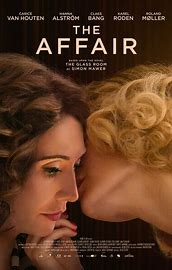
The Affair
Adaptation of Simon Mawer’s excellent novel, The Glass Room. Frustrating really, it managed to make the timelines really confusing, and one whole strand of the story (that of the nanny with whom the husband had the titular affair) is denied the development that Mawer gives it. The performances are good, but it didn’t really work.
Alice, Darling
Anna Kendrick is excellent in this account of coercive control, and female friendship. The picture is built up subtly – we, and her friends, notice Alice’s tension each time her phone buzzes, her fiddling with her hair (we don’t immediately realise how much of it she is pulling out). A road trip with those friends is the catalyst for realisation and intervention, shown without undue melodrama, and not over simplified. I must watch Kendrick in something where she isn’t in peril from horrible men though – the last thing I saw her in was Woman of the Hour…
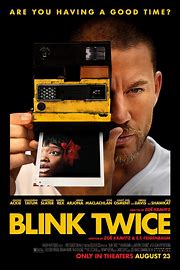
Blink Twice
Originally called Pussy Island… Guardian’s reviewer says, ‘It’s about misogyny and abuse and memory and materialism and gender performance and many other things that would be a spoiler to mention. It’s therefore less of a plate and more of a buffet, and while it might be beautifully served, it’s a film about excess that suffers from it too, a case of too much leaving us with too little.’ For myself, I’m not sure whether it explained too much or too little – certainly, whilst there was a lot that I enjoyed, I had questions.
A Bridge Too Far
I must have seen this before, given my penchant for WW2 films, but it didn’t seem over-familiar, and it was very striking how the various misjudgements and miscommunications which contributed to the tragedy of the Arnhem battles are shown so clearly, not glossed over or justified in any way. I was prompted to read Anthony Beevor’s account of the campaign, which confirmed that the film was surprisingly (given the general track record of war movies) accurate.
Bridget Jones: Mad About the Boy
Very, very funny. Laugh out loud (I snorted a couple of times, which was OK because I wasn’t the only one in the cinema to do so), but with a lot of heart. As a widow, albeit rather a lot older than Bridget, I found some of the scenes really moving – and again, I wasn’t the only one sniffling audibly. You could see where the plot was going, of course (and after all, what sane woman would settle for Leo Woodall’s Roxter – a gorgeous puppy in human form – when Chiwetel Ejiofor’s Mr Walliker is around?) but that mattered not at all.
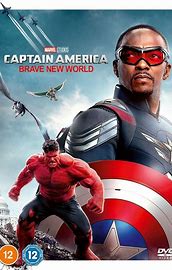
Captain America: Brave New World
I have yet to fully acclimatise myself to new Cap. Of course, I knew, from Endgame and The Falcon & the Winter Soldier, that ‘my’ Cap was gone, but I still have to remind myself from time to time. However, I love Anthony Mackie and I’m invested. My only problem with the plot was the references to bits of lore that I either had never come across (I’m not familiar with the comics at all), or only come across in The Eternals, which I recall I largely dozed through (maybe not entirely its fault). Leaving that aside, I thoroughly enjoyed the film.



Civil War
This wasn’t what I expected – I was anticipating more of an action movie, but this was thoughtful and introspective about journalistic ethics, amongst other things, whilst not pulling its punches when it came to the violence. Our protagonists are war correspondents, specifically, led by Kirsten Dunst as a hardened reporter who has seen the worst that human beings can do to one another, and been damaged by what she has seen. All four of the group that we follow through the film in some way need the adrenalin of following the violence and recording the horror. The titular civil war plays out, but it could be any conflict, anywhere, and these people would be there.
A Complete Unknown
I’d expected to enjoy this with reservations, given my issues with so many biopics. But I loved it. Dylan does not lend himself to the traditional biopic format. Here we learn nothing about his life before he rocks up in New York, already a singer with a few of his own songs ready or bubbling away. Not to mention the fact that Dylan told people all sorts of tales about his life before New York, most of which were fairly obviously untrue – he invented himself as he went along. There are no personal crises – for his unfortunate girlfriends perhaps, and for Seeger and others who saw what they wanted to see in him and felt betrayed – but not for Bob. It’s interesting to compare with director James Mangold’s earlier biopic, Walk the Line, from twenty years previously, also an excellent film with superb performances but which follows the format pretty faithfully – and of course Cash, the subject of that movie, has a supporting role here. Chalamet was wonderful, as were the rest of the cast (esp. Edward Norton as Seeger, and Monica Barbaro as Baez). And the real triumph was the way in which the music told so much of the story – not just the lyrics, but the music, and the performance of the music.
Doubt
Superb, subtle, troubling and with so many outstanding performances. In particular, this was the movie that made Viola Davis a big name, albeit in a small part – she blazed out of the screen, and somehow unsettled everything, in just a few moments.
Frida
The Roger Ebert site review says that ‘Sometimes we feel as if the film careens from one colorful event to another without respite, but sometimes it must have seemed to Frida Kahlo as if her life did, too’. And that is one of the problems with biopics generally, but even more so with a life as full of drama and colour as Kahlo’s. Salma Hayek and Alfred Molina are great as Kahlo and Rivera – they are both ‘a lot’, infuriating and mercurial, and their relationship is as tempestuous as that suggests, with both parties being pretty damn unreasonable at least some of the time. The most notable thing, apart from the performances, is the way the director uses visual imagery – a bluebird flying from Frida’s hand during the trolley crash, and gold leaf falling on her cast.
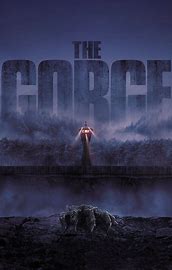
The Gorge
Daft and thoroughly enjoyable scifi actioner. It rapidly became apparent that it would not do to think too rigorously about the plot, so I just went with it.
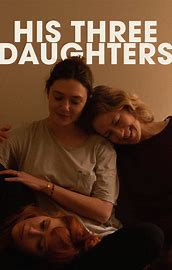
His Three Daughters
And what a trio! Carrie Coon, Natasha Lyonne and Elizabeth Olsen bicker and grieve as the tensions in caring for and even spending time with their dying father bring all sorts of memories and misunderstandings to the surface. Brilliant.


The Holdovers
Gentle without being sentimental, this was the perfect film for New Year’s Day as we curled up on the sofa after too little sleep and slightly too much wine the night before. It’s not a feelgood movie exactly – there’s too much pain here for that – but it’s sympathetic and hopeful and with marvellous performances from Paul Giamatti and Da’Vine Joy Randolph in particular.
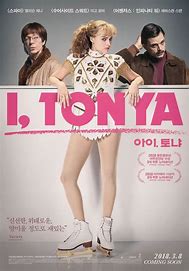
I, Tonya
Multiple layers of unreliable narration, gobsmacking ice-skating, and bravura performances from Margot Robbie and Allison Janney – hugely enjoyable.
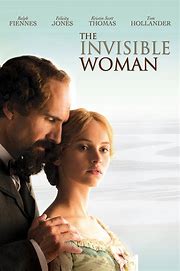
The Invisible Woman
I watched this, by coincidence, shortly after watching Priscilla (see below) and was struck by the similarities, despite the very different setting. Of course I’m not comparing Dickens to Elvis exactly, but both men used their age and even more their fame to control the younger woman. The title of this film could apply equally aptly to Priscilla as to Ellen Ternan. If anything, this account downplays Dickens’ cruelty to his wife, but Ralph Fiennes doesn’t sanitise his relationships, and Joanna Scanlan powerfully conveys her devastation at being cast aside.
Jude
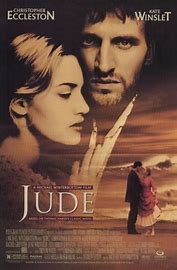
Dark and doom-laden adaptation of Hardy’s darkest and most doom-laden novel. Christopher Eccleston and Kate Winslet are both excellent, and it doesn’t feel melodramatic, because we feel the accumulating weight of all the forces that are against them, individually or together, so that the devastating denouement seems inevitable. Not a fun watch but exceptionally well done.
Macbeth
National Theatre production with David Tennant and Cush Jumbo – the performances are outstanding, as one would expect. The whole thing is stripped down in terms of the set and streamlined in terms of the absence of act and scene breaks. The latter has one slight disadvantage – there are a couple of bits in the script which don’t totally make sense without a break to indicate the passage of even a little bit of time – but it’s very minor. I’ve seen some superb Macbeths on screen over the years – Denzil Washington & Frances McDormand, Michael Fassbender & Marion Cotillard, Christopher Eccleston & Niamh Cusack, and going back further in time, Jon Finch & Francesca Annis and this may be the finest (with Denzil & Frances a very strong contender).
No. 24
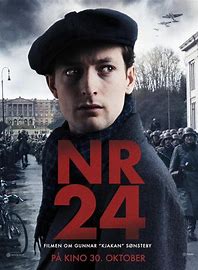
Norwegian WW2 drama focusing on a hero of the Resistance. What makes this distinctive is the framing it gives, as he talks decades later at an event for schoolchildren, and fields difficult questions about what he did for the cause. It doesn’t give easy answers and that’s refreshing.


The Nickel Boys
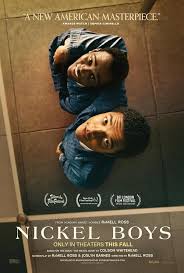
Powerful adaptation by RaMell Ross of Colson Whitehead’s brilliant novel, which uses the device that we see everything from a first-person perspective, and the narrative builds through these flashes of imagery or memory, in a way that’s both deeply disturbing and very moving. I won’t say more about this because it isn’t a gimmick, it’s at the heart of what happens, and you need to see it to get the full impact.
The Old Guard
Intriguing, intelligent and entertaining superhero movie about a hard-bitten team of unkillable soldiers, which gives us plenty of action but also develops the characters and explores what it does to them to be killed, over and over again and to see each other being killed over and over again. There was talk of a sequel, which I’d happily watch, but it’s not emerged yet.
One Night in Miami
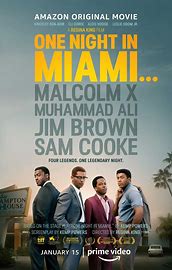
This is brilliant. Sam Cooke, Malcolm X, Cassius Clay (shortly to become Muhammad Ali) and NFL star Jim Brown did actually meet up on one night in Miami, and this is their imagined conversation. It’s long on talk and short on action but this is not in any way a failing when the talk is as dynamic, as full of tension and pain and hope as this. All four performances (Kingsley Ben-Adir as Malcolm, Eli Goree as Cassius, Aldis Hodge as Jim and Leslie Odom Jr as Sam) are outstanding. Superb direction from Regina King.
The Order
Solid and compelling drama about neo-Nazis in the US. It eschews melodrama for understatement, despite the highly dramatic nature of the events, with strong performances from Jude Law and Nicholas Hoult in particular.
Origin
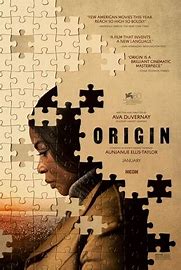
Isabel Wilkerson’s book Caste was ground-breaking, and this film (directed by Ava duVernay) tells her story, of the research and writing that led to its publication, at a time of great personal trauma for her. Excellent performance from Aunjanue Ellis-Taylor as Wilkerson, and it’s a fascinating and moving drama.
The Outrun
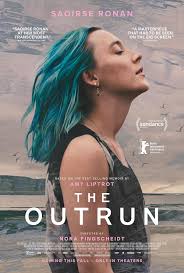
Saoirse Ronan is extraordinary. When isn’t she? This is a non-linear narrative of addiction and (hoped for) recovery, set for the most part on Orkney, where Rona confronts her addiction and her relationship with her parents (one bipolar/alcoholic, the other having found God) and the uncompromising landscape. It’s never sentimental, often very low key (in the Orkney scenes at least). And Saoirse Ronan is extraordinary.


Paddington in Peru
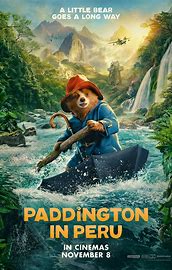
Not entirely necessary, but thoroughly enjoyable. Antonio Banderas and Olivia Colman were clearly having a blast.
The Piano Lesson
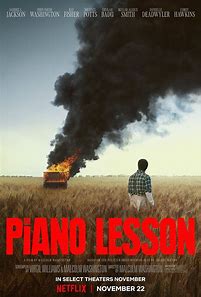
Based on one of August Wilson’s stage plays, this is a supernatural drama, with a fabulous cast (Samuel L. Jackson, Danielle Deadwyler, John David Washington amongst others). It has been described as ferocious Southern Gothic, and it’s intense and moving.
Priscilla
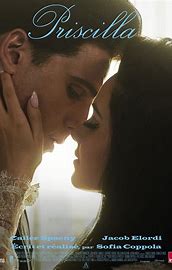
Another ‘invisible woman’ (see above). We see Elvis through her eyes, as a lovestruck teenager, and then as a fearful, isolated and lonely wife, as he cheats on her, encourages her to take a variety of pills, keeps her away from his life on tour and from friendships with contemporaries – controls all aspects of her life. She is touchingly portrayed by Cailee Spaeny (also seen in Civil War), who conveys her naivety, her headstrong teenage determination to be with Elvis, and her painful realisation that this relationship will never be what she dreamed it would be.
Queer
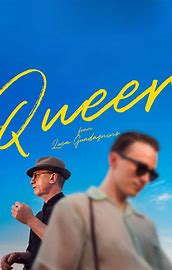
An adaptation of William Burroughs’ semi-autobiographical account, with Daniel Craig on mesmerising form, seedy and needy, as a gay (queer) writer travelling in Mexico and Ecuador and picking up random men before falling for a younger man. Reviewers variously describe the sexual content as explicit or coy, which presumably depends on what you’ve been used to seeing on screen previously, though it does remind me how we are all inured to straight sex scenes on TV and in film and how much less so to gay sex. But I wasn’t really expecting the veering into dream and hallucinatory sequences, and the later parts of the film were sometimes baffling, sometimes alarming, sometimes gross… My brother (previously seen in Conclave) was in this as well though to my shame, and despite knowing that he was a barman (makes a change from clerical roles) I failed to spot him. Lesley Manville turns up, in an extraordinary and vanity-free performance that just shows what a marvel she is. I was thinking on and off throughout Queer of Under the Volcano (the book, rather than the film), and how that left me feeling quite woozy, as if I’d been overdoing things myself.
The Quiet Girl
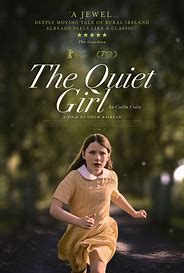
A quiet film, a perfect film. Everything in this adaptation of Claire Keegan’s Foster is about the tiny details, the repetition of images, and very little is about what is said. Catherine Clinch’s performance as 12-year-old Cait is extraordinary. The end made me sob but along the way I was moved by those tiny details, Cait having her hair brushed with such tender care, a biscuit left on a kitchen table without any words being spoken (and that biscuit being squirrelled away in a pocket rather than scoffed straight away), Cait’s joy in her daily runs to the post box at the end of the lane. Wonderful.
The Quiet Place Day One
The Quiet Place launched us straight into a world where noise was deadly dangerous, and survivors had adapted to live with as little sound as possible. Here we see how this came about. It’s not a prequel in the sense that it focuses on the family at the centre of the original movie; here we see Lupita N’yongo and Joseph Quinn navigating a terrifying new world, and it’s an excellent and genuinely heart-stopping drama even though we know from the outset what the characters don’t, that silence is the only way to survive.

A Real Pain
Outstanding. The volatile emotional shifts of Kieran Culkin’s Benji take the audience with him – we laugh out loud and then are reduced to silence and to tears, at one moment identifying with and admiring him, and at the next understanding why Eisenberg’s David finds him so exhausting and frustrating. It frequently subverts our expectations, using Benji as a catalyst, and unsettles our assumptions about how one should respond to Holocaust sites. I loved the very low-key scene where they go to lay stones at the apartment where their grandmother lived. And the ending.
Rocketman
This one gets past my biopic problem by being fantastical rather than ploddingly realistic, and Taron Egerton does a fabulous job with the role of Elton John.
Santocielo
Endearingly silly film about angels and an unexpected pregnancy. Featuring Aidan Hallett as an angel.
The Six Triple Eight
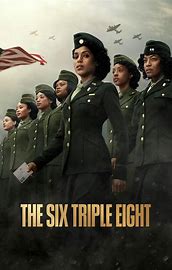
The story sounded, and was fascinating, but sadly the treatment is so clichéd, the script is either inspirational speechmaking or folksy girly chitchat from a rather stereotyped group of characters, and the central topic, of just how a battalion of African-American women managed to turn around a monumental backlog of mail to get letters to soldiers on the front line and families back home, gets a much more cursory treatment than it deserves. It wasn’t just determination to prove that they could do it, bloody hard work, or loyalty to their commanding officer (an excellent Kerry Washington) – it was the imaginative application of skills they’d learned in their pre-army lives, and I really wanted to know much more about that, rather than yet another scene with our heroine weeping in the Ladies over her lost fiancé.
The Sound of Metal
Deafness and signing has been a bit of a theme in this year’s watching – see below for Code of Silence and Reunion. Here, Riz Ahmed’s Ruben has to come to terms with hearing loss, a shattering experience for a musician. As the Guardian’s reviewer says, he describes ‘the physicality of signing – of using the whole body as an expressive tool. … While Ruben may hide behind his words, Ahmed has never been more emotionally expressive than when communicating through ASL.’
Wallace and Gromit: Vengeance Most Fowl
Very funny, very clever, and the perfect follow-up to a family Christmas meal.



Television
Loads of crime here (as per). A lot of it is pretty standard fare, but there’s some that stand out, notably Fargo, Code of Silence, Reunion and The Madness, and in the realm of true crime, A Cruel Love. I do a lot of grumbling below (as per) about the clichés that infect almost everything in this genre. The scene where our hero is trying to download something from a computer that’s going really slow, and the direction makes it look as if the bad guy is right outside the room and must catch them at it but no! Bad guy comes into the room and there’s no sign of our hero, or his/her USB. The way apparently sensible people decide that it’s sensible to withhold absolutely vital information or circumvent the rules when it will quite obviously cause massive problems for them and everyone else when their lies or evasions are exposed. If the plot is solid enough, the performances persuasive enough and the writing (particularly the writing of character) clever enough, even these annoyances can be brushed aside. But all too often I get hacked off, and start heckling from the sofa and it does detract from my enjoyment. But nonetheless, if there’s a new crime drama out, I’ll probably give it a go.
There’s been some outstanding SF in the form of Andor, The Last of Us and Who, and outstanding drama with Adolescence. And just the one proper comedy – Shrinking. Looking at the list, I should probably watch more comedy, though I did actually laugh a lot at Fargo, Department Q, and White Lotus…
Special shout out to some actors whose work I’ve particularly enjoyed: Aimee Lee Wood in Toxic Town and The White Lotus, Rose Ayling-Ellis in Reunion and Code of Silence, and Robyn Malcolm in After the Party and The Survivors. And a sad farewell to some that we’ve lost since the start of 2025, each of whom played key roles in long-running series that we loved: George Wendt (Norm!), Loretta Swit (Hotlips Houlihan) and, heartbreakingly, Michelle Trachtenberg, Dawn in Buffy the Vampire Slayer, who was only 39.


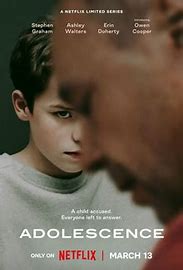
Adolescence
I’m not sure that I have much to add to the many column inches that this has generated. It is a superlative drama, not because of the technical triumph of the continuous shot, but because of the way it uses that technique to give the story breathing space, not rushing from one moment or location to the next. The performances are of course brilliant, and heartbreaking.
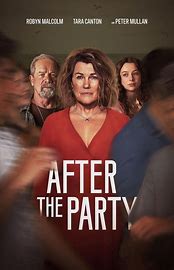
After the Party
Excellent NZ psychological drama, in which we don’t know for sure if a crime has been committed, and in which the main protagonist (a glorious performance by Robyn Malcolm) is – intentionally – extremely annoying and prompted a lot of shouting at the telly, but remained absolutely convincing throughout.
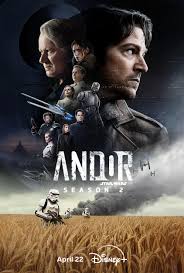
Andor
I’ve never been a full-on Star Wars person, even though I’ve seen all of the films (apart from that other trilogy which I understand I don’t need to bother with), and enjoyed all of them, especially Rogue One, for which Andor is a prequel (R1 is in turn a prequel to A New Hope – have I got that right? Someone will undoubtedly tell me if not). Anyways, I’m not (evidently) totally au fait with Star Wars lore, and so have been selective in which spin-off series I’ve watched. Of those, this is the best – great storytelling, great, complicated characters, real tension. And great performances from a rather classy cast. Lovely to see Thierry Godard (previously known as Gilou from Spiral) pop up as one of the rebels on Ghorman, and I liked the fact that the Ghormanese (?) sounded like they were speaking French even though they obviously weren’t!
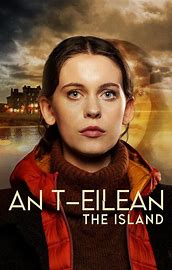
An’t Ei-lean (The Island)
Notable for being largely in Gaelic, with sub-titles. A decent crime drama, with the usual ingredients – including people behaving with unfathomable pinheadery (did our heroine really imagine that her past links with the victim and family would remain undiscovered if she investigated the crime?).
Black Doves
The body count is sky high, the violence quite startling, and it’s all extremely entertaining, with a lot of rather black humour, and excellent turns from Keira Knightley, Sarah Lancashire, and Ben Whishaw (a very long way from Paddington).
The Black Forest Murders
A good, solid German crime drama based on a series of real murders. It’s understated and unsensational and conveys the tedium and frustration of investigation, without being either tedious or frustrating (see also Breakthrough, in a similar vein).


Black Mirror
As usual, this latest season is a mixed bag. Personally, I loved Hotel Reverie (which features on some people’s least fave episode list, but there you go), Common People, Bete Noire (though I wasn’t totally on board for the ending) and Eulogy but wasn’t convinced by Plaything and USS Callister was fun but not as good as I’d anticipated. The casts are always stellar, and it’s at its best when the tech is not only interesting but imaginable as an extrapolation of what can be done now.
Black Snow
Australian cold case crime series – I watched Season 2 having not seen 1. Entertaining enough, but the lead detective is a pain – insubordinate yob with a messed up personal life who nevertheless ends up solving the case by breaking all the rules, which is hardly a fresh take.
The Bombing of PanAm 103
I haven’t seen the other recent dramatisation of these events, so can’t compare their respective approaches, but this one walked a slightly uneasy line between a clear focus on the investigation, with its many dead ends, communication breakdowns and political minefields, and the personal stories of the bereaved. At heart it was a procedural drama, and most at home in that arena. The opening episode, portraying the crash itself, was extremely well handled, and movingly conveyed the shock, confusion and grief of the relatives of passengers, and the local people who lost homes and family members. But the attempt to keep that thread running through the rest of the drama was less successful and whilst it stayed the right side of maudlin, it did feel a little like an obligation, and not the real focus of interest. Whether I would have been persuaded by the other dramatisation that the wrong conclusion was reached in the investigation I don’t know. And whether this drama was ‘necessary’ as some reviewers asked – well, how much of the drama I watch is in any sense necessary? In the case of dramatisations of real events, I’d say that they do serve a purpose. I remember Lockerbie vividly, not through any personal connection but just through watching the news around that time – but my recollections are very fragmentary – anyone even ten years or so younger than me might well barely remember it – and it was historically and politically significant.
The Breakthrough
Swedish drama about an unsolved murder and the dogged commitment of a police officer to find the perpetrator. Low key and subtle.
Call the Midwife
I’d seen the odd episode, but mainly the Christmas specials which inevitably ladled on the sentiment a bit lavishly given the season. So I started at the beginning and worked my way through from 1957 to 1971, and was absolutely fascinated, and impressed by how hard-hitting it often is, even if it tends to leave one with at least glimmers of hope and possibilities of redemption. Given that I cry every time I see a baby being born on screen, this meant at least three guaranteed weeps per episode, and that’s not reckoning with the wider storylines, thalidomide, backstreet abortions, wretched poverty and so on. I found the treatment of religious faith fascinating too, and strangely unalienating to me as an atheist viewer. I could do without Vanessa Redgrave’s pious opening and closing words though – for the early episodes, where old Jennie was reflecting on young Jennie’s experiences, this was fine, but once that connection was lost, all we had was platitudes and pieties, and Redgrave’s voice adds way more gravitas to the words than they can carry. However, I will be there for as many series as there are, will undoubtedly weep in every episode and if I have to grit my teeth for the occasional sentimentality overload that’s a small price to pay.
Code of Silence
Two thrillers on TV this half-year, in which deafness and lip-reading play a huge part (see also Sound of Metal in the film list above). See below for Reunion – both star Rose Ayling-Ellis, whose star has risen considerably since Strictly brought her to the attention of non-Eastenders fans, and she’s superb in both. This one was particularly fascinating as it showed the process of lip-reading, how some sounds are impossible to distinguish from one another, so the lip-reader has to construct the words by combining what is clear with what is likely given the context. It’s very impressive. The plot veered into improbability and thriller clichés at various points but maintained a high level of tension to the end. And whilst Alison did behave recklessly at various points, her motivation – a mixture of the intoxicating effect of being really listened to and taken seriously, and her attraction to one of the people she’s being asked to spy on – was plausible (thanks to Ayling-Ellis’s performance as much as to the script).


A Cruel Love
Excellent account of Ruth Ellis’s story, with a great performance by Lucy Boynton in the lead role. Coincidentally I was reading Nadifa Mohamed’s The Fortune Men whilst watching this series (not literally at the same time, you understand) about a miscarriage of justice in which a Somali man was executed for a murder he had not committed. Ellis, of course, did kill David Blakeley, but that she was hanged for it was as much to do with society’s disapproval of her personal morality as with the strength of the case for first-degree murder.
The Day
This Belgian series portrays the events – v dramatic events, starting with a robbery and the taking of hostages – of one day, in twelve episodes, by showing us the same incidents from different perspectives (the police, the hostages, the perpetrators). It maintains the tension pretty well until the final couple of episodes by which point I admit I was starting to weary a little.
Department Q
By rights I should have been annoyed by this. The lead character is a misanthropic maverick who never does what he is supposed to, is rude to absolutely everyone and gets himself into unnecessary pickles en route to (of course) solving the case. The cast is great but as so many crime dramas show, that’s unfortunately not always enough. It turns out though that when the dialogue is this sharp and funny (very dark humour), when the characters behave with consistency even if they are consistently being dicks, and when there is, despite all the above, real heart in some of the relationships, I can thoroughly enjoy the ride, and will look forward to another season.
Dickensian
I have no idea why I didn’t watch this when it came out in 2015, and even less idea why it was cancelled after only one season. I loved every minute of it, and Dickens’ world is so rich and complex that they could have continued to mine it for ideas as good as these. But at least they did this, with a splendid cast, beautifully written, and a joy for anyone who loves the books.
Doctor Who
I loved Ncuti Gatwa as the Doctor. He brought something different, something joyous, a smile that could light up galaxies, a lightness that belied his capacity for anger. I had hoped for a much longer tenure, but I guess Who got him just as his star was rising, and there were too many opportunities out there for him to resist. We don’t know (at least at the time of writing) for how long RTD had known that he’d only have Gatwa for two seasons, so whether urgent rewrites were required to factor in a regeneration, or whether that was always the plan. And we don’t know (at the time of writing) whether Billie Piper is returning as the Doctor or in some other capacity (the credits didn’t say, as they have done in previous regen episodes, introducing BP ‘as the Doctor’…). All that aside, Gatwa’s second season was just the right mix of complicated ideas, humour, tech and legend. I particularly loved ‘The Story and the Engine’, with its Lagos setting and use of West African folklore (and names – Abena means girl born on a Tuesday, which I know because I am an Abena, or would have been had I been born Akan/Ashanti). Allons-y, I hope, to more Who, whoever the Doc turns out to be. But I’ll miss this Doc.
Dope Girls
This reminded me of Kate Atkinson’s Shrines of Gaiety and indeed, I discovered that both are based on the same real woman, Kate Meyrick, who ran nightclubs in Soho during the 20s and 30s, and was arrested and imprisoned on a regular basis. The series takes liberties with the historical Meyrick but the setting is vividly conveyed, and the performances are great. Julianne Nicholson’s performance as Meyrick (Kate Galloway in the series) also had quite strong Shauna from Yellowjackets vibes at times.



Fake
We know from the outset really that Joe is a no-good SOB. That Birdie chooses not to see the red flags is, however, understandable in context. And if the series hadn’t been called Fake, would we have seen them quite so early or so clearly? The emotional tension is built up skilfully and the performances are great – and whilst we aren’t in any doubt that Joe is a wrong ‘un, we don’t know quite what he’s up to, and the drama doesn’t give us easy or tidy resolutions. Very well done.
Families Like Ours
Brilliant drama, set in a near-future Denmark where climate change has forced the country to, in effect, shut down and its citizens to migrate to whichever countries will offer them a home. It’s a ‘what if’ narrative, and it tackles lots of aspects – the scope for corruption as those who know what’s coming try to sell up before other people realise that property and land will soon be worthless, the resistance of other countries to an influx of climate refugees, and the smaller scale impact on families as members are forced to take different routes to safety, and some to take huge risks to reach each other. What has remained with me, more than the personal dramas, is the way it portrays the impossible choices, the inexorable sequences of events and the way in which potential sanctuaries very quickly pull up the drawbridge.
Fargo
One of the best of the series spinning off from the original Coen Brothers film. Juno Temple is wonderful in the lead role, and right from the start, I’m rooting for her, as I did for Frances McDormand’s Marge, and literally sitting on the edge of my seat and holding my breath during the tensest bits of the plot. As always there’s lots of dark humour here too.
Get Millie Black
A cop series set in Jamaica, with a cop who’s on a personal mission, never knowingly does what her superiors tell her to, and so on. Excellent plot, nevertheless, and a protagonist who is convincing even when annoying.
I, Jack Wright
Cracking cast play various members of a family whose members may or may not be involved in the death of patriarch Jack Wright, but who are all up to something and lying to pretty much everyone else about everything. It’s very clearly set up for a second series and I’ll be there for it. Written by Chris Lang, the writer behind Unforgotten which is consistently one of the best series out there.
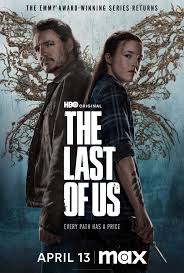
The Last of Us
Utterly gripping, and for those of us who have never played the game, there are absolute gut punches in this second season. I won’t say more for fear of spoilers, but it’s beautifully done, and Pedro Pascal and Bella Ramsey are superb as the two main leads.



The Madness
Colman Domingo is splendid in this paranoia fest as a man who finds himself being framed for murder, and we’re with him on every step of the way, as he tries to stay just ahead of the various forces who are closing in on him. It’s breathless and thrilling, and whether or not it’s entirely plausible, we don’t really fret, because we’re invested.
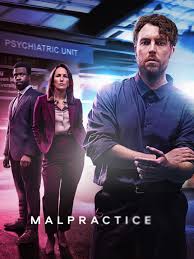
Malpractice
This starts off brilliantly as a study in just about controlled chaos on a psychiatric and an obstetrics ward, where staff are struggling to meet the needs of challenging patients whilst managing their own personal crises and pressure from management. The main protagonist behaves idiotically but notwithstanding that there are real issues and it’s all extremely tense. Towards the end it does get a bit generic thriller, with a whistleblower rocking up at the very last minute to save the day, and a dramatic showdown where the bad guys are exposed. That tends to sideline the more complicated (and very interesting) questions about how patients with diagnosed or undiagnosed mental illnesses are treated in a medical context, or how life and death decisions can be made in complex situations, or about resourcing of psychiatric care, etc etc. But overall, a decent medical drama.
Miss Austen
A very different pace to much of the above (and below), with the ever-marvellous Keeley Hawes as Jane’s sister Cassandra, addressing the mystery of why many of Jane’s letters were destroyed after her death. It’s speculative, of course, but persuasive, and beautifully done. I also watched an excellent BBC documentary series, Jane Austen: Rise of a Genius and am hankering after a full Austen re-read – perhaps starting with Mansfield Park, the one I did for A level that I haven’t re-read since.
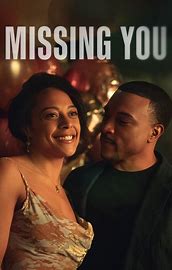
Missing You
It’s another Harlan Coban thriller. Plot holes aplenty, great cast rather wasted on shallow characterisation and clunky dialogue. You know what you’re getting with these, and they pass the time.
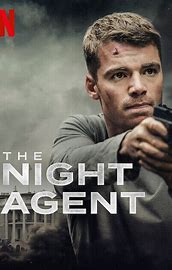
The Night Agent
Not a patch on the first series (with which I had some issues) – disbelief simply could not be suspended as the improbabilities multiplied with each episode, and our hero’s exceptionally annoying girlfriend behaved idiotically at every turn. I watched to the end, inevitably, but will try to resist series 3 if there is one.
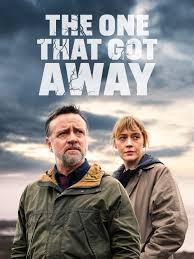
The One that Got Away
A clever, complex narrative (an English language version of the Welsh drama, Cleddau), not without some of the usual crime drama tropes, but they’re used intelligently. I did want to shout at both the leads, but particularly Richard Harrington’s Rick, quite often, but they were both consistently drawn and convincingly played.


Patience/Astrid: Murders in Paris
Patience is a British remake of French series Astrid: Murders in Paris, and some episodes of the former follow very closely the original plot lines as well as the premiss, which is the semi-official recruitment of an autistic young woman who works in the archives in active investigation of crimes because of the way she observes minute details and perceives patterns. Ella May Purvis, who plays Patience, is herself autistic, and I found her performance particularly persuasive, and often very touching.
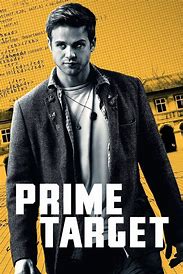
Prime Target
This started off well, with an intriguingly abstract concept (to do with prime numbers, though I can’t claim I entirely understood) but meandered off into standard thriller territory disappointingly quickly, with all the usual tropes deployed. The performances are good and the script decent, at least.
Protection
This had a cracking cast – Siobhan Finneran in the lead – and again an interesting premiss, this time about a breach of security regarding a family in witness protection – but again it got mired in too many of the standard crime drama elements. Nonetheless, it was pretty gripping.
Reunion
Initially I noted this one as a must-watch because it was filmed in and around Sheffield, including some locations very close to home. But in the end, I was so focused on watching the drama that I forgot to look out for the places I expected to recognise. As noted elsewhere (see Code of Silence and Sound of Metal) deafness has been an unexpected recurring theme in recent weeks. The protagonist has been failed by the education system, manipulated by the justice system and failed again by the prison and probation systems (‘oh dear, we forgot to book a BSL interpreter’, is a recurring motif, and the consequences of this are from from trivial). There’s a thread of real anger running through the plot and reflected in the powerful central performance by Matthew Gurney.
The Rig
Series 2 of this sci-fi environmental thriller (shades of John Wyndham) was let down by a terribly clunky script. I don’t remember Series 1 being as bad as this, and I am very sensitive to clunks. I suspect a third series is on the cards, but I might not bother, which is a shame because there are interesting ideas in there.
SAS Rogue Heroes
I loved both series of this. It’s odd in a way – if I met any of these mad bastards in real life I’d want to give them a wide berth, but the series humanises them without whitewashing the mad bastardry. The history of the invasion of Sicily and the battle for Termoli wasn’t familiar to me, and I know that the disclaimer broadcast at the start of every episode means that I can’t rely uncritically on this as a historical source, but it was interesting, and broadly accurate enough, nonetheless. Watching this kind of intense action heroics is something I’ve always enjoyed, and the WW2 context allows me to enjoy it without qualms, because these mad bastards are risking everything in the fight against a real evil.



See No Evil
This is from 2006, with Maxine Peake as Myra Hindley. I wasn’t sure I wanted to watch it but the cast (Maxine Peake in particular) suggested to me that it would not be schlocky or voyeuristic. We see events through the eyes of Myra’s sister Maureen, and her husband Dave – the latter was implicated early on in the murder of Edward Evans, but then cleared of involvement, and the impact of the crimes on both of their lives was huge and long-lasting. When we first meet Hindley and Brady, they have already murdered and so the only murder that we see (in glimpses) dramatically is that of Evans, as it was witnessed by Dave. This decision means that the focus is not on what Hindley and Brady did, but on the investigation and the repercussions of the case.
Shrinking
This made me laugh out loud more than anything else I watched on TV this year and also made me cry quite a lot. The cast is brilliant, the dialogue snappy and rude and funny, the humour and the heartbreak nicely balanced and interwoven. Harrison Ford is an absolute joy.
Strike: The Ink Black Heart
Based on by far the weakest of Robert Galbraith (aka J K Rowling)’s detective novels, the TV version does what it can but isn’t able to stop it being both muddled and rather tedious. It’s all about a cartoon but too many of the characters are cartoonish.
The Survivors
Adapted from one of Jane Harper’s excellent thrillers, this gets its claws into you right from the start and doesn’t let go. It’s not just about twists and cliffhangers, it’s about the legacy of a crime – grief and guilt – and how that shapes and twists relationships and communities.
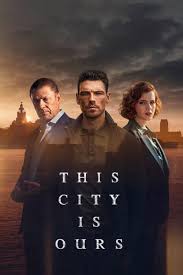
This City is Ours
The territory is familiar – a crime family facing issues of succession and change and jostling for power amongst the younger generation. The cast is excellent – Sean Bean is always hugely watchable, and I’m always absurdly pleased when he retains his Yorkshire accent( even though here the setting is Scouse). And whilst it doesn’t offer any huge surprises in terms of the outworking of the plot (no, you can’t just walk away from OC, particularly when it’s a family business) it achieves real tension along the way, and some nicely nuanced characterisation.
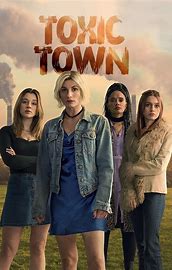
Toxic Town
Based pretty closely on the real court case about a cluster of infant abnormalities resulting from toxic waste. Some characters are composites as is normal in these things, and it plays out v much like Mr Bates, especially in the scene where they’re thinking no one will turn up to the first meeting, and then there’s a trickle of people, and then a flood… The central performances are excellent – Jodie Whitaker, Claudia Jessie and Aimee Lou Wood as the three mothers at the heart of the case, and Rory Kinnear as the lawyer who decides to take the case on.


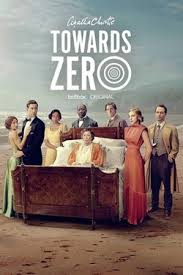
Towards Zero
Stylish and engaging Agatha Christie adaptation with a fab cast having a grand old time, and the dénouement keeping me, at least, guessing till the end. Christie at her best (for me usually the Marples rather than the Poirots) has a kind of darkness that lingers with you after the whodunnit question is answered and this isn’t one of those, but most entertaining.
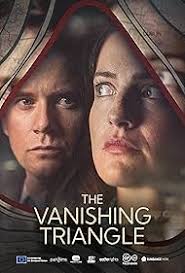
The Vanishings
This has a basis in some true, unsolved cases where women disappeared. But unfortunately the series just uses that as an excuse for a clichéd women-in-peril set up, with far too many sub-plots and red herrings, characters behaving with unfathomable pinheadery and a ludicrously improbable dénouement that clearly sets up a Season 2 which I hope I will have the strength of character to resist.
Vera
Ah, Vera, I will miss you. A great character, with a strong supporting cast (including many who’ve gone on to even greater things, like Ben Kingsley-Adir and Cush Jumbo) and consistently well-written and structured plots. Refreshingly, the murders aren’t the baroque constructs of a fiendishly clever serial killer but rooted in people’s chaotic past and present lives (as with Unforgotten). And the landscapes are glorious.
Virdee
Speaking of ‘the baroque constructs of a fiendishly clever serial killer’… I was really, really disappointed in this. The plot holes were so numerous and so sizeable, the fiendishly clever serial killer’s motivation and intentions were so muddled, and it reminded me at times of the Bond movies where the evil mastermind intent on world domination, having Bond at his mercy, hangs about explaining things and generally engaging in displacement activity, thus giving Bond time to escape. The setting for Virdee was great, many of the characters were great, but the plot just got sillier and sillier and I lost patience.
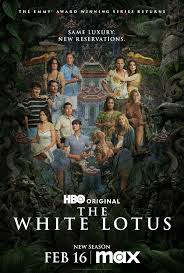
The White Lotus
I caught on to this rather late, when everyone was talking about series 3 and a friend was incredulous that I’d never watched it. Huge, huge fun, with lots of characters to boo and hiss at (a minimum of one massively entitled man-baby per season, in particular), but always a couple to identify with or at least root for. I wasn’t very successful in avoiding spoilers (the perils of catching on to things rather late), so some of the shocks were not as shocking as they might have been, but the cast was outstanding, and I had a grand time.
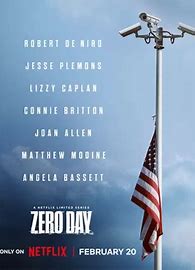
Zero Day
I’m not sure I enjoyed this quite as much as Lucy Mangan, who described it as ‘first and foremost an astonishing amount of fun – firmly grounded by De Niro and his portrait of a good man struggling to do the right thing in a world that offers corruption at worst, and only compromise at best’. But it was fun, and De Niro was a blast, even if the denouement didn’t entirely convince.


Documentary
The Balkans: Europe’s Forgotten Frontier
Not a travel programme, as one might guess from the presenter. Katya Adler focuses on history (mostly very recent) and politics to explore the various new nations that make up the Balkans. Very interesting, mostly new territory for me.
Britain Under the Nazis: The Forgotten Occupation
I knew very little about the occupation of the Channel Islands, though I do remember a book I read as a child, set on a fictional island nearby, and written in 1941, about the early stages of invasion and occupation (Mary Treadgold’s We Couldn’t Leave Dinah). It seemed surprising that so little has been written about it, given that the islanders were the only Brits to experience occupation of their homes, and that their experiences are, in microcosm, those of occupied peoples in mainland Europe. But given how long it took for the full picture, the shades of grey, to emerge in relation to the experiences across the Channel – initially polarised into splendidly heroic resisters or scoundrelly collaborators, but actually much more complex as people negotiated how to survive – perhaps I shouldn’t be surprised. The documentary is very well done – that it leaves me wanting to know more is a tribute rather than a criticism – with dramatised sequences drawn from the wartime diaries of a small number of islanders.
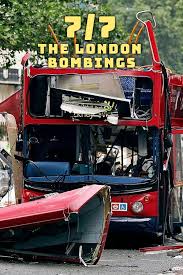
7/7 The London Bombings
Excellent account and analysis of the terrorist attack. Of course I remember the events from the time, but there was a lot here that I hadn’t known, particularly relating to the second, failed attack, and the killing of Jean Charles Menendez. The interviews with victims and first responders are powerful and profoundly moving.
The Lost Women Spies
I wish this had either been straight doc or straight drama. The hybrid approach here resulted (as it often does with these things) in rather wooden dramatic interludes, with frankly awful dialogue. A shame, given the power of the story it’s trying to tell. It would be almost impossible to make an account of the wartime service of Odette Hallowes, Violette Szabo and Noor Inayat Khan dull, and this isn’t, but I winced at the scenes where Atkins and Buckmaster have conversations that seem to consist of one of them saying something and the other repeating it incredulously. And that these were included at the expense of seeing, for example, Inayat Khan’s capture and attempted escapes is bizarre.
No. 1 on the Call Sheet
A two-parter about the black actors who have achieved that status of no. 1 on the call sheet (even if not always no. 1 on the payroll), featuring, well, pretty much everyone you can think of who’s still with us (and it paid heartfelt and heartbreaking tribute to Chadwick Boseman, who isn’t). It wasn’t the deepest exploration of the issues but it wasn’t just a superficial celebration either, and many of the individual testimonies were very powerful.
Vietnam: The War that Changed America/Turning Point: The Vietnam War
Two fascinating, powerful documentary series. The first focuses on the impact of the war on America and Americans, whilst the second, the latest in the excellent Turning Point series (earlier series have covered 9/11, and the bomb and the Cold War), takes a more straightforward chronological approach, and includes interviews with Viet Cong fighters as well as US veterans. It’s pretty devastating stuff – not just the brutality but the cynicism of those who allowed the war not just to drag on but to escalate.




Dad
Posted by cathannabel in Personal on June 16, 2025

John Hallett, 26 December 1927 – 30 March 2025
Trying to sum up anyone’s 97 years of life in a not unreadably long blog post is a challenge. In the case of my Dad, John Hallett, who died on 30 March, it’s impossible. As a friend put it, at the celebration we held for his life, he packed at least two lifetimes into those 97 years. And each time I talk or write about him, someone reminds me of some other project, activity or passion that I’d forgotten, or never even known about. He set the bar very high for us all – whatever I’ve achieved in my life seems small beer in comparison – and he wasn’t always very good at telling us how proud he was of us (this was a generational thing, and certainly learned from his parents), though we know he said it to others. My niece had the poignant experience of hearing her grandad, who no longer recognised her, telling her about his lovely granddaughter and great-grandson and how proud he was of them. Most importantly, we knew, always, that we were loved, and that our parents’ love was not conditional upon us achieving things, and that gave us the freedom to be who we wanted to be, who we were meant to be.
John’s early life was pretty conventional – his father was a civil servant who’d fought in the first war, and was an active member of the Home Guard in the second. They lived in Thornton Heath, where Dad was born in 1927, and then moved to North Harrow with his two younger siblings. As a young teenager during the War, he enjoyed the excitement of spotting aircraft and watching the searchlights to cheer as German planes were shot down, until one of his schoolfriends was killed along with their family during the Blitz – a sobering experience. This did not, however, dampen his enthusiasm for aircraft, and the first stage of his career was in aircraft design.
John took up an apprenticeship at de Havillands, leaving school against the wishes of his father, who had wanted his eldest son to follow him into a stable career in the civil service, and he stayed there for four years after the apprenticeship, working in the Design Office.
He left de Havillands because, as a Christian pacifist, he could not countenance working on military projects, and he had begun to think of a future as a teacher, inspired by people he knew and admired. He trained at Westminster College, and then took up his first teaching post at Chatham Technical College (teaching technical drawing, maths, and RE). By then he was married to Cecily, who was to be his strength and his stay until her death in 1995. They’d known each other for a long time, through church, but only gradually came to realise that their friendship was blossoming into love. They lived at 24 Blaker Avenue, in Rochester, Kent. I was born in a Chatham hospital in 1957, Aidan and Claire were born at home in 1958 and 1960 respectively.
The faith that he and Cecily shared was fundamental to their lives, and whilst I do not share their faith, I do share so many of their values, their political beliefs and their approach to what is important about life. They were pacifists, members of the Fellowship of Reconciliation. They were passionately anti-apartheid (many of their ‘expatriate’ colleagues in West Africa at least considered moving on to South Africa or Rhodesia when Nigeria imploded into civil war, but that idea was anathema to them). I learned from a very early age about the slave trade, visiting forts along the Ghanaian coast where slaves had been held before being transported across the Atlantic, and was aware of civil rights struggles in the US and anti-apartheid activism in South Africa and Rhodesia – political issues of the day were a staple of discussion around the dining table each evening. They were socialists, staunch Labour voters. And they were concerned about the environment long before it was the norm.
They both became interested in the idea of working in West Africa, in one of the newly independent nations, but realised that John would need a University degree to teach there. So he did A levels at a local technical college and then enrolled at City University in London, on a scheme designed for those who had been unable to study to degree level during the war years, and obtained a First in Physics and Maths. John was studying part-time alongside his teaching post, whilst Cecily managed the home in Rochester, and brought up the children. John’s father Dennis, a deeply conservative man, never came to terms with the plan to work in West Africa (or ‘darkest Africa’, as he consistently called it), and when we returned home on leave, John had to wait until his father had left the room before talking to his mother about our experiences there.
The family flew out to Ghana in 1960 (with three children, of whom I am the eldest, then aged 3), and a new home on Asuogya Road, on the campus of Kwame Nkrumah University of Science & Technology in Kumasi. Their fourth child, Greg, was born in Kumasi in 1962. John hadn’t had a conventional route to University teaching, and used to comment that he’d arrived as a lecturer having never attended University before – he also often felt that he was only one lecture ahead of his students.
Both John and Cecily became involved in the life of the University, particularly in chamber music concerts. Cecily was an accomplished pianist, and Arthur Humphrey, a colleague, friend and honorary grandparent, played the spinet and recorders. They also held more informal musical evenings, which John’s colleagues and students from the University regularly attended. John preached regularly (both he and Cecily were Methodist lay preachers) at small village churches outside Kumasi, one of which presented (and robed) him in a splendid kente cloth on his last visit. We still have the cloth, somewhat faded and a little damaged after all these years, but still a beautiful reminder of the life we had in Ghana.
He taught Physics and Maths at KNUST but became increasingly interested in pedagogy, rather than in the research aspect of his subjects (despite pressure from his Head of Department – he resisted the idea of, as he put it, knowing more and more about less and less), and was an examiner for the West African Exam Council, and Chief Examiner for O level (the latter involved him designing practical tests which could be carried out in any school, and visiting schools to assess whether they had the necessary apparatus). He was involved with the Ghana Association of Science Teachers, and wrote a Physics O level textbook tailored to the resources available in West African schools and to the experiences of the students, which remained in print for many years.


This growing interest in education per se led him to take up a post at Ahmadu Bello University in Zaria, Northern Nigeria and the family moved there in January 1966. I don’t recall the first part of our journey (by sea from Tema to Lagos) but vividly remember the 600 mile train ride from Lagos to Zaria. The timing of our move turned out to be most inauspicious, as a series of coups and counter-coups rocked the region, and massacres of Igbo people took place in May and September of that year in the area where we lived. We were not in danger at this stage – the violence was very precisely targeted at Igbo people – but of course it was traumatic for the adults to witness what was happening, often to people they knew, and they kept as much of this from us as possible.
The only incident that I recall was when a group of men approached our house, and Cecily and a neighbour took all of the children upstairs and put a record of children’s songs on, whilst John and the neighbour’s husband went outside to speak to them. Strangely, in my memory the men were carrying sticks, but in reality, as I discovered much later, they had machetes. They turned away from our house, but went on to kill a number of people nearby.
I remember being aware of conversations between the adults that stopped abruptly when they realised I was within earshot, but it was not until my teenage years when I pieced together the fragments to understand what had been happening, and this was formative. There is one particularly powerful story that I discovered from talking to my parents and visitors who had been in Nigeria with us. Opposite our house was an unoccupied bungalow, in which we used to play sometimes. I recall being forbidden to do so – snakes were mentioned and I needed no other deterrent. In reality, John had discovered a couple of young Igbo men hiding there. He got them into the family car, covered in blankets, and drove them to the army base, where it was hoped they would be safe. Meanwhile a friend who worked for the railways commandeered a train to take Igbo refugees south to safety, and these two young men joined that group. Tragically, the train was deliberately derailed, and they and others who were fleeing the pogroms were murdered. On both of these occasions, John felt that he had to at least try to intervene. I have often wondered how he felt as he approached the armed men outside our house, and how Cecily felt, knowing what he was doing. And how he felt as he drove those young men to what he hoped might be sanctuary, knowing that if the car was stopped and searched, they would be killed, and he might be in danger too. I don’t know, because he never spoke of these events in personal terms. I believe he felt that he had no choice but to act as he did, whatever the risk.
As I learned about these events, which had happened around me, without my knowledge or understanding, I found I needed to understand the wider issues, and this lead me to read widely about Partition, the Holocaust and the Rwandan genocide.
The family returned home on leave in the summer of 1967, but the worsening situation meant that Cecily and the children could not return, and John travelled back to Zaria alone, to complete his contract, returning to the UK in Easter 1968. We did visit him at Christmas, a rather nervy visit given the volatility of the situation and the presence of armed (but barely trained) soldiers around the city.
Someone once asked me if I blamed my parents for taking us to West Africa, a question that utterly baffled me. On the contrary, I’m in awe of their courage in taking that step, and very grateful for it too. We gained so much – on our return to the UK our horizons were so much wider than those of our contemporaries, and whilst that meant we had a lot of catching up to do on popular culture and so on, it gave us a different perspective, and I think a more generous one. Certainly those years – and the culture of talking about politics and ethics and religion in our home – informed each of us in our developing views about all of those things as we grew older. We would not be the people we are, had our childhood been spent in England.
Cecily and the children were living in the family house in Rochester, and places were found for us at the local primary schools, but on John’s return he took up a post in the Education department at Trent Polytechnic, where he would remain until his retirement. He and I found a temporary home with one of his old friends (a fellow member of the ‘Brew Club’ at Westminster College), so that he could start at Trent, and I could start at Queen Elizabeth’s Girls’ Grammar School in Mansfield. The rest of the family moved up to Nottinghamshire once our new home in Ravenshead was completed.
Whilst at Trent, John was involved in innovative initiatives such as the generalist Education degree and the Anglesey project, worked with VSO to train volunteers for their overseas service, and also took up every opportunity to travel with the British Council or under the auspices of the Polytechnic to visit schools and educational projects in Nepal, Kenya, and the USA. In addition, John was very concerned with the environment, and published, with Brian Harvey, an economist, a well-received textbook on Environment and Society in 1977.

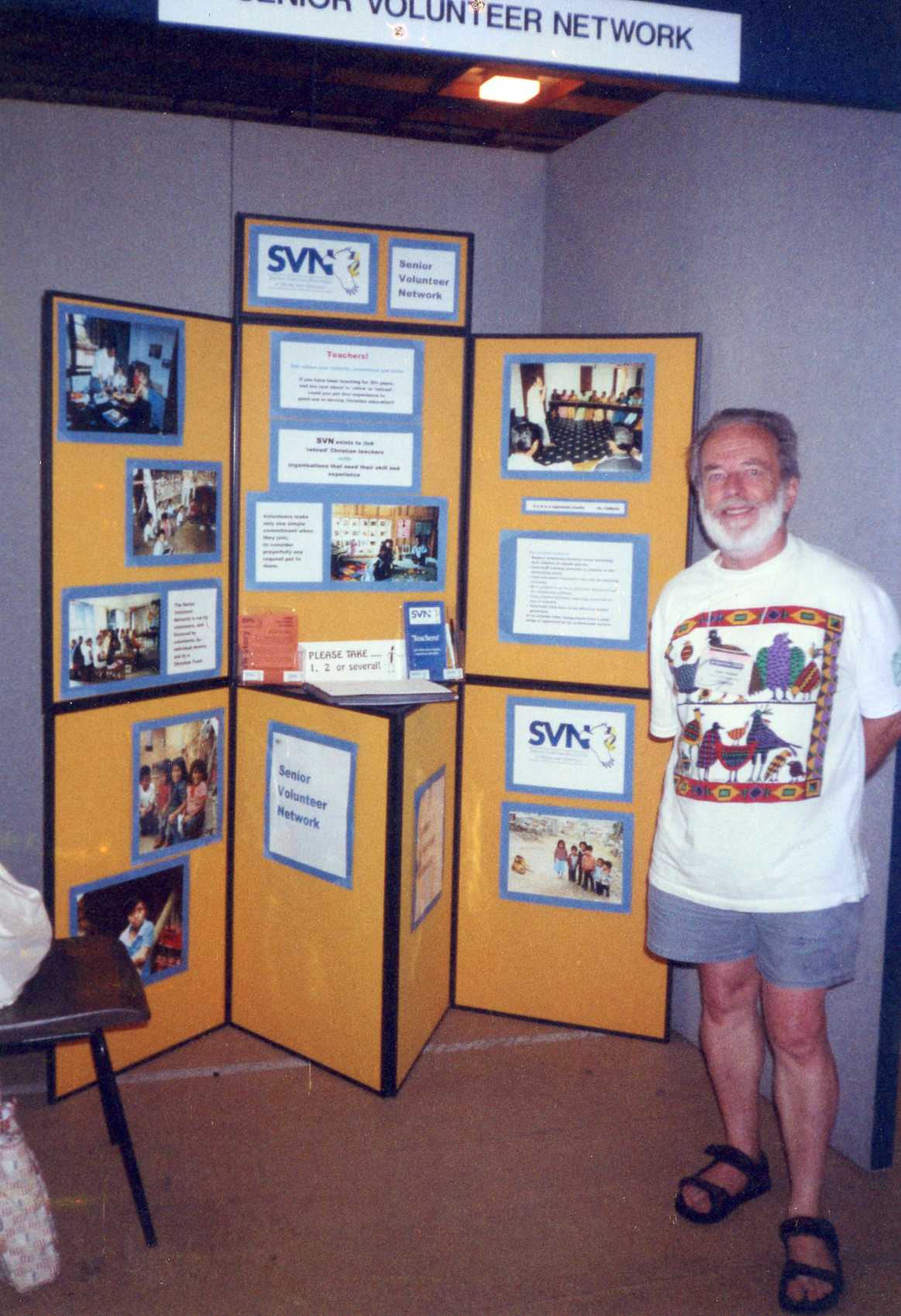

He retired (by then he was Head of the Education Department) in 1987, aged 60, but rather than leading a quieter life, he had a vision for a charity, Senior Volunteer Network, which would put retired teachers/head teachers and other education specialists into projects worldwide, and began to turn this into a reality.
He and Cecily made the most of the freedoms of his retirement (she had retired from primary school teaching some years previously). They both became involved in leadership of the Ravenshead Christian fellowship, which later became Ashwood Church (now based in Kirkby in Ashfield). In the early days of the Fellowship, we met in members’ homes or in the Village Hall. John and Cecily held open house on Sunday afternoons for young people in the village (50 years on, people still talk about how the house was full, every seat taken, and every window ledge and the stairs too) – their home in Ravenshead was called Akwaaba, which in the Twi language spoken in the part of Ghana where we had lived, means ‘welcome’. Part of our parents’ joint legacy to us is the idea of family as an open, welcoming place that embraces new members, whether related by blood, law or none of the above. In West Africa we were a long way from our aunts, uncles and grandparents, and so we accumulated a number of aunts and uncles, friends of my parents who visited regularly, and who I still think of as ‘Aunty Betty’ (with whom I still exchange Christmas cards), ‘Uncle Arthur’, or ‘Uncle Rex’. And in Ravenshead that took the form of opening our doors to random teenagers, some of whom became part of the church (and still are), others who never did, but had reason to be grateful for our parents’ warmth and support, as well as for the Sunday afternoon tea.
As keen walkers, John and Cecily led youth hostelling expeditions to the Lake District, one of which memorably involved Cecily’s group of walkers requiring the Mountain Rescue Service, after getting lost on Great Gable in driving rain and mist. John’s group had taken what was expected to be the more challenging route, only to find when they got to the hostel that we had not yet arrived. They called at the Mountain Rescue centre, at roughly the time that two of Cecily’s party arrived, having been sent out as envoys whilst we huddled behind a rock for (minimal) shelter, and gave their account to the team, enabling them to find their way straight to us.
John was a governor at a number of local schools, volunteered with Mansfield Samaritans (Cecily was a founder member of this branch), and was involved in local politics. He ran regularly, and completed the London Marathon, aged 63, in 1990 – he’d been a keen runner as a young man (plenty of stamina, less speed, due to his short stature), which had taken its toll on his knees and he had to have two knee replacements later in life. He undertook many walks with Cecily (and their dog, Corrie) after his retirement, including the Coast to Coast Walk, and along the Northumbrian coast. Having visited Nepal during his work with Trent Polytechnic, he returned to Everest to climb as far as the snow line, fulfilling his dream to stand on its slopes.


In 1995 Cecily died of pancreatic cancer, aged 65, only a matter of weeks after the diagnosis. It was a huge shock, and an incalculable loss to John and to the family – and to so many more people, as we all discovered from the messages that flooded in after her death. She saw herself as an accompanist – in musical terms this means that she wasn’t there to do the virtuoso solo stuff, but to enhance the performance of other musicians – but she did far more than that, and could have done so much more (at the time of her death she was gaining qualifications in counselling, and working with a Nottingham homeless charity). At the events celebrating Dad’s life, so many people talked not just about John but about ‘John and Cec’. They had different, and complementary strengths, they were a partnership in every sense, and their legacy is a shared one, for us and for the many other people with whom they worked and worshipped.
When Cecily died, SVN was still an idea rather than a reality, and in the aftermath he threw himself into setting up and leading the network, sending volunteers around the world, and travelling himself until his eyesight began to fail due to macular degeneration. SVN still thrives, and the family still has links with it, through Claire who is now a trustee.
John remained active until his 90s, undertaking a skydive to celebrate his 90th birthday, but his sight loss was by then significantly restricting his activities as he could no longer drive, or use the computer. The pandemic shrank his horizons significantly, particularly since he could not easily compensate for the loss of face-to-face social activity with on-line due to his deteriorating sight. In 2020, just before the first lockdown, his youngest son Greg died of bowel cancer, a desperately heavy blow. The death of my husband Martyn in 2021 was also a major shock to him. In 2022 he was formally diagnosed with Alzheimer’s disease and the decline from that point on was fairly rapid. He was cared for at home by Claire until he needed residential care, and moved into Lound Hall Care Home, near Retford, in 2023.

During those last years, as the fog engulfed him and he became more dependent on others, it was sometimes hard to remember the man he had been. He was a man of bold decisions – leaving school to work at de Havillands, against his father’s wishes, leaving de Havillands on a matter of principle, training as a teacher and undertaking a part-time degree whilst working, taking his young family to West Africa (again, a decision of which his father profoundly disapproved), and then changing direction again to focus on education, and finally setting up SVN in his retirement and travelling to often remote and dangerous places to work on educational projects. He was a leader, from his days as a Cub and Scout where he progressed from ‘Sixer’ to Assistant Scout Master, to his final post as Head of the Education Department at Trent and his role in the church. We all remember family walking holidays when Dad would lead the way so confidently that we all had to rush to keep up, as he was the one with the maps and the refreshments… At the care home, he often, when we visited in the early days, told us that he was there to conduct a review or an investigation, or that we were all at a conference that he had organised. That lifetime of leadership kept a hold even when so much else had been lost.
He had, from a young age, a sense of purpose, and one of his frustrations as his eyesight began to fail was that so many projects – travel abroad, or even ambitious UK walks like the ones that he and Cecily had done years before – were no longer practical or safe. For a while, writing his memoirs became his purpose, although in the final stages of the project dementia had begun to rob him not only of his memories but of understanding, and so I edited the document and arranged publication so that a copy could be placed into his hands whilst he could still recognise it as The Book, his own work.
John was fascinated by the natural world, greatly enjoying finding out about the flora and fauna – particularly the birds – of the parts of West Africa where we lived, and David Attenborough’s documentaries were a source of pleasure and interest in his last years. He read widely, and not only for professional purposes, and turned to audio-books after his sight loss, through which he enjoyed re-‘reading’ Dickens, Trollope, le Carré, Graham Greene and others, as well as discovering new writers (he was particularly enthralled by The Book Thief). He greatly admired the work of C P Snow, a scientist as well as a writer, who explored the idea of the two cultures, science and the arts (Snow’s novels were sadly not available in audio form). He loved music – as a young man he listened to jazz (New Orleans, and Django Reinhardt, not swing, as he told me firmly), but then was converted wholeheartedly to classical music after hearing Bach’s Brandenburg Concertos. Even in the very last stages of his illness he seemed to find calm in listening to Bach and Mozart in particular.
Just over a year ago, I wrote about Dad’s dementia, and specifically about Dad’s ‘raging against the loss of dignity, the loss of control over where he is and what happens to him, against the loss – even if he can no longer articulate it – of the things that made him him, against the slow dying of the light.’ And I expressed our heartfelt wish that his last days should not be spent ‘burning and raving at close of day’. In the end, at the very end, he did ‘go gentle into that good night’, with staff from his wonderful care home taking turns to sit through the night with him. We’re grateful for that, and that we each had the chance to say goodbye, to kiss him on his forehead and tell him that we loved him.
John is survived by his children Catherine, Aidan and Claire (youngest son Greg died of cancer in 2020), daughters-in-law Julie and Ruth, grandchildren Matthew, Arthur, Jordan, Melanie, Vivien and Dominic, step-grandson Tom, and great-grandchildren Jackson, Jesse and Eliza. He will be remembered with love by all of us.


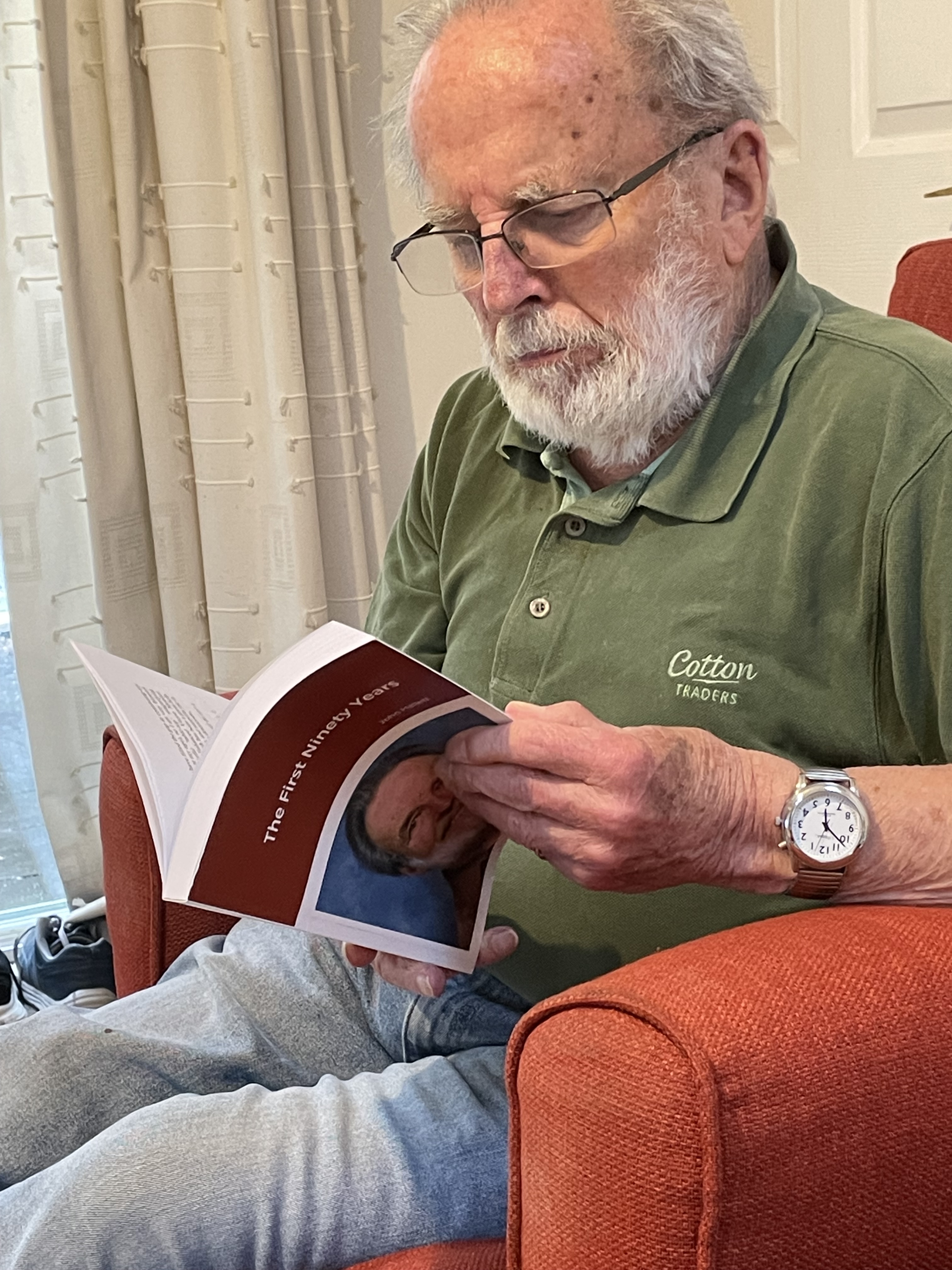

 Passing Time