Archive for December, 2024
2024 – Finding Joy and Hope
Posted by cathannabel in Personal on December 31, 2024
Since 2019 I have posted every week on Facebook a summary of the good things I’ve found over the previous seven days. This is always prefaced by an acknowledgement that these good things will most likely be small and personal, and that they will be outweighed in the grand scheme of things by all of the huge absolutely bloody awful things that are going on in the world. We can’t and mustn’t shut our eyes to the latter, even when for the most part they are things about which we can do very little. But if we’re going to get up each morning and wash and dress and face the world, or our little bit of it, it’s those small, personal good things that will give us the strength, day after day, to keep on keeping on.
In some ways the Good Things project is an odd one for me. I’m not a strenuously cheery person. If I am a ‘glass half-full’ person it’s an act of will because my brain is almost always in ‘what could possibly go wrong’ mode, and thus even much looked forward to events and experiences always have an element of anxiety attached. M used to say he was ‘glass half-full but really, really cross that it was only half full’. My late brother Greg was ‘glass overflowing’. So I suppose I’m ‘glass half-full but really quite worried I might tip it over and end up with glass empty’… Optimism is, as James Baldwin says, an act of will. It’s also, as Angela Davis put it, an ‘absolute necessity’. We might look at the world and see little reason for it – that’s what she called ‘pessimism of the intellect’ – but being alive, really living, requires optimism of the will. (My friend Mike Press reminded me of the Angela Davis quote, in a lovely piece he wrote about ‘reflection, renewal and optimism’.)
When I started my Good Things, my brother was dying of cancer. Then there was Covid and lockdown, and then, in October 2021, my husband Martyn died very suddenly of a heart attack. I could hardly have been more aware over these past few years that life wasn’t simply full of good things, even just on a personal level, and that wishing it wouldn’t make it so. But it helped me to have that discipline, that at the end of each week I had committed to finding something to write about, something that had brought me joy or comfort, something that had given me strength, something good. And I have always found something, even at the worst times.
In 2024 the huge absolutely bloody awfulness of what’s going on in the world is utterly daunting. When M was alive, we always watched the 10 o’clock news, but now, on my own, I find I rarely do. To watch together, and then head for bed and sleep with the comfort of each other’s company was one thing, to watch alone and then head for bed and sleep alone, with my mind full of Gaza and Trump and Ukraine and climate change and all of the other horrors is quite another. (I do read the papers every morning, I don’t shut my eyes to it all.) It’s hard to find good things out there, although I know that in any and every horror there are brave, good people who do whatever they can, at whatever risk to themselves, to mitigate that horror for others. We may not know who they are, but whilst history is very good at telling us of the evil that humans are capable of, it does also, if we look more deeply, tell us of those who stand against that evil. I try to hold on to that.
The word ‘joy’ keeps on cropping up at the moment. I recently watched the film with that title, about the first ‘test-tube baby’, whose second name was Joy, given to her by the surgeon who carried out the procedure. The film didn’t gloss over the wretchedness of infertility, and the people that the IVF process couldn’t help, but it acknowledged very movingly the joy that arrival brought, not only to her parents but to the team that had worked so long for that moment – and all of the people since who have had their chance at parenthood. And then the Doctor Who Christmas special this year was entitled ‘Joy to the World’, and it dealt with loneliness, loss and regret, but ended with light, and joy and hope. It seems to me that to have joy (as distinct from happiness, or contentment), one must know sadness, loss, pain as well, just as to be optimistic (as opposed to merely delusional) one must recognise it as an act of will, in the face of all the reasons for pessimism.
So where has the joy been, in 2024?
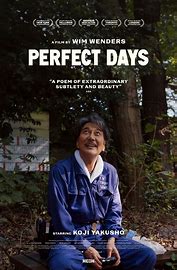
As always, in reading marvellous books, watching brilliant films and TV series, listening to wonderful music. There are lots of things that I enjoy, that pass the time pleasurably, but some that do more than that, that lift and move me more deeply. Hard to pick out just a few things, but, for example, Wim Wenders’ film Perfect Days, Paul Besley’s book The Search, choral music at St Mark’s Church, Chris McCausland dancing to ‘Instant Karma’ on Strictly…
Travelling with my son, for an amazing holiday, a three-city break in Vienna, Prague and Berlin, seeing the beauty of all three cities, and in each of them the tragedy of their wartime history.
Working with Under the Stars, a charity that works with adults with learning disabilities and autism through music and drama, seeing their music groups perform at Tramlines festival, at Yellow Arch Studios, at the Greystones pub and the Octagon Centre, and deejay/veejay at the Leadmill. It’s exhilarating and inspiring – their joy in performance is infectious.
Nottingham Forest. A change of manager – this time last year I wrote that ‘I’m hopeful that the new guy will enable us to stay up again this year’, but it turned out to mean a transformation that finds us at the end of 2024 second from top of the Premier League, and dreaming of possibilities in 2025…
Family – a wedding, an engagement, and lots of ordinary special times spent with the people I love most, watching football, watching Strictly, trips to the cinema, opera or theatre, going around the galleries in town, wine-tasting, meals out, meals at home. Boxing Day shared with the future in-laws for the first time.
Friends – meeting for coffee or lunch, sharing music, talking about families and plans, hopes and anxieties, meeting via Zoom when we can’t be together in person.
So this New Year’s Eve, as for the last approx. 40 years, will be shared with very dear friends. We’ll eat and drink and watch Jools’ Hootenanny and complain about his choice of guests, and on New Year’s Day we’ll eat more and find an undemanding film to watch before going forth into 2025. My first New Year’s Day without M was bleak, almost unbearably so. I faced the first year since I was 16 years old in which he would not be by my side. I expect there will be moments this New Year too, when it hits me, but three years on I am accustomed to being without him. It’s not that the grief and loss is less, rather that one adjusts around it, accommodates it, and it becomes a part of one. I know I will cope because I have coped already with so much, and because the people who’ve enabled me to cope will be with me.
And for 2025 we hope, of course we hope. We hope for cease-fires, for wars to end, for freedoms to be restored, for care for our planet to be prioritised over profit, for vital public services to be protected and rebuilt for those who need them. We hope for good things for ourselves and the people we love. We hope for the strength to cope when bad things happen, the strength that comes from other people’s love and support as well as our own.
I come back to this poem every new year. That word ‘sometimes’ has some heavy lifting to do here, but of course, sometimes, these things will be, and that’s what we have to hang on to.
Sheenagh Pugh – Sometimes
Sometimes things don’t go, after all,
from bad to worse. Some years, muscadel
faces down frost; green thrives; the crops don’t fail,
sometimes a man aims high, and all goes well.
A people sometimes will step back from war,
elect an honest man, decide they care
enough, that they can’t leave some stranger poor.
Some men become what they were born for.
Sometimes our best efforts do not go
amiss; sometimes we do as we meant to.
The sun will sometimes melt a field of sorrow
that seemed hard frozen: may it happen for you.

Hang on to your hat. Hang on to your hope. And wind the clock, for tomorrow is another day (E. B. White)
Music Nights 2024
Posted by cathannabel in Music on December 18, 2024
Last year I tried for the first time to write about the part that music has played in my life, the way in which that is bound up with my relationship with my late husband, and how I struggled with finding ways of listening alone. It will never, of course, be the same, not even close. But I have prioritised listening to music from our collection, as well as listening to Radio 3 as we used to, and have added some new bands, composers and music programmes to my repertoire. I’m proud of that – it wasn’t as easy as it might sound.
Not long into 2024, my hi-fi was dismantled, and my CDs packed into boxes and stored in the garage, ahead of a major redecoration of the living/dining room. It all took a long time, and only now, as the year draws to a close, do I have full access both to the CD collection and to the means of playing them. Now, I do know about streaming and am aware that playing actual CDs marks me out as very old school indeed – and as the list below shows, I did carry on regardless. But I like to hear the whole album, the tracks that the artist decided to record, in the order that they wanted them to appear. And so many of these CDs were acquired and listened to with M, and, as I said in my music blog a year ago, it’s very important to me that this tradition – of evenings devoted to listening to CDs, chosen semi-randomly from the vast collection – is part of my life now.
Music Nights (or mornings, or afternoons, but mainly nights) – the methodology is as described in last year’s blog. During the week if I think of something I’d like to play (it might be suggested by something I’ve read, an anniversary or obituary, or just a memory) I put it on a pile by the CD player, and on the night I add to that pile random choices – whatever came up when I threw the dice and counted the shelves – so that I don’t stay too firmly within familiar territory, or within any one era or genre. This does include music on TV or DVD and tracks that I accessed via Spotify as well as via the collection, but in general inclusion indicates that I listened to more than just a single track, even if not a full album.
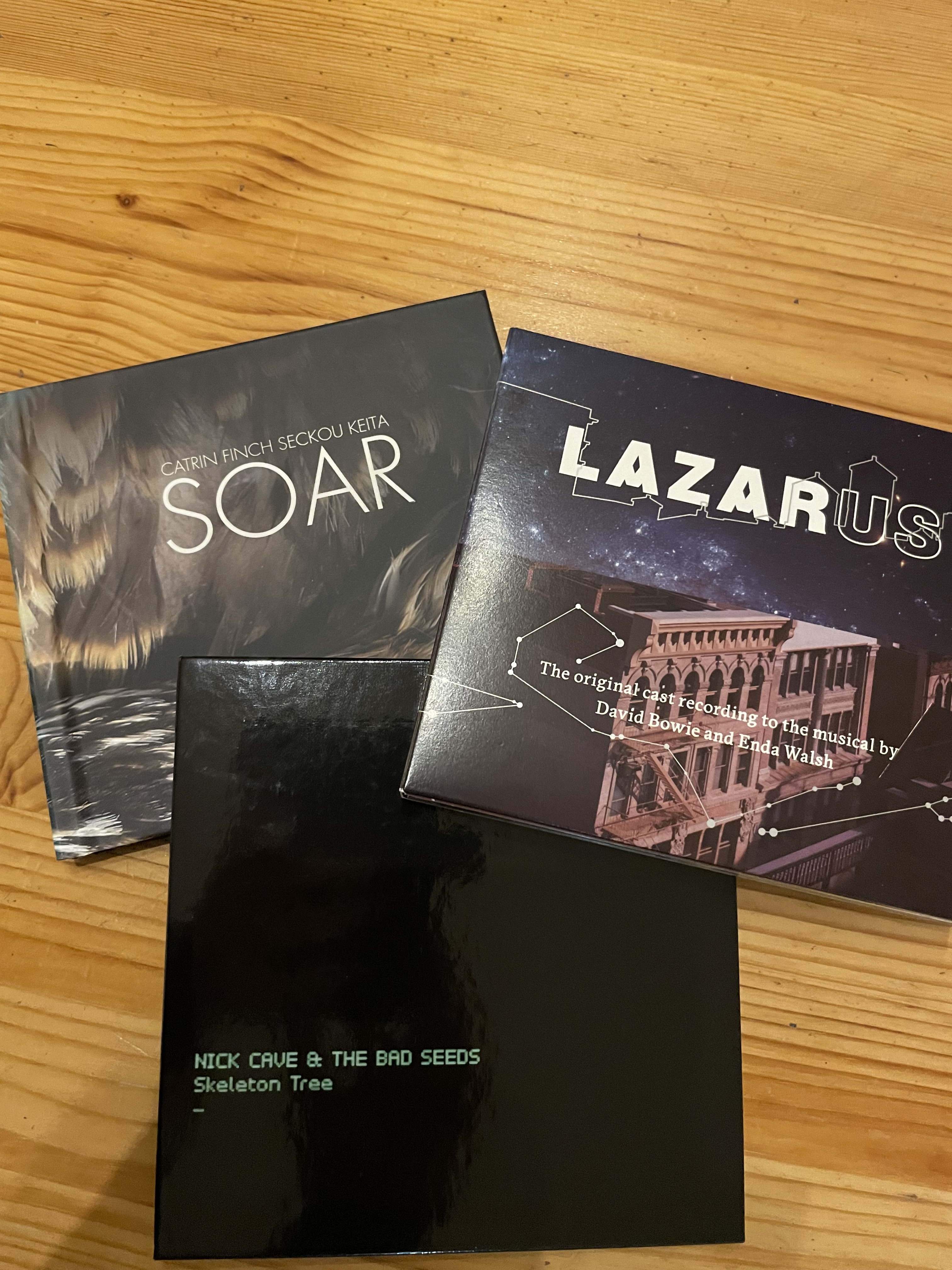
This year I listened to music by: Beethoven, Berlioz, black midi, Bombay Bicycle Club, Bowie, Brahms, Britten, Brubeck, Bruckner, R D Burman, Byrd, Alina Bzhezhinska, Camel, Can, Nick Cave, Terri Lynne Carrington, Hariprasad Chaurasia, Chopin, Billy Cobham, Leonard Cohen, Alice Coltrane, John Coltrane, Costello, Kim Cypher, Miles Davis, Olivia Dean, Delarue, Bryce Dessner, Corrie Dick, Marlene Dietrich, The Last Dinner Party, Dinosaur, Dreamliners, Dukas, Dylan, Earth Wind and Fire, Elgar, Ella, Ellington, ELP, Eno, Fairport Convention, Fakear, Fauré, Reinhard Fek, Catrin Finch & Seckou Keita, Graham Fitkin, Fleet Foxes, Flobots, Frankie goes to Hollywood, Marvin Gaye, Gilgamesh, Gomez, Pavel Haas, Charlie Haden & Egberto GIsmonti, Matthew Halsall, Gavin Harrison & O5Ric, P J Harvey, Lianne la Havas, Dashiell Hedayat, Hendrix, Bernard Herrmann, Hindemith, Zakir Hussain, Keith Jarrett, Johann Johannson, Quincy Jones, Quincy Jones & Miles Davis, King Crimson, Michael Kiwanuke, Gideon Klein, Gladys Knight, Korngold, Last Shadow Puppets, Bill Laswell, Ant Law & Alex Hitchcock, Léonin, Los Campesinos, Yo-Yo Ma, Kirsty MacColl, James MacMillan, Mancini, Bob Marley, Maximo Park, Curtis Mayfield, Fanny Mendelssohn, Felix Mendelssohn, Pat Metheny, Lin-Manuel Miranda, Monk, Mozart, Mulligan & Monk, Nick Mulvey, Meshell Ndegeocello, Yoko Ono, Pérotin, Iggy Pop, Psi Vojaci, Rachmaninov, Emma Radicz, Radiohead, Ravel, Red Rum Club, Martha Reeves, Max Richter, Rodrigo y Gabriela, SBB, Ryiuchi Sakamoto, Schoenberg, Schubert, Schumann (Robert & Clara), Semer Ensemble, Shangri-las, Sharp Little Bones, Shostakovich, Sibelius, Silk Road Ensemble, Horace Silver, Nina Simone, Roni Size & Reprazent, Smetana, Sam Smith, Snarky Puppy, Katie Spencer, Spiritualized, Candi Staton, Steely Dan, Max Steiner, Richard Strauss, Karl Svenk, Taylor Swift, Sylvian & Fripp, Tallis, Tangerine Dream, Carlo Taube, Michael Tippett, Peter Tosh, Ali Farka Toure, Travis & Fripp, Martina Trchova, Unthanks, Vaughan Williams, Verdi, Kevin Volans, Weather Report, Yiddish tango




Live Music
Music nights are almost always solitary now. But live music is also vital to me, and for that I often especially value company. So thank you to Ruth, Peter, Adi, Jennie & Michael, Arthur, Jane & Richard, Amanda, Liz and Under the Stars colleagues for sharing some of these musical experiences with me.
Opera
For a few years, I reviewed Opera North productions for The Culture Vulture, a Leeds-based online journal, which was fabulous – I got free tickets to all of the productions. All this came to an end for me even before lockdown, as my youngest brother, who had terminal cancer, approached the end of his life, and I knew I could not commit to attending or to turning a review around within a day. When lockdown ended, I was looking forward to starting again and was due to see Carmen on 9 October 2021. That morning, M died. It was not until my sister-in-law, who had got me started on this whole opera thing, moved back to Leeds from Rome last year that I went back to the Grand Theatre (not as a reviewer, just a regular audience member).
At Leeds Grand we saw two marvellously magical productions, Mozart’s bonkers The Magic Flute, and Britten’s A Midsummer Night’s Dream, both of which were delightful, imaginatively staged and beautifully sung. Before that, we saw Britten’s Albert Herring at the Howard Assembly Rooms, a lovely, funny production.
West Yorkshire Playhouse’s revival of My Fair Lady drew on Opera North talents too, with lovely performances in the lead roles, including John Hopkins (a former sidekick of Midsomer Murders’ DI Barnaby) as Henry Higgins, and Katie Bird, who we saw in The Merry Widow back in 2018 at the Grand, as Eliza. It has tricky moments – not so much Higgins’ sexism, given that this is not endorsed by the script or by the production, but the off-hand references to domestic violence, the normality of black eyes and broken bones as part of married life. I can’t recall if these are in the Shaw, or only in the libretto. Despite that it was a gorgeous, funny production and it’s packed with glorious tunes, beautifully sung.
Sheffield City Hall – Legend: The Music of Bob Marley. Excellent tribute band – the lead singer in particular was superb. I wondered about the audience when I saw a lot of white folks wearing knitted hats with knitted dreadlocks attached, but it was clear they were passionate enthusiasts for the music, knew all the lyrics, and kept a respectful silence when asked to do so in memory of Aston ‘Family Man’ Barrett. An exuberant evening of fantastic songs.
Manchester Palace Theatre – Hamilton. I’d seen it on Disney+ but live is so much better. Spinetinglingly, exhilaratingly great songs and singers, superb choreography, a compelling story. It probably shouldn’t work but it absolutely does and I loved every moment.


Since I got involved with Under the Stars, first as a trustee, now as Chair, I aim to get to as many of their gigs and drama performances as I can. It’s always a joy. This year, Sparkle Sistaz played the Octagon Centre at Sheffield University as part of a Street Choirs event and went down a storm (they were followed by the excellent Young ‘Uns, who recognised they had a damn hard act to follow). The Stars Band played at Yellow Arch and at Tramlines, and Clubland Detectives launched their new EP with a gig at the Greystones Pub.


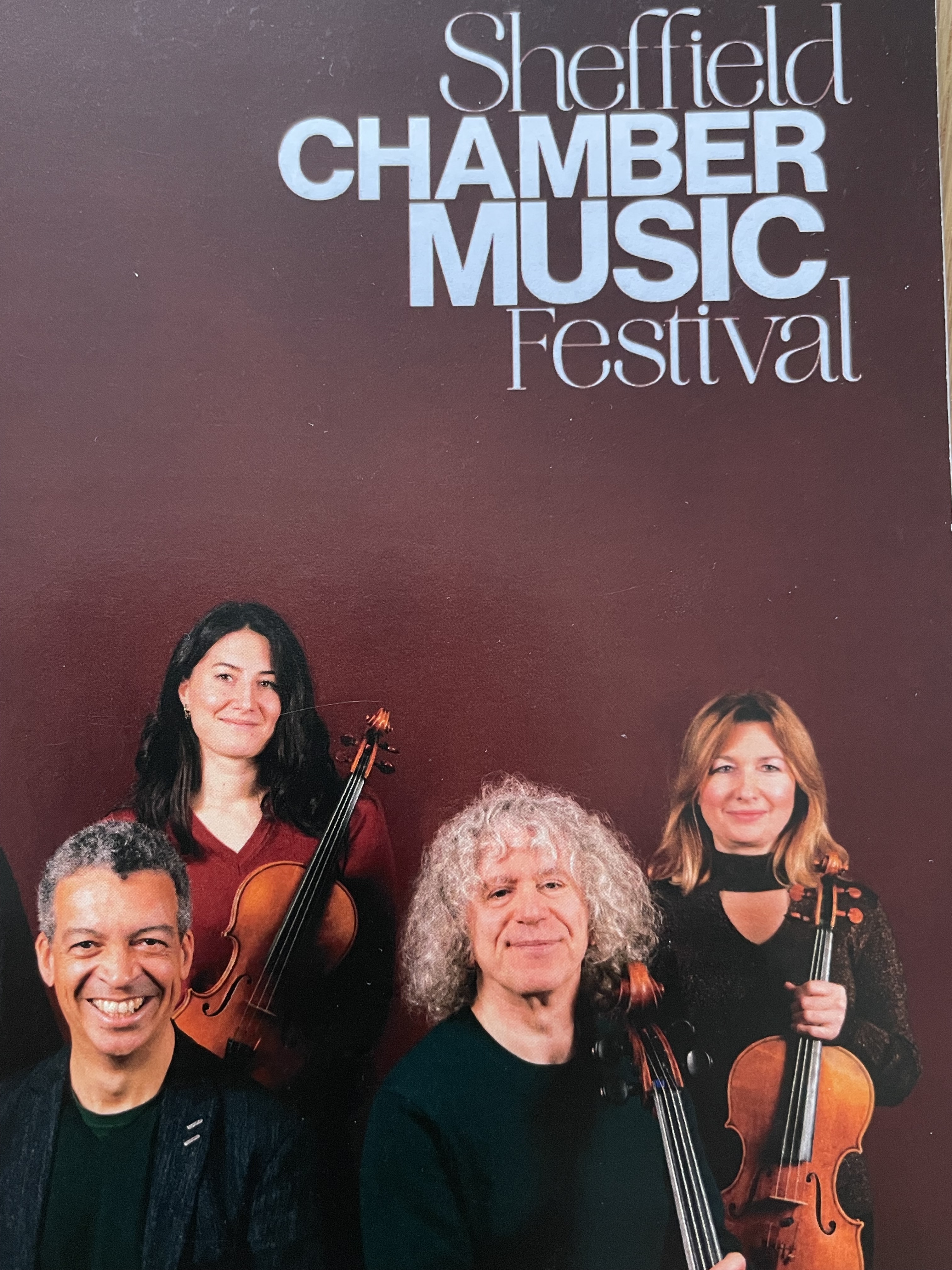
Music in the Round is always a huge part of my musical year. It started off with a concert in the Upper Chapel (Koechlin, Tomasi, Lutoslawski, Poulenc) and then the Steven Isserlis curated Chamber Music Festival in mid-May celebrated Fauré’s centenary with a packed week of gigs, mainly at the Crucible Playhouse. I got to five of the concerts, and heard music by Ades, Bach, Farrenc, Faure, Franck, Holmes, Messager, Onslow, Ravel, Saint Saens and Tchaikovsky, performed by Ensemble 360, with Isserlis, Peter Hill, Abbeydale Singers, Ella Taylor and Anna Huntley. And then Kathy Stott launched the autumn season with a performance of short pieces by Bach, Boulanger, Ravel, Piazzola, Shostakovich, Rodgers & Hammerstein, Chopin, Fitkin, Shaw, Vine, Grainger, and Grieg. This was part of her farewell tour, with a programme of short pieces – it was wonderfully eclectic and delightful.


We were at the Crookes Social Club for Sheffield Jazz gigs from the Clark Tracy Quintet, Corrie Dick Sun Swells, Hannah Horton Quartet, Adam Glasser, and Soft Machine, the Crucible Playhouse for Empirical with Jason Rebello, Firth Hall for Fergus McCreadie, and the main Crucible Theatre for their 50th anniversary gig, with the Emma Rawicz Quartet and the Tony Kofi Quartet. All were excellent but standouts were Corrie Dicks, Soft Machine and Tony Kofi.


This year’s Tramlines was dry and sunny, for which we were very thankful after last year’s downpour and resulting quagmire. The stand-out performances were from Maximo Park, Dylan John Thomas, The Human League, Sprints and Stars Band. We also saw Bombay Bicycle Club, Coach Party, Example, Flowerovlove, Darla Jade, Jazzy, Miles Kane, Otis Mensah, Harriet Rose, Mitch Santiago, Rumbi Tauro and The View plus brief snippets of The Charlatans, Cucamaras and Paolo Nutini.


And then a new feature on Sheffield’s musical calendar, Richard Hawley’s Rock & Roll Circus – we only went to one of the three nights, but enjoyed Gilbert O’Sullivan, The Coral, The Divine Comedy and Richard Hawley himself. O’Sullivan I remember fondly from the 1970s, when he had a run of hits, all of which he performed here and most of whose lyrics I could recall. His voice is still there (not always the case with performers whose heyday was 40+ years ago) and it was an enjoyable set, if not one that made me want to seek out his newer material. I fell in love with The Coral years ago – that Mersey/Motown blend is joyous and I love them live (I saw them at Tramlines 2022). I was much less familiar with The Divine Comedy’s output (I knew ‘National Express’ of course but little else) but was inspired to listen to more. And Hawley, in his home town, was electrifying, performing songs that featured in the musical Standing on the Sky’s Edge, which played to rapturous full houses here in Sheffield, and less inevitably, replicated that success in the West End.


And a concert at the tiniest venue I know, Café 9. Pre-booking is essential, and reserving seats helpful as one can end up practically knee to knee with the performers – but it’s a gorgeous space, which I discovered last year, and went to three gigs there in fairly quick succession. Just one this year, from Katie Spencer, whose songs draw on her upbringing on ‘the edge of the land’, as one of her songs puts it, on the East Yorkshire coast. She’s a great songwriter, guitar player and singer. She was supported by Gerard Frain, an excellent South Yorkshire singer-songwriter.


For next year I’m checking out the Sheffield Jazz programme and the 2025 Sheffield Chamber Music Festival programme, I’m already booked to see two operas (Weill and Verdi), and we have our tickets for Tramlines in July. And whatever else the year brings, I know it will be full of music.
2024 On Screen – the second half
Posted by cathannabel in Film, Television on December 10, 2024
Most of what I watched at the cinema or at home during the second half of the year is here. It still feels strange to me to be watching the TV on my own. The plus side – no one is going to veto costume drama, literary adaptations or yet another WW2 drama – is very much offset by the downsides of not having someone to talk with about what I’ve just watched, to share the experience with. I’ve found that comedy, in particular, suffers from being watched solo. A few things have overcome that this year, but I’ve abandoned quite a few comedy series because it just felt weird. I’m also less keen on scary movies, for obvious reasons. Even with all the lights on, it’s a lot harder to shake off the creepy feeling if there’s no one to have a mundane conversation or a laugh with. With all that said, film and television take me outside of my own environment and my own company, broaden my mind (at best) and horizons, and (at best) lift my spirits. I’ve omitted from the account below things that were just ‘meh’, things that I abandoned after one or two episodes, and season x of things that I’ve been watching for a few years.
Big Screen
Most of the films in this half of the year were actually seen on the smaller screen. At the cinema I saw Radical, Electric Lady Studios, Gladiator II and Conclave. And perhaps fewer of the films were truly outstanding – I think I’d had a run of really top-notch films in the first half of the year. Which doesn’t mean there aren’t some absolutely excellent ones here – Anatomy of a Fall, Blitz, Conclave and Lady Macbeth stand out but I’d pick Perfect Days as my favourite (partly because it was so unexpected).
All About Eve (1950)
I have seen this before, obviously, but not for a very long time. There was a period in my twenties (I think) when there seemed to be Bette Davis movies on every Saturday afternoon, and it was glorious. I caught the second half of her earlier film Dark Victory just before this one, and it was instructive to see how things had changed – DV was very stagey – lots of big gestures, AAE much subtler and darker (I thoroughly enjoyed both). AAE is so well known that I can’t imagine watching it without knowing what Eve is up to, but whilst there isn’t that potential element of surprise, it’s still gripping to see how it all plays out, and the performances from Davis, Anne Baxter and Celeste Holm, are superb.
Anatomy of a Fall (2023)
I saw Sandra Huller in Zone of Interest not long before I watched this – she’s remarkable in both films. In many respects this is a classic mystery – a man falls to his death, but did he jump, fall by accident or was he pushed and if so by whom? We don’t really know till the end – even then I wasn’t totally certain I had put the pieces together correctly, so it merits a re-watch. Whilst that puzzle is the plot, what makes the film great is the drawing of the characters, especially Huller’s character Sandra, and how we see them from different points of view as the investigation continues. Excellent, gripping stuff.
Belle (2013)
I wanted to love this, and I certainly liked it, but it was somehow underwhelming. I’m not sure why. The story should be compelling enough, the performances are fine, but it was perhaps too conventional in its approach, and the parallel story of the Zong massacre needed more development (not just exposition) to be as powerful as it deserved.
Black and Blue (2019)
Cracking action thriller – shades of ’71 and Assault on Precinct 13 at times – with Naomie Harris as the Afghanistan vet newly recruited to the New Orleans PD only to find herself isolated from both the black community she grew up with and her new ‘blue’ community of cops. It hints at deeper issues (race, police corruption post-Katrina) but that’s not really what we’re about here – it’s a thrilling ride, and the tension ramps up quickly and then doesn’t let go.
Blitz (2024)
McQueen weaves a number of real stories – some very specific, like those of the Nigerian ARP Warden, and Ken ‘Snake-hips’ Johnson who died at the Café de Paris, others more representative, like the criminals who profited from the Blitz by robbing bombed buildings, or the firemen struggling to get the water through their hoses with the Thames at low tide – into his tapestry of life in the East End of London at the height of the Blitz. Saoirse Ronan is wonderful, as she always is, Paul Weller is excellent in an understated role as her dad, and Elliott Heffernan outstanding as 9 year old George. In many ways, it’s quite a traditional narrative, invoking – inevitably – other treatments of the era (Atonement, very specifically). (I was puzzled though by reviews which suggested The Railway Children as a reference point – aside from the fact that Blitz features (a) trains and (b) children, I see no real relationship there.) But McQueen’s visual imagination, and the way Hans Zimmer uses sound, go beyond that traditional approach. And the thread running through it all is that we are seeing the people that the traditional narrative of the Blitz and of ‘Blitz spirit’ left out, particularly the black Londoners. (See also Lucy Worsley’s documentary, Blitz Spirit, on iPlayer, which covers some of the same territory, almost certainly through many of the same sources.)
Bombshell (2019)
See also She Said, from 2022 – both films tell part of the #MeToo story. Bombshell is an account of how Roger Ailes, serial sexual harasser and bully at Fox, was brought down as the women started to talk, to each other and to lawyers. Whereas She Said is from the perspective of the journalists looking to uncover Harvey Weinstein’s regime of abuse, here we see things from the point of view of the women who may have prospered professionally but had to endure years of humiliation and the constant awareness that his favour was on a whim and could be withdrawn at any time. These are nuanced portraits, showing how so many women in the workplace survive by constantly masking, adapting, smiling, conforming, until they can’t do it any more. Variety‘s reviewer said that ‘Bombshell is a scalding and powerful movie about what selling, in America, has become. The film is about selling sex, selling a candidate, selling yourself, selling the truth. And about how at Fox News all those things came together’.


Carol (2015)
Superb. Blanchett and Mara are wonderful, both complicated, difficult to read, so that they continue to surprise us. The film always looks fabulous, but there’s a sense that we’re seeing surfaces, public personae, and that so much is hidden, as it had to be.
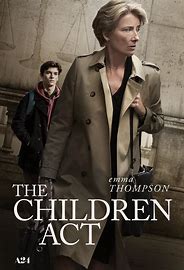
The Children Act (2017)
Good, solid adaptation of an Ian McEwan novel (one that I haven’t read). As in so many of McEwan’s books and films, the protagonists inhabit this very cultured, privileged world (everyone is a lecturer, a lawyer, a writer, with a big London house), and I do sometimes find that trying. But the ethical and philosophical questions with which Emma Thompson’s lawyer grapples are fascinating and she is excellent, as is Fionn Whitehead as the boy at the heart of that dilemma.
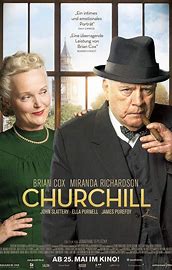
Churchill (2017)
With Brian Cox and Miranda Richardson as Winston and Clemmie, this should have been decent at least. But it wasn’t. The portrayal of Churchill was a caricature, his actions frankly unbelievable (seriously, on his knees praying for bad weather so that the D Day landings could not go ahead?) and his motivation opaque. One reviewer described it as ‘uniquely awful and tedious’. And from everything I have read, it is historical nonsense.
Coco (2017)
Top-notch Pixar. The animation is stunning, the folklore around the Day of the Dead is explained enough for the story to work, without weighing things down with exposition, the songs are great, and the ending made me weep. The notion of people dying finally when no one living still remembers them, was bound to connect with my own experiences of bereavement, and perhaps particularly with the long, slow bereavement of dementia… (Pixar’s previous excursion into the afterlife, Soul, drew on a whole different set of ideas and cultural traditions, but was also very touching, and very musical.)
Cold Comfort Farm (1995)
Gloriously funny adaptation of a gloriously funny book. A collection of superb actors, having enormous fun – Ian McKellen as the spiritual leader of the Quivering Brethren, Rufus Sewell, Eileen Atkins, Stephen Fry and more. And Kate Beckinsale is a joy as Flora Poste. I laughed out loud, quite often, which is something I find I don’t do so much these days, now I’m on my own. It felt good.
Colette (2018)
Good, solid biopic, focusing on the sexual politics of the time, with excellent performances from Keira Knightley and Dominic West.


Conclave (2024)
Based on the Robert Harris novel, this subtle, clever thriller (a thriller full of drama but largely without big dramatic incident) takes place entirely within the Conclave, the locked-down part of the Vatican where the assembled Cardinals meet to choose a new Pope. With each vote the picture changes, certainties are eroded, new threats emerge and predicting the outcome would be a fool’s game. The Guardian‘s review is very positive about the film, but its first paragraph gets in a fair few snooty put-downs for the source novel (‘easily devoured’, ‘pulpy’, ‘beach read’, ‘pot-boiler’ – yes, we get the picture, but the book is far better than that, IMO). Berger’s adaptation holds the attention throughout and touches on a whole host of questions from the world outside the Conclave that are reflected in the conflicts within it. The performances are superbly understated – Ralph Fiennes as Cardinal Lawrence, playing detective whilst wrestling with his own ambition, Stanley Tucci as liberal Cardinal Bellini, John Lithgow as the more obviously machiavellian Cardinal Tremblay and Lucian Msamati as Nigerian Cardinal Adeyemi, representing an increasingly powerful force in the Church – and then there’s the new guy, who’s appeared from nowhere. Isabella Rossellini leads the Sisters, who feed the Cardinals, but don’t get a vote. There’s a wonderfully atmospheric soundtrack, and clever use of background sound – dramas that happen off-screen and are only imperfectly overheard, even the sounds of breathing and papers rustling claim our attention in this largely still space. And, with commendable restraint, I have waited until now to mention, just in passing, that my brother is present on screen in a number of key scenes, as one of the assembled Cardinals (a non-speaking role but, I feel, crucial). With even more commendable restraint, I did not cheer or nudge the person in the next seat to say ‘look, that’s my brother’, but I was very excited.
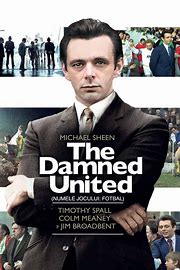
The Damned United (2009)
Martin Sheen does a superb job of playing Clough, at his most truculent and bloody-minded. Whether it is entirely accurate is another matter, but it rings true, and conveys something of the reality of 1970s football (I know, I was there. Not at Elland Road or the Baseball Ground, but at the City Ground, both before and during Clough’s reign there).
The Edge of Love (2008)
Keira again, this time with Sienna Miller as the lover and wife respectively of Matthew Rhys’s Dylan Thomas. I didn’t quite believe in this version of Thomas – somehow, despite being better to look at than the real thing, the source of his attractiveness to these two women was unclear. So this was perhaps a miscasting – Miller and Knightley on the other hand dominate the film.
Electric Lady Studio (2024)
Excellent documentary about Hendrix’s Electric Lady Studio, completed only a short while before his death but which seemed to embody his dream of a place devoted to making music. Lots of interviews from people who knew and worked with Hendrix, lots of clips that I’d never seen before (despite having been immersed in Hendrix’s music for over fifty years).
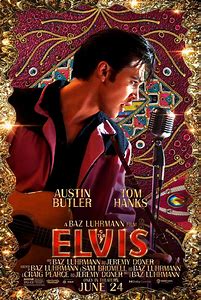
Elvis (2022)
Austin Butler’s performance is glorious, I’m less sure about Hanks, who seems to veer towards caricature, but given that the film does not aspire to straightforward biopic realism, maybe that’s what was intended. But overall, the film was hugely entertaining and whenever Butler was on screen, I was mesmerised.
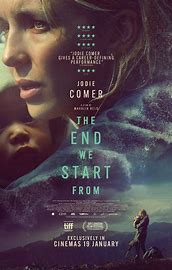
The End We Start From (2023)
The brilliant Jodie Comer in a disaster movie setting, where catastrophic flooding leaves her homeless with a new baby, negotiating a highly dangerous world to find her way to safety. My only problem was that I could not quite switch off the part of my brain that was constantly asking boring practical questions about how the baby always had clean clothes, etc, which wasn’t really the point. It was more about how quickly the infrastructure of society crumbles, and how everything that we count on becomes uncertain and perilous (see also Threads, below…), and how in the face of all that, one might survive.



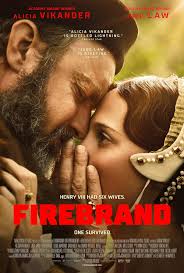
Firebrand (2024)
The film does warn viewers that history tends to leave a lot of gaps when it isn’t covering men and wars, and that those gaps may be filled with – sometimes wild – speculation… But it’s pretty plausible, for the most part, and much of what we see on screen is well-documented, and familiar from various ‘Henry & the Six Wives’ dramas on TV and film. Alicia Vikander is excellent as final and surviving wife Catherine Parr, as is Jude Law in a vanity-free portrayal of the King (those wobbly buttocks – surely not Jude’s?). I’d just finished watching the first series of Wolf Hall and what came across in both treatments was the constant fear in which one would have lived if one was close to the King – enemies constantly circling and seeking their opportunity to strike, and the King himself, mercurial and volatile, believing absolutely that he is absolutely right. This fear is written on Vikander’s face, as it was on Claire Foy’s as Anne Boleyn.
Gladiator II (2024)
I enjoyed this enormously. I’m not as passionate about the first film as some, I’ve only seen it once and that a while ago, so I wasn’t as conscious of all of the references and echoes as its true devotees would be. So it may be that I enjoyed it more for being able to take it on its own merits, rather than comparing it. I also had forgotten that in GI, Lucius is not Maximus’s son – or not known to be. Perhaps having carelessly disposed of Maximus’s actual son in GI, Ridley Scott realised he had missed a trick and retro-engineered an earlier relationship between Maximus and Lucilla that resulted in Lucius’s birth. Other than that, even with my less than total recall of GI, it was obvious that the plot of this film followed the same pattern as that of the first, and so there was a certain lack of suspense (there was never any real possibility that Acacius’ coup would succeed, or that the two armies facing each other at the end would decide to fight rather than uniting around Lucius). But the set pieces were spectacular (those baboons really spooked me and my one, terrifying encounter with a baboon on a path at a wildlife reserve in Nigeria, has been popping back into my mind rather a lot – he clearly wasn’t in the mood for ripping little girls’ throats out, so whilst I stood frozen with fear, he just ambled off), and the performances were great – Denzel Washington’s in particular, and Paul Mescal was charismatic without merely being a Russell Crowe #2.
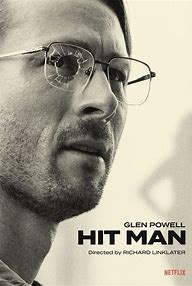
Hitman (2023)
Highly entertaining, based (loosely) on a true if improbable story. Also somewhat improbable is that the hero, as portrayed by Glen Powell, is supposed to be the kind of bloke that fades into the background…
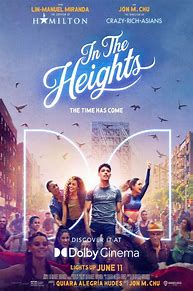
In the Heights (2021)
Fabulous, touching, ultimately uplifting and joyous musical from Lin Manuel Miranda.
Inside Out 2 (2024)
It was never going to have quite the impact of the first film, but introducing the maelstrom that is puberty brings in a whole lot of new emotions. Anxiety, oh, how well I know you… It’s clever, witty and has a lot of heart.
Joy (2024)
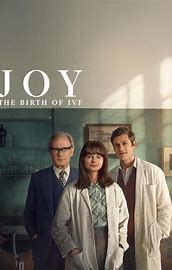
The story behind the birth of the first IVF baby, Louise Brown. It’s a straightforward narrative, with nice period details, and excellent performances from Thomasin McKenzie (so good in Life after Life and Leave no Trace) as Jean Purdy, the third and until long after her death unsung member of the team, along with James Norton as the research scientist and Bill Nighy as the surgeon. It’s low-key but Purdy centres it on powerful emotions – her own and those of ‘the Ovum Club’, the women who sign up to be, essentially, experimented on in the hopes that they might become pregnant at last. Every failure in the lab is a heartbreak for one of them. But we know that one of these women will have their baby, and in that climactic scene, with the sound of Vaughan Williams’ The Lark Ascending on the gramophone, I was swept away by my own memories, and by thoughts of all the women I’ve known who had their longed-for babies thanks to this pioneering work.


Kingdom of the Planet of the Apes (2024)
Fourth in this fine series, with stunning CGI. Could be the start of a second trilogy rather than an addition to the first, given the time that has elapsed since the events of War for, and the world we’re in now presents new threats and challenges to both apes and humans.
Lady Macbeth (2016)
Florence Pugh is magnificent (when is she not?) and terrifying. Especially when she smiles, or giggles. She’s more often impassive, but behind that mask there is desire, and rage. We sympathise, a young woman effectively imprisoned in the house by her father-in-law and her husband, neither of whom is remotely interested in her well-being. And then her jailers unwisely leave her unattended for a while, and things get messy, very quickly… The Guardian‘s reviewer said that ‘As Katherine, Pugh has the vaulting ambition of Shakespeare’s character (a single line, “It is done”, pays homage to the great ancestor), also the Flaubertian yearning of the passionate woman subjected to the bourgeois tyranny of wifehood, as well as the modern noir obsession and criminal daring that begins to assume its own momentum. Katherine has cunning and a talent for survival. She starts out Madame Bovary, and winds up Mr Ripley.’
The Last Duel (2021)
Jodie Comer again, with Damon and Driver, in a story about property and law and revenge – and rape. Any film set in medieval times falls prey to the Holy Grail problem – it is impossible not to find lines from that film popping into one’s head, quite inappropriately, as one bloke in armour rides up to the castle and demands entry, or whatever. Once one has acknowledged and dismissed this as best as one can, there’s a cracking drama going on, with an absolutely fascinating view on sexual politics. It’s extraordinary, that what one might imagine to be a liberating belief, that the woman’s pleasure is central and crucial, becomes just another way of constraining women. The film uses the Rashomon device so that we see events first through Matt Damon’s boorish squire/knight, Marguerite’s husband, and then through Adam Driver’s caddish but cultured le Gris and only then as Marguerite experienced them. Le Gris’s chapter is particularly interesting – does he truly believe, as his later behaviour suggests, that no rape occurred? Certainly from the viewer’s perspective there is not a shred of doubt.
Lola (2022)
Fascinating low-budget sci-fi/alt history film about two orphaned sisters who build a machine that can pick up broadcasts from the future. There’s a lot of fun with this, as they discover Bowie, several decades ahead of time, but then things turn darker as the war begins and their machine can serve a different purpose. It’s black & white, ‘found footage’ (although one wonders with some parts of the film who exactly was filming and how), with a fragmented narrative structure. It’s really sharp, original and engaging.
Men (2022)
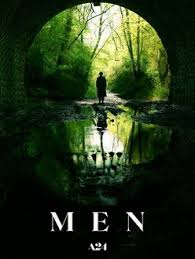
Jessie Buckley is traumatised after the shocking death of her husband and so relocates to a big empty house in a village in the countryside, where she knows no one (as you do…). Everyone here is creepy AF, and they all look like Rory Kinnear (which is not the same thing) and things get creepier and bloodier and grosser and who knows what the heck it all adds up to in the end. The men Buckley’s character, Harper, meets start off just as a bit patronising, and end up full-on murderous, and the title does seem rather as if it’s talking about Men (yes, in this film at least, all men), not just these men. It’s not an ideal film to watch whilst alone (albeit not in an unfamiliar house in a remote location) but by the time we reach the indescribable concluding section, we’re way beyond unease and feeling a bit creeped out, and it’s not so much scary as extremely hard to watch (and impossible to unsee). Bonkers.
Midas Man (2024)
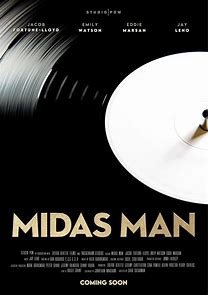
Excellent biopic of Brian Epstein, very well cast and imaginatively presented, with a bit of fourth wall breaking as we whizz through the years. Does it tell us anything new? Well, that depends on how familiar we are, I guess, with that story – I’ve read loads and watched loads and there wasn’t anything dramatically new, but it was very enjoyable. The only problem was that they didn’t have the rights to use any Beatles compositions so the uninitiated might come away with the impression that they were a covers band…


Mr Klein (1976)
I’ve been trying to track this film down for years, and finally managed to rent it (probably it resurfaced after the death of its star, Alain Delon). Delon plays an unscrupulous art dealer, who is happy to obtain artwork at knock-down prices from Jews desperate to get out of Occupied Paris, until a chance event links him to another, Jewish, M. Klein. It reminded me very much of Arthur Miller’s novel, Focus (see my books blog), in which a personnel manager gets a new pair of glasses which make him look Jewish and how his life unravels from that moment. Of course, whilst Miller’s character encountered violent bigotry, M. Klein faces death. Absolutely fascinating film.
Mrs Harris goes to Paris (2022)
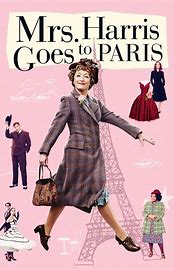
Utterly charming, utterly improbable, Paddington-esque tale. Lesley Manville is as brilliant as always, Isabelle Huppert is great too, bringing her trademark icy charm.
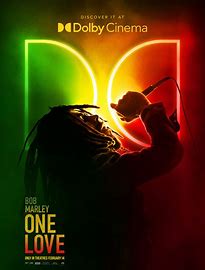
One Love (2024)
Kingsley Ben-Adir is great, but I have a biopic problem, in that, as wonderful as the performance may be, I’m still seeing it, ultimately, as an impression, a set of learned mannerisms, and my belief is sadly unsuspended. But given that – which I guess is a me problem – it’s pretty good, and I was pleased to see appropriate prominence given to Marley’s religious beliefs, and his character not overly sanitised. And of course the film is full of the most wonderful music.
Operation Mincemeat (2021)
One of those ‘you couldn’t make it up’ wartime stories, which I’d read about in Ben MacIntyre’s account. It’s a good, solid tale, well told.
Perfect Days (2023)
A near perfect film. If someone had told me I would say that about a film whose action takes place for the most part in Japanese public toilets, I might have been slightly sceptical. But it is quiet and gentle and perceptive and very beautiful and all I can really say is, watch it, if you get the chance.
Radical (2023)
This was walking a very fine line, between Season 4 of The Wire unbearably bleak, and unbearably sentimental. And it walked it just about right. Tales of an inspirational teacher who reaches the unreachable kids are always prone to idealisation (e.g. To Sir with Love), but this was closer to Entre les Murs, in which the teacher is shown not always to get it right, not to be able to reach everyone. And the situation of the kids he teaches is brutal and heartbreaking, but we know – because this is a true story – that some did make it, largely thanks to him.



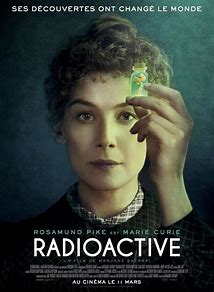
Radioactive (2019)
Rosamund Pike is excellently spiky and ‘difficult’ as Marie Curie. Whilst I’d grown up with the story of Marie Curie, I’d never heard about her work in WWI, setting up (with her daughter) a mobile X ray unit, which enabled many unnecessary amputations to be avoided, and many lives saved. I’m not entirely sure though about the intercutting with various vignettes showing the impact – for good or ill – of the Curies’ work, which seemed a bit on the nose.
The Red Shoes (1948)
I can’t excuse the fact that I hadn’t seen this before – not only as a massively famous and highly regarded movie, but also because I love Powell & Pressburger. So, mea culpa and all that. But I have now, and I’m besotted with it. I also watched a fascinating documentary, Made in England, with Martin Scorsese talking about Powell & Pressburger which gives some fascinating background to this and their other wonderful films. Scorsese described The Red Shoes as ‘wildly inventive, complex and not at all comforting’, which hits the spot, I think.
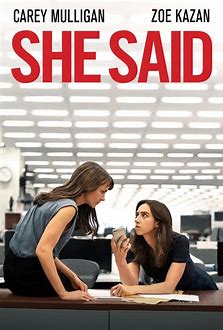
She Said (2022)
See also Bombshell, the first film to tell the story of #MeToo. She Said shows the exposure of Harvey Weinstein through the work of journalists who tracked down the women he’d assaulted, all of whom were afraid to speak, and many of whom had been coerced into signing NDAs, and accumulated the evidence until it was impossible to ignore it. It’s a sister film to Spotlight, and similarly eschews melodrama for a portrayal of the slog and frequent discouragement of this kind of investigative journalism.
Wicked Little Letters (2023)
A gloriously wicked little film, with Colman and Buckley having a splendid time with their respective roles, as (seemingly) buttoned-up spinster and floozy.
Wind River (2017)
A very bleak tale set in a wintry Wyoming, where a Native American girl has been found dead, and she’s not the first. It’s a brutal, bloody tale, and makes it central point well, that Native American women and girls are not even monitored, unlike those in other groups, let alone properly investigated.
Woman of the Hour (2023)
Really disturbing account of a (real) serial killer who ended up as a contestant on a dating show. Tonally it’s really interesting – the section where we see the programme being filmed is funny and skewers the casual sexism of the presenters and the male contestants, but all the while we know, as Anna Kendrick’s character doesn’t, what one of those contestants has already done. The crimes themselves are shown quite graphically, which makes that part of the film really intense even whilst we’re briefly distracted by Kendricks’ attempts to subvert the format. (PS: Having seen a few series of Married at First Sight (no intervention required, I have kicked the habit now) the idea of a sociopath – or worse – participating in a show of that sort doesn’t seem the slightest bit improbable.)



Small Screen
The usual mix of crime drama (perhaps slightly more true crime – M was never as keen on those), sci-fi/fantasy, thrillers, historical drama, etc. Top sci-fi this half-year is Supacell, top crime Sherwood, true crime Five Days at Memorial, historical Wolf Hall: The Mirror and the Light, and drama, Mr Loverman. Of the documentaries, David Olusoga’s A House Through Time: Two Cities at War stands out. As always, I haven’t reviewed all of the programmes I watched – there were new series of Shetland, The Tower, DI Ray, The Lincoln Lawyer, All Creatures Great & Small, Slow Horses, Vienna Blood, McDonald & Dodds and Midsumer Murders, all ranging from serviceable to superb, which don’t feature below, even though Slow Horses is one of the best things ever (it’s just that it gets a bit tedious to ‘review’ it when all I’m really saying is ‘this is one of the best things ever), and All Creatures is massively important to my mental well-being (particular given the somewhat grim cast of a lot of my watching). And if I started something but abandoned it, you won’t see that recorded here either. I’ve tried to avoid spoilers but you should proceed with caution.
Drama
Agatha All Along
Marvel TV hasn’t given us much that’s really great recently, but this is both huge fun and packs an emotional punch – it follows on from Wandavision, which we loved. Kathryn Hahn is a powerhouse in the lead role. And it’s got a song that’s firmly stuck in my head. And it’s a female dominated storyline (because, witches), like The Marvels but unlike most of the rest of the franchise.
The Claremont Murders
Australian true crime, about a series of murders of young women and the lengthy failure to find the perpetrator (DNA was the breakthrough here). It does give due weight to the effects on the families of the victims, although at least one family member said how traumatic he and others had found the programme. It’s a question that surely must occur with all these true crime dramas where relatives are still living, and some are easier to defend than others, if they shed new light in some way. This is a fairly middle of the road example, but well enough done.
Day of the Jackal
Forget Edward Fox and de Gaulle – here’s Eddie Redmayne in a Mission Impossible style mask with impossible feats of marksmanship, being pursued by Lashana Lynch’s intelligence officer. Glamorous locations, high speed chases, lots of tech, and a thoroughly entertaining few hours. The Jackal and his nemesis are actually more balanced than in the original film – her moral boundaries are shown to be pretty movable, and the question of whether/how one could have a family in their line of work is pressing for both. I don’t think for the most part, however, we are overly concerned with those deeper questions…
The Devil’s Hour
Very, very unsettling. Superbly played by Capaldi and Jessica Raine in particular. I won’t even begin to talk about the plot – you have to just watch it and trust that some of it will start to make some sense, in due course. Once the pieces start to fall into place, it’s still complicated, not just plot-wise, but emotionally (it reminded me of The Lazarus Project). Completely compelling and rather disturbing.
The Diplomat
Series 2 is even more fun than the first and ends with an even more dramatic cliff-hanger. Along the way there’s a lot of fun at the expense of Keri Russell’s Ambassador and her failure to look ambassadorial (I must admit the thought that she surely ought to be able to use a hairbrush occasionally had occurred to me a number of times). Rory Kinnear is brilliant as the boorish UK PM.
Discovery
The final series of Star Trek: Discovery. I loyally watched to the end, but it sustained the kind of annoying tropes that have somewhat spoiled my enjoyment throughout – the idealisation of Captain Burnham, particularly given where she started, is cloying, all of the core crew are straight-up heroes, and there are too many deaths/departures which turn out to be rather less than final. The third point is a common issue with sci-fi/fantasy – after all, if you can reverse death, why wouldn’t you? – and sometimes it is done well, for a purpose, sometimes it’s a kind of ‘have your cake and eat it’ thing, milking the death/departure for viewer tears and then bringing them back to have another go. Discovery tends very much to the latter. Strange New Worlds is far superior, and I look forward to its return.


Douglas is Cancelled
This wasn’t quite what I expected. It was billed as a comedy, for a start, and played as such initially. But the central, crucial episode, set in a producer’s hotel room, is as far from comedy as one could get. It’s deeply uncomfortable to watch and makes the humour in the remaining episodes very dark indeed. Karen Gillan is superb.
Ellis
Whilst there are a heck of a lot of crime series around, some of which are hard to remember after they’ve finished, this one plays on the strength of the lead, Sharon D Clarke, so wonderful in Mr Loverman (see below). And there’s depth to that character, and to her sidekick, so if it gets a second series I’m in.
Elsbeth
Quirky and entirely formulaic crime show which some found intensely irritatingly, but which I rather enjoyed. It’s what they call cosy crime, and there’s no ‘whodunnit’ element – we see who dunnit, we’re just waiting for Elsbeth to work it out, in various quirky ways.
The End of Summer
Twisty, dark thriller. The lead character was frustrating – I do wish from time to time we’d have protagonists in this kind of narrative who actually do their job, without huge lapses into unprofessional behaviour, there must be plenty of those around, and the plot was interesting enough without me having to shout ‘Oh, you are kidding me’ at the screen quite so often. But along the way it was atmospheric, and the twists were well handled and not merely gratuitous.
Eric
Bonkers. A mad cross between Harvey and a very dark tale of mental breakdown, political corruption and homelessness. Cumberbatch is excellent as the children’s TV puppeteer who manifests (or does he?) a new puppet to assist when his son goes missing. If that description sounds too silly to bother with, do give it a try; even if it doesn’t always manage its disparate elements perfectly, it’s never less than compelling. As the Independent reviewer said, ‘Even though the shadow of Big Bird hangs over the series like a, you know, big bird, there is a dark, misanthropic streak to proceedings. Much of the action takes place in New York’s murky, subterranean underworld, but the real sewer runs through the establishment. This is a depraved world, where even that most innocent of things – a children’s TV character – has to spit feathers to right wrongs’.
Everything you Love
Interesting Scandi drama about far-right radicalisation through the story of a young couple meeting again after a long gap, falling for each other, until the young man’s extremist views and actions fracture the relationship. Very well played by both the leads, it leaves a lot of questions unanswered, but that’s fair enough – a tidy resolution would be unrealistic and any neat answer to the question of how/why young men (in particular) are drawn to violent extremism is not yet forthcoming.


Five Days in Memorial
Absolutely riveting account of what happened in Memorial Hospital during Katrina. Initially it’s a fairly straightforward disaster movie scenario, but whilst initially we identify both with the patients and the medics and other staff desperately trying to do their jobs in impossible circumstances, gradually another strand emerges. People start talking (in corners, a bit sotto voce) about making certain patients who would be difficult to evacuate ‘comfortable’, about not leaving ‘any living patient’ behind, and these coded conversations lead to the decision to euthanise a number of those patients. The series then follows the investigation into what happened, and the eventual suppression of legal action against the doctors involved. It doesn’t give easy answers, it’s not good doctors and bad doctors, and one is reminded constantly that at the point when these decisions were taken, there was no certainty of the timescale for rescue, or even whether any rescue would come. Powerful stuff.
Funny Woman
A 60s pastiche about 60s TV and Gemma Arterton’s funny woman. It manages to avoid too crudely overlaying contemporary sensibilities on the characters and setting, though the tone varies considerably, from moments where the ‘real life’ action is as daftly farcical as that in the fictional sitcom, to dealing head on with sexual assault, the policing of homosexuality, and racial violence. A glorious soundtrack made up of the usual suspects but also quite a lot of much more obscure tracks.
A Gentleman in Moscow
Fabulous adaption of the Amor Towles novel, with a lovely performance from Ewan McGregor in the lead, and great support from Mary Elizabeth Winstead and Johnny Harris. Often touching and funny but with a constant undercurrent of dread. The action remains – until almost the end – confined in the Metropol Hotel, like Count Rostov, but what’s going on outside of the hotel’s walls is constantly impinging and forcing its inhabitants to adapt.
The Hour
Drama series about a current affairs TV programme in the late ‘50s, with an absolutely stellar cast – Romola Garai, Ben Whishaw, Dominic West and others. It only got two seasons, which was a shame – I thought it was excellent, and would have loved to see it follow these characters through into the ‘60s.
The Jetty
Jenna Coleman as a cop whose investigation of a current case opens up questions about an old missing persons case, and about her own late husband. Coleman is good, but I found myself frustrated (again) by how unprofessional her character becomes and how quickly, and also by the piling up of twist/reveals in the final episode.
Justice: Those who Kill
The world’s worst criminal profiler is still at it. Either she’s stating the bleeding obvious, or she’s barking up entirely the wrong tree – but here she is, called in again on a tricky gang violence case. It’s all entertaining enough but I keep wanting to shout at them, ‘don’t listen to what she says, she was shagging the perpetrator in her last case but one’…




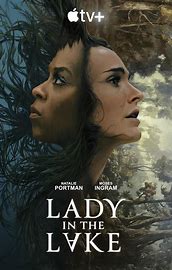
The Lady in the Lake
A superb adaptation of Laura Lippmann’s excellent thriller, with Natalie Portman and Moses Ingram as the two very different women whose lives intersect unexpectedly. It’s set in the civil rights era and confronts the racial and gender oppression of the times. It isn’t afraid of deeply uncomfortable moments – such as Portman’s Maddie’s assertion that in other circumstances, she and Cleo could have been friends. ‘And what circumstances might those be?’, asks Cleo, to which Maddie has no answer. Along with all of this, and there’s a lot going on here, as the Guardian reviewer put it, ‘Lady in the Lake is also an incredibly sumptuous and fearless aesthetic experience, combining not just the meticulous recreation of the 60s, but also of Cleo’s childhood in the 40s and Maddie’s formative experiences a decade or so later. It uses dream sequences, musical interludes, flashbacks and assorted other devices that in lesser hands can be – and frequently are – mere irritants to flesh out its characters and questions more fully.’
Last Days of the Space Age
I had hopes of this being a good deal more interesting than it turned out to be. It’s too soapy, too formulaic, and glides over a lot of the issues it raises. Fun enough, but it could have been so much more interesting – the context, 1970s Australia, and the interweaving stories about industrial unrest, burgeoning feminist and First Nation activism, Vietnamese refugees, seemed to have a lot of potential.
Mr Loverman
Beautiful, funny version of Bernardine Evaristo’s book, with wonderful performances from Lenny James, Sharon D Clarke and Ariyon Bakare, among others. It doesn’t oversimplify the issues – Barry (aka Mr Loverman) has lied for his whole life, and that’s cheated his wife Carmel of the life she might have had, which in turn has embittered his daughter Donna… And yet, and yet… It’s a moving portrayal of an enduring and tender love, which was hidden because it had to be, until the weight of the years of lying seemed too heavy to shift.
Ludwig
More so-called ‘cosy crime’. There’s quite a bit of humour in David Mitchell’s character impersonating his own missing twin, and in his general nerdiness, and the puzzles are clever and intriguing. With Mitchell & the incomparable Anna Maxwell Martin, and solid back-up from the rest of the cast, it’s thoroughly enjoyable. I do dislike the word ‘cosy’. I know what it means in this context – there aren’t going to be graphic crime scene images, plots revolving around historic sexual abuse in children’s homes or rape/murders, and the detectives aren’t going to be burdened with massive trauma. And that’s fine – these dramas focus on the puzzle, usually less explicitly than Ludwig, rather than on the tortured motivations of the perpetrator. I wouldn’t want my crime fiction to be all cosy, however – and I do think the label is misused sometimes (I saw Shetland so described the other day, which I don’t think is right, as that series is more than capable of being gritty and dark). But Ludwig is great, and I look forward to the next series.
Man on the Inside
I love Ted Danson. For Cheers, obviously, but more recently for Fargo and The Good Place. And here he’s with Michael Scher, the writer for The Good Place, and it’s an utterly charming and funny tale of a widower going undercover at a retirement home. It manages to be very touching too, without sentimentality.
Nightsleeper
Don’t fret about plot holes. Just enjoy the ride, let the momentum of this thriller take you forward, breathless, until the final credits roll. There will be plenty of time after that to ponder the improbabilities/impossibilities involved.


Orphan Black – Echoes
It didn’t stand up to the original – how could it, especially without Tatiana Maslany – but it does develop the clone plot and takes it to some different places. It took me a while to get my head around where/when/who but once I’d got there it was gripping stuff, and I’m hoping for a second series.
The Perfect Couple
Slick crime drama set amongst some of the least likeable people one could imagine, even if it does dig below the glossy surface a little. Kidman et al are super rich, super brittle, and entirely engaged in maintaining the said glossy surface at all costs. One doesn’t really end up caring about any of them, but it’s entertaining in a beach read kind of way.
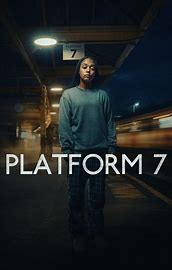
Platform 7
I loved Louise Doughty’s book, but this didn’t quite work as TV. Given that our protagonist is (SPOILER ALERT) a ghost, this forced her to spend much of her time observing events, and looking sad/anxious/angry, rather than participating or even influencing. As a powerful depiction of coercive control though, it worked very well indeed.
The Project
Lord, this was an uncomfortable thing to watch just after Labour’s election victory. The first part is set in the build up to the 1997 landslide, the second just afterwards, and it shows a number of young activists gradually confronting challenges to their ideals and their relationships. As the director, Peter Kosminsky, said, ‘After so many years of Conservative government, they believe anything that puts Labour back in government is acceptable. But be careful what you wish for’.
Rings of Power
Better than the first season but still flawed. Too much happening, so that the finale was rushed and perfunctory in relation to some of the narrative strands. And rather clunky in the way it reconciled what we see in the series with what we know from the books/films: the Stranger being called ‘Grand Elf’ and then deciding his name is Gandalf, and Galadriel reminding Sauron that the rings exert power over the wearer, so that you cannot be their master, and then immediately calling him ‘Lord of the Rings’. It’s got the classic prequel problem – everyone has to be manoeuvred into where they need to be at the start of LotR, and we can see the machinery whereby that happens. Along the way, however, lots of powerful sequences, and I’m looking forward to the next chunk of the story.
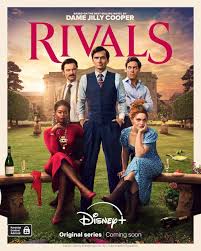
Rivals
Glorious, ridiculous 80s bonkfest. I haven’t ever read any Jilly Cooper so I don’t know to what extent the sexual mores have been adjusted – where they have it appears to have been with a relatively light touch. And whilst sex in general is here treated as desired and enjoyed by both, sexual assault and rape are given a very different treatment. The cast is ridiculously good, and all seem to be enjoying themselves enormously. And it’s rather touching to note that, given the trio of hotness that is David Tennant, Aidan Turner and Alex Hassall, rather a lot of us have fallen for Danny Dyer, despite his wig…




Sambre
Another true crime, this one about a serial rape case in France, viewed through a series of interventions, each of which fails due to prejudice, bureaucracy, incompetence, until a final breakthrough brings the perpetrator to justice. Very well done.
Say Nothing
This is a tough watch. There are moments when the vitality and conviction of the Price sisters sweep us along so we’re almost rooting for them, and then we are reminded of what it is they’re doing, and we’re shaken. Their belief is absolute, they are at war and thus all sorts of things are legitimate – until they are no longer at war, but didn’t win, and so all of those appalling acts were, in their eyes, for nothing. This makes the crisis of faith not primarily about conscience. It is not that Dolours (let alone sister Marian or Brendan) start to believe that they were wrong to kill alleged ‘touts’ (even though she is haunted by some of the deaths of those she drove across the border to be killed), because it is implied that had they won – i.e. the British had departed, and Ireland was united – this end would have justified those means. The heart of the series is the abduction and murder of Jean McConville and it’s not till the end that we get any answers about this – and even then there is the disclaimer on screen, the denial from two of the alleged perpetrators that they played any part in it. But the series perhaps dangerously engages our sympathies for the sisters and for Brendan Hughes, whilst Gerry Adams is played as being duplicitous and cold from the outset. Lola Petticrew as the young Dolours Price is charismatic and vibrant, and Maxine Peake as her older self powerfully conveys the damage, the doubt, the sense of loss that gradually eat away at her after her release from prison. It’s incredibly murky, and probably always will be. I also watched 2018 drama-doc I, Dolours, which covers a lot of the same ground though in less detail.
Sherwood
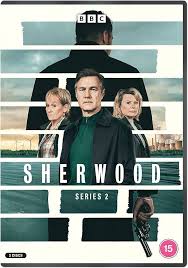
Bloody hell, this was riveting. And for those who thought the plot a little improbable, I know someone who was on the jury when these crimes came to court, and the drama stayed very close to the truth. Monica Dolan was terrifying and Lorraine Ashbourne magnificent, and there were wonderful performances from the rest of the cast too, amongst which I must pick out Bethany Asher in particular.
Show Trial
Michael Socha and Adeel Akhtar carry this, and the drama is most compelling when they’re facing one another across a table, as client and lawyer. I’d watch either of these two in pretty much anything, and they’re both outstanding. The plot, sure, it’s great, but whenever Socha or Akhtar or both aren’t on screen, we’re kind of waiting till they are…
The Silence
Grim Ukrainian/Croatian crime drama about trafficked girls and weapons, corrupt cops and politicians, and general indifference to the fate of dead girls when they’ve grown up ‘in care’. Compelling but exhausting.
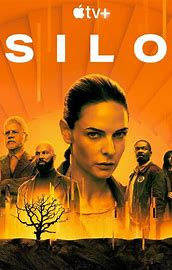
Silo
I was very happy to see this renewed for a second season – we were only just beginning to understand the world of the show, and three episodes into season 2, there is still much to get to grips with, but perhaps most of all, the sense of how elusive and dangerous the truth may be, and what happens when lies are overturned. Rebecca Ferguson is a compelling lead, with great support from Tim Robbins, Common and Harriet Walter (and Steve Zahn in s2). This is proper grown-up, complex, intelligent sci-fi, and it’s proper gripping too.



The Sommerdahl Murders
Rather soapy Danish crime series – the crime side of it is better than the romantic/domestic aspect, or at least my preference would be to dial down the latter and concentrate on the former.
Spy/Master
Excellent Romanian Cold War spy thriller about a KGB agent high up in the Ceaușescu regime, who finds himself needing to get out rather urgently. It’s a scenario that is broadly familiar but the portrayal of life with the Ceaușescus is rather less so and is fascinating.
Stalk
French drama about a student who uses his techy skills for evil rather than for good – or at least initially to get his own back on fellow students who have humiliated him. I could have done without the central character’s pccasional portentous/preachy voice-overs, but generally it’s well done. The tech is, I assume, solid, though it bemuses me. There is a second series, but I don’t feel compelled to watch.
Stateless
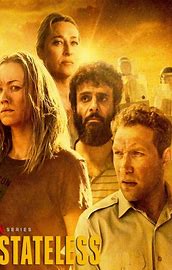
Powerful Australian drama about refugees, based on the real stories of four people who end up in an Australian detention centre for illegal immigrants, either as detainees or employees. It gets across with real power the impossibility of the refugees’ situation. The story of Cornelia Rau, a mentally ill white Australian woman, who was found to be one of those detainees, despite being an Australian citizen, is used not to displace the narratives of the Afghans, Syrians and other asylum seekers, but to convey the bureaucratic nightmare in which they all find themselves.
Stockholm Requiem/Hostage
Requiem is a twisty crime series, with an interesting structure – a sequence of crimes are investigated and (to some extent) resolved, but turn out to be linked, and not by the perpetrator(s). Hostage follows some of the same characters but with a very different scenario, with a hijacked plane – it’s more conventional but well done and gripping.
Supacell
Looked initially like a new version of Misfits, whereby a bunch of people suddenly get superpowers. But these aren’t random, as it gradually becomes clear. All are black, all have some family history of sickle cell disease. It’s not humourless but it certainly isn’t played for laughs – the implications of the new abilities are complicated, and the new superheroes are clearly in danger. The Guardian’s reviewer said that ‘This is not your typical superhero origin story, where preserving truth, justice and the American way is the primary concern. Instead, the characters are operating in a society where the odds are stacked against them, and they are all struggling to make ends meet and avoid violence’. Excellent series, hoping for a sequel.




Threads
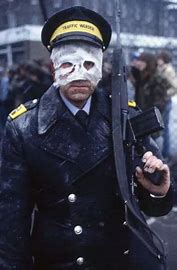
I watched this when it was first shown. I can vividly remember how unsettling it was to head off the following morning into the city centre that I had just seen destroyed on screen, to get the train to work. I wasn’t sure how well it would stand up to a rewatch, but it stood up almost too well. I’d remembered from the time feeling that the central storyline, the young couple having to plan a wedding due to an unplanned pregnancy, seemed to come from an earlier era of kitchen sink drama. This datedness seemed to be backed up by the fact that ‘Johnny Be Good’ is on the car radio and the pub jukebox. All of these years on, it seemed timeless. And it was as brutal and bleak and horrifying as I’d found it first time round, and it’s staggering what was achieved for what would now seem a fairly modest budget. But I almost wished I hadn’t rewatched it because it reminded me of all the reasons there are to fear for, not so much my future, but that of my kids, and their kids…
The Twelve
Soapy jury drama. This is season 2 of the Aussie version of a Belgian series we watched via Walter Presents a few years back. The main plot is intriguing and solid, but some of the stories involving individual jurors were rather predictable (well, of course the moment you blurt out the huge secret you’ve been keeping for years the person most directly affected by that will prove to be standing at the door, and will then rush out into the street and be hit by a car, because that’s what always happens in these things). And Sam Neill as one of the defence lawyers was giving me definite Judge John Deed vibes which is not a good thing. But it was entertaining enough.
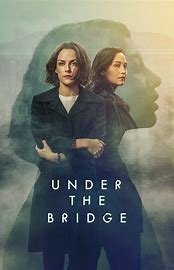
Under the Bridge
See my books blog for the true crime book on which this is based, the murder of a teenager by her peers. It’s very watchable, though the directors took the odd (in my view) decision to insert writer Rebecca Godfrey into the narrative via a personal history that mirrors some of the experiences of the teenagers involved. None of that was real – Godfrey was a journalist who spotted a good story, investigated and wrote about it. The choice to link one of the cops to a story about forcible adoption of First Nation children is also fictional, but I don’t have a problem with the way in which, in particular, Canadian and Australian dramas are bringing this history into the foreground, and Lily Gladstone is always worth watching in any case.
Until I Kill You
Bloody hell, Anna Maxwell Martin is good. One of those actors who compel one’s attention completely, even in something lighter weight, like Ludwig. This one is not lightweight, not in the slightest. It’s true crime, based on the memoir of a survivor, and it shows, brutally, not only how someone who seems to be a ‘free spirit’, an oddball, but deeply lonely, could come under the power of a psychopath, but how her reactions, her spiky defensiveness and stubborn refusal to fully cooperate with the police or with other agencies who try to help, put her at further risk. But it does so without victim blaming. Some of what she tells the police about the man who tried to kill her is ignored, largely because she was ‘odd’ and difficult. She doesn’t behave like a victim is supposed to behave, and so she is written off as unstable and thus unreliable. When she tells the court about the lasting effects – physical and mental – of his attacks on her, it is not only heartbreaking but enraging.
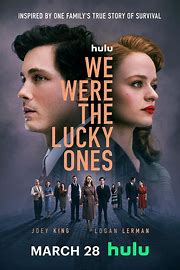
We Were the Lucky Ones
The title is ironic. Yes, this is the story of a family many of whose members survived the Holocaust, against the odds, through various means. But ‘lucky’? As I said in another blog, film/TV depictions of the Holocaust should never, ever, be ‘poignant’ (don’t get me started on that), never (heaven help us) heartwarming. Here, the survival of so many of this family, who went on to build future generations, was not a ‘happy ending’ but a shout of defiance in the face of evil.
Wolf Hall
I re-watched the original series and was reminded again just what a fabulous slice of TV it was. Every performance, every detail. I could just watch Rylance’s face for hours, his stillness. Director Kosminsky described it as him listening, but he’s ‘listening’ to more than words, his antennae are picking up on gestures, sidelong glances, silences. And he’s listening as if his life depends upon it – as, indeed, it does. It took a moment in this new series to adjust to a certain number of recastings (due to death (Bernard Hill), global fame (Tom Holland) or other reasons) and to the fact that returning cast members are 9 years older than when we last saw them, though only a couple of weeks have passed for Henry, Cromwell and the rest. But it’s not lost any of its power and intensity. Cromwell, once so sure footed, now vulnerable, making mistakes, making even more enemies. I know how it ends, of course, and I remember that feeling as I read the book, that I wanted a different ending, for him to find his way to that former abbey where the bees make honey that’s scented with thyme.



Documentary
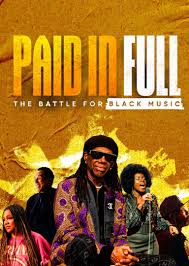
The Battle for Black Music: Paid in Full
Exploitation by managers and record companies is not exclusively an issue for black musicians, obviously. Youth and naivety have always been taken advantage of to make sure that the big bucks don’t go to the talent. But if you add in the factor of race, and how much less power even high profile black artists had/have, there’s a pattern that isn’t just about individual bad actors, but about institutionalised racism and the entitlement that goes with it. A fascinating and infuriating account.
Black Barbie
I was never much of a one for dolls as a child. I do remember my younger sister having a black baby doll (in the early-mid 60s I think), but the first black Barbie didn’t arrive till 1980. The documentary tells the story of the women who made that happen. Of course, Barbie, black or white, doesn’t really look like any of us (even Margot Robbie), but for black girls it wasn’t just the improbably long legs and tiny waist, but the colour of her skin and hair, the shape of her features. And so it was important that black Barbie wasn’t just regular Barbie in blackface, but had a wider nose, fuller lips, and an Afro. It’s not a straightforward tale of representation and empowerment – white Barbie is still and always will be The Barbie, the first and original. But black Barbie: ‘She’s black. She’s beautiful. She’s dynamite’, as the original tagline had it.
Corridors of Power: Should America Police the World?
The title contains a question to which the obvious answer would seem to be a hard no. And the series doesn’t do much to change one’s mind on that, but it does give an in-depth account of many of those flashpoints in world history where America did too much, or not enough, and what the consequences were. With lots of insiders – Condoleezza Rice, Colin Powell, Hillary Clinton, Samantha Power, Madeleine Albright, to name only the best known – the series gives real insight into what happened, and why.
A House Through Time: Two Cities at War
I haven’t seen the previous series of A House Through Time (I will do) , but this one is riveting. He’s identified apartment blocks in London and Berlin whose occupants, between the wars and during WW2, include Jews and SS members, conscientious objectors and war heroes, and everything in between. Exemplary TV.
Into the Fire: The Lost Daughter
Cathy Terkanian gave her daughter up for adoption in 1974 – Cathy was 16 and never knew who had adopted the child. In 2010, she was approached by the adoption agency wanting to get a sample of her DNA, because a body had been found that might be the daughter, who had disappeared in 1989. Although the DNA wasn’t a match, this started Cathy on a mission to find out what had happened to Aundria. The answers she finds are devastating. It’s a gripping account, well told.
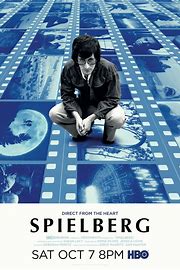
Spielberg
Excellent documentary account of Spielberg’s life and career – it was made in 2017, five years before The Fabelmans came out, and it would have been fascinating if the doc could have explored that movie too, in relation to the biographical material they’d already covered.


Stax: Soulsville USA
This first lifts your heart, with the story of how Stax came into being, of the remarkable way in which music brought black and white artists together in a time of segregation, and then breaks it as we see how the big record companies wanted what Stax had created, and gradually, ruthlessly, drove them out of business. But perhaps the most heartbreaking thing was to realise that despite the musical camaraderie, the white musicians did not get what life was for their black bandmates, and did not ask (particularly after the assassination of MLK) and that it was not possible for that communication gap to be overcome.
Union
Another exemplary Olusoga doc, this one tracing the history – much of it unfamiliar to me – of Great Britain/the United Kingdom, how the union came about and the threats it has faced over the centuries. (When I googled this to check the full title, I found it was listed as ‘Union with David Olusoga’, which sounds lovely but does not accurately reflect the contents of the programme…)
Watergate
This 1994 documentary series is fascinating. I recall these events unfolding in real time, have read the Bernstein/Woodward book and seen the film, and watched the fictionalised re-telling based on John Ehrlichman’s book, with Jason Robards as ‘President Richard Monckton’. But there’s lots of new material here, and lots of interviews with the people directly involved, so much light was shed on this whole murky episode.
The Zelensky Story
A truly remarkable man, who might in other circumstances have never been much known outside Ukraine but who now stands for his country, and as a symbol of resistance to big power aggression. I was struck by the remark, from one of his close associates, that his change of personal style after the invasion was not cosplaying a soldier, but rather identifying with a civilian resistance. It made me admire him even more than I did already, but also fear for him.


2024 Reading – the second half
Posted by cathannabel in Literature on December 6, 2024
My reading this year has been the usual eclectic mix. I normally (normal for me, I hasten to add) have four books on the go at any time. One will be in French, maintaining a fairly recent resolution (so far this half year, de Beauvoir, Gide, Mauriac, Fatou Diome and Francois Emmanuel, of whom the last two were new to me). At least one will be non-fiction. One will be on the Kindle, two will be by my bedside to read before I turn out the light, and one in my library room (currently the French one).
Having brought so many books, half-forgotten in many cases, down from the attic this year, I’m instituting a new ‘rule’ for 2025 – one of the four books will be a re-read. Or, possibly, a first read if it’s one I’ve had for yonks but honestly can’t recall whether or not I did read it (there’s a lot of M’s sci-fi stuff that’s in that category). But there are also books the mere sight of whose covers made me yearn to revisit them. And whilst life is short and there’s so many great new books out there, there are also so many great old books that absolutely deserve to be savoured all over again.
I read a lot of crime fiction, but would not want to be reading more than one in that genre, as clues and corpses could easily get in a muddle. When it comes to crime fiction in particular, I haven’t listed everything I read, not because it wasn’t any good, but because ongoing series are hard to review without just repeating myself about how good, e.g. Elly Griffiths or Val McDermid is.
There are a few books here that slide across genres – Thomas Mullen’s Blind Spots is crime + sci-fi, Leonora Nattrass’ Blue Water is crime + historical fiction. For more straightforward historical fiction the stand-out is Maggie O’Farrell’s The Marriage Portrait. And for books that don’t present us with the world that we know or that existed, or not straightforwardly, there’s Evaristo’s alt history/alt geography Blonde Roots, Mullen, Jenny Erpenbeck’s End of Days which plays around with how death normally operates, and Kate Atkinson’s short stories (see below). I was pleased to discover some new novelists in this batch, notably Nathan Harris, Caleb Azumah Nelson, Margot Singer and Anna Burns – my top books of this half year are Nelson’s Open Water and Burns’ Milkman, and in non-fiction, Paul Besley’s The Search. As always, I try to avoid spoilers, but do proceed with caution.
Fiction
Kate Atkinson – Normal Rules Don’t Apply
I love Atkinson – Life after Life in particular is one of my absolute favourite books. I’m not generally a fan of short stories but these are – as the title suggests – quirky and sometimes baffling, as well as being often very funny, and definitely need to be re-read asap.
Simone de Beauvoir – Les Belles Images
Reading this, I felt as if it should be one of those French films where elegant people sit around talking about ideas, when they’re not sleeping with each other’s partners. Isabelle Huppert should be in this. I’ve not found it an easy read, partly because the narrative voice switches between our protagonist Laurent, and a narrator, without the distinction always being clearly made on the page. It’s short on event (another reason why it should be one of those French films), very introspective. Worth persevering, because it’s intelligent and perceptive and sharp, and the discussions they have are still pertinent fifty years on.
Mark Billingham – The Wrong Hands
The second in his new Declan Miller police procedural series. Miller is infuriating, but funny and human (though I’m not sure he’s quite different enough from Tom Thorne, about whom the same things could be said), and the crime here is woven together with his own search for truth about the death of his wife, which gives it a lot of heart.
Anna Burns – Milkman
I’ve been meaning to read this for a long time – urged on by my Belfast-born sister-in-law in particular – and I’m so glad I did. It’s darkly funny and terribly sad and horrifying and the people in it blaze with individual life, despite not being named.
Candice Carty-Williams – People Person
I loved her debut, Queenie but this didn’t quite work for me. It started off brilliantly, with the crackling dialogue that was so enjoyable in Queenie, and the deft characterisation of the group of half-siblings and their hopeless father. But the event that dictates the rest of the plot and what flowed from it just seemed so improbable, and then it all got resolved rather too neatly. A lot to enjoy along the way but flawed.
Fatou Diome – Le Ventre de l’Atlantique
A Senegalese woman, making a living (just about) in France, talks on the phone to her younger brother who (along with many of his contemporaries) is desperate to make the same journey, with dreams of being a professional footballer. Through their phone conversations and her own account of her life in their village, we explore those dreams and the realities that the dreamers don’t want to face, all with the backdrop of the 2000 European Cup and the 2002 World Cup.


Francois Emmanuel – La Question humaine
I saw the film based on this – Heartbeat Detector, starring Matthieu Amalric – some years ago and it’s pretty close to the book. A psychologist in the HR department of the French branch of a German firm is asked to investigate the fitness of the CEO and finds himself investigating complicity or direct involvement in the Holocaust. At the heart of it is an exploration of language – the inhuman language of memos dating from the early phases of the Holocaust, and the reductive language of HR practice in large corporations.
Jenny Erpenbeck – The End of Days
The structure frequently wrong-footed me at first – characters are unnamed – it’s the daughter, the mother, the grandmother – and so as we move around in the chronology those relationships change too. Worth the effort to focus. The central conceit reminded me of Kate Atkinson’s Life after Life – a life ends, but it need not have, and what if it didn’t end then, but a bit later, or much later than that? Compelling and moving.
Bernardine Evaristo – Blonde Roots
An alternative world, where the slaves are white, their owners African. It’s not a straight reversal of history, geography has been adjusted too. It’s funny – I love the scene where the white peasant family raise the newborn to the heavens to see ‘the only thing greater than you’, a skit on that same scene in Roots, and perhaps on the Lion King too… The Independent said, ‘Running through these pages is not just a feisty, hyperactive imagination asking “what if?”, but the unhealed African heart with the question, “how does it feel?” This is a powerful gesture of fearless thematic ownership by one of the UK’s most unusual and challenging writers’.
Sebastian Faulks – Charlotte Gray
I think I read this slightly too soon after Simon Mawer’s The Girl who fell from the Sky/Tightrope which has a very similar plot (young female SOE agent parachuted into France, but with her own agenda). It was worth reading though, and it avoids the clichés of wartime heroics, with a compelling protagonist. Apparently Faulks received a Bad Sex award for this but honestly, I’ve read far, far worse…
Damon Galgut – The Promise
Across the years, from the ‘80s to 2018, a South African family wrestles with the huge changes in society, and with the titular promise, made on her deathbed by the matriarch Rachel, that the family servant, Salome, would be given a house of her own on the family farm. It’s a promise that’s explicitly disavowed, or deliberately forgotten about, or that simply is impossible to keep, but that promise speaks eloquently about South African society and its history. It’s in four sections, each beginning with the death of a member of the family, and each reflecting key episodes in the country’s recent history. In each section we see things from the perspective of one of the family members, although always with dry asides from the narrator to puncture their naivety or complacency. But the person into whom we get the least insight is Salome, who is more of a symbol than a character, let alone a protagonist.
André Gide – La Porte étroite
The only Gide I’d read before this was Thesée, his version of the story of Theseus and the Minotaur, which I read whilst writing my PhD thesis, and preoccupied with labyrinths. That was published in 1946 – this is a much earlier work, from 1909, and with a strong biographical element, as the central relationship between his protagonist Jerome and Jerome’s cousin Alissa reflects Gide’s relationship with his own cousin, who he married, despite his homosexuality. Here the issue is not so much sexuality – the relationship between Jerome and Alissa is intense but spiritual rather than physical, and mired in misunderstandings and things unspoken.



Patrick Hamilton – Hangover Square
Rather a depressing read, TBH. But bleakly funny at times. The Critic said that ‘This novel could not have been written at any other point in history. Hamilton is a great navigator of human frailty in the face of desolation. It is not the bar room drinkers, but the articulation of the tragic lack of power man has over the madness that swirls about him that makes Hangover Square a novel of its time.’
Nathan Harris – The Sweetness of Water
Set in the immediate aftermath of the Civil War, Harris’s debut novel tells of a white farmer whose encounter with two newly freed slaves both transforms his life, and brings about tragedy. It’s beautifully written, with the central characters all given depth and complexity. It’s about change, and how even the most desired, necessary, righteous social change is traumatic, and not just for its opponents. It’s about how people – individuals and communities – move on from that, about what freedom might mean at this time and in this place. Deeply moving, and with a sense of hope.
Robert Harris – Archangel
Harris never lets me down. We start off in Death of Stalin territory, and then jump forward to the post-Soviet era to meet our protagonist, an academic specialist in Soviet history who gets embroiled in highly dangerous secrets that show how that great dictator is not and perhaps cannot ever be entirely consigned to history. Thrilling up to the final page.
Sarah Hilary – Sharp Glass
The latest stand-alone psychological thriller from Hilary, and it’s another corker, perhaps her best yet. It’s not about twists for the sake of twists (I do go on a bit about this, but it really annoys me, when all credible plotting or character development is jettisoned for the sake of ‘a twist you’ll never see coming’…). Here, character is all, and these characters gradually become clearer, to themselves, to each other and to the reader, but there are loose ends left loose, not tidied away, so we’re still wondering about the protagonists after we’ve turned the final page.
Winifred Holtby – The Crowded Street
Holtby’s second published novel. I’d read South Riding many years ago, and several times – my Mum was a fan – and also Anderby Wold, but this one was new to me. Her protagonist is a young woman who feels a strong sense of familial duty but nonetheless struggles to fit the role that is expected of her. It’s often funny but there’s a deep sadness too, and anger.
Aldous Huxley – Point Counterpoint
A roman à clef about interwar intellectuals (based on, inter alia, D H Lawrence, Middleton Murry and Huxley himself). Like a fugue, the novel unfolds through a series of different voices and different debates, interweaving and recurring in different forms. As such it’s wordy and light on incident, but nonetheless fascinating.



Tom Kenneally – Fanatic Heart
I was looking forward to this – I’d read a few of Kenneally’s books years back and remember liking them, and Fanatic Heart covers an interesting period of history, spanning three continents, from the Irish Famine through to the first stirrings of civil war in the US, through the life of Irish nationalist writer John Mitchel. But the style was somehow so inert. The story was eventful enough, it should have been engaging but instead it dragged, and I ended up skim reading the last chapter or so just to finish it. The story is also cut off before what would potentially have been an opportunity to explore Mitchel’s controversial views on slavery (he was for it), and his loyalty to the Confederate cause during the Civil War. But I’m afraid I didn’t enjoy this enough to read a sequel, if there is one.
Jhumpa Lahiri – The Namesake
Touching, funny account of a young man’s life, from a Bengali family, growing up with a Russian name in the USA. Julie Myerson in the Guardian said that ‘this is certainly a novel that explores the concepts of cultural identity, of rootlessness, of tradition and familial expectation – as well as the way that names subtly (and not so subtly) alter our perceptions of ourselves – but it’s very much to its credit that it never succumbs to the clichés those themes so often entail. Instead, Lahiri turns it into something both larger and simpler: the story of a man and his family, of his life and hopes, loves and sorrows.’
Francois Mauriac – La Pharisienne
Mauriac’s Le Noeud de Viperes was one of the first French novels that I read (in French) without having to, whilst I was at school. I’ve read several of his other novels, and his remarkable clandestine pseudonymous publication Le Cahier Noir, a rallying call to Resistance during the Occupation. He’s a hero of mine – he was in many ways a conservative – family, the Church, his country – but never an unquestioning one, and his questioning led him to challenge the Church’s support for Franco, and to bring his skill as a writer to the Resistance. He was never going to be a fighter (too old, too weedy), but he still risked everything by his activities and associations. This novel was published during the Occupation, under his own name, because it isn’t, at least overtly, about that. It’s the study of a woman whose religious convictions make her seek perfection not only in herself but in those around her, and to deal harshly with those who fall short. As a critique of religious zeal it was controversial enough – but the depiction of a culture of denunciation perhaps does refer obliquely to the Occupation. It’s powerful and Brigitte Pian, the ‘Woman of the Pharisees’ is a horrifying creation.
Arthur Miller – Focus
I was prompted to re-read this by watching Joseph Losey’s film Mr Klein (see my screen blog). This is Miller’s only novel and it’s premiss is a man who gets a new pair of specs and realises he now looks like a Jew, and that people around him are suddenly seeing him as a Jew. It’s a powerful and shocking account of antisemitism in the US at the end of WWII, and all the more interesting because the protagonist is himself a repository of antisemitic and other racist prejudices (unlike, for example, Gregory Peck’s character in Gentleman’s Agreement, who is noble and righteous and allowing himself to be seen as a Jew consciously and deliberately).
Thomas Mullen – Blind Spots
I have read and loved Mullen’s trilogy (Darktown, Lightning Men and Midnight Atlanta) dealing with Atlanta’s first black cops in the era of segregation and civil rights protests. This is completely different – we’re in an unspecified future, where everyone, worldwide, gradually lost their sight. A technological solution has been found (even if it’s not available, or acceptable, to everyone), downloading visual data directly to people’s brains. But then, it gets hacked, and no one can really trust what they’re seeing… It’s a sci-fi crime thriller, which is completely gripping, but also thoughtful and thought-provoking.
Leonora Natrass – Blue Water
A cracking historical mystery, set in the days of the American Revolutionary Wars, and we’re all at sea, en route to Philadelphia with a disgraced FO clerk, who is trying to ensure that a vital treaty will reach the Americans in time to stop them joining France’s war on Britain. This is the second in a series so I should really have read Black Drop first, but thoroughly enjoyed this one nonetheless and will backtrack to its prequel asap.
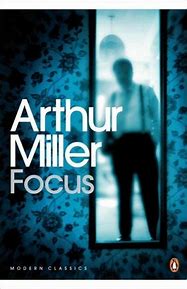


Caleb Azumah Nelson – Open Water
Stunning debut from a young British-Ghanaian writer, with a second-person narrative that involves the reader intensely in the protagonist’s thoughts, emotions and experiences. It’s about love, race, masculinity. The i review describes it as ‘an emotionally intelligent and tender tale of first love which examines, with great depth and attention, the intersections of creativity and vulnerability in London – where inhabiting a black body can affect how one is perceived and treated’.
Maggie O’Farrell – The Marriage Portrait
Gorgeously written historical novel, beautiful and tragic and very memorable. Its heroine is Lucrezia de’Medici, married at 15 to the Duke of Ferrara, whose early and suspicious death inspired Robert Browning’s ‘My Last Duchess’.
Ann Patchett – The Dutch House
This almost sounds like a fairy tale – a magical house from which the children are driven out by their stepmother. But for all of the motifs from those archetypal narratives, it’s really about how we deal with the past when the past has hurt us. Maeve (an extraordinary creation) and Danny, the two exiled children, struggle with and find different approaches to this. As the Guardian reviewer put it, Patchett ‘leads us to a truth that feels like life rather than literature’.
Richard Powers – Orfeo
I discovered Powers last year through The Time of our Singing. Like that book, this one is suffused with music. The Independent reviewer said ‘There are passages that make you want to rush to your stereo, or download particular pieces to listen to as you read — Mahler’s Kindertotenlieder, Messiaen’s Quartet for the End of Time — and others that seem to offer that same experience for pieces you will never hear, pieces composed by Powers’s composer hero, Peter Els.’ It’s not just about the subjective experience of music, it’s about composition, and microbiology and technology, and it’s absolutely compelling.
Margot Singer – Underground Fugue
Another novel that invokes musical form (see also Huxley’s Point Counterpoint). In this case, fugue is both structure – there are four voices here, which alternate and interweave, and connect or echo each other in different ways – and psychological state – all four are exiled and unrooted (and there’s a connection too to the case of the so-called ‘Piano Man’). As these stories interconnect, we move closer to the climactic event of the novel, the 7/7 London bombings. Beautifully written, suffused with a sense of loss.
Cath Staincliffe – The Fells
A police procedural dealing with a cold case – the discovery of a skeleton in some caves in the fells. As always, Staincliffe is interested not just in the crime, and who was responsible for it, but in the ramifications of the crime, the effects on the family and friends. And as always, she makes you believe in her characters, including her new detective duo, and care about them.


Elizabeth Strout – The Burgess Boys/Lucy by the Sea
I do love a Strout. As always, these novels connect with each other, and with others of Strout’s oeuvre. The Burgess brothers connect here to Lucy Barton (via Bob), and we also encounter (indirectly) Olive Kitteridge and the protagonists of Abide with Me – there are more links than those, and I think some kind of a flowchart is called for. Lucy is a Covid novel, it starts with Lucy’s ex-husband William insisting on taking serious steps to isolate the people he cares about as the pandemic looms, and it explores the strange world that we all inhabited then with Strout’s remarkable insight and empathy.
Douglas Stuart – Shuggie Bain
This is a tough read. It’s brilliantly written, with profound sympathies for its characters, including some of the more hopeless ones, but most of all for Shuggie as he tries to survive a chaotic childhood and navigate a path to some kind of stability. There were many moments when I feared how this would end, when a brief period of hope ended in yet another heartbreaking betrayal or failure, but ultimately there is some hope. Just enough.
Kit de Waal – Supporting Cast
These short stories connect to de Waal’s novels – as the title suggests they take characters who played a supporting role in those narratives and bring them to the foreground. As always with de Waal, these people, the lost and the losers, are drawn with tenderness and understanding, and I found them very moving.
Colson Whitehead – Crook Manifesto
A brilliant sequel to Harlem Shuffle. We’re now in the 70s, and furniture salesman Ray Carney is trying to stay on the right side of the law, but things get messy… The writing is marvellous, edgy and with bleak humour. As the Independent says, ‘the blend of violence, sardonic observation and out-and-out comedy reflects Whitehead’s ability to neatly balance the trick of writing both a homage to, and affectionate tease of, noir crime fiction’.
Non-Fiction
Albinia – The Britannias
Alice Albinia takes us island-hopping, and on each of the islands that surround Great Britain, she explores the history (going back to ancient times, and moving gradually forward to our own), folklore, landmarks and traditions, weaving in her own personal history and the conversations she has with locals and fellow-travellers. A lovely, intriguing read.
Paul Besley – The Search: The Life of a Mountain Rescue Dog Search Team
I probably would not have come across this book had I not known its author. And that would have been such a loss. I’m not particularly a dog person – that is, I’ve never lived with a dog, and there are only a few that I have got to know at all well (Alfie, Loki and Bentley). I did have my own encounter with Mountain Rescue though, when I was a teenager with a small group on a church youth hostelling trip who got stuck in awful weather on Great Gable and I can still vividly remember hearing and then seeing our rescuers arrive, with duvet coats and hot chocolate and the relief and joy and gratitude that I felt. The book describes Paul’s own experience of being rescued (a great deal more dramatic than mine) and subsequent involvement with Mountain Rescue, culminating in training a dog, Scout, to work with him to track people who need help in the hills. It’s that training process that forms the bulk of the book, and it’s extraordinary – fascinating and moving and gripping. The title turns out to mean much more than the literal search for those lost bodies – it’s a very personal search for meaning, for a way of living well and in the present, for contentment even in the toughest of times. Do read it, whether or not you are a dog or a hiking person – it’s quite remarkable.



Jarvis Cocker – Good Pop, Bad Pop: An Inventory
Not a memoir. Rather, this is Jarvis rummaging in his attic and telling us stories about some of the stuff he finds there, whilst debating whether to keep or get rid of each item. It’s very engaging, playful and tricksy (just how random are these random items? Were they all actually in that attic at the start of the project? Did the things he tells us he decided to ‘cob’ (a Sheffield word – albeit not one I’m familiar with – for chuck out) actually get cobbed?). And along the way lots of brilliant anecdotes about Jarvis’s youth and the early days of Pulp.
Joan Didion – Blue Nights
I read The Year of Magical Thinking last year, just long enough after the sudden death of my husband. That book deals not only with her husband’s death but with the serious illness of their daughter Quintana, who was in hospital, unconscious when he died, and after an initial recovery became seriously ill again, dying just before Magical Thinking was published. Blue Nights tells – in a non-linear fashion – the story of Quintana’s adoption, her issues with depression and anxiety, her illness and death, through Didion’s eyes. Didion shows, with brutal clarity, how little she understood her daughter, and it offers no healing insights into dealing with such a loss. Cathleen Sohine wrote in the NY Review of Books that ‘Blue Nights is about what happens when there are no more stories we can tell ourselves, no narrative to guide us and make sense out of the chaos, no order, no meaning, no conclusion to the tale’. It’s utterly bleak. Whereas Magical Thinking is an act of mourning, Blue Nights, permeated by Didion’s sense of failure as a mother, and failure to understand Quintana, is a cry of despair.
Jeremy Eichler – Time’s Echo: Music, Memory and the Second World War
Brilliant, fascinating and eminently readable. A study of four composers (Richard Strauss, Schoenberg, Britten and Shostakovich) and a key work by each, responding to World War II and the Holocaust in particular. It generated a powerful playlist: Schoenberg’s A Survivor from Warsaw, Strauss’ Metamorphosen, Britten’s War Requiem and Shostakovich’s 13th Symphony (specifically the 1st movement, the Adagio, often referred to as Babi Yar) and along the way lots of other pieces are discussed, with such clarity that one almost feels as if one can hear them.
Paul Fussell – The Great War and Modern Memory
Fascinating study – published in the ‘70s – of how the ‘Great War’ was portrayed in poetry and fiction, how literary references, mythology and religious ideas permeated these portrayals, along with a strong strand of homoeroticism. Some of the work Fussell explores is familiar to me (Owen, Sassoon, Graves), some not at all, but it’s full of interest and new insights. I was particularly struck by how the ‘literariness’ of the accounts was not restricted to the officer class but is present in diary and memoir from other ranks too, suggesting a widespread familiarity with, e.g. Shakespeare and Bunyan.
Rebecca Godfrey – Under the Bridge: The True Story of the Murder of Reena Virk
An insightful account of the murder, carried out by a group of teenagers, of another teenage girl, a bullied outsider. I watched the TV adaptation of this, which oddly makes Godfrey a protagonist, getting directly involved in the investigation, and having a personal history that connects her to the suspects, none of which is actually what happened. It’s odd because it derails the drama, which really needs no embellishment. The book is much better than I was expecting, having been irritated by the dramatization (but sufficiently intrigued to see what the source material actually said).
Richard Holmes – The Age of Wonder: How the Romantic Generation Discovered the Beauty and Terror of Science
A rather wonderful account of science in the Romantic era – Herschel and Davy, Mungo Park and Joseph Banks. There are important women here too, most notably Caroline Herschel and Mary Somerville. Very readable, and not just for historians of science – one of the fascinating things about this period is that people weren’t silo’d into arts or sciences as later generations, including my own, tended to be – William Herschel was a composer and Humphrey Davy a poet.




Stuart Jones (ed.) – Manchester Minds: A University History of Ideas
Full disclosure – I contributed a small ‘vignette’ to this volume, on W G Sebald and Michel Butor. But there’s masses of interest here, all marking the 200th birthday of the University of Manchester by celebrating some of its most notable and influential figures. I was drawn to the outsiders or exiles amongst them – like economist W Arthur Lewis, from St Lucia, Gilbert Gadoffre whose time at the University was interrupted by a spell of activity in the French Resistance, Eva Gore Booth, the Irish poet and activist, and philosopher Dorothy Emmett, plus a number of Jewish academics who had left Europe either because of pogroms in the East, or the advent of the Nazis.
Hilary Mantel – A Memoir of my Former Self
A collection of Mantel’s short non-fiction, on a wide range of topics, some autobiographical (these overlap with Giving up the Ghost, a memoir that she published in 2010), some film and book reviews, and most enjoyably and interestingly her Reith lectures on writing historical fiction. As in her novels, she is sharp, funny, and sometimes fierce – her account of how her endometriosis was dismissed by a series of doctors as just female neurosis is utterly enraging.
D. Quentin Miller (ed.) – James Baldwin in Context
A collection of short essays on aspects of Baldwin, his life, his novels, his politics. I’ve immersed myself in Baldwin periodically over the years (first as a teenager when I discovered the novels and short stories, then a couple of years ago inspired by Black Lives Matter, and now for his centenary), and there is much to be savoured here, that can enrich my understanding. I supplemented the reading (I also re-read Go Tell it on the Mountain, and I am not your Negro) with watching some of Baldwin’s interviews, and as always, I find his voice so very compelling. He doesn’t do soundbites or inspirational quotes – when he talks about politics it is all about narrative, the narrative of the African American chained and trafficked and exploited, and then subjected to segregation and the daily evidence of white hatred. Rewatching his ‘debate’ with Paul Weiss was rage-inducing, Weiss’s complacency in his own privilege staggering, but Baldwin’s narrative overwhelmed him. His speech and his writing have a rhythm, a beat, that comes from the church (he was a preacher in his late teens), and from blues and jazz. He’s never less than piercingly articulate, and never less than fiercely passionate, but more than that, his humanity always shines through.
Graham Robb – The Discovery of France: A Historical Geography from the Revolution to the First World War
It’s described as historical geography but it’s also what I would have called social history – it’s about the people who didn’t make it into the history books, and who were for the most part buffeted by Great Events rather than playing an active role in them. And really, as the title suggests, it’s about how little the concept of ‘France’ meant to most of those people, vast numbers of whom did not speak any language resembling French (perhaps one of the reasons why the Académie is so protective of that language now). It also provides a fascinating context for the 19th century novels I’ve been reading since my teens – Balzac, Flaubert, Zola.
Sathnam Sanghera – Empireland: How Imperialism has Shaped Modern Britain
My schooling until the 11+ year was in two newly independent West African nations. Whilst I mixed primarily with other ‘expatriates’ I could not be unaware (and my parents were profoundly aware) of the reasons we were out there, and how the legacy of empire was still playing out. My understanding may have been primitive (I was 9 when we left) but it influenced my thinking about so many things as I grew up. So it was fascinating to read Sanghera’s exploration of the ramifications of our imperial history in British culture and politics. It is clear-sighted and forward looking, and asks what we do once we have recognised what empire did to its overseas subjects and what it did to those who grew up here in its shadow.
Claire Wills – Lovers and Strangers: An Immigrant History of Postwar Britain
The story of immigrants from the wreckage of the war in Europe, from Ireland, from the Caribbean, from across the Commonwealth, at work, at home and at play. It’s a rich and varied picture – the experiences of immigrant life varied enormously as one would expect depending on why they came, where they came from and who they’d been in their previous life. Some of these stories are familiar but a great many are not, and it is good, in particular, to get beneath the generalisation of ‘Asian’ to explore the very different communities who arrived, with different expectations, and different challenges to their integration.

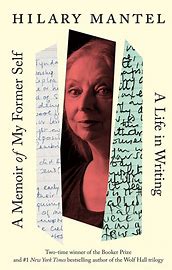
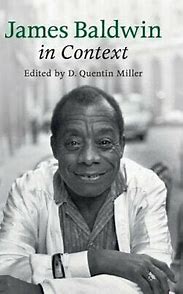


 Passing Time
