Posts Tagged Non-fiction
2025 Reading: The First Half
Posted by cathannabel in Literature on June 26, 2025
A nicely eclectic list this half year, traversing the continents and the centuries. Our protagonists move between Nigeria and the US, from Nigeria and Trinidad to London, from Victorian Bath to Borneo, from Somalia to Cardiff. Eneas McNulty travels the world, and migrants from all over the world settle in Linda Grant’s Stranger City of London. We visit Saigon as it falls, mid-19th century Paris, Victorian London and a Swiss village at the beginning of the 20th century. And then there’s a dystopian vision of a future USA, set in 2025… Several authors were new to me, and I hope to read more from Claire Fuller, Philippe Claudel, Emma Stonex, Nadifa Mohamed, Aaron Philip Clark, Chibundu Onuzo and Viet Thanh Nguyen. In addition to those reviewed, a cluster of excellent new crime from authors I turn to regularly: Vaseem Khan’s The Lost Man of Bombay, Luke McCallin’s The Pale House, Russ Thomas’ Sleeping Dogs, Elly Griffiths’ short story collection The Man in Black, Cath Staincliffe’s Fire on the Fells and Jane Casey’s The Secret Room.
Chimamanda Ngozi Adichie – Dream Count
I’ve been waiting so long for this! And it was worth the wait. Adichie introduces us to four women, whose lives intersect in various ways, Chiamaka (“Chia”), Zikora, Omelogor and Kadiatou. She has said that ‘the point of art is to look at our world and be moved by it, and then to engage in a series of attempts at clearly seeing that world, interpreting it, questioning it’ and that’s what she does here through these four lives, which move us but also challenge us. The Guardian’s reviewer said that it is ‘quintessential Adichie: ambitious, astute and powered by an accumulation of feather-light sentences that build to devastating weight’.
Kate Atkinson – Death at the Sign of the Rook
Jackson Brodie’s back, in a witty, sharp and very twisty mystery, that plays with/pays homage to the clichés and conventions of the genre, whilst doing it all supremely well so that we’re fully engaged throughout.
Julian Barnes – The Noise of Time
Brilliant, powerful account of three key points in the life of Shostakovich as he tries to live and create under Stalin. Each is rendered so vividly that we can’t take refuge in our own notions of what he ought or ought not to have done. The image of the man waiting outside a lift with his suitcase each night as he expects to be taken away is one that stays with me. But also the humiliation of giving the speech that has been written for him to an audience on a trip to the US, summed up in this passage: ‘There were those who understood a little better, who supported you, and yet at the same time were disappointed in you. Who did not grasp the one simple fact about the Soviet Union: that it was impossible to tell the truth here and live’.
Sebastian Barry – The Whereabouts of Eneas McNulty
This is wonderful, and heartbreaking. Eneas is an exile, condemned to wander the world because of a judgement passed on him in his hometown of Sligo, which he knows will never let him go. It’s beautifully, lyrically written and whilst its ending is tragic it also conveys a kind of peace.
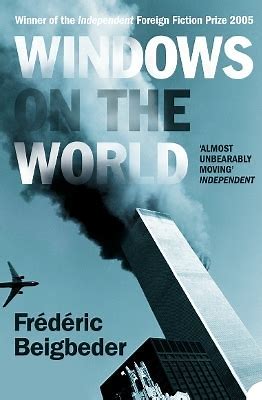
Frederic Beigbeder – Windows on the World
Two voices here, the first of a father who is with his sons in the Windows on the World restaurant in the World Trade Center when the planes hit, and second a writer – presumably Beigbeder himself – who is attempting to find a way to write about the attack but daunted by the impossibility of the project. I didn’t warm to either of them and there was quite a blokey, verging on misogynistic strain in both narratives which was off-putting. Did it work? I don’t know – there were certainly moments in the restaurant which hit pretty hard, and which – for good or ill – made one realise what it might have been like being there as the tower burned, both in terms of the physical effects and the emotional. But overall I was not convinced, and the musings of the author or his surrogate were so cynical and self-absorbed that they undercut the power of the other sections.
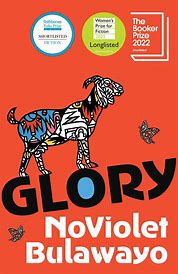
NoViolet Bulawayo – Glory
I struggled with the basic concept here. Perhaps I have an overly literal mind, but I couldn’t help but attempt to picture the various goats, zebras, horses, etc driving cars, wearing clothes, and so forth, and it didn’t make sense to me and trying to deal with that was a distraction from the plot and the characterisation. It was engaging and darkly funny, but I’m not convinced that the conceit really works, or what its purpose was.


Octavia Butler – The Parable of the Sower/The Parable of the Talents
Dystopian fiction, written in 1993 but set, rather unsettlingly, in 2025 – the threat here is from (a) climate change and (b) human beings, and it deals very effectively with racial and gender politics too. Compelling and fascinating, and the sequel doesn’t just take events further, it questions the account given in the first book, bringing in other, sometimes sceptical voices, which adds real depth.
Jacques Chessex – Le Vampire de Ropraz
Based, apparently, on a real case from 1903, and written in a very detached, pared down style (it reminded me a little of Heinrich Boll’s The Lost Honour of Katharina Blum, one of my favourite novels ever), which doesn’t spare the horror of the crimes or come to conclusions about guilt or innocence, but dwells rather on the response of the villagers and their eagerness to pin the crime on someone who fits their assumptions, regardless of actual evidence.
Aaron Philip Clark – Under Color of Law
Spike Lee is quoted as saying (I haven’t managed to track down the source or the context) that everything that happens in the US is about race. And this crime thriller – like those by Attica Locke, and the ‘Darktown’ trilogy from Thomas Mullen – makes that point powerfully. It’s a dark, tough story, beginning with the murder of a young black police recruit, and very well told.
Philippe Claudel – Le Rapport de Brodeck
We are somewhere in Europe, where people speak a language that sounds Germanic but isn’t quite German, after a war that must be WW2, and something has happened, a violent incident involving a stranger in a village miles from anywhere, which brings to the surface trauma, prejudice, fear and guilt from the past. Brodeck has been tasked with writing a report of the ‘incident’, a project which he knows will threaten his own place in the village. Absolutely gripping.
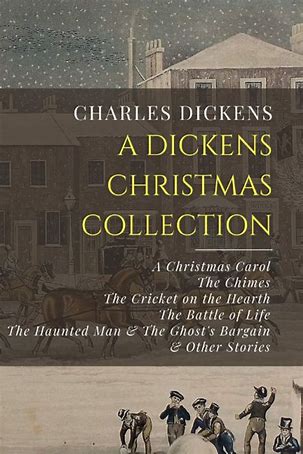
Charles Dickens – The Chimes/The Cricket on the Hearth/The Battle of Life
I re-read A Christmas Carol first, and it was just as wonderful as I had remembered. These lesser-known Christmas stories are a bit harder going, with an over-reliance on melodramatic plot devices and a fair dollop of Dickensian sentimentality and piety.
Janice Elliott – Secret Places
For absolutely no good reason, Janice Elliott is pretty much forgotten and her books out of print. Someone should fix that. I read several of her novels back in the 80s and this one re-appeared from years of exile in the attic and demanded to be re-read. It is subtly and beautifully written, set in a girls’ school during WW2, and concerning the arrival of a German refugee, who generates both fascination and suspicion. I have only just discovered that there is a film of this, which I’d love to see, but I suspect is just as mired in obscurity as Elliott’s books.



Buchi Emecheta – Second Class Citizen
Semi-autobiographical account of an Igbo girl’s struggle to get a proper education in Nigeria, and then to make a life for herself in Britain, facing not only racism but sexism and the dead weight of a feckless husband. Adah has dreams that she holds on to tenaciously in spite of everything, and whilst there is much to fuel anger in the narrative, there’s also hope (not least in the subsequent success of Emecheta herself).
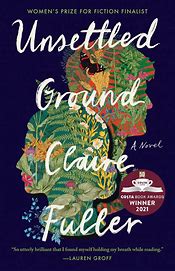
Claire Fuller – Unsettled Ground
It starts with a death, the death of a mother, leaving her children as orphans. These orphans are twins, and they’re 51, but they’ve lived in seclusion from the world, and they have to deal not only with this loss, but with the threat of homelessness, and with the necessity of now dealing with the world that they’d largely shut out all their lives. It’s beautifully done, and makes us see contemporary life through their eyes, the impossibility of navigating a world where everything is complex and everything requires connection. Ultimately, as the Guardian’s reviewer says, ‘Jeanie’s refusal to relinquish her tenuous hold on all the things she loves carries the reader with her on a frightening and uncomfortable journey to the truth, and the possibility of starting again’.
Robert Galbraith – A Running Grave
An improvement on Ink Black Heart, with a compelling plot. The main problem with this one (and I’m not having a go because it’s JKR, honestly, but as one of the most successful writers of our time, she shouldn’t be immune from criticism either) is her penchant for rendering people’s accents in the dialogue. This is off-putting and largely unnecessary, and the effort of trying to ‘hear’ that person’s voice in Rowling’s rendition of their accent is a massive distraction. Apart from that, it’s a decent crime novel.
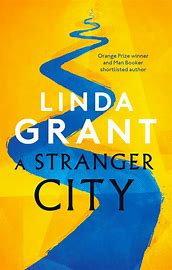
Linda Grant – A Stranger Town
Very me, this one. A polyphonic novel of a labyrinthine city. Dickensian, from its opening scene as a corpse is dragged from the river. It plays with fantasy at points, it alludes to Brexit as the source of anxiety about the future for a city of migrants. The Guardian says: ‘the real achievement of A Stranger City is the way in which its narrative is as fractured and uncertain as the London it portrays. And despite its contemporary relevance, the novel avoids becoming a “state of the nation” tract – it’s far too emotionally intelligent for that. It’s as much a novel of feelings as ideas, and this is what makes it a compelling read. At its heart is the need for belonging, something we all share yet can put us at odds with each other. At a time when dangerously inert notions of national identity are on the rise once more, Grant reminds us that humanity is a migrant species: we are all strangers.’
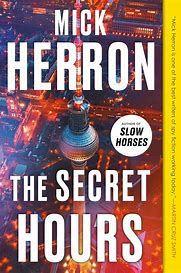
Mick Herron – The Secret Hours
We’re in the world of Slow Horses, but kind of adjacent to the series – the book stands alone, but if you know, you’ll recognise a number of key players, seen as if from a different angle. It’s very cleverly done, very funny, and dark too.
Susan Hill – In the Springtime of the Year
I remember reading this, probably in my early 20s, and that my Mum read it too, and both of us loved it. I recalled one scene in particular, a young woman hanging out washing who suddenly feels appalling desolation and pain and knows that something has happened to her husband. Reading it now, I’m even more moved by the totally convincing depiction of sudden widowhood but also how the process of grief is tied up with the changes in the seasons and the rhythms of ongoing life.



Stephen King – Never Flinch
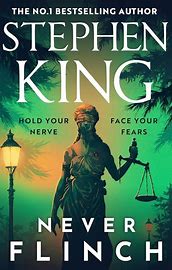
This doesn’t exactly break new ground for King but never mind about that, it’s King on form. This one features Holly Gibney, who we first met in the Mr Mercedes trilogy and subsequent novels that sometimes venture into the supernatural (or, one might say, sometimes the supernatural lurks just out of view, or whispers just out of earshot), sometimes not. But as with all of those recent novels, they’re brilliantly done, they make you care and make you keep turning the pages, and it’s good to see that he’s still on top of his game.
Ian McEwan – Lessons
I have reservations. First of all, the somewhat clichéd plot trope of a schoolboy being seduced by a beautiful mature woman doesn’t quite convince, even though the damage (to both parties) is explored sensitively and intelligently. Secondly, and I fear this is another example of some writers being too big to copy-edit, McEwan gives his teenage protagonist, in 1962, cultural reference points that were at least a year premature. I checked some of the details quickly on Google and Wikipedia – surely, he could have done that, or his publisher could have done that? I know I get perhaps disproportionately annoyed about such things but when I read anachronistic or otherwise inaccurate stuff like this it takes me instantly right out of the narrative. It seems lazy, and arrogant. In this instance, the timing was clearly very significant, because it is the tension around the Cuban missile crisis that informs some of the key events. So why not make sure that your cultural reference points make as much sense as the political ones? Apart from that I quite enjoyed it. He can write, obviously, but it isn’t the first time I’ve felt rather cross whilst reading McEwan, for similar reasons.
Nadifa Mohamed – The Fortune Men
This is based on the real case of a Somali man wrongly arrested for murder, and ultimately hanged, having failed to get anyone to really listen to him – and having failed to understand how the system would work and to make it work for him. Mohamed not only inhabits the central character, Mahmood Mattan, but the family of the murder victim too. She brings to life the multiethnic community of Tiger Bay in the early 1950s, and the inflexible legal system that refuses to listen to or see the injustice it is perpetrating. Interestingly, I watched an excellent dramatisation of the Ruth Ellis case (see my screen blog) – not a miscarriage of justice in the same way, since she unquestionably did it, but another illustration of how once the legal system has decided, it cannot allow itself to admit that a mistake is being made. And a reminder, should we need it, of how mistakes and miscarriages are unundoable when a sentence of death is carried out.
Abir Mukherjee – Hunted
We’re a long way from the Raj (the setting for Mukherjee’s Wyndham & Banerjee crime series) in this stand-alone thriller – it’s a gripping read, starting with a terrorist attack on a shopping mall, and following the search for the perpetrators by the FBI and other agencies, and (for different reasons) by the parents of two of those implicated. Nothing is as it at first seems, and things get very complicated, but Mukherjee never loses control of his story, and it has both tension and heart.
Thomas Mullen – The Rumor Game
Set in 1942 in Boston, Mass., where a newspaper writer specialising in debunking rumours and an FBI agent find themselves working together against the activities of anti-semitic organisation the Christian League (fictional but based on real organisations of that ilk at the time). Both protagonists are outsiders, the reporter because she’s Jewish and the FBI man because he’s a Catholic. Mullen’s Darktown trilogy, about black cops in Atlanta in the late ‘40s/early ‘50s conveys brilliantly the sense of always being hyperalert that comes from being the representative of a minority within an organisation and within the wider community, and The Rumor Game is just as skilful and compelling.
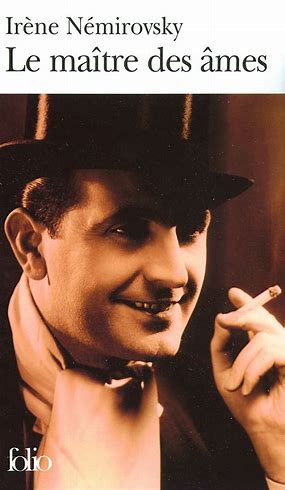
Irene Nemirovsky – Le Maitre des Ames
Nemirovsky’s own story (a Russian Jewish emigrée to France, arrested, deported and murdered in Auschwitz by the Nazis) and the story of her last, unfinished book, Suite Francaise, not published until 2004, tend to overshadow her earlier, very successful publications. This one was published in 1939, before the Nazi Occupation. Her protagonist is an immigrant from Eastern Europe, struggling to make ends meet as a doctor, but with a burning conviction that he can be successful, at whatever cost. He’s not exactly a sympathetic character but Nemirovsky makes him comprehensible, pitiable at times, and his situation is vividly conveyed. She’s a sharp, some say cruel, writer – some of the peripheral characters in Suite Francaise too are almost monstrous, though always depicted with humour.


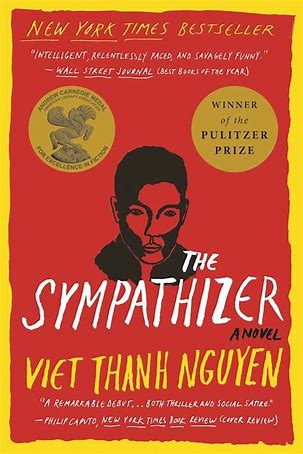
Viet Thanh Nguyen – The Sympathiser
The fall of Saigon and the Vietnamese diaspora through the eyes of a Viet Cong agent (this isn’t a spoiler, he tells us right at the start that he’s a spy/spook, a man with two faces). This is brutal, but brilliant, and often very funny. The description of the fall of Saigon and the desperate attempt to get out as bombs fall on the runway is stunningly powerful, and thereafter the narrative takes us to unexpected places – and an unexpected resolution.
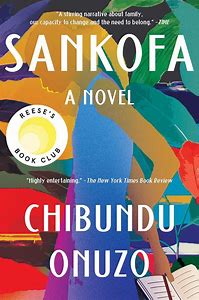
Chibundu Onuzo – Sankofa
Onuzo’s protagonist is a middle-aged woman, recently separated from her husband, and having lost her mother. She’s the daughter of a white mother and Bamanian father (Bamana being a fictional West African country), and the questions about her identity with which she has wrestled all her life have suddenly become more urgent. This leads her on a quest for her father, whose name she now knows, through diaries she finds amongst her mother’s things. Her father is a fascinating character, full of contradictions, all of which Anna has to navigate. Excellent.
Ann Patchett – Run
Two family groups heading out to a public lecture, and for reasons we don’t at first realise, on a collision course with each other. The reasons emerge fairly quickly but the outworking of this connection is what drives the narrative. It’s subtly done, beautifully written, and as always with Patchett, there’s warmth and hope.
Donal Ryan – The Queen of Dirt Island
A family saga, focusing on female resilience across four generations. It’s full of opposites, as the Guardian review says: compassion and cruelty, fragility and strength, joy and despair. The writing is musical, but never shies away from brutality either. Deeply moving and memorable.
Sam Selvon – The Lonely Londoners
This 1956 novel is gloriously polyphonic, musical, using the rhythms of Caribbean speech to portray the lives of Windrush generation immigrants as they navigate life in London, trying to reconcile their hopes and dreams to its drab and often hostile reality. It’s frequently funny, but very touching as well. A delight.
Georges Simenon – Le Passage de la ligne
An odd book. I think I’d picked it up second-hand years ago, assuming it would be a Maigret, and finally got around to reading it, having realised it wasn’t. The protagonist is hard to identify with, because he doesn’t really engage with other people except in a transactional sense – he shows no signs of empathy or even sympathy, and some of his behaviour is not only morally dubious but repellent. I am still not sure what it was all about – it reads like a confession, a statement of his life, or even a suicide note?



Francis Spufford – Red Plenty
Interesting to read this after Julian Barnes’ The Noise of Time, because it took me back to the paranoia and the oppressive party of Stalinist Russia (and beyond). Spufford focuses on the economics of the regime, in an account which sometimes reads like a novel, sometimes like non-fiction, with a LOT of exposition. The latter is sometimes a slog, but he writes it well, and it is often both enlightening and darkly funny. I would also recommend not reading it as an e-book – there is a very helpful cast list at the front of the book, but referring back to it whilst reading on Kindle was rather a faff.
Emma Stonex – The Lamplighters
Inspired by the true story of the disappearance of three lighthouse keepers in 1900, this gothic narrative moves between the lead-up to the disappearance (in 1972), the investigations, and the lives of the women left behind. It’s atmospheric and mysterious, and it leaves us room to take or leave supernatural explanations, because really what it is about is the people, the traumas of their lives, the effects of isolation.
Rose Tremain – Islands of Mercy
Not my favourite Tremain, but she’s far too good a writer for there not to be much to enjoy here. Primarily, the interweaving lives of the female characters, Jane, tall and contrary, a gifted nurse, Clorinda who has made her way from Dublin to Bath to set up a tea room, Emmeline, Jane’s artist aunt and mentor, and Julietta, a married woman with a penchant for female lovers. The men in the story are less satisfactory and the part of the narrative set in colonial Borneo doesn’t entirely convince.
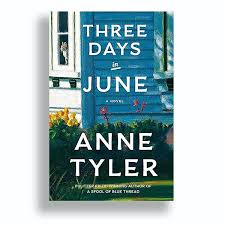
Anne Tyler – Three Days in June
Wonderful. A slightly awkward, abrasive protagonist, dealing with family dynamics at her daughter’s wedding (the three days are the eve of the wedding, the wedding itself and the morning after). It’s very funny, and very touching. I should note that whilst I read it only a few weeks before my own daughter’s wedding, my situation and my feelings about it all bear no relation to Gail’s, however much I liked her.
Chris Whitaker – All the Colors of the Dark
Lord, this is intense. The writing is so dense and so evocative at the same time, the characters blaze off the page, the plot is labyrinthine and full of traps for the unwary reader who thinks they can see where things are going. Is that plot entirely plausible – well, no, but it works, nonetheless, and it holds the reader till the final page, after which that reader might need a bit of a lie down. Glorious.
Emile Zola – Au Bonheur des Dames
My first Zola for many years. He was where I began reading French novels for fun, alongside my A level texts, which were a lot less thrilling than Germinal or La Bête humaine (sorry, Maupassant, Balzac and Moliere). The setting here is a huge Parisian department store, whose growth is threatening the small businesses in the area, who can’t compete. A young orphan, with younger brothers in tow, arrives at the home of her uncle, hoping to find work in retail, and is entranced by Au Bonheur des Dames, despite her uncle’s hostility to it.




Non-Fiction
Andy Beckett – When the Lights Went Out: What Really Happened to Britain in the Seventies
I know about the 70s, obviously. They were the years I became first a teenager and then an adult. In 1970 I was 13 and when the decade ended, I was a graduate, in employment, a married woman and a homeowner. And throughout these formative personal times I was always aware of the news, brought up to read the Guardian and watch the BBC’s bulletins every evening, habits I continued long after leaving home. But it’s refreshing to read a history of this period, which fills in the bits I’d forgotten or never knew and looks back with perspective and insight on what I can only remember in terms of how it was presented at the time, or how it impacted on my own life. Beckett writes engagingly and draws on interviews with those amongst the key players who were still living (it was written in 2009).
Anthony Beevor – Arnhem
I’ve read most of Beevor’s WW2 histories – he manages to make the military manoeuvres comprehensible to me and fleshes out the personalities and personal conflicts. This one commended itself to me as I’d just re-watched A Bridge Too Far and was fascinated by the unusual spectacle of an all-star WW2 film depicting what was unarguably a multi-faceted cock up of tragic proportions.
Viola Davis – Finding Me
I hadn’t realised quite how tough a childhood Davis had. She writes about it in a very direct and emotionally open way (did she have a ghost writer? It didn’t feel like it). There’s a bit too much God-stuff for me, but one cannot come away from the book without a massive admiration for Davis the woman as well as Davis the actor.
Jim Down – Life Support: Diary of an ICU Doctor on the Frontline of the Covid Crisis
I read this around the fifth anniversary of lockdown and it is powerfully written, angry and heartbroken. As an intensive care doctor, Down really was on the frontline and it’s essential reading as the memories – at least for those of us who were far from the frontline – begin to fade.
John Elledge – A History of the World in 47 Borders: The Stories Behind the Lines on our Maps
Hugely entertaining and enlightening account of various national borders (past and present), how they came about, how they have changed, how they have been – and are – bloodily fought over.
Goran Rosenberg – A Brief Stop on the Road from Auschwitz
There is a whole literature of the Holocaust that comes from the children of survivors. I’m thinking particularly of Eva Hoffman’s After Such Knowledge and Lost in Translation, Lisa Appignanesi’s Losing the Dead, Anne Karpf’s The War After. This generation had to deal both with their parents’ inability to tell them about their experiences, and with the very evident trauma that their parents lived with every day, and which often distorted family relationships and everyday life. Rosenberg grew up in Sweden, knowing very little of his father’s road to Auschwitz, only of the road he took from it, and has reconstructed that first road, as far as possible, to try to understand the tragedy that was waiting at the end of the second. Powerful and very moving.


Rebecca Solnit – Recollections of my Non-Existence
A memoir of how this remarkable and vital writer found a voice, found a way to exist and be both visible and audible, and to have an impact. It’s tough, heartbreaking, to read of how the relentlessness of violence against women wears down and intimidates even those who have not been directly victims, but Solnit always offers hope, even if it’s hope in the dark.
John Steinbeck – Travels with Charley
Steinbeck’s tremendously engaging account of his road trip in 1960, accompanies by his dog, Charley. It’s a journey of almost 10,000 miles, starting and finishing in New York, and travelling through Maine, the Pacific Northwest, California, Texas, and the Deep South. It’s a most intriguing glimpse of America and Americans, which becomes most disquieting, inevitably, when he reaches the deep South and encounters the hatred and fear that prevailed in those segregated towns – he’s frank about his discomfort and uncertainty about how to deal not only with the racism but how to talk to the black Americans he meets without putting both them and himself at risk of violence. It’s interesting to note, in contrast to his awareness of the evils of segregation, that native Americans are encountered only as a brief historical footnote and whilst this reflects the brutal reality Steinbeck doesn’t indicate that he has given the implications of this any particular thought. But it’s a great read, funny, perceptive and sharp.
Elijah Wald – Dylan Goes Electric! Newport, Seeger, Dylan, and the Night that Split the Sixties
This is the primary source for A Complete Unknown. Whilst the film tinkers a bit, inevitably, with chronologies ‘for dramatic purposes’, it does justice to the protagonists. But the book takes a much deeper dive into the folk scene, as represented primarily by Pete Seeger, and explains why Dylan’s ‘betrayal’ was so explosive. Entertainingly written and fascinating.


2024 Reading – half time report
Posted by cathannabel in Literature on June 23, 2024
There are a few new themes in my reading this half-year. First, I got back into reading in French (see Barbéry and Camus below, and Fatou Diome’s Le Ventre de l’Atlantique will feature in my December books blog as I am only one-third of the way through at present). I had new bookshelves to fill, and so books that have been exiled in my attic for many years (some since we moved here in 1987) have been brought down and places found for them on those shelves – I’ve rediscovered things I’d forgotten I owned, seized with delight on treasured books that I’d not seen for ages, and found books that I really don’t know if I ever read, as well as books that I now need to re-read. And thirdly, I went on a marvellous trip to Europe with my son, a three city, week-long holiday that started in Vienna, moved on to Prague, and then ended in Berlin. Being me, I did of course do quite a lot of preparation for this, not just in terms of the obvious travel arrangements and packing, but watching films set in those cities and reading books about them or set in them. Those books feature both in my fiction and non-fiction lists.
Otherwise, it’s a familiar mix, and the usual warning, that whilst I try to avoid spoilers, I make no absolute promises that there aren’t any. And note that I haven’t listed absolutely everything – the latest in a long-running series, for example, not because it’s not great, but because the only thing I could really say is that this is book no. x in series y. Books that I started and CBA’d to finish, or that I thought were just a bit rubbish I haven’t felt obliged to include; there are books here that didn’t work for me, but I’ve only listed them if there’s more to say than ‘this was a bit rubbish’, usually because I wanted to like the book more than I did, and so wanted to understand why I hadn’t cared for it. But generally, this blog is about sharing my enthusiasms, sharing what’s delighted, informed and inspired me, rather than my disappointments.
As always it’s difficult to pick out favourites from such an eclectic bunch. I think I’d choose, from the fiction list, Sarah Gainham’s Night Falls on the City, Simon Mawer’s Prague Spring and Francis Spufford’s Cahokia Jazz, and from non-fiction, Isabel Wilkerson’s Caste.
FICTION
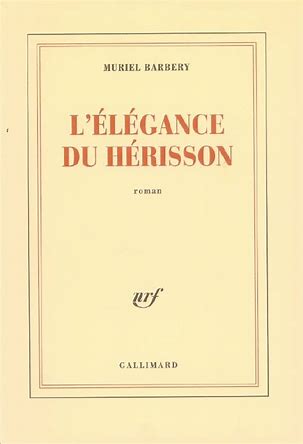
Muriel Barbéry – L’élégance du hérisson
This marks my resolve to get back into reading in French (see also Camus below). I never really stopped, between reaching the point in my comprehension that reading a novel was feasible (around A level), and diving into Zola and Mauriac and de Beauvoir, and my PhD focusing on Michel Butor. But since finishing the PhD I hadn’t read a word, and this, a gift from my brother-in-law, was a good way to re-start. It was slow progress at first, which can mean you lose the impetus of the plot, but I gradually got more comfortable. The novel was entertaining and at times moving, and whilst my internal jury is out about the ending, I’m very glad I read it.
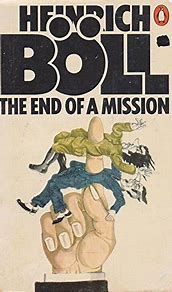
Heinrich Böll – The End of the Mission
This is one of the books that came down from the attic, where it had been in storage probably since we moved in here, in 1987… Böll’s The Lost Honour of Katharina Blum is always going to be in any list of books that have had a significant impact on me. This one didn’t live up to that but was darkly funny and acerbic and I will read more Böll (I think I read Group Portrait with Lady way back when and liked that very much but there’s another one on my bookshelf which I will turn to soon).
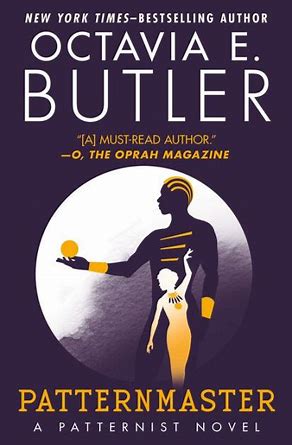
Octavia Butler – Patternmaster
I read a lot of sci-fi in my late teens/twenties, because my boyfriend/fiancé/husband (that’s all the same bloke, just to be clear) was really into it. Some I loved; some left me cold. In later years I’ve read much less, but in bringing boxes of books down from the attic I found, not Kindred, which was the Butler novel I remembered, but this one, and I’m still not sure if I did read it, all those years ago. No matter, it feels fresh to me, and she has the gift – so essential to writers in this genre – of acquainting the reader with the specifics of that world and those peoples efficiently and swiftly, with the minimum of exposition, so that within the first couple of pages, one is gripped.
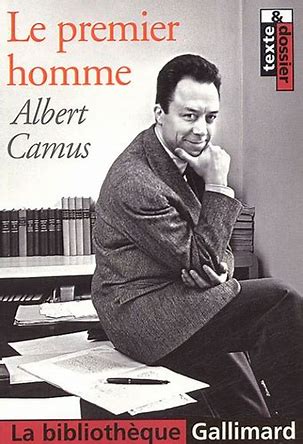
Albert Camus – Le premier homme
Camus’s last, unfinished book, the manuscript of which was found near the site of his fatal car accident and edited and published by his daughter. It’s highly autobiographical in its rich and vivid depiction of a childhood in poverty in Algeria, a deaf and illiterate mother and a father killed in the First World War, whom he never knew.
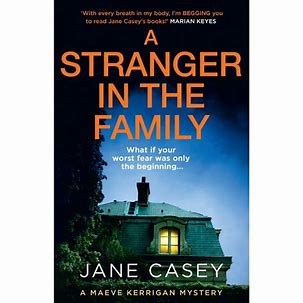
Jane Casey – A Stranger in the Family/The Outsider
Two new ones from one of my favourite contemporary crime writers. The first is the latest in her excellent Maeve Kerrigan series, the second a stand-alone (at least so far) which connects to the Kerrigan novels. Both are, as always with Casey, tightly plotted, with great characterisation and very well-written. I’m now in a state of some anxiety waiting for the next Kerrigan, due to a very disturbing epilogue….
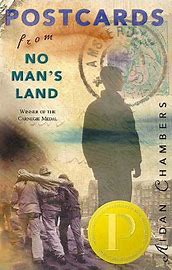
Aidan Chambers – Postcards from No-Man’s Land
A young adult novel, with two timelines, one contemporary, one set in the Netherlands during the Second World War. I didn’t quite believe in the contemporary protagonist, unfortunately, and it left me quite cold, to my surprise.
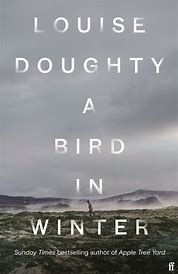
Louise Doughty – A Bird in Winter
Doughty writes a damn fine thriller, and there’s always depth and complexity as well as twists and turns and suspense. The opening sequence is riveting, and one remains riveted to the final page. (P.S., anyone who only knows Doughty through Apple Tree Yard, do read Fires in the Dark, her novel about the Roma holocaust – superb and unforgettable).
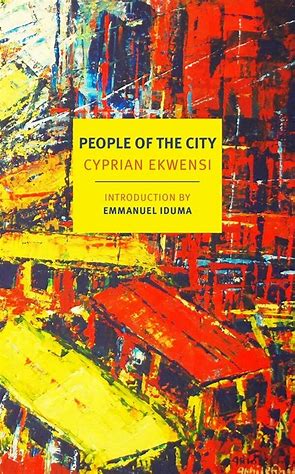
Cyprian Ekwensi – The People of the City
A Nigerian novel, published in 1954, before Nigeria gained independence – one of the first African novels to be published internationally. Ekwensi had previously published work based on folk tales, but this is very much a contemporary, urban narrative, the story of a young man, a crime reporter/bandleader in a city that isn’t named but seems to be Lagos. It’s quite episodic, betraying its origins in a series of short stories aimed at West Africans living in England (where Ekwensi wrote the book) , and is a vivid and engaging read.
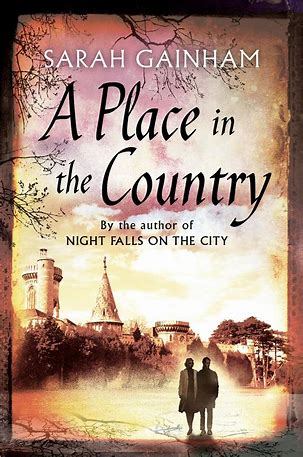
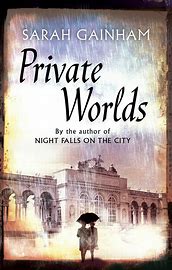
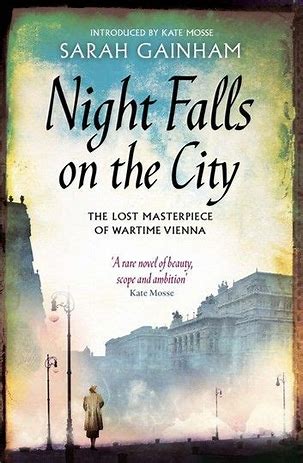
Sarah Gainham – Night Falls on the City/A Place in the Country/Private Worlds
The first in this excellent trilogy is set in Vienna, so I read it before and during my time there. It begins just before the Anschluss and takes its protagonists’ story through to the liberation of the city by the Red Army. The second volume shifts the focus and the location to British military personnel near the border with Hungary, but in the third we’re back in Vienna. I found the final volume a bit too talky and wasn’t entirely convinced by the portrayal of the relationship between the two central characters (mind you, at one point I thought, oh, this is all getting a bit D H Lawrence, but then one of the characters said the same thing!).
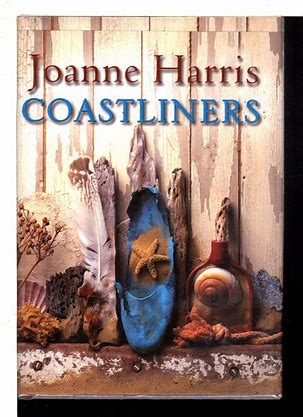
Joanne Harris – Jigs and Reels/Coastliners
The first of these is a collection of short stories and I didn’t get on with them at all. I tried several (at random, following some advice I read somewhere about how to tackle short story collections) and then gave up. Coastliners is very different to the other Harris novels I’ve read (Gentlemen and Players/A Different Class) and is a slow burner but it got under my skin, and I very much enjoyed it.
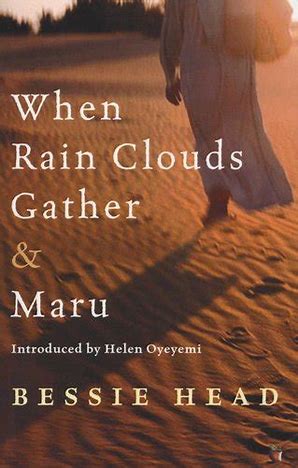
Bessie Head – When Rainclouds Gather/Maru
When Rainclouds Gather is Bessie Head’s debut novel, written in exile in Botswana, where she had fled from apartheid South Africa, and published in 1968. It’s a great read, illuminating many aspects of contemporary society and politics, and offering a strong environmental message, rather ahead of its time. It’s also ahead of its time in the portrayal of the male characters, who are complex and sensitive in ways that go against the more macho stereotypes, as Helen Oyeyemi says in her introduction. Maru was Head’s second novel, published three years later, and focusing on caste, through the character of Margaret, a member of the San (pejoratively, Bushmen) people. I read Head’s later A Question of Power many years ago and will re-read in light of these two.
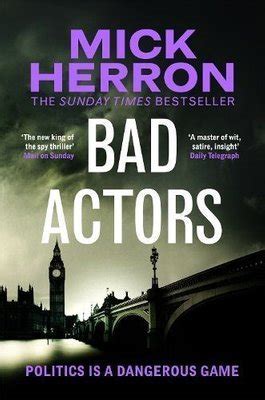
Mick Herron – Slough House/Bad Actors
Up to date with the books now, which means I’m eager for the next one, and for the next TV series. I started Bad Actors desperately wanting to know what had happened to one of the regulars, and Herron rather sadistically kept me dangling till the last page. The swine.
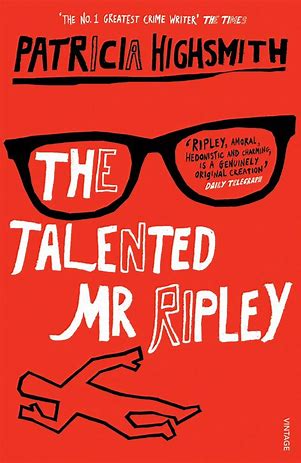
Patricia Highsmith – The Talented Mr Ripley/Ripley Underground/Ripley’s Game
I’d read the first of these, many years ago, and thought I’d read the others, but they seem quite unfamiliar. There is a degree of repetition in the plots, and it’s all very entertaining and well-written, but I’m not sure that I’m going to go on to Volumes 4 and 5 – I think I’ve spent enough time with Mr Ripley, for now at least. I watched the new adaptation of the first novel, with Andrew Scott and loved it (see my review in the screen equivalent of this blog).
Daisy Hildyard – Hunters in the Snow
The influence of W G Sebald is strong here, but this debut novel doesn’t entirely work for me. Its starting point is a young woman sorting through the papers left behind by her eccentric grandfather, which comprise his idiosyncratic history of England. This turns out to be the stories of four men: Edward IV, Peter the Great, Olauda Equiano and Lord Kitchener, and in each case the accounts are heavily weighted towards anecdote, and the sifting through anecdote for truth or deception. In between, the young woman remembers her childhood on the grandfather’s farm, and this too is of course exploring our relationship with the past. I liked a lot of things about it, but the different strands didn’t seem to come together in a satisfying way – it’s good, good enough to give it a re-read to see if I can get what Hildyard is trying to do.
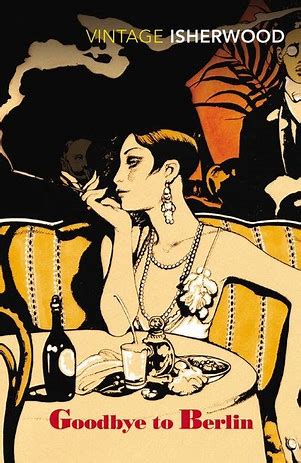
Christopher Isherwood – Goodbye to Berlin
Read in preparation for our visit to Berlin. Not quite either a novel or a short story collection, these six narratives follow the same characters and are ordered chronologically, but with jumps in time that make these sections seem more free-standing. What is noticeable is how the Nazis go from being background noise in the first to being a clear and present threat by the end. The characters aren’t in general very sympathetically presented (even the one who’s called Christopher Isherwood), but they’re vividly drawn, as is the city.
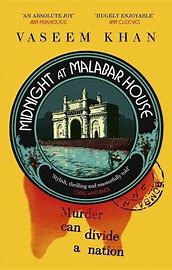
Vaseem Khan – Midnight at Malabar House
A new (to me) historical crime writer – this series is set in India in the years after Independence and the protagonist is a nicely quirky character, also distinguished by being the first female copper in the newly independent police force.
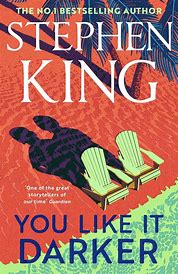
Stephen King – You Like it Darker
It’s obviously not a coincidence that the title of this collection of short stories echoes that of Leonard Cohen’s final album, You Want it Darker. I knew it wasn’t, even before I read the acknowledgement in King’s Afterword, because he’s a man who knows his music. And in this collection of stories, perhaps more than ever, King’s protagonists are older, intensely aware of their own mortality, of the frailty of their bodies, of the accumulation of losses, of regret and shame for past mistakes. He’s always explored darkness, but there’s a particular note that he strikes here, again and again. He can still work that trick on my mind that he has done so often over the years, of making me read on in the hope that if I get to the end of the story that uneasy sensation in my gut would ease, only to find that the last words in the story are ‘God help me!’ and I’m not free after all, debating whether to leave the light on. I know that it isn’t real, and I know that there’s no way I will hear that particular sound in the house and I know that I’m listening for it…. The stories vary considerably in length, and one or two are slight in content as well as short on pages, but the best are King at full strength (full darkness). ‘Rattlesnakes’ in particular will stay with me for a long time, I fear (given my snake phobia, born from living in West Africa where we had to learn to be afraid of them).
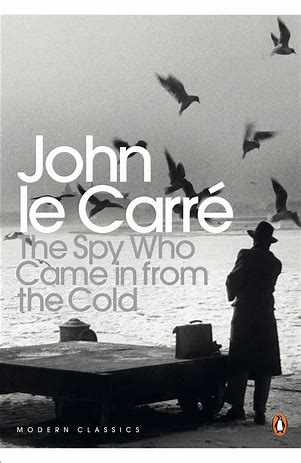
John le Carré – The Spy who came in from the Cold
A re-read, whilst in Berlin, of one of the first le Carrés that I read in my teens. As brilliant as I remembered it, and as bleak.
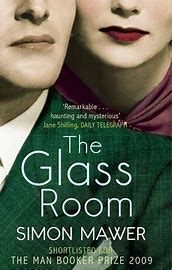
Simon Mawer – Prague Spring/The Glass Room
More travel-related reading. The first is set, as the title suggests, at the time of the Prague uprising and its violent repression, the second spans a much longer period, beginning between the wars, and taking the story through to, again, the Prague spring. Both are fascinating and compelling, beautifully written and moving.
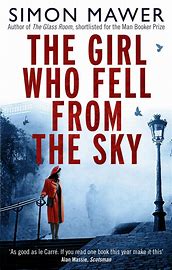
Simon Mawer – The Girl who fell from the Sky/Tightrope
This is a more conventional thriller from Mawer, about one of the SOE agents parachuted into Occupied France. It’s territory I know well, having been obsessed with the stories of the female agents since watching Odette and Carve Her Name with Pride in my teens, and having read Sarah Helms’ biography of Vera Atkins and Leo Marks’ memoir, Between Silk and Cyanide (both Atkins and Marks make appearances here, along with a mix of real and fictional characters). The quality of Mawer’s writing makes this stand out – and the thriller really does thrill (there is a sequel about which I can say nothing without spoilers, so I’ll say only that it’s just as tense and gripping as the first).
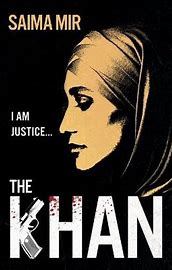
Saima Mir – The Khan
We’re in Godfather territory here, transposed to a northern industrial city (I’m thinking Bradford but it’s not specified) with a significant South Asian population. It’s about family, loyalty and morality, as the titular Khan faces questions of succession and of a changing city. The narrative immerses the reader in Pakhtun culture, which in itself is fascinating.
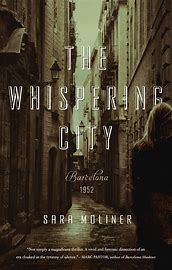
Sarah Moliner – The Whispering City
Spanish crime thriller set in Barcelona during the Franco era. The context is absolutely part of the narrative, not just a backdrop, and Moliner creates the atmosphere of fear and mistrust very effectively.
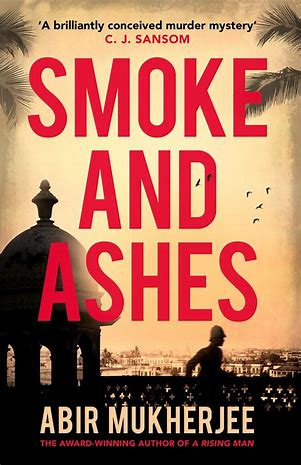
Abir Mukherjee – Smoke and Ashes
Another in the Wyndham/Banerjee series, set in 1921. What Mukherjee does by telling the story through the voice of the British officer, not his Indian sergeant, is brilliant – he doesn’t make Wyndham anachronistically enlightened, but as something of a maverick, able to contemplate other points of view than the received Raj wisdom. Nonetheless, some of his remarks about India and Indians make me wince, and his relationship with Banerjee, whilst respectful to a degree, is rooted in that view of the world. It’s nimbly done, and the plot is complex and interesting, not only in terms of the crime but of the politics of the time.
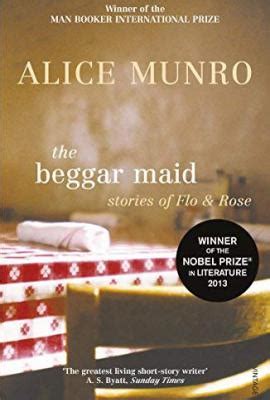
Alice Munro – The Beggar Maid: Stories of Flo and Rose
This was one of the books that came down from a long sojourn in the attic, and news of Munro’s death prompted me to re-read it. It’s a joy to read (whether this is a collection of linked short stories or a novel, who cares?), so clear and subtle, often funny and sad at the same time. I realised reading this again after many years that she must have been a huge influence on Elizabeth Strout, who I also love, both in terms of the form and the style. Both Flo and Rose are beautifully drawn – it’s interesting to re-read now and find that Flo’s story and that of the older Rose are as compelling to me now as the younger Rose’s were when I first met her.
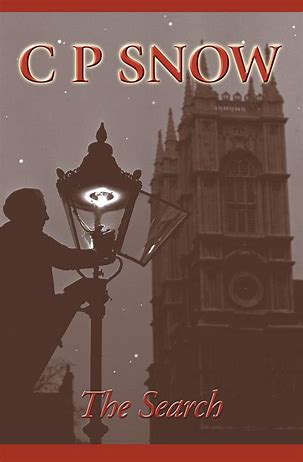
C P Snow – The Search
Snow was probably my father’s favourite writer of fiction. He read a fair bit of fiction as a younger man, but then rediscovered its joys in later life, when his sight failed and he turned to audio books (Dickens, Trollope, le Carré, Harper Lee and others – he was entranced by The Book Thief). Sadly, Snow’s work is so out of favour that it’s hard to find affordable real books, and no audiobooks at all. Dad related to Snow’s interest in science and politics, and this one, which precedes the Strangers & Brothers series, is about academic scientific research and University politics. I would have probably found it a great deal less interesting had I not worked in higher education management for so many years, and in a Physics department until shortly before my retirement, but as it is, it resonated strongly with me.
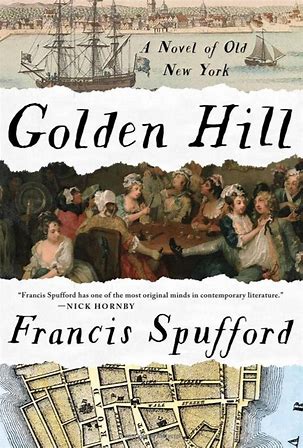
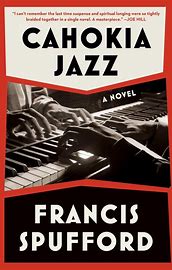
Francis Spufford – Golden Hill/Cahokia Jazz
I discovered Spufford through Light Perpetual, a stunning novel about an alternative world in which five children didn’t die in the V2 bombing of Woolies in 1944…. Golden Hill is quite different – a rambunctious Fielding-esque tale of a young man on a mission or on the make in America, with a much darker undercurrent that becomes clear only quite late in the narrative. Beautifully done. And Cahokia Jazz is an alt-history crime novel, about which I will say little more, except to recommend it very highly indeed. He’s one of the most exciting novelists I’ve encountered over the last few years.
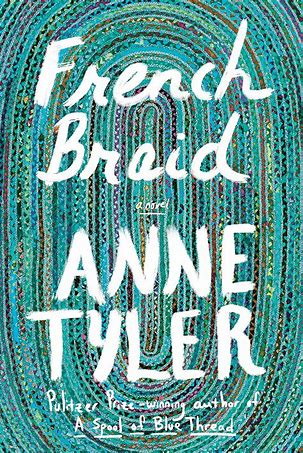
Anne Tyler – French Braid
I’ve read, I think, nearly all of Tyler’s novels, and have loved nearly all of them (Vinegar Girl, her take on The Taming of the Shrew, just didn’t work, I’m afraid). This is classic Tyler, as the Guardian’s reviewer put it, ‘Funny, poignant, generous, not shying away from death and disappointment but never doomy or overwrought, it suggests there’s always new light to be shed, whatever the situation, with just another turn of the prism’.
NON-FICTION
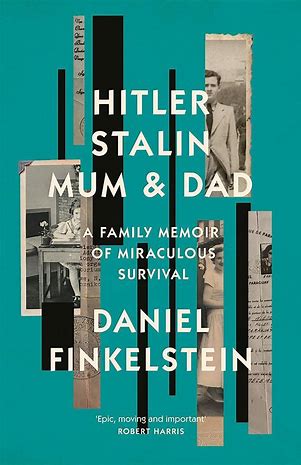
Daniel Finkelstein – Hitler, Stalin, Mum and Dad: A Family Memoir of Miraculous Survival
The title emphasises survival but throughout this family history we are aware both of how many didn’t survive, and of how easily ‘Mum and Dad’ could have been amongst the lost. That sense of loss is pervasive – ‘so many families, so many happy homes, so many childhoods’ – as is the awareness that, as Finkelstein puts it, “What happened to my parents isn’t about to happen to me. It isn’t about to happen to my children. But could it? It could. Absolutely, it could.”
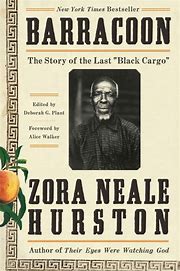
Zora Neale Hurston – Barracoon: The Story of the Last Slave
I came across the story of Cudjoe Lewis (or rather, Oluale Kossola), believed to be the last survivor of a slave ship, in the documentary Descendants, which included a short film clip of Zora Neale Hurston with Lewis. This is her biography of the man, based on extensive interviews with him, and it’s extraordinary. The book wasn’t published until 2018 – Hurston failed to find a publisher in her lifetime because she kept Lewis’s account in his own words and in the vernacular that he used, and because she acknowledged African involvement in the slave trade.
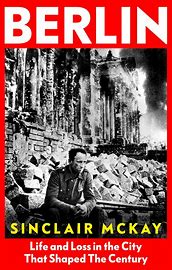
Sinclair McKay – Berlin: Life and Loss in the City that Shaped the Century
Read in preparation for the trip to Berlin, this is a fascinating account of that city’s twentieth century. Unlike Vienna, Berlin, as McKay says, displays its wounds openly – in a sense it had no choice, given both the extent of the devastation from Allied bombs and the world’s knowledge of the devastation that was wreaked upon Europe, and particularly on its Jews. That makes it a remarkable city to visit, and this book was an excellent introduction to it.
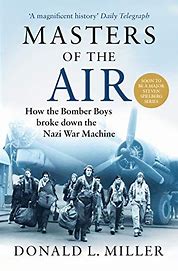
Donald L Miller – Masters of the Air: How the Bomber Boys Broke Down the Nazi War Machine
See my blog about this half-year’s watching for my review of the TV series based on this book (and on interviews and memoirs from the surviving bomber boys). The book itself takes a wider sweep than the drama and gives much more context for the missions which cost so many lives, as well as exploring the ethical arguments about the bombing of civilian areas. Miller is an excellent writer, and gets the balance between technical stuff and human stuff right, so it’s a very engaging read.
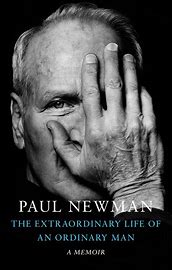
Paul Newman – The Extraordinary Life of an Ordinary Man: A Memoir
Ordinary, maybe. But certainly complicated. It’s a very honest account (as far as we can judge) and often sad, but because of the extraordinary life he’s had it illuminates so much about the movies during the decades in which he was a leading light, and about American life, culture, politics more broadly.
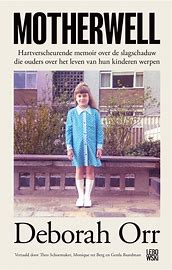
Deborah Orr – Motherwell: A Girlhood
I used to read the late Deborah Orr’s columns in the Guardian, and later followed her on Twitter and her voice was always compelling. This memoir is remarkable, and I find it strangely hard to write about, almost as if I’m reviewing a person (who I never met), rather than a book. So I’ll let Andrew O’Hagan’s words stand: ‘forging out of living memory a glowing vision of troubled belonging. In the writing of it, Deborah found a way to rise out of her sorrows and dependencies, her own difficult loves, and create a masterpiece of self-exploration. We can only mourn her loss and the brilliant books she might have written after this.’
Lucy Pollock – The Book about getting Older (for people who don’t want to talk about it)
I am not averse to talking about getting older – I don’t embrace all aspects of it (who could!), but I accept it, and, as my late husband used to say, it is better than the alternative. Unless it isn’t. My thoughts on my own ageing are heavily influenced by having lost my mother-in-law and being in the process of losing my father to dementia, and whatever else happens to me in the remainder of my life, that is the most terrifying thing to contemplate. There’s a lot of practical stuff here, about how to prepare yourself and your family, most of which I’ve already been cracking on with (PoA, will, lists of account numbers and passwords, funeral plan), others that I’m still thinking on (e.g. advance decisions). What was particularly interesting to me was the distinction Pollock makes between what is common as one gets older, and what is normal. In other words, what is genuinely pretty much inevitable, and what might be avoidable, or should be properly investigated rather than just being accepted. It’s not a cheery read but it is practical and hopeful, which is how I intend to approach my advancing years.
Francis Spufford – The Child that Books Built: A Memoir of Childhood and Reading
I am very much a child built by books. I read voraciously from the moment those marks on the page turned themselves into words for me and have never stopped. That childhood reading shaped my adult reading, and the more I read, the more I wanted that experience of turning a page and entering someone else’s world. So I was very intrigued to read Spufford (as I mention above, a fairly recent discovery and one of the most exciting contemporary writers) talking about the books that built him. He is a fair bit younger than me, but of course we read a lot of the same things – Tolkien, C S Lewis, E. Nesbit, etc. Le Guin, who was clearly hugely important to him, became part of my life only when I was a teenager, but it’s fascinating to read his account of discovering Earthsea as a child. And the way he writes about his life in books, as I’d expect from the way he writes his novels, is beautiful and touching and funny and deep.
Isabel Wilkerson – Caste: The Origin of our Discontents
A rigorous and persuasive exploration of American racism as a form of caste system. Wilkerson draws comparisons with the Indian caste system and with Nazi Germany. Kwame Anthony Appiah described the book as beautiful and painful to read, and indeed the account of how notions of purity and pollution, for example, played out in the American South – and more widely – are horrifying, and much of this detail was new to me. It seems to me that this analysis is hugely important in understanding not only the history but the future – recognising that this is about caste allows us a clearer view of how a society can change for the better. It certainly got into my head, and I found myself referencing it after one recent episode of Doctor Who (Dot and Bubble)…
Stefan Zweig – The World of Yesterday: Memoirs of a European
It’s hard reading this and knowing that the day after posting this manuscript to the publisher, Zweig and his wife committed suicide. The book isn’t a suicide note – it doesn’t really explain that decision. They were safe, albeit in exile and (this was in 1942) with no guarantee that their safety would continue or their exile end. Clearly that sense of exile, of having left a life behind that, whatever the outcome of the war, could not simply be picked up again, was beyond bearing. But for most of the book, Zweig appears to lead a fairly charmed existence, attracting success, brilliant and talented friends, and a life of culture and comfort. He seems to have accepted the good things that came his way without any great surprise or doubt that this was his due, which isn’t an entirely appealing quality. And the way in which all of those brilliant and talented people immediately became his dearest friends was a bit queasy. So I wasn’t won over to Zweig (though Michael Hofmann’s vitriolic demolition job in the LRB seems weirdly excessive and personal). In some ways I felt about Zweig as I felt about Vienna, where he spent his early years. Somehow Vienna gives the impression of being quite pleased with itself, and to have distanced itself more than other European capitals from the ‘unpleasantness’ of events. One friend, whose father got out of Vienna just in time, described the city as soulless and another, who grew up and lived there till recently, described how claustrophobic she found the city. My two days there hardly qualify me to judge but my son and I had both asked ourselves why we loved Prague and Berlin and didn’t fall for Vienna’s undoubted charms.
Postscript
It seems appropriate to honour here the late Alice Munro (see The Beggar Maid, above, and I have read others of hers), C J Sansom (see previous years’ book blogs for his Shardlake series, and I’ve also read his alt history, Dominion, and his Spanish Civil War novel, Winter in Madrid), and Christopher Priest (see future book blogs as I revisit some of his brilliant sci-fi novels, and catch up on any I missed. A Dream of Wessex is the one I always think of first, because it had such an impact on me). Thank you all.
And thank you to all the writers listed above, for everything that they brought me over the last six months. You’ve taken me to four continents, to several centuries, as well as to places that never existed, and history that never happened. You’ve entertained me, informed me, made me think, deepened my understanding of this world and its history and of the people who inhabit and have inhabited it. The child that was built by books is still being built by books, even in her seventh decade.
 Passing Time