Bitter Victory
Posted by cathannabel in Second World War on May 7, 2020
Somehow the impending anniversary of VE Day had not impinged on my consciousness. I didn’t get the memo about the Mayday bank holiday being shifted to Friday so we could commemorate the end of WWII in Europe.
And I’m deeply uneasy about it. We’re in the midst of a crisis which, as we are reminded daily, is the toughest thing we’ve had to face since the last war. And it’s by no means over. We are assured that the infection has ‘passed the peak’ but people are still dying and the dying will continue for some time yet. Street parties – even physically distanced ones – surely aren’t quite capturing the mood. And the more cynical amongst us may suspect that this anniversary is giving government an opportunity for distraction – remind us of our finest hour, whilst offering us only spin and tweaked stats and pieties in place of decisive, timely and compassionate action.


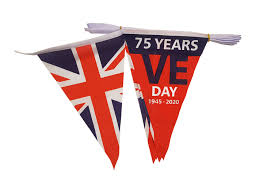
And there’s more to my unease. Are we marking the defeat of a genocidal fascist dictatorship which had brought about the deaths of millions, not just soldiers, or civilian casualties of bombing, but people targeted for death because they were Jewish, Communist, Roma, homosexual, disabled? Are we marking the fact that in the wake of this horror, Europe forged a peace and a unity that has held ever since?
Or are we celebrating because ‘we’ defeated ‘them’? Because Churchill was the Boris of his day, facing down an enemy with British pluck and bulldog spirit? Just to illustrate my concerns:

What did the end of that war really mean for us here in Britain, and for our neighbours in Europe? Primarily, I would guess, for the British, it was relief. Relief that they no longer had to listen for the sirens, or listen for when the V1 engines cut out. Relief that nights in shelters or underground stations, waiting for the All Clear, were at an end. The prospect of life returning to some semblance of normality, or to what we would now call a ‘new normal’. The prospect of the return of the people they loved who had been serving in Europe, and the relief those people were no longer in daily peril.
But even then, it was tempered with the reality of loss. The gaps on the streets where houses used to stand, where families had lived. The people who would never come home, or who came home unutterably changed and damaged.
And the new normal had to accommodate – not right away, but soon – the full knowledge of what had happened ‘over there’. For those who’d arrived in the UK as refugees, there was the terrible wait for knowledge – and then the terrible weight of knowledge. Some returned to their families, if not to home, unutterably changed and damaged, and those to whom they returned had to wrestle not only with grief but the guilt that they had been spared, and the impossibility of truly understanding.
Across Europe, if not here, people had been starving – not just in the camps but in bombed-out cities, occupied territories. People now were sick, not just in the camps but across the continent, because of malnutrition and the breakdown of infrastructure in cities, towns and villages that had become rubble.
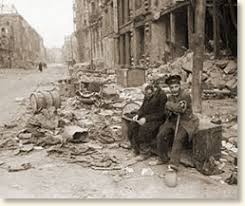


The thing is, VE Day didn’t mean it was all over (and not just because a brutal war continued in the Pacific, for another three months). For many it was never over. They may not have talked about it, often or at all, but it stayed with them. The survivors of the camps, the soldiers who liberated the camps, those who survived but saw more cruelty and destruction than their souls could bear. It may seem as if the war is being invoked all the time, especially at present, but rarely by those who really remember it, who were actually there.
I can’t mark VE Day with little flags and Vera Lynn and Keep Calm and Carry On. I mark this 75th anniversary by remembering the cost, remembering the loss and the pain and the destruction. And by remembering how Europe rebuilt and repaired, not only buildings and roads and ports, but alliances and communities and trust. I will think of victory in Europe, and the victory of Europe as an ideal of peaceful cooperation. Any VE day celebration that does not celebrate Europe is a sham, a fantasy of Little England, standing alone (apart from the Polish airmen, and the troops from across the Empire, and the Yanks, and the Red Army and the Free French and…), a myth that we use to bolster our sense of exceptionalism and our perverse decision to actually stand alone now.
Of course people celebrated 75 years ago. In that giddy moment of relief and release, they sang and danced and drank and kissed unsuitable strangers. It wasn’t all partying. There was joy, and pride in the courage and fortitude of soldiers and resistance fighters who had dared so much and won. There was hope that now things would be better. But as Frank Capra says in It’s a Wonderful Life, made in 1946, on VE Day they ‘wept, and prayed’.
75 years on, we can recapture neither the giddy relief nor the raw sorrow. We have a different perspective, inevitably. We know so much that they didn’t, about what happened during the war, and what came after. Our commemoration must be honest and clear-sighted, not sentimental.
The hope that VE Day brought was not just the hope of being reunited with loved ones. It was the hope of lasting peace, the hope that with peace would come the chance to build a better, fairer society. That hope led to the European Community, to legislation to protect individuals and communities against prejudice and discrimination, to the UN and its role in establishing and protecting human rights worldwide. As imperfect as those protections are, they emerged directly from the victory we are commemorating tomorrow.
Here, it led to the creation of the welfare state and the NHS. If we really understand what VE Day meant, perhaps this anniversary will help us to see how a better, fairer society could emerge once we’re all able to emerge from our quarantine. Perhaps.
With respect and gratitude to all of those who fought and died to defeat Nazism, with deep sorrow to all of those engulfed by the barbarity, those who were murdered, those who survived, those who lost so much.
Let us commemorate, by all means. But most of all, let us learn. Because if we do not learn from this bitter victory, night might fall again.
Why we clap
Posted by cathannabel in Politics on April 30, 2020
Tonight, as we have done every Thursday night since this crisis began, we will open the bedroom window wide at 8.00 pm and lean out, clapping, and rattling a tambourine. Our neighbours come to their windows, or to the tops of their drives, some banging pots and pans or ringing bells. From the other side of the house we can hear the same sounds from across the valley. As we clap, we wave to each other, we remind ourselves and each other that we’re a community, that we need each other.

And every Friday morning I see grumpy posts on Twitter, pointing out that if we vote or ever have voted Tory, we’ve no business clapping for carers. Pointing out that those carers need PPE and testing and decent salaries more than they need our applause. Really? We had no idea! We thought that clapping would solve everything!
Of course I can see where this cynicism comes from. I’m not an automatic joiner-in. When I see Tory politicians who not so long back brayed their delight at having blocked a payrise for nurses, and who support an immigration policy that defines most of our carers as low-skilled workers who would not be eligible to come here under the points-based system, joining in the applause, I share that cynicism.
When I hear that we are enjoined to clap for Boris, or sing to congratulate him on the birth of his umpteenth child, I’m having no truck with that. Nor even to sing birthday greetings to the redoubtable Captain Tom. I am cross when the BBC News claims that the Duke and Duchess of Cambridge ‘led’ the applause. Not my applause, they didn’t. I can be as grumpy as the next person, in other words.
This whole thing wasn’t started by politicians or royals. It was an idea mooted on social media, inspired by the video clips we were all seeing from Italy and elsewhere, of spontaneous rounds of applause for health workers, and displays of solidarity within communities. I wasn’t sure it would take off here – we are British, after all – but it has, and I’m glad.
Because if we want, not to go back to how things were, but to learn from this crisis, to learn who we really need, and how we can support those most valuable members of society, not just in times of crisis but at all times, we need to keep making a noise.
We’re making a noise about all of those people who are risking their lives, who are keeping us safe, who are taking care of us, because we want to ensure that when the crisis is past they don’t just disappear back into the shadows. We’re making a noise about carers because we want to ensure that when the crisis is past, their value is not forgotten.


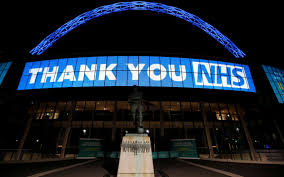
I don’t even really care whether those who clap now have voted Tory in the past. I care that their values may be shifting, may have shifted, and that even Tories may think twice about disparaging or dismissing those who are our heroes now. I don’t care if they haven’t been angry in the past, as long as they understand a bit more of the anger now, as we see the impact of underfunding of the health service, inadequate staffing levels and failures of planning.
I care that now, as so many of our priorities and values have been overturned, we are sharing both the gratitude and the sense that those priorities and values were wrong before, and must change permanently.
Polly Toynbee’s response to the clap refuseniks chimes with my own:
So when next week’s clap for the NHS comes, join in out of gratitude but also out of anger – anger at how depleted the nursing workforce has become and how badly the successive Conservative governments have treated the profession.
https://www.theguardian.com/commentisfree/2020/apr/24/year-nurse-tories-10-years-bad-care-nhs-crisis
I’m reminded too of how, when there have been major terrorist attacks, many attempts to assert solidarity with victims, to emphasise our shared humanity in the face of hatred have been derided as clichéd and simplistic.
As Stig Abell says:
At moments of crisis and trauma, the use of comprehensible and familiar phrasing is itself a sign of something important: it is a bid for connection. Cliché demonstrates community, our intention to understand one another. It does not matter that “standing in solidarity” has no practical import, or that prayers may be just so much shouting into a void. … Clichés are good things when pressed into the service of communication in the aftermath of the incomprehensible and the traumatic. They often reveal the good intentions we share, and they are more valuable than ever.
https://www.the-tls.co.uk/articles/cliche-terror-attacks/
Kenan Malik makes some powerful points too, about the use of the word ‘hero’. If that normalises the deaths of NHS staff and other carers in some way, suggests that, like soldiers in wartime, they signed up to put their lives in danger, it’s dangerous. They didn’t. Pharmacists and health-care assistants and midwives and GPs, paramedics, nurses and consultants, signed up to help people, to save lives (directly or indirectly), but there was no reason they would have thought the job could kill them. Of course that makes it all the more remarkable that they’re doing what they’re doing, with or without the necessary level of PPE. When we applaud them we recognise that they weren’t given a choice (or only the choice between risking their life and walking away from patients in need of help).
Few of them would want to be described as heroes. Most would see themselves as ordinary people doing ordinary jobs in extraordinary circumstances. Many might suggest that most people in their place would do what they are doing. And they may be right in that. What they show is that heroism is a very human attribute. It is expressed not in having an incomparable character or possessing superhuman abilities but in being human to the utmost. Heroism in everyday life is, from this perspective, an expression of our humanness. It has become fashionable to denigrate humans as selfish or callous or egotistical. Many are. But many more are dedicated and compassionate and kind. Humans are far better than we often give ourselves credit for. In celebrating the endeavours of nurses and care workers and bus drivers and cleaners and volunteers, and the myriad others working to pull us through these surreal times, we should not forget that many are forced to be heroic, through a lack of resources or poor conditions.
https://kenanmalik.com/2020/04/26/heroism-and-the-quality-of-being-human/
And, as Rachel Clarke@doctor_oxford, said on Twitter,
We’re not soldiers. We didn’t sign up to die for a cause. We don’t want red arrows, medals, jingoism or war rhetoric. We want masks, gloves, gowns & visors. Could you actually focus your minds on that, please?
We can agree, passionately, with that. But the Thursday night clapping is not an expensive PR stunt. It’s ordinary people – people who don’t have the resources or the clout to get carers what they need, to change government priorities or policies. We’re telling the carers – and it’s a broad definition, not just the ones who save lives in the ICU – that they are cared about, and the government that we care about them, and that we expect our government to translate that into the action that’s needed to keep them safe, so they can keep us safe.
We clap for all of these people (and those whose deaths have not yet been recorded). And we clap for our family, friends, neighbours and colleagues on the front line. We can’t stop now. And when this crisis is no longer a crisis, we mustn’t stop making a noise.

Us Four
Posted by cathannabel in Personal on March 24, 2020
There’s only 4 years and 8 months between the eldest (me) and the youngest of us four. I can’t really remember the arrival of Two and Three. Two arrived when I was only 15 months old, and Three 15 months after him. There was a slight pause then, during which we relocated to West Africa from our home in Kent.
Four was born in Kumasi, Ghana, in 1962. A newly (1957) independent nation. It’s part of our heritage. We cheer on the Black Stars whenever they are in international competition, holding that loyalty alongside our support for the England national team and Nottingham Forest. We all know our day names, the names all children in that part of Ghana are given, to indicate the day of the week on which they were born. I’m Abena, Two and Four are Kwame, and Three is Akua.
I can’t claim to remember that much about Four’s arrival. I know from my father’s memoirs that the trip to the maternity hospital in Kumasi was somewhat eventful:
We very nearly didn’t make it to the hospital. The President was visiting Kumasi on that day and all roads were closed, with police and soldiers restraining the roadside crowds. We had to drive seven miles to the hospital and, at first, were refused permission to drive along the route that the President would shortly take. Later, a senior policeman responded to our pleas and we were allowed to drive along, a mile or two ahead of the procession, waving back to the crowds in royal fashion.
I do recall that on being introduced to Four, I didn’t think much to him. He was bright red in the face, and wrinkly. Thankfully, he became more appealing very soon, and grew on me.
Over the years, we four pursued our own paths to career and marriage and children and so on. At various points we were divided by considerable distances (Three in Bermuda, Two in Northern Ireland). And so the times when we could all be together became fewer.
We had our differences too, of course. Whilst I am the only heathen amongst us, Four was the only one to take a more conservative line politically. The former never became a source of tension, even if we don’t understand each others’ perspectives fully. The latter was, from time to time, thanks to the three more left-wing siblings’ tendency to express our views vigorously and not always sensitively on social media. We got past all of those things.
And we could always all agree on Nottingham Forest, having collectively nailed our colours to that particular mast back when I was about 11 or 12 years old. Before the glory days, and through the peaks and (mainly) troughs that followed.
Most of all, whenever one of us was having a tough time, the others rallied round. Whatever the circumstances, we knew we could count on that.
In July 2018, things got really, really tough. Four was diagnosed with terminal cancer. Chemo could buy him extra time and so he started on a punishing regime of first one type of chemo and then when that stopped working, another more experimental treatment.
Inevitably, time ran out. The second chemo stopped working, and the cancer was off the leash. Even so, until the last couple of weeks, one would not have guessed to see him how ill he was. But things moved terrifyingly fast, and it was clear that he would not see much of 2020.
Very early on 2 February, Four left us. Peacefully, at home, with his wife and his sons and daughter in law around him, with the music he’d chosen playing.
And so we are three. And it feels so wrong. It feels … kind of lopsided. We no longer balance. The perfect pattern of Girl, Boy, Girl, Boy doesn’t work. And, as Two put it:
‘THE LAST SHALL SHALL BE FIRST.
Early this morning, the last to arrive was the first of us siblings to leave. It feels all wrong and it’s deeply sad. The only consolation is that he did not linger in pain and discomfort.
We buried him on 17 February. He’d planned the service, and it was led by someone who loved him as a brother, with readings from Two, a close friend, and his daughter in law, and prayers from his cousin. We were all there, friends and family, old school-friends, recent colleagues, people from his church, neighbours. The love and respect were palpable.
And if he had to go so soon, I have thought in the last few weeks that I was grateful that we had the chance to say our goodbyes together, and to hold each other tight, literally. A few weeks more and the virus would have taken that from us. Small mercies. But it has taken the chance for us to spend time with each other, and with Four’s wife and sons, for whom the daily pain of loss is so cruel and unrelenting, just when we’d have wanted to be able to be close and supportive. We’ve got social media – and are very grateful for that – but of course it’s not the same.
Us Three will always, in our hearts, be Us Four. Always. Today he would have turned 58. Would have, should have. We hold him in our hearts, as we do the family he loved so much.
Greg Hallett, 24 March 1962-2 February 2020. Love you, our kid, always have, always will.


Books for the Plague Times
Posted by cathannabel in Literature on March 17, 2020
We’re all experiencing varying degrees of anxiety just now, depending upon our own age and health, or that of the people we love, the people on whom we rely, or who rely on us. We don’t know what’s going to happen, we’re bombarded with information from sources of unknown reliability, and drip-fed information from our government.
What we do know is that all of us are already affected, our lives have already changed. We’re taking precautions that would have seemed silly a couple of weeks ago, and the things we were talking about so intently a couple of weeks ago (Brexit, the football results, holiday plans) are no longer occupying our minds. We’re scared, we’re frustrated, we are in limbo, we are at a loss.
If we find ourselves spending more time at home, as a precaution or through illness, we’ll need more books. Never mind the bog rolls, load up your Kindle or your bookshelves, because whatever the crisis, books are vital. They keep open a window on to the world, they connect us with other places, other times, other people. They inform, challenge, console, inspire, and distract.
This reading list for plague times will focus on consolation, inspiration and distraction. Sifting through my bookshelves I realise how dark much of my reading matter is. Given current world events, and recent personal loss, I feel a hankering for books that can lift me out of the darkness. So I am sharing some of these with you, in case they can lift you too.
I’m not promising that some of these won’t make you cry, if you’re prone to it. I’m not promising that no one dies, or gets diagnosed with a serious illness. I am confident they will leave you feeling cheerier than when you began, or at least having had a break from the grim.
Biography/Autobiography
- Clive James – Unreliable Memoirs. When this first came out, I was working in a bookshop. During the lulls between customers, I started reading it, but had to stop because it made me laugh so much, so uncontrollably. NSFW, to be sure.
- Keith Richard – Life. I never expected to fall for Keith Richards. I read his autobiography because it had had such positive reviews, and obviously because of my interest in the music. But what surprised me is what an engaging writer he is. A lot of it is very funny indeed, and he writes beautifully, perceptively and passionately about music. About the people, particularly Brian Jones and Jagger, he can be harsh (as he often is about himself), but he’s often also generous and gracious. His attitudes to women may be relatively unreconstructed but he clearly likes them, rather than just wanting to have them. Reading about his wilder years, it’s pretty amazing that he’s still here, but I’m glad he hung around at least long enough to write this vivid account of an era and a career that one really couldn’t make up.
- Giles Smith – Lost in Music. John Peel said of this book that ‘if you have ever watched a band play or bought a pop record – if you even know someone who has bought one – you should read this book’.
- Patti Smith – Just Kids/M Train. I love Patti Smith as a musician, but I think even more as a writer. Just Kids, her memoir of life in ’70s New York, and her friendship with Robert Mapplethorpe, is warm, and funny, and touching, and a vivid portrait of the cultural life of the city. In her later memoir, M Train, she talks about life post-Mapplethorpe, life with her husband Fred ‘Sonic’ Smith (ex MC5), and of the losses that marked those years (not just Mapplethorpe, but brother Todd, and Fred). And, unexpectedly, of her obsession with Midsomer Murders. Her warmth and humour permeates every page.


Reading the Detectives
OK, by definition, crime fiction deals in death, often rather nasty death. But in these, what stays with you after reading is not the cruelty or the gore, but the characters, the wit, the dialogue, the humour.
- Ben Aaronovich – the brilliant and bonkers Rivers of London series. They’re a mad mash-up of fantasy and crime and are a delight.
- Dorothy L Sayers (and the Jill Paton Walsh posthumous titles) – Peter Wimsey series. I can re-read the Wimseys any number of times, because the writing, and esp. the dialogue is so glorious. Paton Walsh’s follow-up novels are pitch perfect, so if you want to renew your acquaintance with Peter, Harriet, Bunter and the Dowager Duchess, you’re in luck.
- Arthur Conan Doyle – Sherlock Holmes. More great writing and dry humour, so even when you know from the start how it’s all going to pan out, you can enjoy the ride.
- Elly Griffiths – Ruth Galloway series. Lots of Gothic darkness in the plots but Ruth is drawn with such warmth and humour that we feel we know her as a personal friend and would happily spend a few hours down the pub with her when this crisis is over.
- Lynne Shepherd – Murder at Mansfield Park. Lynne specialises in literary mysteries. They’re pretty dark, but this one is a deliciously subversive take on the Austen.
- Alexander McCall Smith – No 1 Ladies’ Detective Agency series. Love the setting, love the premise, love Mma Precious Ramotswe.


Historical Fiction
The further back the better, frankly. One can lose oneself amongst the Plantaganets or the Tudors – not that there are no echoes of our own times (the occasional plague, for example…) but they’re not overwhelming. I haven’t listed the obvious title, the new Hilary Mantel, which is brilliant (I’m halfway through) because you all know about it anyway and are either reading it or about to read it.
- Livi Michael – Wars of the Roses trilogy. Michael tells the story through a number of different voices, of major players and very minor players, mentioned but unnamed in the chronicles. And she threads the accounts in the actual chronicles through her fictional narrative, so we read of the events in the words of writers who lived at that time, and then she takes us into the thoughts and feelings of her protagonists so that they live and breathe for us. I would also highly recommend her earlier adult novels, and her children’s series about Frank the intrepid hamster…
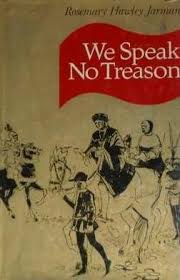
- Rosemary Hawley Jarman – We Speak no Treason. This was a swooningly romantic take on the story of Richard III which I adored as a teenager, but it stands up to a re-read by a more cynical adult. Skillfully as well as passionately written. A cut above the Jean Plaidys (which I devoured at the time, but suspect would find less sustaining now).
- Anya Seton – Katherine. As above. I read lots of others by her but this was my favourite. I also loved Dragonwyck (pure Gothickry), and for a couple of slices of US history, The Winthrop Woman and My Theodosia.


Contemporary Fiction
- Tiffany Murray – Diamond Star Halo rocks. It’s set on a fictionalised version of the residential recording facility at Rockfield Farm, Murray’s childhood home, itself the locus of much rock music mythology. It’s gloriously funny, but has plenty of heart, and the music is part of every line of the text – I could hear the soundtrack in my head, even the music that was imagined and not real. And I often think of protagonist Halo’s night-time prayer, a litany of rock stars gone forever…
- Kate Atkinson – Behind the Scenes at the Museum. Well, reading anything by Atkinson is a joy. Life after Life is one of my favourite books ever but I find it emotionally overwhelming so it’s not a recommendation for now (especially since it has a lot about the 1918/19 Spanish flu pandemic…) This, her debut, is delicious black comedy.
- Anne Tyler – Saint Maybe. Oh, look, just read anything by Anne Tyler. This was my introduction to her work, but I could just as easily suggest Dinner at the Homesick Restaurant, Breathing Lessons, The Accidental Tourist...
- Patrick Gale – Take Nothing with You/Notes on an Exhibition. The most recent Gale, and the first thing I read by him. They don’t shy away from tragedy but the warmth and generosity of the writing always leaves one with a sense of joy and hope. Take Nothing with You talks about music so vividly that somehow I felt I could hear every note as I read.
- Roddy Doyle – Barrytown trilogy (The Commitments, The Van, The Snapper). Also, check out his Two Pints (and its sequel, Two More Pints). All of the entries appeared on Facebook before being gathered together in a book. Doyle ‘used the social network as a home for a series of conversations between two middle-aged men, perched at a bar, analysing the news of the day and attempting to make sense of it.’ Wickedly funny, very rude and sweary, and surreal (check out young Damien’s scientific researches…).


Classics Revisited
There’s a particular comfort to be found in re-reading. You can look forward to favourite bits, brace yourself in advance for the bit that always makes you cry. You don’t have to worry about the plot, because you already know how it all turns out, so you can just savour the pleasures of the writing, the characters, the descriptions, the dialogue. In this category I would put my favourites of the great nineteenth-century novelists: Austen, Dickens, Eliot, Gaskell, the Brontes. A lot of people rate Trollope but I could never quite take to him. And Hardy is a bit bleak for these times.
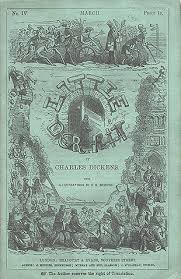


From the early part of the twentieth century, I’d go for:
- Dodie Smith – I Capture the Castle, in which we meet Cassandra Mortmain (sitting in the kitchen sink) at the age of 17 (‘looks younger, feels older’) – a marvellous mixture of naivety and wisdom. Far older than me when I read it first, so I grew up with her, catching up and then overtaking her (I’m now old enough to be her nan).
- Arnold Bennett – Clayhanger series. A recent discovery (is it a trilogy or a quartet?) I’ve read the first two in either event, and Hilda Lessways is a fantastic character, she blazes off the page.
- John Galsworthy – Forsyte Saga. Family sagas are grand for times when the future is so imponderable, giving one a reassuring sense of continuity. I watched the original dramatisation in the late 60s, with Susan Hampshire & Eric Porter, the one that caused a bit of a kerfuffle because churches found their pews a bit under-occupied on Sunday nights, due to a clash with the BBC1 repeat showing, and some even changed the time of Evensong so their parishioners would not have to face this dilemma. Try telling your kids about the days when most tellies couldn’t get BBC2 and if you missed a programme it stayed missed…
- Daphne du Maurier – impossible to pick just one. But if some are over-familiar, browse through her back catalogue, and try The Glassblowers, The House on the Strand, The Parasites – all much less well known but thoroughly good reads.
- Revisiting one’s childhood reading is often another source of consolation (depending, I suppose, on one’s childhood). I wrote quite a bit about the most significant books of a childhood spent with my head in books in an earlier blog.


Of course, some may interpret ‘books for the plague times’ entirely differently, and I could easily construct an alternative list composed of books about plagues, and other varieties of apocalypse. However, just now there’s quite enough scary in the rolling Coronavirus updates that I don’t need any more. Books to console, inspire and distract, that’s my prescription.
You’ll have your own. And other people have been sharing their lists on social media, which is wonderful. Writer Lissa Evans (@LissaKEvans) has compiled hers (there’s a degree of overlap but lots of titles that are new to me and so lots of riches to explore:


These lists are as individual as their compilers. What brings me joy might leave you cold, and vice versa. But I love sharing the books I love. And if you’re reminded to track down something you read ages ago, or encouraged to read an author you haven’t tried before, I’ll be very happy.
Stay connected. Hang on to your hat, hang on to your hope. Be safe, be well, be kind.
Choices and Chances: International Women’s Day, 2020
Posted by cathannabel in Feminism, Film, History, Literature on March 8, 2020
#IWD2020 #EachforEqual
An equal world is an enabled world. How will you help forge a gender equal world?
Celebrate women’s achievement. Raise awareness against bias. Take action for equality.
A number of things I’ve read or watched just recently have made me ponder the importance of choice in relation to equality. How women across the centuries have been deprived of real choices – and still are.
Re-reading Hilary Mantel’s Bring up the Bodies, in prep for the third volume of her Cromwell trilogy, I thought about the two queens, Katherine and Anne. Powerful women, women with influence, women with resources. And yet – their power, their influence, their resources were entirely dependent upon men: fathers, husbands and, in a different sense, sons. Their fortunes changed on the whim of a man, and there was nothing they could do about it: rejected, humiliated, and in Anne’s case, killed.


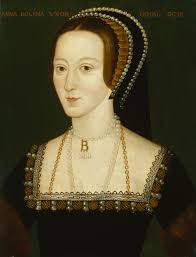


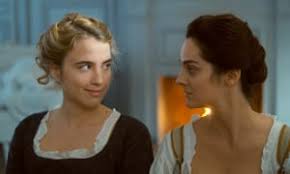
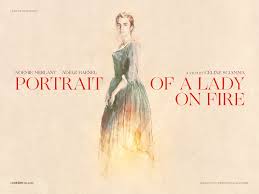
Fast forward to the late eighteenth century and the women portrayed in Celine Sciamma’s wonderful new film, Portrait of a Lady on Fire. Héloise is wealthy and privileged. But she has only two choices – the convent or a socially and economically useful marriage. Her elder sister had taken her own life rather than face the latter, and so Héloise must leave the convent and be marketed to potential suitors. There’s a lot to say about this film, about how it doesn’t just subvert the male gaze, it totally obliterates it. We see the women (and there are only a few men on screen, all briefly, all unnamed) through women’s eyes. Heloise seeing herself in the portraits that Marianne paints of her. Marianne’s self-portrait. Marianne surreptitiously glancing at Héloise as she must try to fix her features in mind, in order to paint her without asking her to pose. The two gazing at each other as they realise their mutual desire. Marianne turning, at Heloise’s request, for one last look as she must say goodbye. This is a film I will want to watch and re-watch. (And I was kind of chuffed to read that Sciamma is a huge fan of Wonder Woman – an actual auteur who doesn’t despise it as a superhero blockbuster but recognises its real power and importance.)



Arnold Bennett’s Hilda Lessways is the subject of volume 2 of his Clayhanger trilogy, written in the early years of the twentieth century but set in the 1880s. What’s remarkable is the way in which we are, throughout the novel, in Hilda’s thoughts, seeing everything through her eyes, knowing only what she knows, as she rages against the restrictions of her life, struggles to understand her own emotions, to understand what choices she has, and to face the implications of the choices she has made. She is independent in spirit, she makes her own living for a while (the only female shorthand writer in the Five Towns), but she’s trapped nonetheless. It’s a vivid and moving portrait.


The young woman at the heart of Celine Sciamma’s 2015 film, Girlhood (Bande de filles) rages too. Marieme hasn’t got good enough grades to get to high school so the only option is college for vocational studies. That would mean leaving home though, which her controlling older brother would be unlikely to permit, and which would leave her younger sisters vulnerable. Her attempt to escape her brother’s control simply put her in the power of another man, and her boyfriend offers only a different kind of trap – marriage and babies.
The power in this film lies in its contrasts. We first meet Marieme as she plays American football, an Amazon, powerful in her armour. The girls head for home, all talking at once, laughing and loud and proud. But as they approach home, we see the young men waiting for them, sentinels, and the girls fall silent. We see Marieme taking on the maternal role with her younger sisters, we see her cowed by her brother’s bullying, we see her talking to a young man, all lowered eyes and fleeting glances. Girls together can be joyous (dancing to Rihanna, in shoplifted dresses, looking glamorous just for themselves rather than for a man, high on cheap booze and weed) or threatening (showdowns, mainly verbal but spilling into violence) with other groups of girls, extorting money with threats. These shifts are jarring, troubling. They show us what these young women could be (for good or ill), and what stops them from being what they could be.
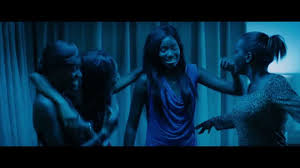


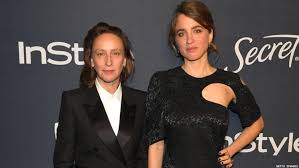
So my 2020 heroes are Celine Scammia and Adele Haenel (for Portrait of a Lady on Fire, and for protest at the Césars), Greta Gerwig for making a book that I’ve read dozens of times fresh and powerful.


Elizabeth Warren for persisting. The Doctor, Ada Lovelace, Noor Inayat Khan and Mary Wollstonecraft Shelley.


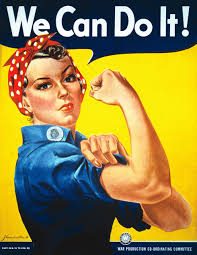
And those we’ve lost: Rosalind Walter (Rosie the Riveter), Heather Couper (probably the first female scientist of whom I was aware), Kathryn Cartwright (blogger, ambassador for the Anthony Nolan Trust), Katherine Johnson (NASA mathematician).


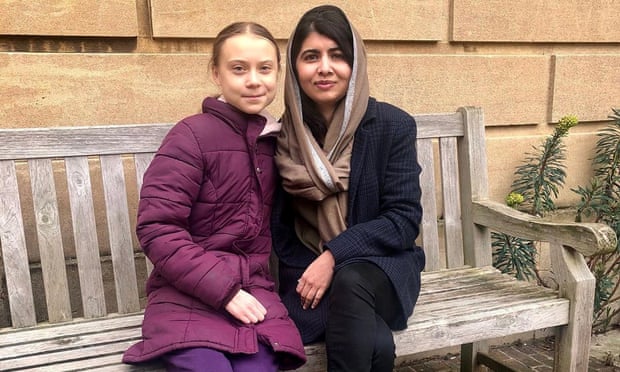
And two young women who could change the world, and who clearly terrify those who really don’t want it to change…
J’accuse…
Posted by cathannabel in French 20th century history, Politics on February 23, 2020

The basics of the Dreyfus affair are, I had thought, fairly well known.
Alfred Dreyfus, a Jewish artillery officer in the French army, was accused of treason in 1894 and convicted. He was stripped of his army uniform and badges in a ‘ceremony of degradation’, all the while declaring his loyalty to France and his innocence. He was sentenced to life imprisonment and deported to the Devil’s Island penal colony in French Guiana.
As members of his family and some others argued tirelessly for his innocence, Lieutenant Colonel Georges Picquart, the newly appointed head of the Military Intelligence Service, discovered that the key piece of evidence against Dreyfus was in the handwriting of another officer, Esterhazy.
Despite this, and the lack of other evidence of Dreyfus’s guilt, Picquart and the other ‘Dreyfusards’ faced the implacable hostility of the establishment to any suggestion that the case should be reviewed. That they succeeded in the end is a tribute to their resilience in the face of threats to their careers and indeed to their lives. That it had to be such a hard fight reveals the extent and virulence of French anti-semitism at that era.
Dreyfus was framed. Because he was a Jew, people were ready to believe that he would not be loyal to France. And because he was a Jew, and the true culprit was not, it was unthinkable that he should be vindicated and a non-Jew convicted in his place, whatever the truth. Picquart realised not only that Dreyfus was innocent, but that the establishment knew this, and had no intention of doing anything about it, but would allow him to continue to suffer on Devil’s Island, whilst the real guilty party (also known to the powers that be) retained his freedom, his army post, his salary.
Dreyfus was pardoned (not found innocent) in 1899. In 1906 he was reinstated in the army, but retired a year later, his health having suffered greatly from the privations of Devil’s Island. His most famous champion, Emile Zola, had died in 1902, in suspicious circumstances. Dreyfus himself died in 1936, and members of his family fled to the Unoccupied Zone from Paris when the Occupation began. His granddaughter, Madeleine Levy, was a member of the Resistance, who was arrested in 1943 and murdered in Auschwitz.
The case played its part in the founding of Zionism as a political force. As Theodor Herzl said:
If France – bastion of emancipation, progress and universal socialism – [can] get caught up in a maelstrom of antisemitism and let the Parisian crowd chant ‘Kill the Jews!’ Where can they be safe once again – if not in their own country? Assimilation does not solve the problem because the Gentile world will not allow it as the Dreyfus affair has so clearly demonstrated.
The ‘affair’ divided France. One was either pro- or anti-Dreyfus. The anti-camp used every anti-semitic trope and image in the repertoire to vilify Dreyfus and his supporters. And this rhetoric never went away. The ground was well-prepared for the Vichy regime’s collaboration with the Nazi occupiers from 1940. (Charles Maurras of far-right anti-semitic movement Action Francaise called his conviction in 1945 for acts of collaboration ‘the revenge of Dreyfus’.)
See any similarities with the case of Julian Assange? Me neither.
But John McDonnell would disagree.
I think it is the Dreyfus case of our age, the way in which a person is being persecuted for political reasons for simply exposing the truth of what went on in relation to recent wars.”
https://www.theguardian.com/media/2020/feb/20/julian-assange-case-is-the-dreyfus-of-our-age-says-john-mcdonnell
Where do we start with this nonsense? Dreyfus was not persecuted for political reasons. He was an army officer, just doing his job, notable only for being Jewish. He was framed because he was a Jew. He was persecuted solely because he was a Jew.
Even if one believes that the prosecution of Assange is unjust, he wasn’t picked out because of his race to be used as a scapegoat for someone else’s crime.
Even if Assange is a victim of a miscarriage of justice, and that is very much open to argument, one cannot (surely?) speak of the Dreyfus affair without speaking about anti-semitism.
Anti-semitism fitted him up. Anti-semitism condemned him to life imprisonment. Anti-semitism blocked any review of his case and threatened those who supported him. Anti-semitism vilified him and all Jews in the crudest of terms. Without anti-semitism, there is no Dreyfus affair.
McDonnell’s comparison drew swift condemnation, but his response suggests he doesn’t really get why it was so offensive:
Just like the Dreyfus case, the legal action against Julian Assange is a major political trial in which the establishment is out to victimise an innocent. On that basis, of course it’s right to assert that it’s a parallel.
https://politicshome.com/news/uk/political-parties/labour-party/john-mcdonnell/news/110034/john-mcdonnell-defends-comparison
Over the last few years, I have raged and despaired on so many occasions as Labour politicians, councillors and activists have demonstrated their inability to recognise and comprehend anti-semitism. This issue has divided and still divides the Party. Given how damaging this has been, how is it possible that McDonnell did not see what was wrong with his appropriation of this key moment in the twentieth-century’s shameful history of anti-semitism? As Ian Dunt puts it, ‘to say it is a misreading of history is to put it in its kindest possible light’.
It’s a form of erasure. And that’s not just wrong, it’s dangerous.
Au revoir…
Posted by cathannabel in Brexit on January 31, 2020
and also hasta luego, arrivederci, auf wiedersehen, på gensyn, do widzenia…
I thought, when this day came, it would feel worse than this. That’s not because I’m any more sanguine about the consequences – I’m deeply sad, and afraid. It’s because I’m facing personal grief and loss – my feelings about what’s happening to my family are currently overwhelming my feelings about what’s happening to my country. There’s also the numbing effect of having despaired, and then hoped (cautiously) and then despaired and hoped and so on, over 3.5 years.
Some day, we’ll realise our mistake. We’ll understand the value of the European project, of the merits of facing the huge challenges of the 21st century with our neighbours rather than alone.
Till then, till we find ourselves some leaders who have the honesty and the humility to acknowledge that we need to be part of Europe, what can we hope for?
I will not hope, as some on the Remain side appear to, that those who voted for Brexit suffer the most from its consequences.* One of the arguments against Brexit that most of us espoused was precisely that its consequences would be the most severe for the most disadvantaged, the most vulnerable, those with the least resources. That some of those people voted for Brexit is deeply sad – but we cannot wish their situation to get worse than it is. Politics aside, that is simply morally wrong.
I hope that the vocal minority of thugs who have felt empowered since the referendum to terrorise and abuse those who are visibly and/or audibly Not British will be dealt with appropriately by the law, and that those of us who witness such things will stand with the targets of their abuse.
I hope that whatever solutions are found to the Irish border issue, that the peace that has – largely – prevailed there since the Good Friday Agreement holds, and strengthens.
I hope that the negotiations that must now take place will be conducted in good faith by our politicians, and that a No Deal exit will be avoided.
I hope that the promises made at the time of the referendum to EU citizens who have made their homes here, paid their taxes here, raised families here, contributed here in so many ways, will be kept.
I hope that, desirous of freedom and independence as we apparently are, we do not surrender our independence to the USA in return for dubious trade deals with an unstable and untrustworthy regime.
I hope that those of us who argued, voted, marched, campaigned to stay in Europe will use our energies now not just to promote the hope of our return, but to work against the worst consequences of our departure, whether or not they affect us directly.
Above all, I hope that one day, led by the young who have had the most stolen from them by Brexit, we will knock at Europe’s door and say, with all due respect and humility, ‘we made a hideous mistake. We’d like to come home now, please.’ And that our brothers and sisters in Europe will say, with generosity and forgiveness, ‘OK, let’s talk’.
*I reserve the right, however, to a degree of schadenfreude, should those who advocated Brexit, lied about Brexit, used Brexit as a means to promote toxic messages about ‘foreigners’ and ‘enemies of the people’, threatened said foreigners and enemies of the people, and so forth, see their careers in freefall and their names held up to ridicule. I’m not a bloody saint.
https://www.theguardian.com/commentisfree/2020/jan/31/remainers-britain-eu-brexit
https://www.theneweuropean.co.uk/top-stories/andre-rieu-ode-to-joy-enters-itunes-chart-1-6484902
Stand Together: Holocaust Memorial Day 2020
Posted by cathannabel in Genocide, Second World War on January 27, 2020
It’s 75 years since the Red Army entered the camp that has become a symbol of the Holocaust – Auschwitz. What they found there changed the way we see the world, and see our fellow human beings.
But the dwindling number of eye witnesses – a relatively small number who were deported to concentration camps as children (huge numbers of children were deported, but probably the majority were killed on arrival as they could not be put to work) – makes it ever more vital that we listen to what they say, that we read their accounts, that we study and remember what happened.
Because it could happen again – indeed, it has happened, again and again, to Tutsis in Rwanda, the Rohingya in Myanmar, to Igbos in Nigeria, to Muslims in Bosnia, to various ethnic and religious groups as well as to the supposed ‘elite’ in Cambodia. And, of course, in Nazi Germany it didn’t just happen to the Jews. We remember the people with disabilities killed in the ‘euthanasia’ programme, and the homosexuals and Jehovah’s Witnesses who were targeted. And in particular, the Roma people who were rounded up and murdered – and who have had no respite in the intervening years from bigotry and hatred.
But we need to study not only what happened at Auschwitz and the other camps across Europe, but what happened before that. Because the Nazis did not begin with mass slaughter. They began by a process of othering.
Little by little, Jews were identified, by various means. Stamps in ID documents, allocation of generically Jewish names – Sarah and Israel – to all Jews, notices on Jewish owed businesses.
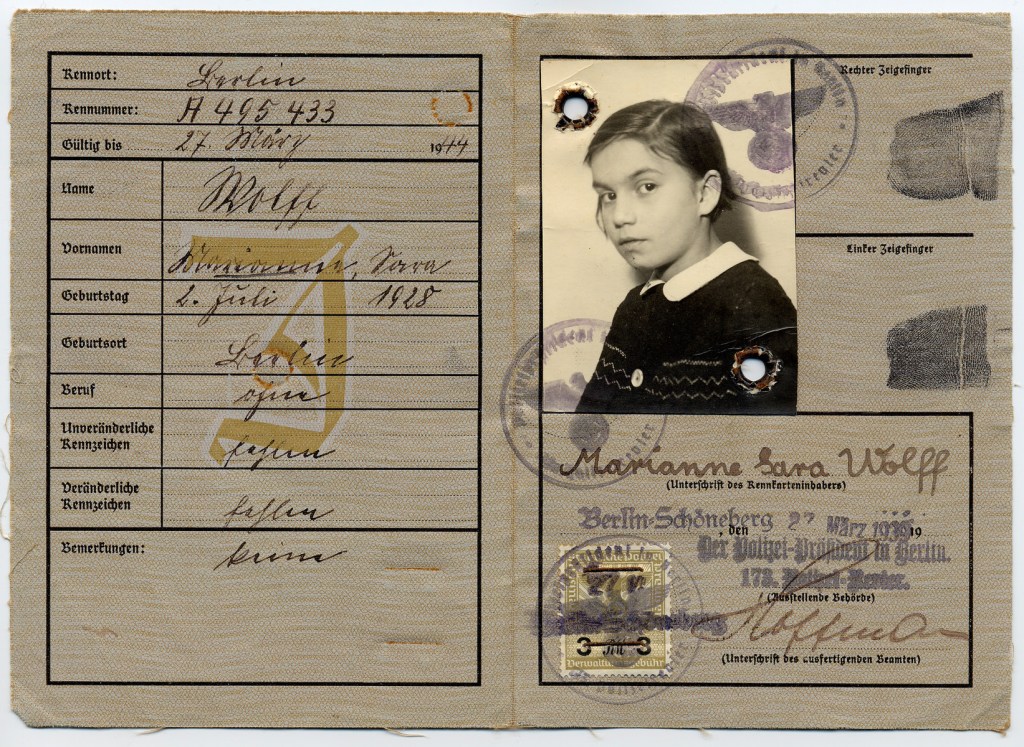

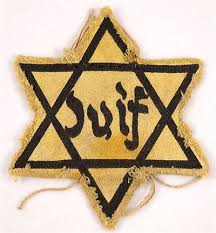
Little by little, they were isolated from former colleagues, neighbours, classmates. Jewish doctors could not treat Aryan patients, Jewish teachers could only teach Jewish children, and there were restrictions on Jews employing Aryans in their home. Both marriage and extramarital relations between Jews and Aryans were barred.
Little by little, the dissemination of anti-Jewish rhetoric filtered into all areas of society. If they were assimilated into German society, this was presented as a kind of dangerous infiltration. If they were not (like the Jews from Eastern Europe who had made their homes in Germany) they were caricatured and condemned as primitive.
Because what came after this was so horrific, we forget the years in which that process of identification and isolation was preparing the way for the horror.
As these ‘others’ became more and more isolated, it was easier for the rest not to notice when people disappeared, to look the other way when they were attacked in the streets. And it was easier, when they weren’t your neighbour, your doctor, your teacher, your colleague, to believe the propaganda. To start to believe that they were ‘A Problem’, that they were a threat. It was easier to choose not to know or to ask what was happening, where the people had gone who had been rounded up in your neighbourhood, or what might happen to them there.
But if we’re looking to draw comparisons and find lessons for our own times, we need to go back to before the Nazi government took power, and introduced the kind of anti-Semitic legislation referred to above. For all of that to be possible, they had to be able to tap into a rich seam of suspicion and prejudice.
In more recent years, when we think of racism, we think of the prejudice faced by the immigrants and descendants of immigrants from the Caribbean and from South Asia, from Africa and East Asia. We think of people who are easily identified, no option of ‘passing’. We think of people who are often economically disadvantaged, only rarely in positions of significant influence and power.
We forget that in Europe before the war, the most significant targets for racism were the Jews. A whole pseudo-science of race purported to prove that they were not only inferior but dangerous. Forgeries such as the Protocols of the Elders of Zion purported to ‘expose’ their secret rituals. No matter how contradictory the claims were – they were both Bolsheviks and arch-capitalists, both primitive and highly sophisticated – they were so prevalent as to be accepted almost casually by many. Reading novels written between the wars one is often struck, jarringly, by the stereotypes of Jews (obsequious, money-grubbing) that would surely never make it to print for any reputable publisher today.
So much has changed. And yet today, one does not have to look far or dig very deeply to uncover language and ideas not very different from those so prevalent before the war. For those on the right, George Soros is the shadowy paymaster funding liberal and progressive initiatives, the puppet-master engineering opposition to Brexit and so on. For those on the left, it’s the Zionists who are the paymasters, via the Rothschild banking dynasty who are alleged to control global finances, and are often accused of controlling the ‘mainstream media’ as well. Whilst some of this rhetoric is claimed to be simply opposition to Zionism as a political movement, motivated by anger at the Israeli government, the mask very easily slips.
Both extremes may indulge in Holocaust denial – or at least minimisation. A whole new generation finds ‘revelations’ on the net such as the supposed Red Cross report giving a very low total of deaths and passes them on, saying ‘Hmmm, interesting!’. In fact, a minimal amount of research would have confirmed that there neither was nor could have been any Red Cross report estimating the total number of Holocaust deaths, or deaths in concentration camps. The figure cited so enthusiastically was for deaths in camps to which the Red Cross had access and for which death certificates were issued – excluding therefore the majority of camps, the deaths on arrival, the deaths by mass shootings etc, etc, etc. Aside from the spread of misinformation, what is most alarming is how eager some are to find reasons to believe that the Holocaust has been exaggerated – because to believe that is to buy into a whole complex of Zionist conspiracies.
So whilst none of the other forms of racism have gone away (far from it – if anything they seem more prevalent, certainly more vocal), anti-semitism seems to have made something of a comeback.
None of which is to suggest that in the UK we are close to stripping Jews, or Muslims, or any other group of their citizenship. Except that we effectively allowed unknown numbers of people who came to the UK as children from the Caribbean and believed themselves to be British citizens to suddenly be expected to prove their right to be here, losing their livelihoods, their access to health care, their homes in the process. If we can do that, and that harm has not been undone (and given the shabby way in which EU citizens who have made their homes here, built families here, contributed to our society and our economy are being treated on the eve of Brexit) then we have no grounds for complacency.
The theme for this year’s HMD is ‘Stand Together’. We can read and be inspired by the stories of those who knowingly risked and often lost their own lives to support or protect those others targeted for genocide. But the time to stand together, really, is now. Before populist nationalism and xenophobia get too much of a hold. Before everyone gets too used to seeing people racially abused in the streets. Before the lies and slanders become so prevalent that we no longer trouble to challenge them.


There have been so many inspiring examples of standing together in the face of terrorism. Of people of all faiths and none rallying around when another group is under attack – offering everything from blood donations to security patrols, and demonstrating solidarity by being there, literally standing together.
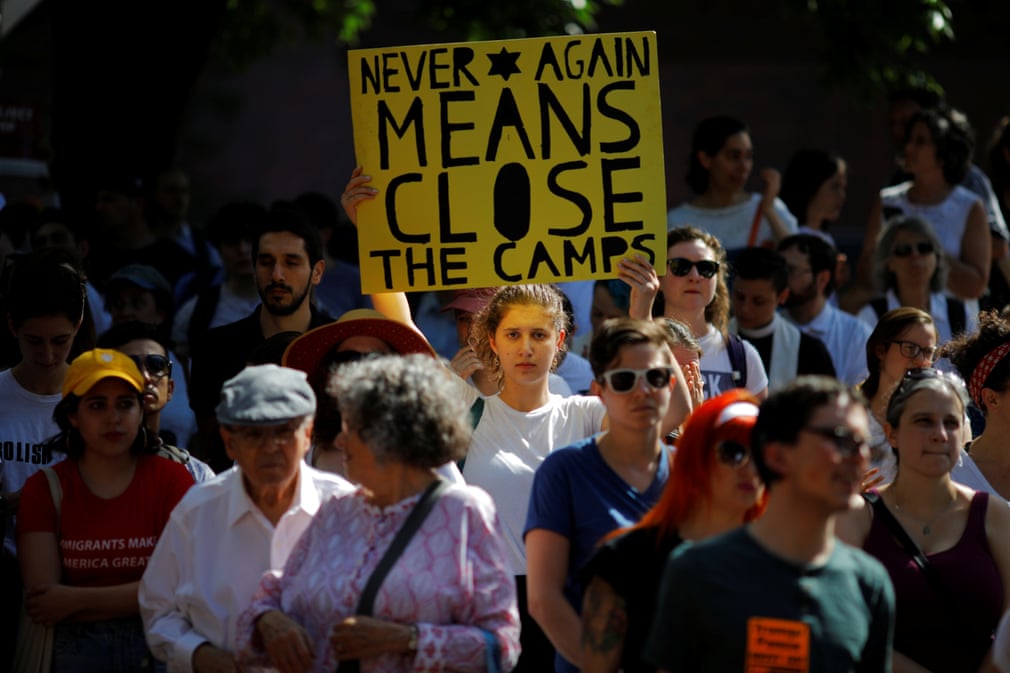
We must all hope never to have to face the kind of challenges and choices that were and are faced by witnesses to genocides past and present. We must hope that if we stand with each other now, in the face of prejudice and bigotry, that ‘never again’ will be more than a pious catchphrase.
There are those reluctant to believe
Or believing from time to time.
There are those who look at these ruins today
As though the monster were dead and buried beneath them.
Those who take hope again as the image fades
As though there were a cure for the scourge of these camps.
Those who pretend all this happened only once,
At a certain time and in a certain place.
Those who refuse to look around them,
Deaf to the endless cry.
Jean Cayrol, Nuit et brouillard (script for Alain Resnais’s 1955 film, commemorating the tenth anniversary of the opening of the camps)
https://www.gregjenner.com/my-family-and-the-holocaust/


Here’s hoping… New Year 2019/2020
Posted by cathannabel in Events, Personal, Politics on December 31, 2019
It’s just another New Year’s Eve. Nothing actually changes on New Year’s Day, we know that … but that never stops us hoping that some things will change, making plans and resolutions, wishing and wondering.
For many of us, looking back at the year just ending cannot be wholeheartedly celebratory. Of course, there have been good things – friends and family, love and laughter, things that brought us pleasure and achievements of which we are proud. We will recall those tonight, and be glad for every one of those moments and those memories. At the same time, if grief and loss has been part of our year we will acknowledge our sadness, and raise a glass to the people who we lost in 2019.
For many of us, looking forward to the year just about to begin cannot be simply hopeful, knowing that some of what we fear will happen. Some of us will be learning to live with loss, others will be anticipating loss. Many hearts will be heavy.
How do we face that countdown, knowing what we know? With tears, probably. With warmth and solidarity and love, wherever possible. With people to hold on to, literally or metaphorically, to accept our sadness and our fear, and to remind us of the good things that there were in 2019, and that will still be there in 2020.
When it comes to the state of the nation and of the world, it would be terribly easy to give up. I’ve noticed how often these days I choose not to watch the news or read the headlines which, for a politics junkie as I have been all my life, raised on family discussions around the tea table of the events of the day, is a big change. I can’t let that inertia continue.
I need to hang on to hope, and faith in humanity. There are reasons to be, if not cheerful, at least very cautiously hopeful, reasons to nurture those glimmers of hope. In the wake of attacks on mosques or synagogues, communities have come together to assert solidarity in the face of murderous bigotry. So many young people are fighting the good fight on the climate emergency.
Hope lies in recognising that the biggest problems we face are problems we can only deal with across borders and oceans, not by retreating behind our walls. Hope lies in people choosing to identify with and stand with people who aren’t like them, giving a damn whether or not it’s not their turn.




Meantime, in the face of lies we have to keep speaking and showing truth. In the face of hate we have to keep speaking and showing love. In the face of the horrors that seem to happen daily, far away from us or close to home, we have to keep speaking and showing faith.
Keep on keeping on.
Sometimes things don’t go, after all,
from bad to worse. Some years, muscadel
faces down frost; green thrives; the crops don’t fail,
sometimes a man aims high, and all goes well.A people sometimes will step back from war;
elect an honest man, decide they care
enough, that they can’t leave some stranger poor.
Some men become what they were born for.Sometimes our best efforts do not go
amiss, sometimes we do as we meant to.
The sun will sometimes melt a field of sorrow
that seemed hard frozen: may it happen for you.(Sheenagh Pugh – Sometimes)
Hang on to your hat. Hang on to your hope. And wind the clock, for tomorrow is another day
Theirs is a land with a wall around it
And mine is a faith in my fellow man…Sweet moderation, heart of this nation
Desert us not, we are between the wars(Billy Bragg, Between the Wars)
We are building up a new world.
Do not sit idly by.
Do not remain neutral.
Do not rely on this broadcast alone.
We are only as strong as our signal.
There is a war going on for your mind.
If you are thinking, you are winning.(Flobots – We are Winning)
The simplest and most important thing of all: the world is difficult, and we are all breakable. So just be kind.
(Caitlin Moran – How to Build a Girl)
If there’s no great glorious end to all this, if … nothing we do matters … then all that matters is what we do. ‘Cause that’s all there is. What we do. Now. Today. … All I want to do is help. I want to help because I don’t think people should suffer as they do, because if there’s no bigger meaning, then the smallest act of kindness is the greatest thing in the world.
(Joss Whedon – Angel)
Never be cruel, never be cowardly, and never, ever eat pears! Remember, hate is always foolish. and love is always wise. Always try to be nice, but never fail to be kind. … Laugh hard, run fast, be kind.
(The 12th Doctor, Twice Upon a Time)
Love is wise, hatred is foolish. In this world, which is getting more and more closely interconnected, we have to learn to tolerate each other. We have to learn to put up with the fact that some people say things that we don’t like. We can only live together in that way, and if we are to live together and not die together we must learn a kind of charity and a kind of tolerance which is absolutely vital to the continuation of human life on this planet.
(Bertrand Russell, Face to Face interview, 1959)

Albums of the decade
Posted by cathannabel in Music on December 30, 2019
Final list of the year/decade end. Honest.
Just ten albums, not ranked in order of importance or merit.
- Arctic Monkeys – AM
- Bjork – Utopia
- David Bowie – Black Star
- Alina Bzhezhinska Quartet – Inspiration
- Nick Cave – Skeleton Tree
- P J Harvey – Let England Shake
- Christian Scott – Ancestral Recall
- Songhoy Blues – Music in Exile
- Tinariwen – Emmaar
- Kamasi Washington – Heaven and Earth





 Passing Time