This half year seems to have been particularly heavy on the crime fiction. And what’s listed below is not even all of the crime I read – there were some that disappointed me, and as always I prefer to share enthusiasm rather than disappointment (although I am not uncritical of the books that I have chosen to review), and there were some that were perfectly enjoyable but about which I could say little other than that this was another cracking title in x series by y. I turn to crime (as it were) for tension and suspense along the way and a satisfying denouement. But of course the best crime writers (looking at you, Sarah Hilary, Jane Casey, Will Dean, Laura Lippman, Denise Mina, Abir Mukherjee, Mark Billingham, Anne Holt, Louise Penny, Elly Griffiths, Ian Rankin, Mick Herron, Ann Cleeves, Val McDermid, Lesley Thompson and Sara Paretsky, to name only those I’ve read this year) give you more than that – psychological, political, sociological insights into the why and who of crime (on both sides of the law).
If I had to pick the outstanding novels in this half-year (of course I don’t have to, it’s my blog and I make the rules here) I’d say Richard Powers’ The Time of Our Singing and Stuart Evers’ The Blind Light, not only because they took me over completely whilst I was reading, and moved me tremendously, but because both authors were new to me, and so I had no expectations and was bowled over. I also rate very highly Eleanor Catton’s Birnam Wood, and great new stuff from Stephen King (Holly) and Sarah Hilary (Black Thorn).
Non-fiction was heavy on autobiography (Martin Amis, Angela Davis, Joan Didion, Catherine Taylor and Terri White), and biography. Two books on the US opioid crisis which has proven rather addictive as subject matter these last six months, and some grief/bereavement reading. Best/favourites? Catherine Taylor’s The Stirrings, and Joan Didion’s The Year of Magical Thinking.
FICTION
Megan Abbott – Beware the Woman
The premiss is one which I’m sure I’ve encountered before, but it’s a fresh take on the set up – a young couple, expecting their first child, visits one of their parents, and things get a bit weird. (Get Out sprang immediately to mind, although the tensions here are not to do with race). There’s a whole lot of gaslighting going on here, the creepiness is built up gradually and cleverly, and it was all very enjoyable, but with an undercurrent that’s really rather serious.
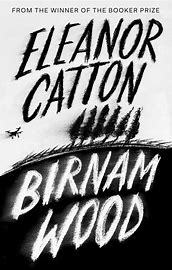
This is a complex and gripping thriller – it’s featured in a lot of end of year Best Of lists, not just mine – which delivers, generously, both intelligence and suspense. ‘Birnam Wood is a dark and brilliant novel about the violence and tawdriness of late capitalism. Its ending, though, propels it from a merely very good book into a truly great one.’
Ta-Nehisi Coates – The Water Dancer
Compelling narrative of slavery, with echoes of The Underground Railroad (like Whitehead, Coates takes the metaphorical and makes it literal), and with a leading role for Harriet Tubman. This isn’t just about slavery though, Coates looks more widely at capitalism, at the oppression of women, at the structures in society that require there to be a hierarchy and someone at the bottom of that who is powerless. Full of pain, inevitably, but of beauty too.
Will Dean – The Last Passenger
A cracking opening (and very different to Dean’s excellent Tuva Moodyson crime novels – I also read Wolf Pack in that series recently) . Caz is on holiday on an ocean liner with her partner, and wakes to find she is, apparently, alone on the ship. Dean pulls this off brilliantly, and every time we (and the protagonist) thinks they have begun to figure out what’s going on, we are blindsided with a new revelation – right up to the final page. It’s irresistible.
Bernardine Evaristo – Soul Tourists
An impromptu road trip for a slightly ill-matched couple which somehow leads to encounters with key figures from black European and Middle Eastern history. I don’t think it entirely worked; perhaps Evaristo was simply trying to do too much, and there are two novels in here, which don’t always mesh. Thoroughly entertaining nonetheless.
Stuart Evers – The Blind Light
A family saga, of lives lived in the shadow of the bomb, absolutely enthralling and moving. It sweeps across sixty years in the lives of its main protagonists, Drummond, Gwen and Carter, but always the focus is on these relationships, always intimate rather than letting the individuals become lost in the sweep of big events. One of my books of the year.



Robert Ford – The Student Conductor
Ford’s writing about music is wonderful, and really made me think about the role of the conductor. But the characters of Ziegler, the lead character’s supposed mentor, didn’t convince me (though he did remind me very strongly of J K Simmons’ character in Whiplash), nor did the oboist/love interest. Very mixed feelings about this one.
Abdulrazak Gurnah – Pilgrims Way
I read Gurnah’s brilliant Afterlives recently, set in what is now Tanzania in the early twentieth century. Pilgrims Way is closer to home, geographically and chronologically, and its scope is much narrower, dealing with one man, Daud, an immigrant whose life has not gone to plan, and who deals with his disappointment and disillusionment with sardonic humour and leaps of imagination. It’s often funny, but always dark and troubling.
Mohsin Hamid – The Last White Man
A fable in which a white man wakes up one morning and looks in the mirror to see that he’s no longer a white man. He has to navigate the world now as a black man, and everything is different. At this point it made me think of Arthur Miller’s novel, Focus, in which a man gets new spectacles, which make him look Jewish to some people, and those people conclude that he must be Jewish. But Hamid’s tale goes in a different direction and I found it beautiful.
Sarah Hilary – Black Thorn
A stand-alone from Hilary, whose Marnie Rome detective novels are amongst my favourite contemporary crime thrillers. Here the focus is not on the police, who play a more peripheral role, but on a small community of people who, we learn at the beginning, have encountered some catastrophe, and we gradually learn what, how, who, why… It’s beautifully done – incredibly tense and creepy and that tension is maintained as truths emerge.
Catherine Ryan Howard – Run Time
This is gripping stuff! Layers upon layers, super tense atmosphere, the plot revolves around the filming of a horror movie, in an actual cabin in the woods…
Clare Keegan – Foster
A novella of real delicacy, beauty and heartbreak. A child goes to stay with strangers when her mother is pregnant again, and finds herself with space and time to think and breathe, as she tries to understand her new guardians, and her own mother.


Stephen King – Holly
Holly first appeared in King’s Mr Mercedes, but he clearly loved her, because her role became increasingly important, in the other two books in that trilogy, but also in The Outsider. And here she is front and centre, as the title promises. This is King at his best, conjuring up creeping unease and tension, creating monstrous human beings and monstrous deeds, without ever letting the monstrous have it all their way, because he also creates people like Holly, who will, as she has done since Mr Mercedes, stand in its way. We love her as much as King does.
Laura Lippman – Prom Mom
Lippman’s plots are as twisty as the run of the mill psychological thrillers which bill themselves as having ‘a twist that you’d never predict’. But unlike so many of those, the twists are earned by careful plotting and, most of all, by character building. Our sympathies shift as we understand the protagonists better but understanding them is key to the twists in the narrative, rather than just upturning everything we’ve previously been told. And we do feel for these people, all of them, however weak and flawed they turn out to be.
Luke McCallin – The Man from Berlin
McCallin’s protagonist is an Abwehr officer, a former policeman, who is trying to solve brutal crimes in the context of a regime which is itself brutal and criminal. It’s similar territory to Philip Kerr’s Bernie Gunther series, and whilst I have only read one of this series so far, I will follow it up because I’m fascinated to see how Gregor Reinhardt navigates this dangerous, brutal world.
Cormac McCarthy – All the Pretty Horses
McCarthy’s prose is as rich as his dialogue is spare – sometimes the former feels just a bit too much, but at best its richness is beautiful rather than indigestible. His protagonist is a 16 year old boy who’s just been turfed off his grandfather’s ranch, and decides to try his luck in Mexico, along with his best friend, and their horses. John Grady Cole is someone we quickly learn to care about – like so many at his age, he thinks he understands the world rather better than he does, but he is in many ways an archetypal Western hero, with principles and courage and loyalty. It’s a world I don’t really understand but this is a compelling and moving novel. It’s the first in a trilogy, so I may venture on to Vol. 2 (The Crossing) at some point.
Denise Mina – Field of Blood
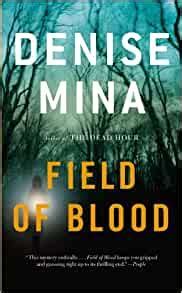
Mina weaves a fictionalised version of a real crime, and a real case of miscarriage of justice together with her usual skill. Paddy Meehan too finds her job (as a copyboy at a newspaper) and her personal life getting dangerously intertwined. She’s an engaging character, not perfect in judgement or actions, but I will look forward to reading the other books in which she features.
Abir Mukherjee – A Rising Man/A Necessary Evil
The first two in a crime series set in India in the early 20th century, with a British/Indian team, exploring all the tensions that creates (between the two of them, and with wider society). The context is fascinating, the writing excellent, and the voice of Wyndham, the British officer, is convincingly that of an enlightened man of his time, rather than a stand-in for a contemporary reader.



Richard Powers – The Time of our Singing
A truly immersive book, which I started off reading in short bursts until I realised that wouldn’t work. It’s a profoundly musical book – I half intend to create a playlist of all of the pieces of music that play a part in the narrative, although what I would really want would be those pieces performed by the characters in the book. It’s also brave (or foolhardy) enough to tackle race, as the protagonists are a mixed-race family (white father, black mother) in the US in the mid-twentieth century. I found it beautiful, powerful, very moving.
Anya Seton – My Theodosia
I read this, along with everything Anya Seton wrote, as a teenager, and revisited it because I was reading the biography of Alexander Hamilton (see below), who was killed in a duel by Theodosia Burr’s father. But, my god, this is an appallingly, sickeningly racist book. I wondered whether Seton was simply trying to convey the perceptions of a young woman in a society where slavery was still entrenched (although we are told that Theodosia thought slavery was wrong), but no, Seton wrote this in 1942 as a young woman in a post-slavery but pre-civil rights society, and it is impossible to escape the conclusion that these were her perceptions too. Her descriptions of any black characters are contemptuous, the n word is on every page. Of course, this is a novel of its time (and about a time when things were worse), but it made it a grim read and it was hard to care about Theodosia or her father when one had to wade through all of this. I can’t remember how I felt about the book when I first read it, but I think that, although I was more aware of racial politics than my contemporaries at school in Mansfield, having grown up in West Africa with parents who were passionately anti-apartheid, and having a keen interest in the civil rights/black power movements, I was at the same time used to encountering these attitudes and this language, unapologetically presented, in a way that we no longer are.
Elif Shafak – The Island of Missing Trees
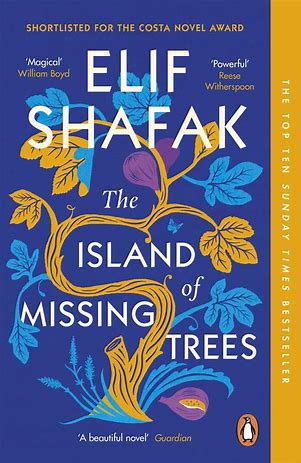
I’ve enjoyed a couple of Shafak’s other books, and I liked a lot of things about this, but there was way too much whimsy for my taste. Whole sections are narrated by a fig tree, and whilst I can see how this connects with the history of the divided island of Cyprus, and with the stories of the main protagonists, I speed-read through these bits (sorry) to get back to the human characters, with whose stories I could more fully engage.
Khushwant Singh – Train to Pakistan
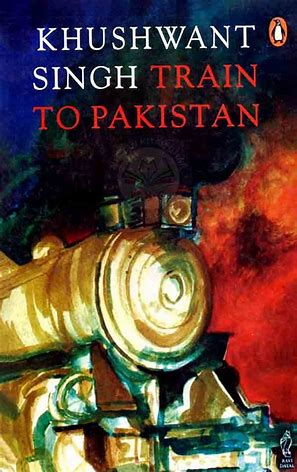
A novel about Partition, published in 1956, so not long after those events, set in a fictional village near the new border. Singh was a lawyer, diplomat and politician as well as a writer. His perspective here is to explore the cataclysmic events taking place across the sub-continent through a close focus on this small place, its dignitaries and officials and local ne’er do wells, who are portrayed with sharp wit and humour, even whilst the undercurrent of imminent tragedy is getting stronger.
Noel Streatfeild – Saplings
I’ve read many/most of Streatfeild’s children’s books, and her Vicarage trilogy but had no idea of this one’s existence until I spotted it in the catalogue of the brilliant Persephone Press. It’s the story of four children in wartime, of losses and betrayals and insecurity, and it’s a deep dive into ideas about attachment and loss and their effects on the young. If that makes it sound offputtingly theoretical, it isn’t – her novelist’s gift is to make us care about these children and what happens to them, and it’s very moving.
Marion Todd – See Them Run
Very enjoyable police procedural, set in the area around St Andrews, where I visit a couple of times a year (there’s always a peculiar fascination in reading thrillers set in familiar territory). Will read more.
Miriam Toewes – Women Talking
Recently made into a rather good film (see my screen review blog). This is horrifying, all the more so because the case is real. Girls and women in a Mennonite community in Bolivia were drugged and raped by members of their own community, and despite the perpetrators being exposed and some jailed, the women were left with no redress, and no protection. The book is, as the title tells us, women talking – and they talk about survival, about whether they should stay in the only place they know or leave and take their chances in what may be a hostile world. The tension – and it is very tense indeed – comes both from the disagreements amongst the women and the depths of trauma that they reveal, and from the knowledge that they could so easily be prevented from leaving, when the men return.




NON-FICTION
Martin Amis – Experience
I’ve only read one of Amis’s novels, and I hated it. Time’s Arrow was clever, but in a way that repelled me, and that put me off trying any of his other novels. So, in the aftermath of his death, I thought I might encounter him through his memoir. I liked him more here – he is self-critical, he can find his past self ridiculous and blameworthy, and he can be generous to at least some of the other people in his life. And in his writing about the disappearance and murder of his cousin Lucy Partington by Fred and Rosemary West, there is real heart, real grief. I still don’t want to read any of his novels though.
Anita Anand – Sophia: Princess, Suffragette, Revolutionary
Biography of an extraordinary woman. Daughter of a Maharajah, god-daughter to Queen Victoria, and as the book’s title tells us, suffragette and activist. Absolutely fascinating. Sophia herself remains enigmatic, but her engagement with the ‘advancement of women’, and with campaigns in support of Indian lescars, Indian troops in WWI, and the cause of Indian self-determination was bold and brave, and through her we see a varied and colourful cast of characters, both Indian and British.
Jeanine Basinger & Sam Wasson – Hollywood: An Oral History
The story of Hollywood told through interviews with people who were there – directors, actors, writers, studio bosses. The interviews, held in the American Film Archives, cover all aspects of movie-making so inevitably some sections are more interesting (to me) than others, though overall it is fascinating and enlightening, and very entertaining.
Ian Black – Enemies and Neighbours: Arabs in Jews in Palestine and Israel, 1917-2017
In the wake of the 7 October Hamas attacks, and the Israeli bombardment of Gaza, I wanted to understand more about why we are where we are and why this is such an intractable situation. I knew some of the story, of course, but I wanted a rigorous historical approach, non-partisan as far as is possible. Black’s book fits the bill. It is, of course, deeply depressing, but it is impossible when reading it to take a simplistic view of causes or possible solutions.
Ron Chernow – Alexander Hamilton/Mike Duncan – A Hero of Two Worlds: The Marquis de Lafayette in the Age of Revolution
I’ve grouped these two biographies together because their subjects were not just contemporaries but friends, and there are many parallels between them. Reading up on Hamilton is prep for going to see the musical in Manchester in February – when I watched it on TV I realised how sketchy my knowledge of that period of American history was, and whilst I dare say it’s not compulsory to do the reading before enjoying the music, it’s very much me… I had a better grasp on Lafayette’s story because my History A level covered the French Revolution and its aftermath, and I’ve read around the subject since. Both Hamilton and Lafayette were extraordinary men who achieved far more than anyone expected of them, at quite a young age, and these accounts bring them to life whilst providing a thorough, well-researched and readable historical context.


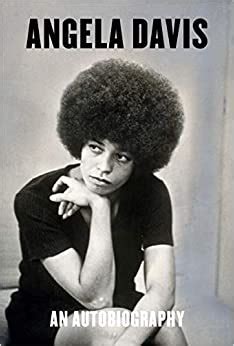
Angela Davis – An Autobiography
Davis was a hero of mine during my teens. I read a lot about the activists in the black power movement but was inevitably drawn to Davis – her charisma, her passion, her image. Women, Race and Class is brilliant, and so is this. It was originally published in 1974 and now has a series of prologues written for each successive edition, which shed light on how her perspectives have changed and how she responds to more recent events.
Joan Didion – The Year of Magical Thinking/Sarah Tarlow – The Archaeology of Loss: Life, Love and the Art of Dying
Two books that I was drawn to because they addressed how we live after the death of a partner. Didion’s book was recommended to me, with the caveat that I shouldn’t read it too soon – there are of course no rules as to how soon is too soon, and I think I got it about right. It was in places a very tough read – her description of her husband’s death had so many echoes of what happened to me – but her insights into the process she went through were profound and powerful (my copy of the book now has many sections highlighted so I can return to them when I need to). Tarlow ventures out further from her own experience to ruminations on how we (now and in the past) deal with death and loss, and it’s fascinating and often moving. It spoke to me less personally than Didion’s account because much of it is concerned with how she became her husband’s carer when he developed a terminal degenerative illness, and how that affected her and their family (my loss in contrast was shockingly sudden). It’s brutally frank and unsentimental about the cost and the loneliness of the carer’s role, and so whilst I was initially drawn to the book because it addressed bereavement, this topic is also vitally important and relevant.
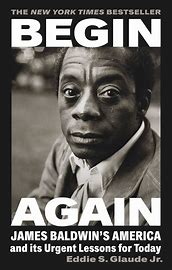
Eddie Glaude – Begin Again: James Baldwin’s America and its Urgent Lessons for our Own
I have loved Baldwin’s writing since my teens, when I read Go Tell it on the Mountain, and found his voice so compelling that I read over the subsequent years all of his other novels and essays. Glaude considers Baldwin’s evolving views on race in America, and as promised draws out lessons, and he conveys both Baldwin’s despair and the hope he held on to despite everything. It’s not a hagiography, he does not treat Baldwin as a sage, but as a passionate, deeply insightful, direct and honest writer whose insights into America are as relevant as ever.
Beth Macy – Dopesick: Dealers, Doctor and the Drug Company that addicted America/Chris McGreal – American Overdose: The Opioid Tragedy in Three Acts
See my Screen blog for the two dramas and the documentary that I watched on the topic of the US opioid crisis. I clearly became somewhat obsessed with this topic, having read Demon Copperhead and then watched the Netflix drama Painkillers… These books follow similar ground, but have a different approach. American Overdose focuses more on the politics and the perpetrators: ‘McGreal’s book reads like a white-collar The Wire, with a cast of characters determined to exact as much money as possible regardless of the human cost’. Macy foregrounds the stories of the victims and their families. Taken together they give a full and heartbreaking account that will, and should, make you angry, even whilst it breaks your heart.



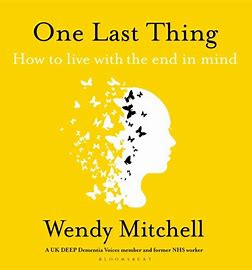
Wendy Mitchell – One Last Thing: How to Live with the End in Mind
I’ve been following Wendy Mitchell for some years now, as she navigates life with early onset dementia with humour and honesty. It’s rare to hear the voices of dementia sufferers because they are so often and so quickly unable to articulate their own experience, so Mitchell’s accounts are immensely valuable. This book is different – it looks at how we approach the end of our own life, and how that end can be made more dignified, how we can have some control over when, how, and where. This is a passionate work of advocacy for assisted dying, but Mitchell recognises that the provision that exists in a number of countries generally cannot help her and others with dementia because by the time they would want to be able to check out (the point at which, for example, they are no longer able to recognise their closest family), they will not have capacity (or not be deemed to have capacity) to make that decision. It’s a huge and heartbreaking dilemma, and Mitchell doesn’t offer solutions, but makes a vital contribution to the discussion.
Anthony Seldon & Raymond Newell – Johnson at 10: The Inside Story
‘This is an authoritative, gripping and often jaw-dropping account of the bedlam behind the black door of Number 10 and it confirms that we did not really have a government during his trashy reign. It was an anarchy presided over by a fervently frivolous, frantically floundering and deeply decadent lord of misrule.’ It’s all the more powerful because the authors are far from being anti-establishment figures. It makes it clear that the picture painted by the TV drama Partygate (see my Screen blog) is entirely plausible and consistent with the culture at Downing Street under Johnson. Incredible, and appalling.
Gitta Sereny – The German Trauma: Experiences & Reflections, 1938-2001
This collection of articles from almost forty years of writing about, thinking about and remembering the Nazi era includes much that is fascinating, some that is contentious, and inevitably a vast amount that is horrifying.
Catherine Taylor – The Stirrings: A Memoir in Northern Time
A memoir of Sheffield – of my Sheffield (Broomhill and Crosspool, the University) – was always going to interest me. Taylor is around ten years younger than me, and so she describes the Sheffield she knew as a teenager, whereas I arrived here to go to University. The shadow of Peter Sutcliffe hangs over much of her account, as it did over my life – scared to be out at night, scared even to open the back door to put the milk bottles on the window ledge, praying that Karen from next door would be on my bus so we could scurry home together along School Road, looking over our shoulders and not breathing properly until we were indoors. Taylor’s writing is brilliantly evocative, both of the place and of her own experiences and emotions. As Helen Mort puts it, this is ‘a lyrical account of what cities and their residents witness, how places shape character’.
Dorothy Whipple – The Other Day: The World of a Child
Charming, funny account of a childhood in the very early twentieth century, from a writer whose novels I’ve discovered and loved in recent years.
Terri White – Coming Undone
This is a bleak, harrowing account of how a chaotic and abusive childhood pushed White into crisis as an adult. Her honesty is unflinching. I wondered throughout just how she was managing to function (at least to some extent) in her working life, and, at the end, how she managed to turn the corner into a more stable life. I’d have liked to understand that more, but maybe that’s about me feeling less harrowed, and actually this is exactly the book that White intended and needed to write.


 Passing Time