My reading has returned, I think, to pre-bereavement patterns, both in terms of how much I read, and the range of what I read. And books have been, over the last six months as always, solace and company, escape and engagement with other worlds and lives. Perhaps different things make me cry now when I read – I’ve gained a whole lot of other triggers to add to the ones I’d already accumulated over the years. And there’s been a certain sadness whenever I’ve started a new entry in a series that M and I both enjoyed, or something new by a writer that we both loved, that we can’t bicker about who gets to read it first, and we can’t talk about it afterwards.
I’ve split the list into fiction, poetry and non-fiction. I’ve tried to avoid spoilers but reading reviews is always risky, so you takes your chances if you read on. I haven’t listed absolutely everything but everything here is a book that I finished, and that I have something to say about – mainly positives, since I do this to share my enthusiasms rather than my disappointments. However, I do sometimes have a grumble about sloppy writing. I haven’t picked a definite top three, but I have starred the books that I feel most passionate about.
Fiction
Kate Atkinson – Shrines of Gaiety*
The writing is, as always, delicious, as are the characters. The Guardian describes the novel as ‘a heady brew of crime, romance and satire set amid the sordid glitz of London nightlife in the 1920s’. There are multiple plot strands but we never lose track (for long, at least) of the young women at the heart of the narrative, and we do quickly care what happens to them. Atkinson is in total control here – it’s skilful and has real heart, and I’m going to re-read it soon, as I tended to gallop through parts of it to find out what happened, and second time around I can just savour how she did it.
Pat Barker – The Women of Troy
Follow-up to The Silence of the Girls. There’s a third part to this, which doesn’t appear to be out yet, and this novel leaves many important narrative threads dangling. It’s a bleak, brutal retelling of the story, focusing always on the women, owned, appropriated, used and abused, always vulnerable to shifts in power and favour. Powerful stuff.
Yvonne Battle-Felton – Remembered
The women at the centre of Remembered are not so different from the women of Troy. They’ve been enslaved, they are abused, they find dangerous ways to resist. The focus is on one woman, Spring, as she tells her story to her dying son. It’s often a tough read, but a rewarding and important one – we may feel we’ve heard enough of the horrors of slavery but those stories must continue to be told, and that is the real theme of the novel.
Britt Bennett – The Mothers*
Bennett’s debut – I read The Vanishing Half last year, which I loved, and this is also very fine. I love the way the older women in the community form a kind of Greek chorus, sometimes as judgemental as the stereotype of older church women suggests, but also looking back to their own youth, to their own heartaches and tragedies and mistakes.
Mark Billingham – Rabbit Hole
A stand-alone from the author of the Tom Thorne series. I hadn’t realised this so was awaiting Thorne’s appearance for quite some time… It’s a gripping plot, with a narrator who is the very definition of unreliability, and the psychiatric ward provides a powerful setting. My only quibble is that the ‘who dunnit’, when revealed, is a bit throw-away and anti-climactic. Clearly that wasn’t Billingham’s main concern, but one feels a little cheated.
Joyce Cary – Herself Surprised
One of my mum’s favourite writers, and one of her favourites of his. The portrayal of the central character is so good – her voice is idiosyncratic (she uses loads of metaphors and similes, piling them on top of one another, mostly drawing from domestic life) and honest. She’s not admirable but she wins our sympathies. The other two books in the trilogy foreground the male characters so it will be interesting to see how Cary pulls off the switch in perspective.


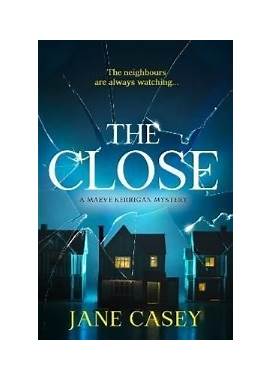
Jane Casey – The Close
The latest Maeve Kerrigan. Another cracking plot, which sizzles not only with the tension of the investigation, and the constant doubt as to who can be trusted, but with the tension between Maeve and her colleague Josh Derwent.
Will Dean – Bad Apples
The fourth Tuva Moodyson novel, this is creepy as hell, atmospheric and gripping.
A house on a lake, somewhere in east Germany, that passes from its Jewish owners to an architect who pays only what the Nazi law requires him to, and from him to others during the post-war era, when the property is in the GDR, and so on through the years. We learn relatively little about the people whose lives here we glimpse – we know the fate of some (the only time we leave the house on the lake), others seem to vanish, or what we are told is ambiguous and uncertain. Brilliantly constructed and powerful.
Nicci French – Secret Smile/The Unheard
These psychological thrillers are so highly rated that I read two in quick succession. This was a mistake. There’s a long gap between the publication of the two novels, so it’s maybe pure chance that I read two that had such similar plots, and identical tropes (the ‘secret smile’, the man who kisses an ex-partner too close to the lips). They’re very well written but as I read the second of the two the irritation of realising, ok, we’re going here again, overcame any other pleasures of reading. I may try another one at some point.
Bonnie Garmus – Lessons in Chemistry
Everyone seemed to be reading this, and everyone told me to read it. I thoroughly enjoyed it – it was very funny, but made me cry quite a lot, it was wittily written and, as the Guardian reviewer put it, ‘that rare beast; a polished, funny, thought-provoking story, wearing its research lightly but confidently, and with sentences so stylishly turned it’s hard to believe it’s a debut’.
Linda Grant – The Story of the Forest*
A remarkable family saga, from Latvia to Liverpool, exploring the idea of the stories that bind a family together. It ‘continues her exploration of how chance, contingency and unintended consequences intersect with history’s larger movements; how personal narratives are shaped not merely by what we think of as inescapable forces and events, but by moments of randomness and whimsy. Her characters are, as ever, mobile not only in a geographical sense, but in the way that their desires and motivations shift and adapt, influenced by memories of the past and intimations of the future’ (The Guardian).


Kate Grenville – Sarah Thornhill
I wasn’t aware when I read this that it was a sequel. It didn’t seem to matter – the plot was handled so skilfully that, although events covered in the first book (The Secret River) are crucial to the story of Sarah Thornhill, the book could stand alone (I will, however, go back and read the first). There’s a theme emerging in some of my reading this year – families and the stories they tell, and what those stories hide, and how past events resonate through the generations. Here the setting is Australia and both the convict past and the brutality meted out to the aboriginal inhabitants are powerfully depicted.
Elly Griffiths – The Last Remains
Is this the last Ruth Galloway? At least for a while? Fair enough – Griffiths has two other excellent series on the go, the Brighton mysteries and the Harbinder Kaur novels, as well as YA fiction. And, if I do treat this as the final outing for Ruth, Nelson, Cathbad and the rest, it is a very satisfying one. After all, if I want to spend more time in their company (and I will because I love them) I can always go back and start again at the beginning.
Lorraine Hansberry – Raisin in the Sun
I kept coming across Hansberry’s name, in documentaries about the civil rights movement, in James Baldwin’s writing, and elsewhere – she was the inspiration for Nina Simone’s ‘Young, Gifted and Black’. She died very young, and there isn’t a huge body of work but she knew and worked with anyone who was anyone (e.g. duBois, Belafonte, Robeson). Raisin was the first play by an African-American woman to be performed on Broadway. I haven’t seen the 1961 film, which uses the Broadway cast, but will track it down.
Robert Harris – V2
Harris’s trademark combination of meticulous and detailed research (here, into the technical challenges of the V2 rocket programme) and a gripping plot, with nuanced and complex characters (on both sides) works brilliantly again here.
Zakiya Dalila Harris – The Other Black Girl
This is a cracker. I had no idea where it was going, it kept on completely wrong-footing me. Often very funny along the way, it also conjures a powerful sense of paranoia. It’s her debut novel – I will look forward to where she goes next.
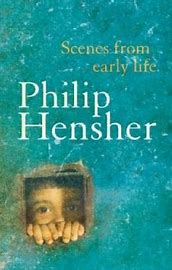
Philip Hensher – Scenes from Early Life
I read a lot about Partition last year, and in a way this is a follow-up to those narratives, dealing with the history of Bangladesh and how that nation emerged (bloodily) from what had been East Pakistan. Hensher is working with the early memories of his husband Zaved Mahmood, telling his story, or rather the stories that he himself was told (for much of the story he is a baby). Some of the peripheral characters, especially the musicians Amit and Altaf, have their own subtle, touching story to tell.


Mick Herron – London Rules
The fourth in the Slough House/Slow Horses series, and it is another cracker. Herron seduces you with gorgeous writing, and then Jackson Lamb ambles in, scratching his balls and farting prodigiously and poetry goes out of the window. But witty, sharp writing never does. The opening sequence was genuinely shocking even when one knows (sort of ) what to expect from Herron.
Anne Holt – A Memory for Murder
The third in Holt’s Selma Faelck series. Cleverly plotted, and with a fascinating protagonist, it’s a thoroughly good read.
Kazuo Ishiguro – Klara and the Sun*
Klara is an android, an ‘artificial friend’ bought to be a companion to a sick child. We have to figure out how this world works, we’re not spoon-fed explanations or context, and we see things through Klara’s eyes, as she figures out what it is to be human, and to be only nearly human. It’s beautiful, and very moving.
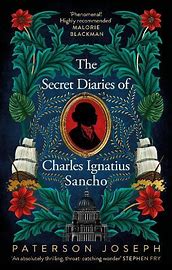
Paterson Joseph – Secret Diaries of Charles Ignatius Sancho
Fascinating invented diaries of the very real Sancho, escaped slave, abolitionist, composer and writer. Joseph has worked with what is known of his life (1729-1780), and acknowledges in a postscript that since completing the work he has discovered more of Sancho’s descendants. But it stands as a powerful filling out of the details, putting together of the fragments, that give us an extraordinary glimpse of an extraordinary man.
Barbara Kingsolver – Demon Copperhead*
Kingsolver takes Dickens’ David Copperfield and transposes his life to the Appalachians in our own or very recent times, where a chaotic childhood leaves the young Demon vulnerable to exploitation and abuse, constantly falling through the welfare safety net. Dickens’ characters are all here, updated/transformed. Demon’s authorial voice is brilliantly realised – self aware, honest, funny – and the tragedies of his life are powerfully felt even when we know the story and know where the various plot threads will lead us.
David Koepp – Cold Storage
Koepp is a Hollywood scriptwriter and that ability to ramp up the tension is evident in this bio/eco horror thriller. The characters aren’t given any very great depth but they’re engaging and the whole thing works brilliantly. Interesting to read this shortly before starting to watch The Last of Us, which has a related theme…




Aysin Kulin – Without a Country
The context here is fascinating – in the early days of Hitler’s regime, German Jewish scientists find opportunities in Turkey, where Ataturk is modernising the universities, through the Emergency Association of German Science Abroad, founded in Zurich in 1933 by a German emigrant, Philipp Schwartz. These German emigrés’ safe haven has indeed saved their lives, but they are not as welcome as it first appears. Kulin’s narrative takes us through the subsequent generations, as political tensions in their adopted homeland, as well as anti-semitism, challenge their sense of belonging.
Jennifer Nansubuga Makumbi – Kintu
I’ve read some other Makumbi – The First Woman, and her short story collection, Manchester Happened. Kintu was her debut, and it’s a family saga that takes us from the 21st to the 18th century and back again, through different generations of a family living with a curse. Its scale doesn’t ever get in the way of the characters living and breathing, and it’s a compelling read. It can be read as the story of a nation but fundamentally it is the story of a family, whose homeland changes shape over the centuries and whose fortunes change accordingly.
Livi Michael – Reservoir*
I’ve loved Michael’s other adult novels – most recently her War of the Roses trilogy – and this is exceptional. Much of it is set at an academic conference, but one where the various papers that are presented, of which we read substantial chunks, are gradually, directly or indirectly, exploring a mystery from the childhood of two of the delegates. The themes are responsibility – in the legal and moral sense, guilt, secrets and lies. Notwithstanding the setting, it never feels ‘academic’, rather, it is as gripping as a thriller.
Denise Mina – The Red Road
The fourth of Mina’s Alex Morrow series, and this one is particularly complex and compelling. Mina’s world is a bleak one, and as in so many of her books she fills out the lives that we often prefer not to see or think about, as well as, in this novel particularly, those in positions of influence and power. Alex herself is entirely believable – she’s encumbered not with some quirk or interesting flaw but with kids and family life – and imperfect, but hugely sympathetic.
Ann Patchett – State of Wonder
There are strong echoes of Heart of Darkness in this tale of a woman sent by her pharmaceutical company employers to track down a researcher deep in the Amazon rainforest, and find out what happened to the previous person sent on that same quest. The plot switches rapidly from the mundane misfortunes of travel (Marina’s luggage goes repeatedly AWOL) to the life-threatening hazards of that environment and some of its inhabitants, and to issues of science and ethics. It’s fascinating and engaging.
Louise Penny – A Rule against Murder/How the Light Gets In
The fourth and ninth Inspector Gamache novels, with the series’ trademark mix of (almost) cosy and very dark.


Charlotte Philby – A Double Life
One woman leading two lives, trying to keep them separate, seeing them inexorably head for collision, whilst another woman digs for the truth behind something she thought she had witnessed. Neither is heroic, nor entirely likeable, but Philby manages her plot with skill and it grips right to the final page. And yes, Philby is the daughter of one Kim Philby, who knew all about double lives…
Ian Rankin – A Heart full of Headstones
Rebus is weary and unwell, and his past dodginess (he was never bent but he did bend the rules) is catching up with him. Siobhan is tired too and not just tired of having to manage Rebus’s interventions in the cases she’s working. It feels as if the series is drawing to a close – one more book in Rankin’s deal with his publisher – which feels right and timely. There are series in which the protagonists never seem to really age, or lose heart, or get sick (looking at you, 87th precinct) and Rebus has always been far too real to go on forever, without consequences. It’s a fine addition to the series, whether or not it is the penultimate.
Jane Rogers – Conrad and Eleanor
As the Guardian puts it, ‘In its every cell this remarkable novel reproduces the dialectic of a long marriage’. There is more to it than this, with a plot (sub-plot?) relating to Conrad’s work in an animal laboratory, but it is the relationship between them (is it doomed? Dying? Or is there still something profound there?) that fascinates.
William Gardner Smith – The Stone Face*
This is a very remarkable novel, whose existence I was unaware of for a long time, and of which I was then unable to find a copy. Smith was a black American writer, based for a long time (like many others, James Baldwin in particular) in France, and this novel explores the experience of the African-American in Paris, and the nature of racism, in relation to the Algerian/North African community, culminating in an account of the 1961 massacre of demonstrators by the Paris police. That latter event has been something of an obsession of mine, ever since watching Michael Haneke’s film, Caché, in which it plays a small but very significant role. The massacre’s significance lies in part in the highly effective cover-up, so that it is only in the last few decades that it has been widely known about, and in the fact that the head of the Paris police at the time was Maurice Papon, who had been an enthusiastic collaborator during the war, helping to organise the deportation of Jews from Bordeaux. But the novel is fascinating on many levels and it’s good to see that it’s now available in paperback.
Elizabeth Strout – Amy and Isabelle
I’ve been devouring Strout’s novels for the last few years, but not in any particular order – this one is her debut and it is tremendously assured. The relationship between daughter and mother, and the crisis in Amy’s life which shakes that relationship to its foundations, are beautifully drawn.
Nicola Williams – Without Prejudice
A legal thriller by a black British lawyer, first published in 1997 and reissued now through Bernardine Evaristo’s Black Britain: Writing Back initiative. It’s a thriller in its own right, with a twisty plot that skewers corruption in the legal profession, but it’s also an account of what it is like to be a black lawyer in the British judicial system. The protagonist’s experiences (being assumed to be the defendant, for example) reminded me very much of Alexandra Wilson’s memoir, In Black and White, just in case any one was thinking that things must have massively improved in the last quarter of a century…


Poetry
Poems inspired by the death of Faber’s wife Eva, from cancer. Some were written during her illness, others after her death. These are tough to read. There’s no sentimentality here, the poems confront the brutal physicality of the illness and of death itself. That can be shocking but also a relief, in a way, to see it there on the page, not shrouded in euphemism and piety.
Samuel Fairbrother – A Promenade
The latest publication from Pariah Press, this is poetry written in direct response to music (Shostakovich’s String Quartets) and to be read alongside that music. The performance which inspired Fairbrother took place on the day that Russia invaded Ukraine, and that event is also present in the poetry and, somehow, in the music.
Non-Fiction
Peter Bradley – The Last Train: A Family History of the Final Solution
Bradley didn’t know, until his father died, that the man he’d known as Fred Bradley was/had been Fritz Brandes, and that the family story was a story of the Holocaust. Bradley charts his father’s journey to survival, and finds the traces of the family members who were murdered, setting those individual narratives in the context of what was happening to millions of others across Europe.
Sarah Churchwell – The Wrath to Come: Gone with the Wind and the Lies America Tells
A while back one might have thought that this book’s passionate arguments were a bit overwrought or unnecessary – surely we have moved on? But the Confederate myths have all resurfaced in recent years, the flag is everywhere, and those who carry it are often no longer hiding the racism that is an inescapable part of the mythology. Churchwell uses Gone with the Wind (primarily focusing on the book, though with a lot of interesting insight into how the film sanitised some of the book’s breathtaking racism) to forensically examine those myths and their contemporary impact.
Steve Davis & Kavus Torabi – Medical Grade Music
This is a delight. I always enjoy being in the company of people who are enthusiastic about music, even when I don’t share their particular passions. Both Davis and Torabi are engaging writers, and have led me back to CDs in my own collection (Henry Cow’s Legend, for one) through their infectious excitement about them.
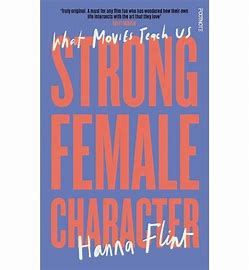
Hanna Flint – Strong Female Character
I wasn’t quite expecting the strongly autobiographical and very personal focus of this book, but Flint uses that focus to explore how the movies deal with women’s lives, how they address sex (solo and with partners), body image, our relationship with food, working life, race, friendship and love. It’s fascinating, and with lots of unexpected insights.


Angela Harding – Wild Light: A Printmaker’s Day and Night
One hundred illustrations – prints, drawings and photographs – illustrating, as the title says, a day and a night. Harding’s images are beautiful and the book is a joy.
Katy Hessel – The Story of Art Without Men
Beautiful, both in terms of the images, and the accounts of so very many women artists through the centuries, many of whom have never had the place they deserved in art history. As Tracy Emin said, it won’t restore the balance on its own, but ‘this is a good start’.
Jill Nalder – Love from the Pink Palace
Jill is the real-life version of her namesake from It’s A Sin. Many of her memories of the young gay men who she loved, lived with and watched – in too many cases – die, made their way into the series, along with creator Russell T Davies’ memories of the same period. The atmosphere of the time comes across incredibly vividly in Nalder’s account, which is moving, funny and horrifying.
Helen O’Hara – Women vs Hollywood: The Fall and Rise of Women in Film
Where did the women directors of the very earliest days of cinema go to? Why did they stop getting hired, or funded, and why has it taken a century to get back to anything resembling the prominence of women in the industry in those earliest days? O’Hara’s fascinating account is passionate, meticulously researched, and engagingly written.
Nicholas Shakespeare – Six Minutes in May: How Churchill Unexpectedly Became Prime Minister
One of the aspects of WWII about which I knew very little was the Norway campaign. I recently watched the film Narvik, which gave a pretty accurate portrayal of part of that campaign, which was not, really not, our finest hour. However, despite that, and despite Churchill being to a significant degree responsible for the failure of that campaign, it was instrumental in ensuring that Chamberlain resigned and Churchill became PM. Shakespeare’s book takes the reader through a day by day – and sometimes minute by minute – account of what was happening, in Norway, and in the House of Commons, informed by the recollections of his great-uncle Geoffrey, who was there (in the HoC). There was so much here that was new to me, and it was even more gripping when I realised at several points that I was reading it on the exact 83rd anniversary of those events.
Paul Thompson and John Watterson – Beware of the Bull – The Enigmatic Genius of Jake Thackray
I can’t remember how we got into Thackray – we probably saw him on TV, and then got an LP or two. I know we used to be reduced to tears of laughter by some of those songs. There’s almost always an element of melancholy though, as funny as they are, and some darkness too. This biography makes some sense of all of those elements and took me back again to the songs. It hurt a little bit though, to be laughing at ‘The Statues’ all on my own.


Thanks to all of the writers who have entertained, diverted and informed me, who have expanded my horizons, taken me to places I have never been or could never go, shown me lives very different to mine and enabled me to connect with them.
 Passing Time
#1 by neeruahcop on June 26, 2023 - 4:42 am
Thanks for this fascinating list.
LikeLike
#2 by Jim Brown on June 26, 2023 - 3:59 pm
If you love Jackson Lamb et al, do read and where possible view on screen these best in class espionage thrillers:
Fiction – Len Deighton – Funeral in Berlin – shame they chose The Ipcress File for a remake rather than this.
Non-fiction – Bill Fairclough – Beyond Enkription in The Burlington Files series – a raw noir sui generis novel but read this MI6 intriguing news first – https://theburlingtonfiles.org/news_2022.10.31.php.
Fiction – Mick Herron – Slow Horses in The Slough House series – an anti-Bond masterpiece laced with sardonic humour.
Non-fiction – Ben Macintyre – The Spy and The Traitor + A Spy Among Friends – must reads for all espionage cognoscenti.
LikeLike
#3 by Jim Brown on June 26, 2023 - 5:09 pm
Ever heard of a real spy called Bill Fairclough (MI6 codename JJ). He was one of Pemberton’s People in MI6. To date there aren’t any films made about him but there is one hell of an espionage thriller novel released so far about his real life exploits.
Beyond Enkription is a must read for espionage cognoscenti and the first stand-alone spy thriller in The Burlington Files autobiographical series by Bill Fairclough. It’s a raw and noir matter of fact pacy novel. Len Deighton and Mick Herron could be forgiven for thinking they co-wrote it. Coincidentally, a few critics have nicknamed its protagonist “a posh Harry Palmer.”
This elusive and enigmatic novel is a true story about a maverick accountant (Edward Burlington in Porter Williams International aka Bill Fairclough in Coopers & Lybrand now PwC in real life). In 1974 in London he began infiltrating organised crime gangs, unwittingly working for MI6. After some frenetic attempts on his life he was relocated to the Caribbean where, “eyes wide open” he was recruited by the CIA and headed for shark infested waters off Haiti.
If you’re an espionage cognoscente you’ll love this monumental book. In real life Bill was recruited by MI6’s unorthodox Colonel Alan Brooke Pemberton CVO MBE and thereafter they worked together on and off into the 1990s. Pemberton’s People included Roy Astley Richards (Winston Churchill’s bodyguard), Peter Goss an SAS Colonel and even the infamous rogue Major Freddy Mace, who highlighted his cat burgling and silent killing skills in his CV. For more on Pemberton’s People do read this brief intriguing News Article dated 31 October 2022 in TheBurlingtonFiles website
This epic is so real it made us wonder why bother reading espionage fiction when facts are so much more exhilarating. Atmospherically it’s reminiscent of Ted Lewis’ Get Carter of Michael Caine fame. If anyone ever makes a film based on Beyond Enkription they’ll only have themselves to blame if it doesn’t go down in history as a classic thriller … it’s the stuff memorable films are made of.
Whether you’re a le Carré connoisseur, a Deighton disciple, a Fleming fanatic, a Herron hireling or a Macintyre marauder, odds on once you are immersed in it you’ll read this titanic production twice. You can find out more about Pemberton’s People in an article dated 31 October 2022 on The Burlington Files website. For more detailed reviews visit the Reviews page on TheBurlingtonFiles website or see other independent reviews on your local Amazon website and check out Bill Fairclough’s background on the web.
LikeLike